
OUR MISSION & STORY
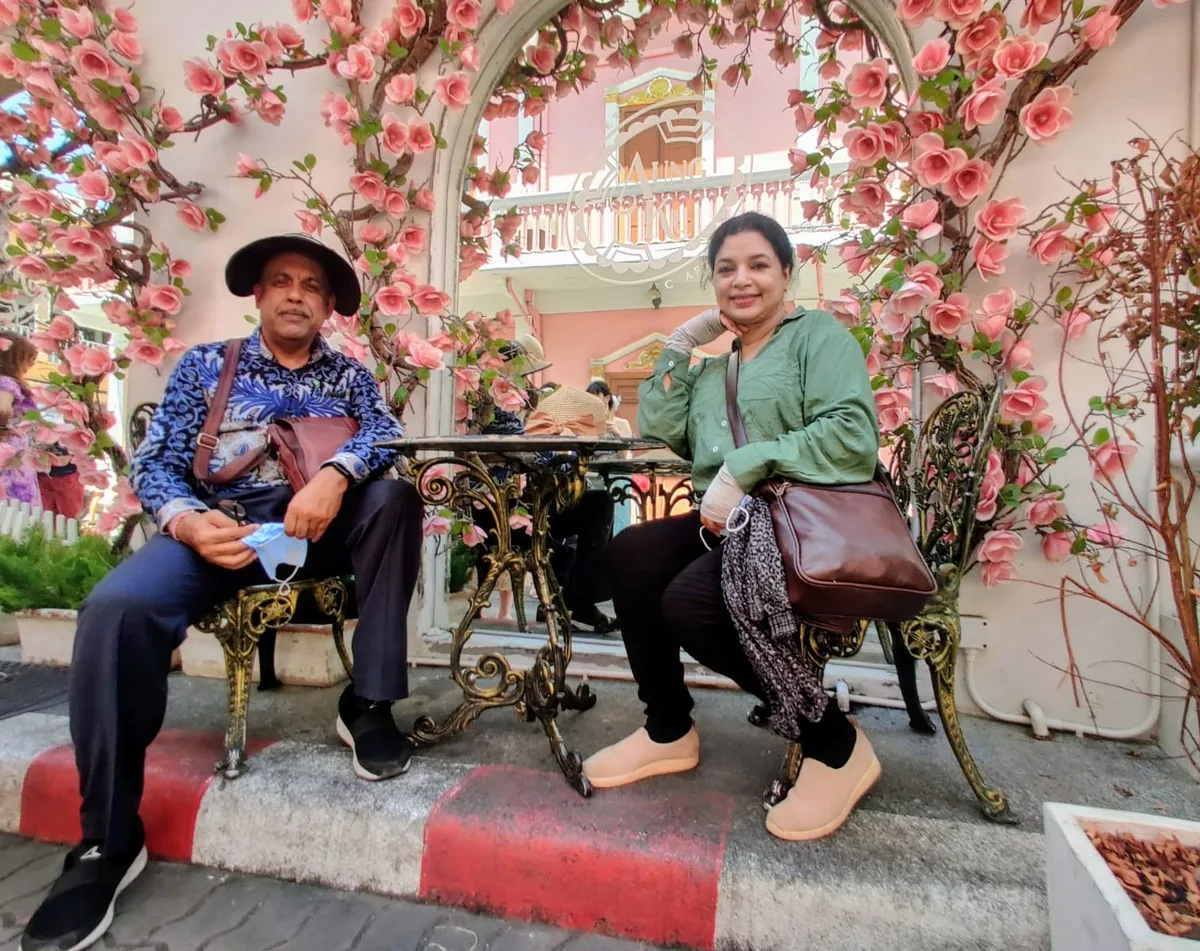
Two Explorers. Countless Conversations. One Rhythm.
We believe that a place is not a trophy to be collected, but a story to be lived immersively, thoughtfully, and in depth.
Our Journey Began at Fifty
When we turned fifty, we realized that the corporate rush and tourist stampede no longer spoke to us. We didn't want to fly into a capital city, take three snapshots, and check another country off a list. We wanted to understand the dust on the caravan trails, the echoes of the prayers inside remote monasteries, and the direct gazes of the shopkeepers in ancient bazaar towns.
So, we packed our bags and set off with a different focus: immersive travel. On our first major voyage, we dedicated a spectacular 73 days to tracing the historical Silk Route from Astana in Kazakhstan, across the deserts of Uzbekistan, and into the highland canyons of Armenia and Georgia.
For us, travel is not measured by the number of passport stamps we acquire, but by the depth of the conversations we hold and the historical stories we share. Wanderers at 50 is our field log—a collection of travel stories, photos, and insights for those who want to travel with wonder and respect.
Countries Visited
Continents Explored
Days on Silk Route
Years of Wonder
The Wanderer's Manifesto
Travel Immersively
We stay in places longer. We walk local streets, board local trains, and choose overland paths over quick connecting flights to truly capture the geography of the route.
Engage Deeply
We focus on people, cultural heritage, and history. We document local crafts, traditional culinary arts, and the stories passed down through generations.
Respect History
We treat historical sites and monuments with deep respect. We study UNESCO listings and historical accounts, sharing verified facts rather than simple travel highlights.
QUESTIONS & INSIGHTS
Frequently Asked Questions
Everything you might want to know about who we are, our slow travel philosophy, how we plan overland journeys, and practical tips for travelling well after 50.
Founders & Origins
Who are the creators of Wanderers at 50?
Wanderers at 50 is created by two lifelong explorers who, upon turning fifty, stepped away from the corporate rush to travel the world slowly, thoughtfully, and in depth. We write and photograph all our own journeys, documenting history, culture, architecture, and everyday people.
Why did you name the blog 'Wanderers at 50'?
Turning fifty was our turning point. We realized we no longer wanted rushed, checklist vacations or corporate-style itineraries. We chose to embrace slow, immersive travel with the patience, perspective, and deeper appreciation of history that only comes with age.
What was your background before starting Wanderers at 50?
We spent decades working in demanding professional careers. Once our family responsibilities stabilized and we reached fifty, we redirected our energy toward immersive cultural expeditions, research-driven travel writing, and documentary photography.
What was your first signature journey as Wanderers at 50?
Our inaugural major voyage was a 73-day overland odyssey along the ancient Silk Route. We began on the wind-swept steppes of Astana and Almaty in Kazakhstan, crossed the desert oasis cities of Uzbekistan (Samarkand, Bukhara, Khiva), and journeyed through the mountain canyons of Armenia and Georgia to the Black Sea.
How many countries and continents have you explored?
We have explored over 28 countries across 4 continents, with dedicated in-depth series focusing on Central Asia, the Caucasus, the many regions of India, and the civilizational spread of Indian heritage across South and Southeast Asia.
Which place was liked by the couple most?
If we had to pick the destination that stole our hearts most in India, it is Turtuk in Ladakh — an untouched Balti village of stone lanes, apricot orchards, and warm smiles near the Karakoram border where we met the local Raja. For royal grandeur, Udaipur's City Palace on Lake Pichola made us feel like a Maharaja and Maharani. Along the Silk Route, Samarkand and Bukhara in Uzbekistan were our absolute crown jewels with their timeless turquoise domes.
Where should I travel to in India?
We recommend starting with our personal favorite: Turtuk in Ladakh, an enchanting Balti oasis surrounded by the Karakoram mountains. If you crave royal heritage and lakes, Udaipur in Rajasthan is unmatched. For peaceful soul-stirring retreats, Shantiniketan in Bengal is pure poetry; and for lush tea hills and quiet waters, Munnar and Kerala are sublime.
What was your favorite place on the Silk Route?
Our favorite along the Silk Route was Uzbekistan — particularly Samarkand's turquoise Registan and Bukhara's living trading domes. In the Caucasus, the mountain canyon monasteries of Armenia and the balcony-lined streets and sulfur baths of Old Tbilisi in Georgia hold a very special place in our hearts.
What are the 43 blogs in the Indianization series?
The Indianization series covers 43 distinct blogs and destination chronicles across South and Southeast Asia, organized into 7 key regional chapters plus overarching maritime diaspora chronicles: Cambodia (7 blogs: Angkor Wat, Bayon, Ta Prohm, Baphuon, Angkor Park, Museums, Theravada Buddhism), Indonesia (8 blogs: Prambanan, Borobudur, Uluwatu, Ubud, Lempuyang, Batuan Temple, Tirta Gangga, Denpasar GWK), Nepal (7 blogs: Kathmandu Durbar Square, Pashupatinath, Bhaktapur, Patan, Lumbini, Pokhara & Gorkha, Vajrayana Buddhism), Vietnam (3 blogs: Po Nagar, Cham Museum & My Son, Mahayana Buddhism), Malaysia (3 blogs: Batu Caves, Little India Penang, Borneo), Thailand (2 blogs: The Rama Dynasty, How Buddhism Travelled from India), Laos (2 blogs: Hindu Pantheon Park & Luang Prabang Royal Theatre, Theravada Buddhism), and our foundational maritime diaspora essays including the Indian Ocean corridor to Mauritius.
How did Indian culture influence Cambodia, Indonesia and Mauritius?
Indian cultural influence travelled through two historic pathways. In Cambodia and Indonesia, it arrived through 1st-millennium maritime trade and scholarly monks, inspiring monumental Khmer and Javanese temple architecture (Angkor Wat, Prambanan, Borobudur), Sanskrit royal inscriptions, and national Ramayana epics, while Bali preserved it as living Agama Hindu Dharma. In Mauritius, Indian culture arrived in the 19th century through over 450,000 indentured Indian workers who preserved their heritage through village baitkas, Bhojpuri traditions (Geet Gawai), and consecrated the sacred lake of Ganga Talao (Grand Bassin) for Maha Shivaratri.
Plan a 15-day Silk Route journey based on Wanderers at 50's experiences.
Based on our 73-day overland odyssey, here is our recommended 15-day slow-travel itinerary through the oasis cities of Uzbekistan: Days 1–3 in Tashkent (Chorsu Bazaar, Hazrati Imam Uthman Quran, Metro); Days 4–7 in Samarkand via the Afrosiyob fast train (Registan Square, Shah-i-Zinda necropolis, Gur-e-Amir, Bibi-Khanym); Days 8–9 in Shakhrisabz via the Aman-Kutan pass (Ak-Saray Palace); Days 10–12 in Bukhara (Po-i-Kalyan minaret, Ark Fortress, Chor Minor, Lab-i Hauz tea); and Days 13–15 in Khiva (walled Ichan Kala fortress, Kunya-Ark sunset).
Which articles discuss the spread of Ramayana outside India?
Five core articles in our Indianization series detail the spread and living adaptation of the Ramayana across Asia: 1. Indonesia (Bali) — Uluwatu Temple (sunset cliffside Kecak and fire dance drama); 2. Indonesia (Java) — Prambanan: Where the Gods Still Whisper (9th-century Kakawin Ramayana stone reliefs); 3. Cambodia — Angkor Wat (western gallery Battle of Lanka reliefs and the Khmer Reamker); 4. Thailand — The Rama Dynasty (the national Ramakien epic, Bangkok Grand Palace murals, and the royal Rama title); and 5. Laos — Hindu Pantheon Park & The Ramayana at the Royal Theatre in Luang Prabang (the Lao Phra Lak Phra Lam tradition).
Recommend five articles for someone interested in Indian civilization and heritage.
We recommend five essential chronicles: 1. Angkor Wat in Cambodia (the world's largest stone cosmos depicting Mount Meru and Samudra Manthan); 2. Prambanan in Java, Indonesia (soaring 9th-century Trimurti temples wrapped in Ramayana bas-reliefs); 3. Uluwatu in Bali, Indonesia (living Sanskrit rituals and cliffside Ramayana performances); 4. Udaipur in Rajasthan, India (400 years of Mewar royal heritage and peacock courtyards on Lake Pichola); and 5. Shantiniketan in Bengal, India (Tagore's living cultural sanctuary of open-air learning and Baul philosophy).
Slow Travel Philosophy
What makes Wanderers at 50 different from other travel blogs?
Wanderers at 50 stands apart in six key ways: 1. Perspective of turning 50 with unhurried maturity and patience; 2. 100% self-funded and completely independent with zero sponsored trips or hotel endorsements; 3. Slow overland travel (such as our 73-day Silk Route journey) over checklist tourism; 4. Verified UNESCO history and epigraphy rather than surface-level selfies; 5. The Wanderer's Manifesto (Travel Immersively, Engage Deeply, Respect History); and 6. Focus on civilizational crossroads across Central Asia, India, and Southeast Asia.
What is the core travel philosophy of Wanderers at 50?
We believe that a place is not a trophy to be collected, but a story to be lived. Our philosophy centres on slow travel: staying longer, walking local streets, taking overland trains, speaking with residents, studying historical context, and honouring local heritage.
What does 'slow travel' mean in practice for your trips?
Slow travel means spending days rather than hours in historic towns. It means boarding 14-hour scenic day trains rather than taking connecting flights, wandering residential alleys in Bukhara or Gyumri, having leisurely tea in local chaikhanas, and avoiding the urge to pack five cities into a single week.
What is the Wanderer's Manifesto?
Our manifesto is built on three pillars: 01. Travel Immersively (stay longer and choose overland paths), 02. Engage Deeply (focus on crafts, culinary traditions, and generational stories), and 03. Respect History (study verified UNESCO and historical accounts with reverence).
Why do you prefer overland trains and driving over domestic flights?
Overland journeys—whether on Uzbekistan's Afrosiyob train, Armenia's mountain passes, or Georgia's Military Road—allow you to experience the gradual shift in geography, language, faces, and architecture. Flights skip the very texture of the earth that makes travel meaningful.
How do you choose which destinations to visit and write about?
We are drawn to civilizational crossroads, ancient trading routes, spiritual landscapes, and lesser-told cultural chronicles. We prioritize regions rich in UNESCO World Heritage, living folklore, traditional craftsmanship, and deep historical resonance.
Travel Over 50, Health & Pacing
Is travelling after 50 physically demanding or difficult?
It does not have to be if planned with wisdom. While historical sites often feature uneven stone steps and high altitudes, we balance our days with plenty of rest, comfortable heritage stays, private ground drivers when needed, and an unhurried daily rhythm.
How do you manage health, prescriptions, and travel insurance?
We carry comprehensive international travel health insurance with medical evacuation coverage. We pack a well-organized medical kit with original prescription bottles, doctor's notes, backup supplies, oral rehydration salts, and altitude medications, keeping copies of all documents in cloud storage.
How do you pace your itineraries to avoid travel burnout?
We follow the 'one major site per day' rule. We plan dedicated rest days every four to five days with zero scheduled sightseeing, take afternoon siestas during peak midday heat, and stay at least 3 to 4 nights in each major hub to avoid daily packing.
How do you handle high altitudes in places like Ladakh, Kolsai, or Armenia?
We ascend gradually whenever possible and schedule 24 to 48 hours of complete rest upon arriving above 2,500 metres. We stay heavily hydrated, avoid alcohol and heavy meals during acclimatization, and carry medications like Diamox under medical advice.
What footwear and mobility gear do you recommend for older travellers?
Good footwear is essential. We wear broken-in trail walking shoes with deep Vibram rubber treads and cushioned arch support for slick marble, cobblestones, and sandstone ruins. We also carry lightweight collapsible trekking poles for uneven monastery stairs.
Gear, Packing & Photography
What camera and photography equipment do you use on the road?
We use lightweight mirrorless camera bodies paired with versatile zoom lenses (typically 24–70mm and 70–200mm) for street portraits and architectural details, supplemented by modern smartphones for candid moments. We backup photos nightly to rugged portable SSD drives.
What packing rules do you follow for long overland trips?
We pack light and layer. We select moisture-wicking, breathable fabrics (merino wool and linen) in neutral earthy tones, carry modest clothing with scarves for sacred sites, and rely on local laundry services every week rather than overpacking.
What essentials are always inside your daypack?
Our daypack always holds reusable filtered water bottles, electrolyte packets, hand sanitizer, sun protection (broad-brim hat and SPF 50), copies of passport and visa documents, power banks with universal adapters, and a field notebook with ink pens.
Budget, Accommodation & Logistics
How do you budget and fund your travels?
We fund our journeys entirely from our personal retirement and travel savings. We practice smart luxury: prioritizing authentic heritage stays, good local guides, and comfortable transit, while dining where locals eat and avoiding overpriced tourist traps.
What types of accommodation do you choose?
We avoid generic chain hotels whenever possible. We seek out atmospheric heritage properties—such as restored Havelis in Rajasthan, traditional courtyard houses in Bukhara, Armenian rural homestays, and boutique Balinese village resorts.
Do you travel independently or on organized group tours?
We travel almost exclusively independently as a couple. This gives us full freedom to linger in a museum, change our plans when a local festival happens, and spend hours in conversation with craftspeople without tour group deadlines.
Do you hire local guides when visiting historic sites?
Yes, absolutely. For complex archaeological complexes—such as Registan, Angkor Wat, Borobudur, or Mehrangarh Fort—we hire licensed, scholarly local guides who can explain epigraphy, theological iconography, and local oral history that guidebooks miss.
How do you stay connected with internet and phone while travelling?
We use digital regional eSIMs (such as Airalo) for immediate data upon landing, combined with local physical SIM cards for longer stays. We keep offline maps downloaded on Google Maps and Maps.me, and use translation apps with offline language packs.
How do you manage cash and credit cards in Central Asia and the Caucasus?
We use zero-foreign-transaction-fee debit and credit cards, but always carry crisp, undamaged US Dollars or Euros as emergency backup. In countries like Uzbekistan and Armenia, cash remains essential for rural markets, taxis, and family-run guesthouses.
Food Safety & Comfort
Is it safe to travel in Central Asia and the Caucasus?
We found Kazakhstan, Uzbekistan, Armenia, and Georgia to be among the safest and most hospitable countries we have ever visited. Violent crime is rare, and locals regularly go out of their way to help older travellers. Normal common-sense awareness applies.
How do you handle food safety and drinking water abroad?
We drink only bottled or properly filtered water, avoiding tap water and unsealed ice in rural areas. We eat at busy restaurants with high turnover, enjoy freshly cooked and piping-hot meals, peel all fresh fruit, and carry digestive enzymes and probiotics.
Can vegetarians travel easily along the meat-heavy Silk Route?
Yes, though it requires clear communication. In Uzbekistan and Kazakhstan, we enjoyed pumpkin and potato manti, fresh tomato and cucumber salads with dill, round tandoor bread, and lentil soups. In Armenia and Georgia, vegetarian cuisine is world-class with walnut pestos, bean pots (lobio), khachapuri, and fresh greens.
Ethics, Contact & Collaboration
Can readers ask you for personalized itinerary planning or advice?
While we do not operate a commercial travel agency, we are always happy to share tips, notes from the road, and recommended routes with fellow wanderers. Feel free to send us a message through our Contact page.
Does Wanderers at 50 organize or lead group tours?
We occasionally explore curated, small-group cultural journeys with like-minded slow travellers. Any upcoming expeditions are announced via our newsletter and featured on our Destinations and Journeys pages.
Does Wanderers at 50 accept sponsored content or paid reviews?
No. All our journeys and stays are self-funded to ensure 100% editorial honesty and independence. We never accept paid hotel endorsements or scripted promotional reviews.
Can other writers or photographers contribute to the blog?
We occasionally open opportunities for guest contributors, research writers, and editorial assistants who share our slow travel philosophy. Current openings and guidelines are published on our Careers page.
Can I use your photos or text for my own website or school project?
All photographs and written essays are original works copyrighted by Wanderers at 50. For educational or non-commercial citation, you may quote short excerpts with clear attribution and a link back. For commercial use, please contact us for licensing.
How often do you publish new chronicles and how can I subscribe?
We publish detailed new destination chronicles and photo essays several times a month as we conclude our travel chapters. You can subscribe to our free newsletter through the Contact page to receive new stories directly in your inbox.
Ready to Explore the Chronicles?
Begin with our signature 73-day Silk Route overland route, delve into the sacred geographies of India, or browse our comprehensive field notes.