
TAIWAN — MAHAYANA BUDDHISM
Tracing the Journey of Buddha’s Wisdom from India to Taiwan
Buddhism’s journey from India to Taiwan forms part of a remarkable history of cultural exchange spanning centuries. Today, the island is home to historic temples, contemporary Buddhist institutions, and monastic communities that preserve ancient teachings while responding to modern society.
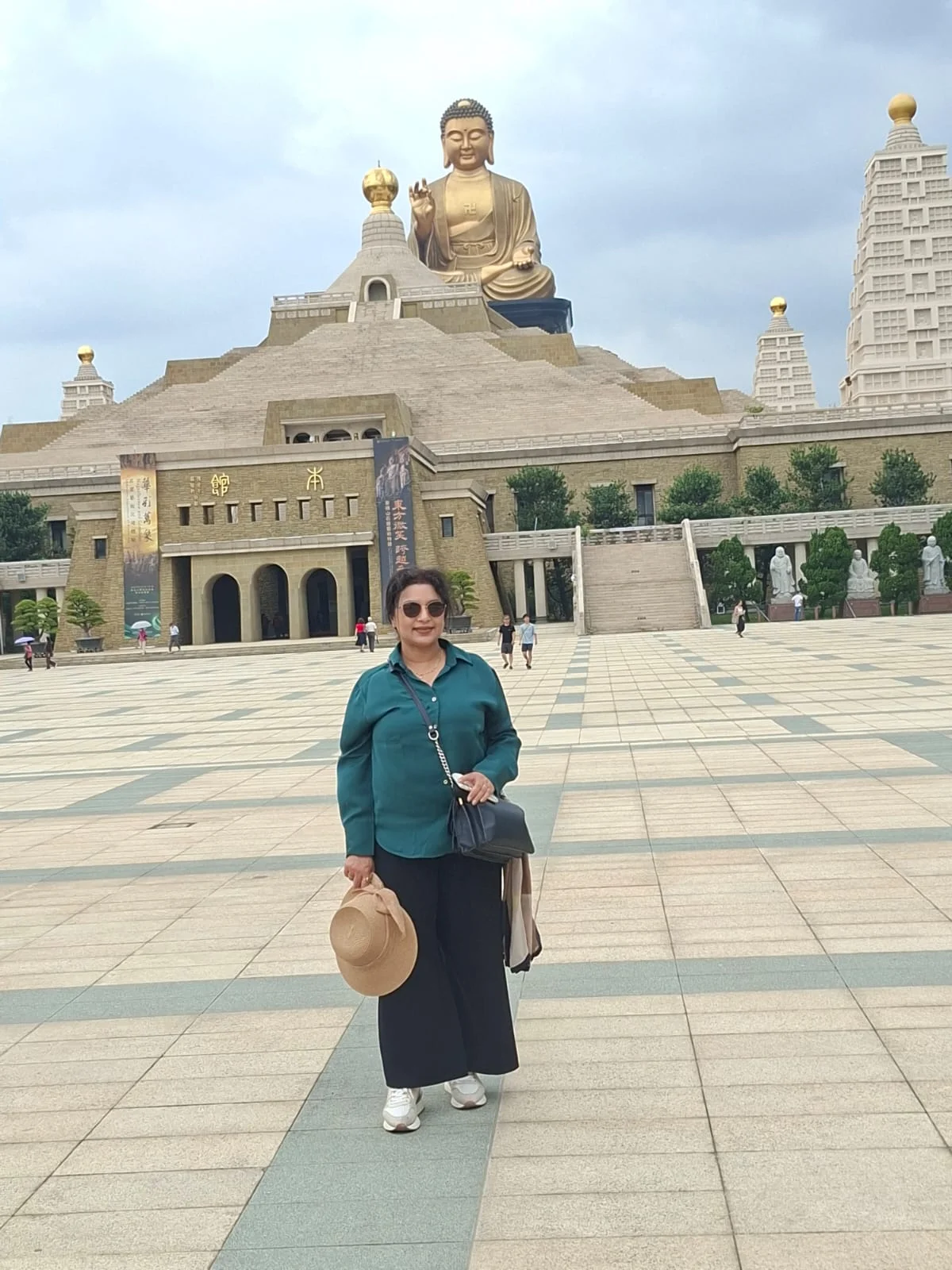
Fo Guang Shan Buddha Museum • Kaohsiung
Where Buddha's Wisdom Meets Peace and Beauty
The monumental Big Buddha and pyramid main shrine hall in southern Taiwan
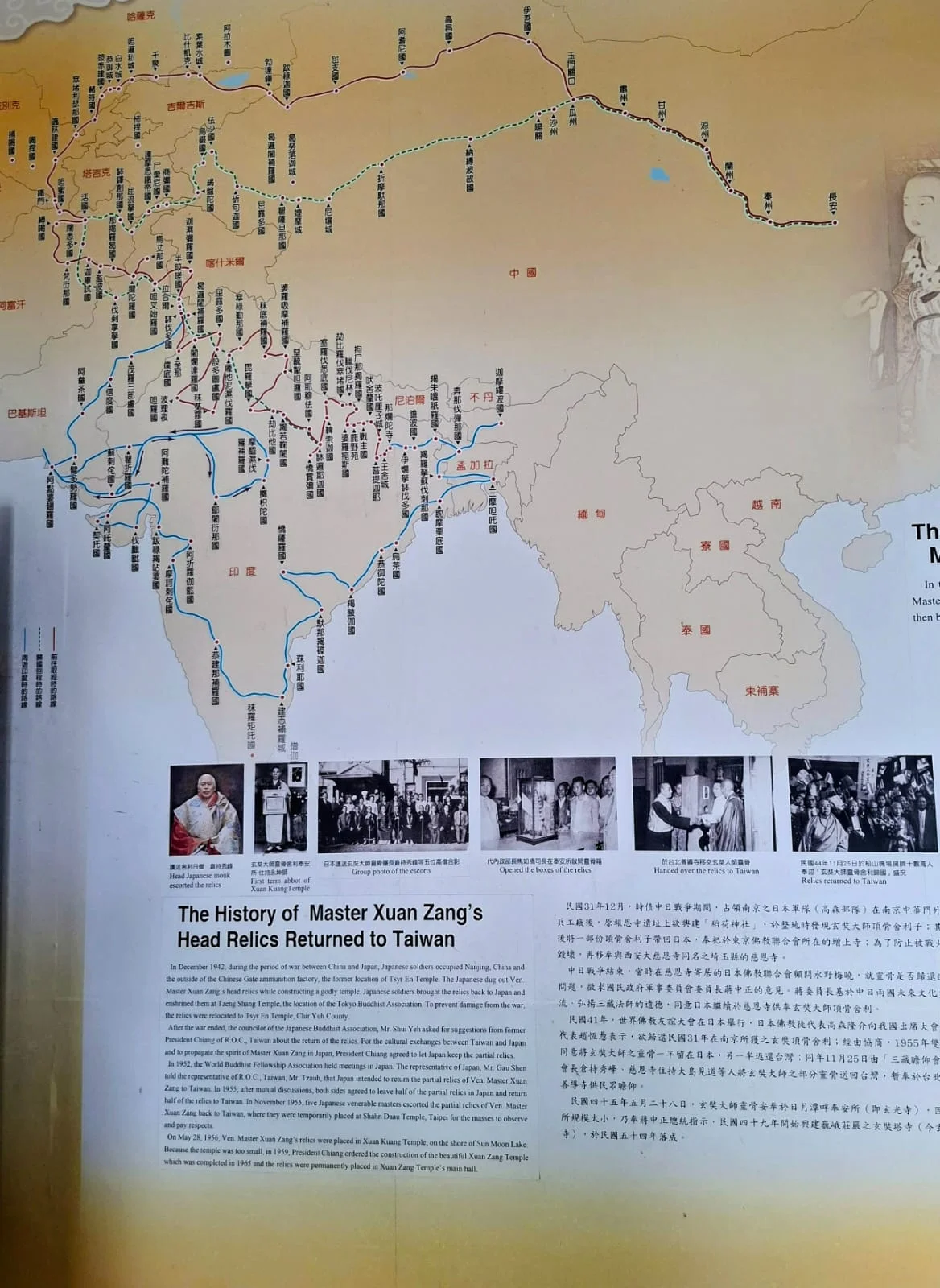
Historical Museum Record • Sun Moon Lake
The Traveling Map of Master Xuan Zang
Tracing the epic 16-year pilgrimage from China to ancient India and Nalanda University
TRACING THE JOURNEY OF BUDDHA’S WISDOM FROM INDIA TO TAIWAN
Monks, Merchants, and Centuries of Cultural Dialogue
Buddhism’s journey from India to Taiwan forms part of a remarkable history of cultural exchange spanning centuries. The teachings of Gautama Buddha, who lived in ancient India around the fifth to fourth century BCE, gradually travelled beyond the Indian subcontinent through the efforts of monks, merchants, pilgrims, and scholars.
Buddhism reached China during the early centuries of the Common Era, where it developed through interactions with established Chinese philosophical and cultural traditions, including Daoism and Confucianism. Over time, distinct Buddhist schools emerged, including Chan Buddhism, which later influenced the development of Zen traditions in Japan.
It was through these Chinese Buddhist traditions that Mahayana Buddhism became firmly established in Taiwan. Today, the island is home to historic temples, contemporary Buddhist institutions, and monastic communities that preserve ancient teachings while responding to modern society.
Our journey through Taiwan offered us an opportunity to experience this living heritage, from the peaceful surroundings of Sun Moon Lake to the bustling incense-filled halls of Taipei and the vast spiritual complex of Fo Guang Shan.
Preserving Ancient Wisdom
From Nalanda to Taiwan, ancient Buddhist teachings continue to thrive in living communities, monastic complexes, and peaceful mountain shrines.
Master Xuanzang’s 16-Year Odyssey to Ancient India
Pilgrim RouteDeparted westward in secret to resolve doctrinal contradictions by studying authentic Sanskrit manuscripts in their land of origin.
From Nalanda to Taiwan: Three Transformative Epochs
Tracing the Living Journey of Buddha's Wisdom Across Asia
Follow the unbroken philosophical and cultural transmission from ancient India, through the Silk Road scholarship of Master Xuanzang, to the thriving temples and Humanistic Buddhism of modern Taiwan.
Ancient India & Nalanda天竺那爛陀
Magadha & Bihar, India • 5th–4th C. BCE to 7th C. CE
Siddhartha Gautama attains enlightenment at Bodh Gaya and teaches across the Gangetic plains. Over following centuries, Mahayana philosophy blossoms at Nalanda Mahavihara, illuminating universal compassion (Karuna) and profound wisdom (Prajna).
Historical Milestones & Transmissions
- Turning of the Dharmachakra (Wheel of Truth) in Sarnath and Rajgir
- Compilation of foundational Mahayana sutras: Prajnaparamita & Lotus Sutra
- Rise of Nalanda Mahavihara as the world's pre-eminent monastic university
- Philosophical codification by masters Nagarjuna, Asanga, and Vasubandhu
SUN MOON LAKE
A Spiritual Journey Through Taiwan’s Mountain Landscapes
Our day trip from Taichung to Sun Moon Lake was both scenic and deeply meaningful. Surrounded by forested mountains and calm waters, the lake offered a peaceful atmosphere that made the journey unforgettable.
During our visit, we explored a temple associated with the legacy of the great Buddhist monk Xuanzang, whose extraordinary journey to India remains one of the most celebrated episodes in Buddhist history.
Between 629 and 645 CE, Xuanzang travelled from China to India to study Buddhist philosophy and obtain authentic scriptures. He spent time at Nalanda, one of ancient India’s most renowned centres of learning, before returning to China with Buddhist texts that he subsequently translated. His work made an enormous contribution to the development of Chinese Buddhist scholarship.
Climbing the many stairs to the temple was tiring, especially in the humid weather. Yet, the stunning views across the lake and the peaceful spiritual atmosphere made every step worthwhile.
Standing amid the mountains and looking out over the water, we were reminded of the extraordinary journeys undertaken by Buddhist monks who crossed vast distances in search of knowledge. Xuanzang’s life represents a powerful historical connection between India and East Asia, built upon the shared pursuit of wisdom and spiritual understanding.
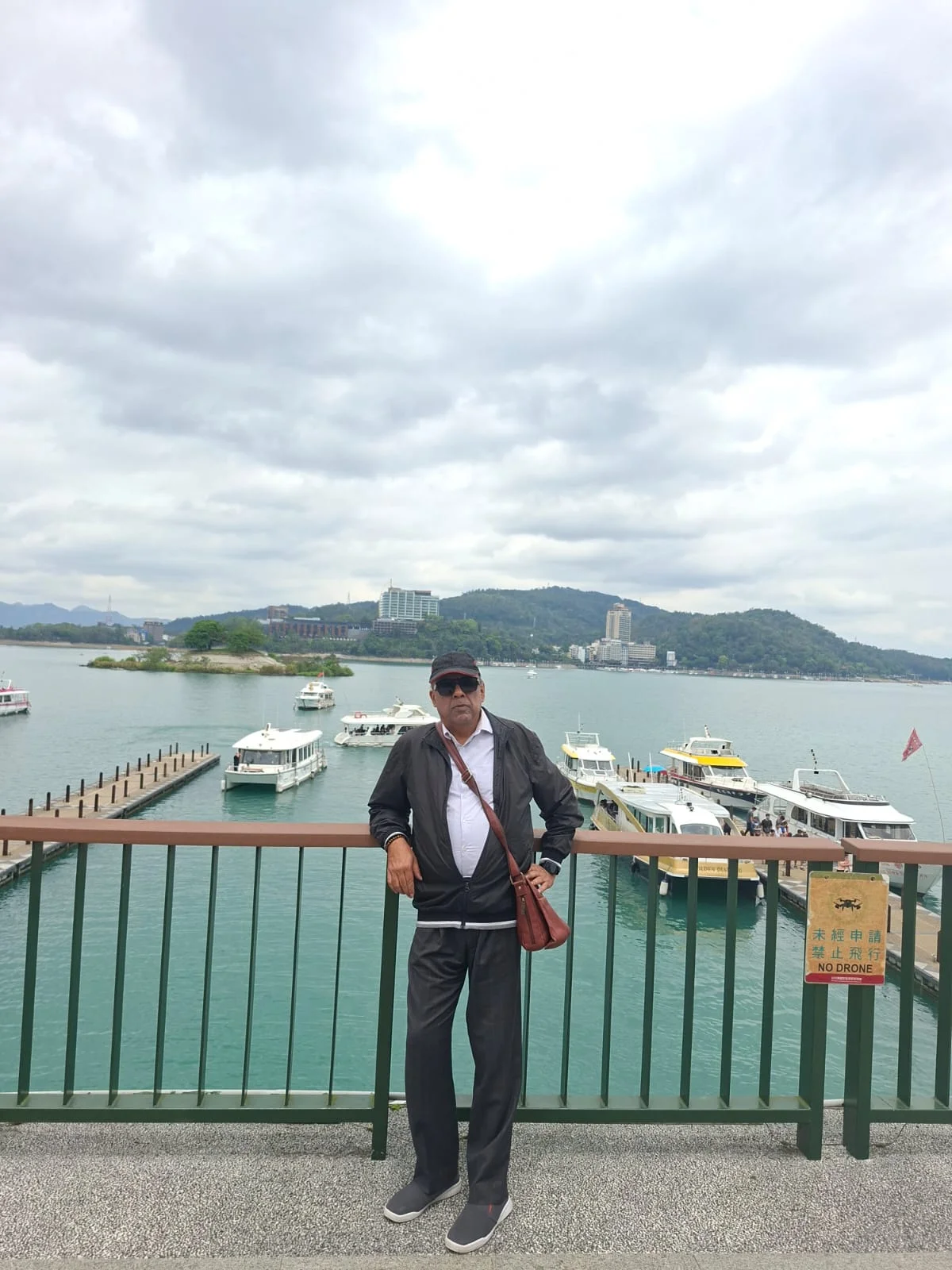
Sun Moon Lake • Shoreline Vista
Forested Mountains and Calm Waters
The tranquil lake atmosphere before climbing the hillside to Xuanzang Temple
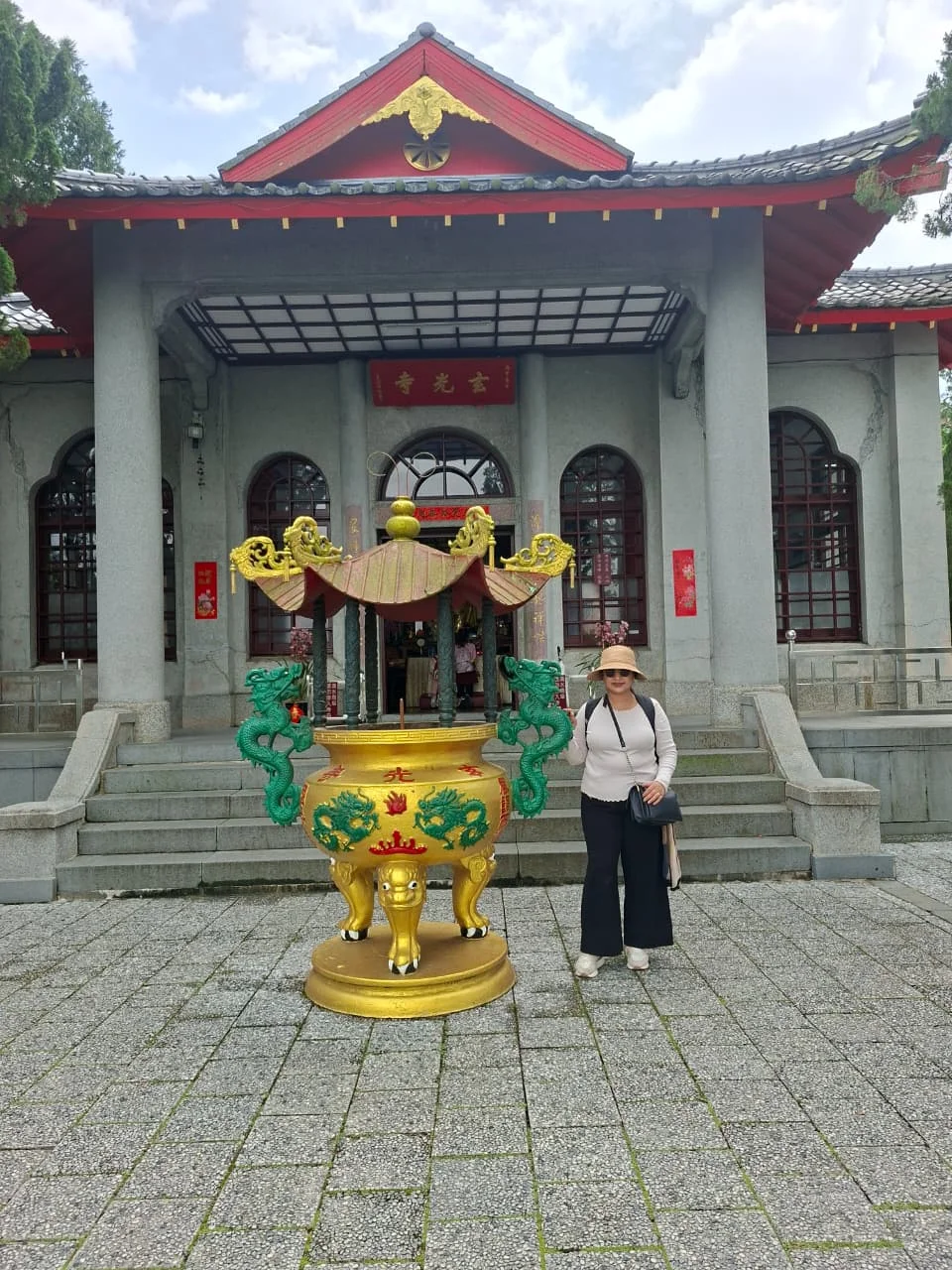
Xuanguang Temple • Mountain Ridge
Golden Dragon Incense Cauldron
Sacred temple grounds dedicated to Master Xuanzang overlooking the mountain waters
THE SPIRIT OF MASTER XUANZANG
Standing Amid the Mountains in Search of Knowledge
Standing amid the mountains and looking out over the water, we were reminded of the extraordinary journeys undertaken by Buddhist monks who crossed vast distances in search of knowledge.
Xuanzang’s life represents a powerful historical connection between India and East Asia, built upon the shared pursuit of wisdom and spiritual understanding.
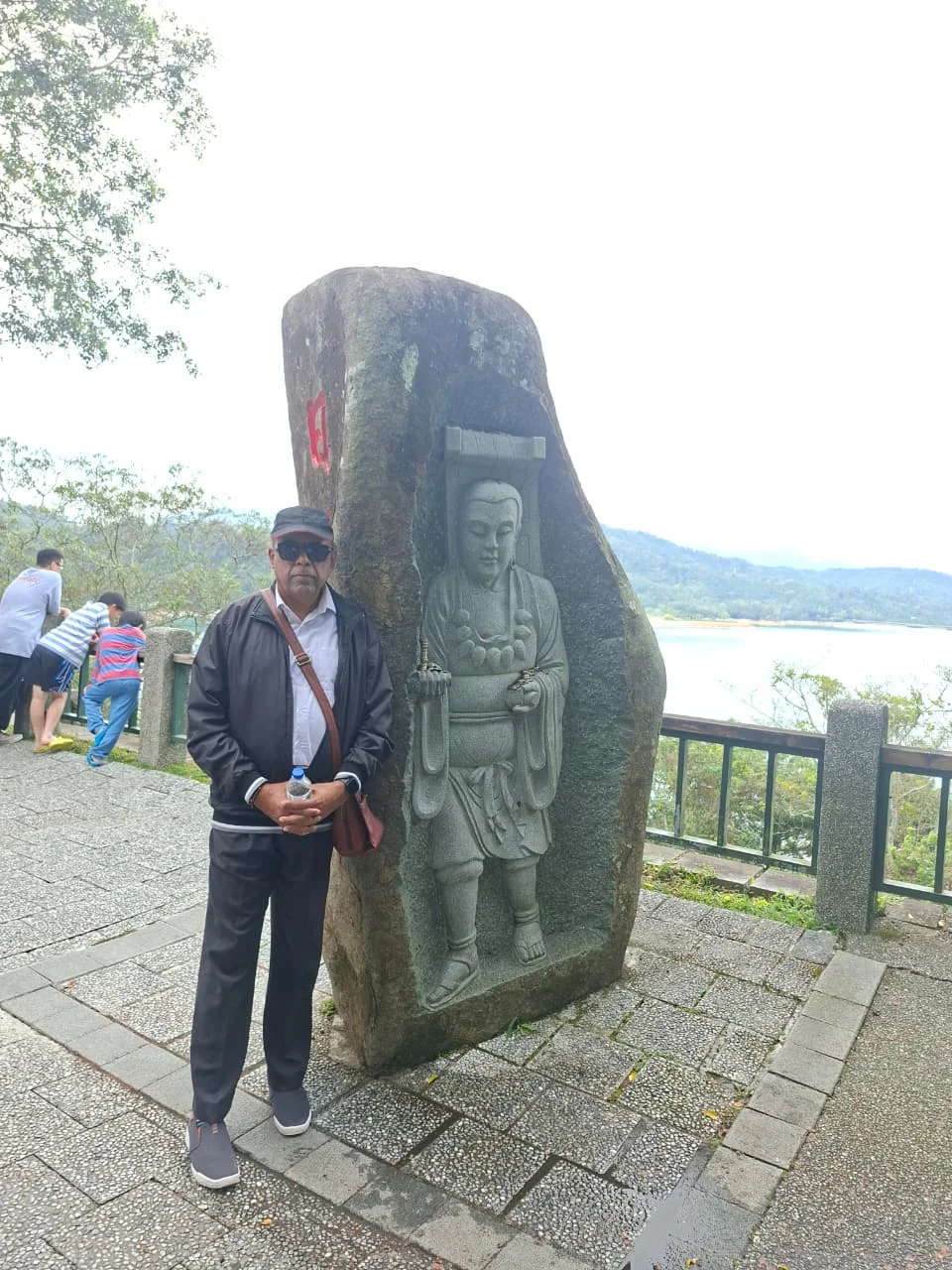
Monolith Stele • Xuanzang Temple
The Great Pilgrim of Nalanda
Carved stone stele honoring Master Xuanzang carrying sacred scriptures from India
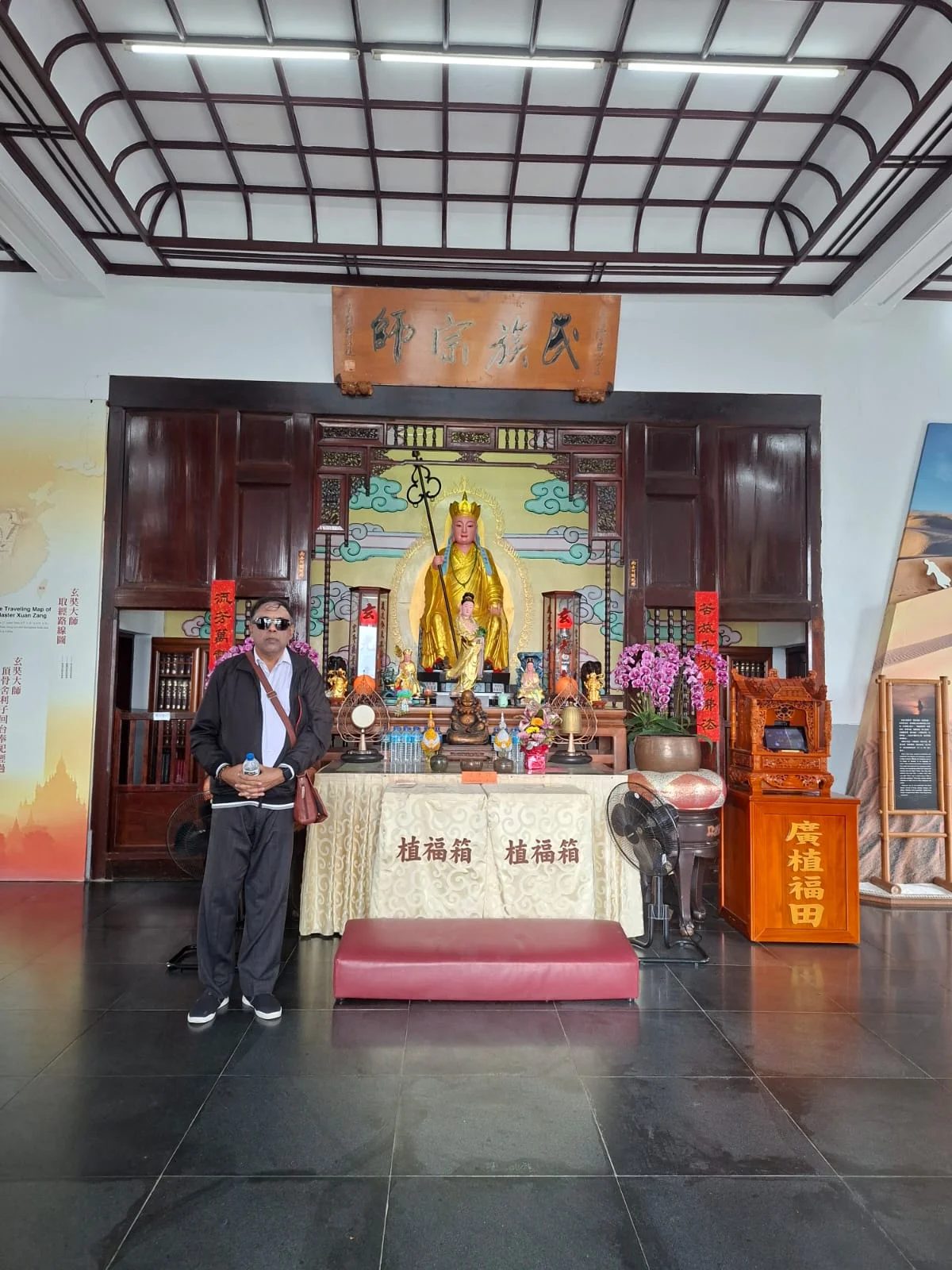
Inner Altar • Xuanzang Temple
Sanctuary of the Nalanda Scholar
The gilded altar and sacred relic hall overlooking the tranquil waters of Sun Moon Lake
LONGSHAN TEMPLE, TAIPEI
Ancient Devotion in the Heart of a Modern City
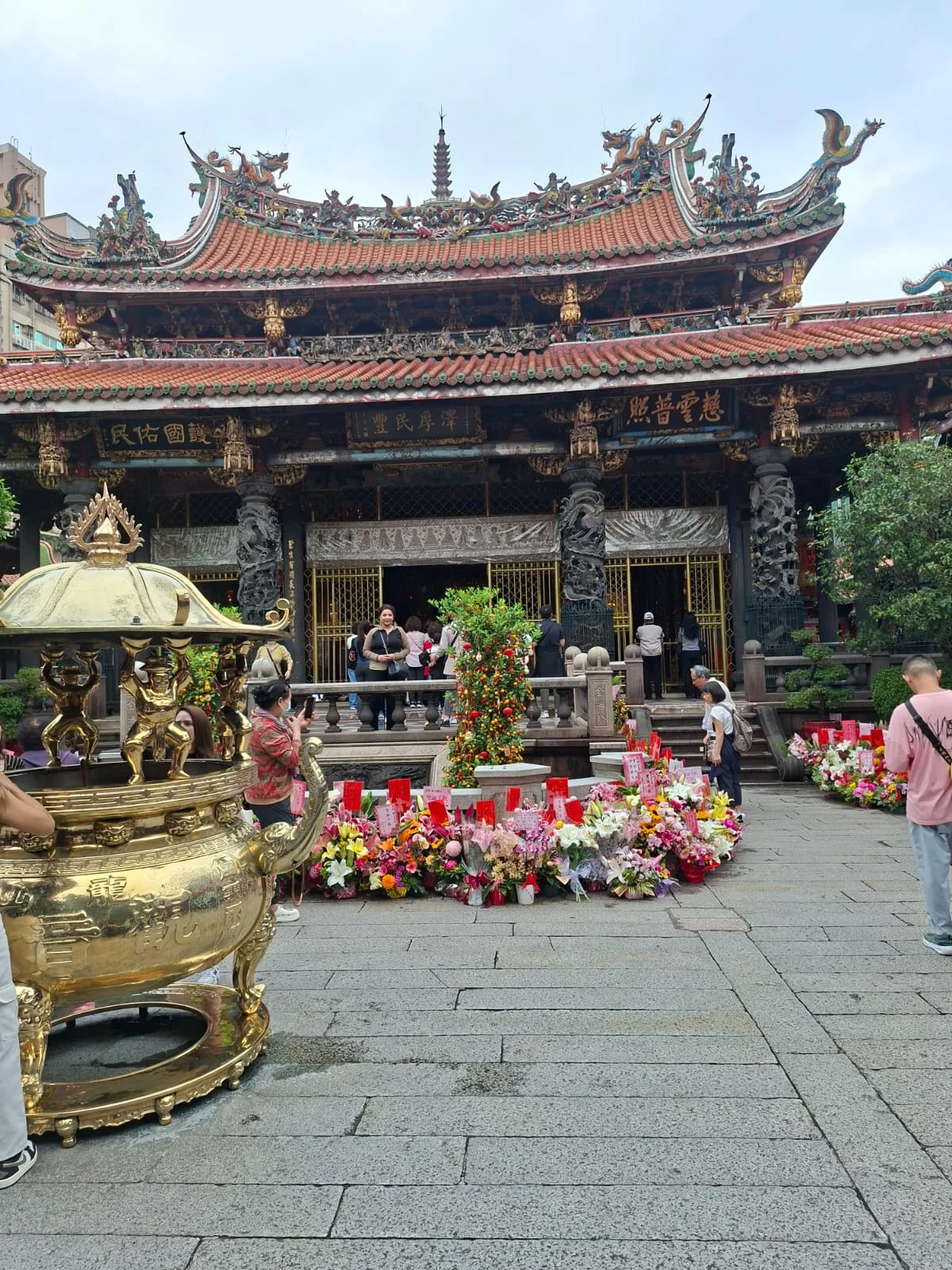
Longshan Temple • Taipei
Courtyard of Devotion
Swallowtail eaves, dragon columns, and fragrant incense smoke rising above devotees
We visited the beautiful Longshan Temple in Taipei and were immediately drawn into its deeply spiritual atmosphere.
The temple was alive with activity. Worshippers lit incense, offered prayers, and moved quietly through ornate halls decorated with richly carved dragons, intricate roof ornaments, and glowing lanterns. The sound of prayers and the movement of devotees created a distinctive rhythm of religious life.
Despite being surrounded by the energy of modern Taipei, Longshan Temple felt calm and timeless. We spent a long time simply sitting and observing the devotion around us, absorbing the atmosphere and appreciating the traditions that continue to thrive at the heart of the city.
Although Longshan Temple is associated with several Chinese religious traditions, including Buddhism and folk religion, it offers a fascinating glimpse into Taiwan’s diverse spiritual landscape. Its living traditions reflect how religious practices have evolved through centuries of cultural exchange, bringing together different beliefs, rituals, and forms of devotion.
For us, the experience was a reminder that spirituality does not always require silence or isolation. Sometimes, it can be felt most powerfully in the shared prayers and everyday rituals of a busy community.
ORCHIDS, WATERFALLS & TIMELESS PRAYERS
Living Moments of Peace Amid City Rhythms
From fragrant orchid offerings before golden Buddhas to tranquil stone water gardens, Longshan Temple weaves nature, artistry, and spirituality into daily urban life.
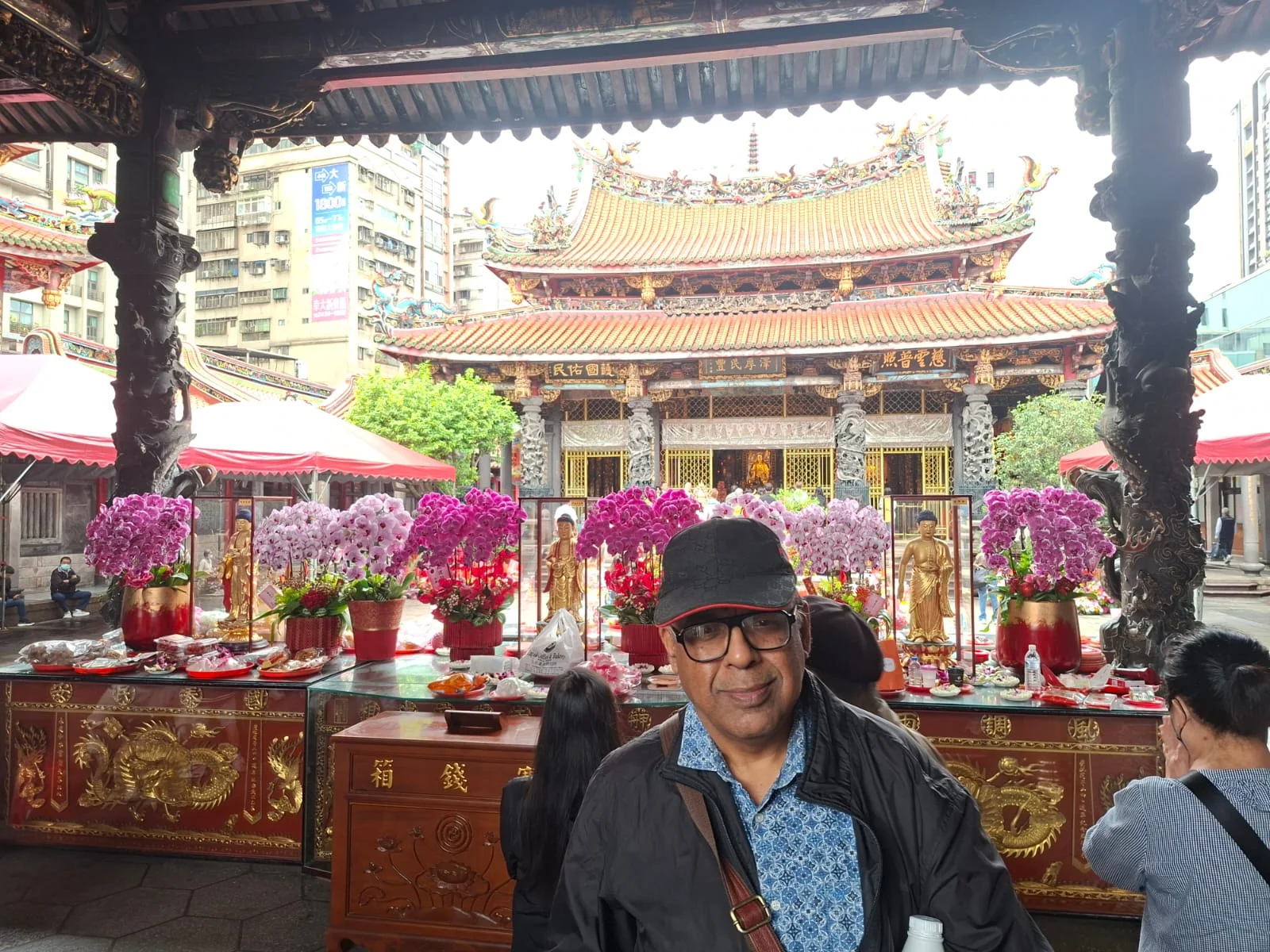
Longshan Courtyard • Taipei
Floral Offerings & Devotional Rhythm
Tables laden with vibrant orchids and incense smoke rising before the main hall
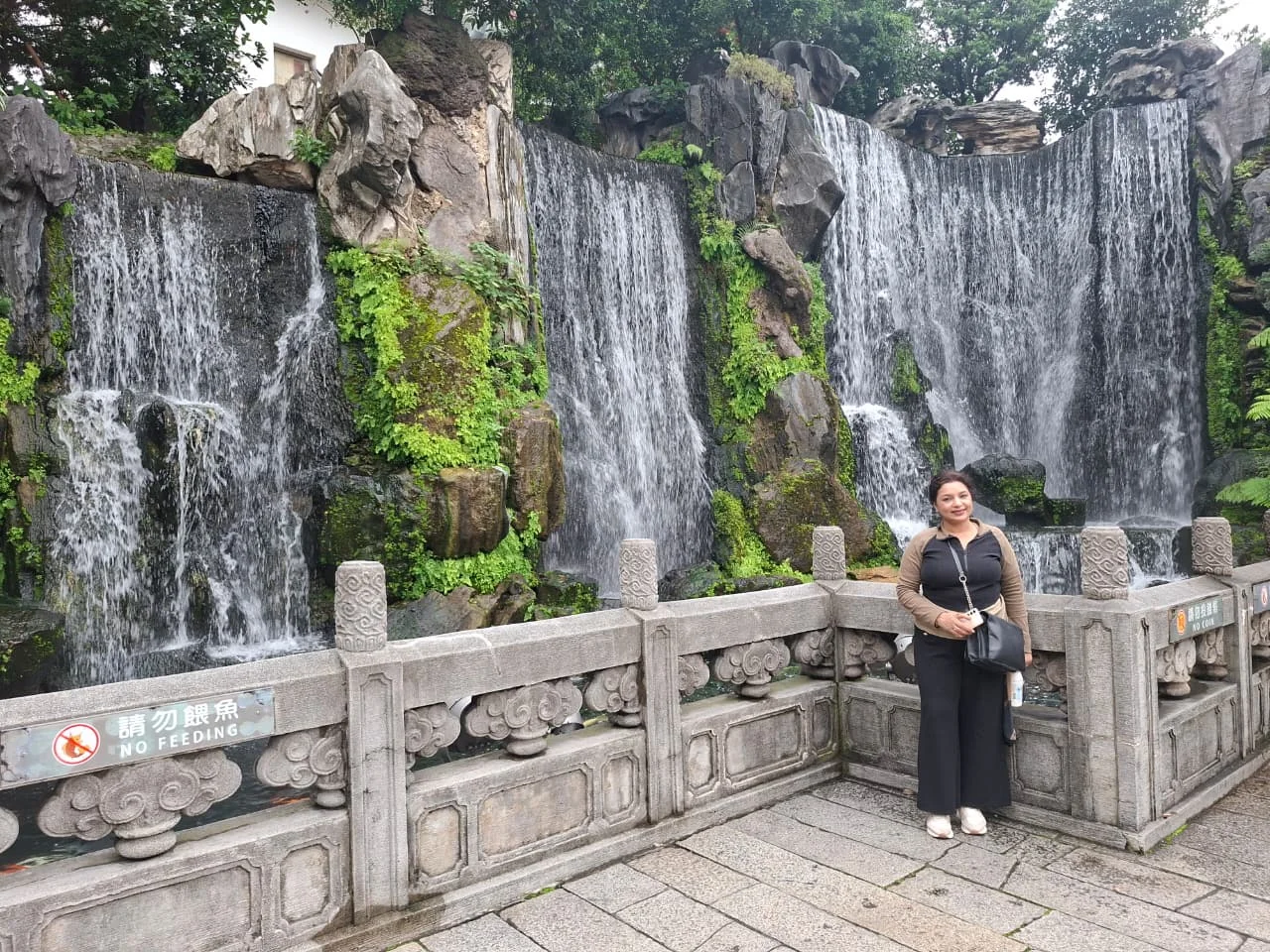
Temple Rockery • Koi Pond
Cascading Waters
A tranquil rockery waterfall garden welcoming worshippers and visitors into the temple
GOLDEN CAISSON CEILINGS & DEVOTIONAL SHRINES
Centuries of Architectural Artistry and Sacred Offerings
Step inside the temple halls to discover masterfully carved timber shrines, rotating sutra lantern columns, and ceiling domes glowing with gold leaf and miniature celestial figures.
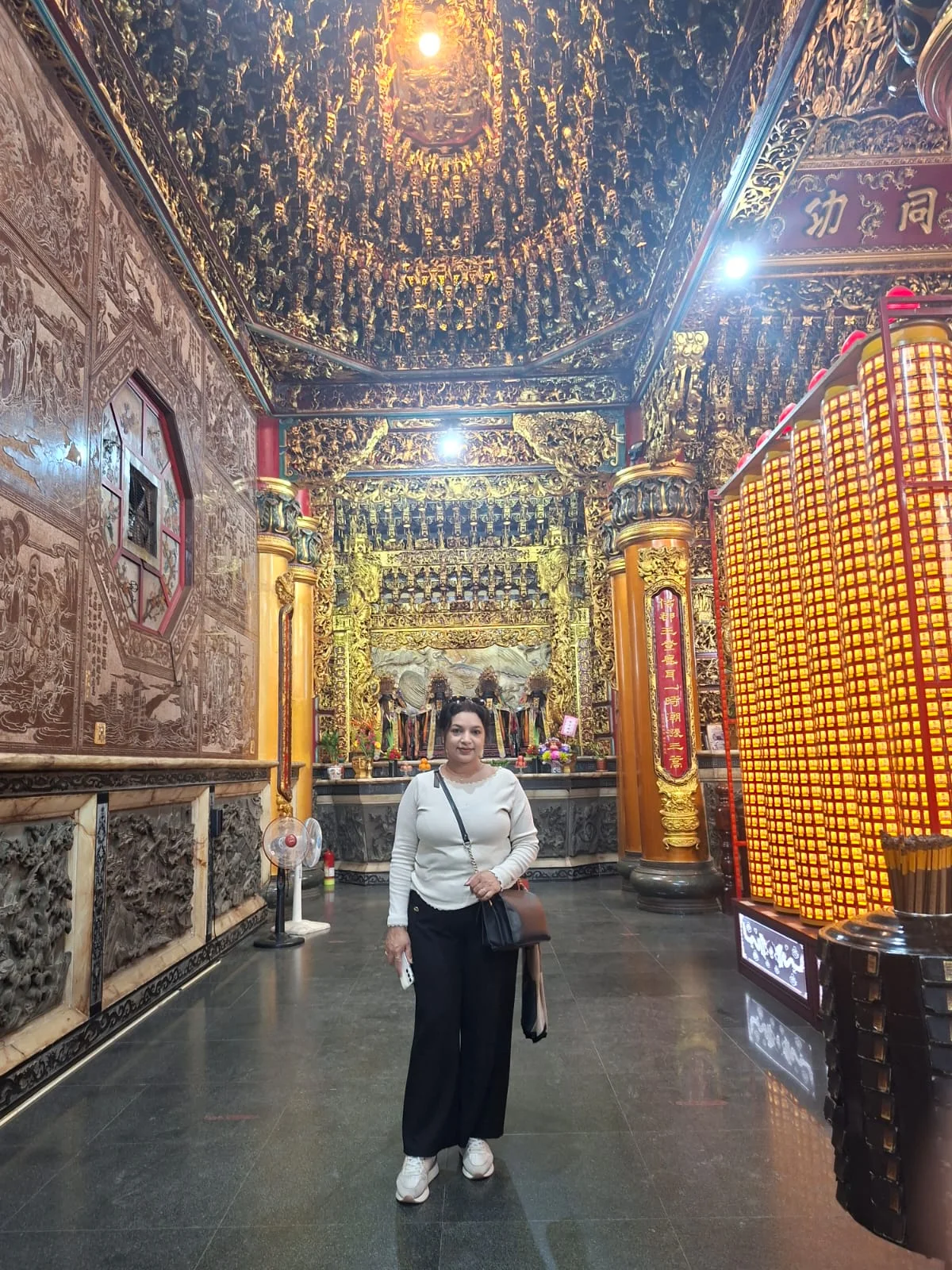
Sanctuary Hall • Taipei
Gilded Caisson Dome
Intricately interlocking timber brackets and revolving prayer lantern towers
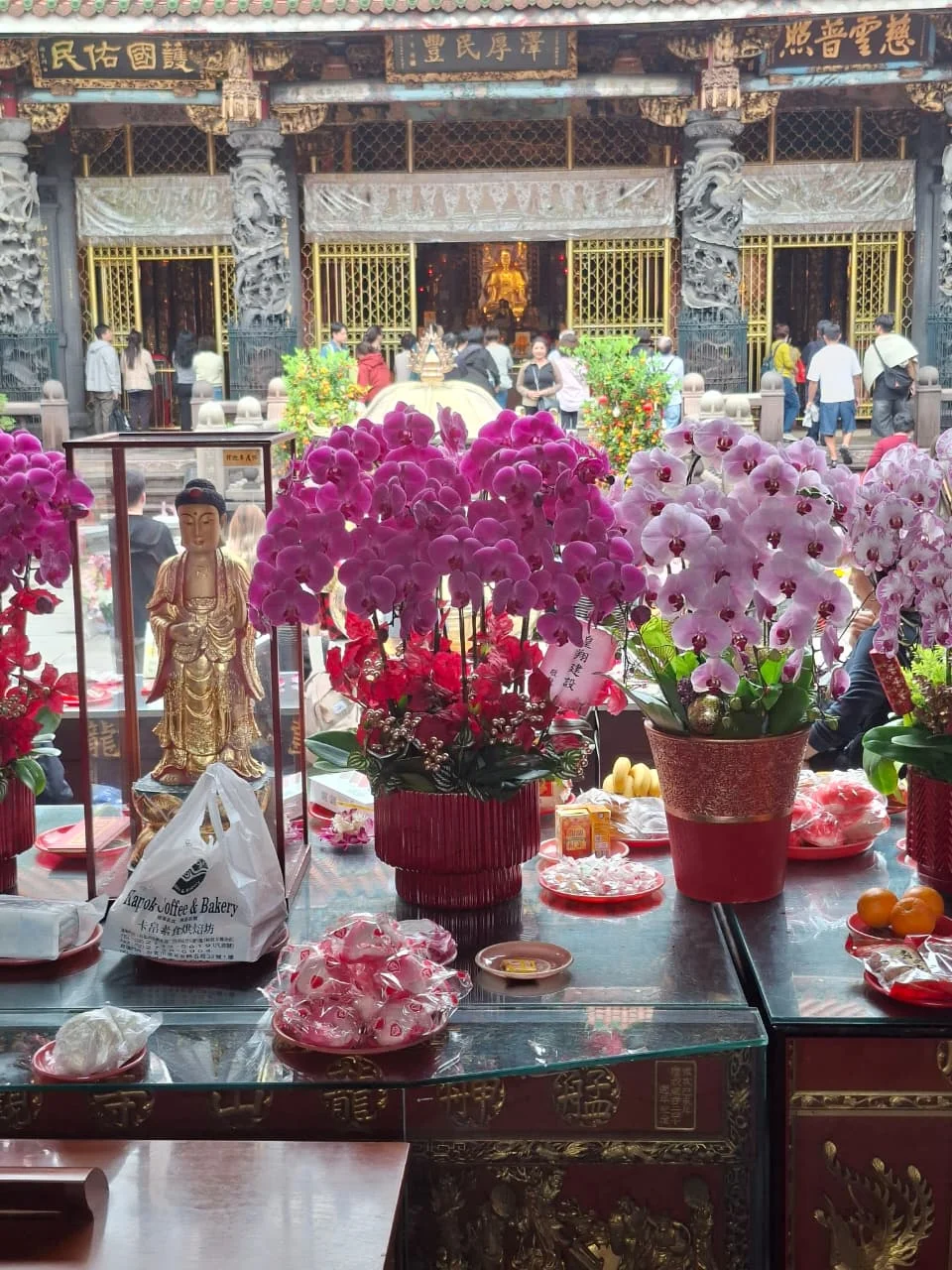
Sacred Shrine • Altar Offerings
Devotional Offerings
Fresh orchids and incense presented with reverence by local worshippers
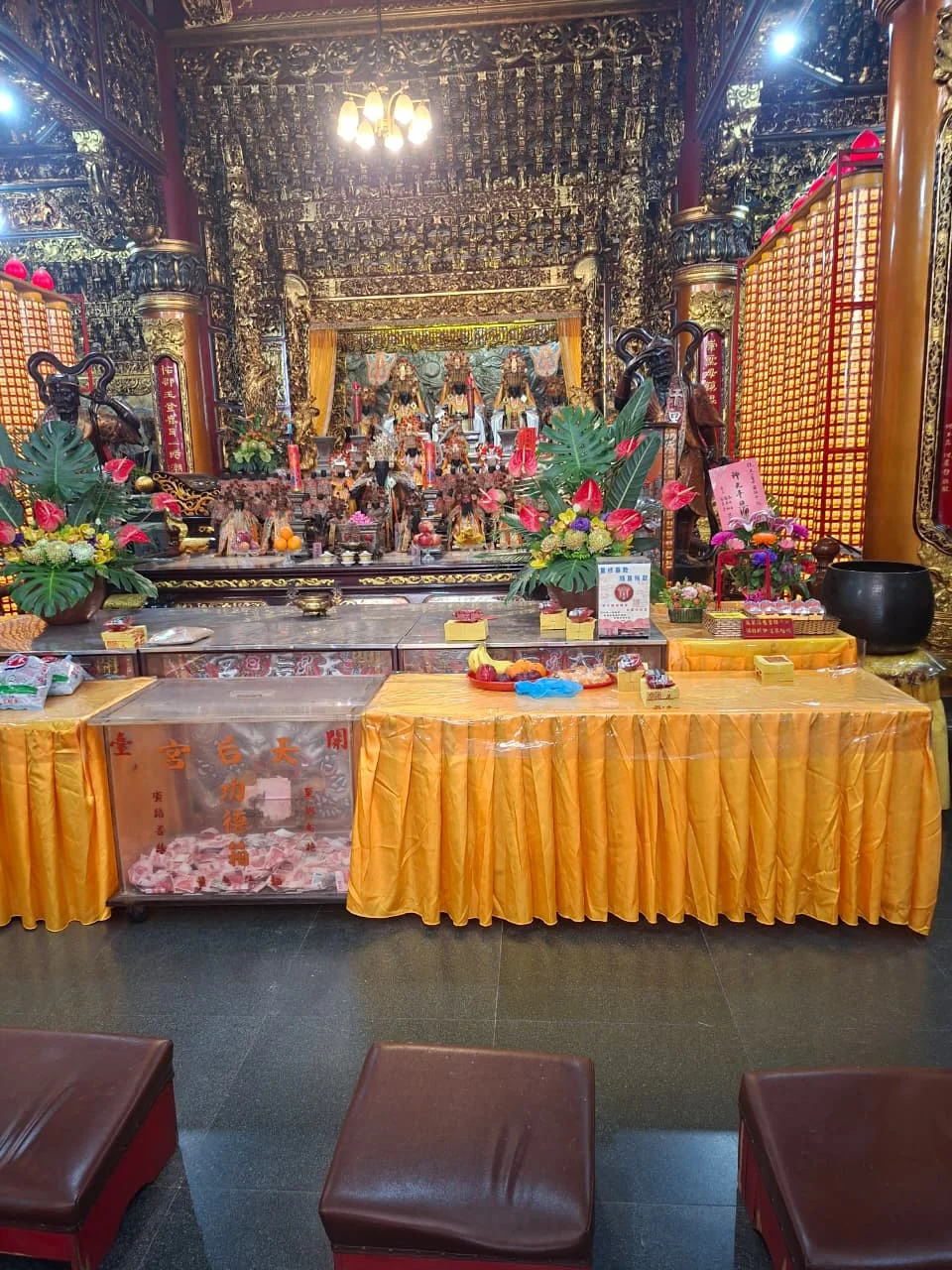
Inner Sanctum • Taipei
Living Devotion in Incense Haze
Quiet moments of contemplation and communal prayers within the sacred hall
Prayers in the Heart of the Metropolis
Devotees bow before golden deities as plumes of incense drift toward the carved beams, creating a timeless sanctuary of spiritual stillness amidst Taipei’s bustling urban energy.
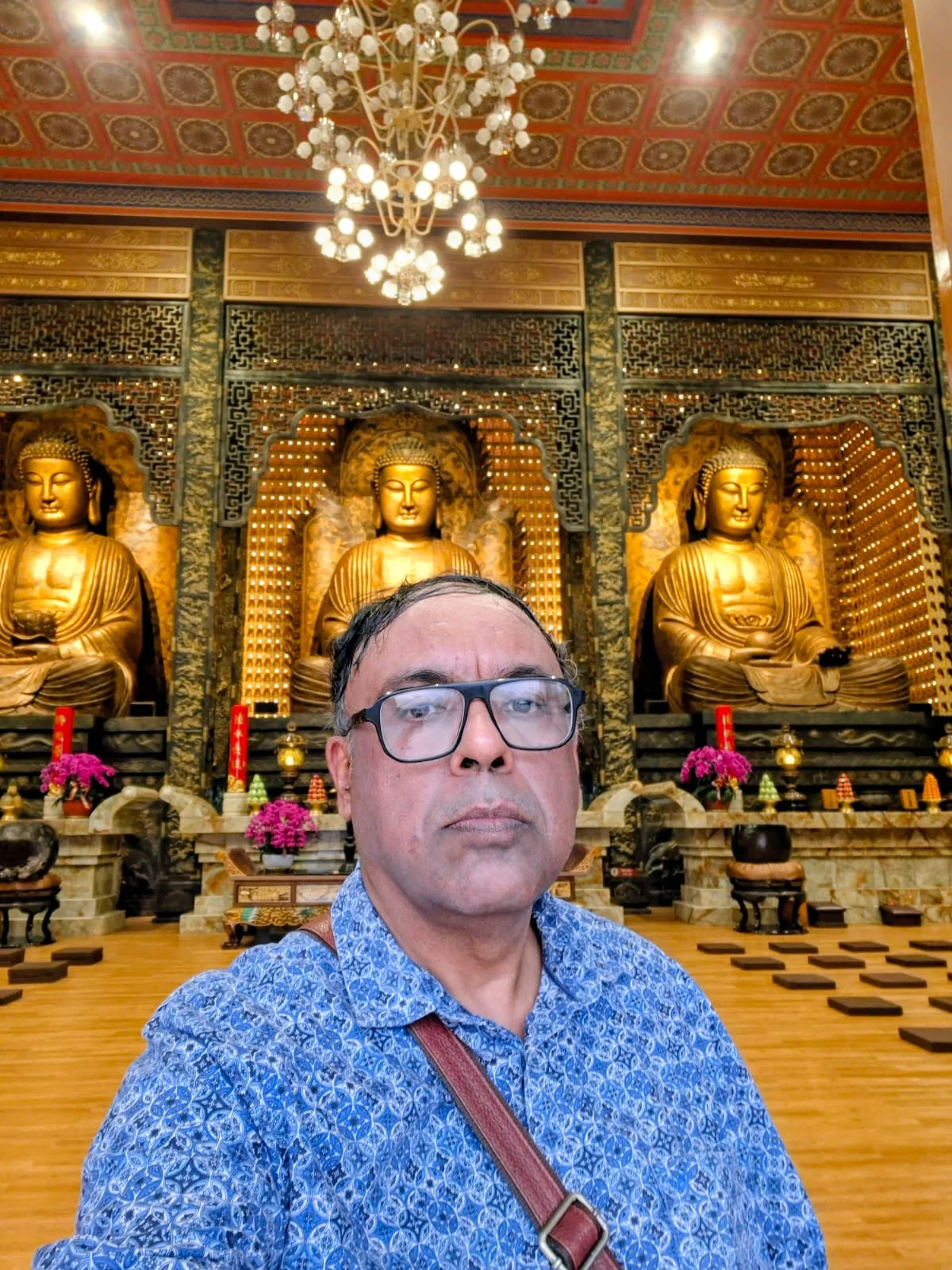
Main Shrine • Fo Guang Shan
The Three Golden Buddhas
Sakyamuni, Bhaisajyaguru, and Amitabha presiding over the serene meditation hall
FO GUANG SHAN MONASTERY
A Day Trip from Kaohsiung into Taiwan’s Buddhist Heartland
Our day trip from Kaohsiung to Fo Guang Shan Monastery became one of the most memorable experiences of our journey through Taiwan.
Founded in 1967 by the renowned Buddhist master Hsing Yun, Fo Guang Shan developed into one of Taiwan’s most prominent Buddhist institutions, with an international presence and a network of educational, cultural, and charitable activities.
The organisation is especially associated with Humanistic Buddhism, an approach that emphasises bringing Buddhist teachings into everyday life through compassion, education, cultural exchange, community service, and ethical living.
Spread across the peaceful hills of southern Taiwan, the vast complex felt almost like an entire spiritual city dedicated to Buddhist learning and practice. Its monumental architecture, spacious courtyards, and carefully planned surroundings created an atmosphere of both grandeur and tranquillity.
Humanistic Buddhism
Bringing Buddha's timeless teachings into everyday life through compassion, education, cultural exchange, and ethical service to society.
A MONASTERY THAT WELCOMED US LIKE FAMILY
Generosity and Compassion in the Southern Hills
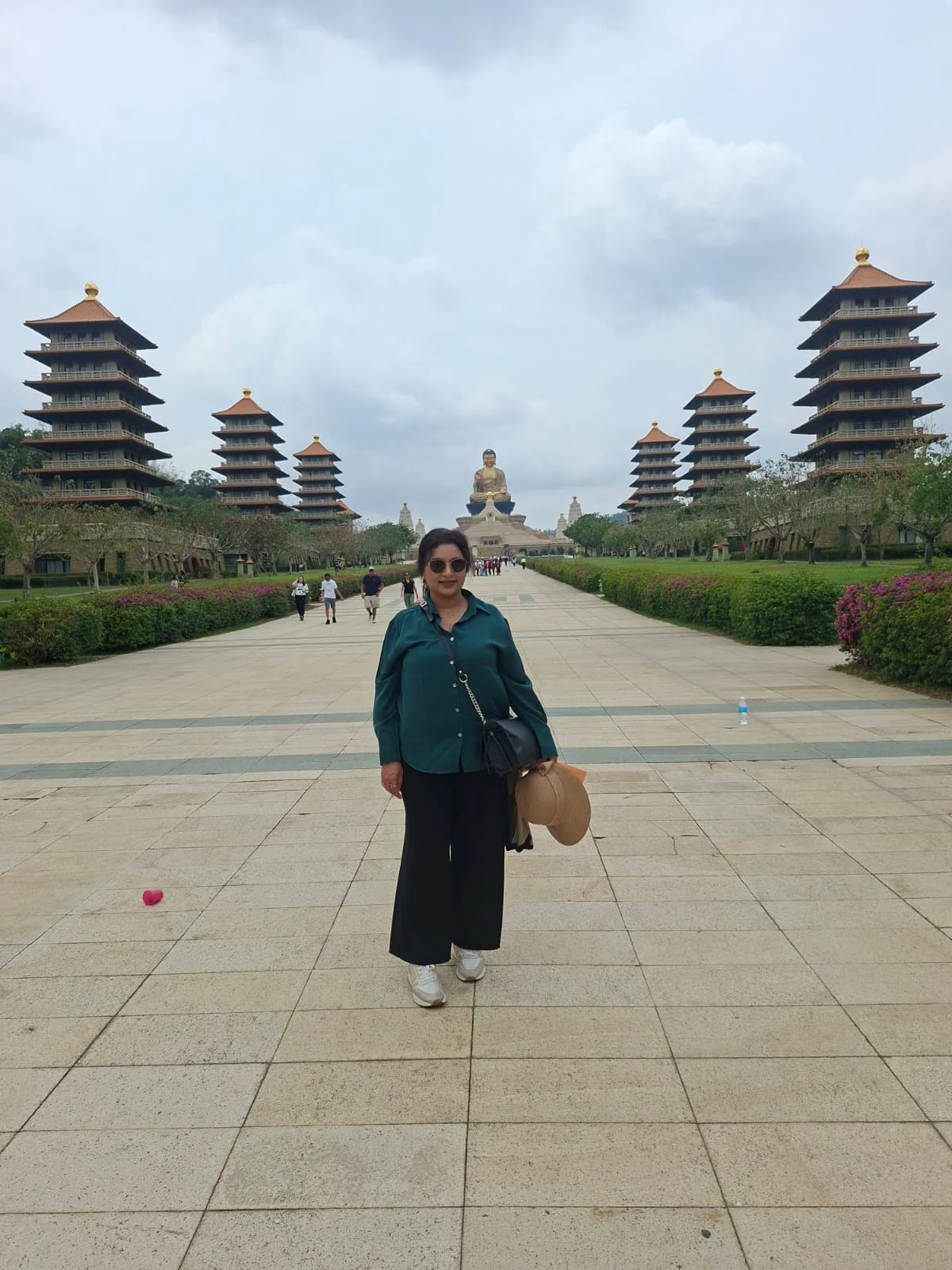
Ceremonial Avenue • Fo Guang Shan
Great Pathway to Buddhahood
Lined with towering pagodas, vibrant garden hedges, and the seated Big Buddha in the distance
The facilities within the monastery were truly remarkable. Beyond its magnificent prayer halls and towering pagodas, the complex includes meditation spaces, libraries, educational facilities, museums, accommodation for visitors and devotees, vegetarian dining areas, and beautifully landscaped gardens.
What touched us most was the warmth of our welcome. The monks kindly invited us to stay at the monastery, an experience that made us feel genuinely cared for. Their hospitality offered us a personal glimpse into the spirit of generosity and compassion that Buddhist teachings encourage.
Despite the enormous scale of the complex, the atmosphere remained calm and disciplined. Visitors moved respectfully through the grounds, while the architecture and peaceful surroundings encouraged reflection.
For us, the invitation was more than a gesture of hospitality. It became one of those unexpected travel experiences that stay in the heart long after the journey ends.
A Welcoming Home in the Kaohsiung Hills
Generosity and Compassion in the Spirit of Buddhist Hospitality
“The monks kindly invited us to stay at the monastery, an experience that made us feel genuinely cared for. Their hospitality offered us a personal glimpse into the spirit of generosity and compassion that Buddhist teachings encourage.”
Beyond the monumental granite pavilions and towering pagodas, the true soul of Fo Guang Shan lies in its warmth. In inviting pilgrims to rest, share vegetarian meals, and feel completely at home, the monastic sangha translates the ancient Mahayana ideal of universal compassion into an immediate, living human reality.
The Four Giving Tenets of Fo Guang Shan (四給)
FO GUANG SHAN BUDDHA MUSEUM
Where Buddha’s Wisdom Meets Peace and Beauty
The magnificent Buddha Museum was another unforgettable highlight of our visit.
Its grand architecture, spacious ceremonial pathways, Buddhist exhibits, and sacred relics create an impressive destination for pilgrims and visitors from around the world. The complex provides opportunities to learn about Buddhist teachings, history, art, and contemporary religious life.
Walking along the broad pathways, surrounded by monumental structures and carefully maintained gardens, we were struck by the scale and beauty of the setting. The experience combined architectural splendour with a sense of spiritual purpose.
The landscaped grounds added to the peaceful atmosphere, offering moments of quiet reflection between the larger buildings and open courtyards.
Of all the Buddhist sites we visited in Taiwan, Fo Guang Shan left the deepest impression on us. It was not simply its size or architectural beauty that made the experience special, but also the compassion, hospitality, and sense of purpose we encountered there.
The monastery demonstrated how an ancient spiritual tradition can remain relevant in the modern world by connecting religious practice with education, cultural understanding, and service to others.
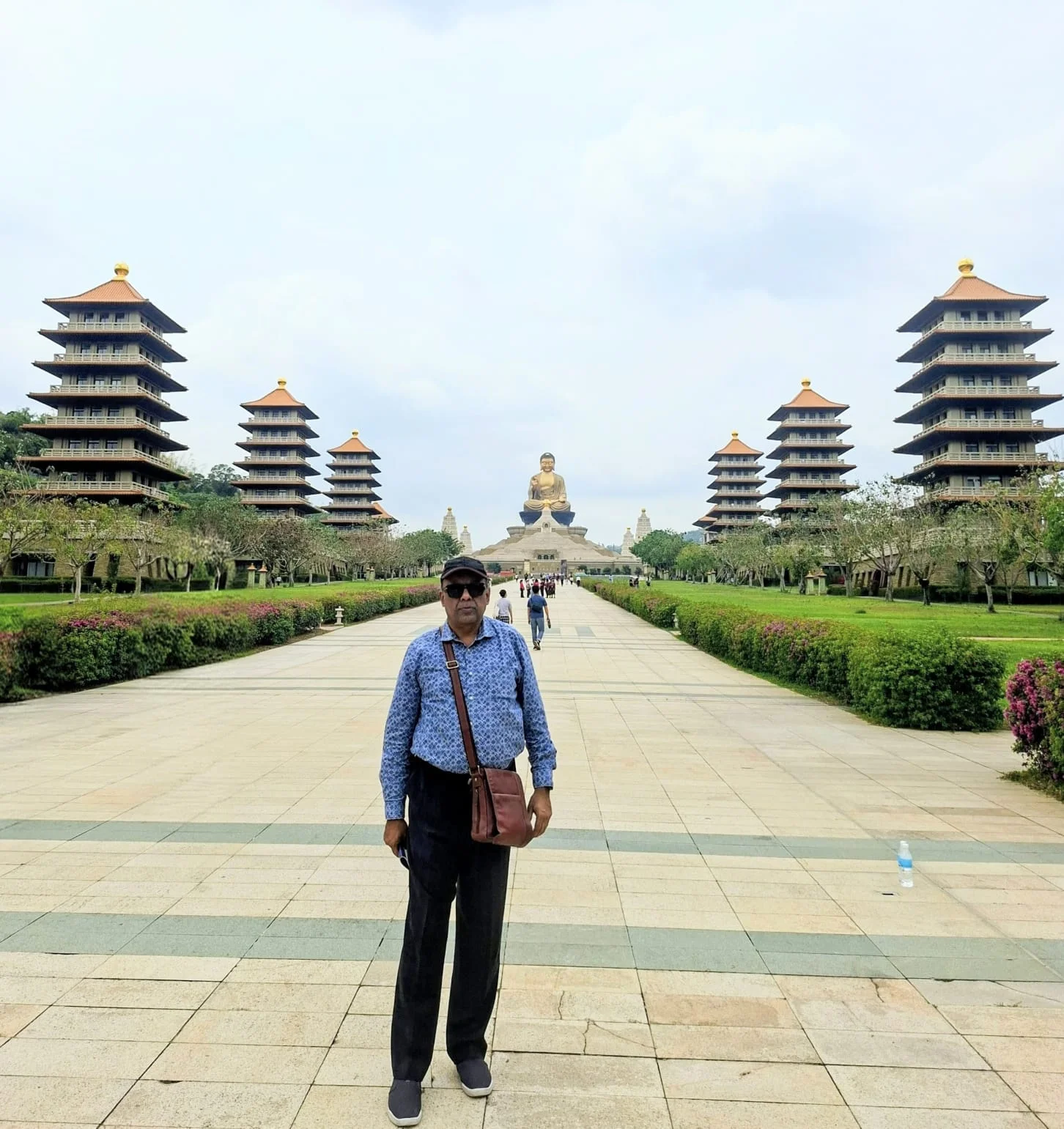
Ceremonial Axis • Kaohsiung
Avenue of the Eight Pagodas
Symmetrical pagodas framing the approach to the colossal bronze Buddha
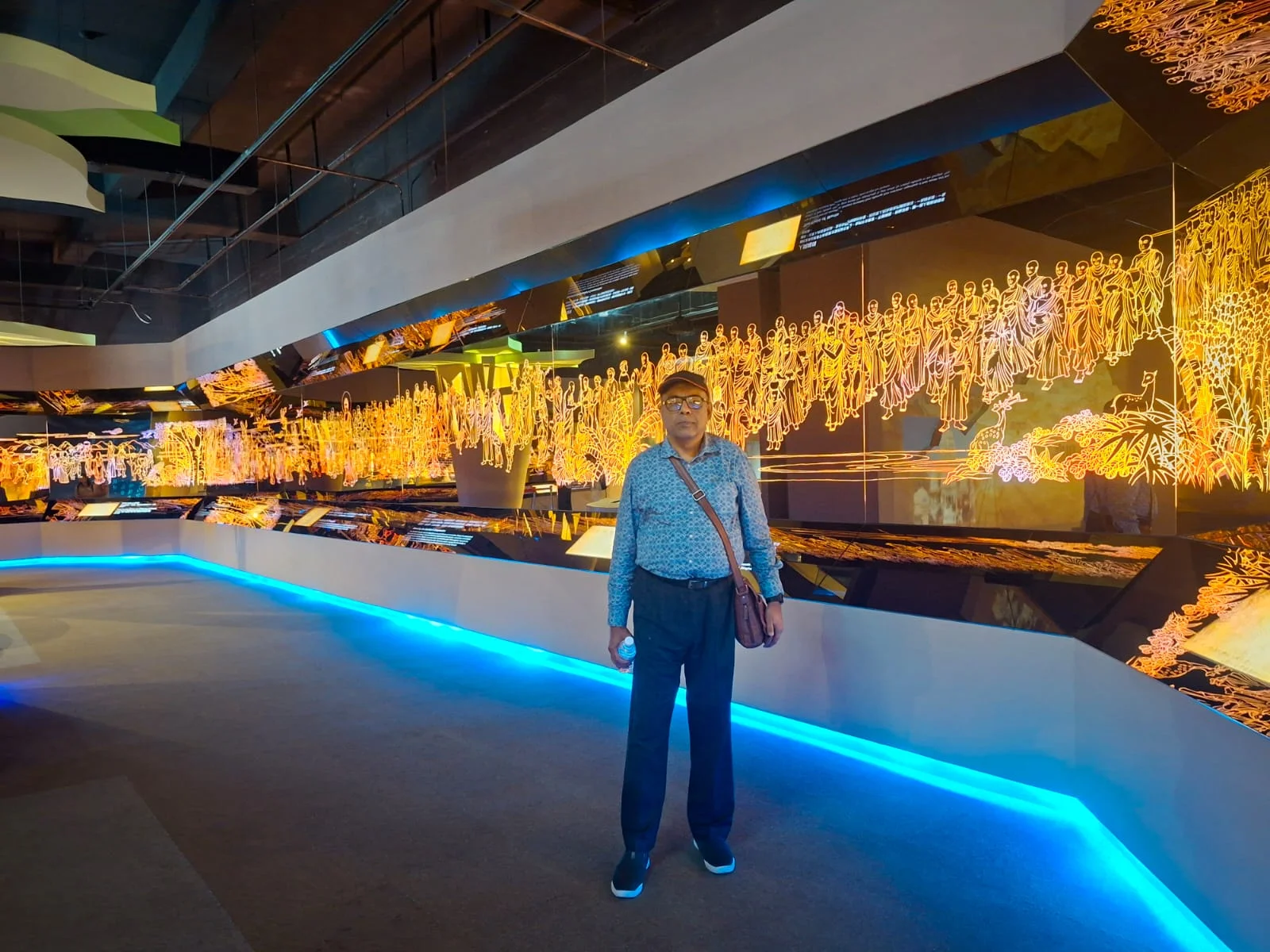
Museum Galleries • Sacred Art
Illuminated Golden Sangha Relief
Gautama Buddha and his monastic disciples depicted in glowing amber light

Taipei Metropolis • Xinyi District
Modern Progress & Timeless Wisdom
Taipei 101 rising beside historic temples where ancient Buddhist values remain vibrant today
TAIWAN: WHERE MODERN PROGRESS MEETS ANCIENT BUDDHIST WISDOM
Living Traditions, Shared Values, and the Continuing Search for Wisdom
Travelling through Taiwan, we were struck by how naturally modern progress coexists with enduring Buddhist traditions.
Amid advanced cities, efficient transport systems, and contemporary lifestyles, temples remain places of prayer, reflection, and community. From the busy courtyards of Longshan Temple to the expansive grounds of Fo Guang Shan, we encountered different expressions of a spiritual tradition that continues to adapt while preserving its central values.
Mahayana Buddhism’s emphasis on compassion, wisdom, and the welfare of all beings resonated throughout our journey. These principles were reflected not only in the temples and religious institutions we visited, but also in the acts of hospitality and kindness that made our experiences memorable.
Taiwan’s Buddhist heritage also reveals the remarkable journey of ideas across Asia. Teachings that originated in India travelled through generations of monks and scholars, took root in China, and developed distinctive expressions in Taiwan. Along the way, they interacted with local cultures and traditions, becoming part of the island’s own religious and cultural identity.
Our journey reminded us that cultural connections are not preserved only in ancient monuments or historical records. They also survive through living traditions, shared values, human kindness, and the continuing search for wisdom.
From the mountain landscapes of Sun Moon Lake to the vibrant spiritual life of Taipei and the welcoming halls of Fo Guang Shan, Taiwan offered us a meaningful glimpse into the enduring legacy of Buddhism across Asia.
Connections of the Heart
Cultural connections survive not only in stone monuments, but through living traditions, human kindness, and the shared search for wisdom.
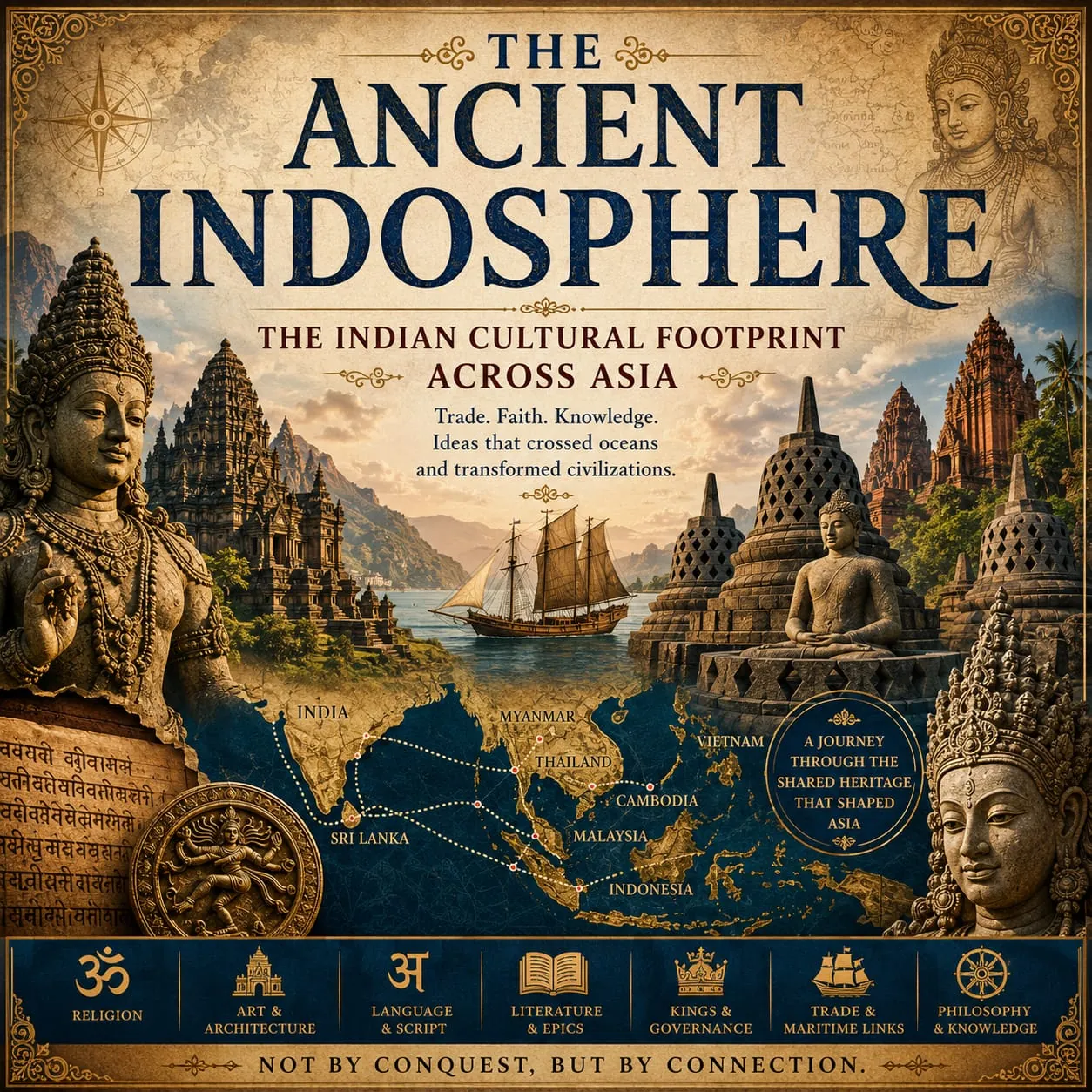
TRAVELLING THROUGH THE TIMELESS LEGACY OF INDIAN CIVILIZATION ACROSS ASIA AND BEYOND
“Not by conquest, but by connection.”
Across ancient temples, sacred stupas, and living cultural landscapes, the timeless traditions born in India continue to illuminate Asia with philosophy, art, and civilizational communion carried not by sword, but through dialogue and spiritual devotion.