
THE RAMA DYNASTY
From the Ramayana to the Royal Heritage of Thailand
Across the gilded spires of the Grand Palace, the sacred cloisters of Wat Phra Kaew, and the towering prang of Wat Arun, the enduring spirit of the Ramayana lives on through the Chakri monarchs—ruling not merely as kings, but as the living embodiment of Lord Rama.
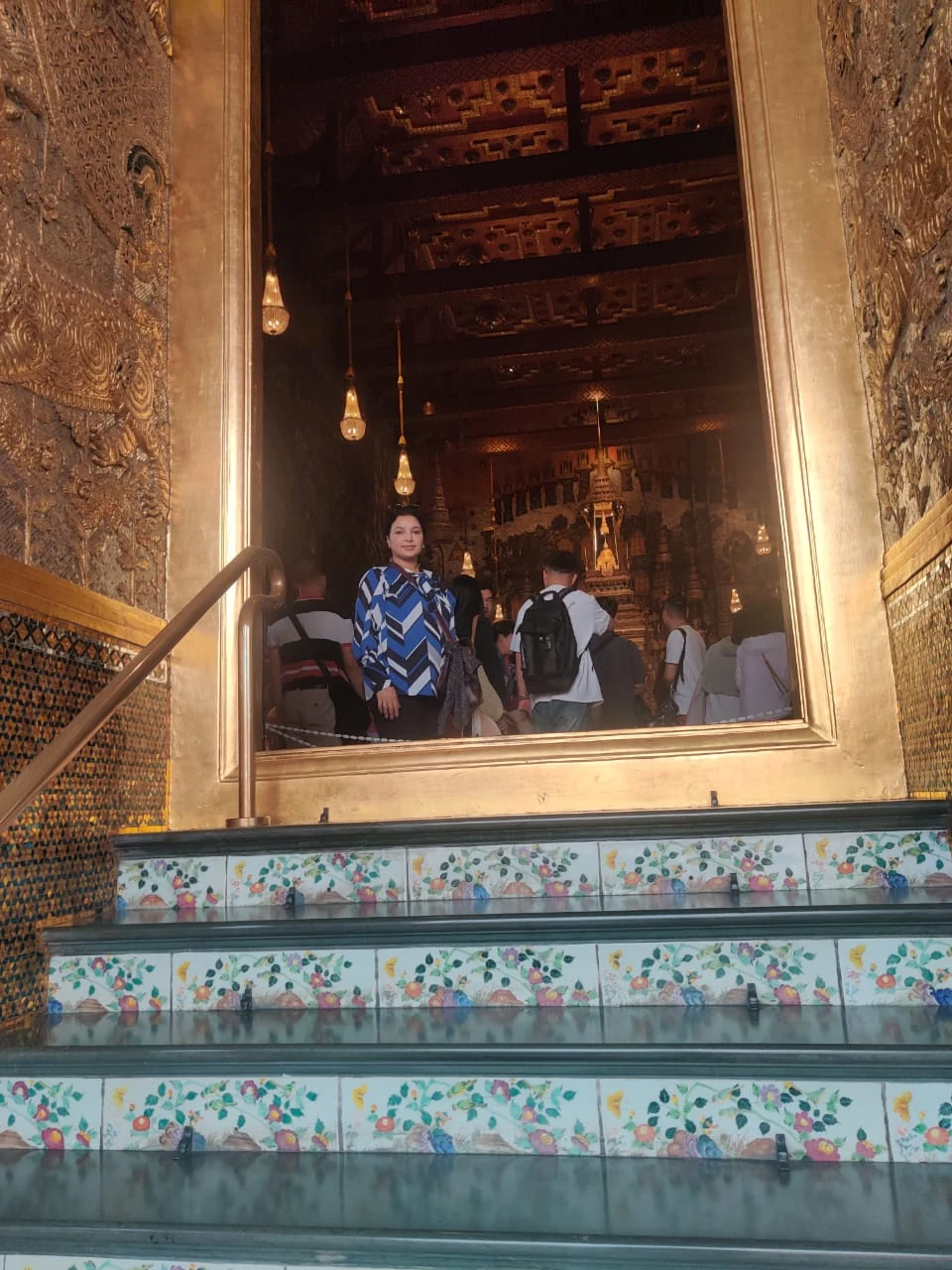
Royal Portal
Golden Gateway of Kings
Gilded guardian threshold leading to the sacred halls of the Grand Palace
THE CHAKRI DYNASTY: RAMA I TO RAMA X
A Living Lineage of Divine Kingship
The story of Thailand's monarchy is uniquely intertwined with the Indian epic tradition. In 1782, King Buddha Yodfa Chulaloke (Rama I) established Bangkok as the new royal capital of Siam and founded the Chakri dynasty, which has reigned unbroken for over two centuries.
Crucially, every monarch of the Chakri dynasty bears the regnal title Rama—a direct reference to Lord Rama, the hero of the ancient Indian epic Ramayana and the seventh avatar of Lord Vishnu. The king is seen not merely as a secular ruler, but as a Dharmaraja (righteous king upholding Buddhist cosmic law) and a Devaraja (divine ruler embodying the moral virtues of Rama).
From Rama I, who personally authored the definitive Thai version of the Ramakien, to King Chulalongkorn (Rama V), who preserved Siam's independence during colonial pressures, to King Bhumibol Adulyadej (Rama IX) and King Maha Vajiralongkorn (Rama X), this royal legacy remains the cornerstone of Thai national identity.
The Devaraja & Dharmaraja Synthesis
In Thailand, the ancient Indian concept of Devaraja was merged seamlessly with Buddhist Theravada ideals, transforming the monarch into an avatar of Rama dedicated to the welfare of his people.
TWO CENTURIES OF SACRED SOVEREIGNTY
The Kings of the Chakri Dynasty (1782 — Present)
For more than 240 years, the Chakri monarchs have steered Thailand through cultural florets, modern statecraft, and global diplomacy while cherishing their deep cultural roots tied to the Ramayana and Buddhist philosophy.
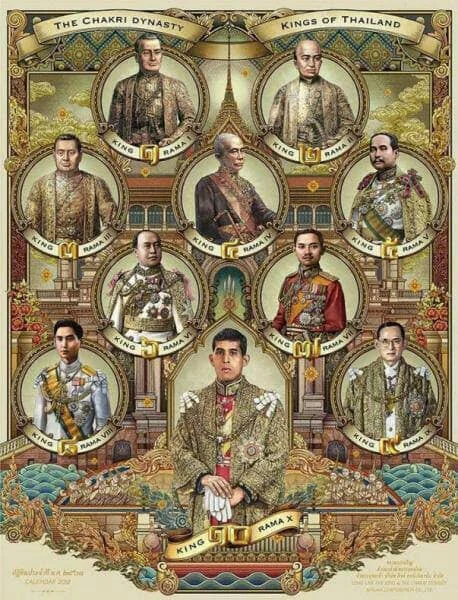
Royal Lineage
Chakri Monarchs of Siam
The royal portrait lineage celebrating Rama I through Rama X
Phra Phutthayotfa Chulalok
Founded Bangkok (Krung Thep), constructed the Grand Palace and Wat Phra Kaew, and personally codified the epic Ramakien in 178 continuous chapters.
Phra Phutthaloetla Naphalai
A golden age of Thai poetry and dramatic arts. Composed classic poetic versions of the Ramakien for royal Khon masked dance theatre.
King Nangklao
Expanded maritime trade across Asia, restored Wat Arun's iconic central prang to 82 metres, and founded public education at Wat Pho.
King Mongkut
Master of Sanskrit, Pali, and modern Western astronomy. Modernized Thai diplomacy and statecraft while preserving traditional spiritual foundations.
King Chulalongkorn The Great
Reformed Thai administration, abolished slavery, built railways, and skillfully preserved Siam's sovereign independence against European colonizers.
King Bhumibol Adulyadej The Great
Reigned for 70 years as the revered Father of the Thai Nation, initiating thousands of royal rural development and agricultural projects.
King Maha Vajiralongkorn
Consecrated with ancient Vedic Brahmin lustrations and Buddhist rites, continuing the sacred unbroken continuity of the Chakri line.
THE GRAND PALACE: A MONUMENT OF DIVINE SOVEREIGNTY
A Sacred Architectural Universe on the Chao Phraya River
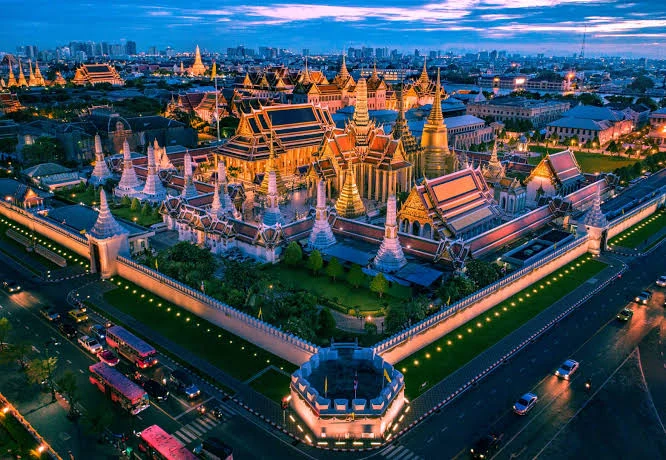
Panoramic Splendor
The Grand Palace Enclosure
The golden walled royal city established by King Rama I on the banks of the Chao Phraya River
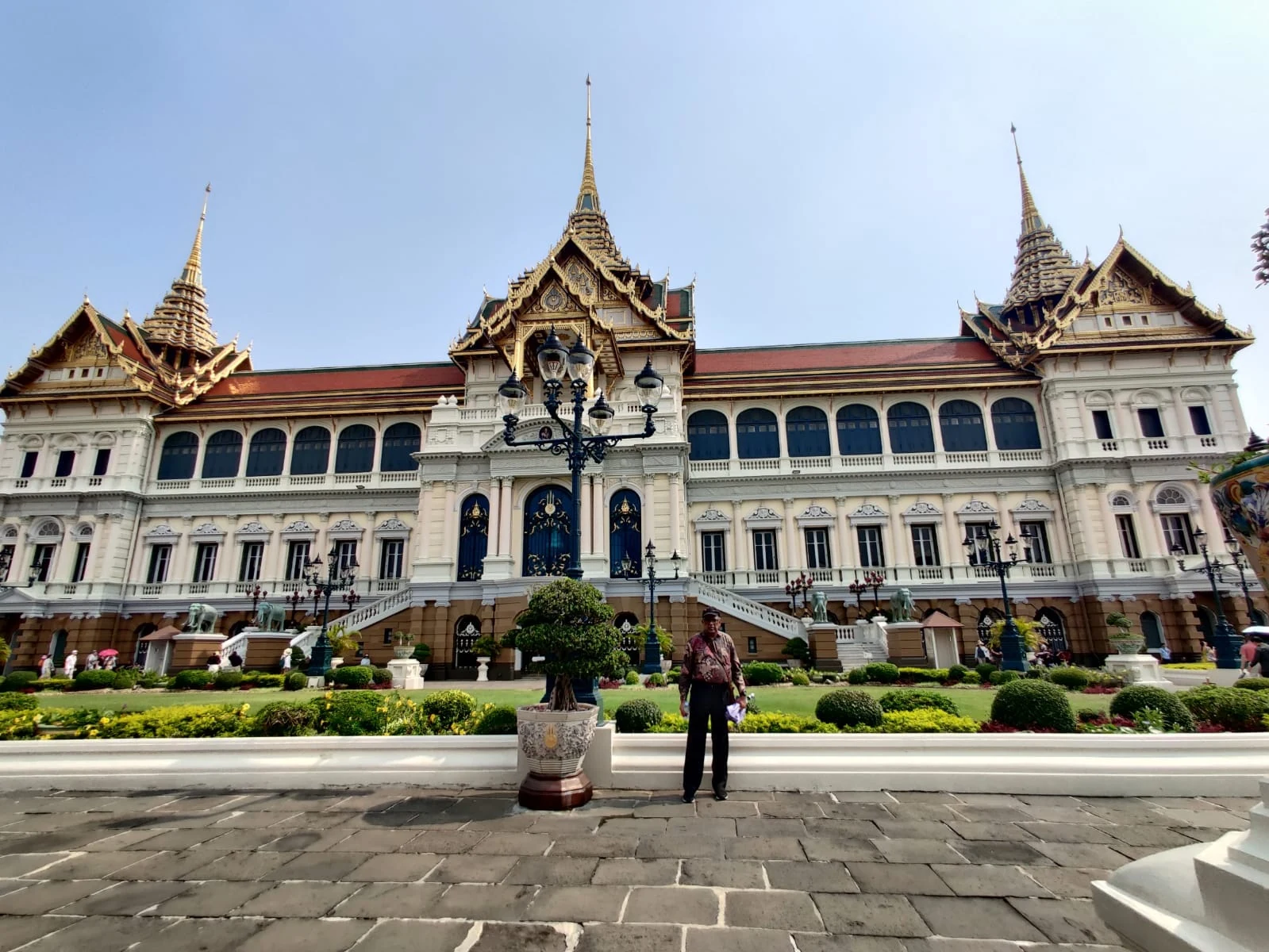
Covering 218,400 square metres enclosed by towering white crenellated walls, the Grand Palace has served as the official residence of the Kings of Siam since 1782. Rather than a single monolithic palace, it is a magnificent labyrinth of royal residences, throne halls, government offices, and the sacred Temple of the Emerald Buddha.
The compound's most striking architectural masterpiece is the Chakri Maha Prasat. Commissioned by King Rama V in 1876, its lower levels were designed by British architect John Clunich in the Italian Neoclassical Renaissance style, while its roof crowns the structure with traditional multi-tiered Thai gilded spires (prasat)—symbolizing the harmonious balance of Western modernization and sacred Siamese tradition.
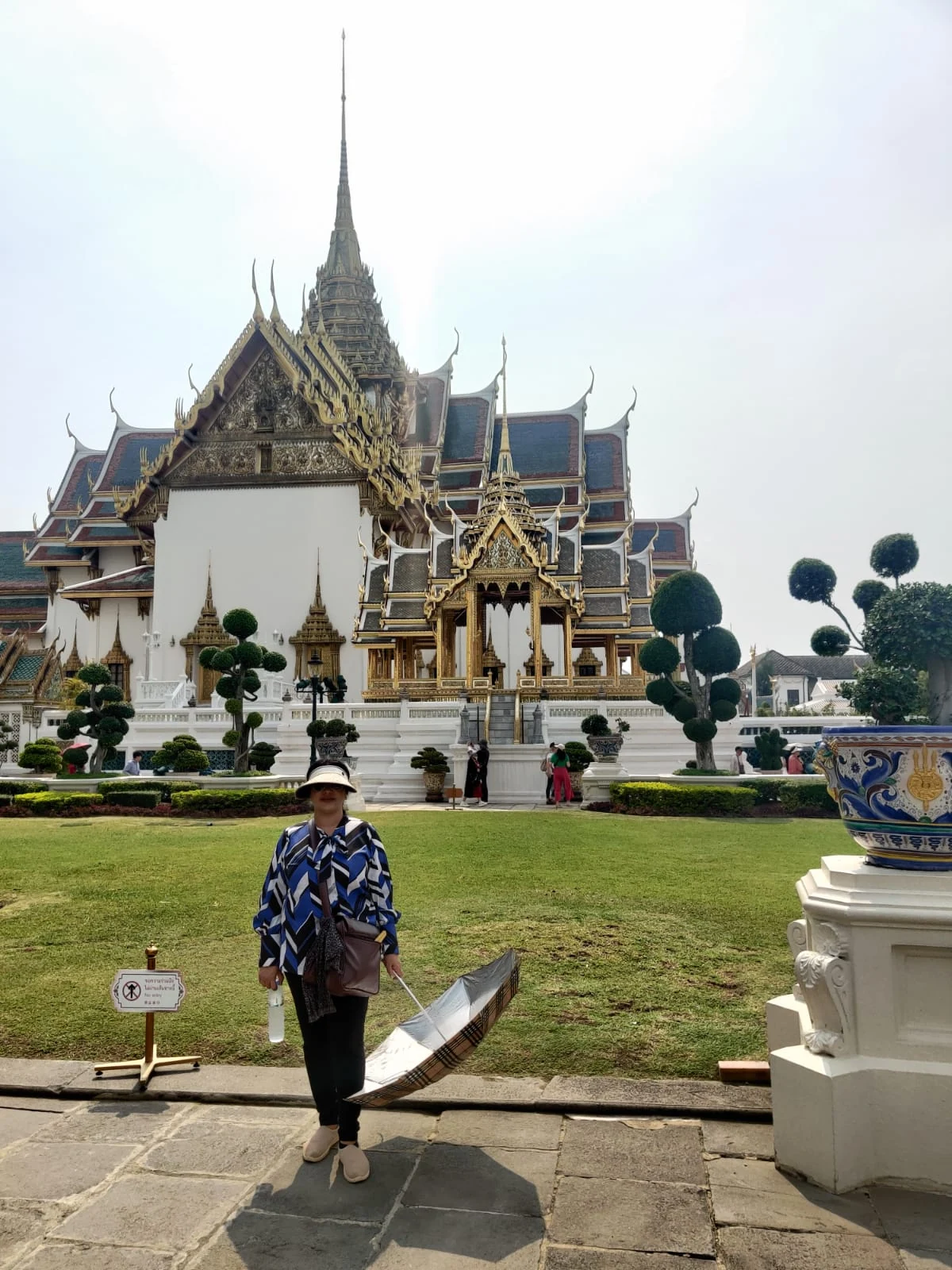
Palace Citadel
Dusit Maha Prasat Throne Hall
Dusit Maha Prasat Throne Hall with its soaring tiered spires and serene palace gardens
DUSIT MAHA PRASAT: CITADEL OF THE MONARCHY
Fortress Walls, Tiered Spires & Ceremonial Grounds
Walking through its magnificent grounds, we were struck by the extraordinary craftsmanship, elaborate ornamentation, and spiritual symbolism that define Thai royal architecture.
Built by King Rama I in 1790 to replace an earlier wooden throne hall, Dusit Maha Prasat is the oldest surviving throne hall in the Grand Palace complex. Designed on a cruciform plan, its soaring multi-tiered roof culminates in a seven-tiered golden spire (prasat) inspired by the ancient palaces of Ayutthaya.
The palace is more than a royal residence. It reflects centuries of Thai history, artistic achievement, Buddhist devotion, and cultural exchange with the wider Indian-influenced world of Southeast Asia.
Ancient Ayutthaya Blueprint
Constructed to identical royal proportions as the Suriyamarind Throne Hall of Ayutthaya, serving as the setting for royal lying-in-state and coronation anniversaries.
RAMA I & THE RAMAKIEN: EPIC CLOISTER MURALS
How India's Greatest Epic Became Thailand's Cultural Soul
The Ramayana arrived in Thailand centuries before the Chakri dynasty, carried across maritime trade routes and through ancient Khmer and Dvaravati cultural exchanges. But it was King Rama I who gave the epic its definitive Siamese form: the Ramakien (Glory of Rama).
In the covered cloisters that wrap around Wat Phra Kaew, visitors walk along the longest single continuous mural in the world. Across 178 intricately painted bays, Thai master artists captured the grand saga of Phra Ram (Rama), his loyal consort Nang Sida (Sita), his devoted brother Phra Lak (Lakshmana), and the supernatural warrior-monkey Hanuman fighting the multi-headed demon king Thotsakan (Ravana).
Guarding the portals of these murals are colossal six-metre-tall Yaksha guardians. Adorned in glittering glass mosaics and golden armour, these fearsome demon figures—straight from Hindu mythology—stand guard against malevolent spirits, ensuring peace throughout the sacred royal chapel.
“The Ramakien is not merely an imported legend; it is the moral compass and aesthetic soul of Thai courtly dance, royal ceremonies, and national virtue.”
One Kilometre of Living Epic Art
Restored meticulously for royal anniversaries, the murals depict the complete journey of Phra Ram, including Hanuman's flight to Lanka, the battle of Ayodhya, and the ultimate triumph of righteousness over chaos.
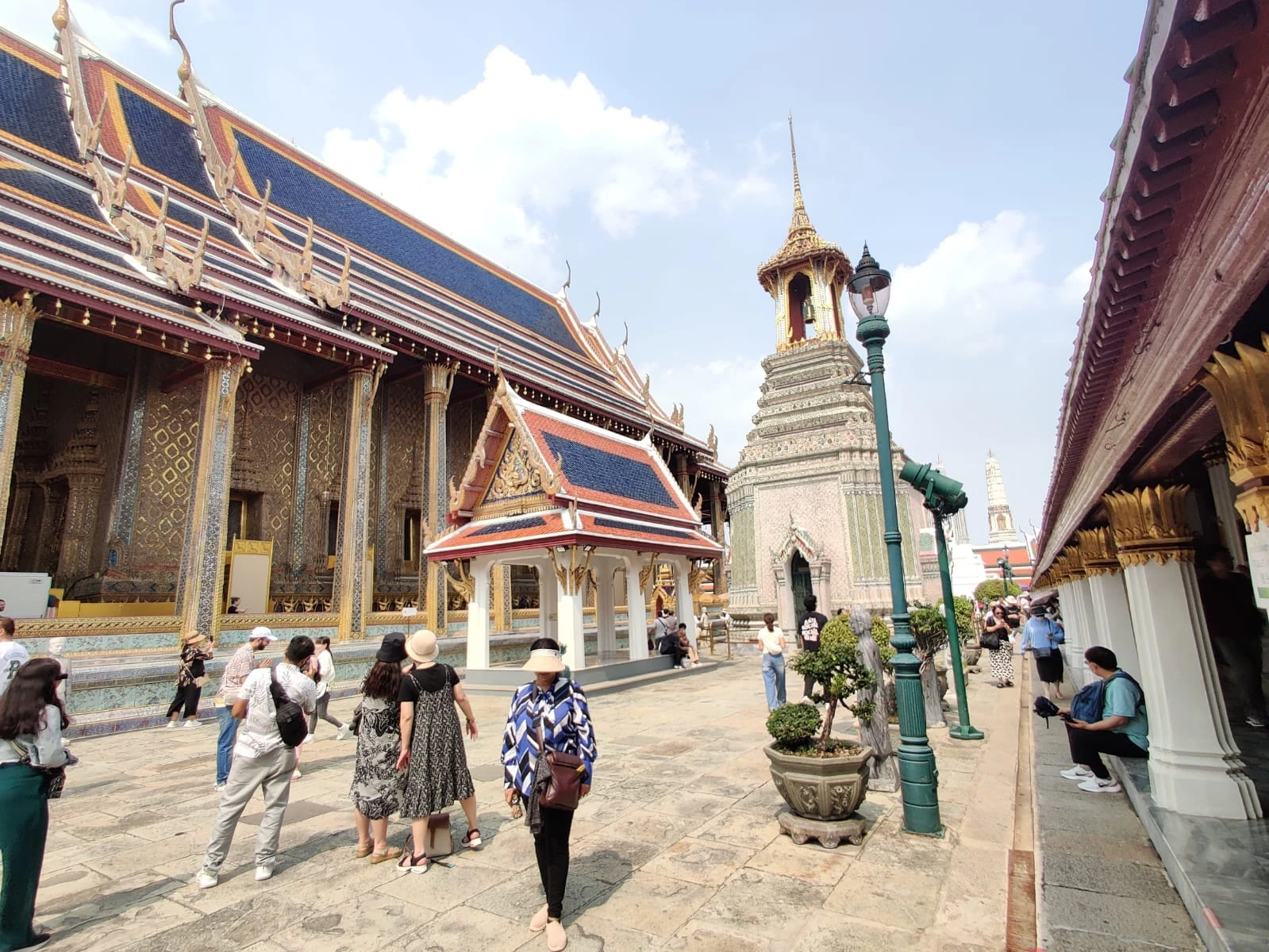
Sacred Cloisters
Wat Phra Kaew Courtyard & Belfry
Courtyard corridors decorated with the full narrative frescoes of the epic Ramakien
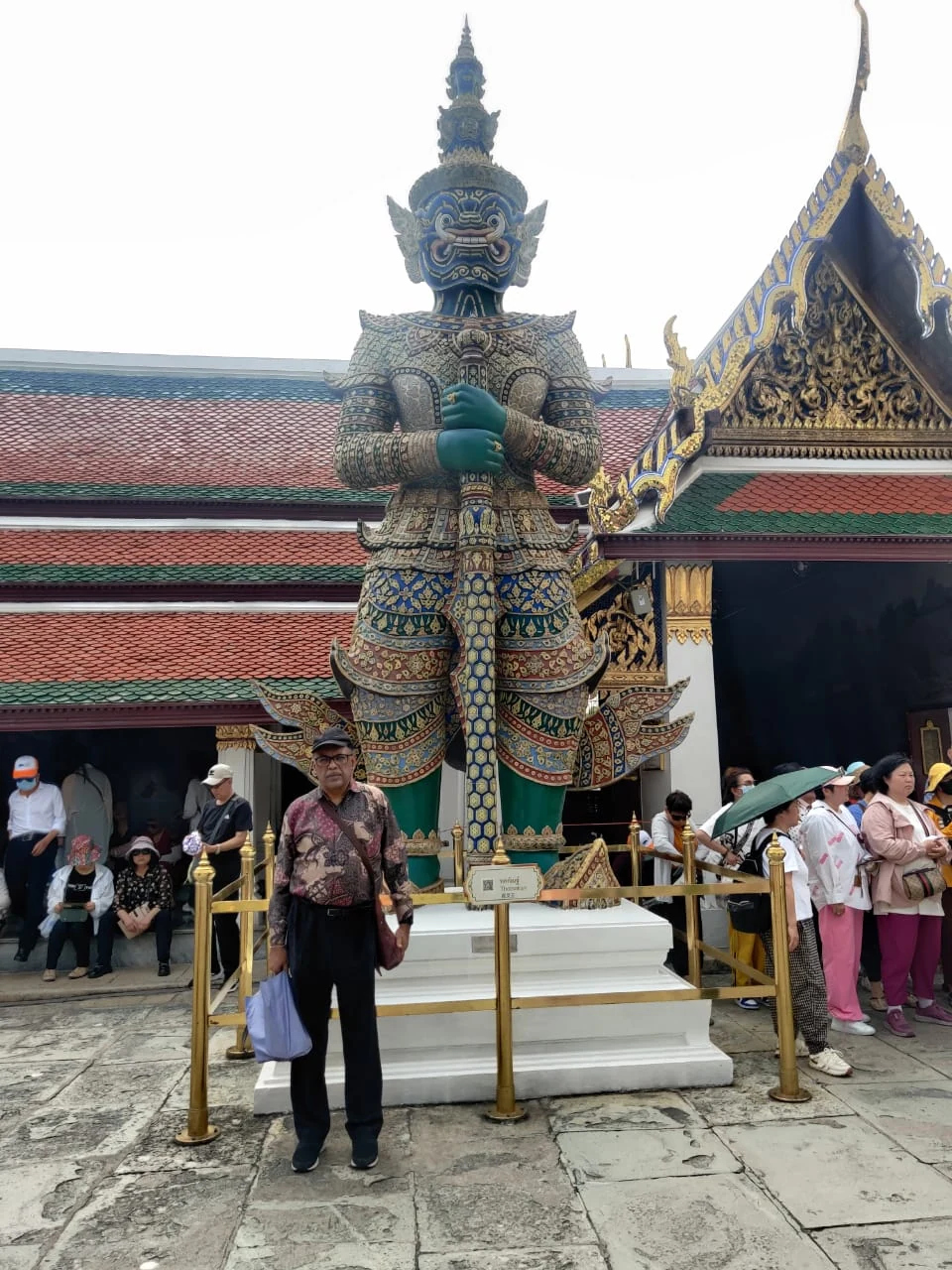
Wat Phra Kaew Portal
Yaksha Demon Guardian (Thotsakan)
Towering mythical giant standing eternal vigil over the sacred murals of the Ramakien
WAT PHRA KAEW & THE EMERALD BUDDHA
Phra Kaew Morakot: The Sovereign Talisman of Thailand
Wat Phra Kaew (The Temple of the Emerald Buddha) is the most sacred Buddhist temple in Thailand. Unlike ordinary Thai monasteries, it contains no living quarters for monks; it was built solely as the private royal chapel of the Chakri kings, following the ancient model of the royal palace in Sukhothai and Ayutthaya.
In the central Ubosot sits the revered Phra Kaew Morakot (The Emerald Buddha). Despite its name, the image is carved not from emerald, but from a single block of dark green jasper or jade. Elevated eleven metres above the marble floor on a gilded wood throne, the image is considered the supreme palladium (protective guardian) of the Thai nation.
Three times a year, in an unbroken royal tradition, the King of Thailand personally ascends the altar to change the golden robes of the Emerald Buddha according to the seasons: the hot season robe of diamond-encrusted gold, the rainy season monastic robe of gilded enamel, and the cool season mantle of pure solid gold.
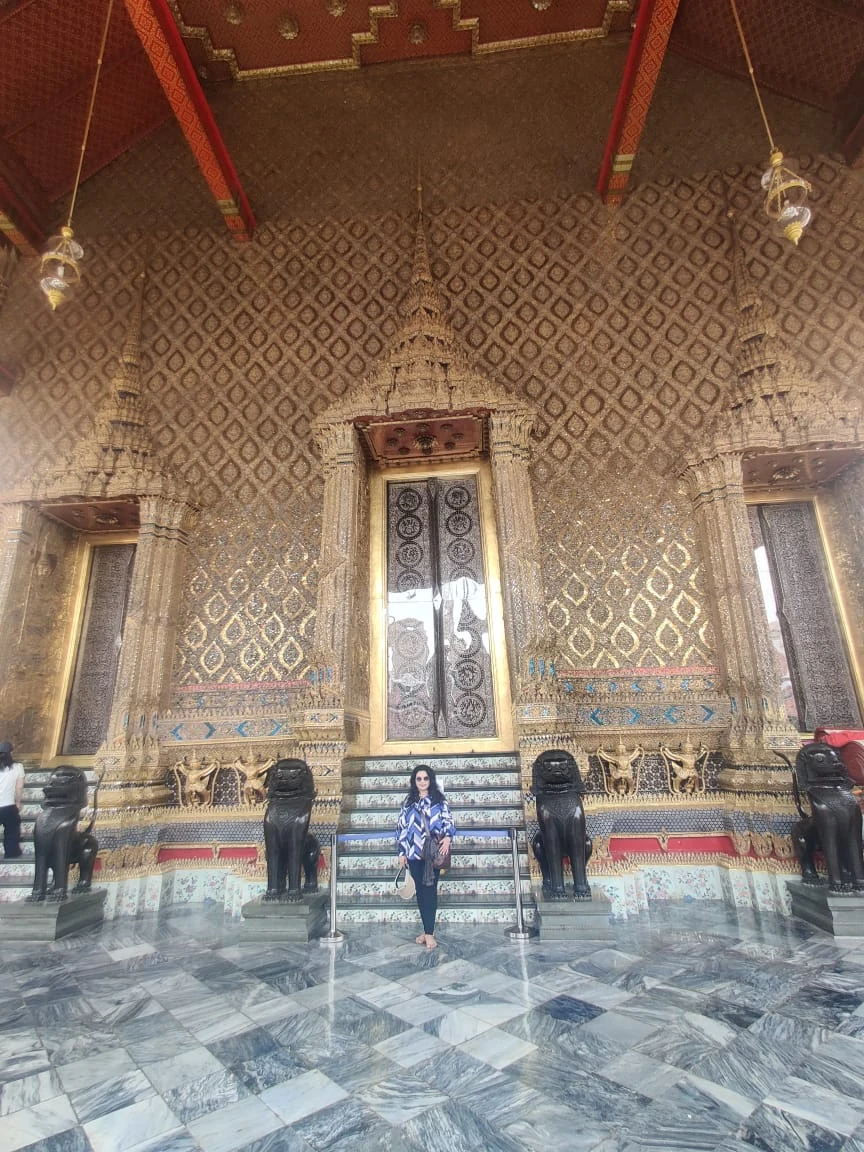
Ubosot Exterior
The Royal Ordination Hall
Gilded teak pediments, porcelain roof finials, and gold-leaf garudas encircling the sanctuary
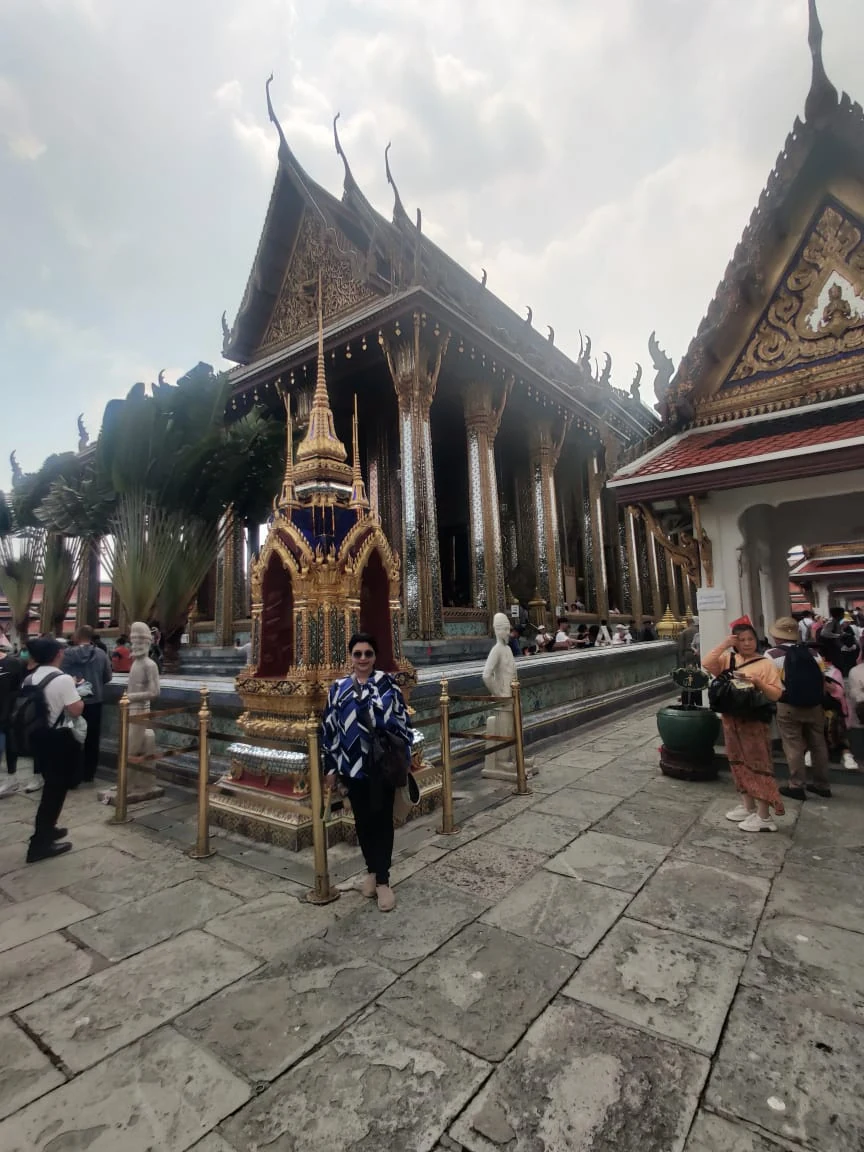
Inner Sanctum
The Emerald Buddha Altar
Enshrined atop an eleven-metre golden altar flanked by crowned royal attendant Buddhas
CEREMONIAL FOUNDATIONS: DEVARAJA & COURT BRAHMINS
The Royal Garuda Emblem, Vishnu Avatars & Vedic Court Rites
A profound feature of Thai kingship is the harmonious integration of Vedic Hindu ritual with Theravada Buddhist ethics. For centuries, the Thai royal court has maintained an official college of royal court Brahmins (Phra Ratchakhru). These Brahmins oversee crucial state ceremonies, including the Royal Coronation, the Tonsure Rites, and the annual Royal Ploughing Ceremony (Raek Na Khwan).
During the coronation of King Rama X, sacred waters gathered from holy rivers across Thailand were blessed by Buddhist monks and consecrated by court Brahmins who presented the monarch with the Great Crown of Victory, the Sword of Victory, and the Royal Sceptre—symbols mirroring the ancient Rajasuya and Ashvamedha rituals of Vedic India.
Furthermore, the Royal Coat of Arms of Thailand features the golden Garuda (Phra Khrut Pha)—the celestial mount of Lord Vishnu. The presence of Garuda on royal seals, coins, and official decrees visually reminds the nation that the King rules with the divine power and benevolent protection of Vishnu.
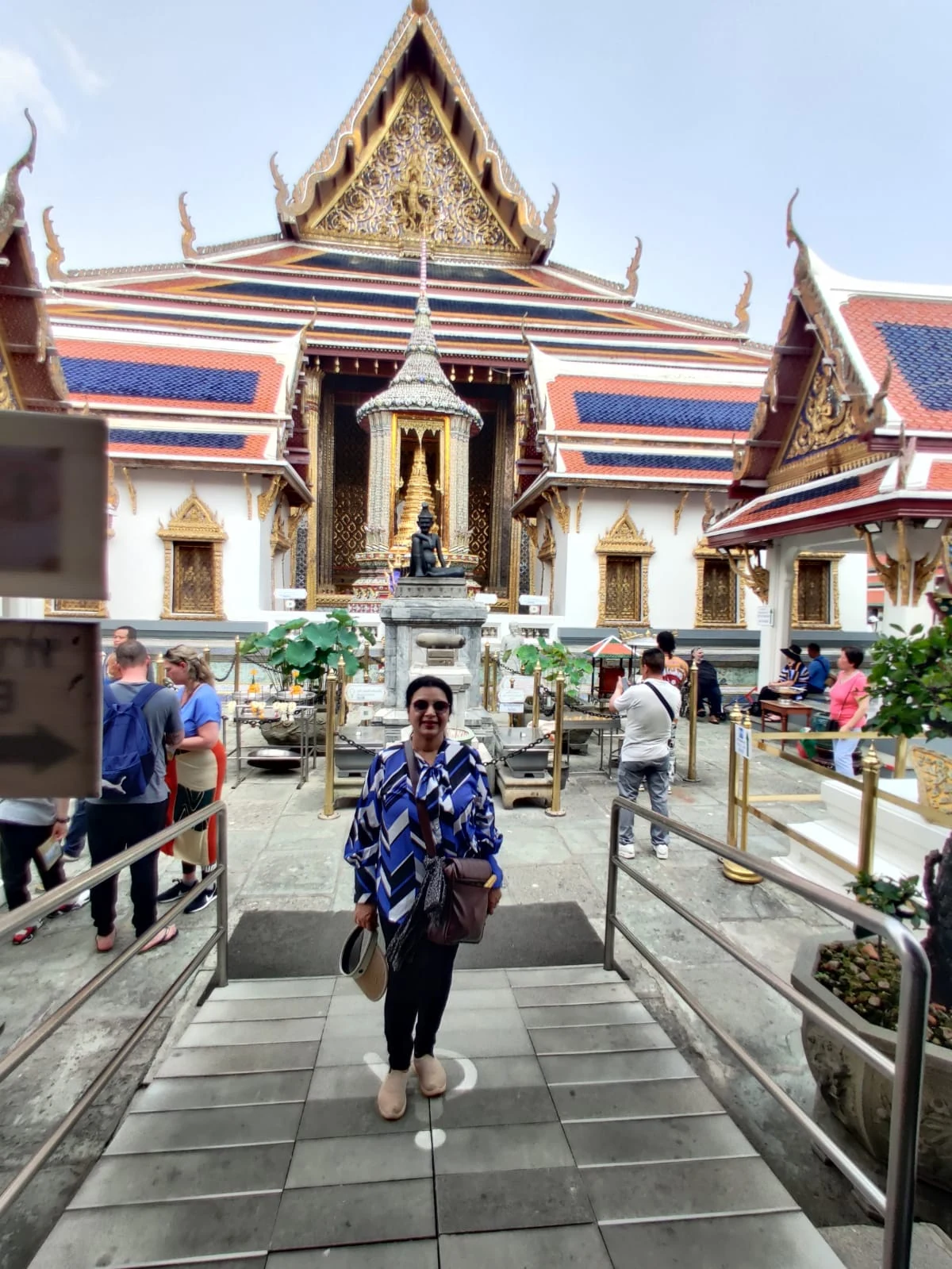
Sacred Healing
Hermit Jivaka Kumarabhacca
Ayurvedic physician to Gautama Buddha and founding patron of Thai healing arts
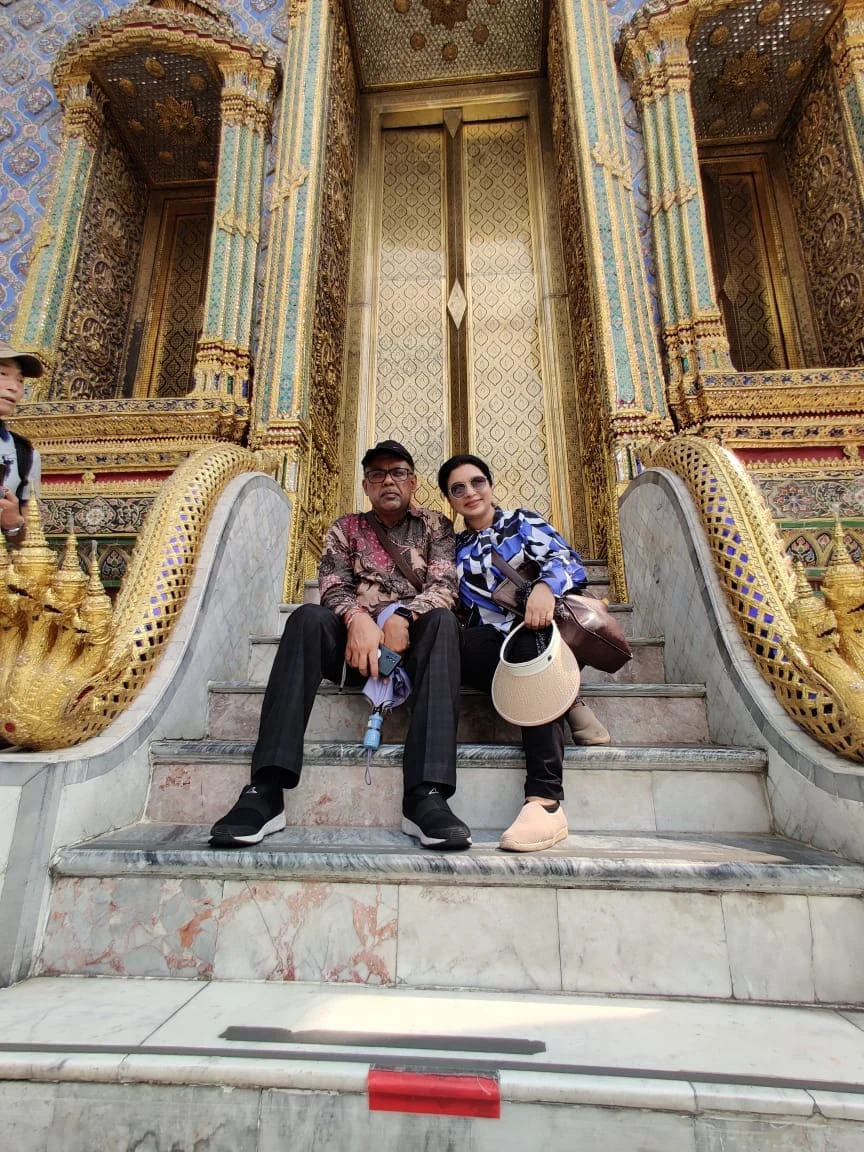
Royal Sanctuary
Steps of the Naga Balustrade
Resting on the golden multi-headed Naga stairs of the royal sanctuary at the Grand Palace
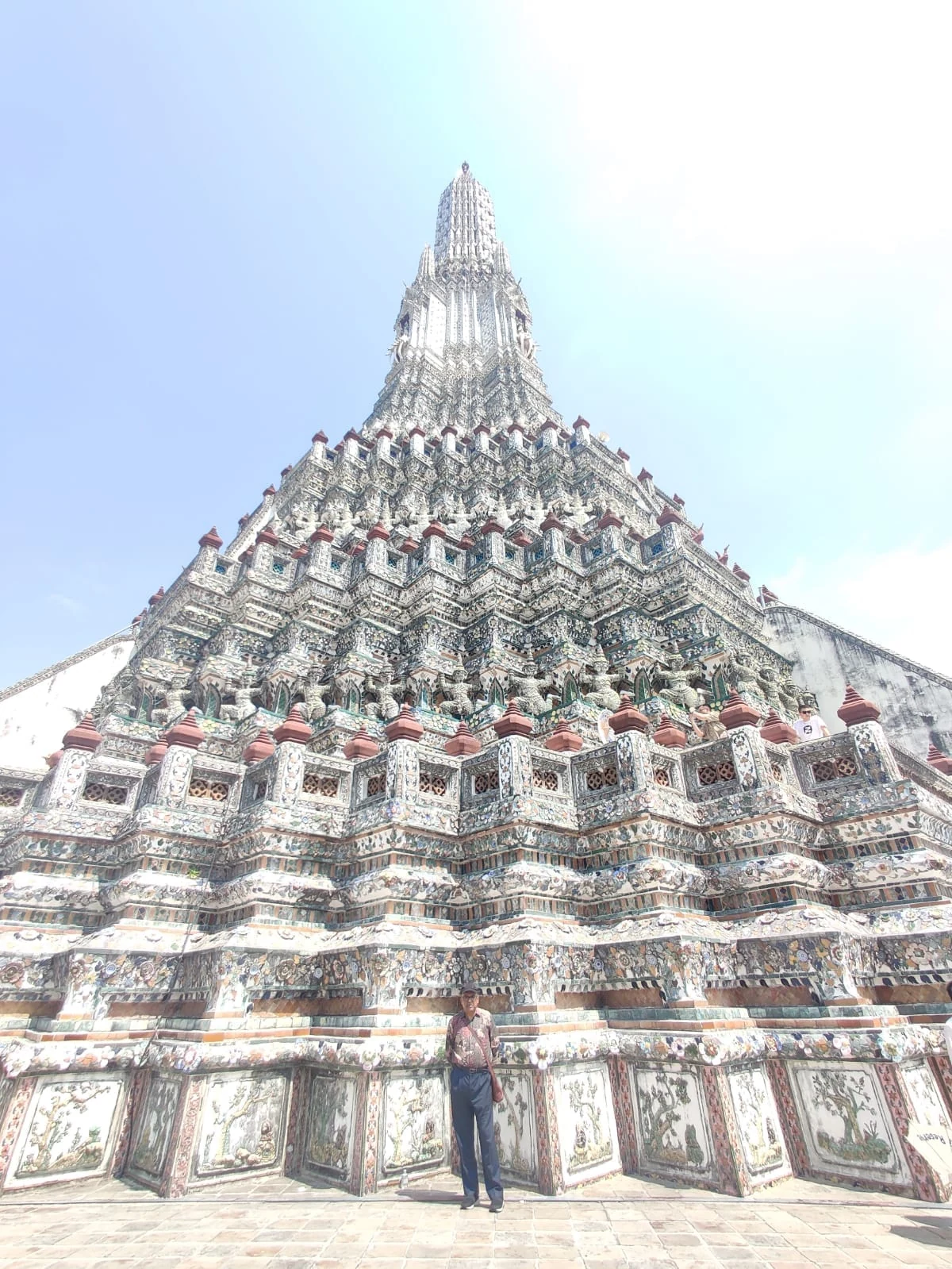
Wat Arun Central Prang
Mount Meru in Porcelain Mosaics
82-metre sacred spire adorned with Chinese porcelain salvaged from historic maritime trade
WAT ARUN: THE TEMPLE OF DAWN
Porcelain-Clad Mount Meru on the River of Kings
Across the Chao Phraya River from the Grand Palace rises Wat Arun Ratchawararam—the Temple of Dawn. Named after Aruna, the Hindu god of dawn who drives the chariot of the sun deity Surya, this iconic monument traces its history back to the Ayutthaya period.
The temple's centerpiece is a colossal 82-metre Khmer-style prang (tower). In Buddhist and Hindu cosmology, the prang represents Mount Meru, the celestial center of the universe surrounded by four oceans. Four smaller satellite prangs represent the four cardinal directions and house images of Phra Phai (Vayu, god of the wind).
What makes Wat Arun globally unique is its surface ornament: every inch of the soaring prang is encrusted with millions of fragments of multi-colored Chinese porcelain, seashells, and glazed ceramics. Originally used as ballast in ancient Chinese merchant ships visiting Siam, these porcelain shards were lovingly repurposed by King Rama III to create intricate lotus flowers, guardian demons, and heavenly apsaras that sparkle as dawn sunlight breaks across the water.
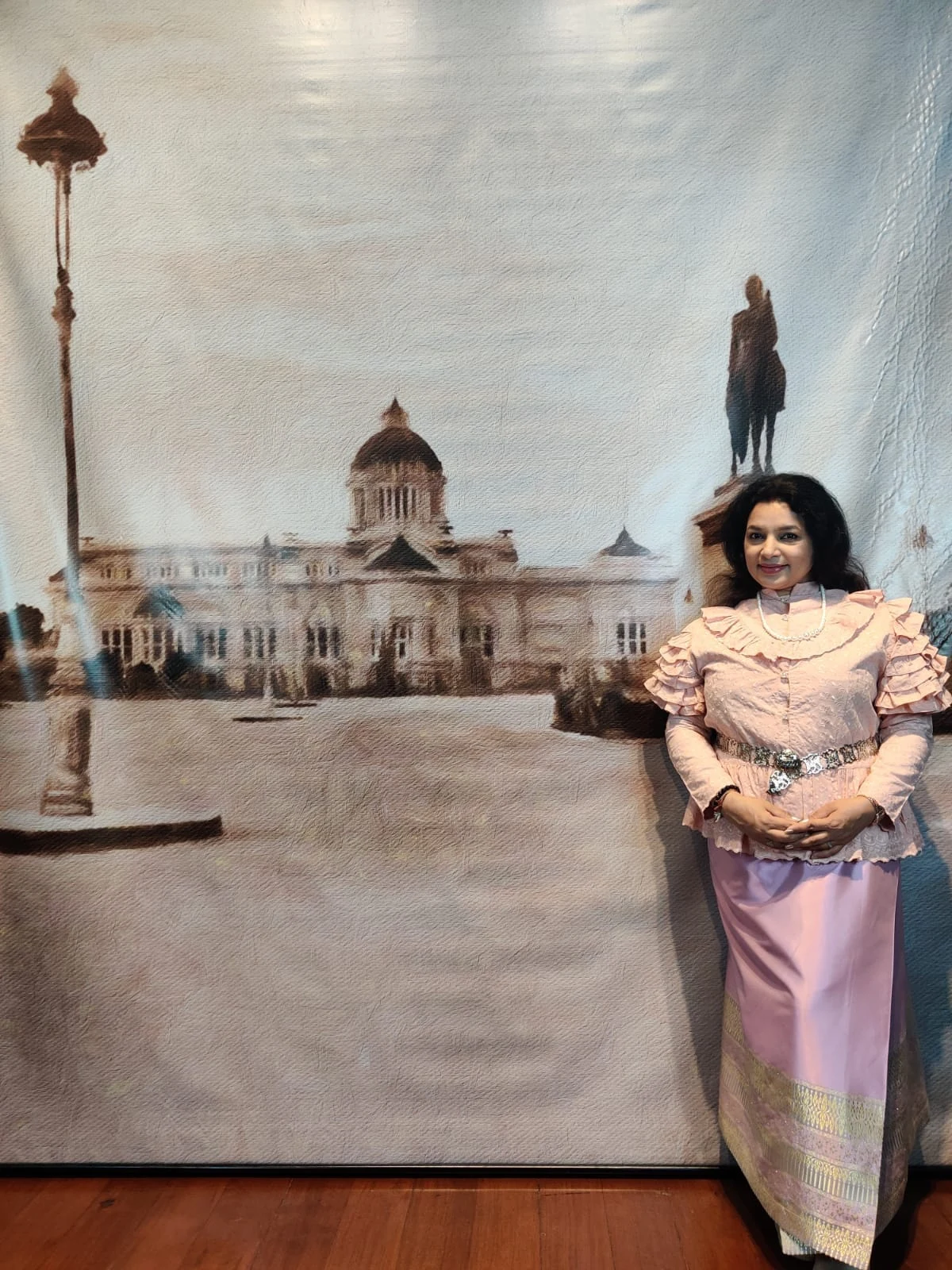
Chut Thai Silk Elegance
Visitors and pilgrims celebrate ancient traditions by dressing in exquisite Thai silk attire inspired by royal court fashion.
ROYAL PALACE & TEMPLE EXPLORER GUIDE
Essential Etiquette, Dress Code & River Navigation
Visiting the Grand Palace and sacred royal temples in Bangkok requires mindfulness and respect for Thailand's revered monarchical and religious traditions. Here are essential insights for an unforgettable journey.
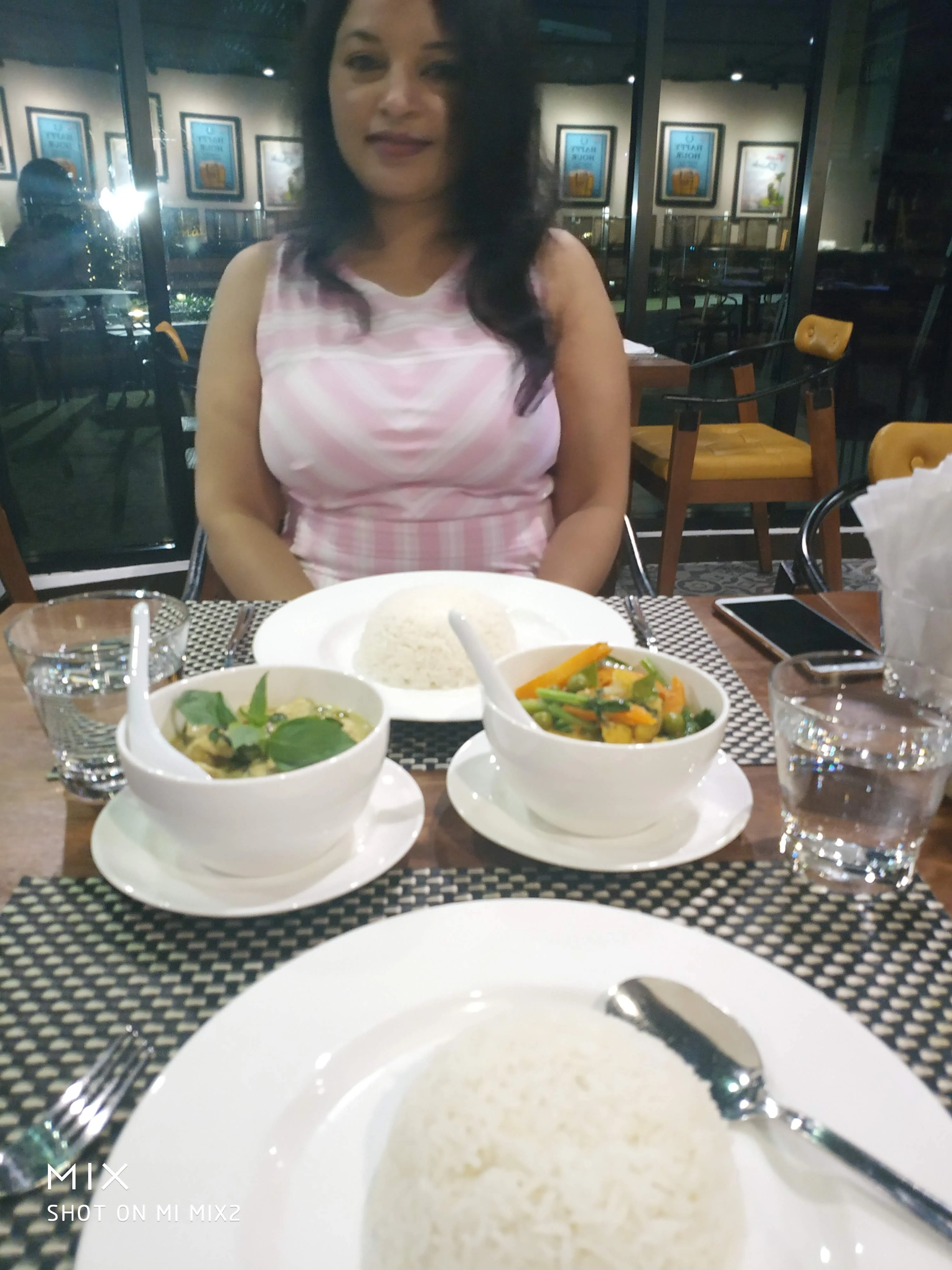
Royal Cuisine
Gastronomic Syncretism
Green curry balancing Indian aromatics with fresh coconut cream and Thai sweet basil
Strict Dress Code
Shoulders and knees must be completely covered. Sleeveless shirts, tank tops, short skirts, and torn jeans are strictly forbidden at the Grand Palace.
Photography Restrictions
Photography is prohibited inside the inner ordination hall of the Emerald Buddha. Always sit with feet tucked behind you, never pointed toward sacred statues.
Chao Phraya Express Boat
Board the orange-flag public boat or blue-flag tourist boat to Tha Chang Pier for the Grand Palace, or Tha Tien Pier for the cross-river ferry to Wat Arun.
Early Morning Advantage
Arrive at the Grand Palace ticket gate at 8:30 AM to explore in morning tranquility, then head across the river to Wat Arun for dramatic late afternoon light.
Official Gate Entry Only
Never believe outside tuk-tuk drivers claiming the palace is 'closed today for ceremony'. The Grand Palace is open daily from 8:30 AM to 3:30 PM.
Royal Thai Flavors
Savor Massaman curry—a regal recipe infused with cardamom, cinnamon, and cloves carried by ancient Indian and Persian traders to the court of Ayutthaya.
Chakri Legacy
Living continuity of Rama kings since the founding of Bangkok in 1782
218,400 sq m
Walled compound housing the Emerald Buddha and royal throne halls
178 Panels
Continuous cloister paintings illustrating the entire Ramakien epic
82m Prang
Cosmic Mount Meru spire clad in millions of Chinese porcelain tiles
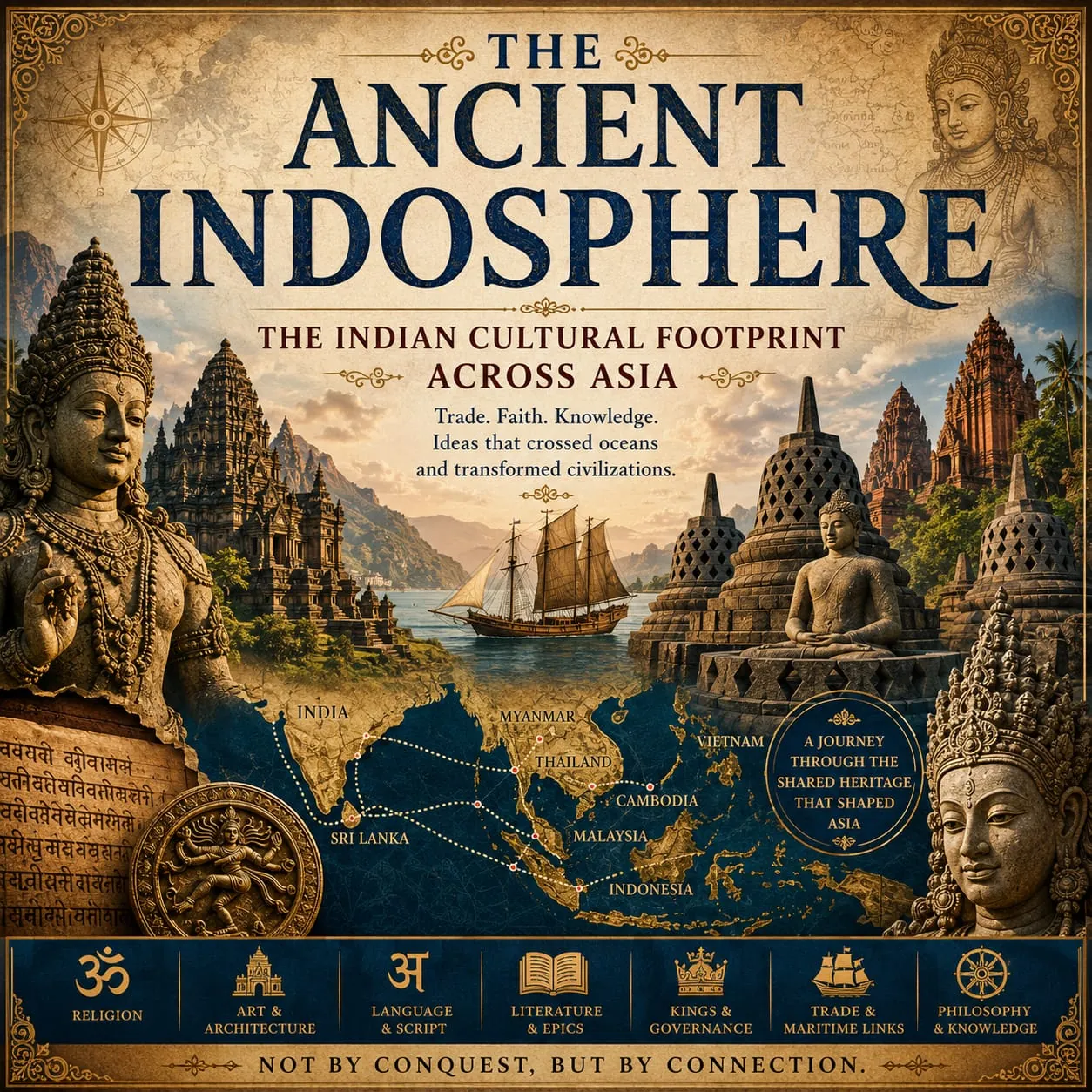
TRAVELLING THROUGH THE TIMELESS LEGACY OF INDIAN CIVILIZATION ACROSS ASIA AND BEYOND
“Not by conquest, but by connection.”
Across ancient temples, sacred stupas, and living cultural landscapes, the timeless traditions born in India continue to illuminate Asia with philosophy, art, and civilizational communion carried not by sword, but through dialogue and spiritual devotion.