
Uluwatu Temple and the Timeless Ramayana Performance
On a Towering Cliff Overlooking the Indian Ocean
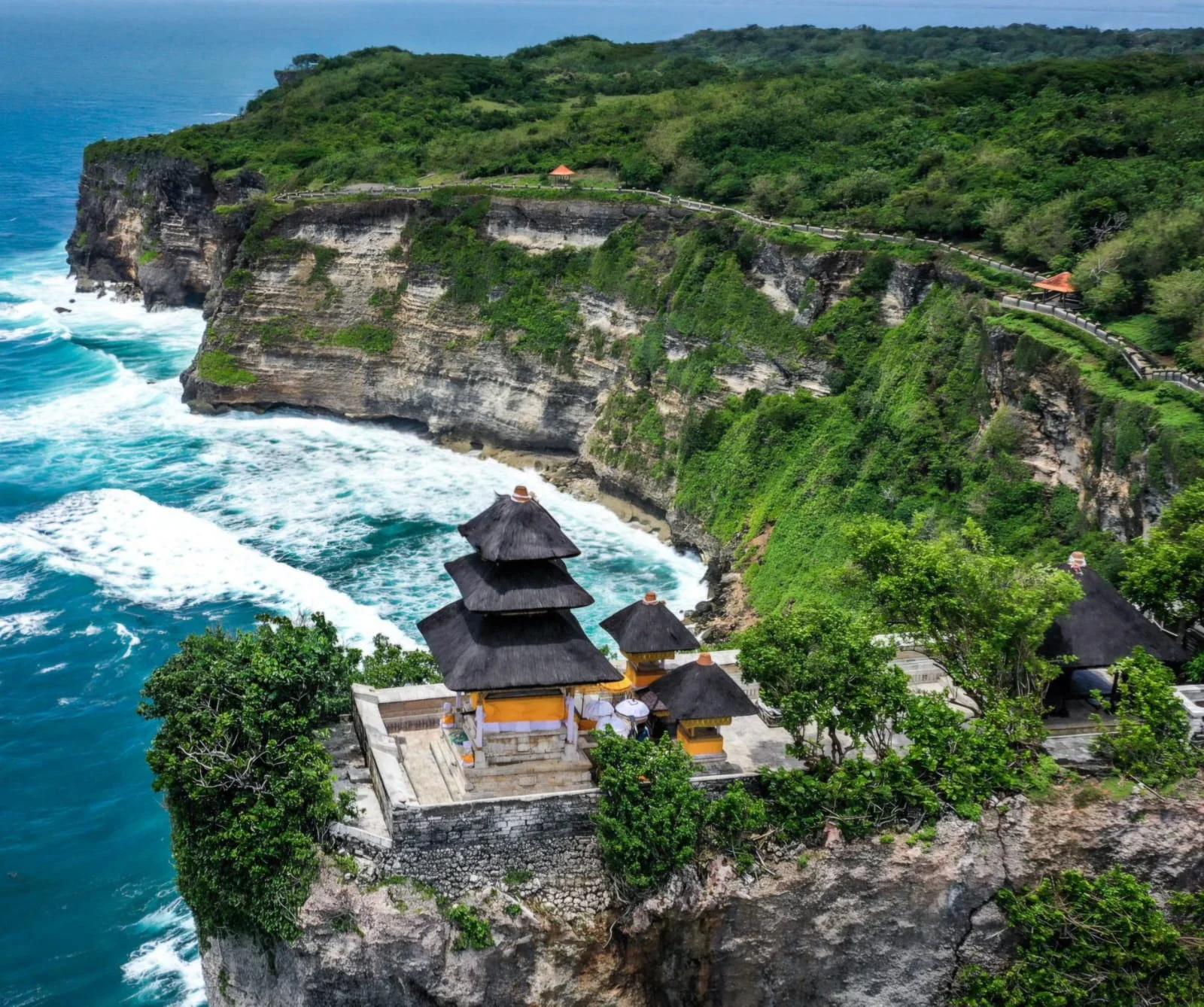
Perched dramatically on a towering cliff overlooking the Indian Ocean, Uluwatu Temple reflects Bali’s deep-rooted Hindu traditions, the sage Dang Hyang Nirartha who attained moksha, the hypnotic sunset Kecak Ramayana performance, and rich Balinese culinary traditions.
Pura Luhur Uluwatu Clifftop
Badung Regency, Bali, Indonesia
Uluwatu Temple: On a Towering Cliff Overlooking the Indian Ocean
Pura Luhur Uluwatu
The dramatic 70-meter limestone cliff overlooking the southern expanse of the Indian Ocean
Perched dramatically on a towering cliff overlooking the Indian Ocean, Uluwatu Temple is one of the most sacred and visually stunning temples in Bali. Dedicated to the sea spirits and believed to guard the island from evil forces, the temple reflects Bali’s deep-rooted Hindu traditions that trace their origins to ancient Indian influence.
The breathtaking setting, crashing waves below, and golden sunsets create an atmosphere of spirituality and grandeur that leaves a lasting impression on visitors.
As one of Bali’s nine directional temples (Sad Kahyangan), Pura Luhur Uluwatu protects the island against evil spirits from the southwest, standing guard where rugged limestone precipices drop straight into the Indian Ocean.
The Sage Who Disappeared Into the Sea
Sacred Stone Sanctuary & Fire Altar
The ceremonial stone sanctum grounds where tradition commemorates the sage Dang Hyang Nirartha
Uluwatu Temple stands on a cliff above the Indian Ocean and is traditionally associated with the revered Hindu priest Dang Hyang Nirartha.
According to Balinese tradition, the 16th-century priest came to Uluwatu during his spiritual journey across Bali and chose the cliff as a place for meditation and his final spiritual retreat. Local tradition says that he attained moksha—spiritual liberation—at this very spot, with his physical presence mysteriously disappearing.
“Local tradition says that he attained moksha—spiritual liberation—at this very spot, with his physical presence mysteriously disappearing.”
RAMAYANA AT ULUWATU TEMPLE
THE LIVING EPIC AT TWILIGHT
The Hypnotic Chant of Cak
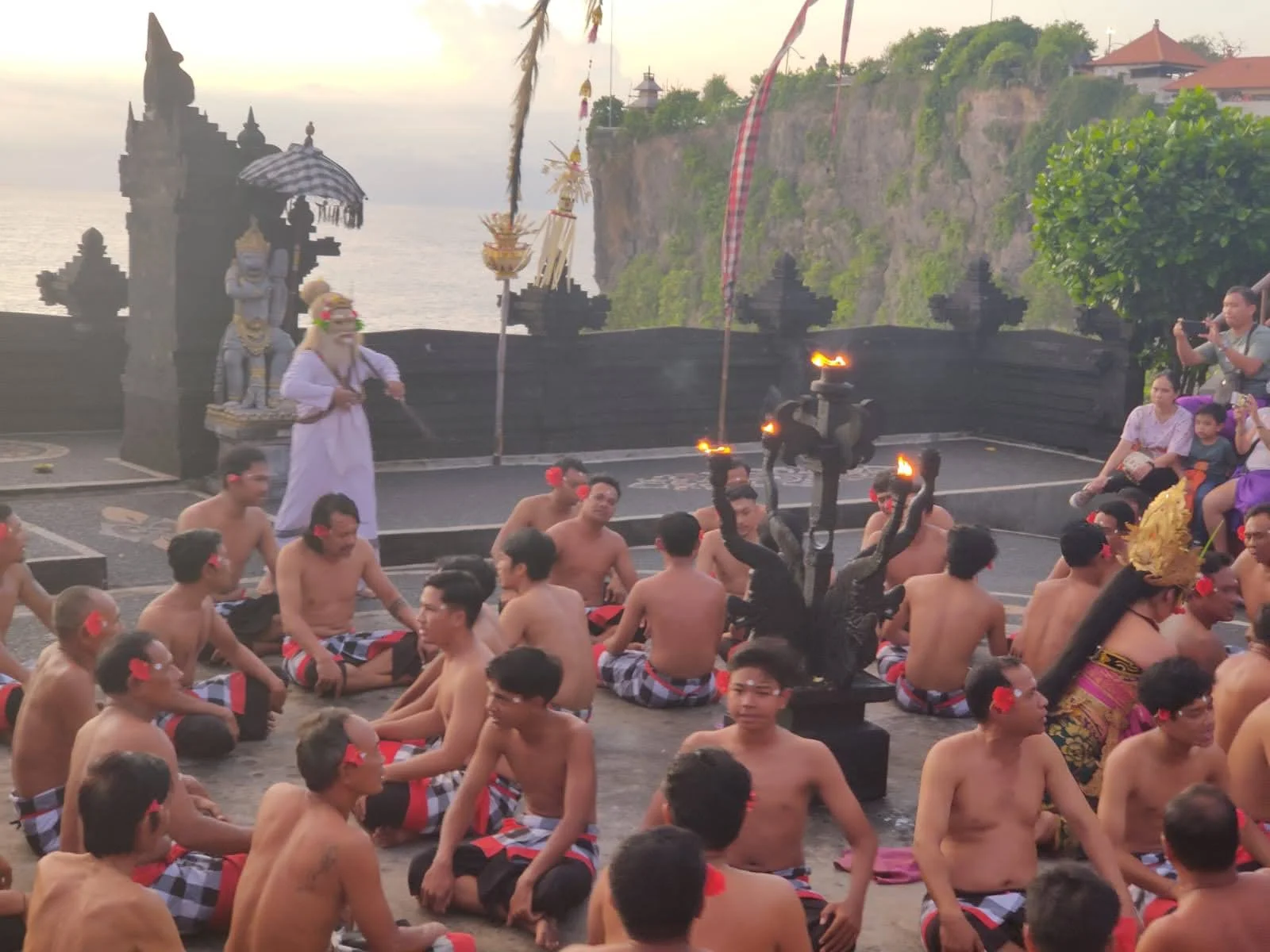
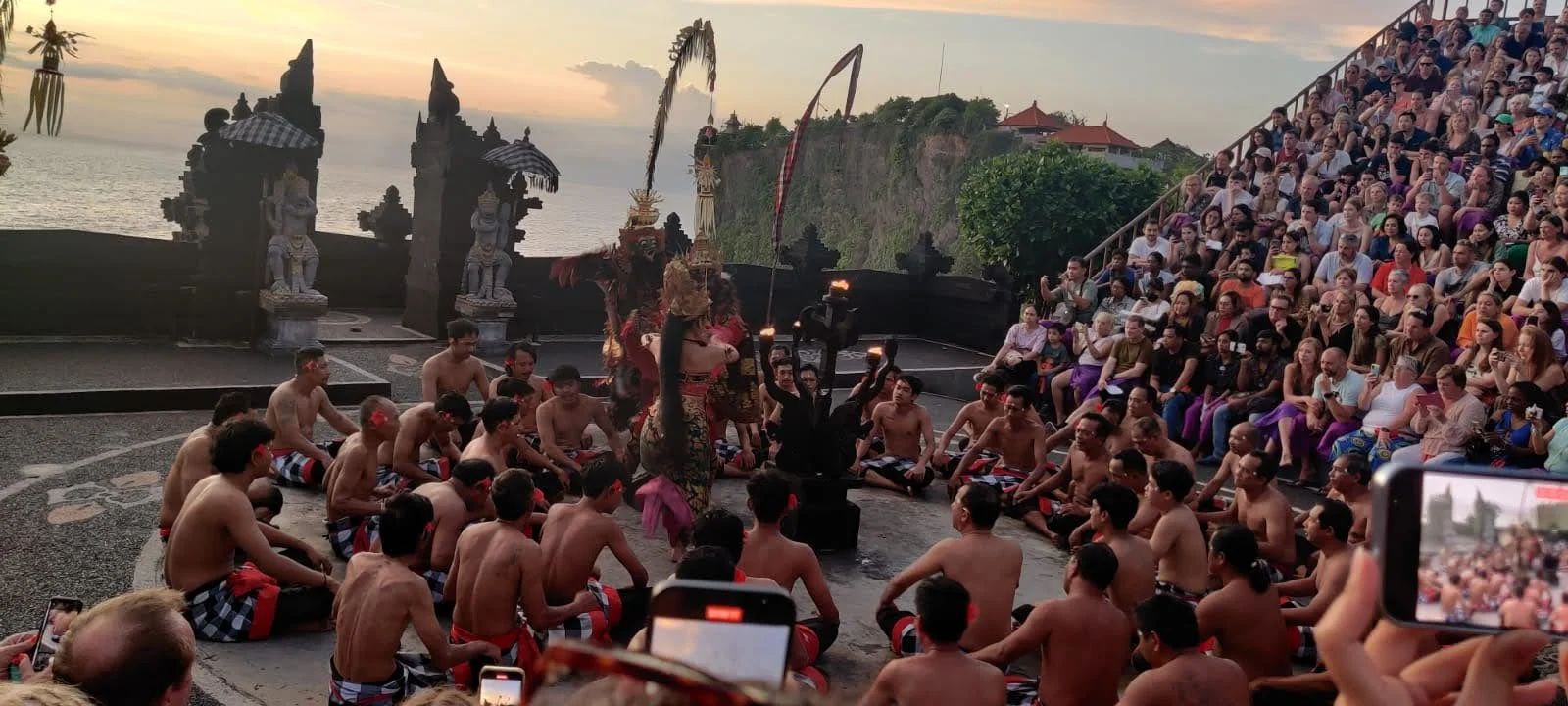
A chorus of seventy men providing the entire rhythmic heartbeat of the epic
The Ramayana performance at Uluwatu Temple is one of the most captivating cultural experiences in Bali. Staged against the backdrop of the Indian Ocean and a spectacular sunset, the famous Kecak dance brings the ancient Hindu epic Ramayana to life through music, chanting, fire, and dramatic storytelling.
As the sun began to descend over the Indian Ocean, we settled down to watch the famous Kecak performance. What fascinated me was that there was no conventional orchestra—the rhythm came from a large circle of men chanting 'cak, cak, cak' in hypnotic patterns. Around them, the timeless story of Rama, Sita, Lakshmana, Ravana and Hanuman unfolded through movement, expression and dramatic gestures.
The Kecak was developed in the 1930s from the older Balinese Sanghyang ritual tradition and was combined with episodes from the Ramayana. Watching an epic that originated in India being performed on a Balinese cliff, thousands of kilometres from India, felt like witnessing a remarkable cultural journey of the Ramayana itself.
Witnessing the Sunset Kecak & Fire Dance in Motion
Experience the rhythmic vocal polyphony, soaring flames, and dynamic movement recorded during our visit as the sun set over the cliffside amphitheatre.
Hypnotic Polyphony of the Kecak Chorus
The concentric circle of seventy male chanters swaying in hypnotic synchrony with rapid arm gestures to evoke the monkey army of Sugriva.
Hanuman and the Ordeal of Fire
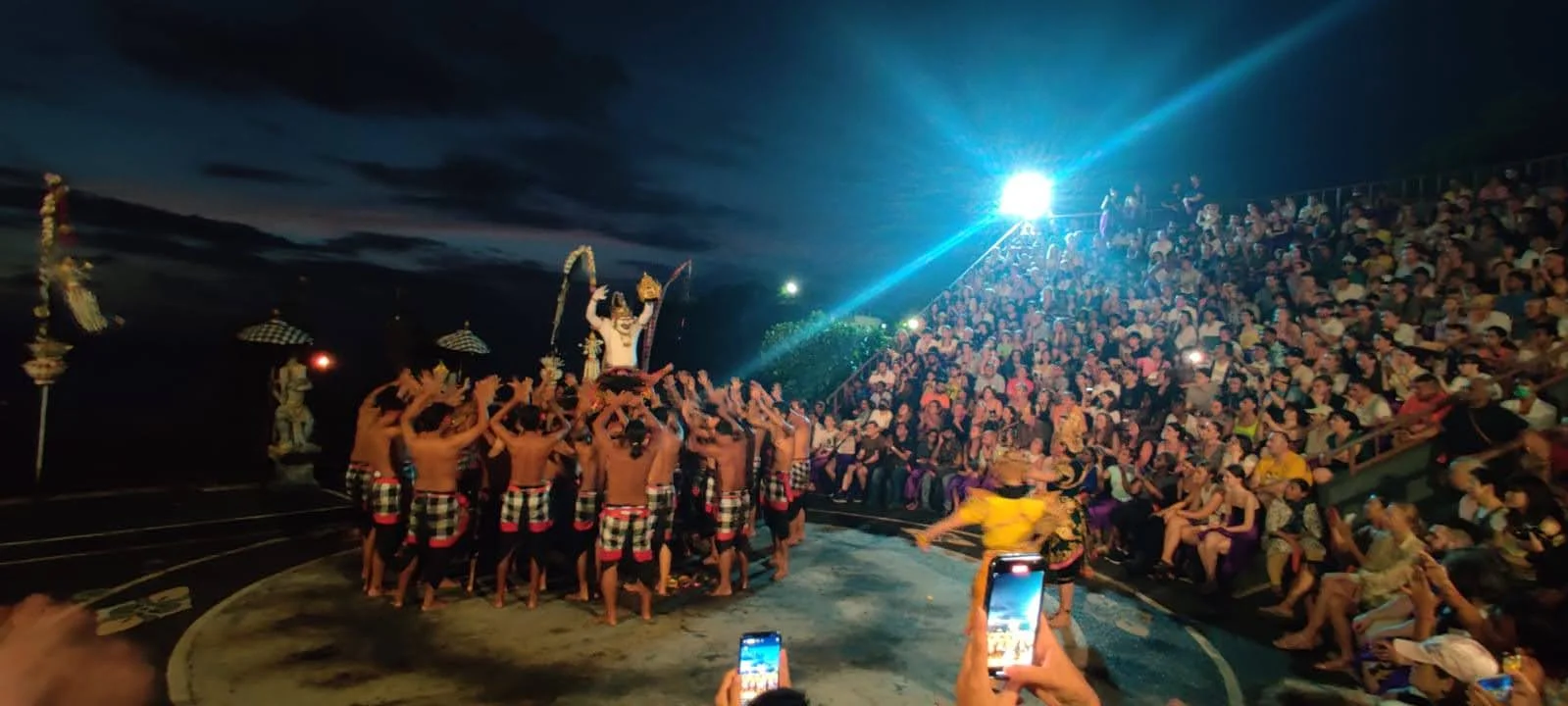
Hanuman kicks and scatters burning coconut husks across the amphitheatre arena, symbolizing the burning of Lanka and sacred invulnerability.
Night Ordeal of Fire
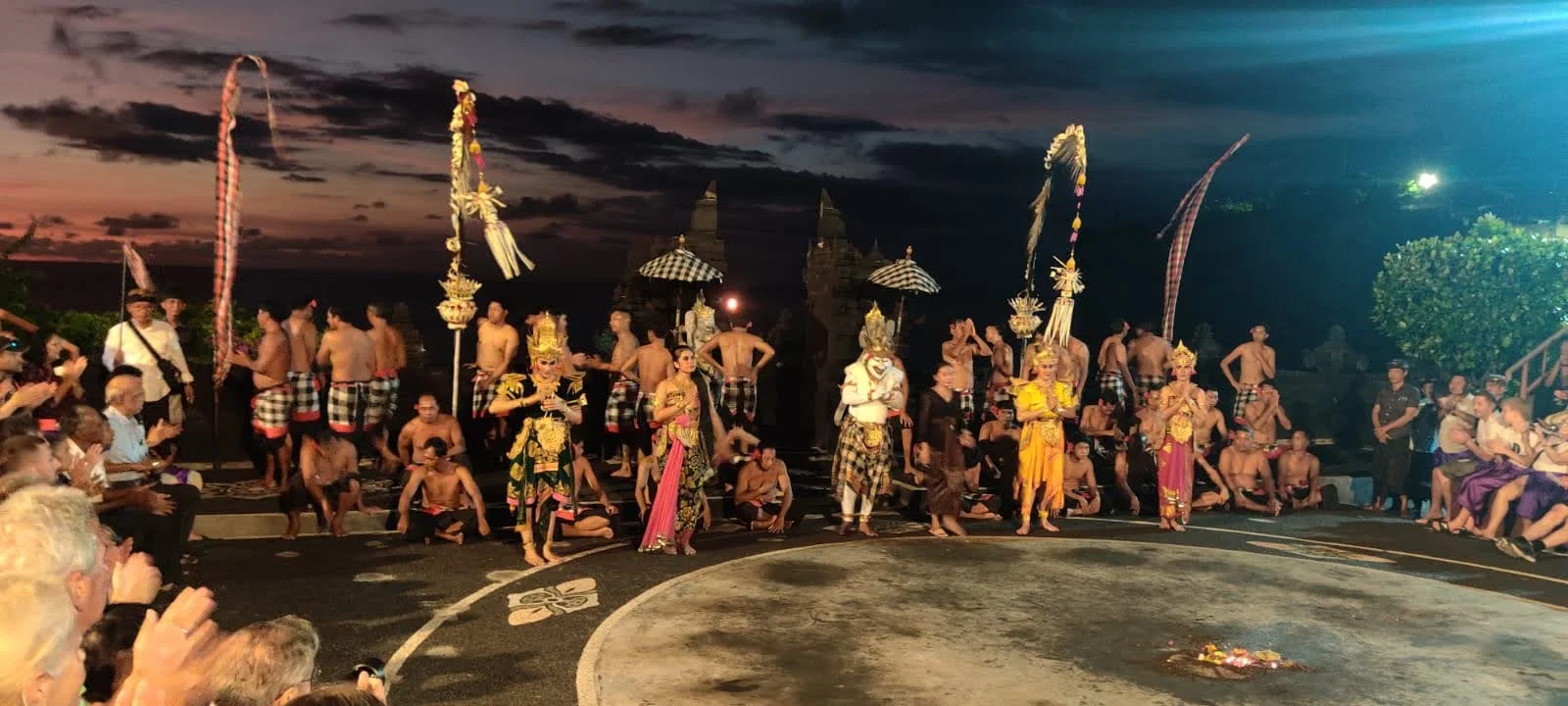
Full Cast Ensemble at Twilight
The Ramayana — India and Bali: One Story, Different Expressions
Watching the Ramayana in Bali, we was struck by how the same ancient epic has taken a different artistic form. The familiar characters—Rama, Sita, Lakshmana, Hanuman and Ravana—remain, but Bali has added its own Punakawan characters—Tualen, Merdah, Delem and Sangut, comic figures who bring a distinctly Balinese flavour to the story.
The Kecak performance, with its rhythmic chanting, dramatic movements and fire, makes the epic feel very different from its Indian versions. Sitting at Uluwatu, we felt that the Ramayana had travelled across the seas while retaining its soul, yet beautifully absorbing the culture of Bali.
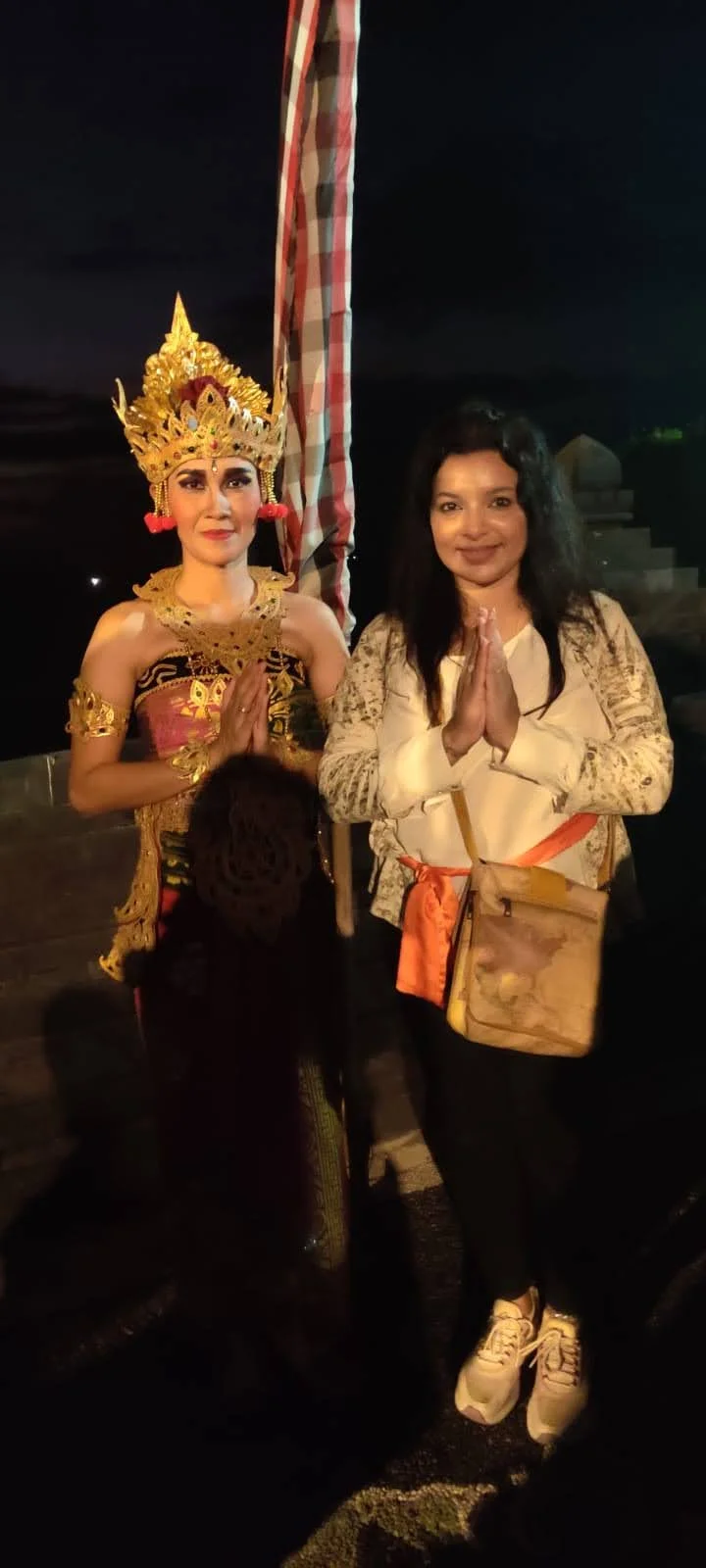
Dewi Sita in Regalia
The ornate gilded crown and delicate hand mudras of classical Balinese dance portraying Princess Sita.
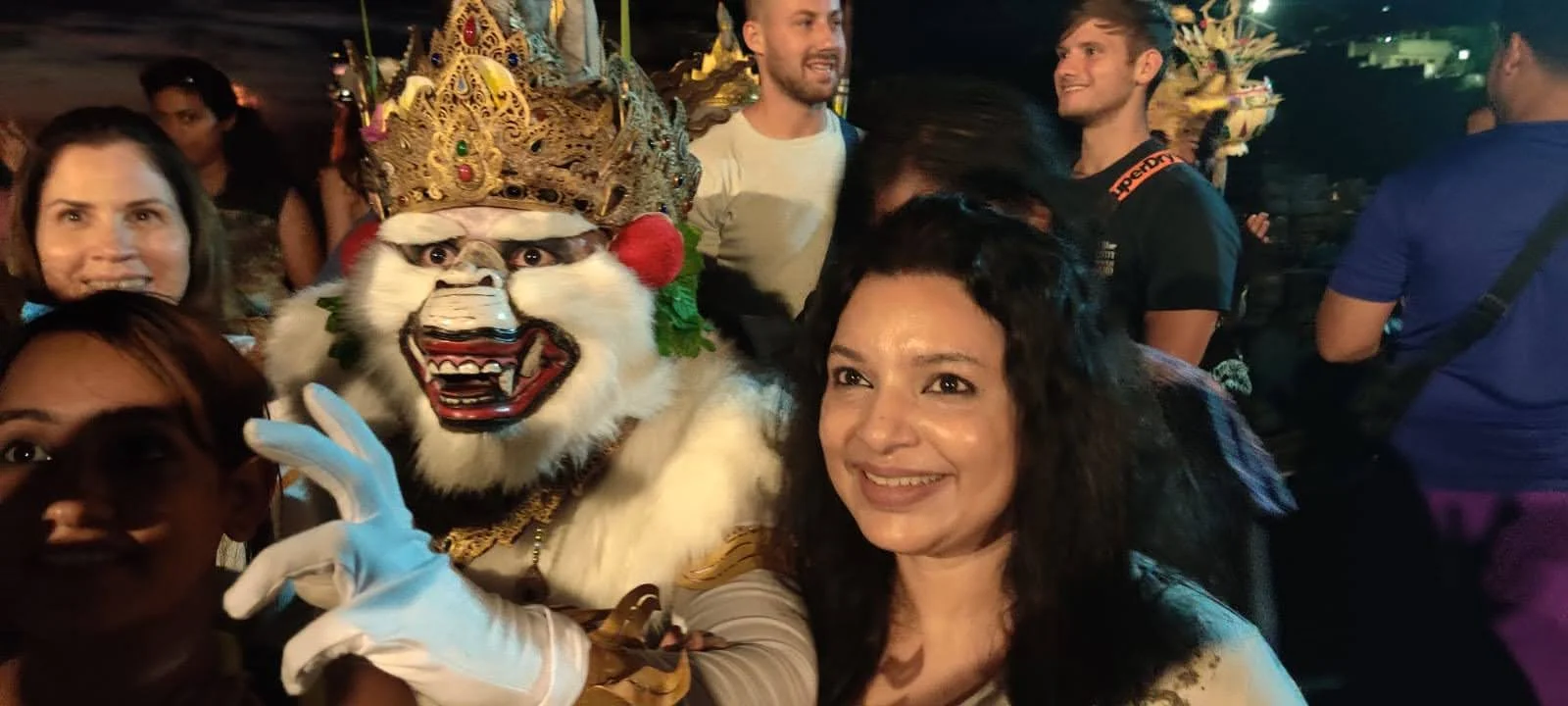
With Hanuman Warrior
The spirited hero who leaps across the sea to Lanka, celebrated with equal devotion across India and Bali.
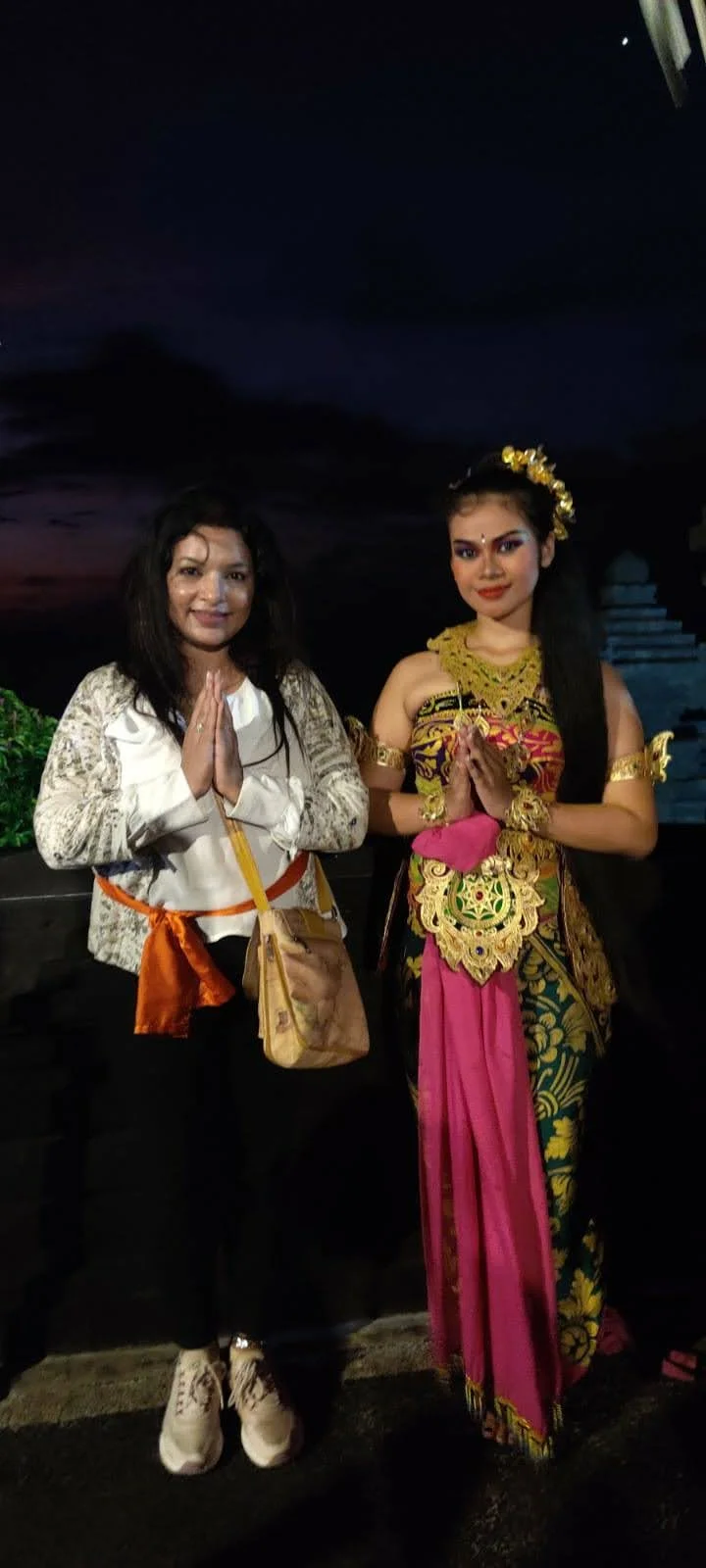
With Sita Court Dancer
Connecting directly with the artist preserving ancient Indian epics in contemporary Balinese society.
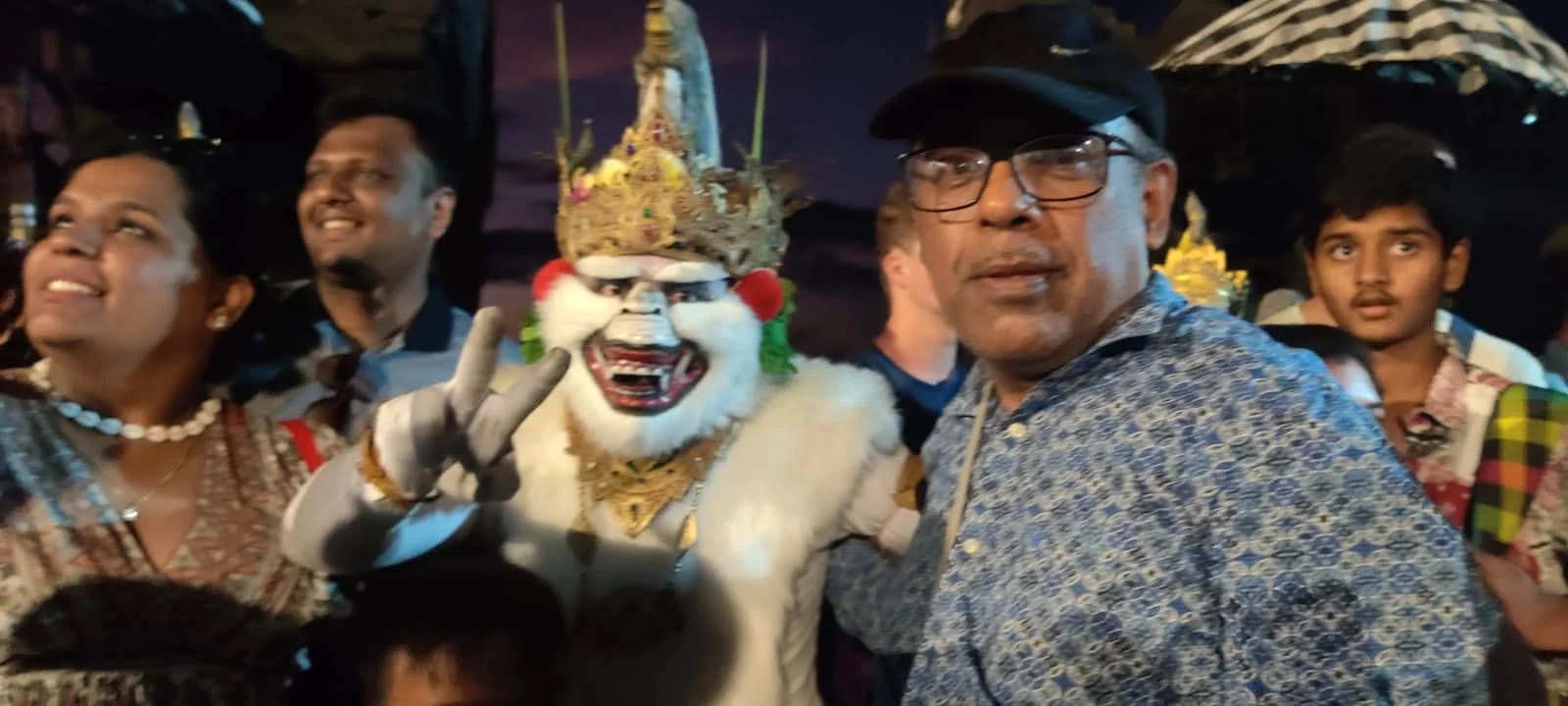
Hanuman Peace Gesture
The warmth and accessibility of Balinese performers sharing sacred folklore with visitors worldwide.
A Tasty Dinner on Returning to Nusa Dua

A Taste of Bali in Nusa Dua
Spiced skewered meats, fragrant rice, and fresh balanced accompaniments
One of the pleasures of travelling through Bali has been discovering its food, and this meal was a delightful example. The plate was full of local flavours—tender skewered meats, fragrant spiced rice, crisp vegetables, and savoury accompaniments that balanced sweet, spicy, and earthy notes.
Food in Bali is rarely just about eating; it is an expression of balance and community, often rooted in traditional culinary practices and offerings. After a long day of exploring temples and cultural performances, sitting down to a meal like this felt like the perfect way to bring the day to a close.
“Food in Bali is rarely just about eating; it is an expression of balance and community, often rooted in traditional culinary practices and offerings.”
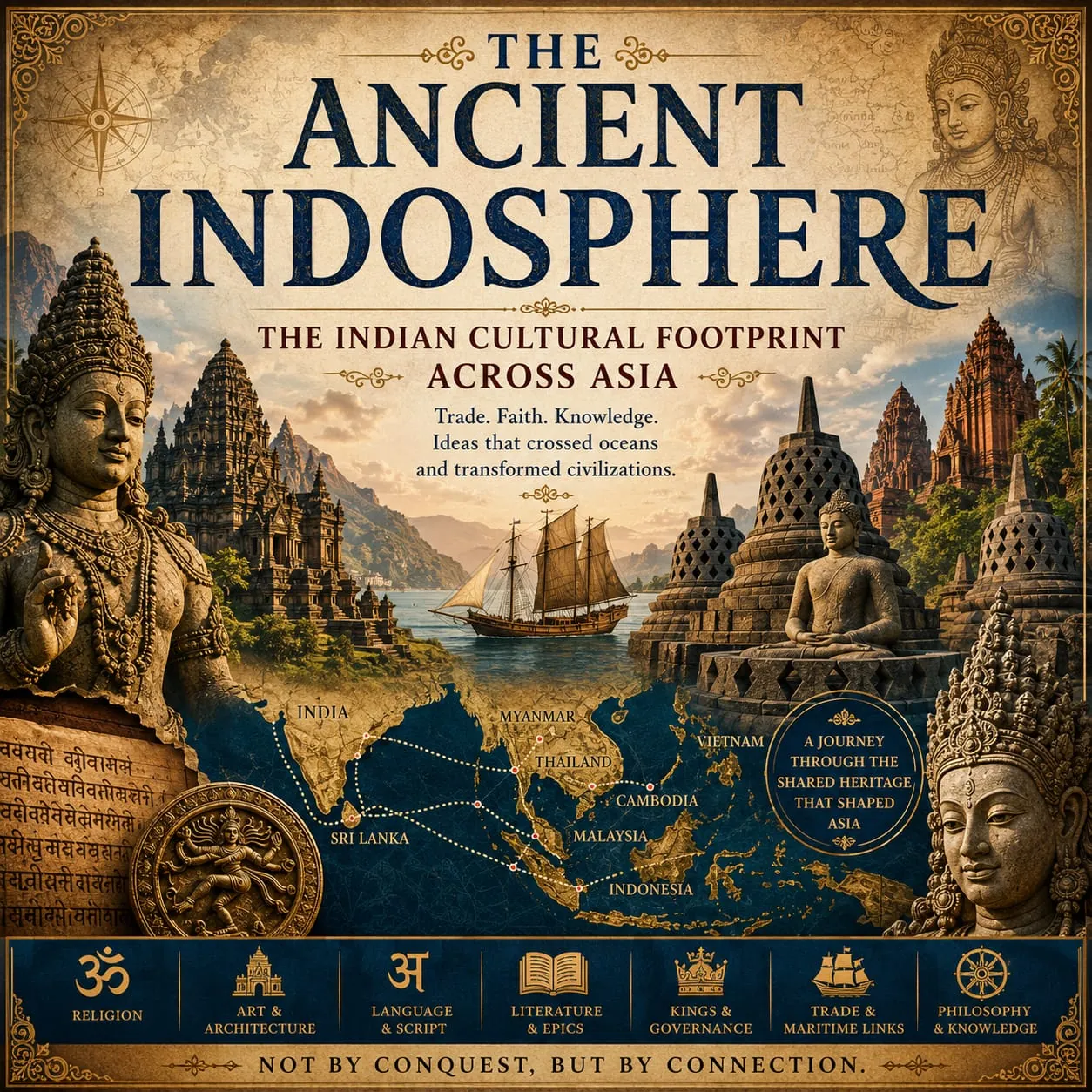
TRAVELLING THROUGH THE TIMELESS LEGACY OF INDIAN CIVILIZATION ACROSS ASIA AND BEYOND
“Timeless Ramayana on Ocean Cliffs”
Across the volcanic sanctuaries of Java and the living temple courtyards of Bali, the timeless traditions born in India continue to illuminate the Indonesian archipelago with philosophy, art, and civilizational communion carried not by sword, but through dialogue and spiritual devotion.
Ubud → Uluwatu Temple & Sunset Ramayana Performance: Practical Tips
Field-tested advice for managing South Bali traffic, exploring cliff pathways, keeping belongings safe from monkeys, and securing optimal sunset seating.
1. Start
Leave Ubud around 2:00–2:30 PM. The journey to Uluwatu can take about 2 to 2.5 hours, depending on traffic, which is often heavy in South Bali.
2. Transport
Hiring a private car with a driver is the most convenient option. It allows you to relax, stay flexible, and not worry about parking.
3. Arrival
Aim to reach Uluwatu Temple by 4:30–5:00 PM. This gives you enough time to explore the cliffside temple grounds, enjoy the views, and take pictures before the show.
4. Temple
Uluwatu Temple sits on a dramatic 70-metre-high cliff overlooking the Indian Ocean. Stroll along the cliff pathways for stunning ocean views.
5. Dress
Wear respectful clothing. A sarong and sash are required to enter the temple area and are provided at the entrance.
6. Monkeys
Watch out for the famous Uluwatu monkeys. Keep sunglasses, hats, phones, snacks, and loose items securely tucked inside your bag.
7. Kecak Dance
The show takes place in an open-air amphitheatre and starts around 6:00 PM, just before sunset. Book tickets in advance, as the performance frequently sells out.
8. Best Seating
Enter the amphitheatre early (around 5:15–5:30 PM) to get the best seats facing the ocean and the sunset.
9. Sunset
The combination of the sun dipping into the Indian Ocean, the fire dance, and the rhythmic chanting creates an unforgettable atmosphere.
10. Return
Leaving after the show can be crowded and slow. Be prepared for some traffic on the way back to Ubud or your hotel.
11. Overall
A wonderful half-day trip that combines dramatic coastal scenery, Balinese architecture, and a captivating cultural performance.
Uluwatu Temple & Ramayana Photographic Archive
A curated visual archive capturing the 70-meter sea cliffs of Uluwatu, the hypnotic sunset Kecak fire dance, character encounters with Dewi Sita and Hanuman, and authentic dining in Nusa Dua.
Uluwatu • Sea Temple4:3Uluwatu Sea Cliff View
Perched 70 meters above crashing Indian Ocean waves, guarding the southwestern shores of Bali.
Kecak • Chanting Circle4:3Kecak Sunset Circle
Over seventy male chanters gathered in concentric circles chanting hypnotic rhythmic cadences at dusk.
Ramayana • Hanuman4:3Hanuman at Fire Altar
The heroic monkey general stepping through the central stone altar ringed by blazing coconut husk fires.
Kecak • Fire Climax4:3Kecak Night Climax
The spectacular fire ordeal where Hanuman leaps unharmed through scattering glowing embers in the night.
Ensemble • Finale4:3Ramayana Cast Ensemble
The entire cast of Rama, Sita, Lakshmana, Ravana, and court dancers greeting the audience at twilight.
Dewi Sita • Classical Art3:4Dewi Sita in Regalia
Intricate gilded crown, floral ornamentation, and sacred classical makeup portraying Princess Sita.
Encounter • Dewi Sita3:4With Sita Court Dancer
Lady traveler meeting the gifted Balinese classical performer backstage following the sunset Ramayana.
Encounter • Hanuman4:3With Hanuman Warrior
A memorable field moment alongside the dynamic Hanuman warrior actor in full traditional Balinese regalia.
Encounter • Backstage4:3Hanuman Peace Gesture
Playful field exchange with the spirited performer portraying Hanuman after the dramatic fire performance.
Culinary • Nusa Dua3:4Nusa Dua Dinner Plate
A flavorful Balinese dinner of spiced meats, savory rice, fresh vegetables, and balanced local sambals.
CONTINUE THE INDONESIA JOURNEY
Journey Through the Sacred Monuments of Indonesia