
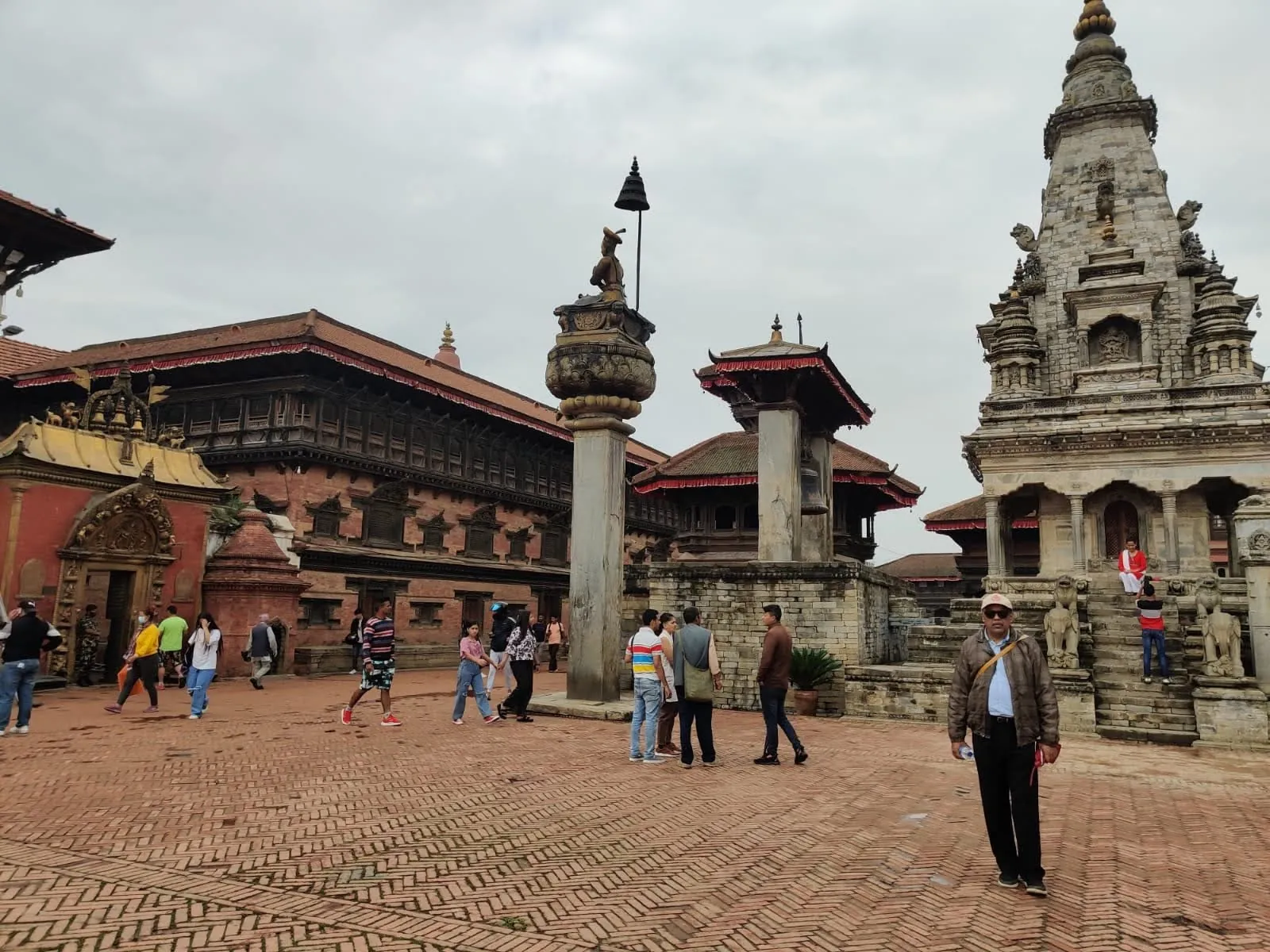
BHAKTAPUR — NEPAL
Walking Through a Medieval Masterpiece
Bhaktapur is a living medieval city where architecture, mythology, religion, craftsmanship, royal history, and everyday life remain intertwined in the Kathmandu Valley.
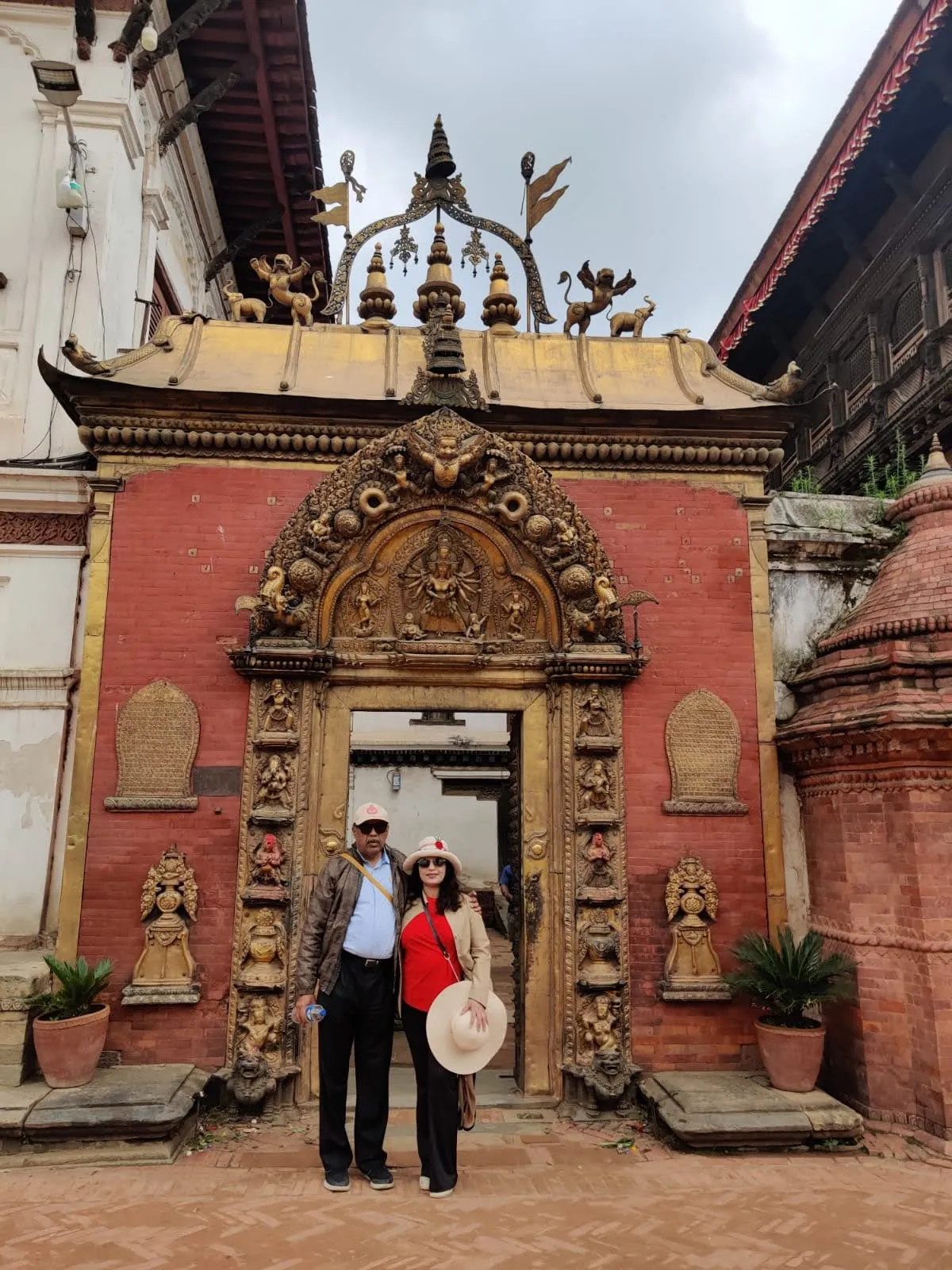
Lu Dhowka • The Golden Gate
Ornate gilded repoussé entrance to the royal Taleju Chowk
BHAKTAPUR — NEPAL: WALKING THROUGH A MEDIEVAL MASTERPIECE
Bhaktapur: An Open Air Museum
Bhaktapur is one of the most beautiful and culturally rich medieval cities in Nepal, renowned for its ancient temples, palaces, courtyards, wood carvings, and timeless Newari heritage. Located in the Kathmandu Valley, Bhaktapur feels like an open-air museum where narrow brick-paved lanes, traditional houses, and centuries-old monuments transport visitors back in time. The city is especially famous for Bhaktapur Durbar Square, a magnificent UNESCO World Heritage Site filled with intricately carved temples, royal palaces, and historic architecture reflecting the artistic brilliance of the Malla kings.
Bhaktapur - A UNESCO World Heritage site
As a UNESCO World Heritage site and the capital of Nepal until the second half of the 15th century, Bhaktapur gives a glimpse of what a royal Nepalese city looked like 800 years ago.
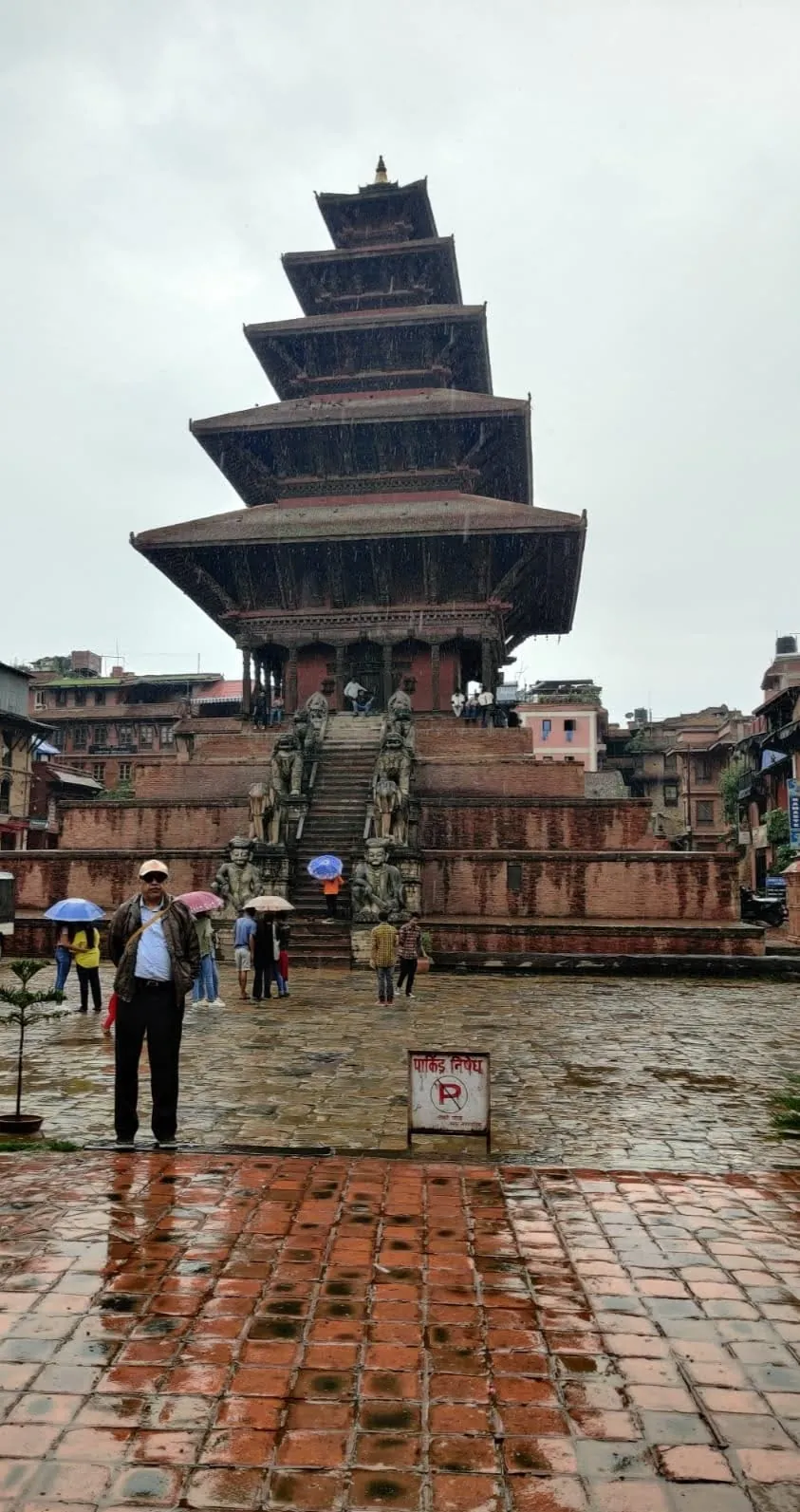
Taumadhi Square • 1702 CE
Nyatapola • 30-Metre Tallest Pagoda of Nepal
Bhaktapur - Nyatapola Temple
Nyatapola Temple is an 18th-century temple located in Bhaktapur, Nepal. It is the tallest building in the valley and the tallest temple in the country. The temple was built in 1702 and is dedicated to Goddess Siddhi Lakshmi, an incarnation of Goddess Parvati. The idol of the Goddess, which is installed in the sanctum sanctorum, is believed to be extremely fearsome.
Goddess Siddhi Lakshmi
Fearsome tantric manifestation of Goddess Parvati guarding the kingdom from earthquakes and calamity.
Survived 1934 & 2015
Built by King Bhupatindra Malla with five interlocking timber tiers that naturally dissipate seismic shocks.
Bhaktapur - Power Scale of Nyatapola Temple
According to local tradition, each pair of guardians protecting Nyatapola Temple is believed to be ten times stronger than the pair below it, symbolizing the temple's immense spiritual power.
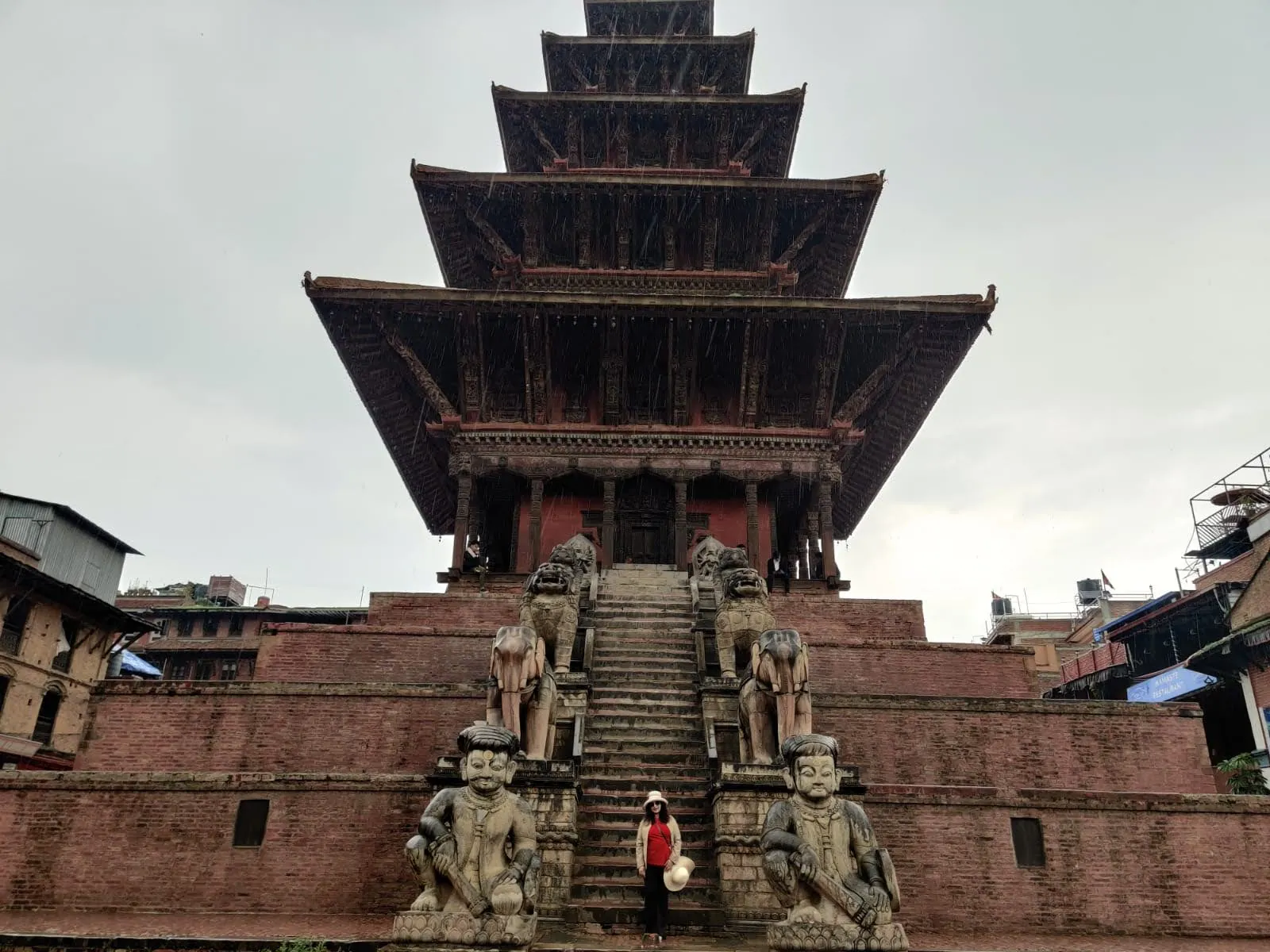
The Plinth Stairway
Flanked in ascending order by wrestlers Jayamel & Phattu, elephants, lions, griffins, and goddesses
Top Level: Singhini and Baghini
The lion and tiger goddesses, regarded as the most powerful guardians of all.
Fourth Level: Mythical Griffins
Two mythical griffins (Shardulas).
Third Level: Fierce Lions
Two fierce lions.
Second Level: War Elephants
Two mighty war elephants.
Base Level: Jayamel and Phattu
Bhaktapur's legendary wrestlers.
Bhaktapur Durbar Square — UNESCO World Heritage Site
Bhaktapur Durbar Square is a UNESCO World Heritage Site and was once home to the royal family of Bhaktapur. Locally known as Khwopa or the ancient Newa City, visitors can explore the entire complex of four squares—Taumadhi Square, Durbar Square, Pottery Square, and Dattatreya Square.
The Historic Heart
Bhaktapur Durbar Square
Paved with traditional Newari red bricks in intricate diagonal herringbone patterns, framed by centuries of royal architecture.
Taumadhi Square
Heart of towering temple architecture and the 5-tiered Nyatapola.
Durbar Square
Royal plaza of Malla kings, 55-Window Palace, and Golden Gate.
Pottery Square
Living open-air craft center of wheel-thrown clay pots drying in the sun.
Dattatreya Square
Oldest marketplace square with woodcarving hubs and Dattatreya Temple.
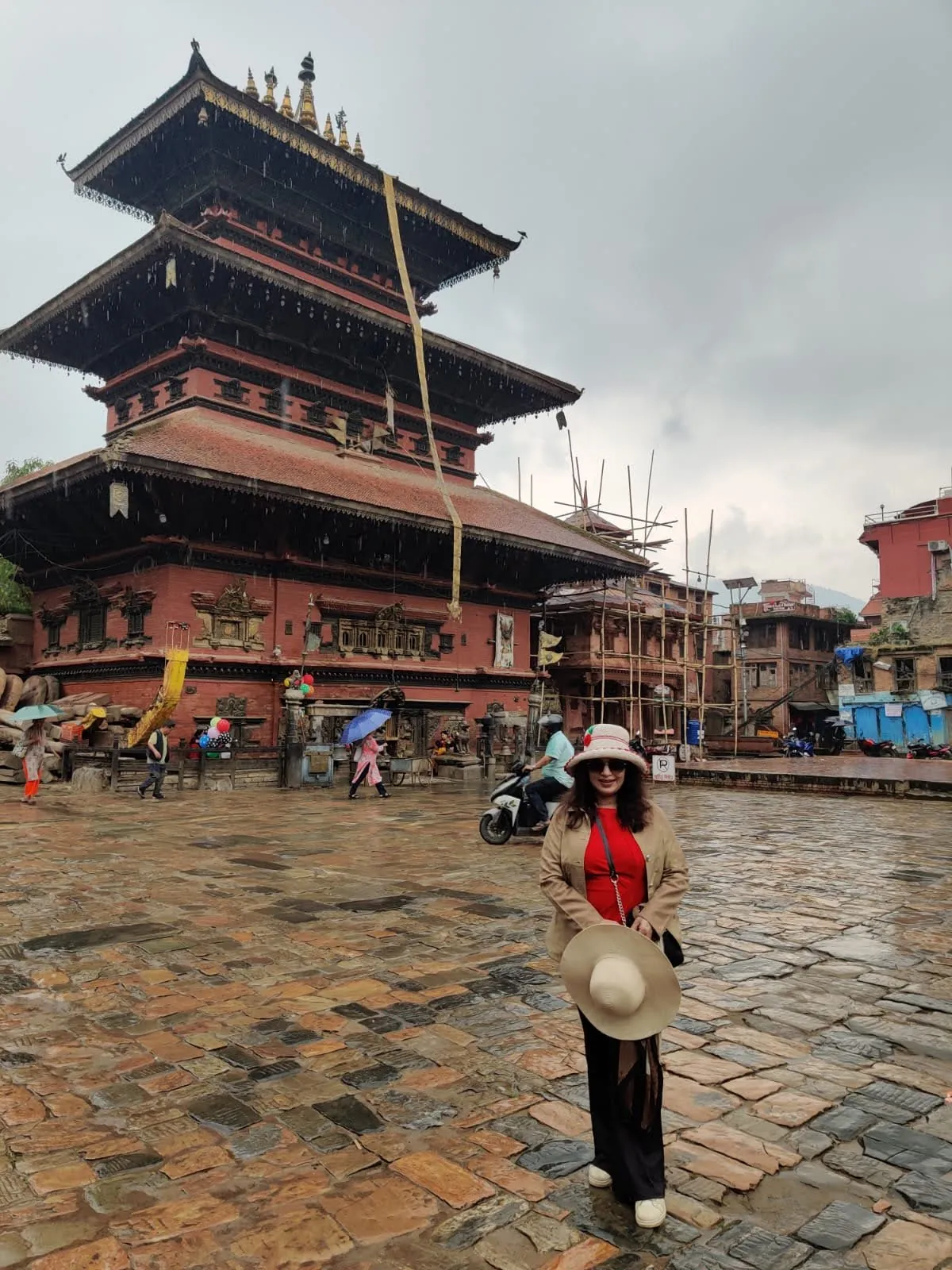
Taumadhi Square • 1717 CE Expansion
Bhairavnath Pagoda
Bhaktapur — Bhairavnath Temple
Bhairavnath temple is one of the temples in Bhaktapur Durbar Square and is built in the pagoda style. The entry ticket to Bhaktapur also guarantees a visit to this temple. The temple is dedicated to Lord Bhairav, which is supposed to be the most ferocious form of Lord Shiva. Originally, the temple had just one storey which was built by King Jagat Jyoti Malla. However, in 1717, two more storeys were added to this temple by King Bhupatindra Malla.
Originally single-storey under King Jagat Jyoti Malla, King Bhupatindra Malla expanded the temple to three storeys in 1717, crowning it with gilded bronze finials and intricate latticework.
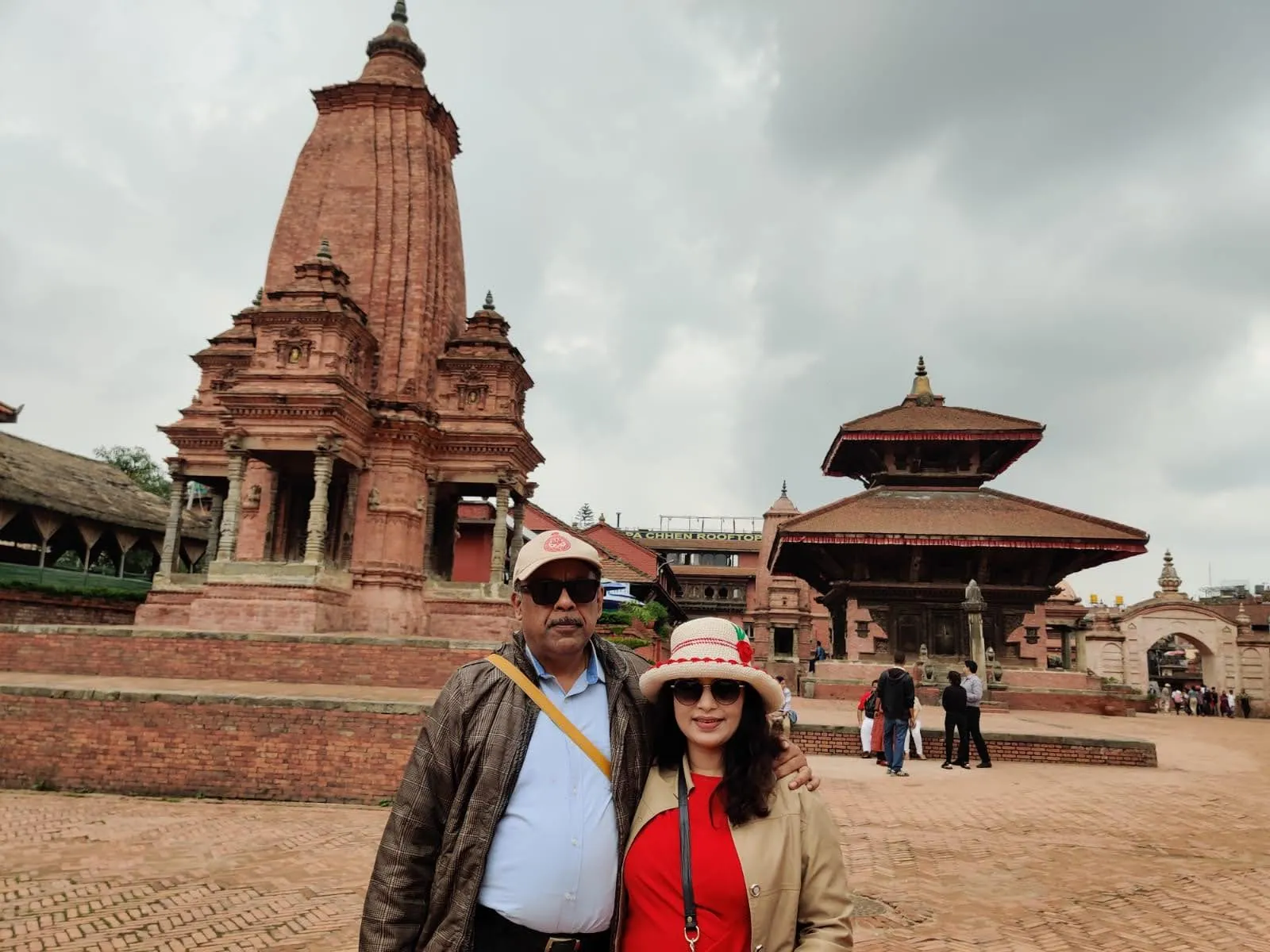
Rameshwar Stone Shikhara
Carved stone pillars and classical North Indian Shikhara spire erected in devotion to Shiva
Rameshwar Temple — A Quiet Shrine to Lord Shiva
As we wandered through the historic lanes of Bhaktapur Durbar Square, the elegant Rameshwar Temple offered a peaceful contrast to the grandeur of the surrounding palaces and monuments. Dedicated to Lord Shiva, this beautifully crafted stone temple reflects the deep Hindu traditions of the Malla era, when Bhaktapur flourished as a centre of art, architecture, and devotion.
Siddhi Lakshmi Temple — A Masterpiece of Devotion and Newari Architecture
Standing gracefully in the heart of Bhaktapur Durbar Square, the Siddhi Lakshmi Temple is one of the finest examples of Nepal's rich Newari craftsmanship. Built in the early 18th century during the reign of King Bhupatindra Malla, the temple is dedicated to Goddess Siddhi Lakshmi, a powerful manifestation of Goddess Lakshmi associated with prosperity, protection, and spiritual accomplishment.
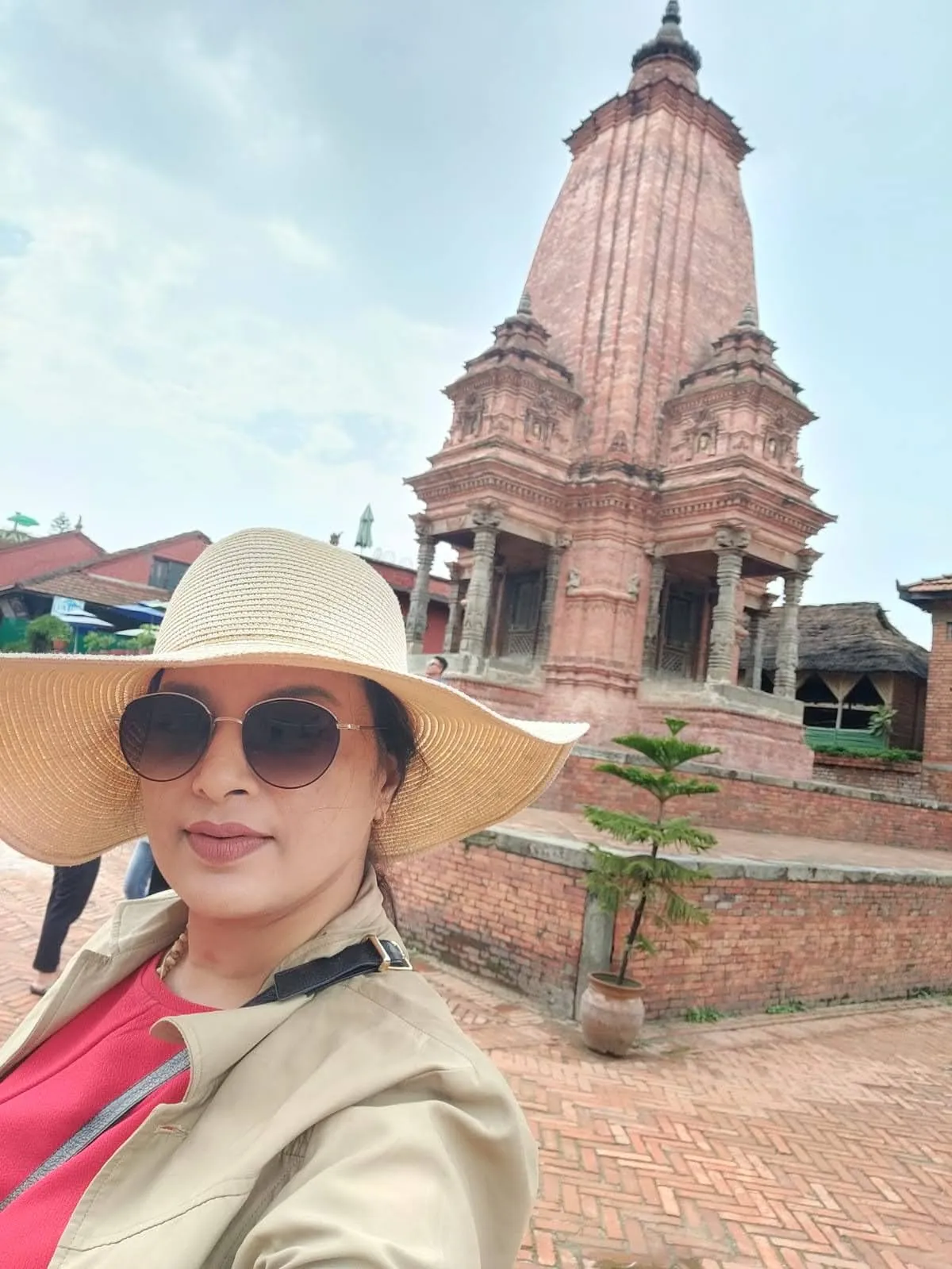
Architectural Form
Terracotta & Sandstone Shikhara Spire
Rising in tiered elegance above the brick courtyards of the Malla court.
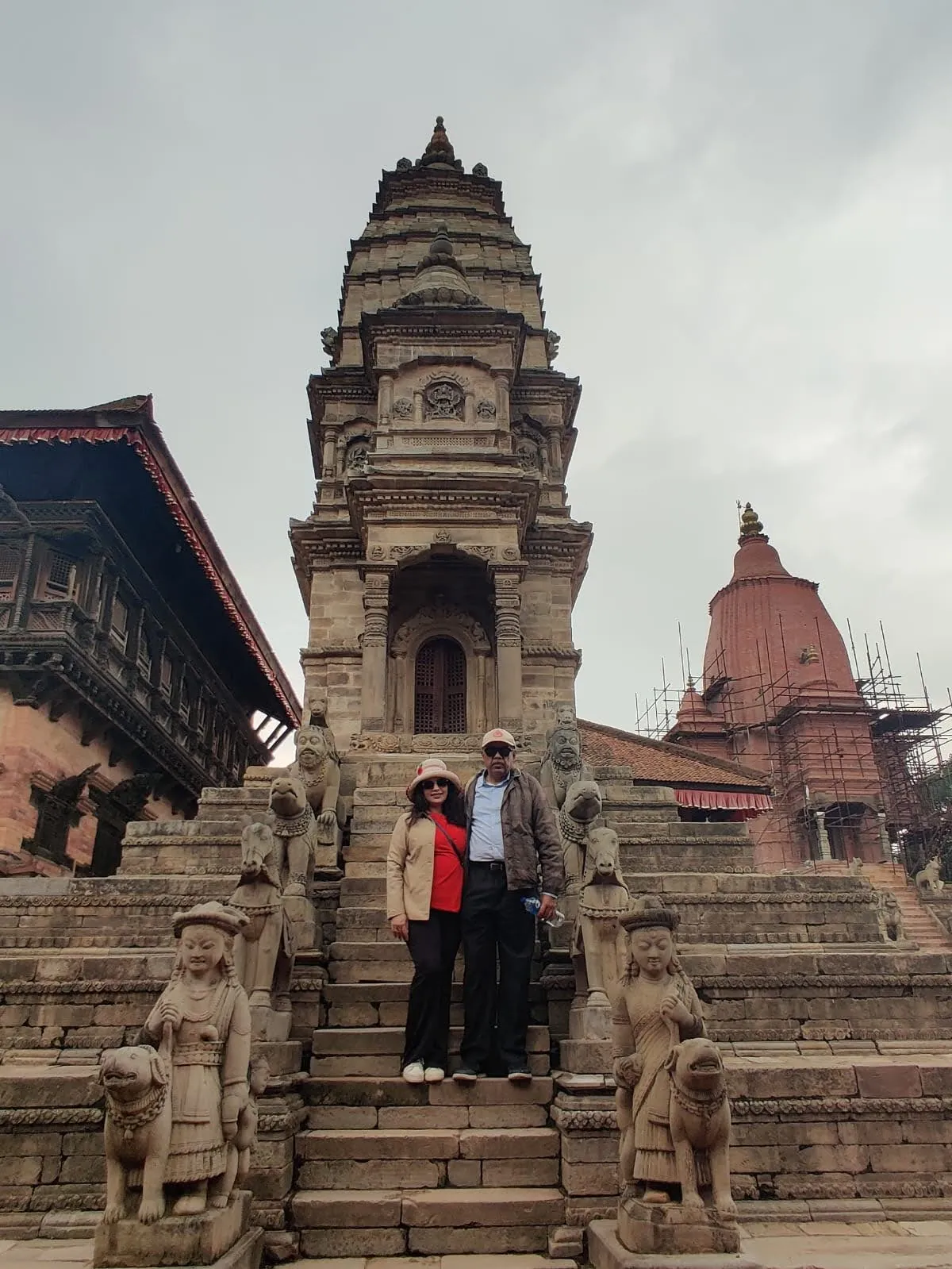
Guardian Menagerie
Sculpted Steps of Siddhi Lakshmi
Flanked by attendants with dogs, horses, rhinos, lions, and camels carved in stone.
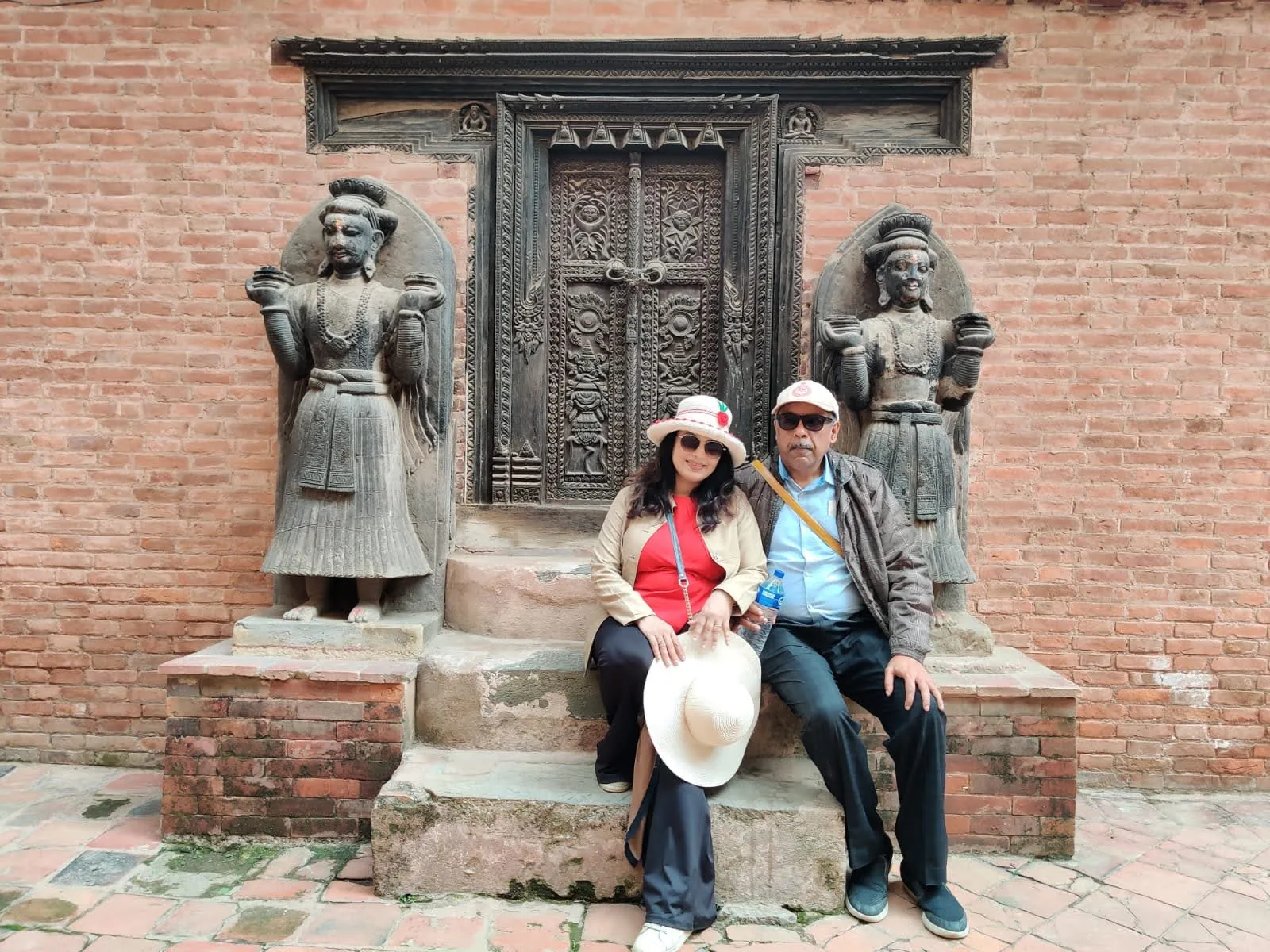
Taleju Chowk Sanctuary Threshold
Intricate Malla carved wooden lintel flanked by stone dvarapala guardians
Taleju Temple — The Royal Goddess of the Malla Kings
Passing through the entrance of Taleju Temple in Bhaktapur Durbar Square, we felt we were entering one of Nepal's most sacred royal spaces. Built in the 15th century and dedicated to Goddess Taleju Bhawani, the patron deity of the Malla kings, the temple symbolised the divine authority of the kingdom and was once reserved largely for the royal family. Although visitors can usually admire it only from outside.
Taleju Bhawani was revered as the supreme protector of the Malla lineage. Royal legitimacy itself flowed from the goddess, whose inner sanctum remains strictly protected to this day.
The Malla Kings of Bhaktapur — The Golden Age of Nepal
The Malla dynasty ruled much of the Kathmandu Valley from the 12th to the 18th century and is remembered as the golden age of Nepalese art, architecture, and culture. After the valley was divided into the three rival kingdoms of Kathmandu, Patan, and Bhaktapur, the Malla kings competed to build ever more magnificent palaces, temples, and public squares. Bhaktapur reached its artistic peak under King Bhupatindra Malla (1696–1722), who transformed the city with masterpieces such as the Nyatapola Temple, the 55-Window Palace, and many other monuments that still define Bhaktapur Durbar Square. Deeply influenced by Hinduism and Buddhism, the Malla rulers patronised artists, sculptors, and scholars, leaving behind a remarkable cultural legacy that continues to make Bhaktapur one of Nepal's most treasured historic cities.
Golden Age of Nepal
Flourishing of Newari art, architecture, Sanskrit literature, and trade.
Rival Kingdoms
Kathmandu, Patan, and Bhaktapur competed in monument building.
King Bhupatindra Malla
Constructed Nyatapola Temple, 55-Window Palace, and royal courtyards.
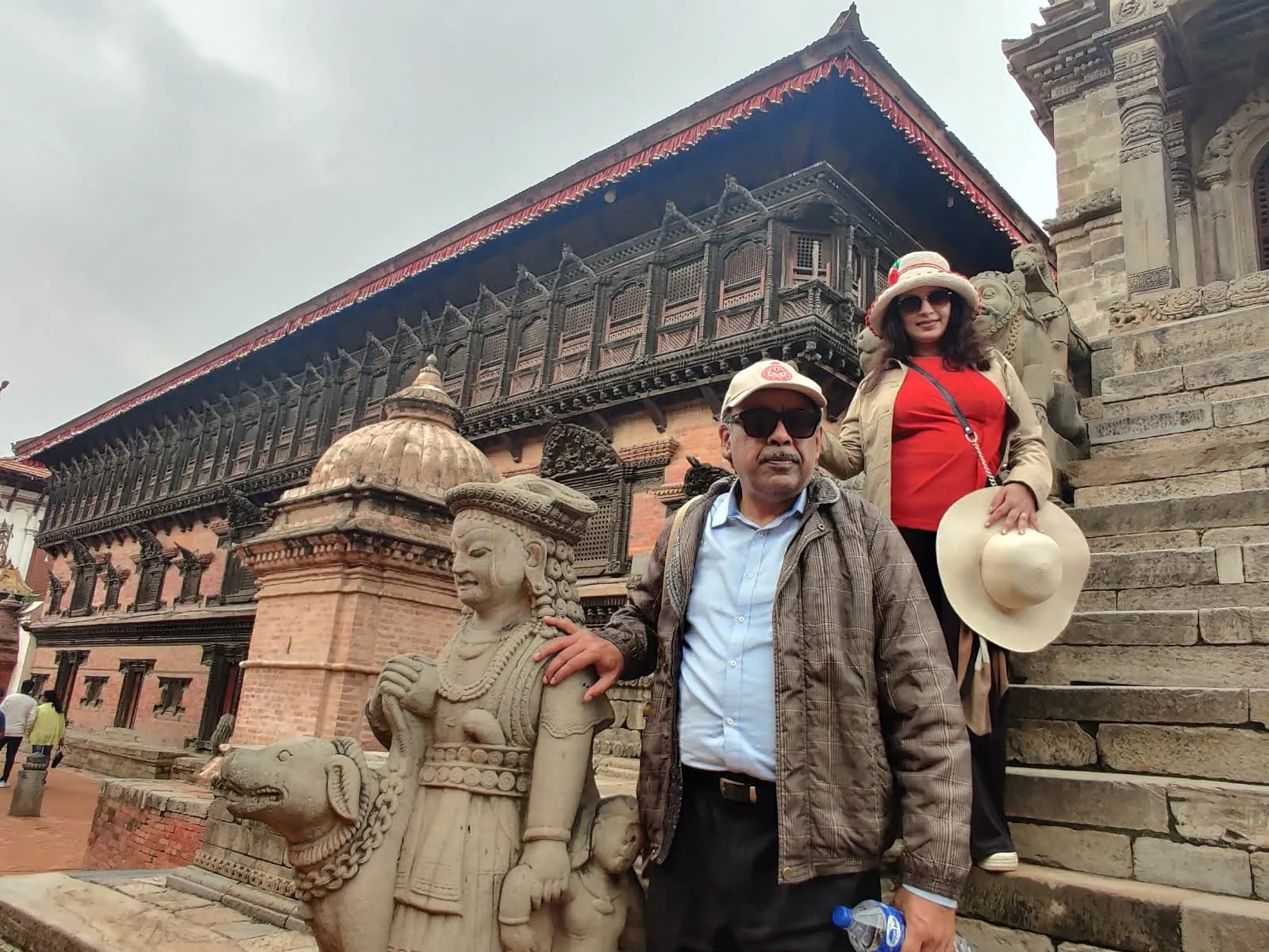
Pachpanna Jhyale Durbar
Intricate continuous balcony of 55 black-lacquered sandalwood windows
Bhaktapur — Palace of Fifty-five Windows
The Palace of Fifty-five Windows was built by King Jitamitra Malla for his wives. The palace of 55 Windows dates back to the 18th Century. Apart from this iconic monument of love, the said king also laid down the foundation stone for another iconic structure in the vicinity — the Nyatapola Temple.
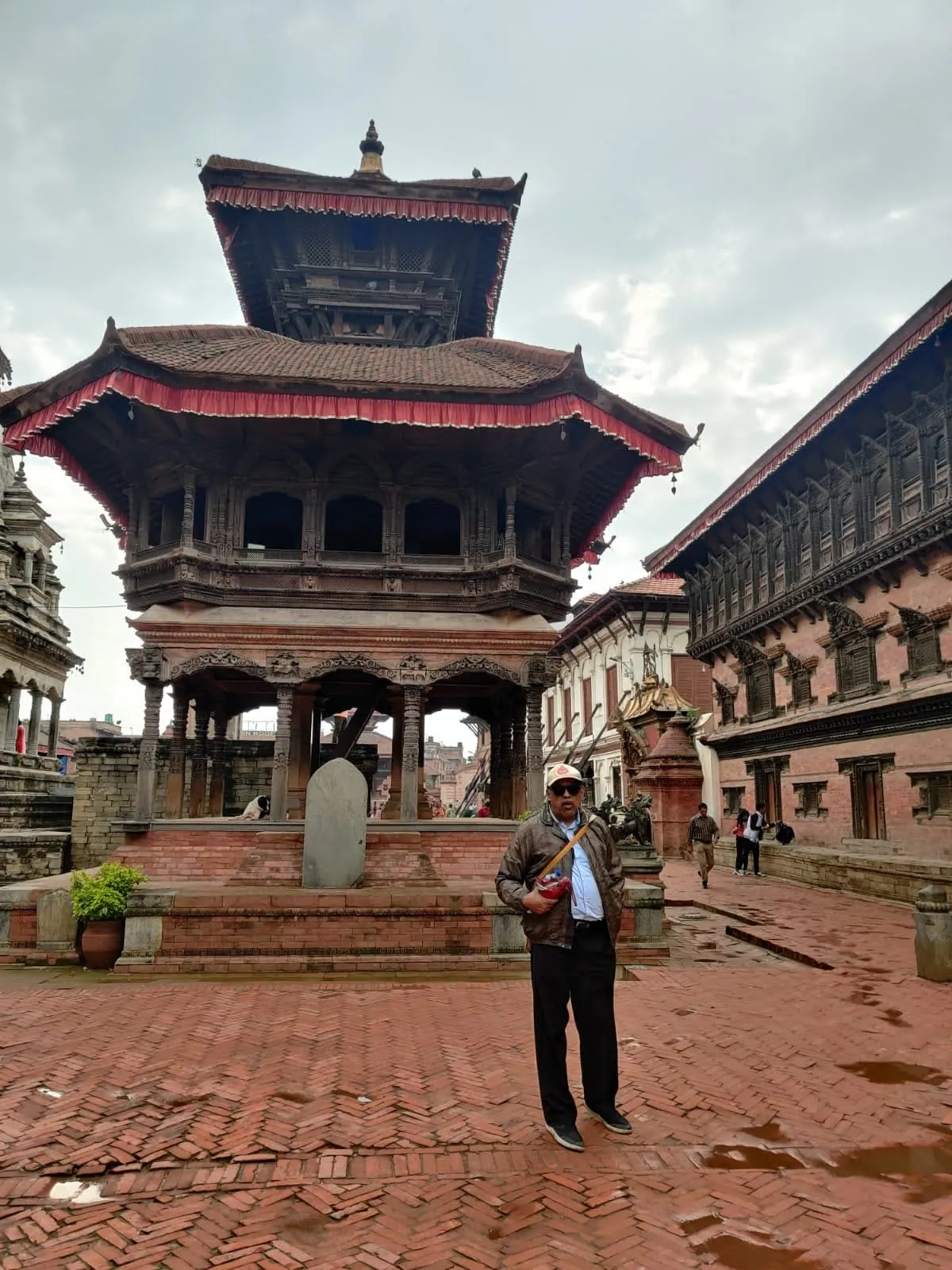
Chyasin Dega Octagonal Pavilion
Erected in the palace plaza with tiered octagonal eaves and sculpted lion sentinels.
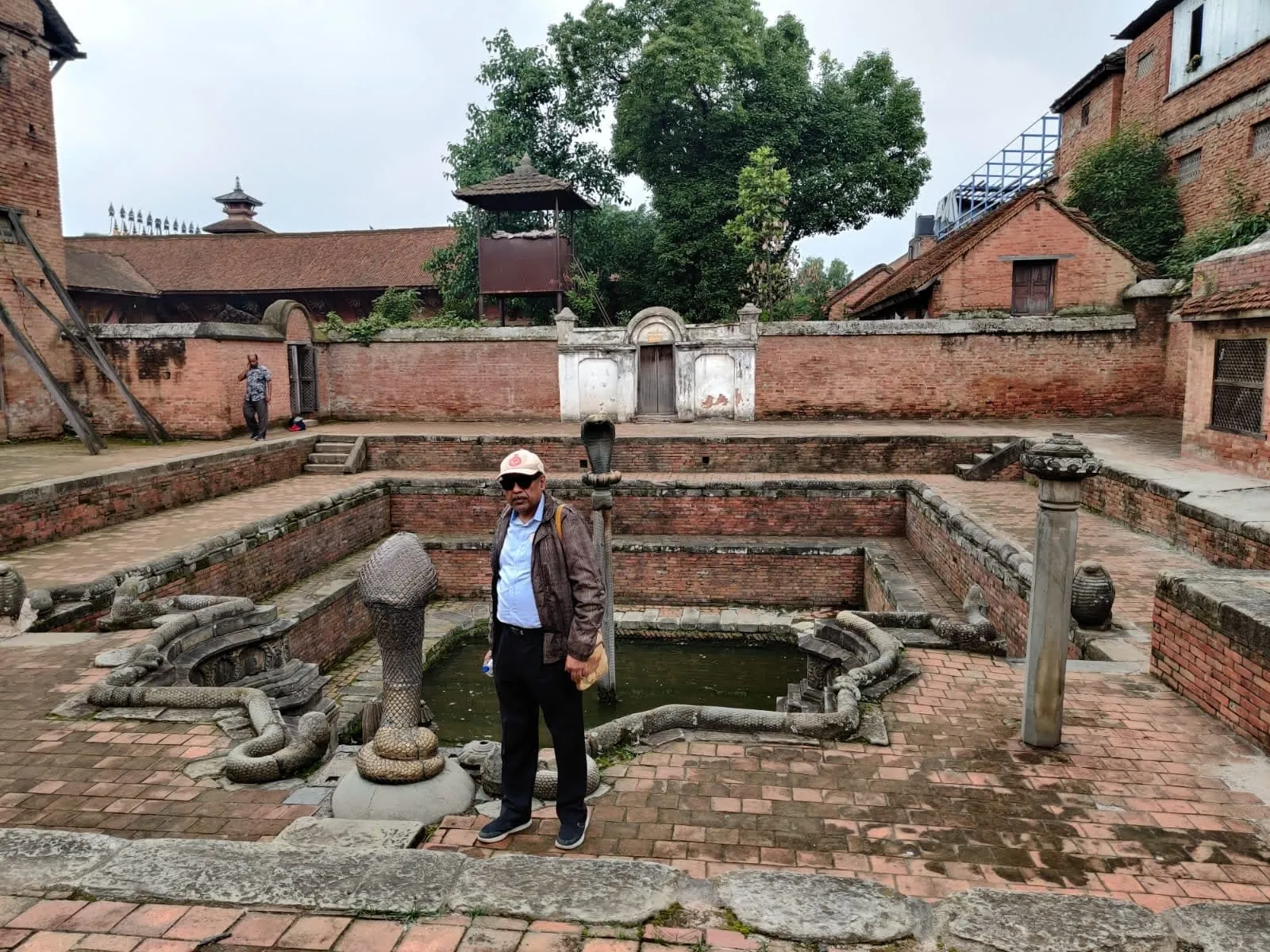
Naga Pokhari • Royal Courtyard
Stone-carved cobra hood rising majestically from the center of the sunken royal bathing pool
Bhaktapur Palace — Royal Serpent Pool
Hidden within the quiet courtyards of the royal palace, Naga Pokhari immediately caught our attention with its remarkable stone serpent encircling the ancient bathing pool. As we stood beside it, our guide explained that the Malla kings believed the sacred Naga protected the water from drying up during times of drought while also guarding the royal family during their ceremonial baths. More than just a royal pool, it felt like a beautiful reminder of how mythology, faith, and everyday life were once seamlessly woven together in Nepal's medieval kingdoms.
In Newari mythology, the sacred Naga represents the life-giving monsoon and underground springs. The royal serpent pool ensured clean ritual water while blessing the royal bath with divine protection.
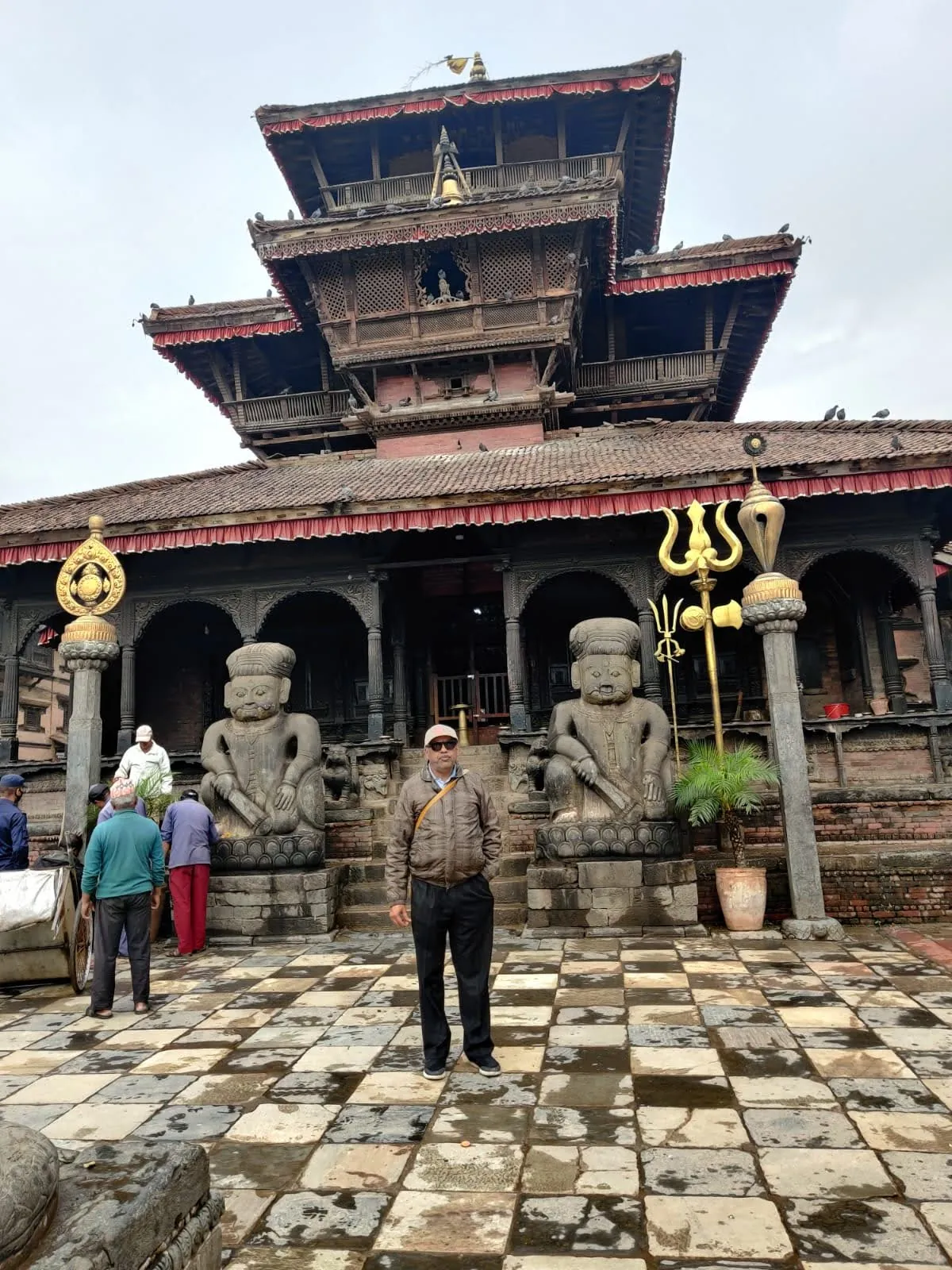
Dattatreya Square • 1427 CE
Dattatreya Temple Shrine
Bhaktapur — Dattatreya Temple
Dattatreya Temple, a prominent Hindu temple located in Bhaktapur, Nepal.
“Revered as one of the oldest shrines in the valley, traditionally believed to have been carved from the timber of a single massive tree, blending the trinity of Brahma, Vishnu, and Shiva.”
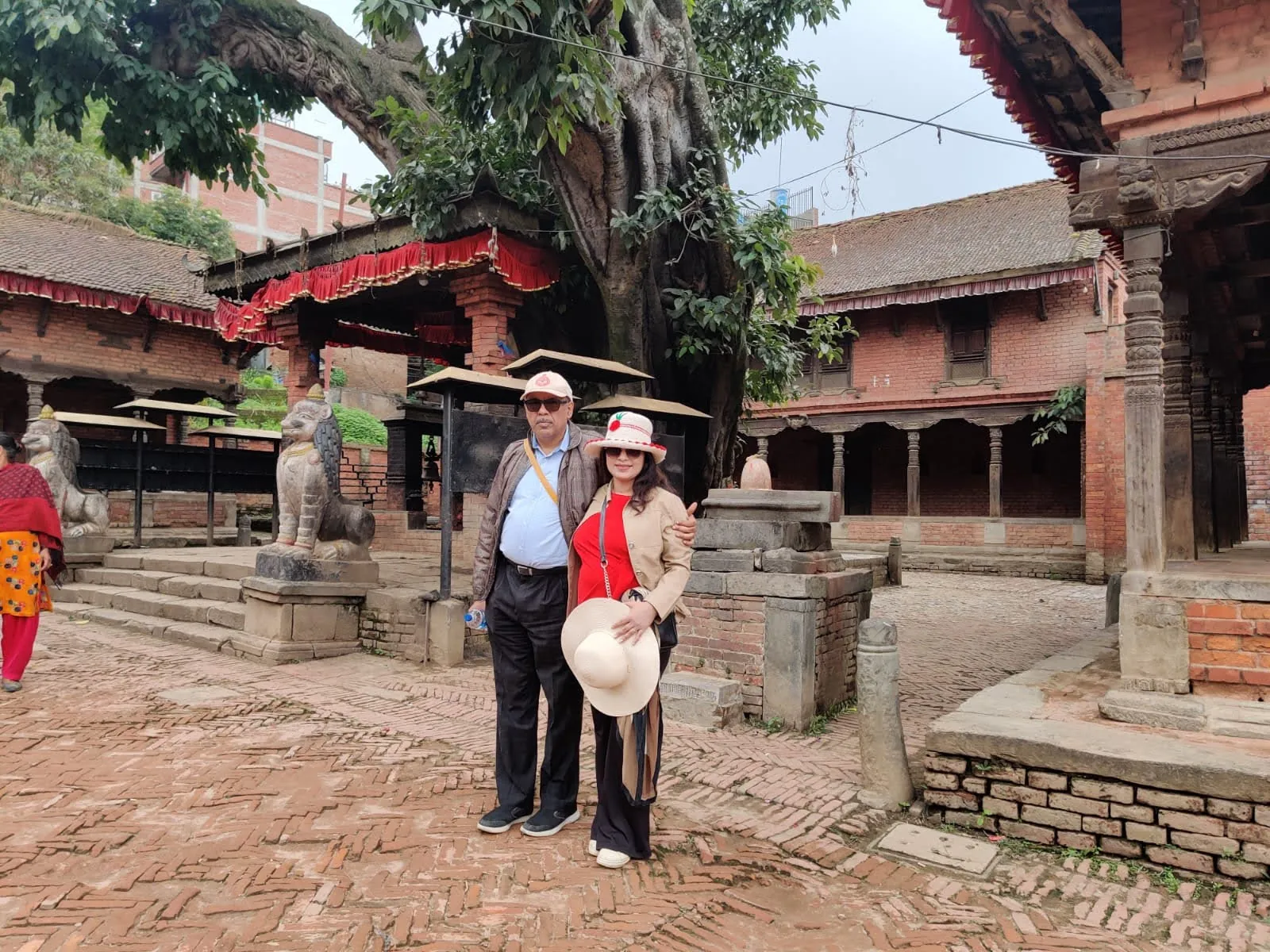
Quiet Lanes & Living Courtyards
Ancient Peepal tree sanctifying a brick-paved Newari residential chowk
Bhaktapur: A Magical Place
“A magical place which deserves atleast one full day. While visiting Venice I was advised by a local 'If you want to see Venice completely you need to get lost'. I think you just need to get lost in the streets of BHAKTAPUR, it will keep surprising you with its rich history.”
Tips for Visiting Bhaktapur Durbar Square
Essential guidance for immersing yourself in the medieval lanes, sacred temples, and timeless Newari culture of Khwopa.
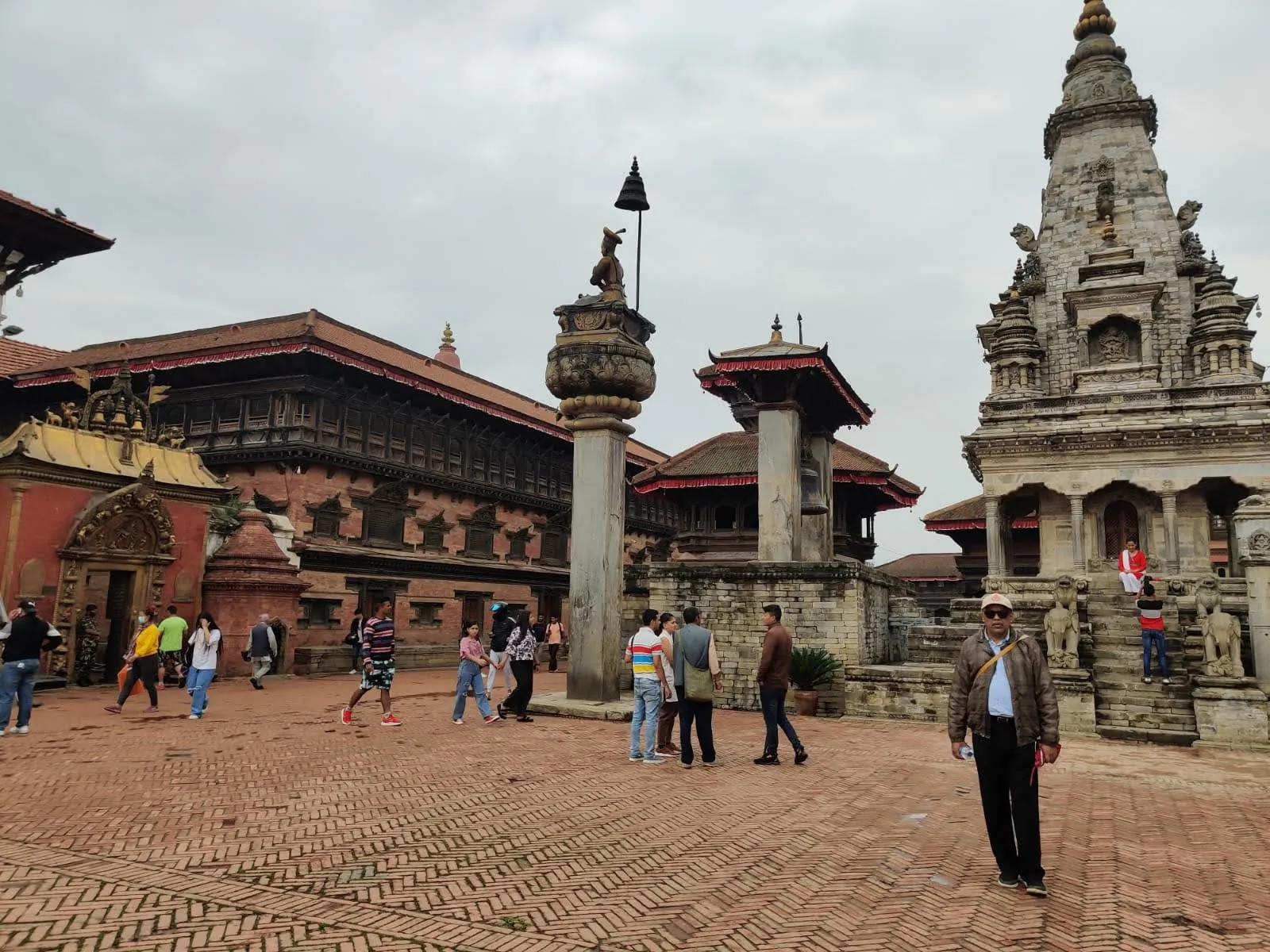
Beat the Tour Crowds
Arrive early in the morning to enjoy the square before tour groups arrive. The golden sunrise light on the terracotta pagodas is breathtaking.
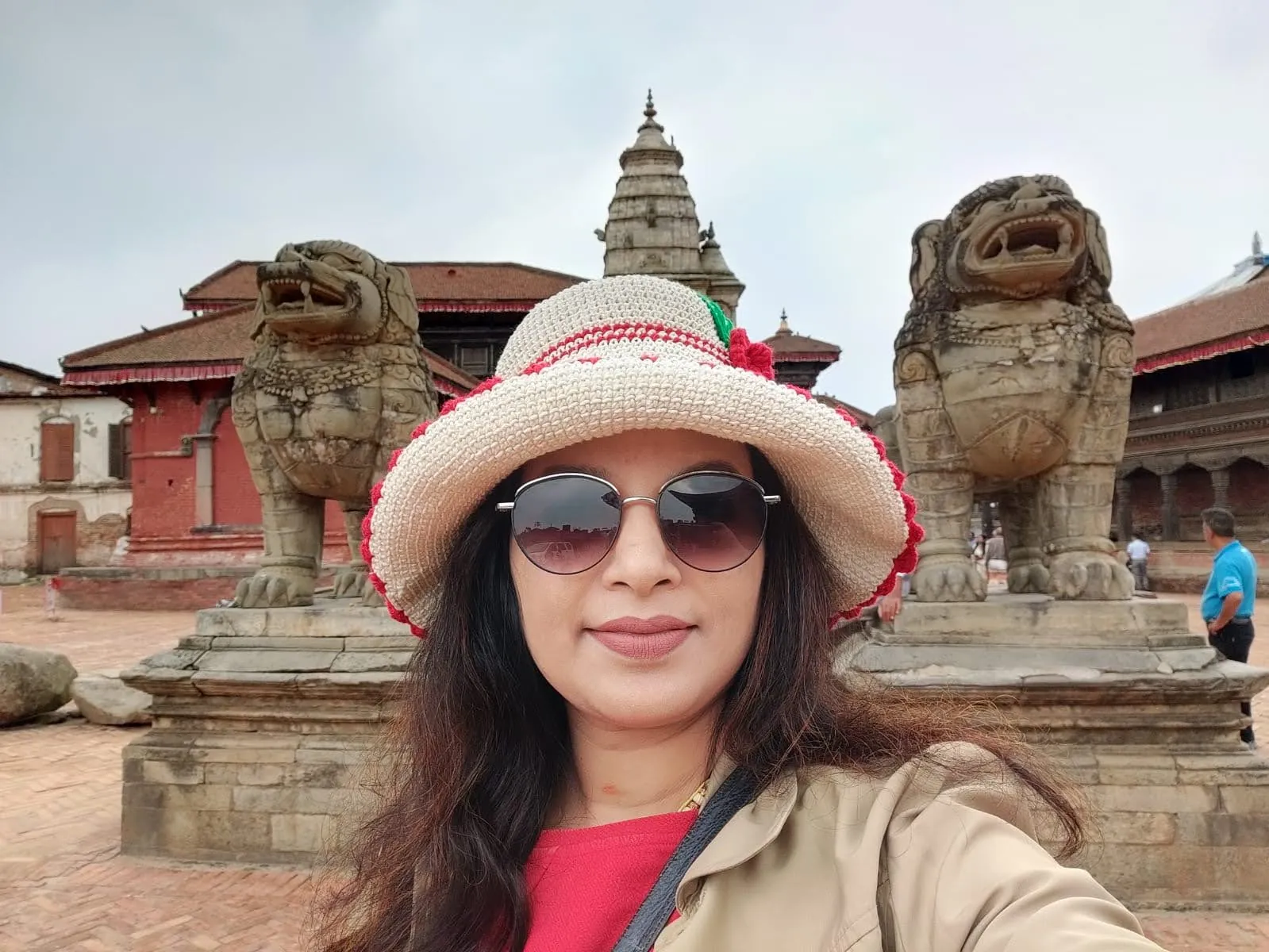
Dress Modestly
Dress modestly, covering shoulders and knees, as many temples are active, revered places of daily Hindu and Buddhist worship.
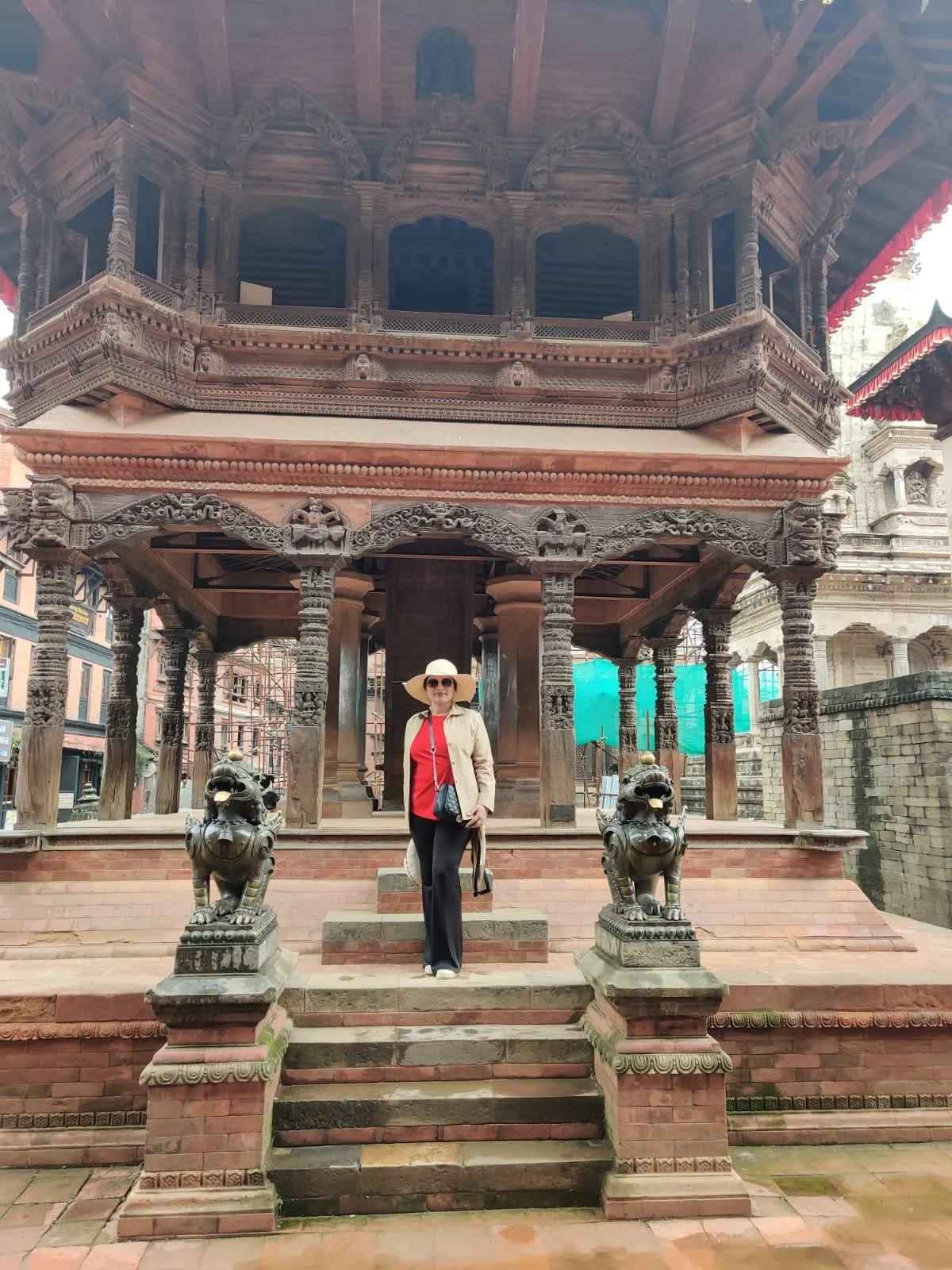
Dedicate Unhurried Time
Keep at least 3–4 hours to explore the temples, palaces, museums, and hidden courtyards tucked behind the four ancient squares.
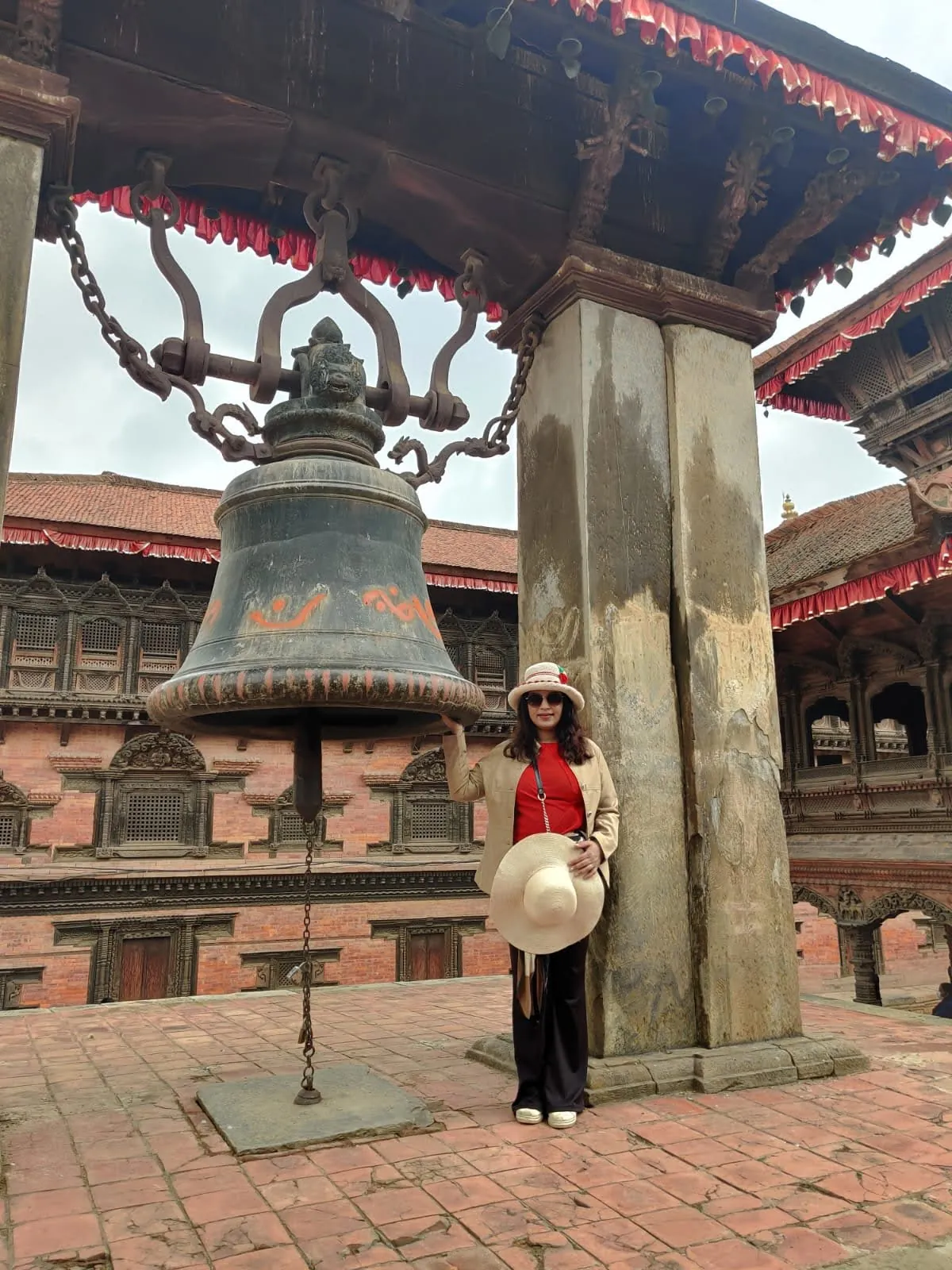
Preserve Your Entry Ticket
Purchase the entry ticket at the main gate and keep it with you throughout your visit. It is verified at internal square checkpoints.
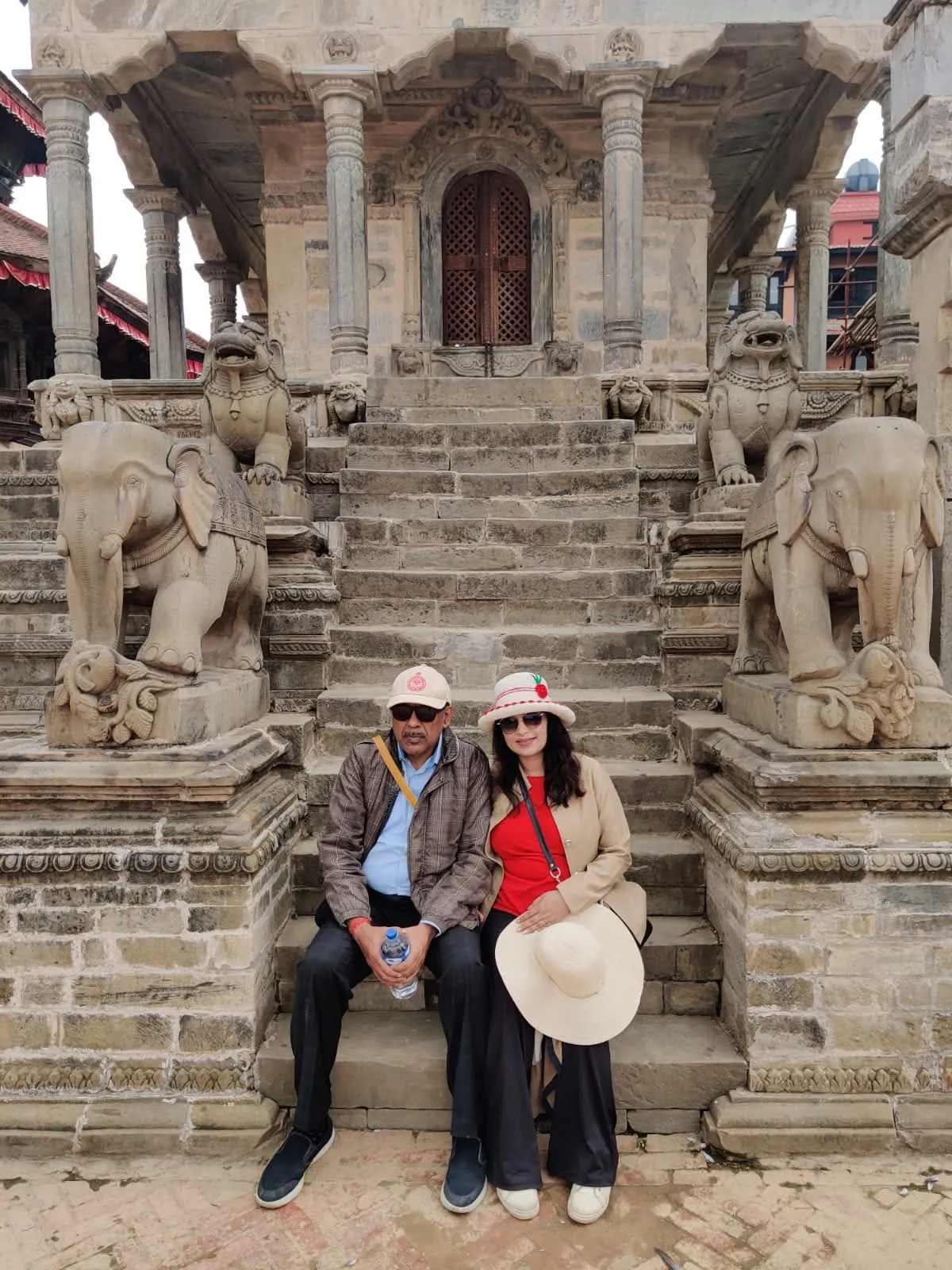
Wear Comfortable Shoes
Wear comfortable walking shoes—the old city is best explored on foot over brick-paved streets and steep temple stairs.
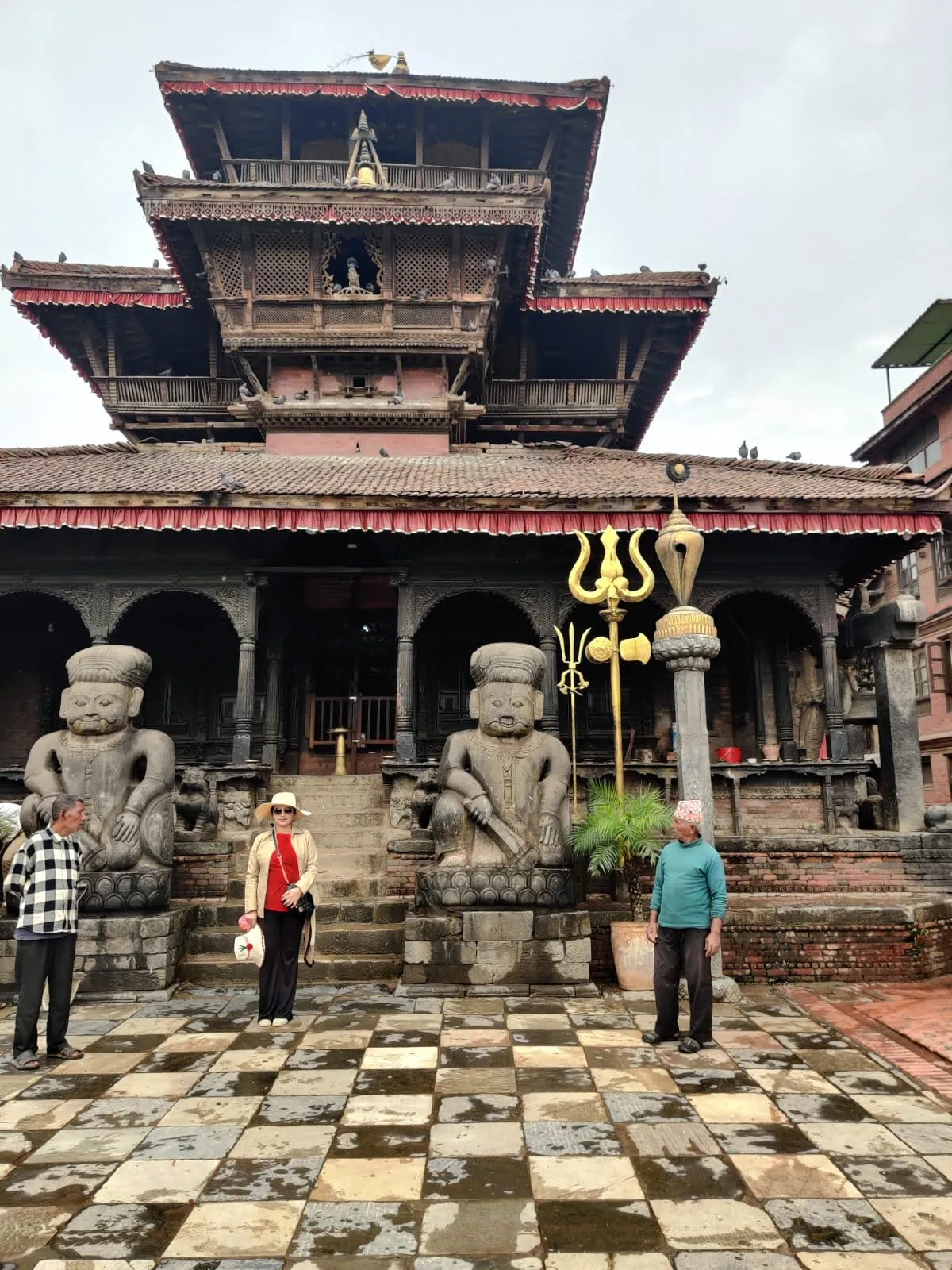
Key Sights Checklist
Don't miss the 55-Window Palace, Golden Gate, Nyatapola Temple, Dattatreya Square, and Pottery Square.
Taste Juju Dhau (King Curd)
Try the famous Juju Dhau (King Curd), a traditional Bhaktapur delicacy made from rich buffalo milk and set in porous terracotta clay bowls.
Visit a Rooftop Café
Visit a rooftop café for panoramic views of the historic square and surrounding multi-tiered temples against the dramatic Himalayan foothills.
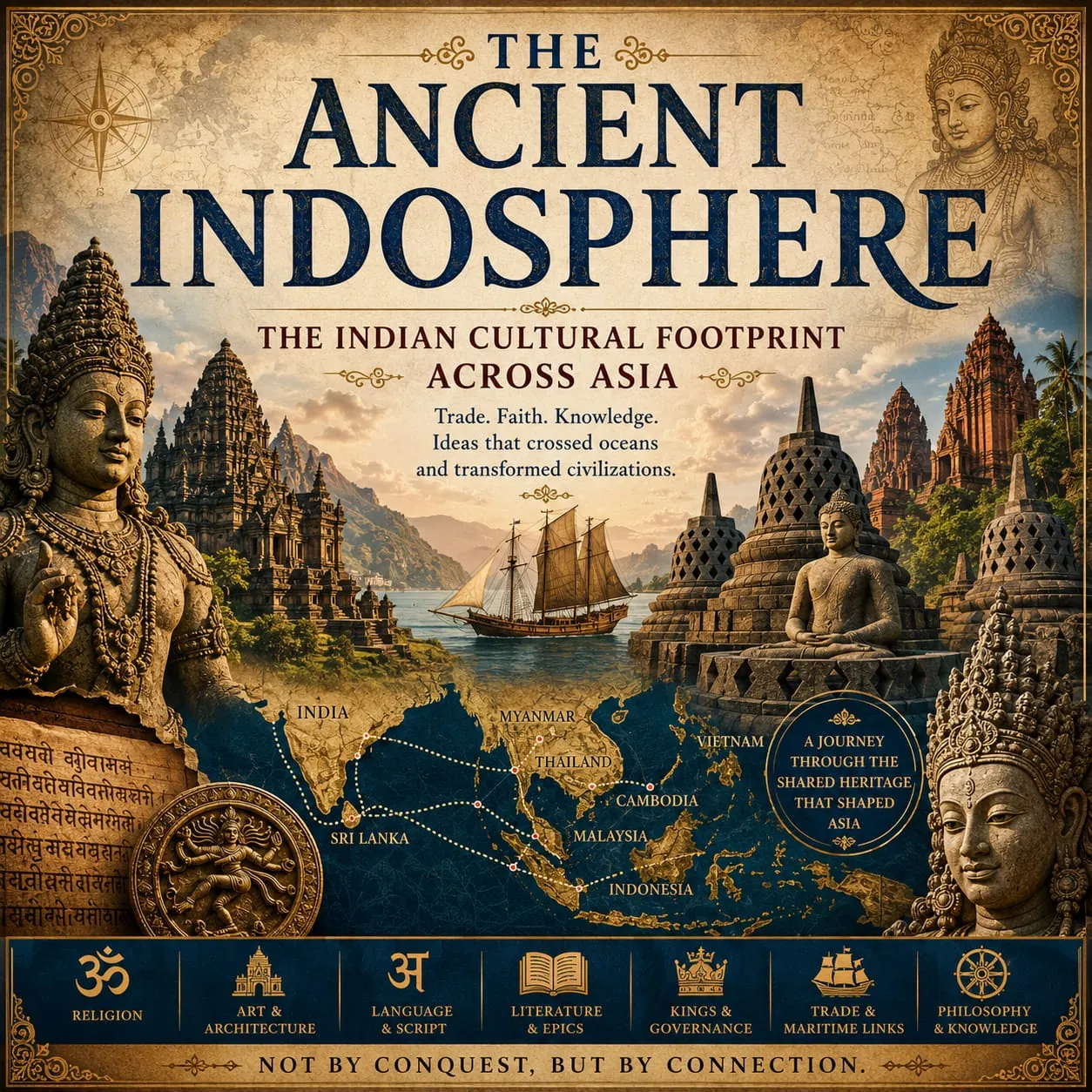
TRAVELLING THROUGH THE TIMELESS LEGACY OF INDIAN CIVILIZATION ACROSS ASIA AND BEYOND
“Not by conquest, but by connection.”
Bhaktapur stands as a living testament to the shared cultural horizons connecting the sacred Himalayas to the wider ancient Indosphere—where Sanskrit traditions, temple architecture, Vedic rituals, and spiritual philosophies were carried not by sword, but through dialogue, art, and devotion.