
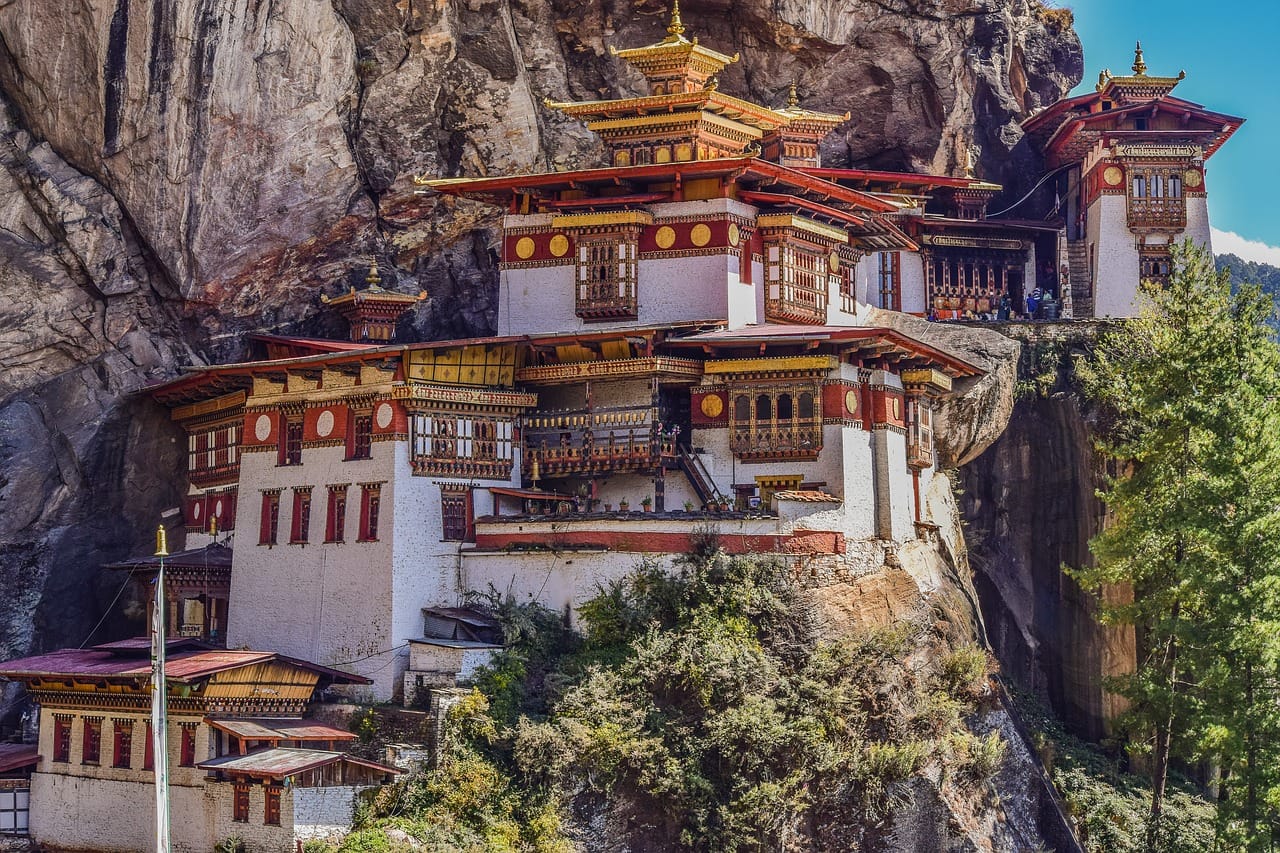
VAJRAYANA BUDDHISM — BHUTAN AND NEPAL
Tantric Wisdom, Sacred Mandalas, and Living Himalayan Traditions
Developed in ancient India and carried across the high Himalayan passes, Vajrayana Buddhism flourished in the Kathmandu Valley and the cliffside sanctuaries of Bhutan. Through sacred mantras, mandalas, deity yoga, and mystical Cham dances, it offers a transformative path to rapid spiritual awakening.
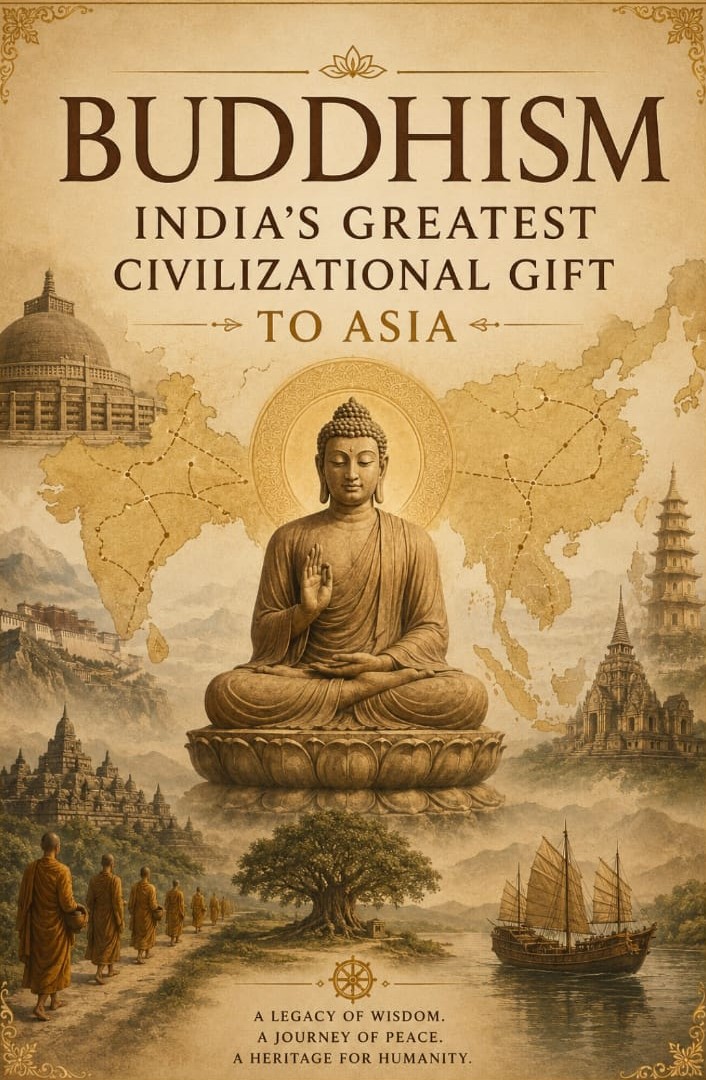
Civilizational Gift
The peaceful spread of Buddhist wisdom, monastic art, and philosophical inquiry from India across Asia
Vajrayana Buddhism
The Esoteric Tradition of Accelerated Enlightenment
Vajrayana Buddhism, also known as Tantric or Esoteric Buddhism, developed in India around the 6th–7th centuries CE as an advanced form of Mahayana Buddhism.
It emphasizes the Bodhisattva ideal but introduces powerful ritual techniques such as mantras, mudras, mandalas, and deity yoga to achieve enlightenment more rapidly. Vajrayana teaches that enlightenment can be attained in a single lifetime under the guidance of a qualified guru (lama), making the teacher–disciple relationship central to its practice.
The Diamond Vehicle
Using symbolic rituals, sacred sound (mantras), and geometric cosmograms (mandalas) to transmute ordinary perception into primordial wisdom.
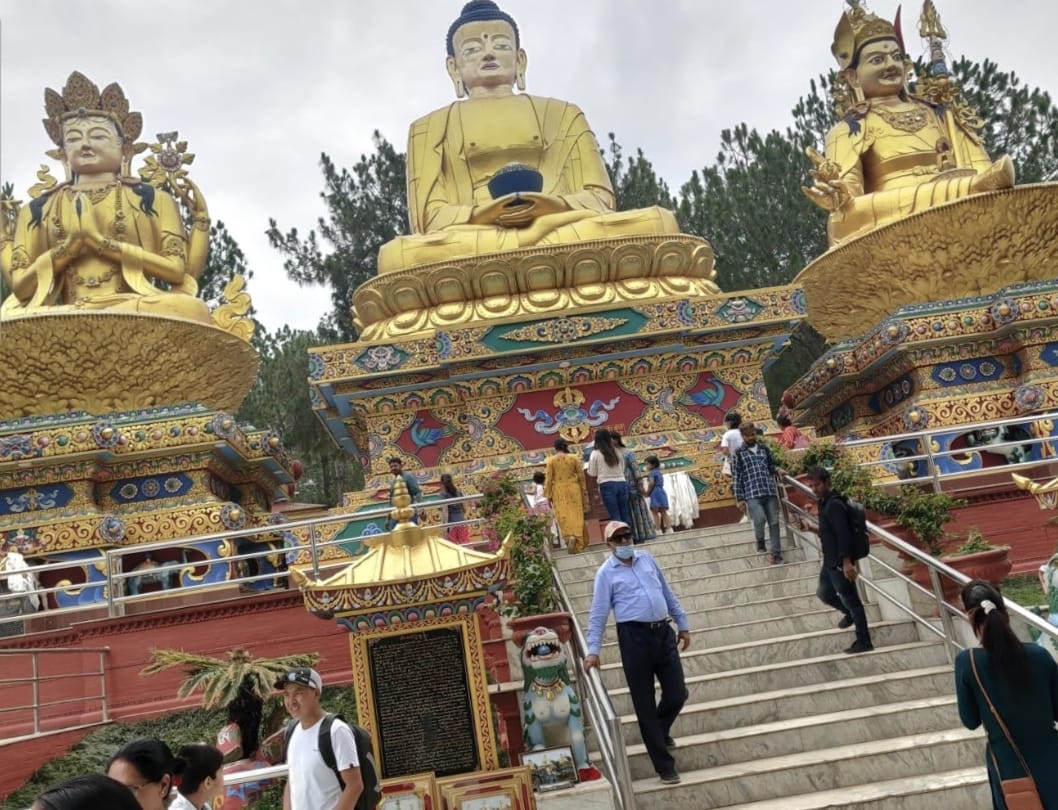
Kathmandu Valley
Pilgrims ascending the sacred stairs before the towering golden triad of Shakyamuni Buddha and the great Bodhisattvas
Buddhism in the Kathmandu Valley
Sacred Courtyards and the Three Great Bodhisattvas
Walking through the Kathmandu Valley, we were fascinated by how naturally Buddhism is woven into everyday life. Standing before an image of Lord Buddha with two Bodhisattvas, we felt a deep connection with the ancient Buddhist traditions that travelled from India into the Himalayan world.
Here, Buddhism has evolved into a distinctive Newar tradition, beautifully reflected in the valley's monasteries, art and sacred courtyards. For us, it was a glimpse of a living heritage that continues to connect Nepal with India's ancient Buddhist civilisation.
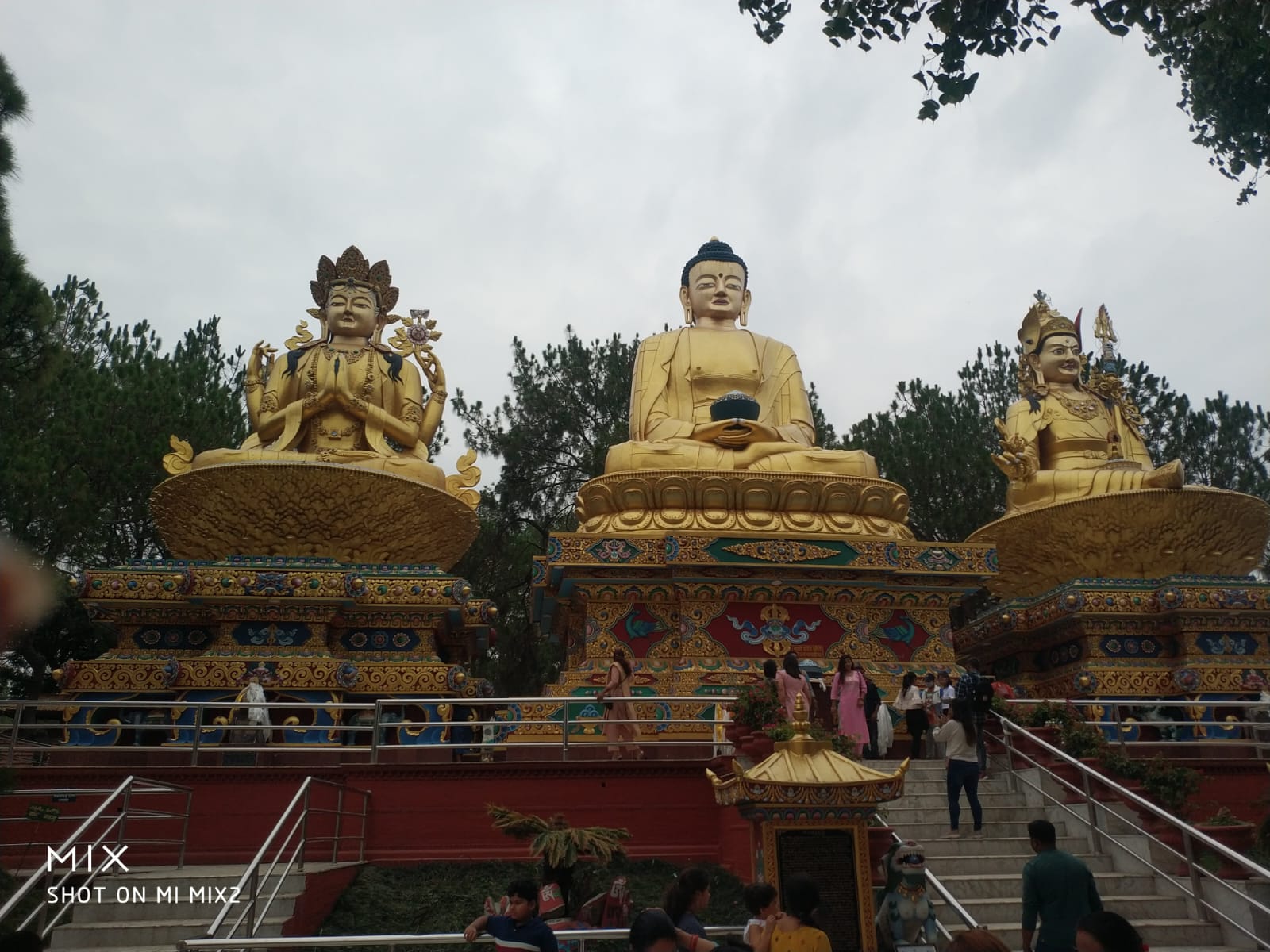
Three Golden Protectors
The monumental triad reflecting unbroken artistic and devotional ties between India and the Kathmandu Valley.
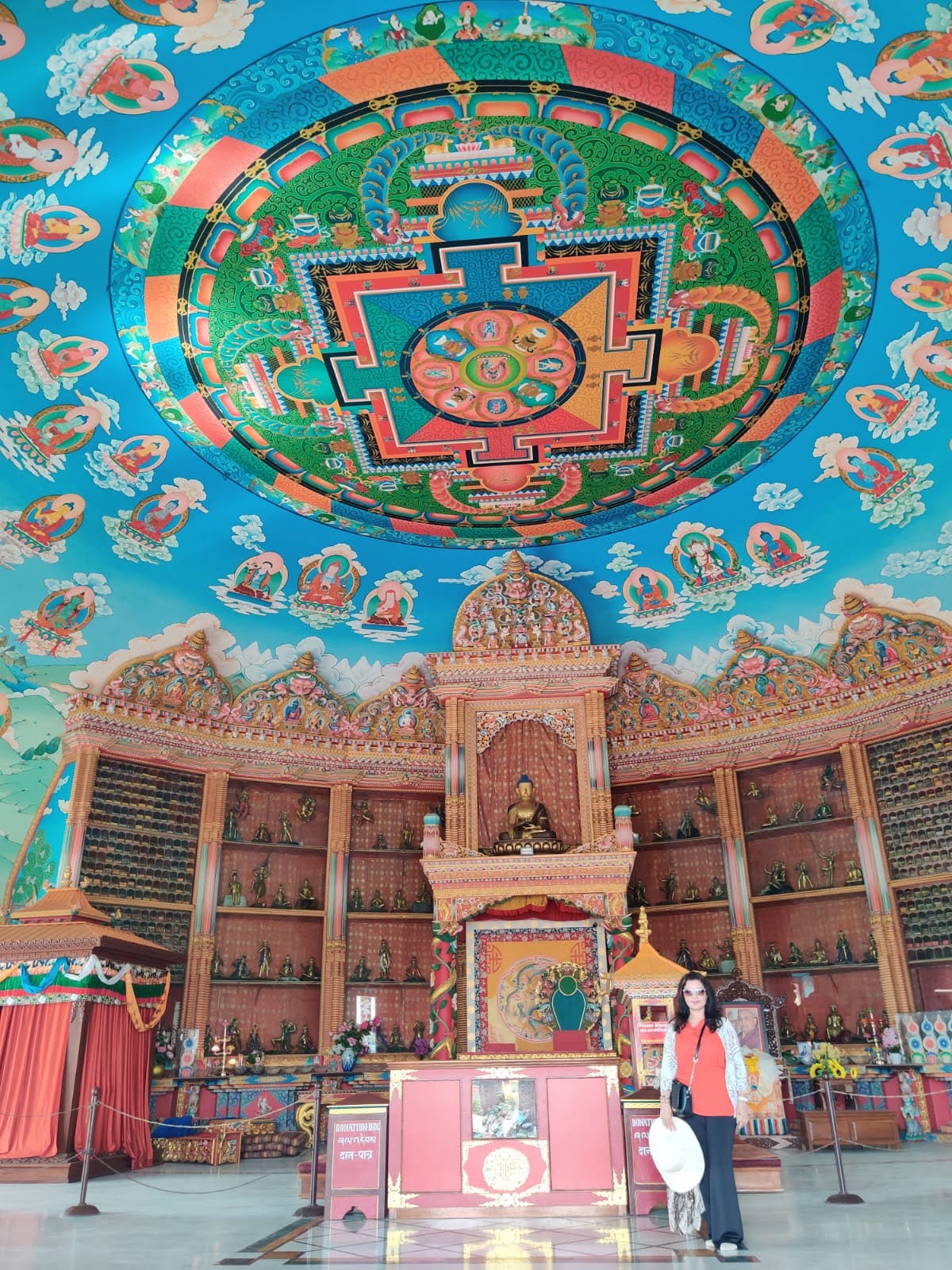
Celestial Dome
Intricate Kalachakra ceiling mandala above the circular meditation hall in the Great Lotus Stupa, Lumbini
Lumbini Vajrayana Monastery
Where Art, Spirituality, and Tranquillity Converge
Inside one of Lumbini’s Vajrayana Buddhist monasteries, I was drawn to a spectacular, vibrant mandala covering the ceiling, with a serene seated Buddha beneath it.
The vivid colours and intricate patterns created a striking contrast with the Buddha’s quiet stillness. For me, it was one of those simple yet memorable moments in Lumbini—where art, spirituality and tranquillity came together beautifully.
A separate blog on Lumbini explores its Buddhist heritage in greater detail.
Lumbini — Sacred Birthplace of Buddha
Visit our dedicated guide exploring the Maya Devi Temple, ancient marker stone, Ashoka Pillar, and the international monastic zone.
India — Birthplace of Vajrayana
India was the birthplace of Vajrayana, with major centers such as Nalanda, Vikramashila, Odantapuri, and Somapura Mahavihara playing a crucial role in its development. Great Indian masters like Padmasambhava, Atisha Dipankara, Nagarjuna (tantric traditions), and Tilopa systematized Vajrayana philosophy and practices. These monastic universities attracted scholars from Tibet, Central Asia, and Southeast Asia, facilitating the transmission of Vajrayana texts, rituals, and lineages beyond India.
Guru Padmasambhava: The Saint Who Brought Buddhism to Bhutan
Paro Taktsang
Guru Padmasambhava's cliffside hermitage perched 900 meters above the Paro Valley floor in western Bhutan
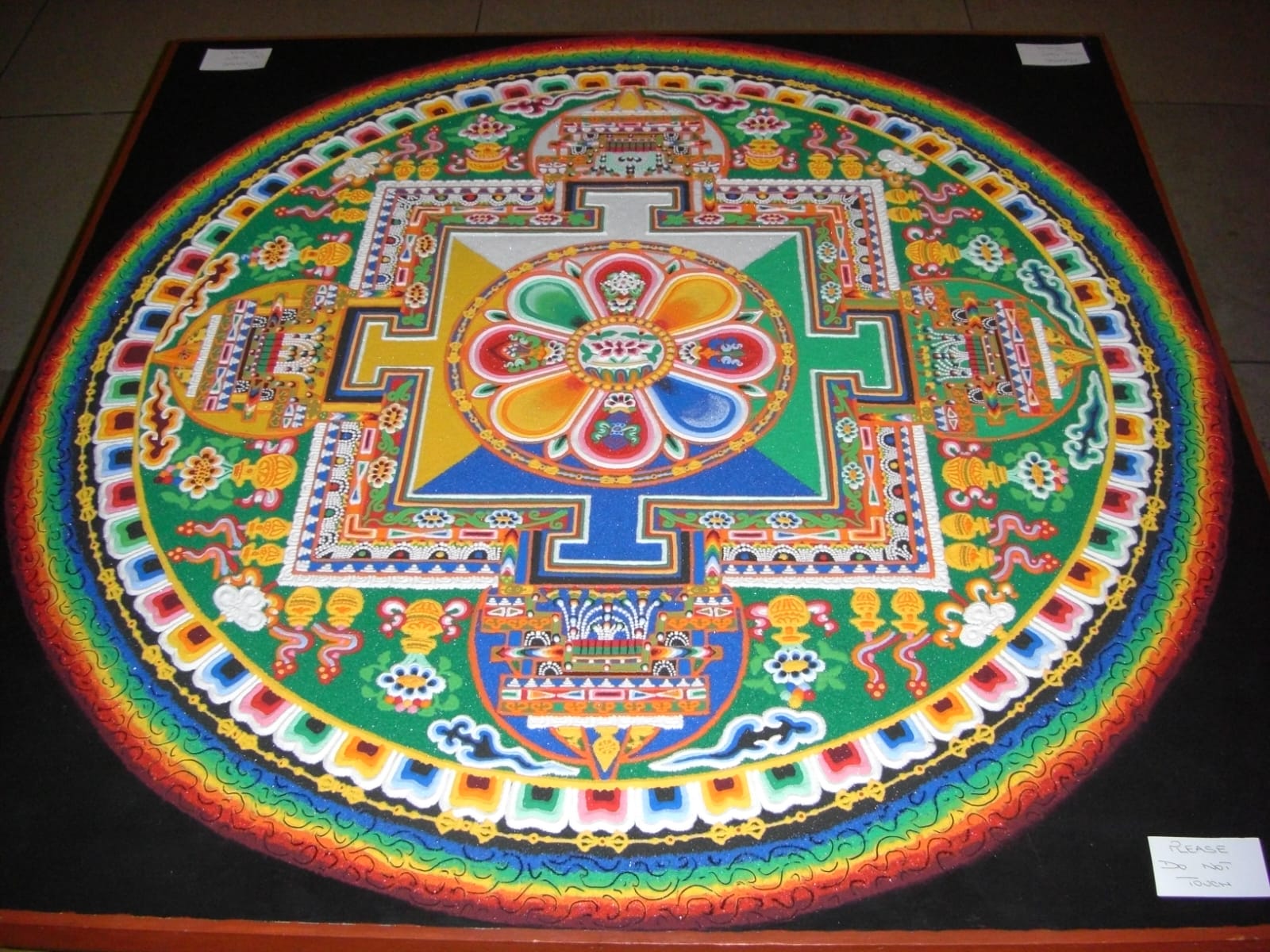
Sand Mandala
Grains of mineral-dyed sand arranged into the palace of Chenrezig, created to bless the earth and swept away to demonstrate impermanence
The Sacred Lesson of Impermanence
Contemplating Non-Attachment Through Sacred Art
Watching the monks create a sand mandala over two weeks felt like witnessing a sacred prayer taking shape, one grain of colored sand at a time. Every intricate pattern reflected the harmony of the universe, the interconnectedness of all life, and the soul's journey towards enlightenment. As I stood in silence, the mandala seemed to draw my mind inward, filling me with a rare sense of peace and stillness.
But its greatest teaching came when the monks gently swept away their magnificent creation. In that moment, I understood the profound Buddhist truth of impermanence—that nothing in this world, whether joy, sorrow, success, or suffering, lasts forever. The mandala disappeared, but the wisdom it left behind remains etched in my heart, reminding me to live with gratitude, detachment, and acceptance of life's ever-changing flow.
Wisdom of Dissolution
The intentional sweeping of the sand mandala into a nearby river carries its blessings out into the world while reminding the practitioner that all formed phenomena are transitory.
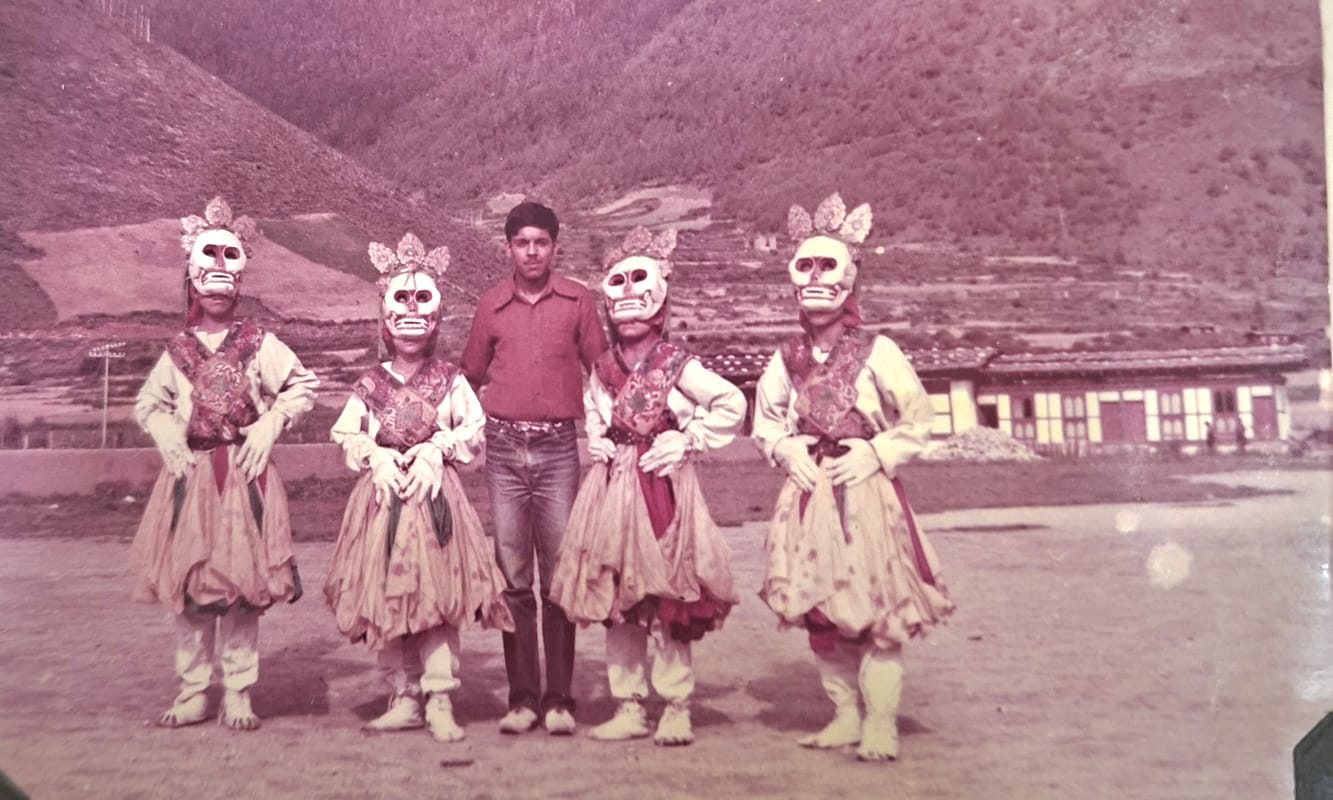
Living Cham Tradition
Dancers adorned with ritual silk skirts and skull masks representing Citipati, the joyful guardians of truth and impermanence
The Sacred Rhythm of Cham & Why the Monks Wear Fearsome Masks
Wrathful Compassion as a Dynamic Spiritual Awakening
Watching the monks perform the sacred Cham dances was far more than witnessing a cultural spectacle—it felt like stepping into a living prayer. Every graceful movement, every vibrant costume, and every intricately carved mask carried deep spiritual meaning, portraying the eternal triumph of wisdom over ignorance and good over evil. The rhythmic chants and the haunting sounds of traditional instruments created an atmosphere that seemed to transcend time, drawing me into Bhutan's profound Buddhist heritage. Although this photograph was taken many years ago, the memory remains as vivid as ever, reminding me that Cham is not merely a dance but a sacred path to purification, compassion, and spiritual awakening, preserving the timeless soul of Bhutan for generations to come.
The fierce masks in Cham dances are often misunderstood as representing evil. In Vajrayana Buddhism, they symbolize enlightened beings appearing in wrathful forms—not to frighten good people, but to destroy ignorance, ego, greed, and hatred. The terrifying appearance conveys compassion in a powerful form: sometimes wisdom must be fierce to overcome suffering.
Fierce Compassion
In Vajrayana iconography, terrifying expressions do not denote malevolence—they represent the decisive energy required to vanquish inner obstacles and delusions.
Spread of Vajrayana from India
From India, Vajrayana spread along trade and pilgrimage routes to the Himalayan and Central Asian regions, flourishing especially in Tibet, Bhutan, Nepal, Mongolia, and parts of China and Japan. Tibetan Buddhism represents the most complete living form of Vajrayana preserved today. Across these Himalayan kingdoms, Vajrayana remains influential for its rich rituals, monastic traditions, and its emphasis on disciplined practice combined with deep philosophical insight.
End of My Journey to Nepal and Bhutan
As my journey through Nepal and Bhutan came to an end, I realized that Vajrayana Buddhism is far more than an ancient philosophy. Born in the great monasteries of India, nurtured in the Kathmandu Valley, and preserved in the monasteries of Bhutan, it continues to inspire millions with its timeless message of wisdom, compassion, and inner transformation.
Long after the prayer flags, mandalas, and masked dances faded from view, the greatest pilgrimage was the one that continued within me.
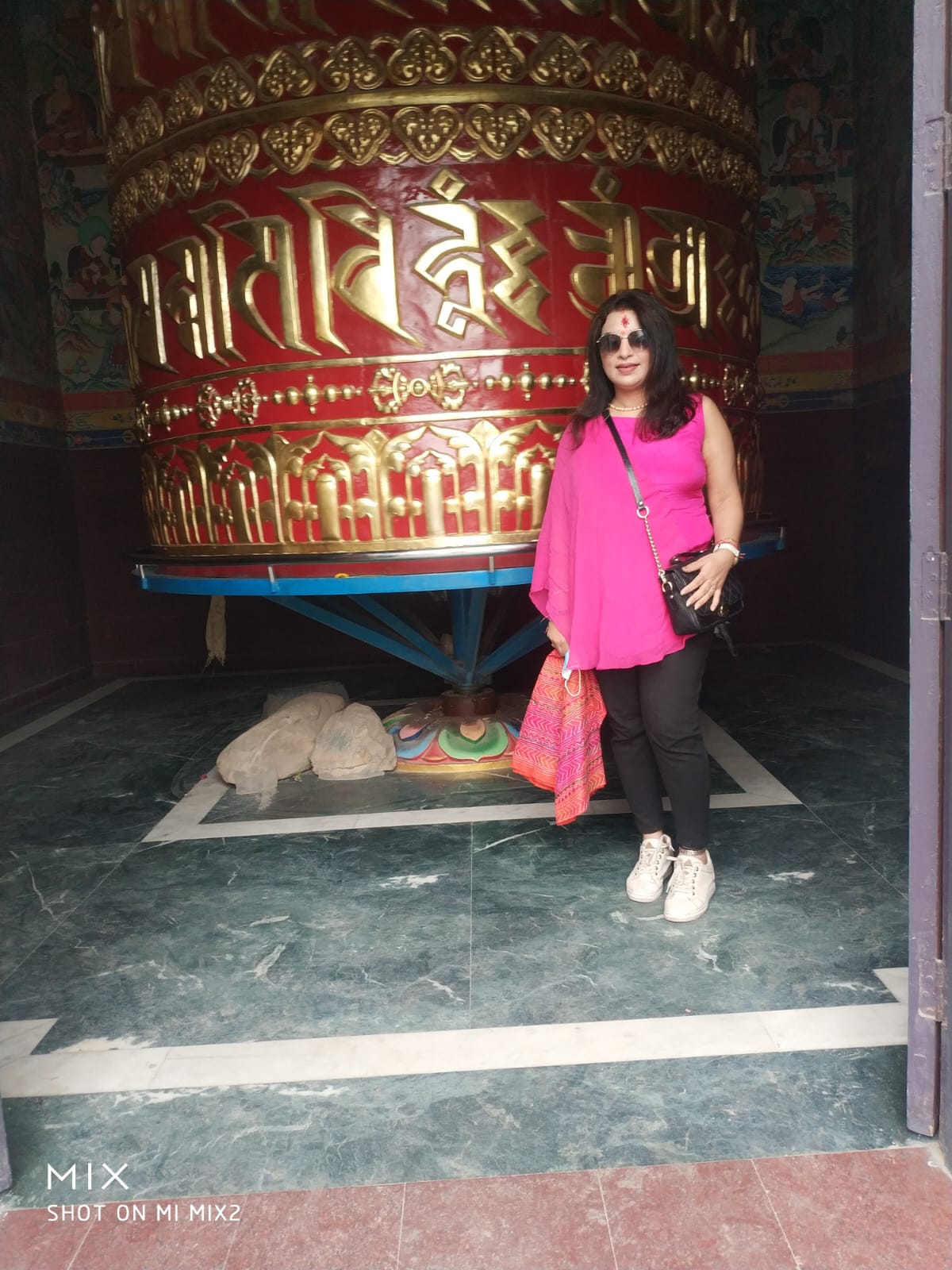
Wheel of Compassion
Turning the sacred Mani wheel to release millions of prayers of peace for all sentient beings
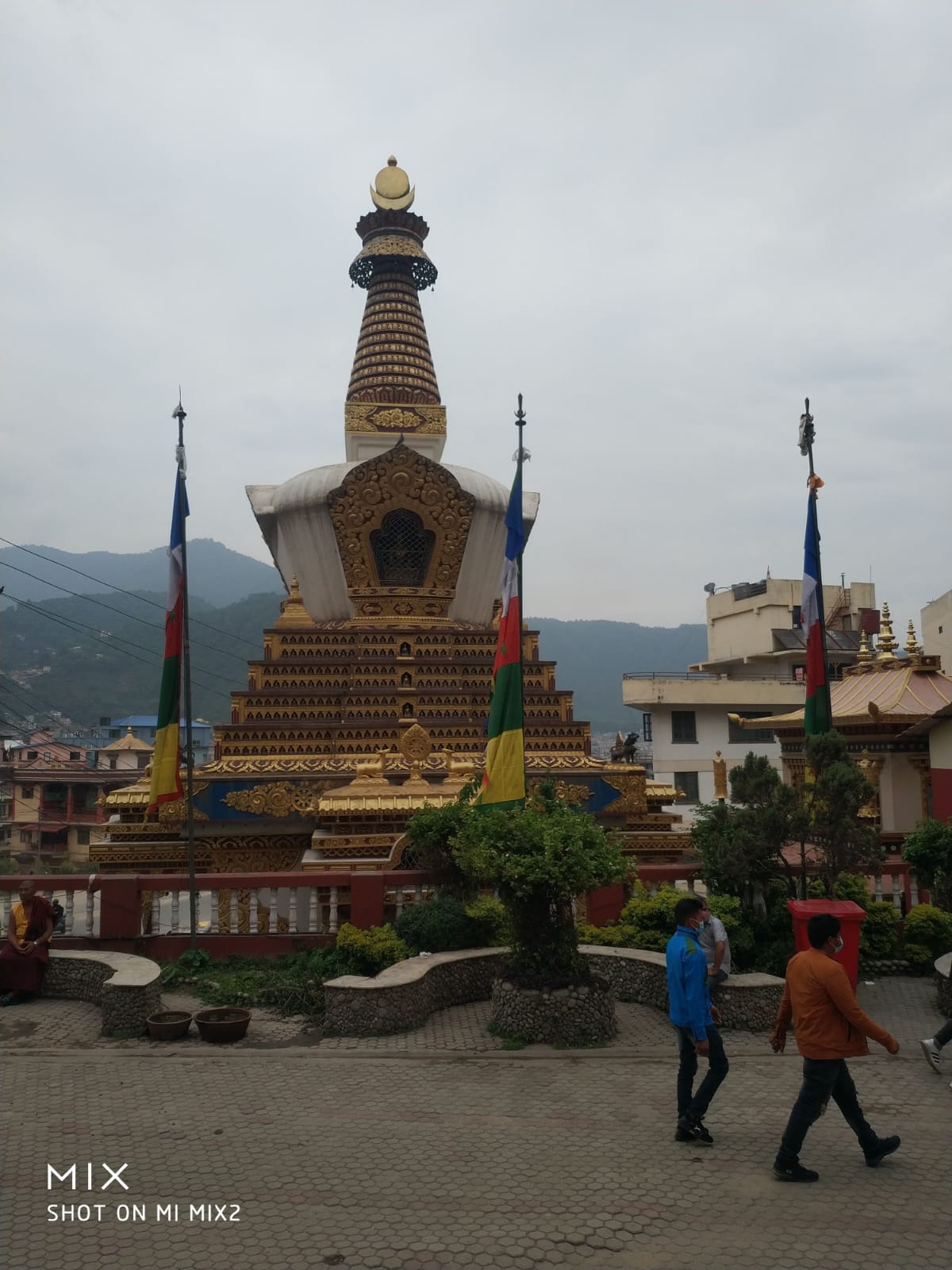
Sacred Stupa
A white and gold chörten standing as a beacon of mindfulness, peace, and spiritual aspiration
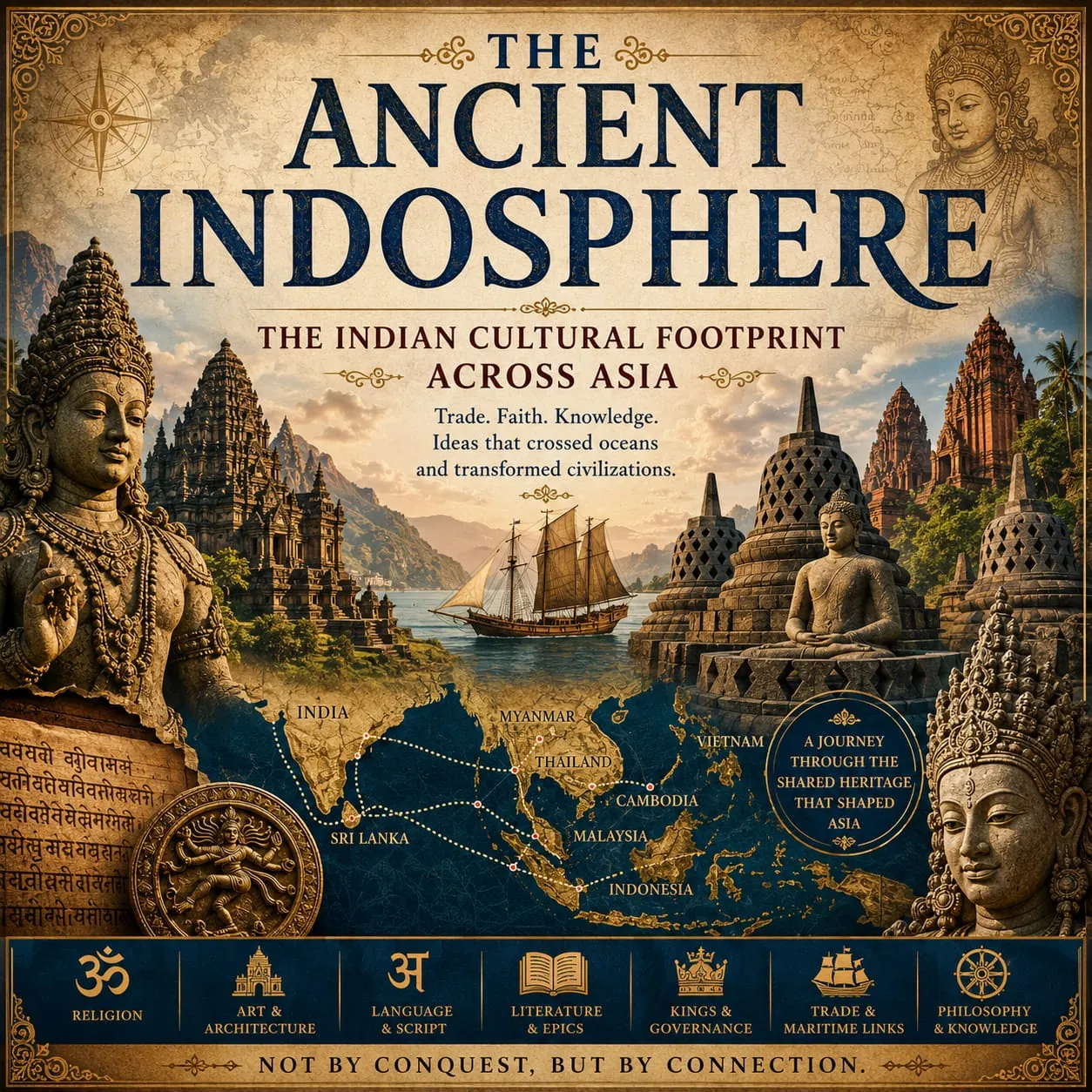
TRAVELLING THROUGH THE TIMELESS LEGACY OF INDIAN CIVILIZATION ACROSS ASIA AND BEYOND
“Not by conquest, but by connection.”
Across the cliffside sanctuaries of Bhutan and the sacred courtyards of the Kathmandu Valley, the Vajrayana traditions born in India continue to illuminate the Himalayas with wisdom, compassion, and inner transformation.