
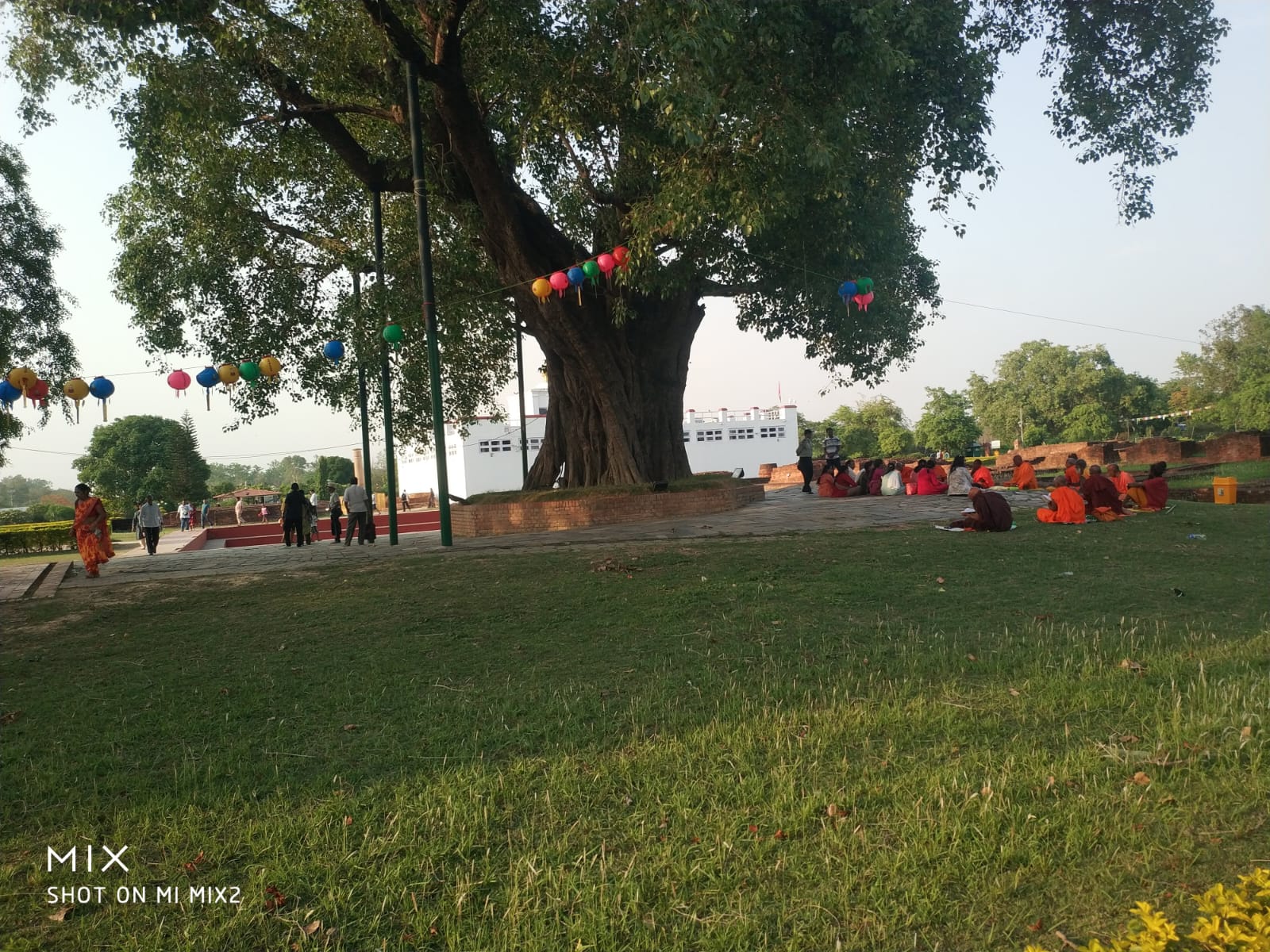
LUMBINI — THE SACRED BIRTHPLACE OF LORD BUDDHA
A UNESCO World Heritage Sanctuary of Peace & Enlightenment
Revered as the sacred ground where Prince Siddhartha Gautama was born in 623 BCE, Lumbini is the spiritual cradle of Buddhism—preserving the sacred Maya Devi Temple, the Puskarini pond, Emperor Ashoka's ancient inscribed pillar, and a peaceful global tapestry of international monasteries.
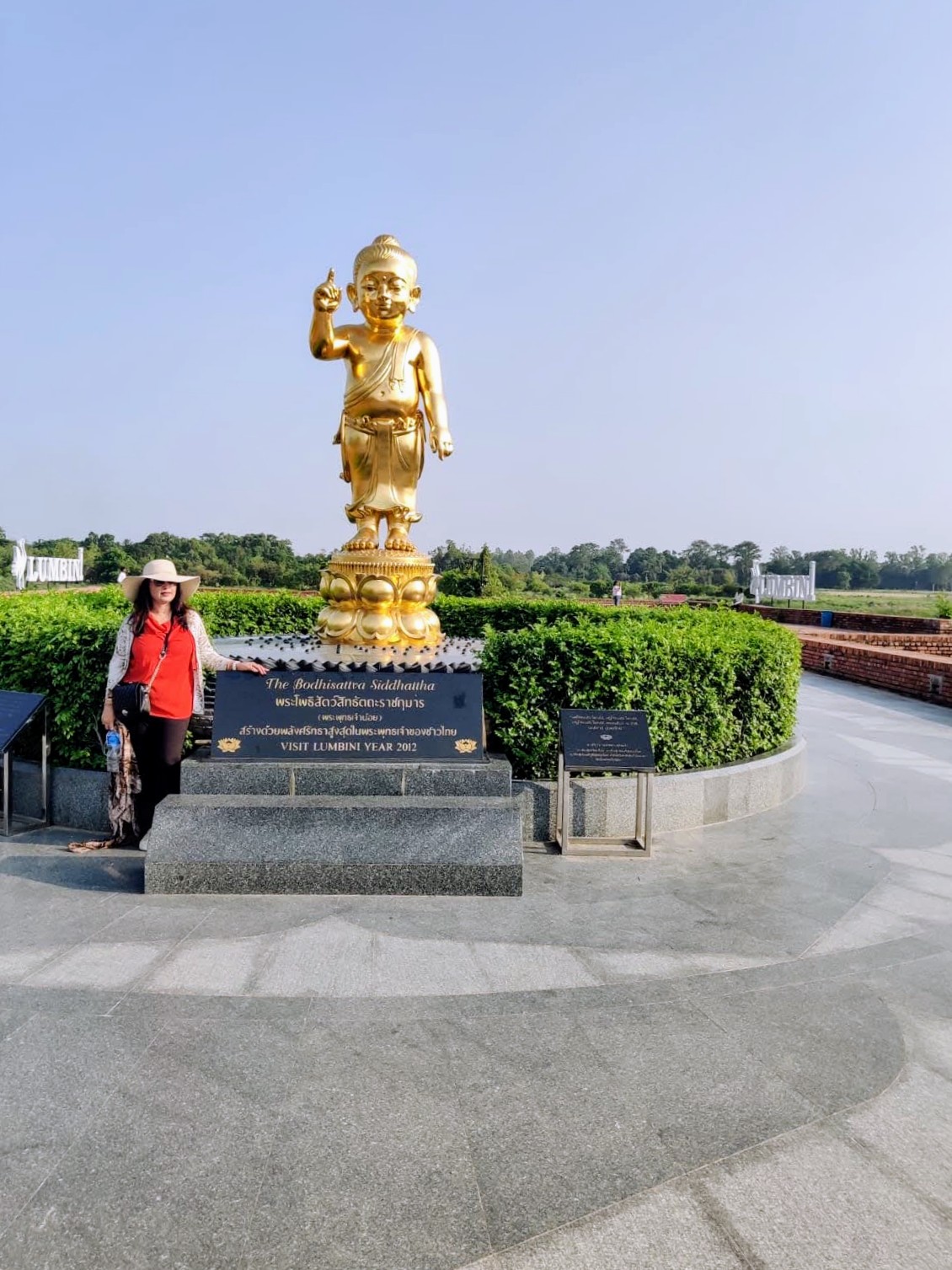
The Nativity
Golden sculpture depicting the newborn Prince Siddhartha taking his first seven steps upon sacred lotus blossoms
Maya Devi Temple, Lumbini, Nepal
The Exact Birthplace of Siddhartha Gautama
The sacred Maya Devi Temple in Lumbini marks the exact birthplace of Siddhartha Gautama, who later became Lord Buddha. Revered as one of the holiest pilgrimage sites in the Buddhist world, the temple stands at the heart of the UNESCO World Heritage Site of Lumbini.
Ancient ruins, archaeological remains, and the sacred marker stone inside the shrine preserve the memory of this historic and spiritual event.
Epicenter of Enlightenment
Archaeological excavations beneath the temple uncovered continuous Mauryan and pre-Mauryan brick foundations pinpointing the exact location where Queen Maya Devi gave birth.
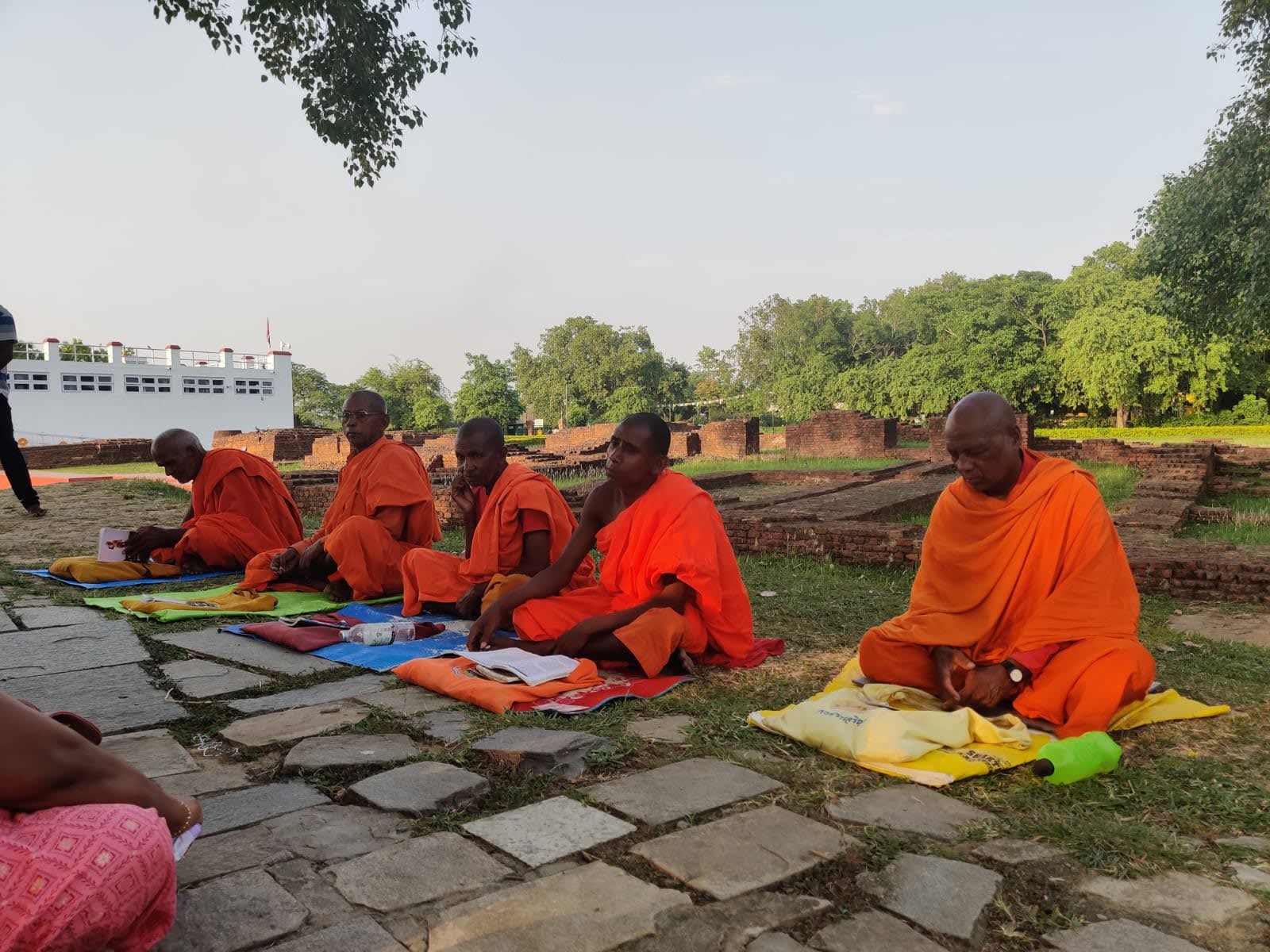
Living Devotion
Monks meditating amidst the ancient brick stupa and vihara foundations in the Sacred Garden
India & Lumbini: A Shared Buddhist Heritage
The Four Holiest Milestones Across Himalayan Frontiers
Lumbini, the birthplace of Prince Siddhartha Gautama, marks the beginning of one of the world's greatest spiritual journeys. Although the Buddha was born in present-day Nepal, the defining milestones of his life unfolded in India—he attained Enlightenment beneath the Bodhi Tree at Bodh Gaya, delivered his first sermon at Sarnath, and attained Mahaparinirvana at Kushinagar.
Together, Nepal and India preserve the four holiest pilgrimage sites of Buddhism, forming a sacred circuit that has attracted monks, pilgrims, and scholars for over 2,500 years. This shared heritage is a powerful reminder that the legacy of the Buddha transcends modern borders, uniting the two nations through a timeless tradition of peace, compassion, and spiritual wisdom.
The Sacred Fourfold Circuit
Linking Lumbini (Birth), Bodh Gaya (Enlightenment), Sarnath (First Sermon), and Kushinagar (Mahaparinirvana) across India and Nepal.
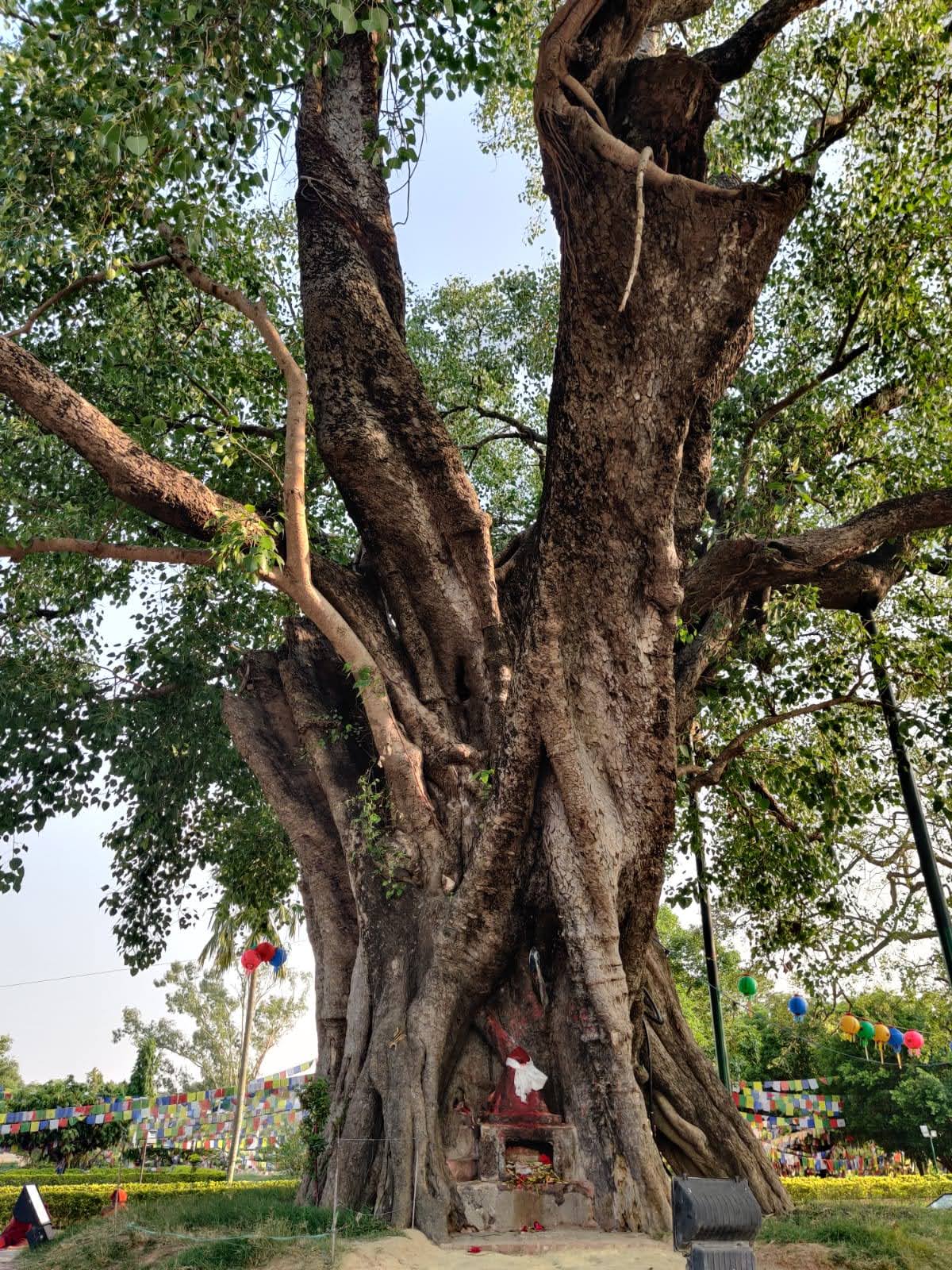
Shared Sanctity
Sacred Bodhi Tree where Hindu and Buddhist devotees offer butter lamps, incense, and prayers together
Lumbini — A Sacred Place for Both Buddhists and Hindus
Veneration of Queen Maya Devi Across Traditions
The sacred Maya Devi Temple in Lumbini is primarily a Buddhist pilgrimage temple, as it marks the birthplace of Siddhartha Gautama, who became Lord Buddha.
However, the temple also has strong connections with Hindu traditions because Queen Maya Devi is respected in Hindu culture, and many Hindus visit the site with deep reverence. Thus, Lumbini is regarded as a sacred place shared by both Buddhist and Hindu devotees.
Mother of the Enlightened One
Revered across traditions, Queen Maya Devi embodies the maternal archetype celebrated in both Vedic philosophy and Buddhist texts.
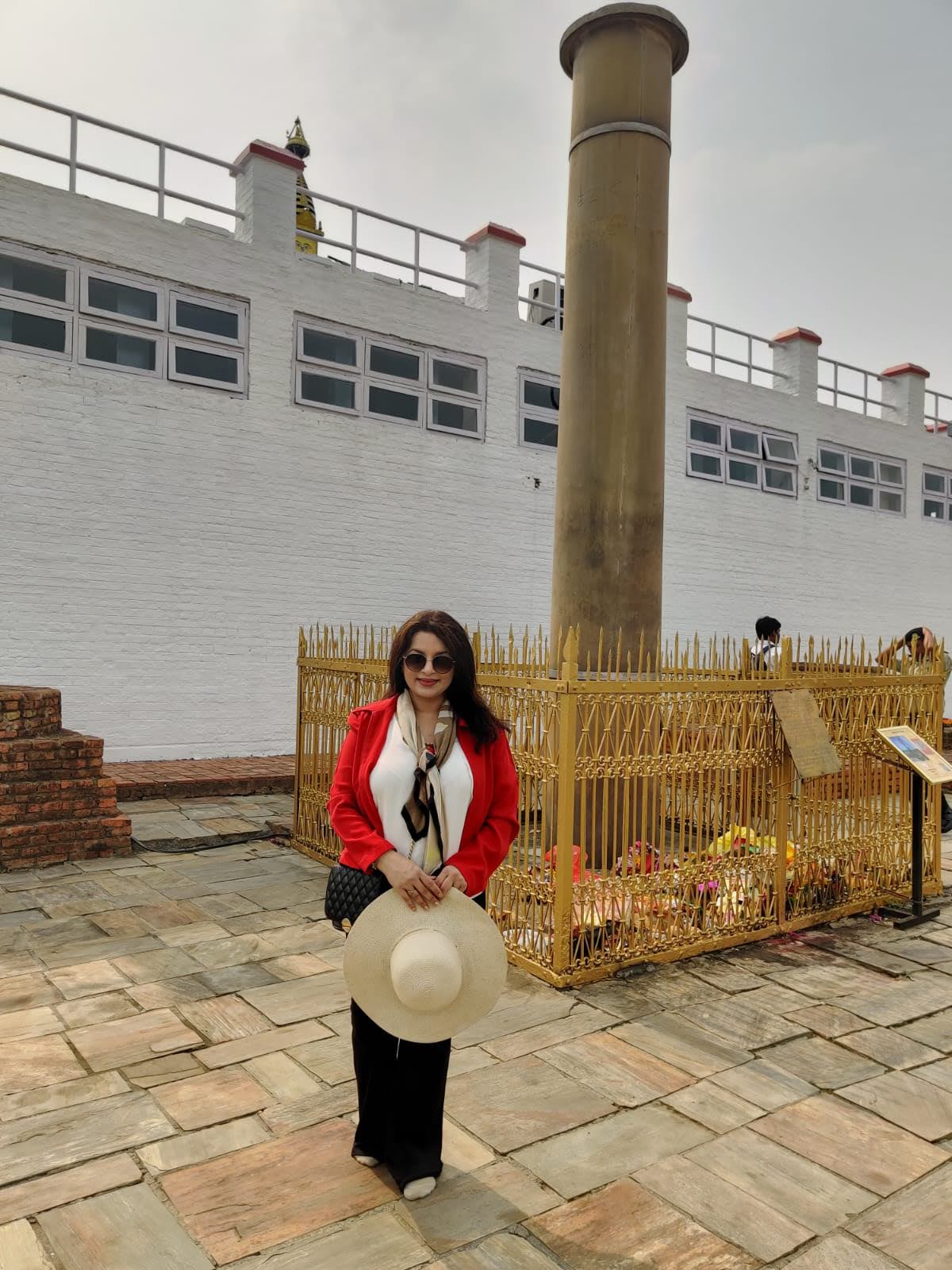
249 BCE Inscription
The monolithic pillar bearing Emperor Ashoka's royal Brahmi edict declaring: 'Hida Budhe jate Sakyamuni ti' (Here the Buddha Sakyamuni was born)
Emperor Ashoka's Journey to Lumbini and Patan
Ancient Inscriptions and the Four Valley Stupas
Travelling through Nepal, I was deeply moved to follow in the footsteps of Emperor Ashoka, whose pilgrimage over 2,200 years ago forged one of the earliest spiritual links between India and Nepal. After embracing Buddhism, Ashoka journeyed to Lumbini, where he erected the famous Ashoka Pillar to commemorate the birthplace of the Buddha and issued an inscription honouring the sacred site.
Local tradition also holds that he, accompanied by his daughter Charumati, visited the Kathmandu Valley and built four great stupas around Patan, each still standing as a silent witness to this shared Buddhist heritage. Walking among these ancient monuments, I felt that Ashoka's legacy continues to unite the two nations through a timeless message of peace, compassion, and faith.
The Imperial Testimony
Ashoka's visit in the twentieth year of his reign provides the foundational archaeological anchor dating the sacred birthplace of Gautama Buddha.

Auspicious Sign
The peaceful turtle surfacing and gliding gracefully toward the water steps of the Puskarini pond
A Silent Messenger in Lumbini
The Auspicious Encounter at Puskarini Sacred Pond
As we wandered through the sacred gardens of Lumbini, we paused beside the tranquil pond, absorbing the serenity of the Buddha's birthplace. Local belief holds that the appearance of a turtle is an auspicious sign. Within moments, a turtle emerged from the water and slowly swam towards us, as if quietly acknowledging our presence. Whether it was mere coincidence or something more, the encounter felt deeply symbolic. In Buddhist tradition, the turtle represents patience, wisdom, self-discipline, and the rare opportunity of human life—a gentle reminder to remain steadfast on the path of spiritual growth.
For us, the moment carried a personal meaning. Throughout our journey, we had been tracing the remarkable spread of Indian civilization, Buddhism, and cultural influence across Asia. Watching the turtle glide peacefully through the water, I couldn't help but feel it was a silent messenger, encouraging us to continue exploring and sharing this extraordinary heritage. Perhaps it was simply nature at work, or perhaps it was a reminder that every meaningful journey requires patience and perseverance. As we left the pond, I smiled at the thought that if we remained committed to this quest, it might one day lead us—not to a destination on a map—but a little closer to our own understanding of Nirvana.
The Rare Opportunity of Life
In Buddhist philosophy, the parable of the blind turtle rising to the surface of the vast ocean symbolizes the extraordinary rarity and sacred blessing of human rebirth.

Kenzo Tange (1978) Design
Geometric linear axis leading south to the Sacred Garden
The Lumbini Complex
Sacred Garden, Monastic Zone, and Master Plan
Lumbini complex is divided into three areas: the Sacred Garden, the Monastic Zone and the Cultural Center and New Lumbini Village.
The Sacred Garden remains the epicenter of the Lumbini area and consists of the birthplace of Buddha and other monuments of archaeological and spiritual importance such as the Mayadevi Temple, the Ashoka Pillar, the Marker Stone, the Nativity Sculpture, Puskarini Sacred Pond and other structural ruins of Buddhist stupas and viharas.
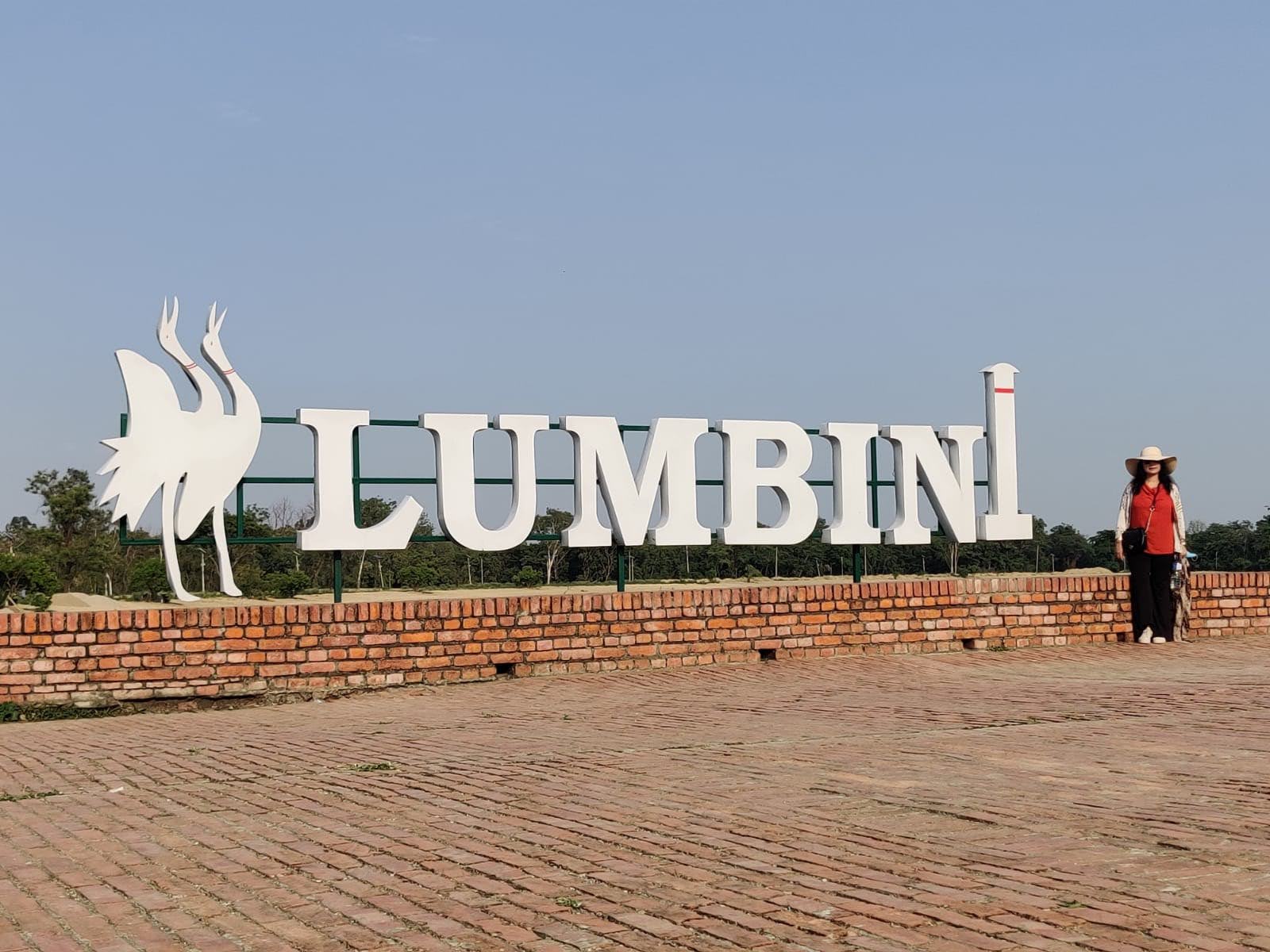
LUMBINI Plaza & Sarus Cranes
Monumental letter sculpture and Sarus cranes honoring Prince Siddhartha's historic compassion.
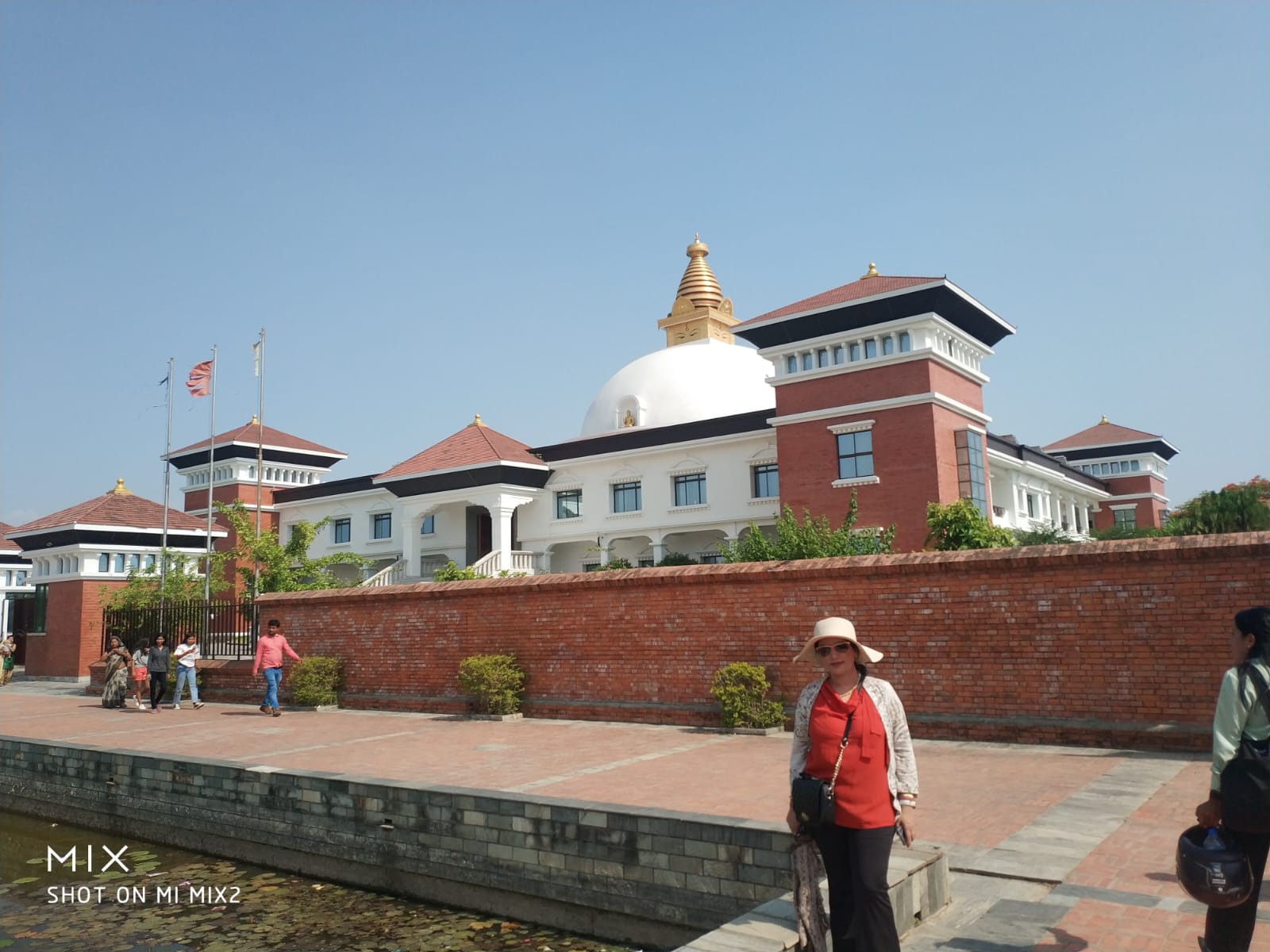
Monastic Zone
The central canal and tranquil pathways connecting diverse international Buddhist monasteries
A Full Day Exploring the International Monasteries
Global Buddhist Traditions in a Harmonious Landscape
A full day can easily be spent exploring the beautiful international monasteries surrounding the sacred Maya Devi Temple in Lumbini. Spread across the peaceful monastic zone, these monasteries have been built by Buddhist communities from many countries including Thailand, Myanmar, Sri Lanka, China, Japan, South Korea, Germany, France, and Vietnam.
Each monastery reflects the unique architectural style, artistic traditions, and spiritual practices of its respective country, creating an extraordinary atmosphere of global Buddhist harmony within a single sacred landscape.
The Monastic Enclaves
Divided into the East Zone for Theravada nations and the West Zone for Mahayana and Vajrayana traditions, creating a living global pilgrimage city.
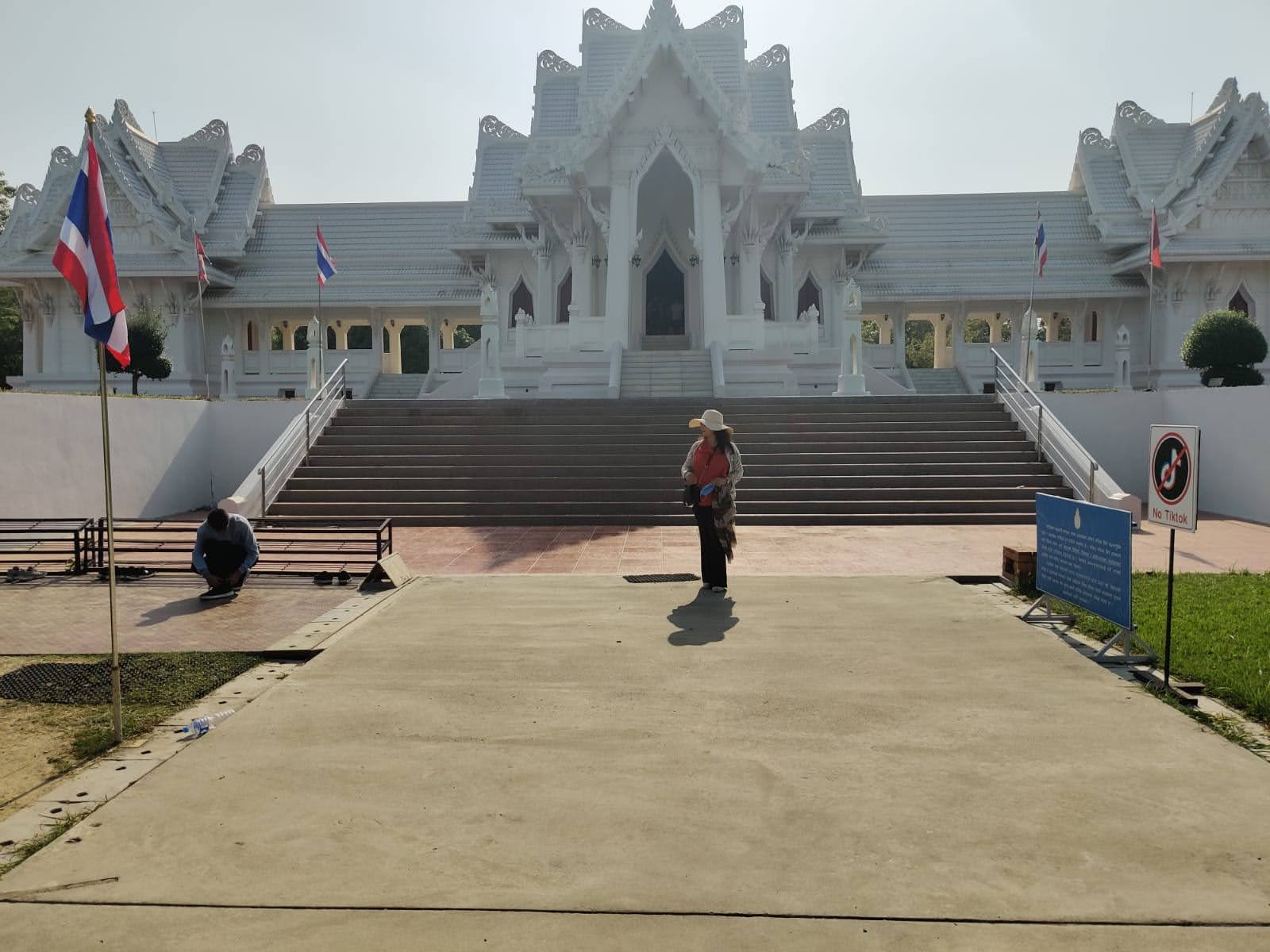
Royal Thai Monastery
Gleaming white marble architecture gifted by the Royal Thai Government in honour of the Buddha's birthplace
Royal Thai Monastery — Thailand's Tribute to the Birthplace of Buddha
Gleaming White Marble Architecture & Serene Meditation
Walking through the peaceful monastic zone of Lumbini, we arrived at the Royal Thai Monastery, its gleaming white marble façade and graceful Thai-style architecture creating an atmosphere of remarkable serenity.
Built in 1994 by the Royal Thai Government to honour Lumbini, the birthplace of Lord Buddha, the monastery symbolizes the deep spiritual ties between Thailand and Nepal. Its elegant prayer hall houses a beautiful Buddha image, while the manicured gardens provide a tranquil setting for meditation and reflection.
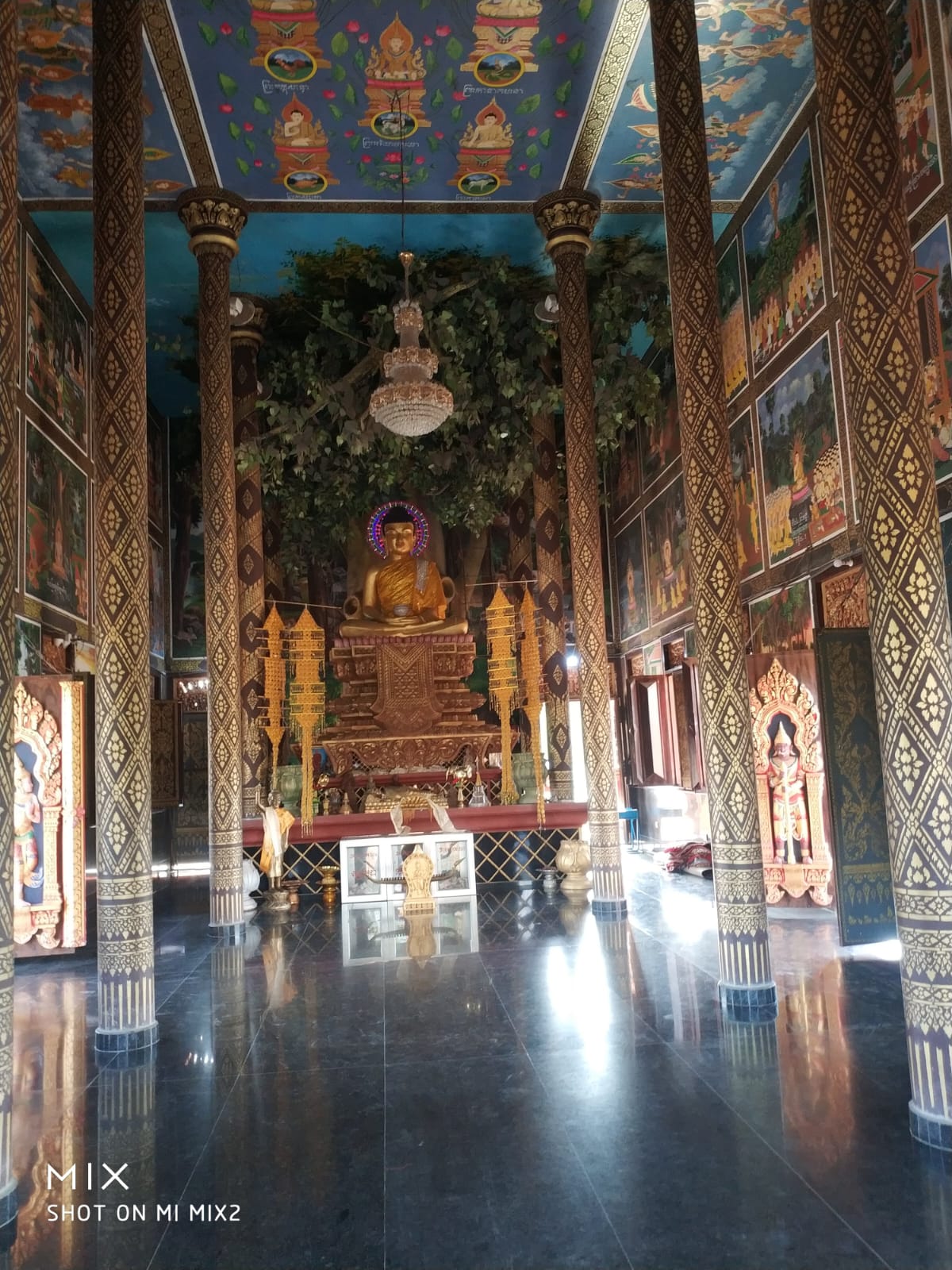
Golden Buddha Under Bodhi Canopy
Intricate gold-filigree pillars and a serene gilded Buddha seated under a lush canopy.
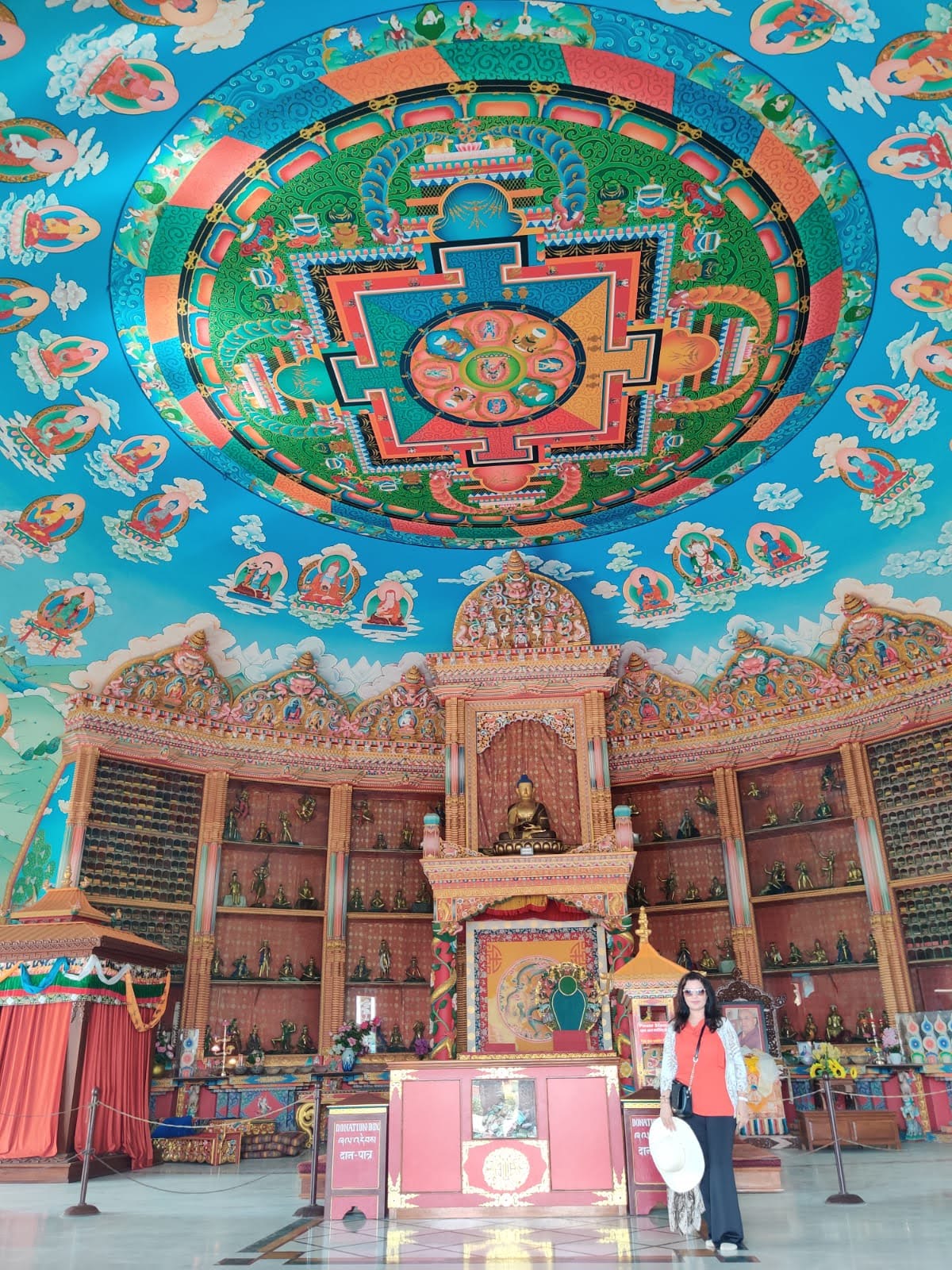
Celestial Dome Mandala
The breathtaking dome painted with Kalachakra mandalas, rising above circular wall alcoves filled with miniature Buddhas
Great Drigung Kagyud Lotus Stupa (German Monastery)
A Symbol of Global Buddhism and Ceiling Mandala Art
Among the many international monasteries in Lumbini, the Great Drigung Kagyud Lotus Stupa, popularly known as the German Monastery, left a lasting impression on us.
Built with the support of the Drigung Kagyu lineage of Tibetan Buddhism and German Buddhist devotees, the monastery is renowned for its magnificent lotus-shaped stupa, colourful murals, intricate Tibetan artwork, and serene meditation halls. The lotus, rising above the muddy waters yet remaining pure, symbolizes enlightenment—the very essence of Buddha's teachings.
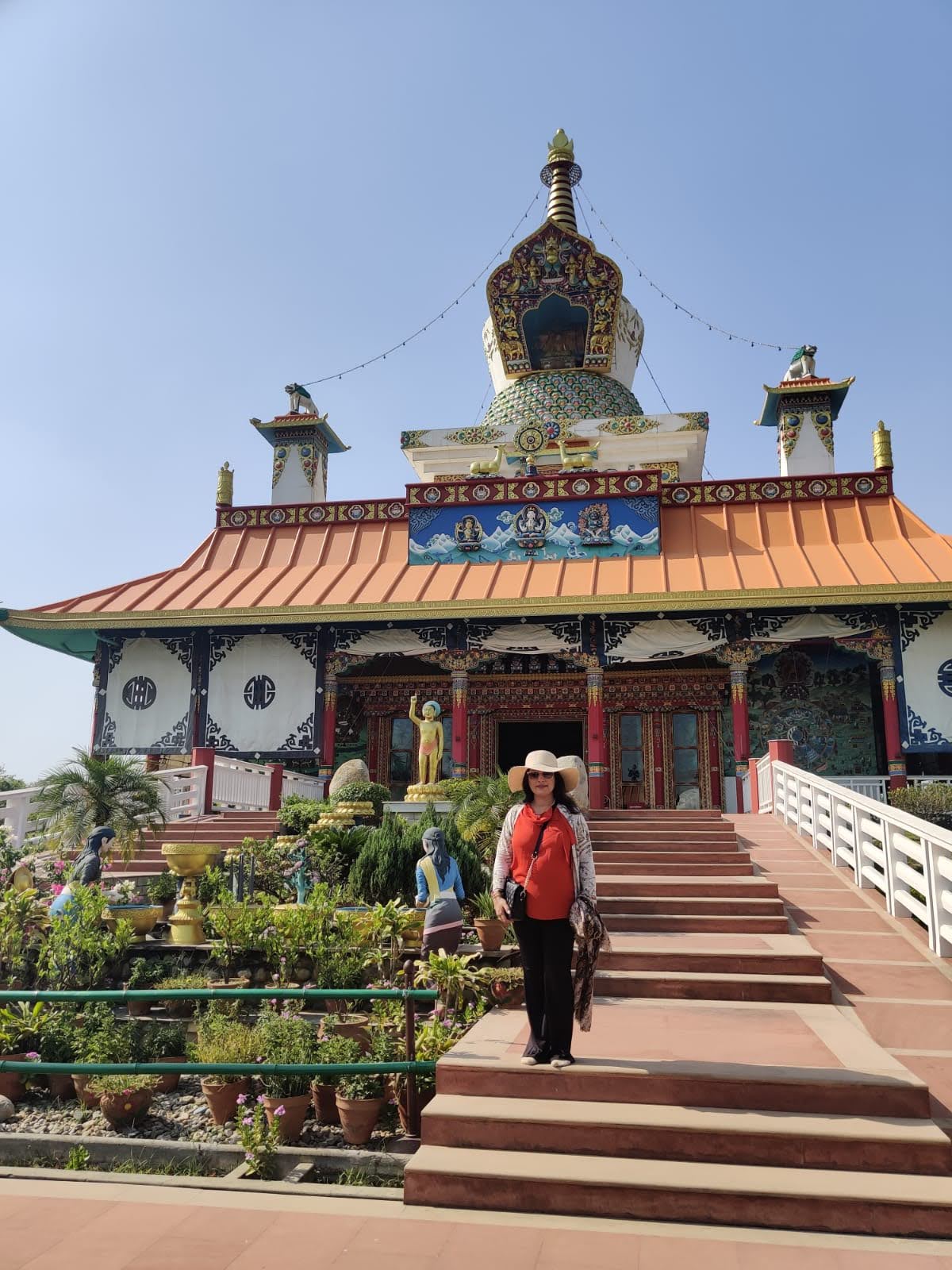
Tibetan Architectural Spire
The golden finial and terracotta roofs of the Great Drigung Kagyud Lotus Stupa.
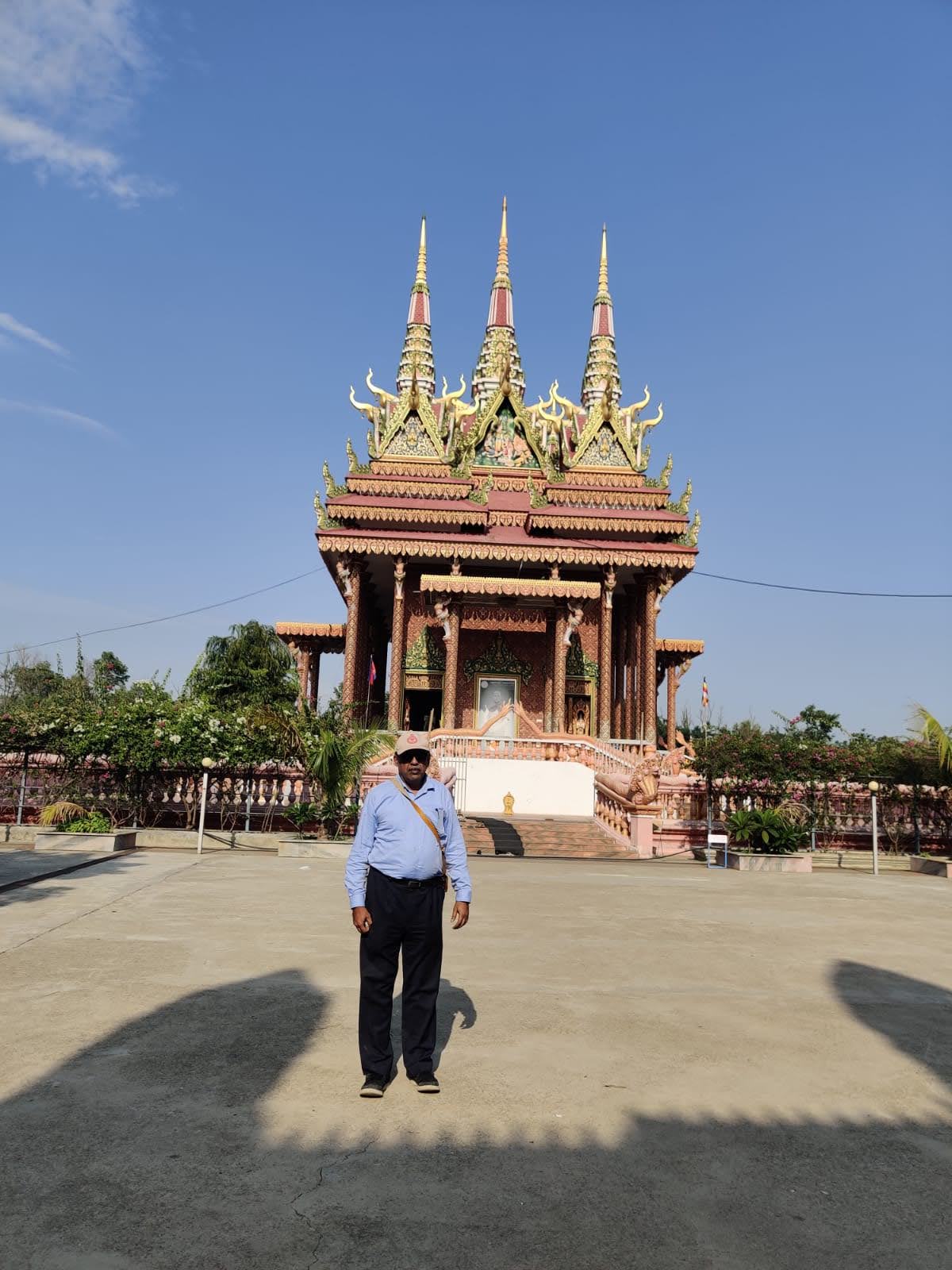
Khmer Heritage
Soaring golden prang spires echoing the timeless classical temple designs of Angkor in Cambodia
Cambodian Monastery — Khmer Heritage
Ornate Multi-Tiered Roofs and Classical Khmer Spires
Located within the Monastic Zone of Lumbini, the Cambodian Monastery was built by the Kingdom of Cambodia to honour the birthplace of Lord Buddha and to strengthen the spiritual ties between the two Buddhist nations.
Inspired by the architectural style of the great Khmer temples, particularly those of Angkor, the monastery features ornate multi-tiered roofs, elegant carvings, gilded decorations, and a serene Buddha shrine. It represents the Theravada Buddhist tradition, the dominant form of Buddhism practiced in Cambodia today.
Spiritual Bridge to Southeast Asia
Connecting the Buddha's ancient roots in the foothills of Nepal with the magnificent religious monuments of Cambodia and the Mekong basin.
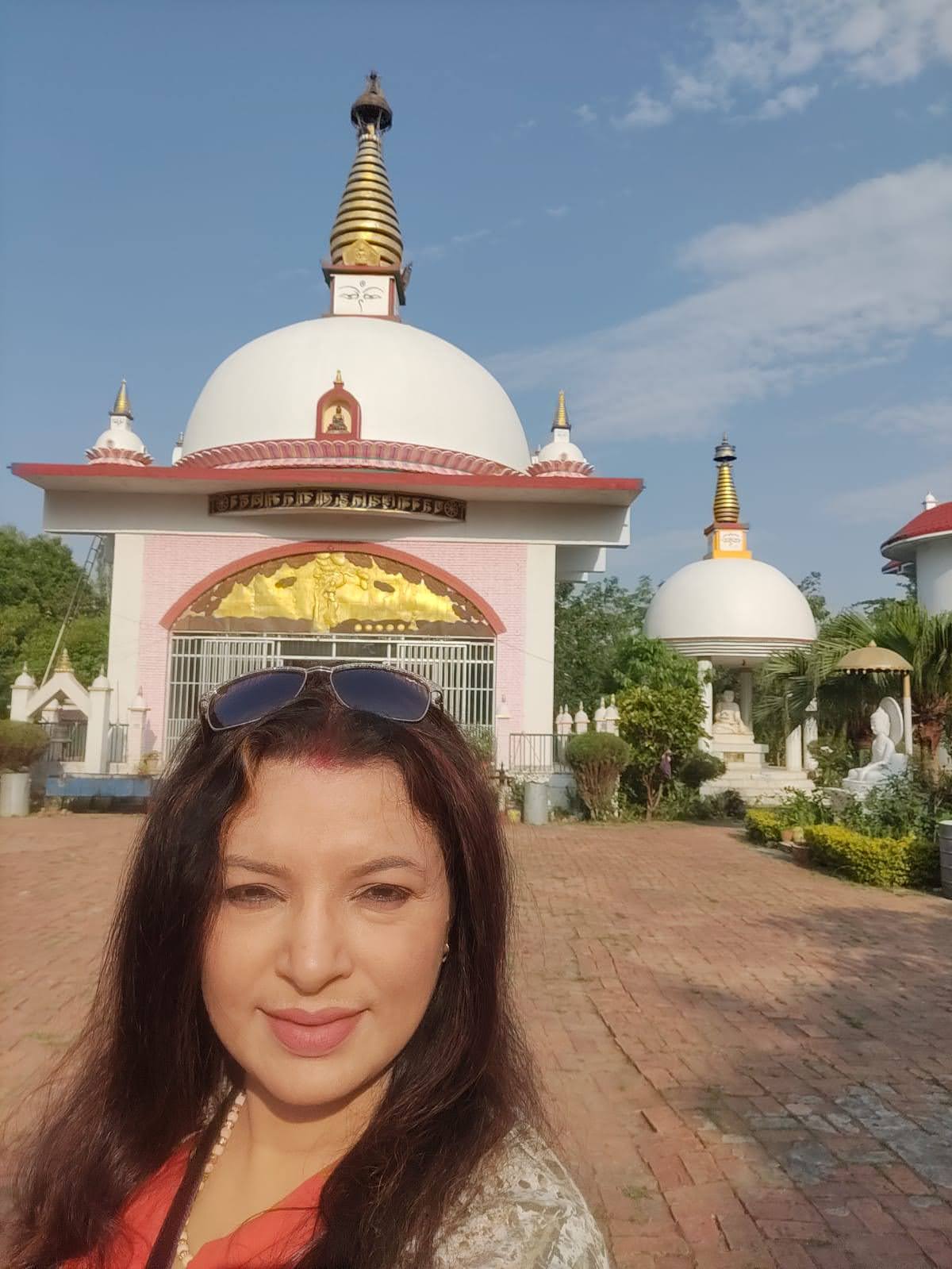
Gautami Nuns Temple
The white domed pavilions and quiet gardens honoring Mahapajapati Gotami, founder of the order of Buddhist nuns
International Gautami Nuns Temple — Honouring the Legacy of Buddhist Nuns
Preserving the 2,500-Year Tradition of Mahapajapati Gotami
The International Gautami Nuns Temple, located in the peaceful Monastic Zone of Lumbini, is a unique monastery dedicated to the spiritual development of Buddhist nuns and the preservation of the Bhikkhuni (nuns') tradition.
Named after Mahapajapati Gotami, the Buddha's foster mother and the first woman to be ordained as a Buddhist nun, the temple commemorates her pioneering role in establishing the order of nuns over 2,500 years ago. The monastery features elegant Buddhist architecture, beautifully landscaped gardens, meditation halls, and a tranquil prayer environment that welcomes pilgrims from around the world.
A Living Sanctuary for Nuns
Providing dedicated monastic training, meditation facilities, and a peaceful refuge for female Buddhist practitioners from across the globe.
Singapore & Sri Lankan Monasteries
Continuing along the peaceful Monastic Zone, pilgrims encounter the Singapore U.D.C. Monastery, adorned with traditional pagoda roofs, Dharmachakra wheels, and auspicious deer motifs.
Nearby stands the historic Sri Lankan Monastery, founded under the auspices of the Maha Bodhi Society and commemorating Anagarika Dharmapala, whose pioneering revival movement helped restore ancient Buddhist pilgrimage circuits across South Asia.
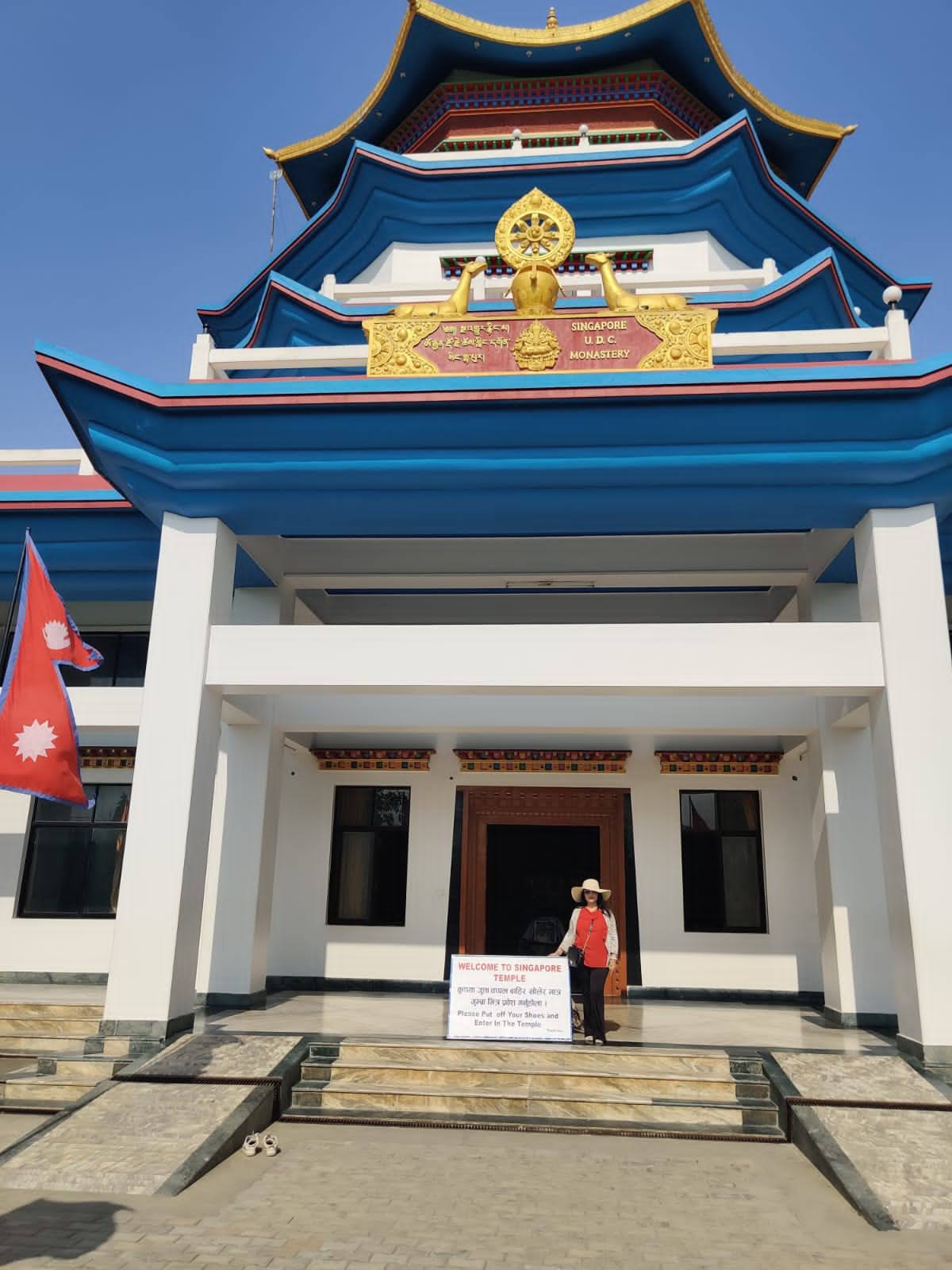
Singapore Temple
The Singapore U.D.C. Monastery featuring classic tiered pagoda eaves and Dharmachakra crest
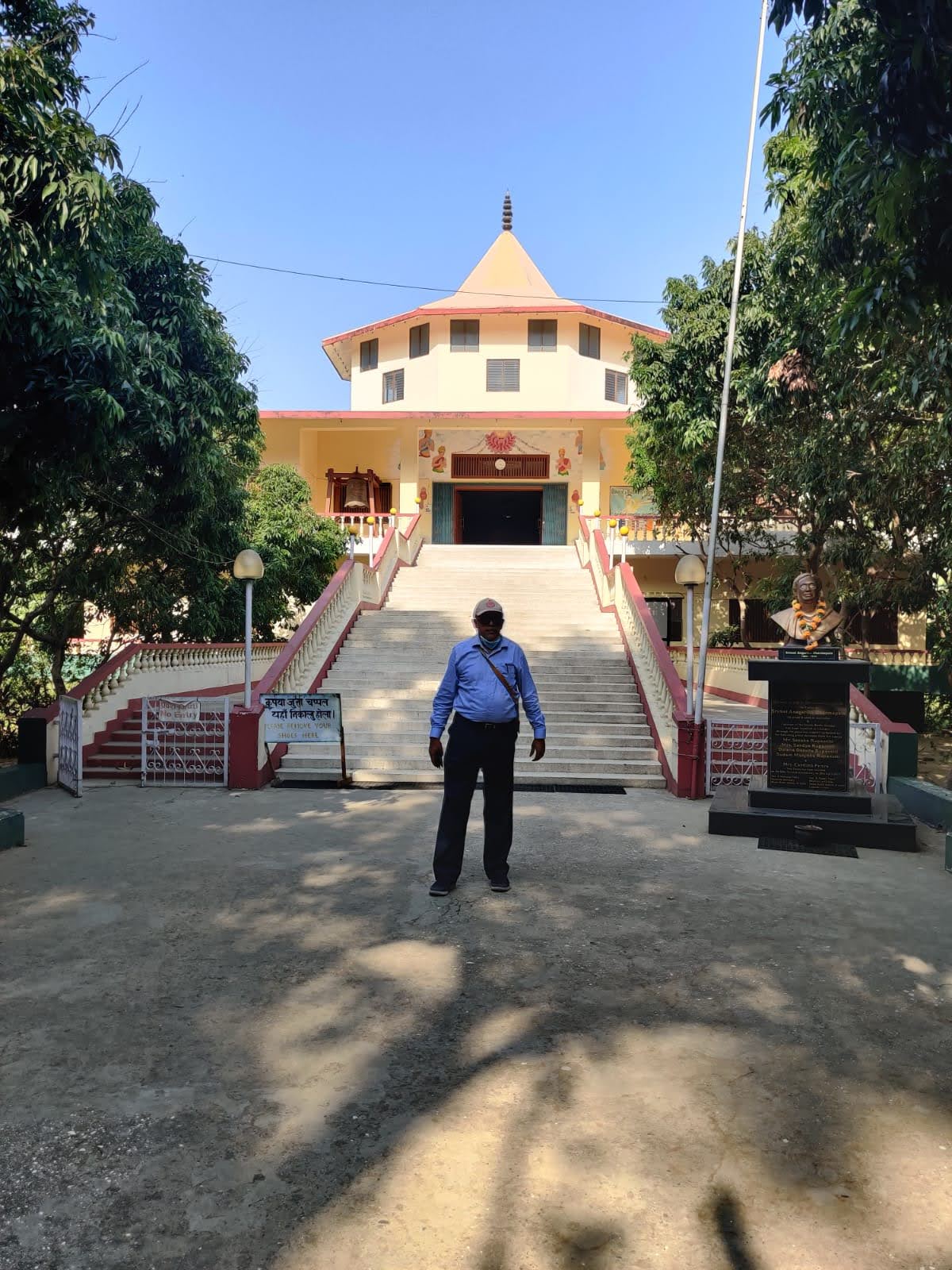
Sri Lanka Temple
Maha Bodhi Society Sri Lankan Temple honoring the revival of sacred Buddhist pilgrimage
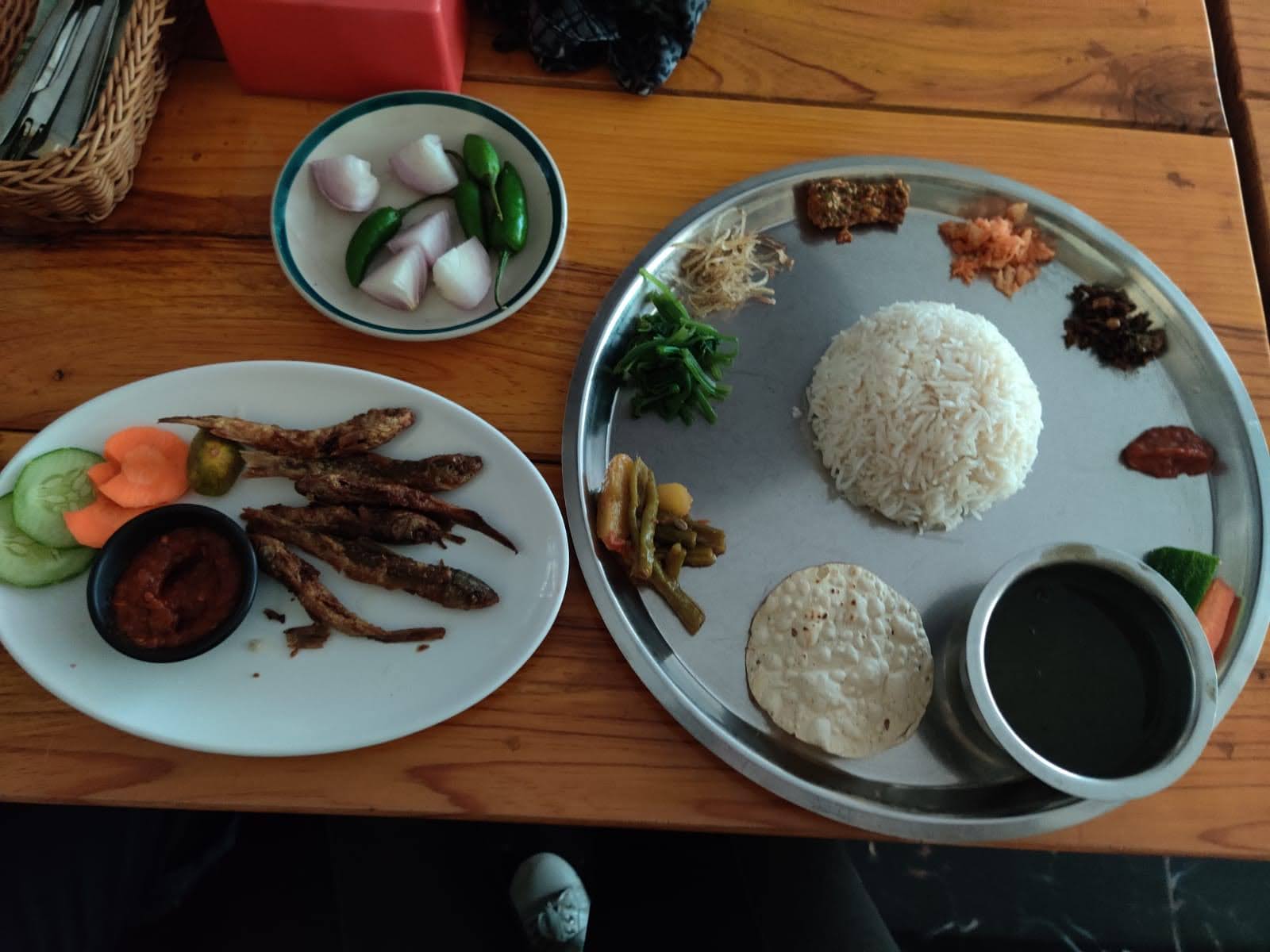
Traditional Feast
The classic Nepali Thakali Thali: wholesome grains, aromatic Kalo Dal, seasonal Saag, piquant pickles, and crisp fried river fish
After a Long Day — Enjoying a Thakali Thali
An Authentic Himalayan Platter from the Mustang Valley
This meal represents a traditional Thakali Thali, an iconic and beautifully balanced culinary staple originating from the indigenous Thakali people of Nepal's Mustang Valley.
Arranged thoughtfully on a classic metal platter, the dish centers around a mound of steamed white rice surrounded by local delicacies like rich black lentil soup (Kalo Dal), sautéed green leafy vegetables (Saag), and an array of spicy, fermented pickles (Achar). Accompanied by fresh raw garnishes like onions and green chilies, a crispy papadum, and a side plate of crispy deep-fried small fish, this assortment delivers a perfect harmony of fiery, tangy, savory, and comforting flavors unique to Himalayan cuisine.
Flavors of the Ancient Trade Routes
Refined along the historic trans-Himalayan trade routes, Thakali cuisine balances nutrition, indigenous spices like Jimbu, and rich clarified butter.
Tips for Visiting Lumbini
Timing Your Visit
Visit early morning or late afternoon to avoid the heat.
Full Day Exploration
Allow a full day to explore the Sacred Garden and Monastic Zone.
Bicycle & E-Rickshaw
Rent a bicycle or e-rickshaw to get around easily across the expansive complex.
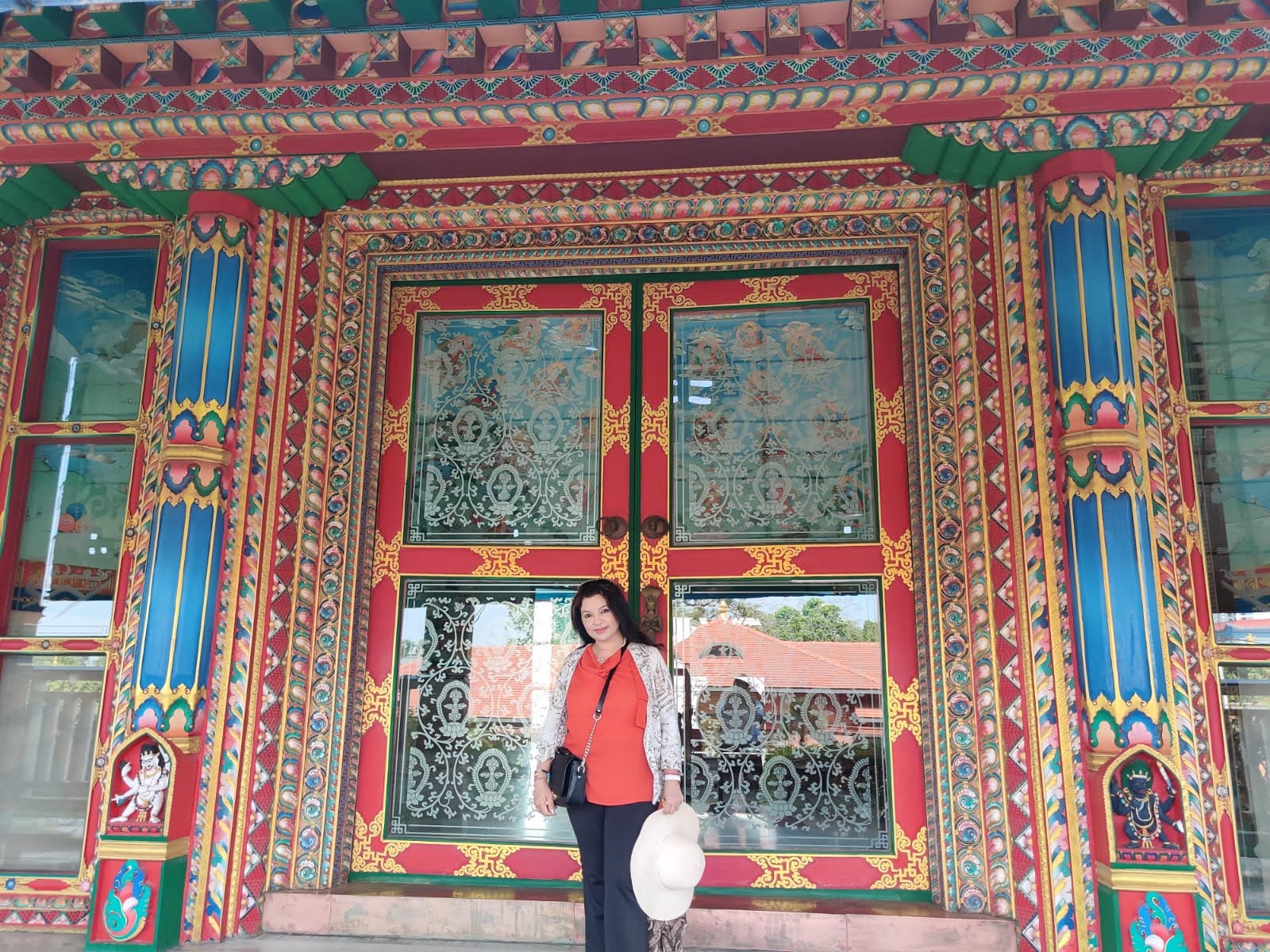
Modest Attire & Footwear
Dress modestly and wear comfortable walking shoes.
Sun Protection & Hydration
Carry water, sunscreen, and a hat to protect against the bright Terai sun.
Quiet Reverence
Maintain silence and respect the sanctity of the pilgrimage site.
Allow a Full Day
Dedicate a full day to absorb both the Sacred Garden's ancient roots and the expansive international monastic zones.
Silence & Reverence
Maintain quiet contemplative respect around the sacred nativity marker stone and outdoor meditation grounds.
India and Nepal: One Soul Across Two Nations
The Golden Age of Mithila Art
As I travelled through Nepal's Terai, I was delighted to see the vibrant colours and intricate patterns of Mithila art adorning homes and temples. It was a beautiful reminder that the historic region of Mithila extends seamlessly across southern Nepal and northern Bihar, long predating today's political borders.
For centuries, women on both sides have preserved this extraordinary artistic tradition, painting scenes from the Ramayana, the Mahabharata, and everyday village life. More than just an art form, Mithila painting is a living cultural bridge that continues to unite India and Nepal through shared heritage, faith, and creativity.
A Living Cultural Bridge
Passed down matrilineally through generations, Mithila (Madhubani) art portrays cosmic epics, sacred flora, and communal devotion that recognize no political divide.
Ramayana & Sita's Lineage
Rooted in Janakpur and northern Bihar, celebrating the wedding of Rama and Sita through dynamic geometric patterns and natural mineral pigments.
Walls to Global Canvas
Originally painted on fresh mud walls during festivals and weddings, now celebrated worldwide as an enduring symbol of Himalayan folk wisdom.
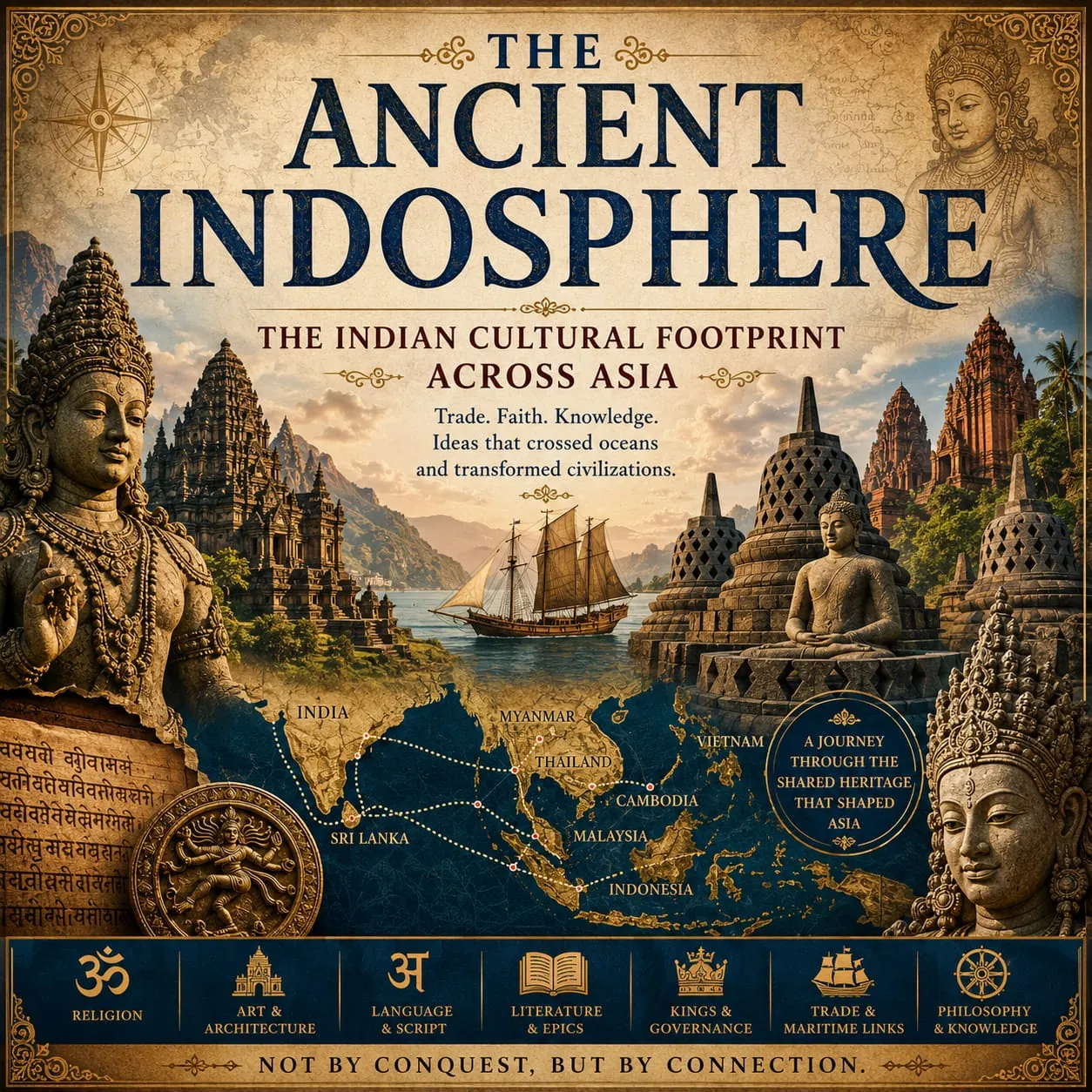
TRAVELLING THROUGH THE TIMELESS LEGACY OF INDIAN CIVILIZATION ACROSS ASIA AND BEYOND
“Not by conquest, but by connection.”
At Lumbini, the sacred birthplace of Lord Buddha, the convergence of international monasteries, ancient Ashokan edicts, and shared Indo-Himalayan traditions reveals the timeless reach of a civilization that transformed Asia through wisdom, compassion, and spiritual communion.