
Khiva Walking Through aLiving Silk Road Dream
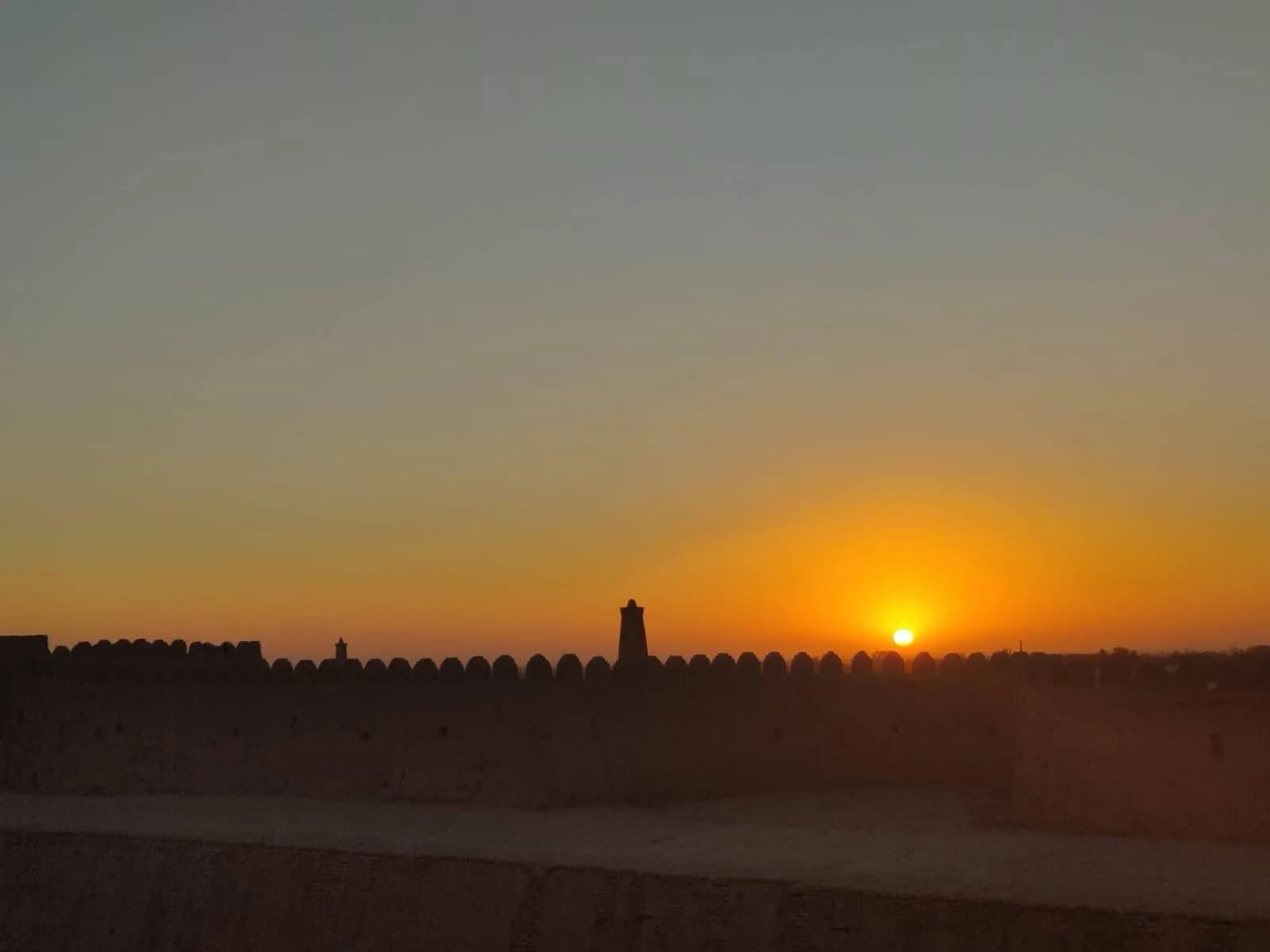
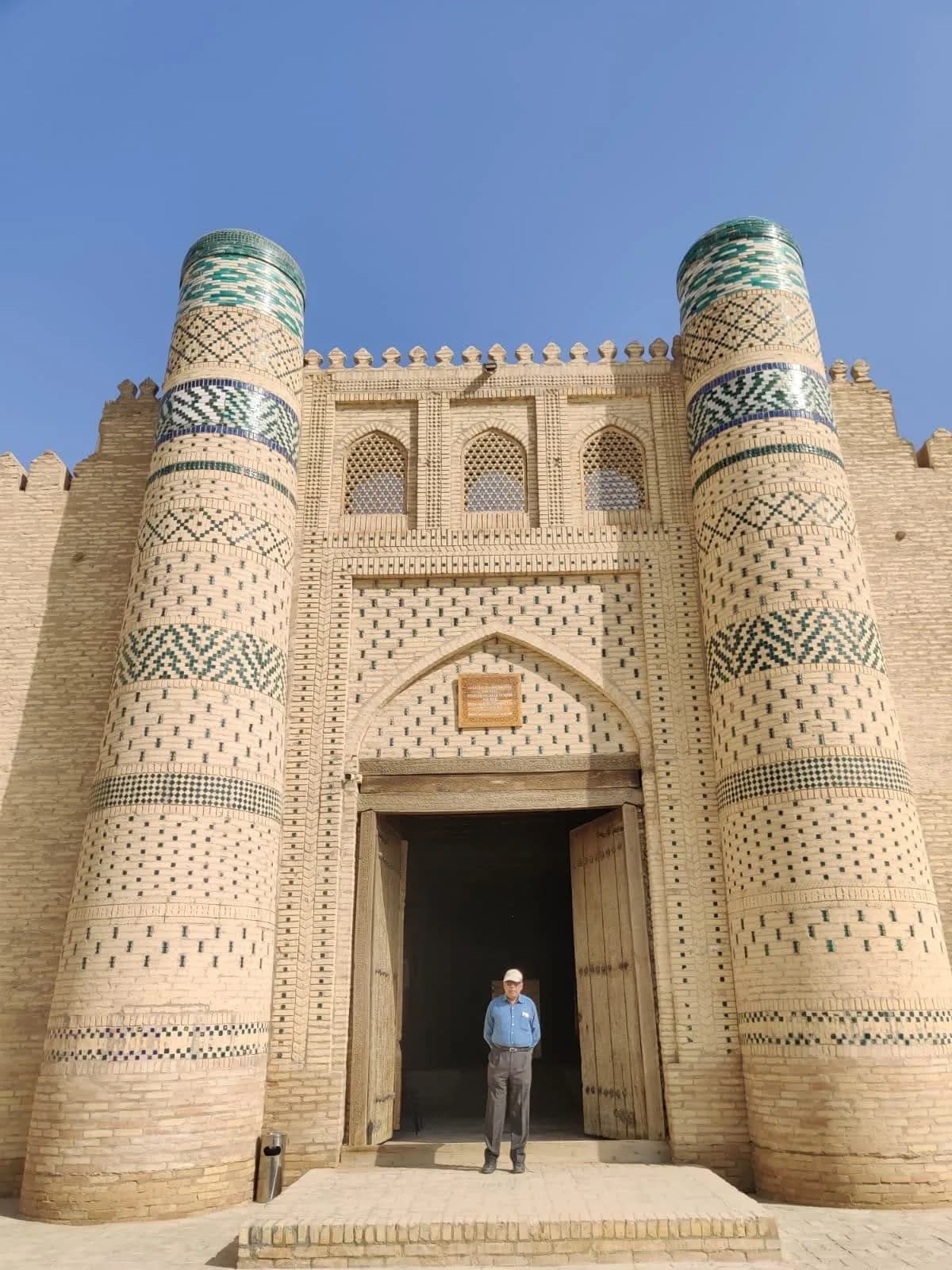
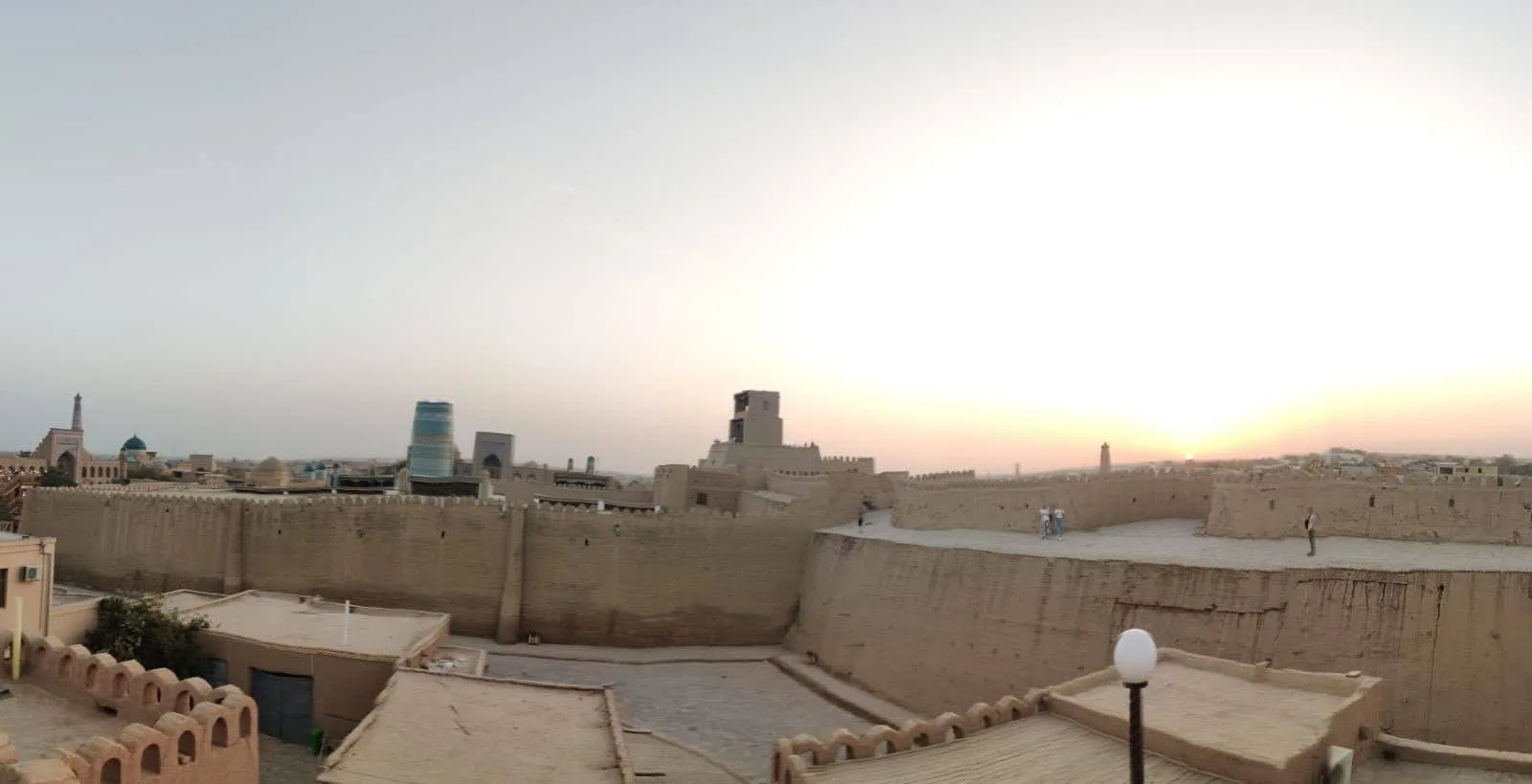
Khiva felt like stepping into a perfectly preserved memory of the Silk Route, where time has paused within the ancient walls of Itchan Kala. As we entered through its towering mud-brick gates, the modern world seemed to fade away, replaced by narrow lanes, turquoise minarets, sunlit courtyards, and centuries-old caravanserais that once welcomed weary traders crossing the desert.
Every corner revealed beautifully restored madrasas, mosques, palaces, and watchtowers glowing in the golden light, giving the entire city the feeling of an open-air museum of Islamic architecture.
Kalta MinorThe Unfinished Blue Dream
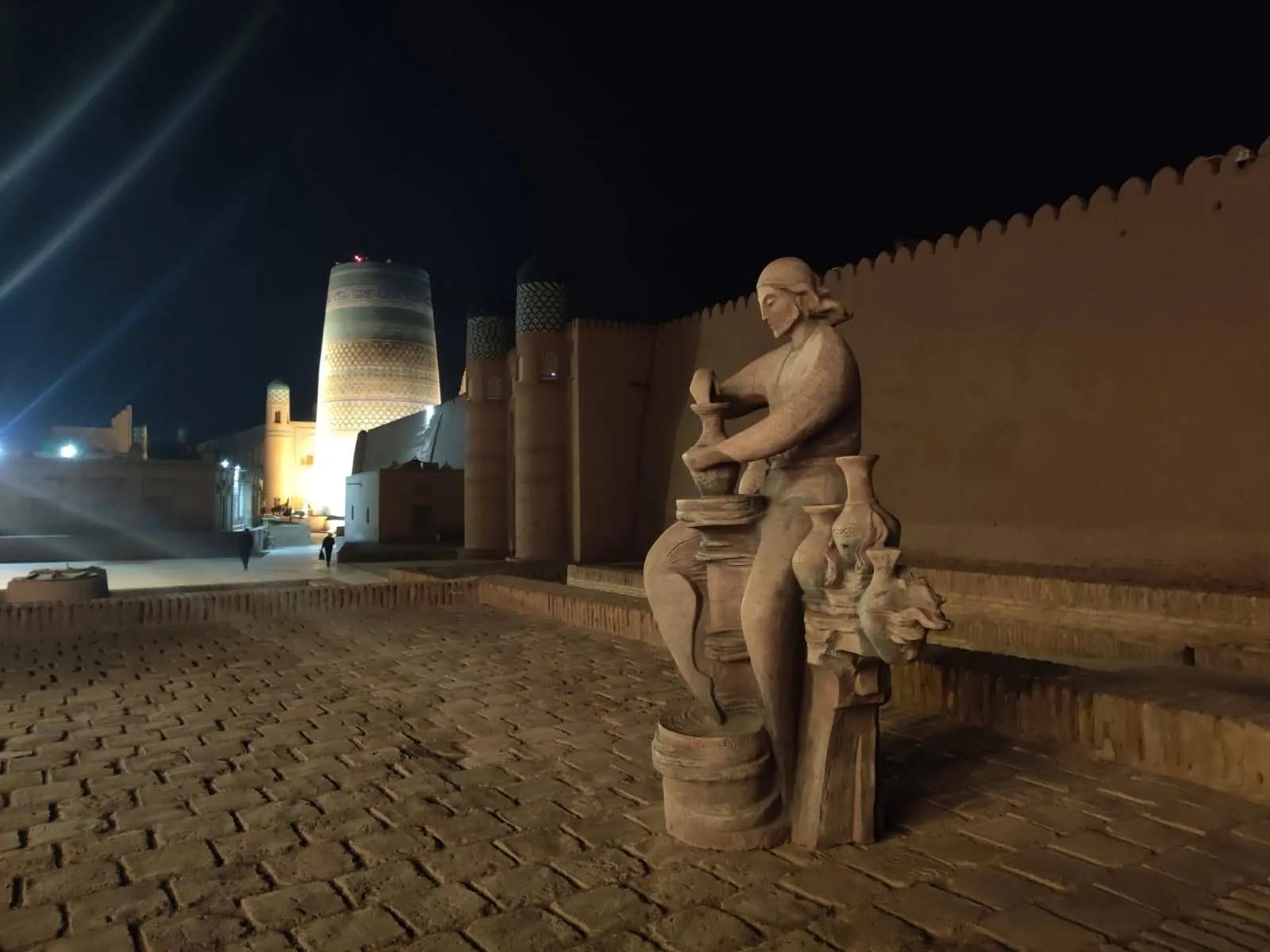
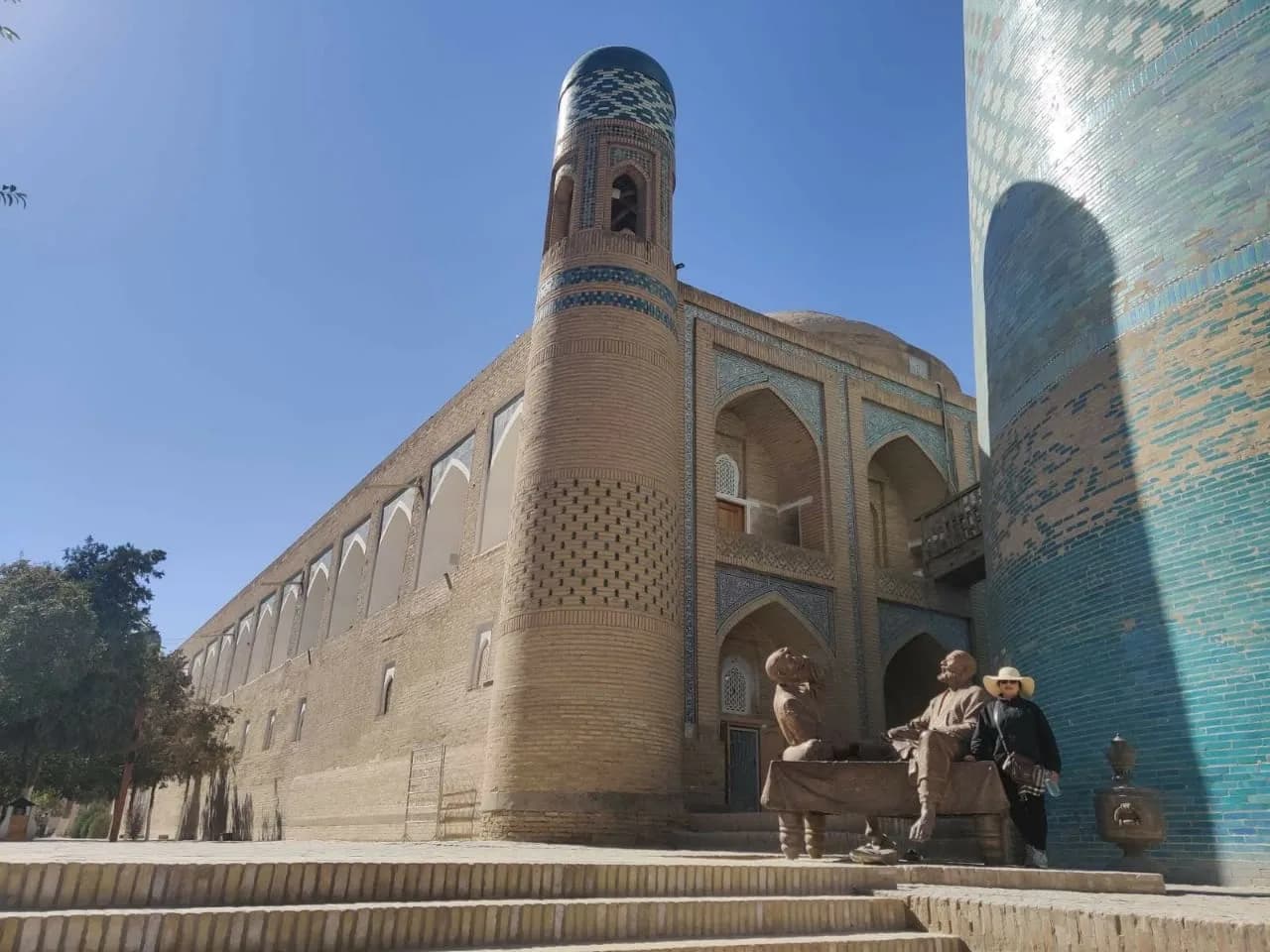
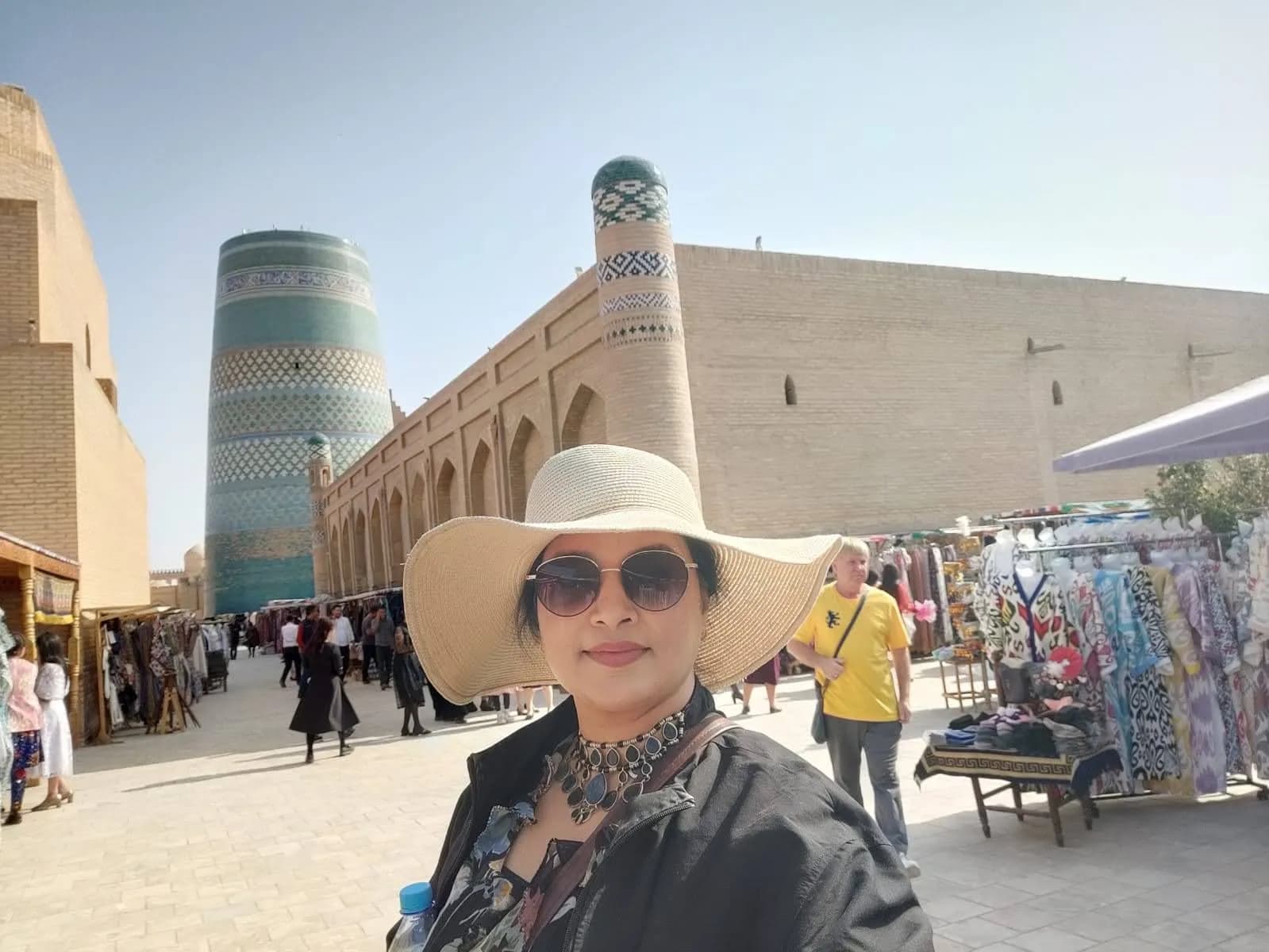
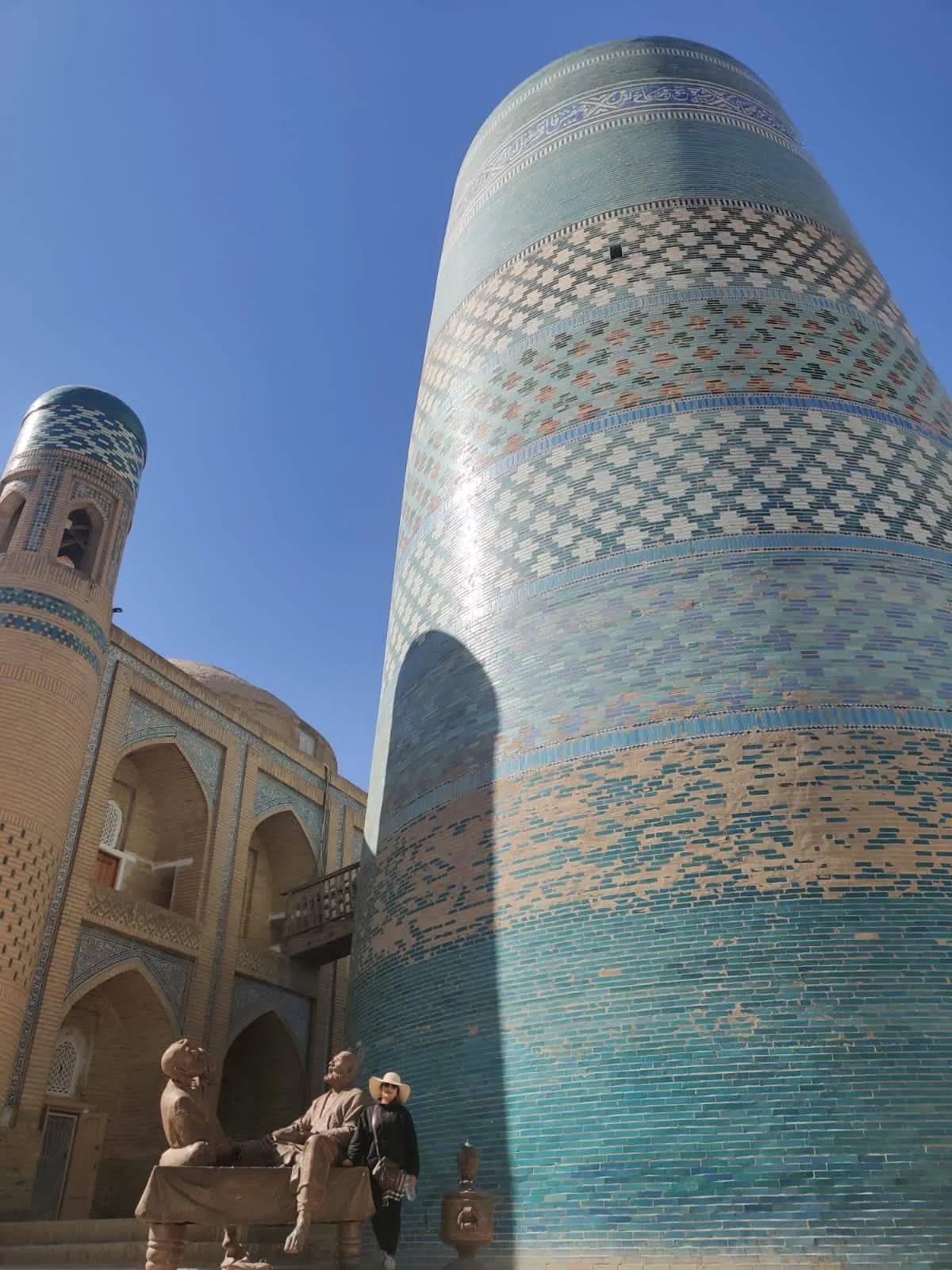
In the heart of Khiva, within the ancient walls of Itchan Kala, we came face to face with the unforgettable Kalta Minor Minaret. Its brilliant turquoise tiles caught the light in a way that made it impossible to look away.
What surprised us most was learning that it was meant to be the tallest minaret in Central Asia, but construction was suddenly stopped in the 19th century.
Standing there, we almost expected a towering structure—but instead found something even more unique: a powerful, unfinished monument that somehow feels complete in its own beauty.
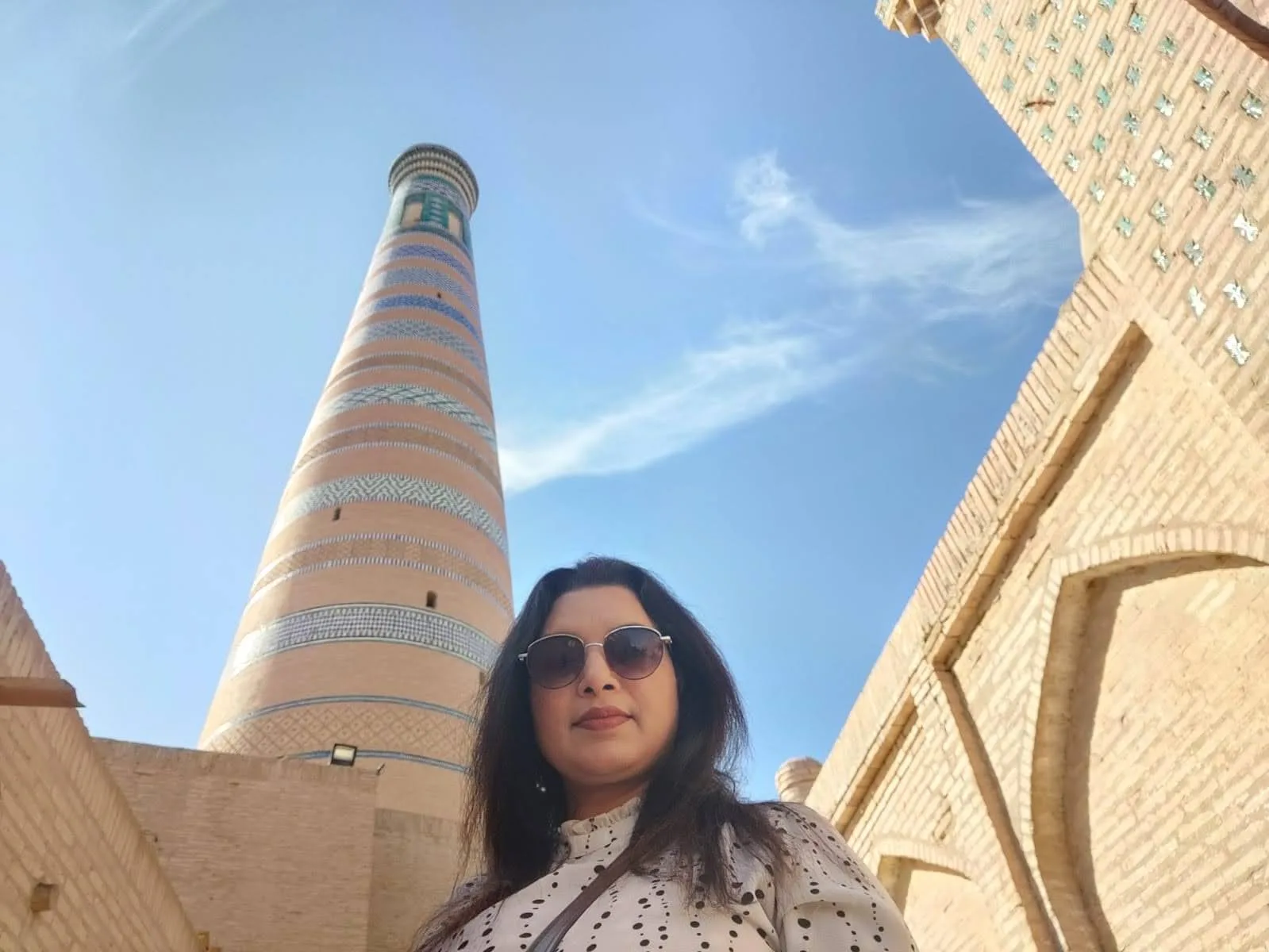
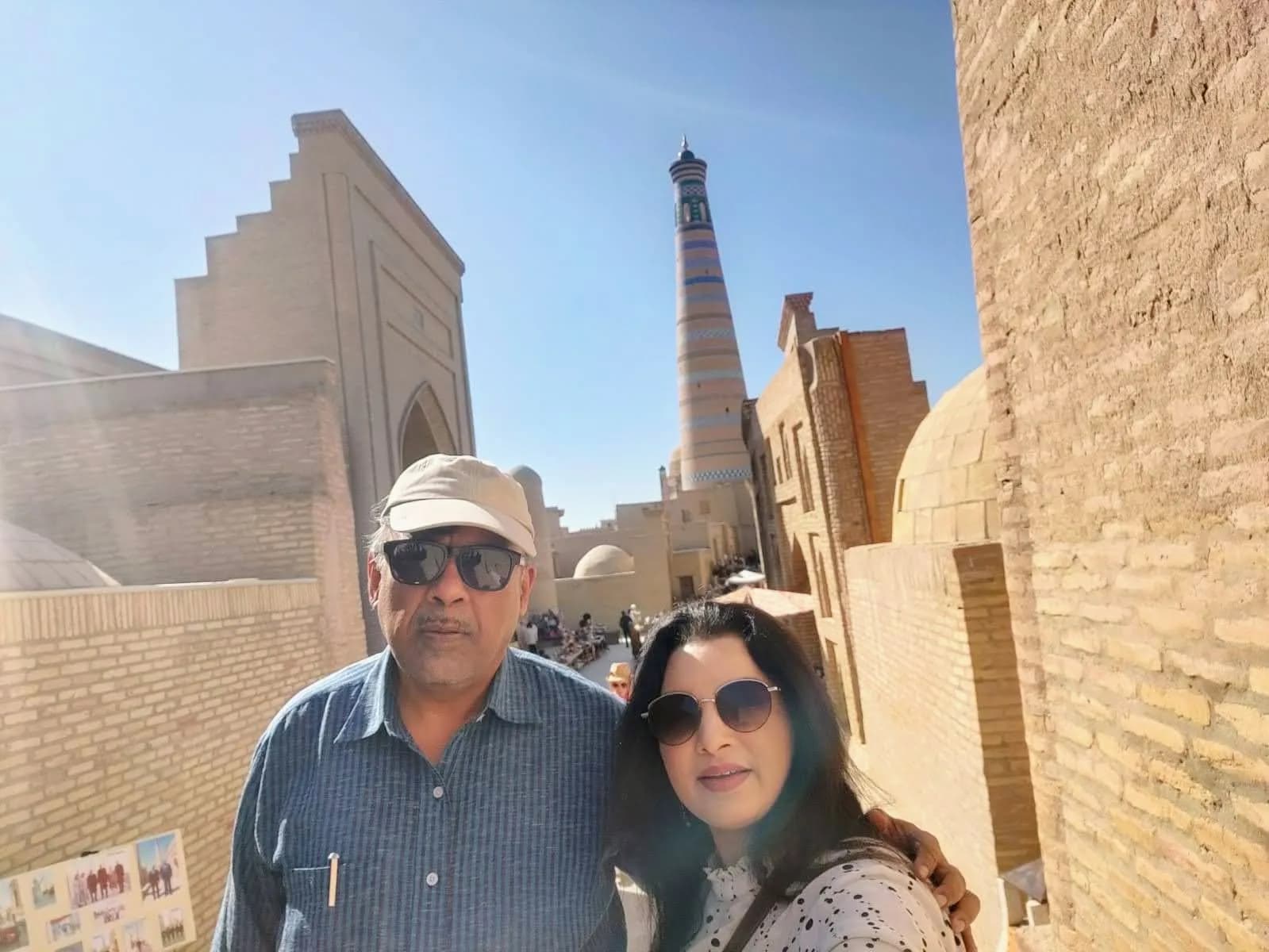
Islam Khodja Minaret
The Islam Khodja Minaret is Khiva's tallest landmark. Built between 1908 and 1910, it features distinctive blue tile bands. It stands 56.6 meters high inside Khiva's historic UNESCO-listed fortress.Lunch on a Traditional Uzbek Tapchan
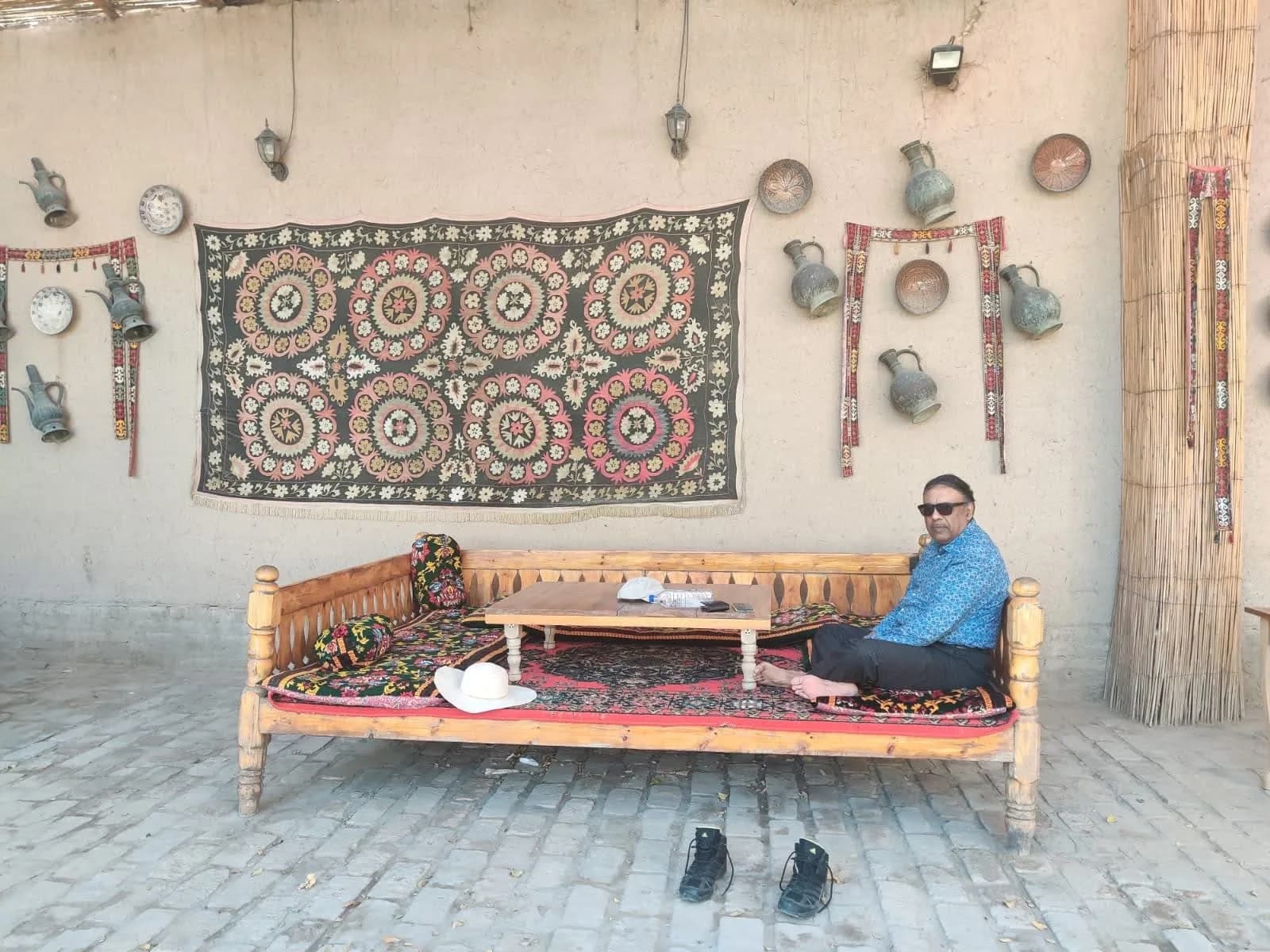
An enjoyable experiences in Uzbekistan was having lunch while sitting on a traditional wooden daybed called a tapchan. Covered with colourful Ikat cushions and overlooking a carpet spread below, it was far more comfortable than a regular dining table.
Locals often relax, eat, and socialise on these raised platforms. Sitting cross-legged in the open air, enjoying a leisurely meal, gave us a small taste of traditional Uzbek hospitality and lifestyle.
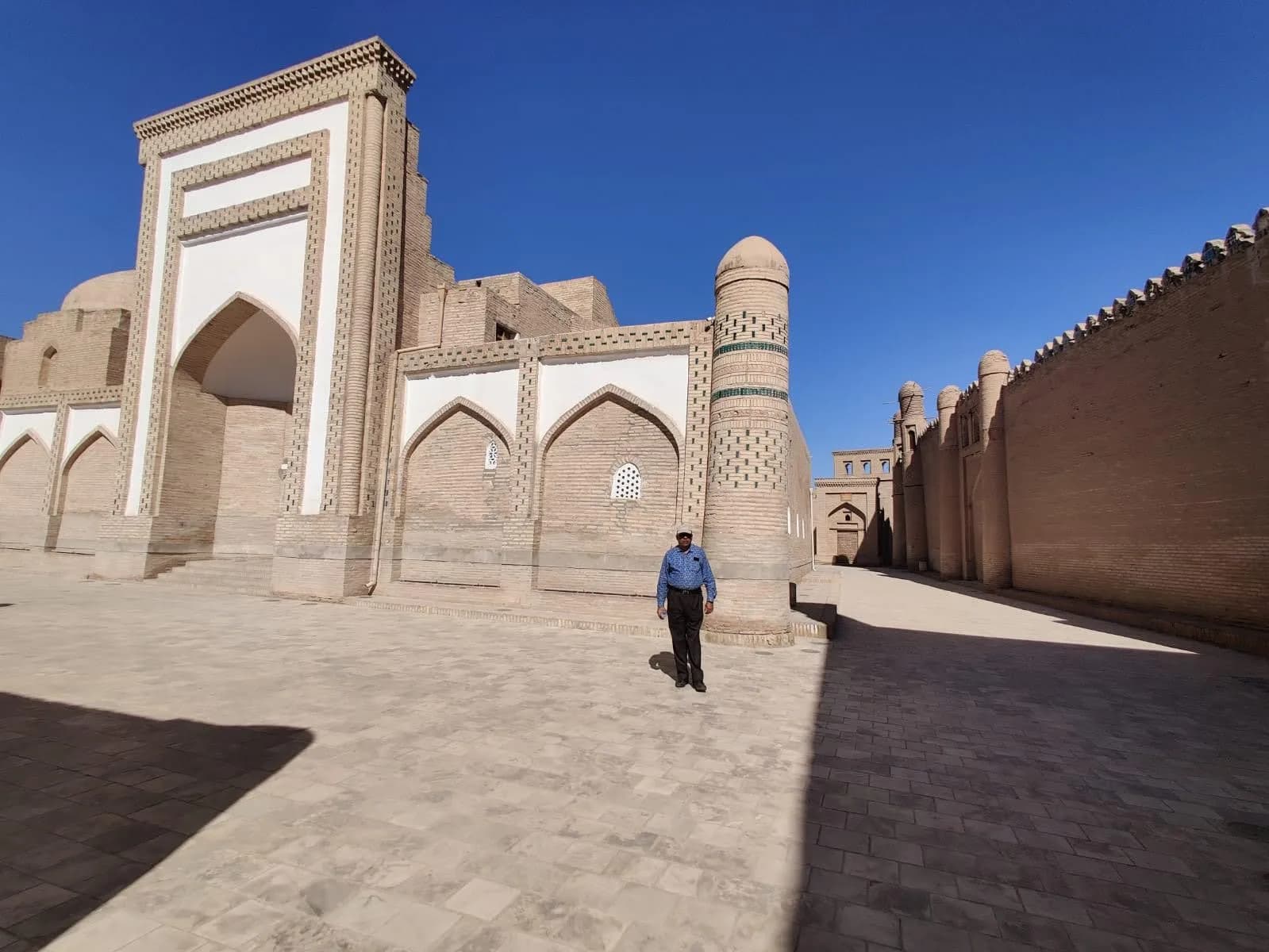
Muhammad Amin Inak Madrasah
Muhammad Amin Inak Madrasah, an 18th-century architectural monument situated within the historic walled inner city of Itchan Kala in Khiva, Uzbekistan.Allakuli Khan Madrasah
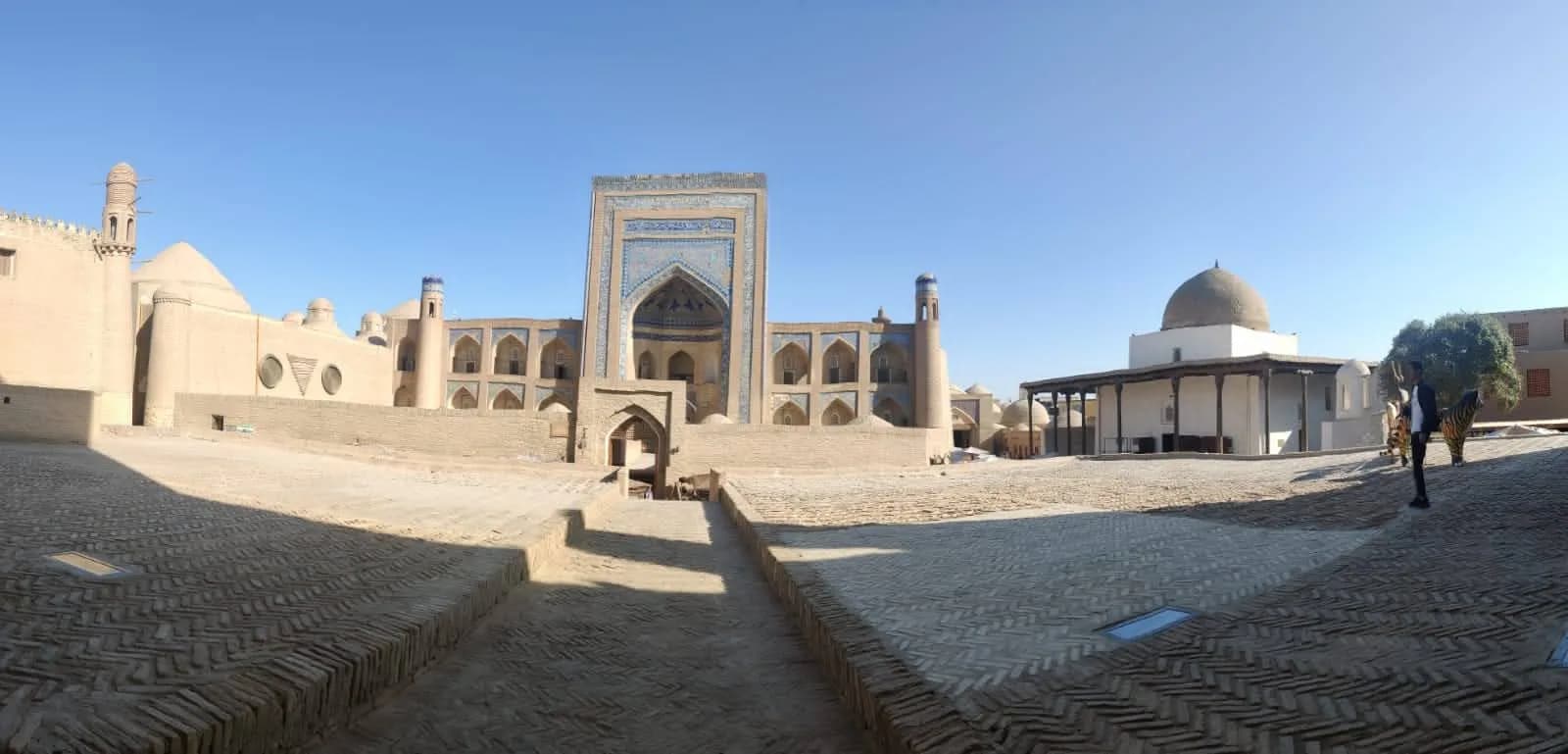
Allakuli Khan Madrasah alongside the integrated Khojamberdibi Madrasah, situated inside the UNESCO World Heritage-listed old town fortress of Itchan Kala in Khiva, Uzbekistan.
Nurullaboy Saroyi Palace
A Quiet Walk Through Royal History
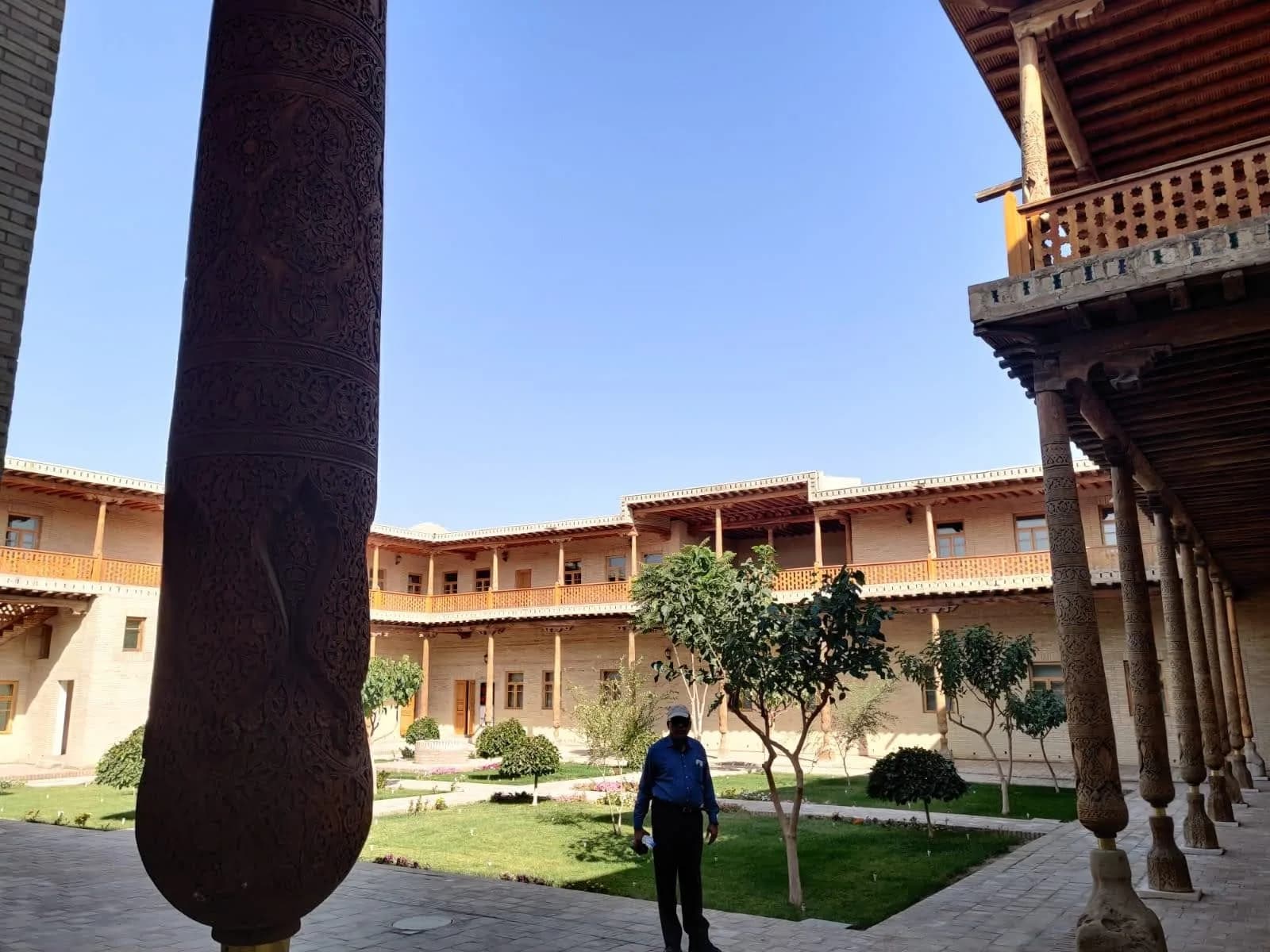
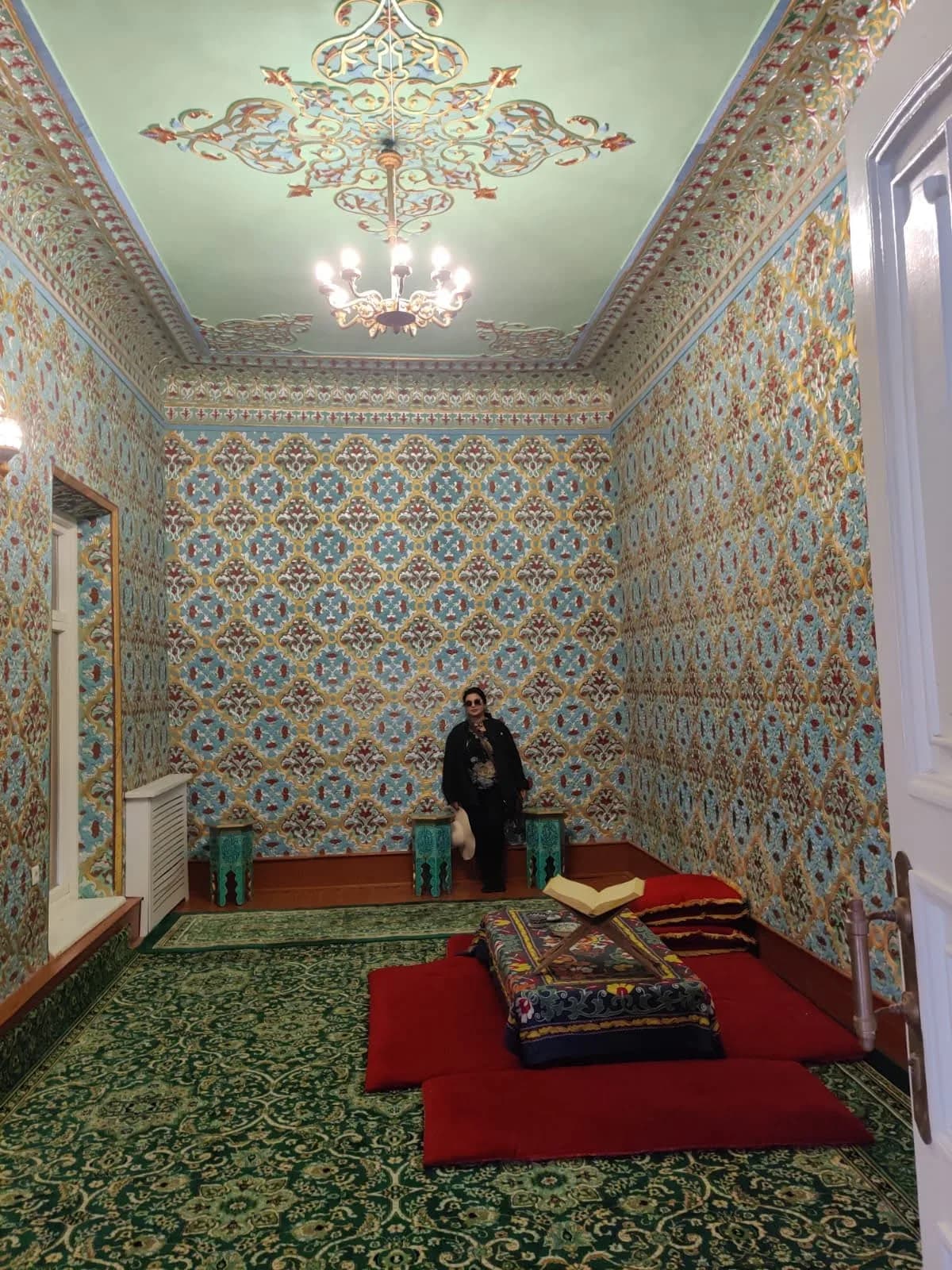
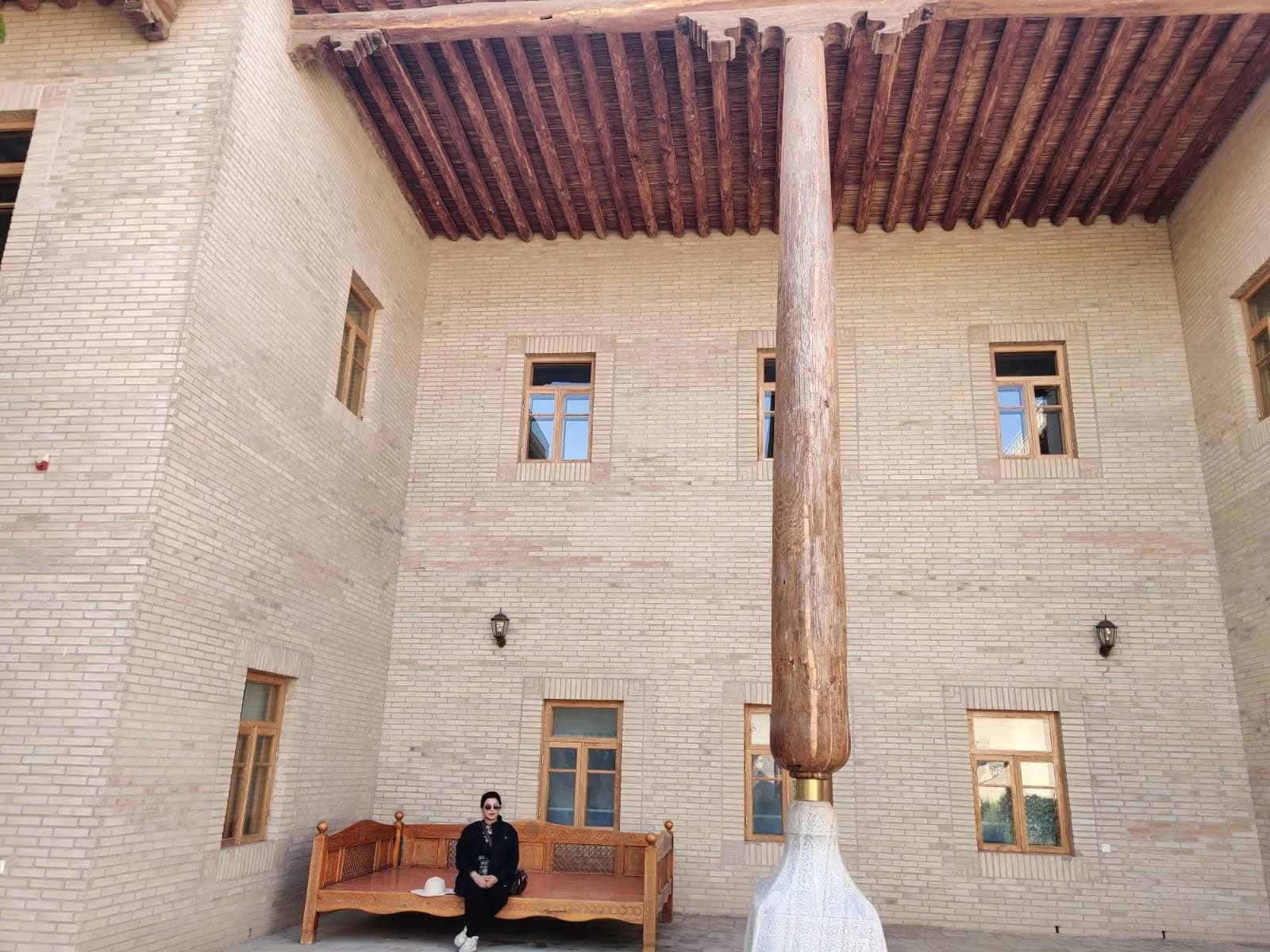
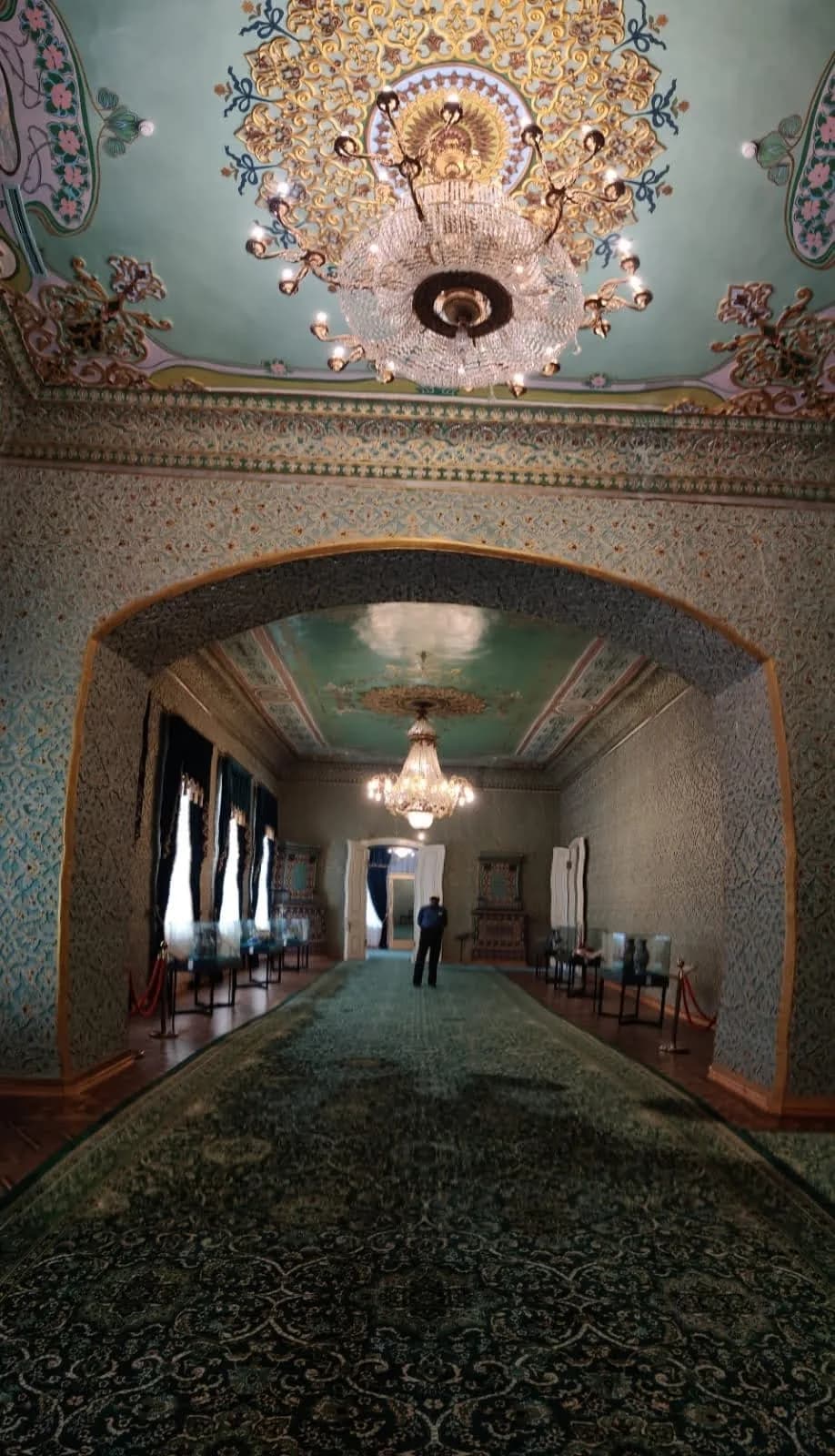
Our visit to Nurullaboy Saroyi Palace in Khiva was a truly relaxed and enjoyable experience. Unlike many tightly restricted heritage sites, here we could move around freely and take our time exploring the palace at our own pace.
We spent a few unhurried hours walking through its grand halls, courtyards, and beautifully preserved rooms, each reflecting the blend of late Khivan royal architecture and European influences.
The peaceful atmosphere, combined with intricate details and spacious surroundings, made it easy to imagine the royal life that once unfolded here. It was one of those visits where history feels close, yet calm enough to simply absorb and enjoy.
Courtyard & Interior
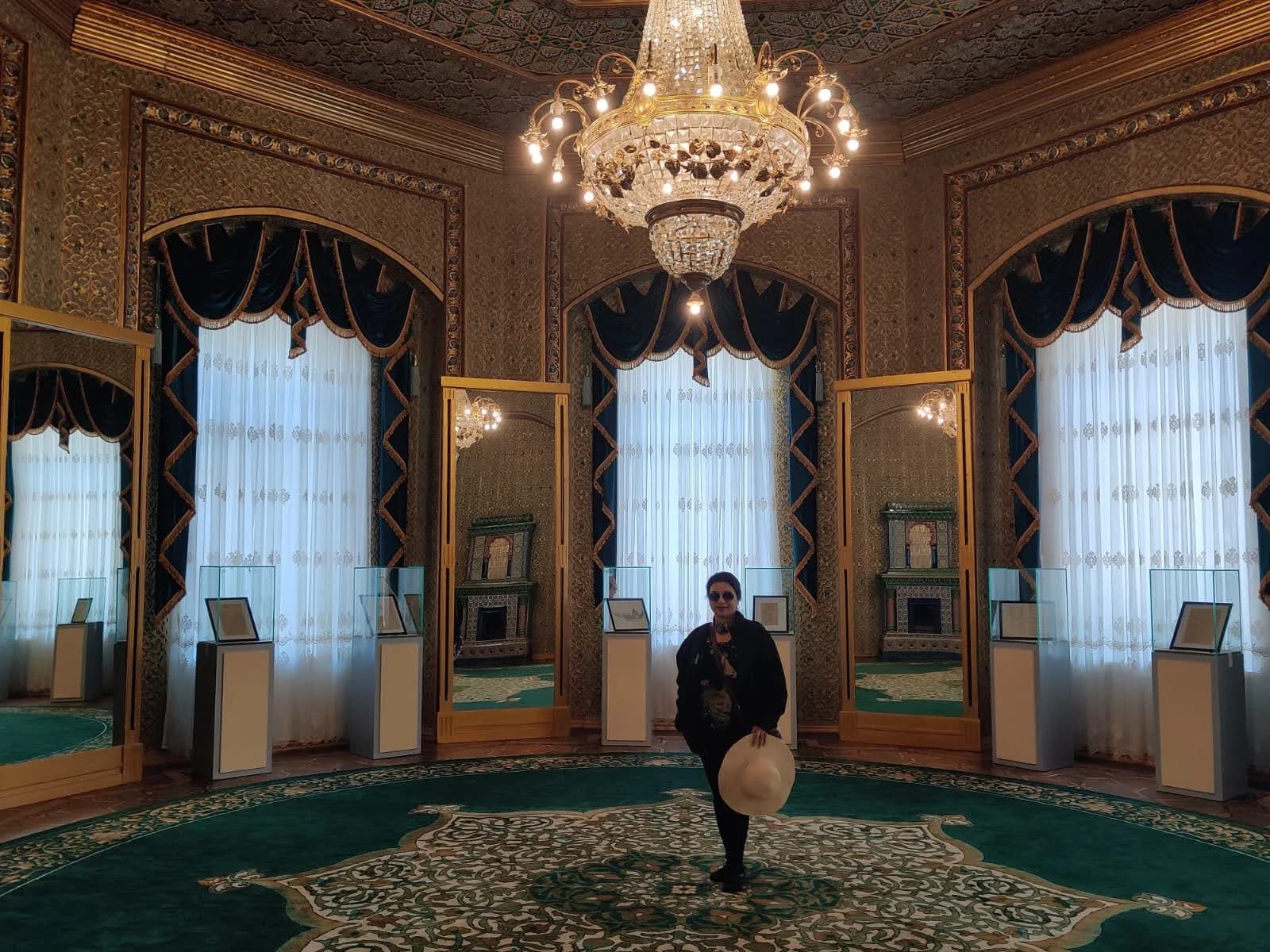
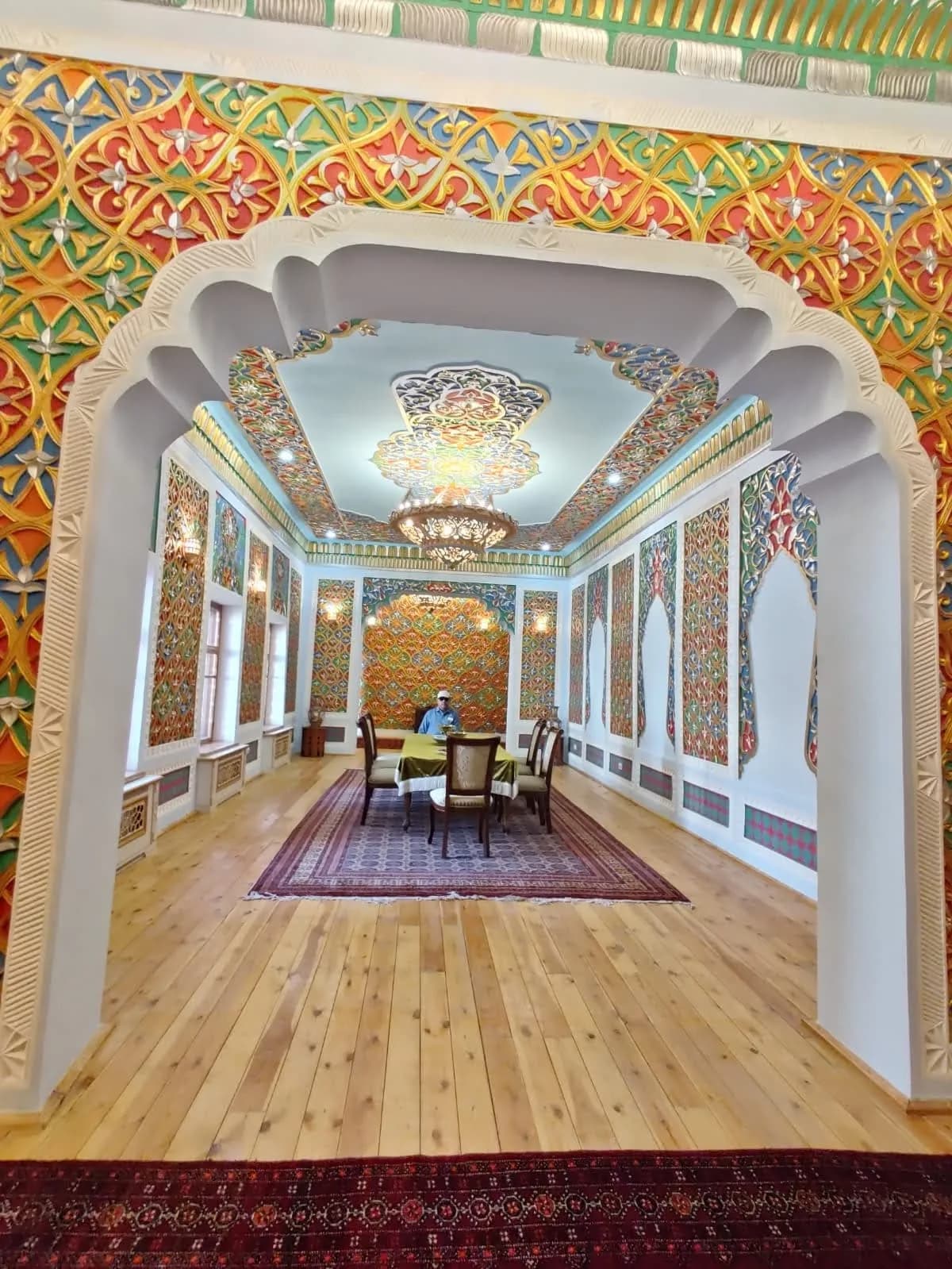
Central to the palace's design is its open courtyard, a prevalent feature in Uzbek architecture. This courtyard not only facilitates natural ventilation but also ensures abundant lighting.
Surrounding this courtyard are various buildings and annexes, symmetrically arranged, upholding the harmony and balance of the complex.
Lagman
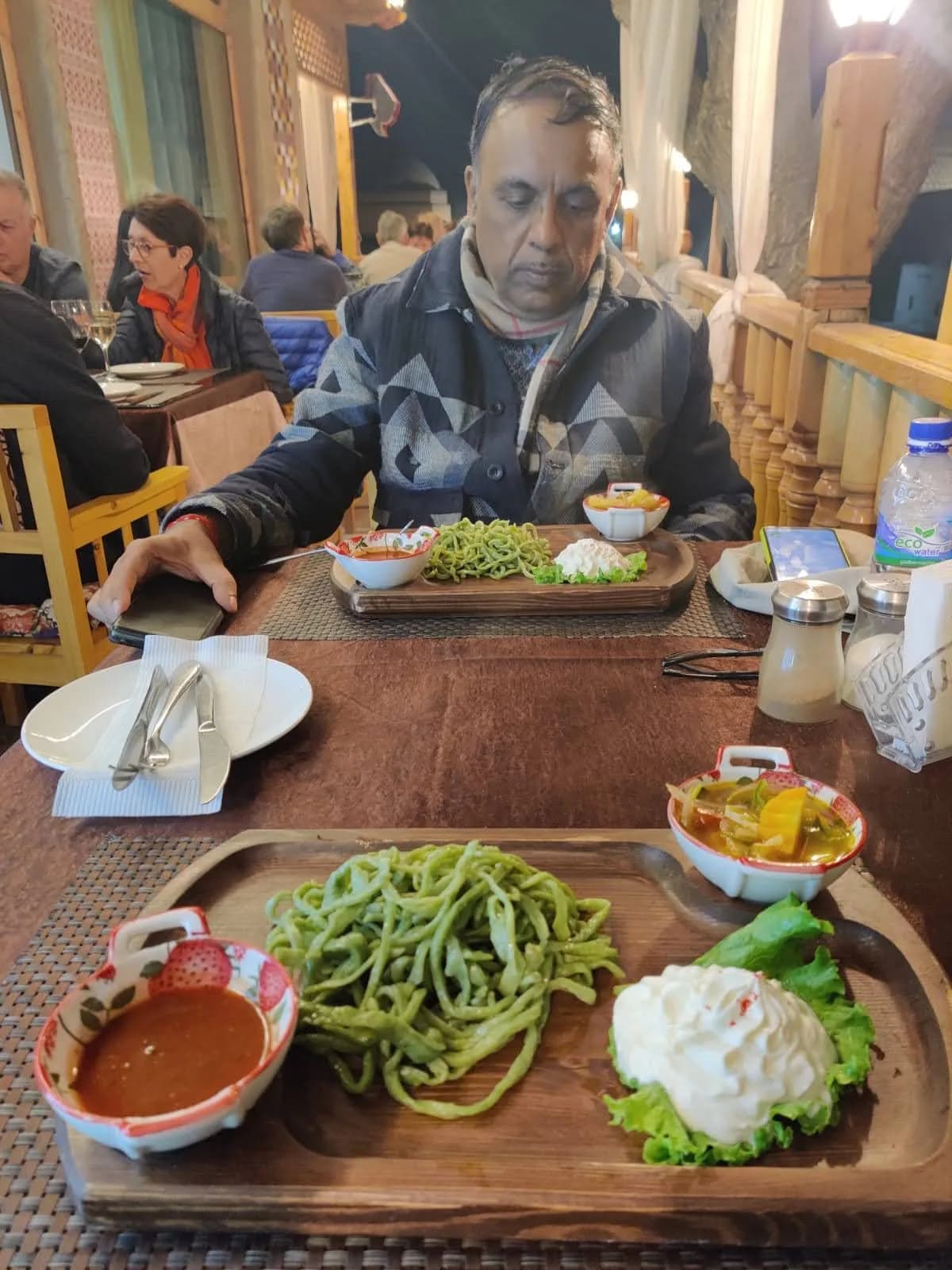
Having LAGMAN for dinner, a popular Uzbek dish. Lagman is composed of hand-pulled noodles, meat, vegetables, and spices.
The green-tinted noodles were likely flavoured with herbs, accompanied by a tomato-based sauce, a creamy yogurt-like sauce, and a broth-based soup with vegetables and possibly meat.
KHIVA TO TASHKENTAN OVERNIGHT JOURNEY
The overnight train journey from Khiva to Tashkent was a memorable experience, offering beautiful views of the changing Central Asian landscape as we travelled through the night across Uzbekistan.
The quiet rhythm of the train, combined with vast open plains and starlit skies, made the journey deeply peaceful and reflective. Khiva, with its ancient charm and remarkably preserved Silk Route heritage, stands out as one of the most beautiful towns on the entire route, leaving a lasting impression before we continued onward to the modern energy of Tashkent.
“Khiva is not a city to rush through—slow down, wander its ancient lanes, and let the Silk Road come alive around you.”
Navigate the Caravan Route
Explore Other:
Get the complete Field Notebooks in your inbox
Subscribe to receive weekly updates detailing train logistics, border crossing forms, and historical accounts from our future travels.