A THOUSAND TEMPLES IN 400 SQUARE KILOMETRES
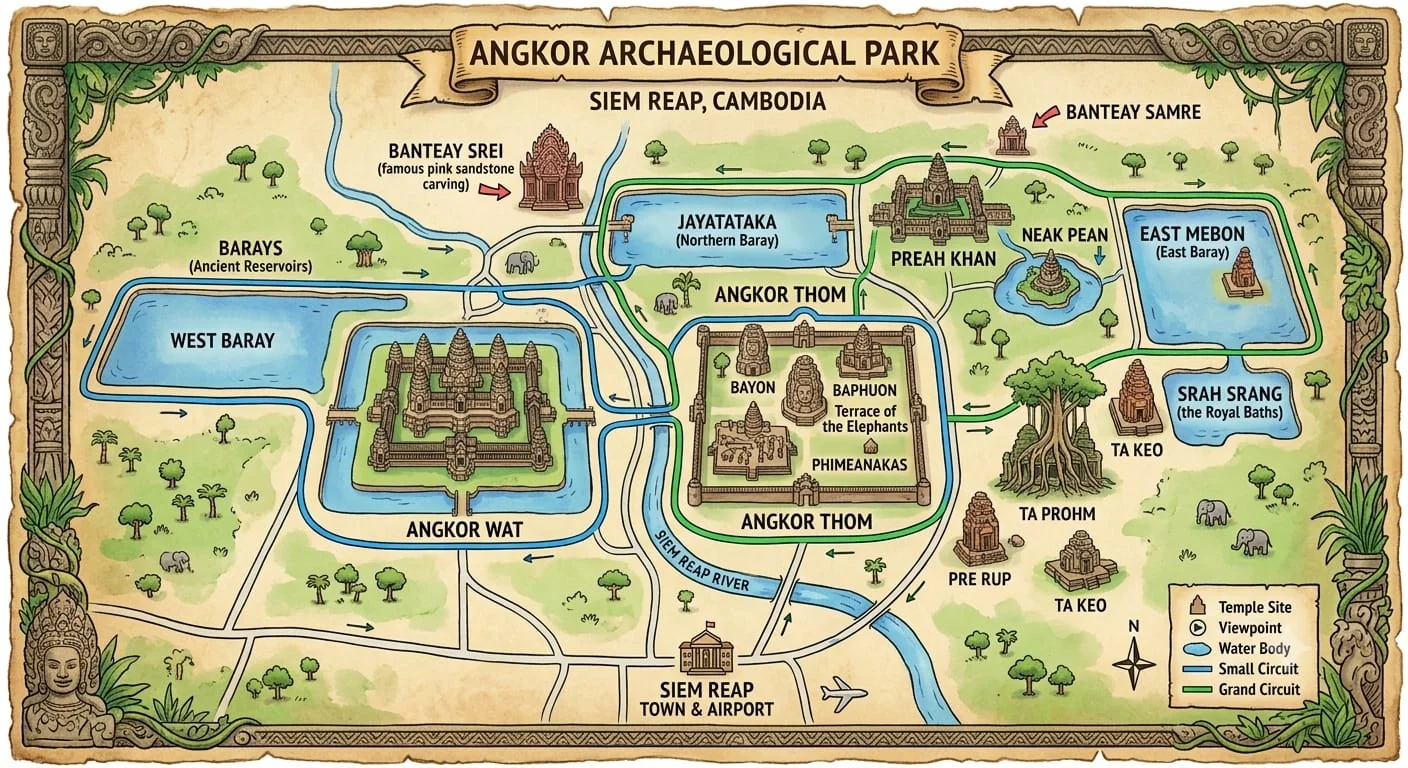
Illustrative map of Angkor Archaeological Park, showcasing the main temples, ancient reservoirs, and key routes like the Small and Grand Circuits.
Angkor Archaeological Park
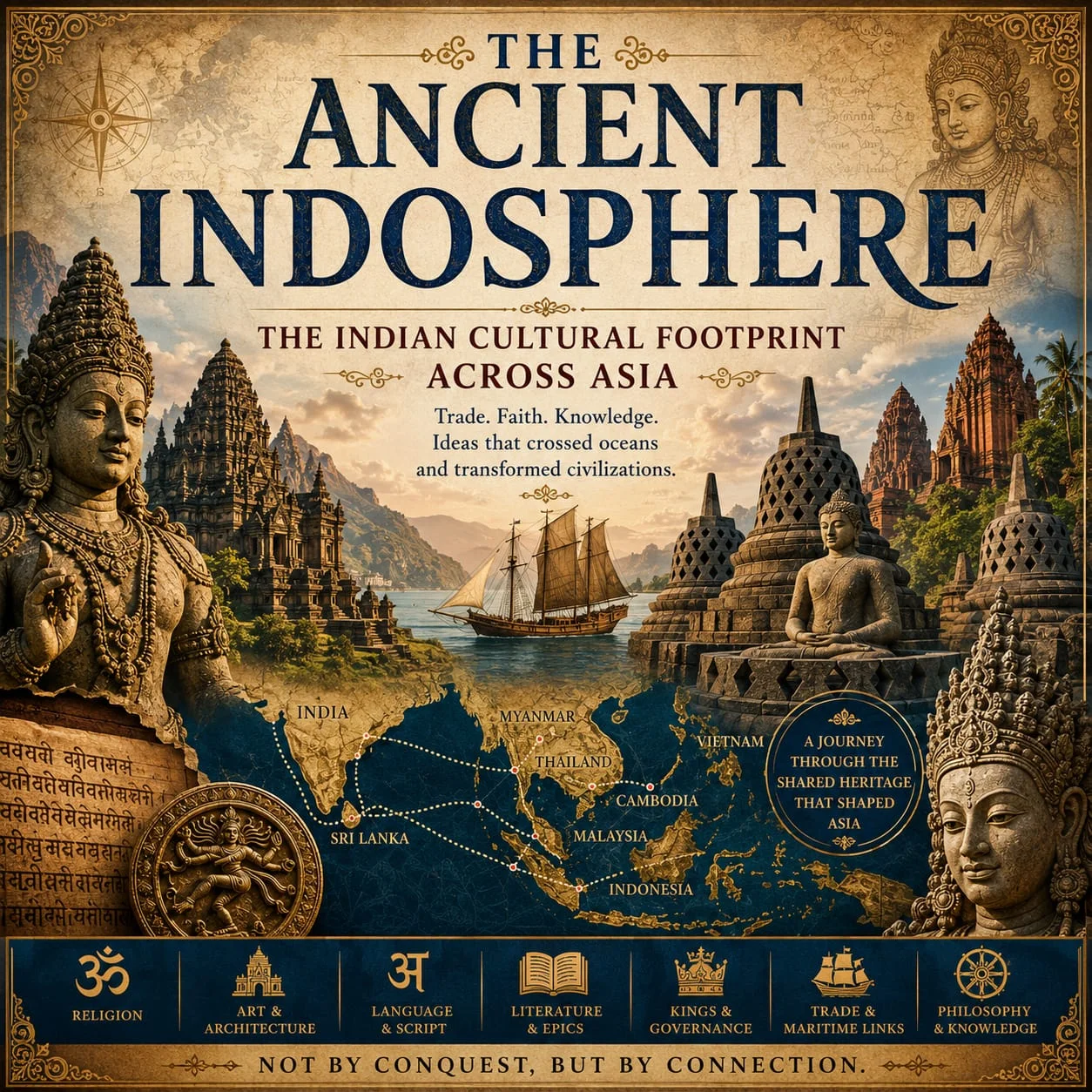
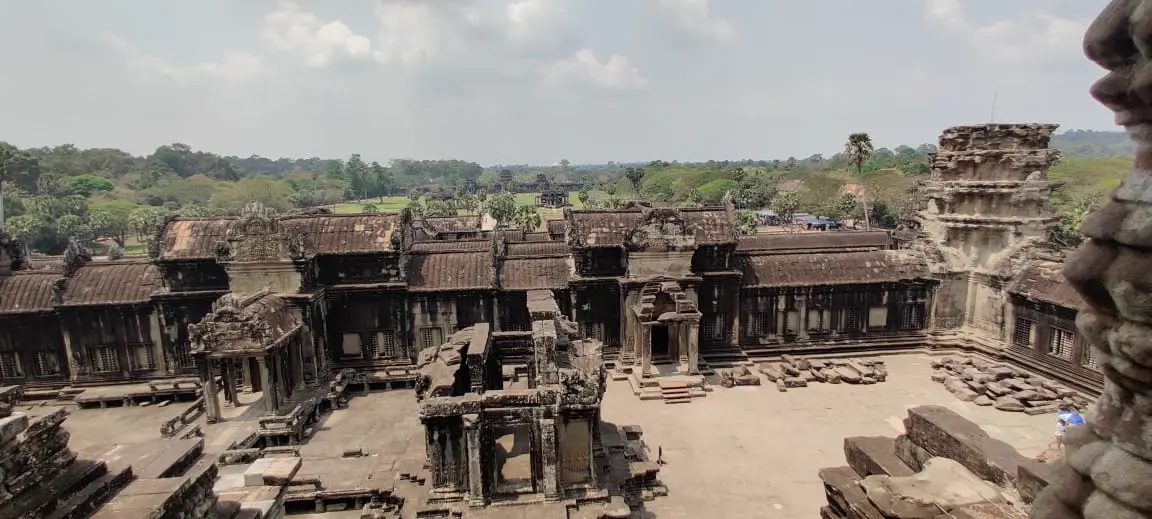
Exploring Angkor Archaeological Park was one of the greatest experiences of our travels across Asia. Spread across a vast area near Siem Reap, the park contains hundreds of ancient temples and ruins reflecting the extraordinary grandeur of the Khmer Empire and the deep influence of Indian civilization through Hinduism, Buddhism, Sanskrit inscriptions, and epic mythology. Among the most important monuments are Angkor Wat, Bayon, Ta Prohm, Baphuon, Preah Khan, and Phnom Bakheng, each offering a different glimpse into the spiritual, artistic, and engineering brilliance of the Khmer world.
Angkor Archaeological Park
Exploring Angkor Archaeological Park was one of the greatest experiences of our travels across Asia. Spread across a vast area near Siem Reap, the park contains hundreds of ancient temples and ruins reflecting the extraordinary grandeur of the Khmer Empire and the deep influence of Indian civilization through Hinduism, Buddhism, Sanskrit inscriptions, and epic mythology. Among the most important monuments are Angkor Wat, Bayon, Ta Prohm, Baphuon, Preah Khan, and Phnom Bakheng, each offering a different glimpse into the spiritual, artistic, and engineering brilliance of the Khmer world.
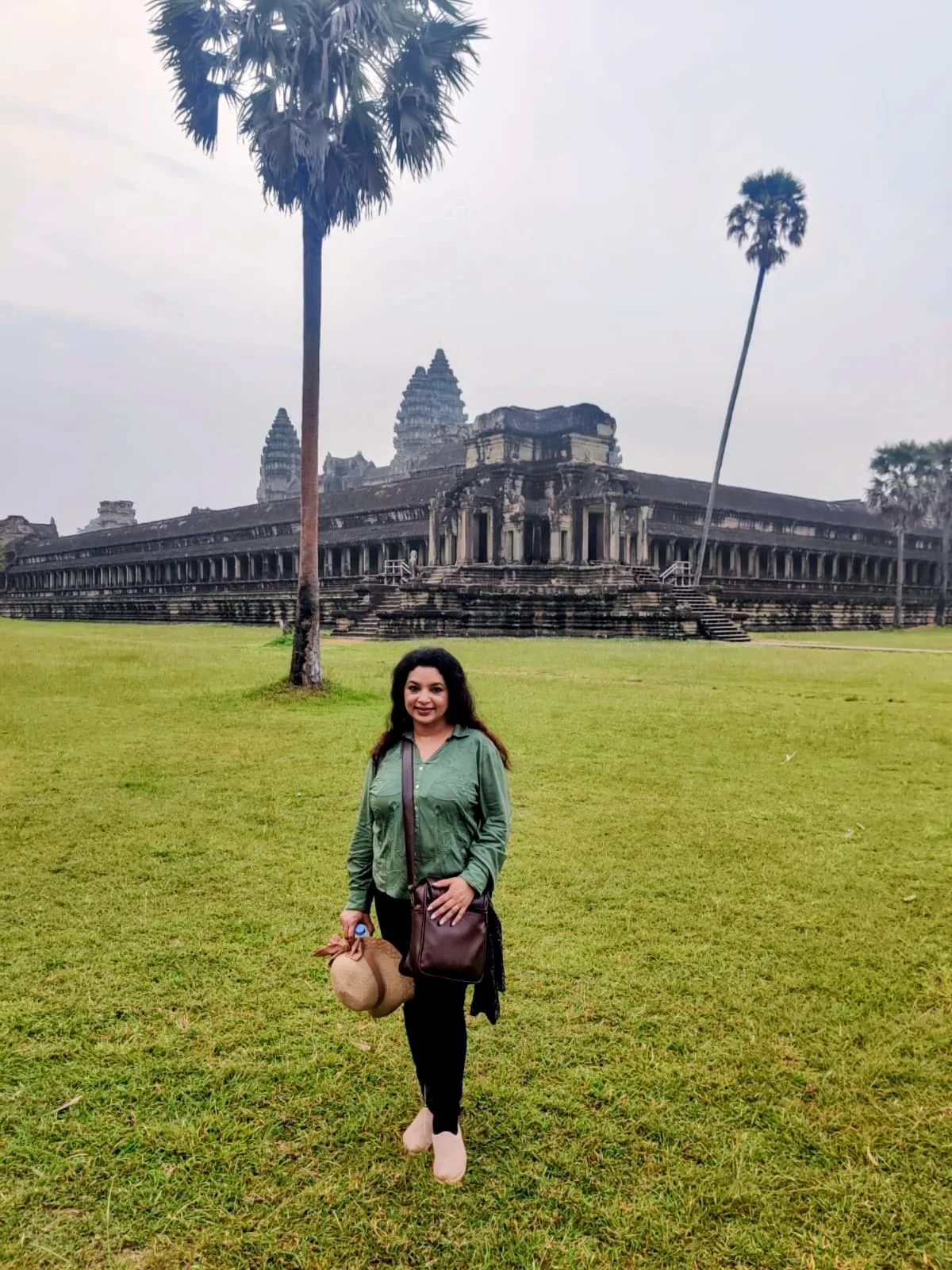
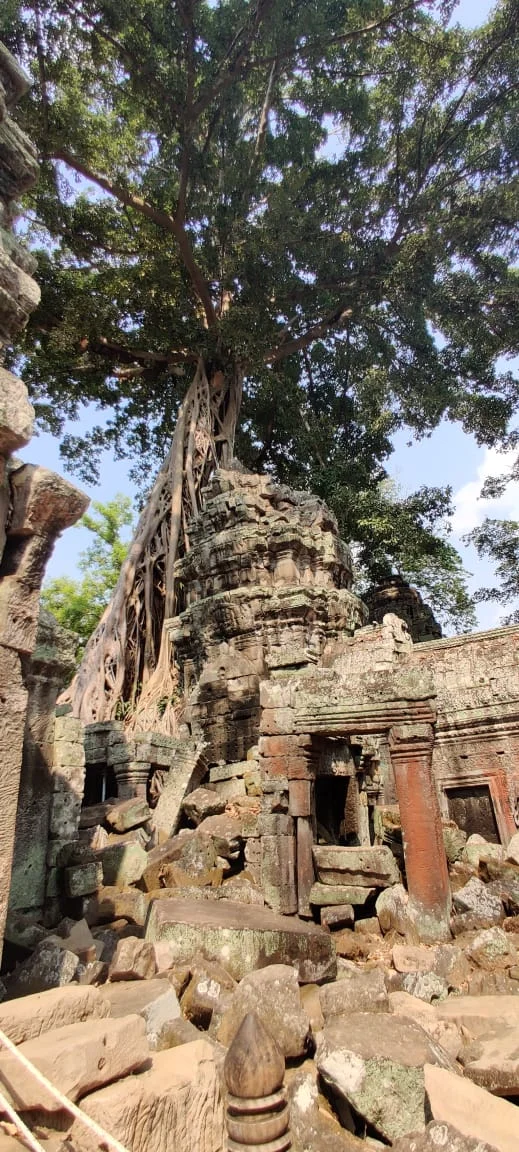
A Four day itinerary for Angkor Archaeological Park is strongly recommended
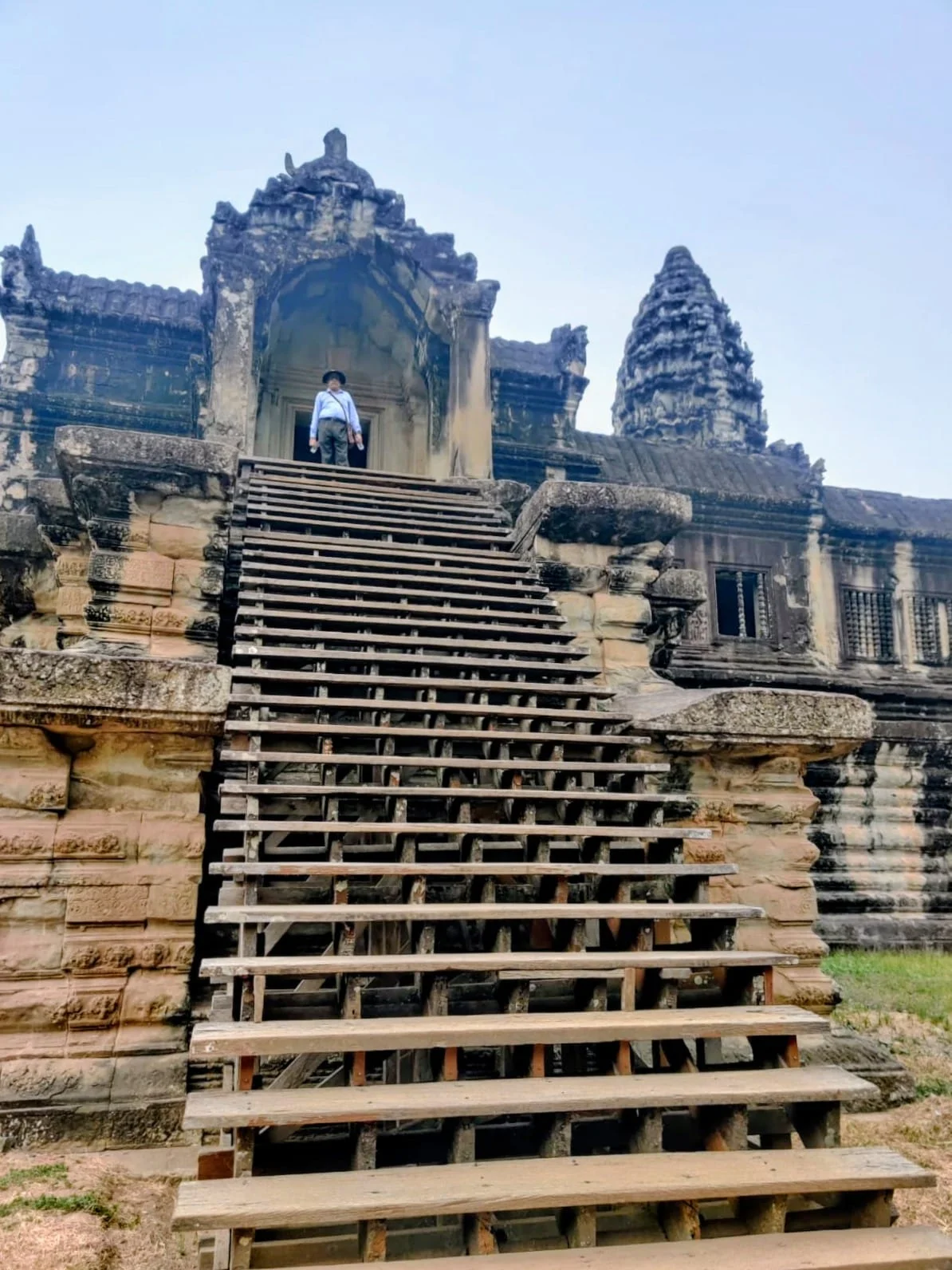
We strongly felt that Angkor should not be rushed. A 4-day itinerary allows visitors to appreciate the park properly without exhaustion. One day can be devoted to Angkor Wat and the central temples, another to Bayon and Angkor Thom, a third to Ta Prohm, Baphuon, and surrounding ruins, and a final day to the outer temples and quieter sites. Purchasing the multi-day Angkor pass is highly recommended, as the complex is enormous and involves considerable walking in warm and humid weather. Starting early each morning helps avoid both crowds and heat. For us, slowly exploring the temples over several days made the experience far more meaningful, allowing time not only to admire the architecture but also to absorb the profound spiritual and cultural legacy preserved within Angkor.
KBAL SPEAN - RIVER OF A THOUSAND LINGAS
The River of a Thousand Lingas, also known as Kbal Spean, is a sacred site in Cambodia that features a riverbed covered in hundreds of lingas and other carvings:
Stung Kbal Spean river in Phnom Kulen National Park, northeast of Angkor
Riverbed covered with lingas and other carvings, including Hindu deities, yoginis, and animal figures
Believed to have been made in the 11th century during the reign of King Udayadityavarman II
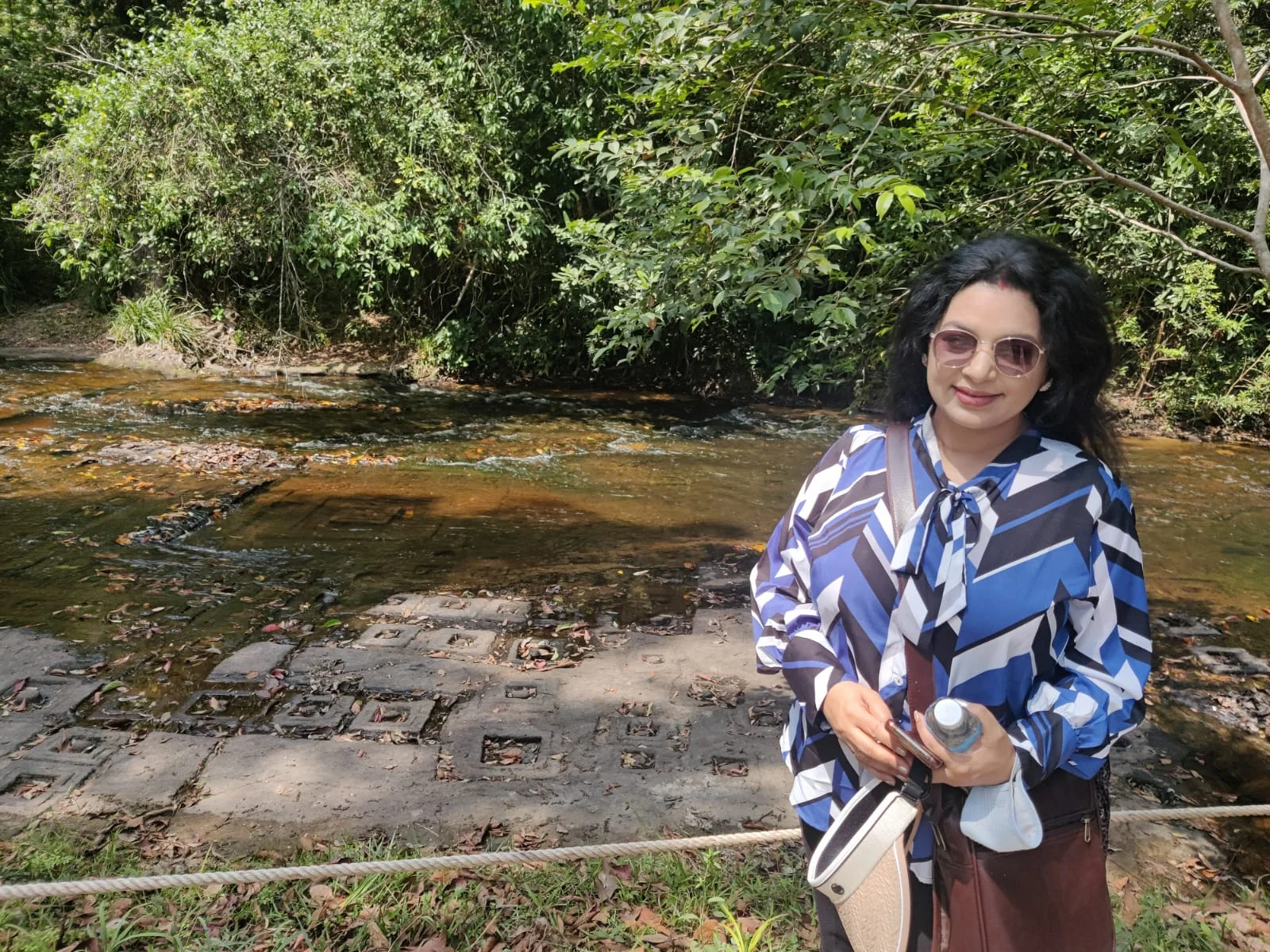
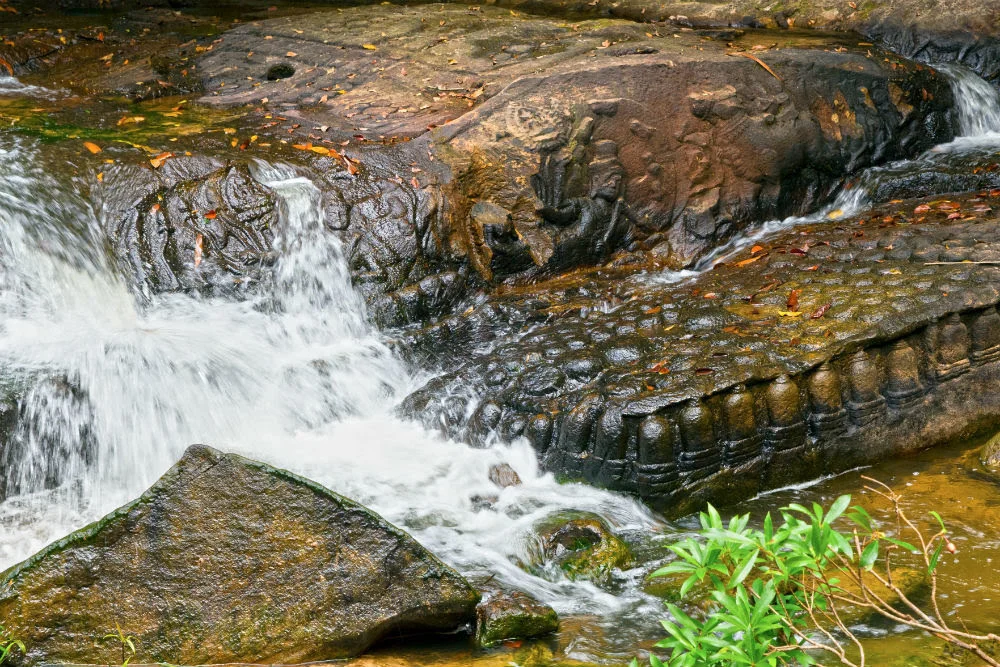
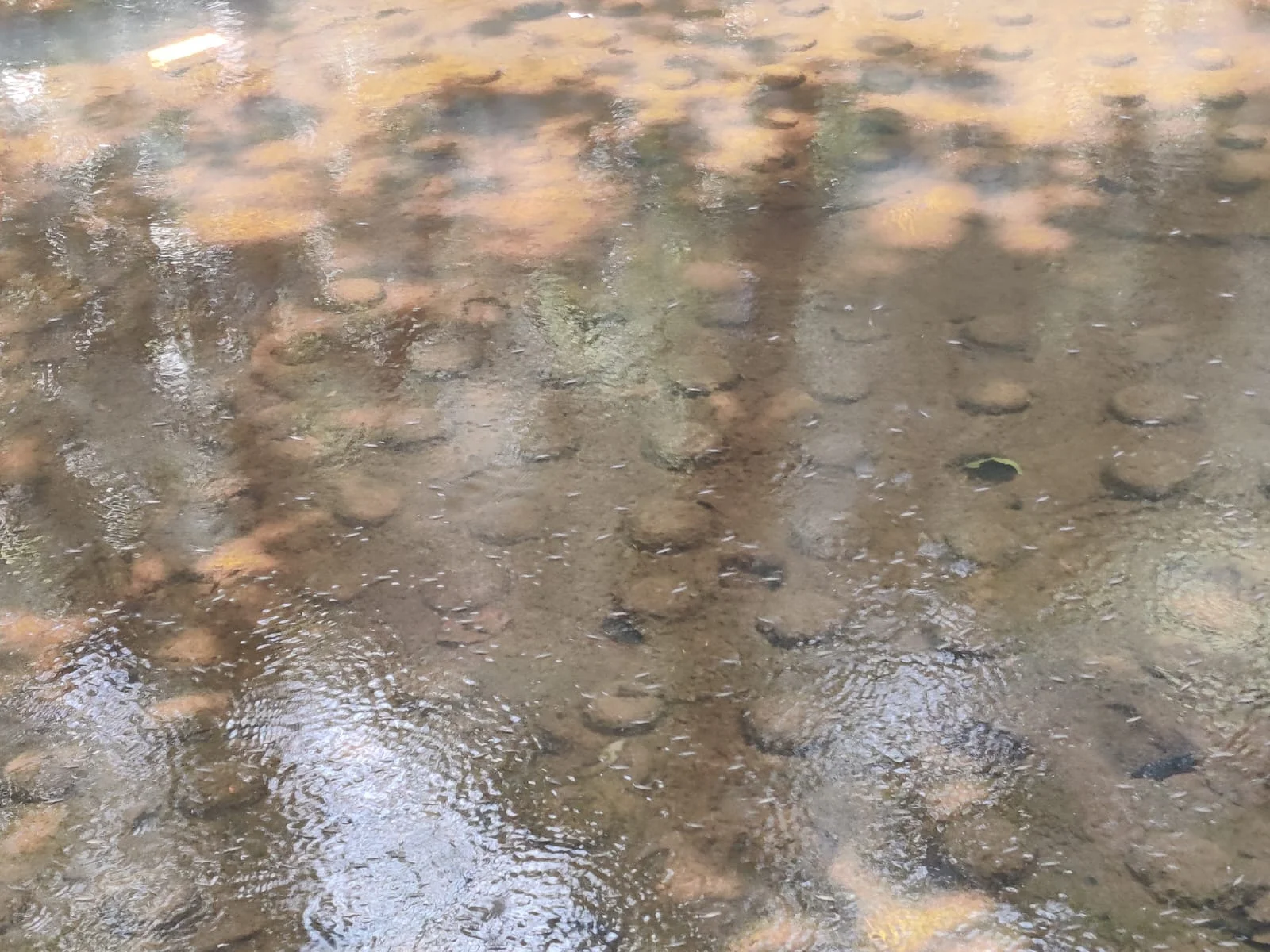
Day trip to River of Thousand Lingas from Siem Reap
Our day trip from Siem Reap to Kbal Spean — popularly known as the “River of a Thousand Lingas” — turned out to be one of the most unusual and spiritually fascinating experiences of our Cambodia journey. Hidden deep within the forests of the Kulen Hills, the site contains hundreds of Shiva Lingas and intricate Hindu carvings sculpted directly into the riverbed during the height of the Khmer Empire. Watching water gently flow over these ancient sacred symbols, once believed to spiritually bless the waters before they reached Angkor, created a remarkably peaceful and timeless atmosphere.
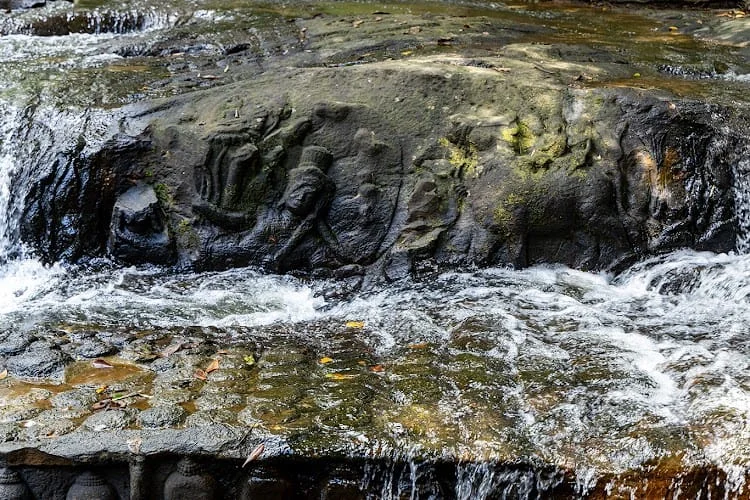
Siem Reap to Kbal Spean - A Day trip worth the effort
A day trip from Siem Reap to Kbal Spean is highly recommended for anyone interested in the Hindu heritage of the Khmer Empire. The “River of a Thousand Lingas” is a fascinating and unique site where countless Shiva Lingas and sacred carvings appear beneath flowing water amidst the forested hills, creating a peaceful and spiritual atmosphere far removed from the crowds of Angkor. The journey can be quite exhausting because of the intense heat, humidity, and uphill forest walk, and by the time we returned, the only thing that truly seemed capable of cooling us down was Chilled Beer.
Places Worth Visiting in Siem Reap Beyond Angkor Archaeological Park.
These attractions complement the Angkor temples and offer a deeper insight into Cambodia's culture, history, and contemporary life.
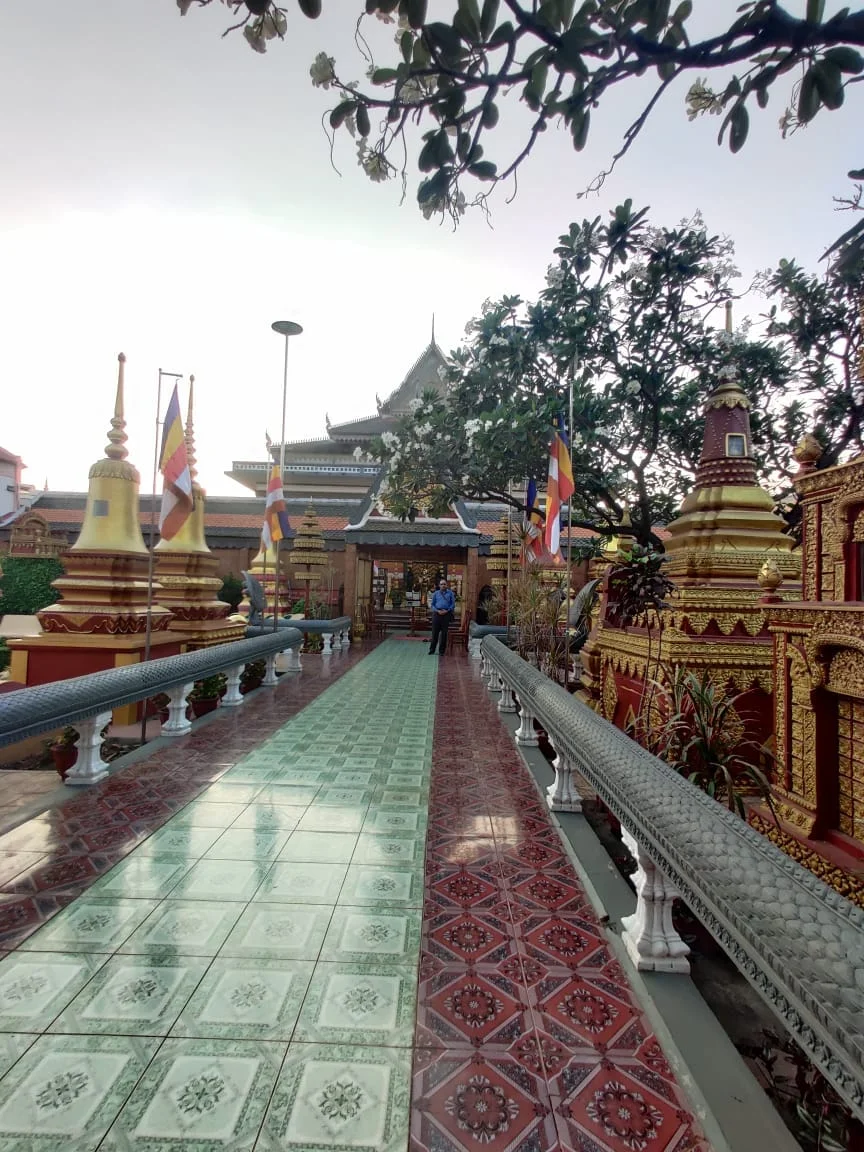
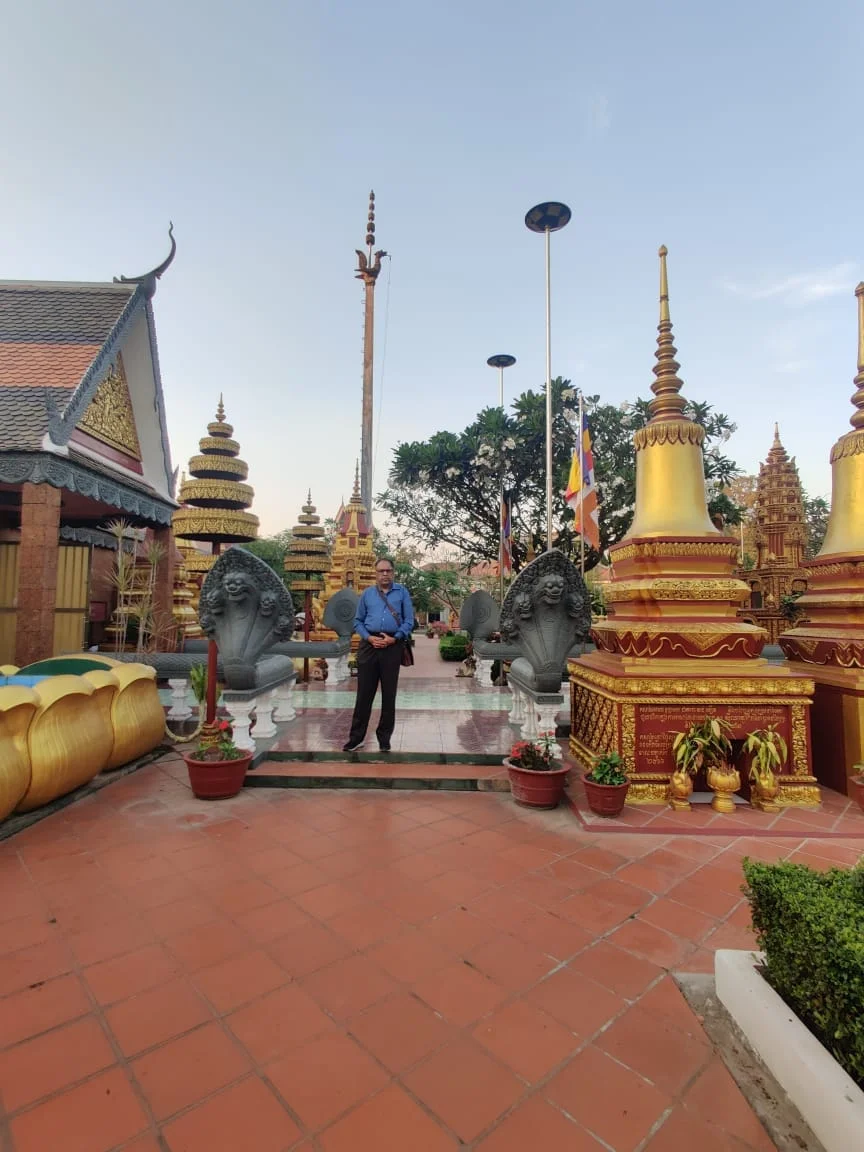
Wat Preah Prom Rath – A Peaceful Pause in Siem Reap
After days of exploring the grand temples of Angkor, a visit to Wat Preah Prom Rath offered a quieter and more intimate glimpse into Cambodia's living Buddhist tradition. The peaceful monastery, with its beautifully decorated prayer halls, golden Buddha statues, and serene gardens, provided a welcome contrast to the bustling archaeological sites. Watching local devotees offer prayers and monks go about their daily routines reminded us that Buddhism is not just part of Cambodia's history—it remains at the heart of everyday life. It was a calm and reflective experience that enriched our understanding of Siem Reap beyond its famous temples.
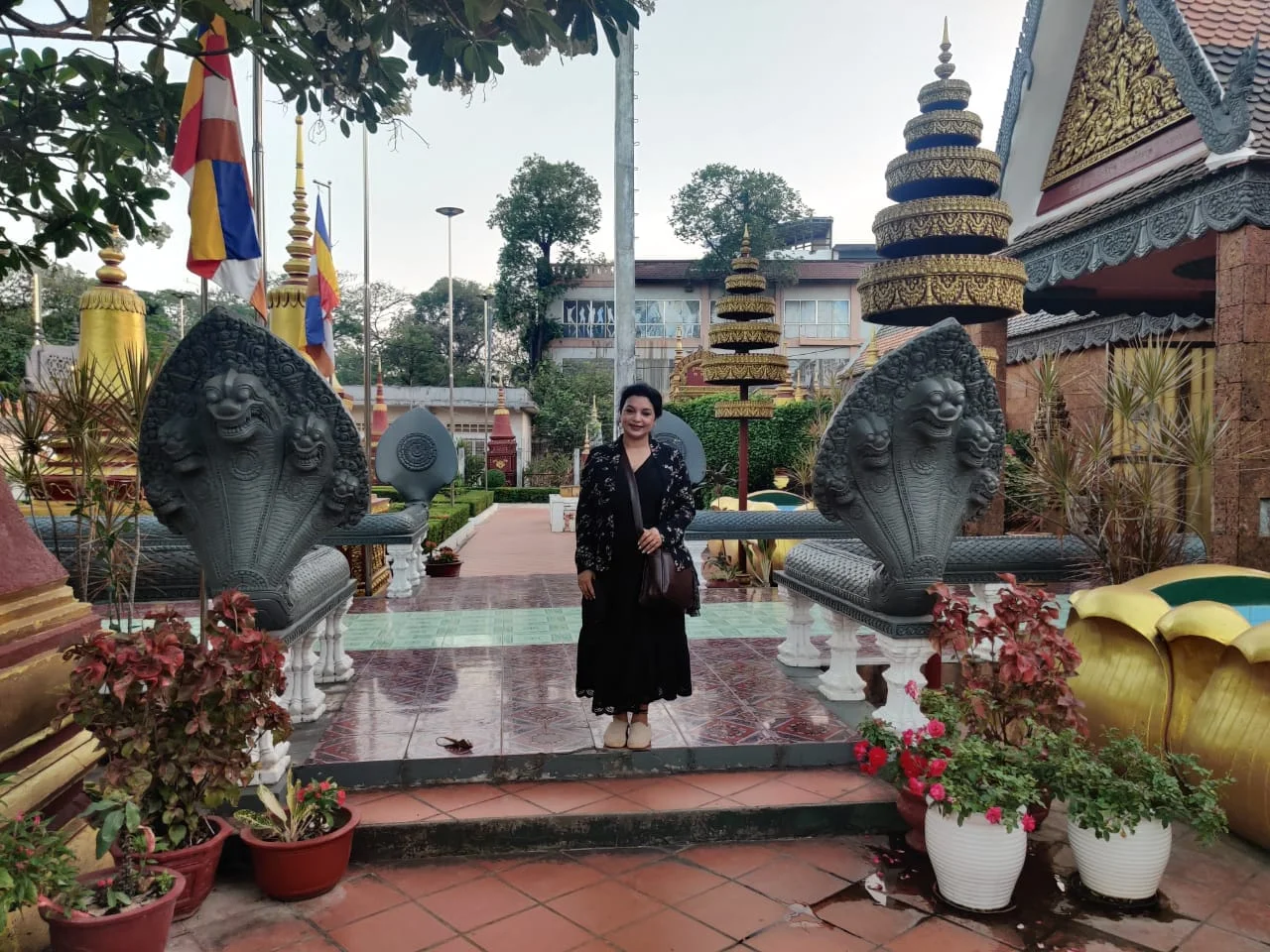
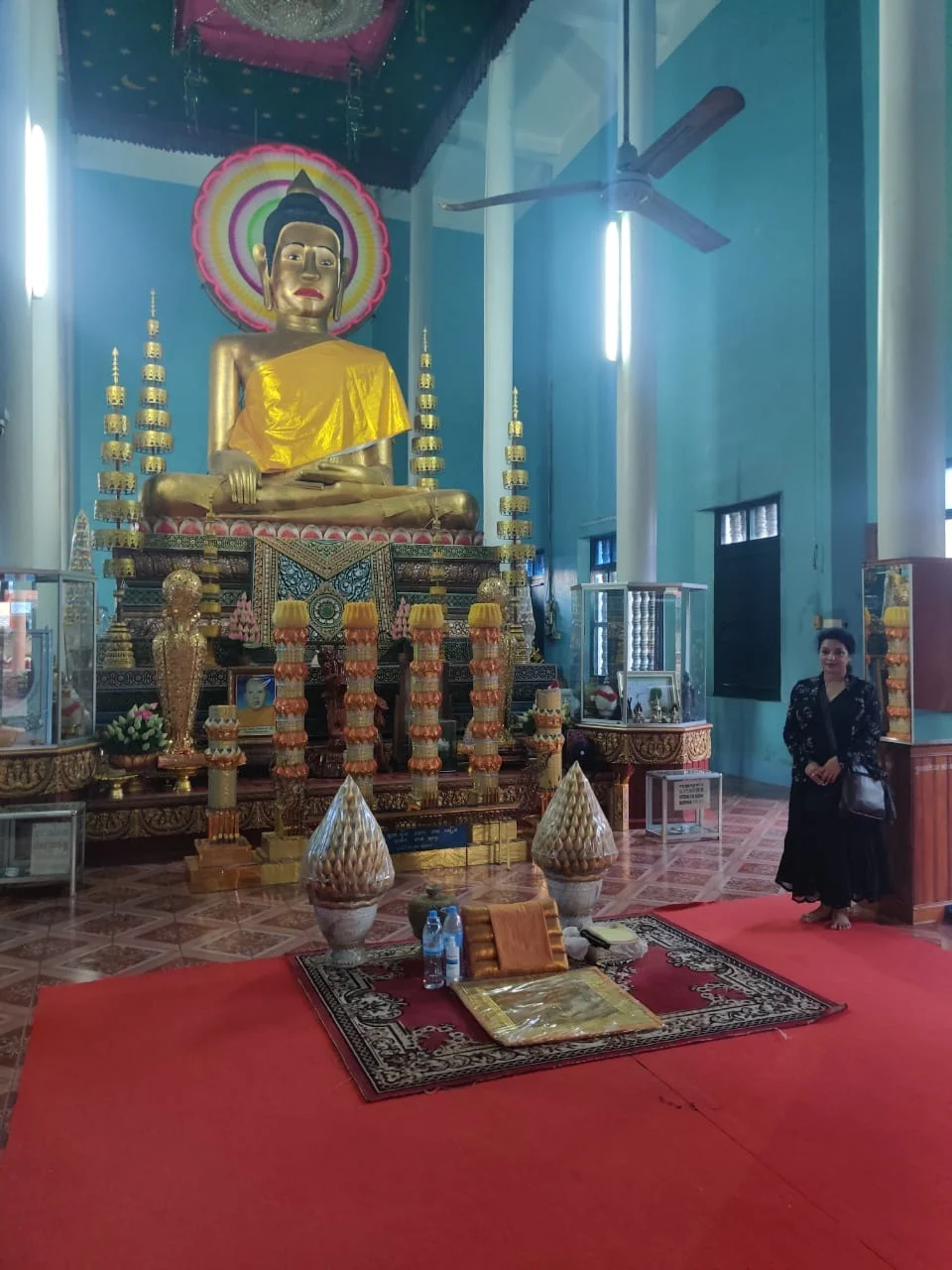
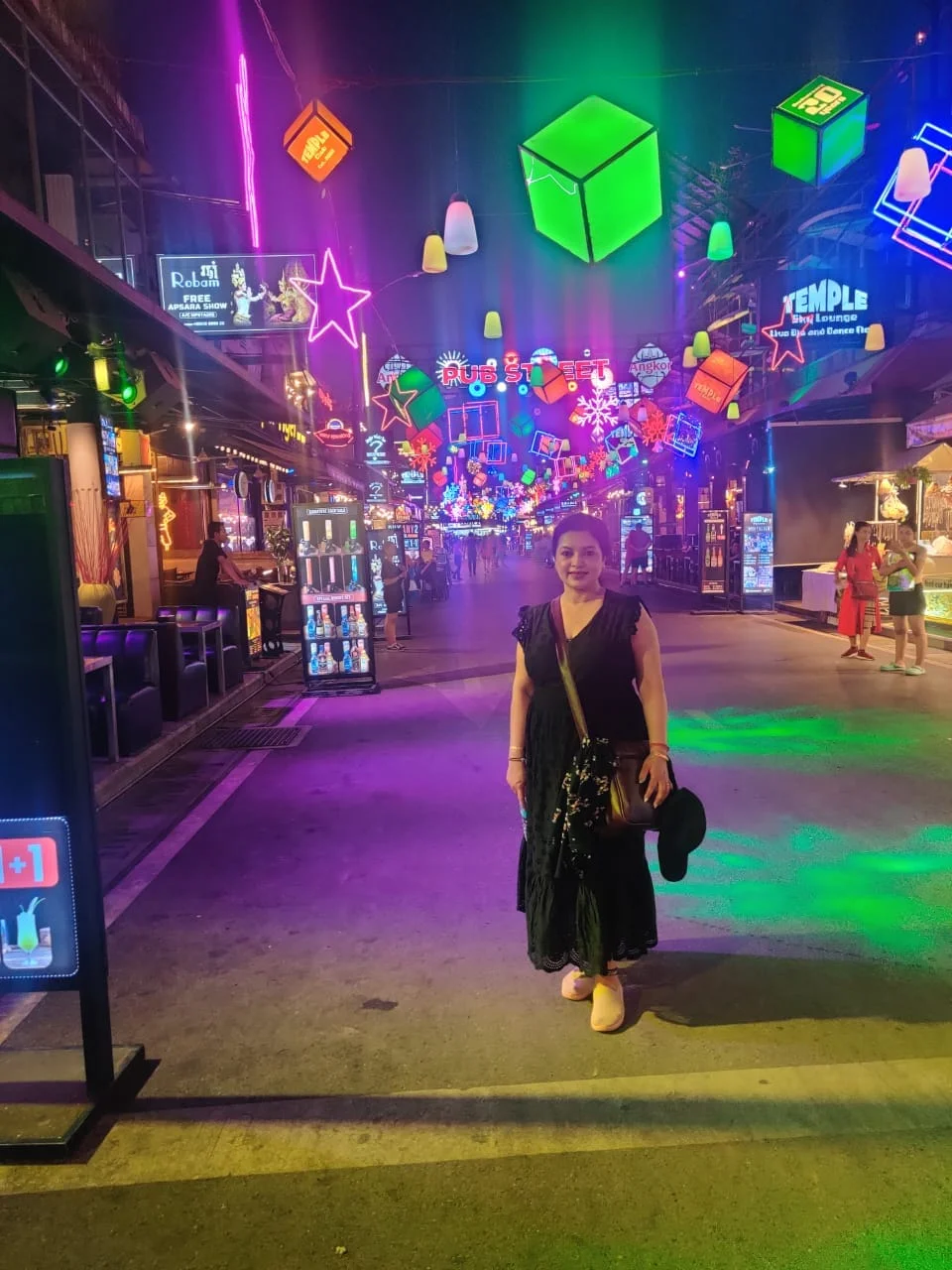
Siem Reap - An Evening at Pub Street
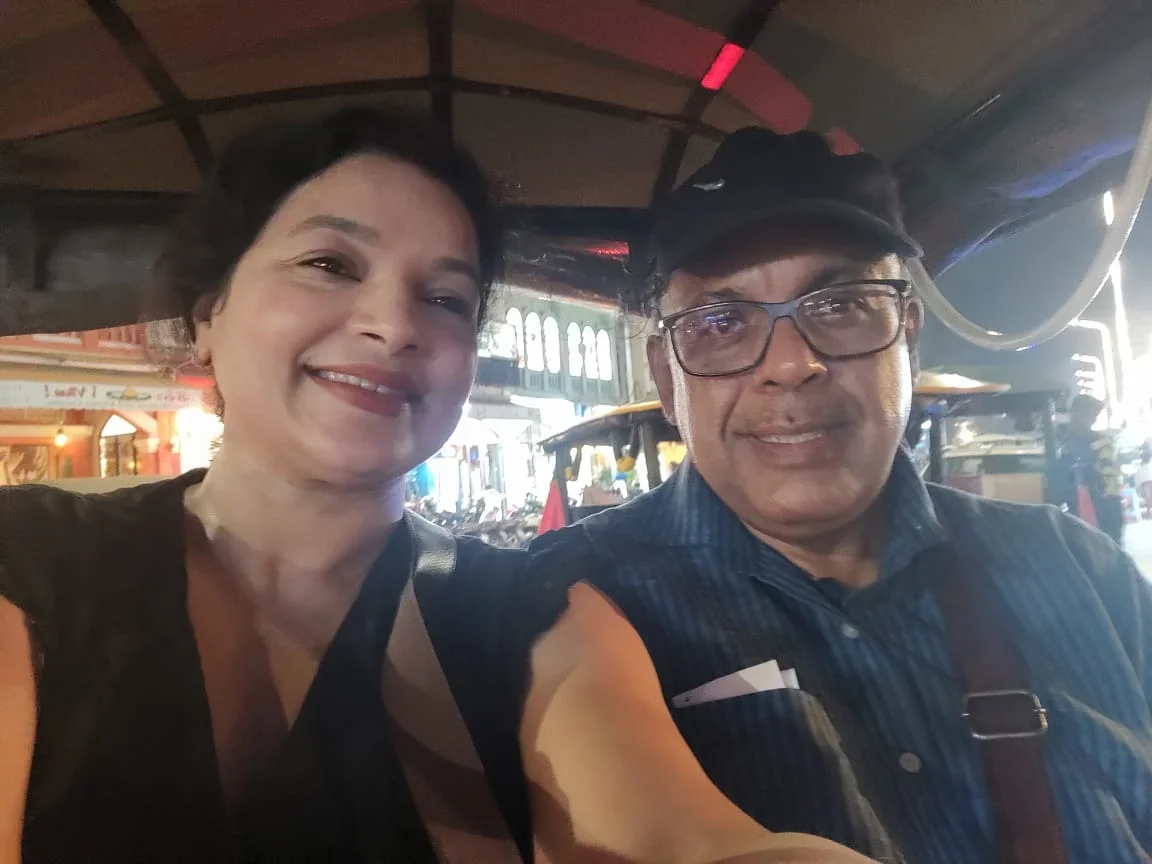
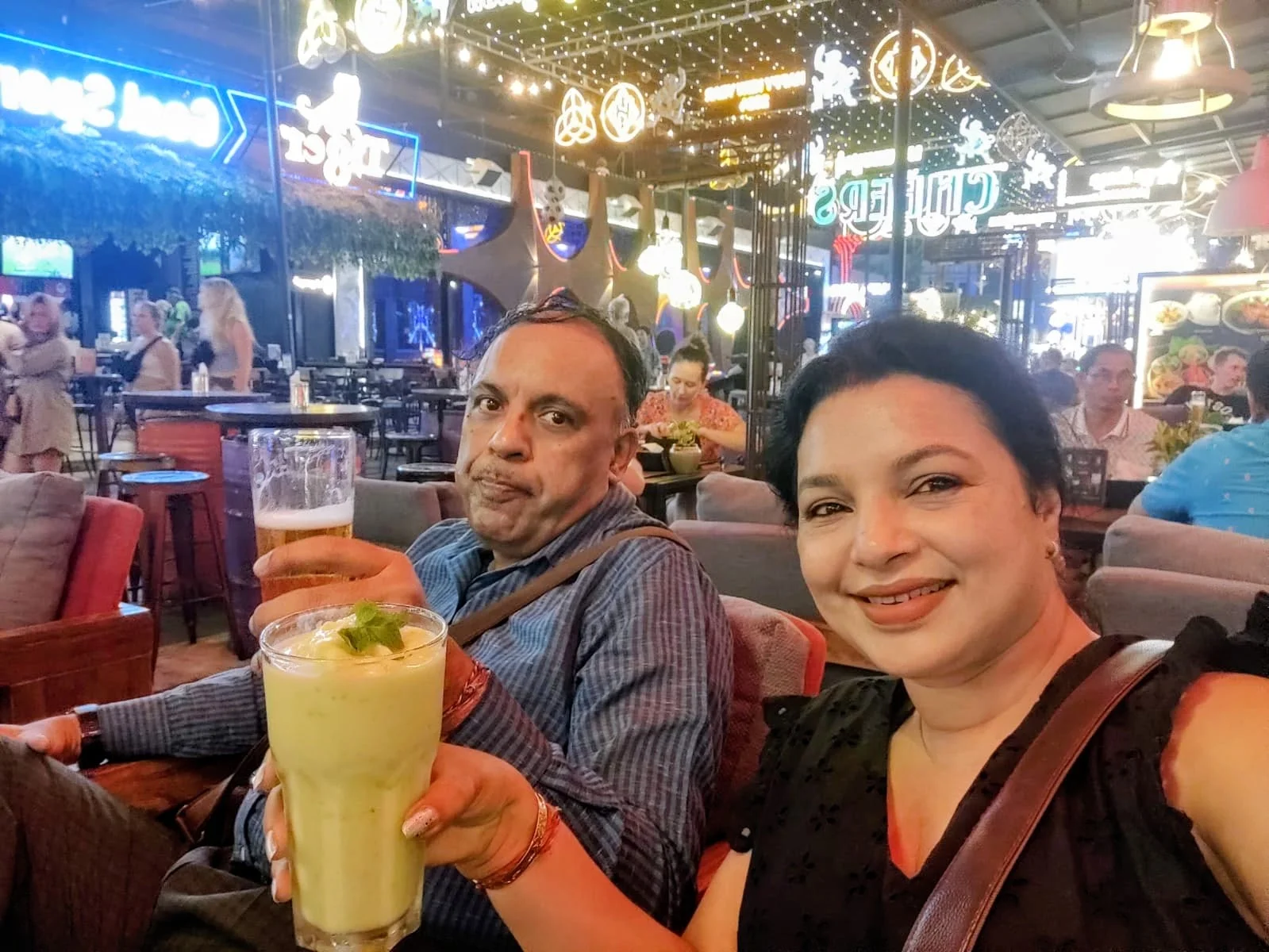
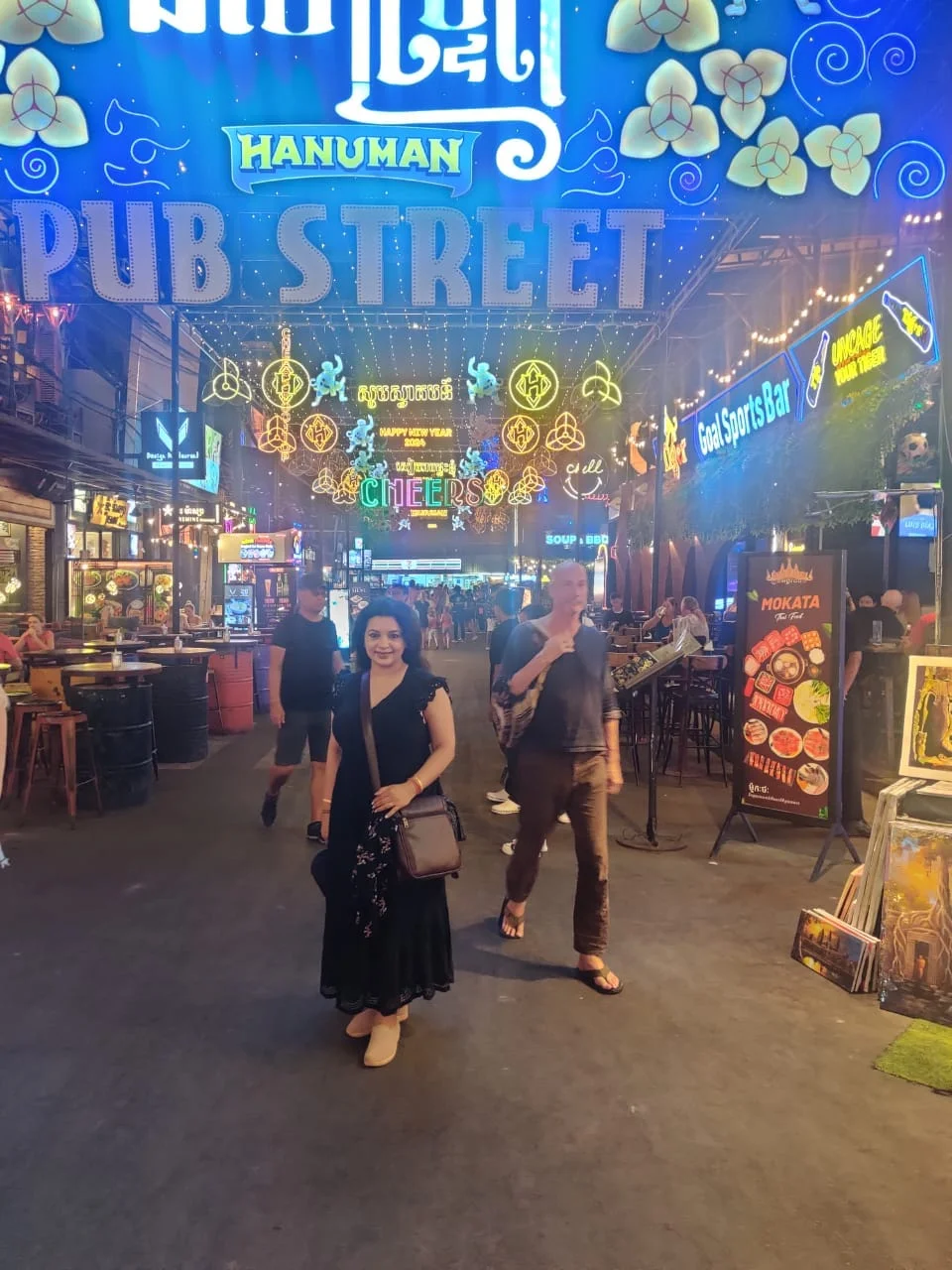
After a long day exploring the temples of Angkor, the tropical heat had taken its toll. An hour in the hotel's swimming pool was the perfect way to cool off and recharge for another day of sightseeing. As dusk settled over Siem Reap, we hopped into a tuk-tuk and headed to Pub Street, the city's lively evening hub. The streets were buzzing with music, cafés, restaurants, and travellers from around the world. We strolled through the vibrant atmosphere, enjoyed a leisurely dinner, and soaked in the energy of the city before returning to the hotel, ready for the adventures that awaited us the next morning.

Travel Tips for Angkor Archaeological Park
- ✦Buy a 3-day or 4-day Angkor Pass to explore the vast complex without rushing.
- ✦Start each day at sunrise (5:00–5:30 am) to avoid the heat and crowds.
- ✦Wear lightweight clothing, comfortable walking shoes, a hat, sunglasses, and sunscreen.
- ✦Carry plenty of water, as the heat and humidity can be exhausting.
- ✦Hire a knowledgeable local guide to better appreciate the history, Hindu symbolism, and Buddhist heritage.
- ✦Use a tuk-tuk or private car to move comfortably between temples.
- ✦Dress modestly, covering shoulders and knees, as the temples remain sacred sites.
- ✦Allow time to visit lesser-known temples such as Baphuon, Preah Khan, and Ta Som, not just Angkor Wat.
Travel Tips for the River of a Thousand Lingas (Kbal Spean)
- ✦Leave Siem Reap early to avoid the midday heat.
- ✦Wear sturdy walking shoes, as the forest trail is uphill and can be slippery after rain.
- ✦Carry at least 1–2 litres of water per person.
- ✦Use insect repellent, especially during the wet season.
- ✦Visit during or just after the rainy season (July–November), when water flows over the carvings and the site is at its most beautiful.
- ✦Take your time to spot the Shiva Lingas, Vishnu, Lakshmi, and other Hindu carvings in the riverbed.
- ✦Combine the trip with Banteay Srei Temple, which lies on the same route.
- ✦Respect the sacred nature of the site by avoiding climbing onto the carvings or disturbing the riverbed.
- ✦These tips will help you enjoy both Angkor Archaeological Park and Kbal Spean comfortably while appreciating their remarkable historical, cultural, and spiritual significance.
NAVIGATE CAMBODIA