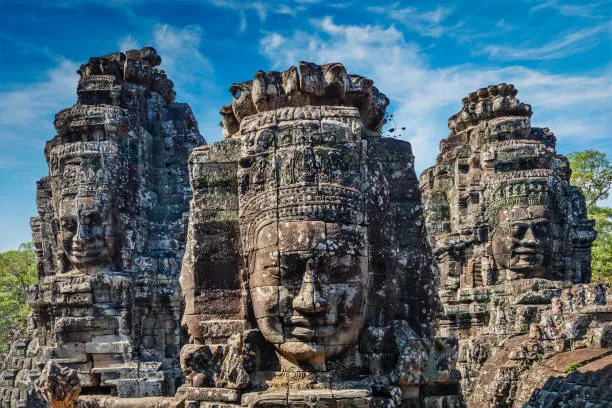
Bayon Temple
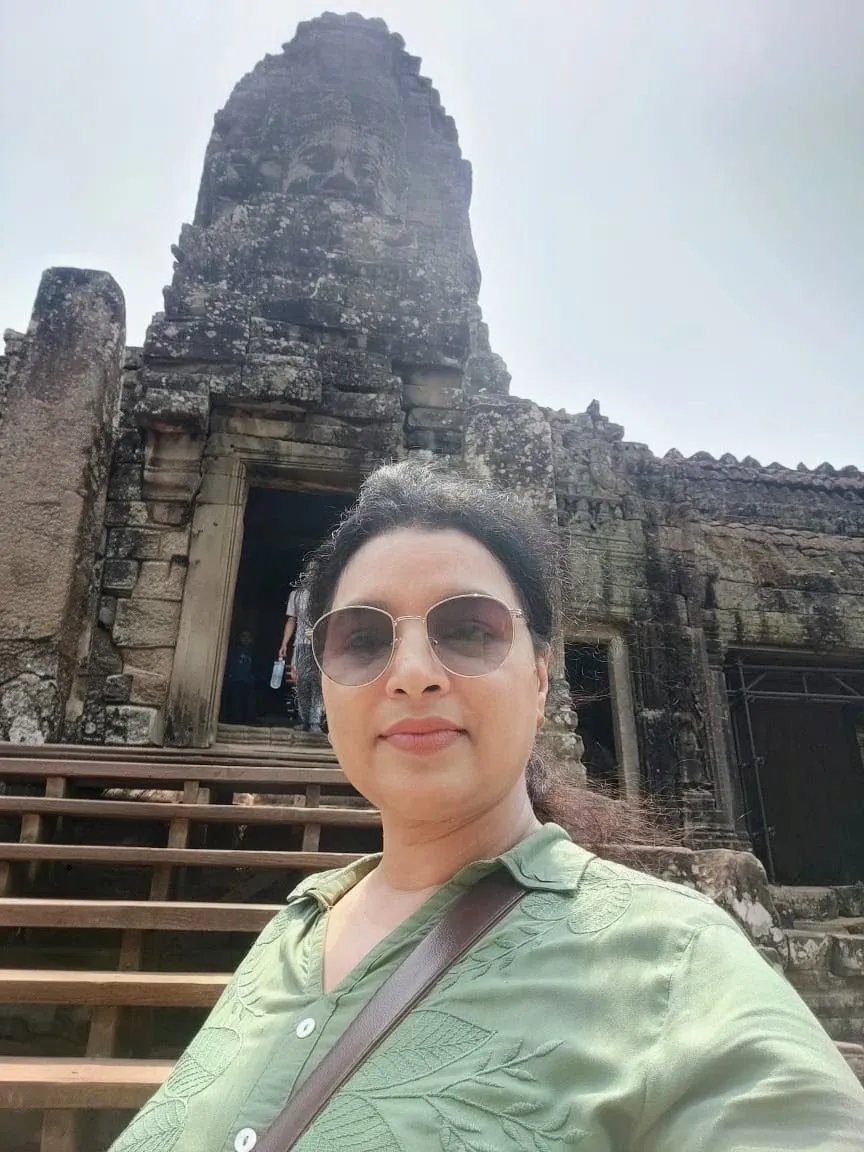
At the heart of Angkor Thom stands the extraordinary Bayon Temple, a masterpiece of Khmer architecture covered with serene stone faces.
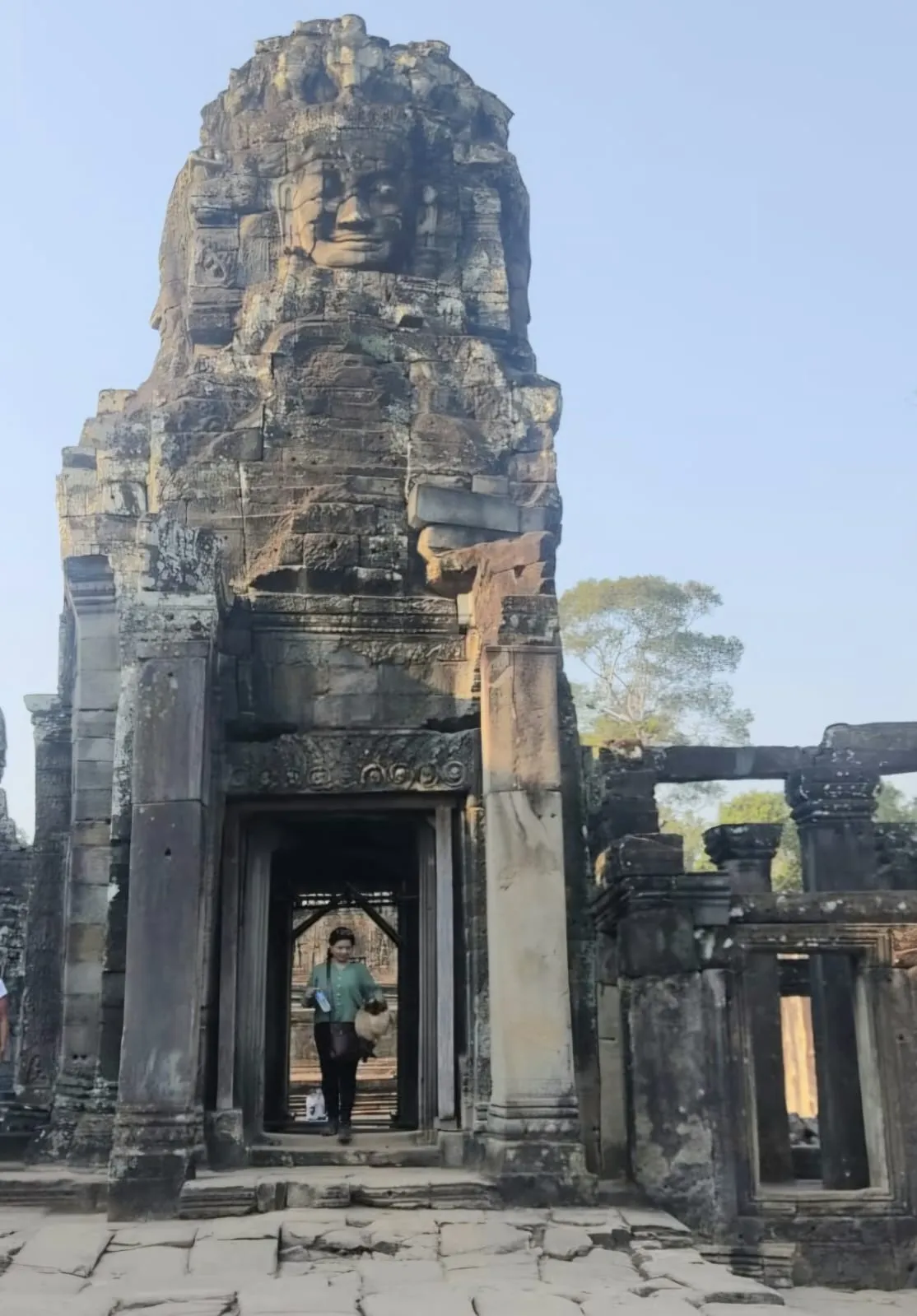
Bayon Temple - A masterpiece of khmer Architecture
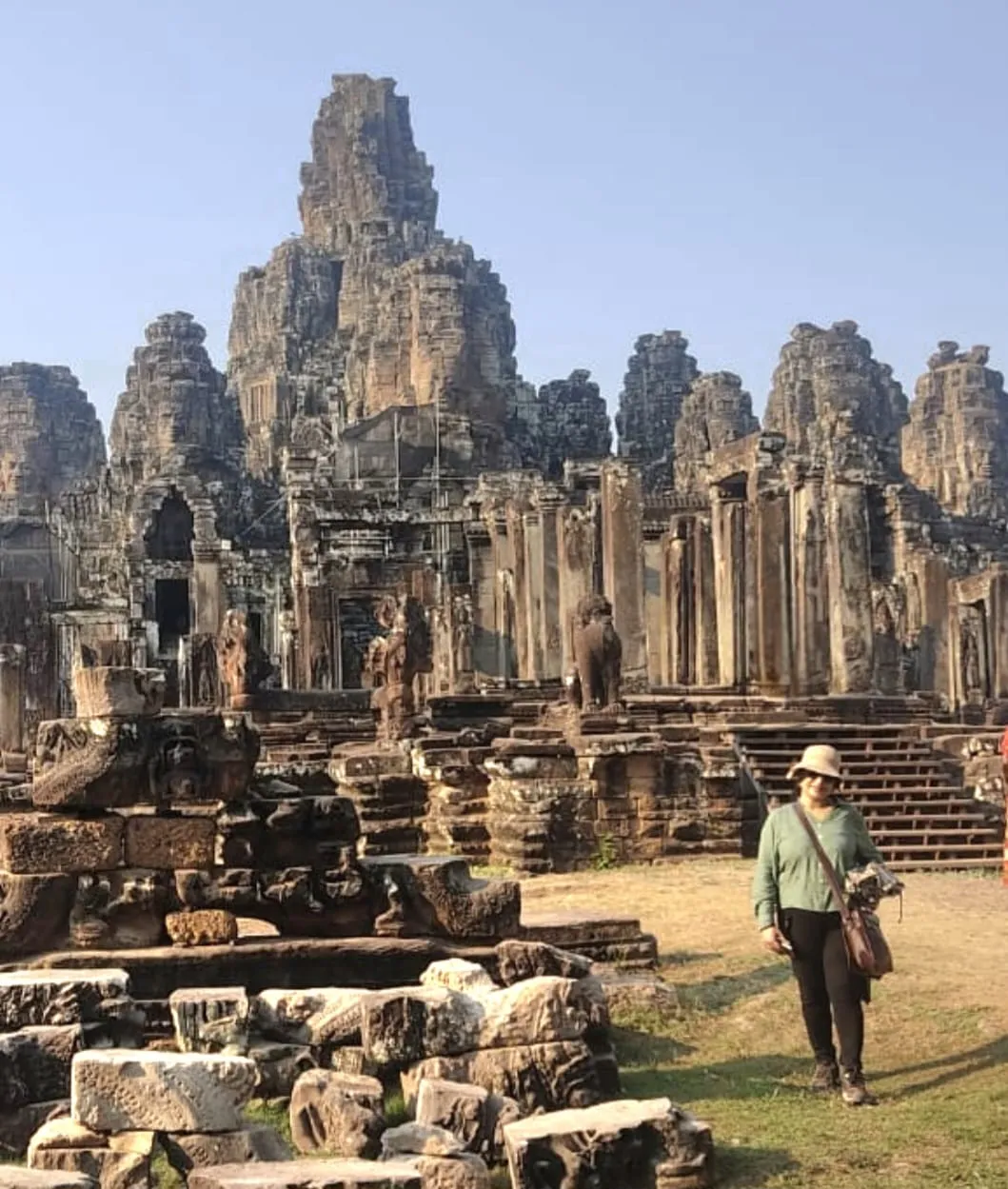
At the heart of Angkor Thom stands the extraordinary Bayon Temple, a masterpiece of Khmer architecture built in the late 12th to early 13th century during the reign of King Jayavarman VII. Unlike the more classically Hindu-inspired temples of earlier periods, Bayon reflects a distinct shift toward Mahayana Buddhist influence. What immediately struck us on arrival was its almost mystical presence—rising in tiers from the centre of the ancient city, covered with serene stone faces that seem to watch over every direction.
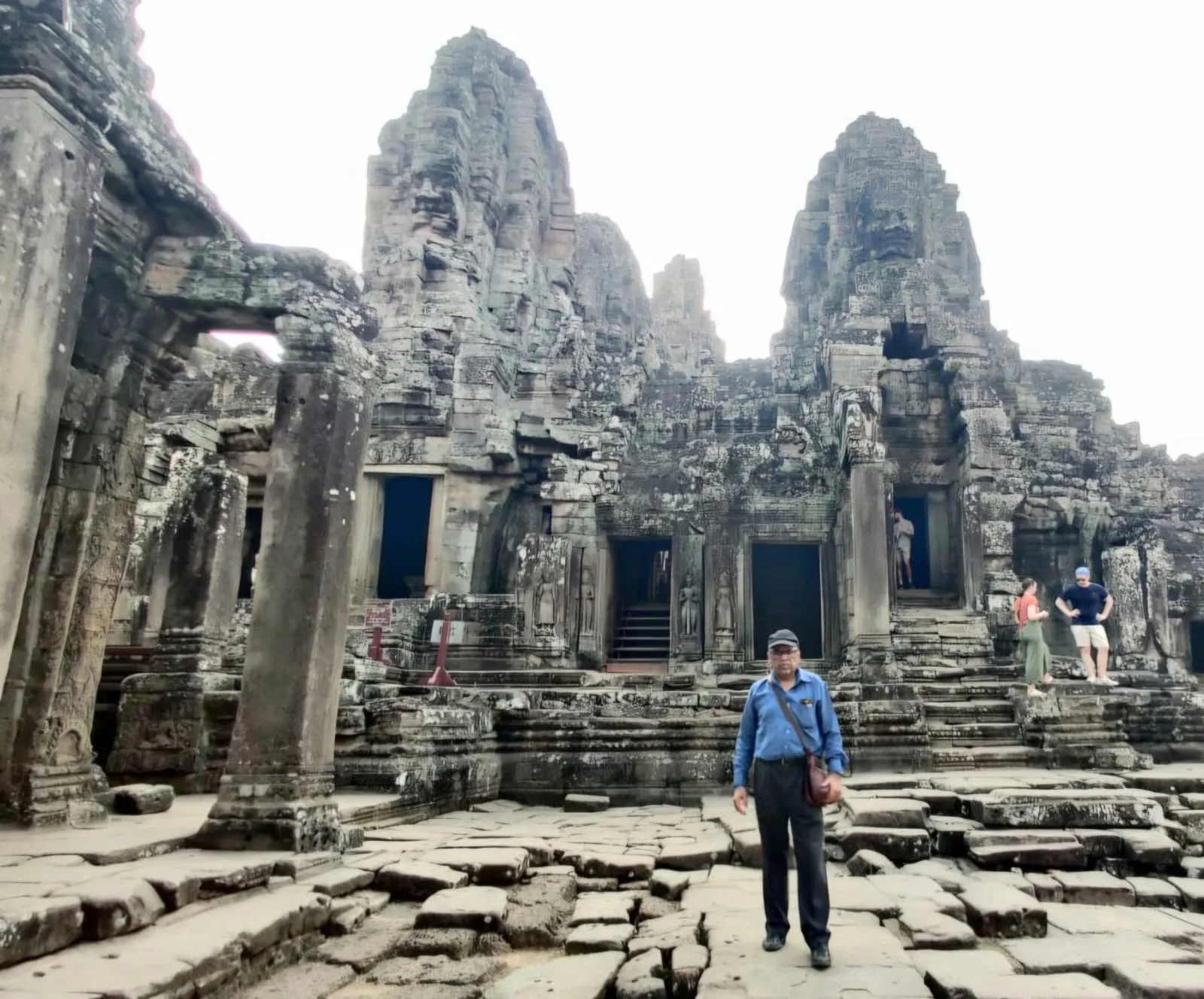
Layout of Bayon
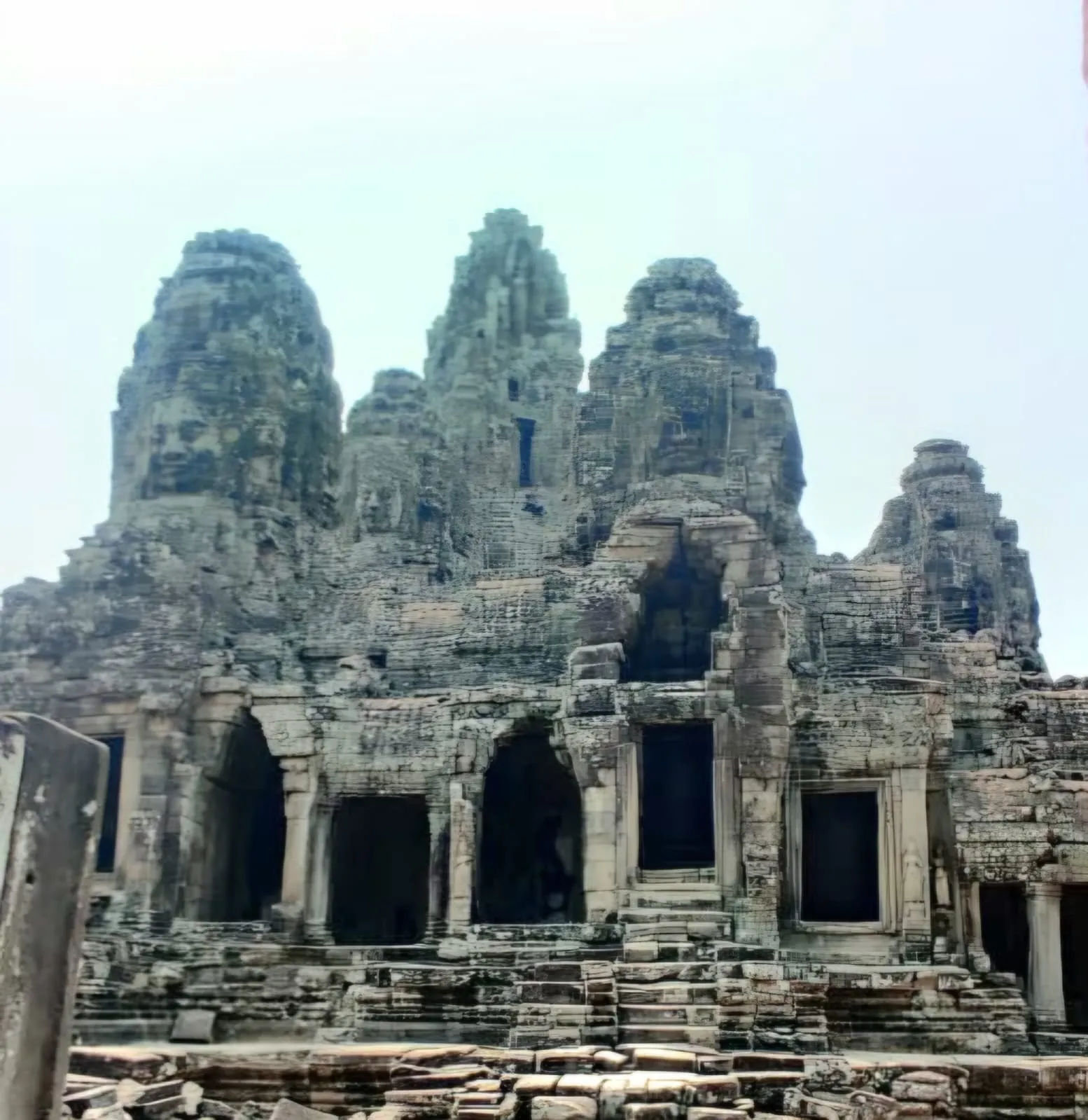
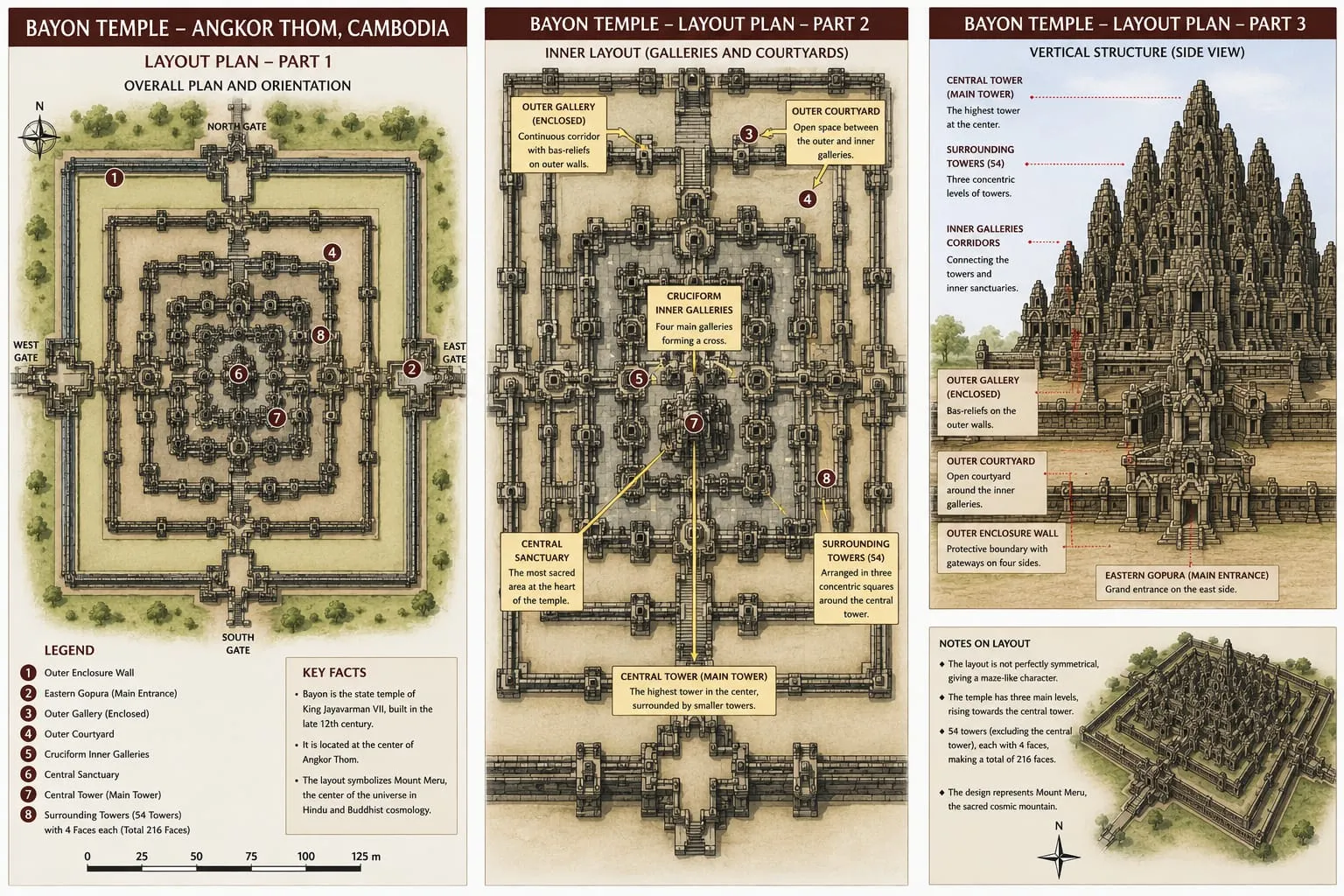
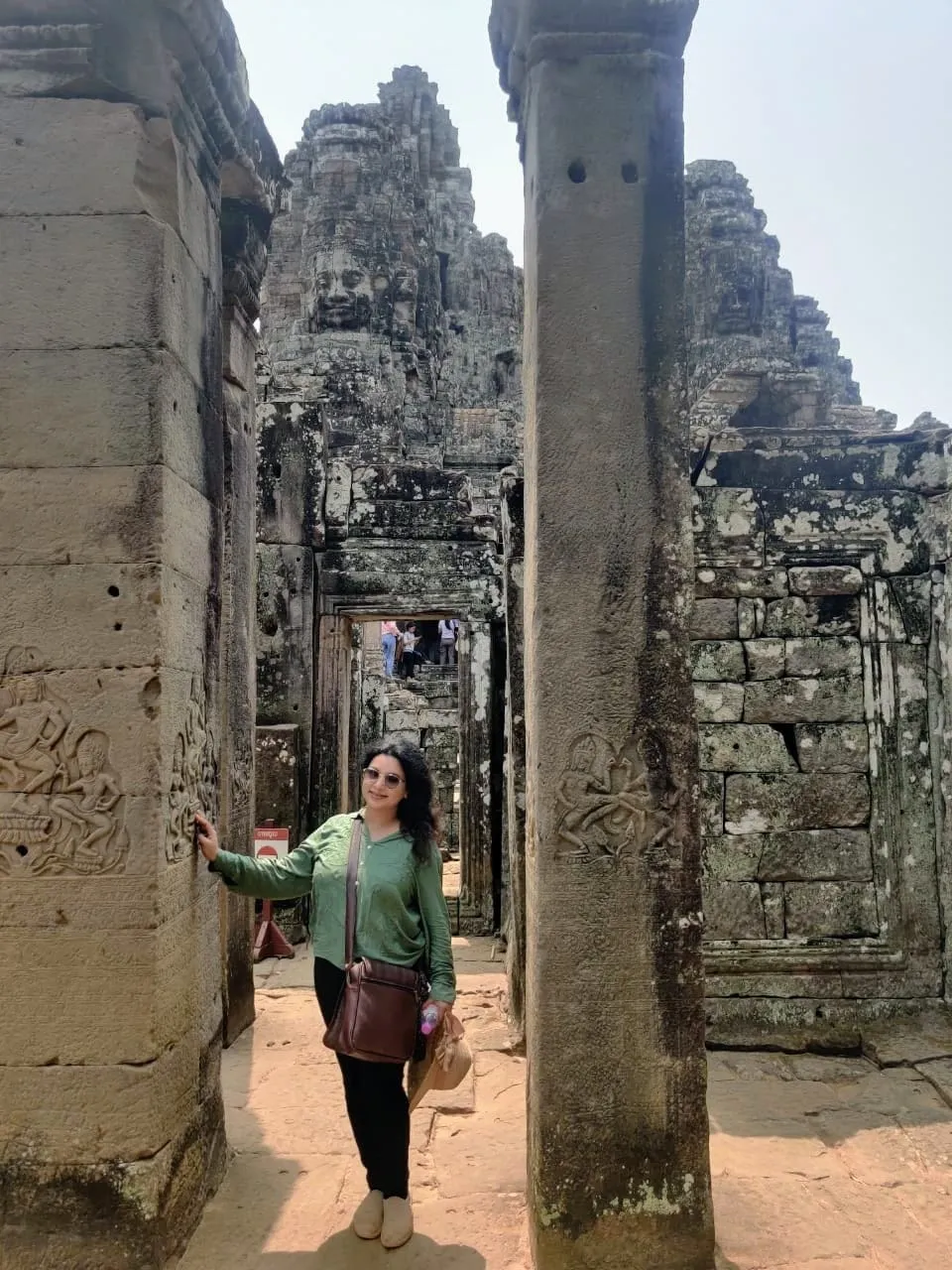
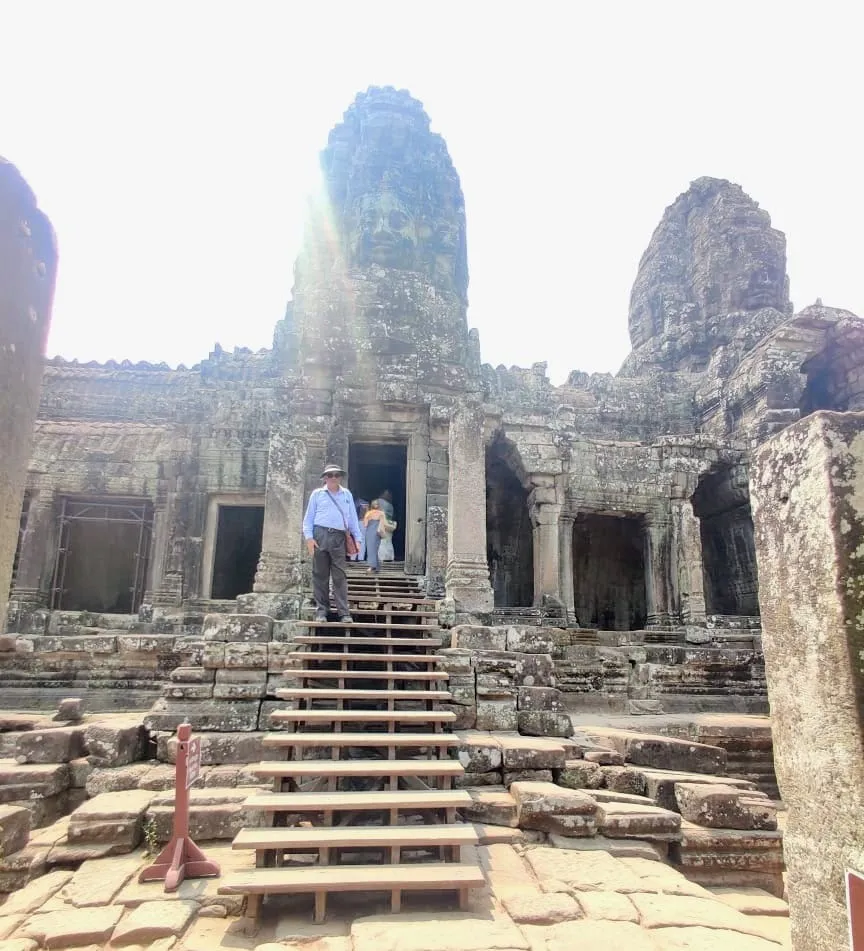
The layout of Bayon is complex and almost labyrinthine, with a series of concentric galleries, narrow passageways, and 54 gothic-style towers as per the original design. Each tower is decorated with multiple massive carved faces, believed to represent either Avalokiteshvara, the bodhisattva of compassion, or possibly the king himself in divine form. As we walked through the temple, the experience felt like moving through a stone maze where every turn revealed another quiet corridor or another smiling face emerging from the stone, partially lit by shifting beams of sunlight.
Temple of Faces
The Bayon is also known as the temple of faces for the 216 serene faces sculpted on its towers as per the initial design.
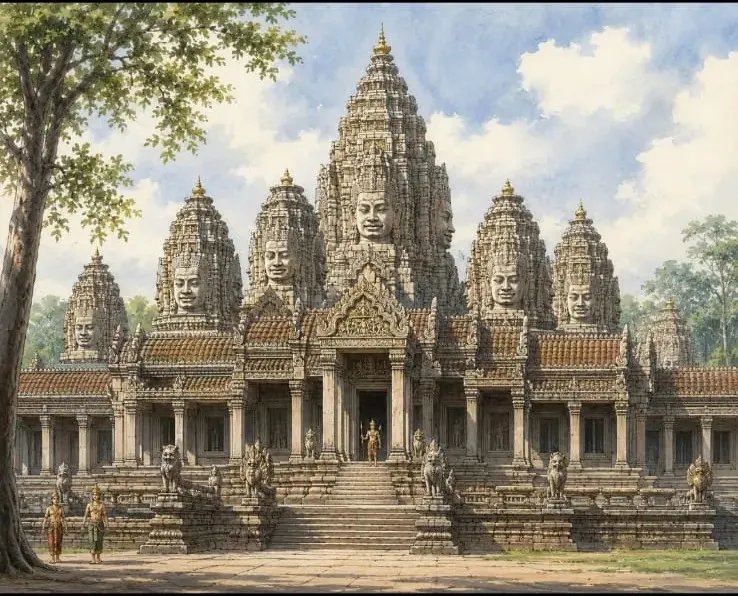
Artistic impression of Bayon temple when constructed and layout of Bayon is given below.
The Epic Naval Battle of Tonle Sap on Bayon's Walls.
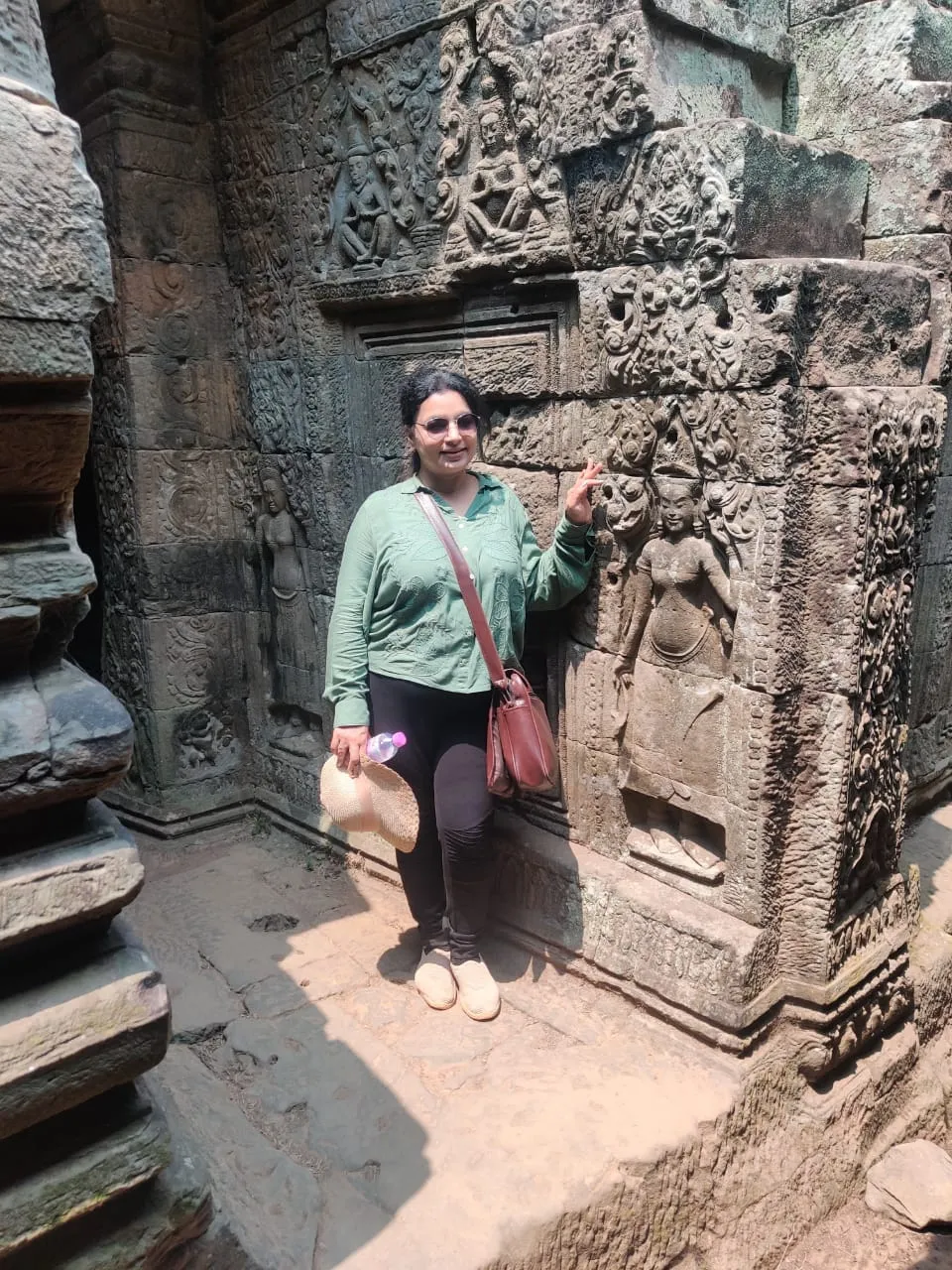
The outer bas-relief galleries of Bayon Temple preserve a remarkable 12th-century stone narrative capturing the decisive naval battle on Tonle Sap Lake between the Khmer Empire and the Cham kingdom. Carved with striking realism, the panels depict long war canoes locked in chaotic hand-to-hand combat, easily distinguished by the short-haired Khmer fighters and the lotus-headdressed Cham invaders launching spears from the upper decks.
Below the clashing vessels, the waters teem with detailed aquatic life—including giant catfish and ferocious crocodiles waiting to devour fallen soldiers—while adjacent carvings seamlessly transition into peaceful shorelines where everyday villagers fish, trade in open markets, and tend to domestic life, creating an extraordinary synthesis of imperial history, military propaganda, and 12th-century Cambodian realism.
Bayon Temple, Siem Reap – Where Stone Faces Whisper
Standing beneath the 216 serene stone faces of Bayon Temple, we felt as though they were silently watching over centuries of Cambodia's spiritual journey. Built in the late 12th century by King Jayavarman VII, Bayon was originally dedicated to Mahayana Buddhism, with its iconic faces widely believed to represent the compassionate Bodhisattva Avalokiteshvara, while also reflecting the king himself. Yet Bayon's story did not begin or end with Buddhism alone. After Jayavarman VII's death, later Hindu rulers restored elements of Shaivism, replacing many Buddhist images with Hindu symbols. In the 14th century, as Theravada Buddhism became Cambodia's dominant faith, the temple was transformed once again, with Buddha images returning to its shrines. Unlike many places where religions replaced one another through conflict, Bayon reflects a remarkable continuity—Hinduism and Buddhism each left their imprint, creating a monument that embodies Cambodia's evolving spiritual identity. Every stone face seems to whisper the same message: civilizations endure not by rejecting the past, but by embracing it.
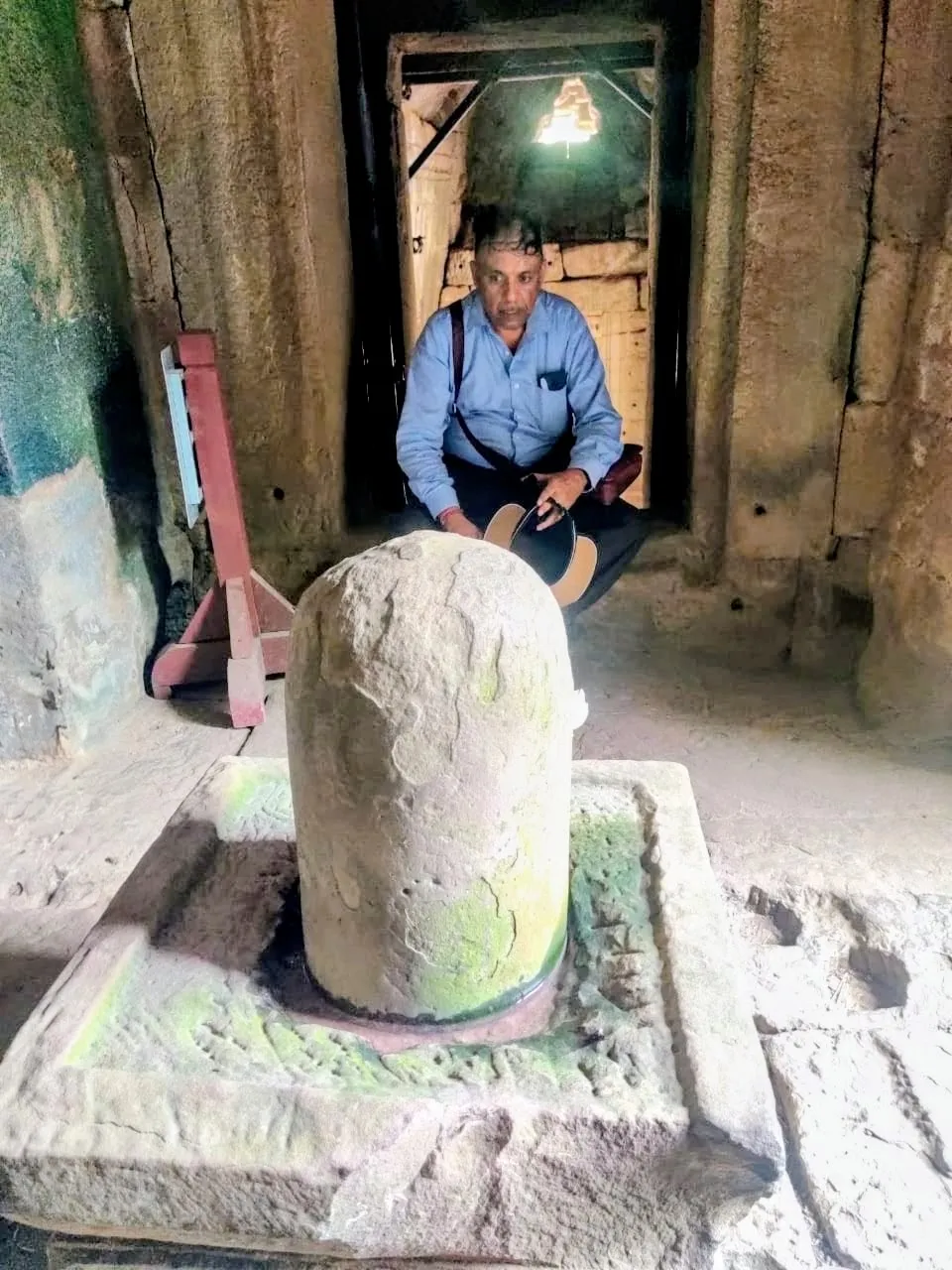
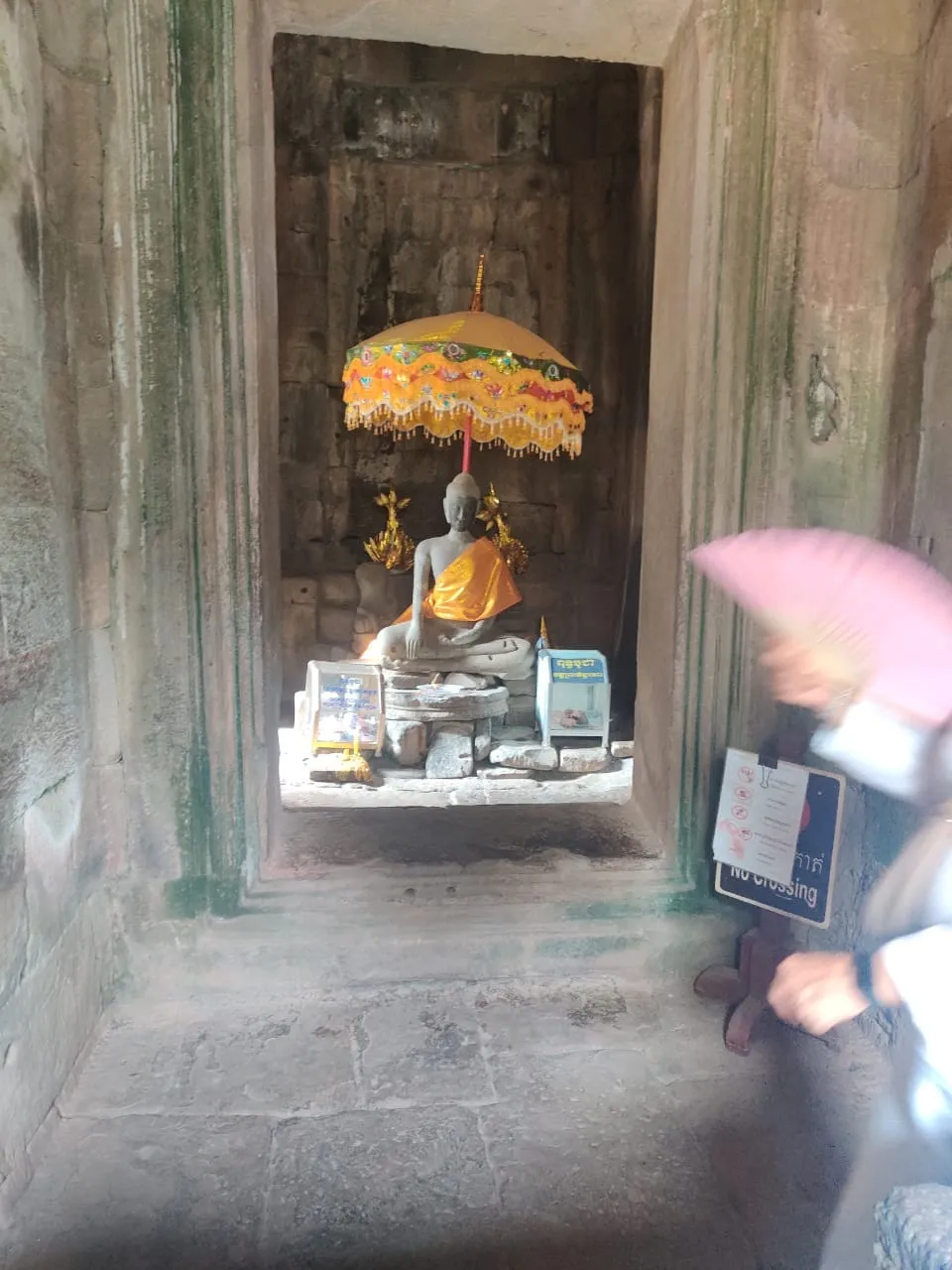
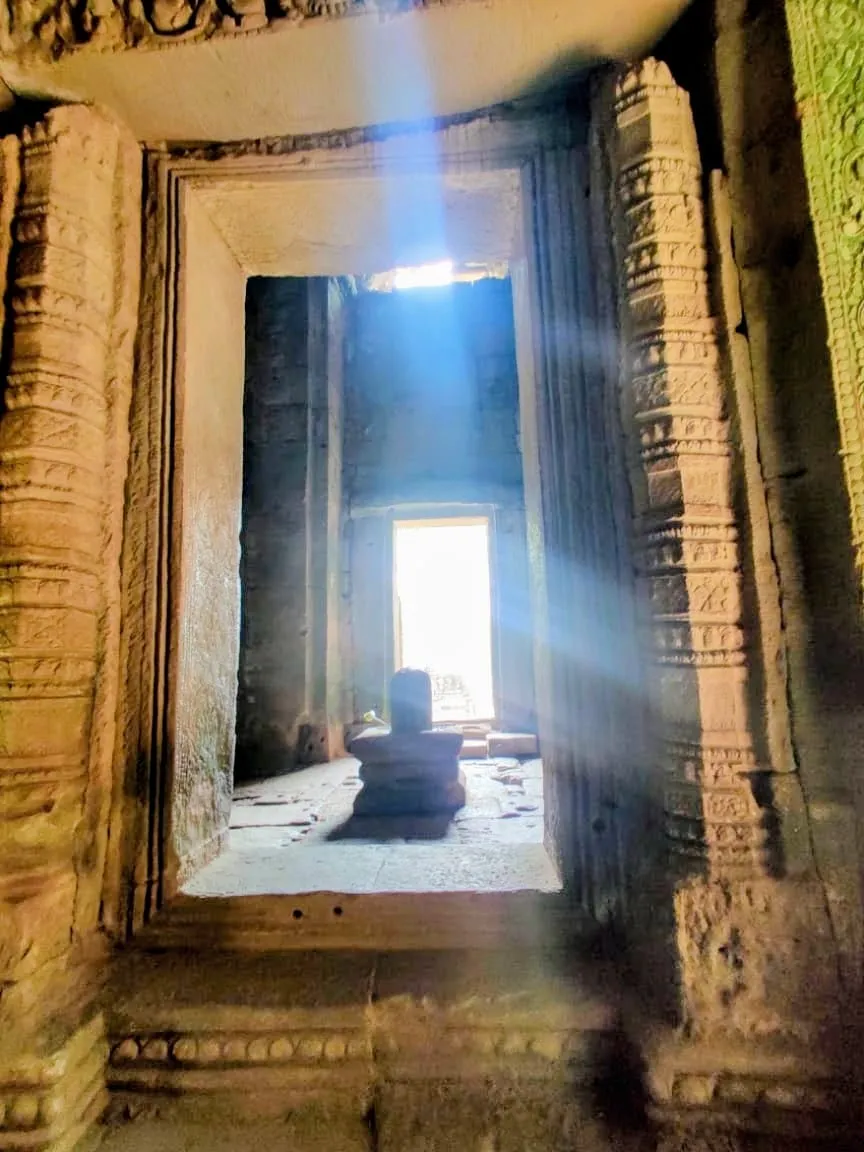
Architectural and Historical Contrasts of Angkor Wat and Bayon
Separated by nearly a century, Angkor Wat and Bayon Temple represent two distinct peaks of Khmer art, politics, and faith. Built in the early 12th century as a grand Hindu sanctuary dedicated to Vishnu by King Suryavarman II, Angkor Wat is defined by rigorous geometric symmetry, expansive moats, five iconic lotus-bud towers, and bas-reliefs strictly depicting sacred Hindu epics. Conversely, Bayon was constructed in the late 12th century by King Jayavarman VII as a Mahayana Buddhist sanctuary.
Travel Tips for Bayon Temple
- ✦Visit early morning to avoid the heat and crowds.
- ✦Combine your visit with Baphuon and the Terrace of the Elephants.
- ✦Take time to admire the famous smiling stone faces and intricate bas-reliefs.
- ✦Wear comfortable shoes, as the temple has uneven steps.
- ✦Carry water, a hat, and sunscreen.
- ✦Hire a local guide to understand Bayon's Hindu and Buddhist heritage.
- ✦Spend at least 1–2 hours exploring this remarkable temple.
NAVIGATE CAMBODIA