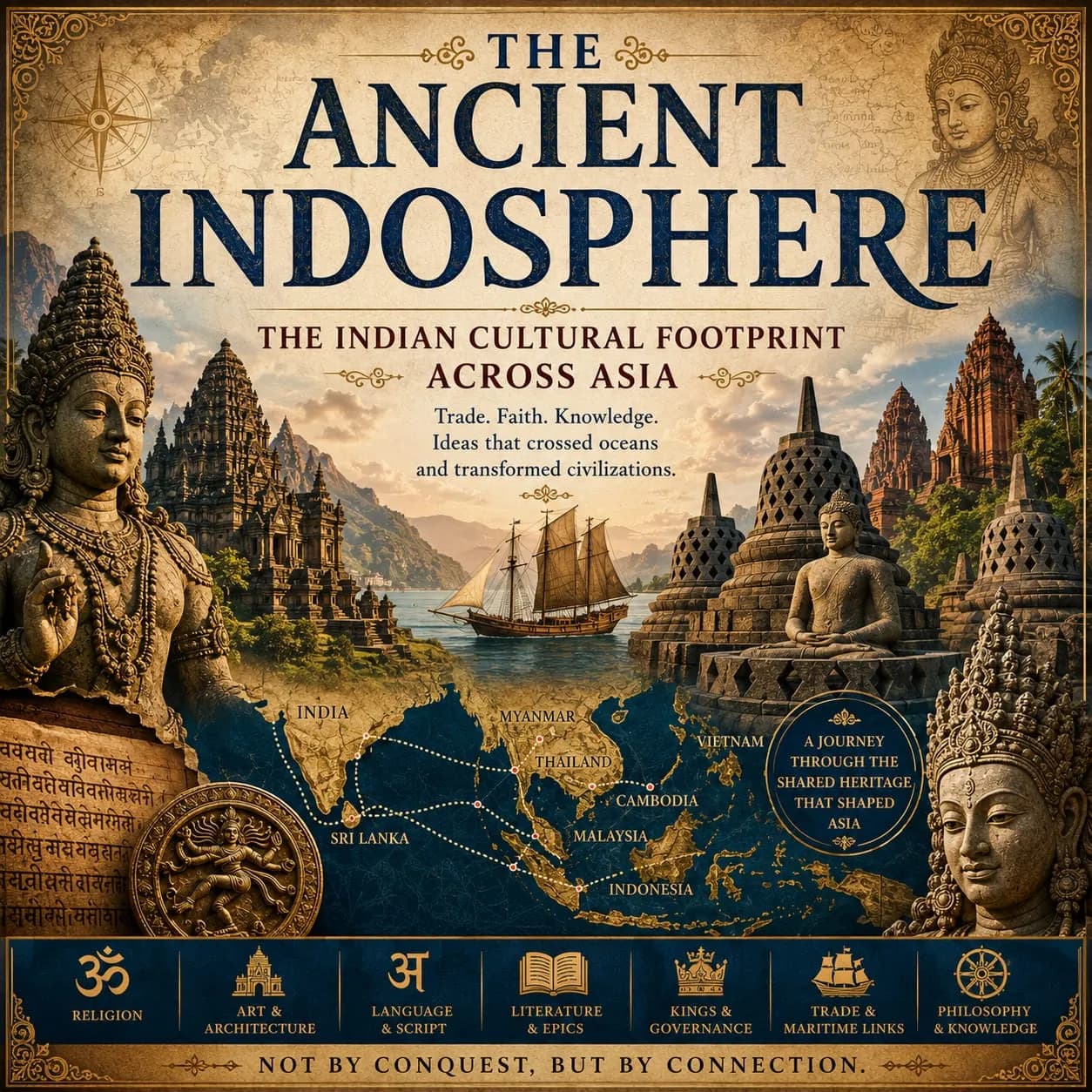
Angkor Wat
The world's largest religious complex and a timeless legacy of Hindu civilization in Cambodia.
Angkor Wat - An Architectural Wonder
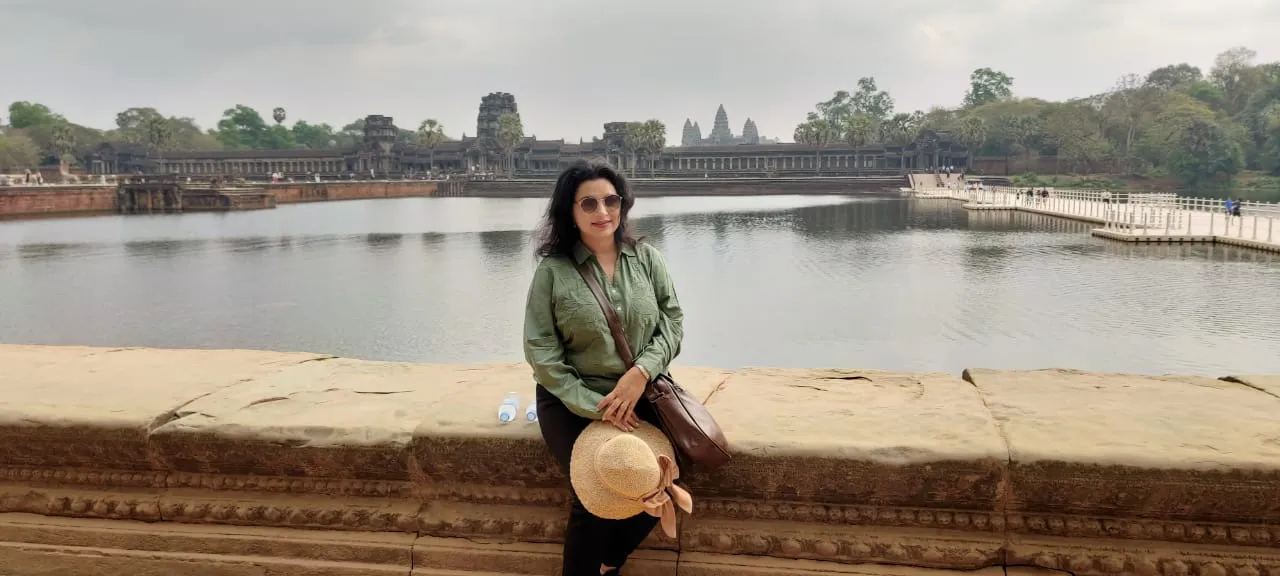
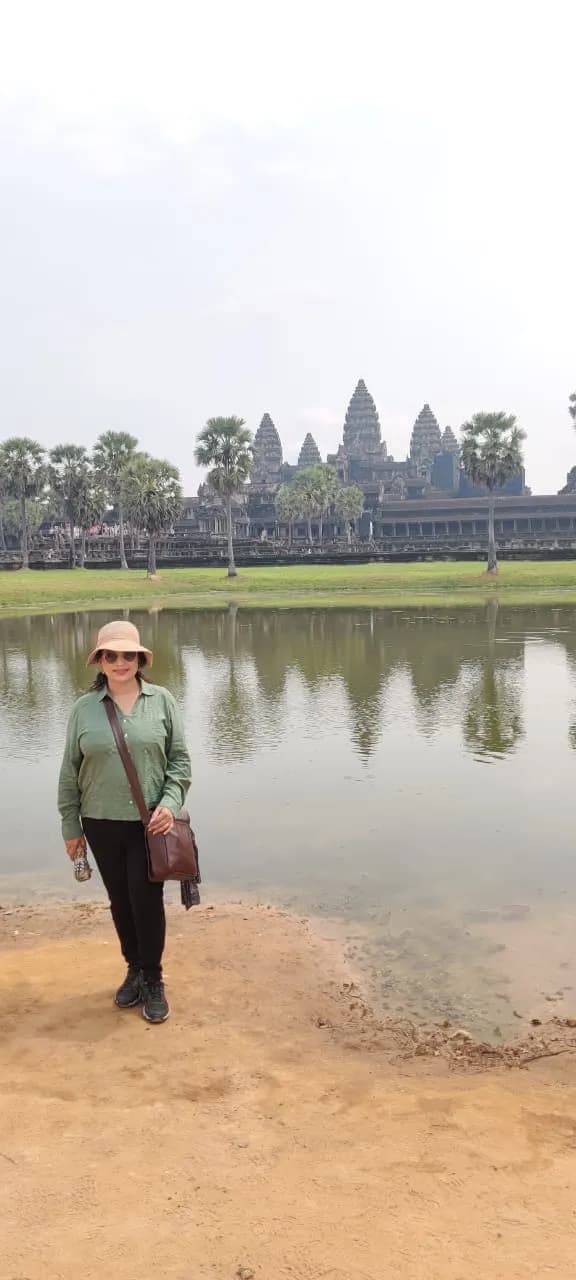
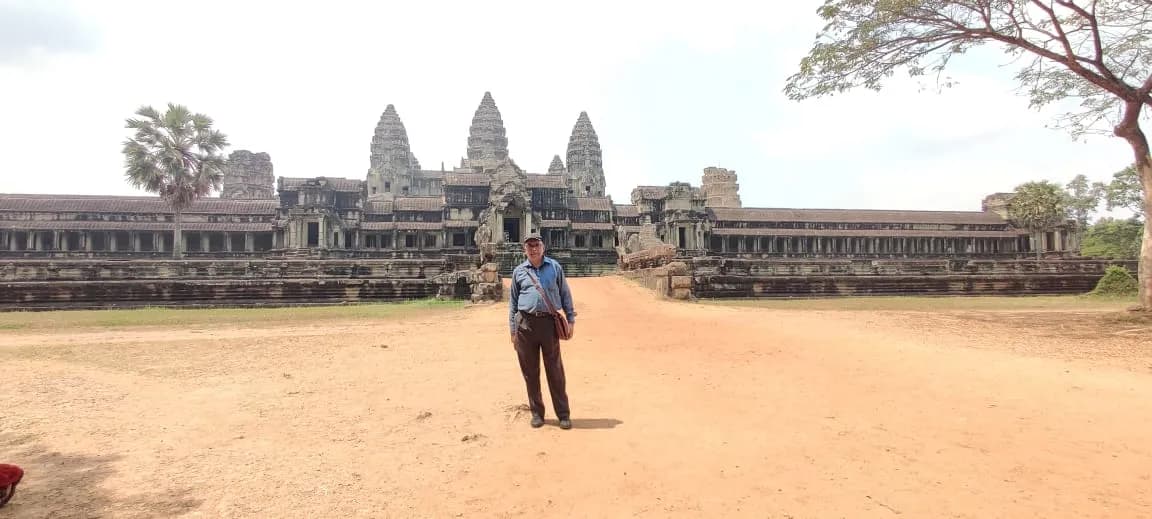
Visiting Angkor Wat near Siem Reap was undoubtedly one of the greatest travel experiences of our lives. Built in the 12th century by King Suryavarman II of the Khmer Empire, the immense temple complex remains one of the world’s greatest cultural and architectural wonders. We started early in the morning to witness the first light of dawn slowly illuminating the temple towers — an unforgettable sight that made the ancient monument appear almost mystical amidst the stillness of the surrounding landscape.
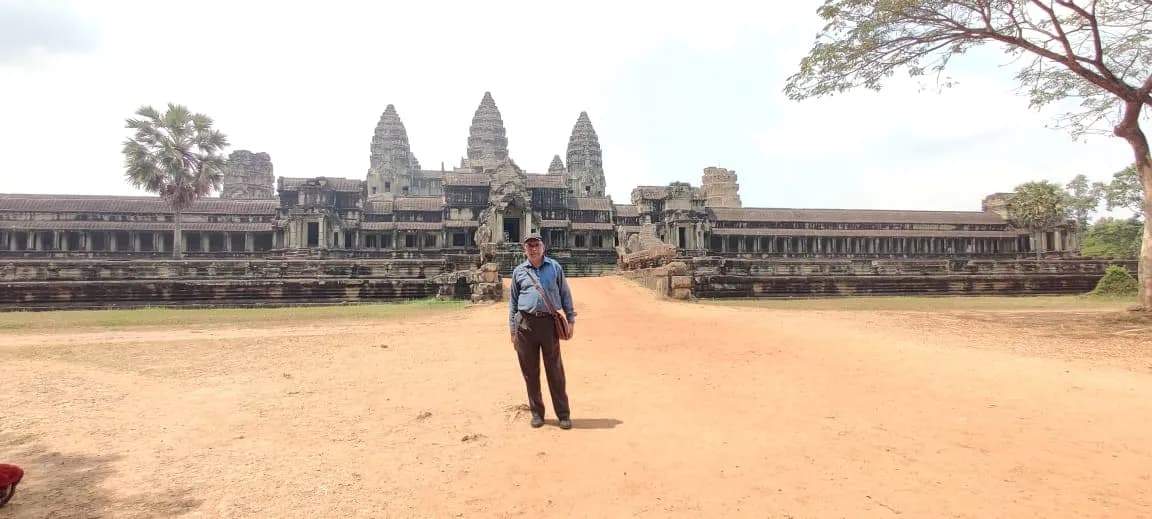
Angkor Wat - Echoes of India
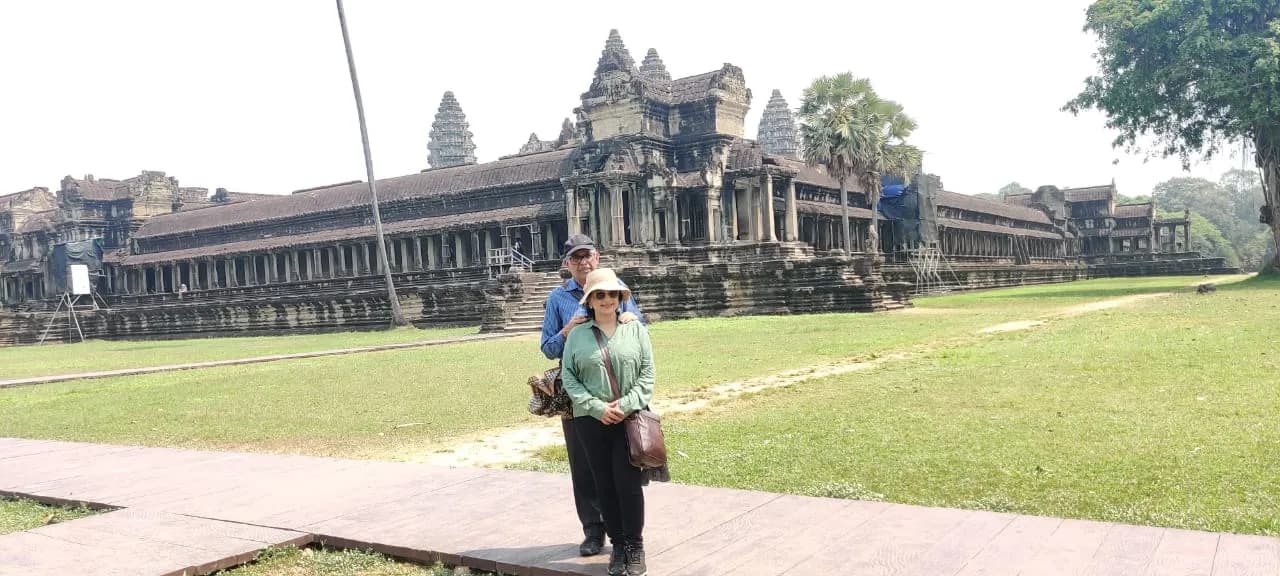
Walking through the vast complex, we were constantly reminded of the profound Indian influence that once shaped the Khmer civilization. Originally dedicated to Vishnu, Angkor Wat reflects deep Hindu traditions through its mythology, temple layout, carvings, and Sanskrit inscriptions. Scenes from the Ramayana and Mahabharata stretch across magnificent bas-reliefs, while the temple’s symbolism mirrors ancient Indian cosmology. Standing there, far from India yet surrounded by unmistakably Indian spiritual and artistic ideas, felt both fascinating and deeply moving.
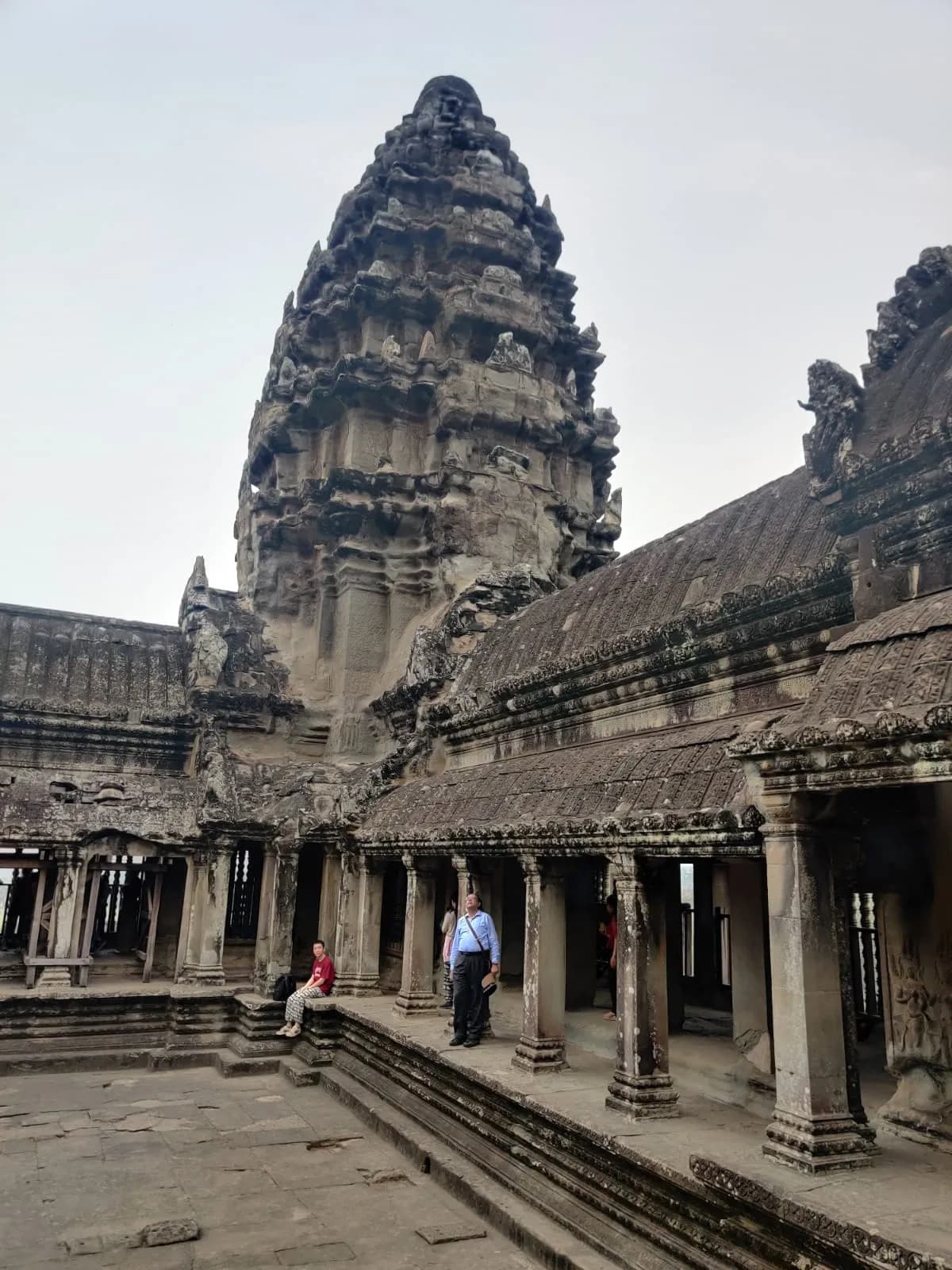
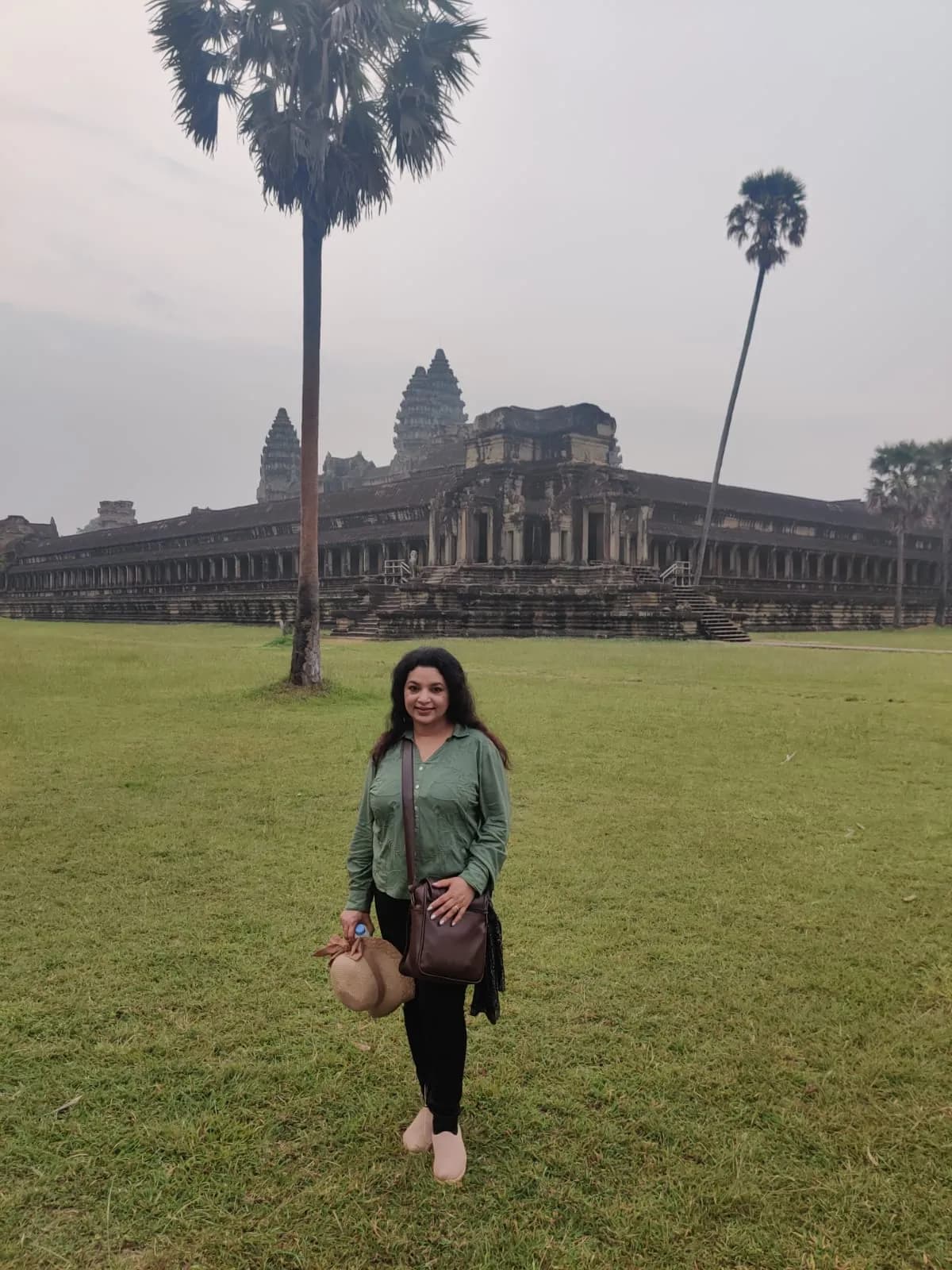
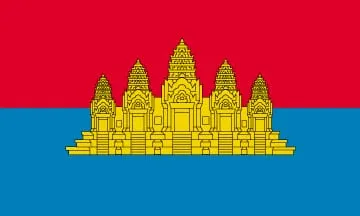
Angkor Wat- A world heritage site, part of the Cambodian flag.
Angkor archaeological park consists of 400 sq kms of area with Approximately 1000 temples. However the grandest and the biggest temple ever constructed is Angkor wat.
Imagine if you have to build it. An approximate effort required will be a square shaped one ton rock every minute for forty years from a stone quarry 200 kilometres away. And all that you have is a hammer and chisel. This is the effort put in the 12th century to glorify Lord Vishnu.
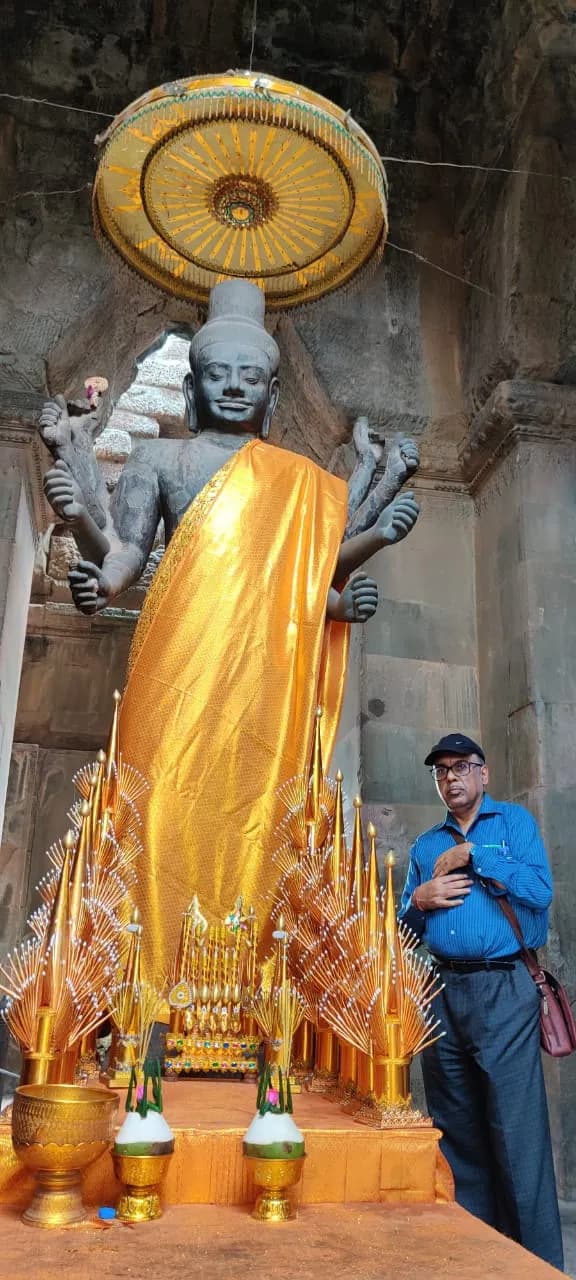
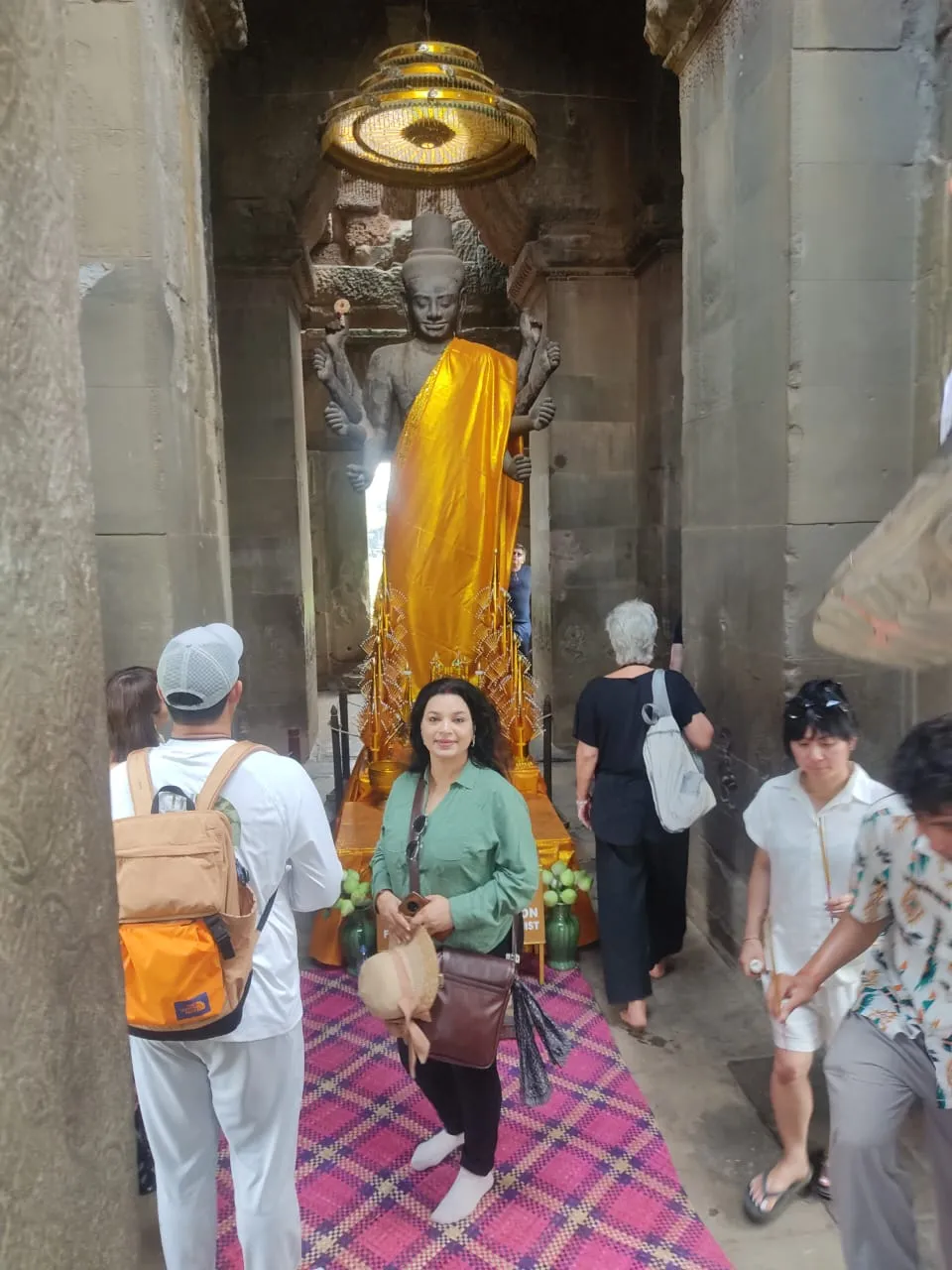
Lord Vishnu Statue
A 16-foot tall, eight-armed statue of the Hindu god Vishnu, located within the Angkor Wat temple complex.
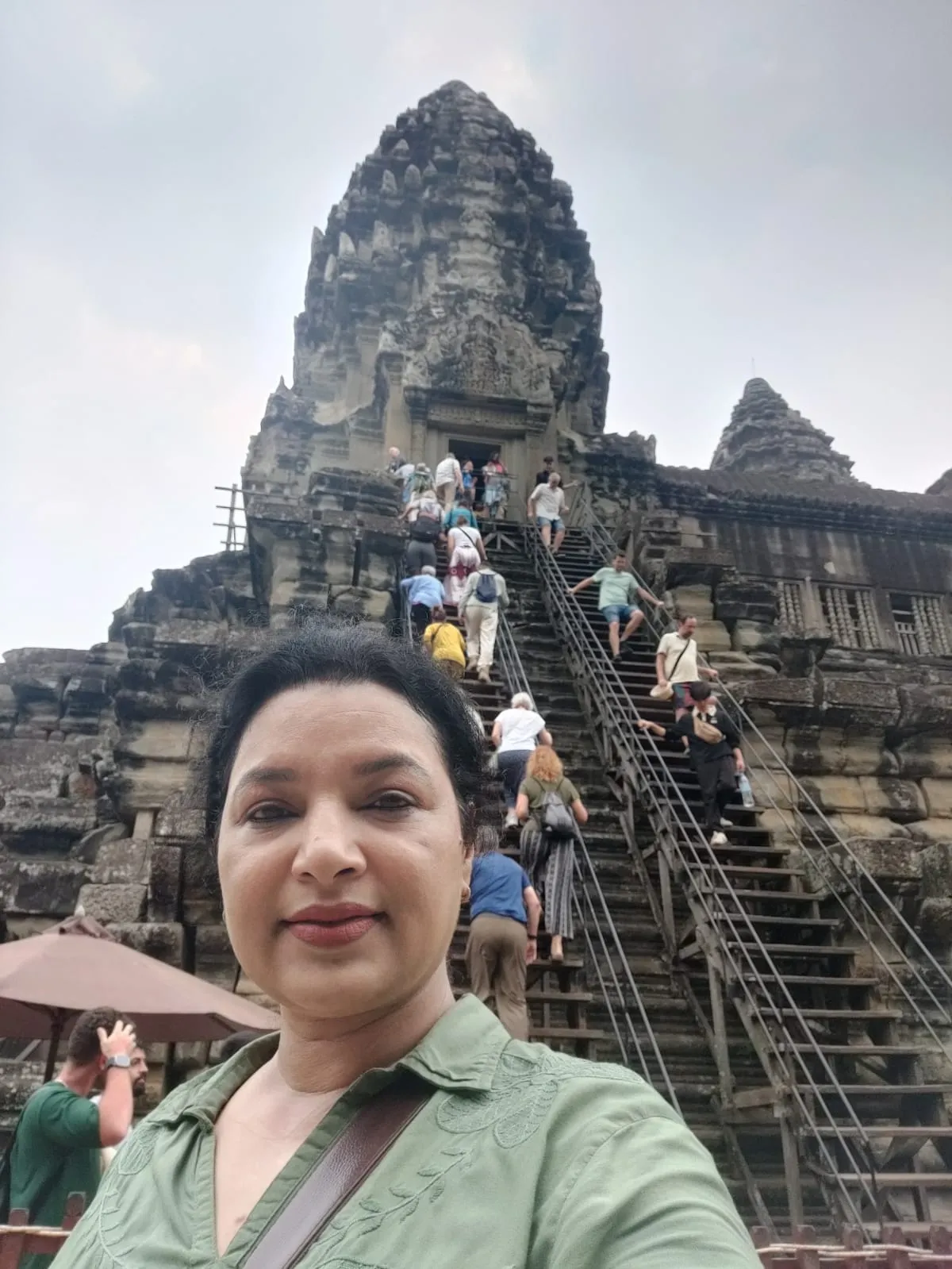
Angkor Wat - Exploring requires patience and energy.
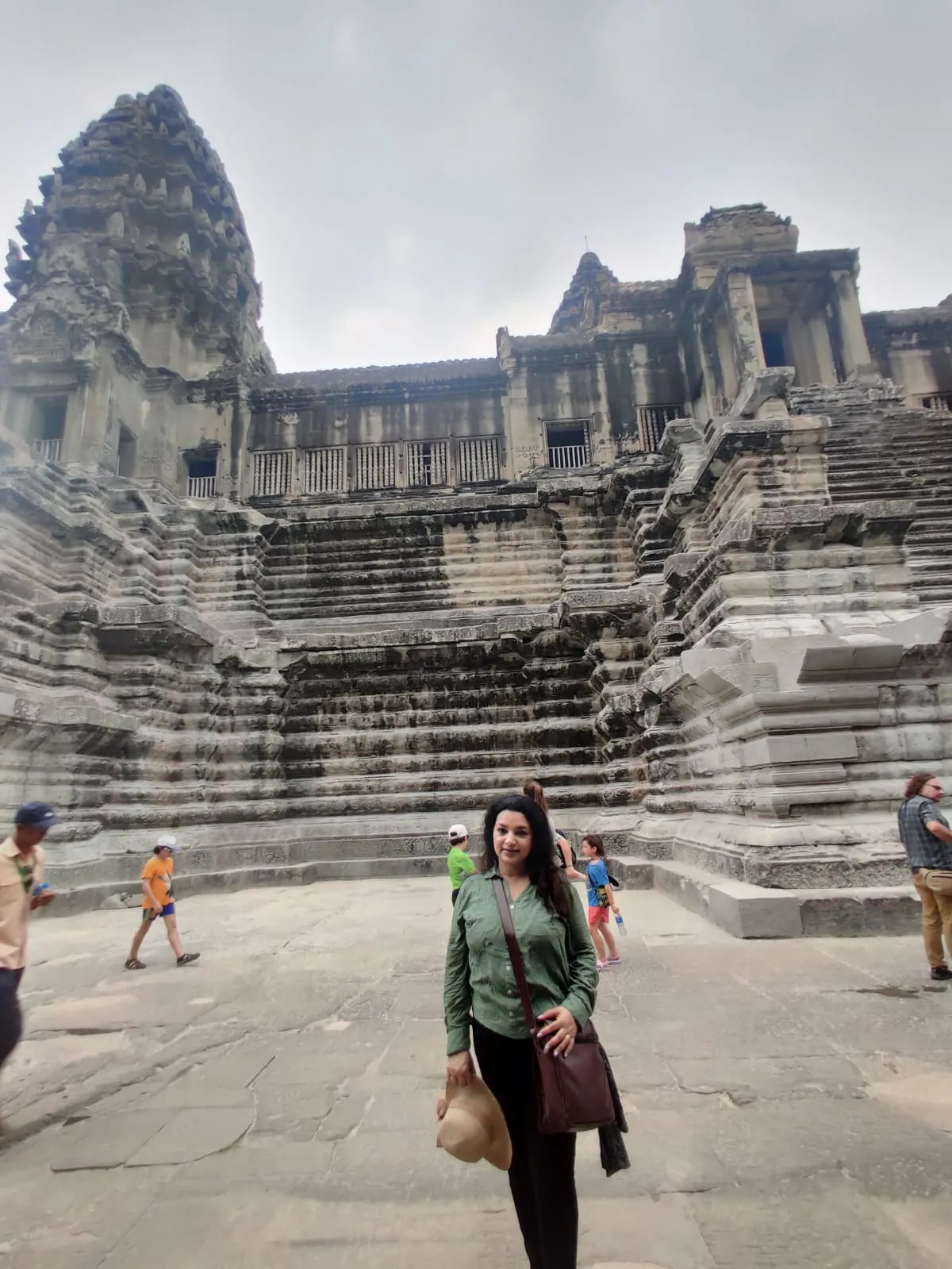
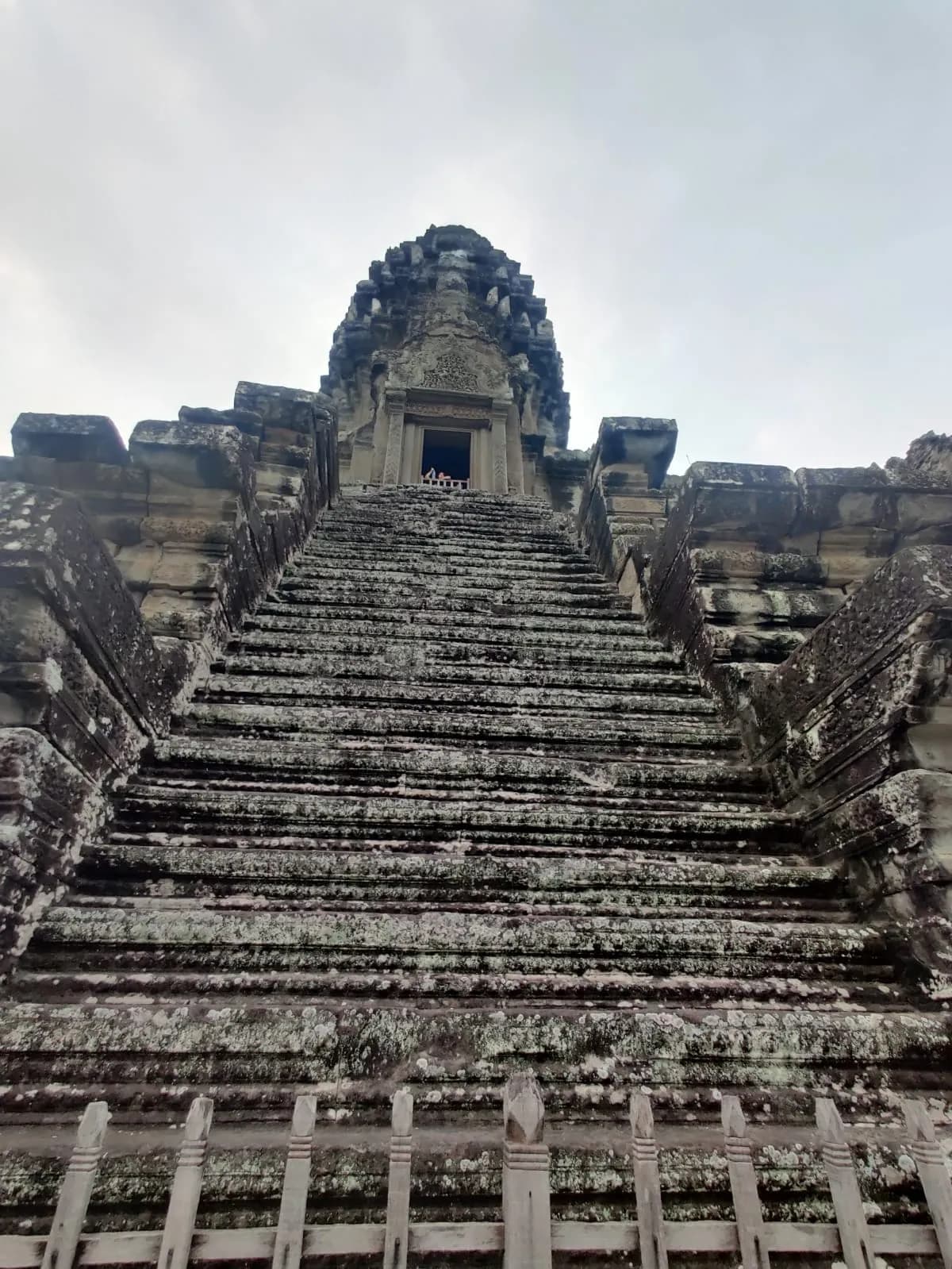
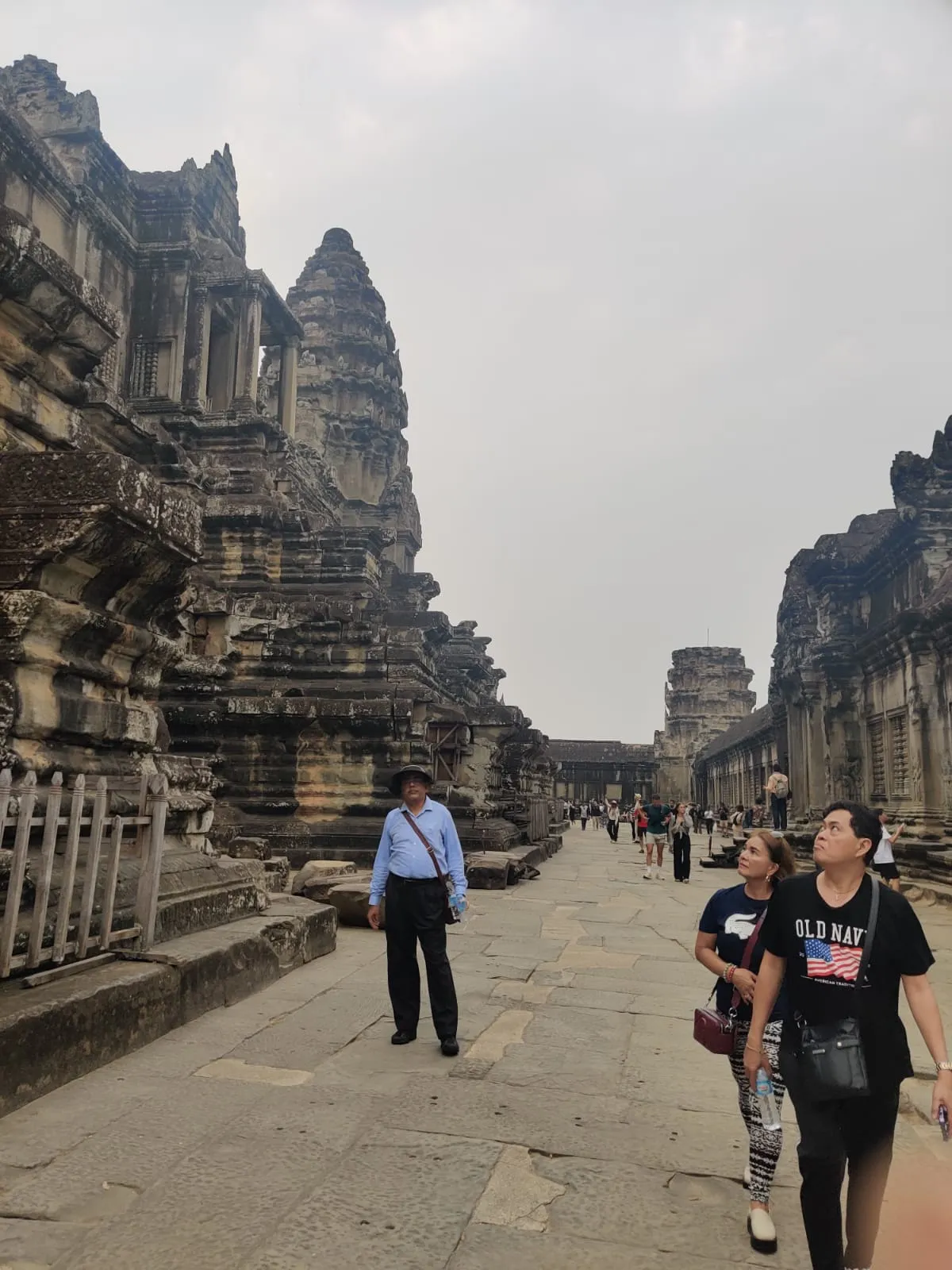
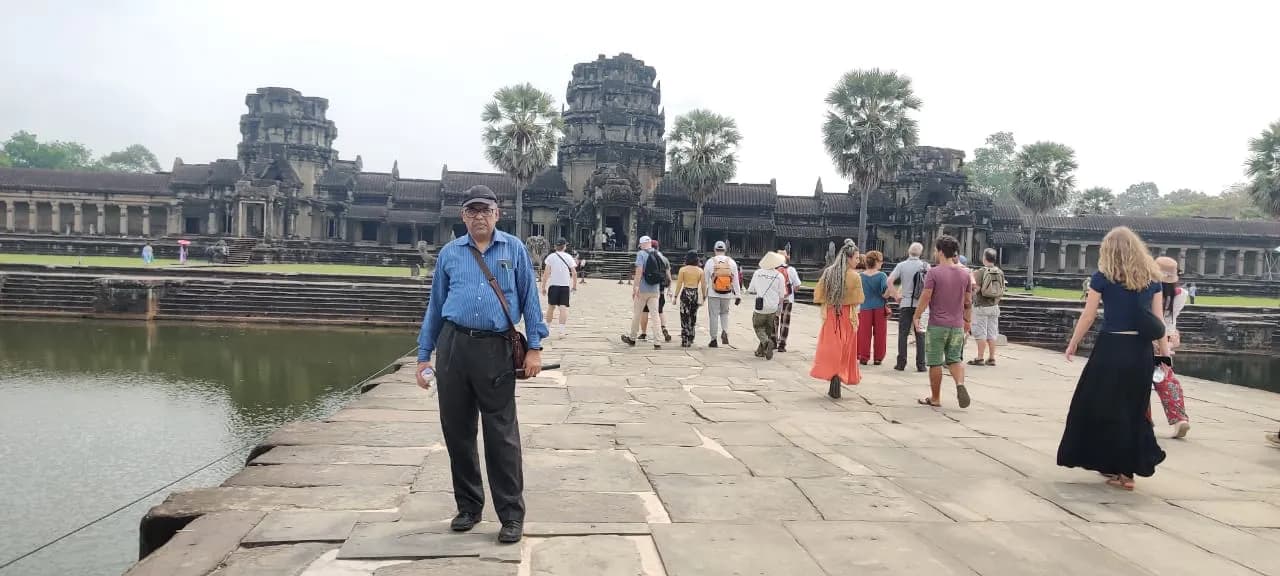
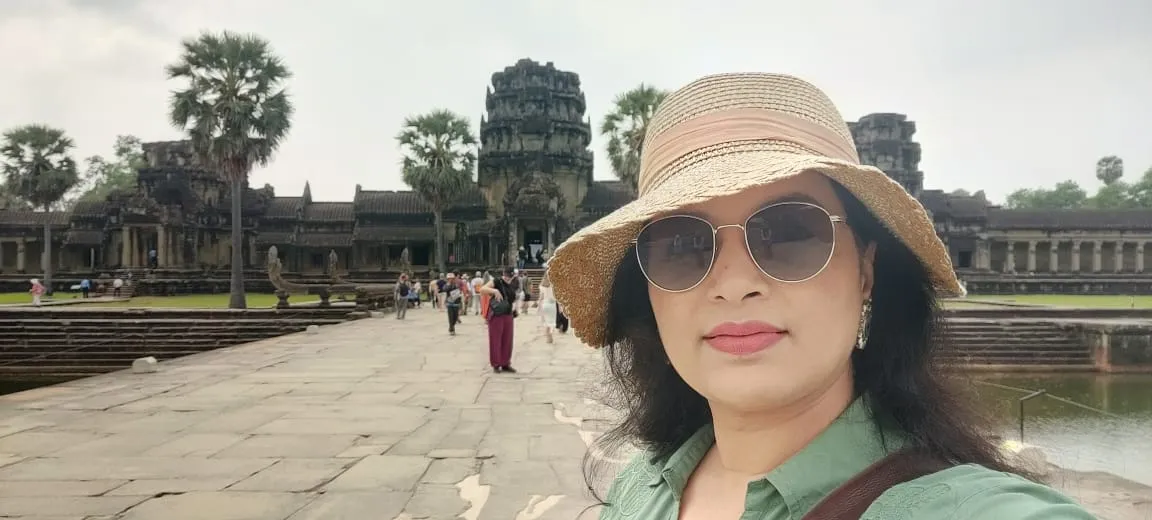
Exploring Angkor Wat, however, also required patience and energy. The weather was warm and sultry, and the enormous scale of the complex involved hours of walking under humid skies. Climbing to the third level of the temple was especially challenging, with extremely steep stone staircases demanding careful footing. Yet reaching the upper terrace and looking across the vast temple complex from above made every step worthwhile. Even amidst the crowds and heat, Angkor Wat retained an overwhelming sense of grandeur, spirituality, and timelessness that is impossible to forget.
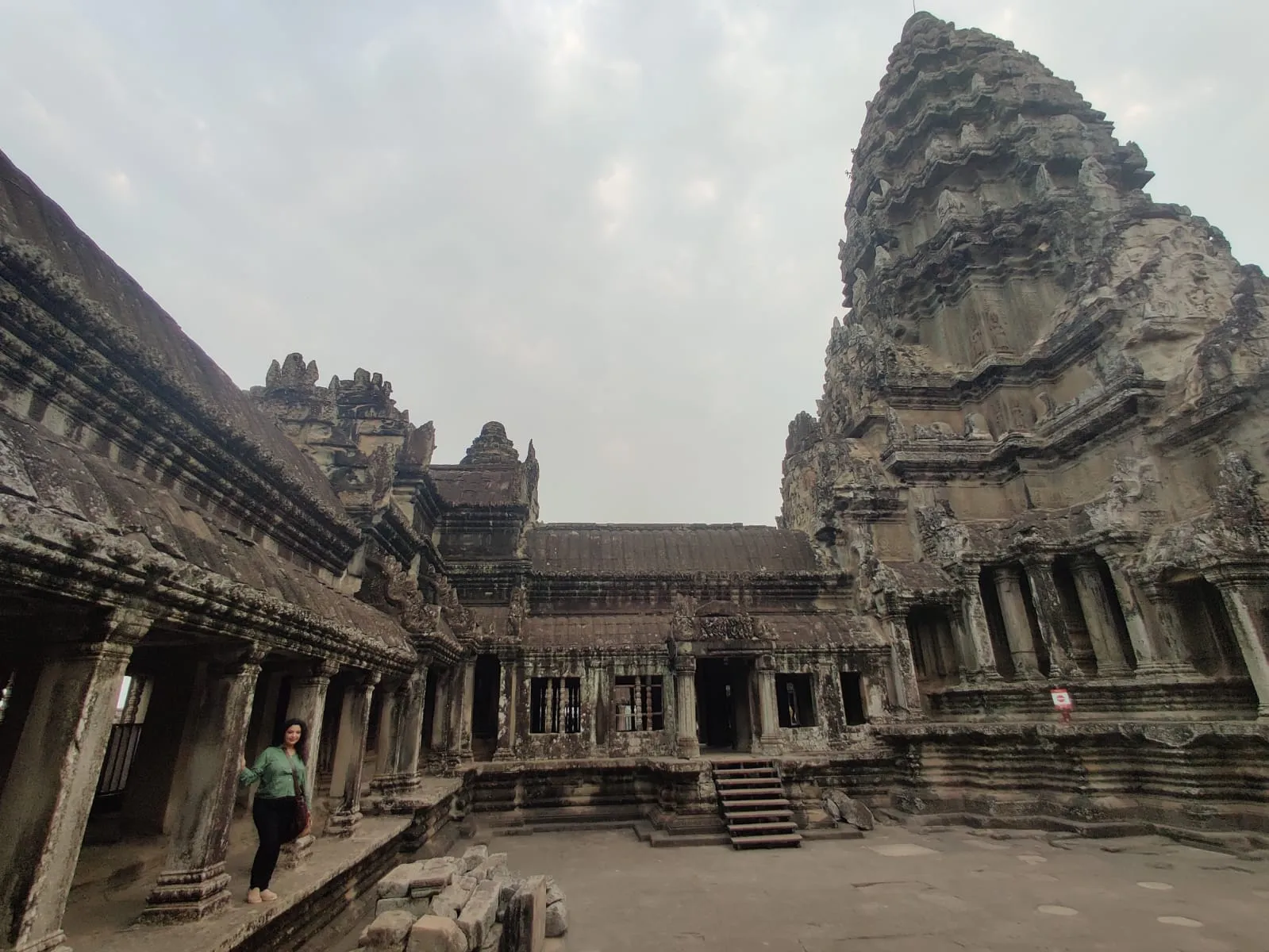
Angkor Wat – Where India's Epics Come Alive
The highlight of our visit was the magnificent sandstone carvings depicting the Ramayana, the Mahabharata, and the Samudra Manthan. As we paused to admire the intricate bas-reliefs, our Cambodian guide invited me to explain the Samudra Manthan scene to the group. A little later, pointing to another panel, he smiled and said, "This is our Ramayana." That simple remark perfectly captured the enduring cultural bond between India and Cambodia. Standing before these timeless carvings, we realised that India's great epics had crossed the seas over a thousand years ago and become an inseparable part of Cambodia's own cultural heritage.
For travellers inspired by history and civilization, Angkor Wat is far more than a tourist destination. It is a profound reminder of how Indian thought, art, and spirituality travelled across distant lands, shaping cultures and civilizations in ways that continue to inspire pride and fascination even today.
When Buddha Entered Angkor
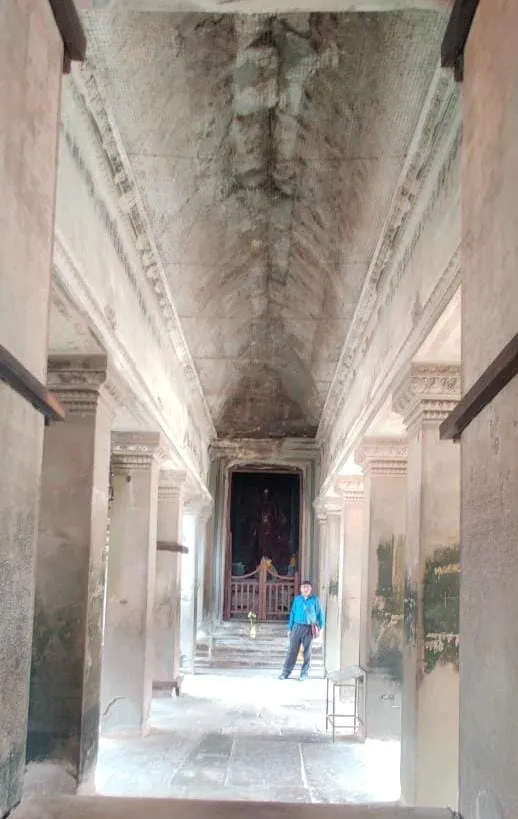
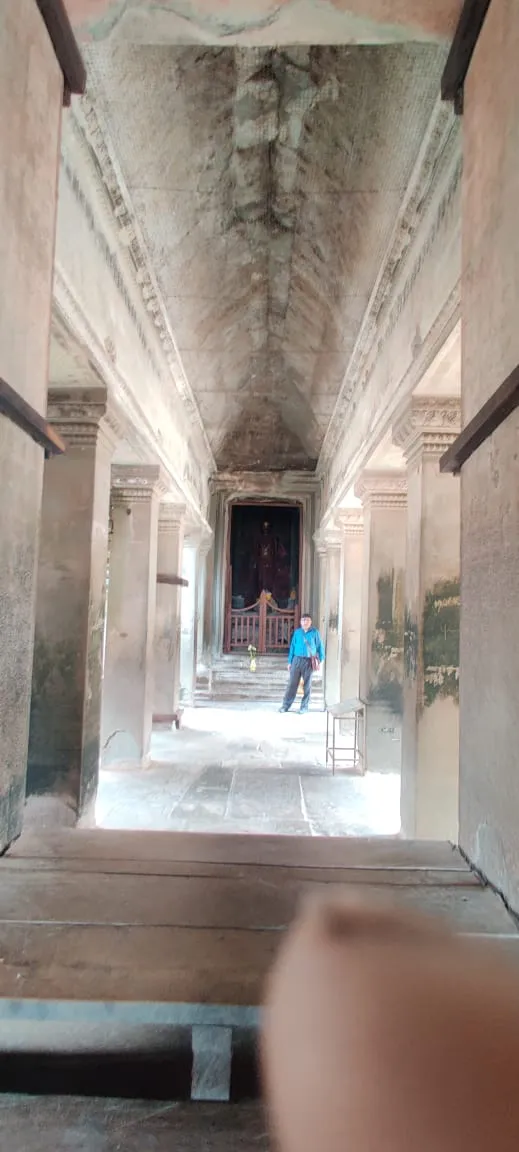
As we walked through Angkor Wat, one detail kept catching our attention. The temple was built as a grand Hindu shrine dedicated to Vishnu, yet many of its sanctuaries now housed serene Buddha images. It wasn't the story of one faith defeating another—it was the story of a civilization evolving. From the 13th century onwards, Theravada Buddhism gradually became the dominant religion in Cambodia, replacing royal Hinduism as the faith of the people. Yet the Khmer never erased their Hindu past. The magnificent carvings of the Ramayana, the Mahabharata, and the Samudra Manthan were left untouched, and Angkor Wat itself continued to be revered, simply taking on a new Buddhist identity. Few places in the world illustrate this peaceful transition so beautifully. In Cambodia, Vishnu's temple became Buddha's sanctuary, preserving both traditions under the same timeless stone roofs.
Shrine with a standing Buddha statue inside the Preah Poan (1,000 Buddha Hall) area of the Angkor Wat temple complex in Siem Reap, Cambodia.
Angkor Wat - Beyond a Monument: A Shared Civilizational Heritage
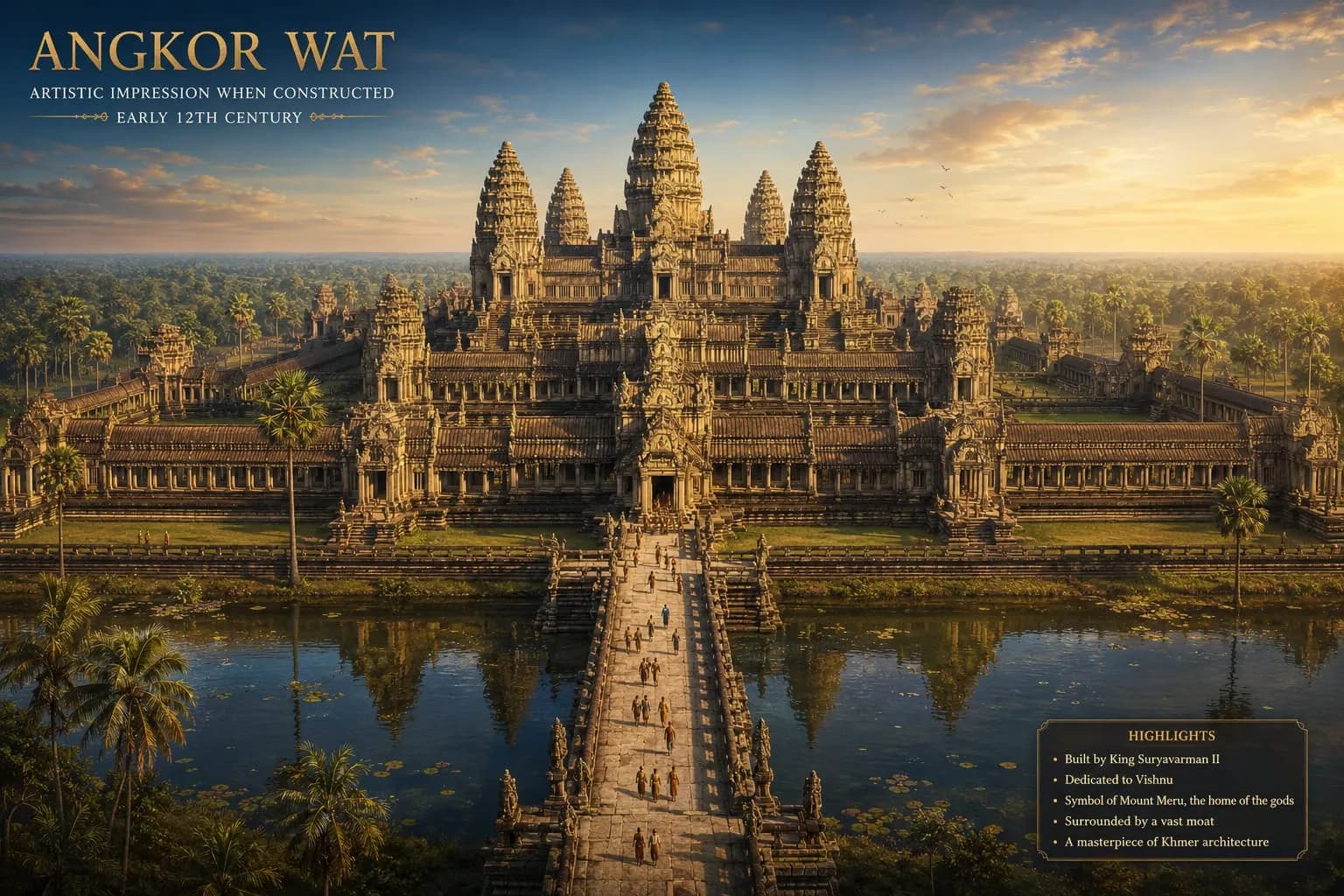
Angkor Wat in its original glory truly beggars the imagination — a colossal stone city of soaring towers, sacred galleries, shimmering reservoirs, and intricate carvings rising from the Cambodian jungle like a vision from mythology. The scale, symmetry, and engineering brilliance of the Khmer Empire remain astonishing even today, making it difficult to comprehend how such a masterpiece was created nearly 900 years ago without modern technology. If we were to see only one temple in a lifetime, for us it can only be Angkor Wat — a monument where history, spirituality, art, and human ambition come together in breathtaking perfection.
Making the Most of Your Visit
Travel Tips for Siem Reap
- ✦Buy the Angkor Pass online or early to avoid queues and start your temple visit at sunrise.
- ✦Begin early (around 5:00–5:30 am) to enjoy cooler weather and fewer crowds.
- ✦Hire a knowledgeable local guide to understand the history, Hindu symbolism, and Buddhist heritage of the temples.
- ✦Dress modestly, covering shoulders and knees, as the temples are sacred sites.
- ✦Wear comfortable walking shoes, a hat, sunglasses, and carry plenty of water—the temple complex is vast.
- ✦Plan at least 2–3 days to explore Angkor Wat, Bayon, Ta Prohm, and the lesser-known temples.
- ✦Carry cash (US dollars and Cambodian riel), as both currencies are widely accepted.
- ✦Use tuk-tuks or Grab for convenient and affordable travel around Siem Reap.
- ✦Watch the sunset from Phnom Bakheng or another designated viewpoint, but arrive early as visitor numbers are limited.
- ✦Explore beyond the temples by visiting the Old Market, trying authentic Khmer cuisine, and watching a traditional Apsara dance performance.
"These tips will help you make the most of your visit while appreciating the remarkable history and cultural legacy of Siem Reap."
Travel Tips for Travellers Over 50
- ✦Start early around 5:00–5:30 am to avoid heat and crowds.
- ✦Allow 2–3 days rather than rushing through the temples.
- ✦Use a private car or tuk-tuk to minimise walking between temples.
- ✦Take regular breaks and return to your hotel during the hottest hours.
- ✦Carry plenty of water, sunscreen, a hat and comfortable shoes.
- ✦Be careful on steep, uneven temple stairs, especially at Angkor Wat.
- ✦Hire a knowledgeable guide to understand the Hindu and Buddhist heritage.
- ✦Focus on the major temples rather than trying to see everything.
"Angkor is best experienced slowly—not as a race, but as a journey through history."
NAVIGATE CAMBODIA