
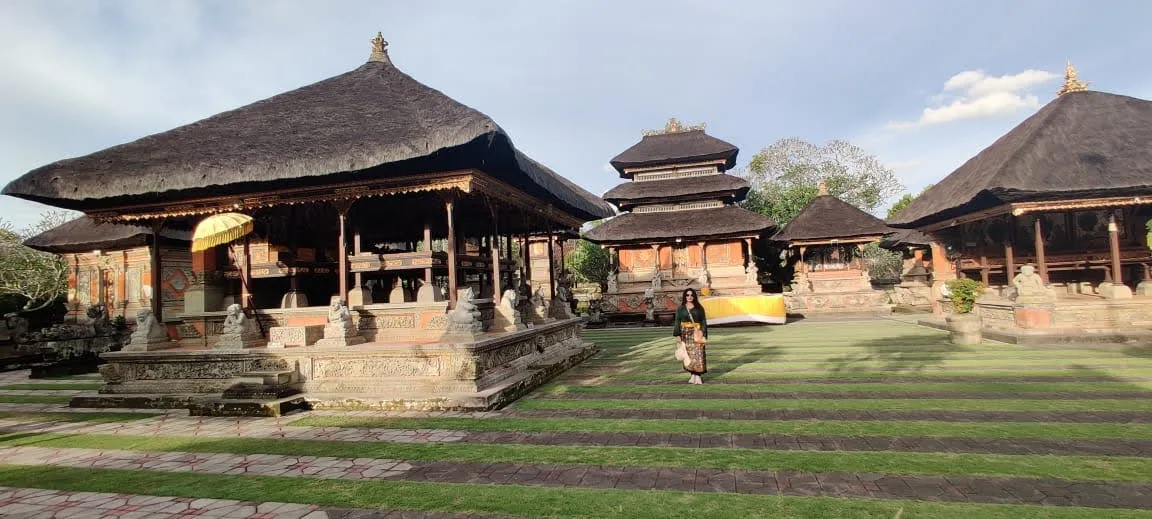
Batuan Temple & Balinese Village Resort
WHERE ANCIENT STONE AND VILLAGE RHYTHMS PRESERVE SACRED BALI
Explore Pura Puseh Batuan—founded in AD 944 with classical Balinese stone carvings, soaring split gates, Meru towers, and daily Canang Sari offerings—and experience serene living in a Balinese village resort.
Pura Puseh Batuan & Village Resort
Gianyar Regency, Bali, Indonesia
Batuan Temple — Bali: The Temple That Has Stood for Over a Thousand Years
Batuan Temple (Pura Puseh Batuan) is believed to have been founded in AD 944, making it one of Bali's oldest temples. Despite earthquakes, volcanic eruptions, and centuries of change, it has remained an active place of worship. Generations of Balinese families have continued to perform the same rituals here, preserving traditions that date back more than a millennium.
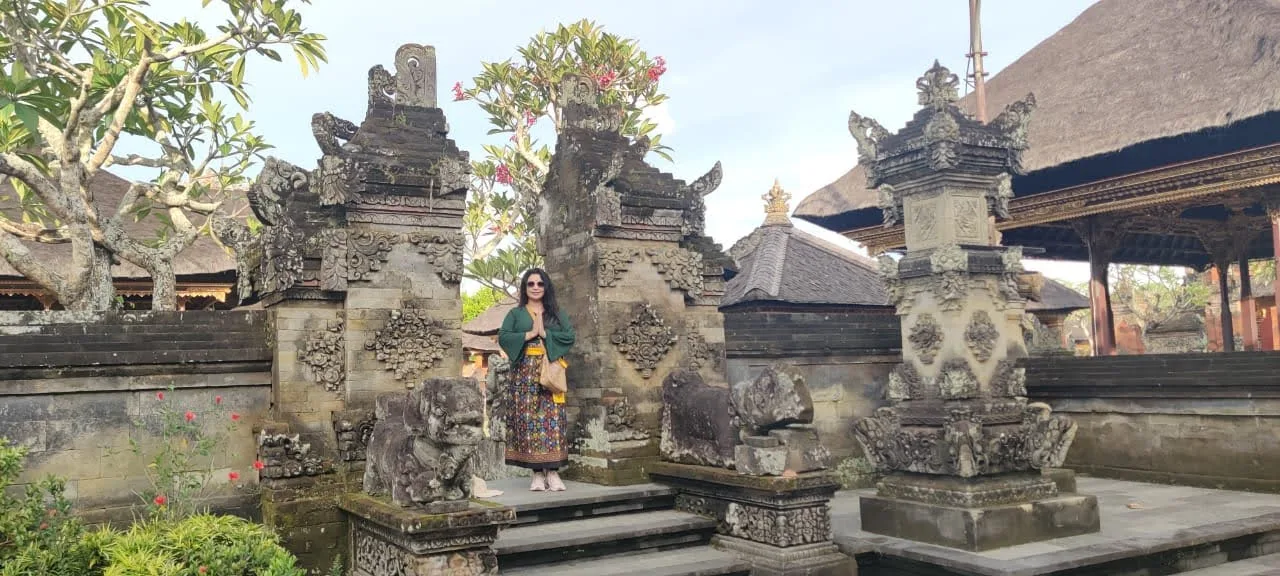
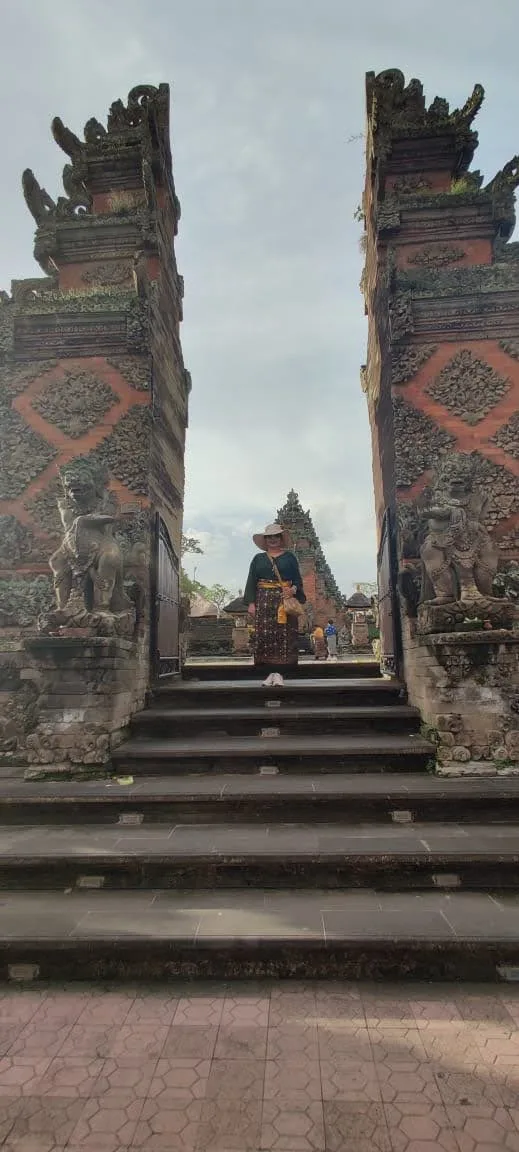
Founded in AD 944, Pura Puseh Batuan has survived volcanic eruptions and earthquakes, preserved continuously by generations of village families across more than a thousand years.
Batuan Temple — Every Stone Tells a Story
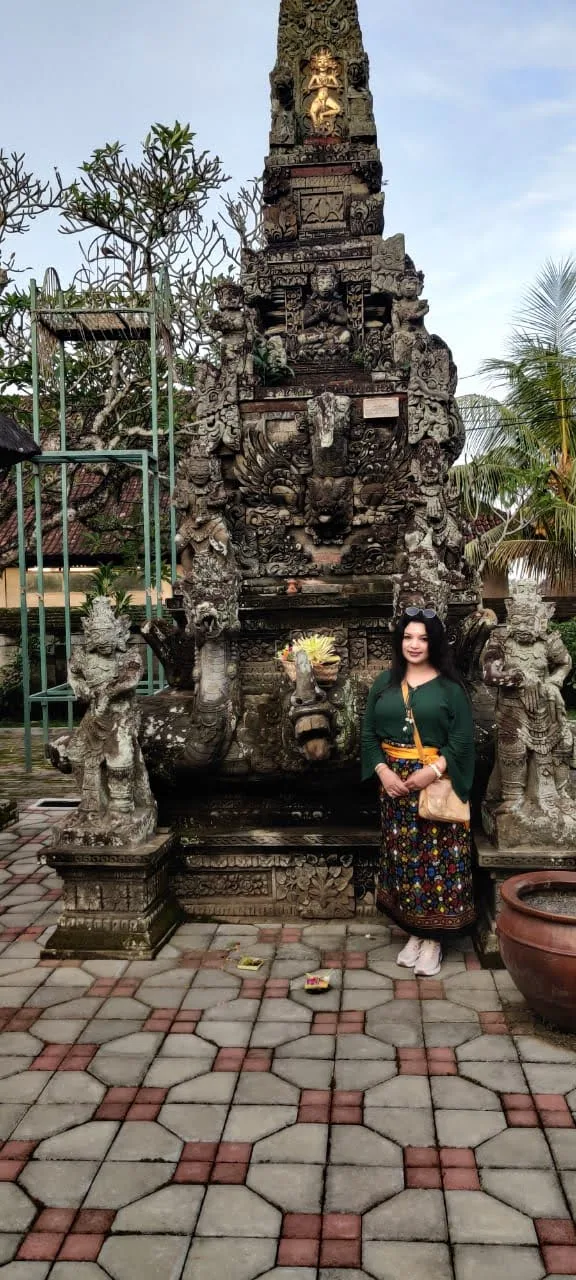
The temple's intricate stone carvings are more than decoration. They depict Hindu deities, mythical creatures, and protective guardians inspired by ancient epics such as the Ramayana and Mahabharata, blended with Balinese folklore. Local belief holds that these fierce guardian figures protect the temple from evil spirits and maintain the sanctity of the sacred grounds.
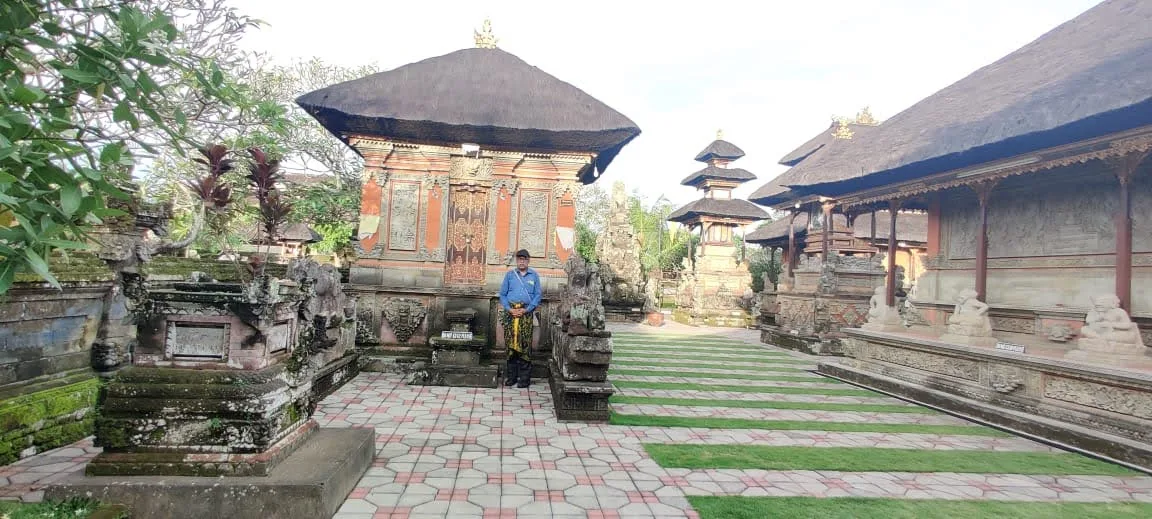
Balinese Temples & Architecture
Balinese temples are open-air complexes with multiple courtyards, split gates, and shrines, blending harmoniously with nature. Indian temples are usually enclosed structures centered around a sanctum (garbhagriha) housing the main deity.
The temple is famous for its classic Balinese architecture — split gateways, towering shrines, intricate stone carvings, guardian statues, and richly decorated courtyards. Dedicated primarily to Lord Vishnu as part of Bali's “Tri Kahyangan” temple system, it forms an important spiritual centre for the local community. The carvings depict scenes from Hindu epics and Balinese mythology, blending Indian religious themes with distinct Balinese artistic traditions.
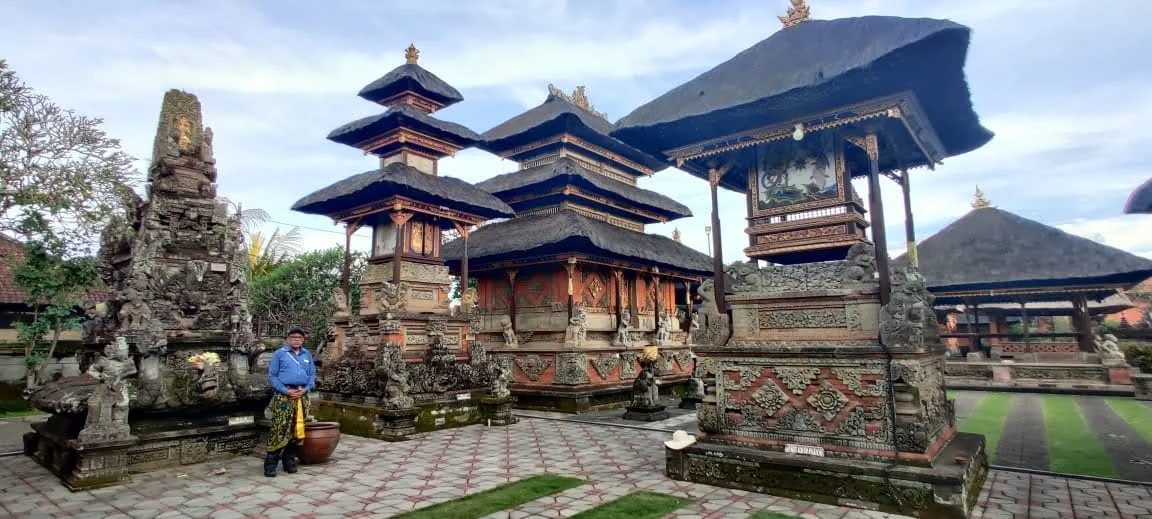
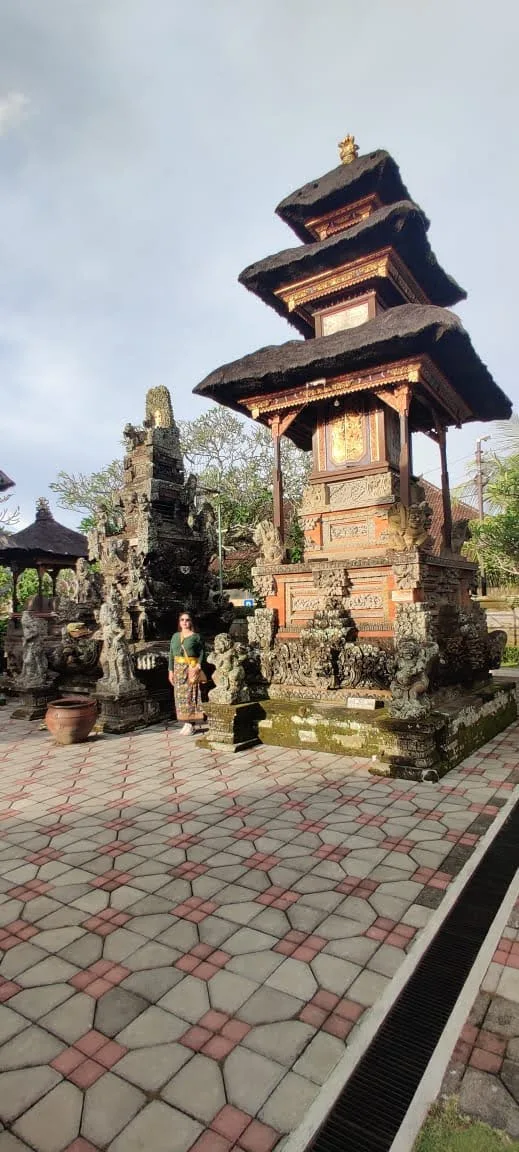
Architectural Synthesis: Indian Garbhagriha & Balinese Open Courtyards
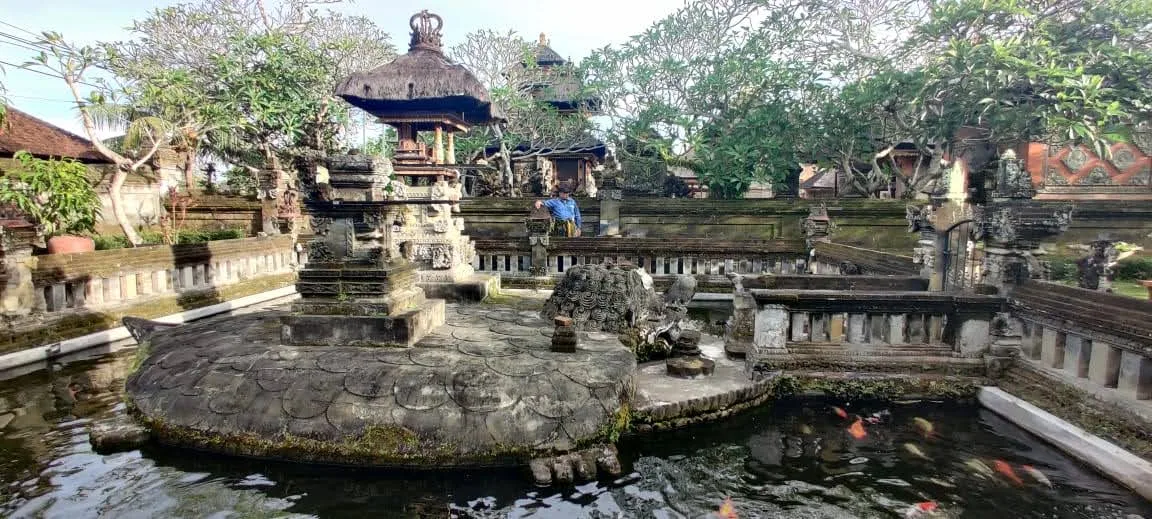
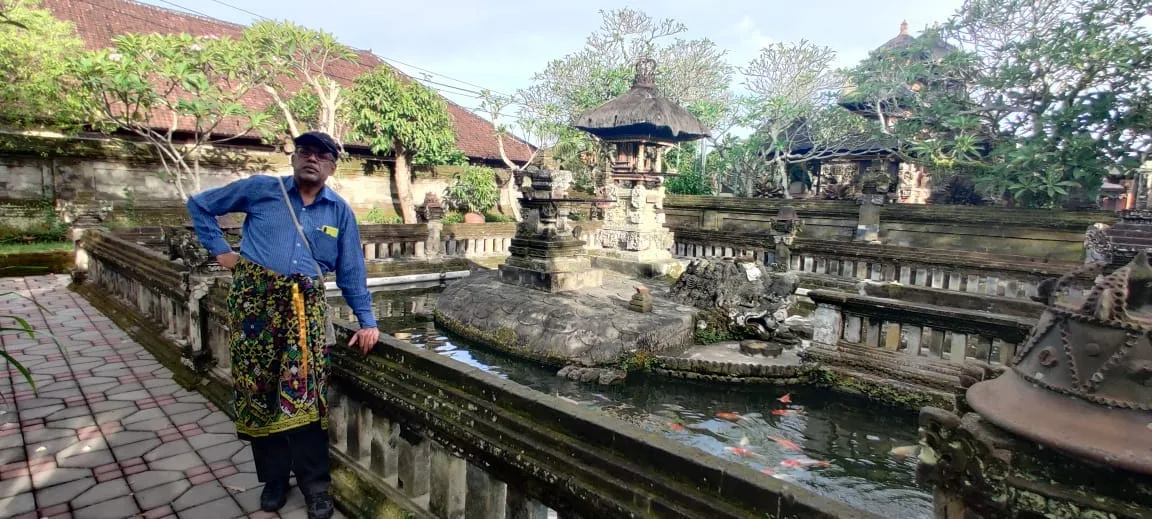
The Cosmic Turtle Moat of Bedawang Nala
In Balinese cosmology, the entire universe rests upon the back of Bedawang Nala—the gigantic mythical cosmic turtle wrapped by two sacred serpents (Naga Anantaboga and Naga Basuki). At Batuan Temple, this ancient Hindu symbol comes alive in the temple's stone pond sanctuary, where a massive carved turtle island sits surrounded by clear water and swimming golden koi.

Daily Offerings & Nyepi — The Day of Silence
A unique feature of Balinese Hinduism is the Canang Sari—small woven palm-leaf offerings filled with flowers, rice, and incense. They are placed outside homes, shops, temples, and even on vehicles every day as expressions of gratitude. While offerings are common in India, this daily practice is especially distinctive in Bali.
One of Bali's most unique Hindu observances is Nyepi, the Balinese New Year. For an entire day, the island falls silent—no travel, work, entertainment, or lights. The day is dedicated to reflection, meditation, and spiritual renewal. There is no equivalent nationwide observance in India.
A Resort Rooted in Balinese Spirituality
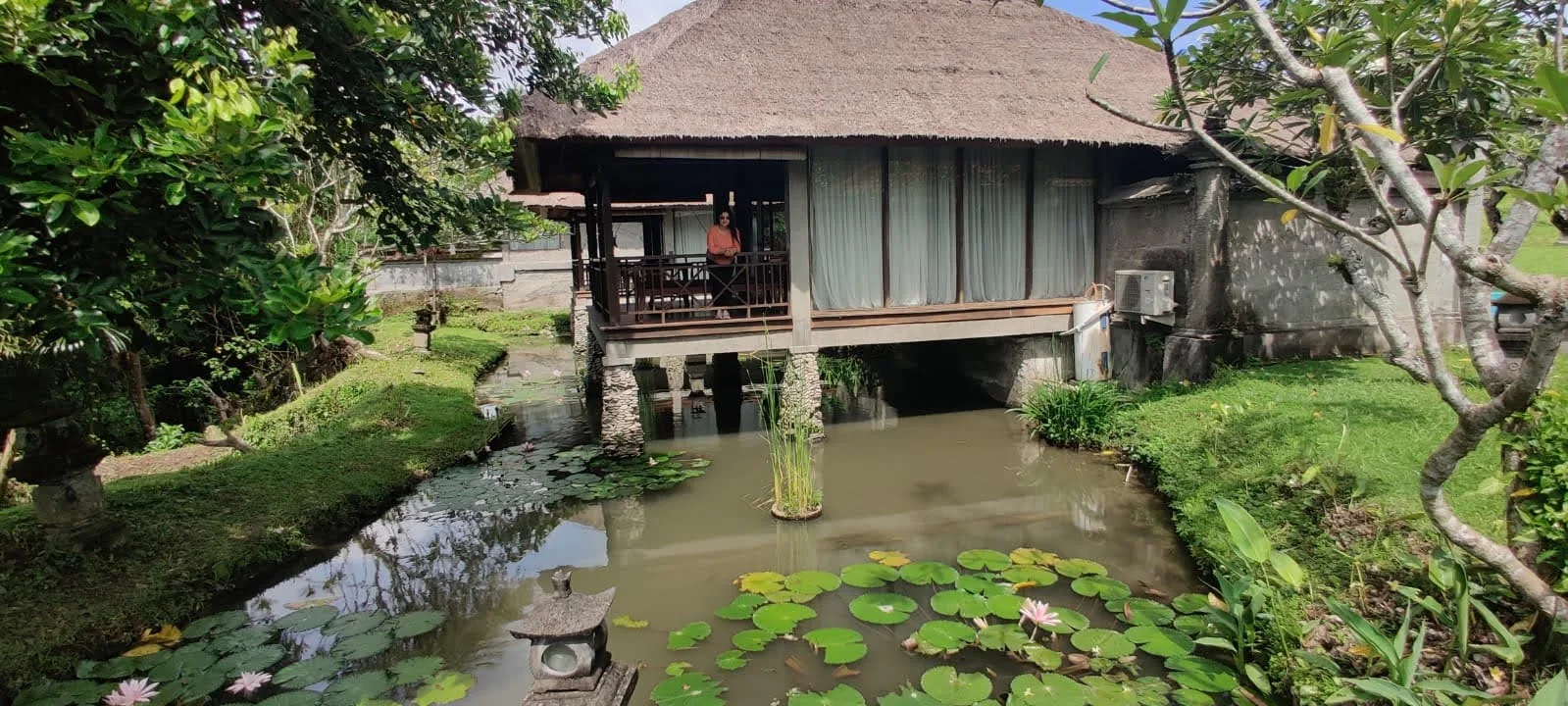
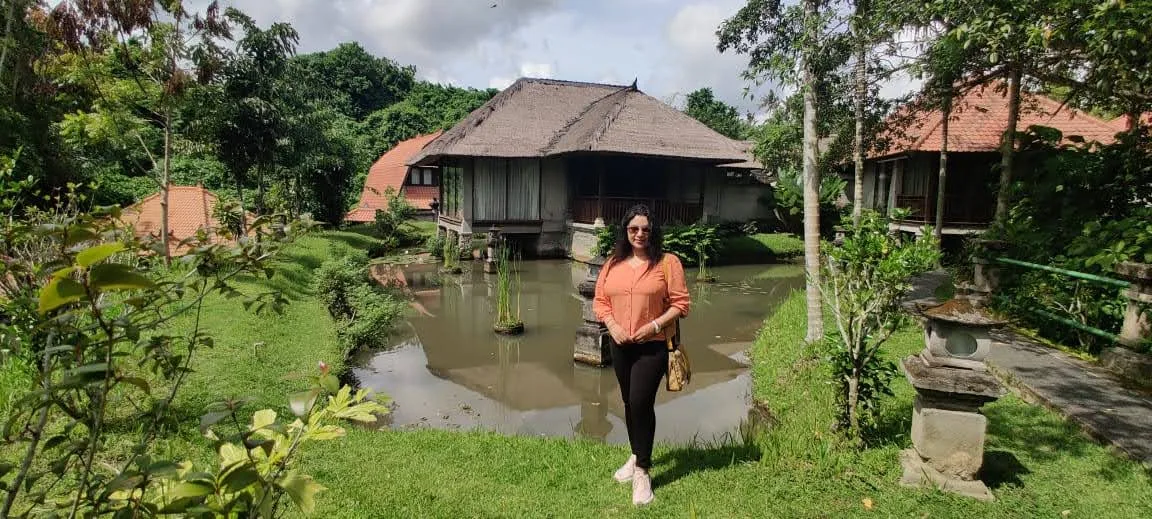
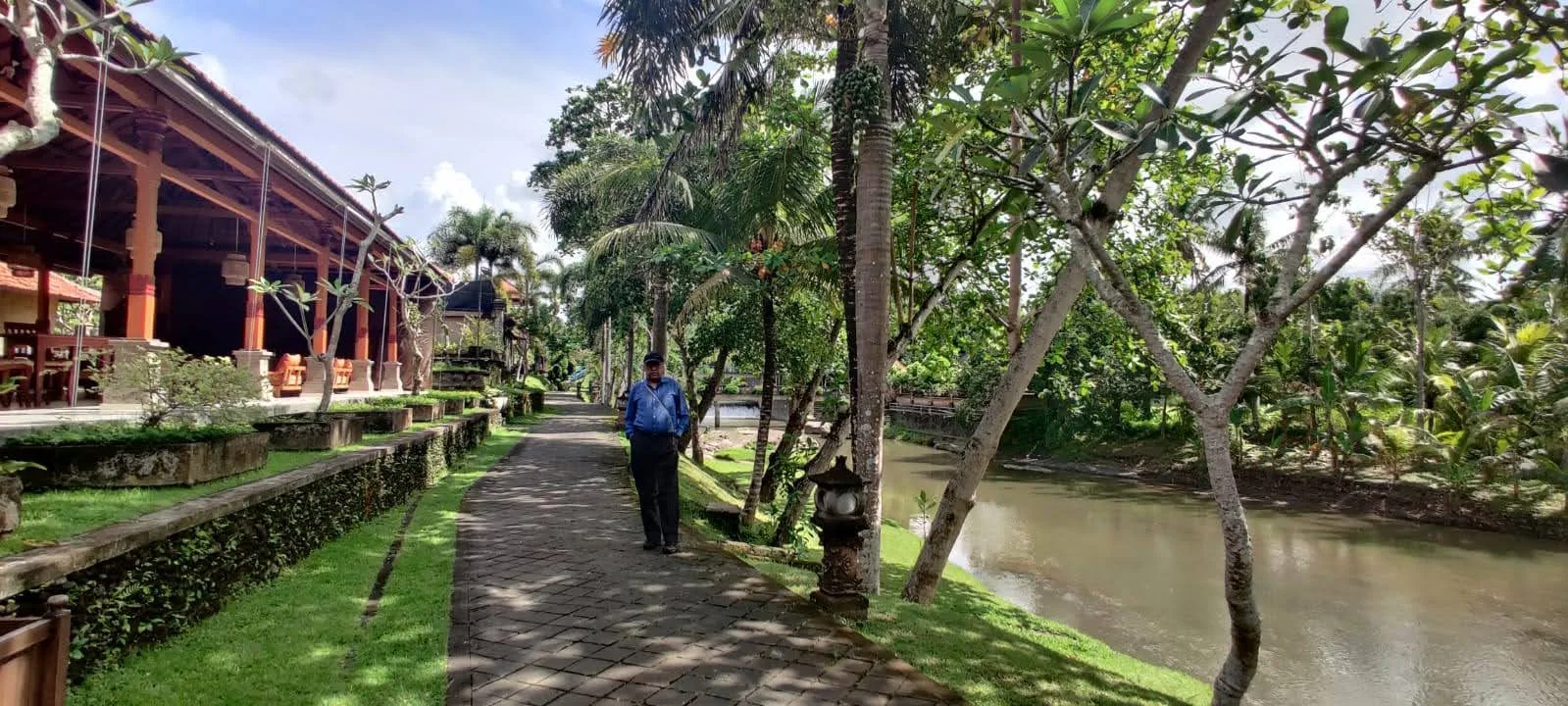
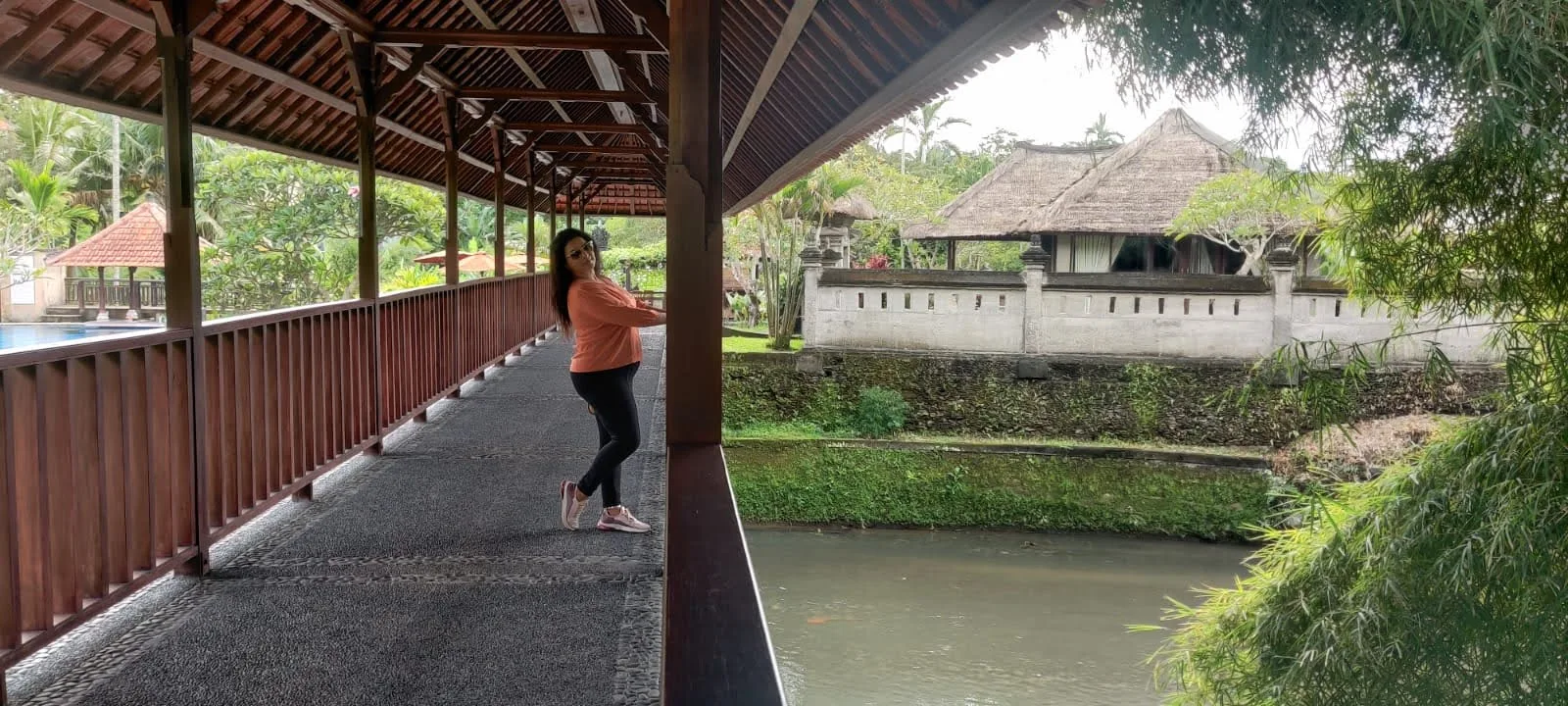
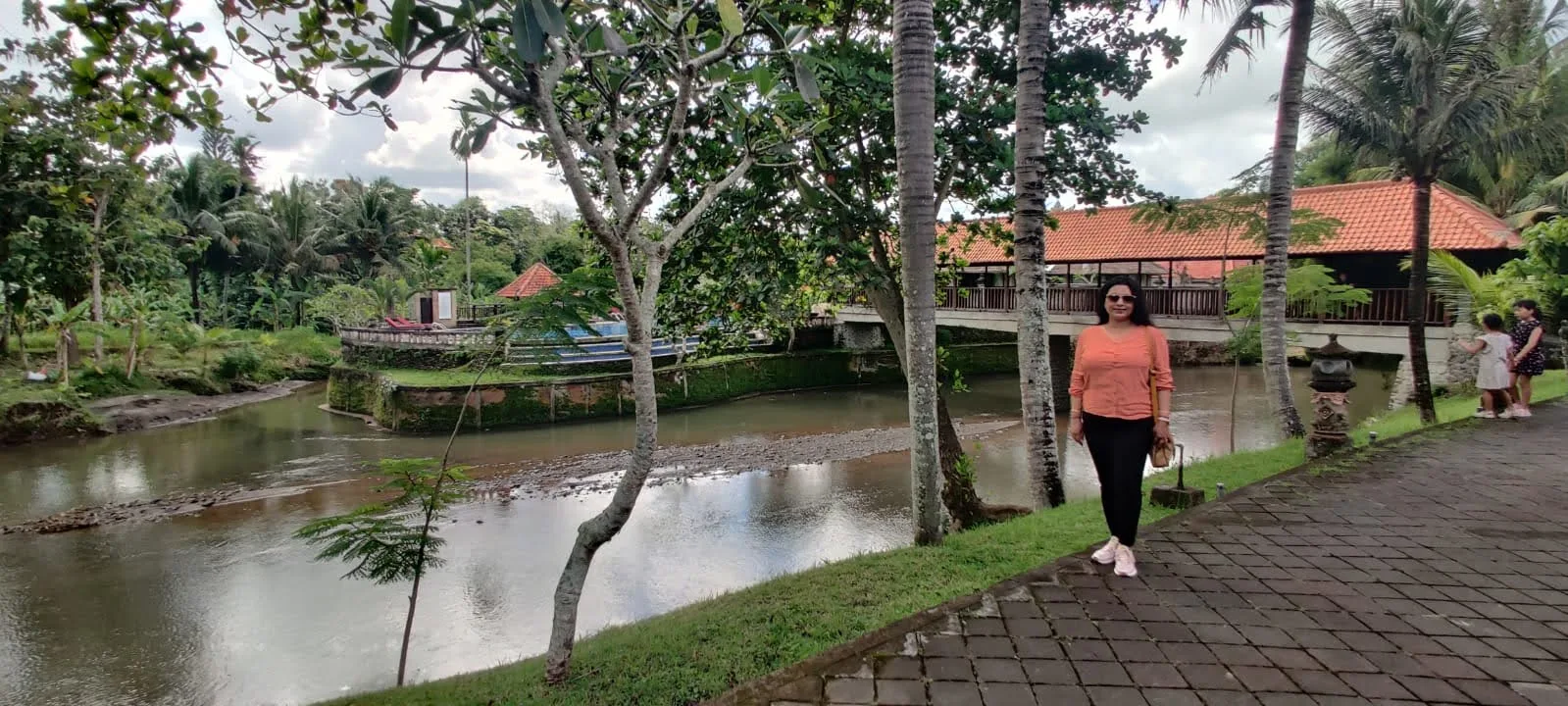
The resort, with its 40 charming cottages surrounded by tranquil ponds and water gardens, was a peaceful retreat in the heart of Bali. What surprised us the most, however, was that it housed three beautiful temples dedicated to the Trimurti—Brahma, Vishnu, and Shiva, much like the temple layout we had seen at Batuan Temple. A gentle stream flowed through the centre of the property, while emerald-green rice terraces stretched all around, creating an atmosphere where nature and spirituality blended seamlessly. It was a reminder that in Bali, Hindu traditions are not confined to temples alone—they are woven into everyday life.
Meeting the Gods of Balinese Hinduism
Batuan Temple was barely 300 metres from our resort, and almost every evening we would walk there and spend about thirty minutes in quiet meditation. During these peaceful evenings, we discovered that Balinese Hinduism, while rooted in the same ancient traditions as Indian Hinduism, has evolved into a unique spiritual world enriched by nature worship, village traditions, and reverence for ancestors.
We were introduced to deities and guardian spirits that exist only in the Balinese Hindu pantheon, including Acintya (Sang Hyang Widhi Wasa), the supreme divine principle; Dewi Danu, the goddess of lakes and fresh water; Barong, the benevolent protector; Rangda, the powerful queen of dark forces; Bhoma, the guardian of temple gateways; Bhatara Pasupati, associated with Bali's sacred volcanoes; and Dewa Hyang, the deified ancestral spirits. Offering my prayers before these unfamiliar yet deeply revered deities was a profoundly moving experience. Though their names were new to us, the devotion they inspired felt remarkably familiar, reminding me that Hinduism's greatest strength lies in its ability to embrace diverse traditions while remaining rooted in the same eternal spiritual quest.
Deities & Guardian Spirits Met in Daily Bali Life
Acintya (Sang Hyang Widhi Wasa)
The Supreme Divine Principle of Balinese Hinduism
Dewi Danu
The Goddess of Lakes, Rivers, and Fresh Waters
Barong
The Benevolent Protective Spirit King of Forest and Village
Rangda
The Powerful Queen of Dark Forces in the Eternal Balance
Bhoma
The Fearsome Guardian Deity Carved Above Temple Gateways
Bhatara Pasupati
The Deity Associated with Bali's Sacred Volcanoes
Dewa Hyang
The Deified Ancestral Spirits Protecting the Living Family
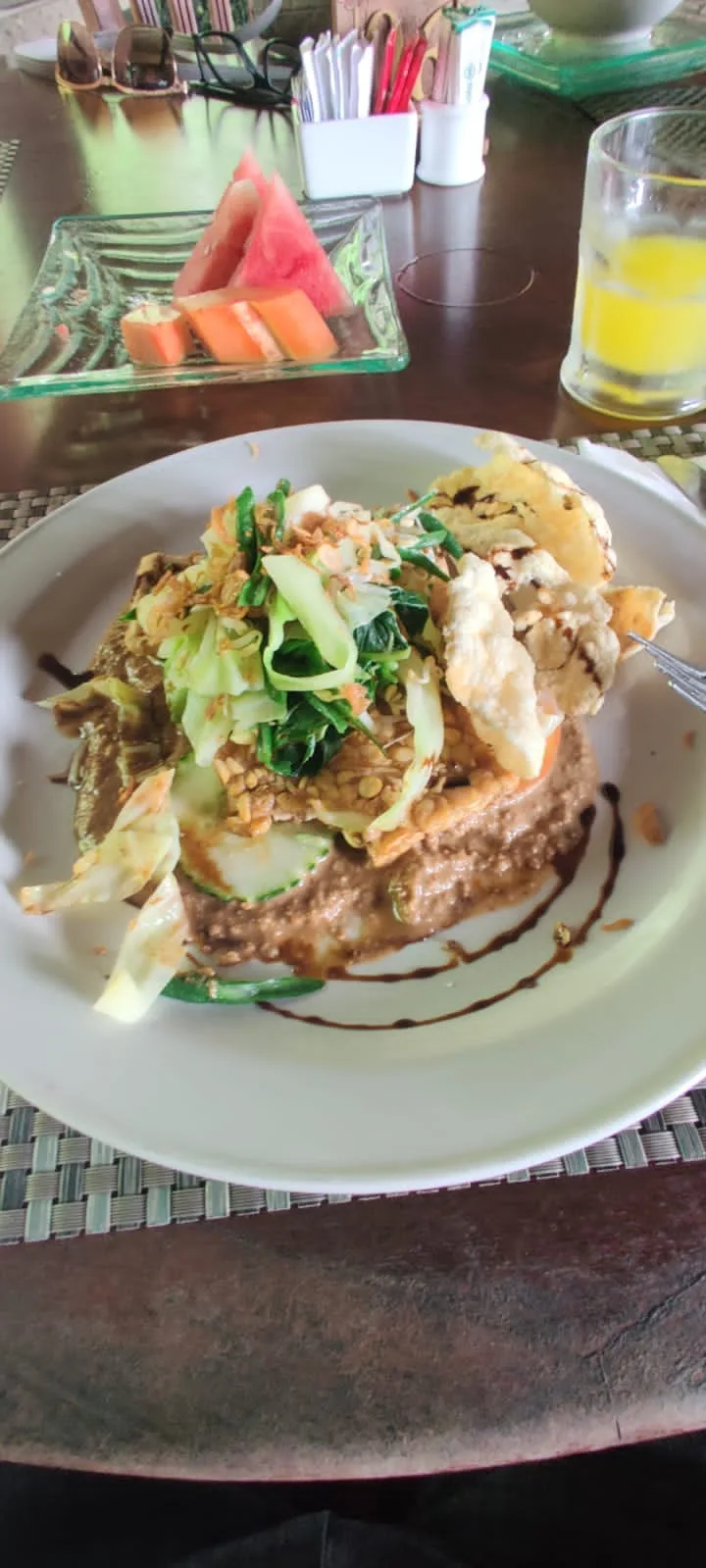
Gado-Gado for Breakfast
After an evening of quiet reflection at the temple, mornings at the resort began with authentic local flavours.
This dish is Gado-gado, a classic Indonesian salad consisting of mixed vegetables, block-shaped tempeh, and tofu arranged over a generous base of thick, savoury peanut sauce. The salad is topped with vibrant green vegetables, crisp shredded cabbage, and a sprinkle of fried shallots, adding a balance of textures and fresh flavours. Crowned with crunchy, pale kerupuk (crackers) and drizzled with a sweet soy glaze around the plate, it offers a complete, nutritious, and satisfying meal traditionally enjoyed across Indonesia. As we really enjoyed Gado-gado, we thought of sharing the details of this dish before ending this blog.
A Living Legacy Across Distant Shores
Our journey through Batuan Temple and days spent in the Balinese village resort revealed how deeply faith, nature, and community intertwine in Bali. More than a preserved monument, it is a living sanctuary where ancient Hindu roots continue to flourish.
Batuan stands not as a relic of the past, but as a living sanctuary where daily Canang Sari devotion, classical temple architecture, and village harmony keep ancient Hindu roots flourishing across a millennium.
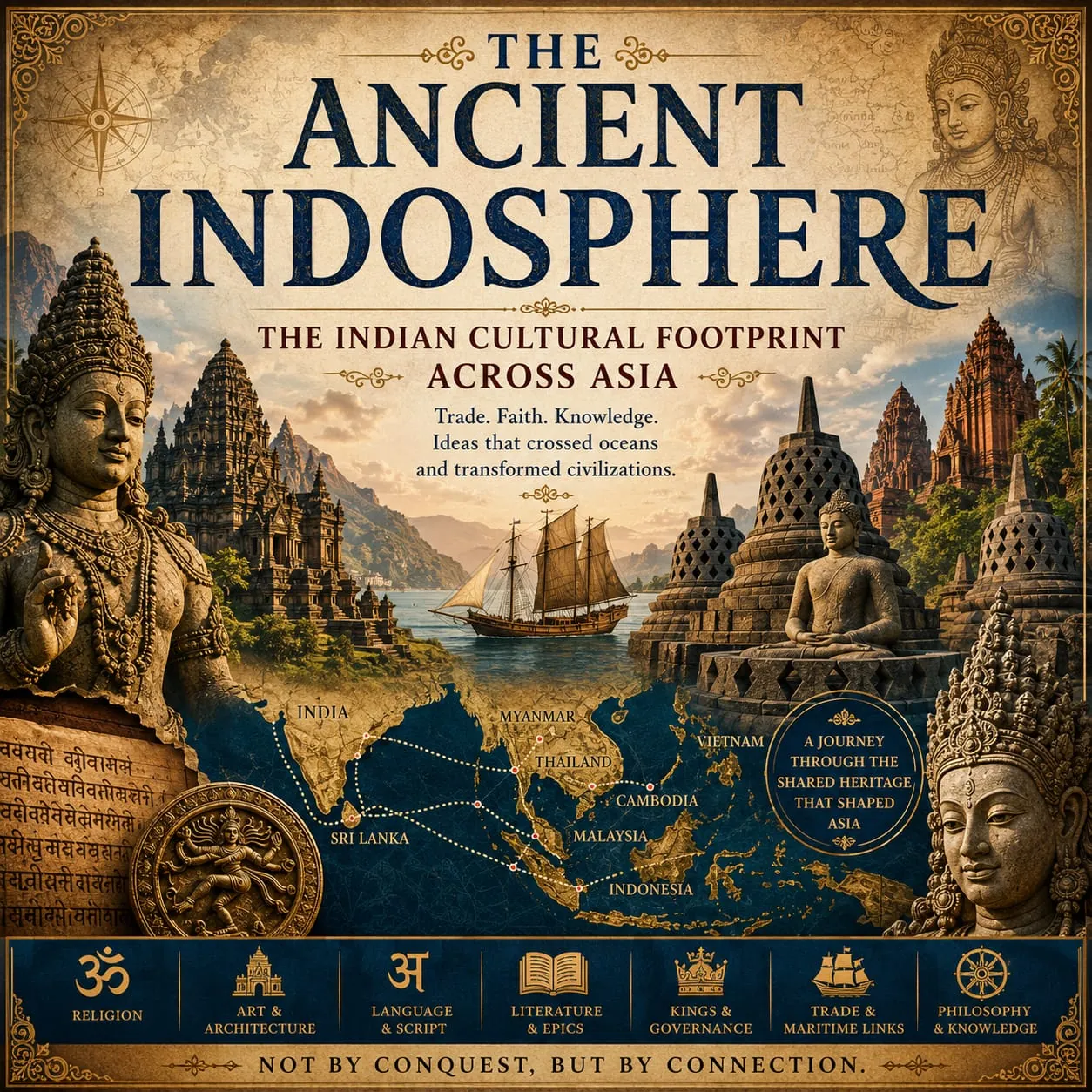
TRAVELLING THROUGH THE TIMELESS LEGACY OF INDIAN CIVILIZATION ACROSS ASIA AND BEYOND
“Not by conquest, but by connection.”
Founded over a millennium ago, Batuan Temple preserves the sacred architecture, stone-carved cosmology of Bedawang Nala, and daily Canang Sari devotion that bind Bali's village communities to the eternal civilizational spirit of ancient India.
Tips for Visiting Batuan Temple
Practical guidance for respecting sacred Balinese temple customs, engaging village artisans, and capturing timeless heritage.
Morning Hours
Arrive between 8:00 and 10:00 am to enjoy unhurried courtyards, cooler morning air, and gentle natural lighting.
Modest Attire
Cover shoulders and knees respectfully; traditional Balinese sarongs and temple sashes are provided upon entry.
Time Needed
Set aside 45 to 60 minutes to thoroughly admire the outer gateways, inner pavilions, and ancestral shrines.
Architecture Focus
Examine the 10th-century stone carvings, Bedawang Nala cosmic turtle pond, and towering thatched Meru roofs.
Active Worship
Batuan remains a living village sanctuary; walk mindfully and never step on ceremonial offerings or raised altars.
Sun Protection
Bring bottled water, dark sunglasses, and a sunhat to stay comfortable under the bright midday tropical sunshine.
Photography Etiquette
Quiet photography is welcomed, but avoid standing directly before seated priests or worshippers in prayer.
Combined Itinerary
Pair your stop with nearby Ubud galleries, Goa Gajah Elephant Cave, or scenic Tegenungan Waterfall nearby.
Complete Field Photography Index
All 19 client-provided photographs mapped with verified subjects, exact orientation, and focal point alignment.
Batuan Temple • Padmasana3:4Padmasana Shrine Tower
Towering stone lotus throne shrine carved with mythological beasts, deities, and guardian statues adorned with Canang Sari.
Batuan Temple • Courtyard4:3Courtyard & Pavilions
The open-air courtyard architecture featuring classical brick Bale pavilions, Meru towers, and guardian reliefs.
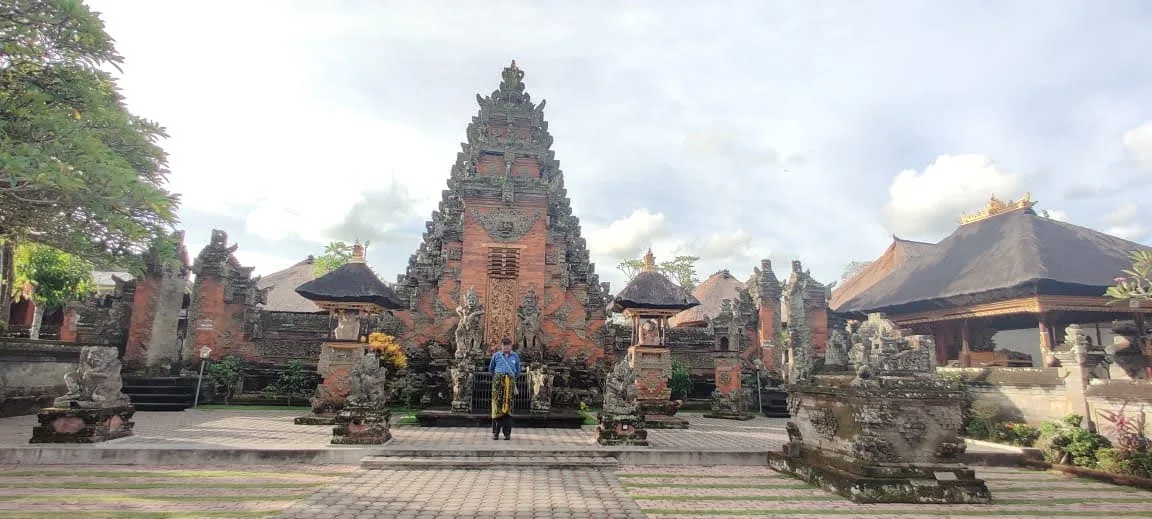
Batuan Temple • Split Gate4:3Candi Bentar Split Gate
Greeting the sacred grounds at the ornate Candi Bentar split gateway flanked by fierce carved stone lions.
Batuan Temple • Cosmic Turtle4:3Bedawang Nala Turtle Pond
The sacred stone turtle (Bedawang Nala) supporting the world axis, surrounded by clear waters filled with swimming koi.
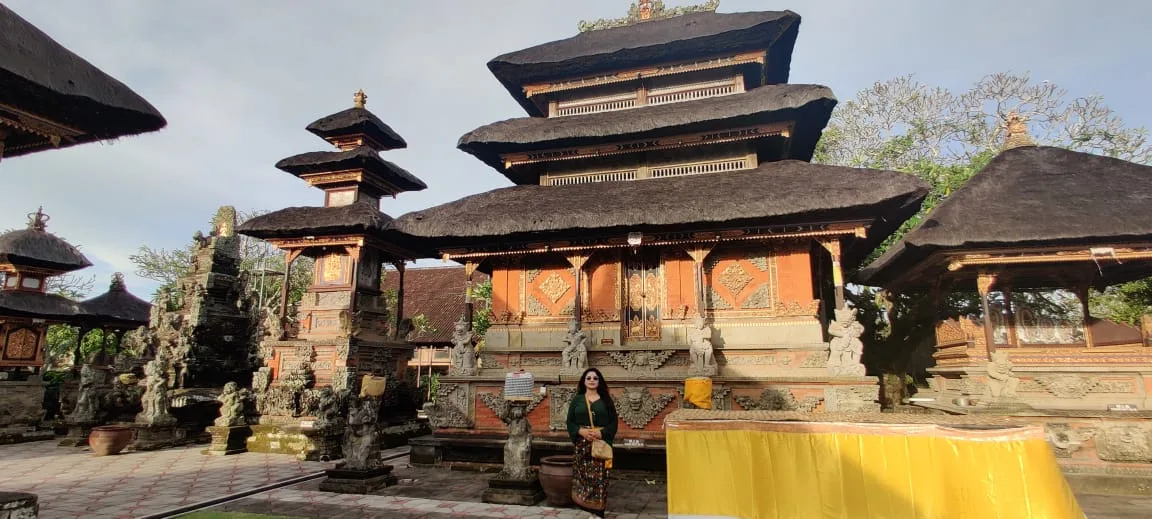
Batuan Temple • Meru Towers4:3Multi-Tiered Meru Towers
Classical black sugar-palm thatch (ijuk) roofs ascending in tiers, symbolizing Mount Meru and cosmic order.
Batuan Temple • Panorama4:3Lawn Courtyard Pavilions
The sprawling central lawn courtyard lined with stone pathways, pavilion shrines, and bright yellow ritual umbrellas.
Batuan Temple • Meru Shrine3:4Tiered Meru Shrine
Standing beside the tiered wooden and stone shrines adorned with floral bas-reliefs and protective spirits.
Batuan Temple • Kori Agung4:3Kori Agung Gateway Tower
The monumental central stone portal leading into the innermost sacred precinct, guarded by guardian deities.
Batuan Temple • Inner Sanctum4:3Sanctum Pavilion Drapery
The inner sanctum pavilion draped in sacred yellow fabric, featuring intricate carved wood columns and stone pedestals.
Batuan Temple • Moat Balustrade4:3Turtle Moat Overlook
Contemplating the serene waters where koi fish glide past the ancient mossy stone turtle sculpture.
Batuan Temple • Monumental Gate3:4Candi Bentar Gateway
Ascending the stone stairs into the temple through the soaring brick and stone split gate carved with guardian figures.
Batuan Temple • Koi Pond4:3Koi in Temple Pond
Scores of graceful koi fish circling beneath the fresh water spout, symbolizing abundance and spiritual purity.
Village Resort • Thatched Cottage4:3Cottage Over Lotus Pond
Thatched-roof wooden cottage perched on stone stilts directly over blooming water lilies and tropical greenery.
Village Resort • Stream Promenade4:3River Stream Promenade
The peaceful paved promenade following the gentle river stream that winds through the heart of the village resort.
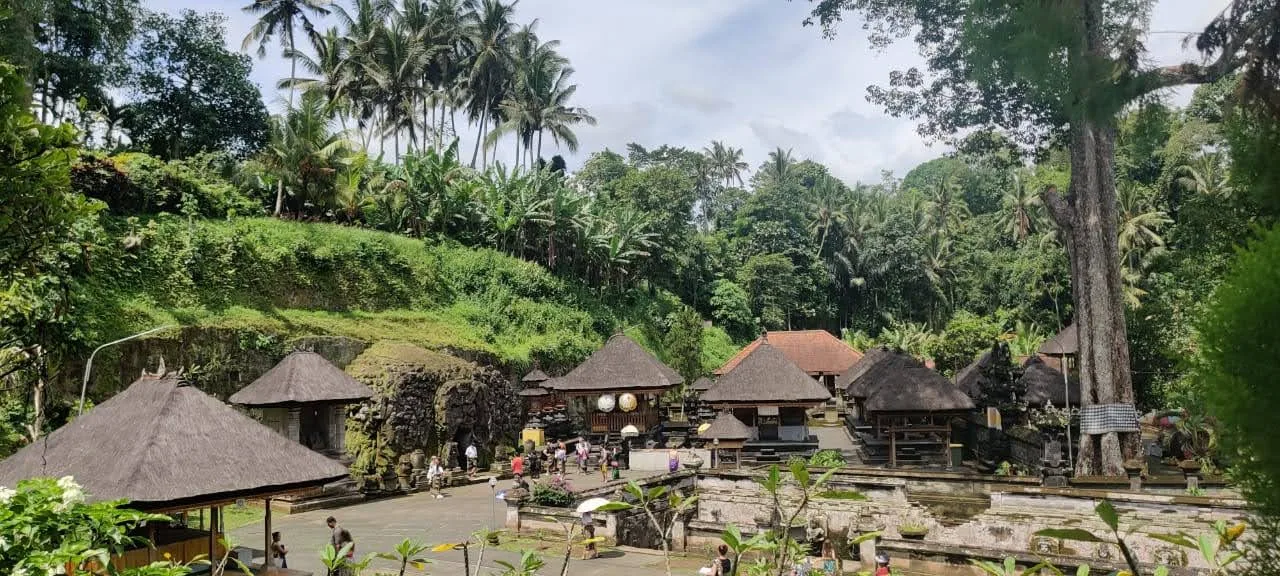
Bali Sanctuary • Valley Overlook4:3Jungle Valley Overlook
Panoramic vista over the river valley shrines and thatched temple roofs nestled among tropical palms and jungle trees.
Village Resort • Riverside Path4:3Riverside Garden Path
Strolling beside the flowing river stream with tropical coconut palms and the covered wooden bridge in view.
Village Resort • Wooden Bridge4:3Covered Wooden Bridge
Standing within the timber footbridge that connects the resort cottages across the tranquil central stream.
Village Resort • Water Gardens4:3Tranquil Water Gardens
Surrounded by emerald lawns, lily ponds, and traditional alang-alang thatched cottages in the serene village setting.
Balinese Breakfast • Gado-Gado3:4Balinese Gado-Gado Feast
Freshly prepared Indonesian Gado-gado with mixed greens, tempeh, tofu, thick peanut sauce, crackers, and tropical fruit.
CONTINUE THE INDONESIA JOURNEY
Journey Through the Sacred Monuments of Indonesia