
Taman Tirta Gangga and Goa Gajah
WHERE BALI PRESERVES THE SPIRIT OF ANCIENT INDIA
Explore Taman Tirta Gangga and Goa Gajah in Bali, Indonesia: sacred water springs named after the Ganga, 9th-century meditation caves, guardian statues, and living Hindu traditions.
Taman Tirta Gangga & Goa Gajah
Bali, Indonesia
The Ganges Flows in Bali
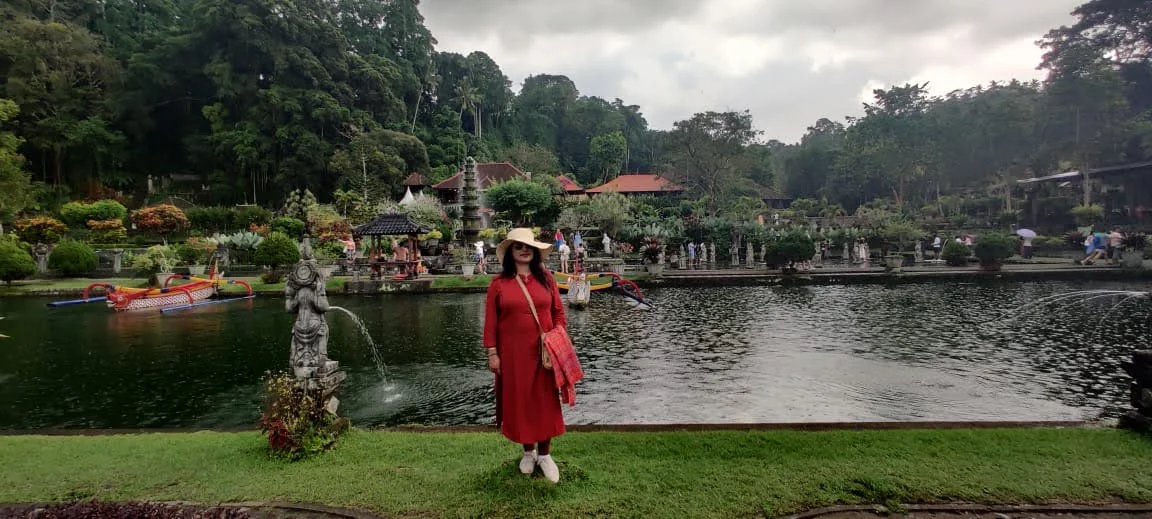
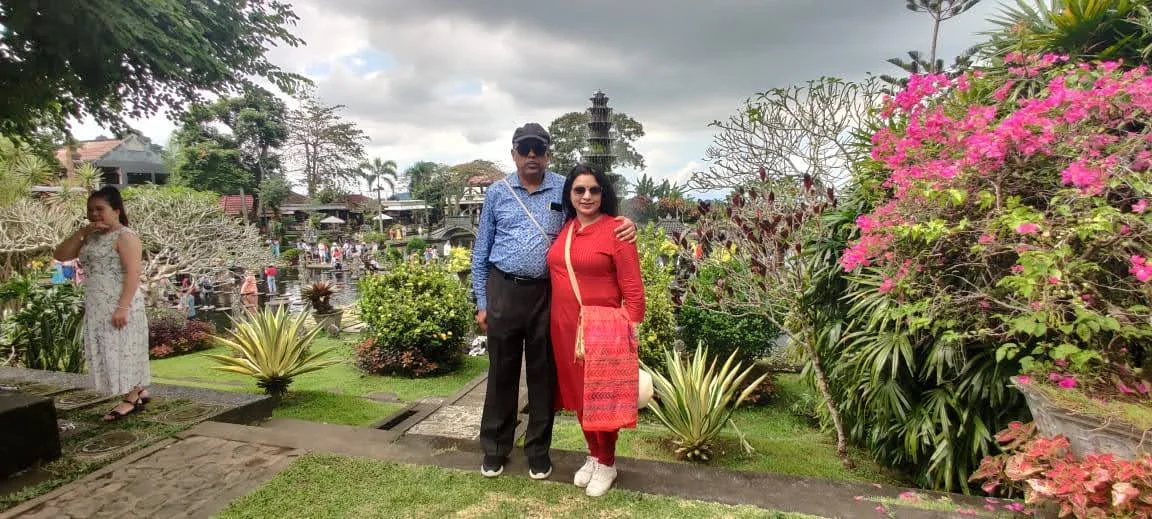
When we first heard the name Tirta Gangga, we was surprised to find the sacred River Ganga thousands of kilometres away from India. The name literally means "Holy Water of the Ganges," reflecting the immense reverence Balinese Hindus have for the Ganga, even though the river itself never reaches Indonesia. The natural spring that feeds Tirta Gangga is regarded as sacred, and its waters are still used for temple rituals and religious ceremonies. Standing beside its crystal-clear pools, we realized that while geography may separate India and Bali, faith has always found a way to bridge the distance.
Named in reverence for Mother Ganga, Tirta Gangga preserves living sacred springs where ancient Vedic water purification rituals endure thousands of kilometres across the ocean.
A Scenic Day Trip From Ubud
After an early breakfast in Ubud, we set off on a leisurely day trip to Tirta Gangga, one of eastern Bali's most enchanting attractions. The drive itself was part of the experience, winding through emerald rice terraces, traditional villages, temples, and scenic viewpoints, with several interesting stops along the way. The journey is comfortable and easily completed as a day trip, making Tirta Gangga an ideal destination for travelers who wish to experience Bali's natural beauty and rich culture.
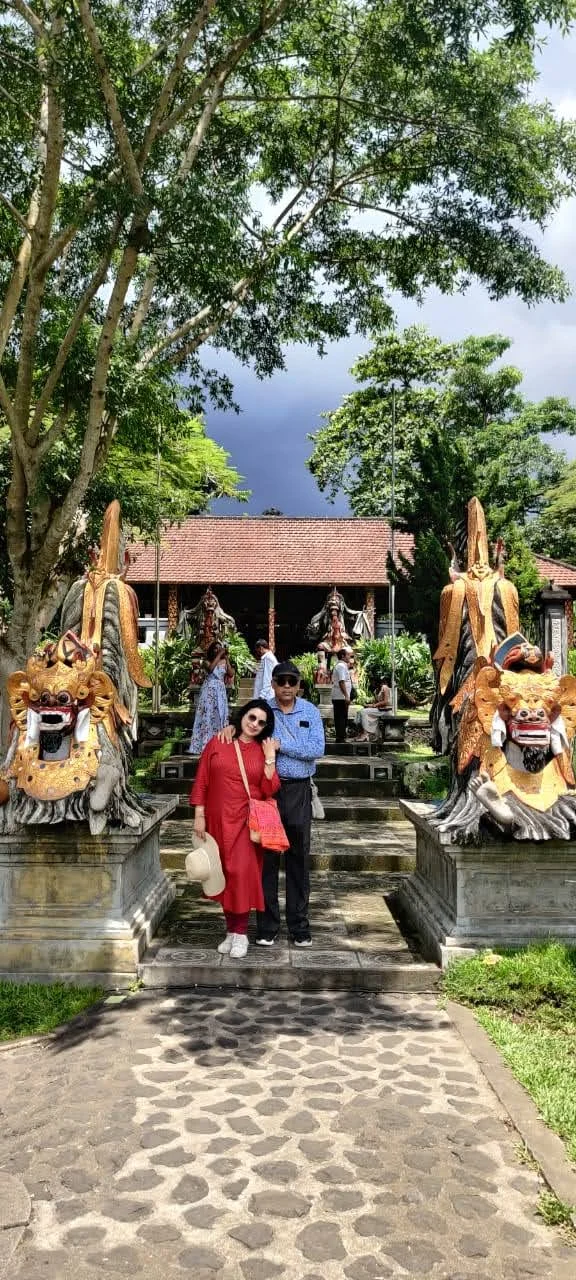
Tirta Gangga — Bali Indonesia: A Sanctuary of Sacred Springs
The strong Hindu connection of Tirta Gangga highlights the centuries-old cultural relationship between India and Bali. Hindu beliefs, rituals, and symbolism traveled across maritime trade routes from India to Indonesia, eventually becoming deeply rooted in Balinese life. At Tirta Gangga, visitors can see statues of Hindu deities, sacred bathing pools, and traditional Balinese shrines surrounded by lush tropical gardens and rice terraces. The peaceful atmosphere reflects the Balinese philosophy of harmony between nature, spirituality, and human life, a concept strongly influenced by Hindu thought.
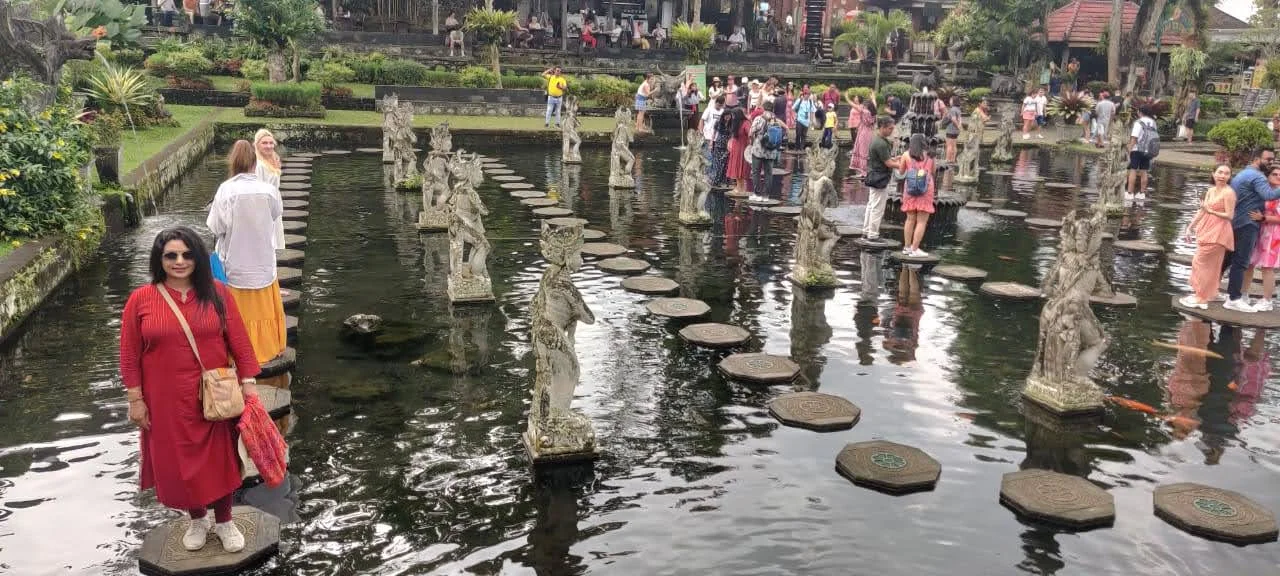
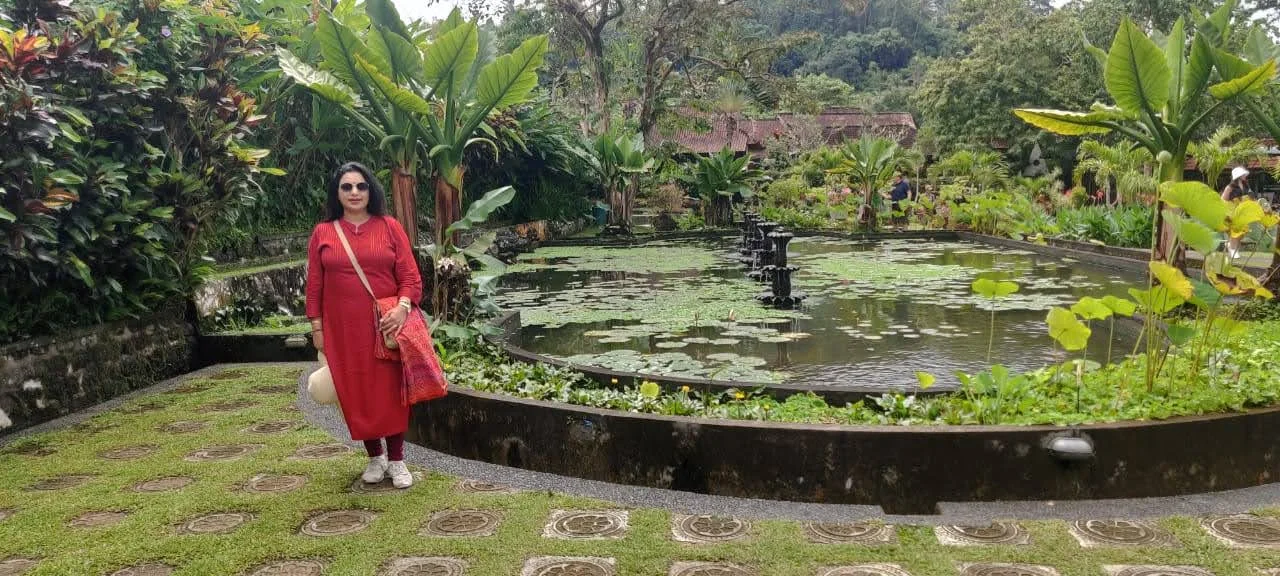
Tirta Gangga — Bali, Indonesia: Holy Waters of the Indosphere
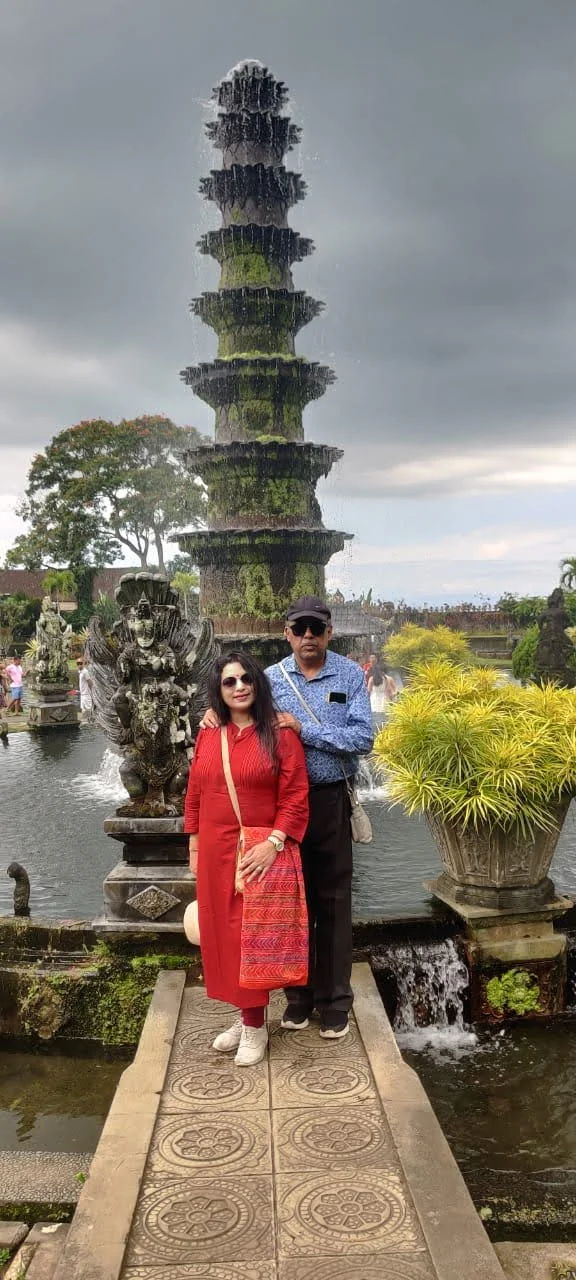
Walking through Tirta Gangga feels less like visiting a monument and more like entering a living spiritual landscape. Stone pathways across clear water ponds filled with colorful fish create a dreamlike setting, while the surrounding hills of eastern Bali add to its tranquility. For travelers interested in culture and heritage, Tirta Gangga offers a graceful reminder of how Indian spiritual traditions found a lasting home in Bali and evolved into one of the world’s most unique expressions of Hindu civilization.
Goa Gajah: Elephant Cave
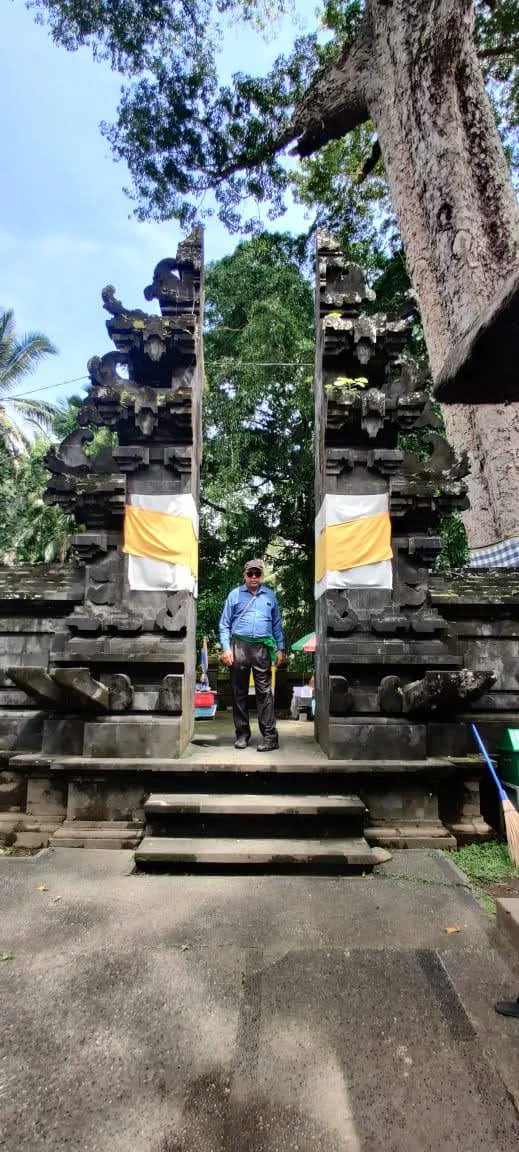
Goa Gajah, often called the “Elephant Cave,” is one of the most fascinating historical and spiritual sites in Bali. Dating back to the 9th century, the sanctuary reflects the strong influence of Hinduism and Indian culture that reached Bali through ancient maritime trade and religious exchange. The entrance to the cave, carved with dramatic mythological figures and protective spirits, leads into a small meditation chamber once used by Hindu priests and ascetics. Inside and around the complex are shrines dedicated to Shiva, sacred bathing pools, and stone relics that reveal the deep roots of Balinese Hindu spirituality.
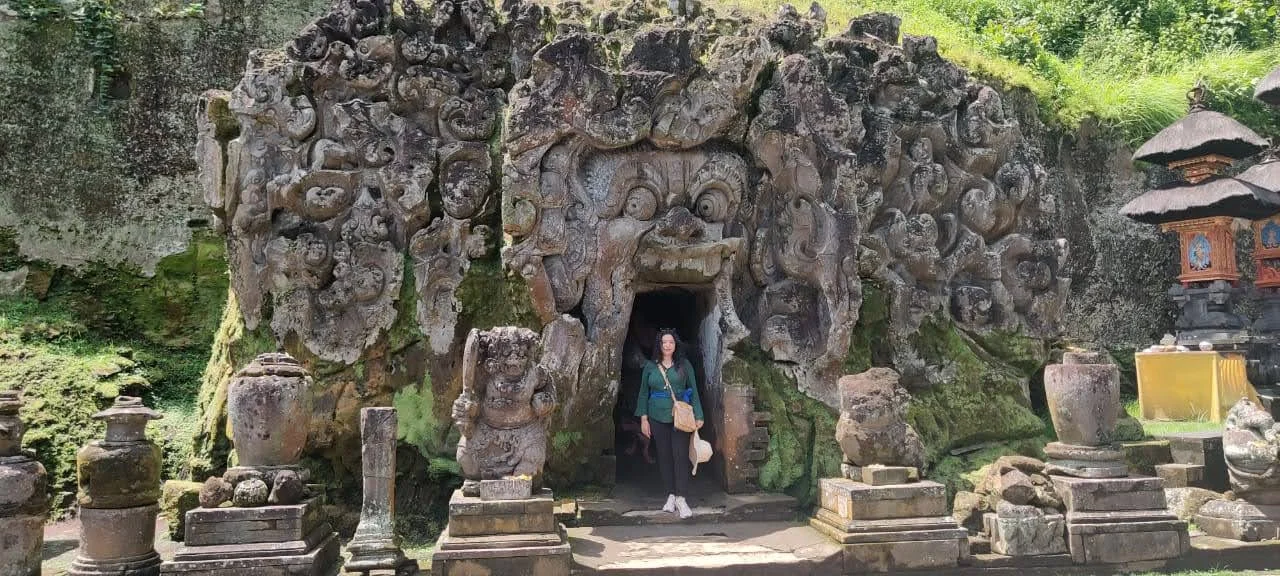
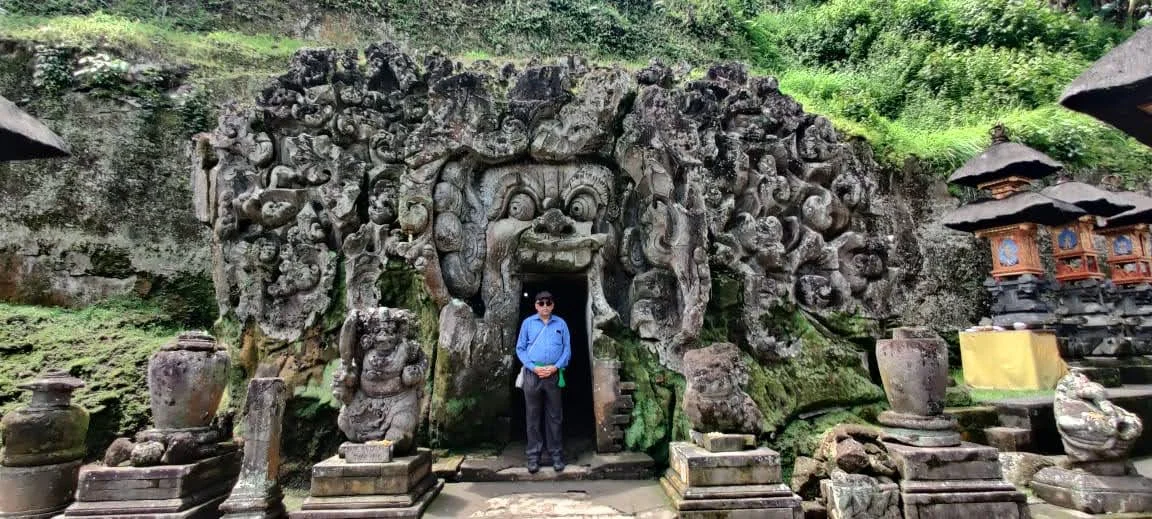
A 9th-century rock-cut sanctuary where Hindu and Buddhist ascetics meditated before Shiva Lingams and Lord Ganesha, guarded by the fearsome carved maw of Kala.
Goa Gajah – Bali: The Elephant Cave of Mystery and meditation
The spiritual atmosphere of Goa Gajah is enhanced by its lush surroundings of forests, streams, and rice fields, creating a setting of calm and reflection. The site also demonstrates the coexistence of Hindu and Buddhist traditions that once flourished together in Bali and across Southeast Asia. For Indian travelers, Goa Gajah offers a powerful reminder of how Indian philosophy, art, and religion traveled across the seas and became woven into the cultural identity of Bali. More than an archaeological monument, it remains a living symbol of the enduring civilizational connection between India and Indonesia.
Goa Gajah – Bali: Where Stone Guardians Watch in Silence
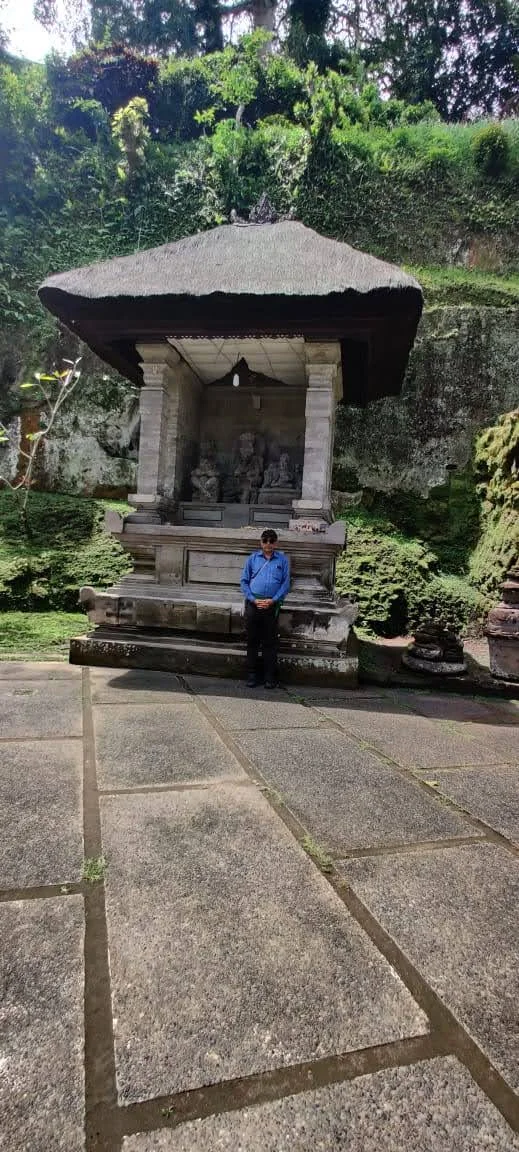
The most striking feature is the cave entrance, carved into a terrifying face with gaping jaws. This dramatic gateway was designed to symbolize the passage from the outer world into a sacred space, where evil influences were believed to be left behind. Inside the small T-shaped cave are shrines dedicated to Lord Ganesha and Shiva Lingam, indicating its importance as a Hindu place of meditation and worship.
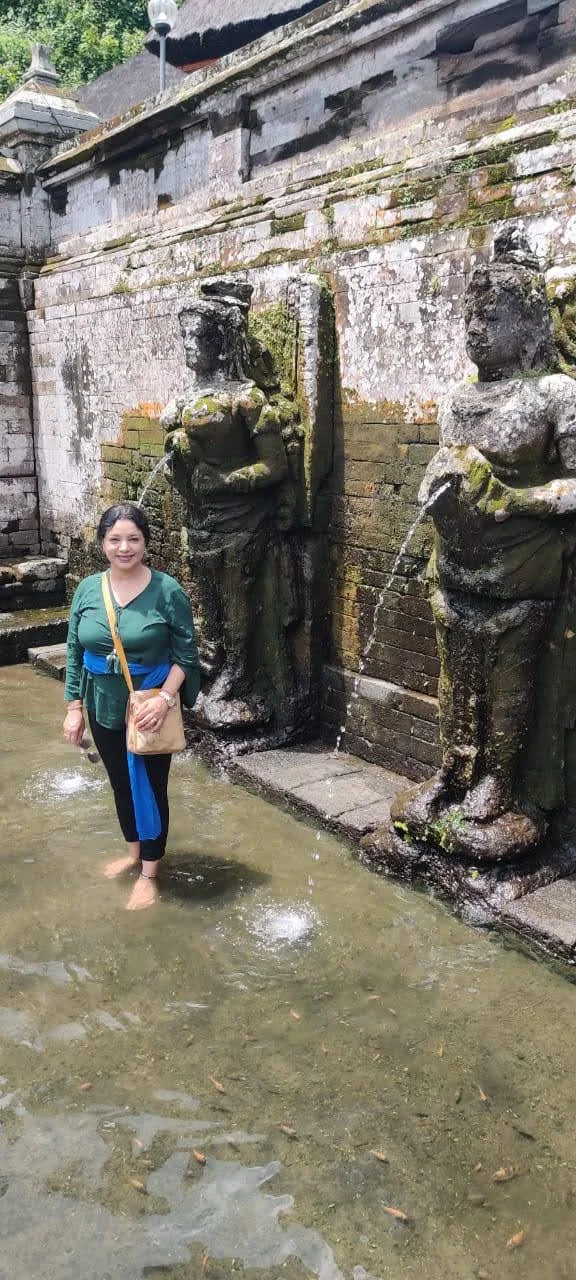
Just outside the cave are ancient bathing pools with statues of celestial maidens holding water spouts. These pools were buried for centuries and rediscovered by archaeologists in 1954. The flowing water symbolizes purification before entering the sacred cave.
Balinese Lunch
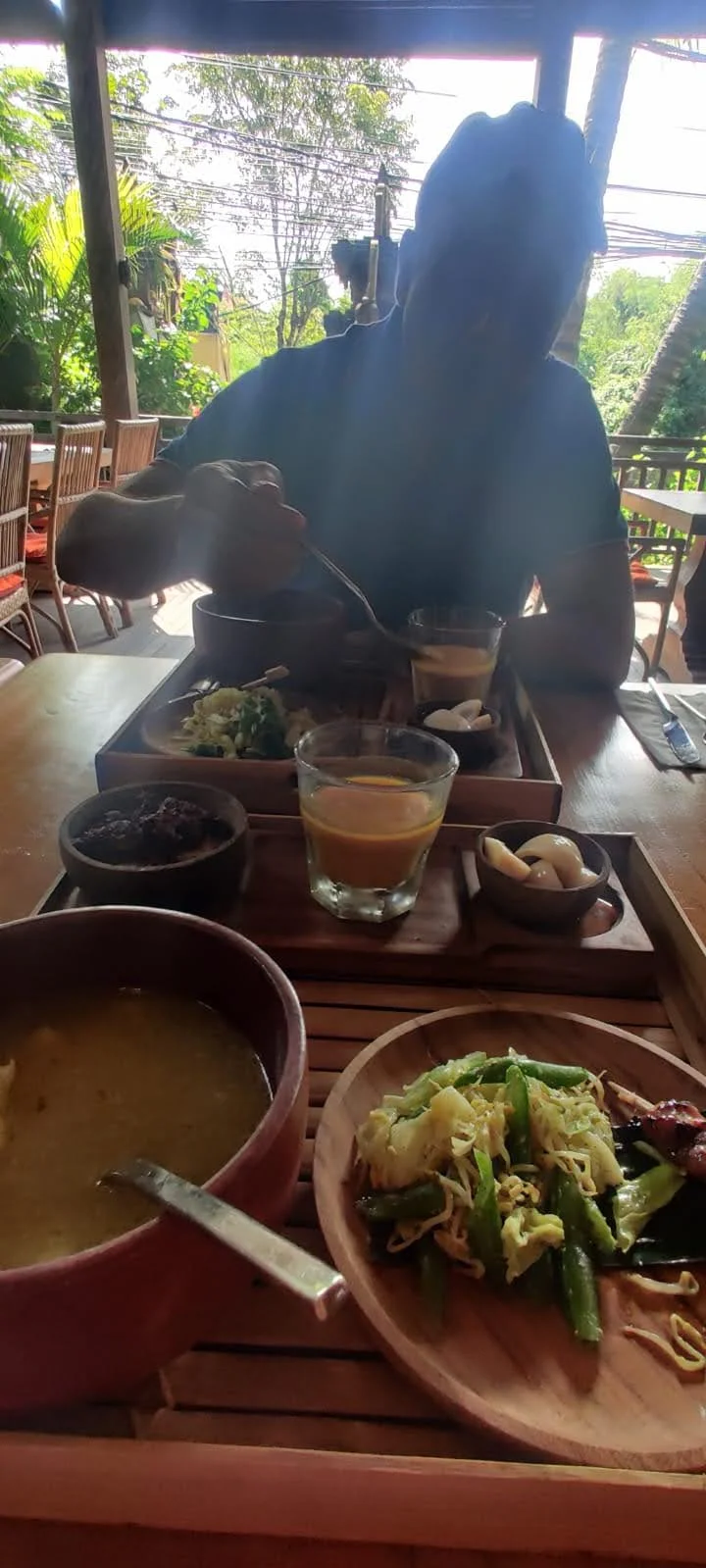
Lunch in Bali was far more than a meal—it was an experience that captured the island's soul. Seated in an open-air wooden pavilion surrounded by lush tropical greenery, I enjoyed a traditional Balinese set meal featuring Sayur Urap (mixed vegetables with spiced grated coconut), Sate Lilit (chicken satay wrapped around lemongrass sticks), a comforting bowl of clear soup, fiery Sambal (chilli paste), tangy Acar (pickled vegetables), and a refreshing glass of golden Jamu (a traditional turmeric and ginger herbal drink). Enjoyed the meal but be careful of the sambal.
A Timeless Bond Between India and Bali
As I drove back to Ubud, I realised that Bali is far more than a tropical island. In its sacred springs, ancient caves, and living Hindu traditions, I found echoes of India's civilizational journey across the seas. Tirta Gangga and Goa Gajah are not merely attractions—they are enduring reminders that culture can travel farther than borders, and faith can unite lands separated by thousands of kilometres.
In Bali's sacred springs, rock-cut meditation caves, and living Hindu devotion, faith bridges thousands of kilometres—proving that civilizational culture travels farther than geographical borders to unite distant shores.
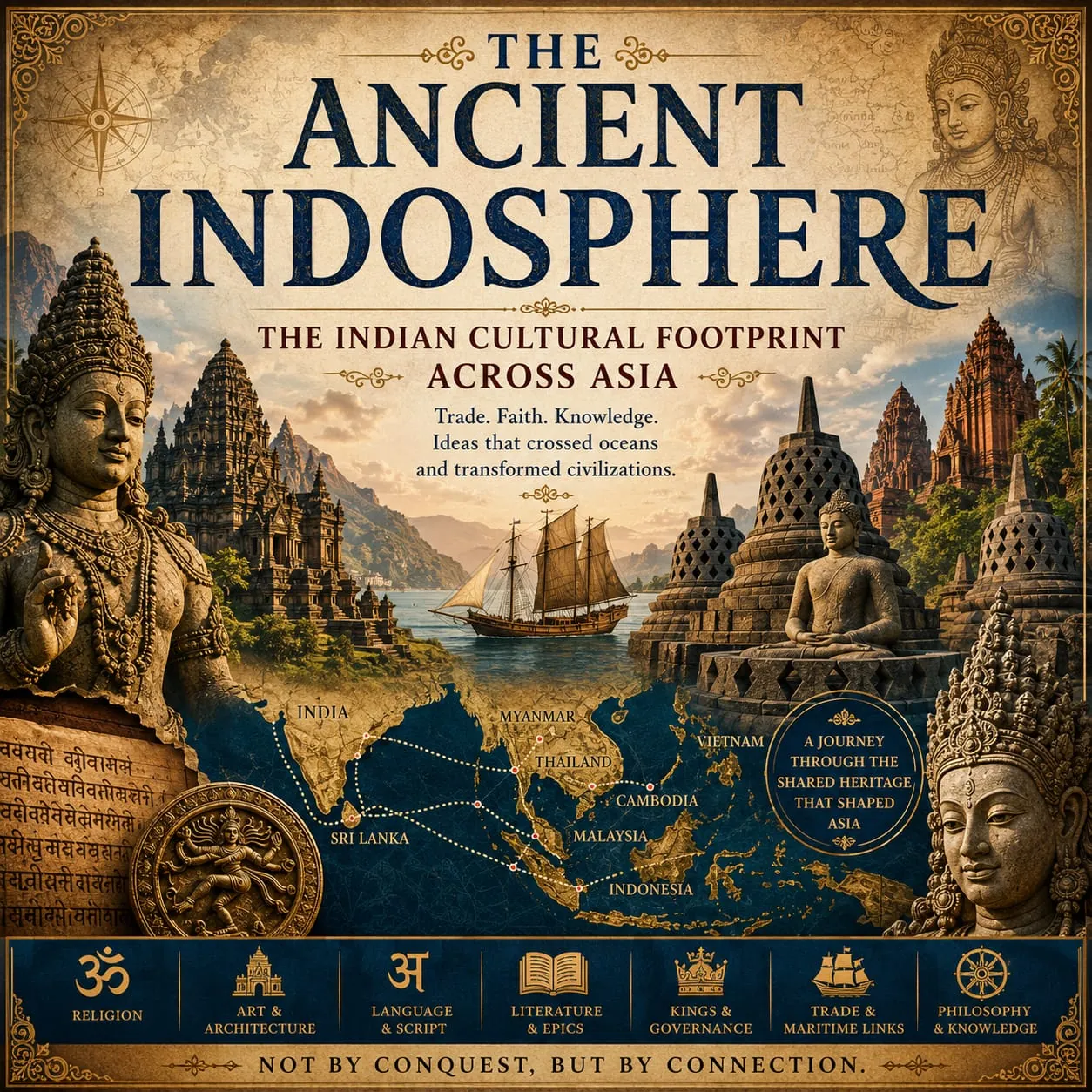
TRAVELLING THROUGH THE TIMELESS LEGACY OF INDIAN CIVILIZATION ACROSS ASIA AND BEYOND
“Not by conquest, but by connection.”
At the sacred springs of Tirta Gangga and the ancient meditation caves of Goa Gajah, the spiritual reverence for sacred waters, Shiva-Ganesha sanctuaries, and Vedic bathing rituals reflects centuries of profound civilizational communion linking India to Bali.
Tips for Visiting Tirta Gangga & Goa Gajah
Practical guidance for stepping across royal spring fountains, exploring ancient cave sanctuaries, and planning your East Bali journey.
Early Departure
Depart Ubud before 8:00 am to bypass congested central thoroughfares and enjoy empty morning roads.
Drive Duration
Expect a 2 to 2.5 hour scenic journey through terraced rice fields and rural eastern Balinese villages.
Private Transport
Hire a trusted private driver for complete flexibility to stop at panoramic roadside viewpoints.
Combined Itinerary
Pair Tirta Gangga with Goa Gajah Elephant Cave, Tirta Empul springs, and Lempuyang Temple on a single loop.
Sturdy Footwear
Wear slip-resistant walking shoes suited for wet stepping stones across the royal lotus and koi ponds.
Sun & Hydration
Bring bottled water, polarized sunglasses, and a wide sunhat for shade across open stone courtyards.
Temple Dress Code
Dress respectfully covering knees and shoulders; sarongs and traditional sashes are available on site.
Morning Lighting
Arrive before midday for serene reflections across the stepped pools and gentle photographic lighting.
Time Allotment
Reserve 1.5 to 2 hours to fully stroll the multi-tiered fountain terraces, stone bridges, and water pavilions.
Local Dining
Savor freshly prepared Balinese satay lilit and nasi campur at scenic open-air restaurants near Karangasem.
Complete Field Photography Index
All 18 client-provided photographs mapped with verified subjects, exact orientation, and focal point alignment.
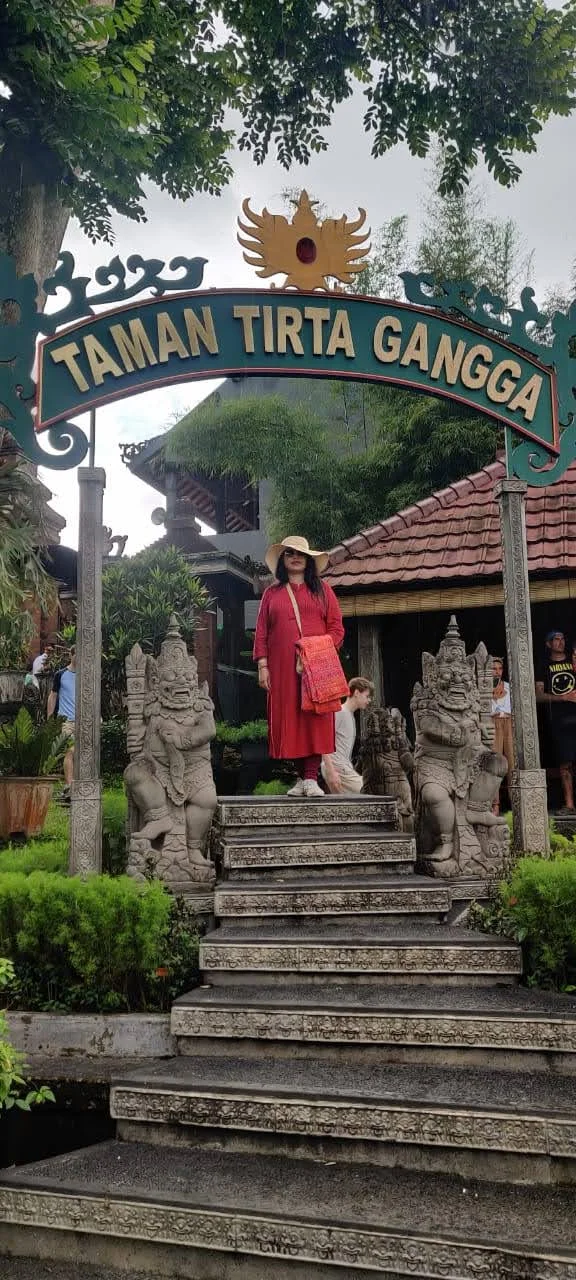
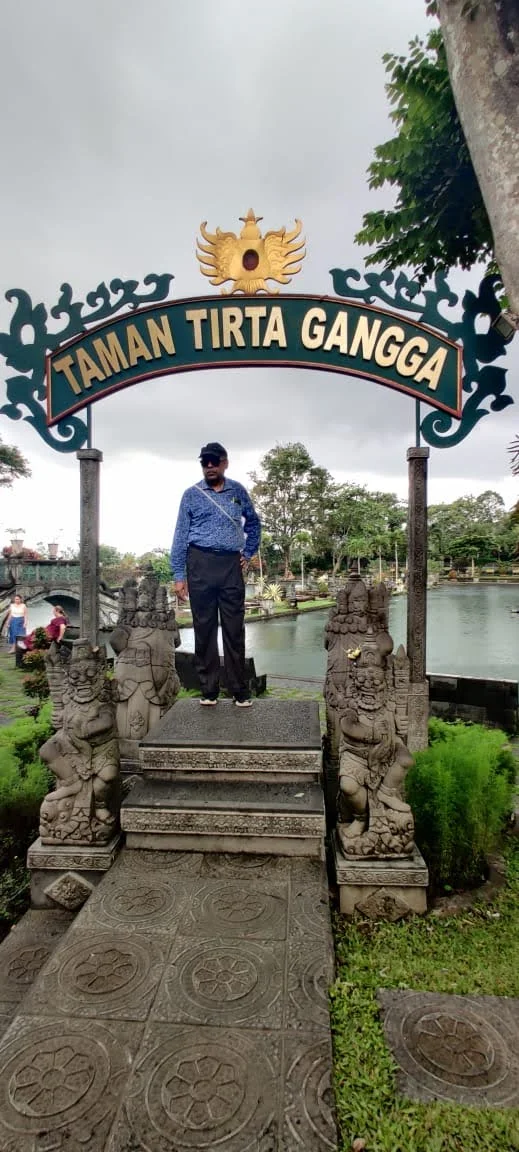
Tirta Gangga • Gateway3:4Tirta Gangga Entrance
The ornamental gateway welcoming pilgrims and visitors to the royal water palace, guarded by stone Dvarapalas.
Tirta Gangga • Sacred Pool4:3Stepping Stones on Water
Walking across the crystal-clear pool on lotus-carved stones surrounded by swimming golden carp.
Tirta Gangga • Gardens4:3Royal Water Gardens
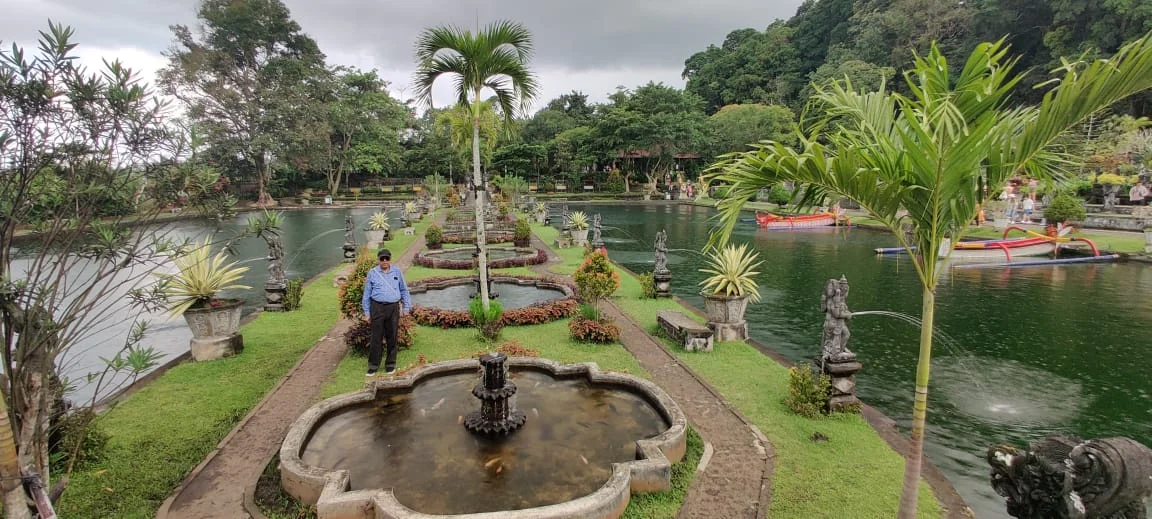
The central garden axis lined with sculpted fountains and tropical flora in eastern Bali.
Tirta Gangga • Terraces4:3Bougainvillea & Fountains
The travelers surrounded by tropical blooms with the iconic tiered water tower rising in the background.
Tirta Gangga • Lily Pond4:3Circular Lotus Pond
Ancient water gardens reflecting the harmonious Balinese philosophy of water, vegetation, and meditation.
Tirta Gangga • Monumental Fountain3:4Nawa Sanga Fountain
The centerpiece of Tirta Gangga, symbolizing the nine directional guardian deities of Balinese Hinduism.
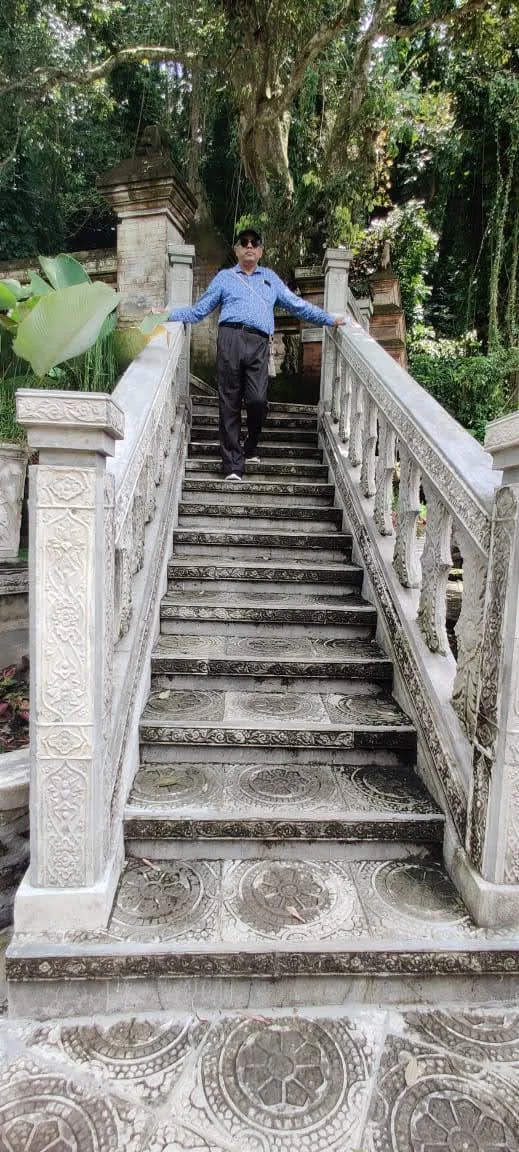
Tirta Gangga • Architecture3:4Grand Stone Staircase
Intricately carved Balinese stone balustrades framing the stairway to the upper terraces.
Tirta Gangga • Panorama4:3Sacred Water Lake Panorama
The expansive natural spring pool where sacred waters reflect Mount Agung's eastern slopes.
Tirta Gangga • Guardians3:4Barong Stone Guardians
Flanked by two ornate Barong lion statues adorned with sacred golden embellishments and textiles.
Tirta Gangga • Threshold3:4Water Palace Portal
At the threshold of the sacred springs where the name of River Ganga is venerated thousands of miles away.
Goa Gajah • Gateway3:4Candi Bentar Split Gate
The classical Balinese gateway wrapped in ceremonial yellow sashes, marking the transition from secular to sacred ground.
Goa Gajah • Cave Portal4:3Demon Maw Cave Entrance
Carved into the volcanic rock face, the gaping jaws of Kala ward off evil spirits from entering the meditation sanctuary.
Goa Gajah • Cave Portal4:3Ancient Ascetics Portal
Standing at the doorway once traversed by Hindu priests and Buddhist monks for quiet meditation.
Goa Gajah • Shrine3:4Ancient Shrine Pavilion
A classical thatched Balinese shrine preserving historic Hindu stone deities and lingam relics.
Goa Gajah • Ravine3:4Sacred Stream & Ravine
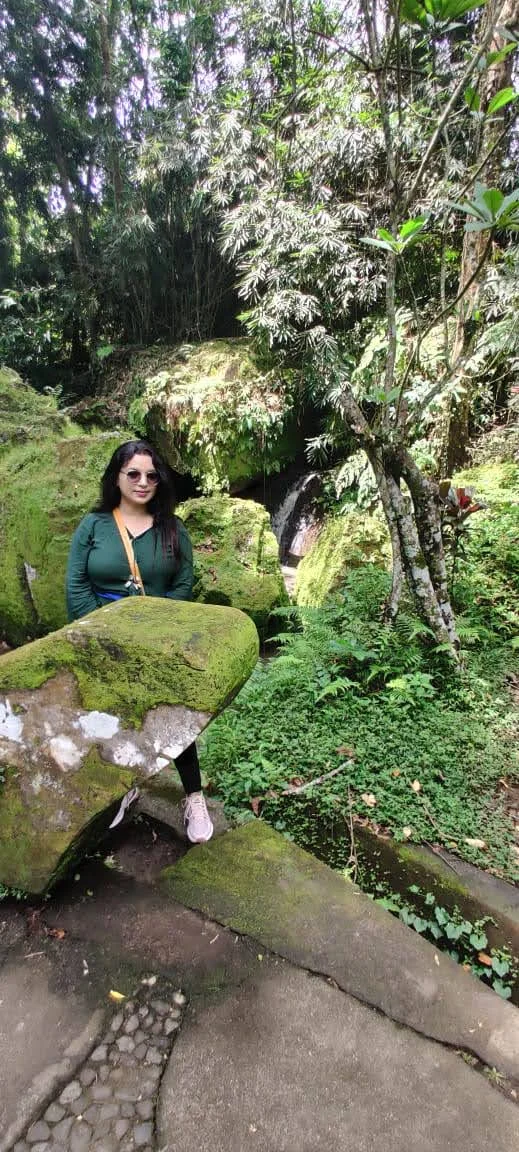
The lush river valley behind the cave where ancient stone fragments rest amid tropical greenery.
Goa Gajah • Bathing Pools3:4Patirthaan Bathing Pools
Rediscovered in 1954, six statues of celestial maidens (widyadharis) spout holy purification water into the pools.
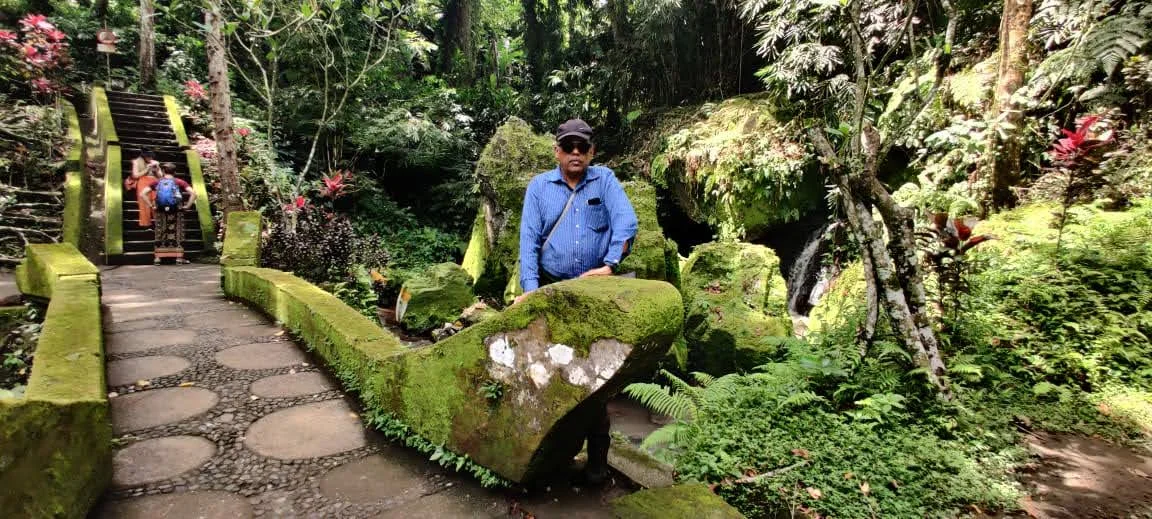
Goa Gajah • Hermitage Bridge4:3Mossy Valley Stone Bridge
Ancient carved stone bridges and jungle pathways where Hindu and Buddhist hermits once contemplated nature.
Bali • Culinary Tradition3:4Balinese Lunch Feast
Enjoying Sayur Urap, Sate Lilit chicken satay, spicy Sambal, Acar, and refreshing Jamu herbal elixir in an open-air pavilion.
CONTINUE THE INDONESIA JOURNEY
Journey Through the Sacred Monuments of Indonesia