
Denpasar and GWK Cultural Park
BALI, INDONESIA: THE LAND OF GARUDA AND VISHNU
Explore Denpasar and the colossal Garuda Wisnu Kencana (GWK) Cultural Park in Bali, Indonesia—where ancient Hindu traditions, the 120-meter Vishnu-Garuda monument, and the Kecak dance thrive.
Denpasar, Bali, Indonesia
Denpasar, the capital of Bali, is one of the most remarkable places in the world where Hindu culture continues to thrive outside India. Unlike much of Indonesia, Bali preserved its Hindu traditions over centuries, creating a unique spiritual identity deeply rooted in ancient Indian influence. In Denpasar, Hinduism is woven into everyday life through temple rituals, daily flower offerings, traditional ceremonies, and festivals that fill the city with color and devotion. The atmosphere reflects a living culture where spirituality, art, and community remain closely connected.
A rare sanctuary preserving centuries of ancient Indian Hindu traditions outside India, woven seamlessly into everyday life through temple rituals, daily flower offerings, and an inseparable bond between spirituality, art, and community.
Gods From The Hindu Pantheon
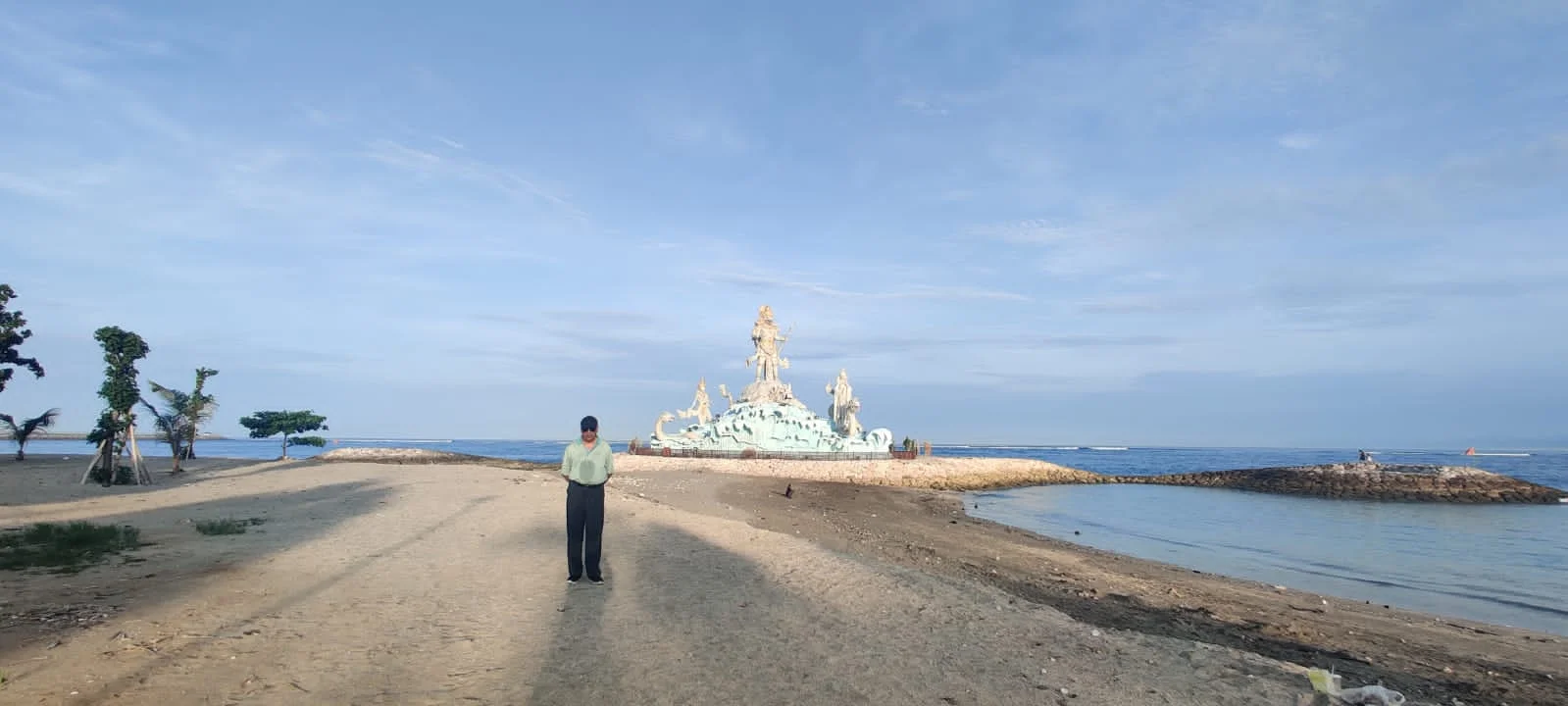
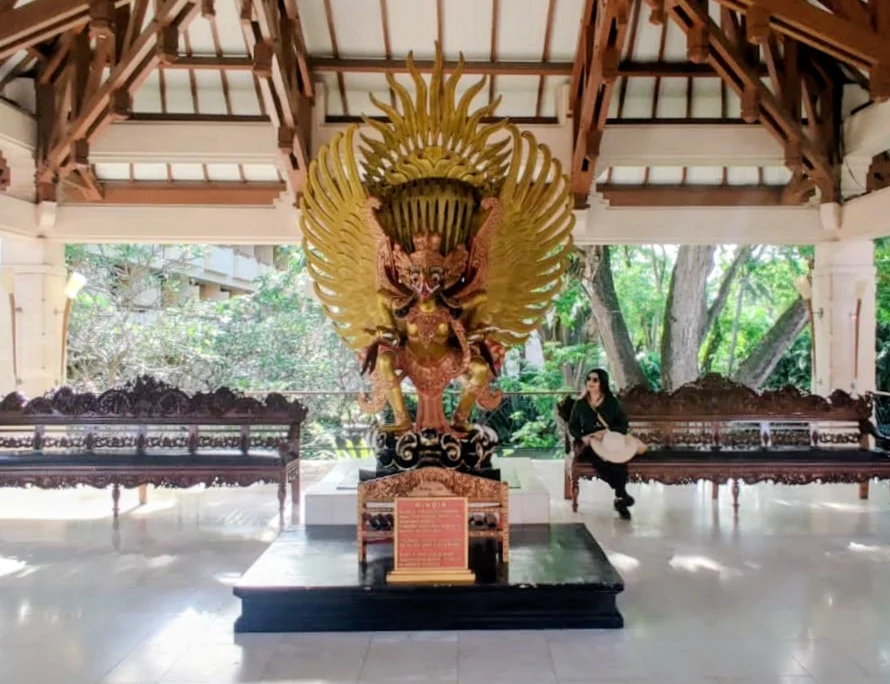
Even before we began exploring Bali, we found myself surrounded by familiar figures from the Hindu pantheon. Walking along the beach beside our hotel, a majestic statue of Varuna, the Hindu god of water and the oceans, stood watch over the coastline. Back in the hotel lobby, a magnificent statue of Garuda, the divine eagle and sacred mount (vahana) of Lord Vishnu, welcomed guests. These encounters were a reminder that in Bali, Hindu traditions are not confined to temples—they are an integral part of everyday life and a living testament to the island's enduring cultural heritage.
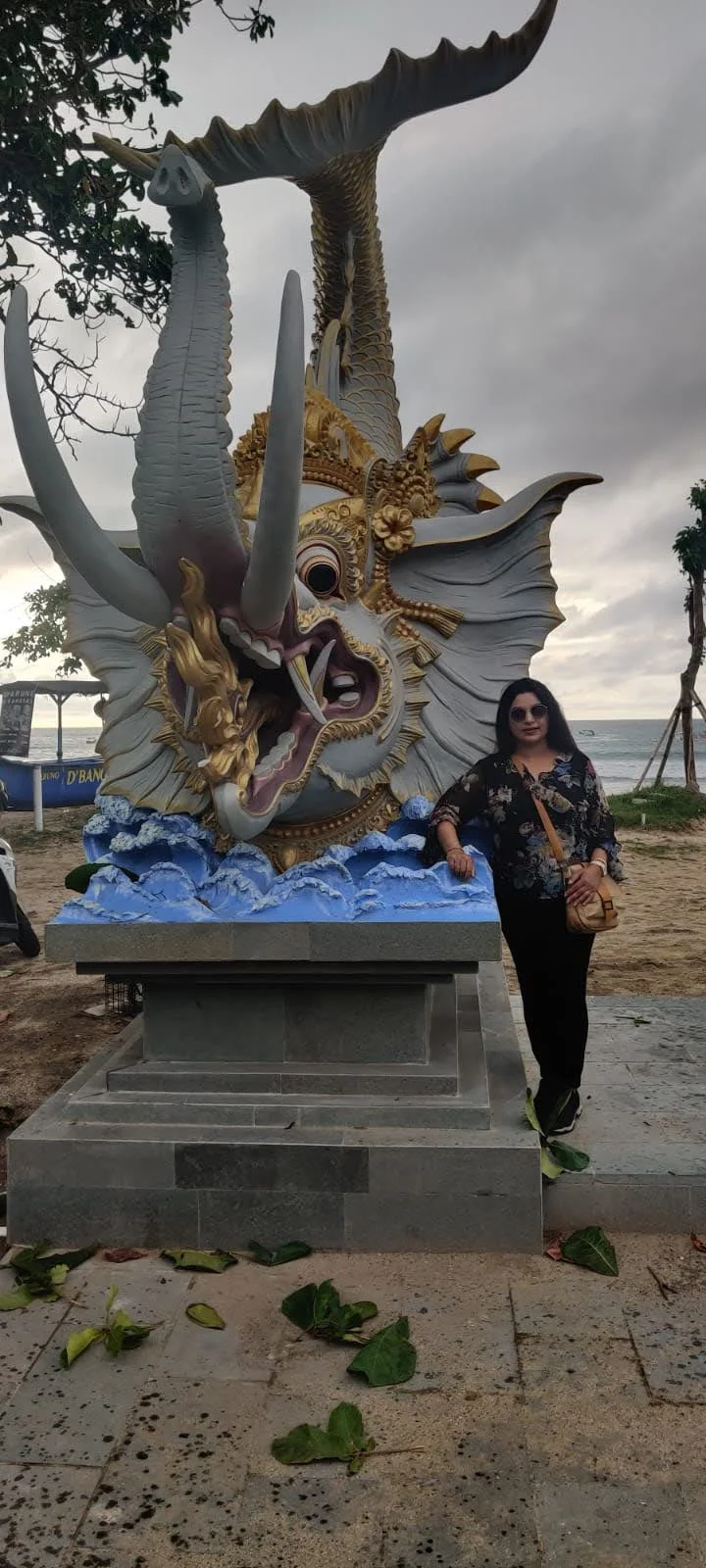
Gajah Mina by the Seashore
Archana beside the ornate elephant-fish guardian statue uniting land and sea.
Gajah Mina — A Unique Symbol of Balinese Hinduism
One of the fascinating symbols we encountered in Bali was Gajah Mina, a mythical creature with the head of an elephant and the body of a fish. Derived from the Sanskrit words Gajah (elephant) and Mina (fish), it symbolizes the harmony between land and water, strength and abundance. Although not a deity from the classical Hindu pantheon, Gajah Mina reflects the unique evolution of Balinese Hinduism, where Indian religious traditions blended with local beliefs to create distinctive symbols of prosperity, protection, and the island's enduring spiritual heritage.
Synthesis of Land and Ocean
Uniting the terrestrial strength of the elephant with the boundless vitality of the sea, Gajah Mina embodies the sacred balance between Bali's volcanic mountains and ocean sanctuaries.
GWK Cultural Park — Bali, Indonesia: The Land of Garuda and Vishnu
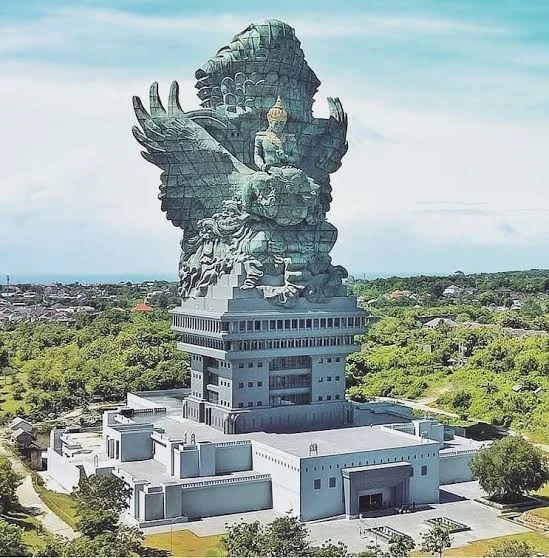
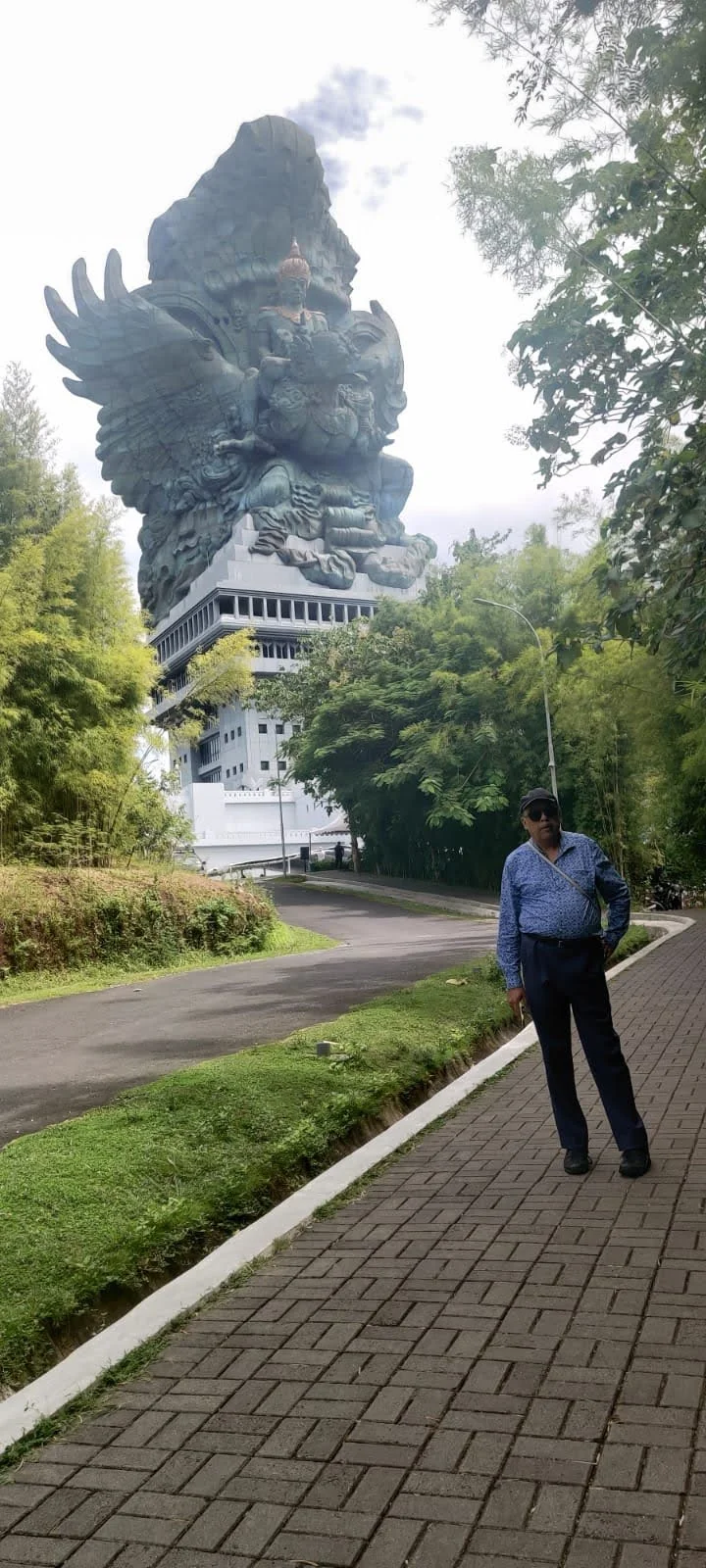
Garuda Wisnu Kencana Cultural Park, popularly known as GWK, is one of the most iconic cultural landmarks in Bali. The centerpiece of the park is the colossal statue of Lord Vishnu riding the mythical Garuda, symbolizing protection, wisdom, and divine power in Hindu tradition. Standing over 120 meters tall, the monument is among the tallest statues in the world and represents the enduring influence of Hindu civilization in Bali. Visible from great distances, the statue dominates the skyline and has become a modern symbol of Balinese cultural pride.
When Garuda Chose to Serve Vishnu
Standing before the colossal Garuda Vishnu statue, I was reminded of one of Hinduism's most inspiring legends. Garuda, the mighty king of birds, fought fearlessly to free his mother from slavery. After succeeding, he refused power or wealth for himself. Instead, Lord Vishnu, impressed by his courage, humility, and devotion, chose Garuda as his divine mount (vahana). Looking up at the soaring statue, I realized it celebrates not just the greatness of Vishnu, but also the timeless virtues of sacrifice, duty, and selfless service.
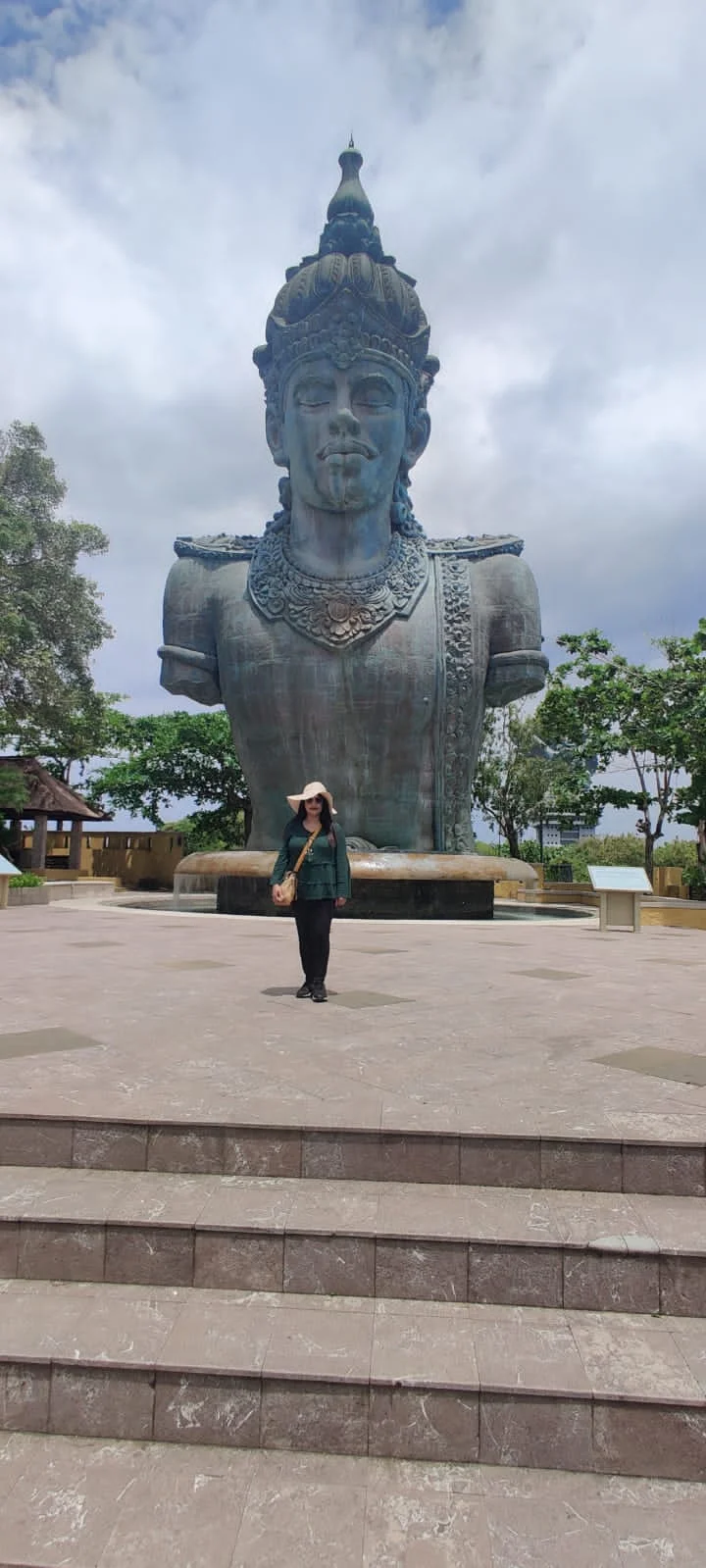
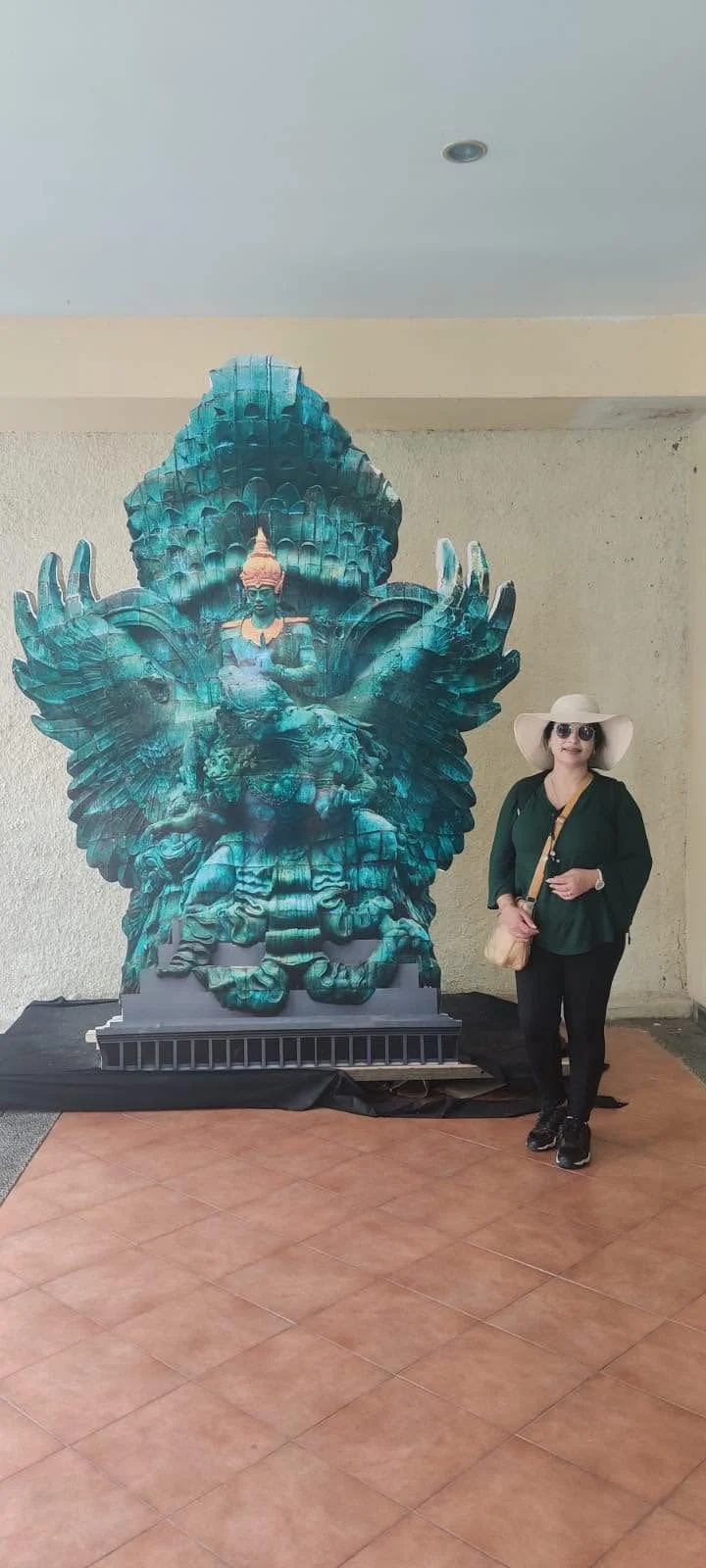
GWK Hosts Traditional Balinese Dance, Music, Exhibition and Festivals
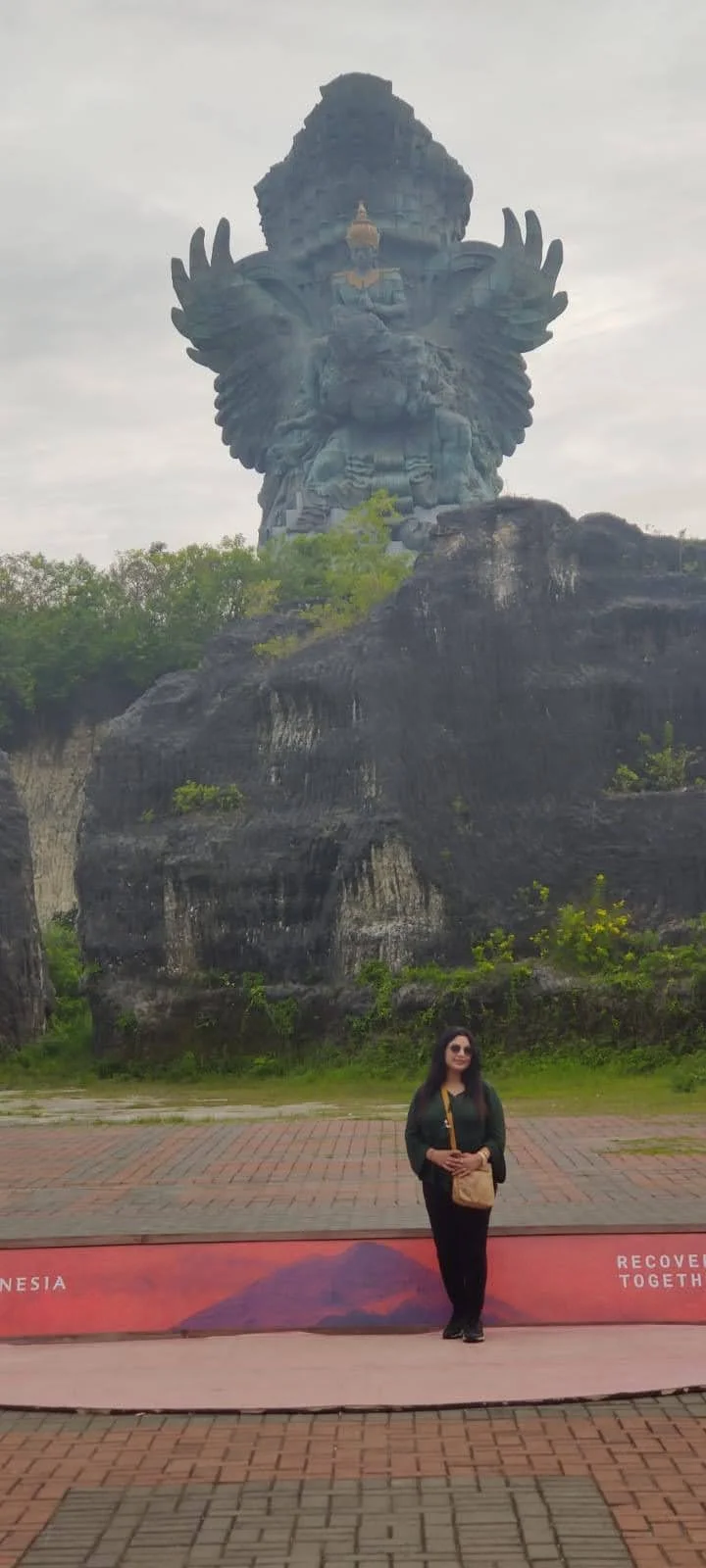
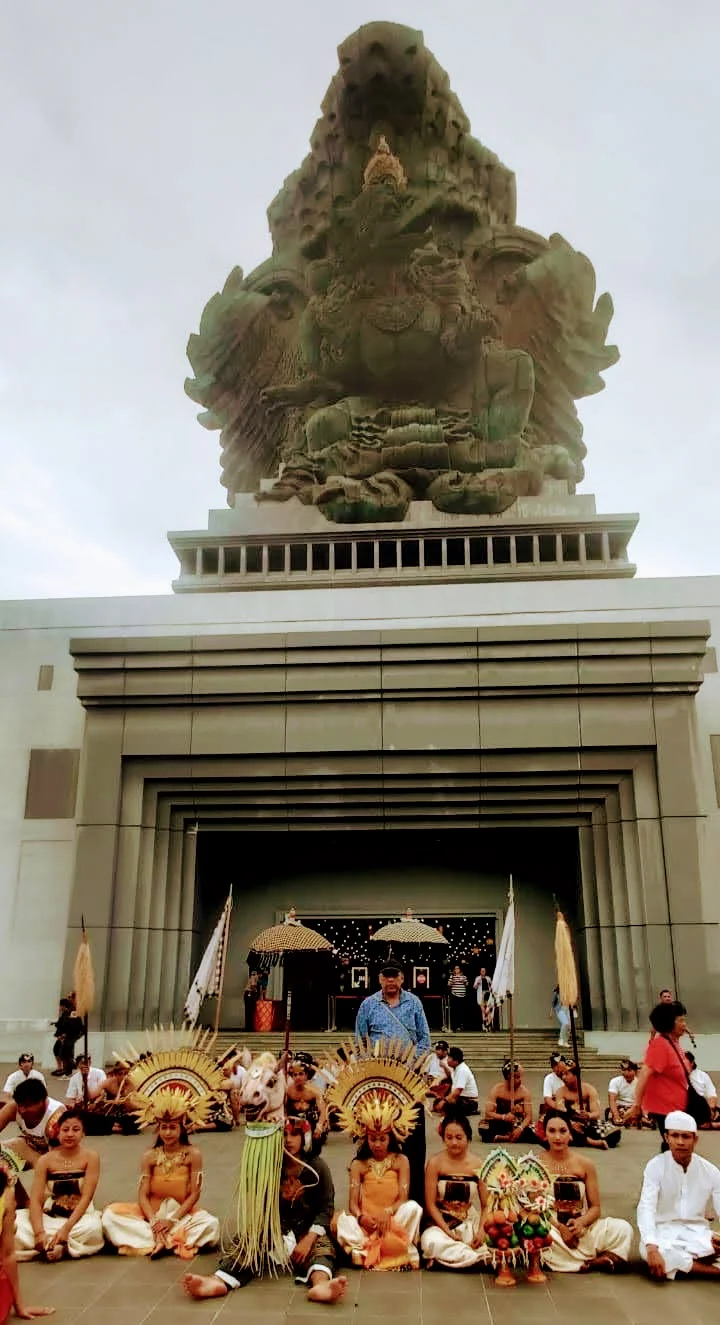
Lotus Pond: Archana standing in the grand open courtyard with the 121-meter Vishnu-Garuda monument soaring above the carved limestone cliffs
Beyond the monument itself, GWK Cultural Park hosts traditional Balinese dance performances, music, exhibitions, and festivals that celebrate the island's living Hindu culture. Visitors can explore wide open courtyards, limestone cliffs, and cultural spaces while enjoying panoramic views of Bali.
At the heart of these gathering grounds lies Plaza Lotus Pond, an expansive outdoor arena carved from white limestone that serves as the grand entrance to the park and venue for major international cultural celebrations.
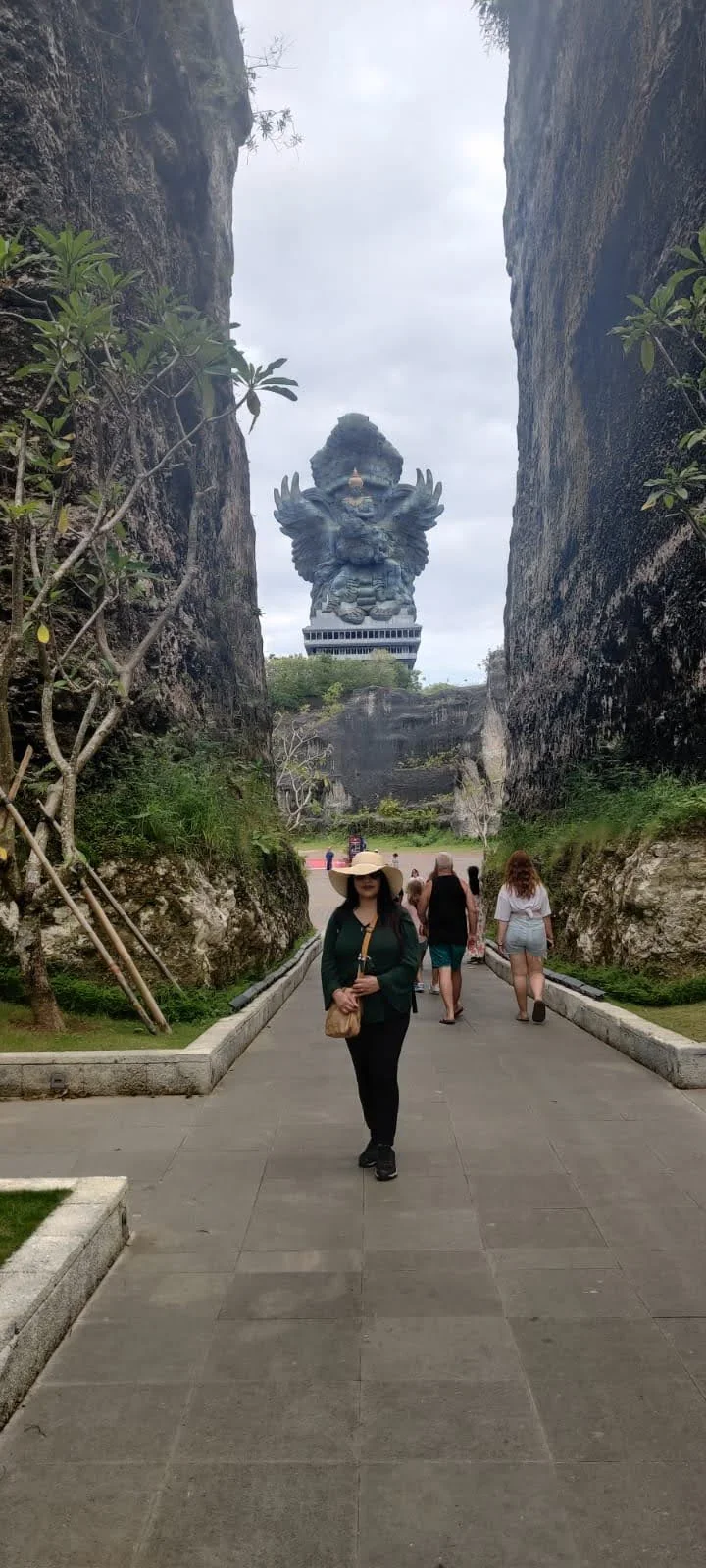
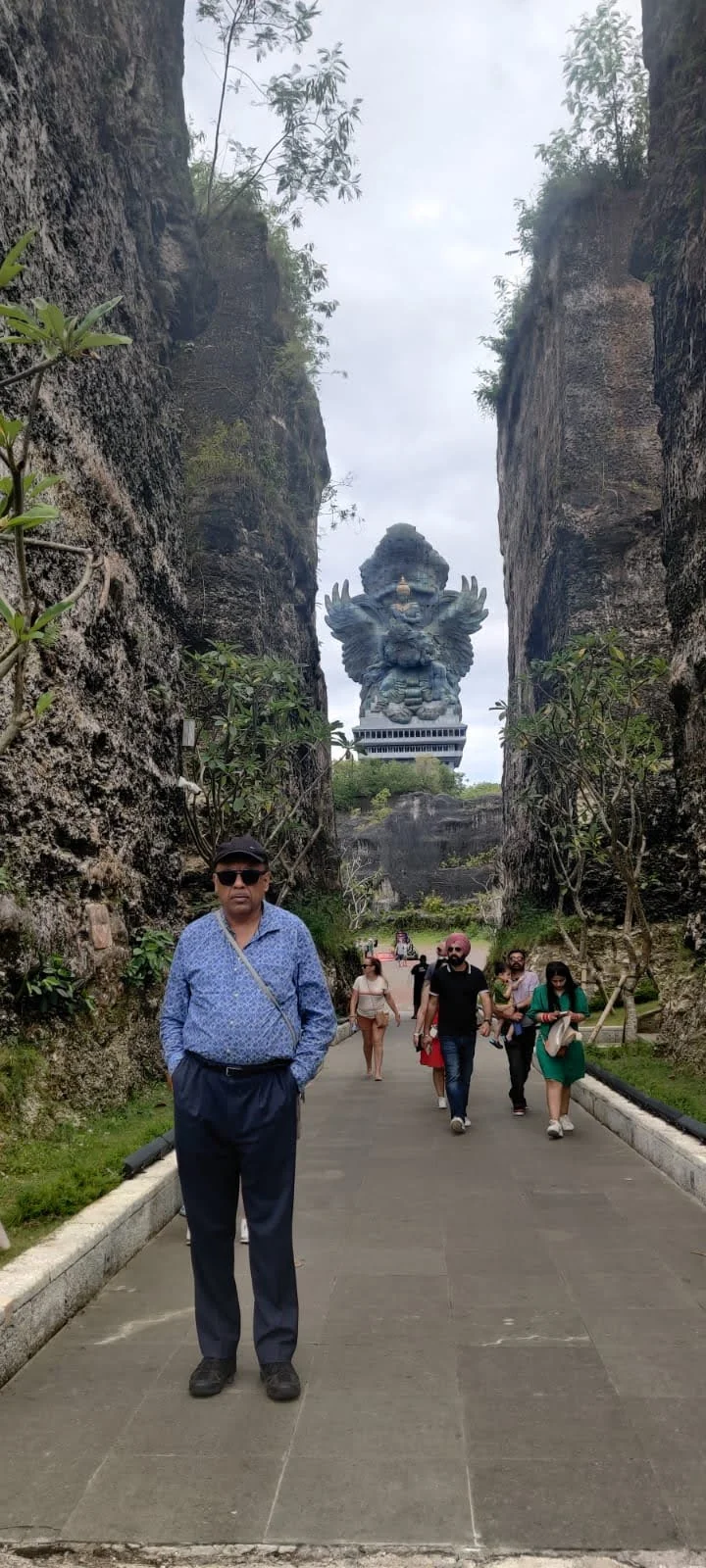
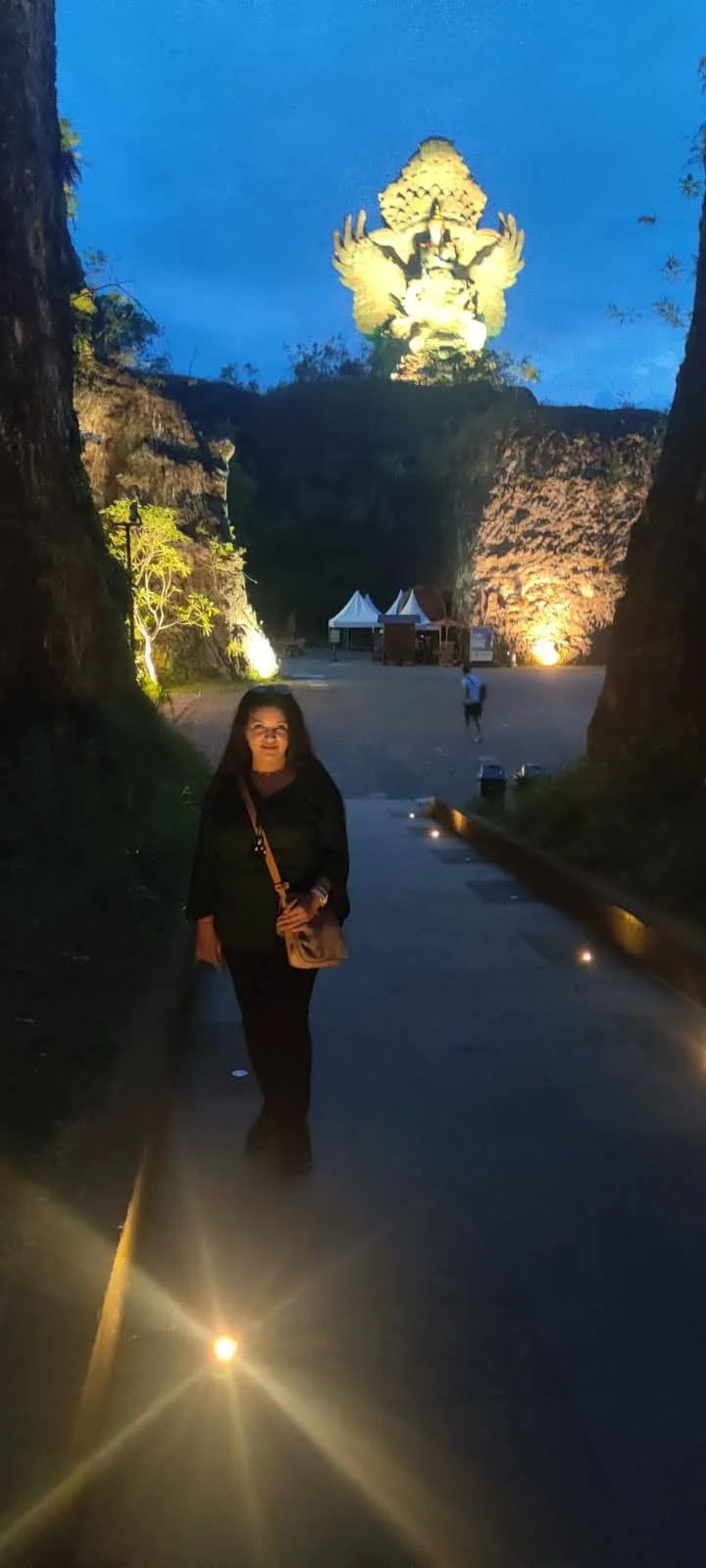
Walking through the towering limestone canyon corridors framing the 120-meter Vishnu-Garuda monument is an awe-inspiring experience. Carved directly out of the Bukit Peninsula plateau, the sheer vertical quarried walls create monumental natural sightlines leading toward the central plaza.
For many travelers, GWK is more than a tourist attraction; it is a powerful reminder that the spiritual and artistic legacy of India continues to flourish far beyond the Indian subcontinent, preserved beautifully in the heart of Bali.
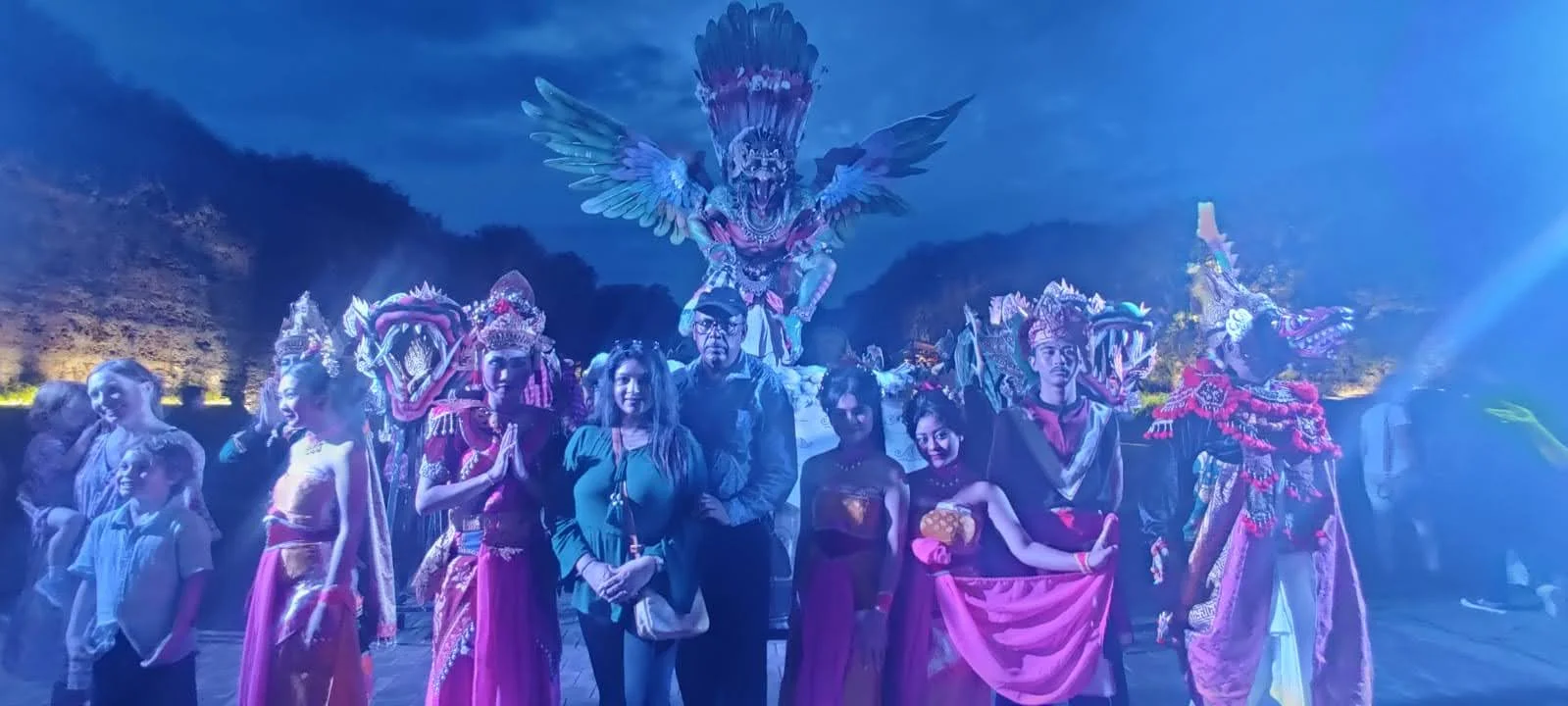
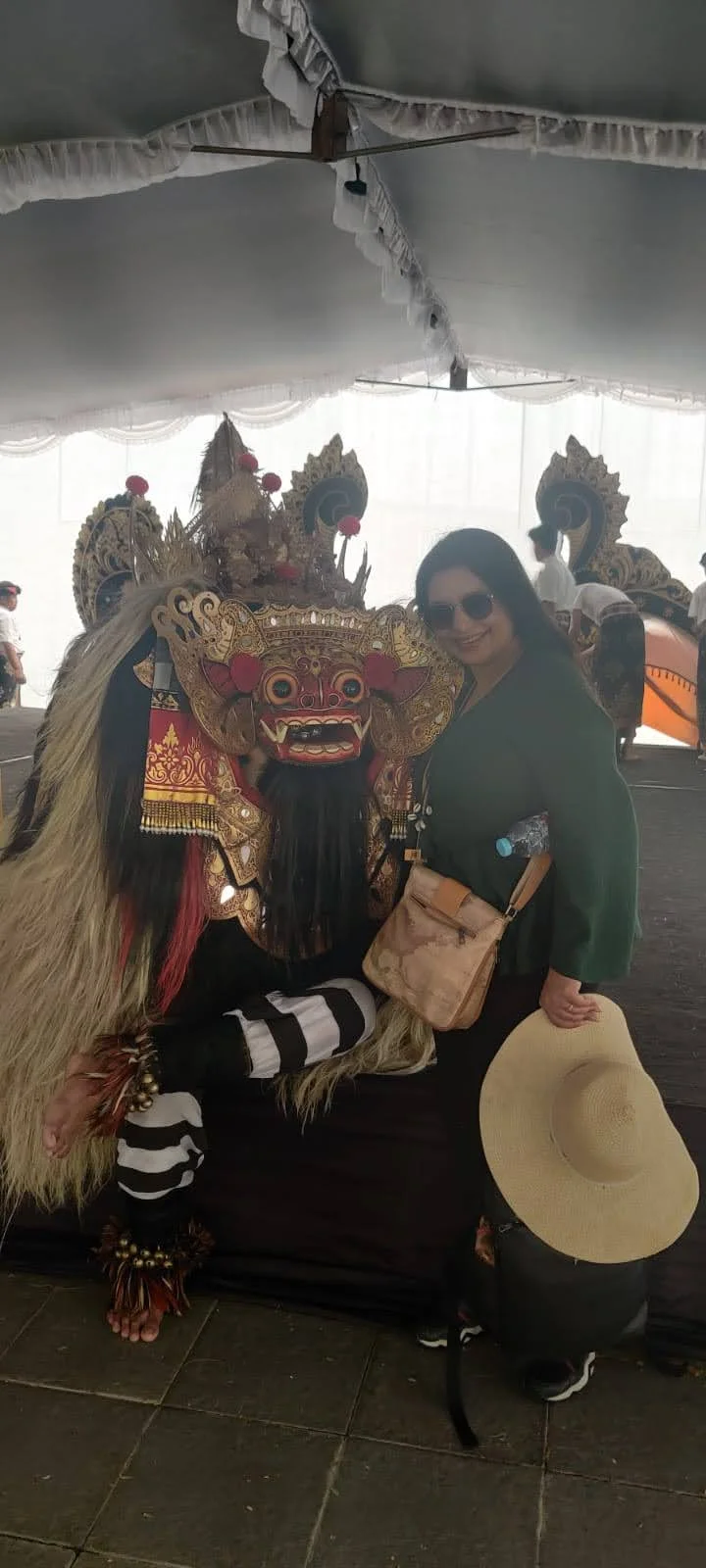
Encounters with Balinese Performers
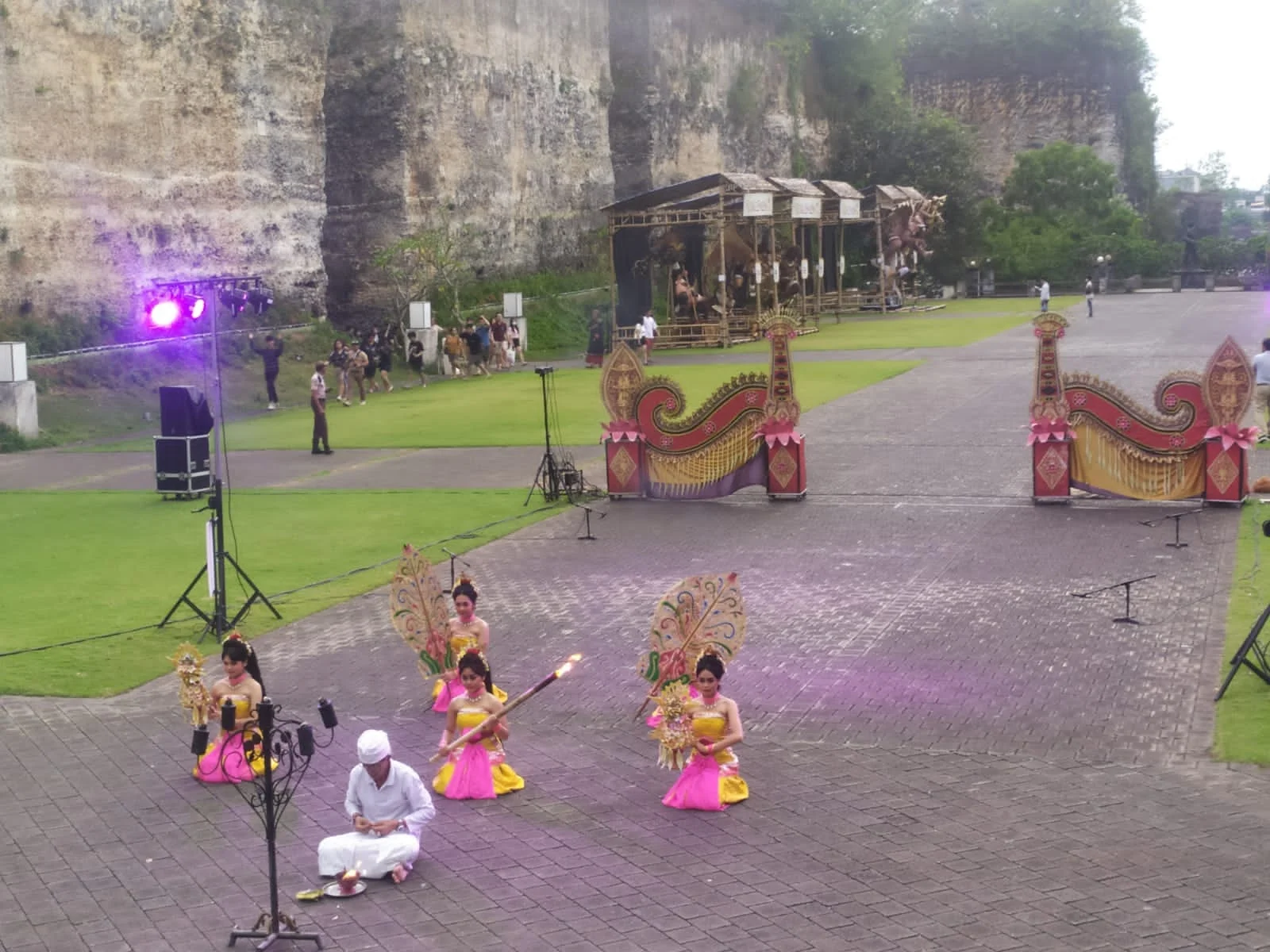
Traditional Balinese dance blends intricate finger movements, expressive eye gestures (seleddet), and resonant gamelan rhythms passed down through generations.
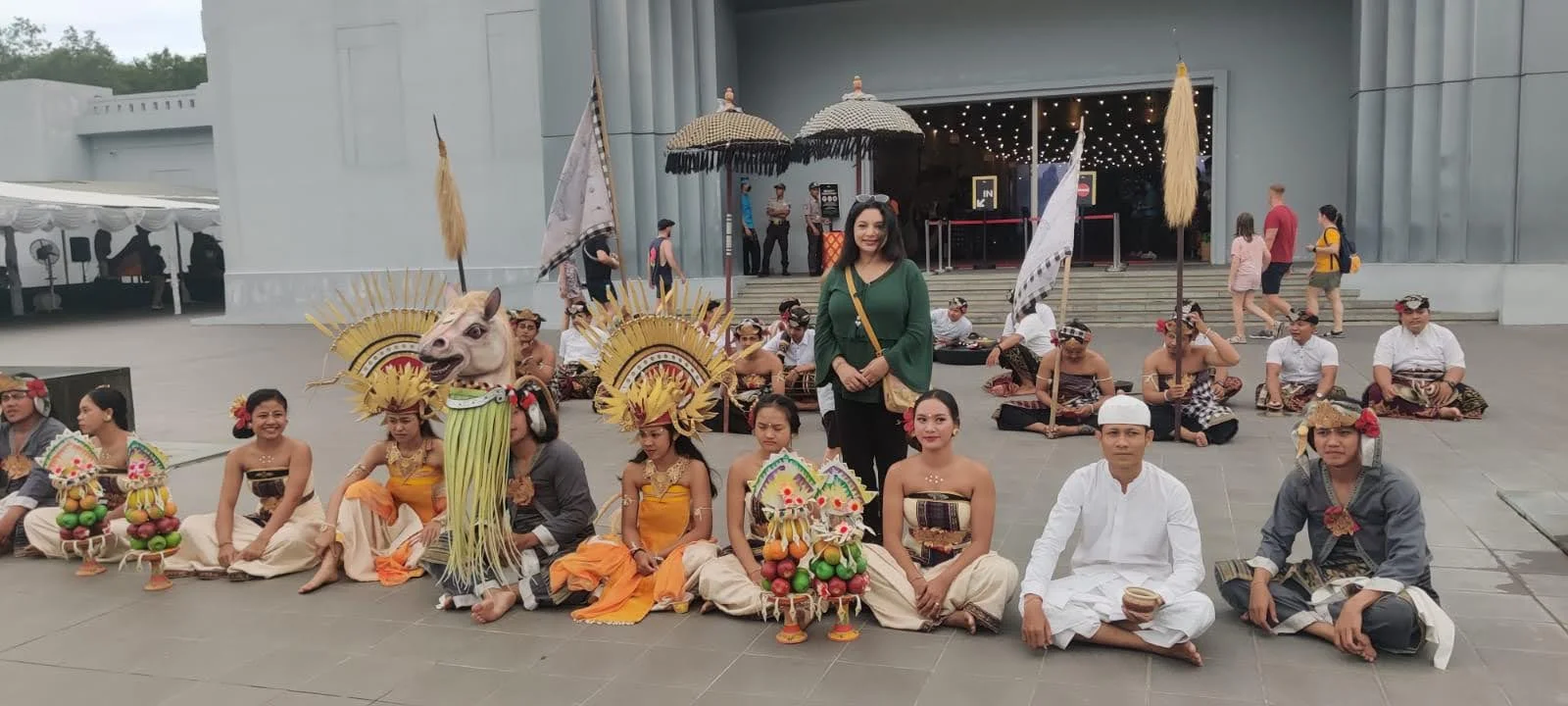
Meeting the Balinese Dance Troupe
Archana gathered with the full ceremonial troupe in gold headdresses, vibrant silks, and traditional ceremonial umbrellas celebrating Bali's living artistic heritage.
Daily GWK Dance at 6:00 PM
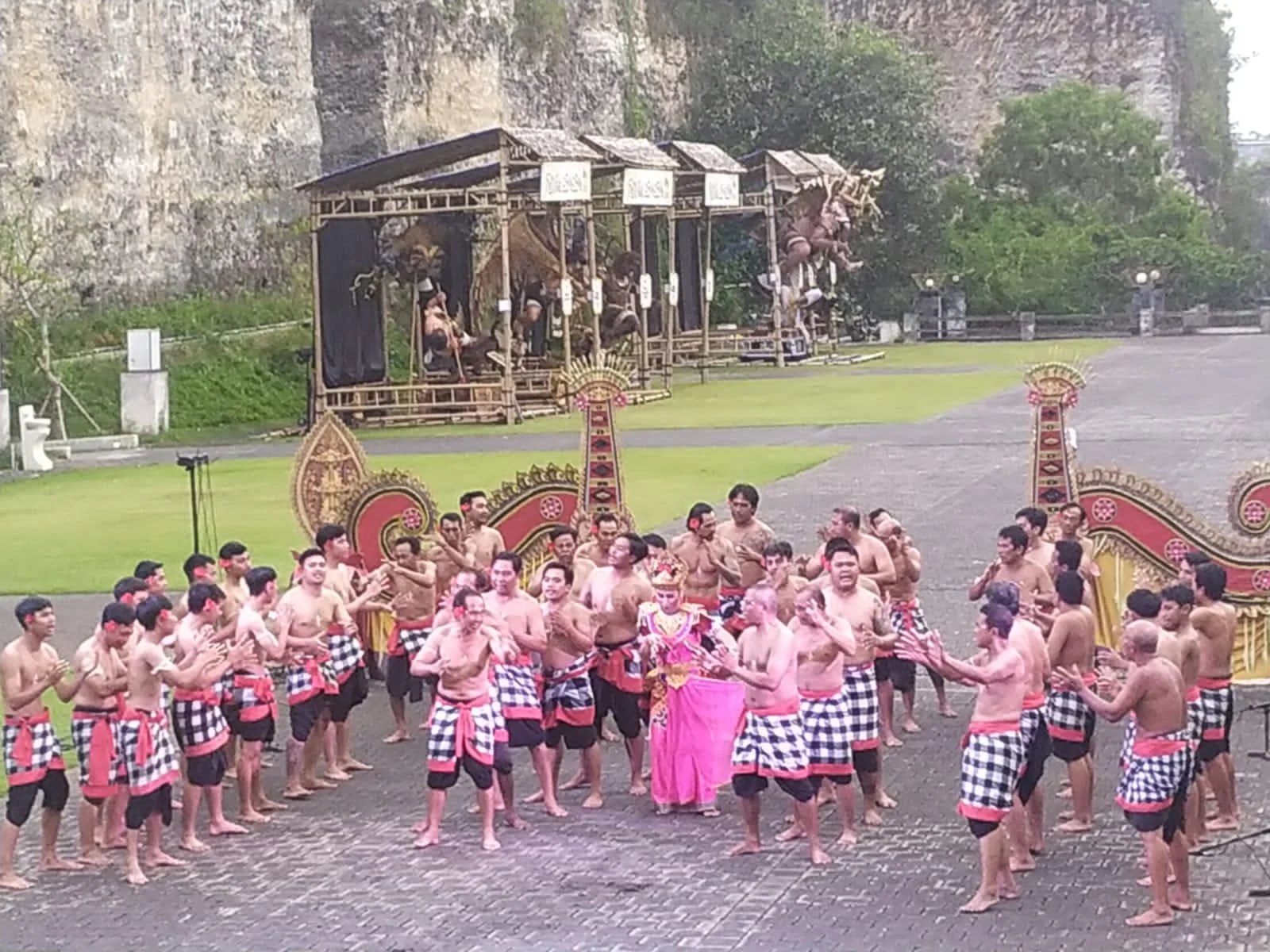
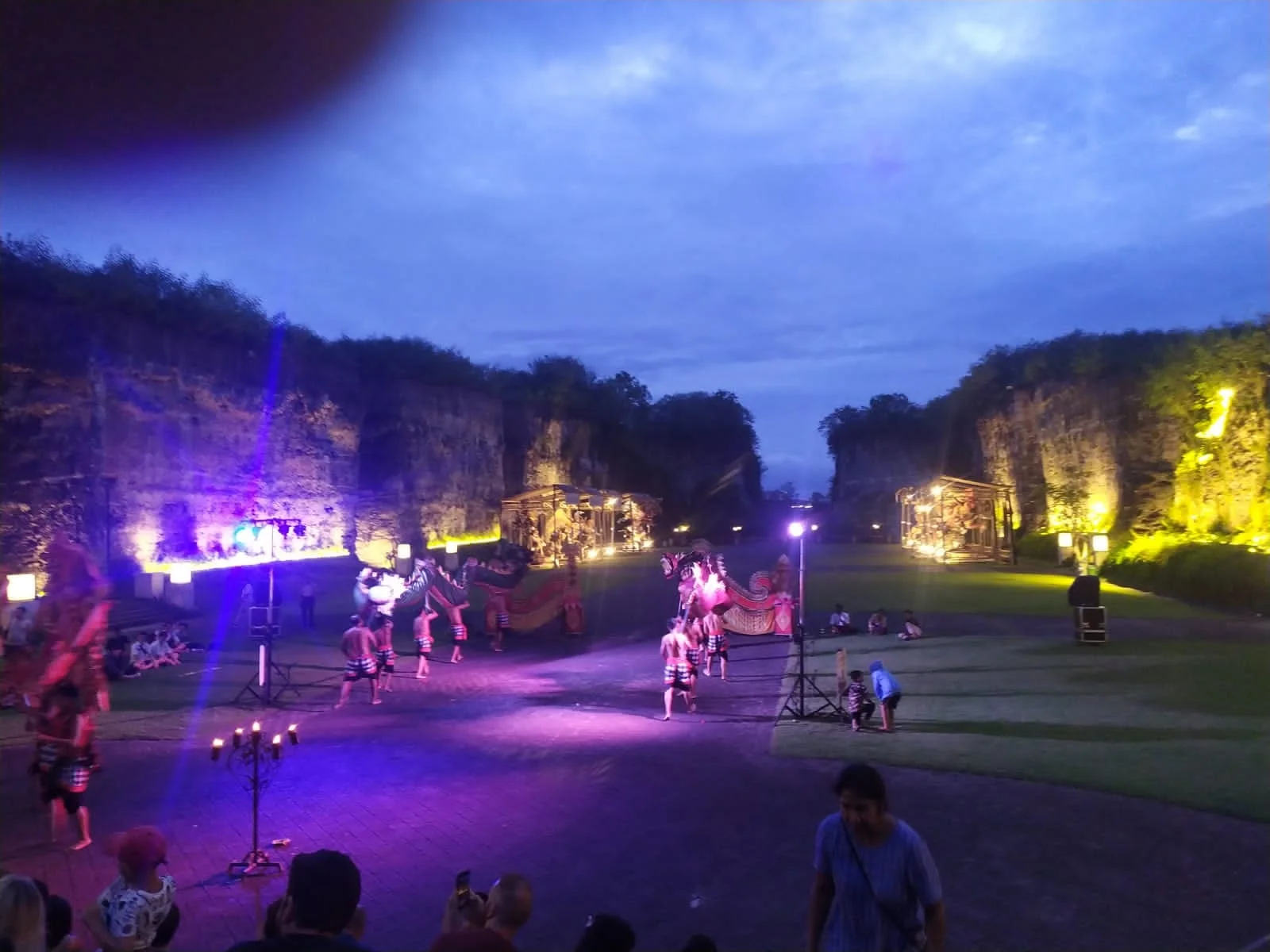
The daily Kecak Garuda Wisnu Kencana Dance is a unique, one-hour cultural performance staged every evening at 6:00 PM against the dramatic backdrop of limestone cliffs. Relying entirely on a bare-chested human choir instead of musical instruments, the show delivers a hypnotic, rhythmic experience while telling the epic local legend of how the mythical bird Garuda became the trusted companion of Lord Vishnu. The performance features vibrant traditional costumes, expressive physical storytelling, and a dramatic fire finale, with seating available on the stone steps of the amphitheater.
Enjoying Nasi Padang (Indonesian Rice Platter) After a Long Day at GWK
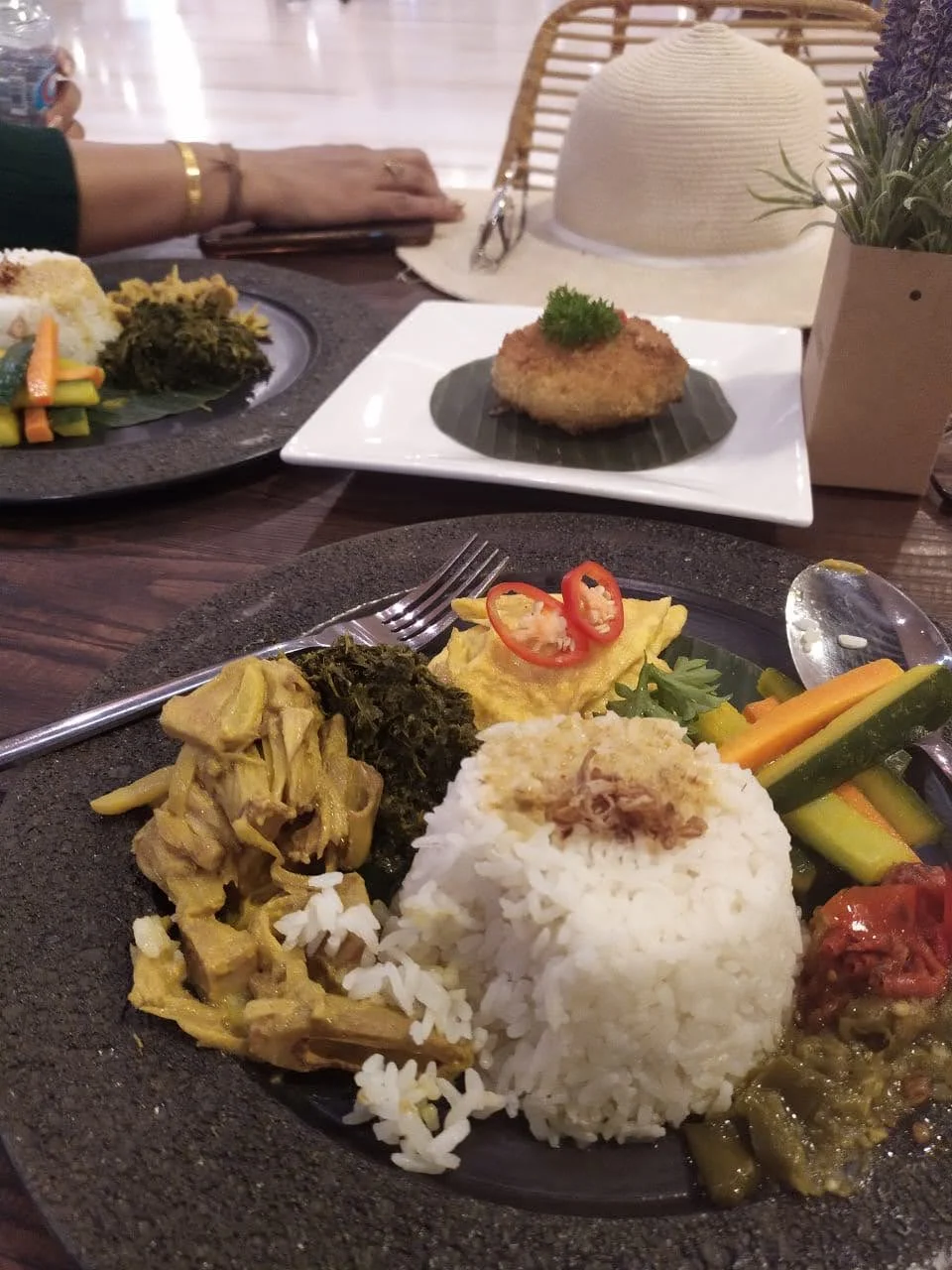
Nasi Padang, a traditional Indonesian meal featuring steamed rice topped with fried shallots and surrounded by flavorful sides. The plate includes a rich, yellowish young jackfruit curry (gulai nangka), stewed cassava leaves (daun singkong), an egg omelet with red chilies, fresh vegetable pickles, and two types of spicy sambal.
Bali's Message to the World
As an Indian, we found it extraordinary that one of the tallest statues in the world depicts Lord Vishnu riding Garuda—not in India, but in Indonesia, the world's largest Muslim-majority nation. The monument is more than an artistic masterpiece; it is a powerful reminder that civilizations are built by preserving heritage, respecting diversity, and celebrating shared cultural roots. Standing there, we felt that history had quietly erased political borders and reunited us through a common civilizational legacy.
Depicting Lord Vishnu riding Garuda at colossal scale in Indonesia stands as a profound reminder that civilizations flourish by honoring shared roots, celebrating diversity, and allowing common heritage to transcend political borders.
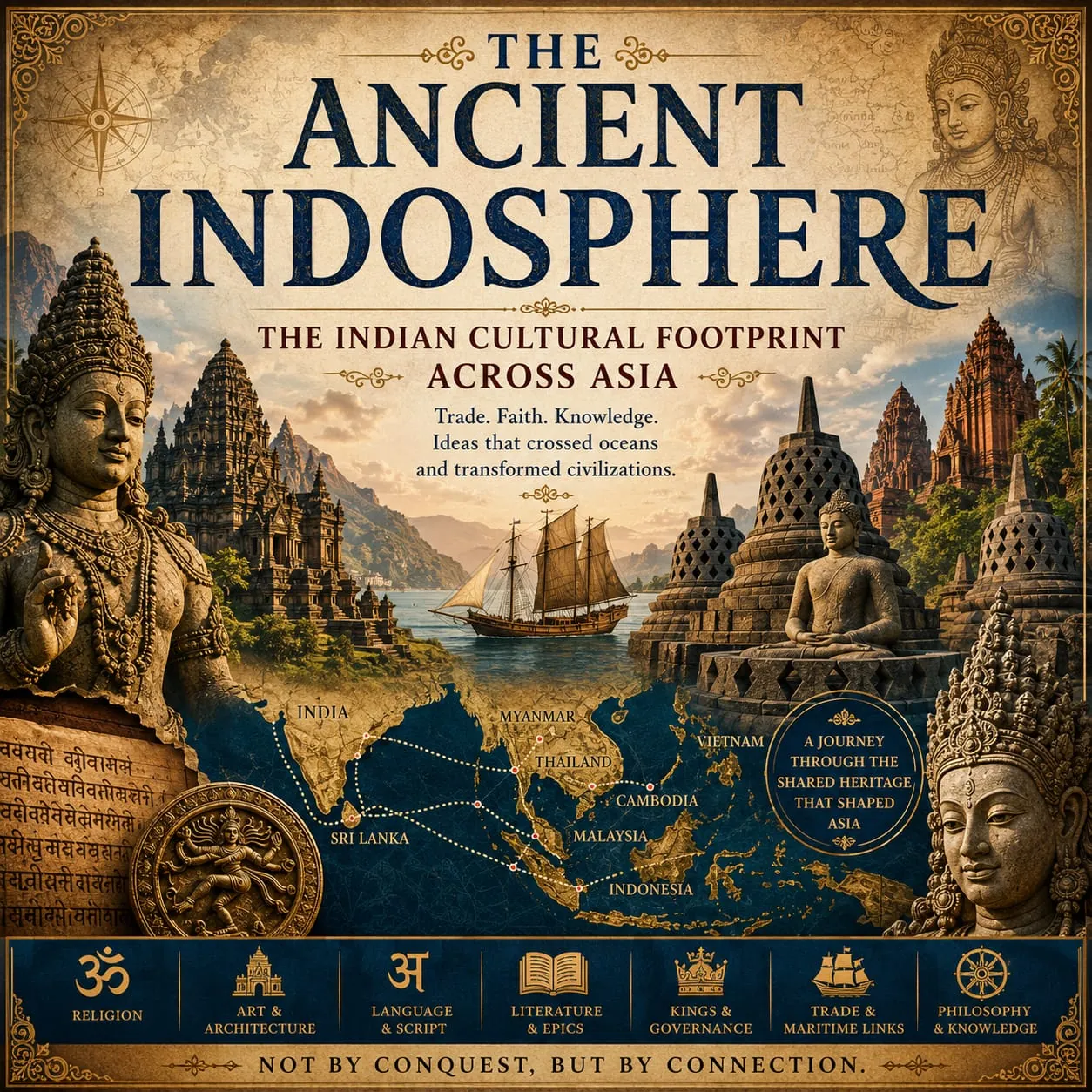
TRAVELLING THROUGH THE TIMELESS LEGACY OF INDIAN CIVILIZATION ACROSS ASIA AND BEYOND
“Not by conquest, but by connection.”
From the sacred coastal waters of Bali to the colossal heights of Garuda Wisnu Kencana, the living Hindu traditions, sacred mantras, and epic storytelling of ancient India continue to flourish across the Island of the Gods with timeless vitality and spiritual connection.
Tips for Visiting Denpasar & GWK Cultural Park
Practical guidance for navigating southern Bali, witnessing evening cultural spectacles, and experiencing sacred monuments with care.
Location & Access
Located in Ungasan on the Bukit Peninsula, situated roughly 15 to 20 km south of central Denpasar.
Kecak Performance
The signature Kecak Dance begins at 6:00 PM nightly; arrive by 5:15 PM for prime amphitheater stone seats.
Park Transportation
Electric shuttle buggies transport guests across the 60-hectare park, easing steep limestone ridge climbs.
Best Time of Day
Arrive around 3:30 PM to tour Plaza Wisnu and Lotus Pond before sunset, staying for twilight illumination.
Attire & Sun Protection
Wear sturdy walking shoes and light tropical clothing, carrying a wide sunhat, sunglasses, and bottled water.
Statue Pedestal & Gallery
The multi-level pedestal museum displays cultural artifacts, historical bronzes, and upper viewing panoramas.
Local Dining
Conclude your excursion tasting flavorful Nasi Padang curries or Balinese ayam betutu at nearby village warungs.
Combine with Uluwatu
Pair an afternoon at GWK with a clifftop sunset excursion at Uluwatu Temple, located 25 minutes further south.
Complete Field Photography Index
All 21 client-provided photographs mapped with verified subjects, exact orientation, and focal point alignment.
Colossal Monument4:3The Colossal GWK Monument
Approaching the 122-metre bronze and copper statue of Lord Vishnu riding Garuda, one of the tallest statues on Earth.
Preserver Deity3:4Plaza Wisnu: Lord Vishnu
The majestic 23-metre bust of Lord Vishnu crowned in gold, presiding over the highest natural point of the park.
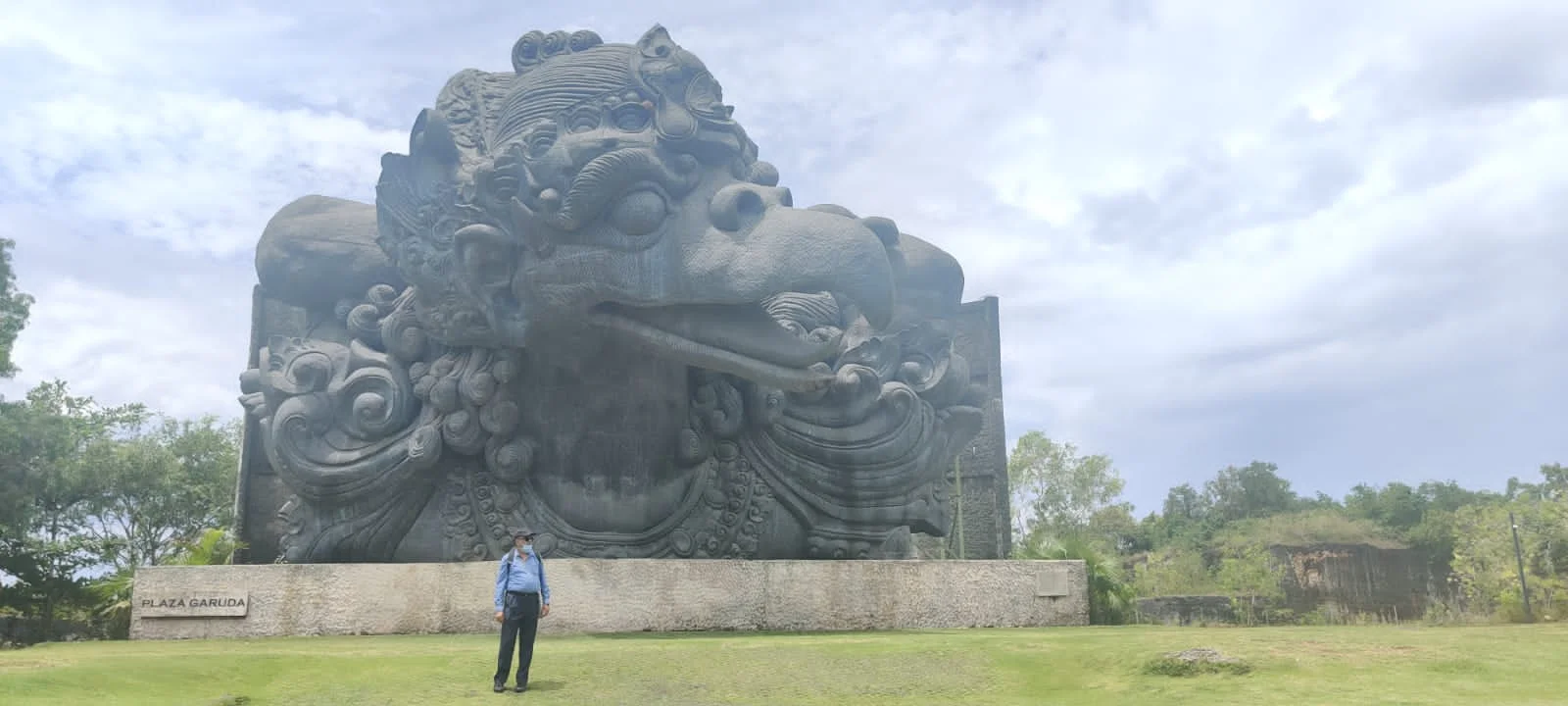
Sculptural Masterpiece4:3Colossal Head of Garuda
Close-up of the magnificent sculpted copper eagle head depicting Garuda, Lord Vishnu's celestial vehicle.
Monument Engineering4:3GWK Architectural Model
Architectural maquette and exhibition display showing the internal structure and design of the monument.
Limestone Landscape3:4Limestone Canyon Path
Standing between the towering quarried limestone pillars carved out of the Bukit Peninsula plateau.
Limestone Landscape3:4Canyon Monolith Pillars
Exploring the dramatic sheer rock corridors that frame the approach to the central festival plaza.
Festival Grounds4:3Plaza Lotus Pond
Expansive outdoor plaza carved from white limestone, capable of hosting thousands for international festivals.
Evening Theater4:3Kecak Amphitheater
Open-air stone amphitheater filling with spectators as twilight descends over the Indian Ocean horizon.
Temple Rituals4:3Opening Rites of Kecak
A Balinese Hindu priest offering holy water (tirtha) and canang sari blossoms to sanctify the performance ring.
Living Epic4:3The Sacred Kecak Dance
Over fifty bare-chested men chanting 'Cak-cak-cak' in interlocking polyrhythms to enact the Ramayana epic.
Sacred Performance3:4Barong in Sacred Regalia
Ceremonial actor adorned in ornate mirror-inlaid crown, golden epaulettes, and sacred textiles representing cosmic good.
Cultural Exchange3:4Balinese Dance Troupe
Gentleman traveler photographed with female performers in vibrant gold-gilded Prada textiles and frangipani headdresses.
Cultural Exchange4:3With Balinese Dancers
Connecting with traditional Legong and Barong performers following the afternoon cultural showcase.
Theatrical Splendor4:3Ceremonial Dance Troupe
Full ensemble of Balinese dancers illuminated in ceremonial gold leaf under the night stars.
Nocturnal Splendor3:4GWK Illuminated at Night
The giant copper and brass monument illuminated against the dark sky, visible across southern Bali and the ocean.
Coastal Panorama4:3Bukit Peninsula View
Sweeping vista overlooking the southern Balinese coastline from the heights of the cultural park plateau.
Vedic Deities4:3Lord Varuna Monument
Statue of the Vedic God of the Oceans and Waters commanding the southern maritime gates of the island.
Mythological Statuary3:4Gajah Mina Sea Monster
Stone monument of Gajah Mina—the elephant-headed fish creature originating in Hindu-Buddhist maritime lore.
Artisan Woodcraft3:4Carved Golden Garuda
Intricately carved gilded Garuda mount in traditional Balinese gold leaf and red lacquer woodcraft.
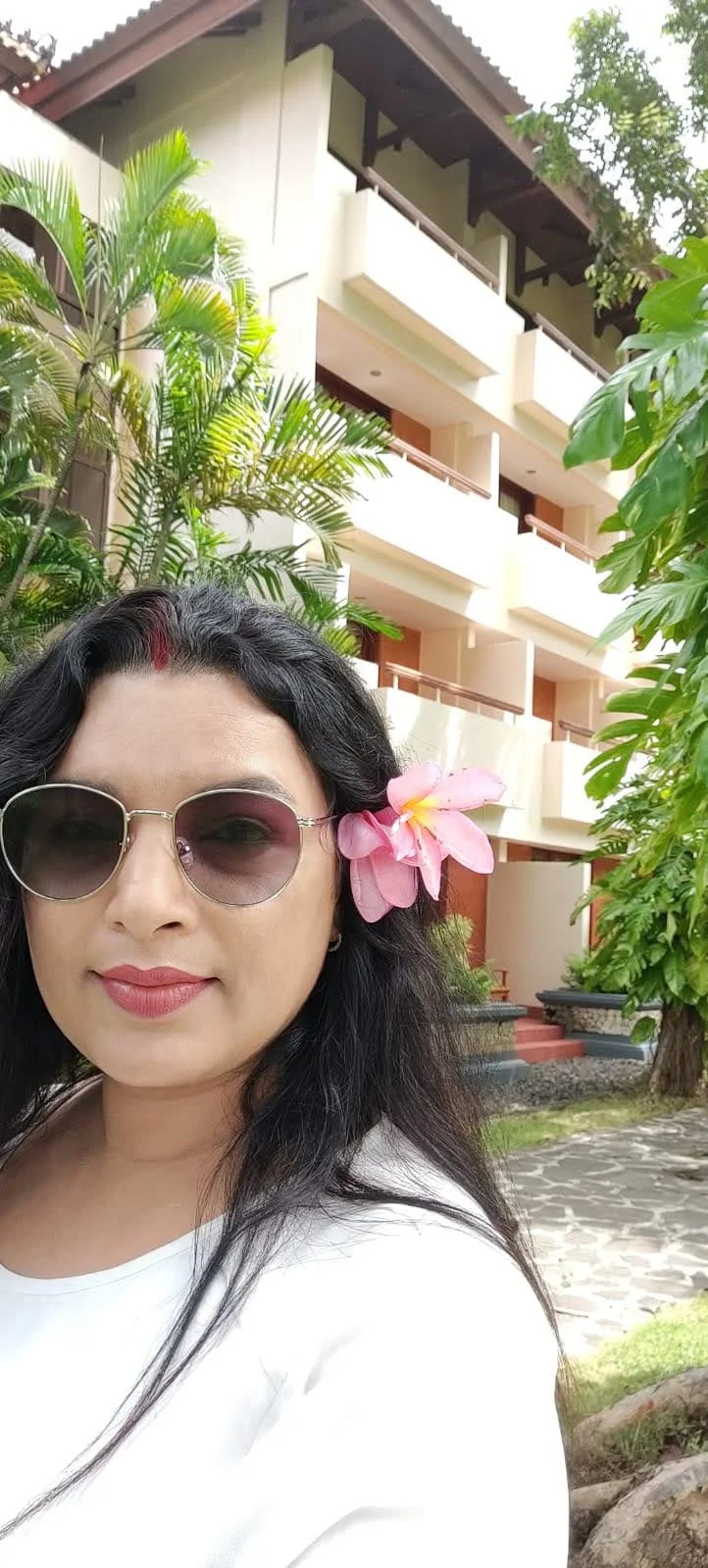
Balinese Hospitality3:4Frangipani Welcome
Traveler welcomed with fresh frangipani flowers and traditional hospitality upon arriving in Bali's capital.
Indonesian Cuisine4:3Indonesian Rice Platter
Traditional dining spread featuring fragrant steamed rice, Gulai Nangka jackfruit curry, cassava leaves, and sambal.
CONTINUE THE INDONESIA JOURNEY
Journey Through the Sacred Monuments of Indonesia