
THERAVADA BUDDHISM IN LAOS
Following the Spiritual Journey from India to the Land of a Thousand Wats
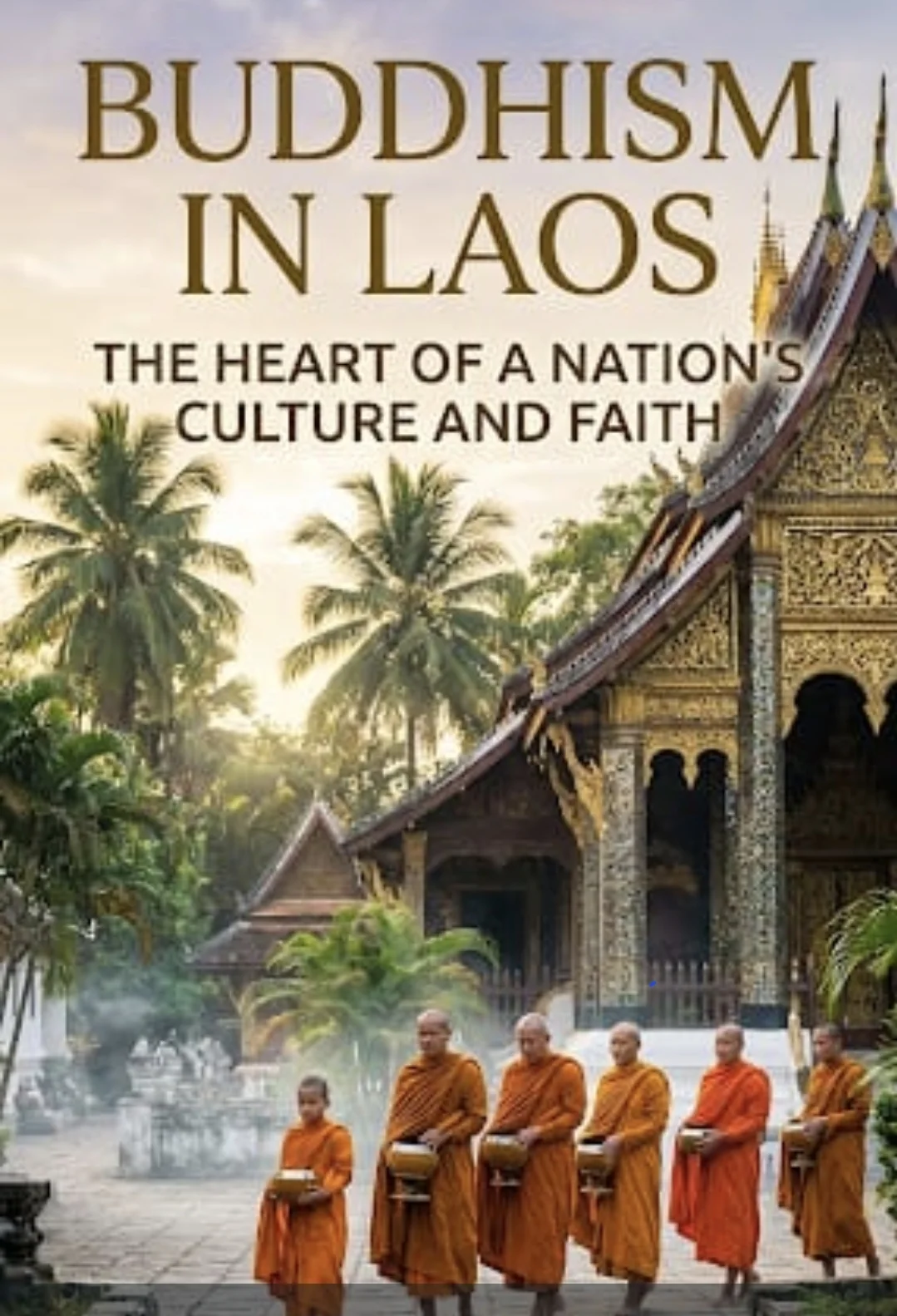
Wat Xieng Thong Sim & Saffron Monks: Exploring the serenity and living spiritual discipline of Luang Prabang's sacred monasteries
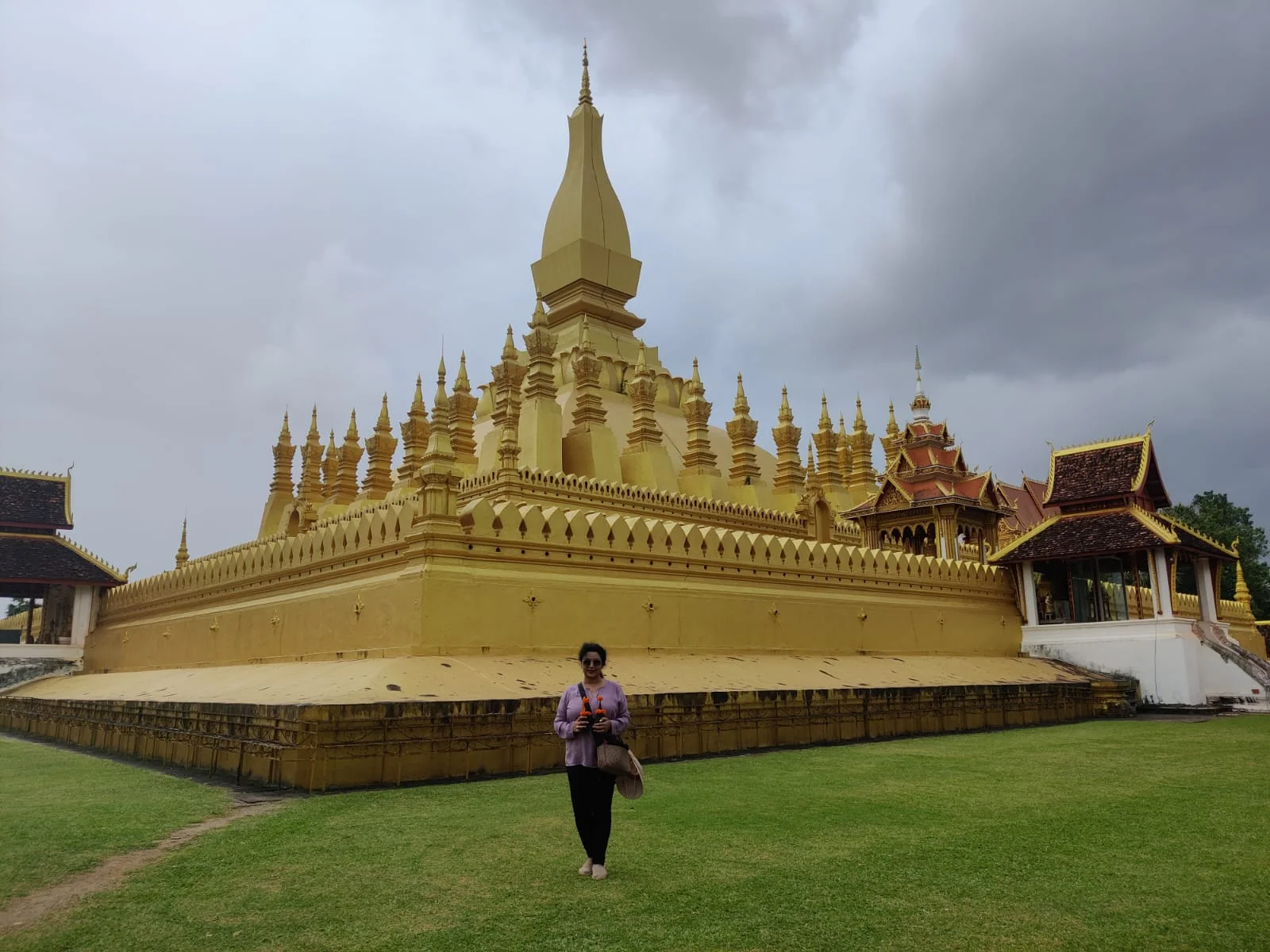
The Golden Heart of Lao Buddhism: Standing before the shimmering national reliquary of Pha That Luang in Vientiane
Buddhism's Journey from India to Laos: Ancient Trade Routes and Cultural Exchanges
“From centuries before and after the Common Era, trade networks connected the Indian subcontinent with mainland Southeast Asia, helping Buddhist teachings spread through regions that are now Myanmar, Thailand, Cambodia, and Laos.”
— Mekong Valley Historical ChronicleBuddhism originated in India and gradually travelled across Asia through the movement of monks, merchants, pilgrims, and cultural exchanges. From the centuries before and after the Common Era, trade networks connected the Indian subcontinent with mainland Southeast Asia, helping Buddhist teachings spread through regions that are now Myanmar, Thailand, Cambodia, and Laos.
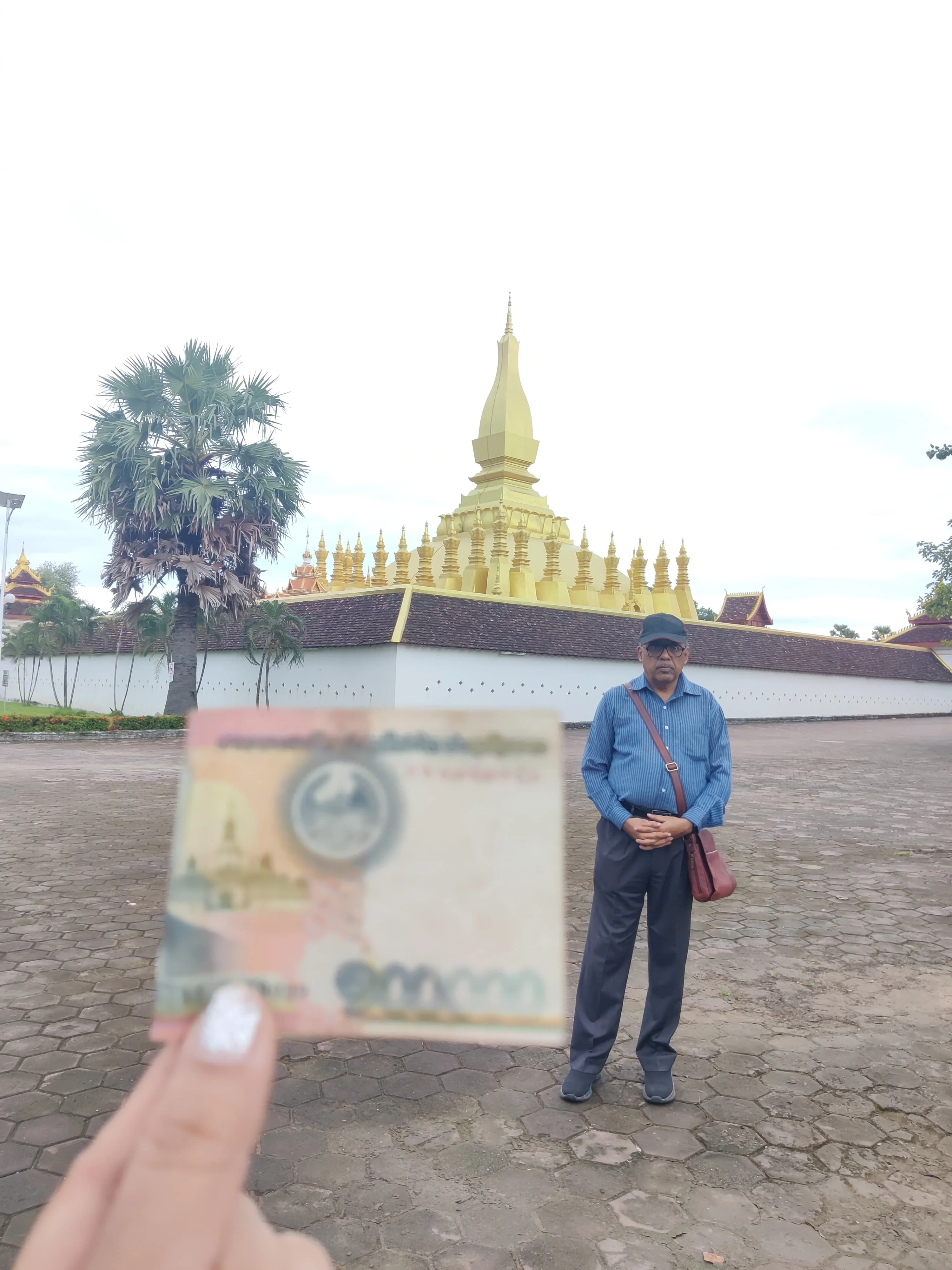
Sovereignty Rooted in Sacred Dhamma: Aligning the national Lao Kip banknote with the real golden spire of Pha That Luang
The development of Buddhism in Laos was a gradual process shaped by these regional connections. Mon communities and neighbouring kingdoms played important roles in transmitting Buddhist traditions, while Khmer cultural influence also contributed to the religious landscape of the region.
Over time, Theravada Buddhism, whose teachings are preserved in the Pali Canon, became deeply rooted in Lao society, shaping its temples, ceremonies, art, and everyday spiritual life. Our journey through Laos offered us a chance to experience this heritage firsthand, from the golden stupas of Vientiane to the peaceful monasteries of Luang Prabang.
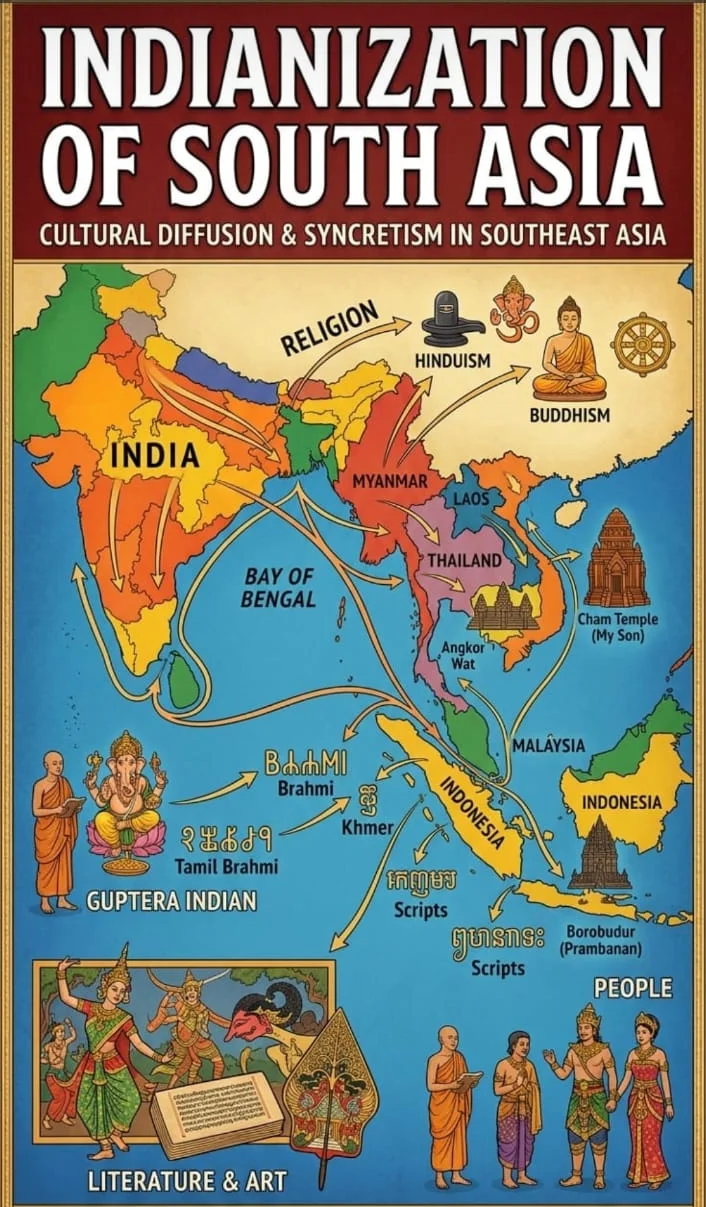
Cultural Diffusion Routes: Tracing the maritime and inland arteries that carried Buddhist teachings, Pali scriptures, and Brahmi scripts into Laos
Transmission of the Pali Canon
Unlike the Sanskrit Mahayana traditions that initially flourished in the courts of Angkor and Champa, it was Theravada Buddhism—preserved in Pali and nurtured through Mon, Sri Lankan, and Burmese monastic lineages—that ultimately resonated with the people of Laos, becoming inseparable from daily village and court life.
SPIRITUAL LINEAGEPha That Luang, Vientiane: The Golden Heart of Lao Buddhism
“Covered in shimmering gold, this magnificent stupa is regarded as one of the country's most important national monuments and a powerful symbol of Lao Buddhist identity.”
— Vientiane Field NoteVisiting Pha That Luang in Vientiane was one of the most memorable spiritual experiences of our time in Laos. Covered in shimmering gold, this magnificent stupa is regarded as one of the country's most important national monuments and a powerful symbol of Lao Buddhist identity.
The monument is traditionally associated with the preservation of a sacred relic of the Buddha—believed to be a breastbone relic brought by Indian Ashokan emissaries in the third century BCE. Its present form is closely connected with King Setthathirath, who supported its development in the sixteenth century.
The soaring golden spire and carefully tiered structure create an atmosphere of grandeur while reflecting the cosmological architecture of Mount Meru and the layers of Buddhist heavens. Standing before the gleaming monument under the tropical sun, we were struck by its beauty and serenity. Beyond its architectural splendour, Pha That Luang represents the enduring relationship between Buddhism, national identity, and the spiritual life of Laos.
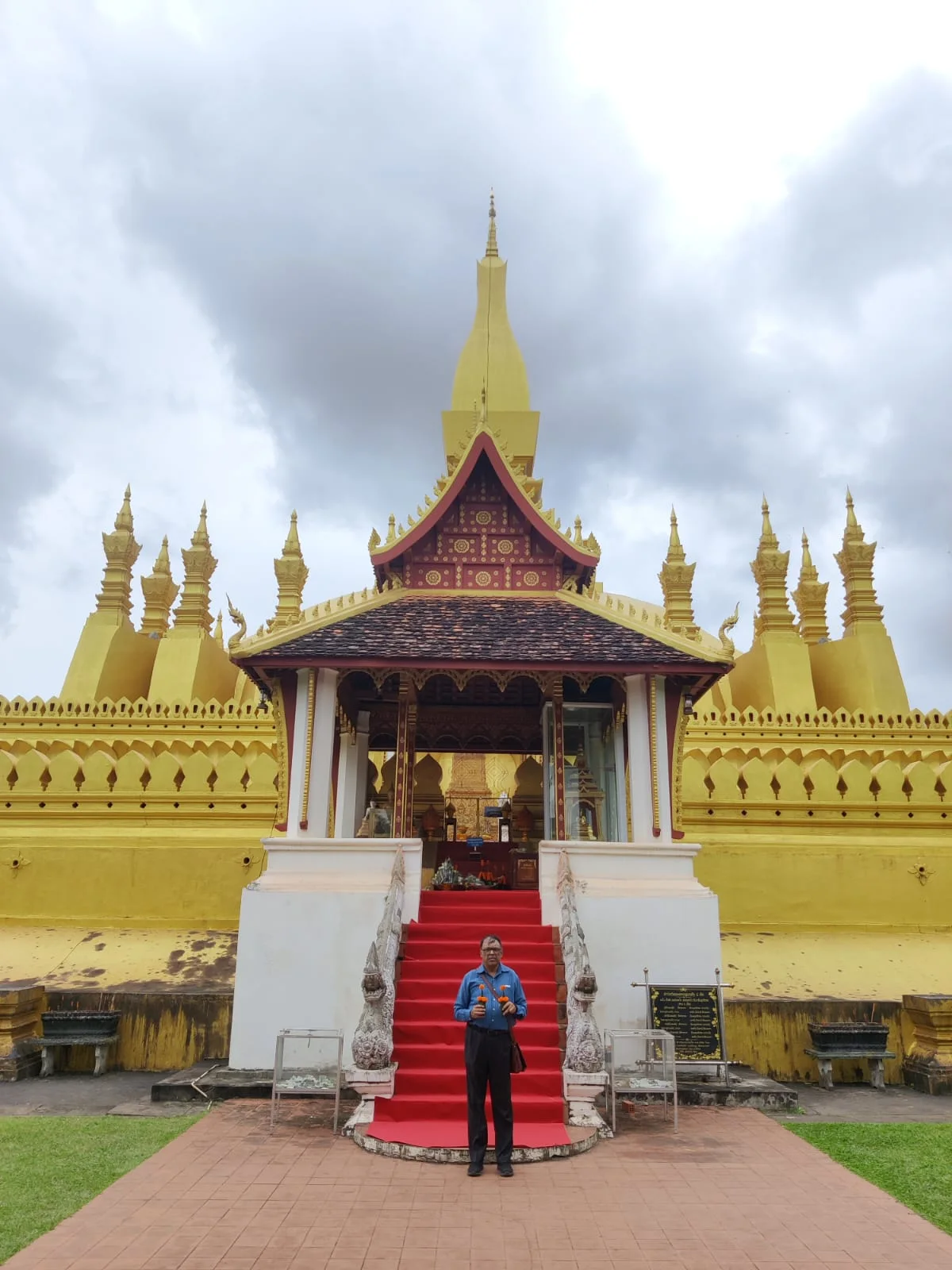
Ceremonial Red-Carpet Ascent: Approaching the tiered golden terraces of Pha That Luang in Vientiane
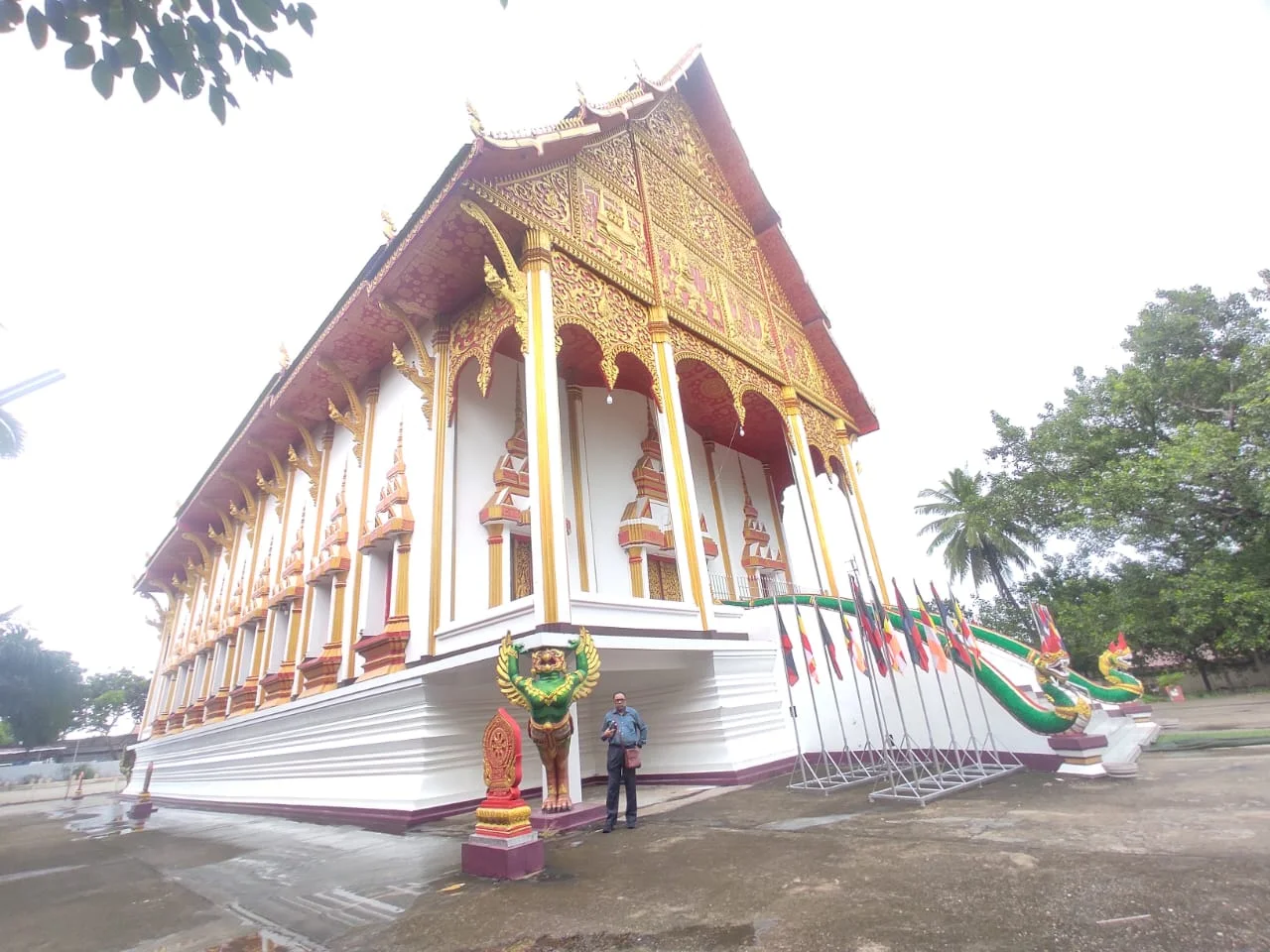
Wat That Luang Neua: Golden multi-headed Naga balustrades and Garuda rooflines guarding the monastic temple adjacent to the Great Stupa
Cosmic Architecture of the 30 Paramis
Pha That Luang rises 44 metres into the sky. Its square base is surrounded by 30 smaller stupas, symbolising the 30 Perfections (Paramis) practiced by the Buddha on his path to full awakening.
COSMIC ARCHITECTUREWat Ong Teu Mahawihan, Vientiane: A Moment of Peace and Reflection
Our visit to Wat Ong Teu Mahawihan in Vientiane was a peaceful and memorable experience. The temple's magnificent bronze Buddha statue, surrounded by elegant red pillars with golden detailing, created a deeply spiritual atmosphere.
We spent quiet moments inside the sanctuary, admiring the statue and the craftsmanship that gives the temple its distinctive character. Known for its important Buddha image and monastic traditions, Wat Ong Teu is among Vientiane's respected Buddhist religious sites.
The stillness of the sanctuary offered a welcome pause from the city's activity. It reminded us that Buddhist temples are not simply architectural landmarks; they remain living spaces of worship, learning, meditation, and community.
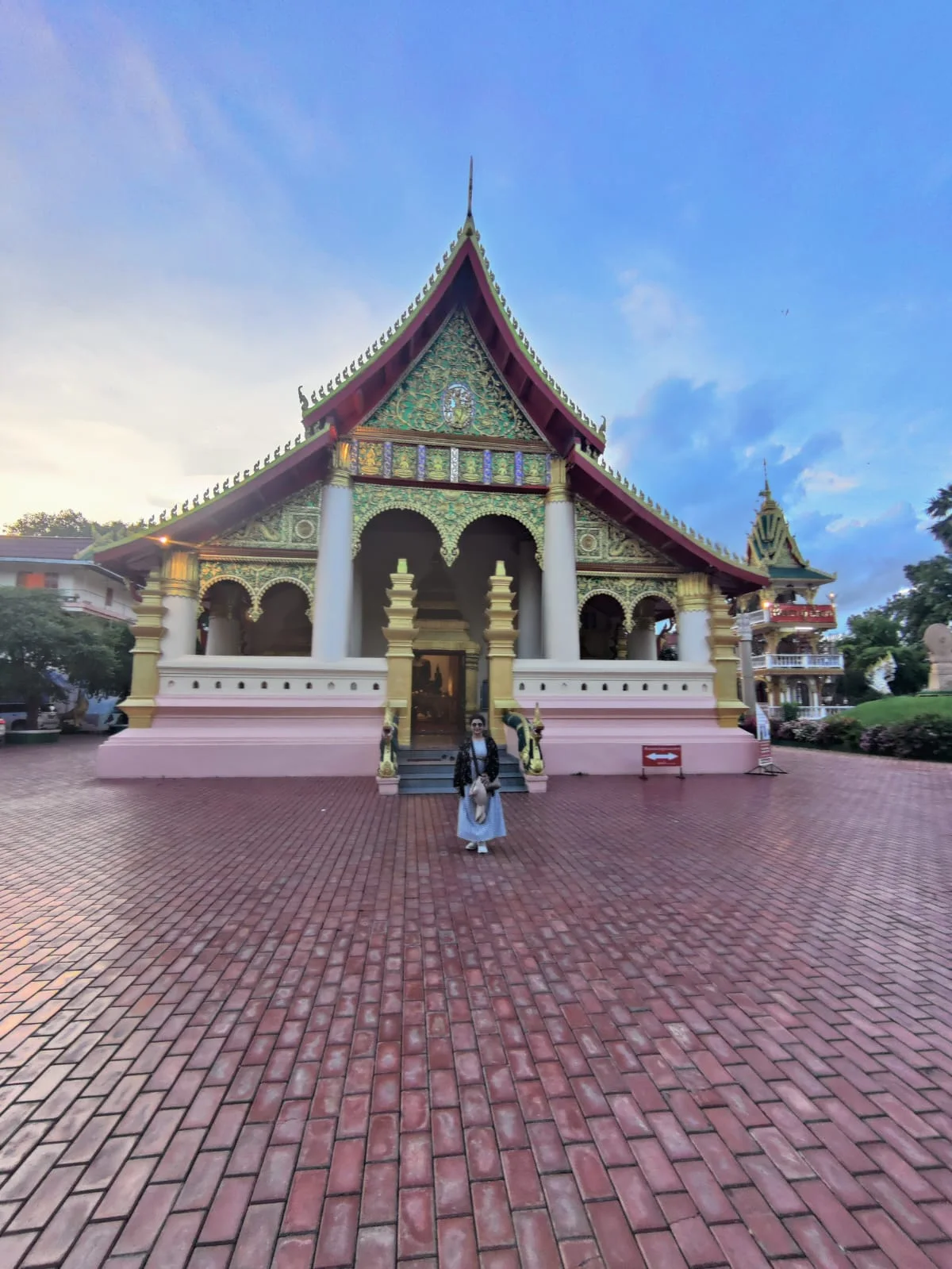
Courtyard Serenity: Quiet contemplation in the shaded garden precinct of Wat Ong Teu Mahawihan
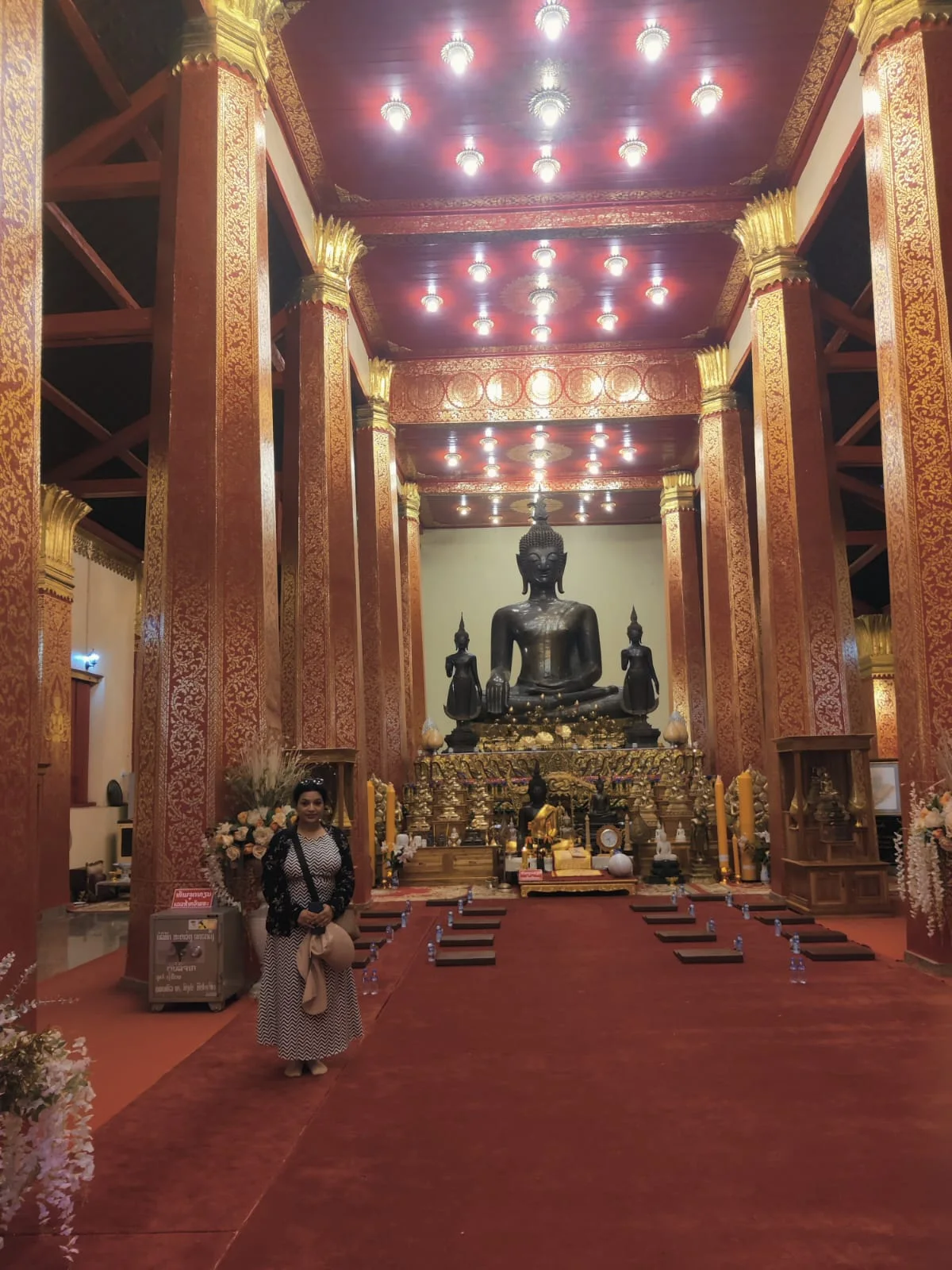
Sanctum of the Bronze Buddha: Revering the colossal seated Buddha between red-and-gold gilded columns
The Heavy Buddha of Ong Teu
The name 'Ong Teu' translates to 'Temple of the Heavy Buddha', referring to the colossal sixteenth-century bronze Buddha image that weighs several tonnes and survived historical invasions.
LIVING SANCTUARYFrom Temple Lanterns to Civic Life in the Capital
As day gave way to evening in Vientiane, the city's spiritual pulse remained palpable—from lanterns illuminating temple courtyards to families gathering around Nam Phou fountain and civic squares beneath the tropical twilight.
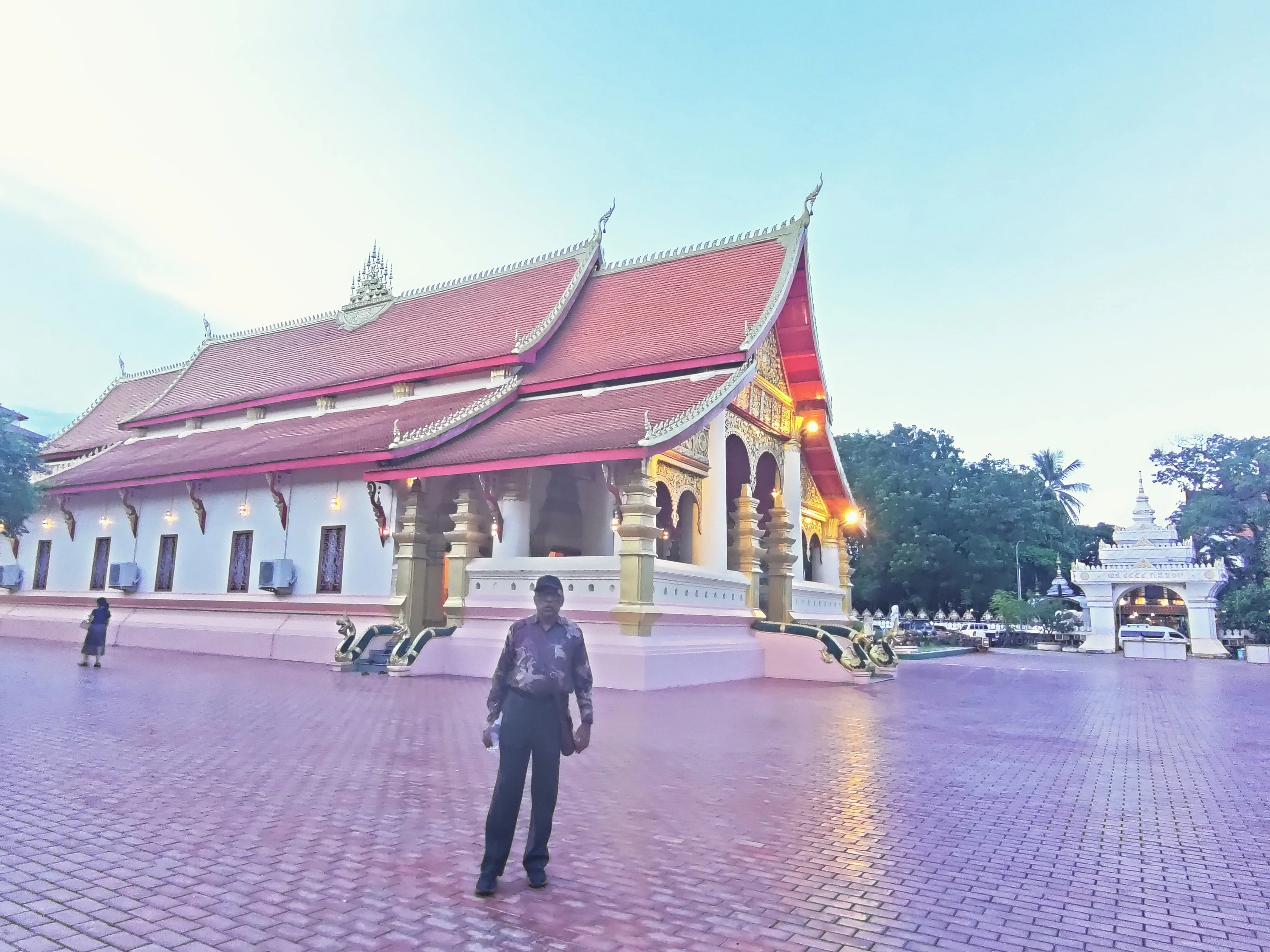
Twilight over Wat Ong Teu: Golden temple lanterns casting a warm glow across the monastic grounds at blue hour
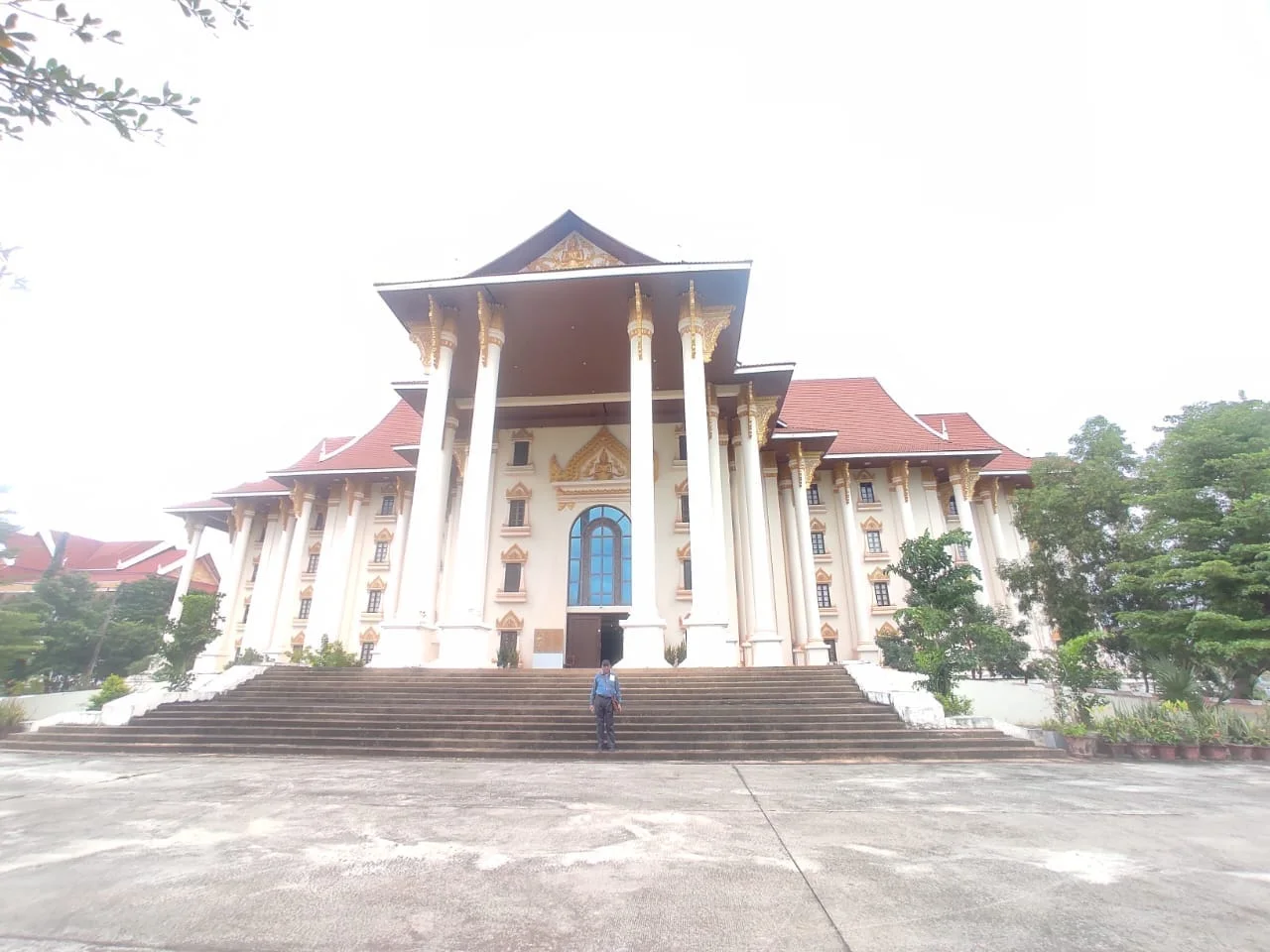
Lao National Culture Hall: Blending traditional Buddhist tiered rooflines with neoclassical civic architecture
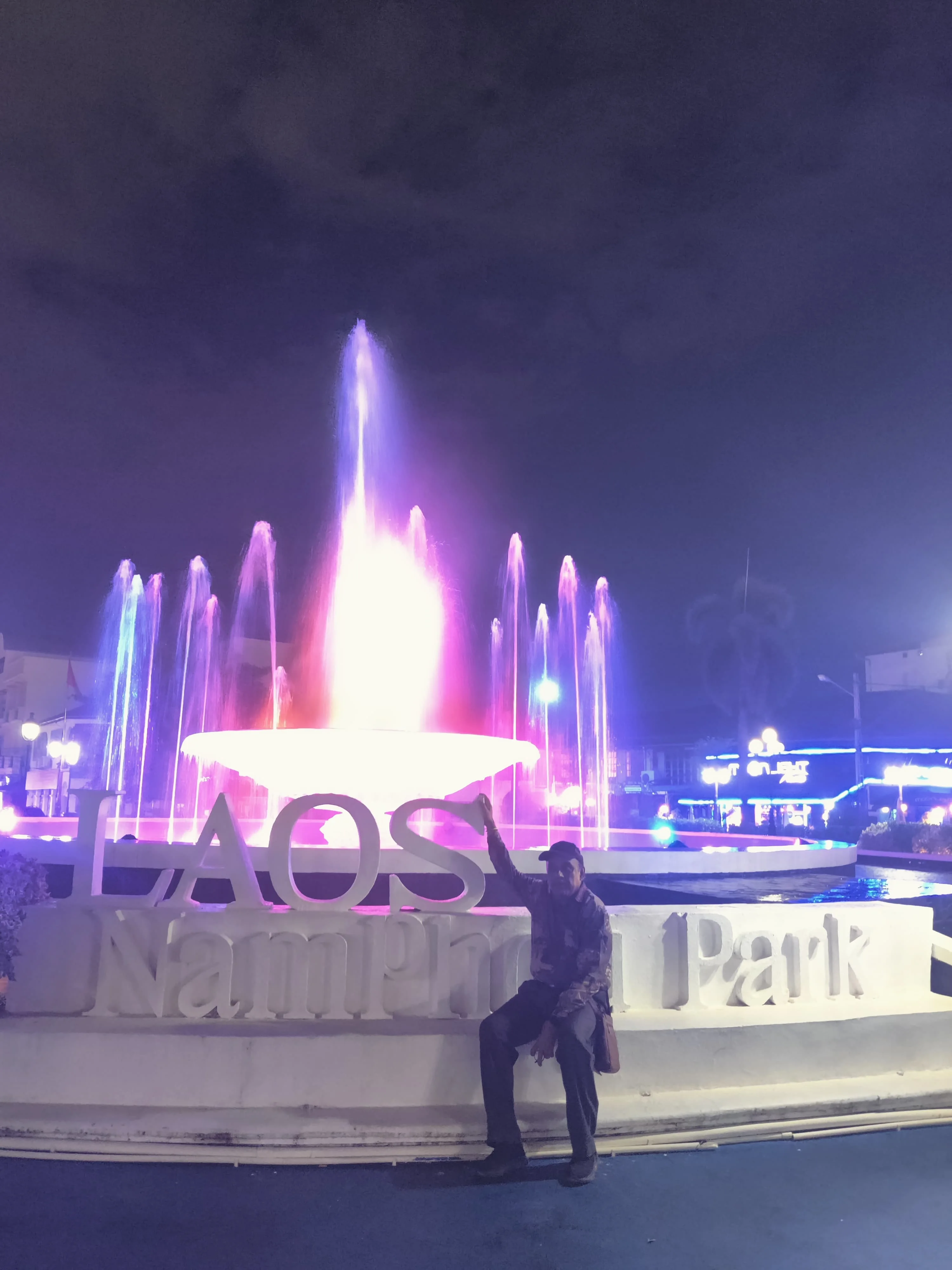
Nam Phou Fountain Square: Evening relaxation at the historic fountain heart of downtown Vientiane
Wat Ho Phra Keo, Vientiane: A Former Royal Temple Preserving Lao Buddhist Art
“The complex preserves a remarkable collection of Buddhist art, from ancient Buddha statues to intricately carved wooden doors and historic religious artefacts.”
— Vientiane Monastic ArchiveVisiting Wat Ho Phra Keo in Vientiane felt like stepping into a museum preserving the spiritual and artistic heritage of Laos. Between the early medieval centuries and the rise of the Lao kingdom of Lan Xang in the fourteenth century, the territories surrounding present-day Laos experienced a complex exchange of religious and cultural traditions.
The Khmer Empire influenced parts of the region, particularly in the south, where Hinduism and Mahayana Buddhism had both played significant roles. Meanwhile, Mon communities helped sustain and transmit Theravada Buddhist traditions.
Originally built in 1565 by King Setthathirath to house the revered Emerald Buddha, the temple served as an important royal religious site. The Emerald Buddha was later taken from Vientiane, and the temple itself experienced periods of destruction and reconstruction. Today, the complex preserves a remarkable collection of Buddhist art.
Walking along the stone gallery, we admired the remarkable collection of bronze Buddha statues representing different historical periods. Many statues featured distinctive Lao artistic elements, such as elongated earlobes, elegant facial expressions, and finely carved robes. The temple's intricately carved entrance doors and decorative woodwork were equally captivating, reflecting how Buddhism inspired generations of Lao artists.
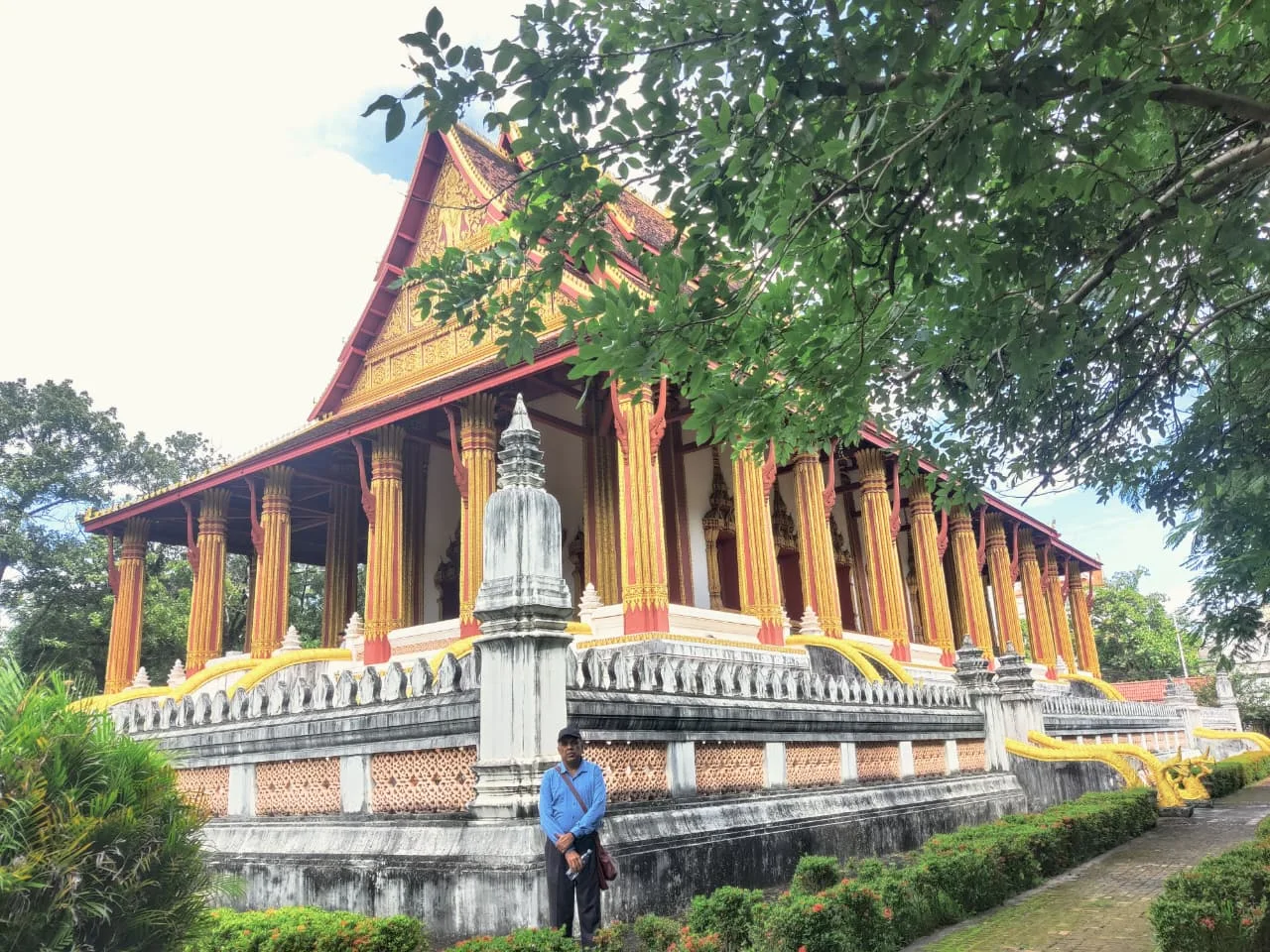
Royal Temple Terrace: The sweeping veranda and stone balustrades of Wat Ho Phra Keo, founded in 1565
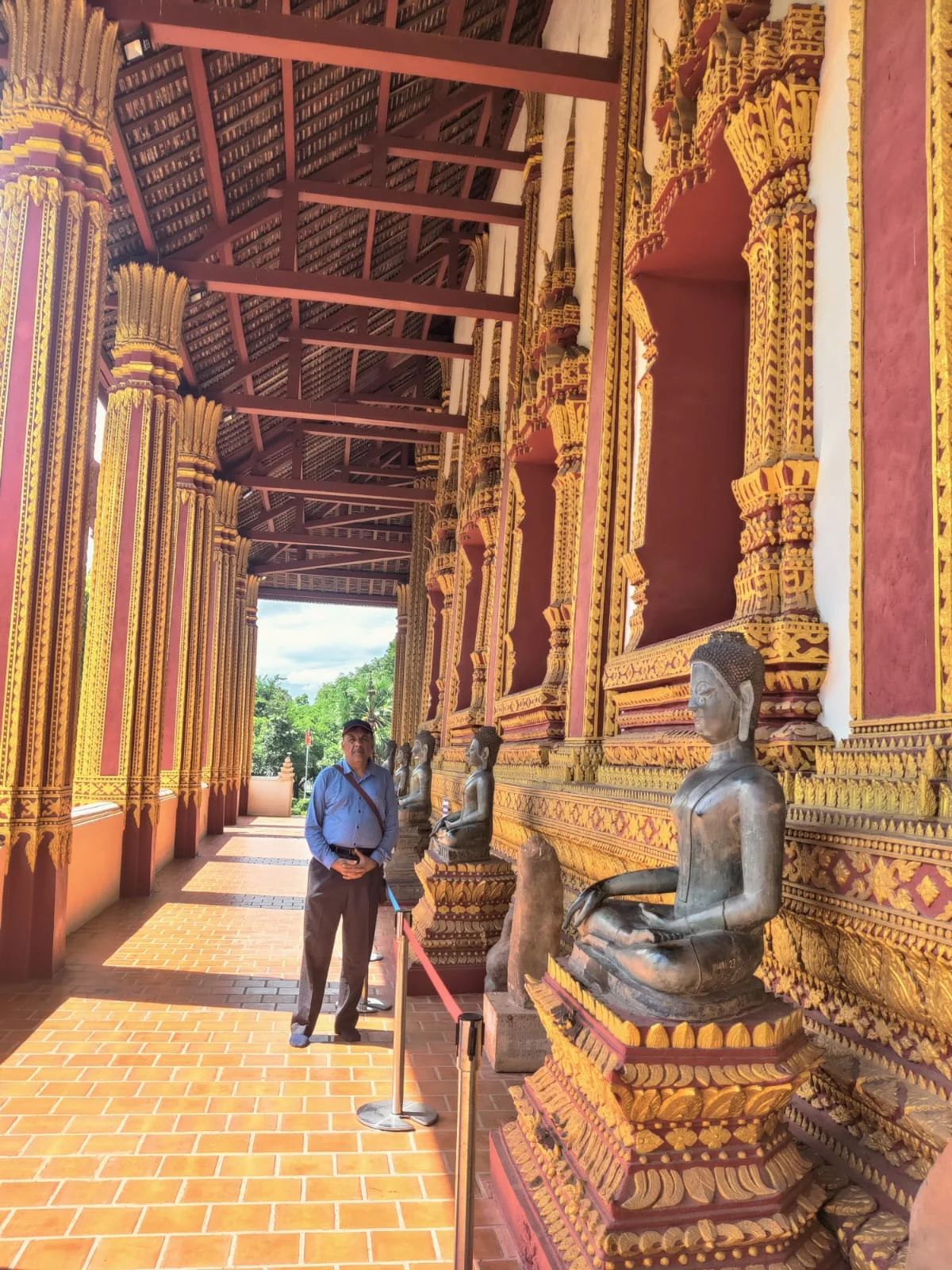
Bronze Buddha Gallery: Centuries-old bronze statues in the cloistered peristyle displaying classic Lao mudras
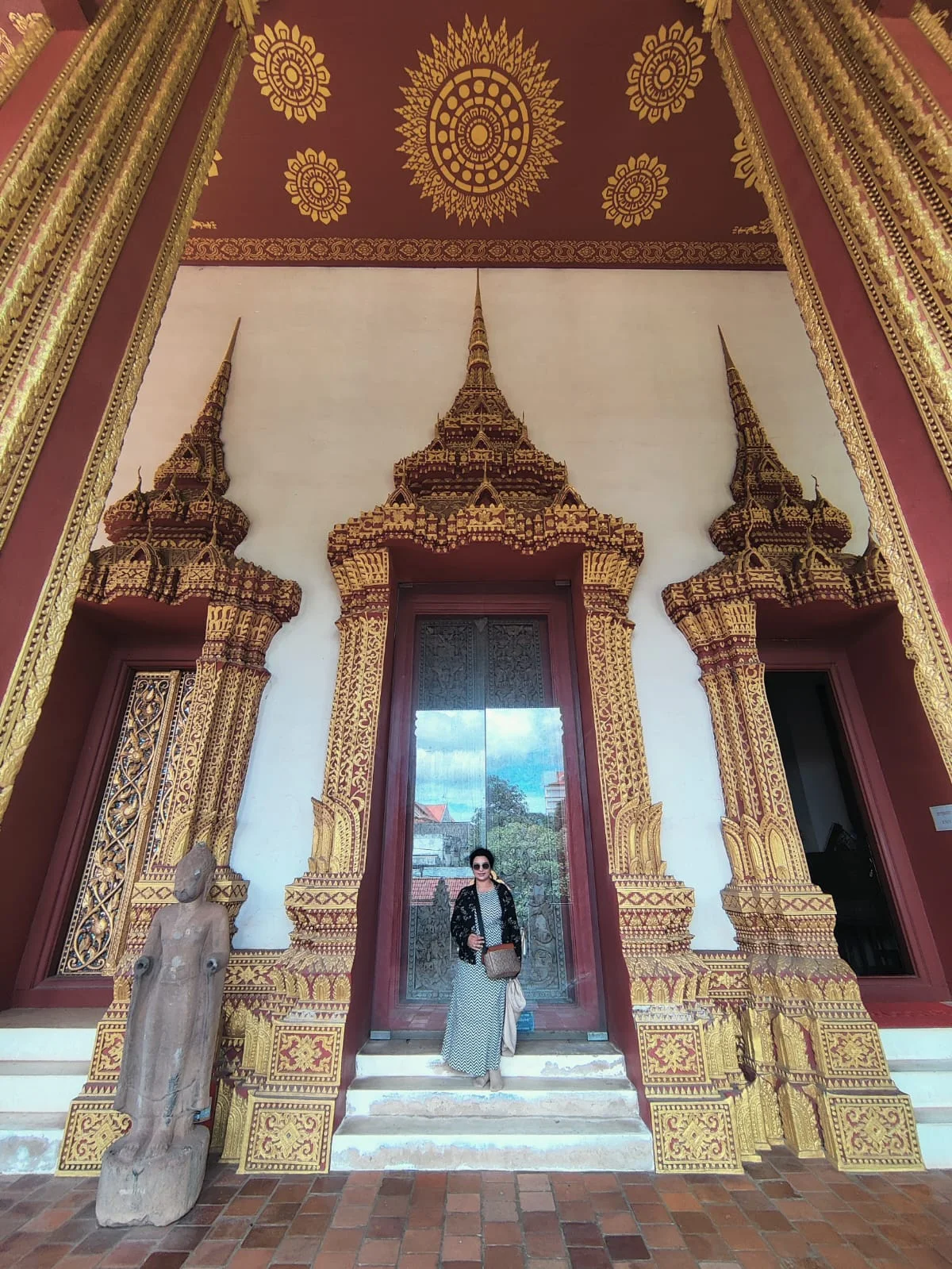
Carved Teakwood Portal: Master craftsmanship depicting celestial apsaras and floral vines on the sanctuary doors
The 'Calling for Rain' Mudra
Unique to Lao Buddhist iconography are the bronze images standing upright with arms held straight at the sides, hands pointing downward. This gesture—known as Phra Phuttha Rup Haam Samut or 'Calling for Rain'—illustrates how Indian Buddhist mudras evolved in the agricultural rhythm of the Mekong basin.
LAO ICONOGRAPHYBuddhist Monasteries of Luang Prabang: Living Heritage of Laos
“Nestled between the Mekong and Nam Khan rivers, this historic royal capital preserves an extraordinary concentration of Buddhist monasteries, traditional architecture, and living spiritual traditions.”
— Luang Prabang ChronicleTak Bat: Living Devotion at First Light
In Luang Prabang, Buddhism is not merely a historical subject; it is the rhythm of daily life. At dawn, we witnessed the ancient ritual of Tak Bat (alms giving), where lines of monks dressed in vibrant saffron robes walk silently through the streets, receiving offerings of sticky rice from devout townspeople.
The quiet dignity of this daily ceremony reflected the enduring bond between the monastic community and ordinary citizens, an unbroken tradition that has sustained Lao Buddhism for centuries.
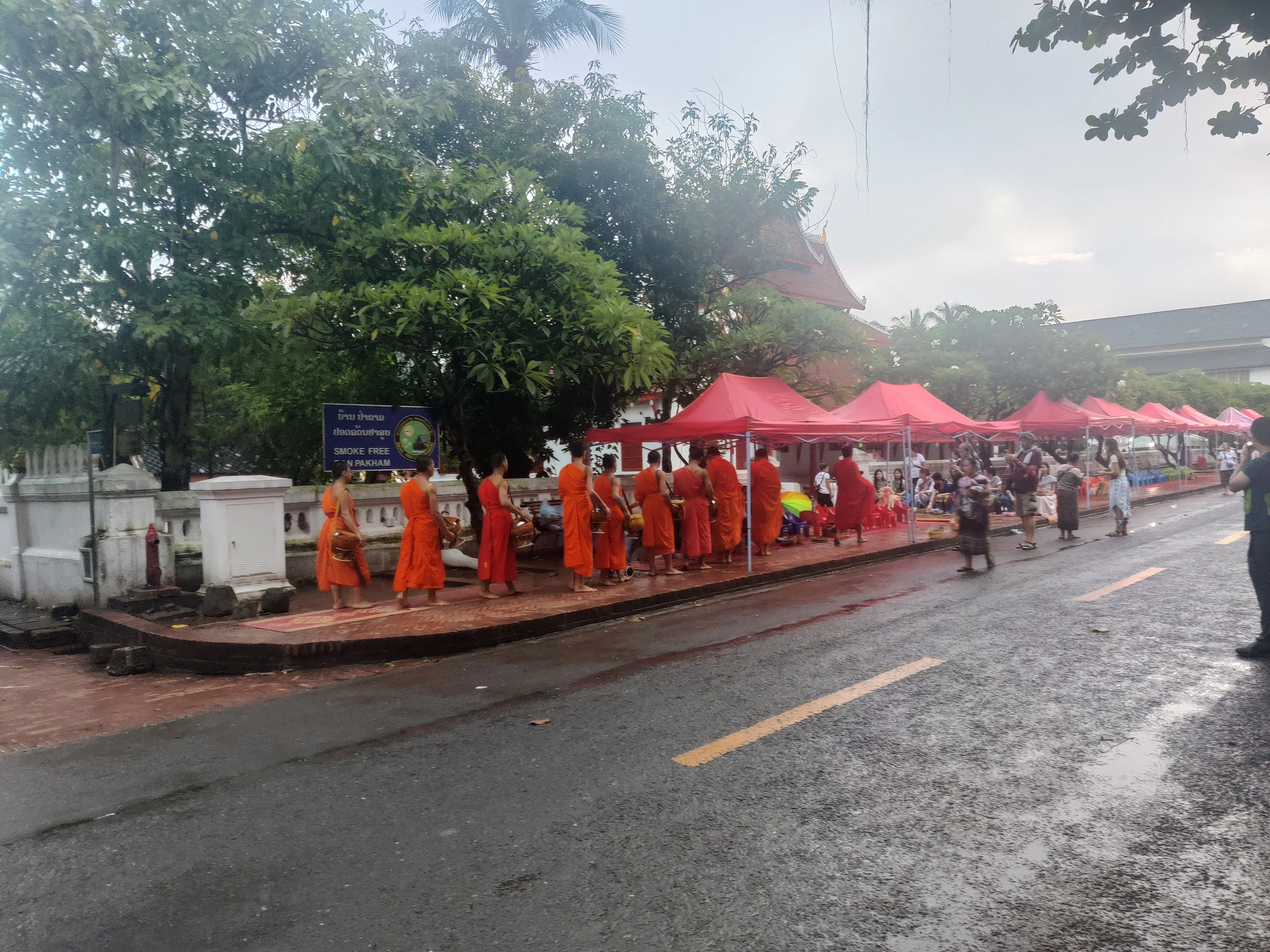
Dawn Tak Bat Ritual: Barefoot Buddhist monks in saffron robes collecting morning sticky rice in silent mindfulness
Among the city's most renowned temples is Wat Xieng Thong, often referred to as the 'Temple of the Golden City.' Built in 1560 by King Setthathirath near the confluence of the rivers, it represents the pinnacle of classical Luang Prabang architecture.
Its Sim features dramatic sweeping roofs that swoop gracefully low toward the earth, adorned with gilded Dok So Fa finials representing Mount Meru. Its exterior black lacquer walls are decorated with intricate gold stencilling, while the rear wall displays the famous 'Tree of Life' mosaic rendered in coloured glass.
Exploring the compound, we entered the Royal Funeral Chariot Hall (Hor Ratsarot), which houses the monumental 12-metre-high carved teak hearse adorned with seven-headed Naga serpents, and stepped into quiet chapels where golden Buddha images radiated peace.
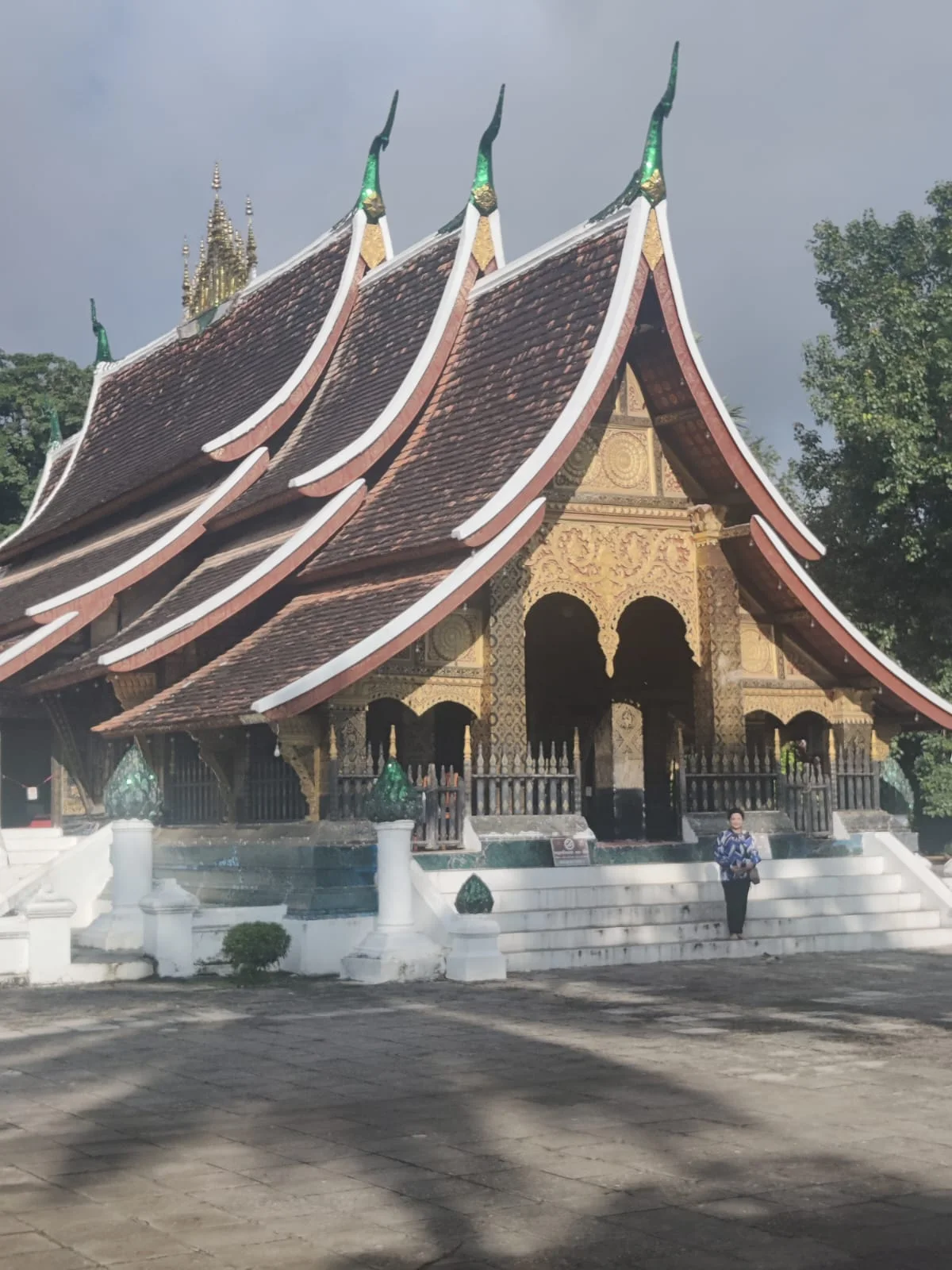
Sweeping Sim Roofline: The low curving tiered roofs that define classical Luang Prabang sacred architecture
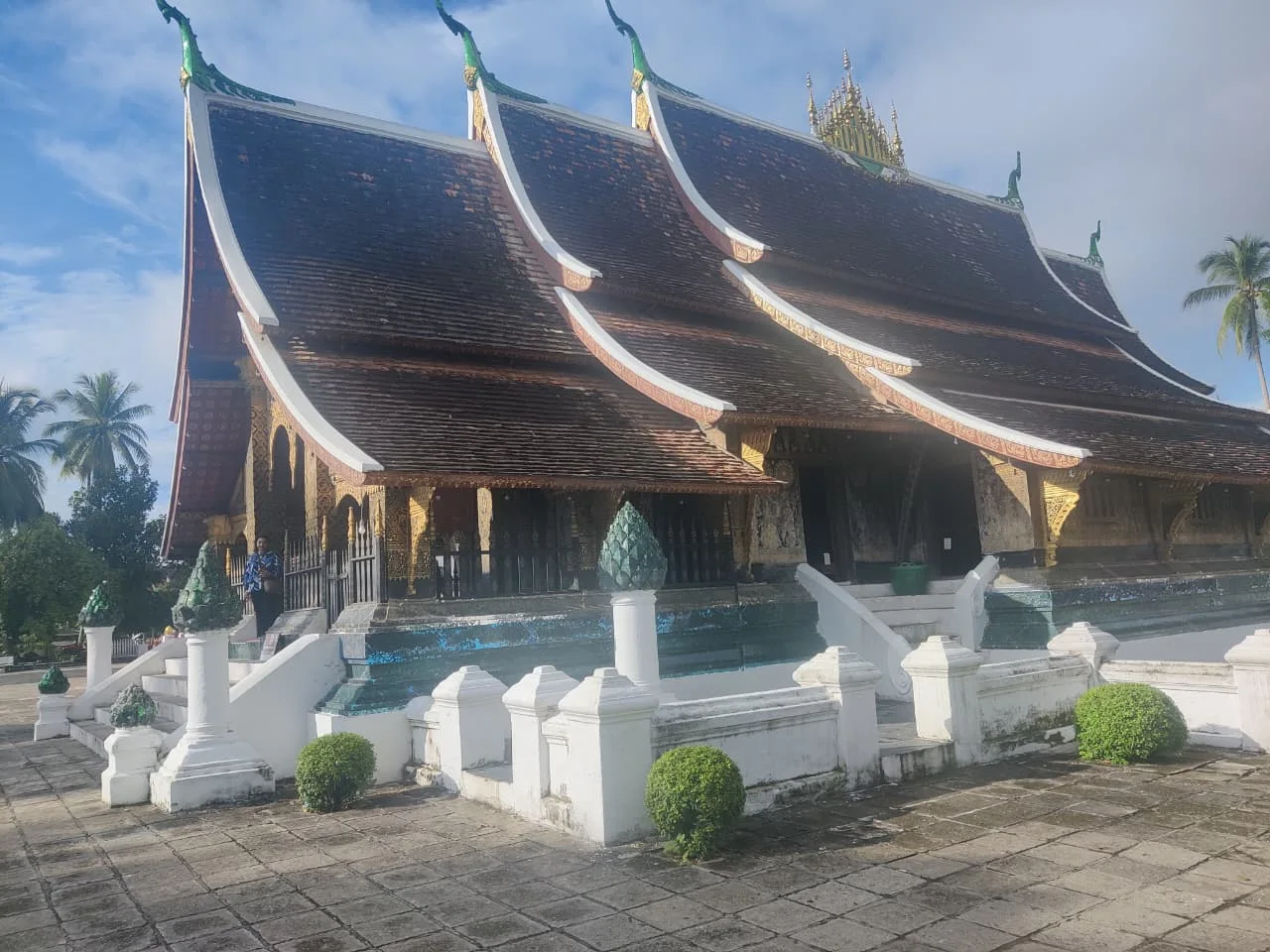
Wat Xieng Thong Sim Exterior: Black lacquer walls adorned with gold stencilling (Lai Kham) and Dok So Fa spire
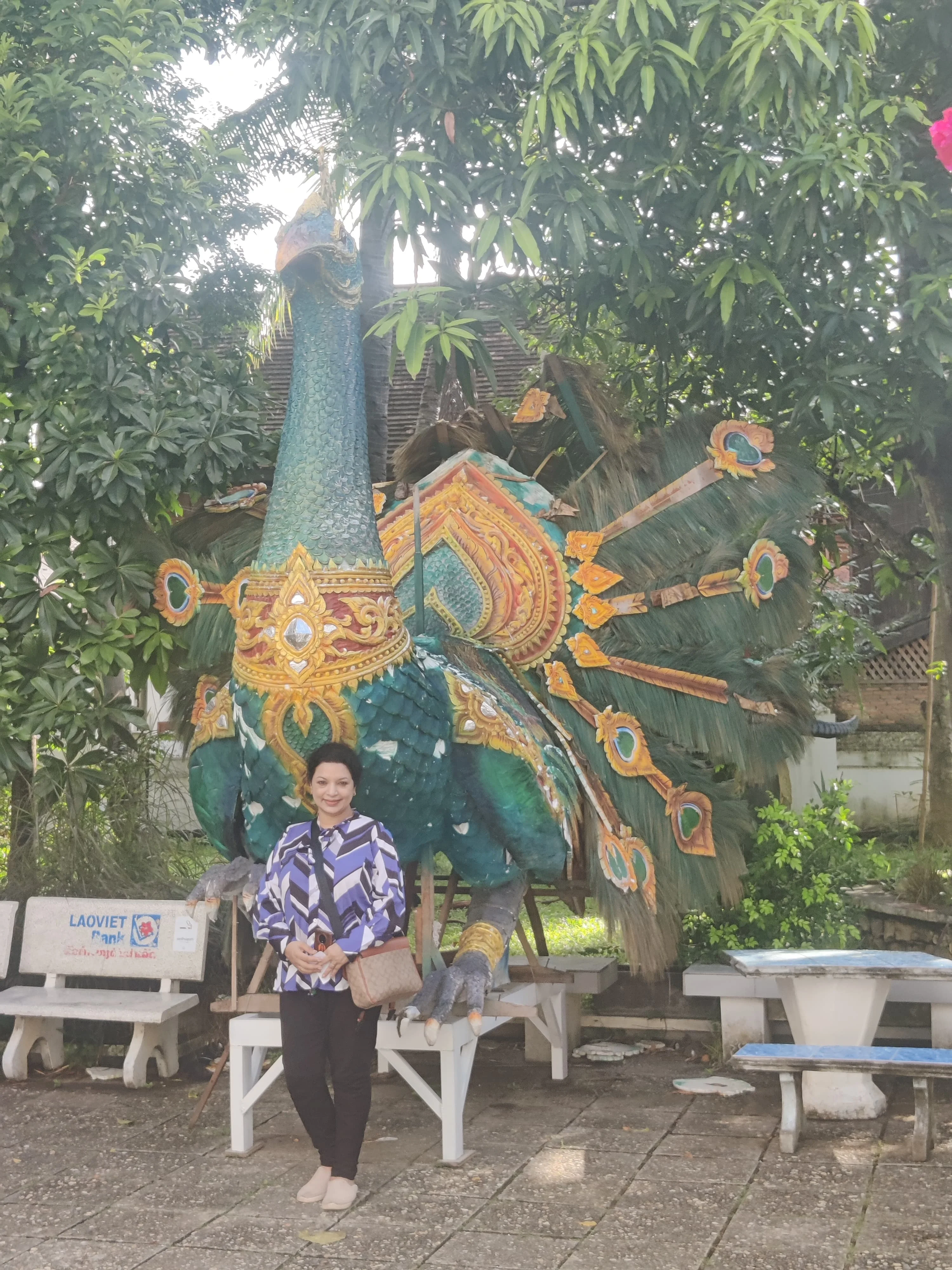
Mayura Peacock Guardian: Indic mythic avian guardian carved in gilded teak atop the temple gardens
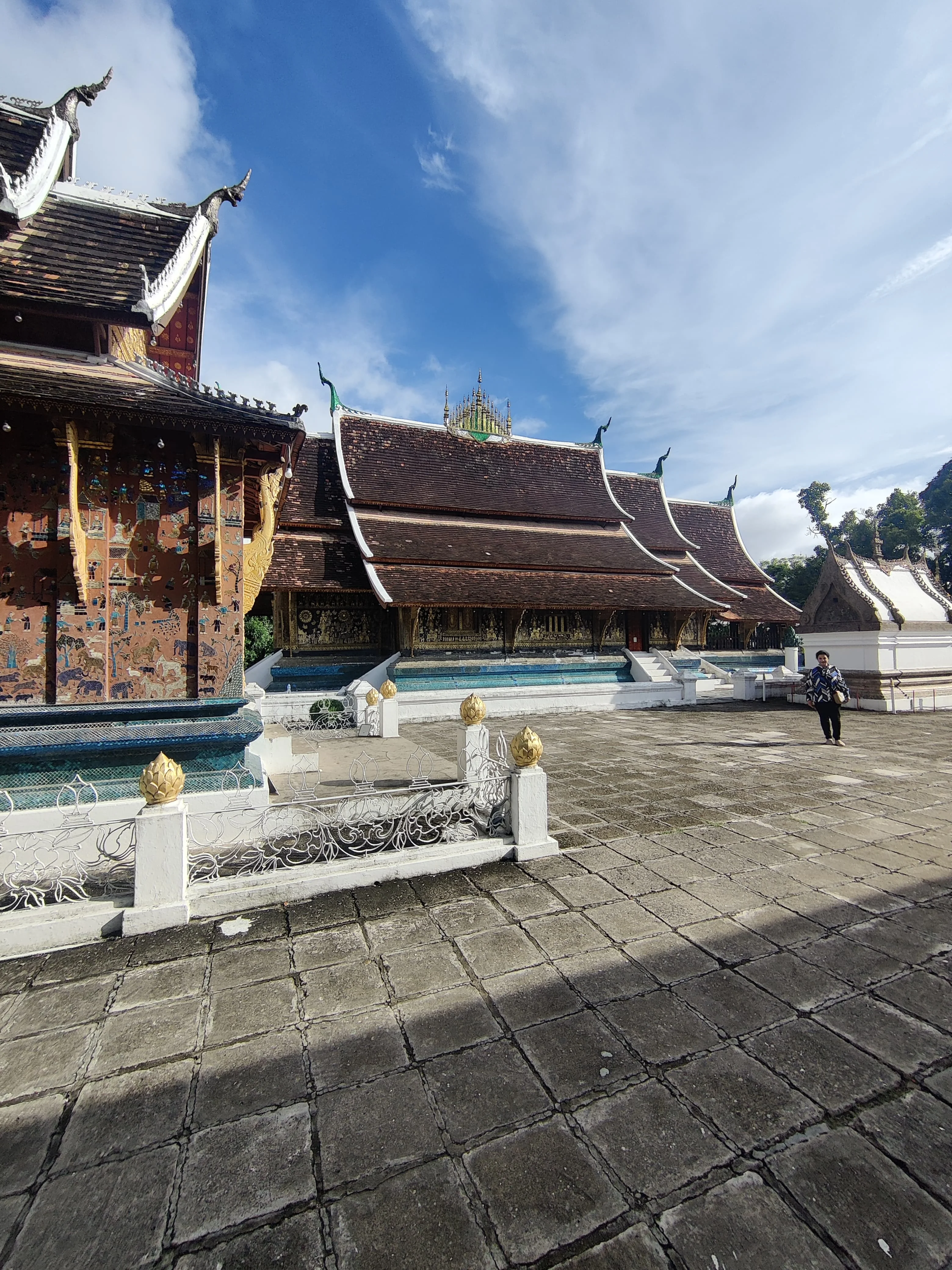
Tree of Life Precinct: The peaceful inner courtyard featuring the Red Chapel and its colored glass mosaic murals
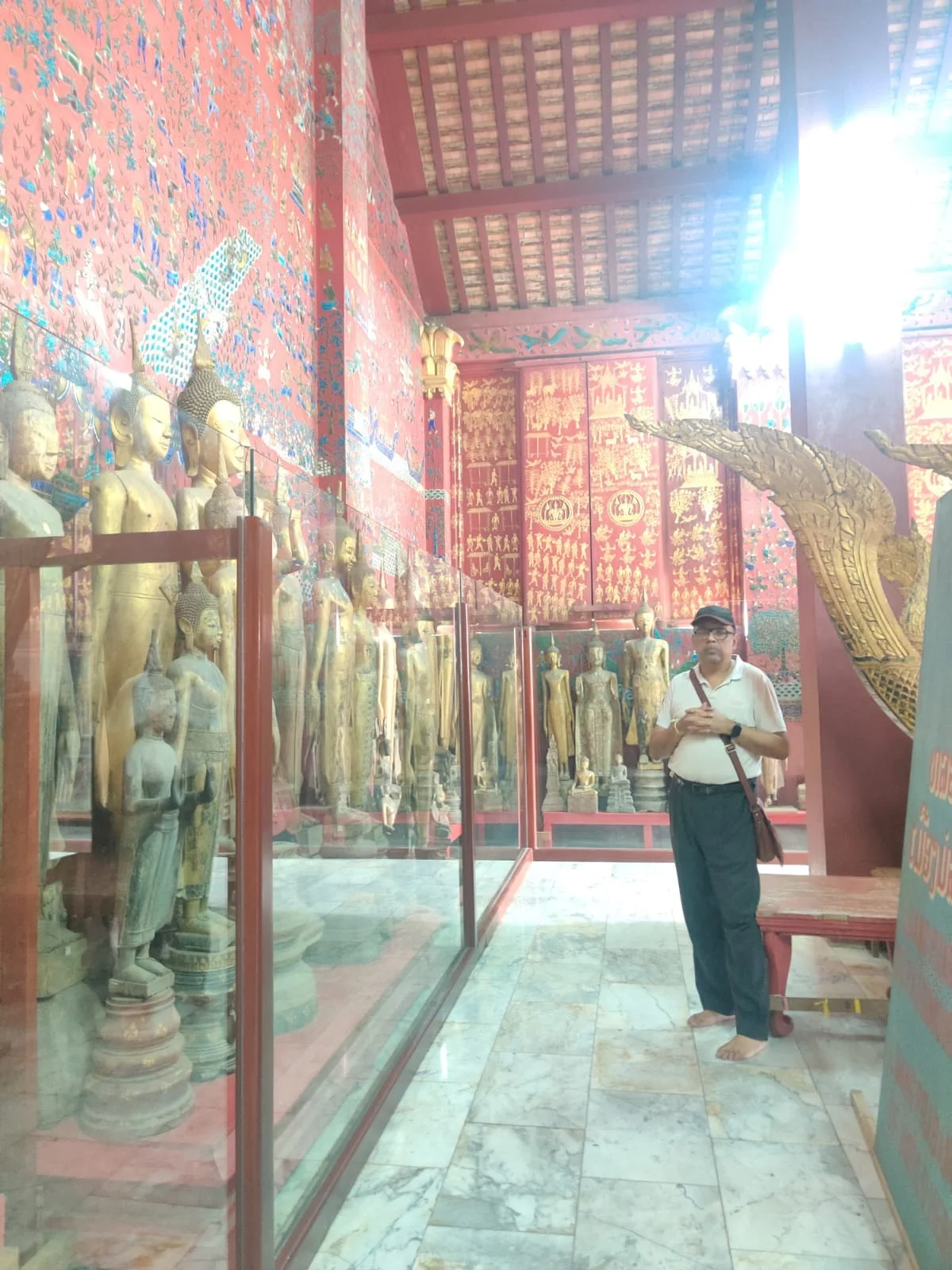
Hor Ratsarot Royal Chariot: The monumental 12-meter gilded teak funeral carriage carved with seven-headed Naga serpents
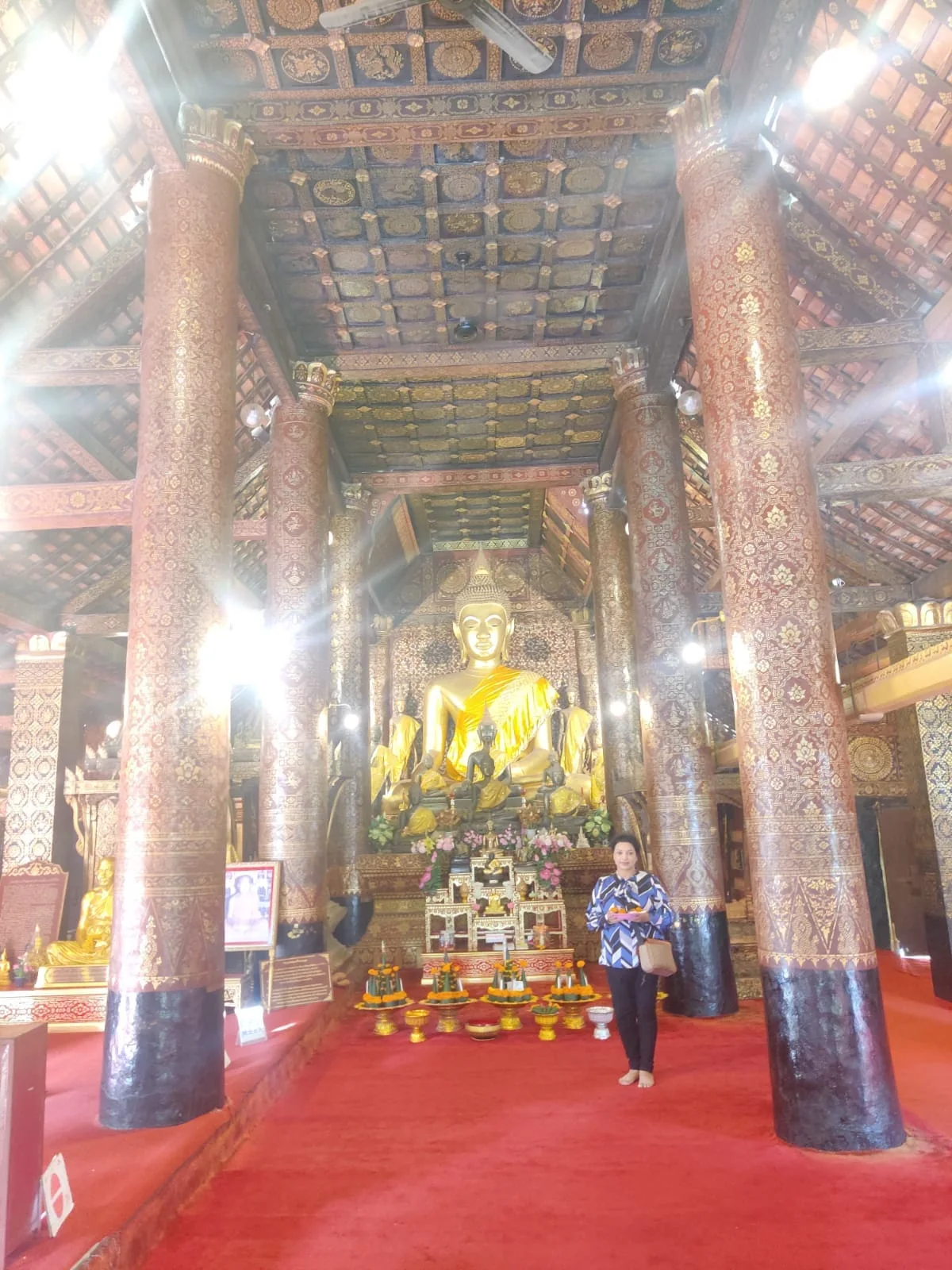
Inner Sim Sanctum: The primary gilded Buddha glowing softly amidst stenciled black lacquer pillars
Wat Xieng Thong: The Monastery That Survived
When the devastating Black Flag Haw pirates plundered Luang Prabang in 1887, Wat Xieng Thong was spared destruction because their leader had studied as a novice monk inside its sanctum in his youth.
LIVING CHRONICLEA Journey Along the Mekong River: The Sacred Pak Ou Caves
“Set dramatically into the sheer limestone cliffs where the Nam Ou River flows into the Mekong, these caves have served as places of worship for centuries.”
— Mekong River Travel LogOne of our most memorable excursions from Luang Prabang took us up the Mekong River to the sacred Pak Ou Caves. Long before Buddhism reached Laos, the caves were revered by local people as sacred places associated with river spirits (phi). As Buddhism became established in the region, the site gradually evolved into a major Buddhist pilgrimage destination, illustrating how ancient local beliefs intertwined with Buddhist tradition.
Reaching the caves by boat, we climbed stone steps up the limestone face into Tham Ting (the lower cave). Inside, the cavern opened to reveal an astonishing sight: thousands of Buddha statues, ranging from miniature wooden figurines to larger gilded images, placed upon rocky ledges and natural limestone shelves.
For centuries, pilgrims, villagers, and even Lao royalty travelled to the caves during the Lao New Year (Pi Mai Lao) to wash and venerate the statues in ritual cleansing ceremonies. Standing within the cave, looking out toward the flowing waters of the Mekong, we felt connected to generations of travellers who had paused at this sacred cliffside sanctuary.
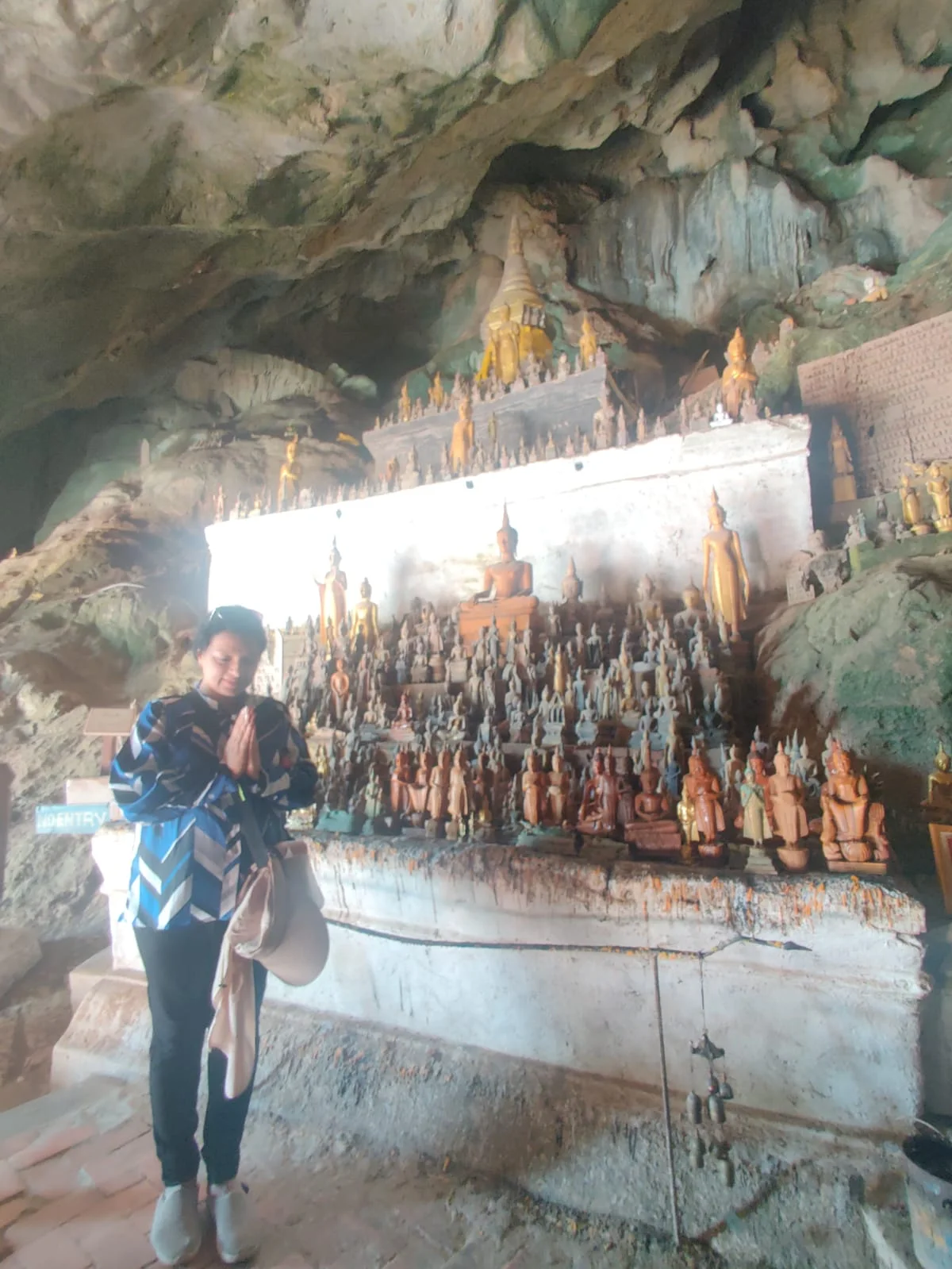
Pak Ou Pilgrimage: Standing reverently before rock shelves crowded with thousands of Buddha statues inside Tham Ting
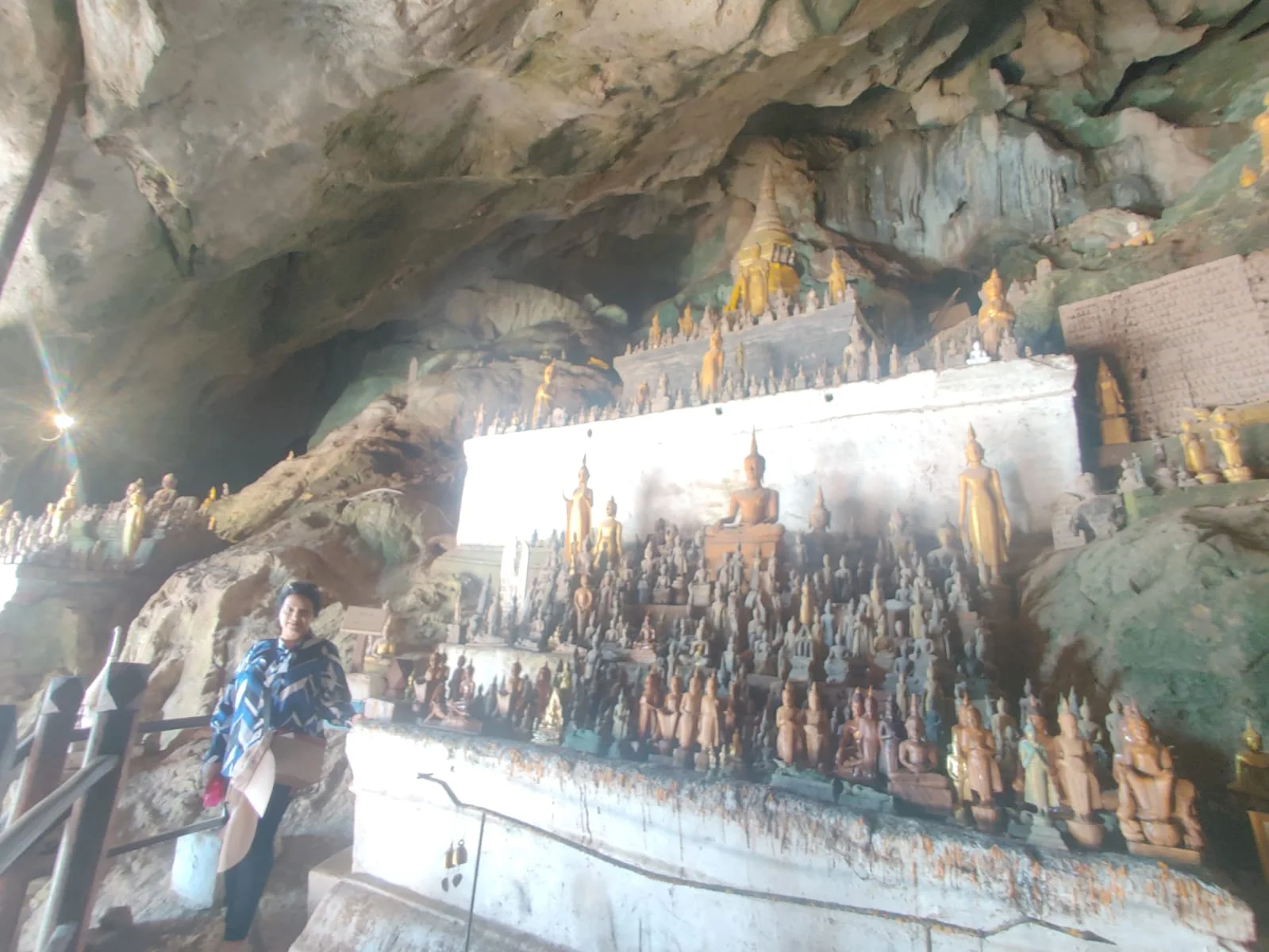
Mekong River Vista: Gazing out from the cave mouth over the sacred confluence of the Mekong and Nam Ou rivers
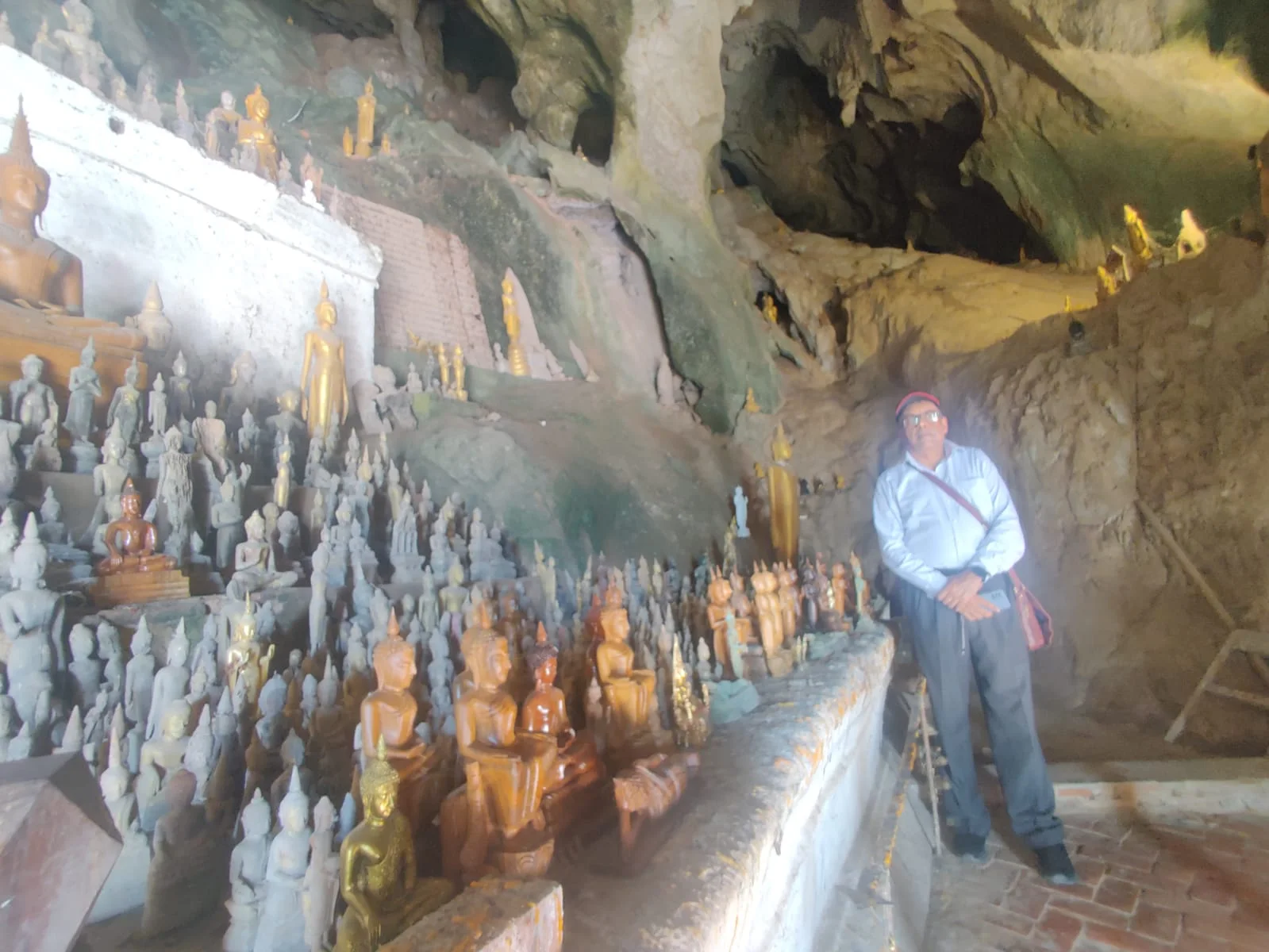
Centuries of Devotion: Thousands of wooden and bronze Buddha figures left by kings, pilgrims, and local boatmen
An Unexpected Twist on the Mekong
When our long-tail riverboat engine sputtered out mid-river, silence rushed into the void. For several tranquil minutes, we drifted peacefully with the current between towering karst cliffs while our boatman calmly cleared the fuel line with a reassuring smile—a spontaneous lesson in Santutthi (mindful contentment).
MEKONG FIELD NOTEWat Wisunarat, Luang Prabang: A Glimpse into Laos's Ancient Heritage
Before concluding our journey through Luang Prabang, we visited Wat Wisunarat (also known as Wat Visoun), the oldest operating Buddhist temple in the city. Founded in 1512 during the reign of King Wisunarat, the temple has played an important role in the religious history of Laos. For many years, it housed the sacred Phra Bang Buddha image, the revered palladium from which Luang Prabang takes its name.
Inside the vast timber hall, massive dark wooden columns support soaring rafters, creating a solemn, contemplative atmosphere. An impressive collection of historic gilded Buddha statues lines the sanctum, their ancient forms reflecting classical Lan Xang and Sukhothai stylistic influences.
In the temple courtyard stands the distinctive That Makmo ('Watermelon Stupa'), officially named That Pathum (the Lotus Stupa). Its unusual rounded hemispherical dome, reminiscent of ancient Sinhalese stupas, stands apart from the slender soaring spires seen elsewhere in Laos.
Walking around Wat Wisunarat offered a quieter, reflective moment at the end of our travels, highlighting the deep historical roots and architectural variety of Lao Buddhism.
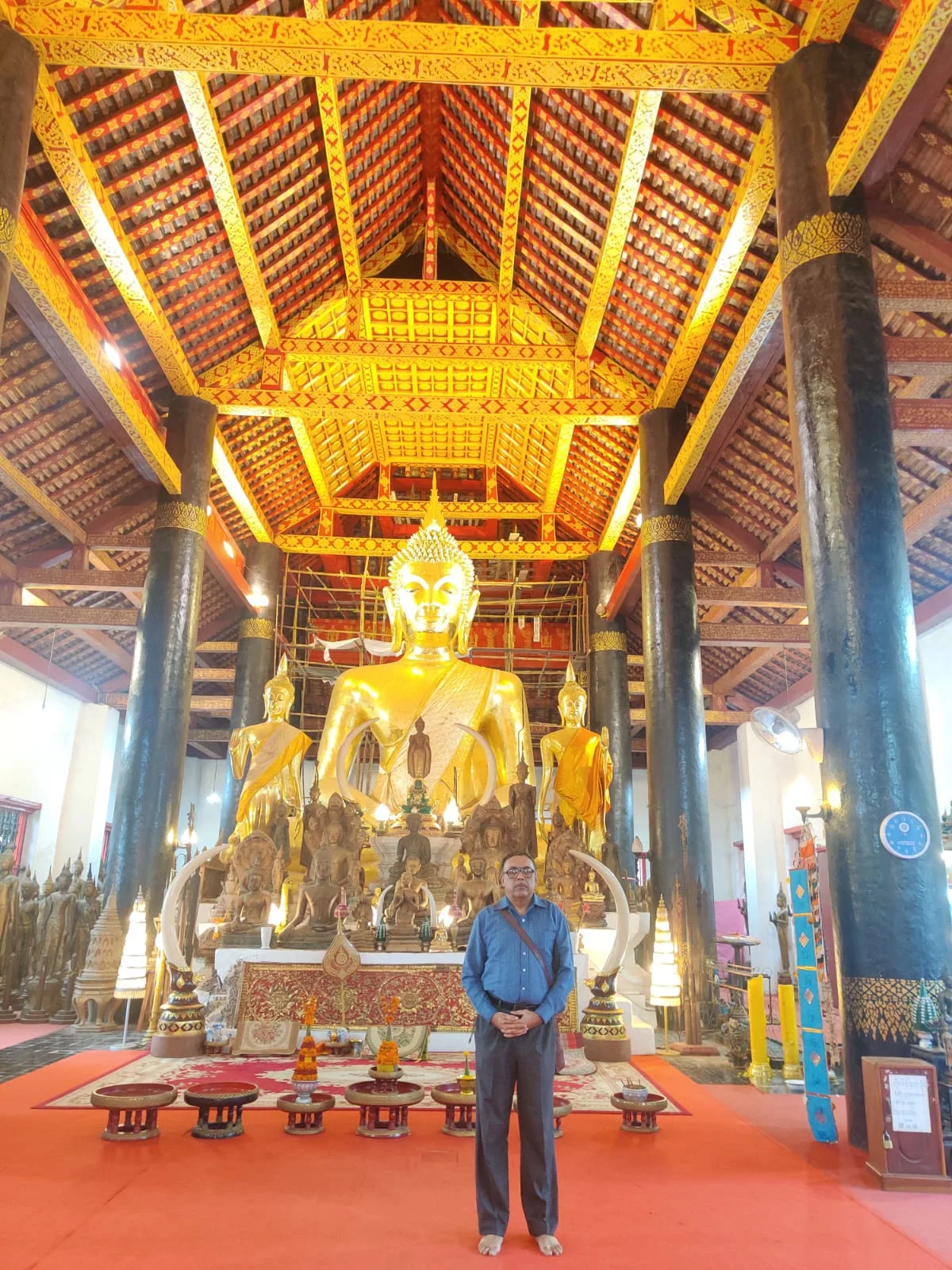
Ancient Timber Architecture: The massive dark wooden pillars and soaring rafters of Wat Wisunarat, founded in 1512
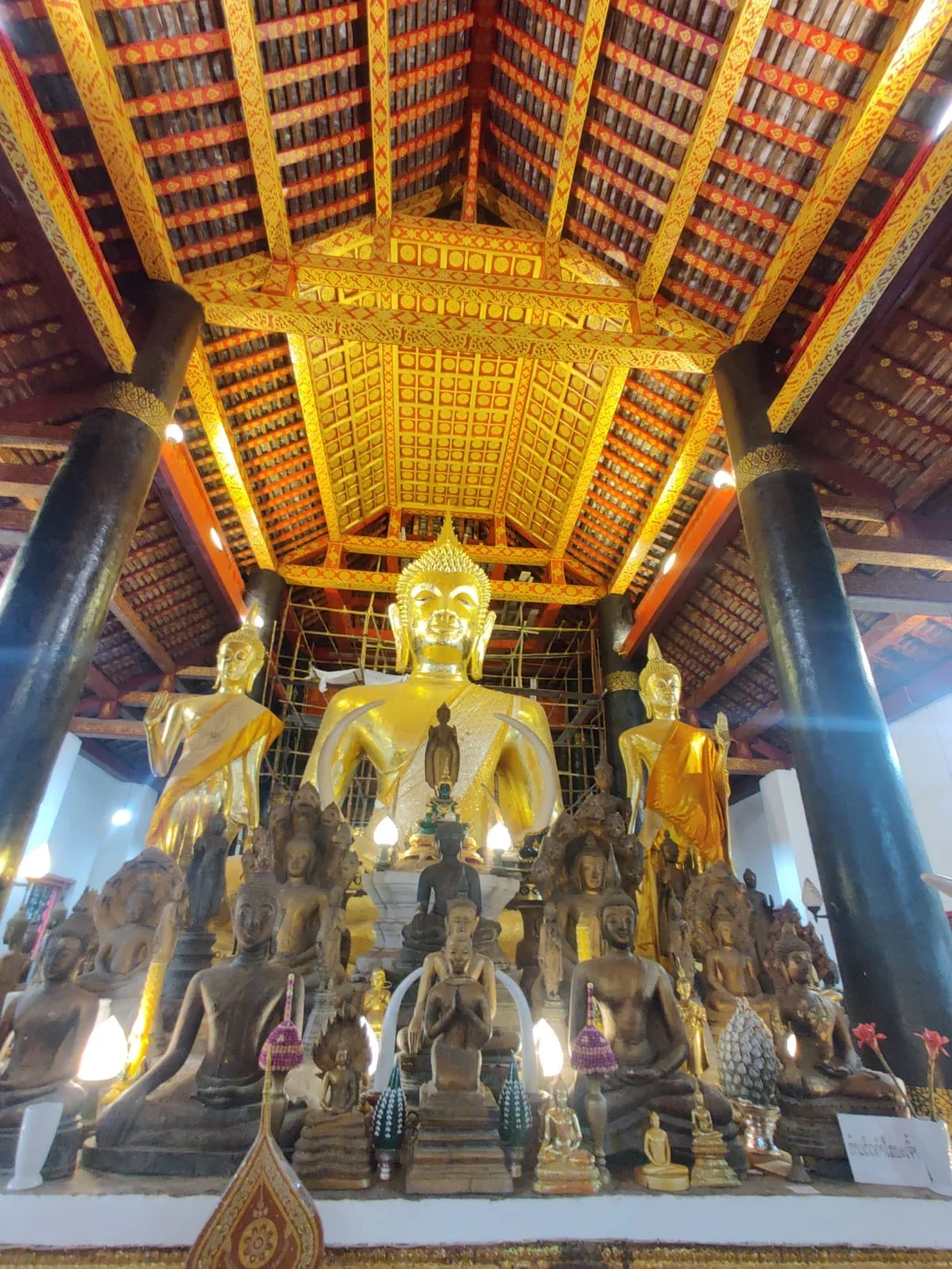
Historic Buddha Altar: The monumental sanctum of Wat Wisunarat housing the towering golden Buddha image
That Makmo: Echo of Sri Lankan Stupas
Unlike the slender conical spires typical of Lao and Thai stupas, That Makmo's rounded hemispherical shape bears close architectural affinity with ancient Sinhalese stupas like Ruwanwelisaya in Sri Lanka, testifying to direct Theravada monastic ties between Ceylon and the Lan Xang Kingdom.
SINHALESE CONNECTIONPractical Reflections for the Buddhist Heart of Laos
Vientiane Monastic Precincts & Etiquette
1Tak Bat Alms-Giving Etiquette
Observe from a respectful distance across the street. Dress modestly with shoulders and knees covered. Never make physical contact with monks or disrupt the silent procession with camera flashes.
2Temple Modesty & Footwear
Always remove shoes and hats before entering temple Sim sanctuaries. Sit with feet tucked beneath you facing away from Buddha statues (never point your feet toward any Buddha image or monk).
3Head & Sacred Touches
In Lao culture, the head is sacred and the feet are lowest. Never touch anyone's head (especially novice monks) and refrain from touching or climbing onto ancient stone or bronze relics.
Luang Prabang & Mekong River Journeys
1Optimal Season for Luang Prabang
November to February offers cool, dry weather with morning mist rising off the Mekong. April features Pi Mai Lao (Lao New Year) when Buddha statues are ritually washed with perfume water.
2Slow Boat Journey to Pak Ou Caves
Opt for a traditional long-tail slow boat from Luang Prabang's pier (about two hours upstream). The relaxed pace reveals riverbank fishing hamlets, bathing water buffalo, and limestone cliffs.
3Respecting Active Monastic Communities
Remember that Luang Prabang's monasteries are active spiritual homes for hundreds of young novices and senior monks who study, chant, and meditate daily.
Laos: A Nation Rooted in Buddhism
“From the teachings first spoken in the deer park of Sarnath to the quiet monasteries of Luang Prabang and the golden spire of Pha That Luang, Buddhism created an enduring cultural bridge between India and Laos.”
— Closing Reflection · Wanderers At 50Our journey through Laos revealed a country whose culture, architecture, and daily life remain deeply rooted in Theravada Buddhism. Across centuries, teachings that originated in India travelled along trade routes, passed through neighbouring civilisations, and found a lasting home in the Mekong valley.
What made this journey particularly meaningful was seeing how these spiritual traditions continue to flourish today. From the dawn alms-giving in Luang Prabang to the quiet devotion inside Vientiane's historic temples and cliffside caves of Pak Ou, Buddhism in Laos is not preserved simply as ancient history—it is practiced as a living way of life.
For travellers following the historical footsteps of Indian cultural influence across Southeast Asia, Laos stands as a profound reminder that ideas, faith, and art can cross vast distances, adapt to new landscapes, and continue to inspire communities for generations.
Echoes of the Pali Canon
Vientiane & Luang Prabang · Lan Xang Heritage
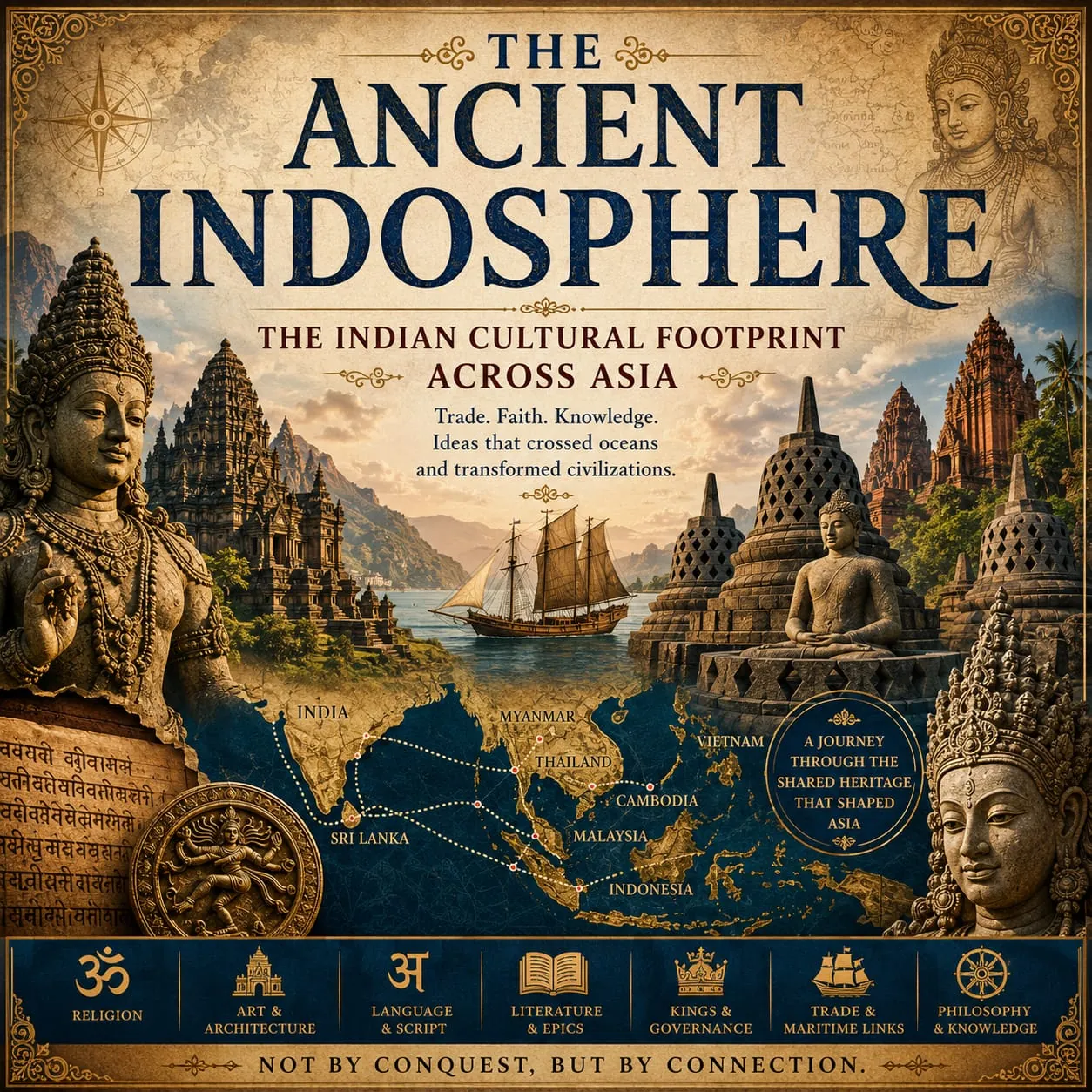
TRAVELLING THROUGH THE TIMELESS LEGACY OF INDIAN CIVILIZATION ACROSS ASIA AND BEYOND
“Not by conquest, but by connection.”
Across ancient temples, sacred stupas, and living cultural landscapes, the timeless traditions born in India continue to illuminate Asia with philosophy, art, and civilizational communion carried not by sword, but through dialogue and spiritual devotion.
CONTINUE THE LAOS JOURNEY
Journey Through the Sacred Monuments of Laos