
Prambanan: Where the Gods Still Whisper
PRAMBANAN — INDONESIA: AN INDIAN EPIC WITH A JAVANESE HEART
Prambanan Temple
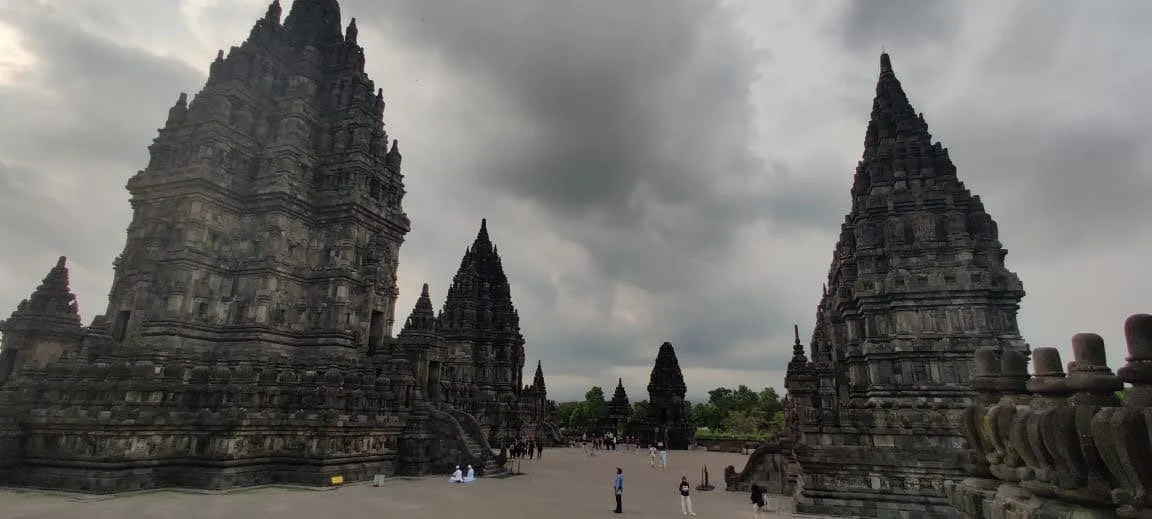
Comprising the remains of some 244 temples, World Heritage–listed Prambanan is Indonesia's largest Hindu site and one of Southeast Asia's major attractions. The highlight is the central compound, where eight main and eight minor temples are assembled on a raised platform – an architectural crescendo of carved masonry and staircases, the high note of which is Candi Shiva Mahadeva. Prambanan sits within a large park dotted with lesser temples – a day is needed to do the site justice.
Prambanan Temple: Dedicated to Lord Shiva, Vishnu and Brahma
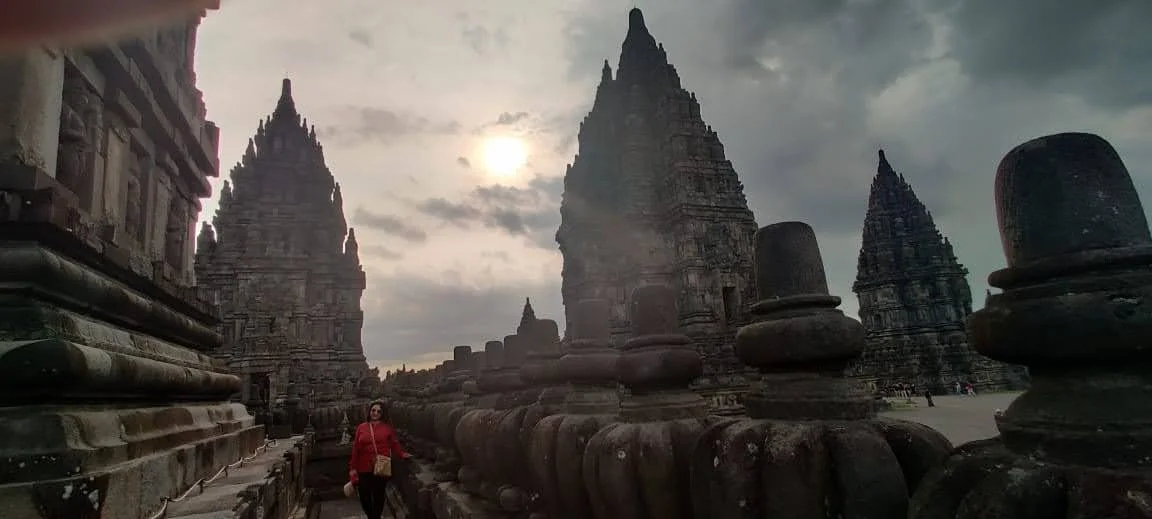
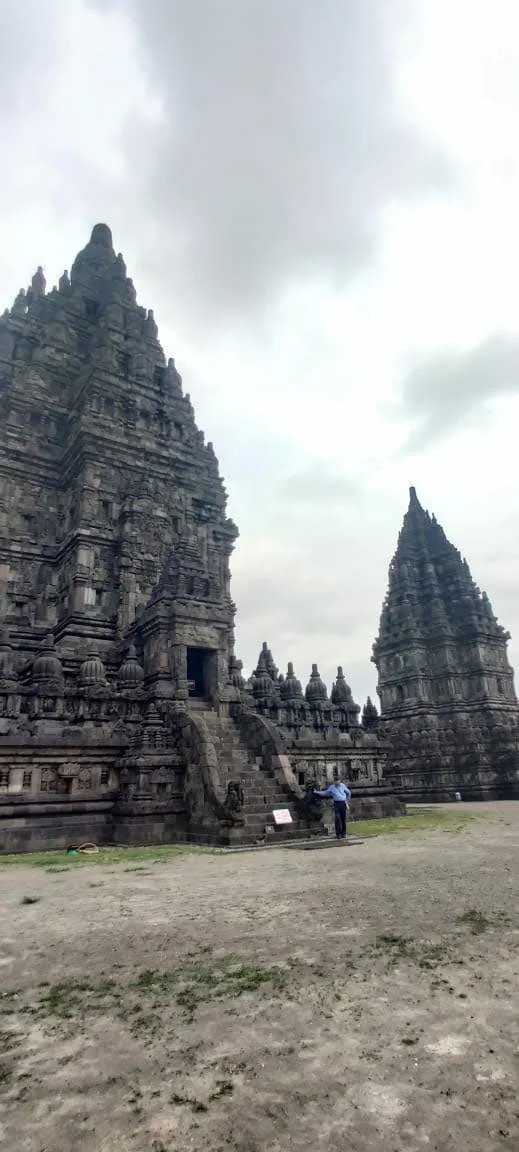
Prambanan Temple Compounds in Java is the largest Hindu temple complex in Indonesia and among the most magnificent examples of Hindu architecture in Southeast Asia. Constructed in the 9th century during the rule of the Sanjaya dynasty, the complex reflects the height of the ancient Mataram Kingdom’s artistic and spiritual achievement. Dedicated primarily to Lord Shiva, along with temples devoted to Vishnu and Brahma, Prambanan symbolizes the Trimurti — the three principal deities of Hinduism. Its soaring stone towers, visible from miles away across the Javanese plains, create an unforgettable skyline that still inspires awe more than a thousand years later.
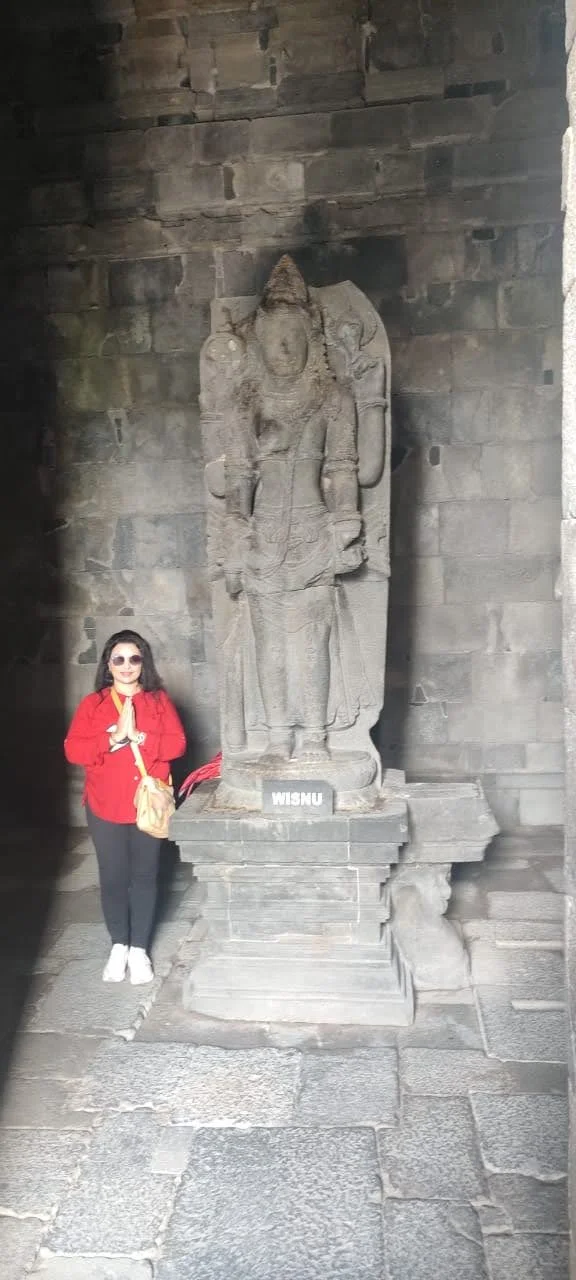
Candi Wisnu
Lord Vishnu Sanctum
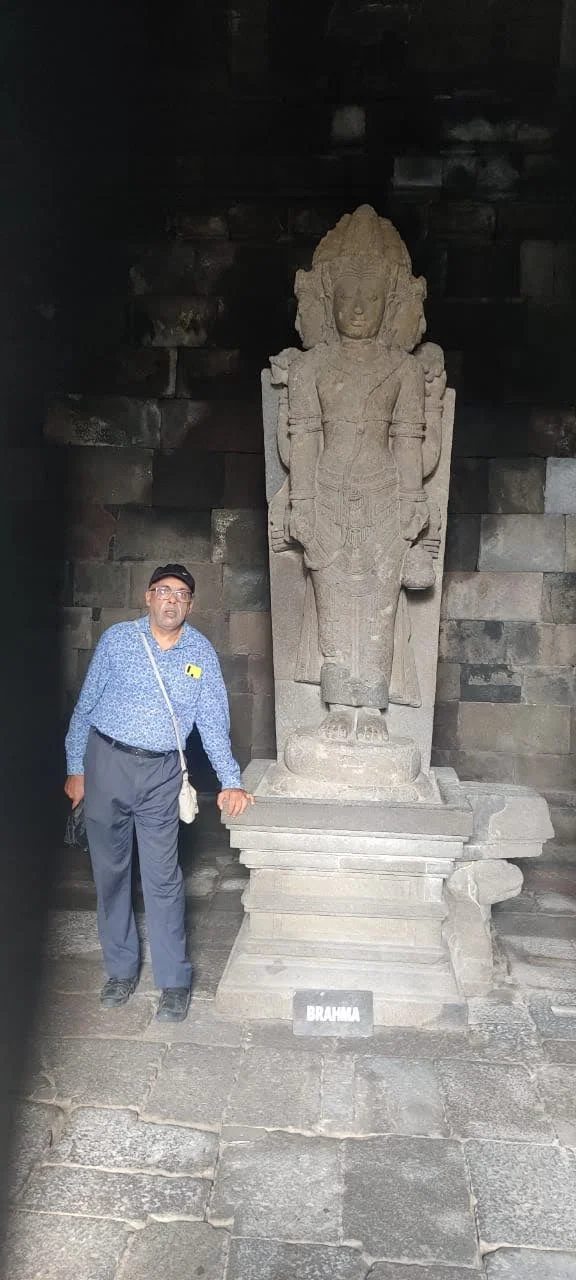
Candi Brahma
Lord Brahma Sanctum
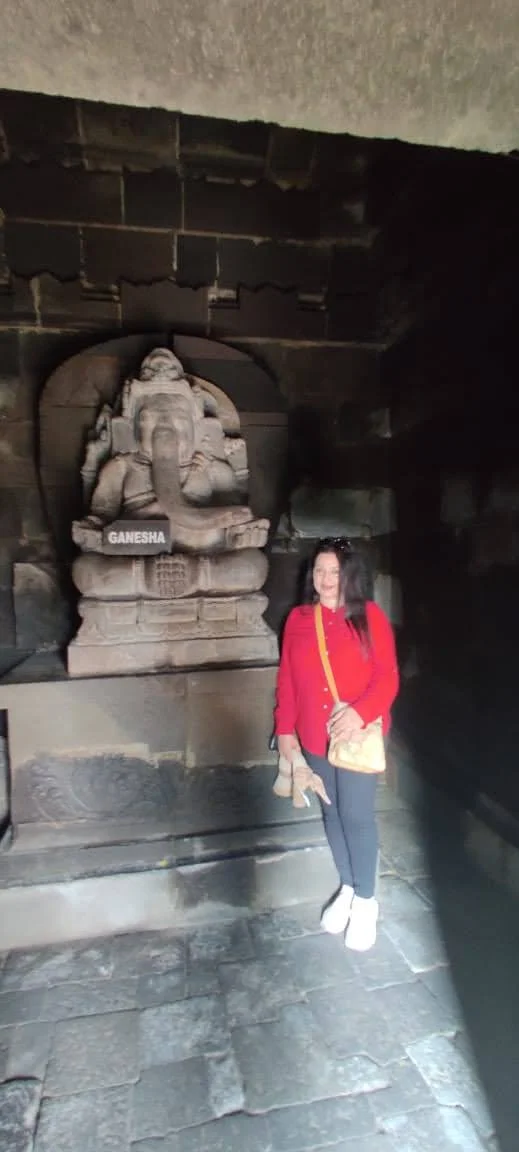
Candi Shiva (Ganesha)
Lord Shiva Sanctum
Inner sanctum shrines of the Trimurti at Prambanan: Lord Wisnu, Lord Brahma, and Lord Ganesha within Candi Shiva Mahadeva.
The Central Shiva Temple Is the Grandest Structure
The central Shiva temple is the grandest structure in the complex, rising nearly 47 meters high. Intricate bas-reliefs carved along the temple walls narrate episodes from the Ramayana, illustrating how deeply Indian epics and Hindu traditions became woven into Javanese culture. The precision of the carvings, the symmetry of the shrines, and the spiritual symbolism embedded in every structure reveal a civilization of remarkable sophistication. Walking through the temple courtyards feels like entering a sacred world where mythology, devotion, and architecture merge seamlessly.
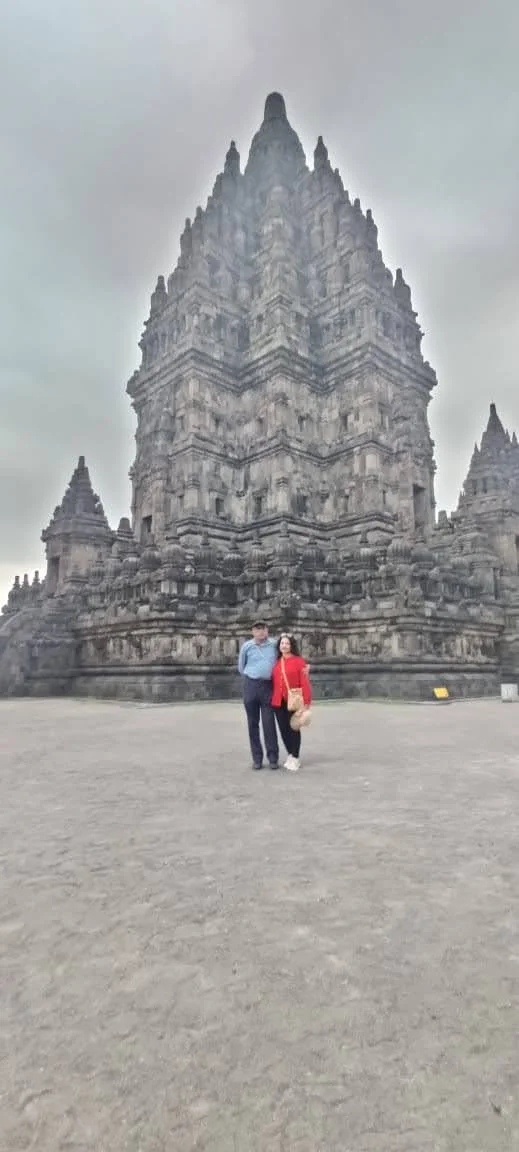
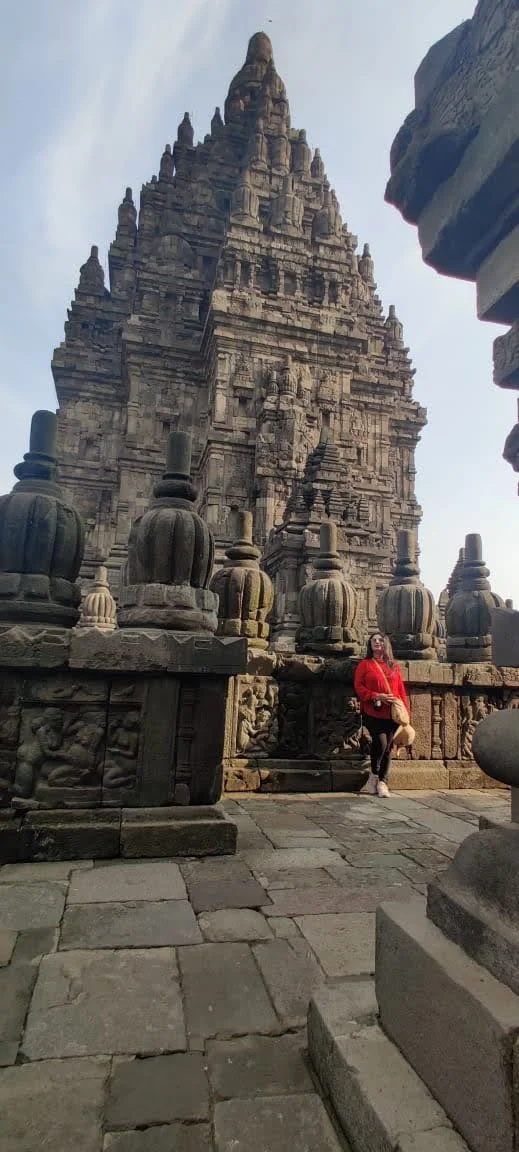
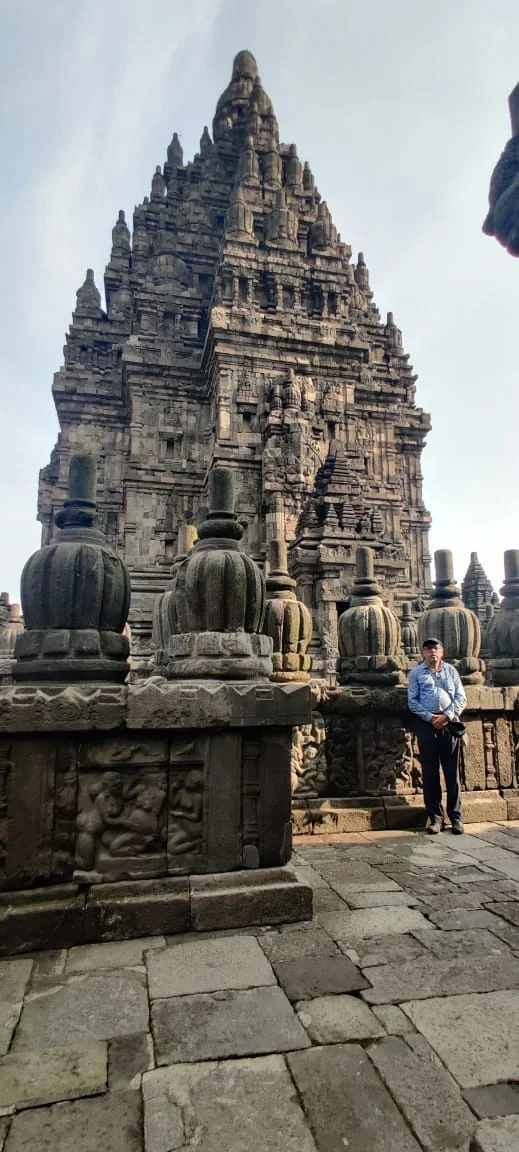
Prambanan: A Testament to Centuries of Cultural Exchange Between India and Indonesia
Prambanan is not only a monument of religion but also a testament to the centuries of cultural exchange between India and the Indonesian archipelago. Hinduism, Buddhism, Sanskrit, and Indian artistic traditions traveled across maritime trade routes and profoundly shaped the kingdoms of Southeast Asia. In Prambanan, these influences evolved into something uniquely Javanese — refined, elegant, and deeply spiritual. For Indian travelers especially, the site evokes a sense of familiarity and pride, demonstrating how Indian civilization once extended far beyond the subcontinent through culture and ideas rather than conquest.
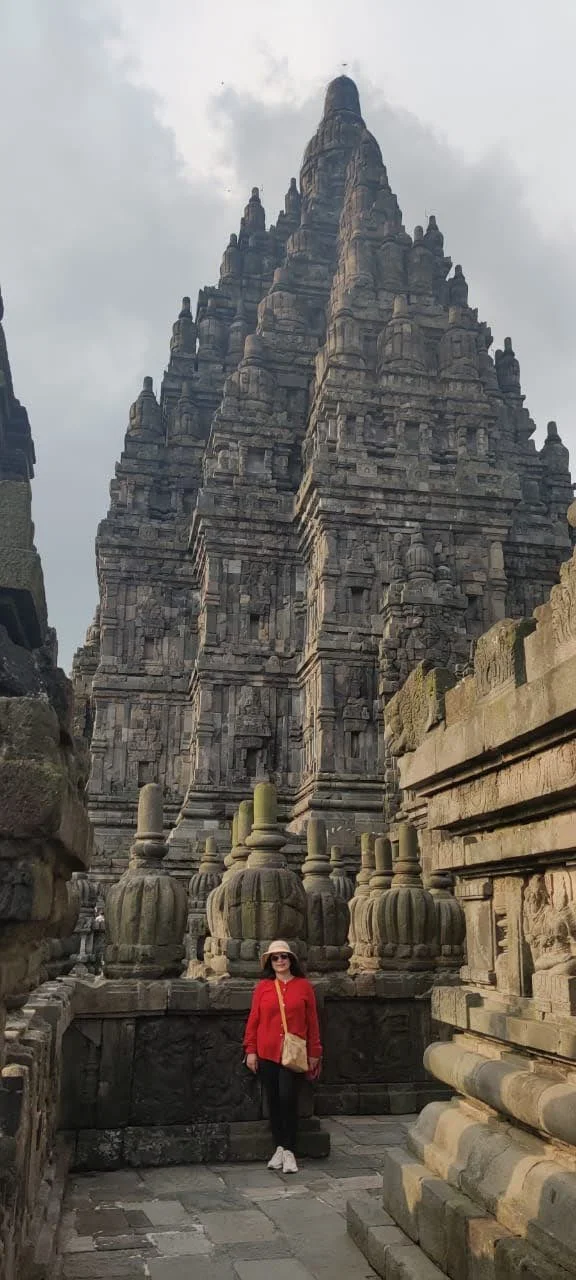
“In Prambanan, these influences evolved into something uniquely Javanese — refined, elegant, and deeply spiritual. Demonstrating how Indian civilization once extended far beyond the subcontinent through culture and ideas rather than conquest.”
— Travel Notes • Travelers' Reflection

The Story of Roro Jonggrang and a Thousand Shrines
The temple complex is also linked with one of Indonesia’s most beloved legends — the story of Roro Jonggrang, the princess associated with the creation of the thousand temples. According to folklore, a prince attempted to build a thousand shrines in a single night to win her hand in marriage. When the effort failed, the princess herself was turned into stone, and many believe her image still stands within the temple. This blend of mythology and history gives Prambanan an atmosphere that is both mystical and romantic, adding another dimension to its architectural grandeur.
Note: The legend of Roro Jonggrang is a treasured cultural folklore that enriches the popular oral history of Java, celebrated alongside the temple's verified archaeological record.
Prambanan: The Hindu Heart of Indonesia
Today, Prambanan stands proudly as a UNESCO World Heritage Site and remains one of Indonesia’s greatest cultural treasures. At sunset, the temples glow golden against the backdrop of volcanoes and tropical skies, creating one of the most spectacular scenes in Southeast Asia. Nearby cultural performances, especially the traditional Ramayana Ballet staged under the open sky, bring the ancient epic alive through Javanese dance and music. Together with Borobudur, Prambanan forms the spiritual and historical heart of Java, offering travelers an extraordinary journey into the shared heritage of India and Southeast Asia.
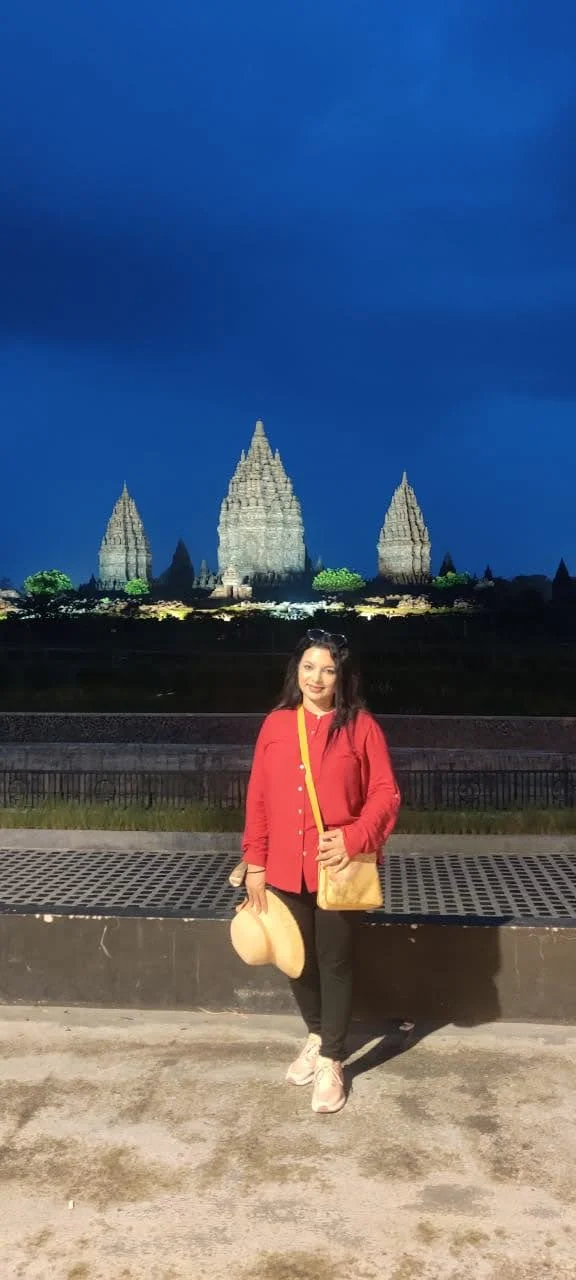
Prambanan Illuminated at Dusk
The glowing Trimurti spires against the evening sky.
Ramayana at Prambanan — An Indian Epic With a Javanese Heart
Watching the Ramayana Ballet at Prambanan was a magical experience. With the majestic Prambanan Temple illuminated in the background, we watched a story we had known since childhood come alive in an entirely new way. While the central characters and storyline remain familiar, the Javanese interpretation is distinctly different from the Indian tradition. Instead of dialogues, the story unfolds through graceful dance, expressive gestures, colourful costumes, and the enchanting rhythms of the gamelan orchestra. The emphasis is on elegance, harmony, and emotion, reflecting centuries of Javanese culture woven into the timeless epic.

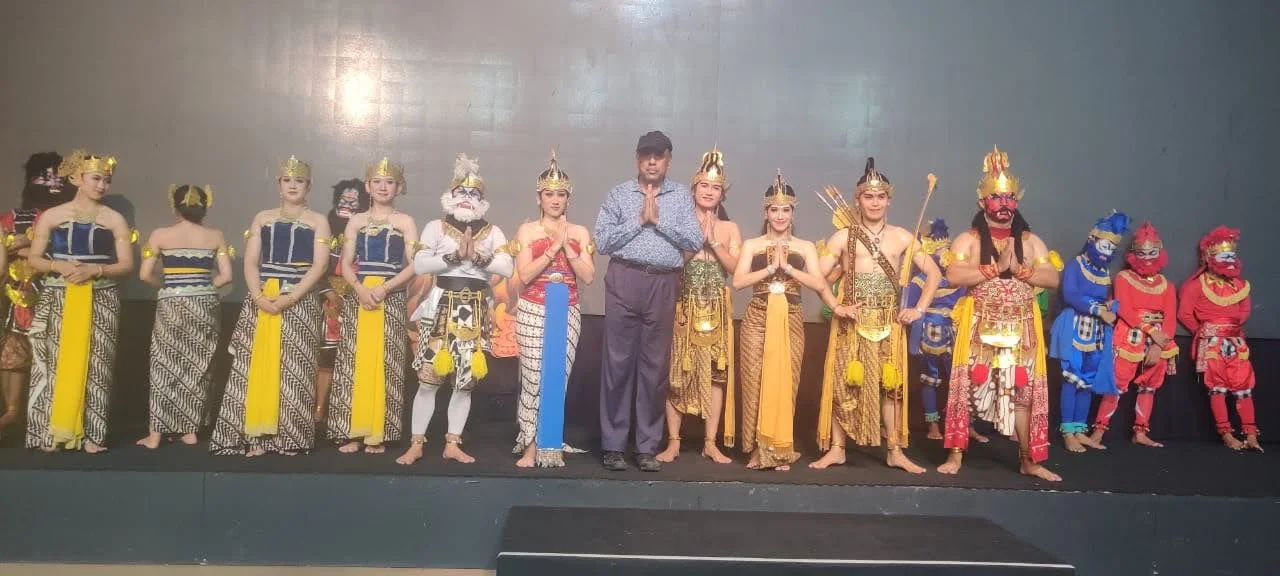
What surprised me most was the audience—barely twenty people had come to witness this extraordinary performance. We found it difficult to understand why such a captivating cultural treasure attracted so few visitors. As we left the amphitheatre, we felt privileged to have witnessed not just a performance but the remarkable journey of the Ramayana across the seas, where an Indian epic was lovingly embraced, reimagined, and transformed into a unique expression of Indonesia's rich cultural heritage.
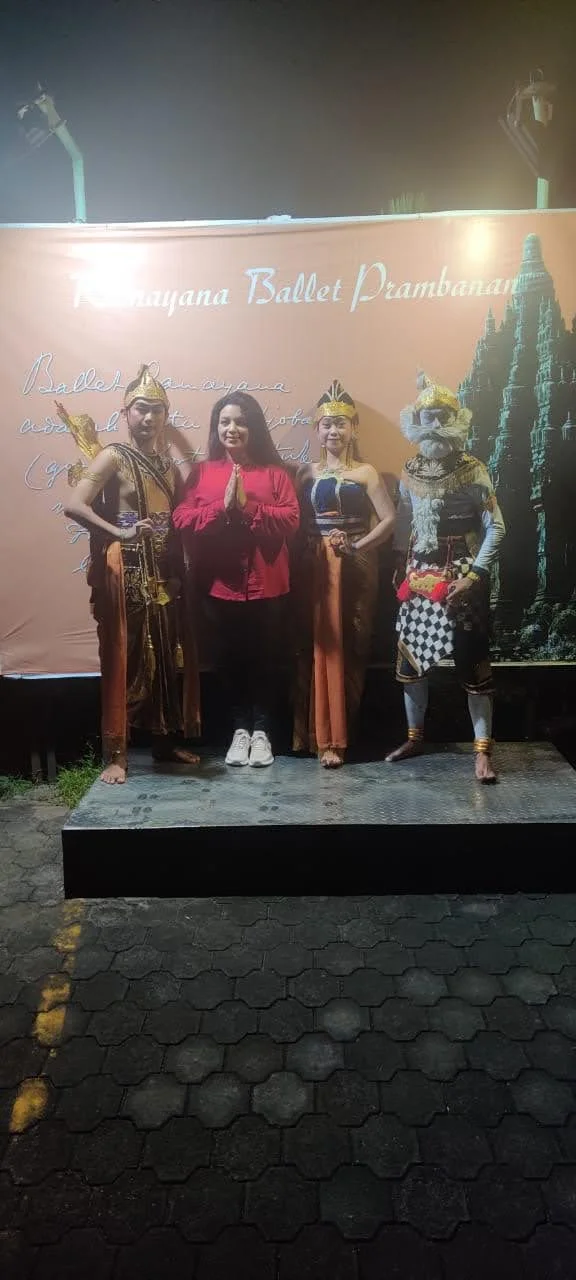
Meeting the Performers of the Ramayana Ballet
Experiencing the timeless Indian epic lovingly reimagined and transformed into an extraordinary expression of Indonesia's living heritage.
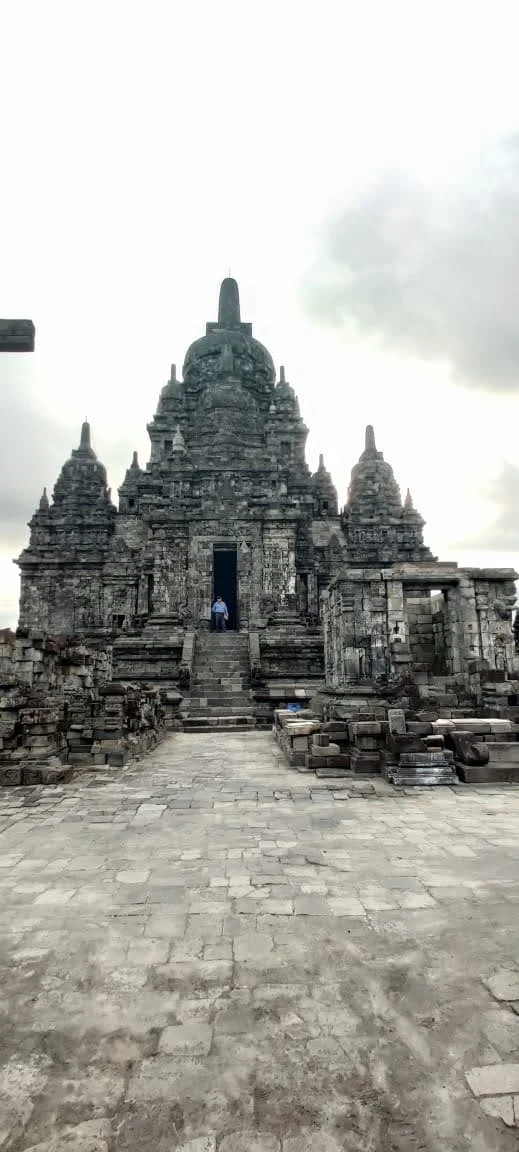
Candi Sewu — A Buddhist Masterpiece of the Indosphere
Located just a short distance from Prambanan, Candi Sewu is one of Indonesia's oldest and largest Buddhist temple complexes, dating back to the late 8th century during the powerful Sailendra dynasty. Despite its name, which means "A Thousand Temples" in Javanese, the complex originally consisted of 249 temples arranged around a magnificent central sanctuary. Built decades before nearby Prambanan, Candi Sewu reflects the flourishing of Mahayana Buddhism in ancient Java and stands as a remarkable example of the architectural brilliance of the period.
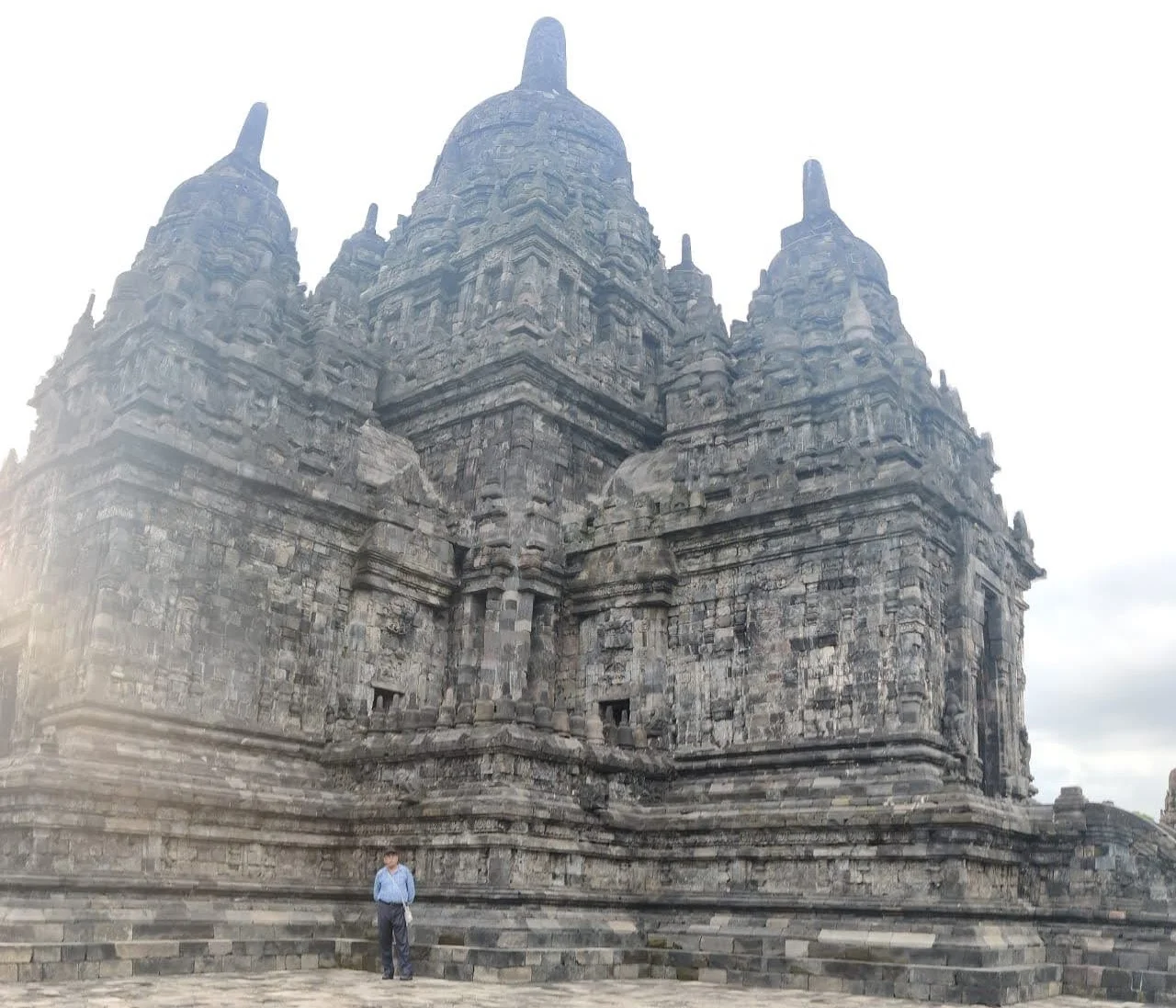
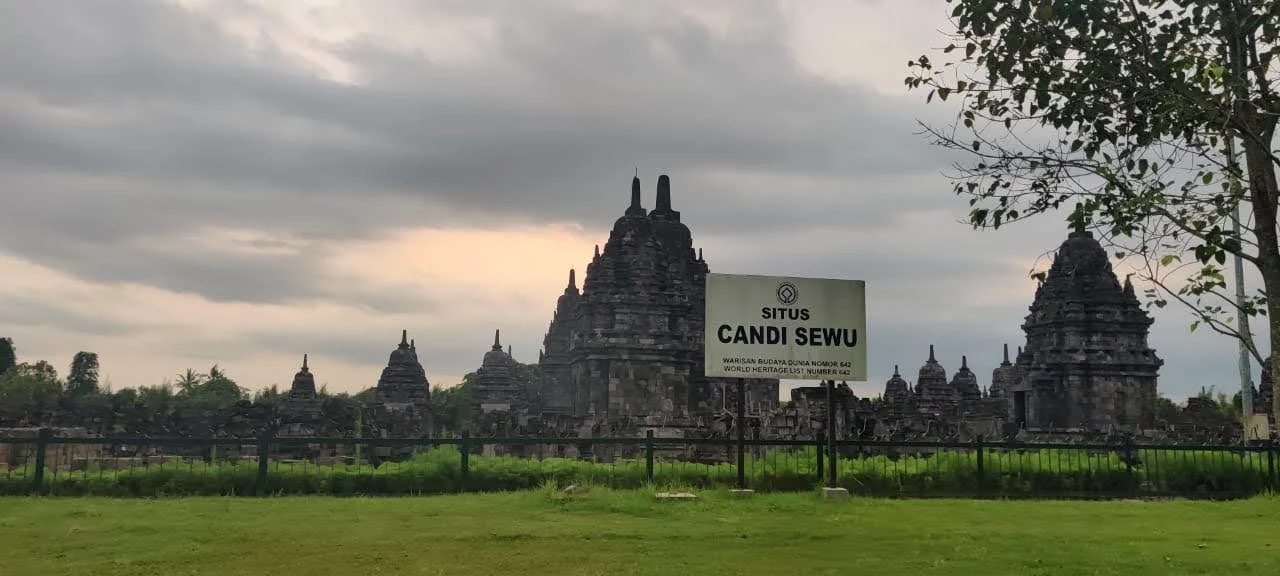
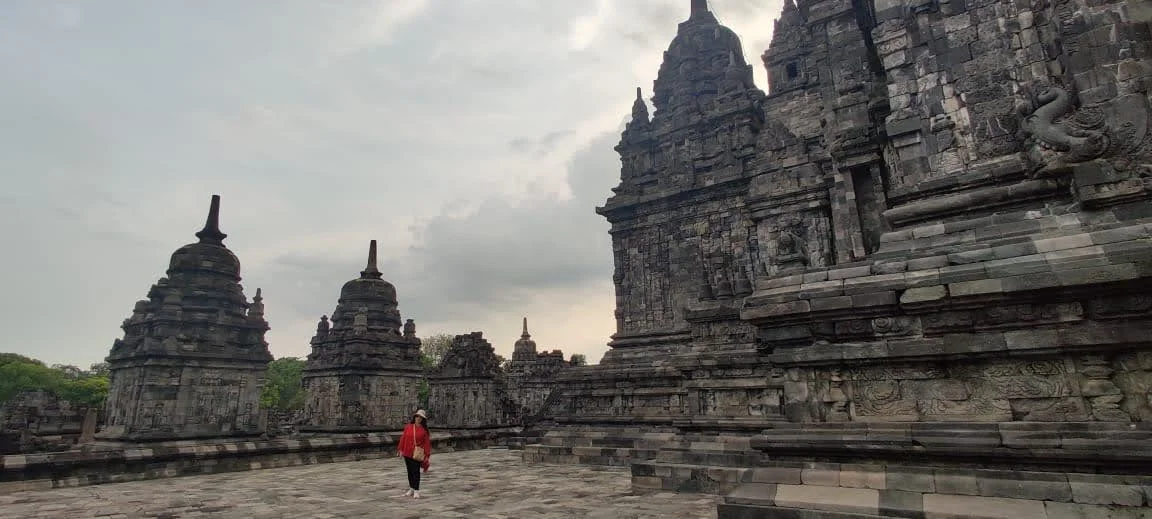
For us, Candi Sewu was another powerful reminder of the deep cultural and spiritual ties between India and Southeast Asia. Inspired by Indian Buddhist philosophy, Sanskrit inscriptions, and artistic traditions that travelled across the Bay of Bengal through monks, scholars, and merchants, the temple symbolizes the peaceful spread of Indian ideas rather than conquest. Walking among its silent stone shrines, we felt witnessing a chapter of the ancient Indosphere, where Indian spirituality blended seamlessly with Javanese creativity to produce a heritage that remains uniquely Indonesian yet unmistakably connected to its Indian roots.
Tips for Visiting Prambanan from Yogyakarta
Practical guidance for planning your temple visit, temple compound navigation, photography, and combined excursions with Prambanan and Sewu.
Distance & Location
Located roughly 17 km northeast of Yogyakarta, taking about 30 to 45 minutes by taxi or private car.
Getting There
Easily reached via Grab or Gojek ride-hailing apps, metered city taxis, or the budget-friendly Trans Jogja bus route 1A.
Best Time to Visit
Arrive early between 8:00 and 10:00 am for cooler air, or after 3:30 pm for magnificent golden sunset illumination.
Time Required
Set aside 3 to 4 hours to comfortably tour the central Trimurti shrines and walk north to Candi Sewu.
What to Wear
Wear breathable modest attire covering shoulders and knees, paired with supportive walking shoes for steep stone stairs.
What to Carry
Pack plenty of drinking water, high-SPF sunscreen, dark sunglasses, and an umbrella for reliable sun protection.
Nearby Candi Sewu
Walk 1 km north through the manicured park to Candi Sewu, a stunning 8th-century Mahayana Buddhist temple complex.
Combined Excursions
Pair Prambanan with morning trips to Ratu Boko plateau or Plaosan Twin Temples for a rich heritage day.
Respectful Etiquette
Treat active prayer sanctuaries reverently, avoid touching ornate bas-reliefs, and obey directional signage.
Ramayana Ballet
Consider attending the renowned evening Ramayana Ballet performance held at the adjacent open-air stage.
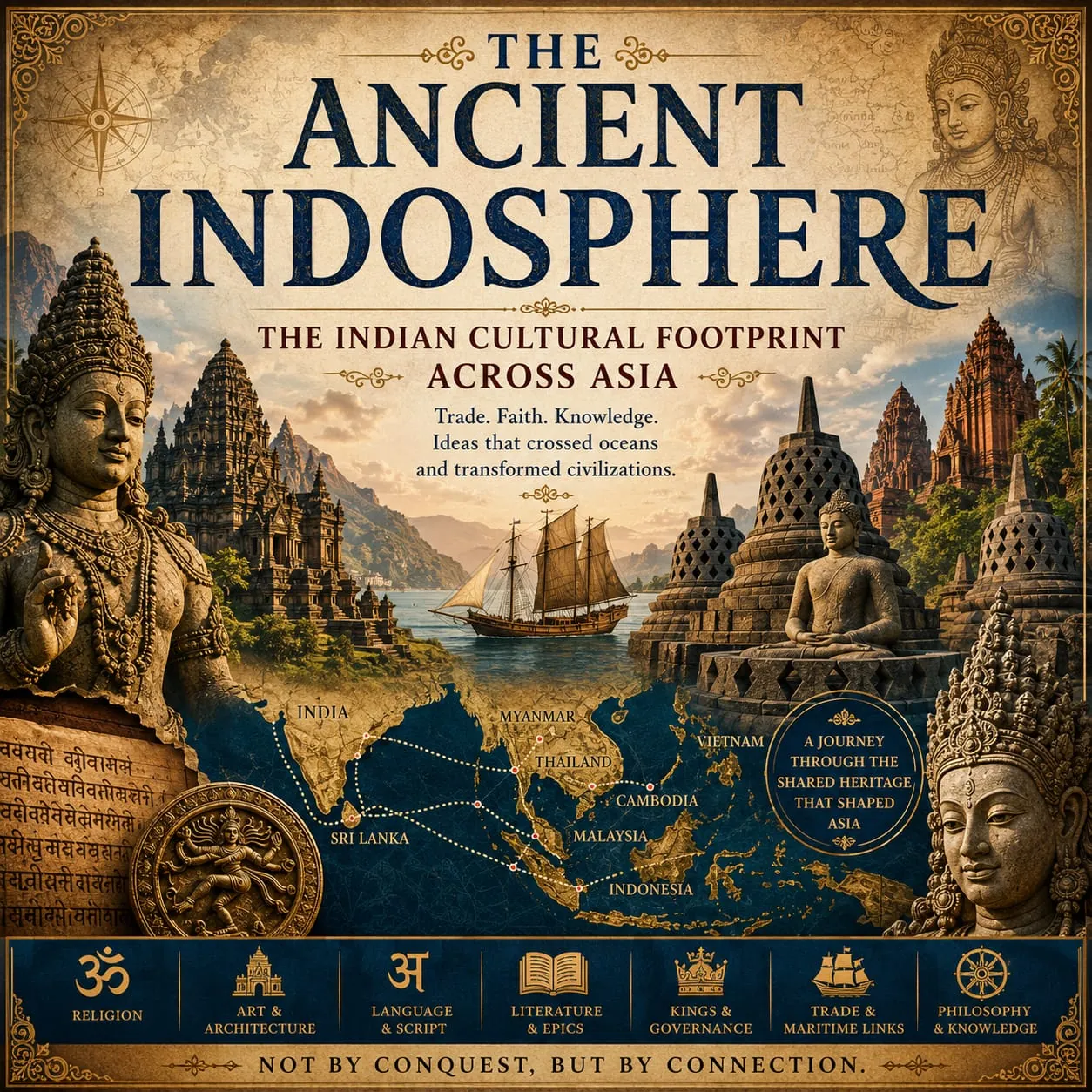
TRAVELLING THROUGH THE TIMELESS LEGACY OF INDIAN CIVILIZATION ACROSS ASIA AND BEYOND
“Not by conquest, but by connection.”
Rising majestically above the plains of Central Java, the soaring Trimurti spires and continuous Ramayana reliefs of Prambanan stand as a living testament to the shared cultural horizons connecting India with Java—where sacred epics, temple architecture, and living dance traditions were carried not by sword, but through dialogue, art, and devotion.
Complete Field Photography Index
All 21 client-provided photographs mapped with verified subjects, exact orientation, and focal point alignment.
Trimurti Sanctuary4:3Towers of Candi Shiva
The monumental 47-metre central Shiva Mahadeva temple flanked by Brahma and Vishnu spires under volcanic clouds.
 Iconic Skyline4:3
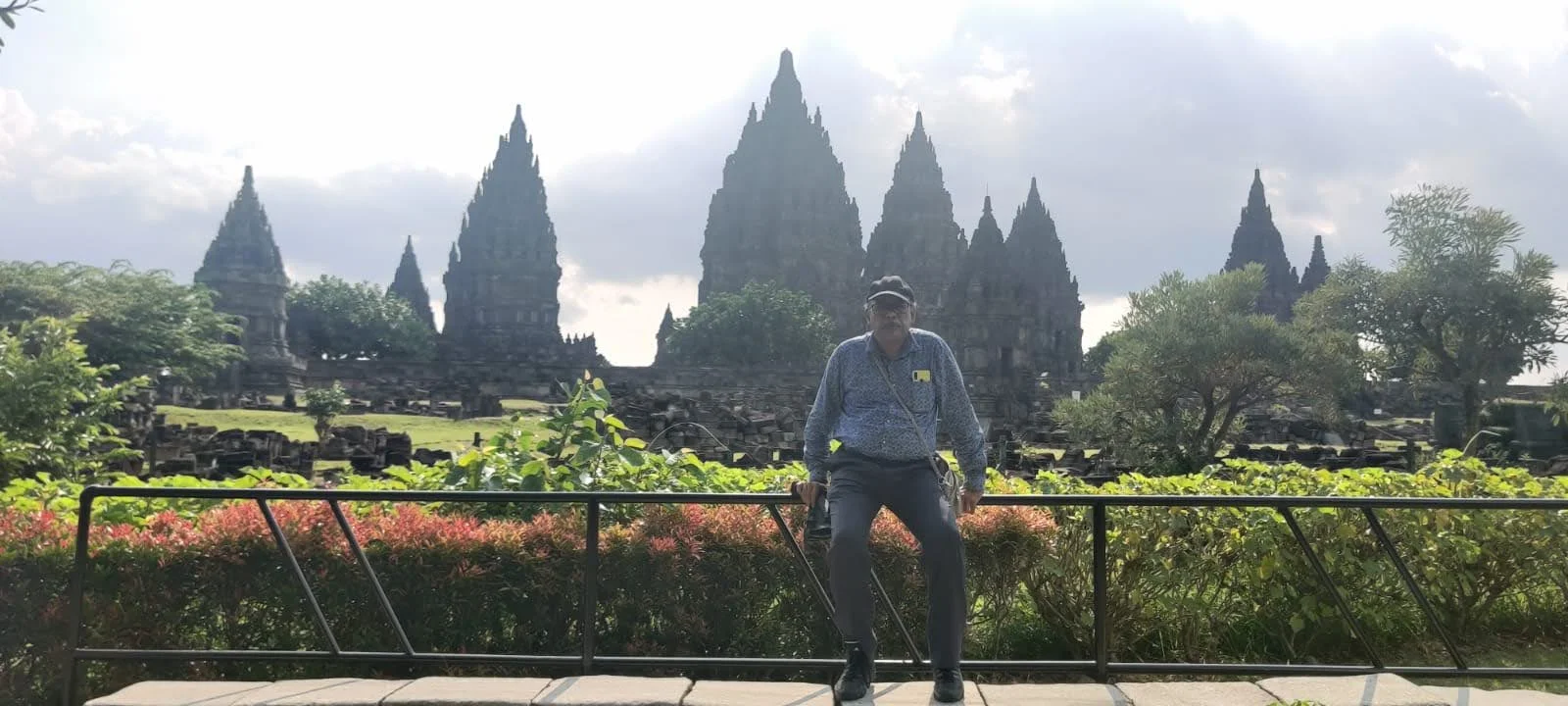
Prambanan Complex Skyline
The iconic silhouette of soaring Trimurti spires viewed across the landscaped gardens of the archaeological park.
Sacred Complex4:3Central Temple Compound
The raised stone platform where the eight principal temples rise in harmony.
Monumental Stairway3:4Stairs to Shiva Mahadeva
Steep carved stone steps flanked by Makara water monster gargoyles ascending toward the main chamber.
Sacred Murti3:4Lord Vishnu Sanctuary
Four-armed carved stone image of Lord Vishnu holding the conch, discus, and mace in the northern temple.
Sacred Murti3:4Sanctum of Lord Brahma
Interior sanctum housing the four-faced murti of Lord Brahma, Creator of the universe in the Hindu Trimurti.
Sacred Murti3:4Statue of Lord Ganesha
The beloved four-armed Ganesha seated with modaka bowl inside the western cella of the Shiva sanctuary.
Temple Architecture3:4Candi Shiva Facade
Monumental carved entryway and tiered stone roof structure rising 47 metres into the Central Java sky.
Stone Relinquary4:3Ramayana Bas-Reliefs
Continuous narrative stone relief panels depicting episodes from the Ramayana carved into the inner balustrade.
Masonry Details3:4Carved Stone Finials
Intricate floral and mythological antefix carvings adorning the tiered roofs of the auxiliary shrines.
Pilgrimage Route3:4Inner Courtyard Walkway
Paved stone walkways between the temples where centuries of pilgrims circumambulated the sacred shrines.
 Panoramic View4:3
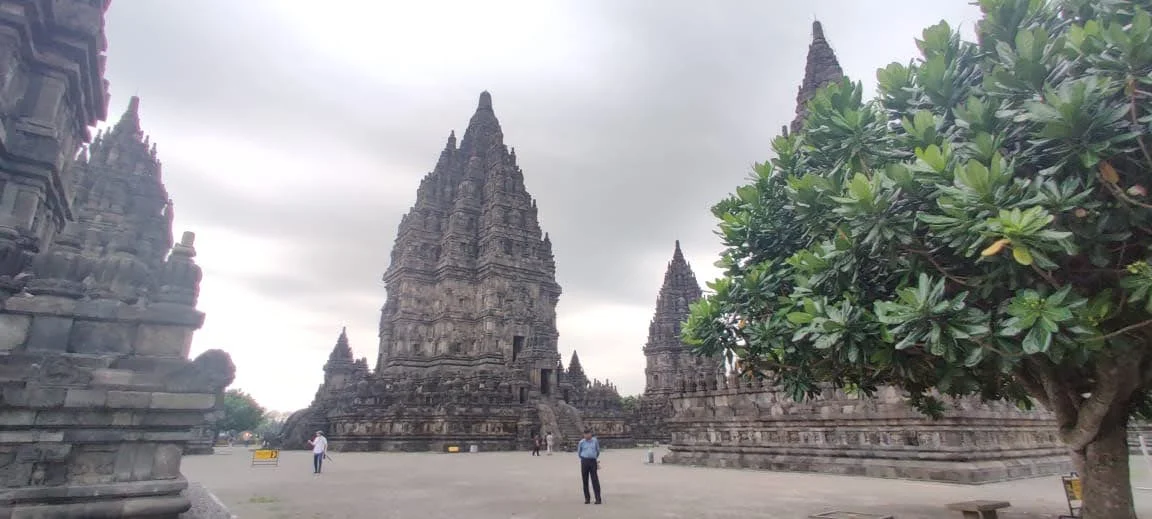
Archaeological Compound
Wide panorama of the central temple plateau surrounded by the ruins of 224 smaller perwara shrines.
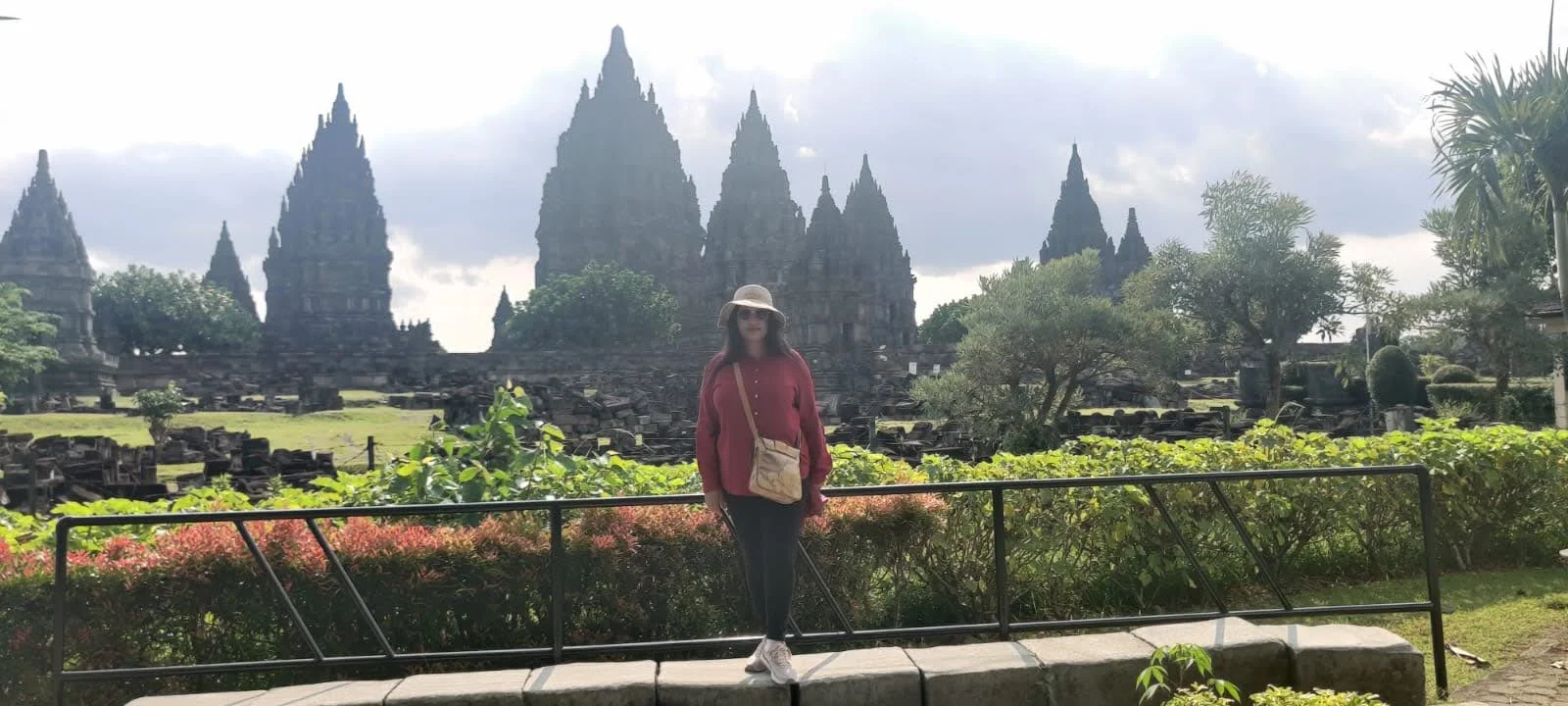 Park Grounds4:3
Gardens of Prambanan
Green lawns and shaded tree-lined avenues framing views of the ancient stone temples across the complex.
Night Atmosphere4:3Prambanan at Twilight
Dramatic night lighting casting golden illumination over the ancient stone spires against the dark tropical sky.
Gamelan & Dance4:3Open-Air Ramayana Stage
Traditional gamelan ensemble accompanying classical Javanese dancers beneath the backdrop of lit temples.
Living Performance4:3Ramayana Ballet Ensemble
Full cast of dancers, monkey warriors, and royal characters gathering for the dramatic conclusion of the epic.
Epic Characters3:4Rama & Sita Court Attire
Lead dancers portraying Sri Rama and Sita in traditional batik textiles, golden crowns, and expressive mudras.
Buddhist Heritage3:4Candi Sewu Sanctuary
The majestic central sanctuary of Candi Sewu, Indonesia's second-largest Buddhist temple compound dating to 792 CE.
Temple Architecture3:4Candi Sewu Entrance
Grand stone portal flanked by guardian Dvarapala statues leading up to the main stupa-crowned compound.
Field Exploration4:3Candi Sewu Stupas
Walking among the perimeter perwara stupas showing the syncretic harmony between Shaivite and Buddhist dynasties.
Heritage Status4:3UNESCO Heritage Site
The official Prambanan Temple Compounds monument marking World Heritage protection since 1991.
CONTINUE THE INDONESIA JOURNEY
Journey Through the Sacred Monuments of Indonesia