
BATU CAVES, MALAYSIA
Where India’s Culture Crossed the Sea
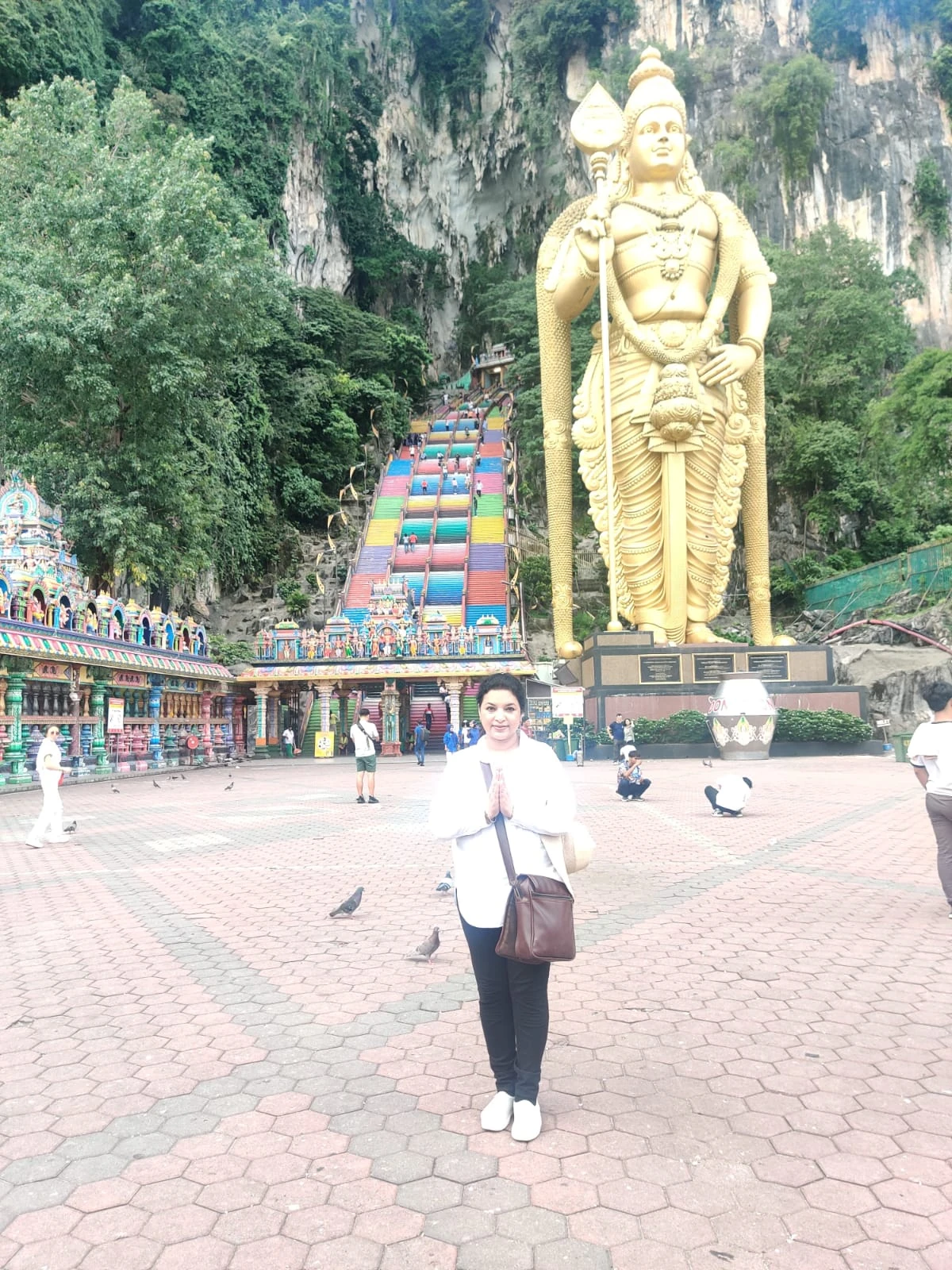
Lord Murugan & The Rainbow Stairs: Standing before the world's tallest statue of the deity at the entrance to the ancient limestone cavern
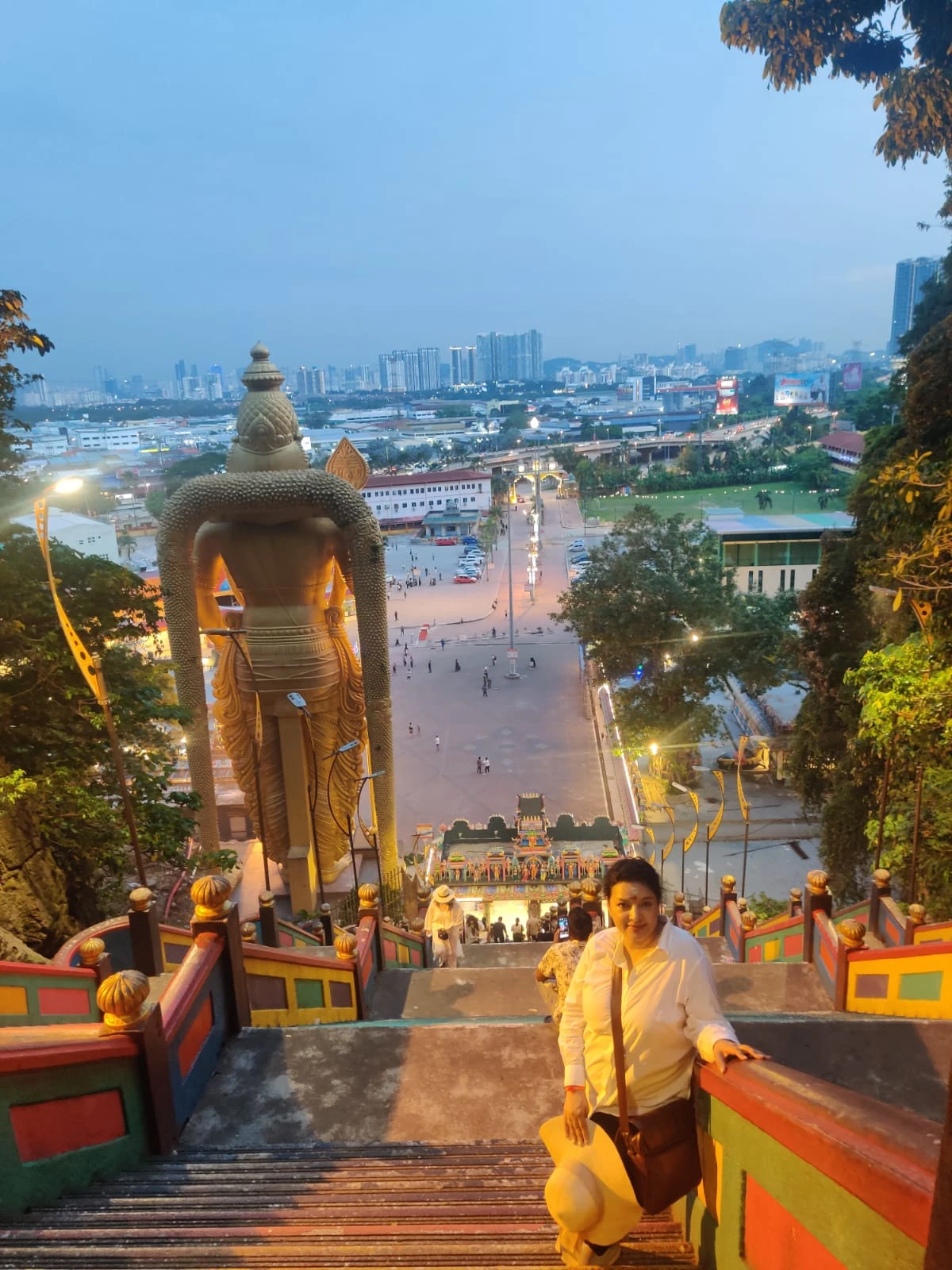
Twilight Vista: The golden radiance of Lord Murugan looking out toward the modern Kuala Lumpur skyline
India’s Cultural Footprint in Malaysia
India’s influence on Malaysia stretches back centuries, carried across the seas by merchants, sailors, Buddhist monks, and Hindu priests. Hinduism and Buddhism, Sanskrit, Tamil traditions, the Ramayana and Mahabharata, Indian ideas of kingship, mythology, food, and language all left their imprint on the Malay world.
Later, large-scale migration from India, particularly from Tamil Nadu, brought temples, festivals, and customs that remain vibrant today.
Batu Caves, dedicated primarily to Lord Murugan, and the spectacular Thaipusam festival are among the most visible symbols of this enduring connection. They demonstrate how Indian culture travelled across the Bay of Bengal, took root in Malaysia, and evolved into an integral part of its multicultural identity.
As we explored Malaysia, we discovered that India’s cultural legacy was not confined to ancient history. It continues to thrive in religious traditions, community celebrations, architecture, and everyday life.
“Batu Caves demonstrates how Indian culture travelled across the Bay of Bengal, took root in Malaysia, and evolved into an integral part of its multicultural identity.”
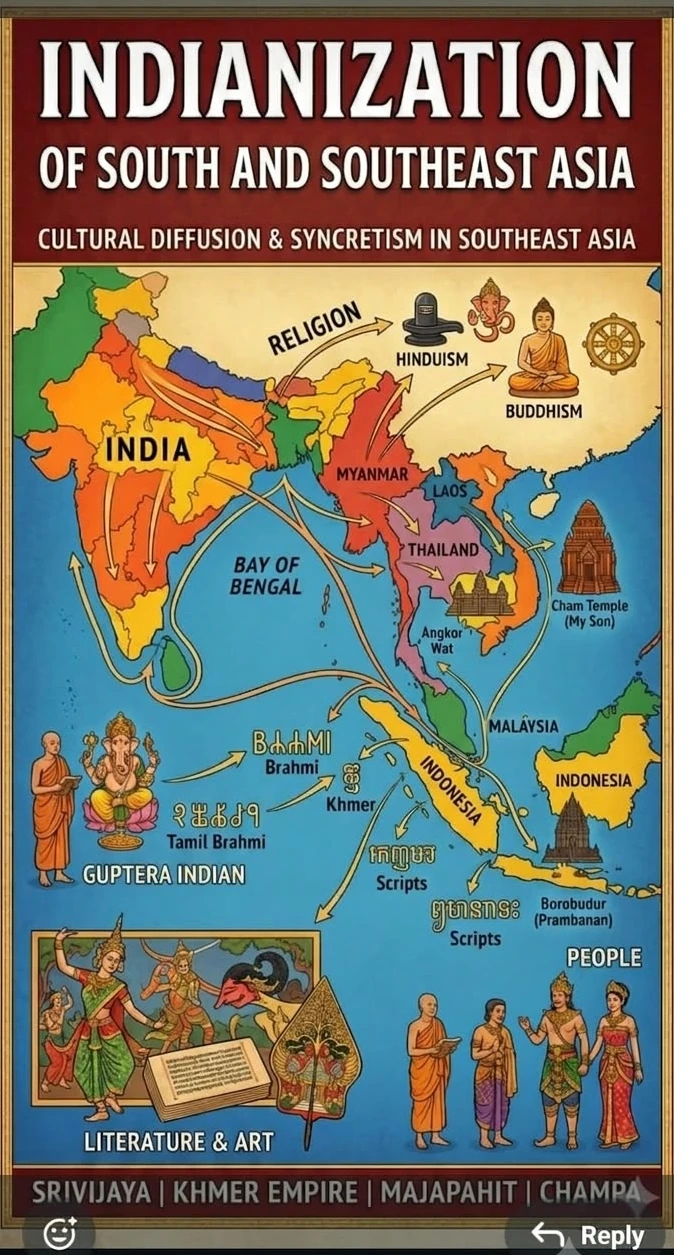
Historical Diffusion: Maritime trade routes crossing the Bay of Bengal into the Malay Peninsula
Batu Caves: Where Faith Climbs 272 Steps
A vertical journey into a living tradition of faith, color, and limestone
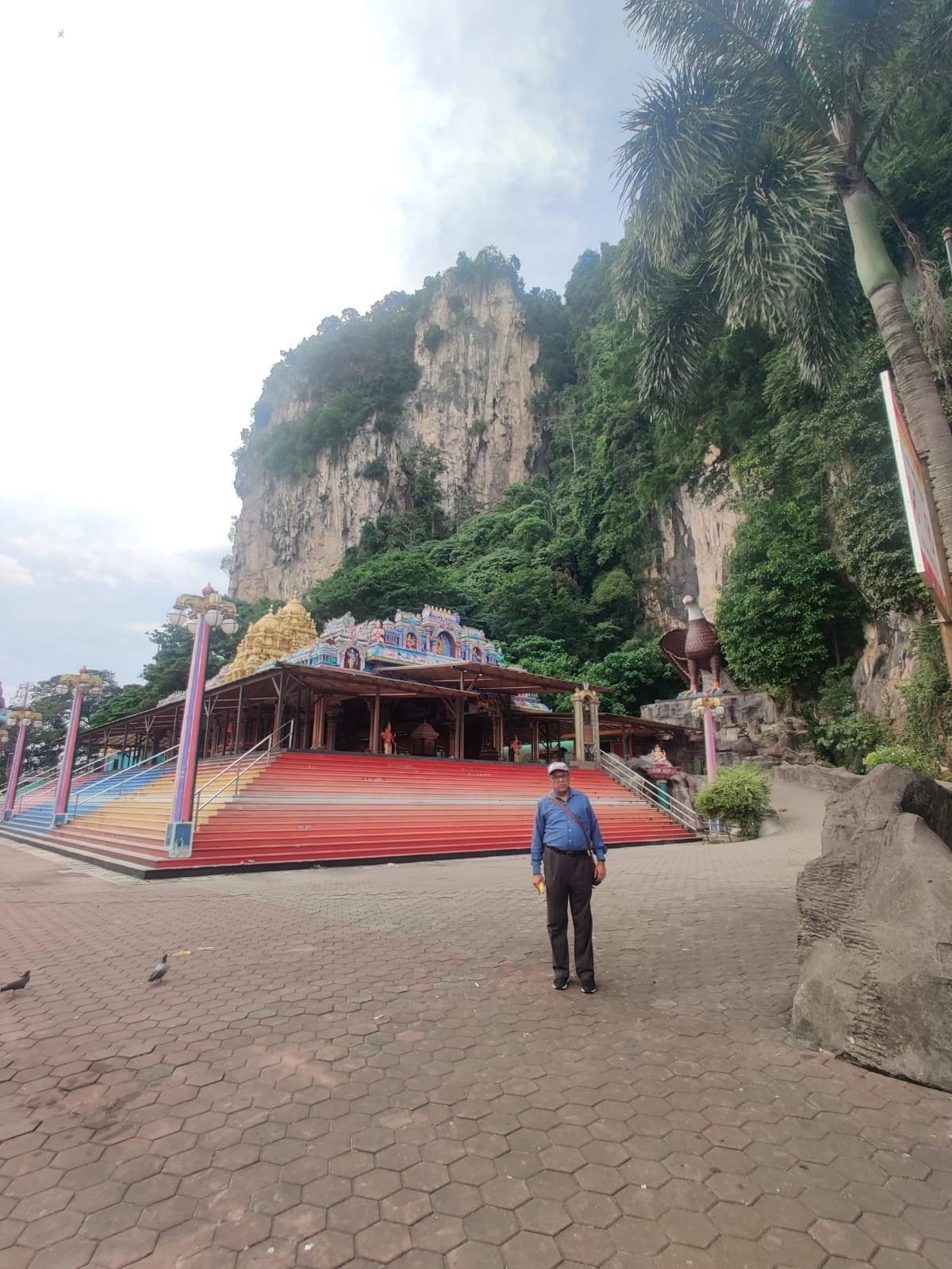
The Limestone Karst Plaza: Ancient cliffs rising 100 meters above the entrance shrines and sacred mandapams
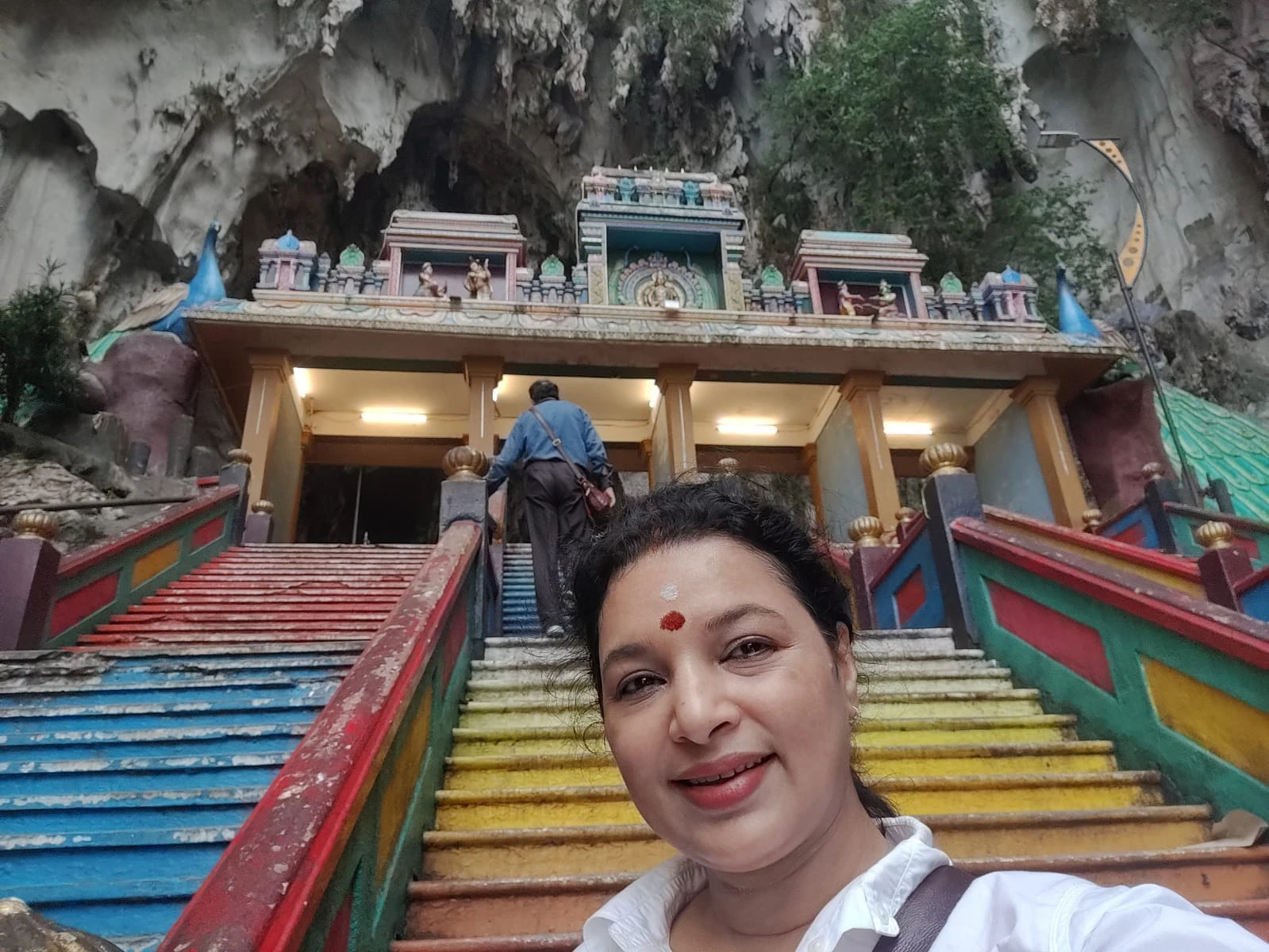
The 272 Rainbow Steps: A vivid stairway of devotion ascending into the sheer limestone cliff face
Famous for its colourful staircase comprising exactly 272 steps, Batu Caves is one of Malaysia’s most recognisable Hindu pilgrimage destinations.
Located in Gombak, Selangor, just outside Kuala Lumpur, the limestone hill complex combines spectacular natural formations with magnificent Hindu shrines and religious sculptures.
The site is easily accessible by public transportation, making it a popular destination for both pilgrims and travellers.
As we approached the caves, we were immediately captivated by the towering golden statue of Lord Murugan standing majestically beside the colourful staircase. Beyond the impressive entrance, the ancient limestone formations and sacred shrines created a remarkable combination of natural beauty and spiritual significance.
Climbing the 272 steps offered more than a physical experience. It felt like a journey into a living tradition, where devotion, architecture, and the natural landscape come together.
Batu Caves is a must-visit destination for anyone interested in Malaysia’s religious heritage and the enduring connections between India and Southeast Asia.
Batu Caves: Where Lord Murugan Found a New Home
Batu Caves stands as one of the strongest symbols of Indian cultural and religious influence in Southeast Asia.
Located near Kuala Lumpur, the limestone hill complex is home to magnificent Hindu temples and shrines, dominated by the towering golden statue of Lord Murugan, the Hindu god associated with courage, wisdom, and the destruction of evil.
The site reflects how Hinduism and Tamil religious traditions spread across the region through migration, maritime connections, and cultural exchange over many centuries.
Although the limestone caves themselves are ancient natural formations, their development into a major Hindu religious centre is closely associated with the Tamil Hindu community in Malaysia.
K. Thamboosamy Pillai
In the late 19th century, prominent Indian merchant K. Thamboosamy Pillai recognized the cave entrance’s resemblance to the tip of a *Vel* (sacred spear) and established Batu Caves as a place of worship dedicated to Lord Murugan.
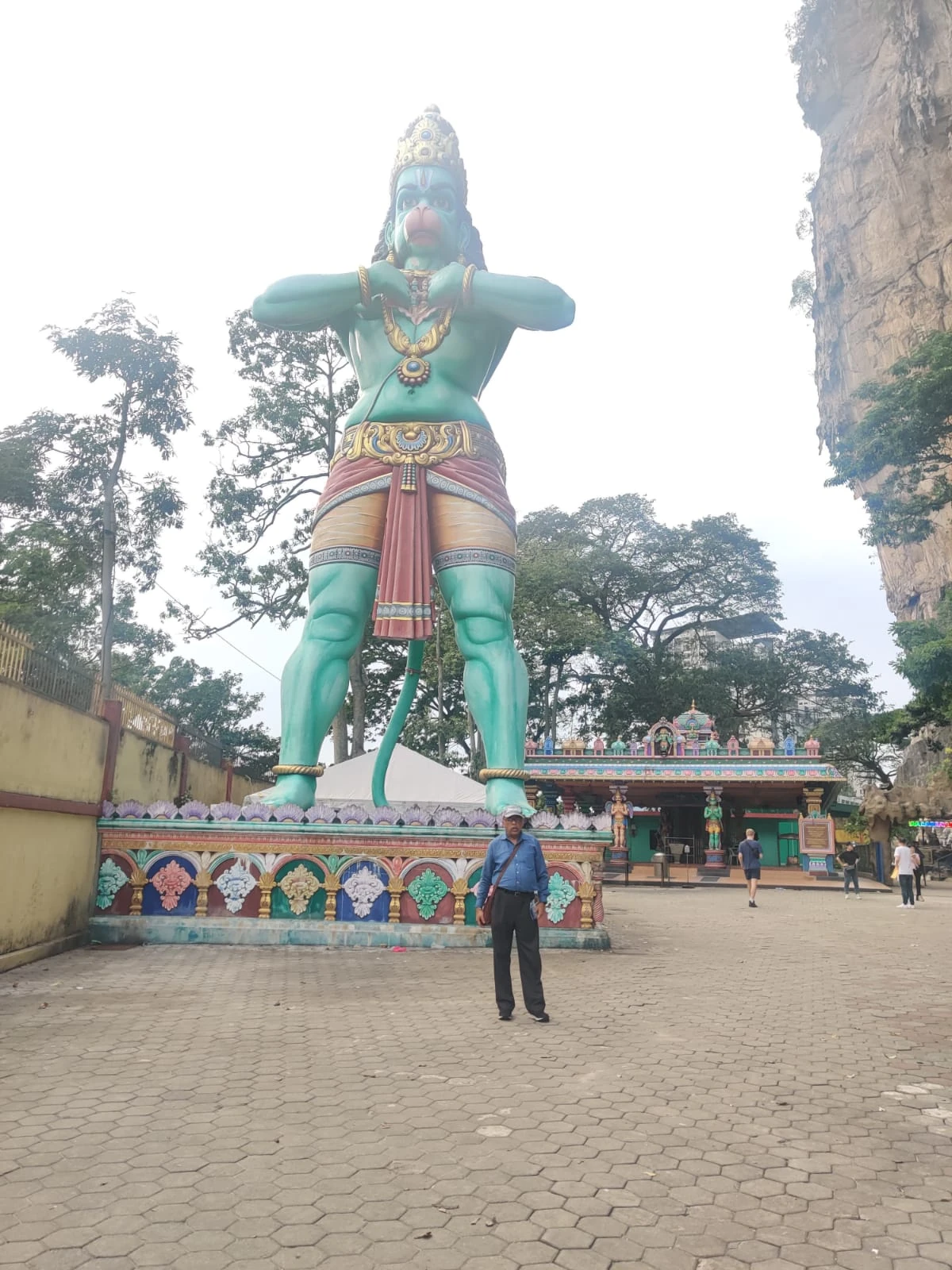
Colossal Green Hanuman: The 50-foot guardian statue towering at the foot of the Ramayana Cave
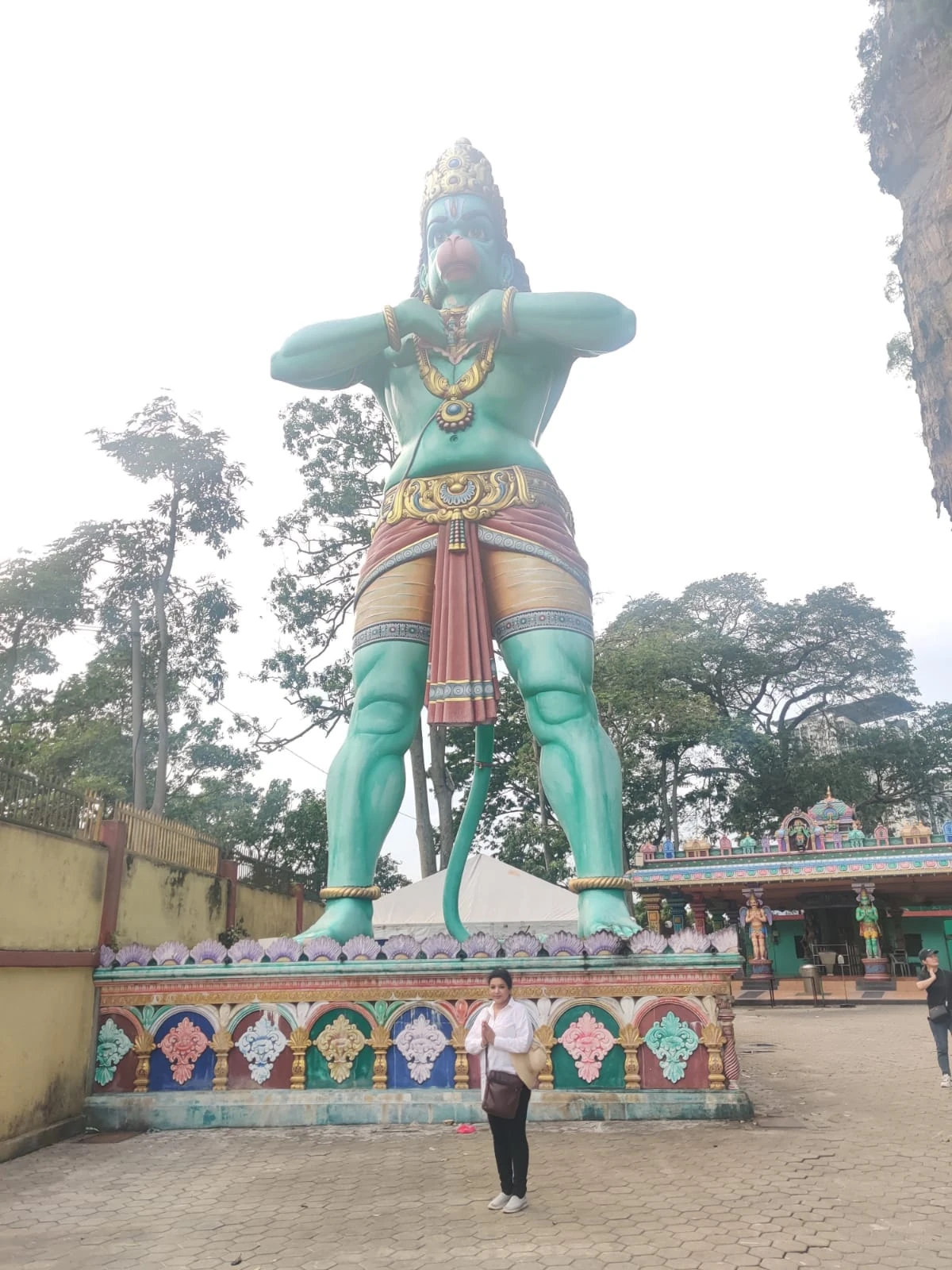
Devotion in Stone: The magnificent posture of Hanuman welcoming pilgrims to the sacred caverns
“In the late 19th century, Indian merchant K. Thamboosamy Pillai helped establish Batu Caves as a place of worship dedicated to Lord Murugan. Since then, the complex has grown into one of the most important Hindu pilgrimage destinations outside India.”
“For us, Batu Caves represented more than a religious monument. It was a powerful example of how communities carried their beliefs across oceans and created sacred spaces that preserved their cultural identity in a new homeland.”
“The towering Murugan statue, colourful steps, and limestone caverns together create a landscape that is unmistakably Malaysian while remaining deeply connected to India’s Hindu heritage.”
Thaipusam: A Spectacular Celebration of Faith
Batu Caves becomes especially significant during Thaipusam, one of the most important Hindu festivals celebrated by Tamil communities in Malaysia.
Dedicated to Lord Murugan, the festival commemorates the divine association of the deity with the Vel, a sacred spear given to him by his mother, Goddess Parvati, according to Hindu tradition.
During Thaipusam, thousands of devotees undertake pilgrimages to Batu Caves, carrying offerings and elaborate kavadis as expressions of faith, gratitude, and fulfilment of vows.
The procession, devotional music, prayers, and striking ceremonial practices transform the surrounding area into a remarkable gathering of religious devotion.
For many devotees, the pilgrimage involves considerable physical effort and spiritual preparation. The climb towards the shrine becomes an expression of dedication, discipline, and personal faith.
Thaipusam at Batu Caves beautifully illustrates the enduring legacy of Indian religious traditions in Southeast Asia. Hindu mythology, Tamil customs, devotional practices, and temple traditions have become deeply woven into Malaysian society while developing their own distinctive local character.
It is a powerful reminder that cultural heritage is not simply preserved in monuments. It continues to live through the faith and participation of communities across generations.
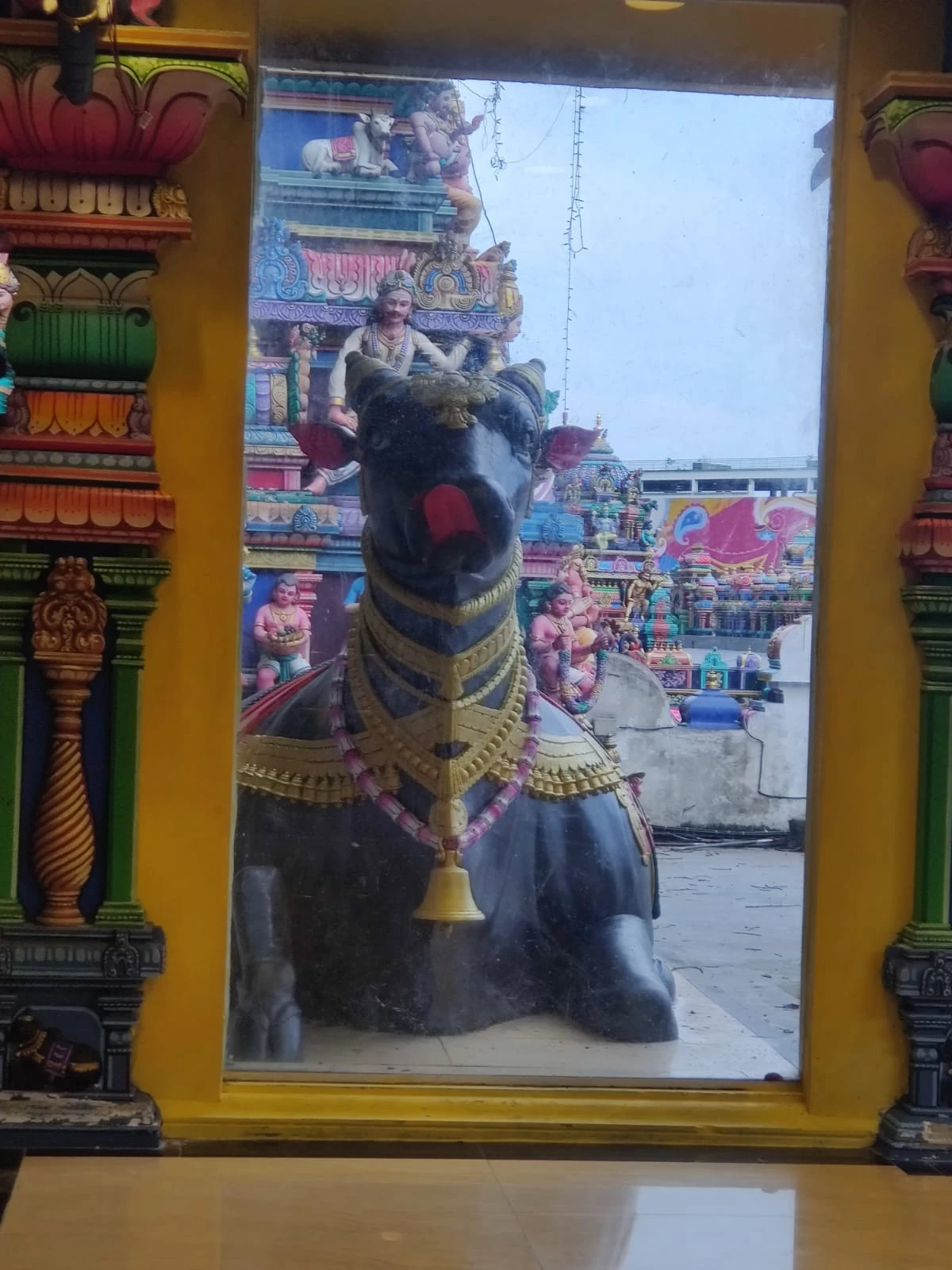
Sacred Nandi Shrine: Lord Shiva's divine vahana enshrined before the colorful Dravidian gopuram
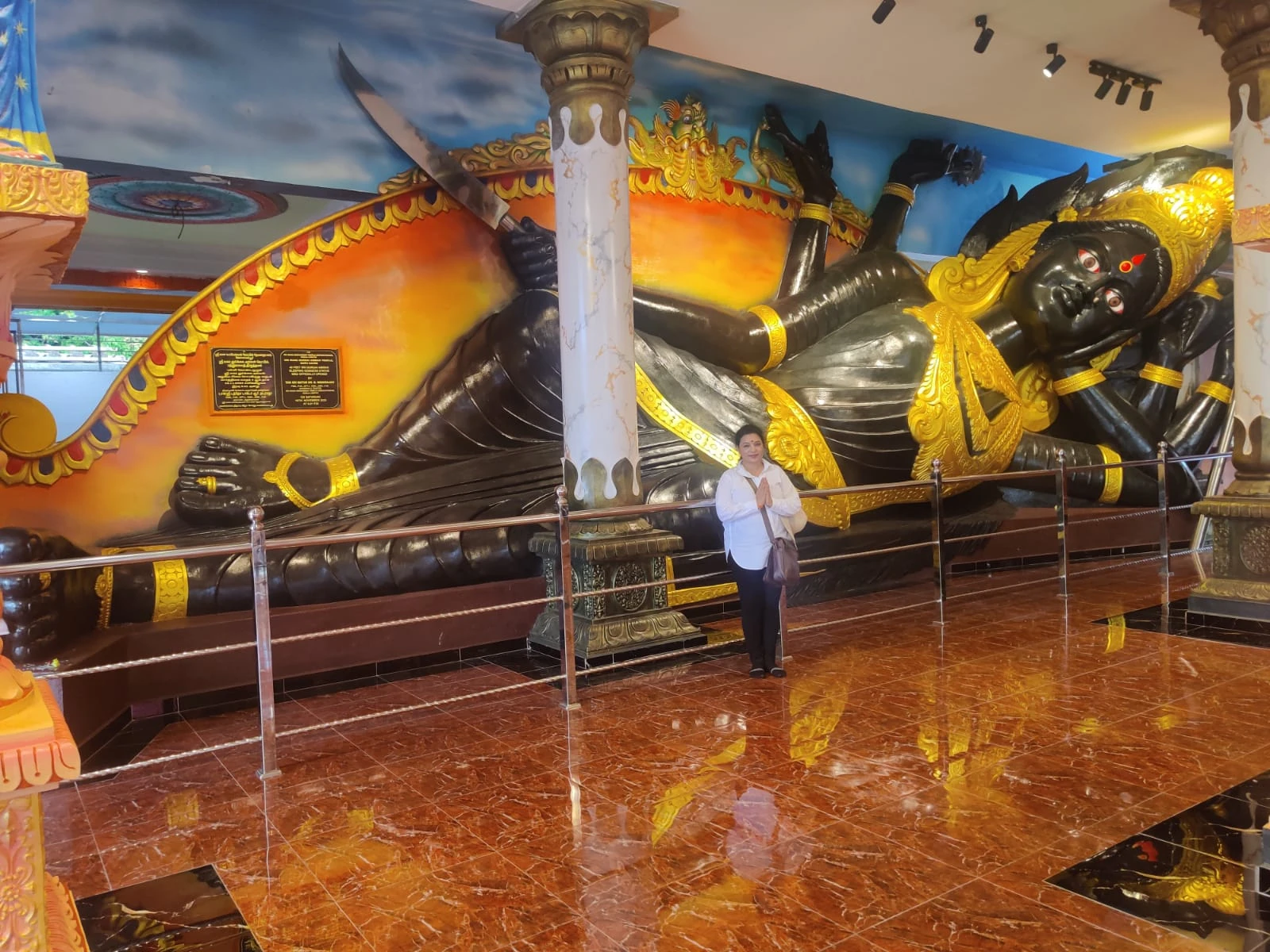
Ramayana Cave Diorama: The colossal reclining figure of Kumbhakarna depicted within the cave galleries
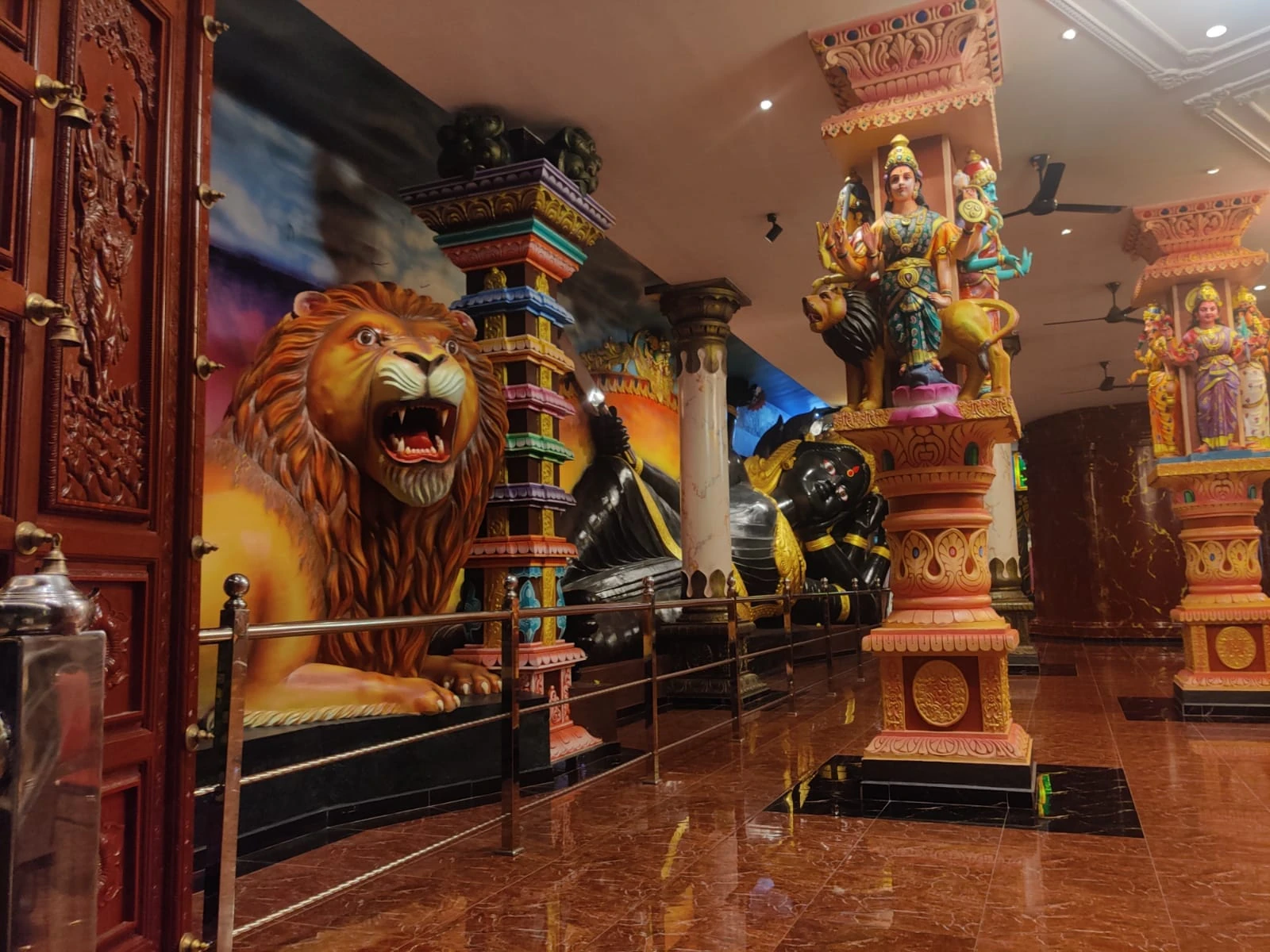
Goddess Durga on Lion: Intricate mythological scenes brought to life within the limestone galleries
Inside Cathedral Cave: The Sunlit Limestone Sanctum
Reaching the top of the 272 steps opens up into the colossal Cathedral Cave, also known as Temple Cave. With ceilings soaring over 100 meters high, the sheer scale of the karst cavern induces an immediate sense of reverent awe.
Natural fissures and dramatic limestone skylights pierce the ceiling, allowing rays of tropical sunlight to pour directly onto the Hindu shrines and temple mandapams below. The interplay between raw ancient stone and ornate South Indian sanctums makes it one of the world's most atmospheric places of worship.
Further inside, flights of stairs lead past rock alcoves enshrining Lord Nataraja performing the cosmic dance, up to the open-air upper cavern where priests perform daily aarti and archana pujas amidst the scent of camphor and jasmine.
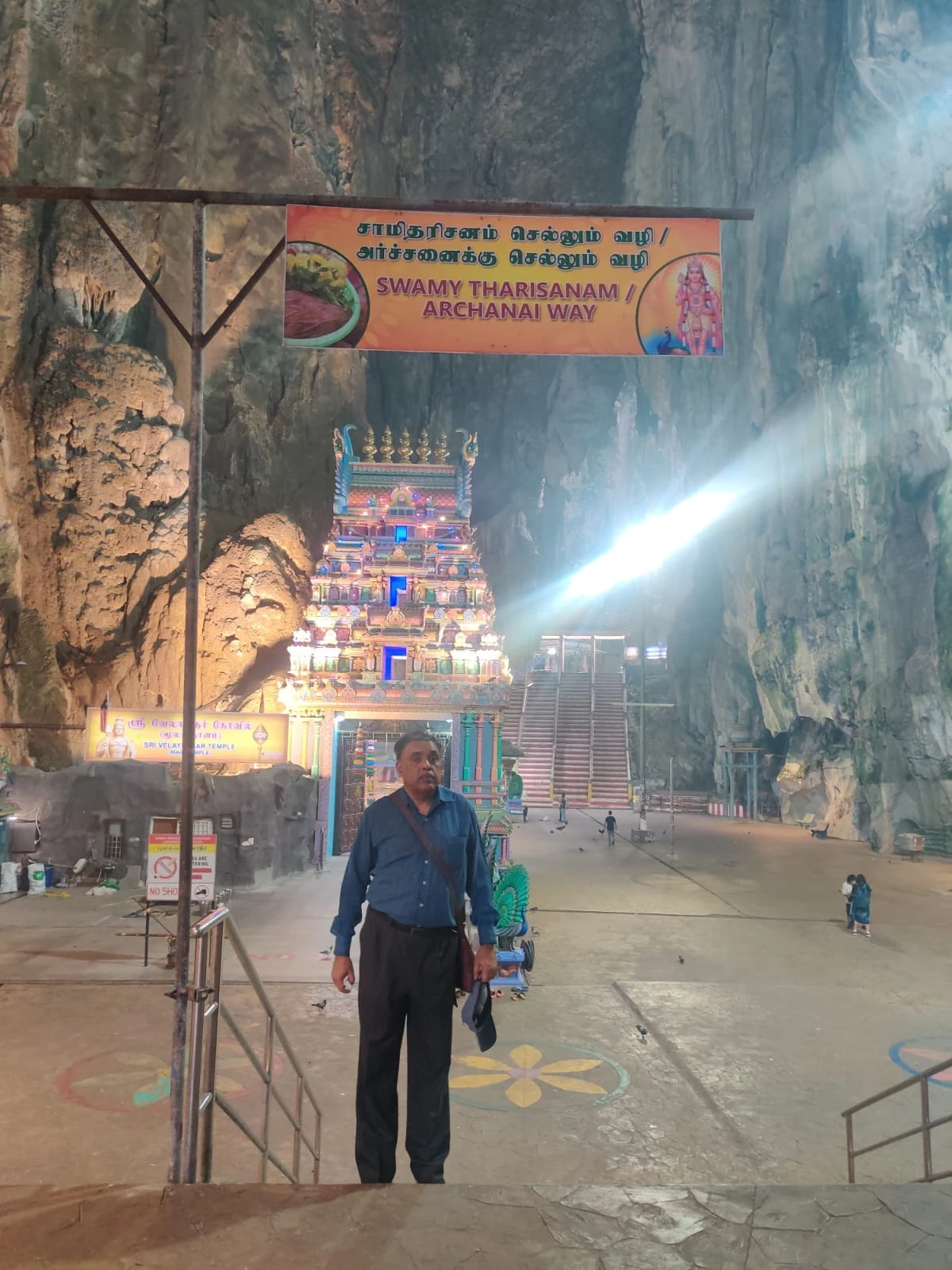
Sunbeam Swamy Tharisanam: A divine beam of natural sunlight piercing 100 meters into the cavern
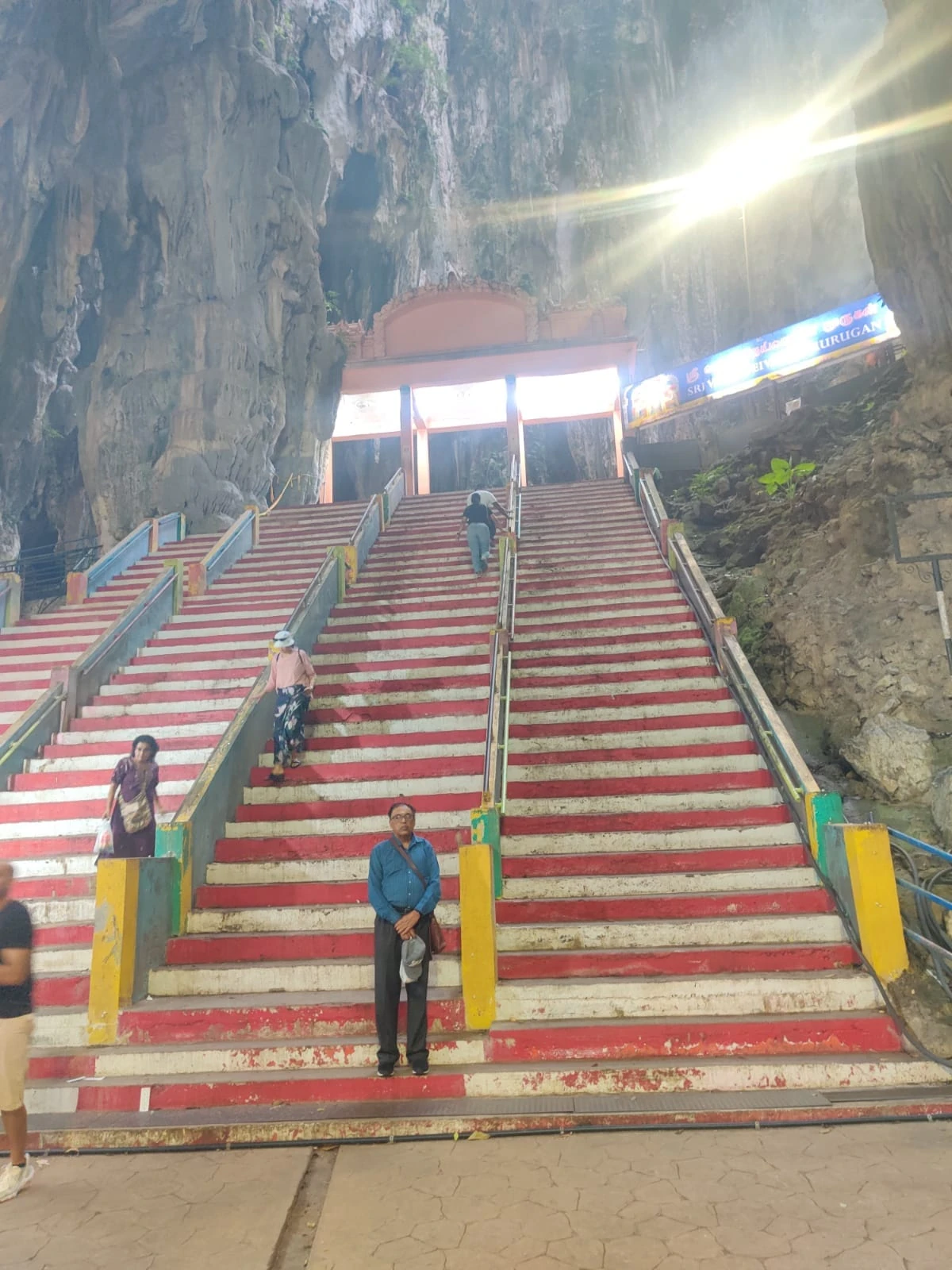
Upper Cavern Stairway: Climbing deeper into the massive vaulted limestone chamber
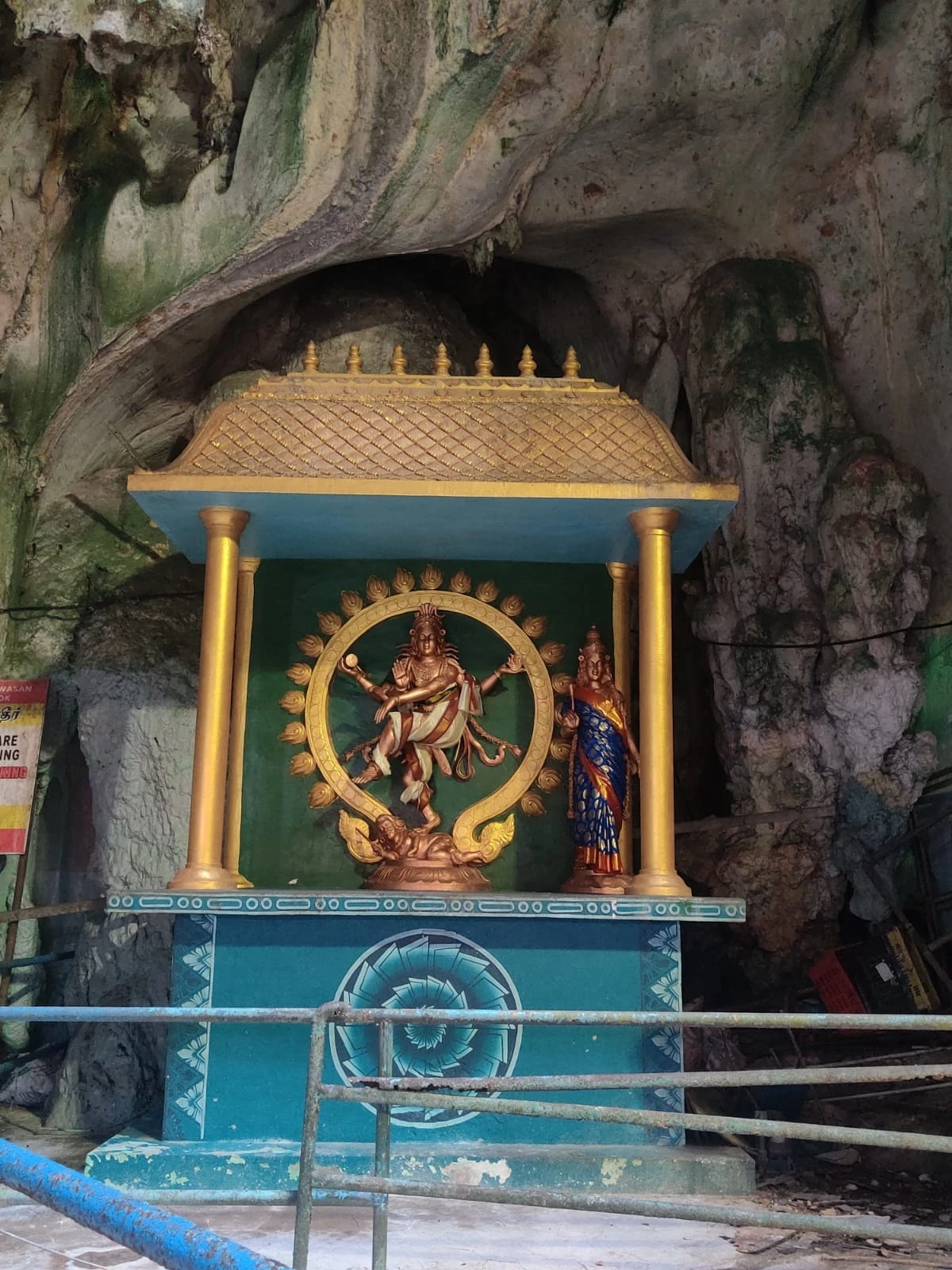
Nataraja in the Rock: Lord Shiva performing the cosmic Ananda Tandava in a natural limestone niche
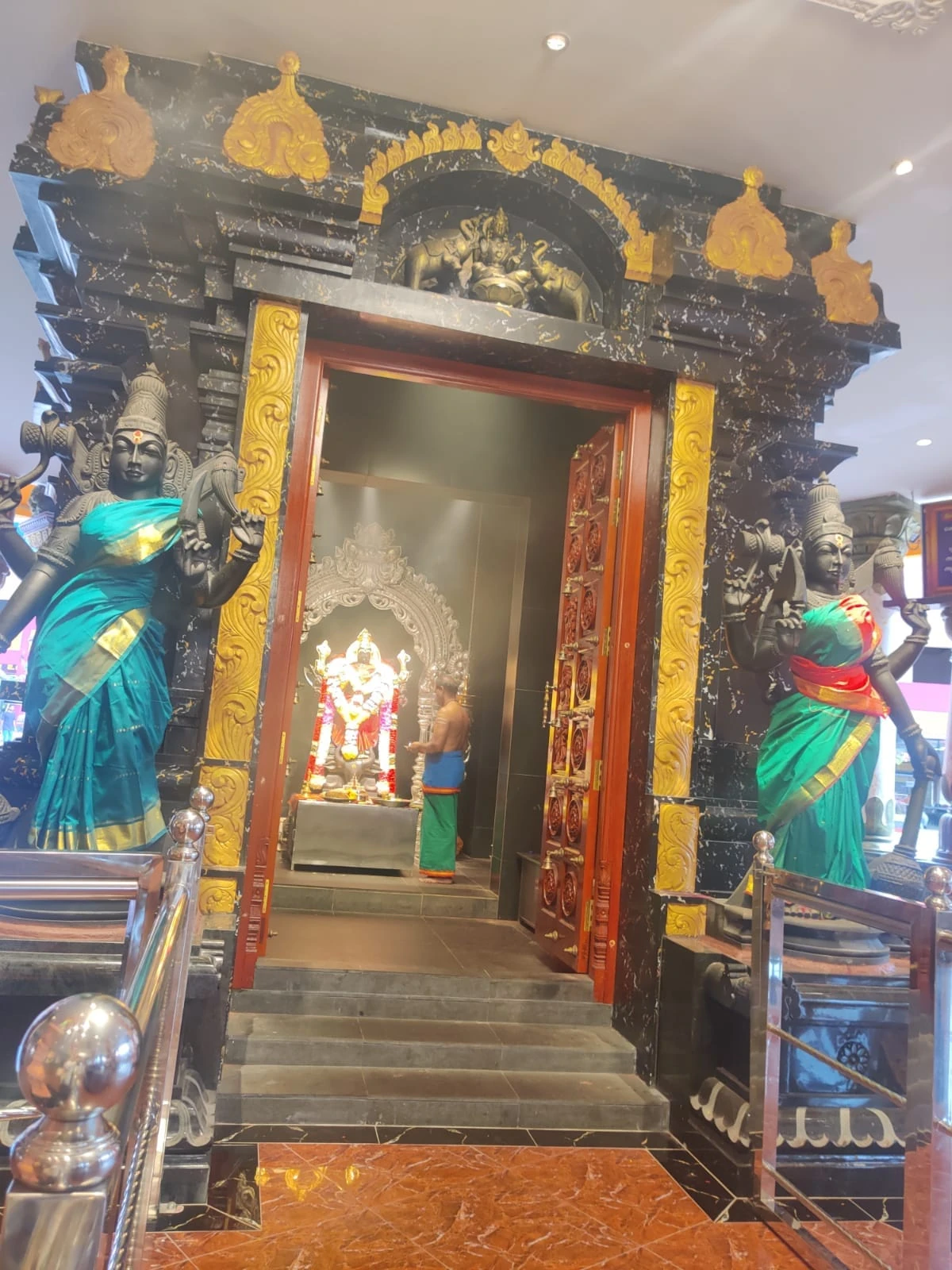
Inner Sanctum Puja: Traditional Tamil Hindu temple rituals preserved with absolute authenticity
The Indian Presence in Malaysia
Malaysia has a substantial community of Indian origin, whose history reflects centuries of maritime connections and more recent migration.
As I travelled through Malaysia, I found traces of India everywhere: in temples and festivals, food, language, and everyday life.
The Malaysian Indian community has made significant contributions to the country’s development across business, education, medicine, law, politics, the civil service, sports, and the arts.
Tamil traditions remain particularly visible in religious festivals, temple architecture, and community life, while other Indian communities have also contributed to Malaysia’s diverse cultural landscape.
What struck me most was the way Indian traditions have endured across generations while adapting to a distinctly Malaysian environment.
It felt as though a part of India had travelled across the Bay of Bengal, taken root here, and gradually become part of a larger national identity.
The experience reinforced an important idea: cultural influence is not simply about where a tradition begins. It is also about how people preserve, transform, and pass it on in the places where they settle.
Batu Caves captures this relationship beautifully. It is both a major Hindu pilgrimage destination and an important symbol of Malaysia’s multicultural heritage.
Cultural influence is not simply about where a tradition begins. It is also about how people preserve, transform, and pass it on in the places where they settle.
Conclusion: India’s Enduring Cultural Legacy in Malaysia
Our visit to Batu Caves offered a powerful glimpse into the enduring connections between India and Malaysia.
The towering statue of Lord Murugan, the colourful staircase, and the magnificent limestone caverns revealed how Hindu traditions have become deeply rooted in Malaysian religious and cultural life.
Beyond the physical beauty of the site, Batu Caves tells a much larger story about the movement of people, beliefs, and traditions across the Indian Ocean.
Indian merchants, migrants, religious communities, and cultural exchanges helped establish connections that developed over centuries. Later generations preserved these traditions while adapting them to the changing social and cultural landscape of Malaysia.
The Thaipusam festival demonstrates this continuity particularly vividly, bringing together devotion, Tamil heritage, and a strong sense of community in one of Southeast Asia’s most recognisable Hindu pilgrimage destinations.
What fascinated us most was that Batu Caves did not feel like a distant reflection of India. It felt like a living cultural connection, shaped by generations of people who carried their faith across the sea and made it part of their lives in Malaysia.
The site reminds us that Indian civilization’s influence extends far beyond geographical boundaries. Its traditions continue to flourish in places where communities have preserved their heritage while contributing to the identities of their adopted homelands.
At Batu Caves, the echoes of India resonate through the prayers offered to Lord Murugan, the traditions of Thaipusam, and the enduring faith of a community whose cultural roots cross the waters between India and Malaysia.
Batu Caves: Tips for Visitors
Essential field notes for travellers, photographers, and pilgrims
Getting There
Take the KTM Komuter train from KL Sentral directly to Batu Caves station (ends right at the entrance). Check current schedules before travelling.
Best Time to Visit
Arrive early in the morning, preferably between 7:00 and 8:00 am, to avoid the midday heat and larger crowds.
Time Required
Allow approximately 2–3 hours for a comfortable visit, including the staircase, caves, shrines, and surrounding attractions.
Dress Modestly
Wear clothing that covers your shoulders and knees, particularly when visiting religious areas. Sarongs can be rented at the base if needed.
Climbing the 272 Steps
Take your time, pause when necessary, and carry drinking water. The staircase can be physically demanding in hot tropical weather.
Watch Out for Monkeys
Keep food, water bottles, sunglasses, phones, and loose belongings secure in zipped bags, as macaque monkeys frequently snatch items.
Admire Golden Murugan
Spend some time appreciating the enormous 140-foot statue before beginning the climb. Its scale and intricate details make it one of the site’s defining landmarks.
Explore the Temple Cave
The staircase leads into a spectacular limestone cavern containing Hindu shrines beneath towering 100-meter rock formations.
Visit Ramayana Cave
Located near the entrance plaza with the green Hanuman statue, explore its colourful sculptures and vivid depictions of episodes from the Ramayana.
Photography Etiquette
The colourful staircase, golden Murugan statue, and enormous limestone formations provide excellent photographic opportunities. Be respectful when photographing devotees and religious ceremonies.
Respect Religious Customs
Observe temple etiquette, remove footwear when entering inner shrines, follow instructions from temple staff, and avoid disturbing people who are praying.
Experience the Culture
Take time to appreciate the Tamil traditions, devotional practices, and religious significance of Batu Caves rather than treating it solely as a tourist attraction.
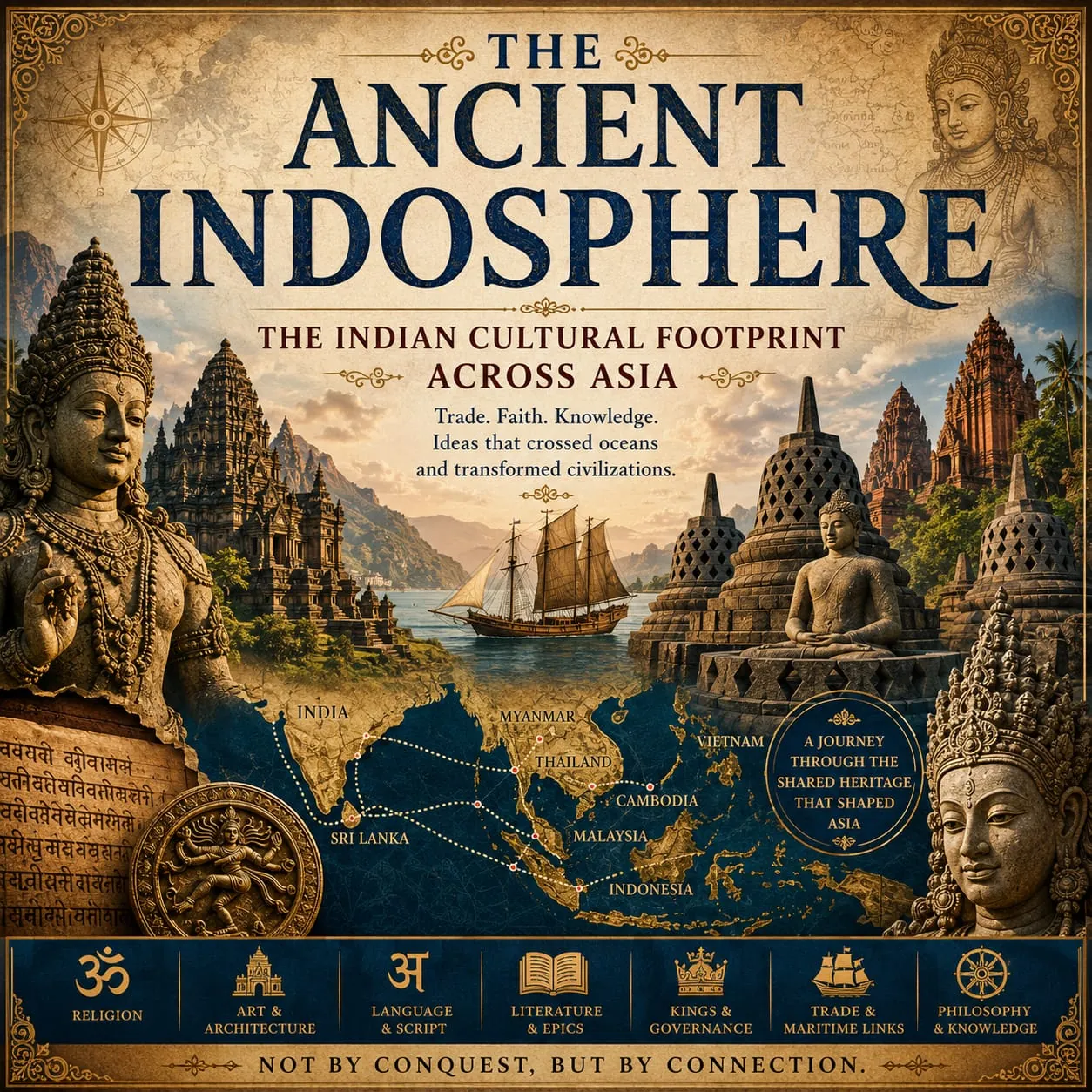
TRAVELLING THROUGH THE TIMELESS LEGACY OF INDIAN CIVILIZATION ACROSS ASIA AND BEYOND
“Not by conquest, but by connection.”
Across ancient temples, sacred stupas, and living cultural landscapes, the timeless traditions born in India continue to illuminate Asia with philosophy, art, and civilizational communion carried not by sword, but through dialogue and spiritual devotion.
CONTINUE THE MALAYSIA JOURNEY
Journey Through the Sacred Monuments of Malaysia