
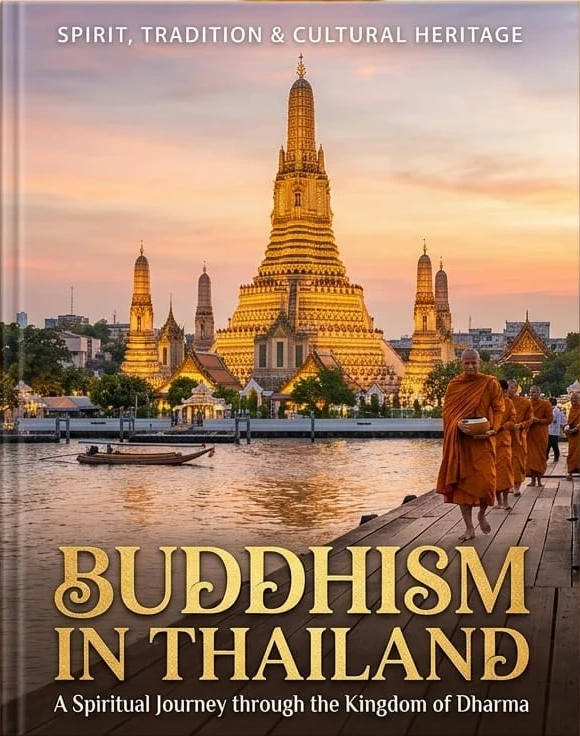
THAILAND: HOW BUDDHISM TRAVELLED FROM INDIA
Tracing the Journey of the Buddha’s Teachings Across Southeast Asia
Tracing the path of Dhamma from Emperor Ashoka's 3rd century BCE emissaries to the 5.5-tonne solid gold Buddha of Wat Traimit, the colossal reclining Buddha of Wat Pho, Chiang Rai's visionary White and Blue temples, Chiang Mai's Lanna sanctuaries, and the historic Golden Triangle.
HOW BUDDHISM CAME TO THAILAND FROM INDIA
From Ashoka's Missionaries to the Mon Kingdoms of Suvarnabhumi
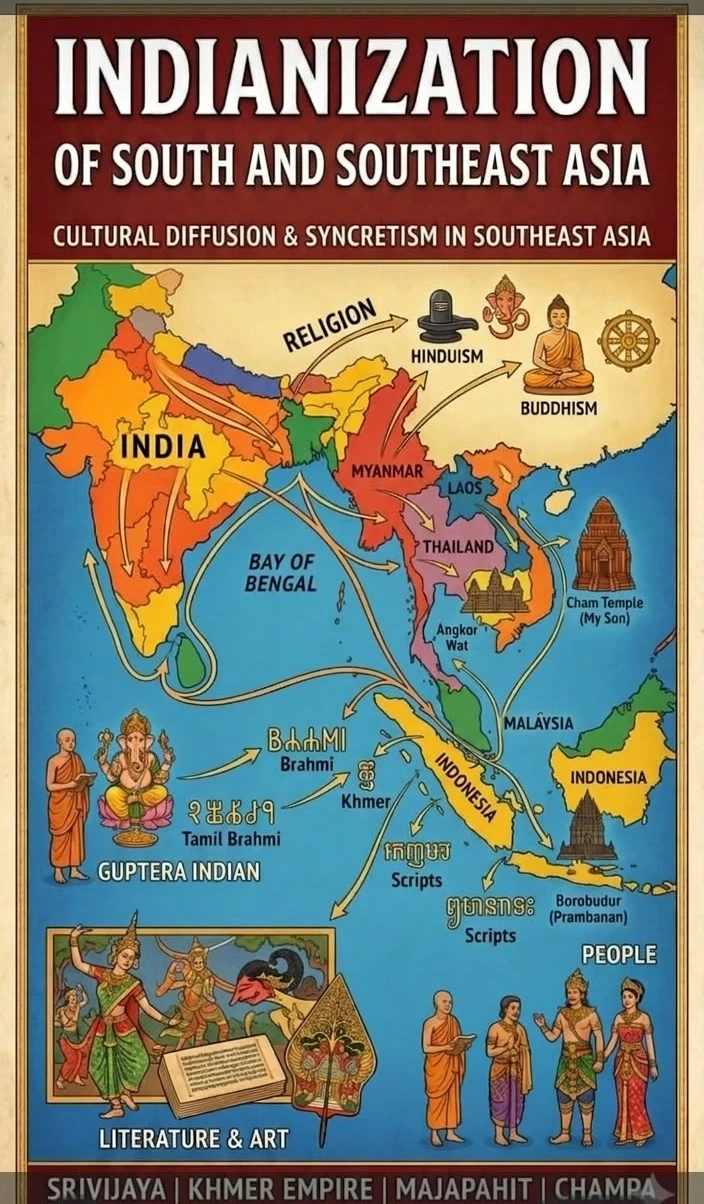
Oceanic Dhamma Route
Buddhism's Maritime Path
Ancient trade routes across the Bay of Bengal connecting Indian ports with Suvarnabhumi
The arrival of Buddhism in Thailand is one of history's most profound cultural voyages. Following the Third Buddhist Council in Pataliputra around 250 BCE, Emperor Ashoka the Great dispatched missionary monks across the known world. Among them, Arahats Sona and Uttara were sent southeast to Suvarnabhumi—the 'Land of Gold'—a region widely identified with maritime Southeast Asia and central Thailand.
Carried along maritime trade routes riding the monsoon winds across the Bay of Bengal, Indian merchants, scholars, and monks brought not only valuable spices and silk, but sacred Pali texts, Sanskrit inscriptions, and bronze Buddha images.
By the 6th century CE, the Mon civilization of Dvaravati had firmly embraced Theravada Buddhism, crafting monumental Dharmachakra (Wheels of the Law) in stone that mirrored the Mauryan art of Sarnath. When the Thai people established the Sukhothai kingdom in the 13th century, King Ram Khamhaeng invited learned monks from Sri Lanka and southern Thailand to establish Theravada Buddhism as the state religion, forging an enduring spiritual identity that thrives to this day.
Arahats Sona and Uttara
Emperor Ashoka's emissaries brought the compassionate teachings of Gautama Buddha to Thailand over 2,300 years ago, establishing monasteries without ever waging a military conquest.
SACRED THRESHOLD: ASCENDING WAT TRAIMIT
The Living Spirit of Thai Buddhism
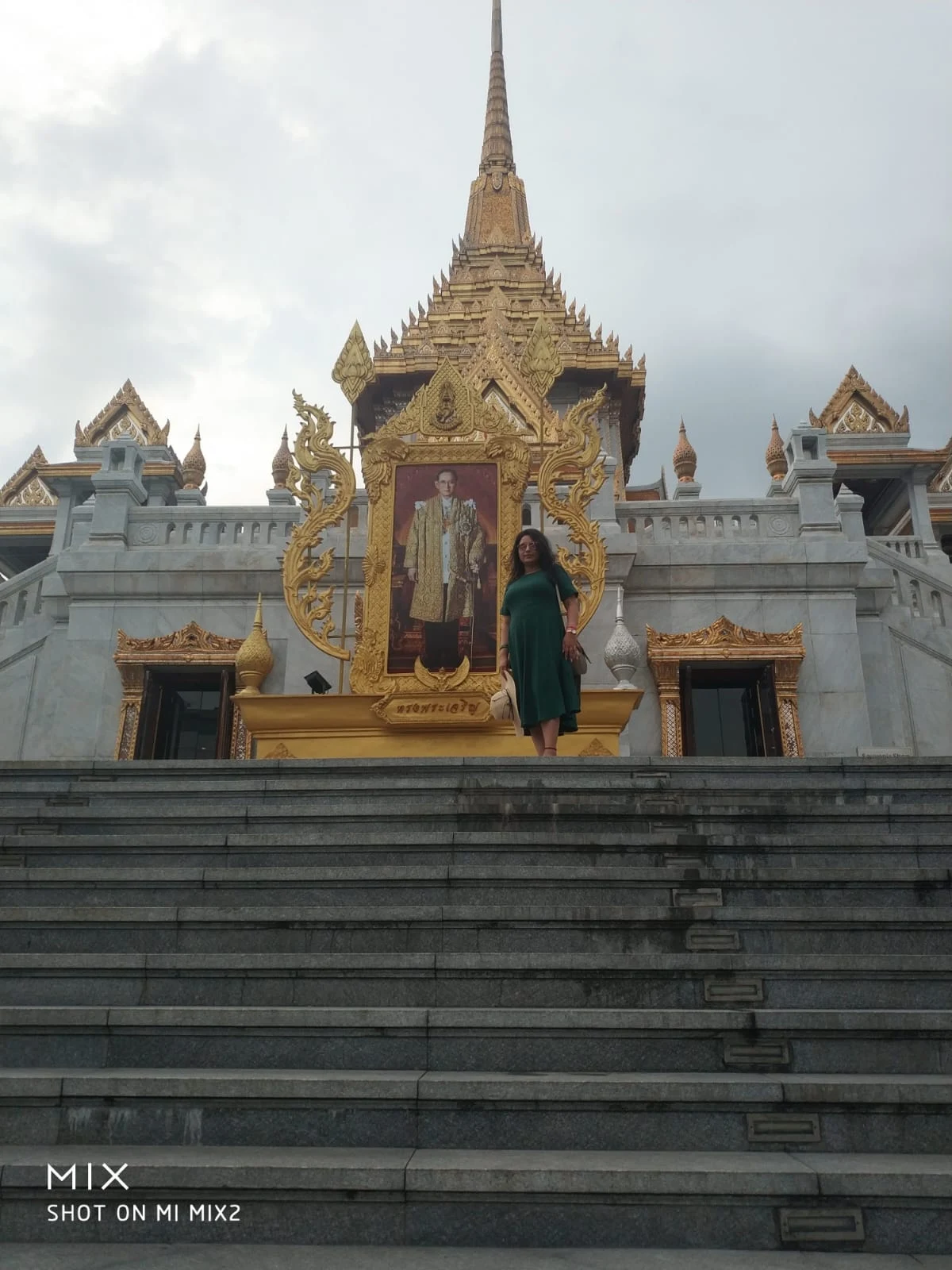
Temple Approach
Grand Ceremonial Staircase
Ascending the marble terrace steps beneath the ornate royal emblem at Wat Traimit
From the sacred teachings of the Buddha in India to the magnificent temples of Thailand, spiritual ideas transcend borders and unite civilizations across Asia.
Ascending the grand ceremonial marble terrace steps beneath the ornate royal emblem of King Rama X at Wat Traimit, we prepared to enter the presence of one of humanity's greatest devotional treasures.
Following the sacred echoes of Dharma across Southeast Asia, this sanctuary stands as a living testament to how the message of compassion and mindfulness found a beloved home in the heart of Siam.
Gateway to the Golden Mountain
A monumental multi-tiered white marble Mondop rising above Yaowarat, ushering pilgrims into Thailand's most revered sacred precinct.
WAT TRAIMIT: THE MAGNIFICENT GOLDEN BUDDHA
Phra Phuttha Maha Suwana Patimakon: 5.5 Tonnes of Solid Gold
Located at the threshold of Bangkok's historic Chinatown, Wat Traimit Wittayaram houses one of the world's greatest sacred treasures: Phra Phuttha Maha Suwana Patimakon, the Golden Buddha. Measuring over three metres tall and weighing an astonishing 5.5 tonnes of solid 18-karat gold, it is the largest solid gold statue in existence, with an intrinsic bullion value exceeding $300 million USD.
Cast during the golden age of Sukhothai art in the 13th to 14th century, the statue exemplifies the pure, fluid lines of classic Thai Buddhist sculpture, featuring the flame finial (Ketumala) atop the ushnisha, serene meditative countenance, and elongated ears signifying royal renunciation.
For over two centuries, its true nature was entirely unknown. When Burmese armies threatened Ayutthaya in the 18th century, monks covered the entire statue in thick stucco plaster and coloured glass to conceal its immense wealth. It remained hidden in plain sight until 1955, when cables snapped while moving the statue to a new building, chipping off a chunk of plaster to reveal gleaming solid gold beneath.
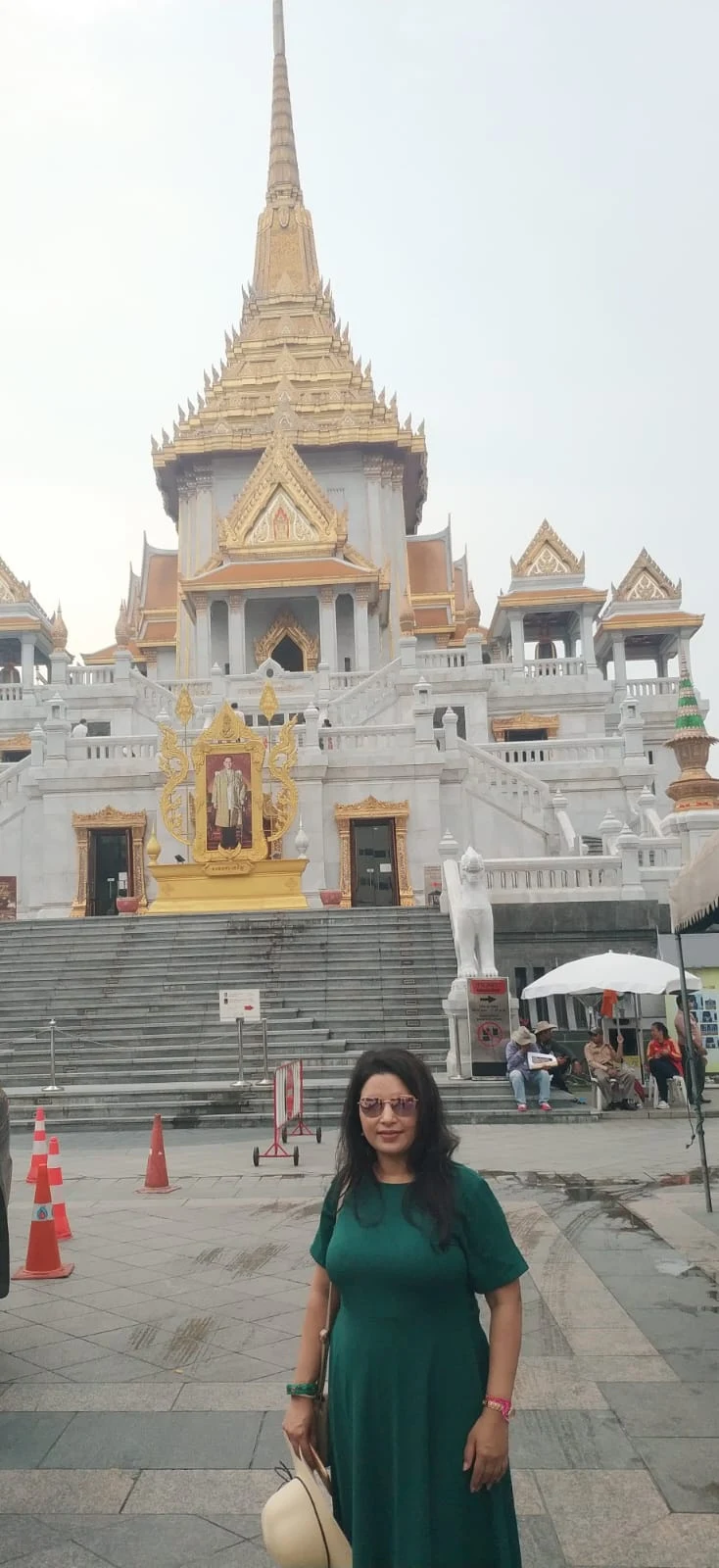
Phra Maha Mondop
The White Marble Sanctuary
A magnificent four-storey marble pavilion built to commemorate King Rama IX's 80th birthday
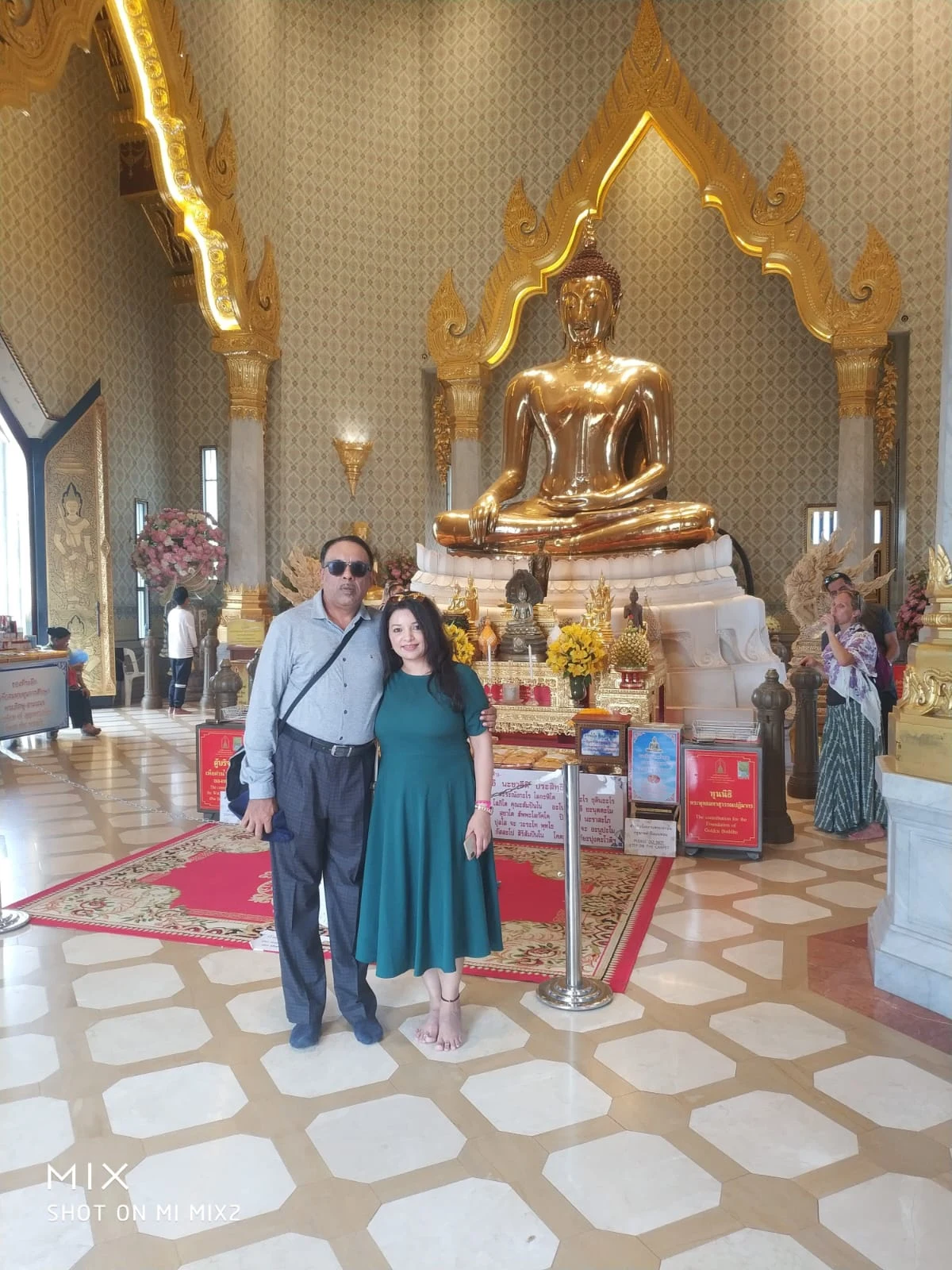
Sukhothai Masterpiece
5.5 Tonnes of Solid Gold
Hidden under humble plaster for 200 years and accidentally rediscovered in May 1955
WAT PHO: PARINIRVANA IN PURE GOLD LEAF
A 46-Metre Colossus and the 108 Sacred Lakshanas
Wat Phra Chetuphon Wimon Mangkhalaram, commonly known as Wat Pho, is one of Bangkok's oldest and grandest temples, standing just south of the Grand Palace. It is globally celebrated for housing the monumental Reclining Buddha (Phra Buddhasaiyas), measuring 46 metres in length and 15 metres in height.
The colossal statue depicts the historical Buddha entering Parinirvana—the state of supreme enlightenment and release from the cycle of rebirth (Samsara). Constructed of brick core, plaster, and gilded entirely in pure gold leaf, the Buddha rests upon his right arm, gazing outward with an aura of transcendental stillness.
The statue's most wondrous details lie upon the soles of its feet: measuring five metres long and three metres high, they are exquisitely inlaid with mother-of-pearl illustrating the 108 auspicious lakshanas (sacred characteristics) of a Buddha, including lotus flowers, royal white umbrellas, celestial palaces, and sacred animals. Wat Pho is also recognized as Thailand's first public university and the UNESCO Memory of the World birthplace of traditional Thai massage.
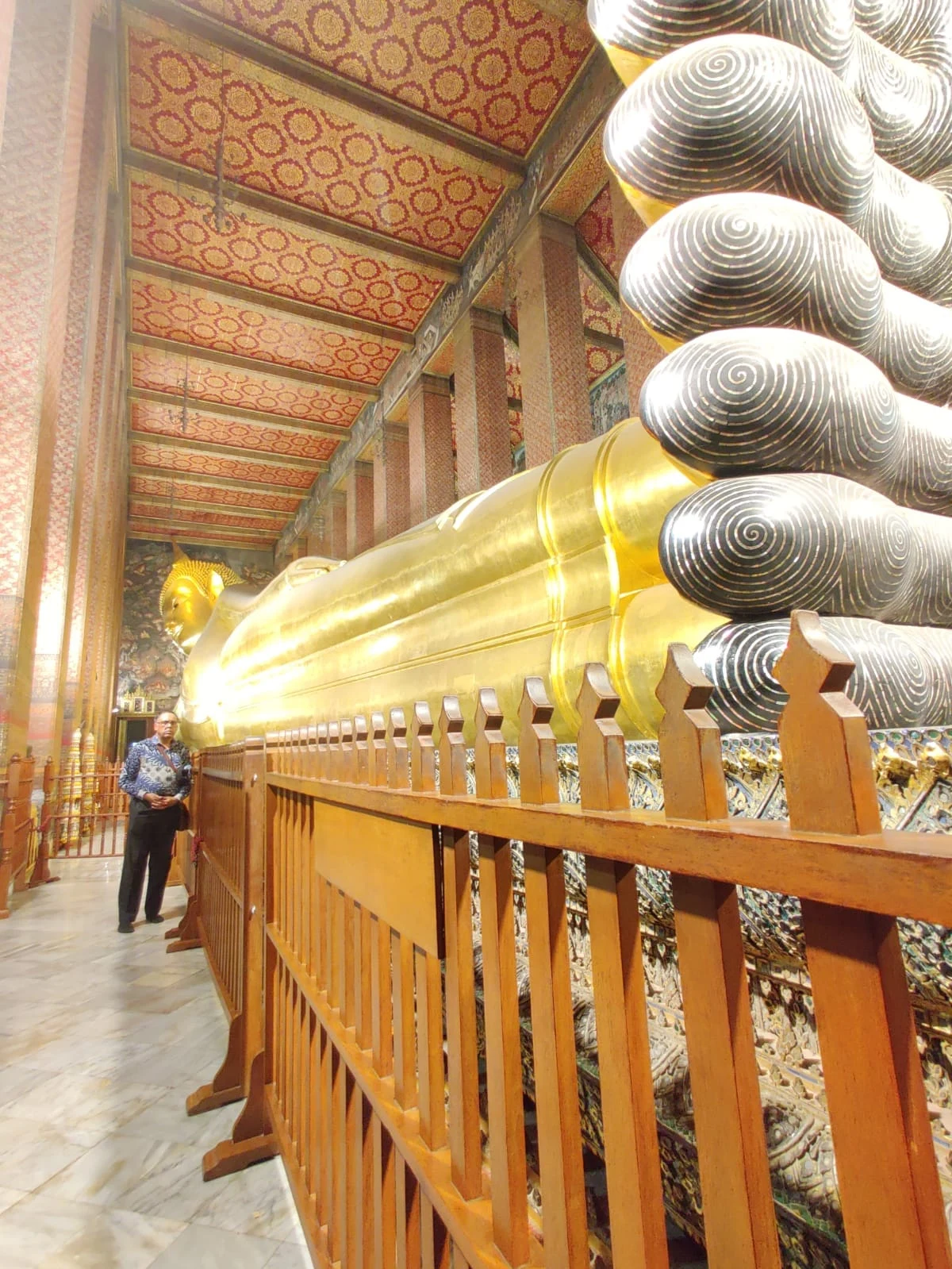
Supreme Parinirvana
46 Metres of Golden Peace
Gilded brickwork illustrating the Buddha's passage into eternal Nirvana
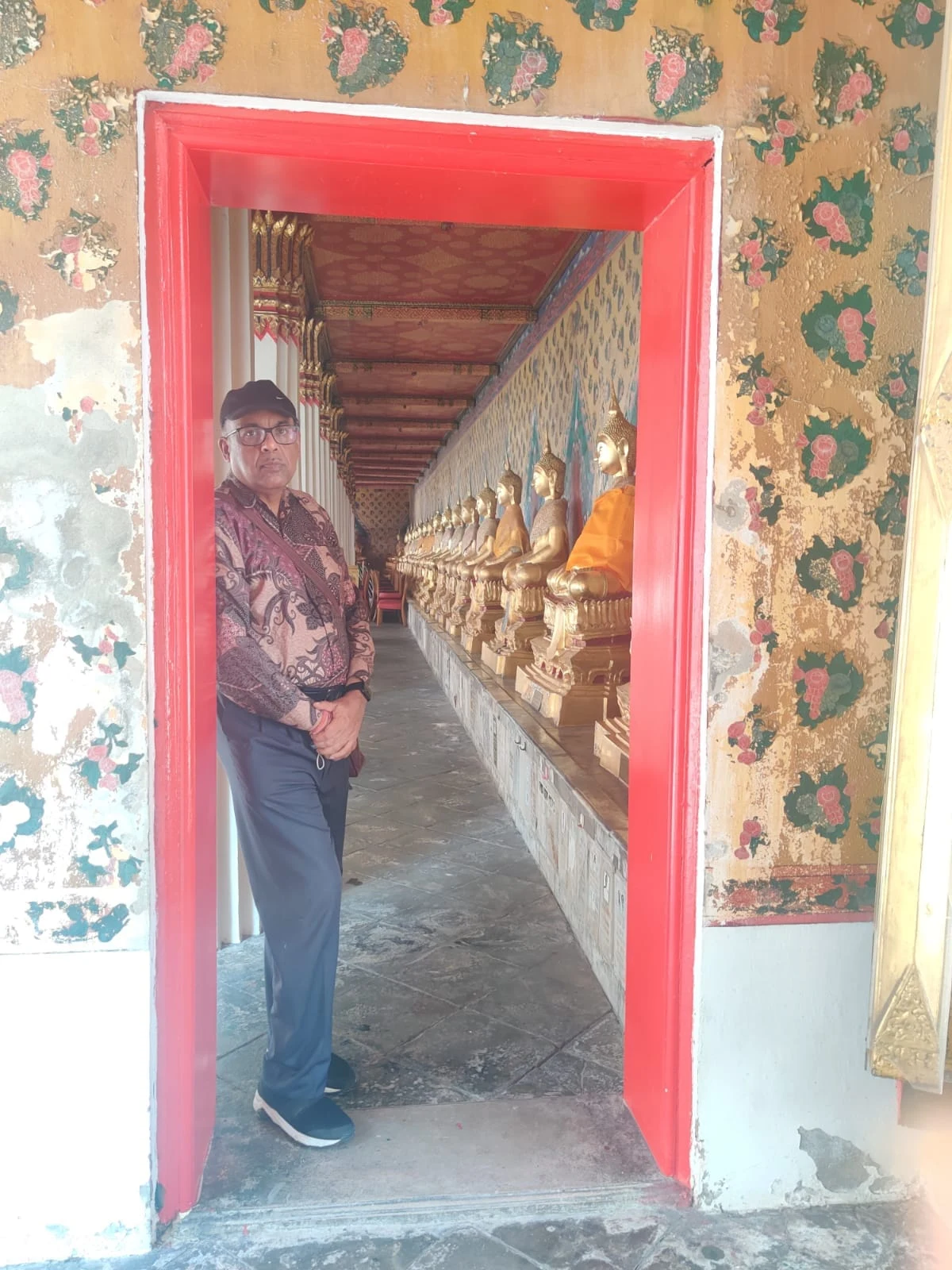
Sacred Cloister Gallery
Over 1,000 Gilded Buddhas
Thailand's largest collection of sacred bronze statues rescued from ancient royal capitals
WAT RONG KHUN: THE VISIONARY WHITE TEMPLE
Purity, Samsara, and the Bridge of the Cycle of Rebirth
In the northern province of Chiang Rai stands Wat Rong Khun—known worldwide as the White Temple. Created by national artist Chalermchai Kositpipat, this contemporary masterpiece reimagines traditional Thai temple architecture as an allegory of spiritual awakening.
Unlike conventional gold-and-red Thai temples, Wat Rong Khun is sculpted in blinding, luminous white plaster embedded with hundreds of thousands of tiny mirror glass shards. The white symbolizes the pristine purity of the Buddha, while the reflective glass represents the Buddha's Dhamma radiating wisdom across the universe.
To reach the main Ubosot, visitors must cross the Bridge of the Cycle of Rebirth. Beneath the bridge reaches a dramatic sea of sculpted hands, skulls, and tortured faces symbolizing human desire, greed, and suffering. Crossing the bridge signifies transcending earthly temptations to enter the serene realm of heaven and liberation.
“White represents the pristine purity of the Buddha; mirror glass represents the brilliance of the Dhamma radiating across the cosmos.”
Bridge of the Cycle of Rebirth
Crossing above a dramatic sea of reaching hands symbolizes renouncing earthly desires, transcending suffering, and entering the serene realm of spiritual liberation.
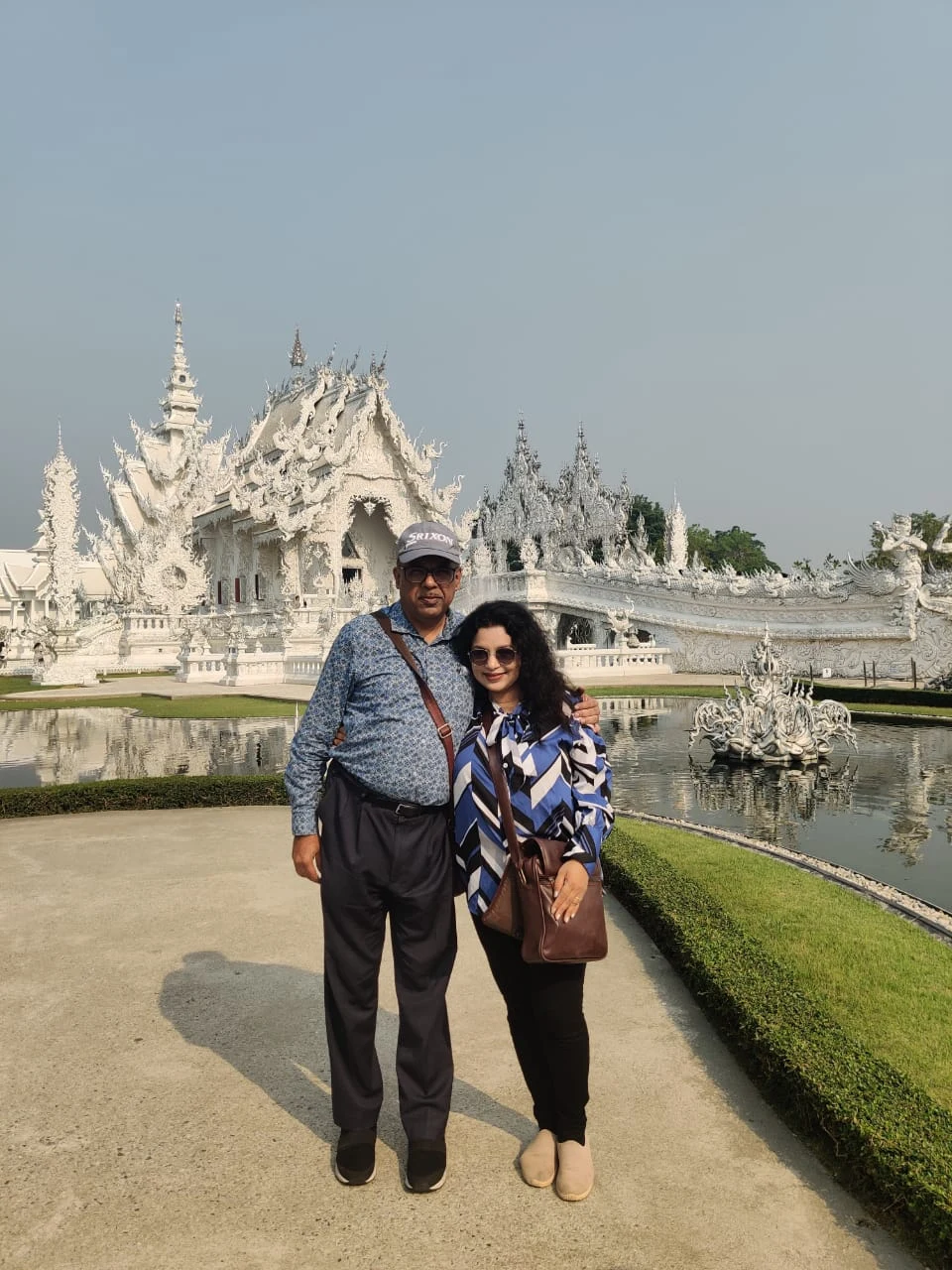
Visionary Architecture
Bridge to Heavenly Liberation
Master Chalermchai's life work, dedicated as an eternal offering to the Buddha and King Rama IX
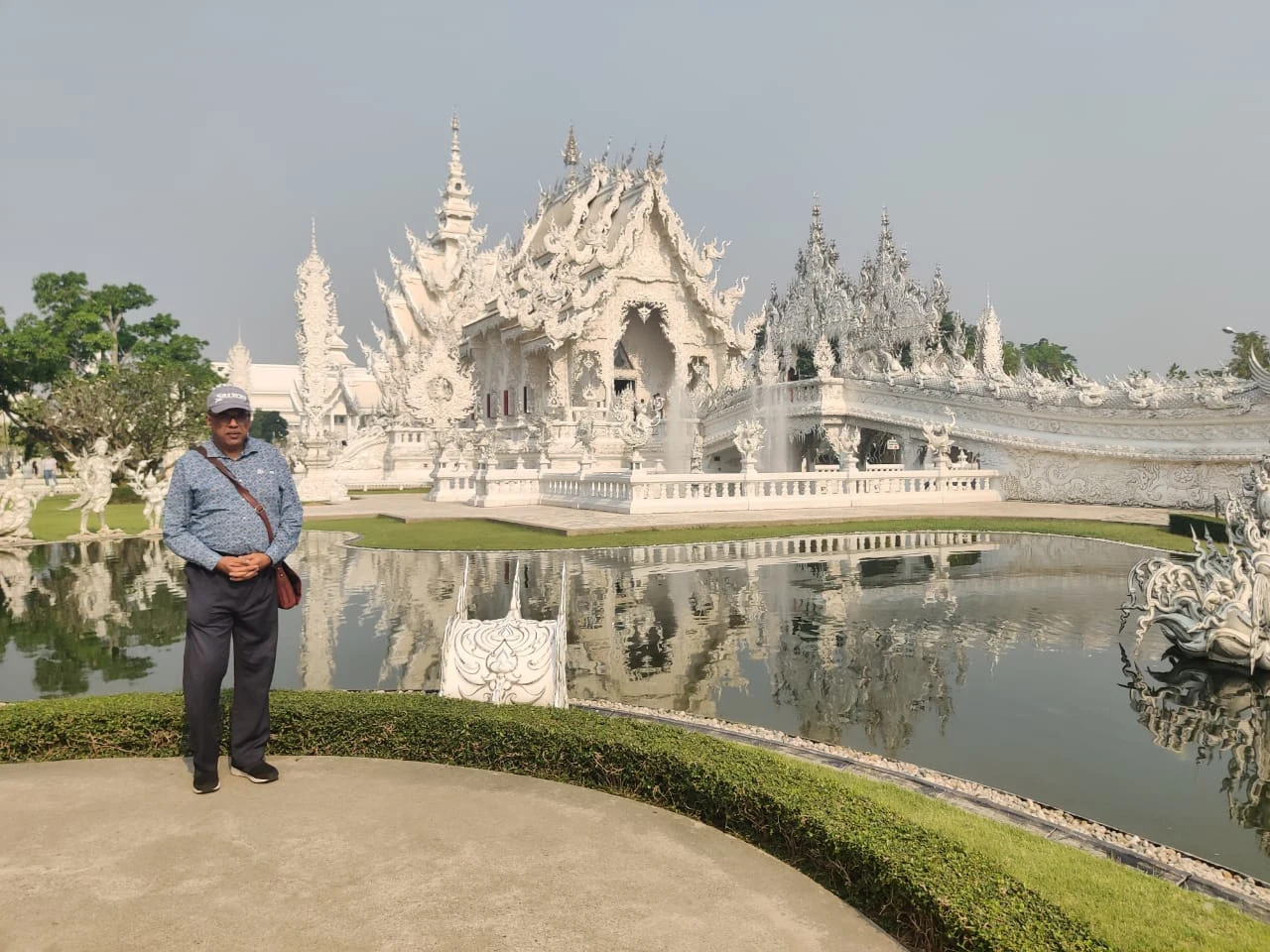
The Reflecting Lake
Wat Rong Khun Reflection
Luminous white spires reflecting against still waters, symbolizing mind without delusion
WAT RONG SUEA TEN: THE CELESTIAL BLUE TEMPLE
Deep Cobalt Indigo, Gilded Flames & The Pure White Buddha
Just north of Chiang Rai city lies Wat Rong Suea Ten, the Temple of the Dancing Tiger. Built upon the site of an ancient ruined temple where wild tigers once leaped across the Mae Kok River, the modern sanctuary was designed by Putha Kabkaew, a talented student of Chalermchai Kositpipat.
The temple is an explosion of hypnotic cobalt sapphire blue and gleaming gold leaf. In Buddhist symbolism, deep blue represents the boundless infinity of the heavens, wisdom, and the healing purity of medicine. Intricately carved Naga serpents with iridescent scales flank the grand entrance, their multi-headed bodies writhing toward the sky.
Inside the sanctuary, the visual contrast is spellbinding: against walls painted in psychedelic blue swirls and celestial devas sits a colossal 6.5-metre seated Buddha carved from gleaming white porcelain. The Buddha rests his hand in the Bhumisparsha mudra, calling the earth goddess Phra Mae Thorani to witness his victory over Mara.
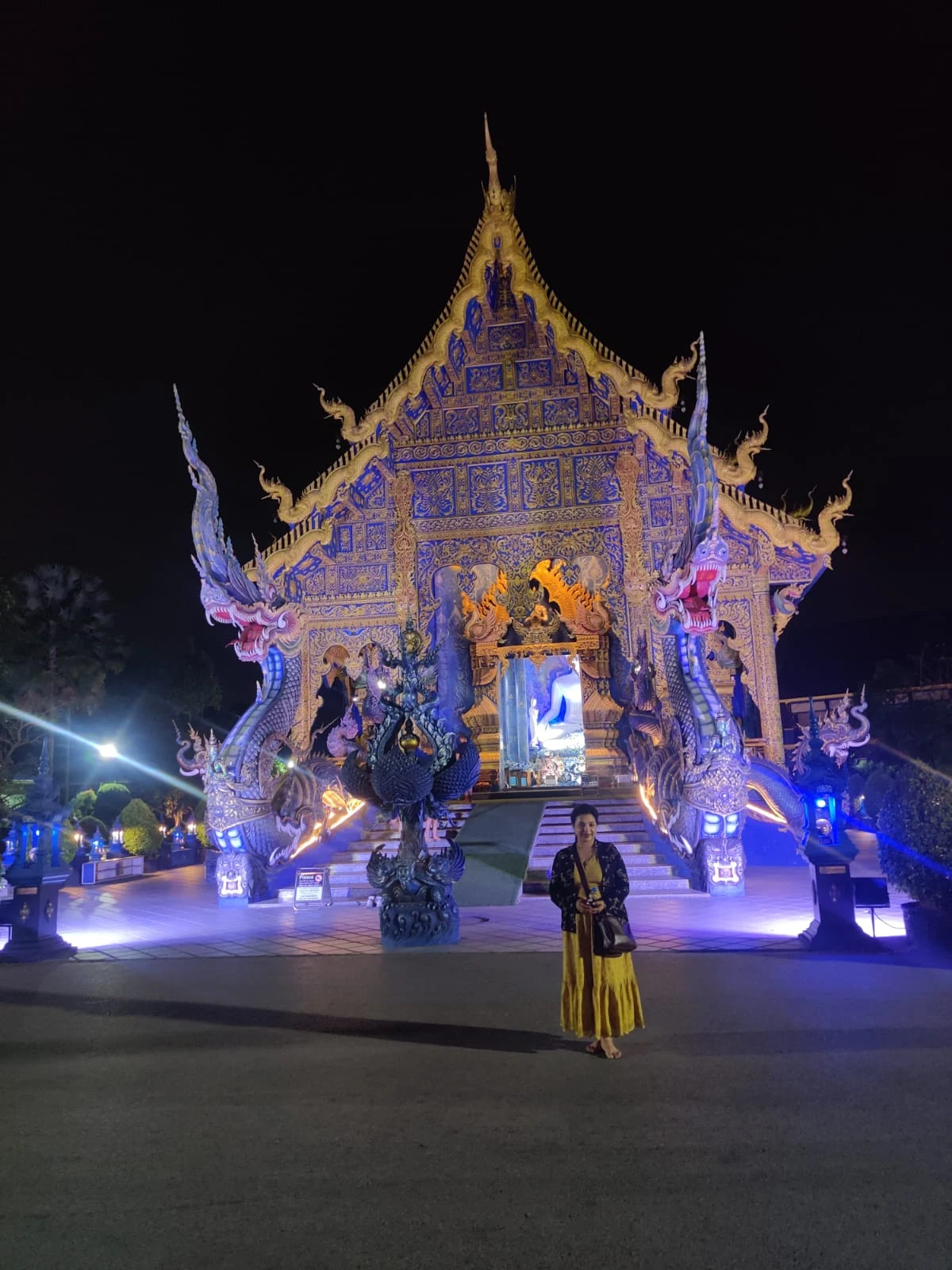
Cobalt & Gold
Wat Rong Suea Ten Facade
A dazzling marriage of contemporary Lanna sculpture and deep royal sapphire hues
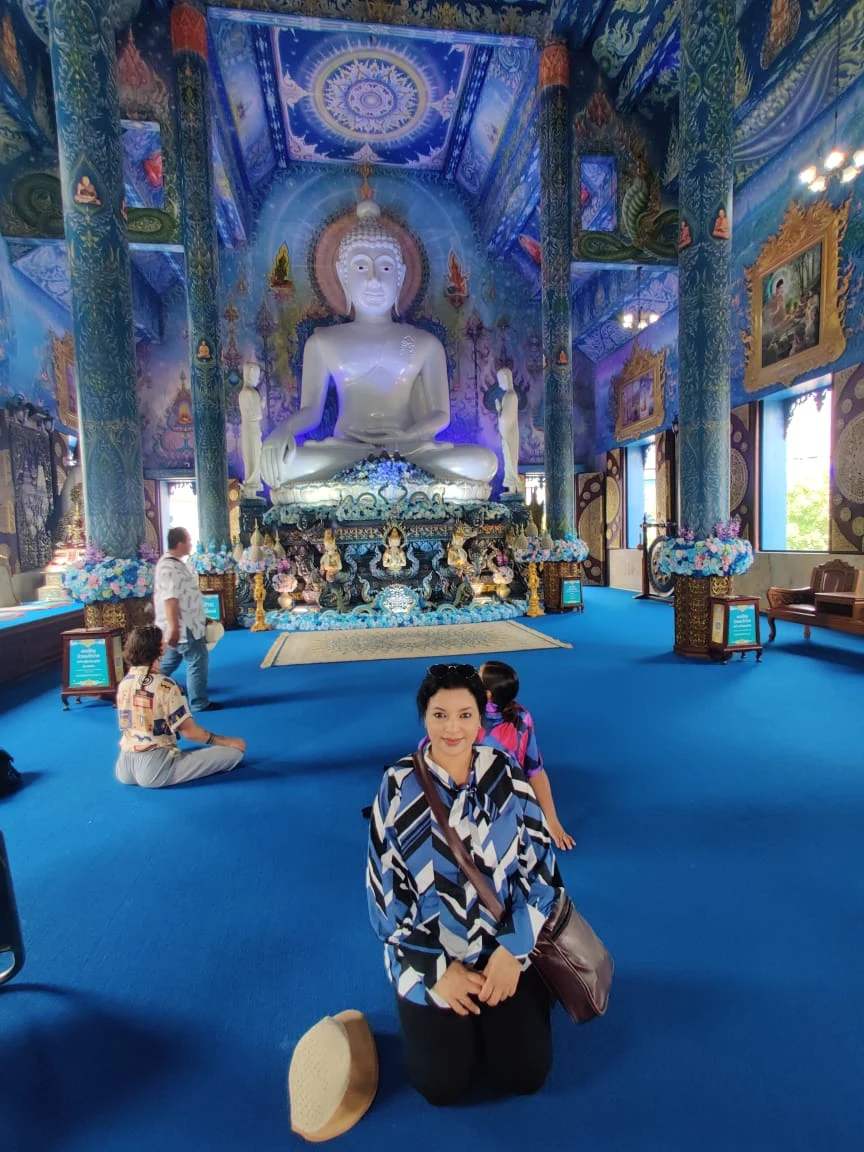
Cosmic Sanctum
Colossal White Porcelain Buddha
Enthroned amidst swirling blue cosmos murals and gold leaf flame motifs
GUARDIANS OF THE SAPPHIRE REALM
Mythical Yakshas, Serpentine Nagas & Gilded Portals
Every architectural contour of Wat Rong Suea Ten is suffused with vibrant Buddhist allegory. Towering blue-and-gold Yaksha demons guard the sacred gateways, wielding ceremonial staves to turn away worldly discord.
Intricately sculpted multi-headed Naga serpents frame the balustrades, symbolizing the divine protection offered by Mucalinda during the Buddha's deep meditation following Enlightenment.
“The fierce gaze of the Yaksha turns outward to deflect delusion, preserving the serenity of the Dhamma within.”
Protectors of the Dharma
Merging northern Lanna motifs with hypnotic sapphire blues, colossal guardian yakshas stand eternal vigil at the sacred portals.
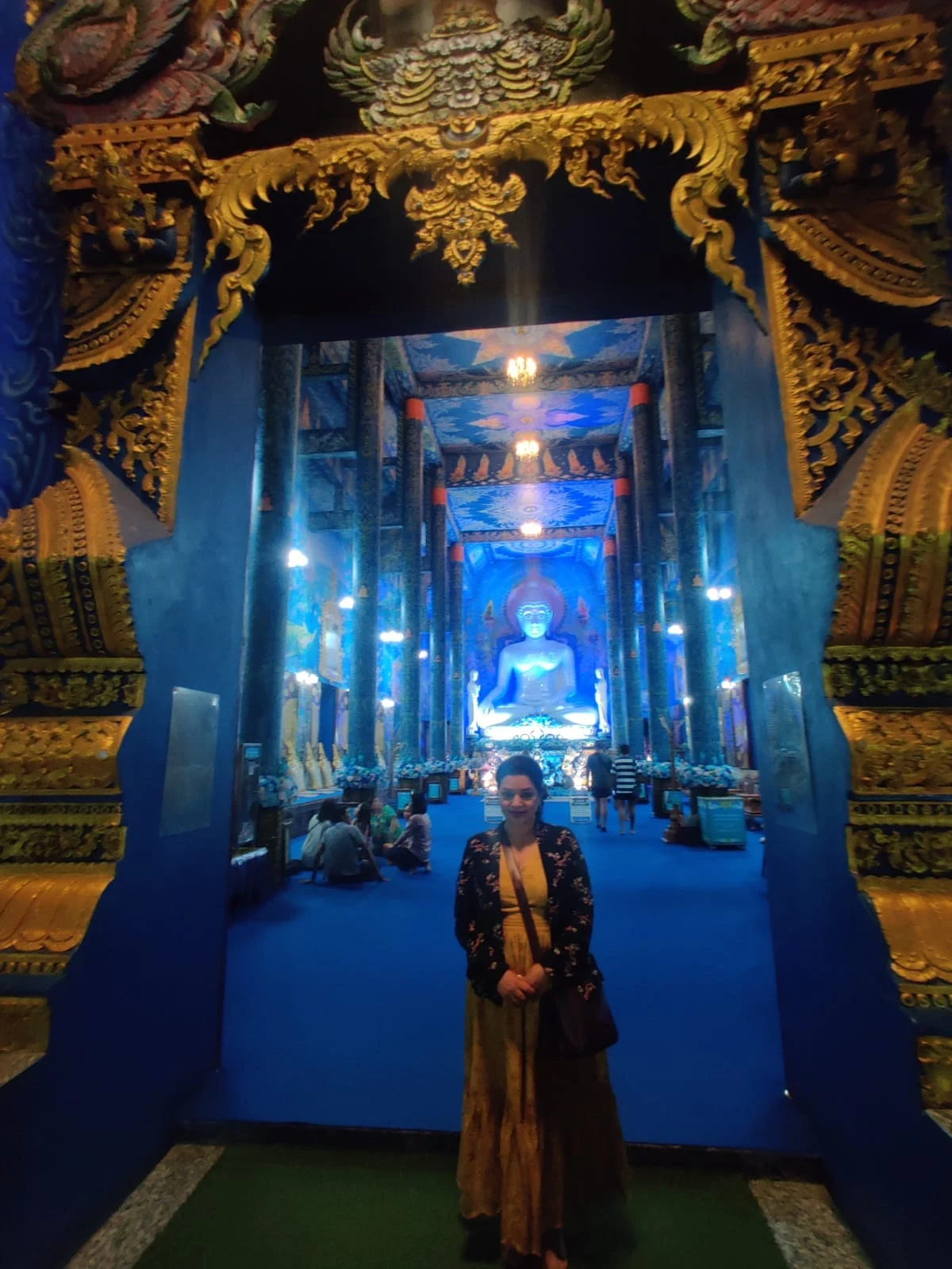
Sapphire Portal
Gilded Celestial Gateway
The radiant blue and gold threshold welcoming pilgrims to the Blue Temple
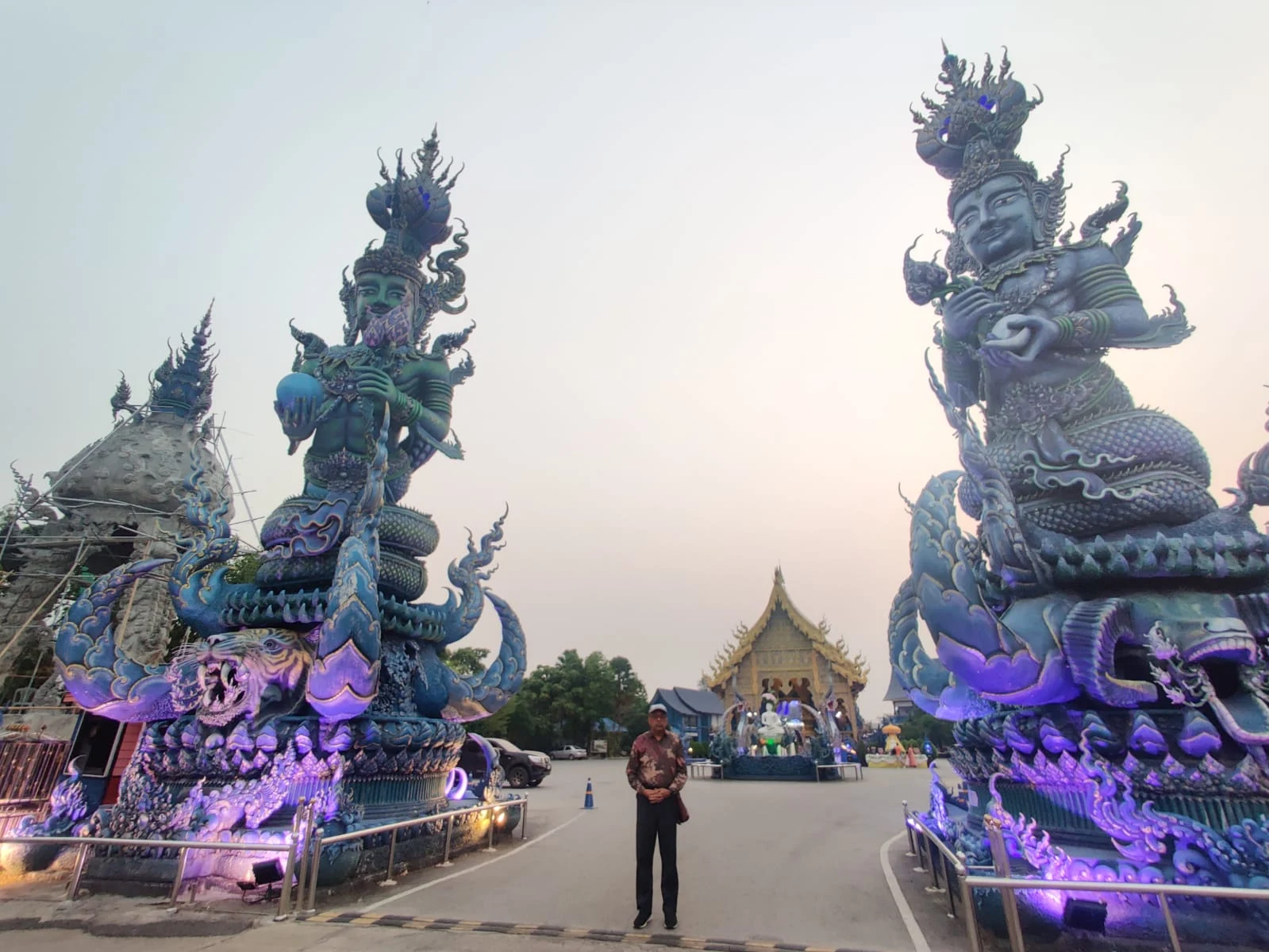
Sacred Guardians
Mythical Demon Protectors
Colossal blue Yaksha guardians standing watch before the temple sanctuary
WAT HUAY PLA KANG: THE DRAGON PAGODA & GUAN YIN
Lanna-Chinese Buddhist Harmony in Northern Hills
Crowning the rolling green hills outside Chiang Rai, Wat Huay Pla Kang is a stunning modern complex where Theravada Lanna Buddhist traditions blend harmoniously with Mahayana Chinese iconography.
The temple is famous for two monumental landmarks: a 9-tiered pyramid pagoda flanked by enormous multi-headed Chinese dragons with gleaming ceramic scales, and an awe-inspiring 25-storey colossal statue of Guan Yin (Bodhisattva Avalokiteshvara), often mistakenly called the 'Big Buddha' of Chiang Rai.
Seated high upon a lotus throne atop the mountain, the gleaming white Guan Yin gazes with maternal compassion across the northern valleys. An interior elevator carries pilgrims to the 25th floor inside the statue's head, where intricately carved white stucco reliefs depict heavenly realms and panoramic views of northern Thailand.
“Standing high upon the northern hills, Guan Yin gazes with maternal compassion, embracing every suffering soul in the valley below.”
The Dragon Pagoda & Heavenly Realm
Flanked by massive ceramic dragons, pilgrims ascend 25 floors inside the colossal statue to behold panoramic vistas and intricate white stucco reliefs.
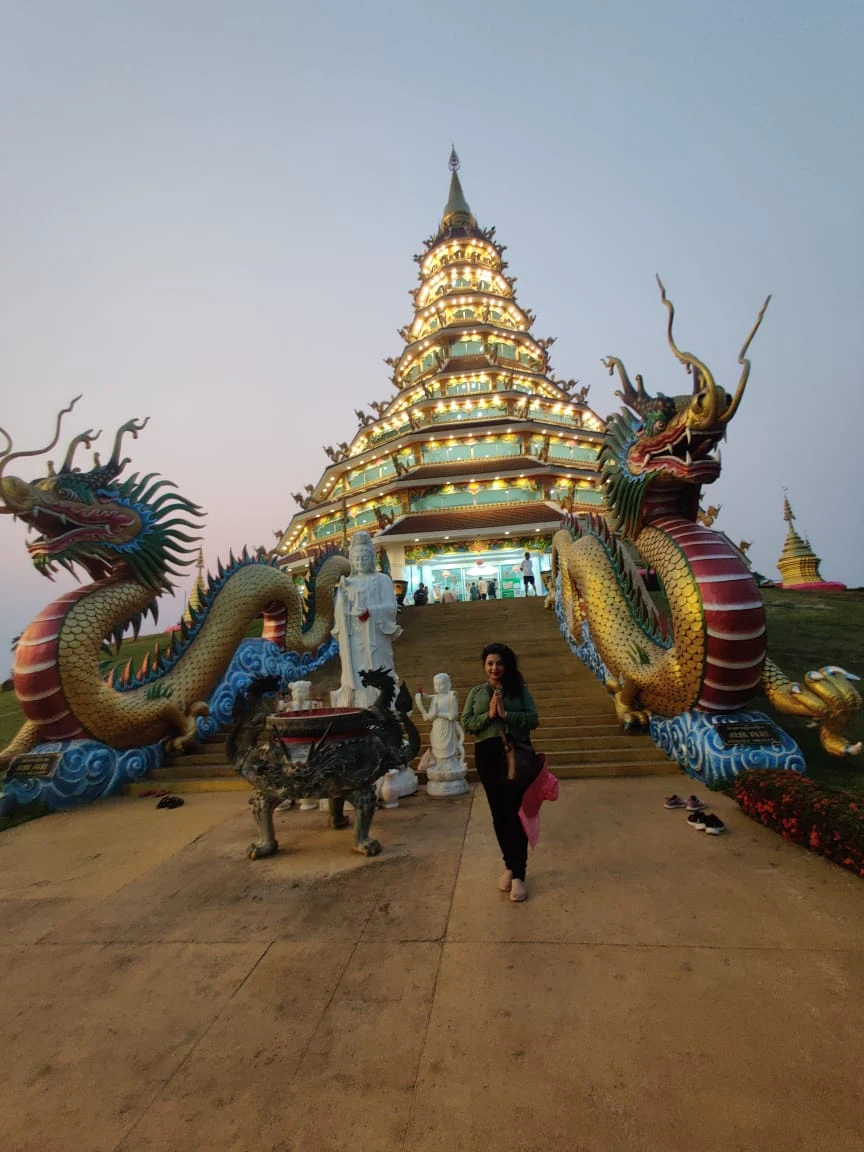
9-Tier Pagoda
Dragon Guardian Grand Staircase
Merging Chinese dragon guardianship with Lanna multi-tiered pagoda architecture
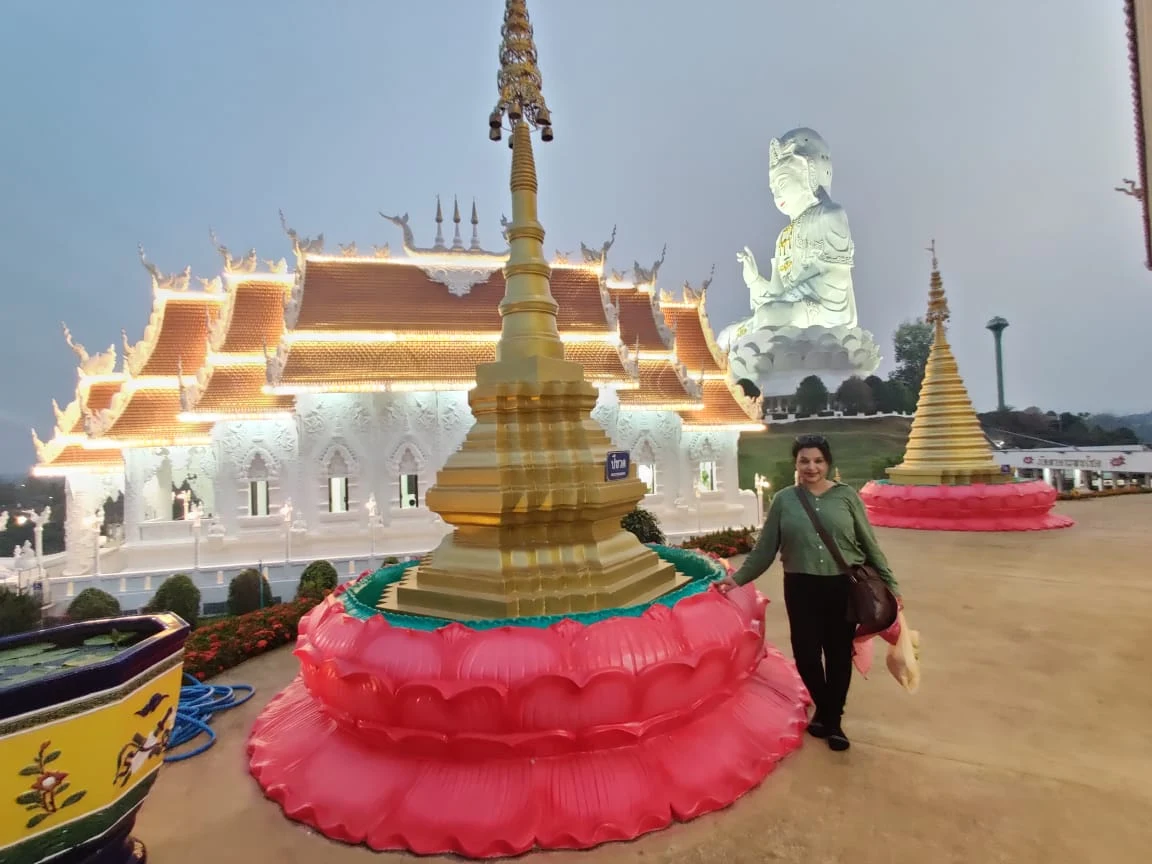
Bodhisattva of Mercy
Colossal Avalokiteshvara Statue
25-storey pure white statue gazing benevolently over the mist-clad northern valleys
INNER DEVOTION & DUSK ILLUMINATION
Sacred Teakwood Carvings & The Nine-Tier Stupa
Inside the nine-tiered stupa of Wat Huay Pla Kang sits an extraordinary collection of massive sacred figures hand-carved entirely from fragrant aged teakwood, representing Avalokiteshvara in diverse forms of compassion.
As twilight descends across the mountains of Chiang Rai, the pagoda illuminates in golden light, its tiered levels reflecting the stages of spiritual ascent towards Enlightenment.
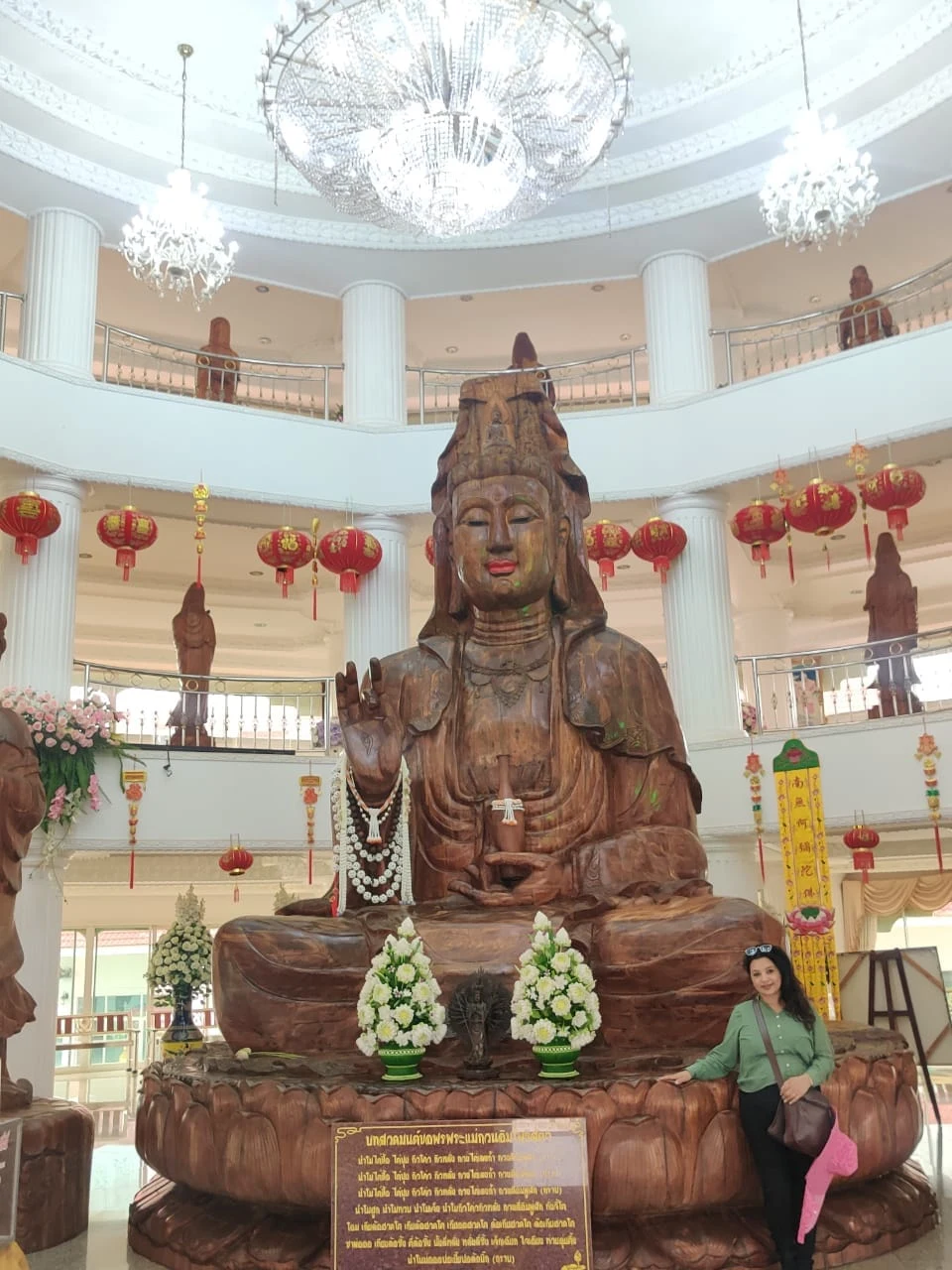
Inner Sanctum
Teakwood Guan Yin of Compassion
Monumental hand-carved teakwood image of the Bodhisattva of Mercy
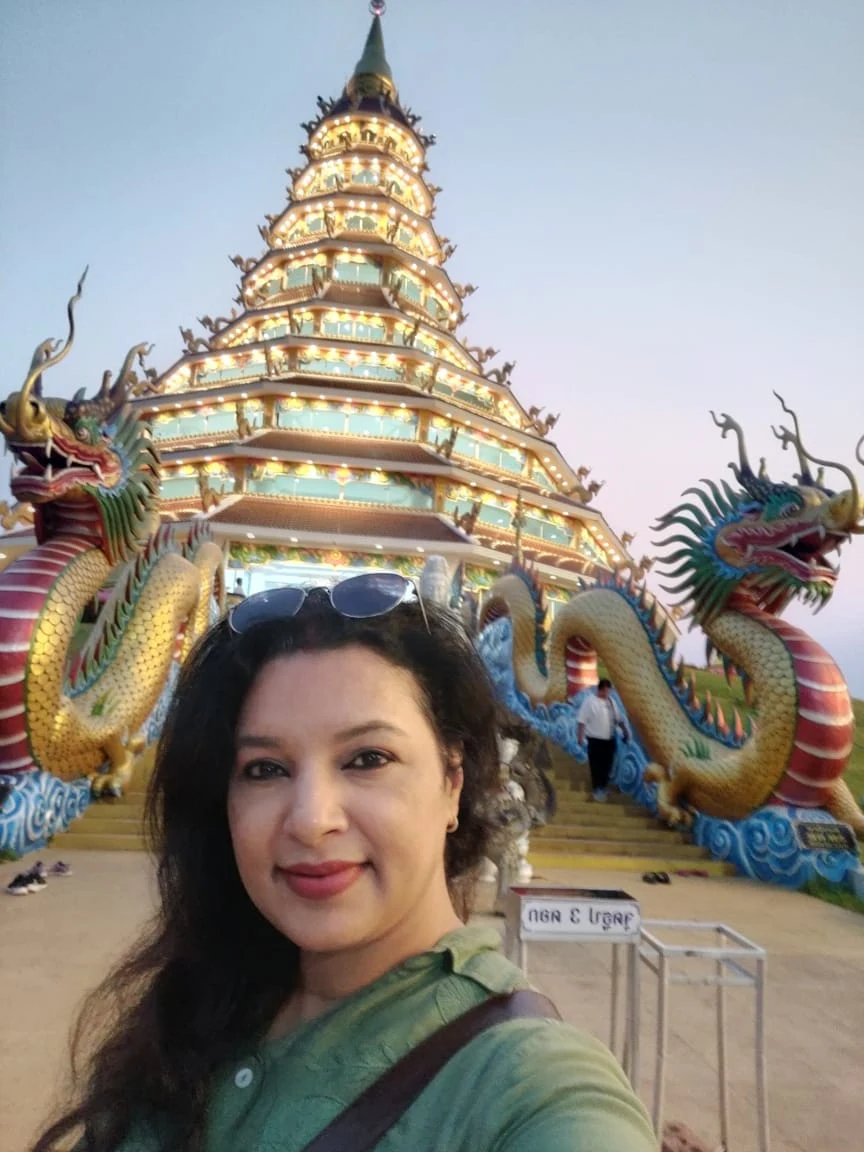
Dusk Illumination
The Nine-Tiered Stupa at Twilight
Soaring nine-storey pagoda illuminated against the evening sky of Chiang Rai
WAT PHRA SINGH: MASTERPIECE OF LANNA BUDDHISM
The Lion Buddha, Golden Chedi & Teak Wood Viharns
In the heart of Chiang Mai's ancient walled city stands Wat Phra Singh Woramahawihan, founded in 1345 by King Pha Yu to enshrine the ashes of his father, King Kham Fu. It is revered as the foremost royal temple of the northern Lanna Kingdom.
The jewel of Wat Phra Singh is the small, intimate Viharn Lai Kham (Gilded Assembly Hall), built in classic Lanna style with sweeping multi-tiered teak rooflines, carved peacock gables, and red-and-gold stencilled lacquer pillars. Inside rests the venerated Phra Phuttha Sihing (Lion Buddha), a bronze statue traced by legend back to Sri Lanka and India.
Behind the viharn rises the main Chedi (stupa)—a golden bell-shaped monument resting on a high square base adorned with sculpted elephant half-statues. During the Thai New Year festival of Songkran, the Phra Phuttha Sihing is carried through the streets of Chiang Mai in a royal chariot so citizens can sprinkle sacred water on it for blessings.
“The Lion Buddha of Lanna carries the unbroken lineage of Theravada mindfulness from the royal courts of ancient Ceylon.”
Viharn Lai Kham & Golden Stupa
Sweeping multi-tiered teak rooflines, red-and-gold stencilled lacquer murals, and the revered Lion Buddha anchor the soul of Chiang Mai.
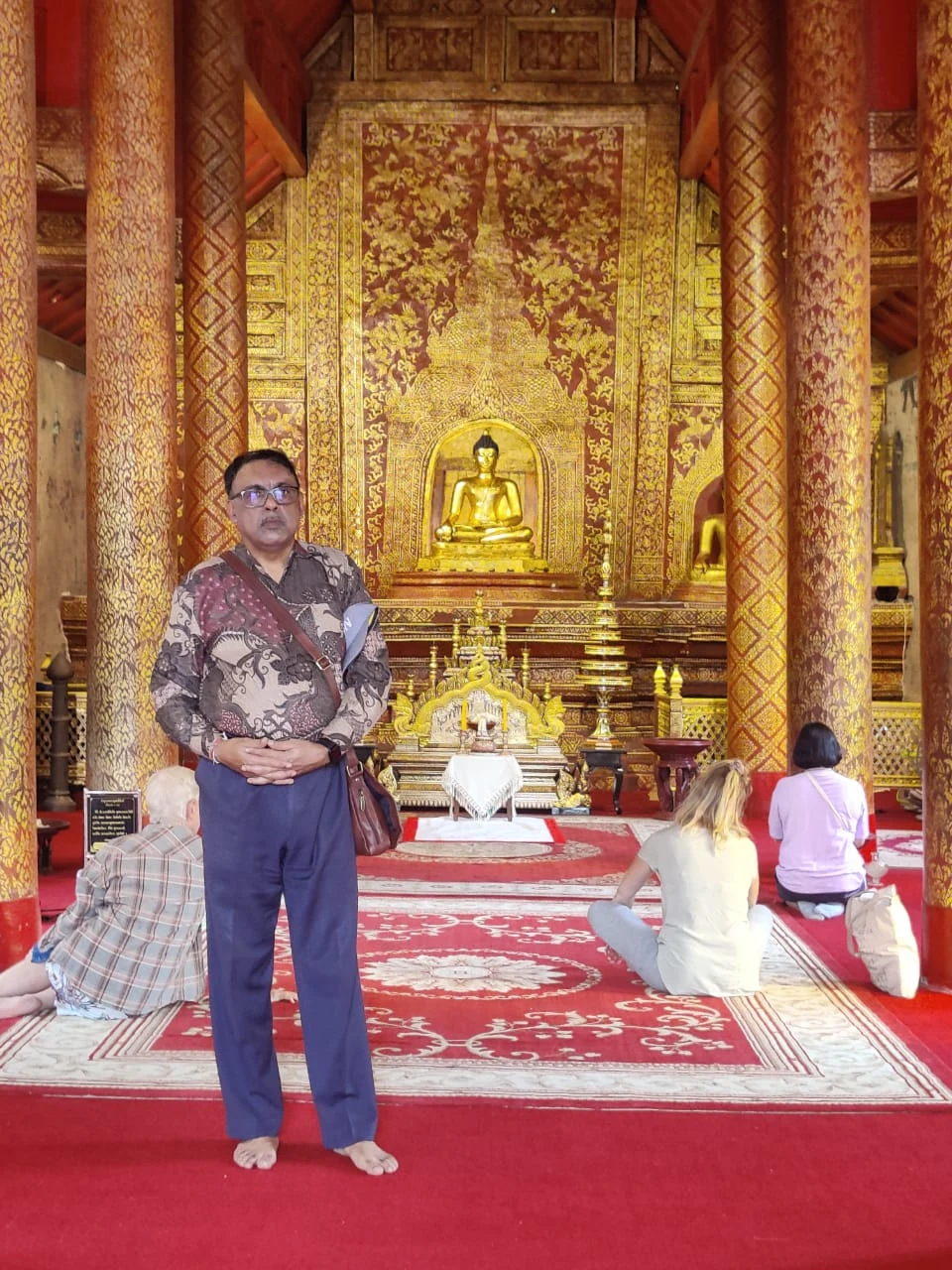
Viharn Lai Kham
Phra Phuttha Sihing (Lion Buddha)
14th-century sacred bronze image venerated as the supreme spiritual guardian of Chiang Mai
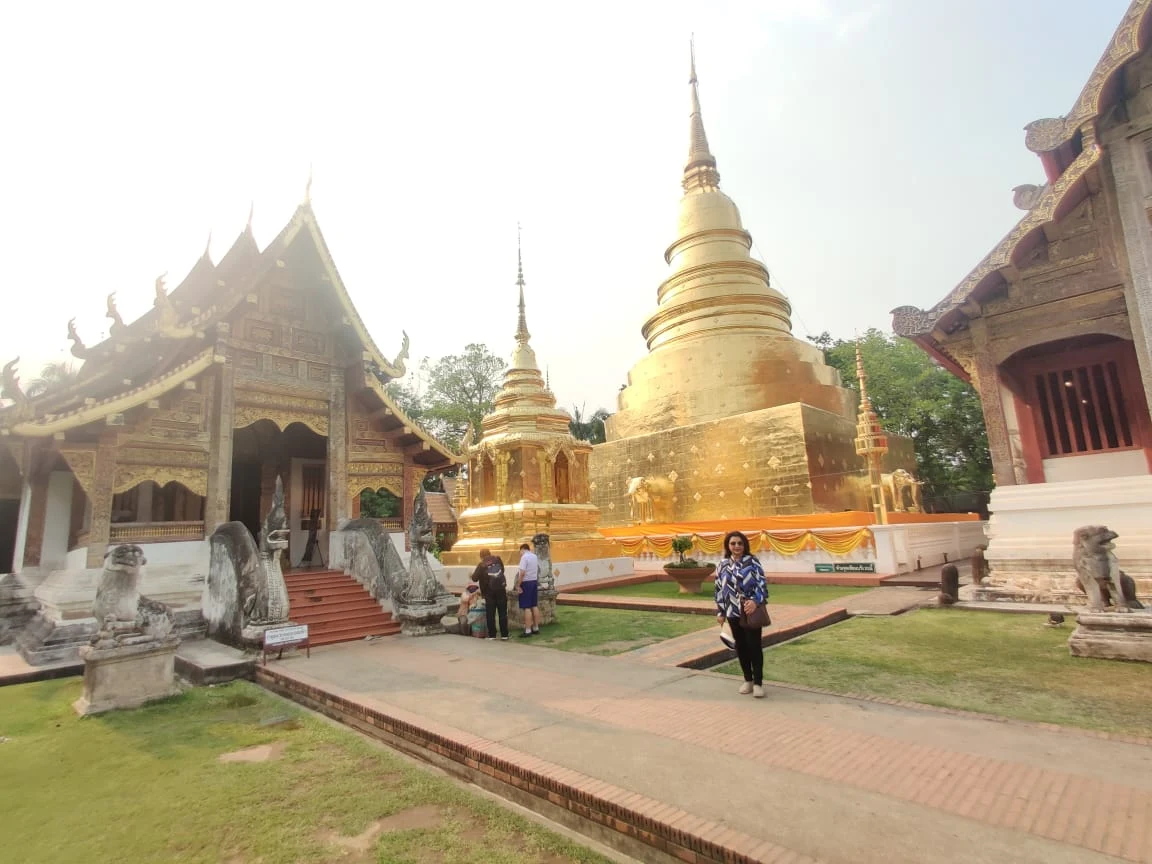
Lanna Golden Chedi
Sacred Relic Stupa
Towering golden reliquary adorned with guardian elephants, gleaming under northern sunshine
THE SPREAD OF THERAVADA BUDDHISM FROM THE 13TH CENTURY
Monasteries Across Northern Thailand & Monastic Devotion
From the 13th century onward, Theravada Buddhism became increasingly influential in Thailand as Thai kingdoms, especially Sukhothai and later Ayutthaya, adopted and supported the tradition.
Monks and religious texts from Sri Lanka helped strengthen monastic lineages grounded in Pali scriptures and Theravada teachings. These traditions ultimately belonged to the wider historical development of Buddhism that began with the Buddha's teachings in ancient India.
Over the centuries, Buddhist monasteries served not only as religious centres but also as places of learning, community life, artistic development, and cultural preservation that continue to flourish today.
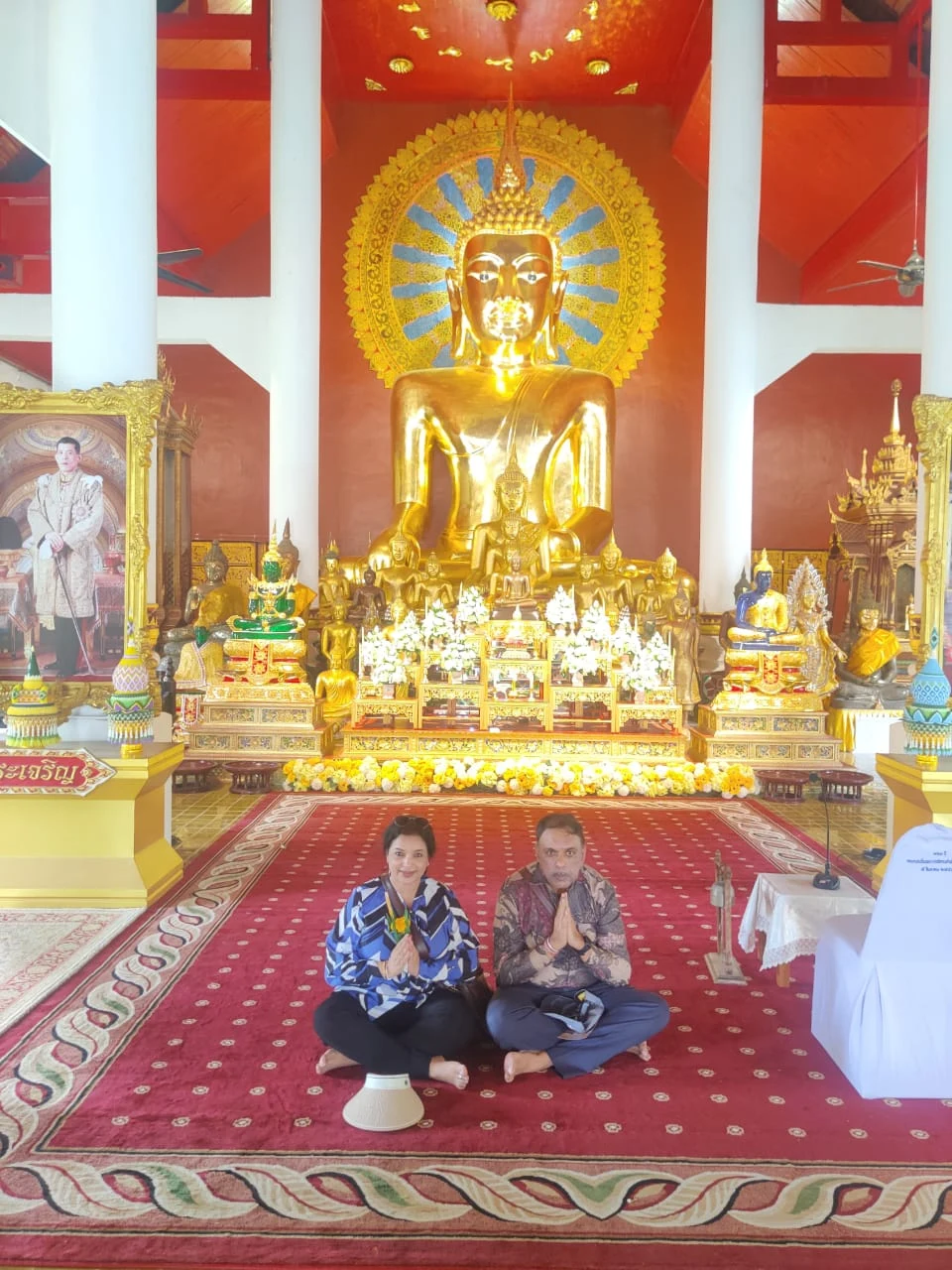
Viharn Luang
Devotion in the Sacred Viharn
Quiet prayer and contemplation before the radiant golden Buddha inside the main viharn
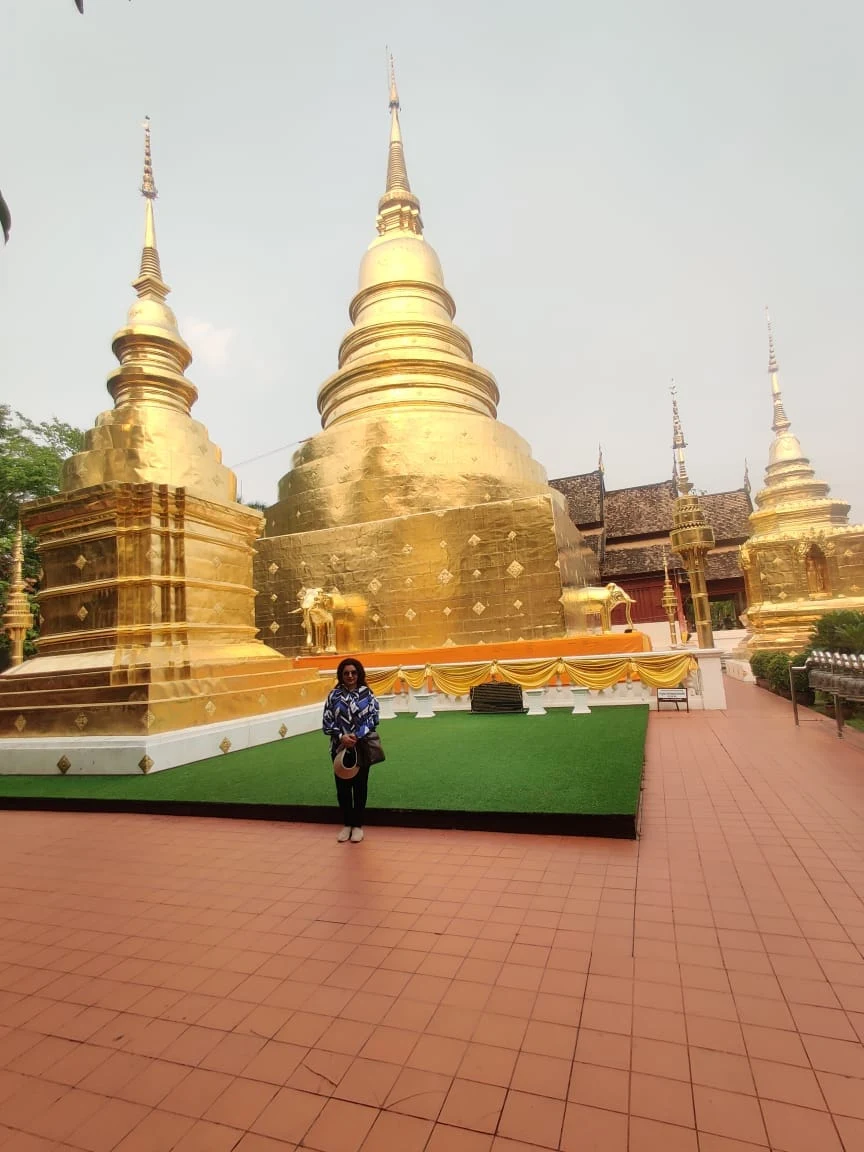
Courtyard Stupas
Gilded Reliquary Chedis
Gilded stupas rising beneath the northern Thai skies, preserving sacred Buddhist relics
THE GOLDEN TRIANGLE: WHERE THREE COUNTRIES MEET
Thailand, Laos & Myanmar at the Confluence of Sacred Rivers
At Sop Ruak in northernmost Chiang Rai province, the Ruak River empties into the mighty Mekong, creating a natural geographic tripoint where Thailand, Laos, and Myanmar meet. Once notorious as the center of Southeast Asia's opium trade, the Golden Triangle has transformed into a tranquil spiritual destination.
Gazing over the swirling waters is the colossal Golden Buddha of Sop Ruak (Phra Chiang Saen Si Phaendin). Seated majestically on a massive dragon boat structure along the Thai embankment, the gilded Buddha extends an open gesture of peace and protection over river merchants and pilgrims from all three nations.
Guarding the entrance to the river promenade are magnificent life-sized royal white elephant statues, crowned in gold regalia. In Buddhist tradition, the white elephant (Airavata / Chang Sam Sian) is a symbol of royal virtue, fertility, and the conception of Gautama Buddha, standing as guardians of peaceful borderlands.
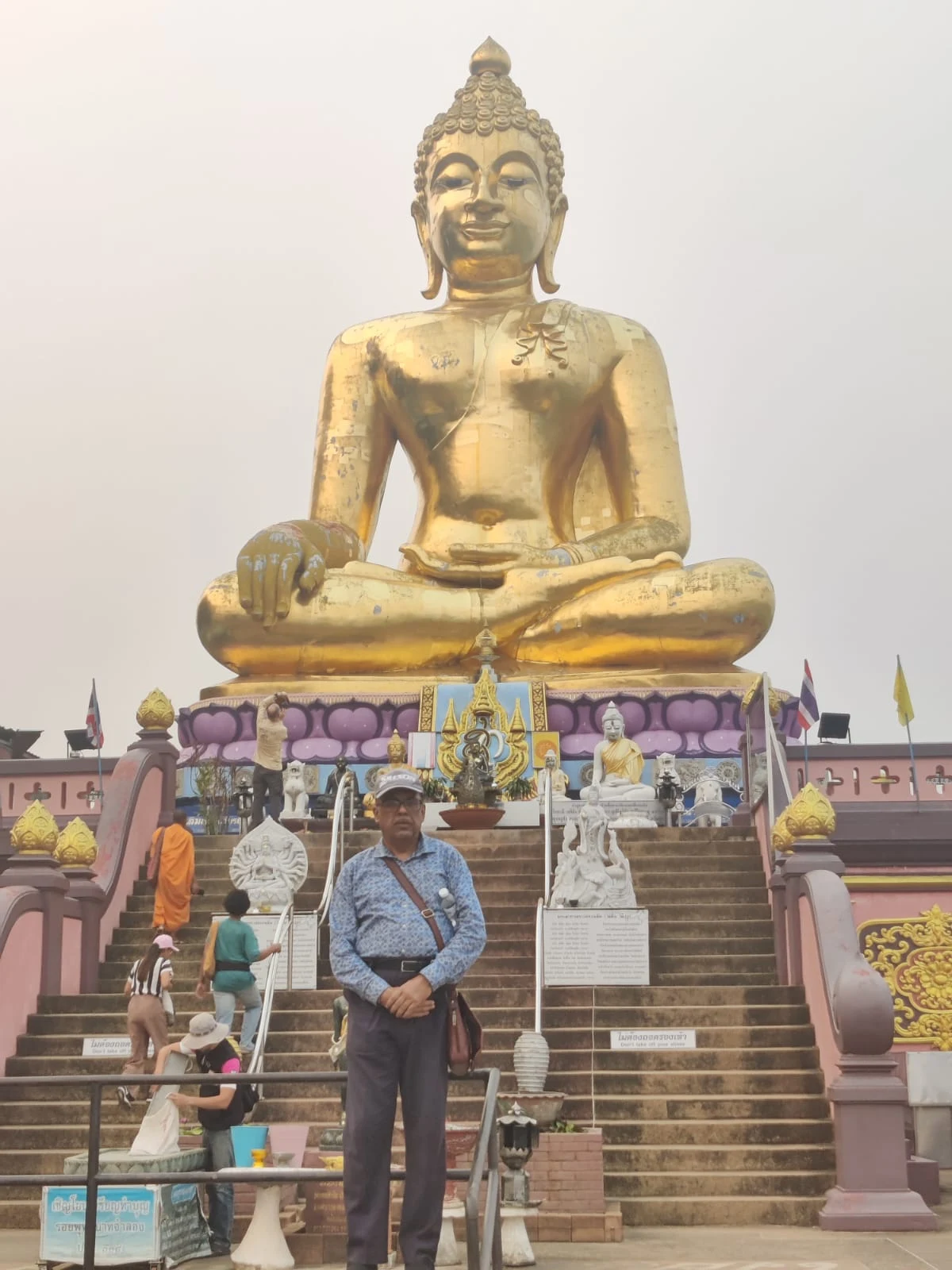
Sop Ruak Tripoint
Golden Buddha of the Mekong
Overlooking the peaceful waters connecting Thailand, Laos, and Myanmar
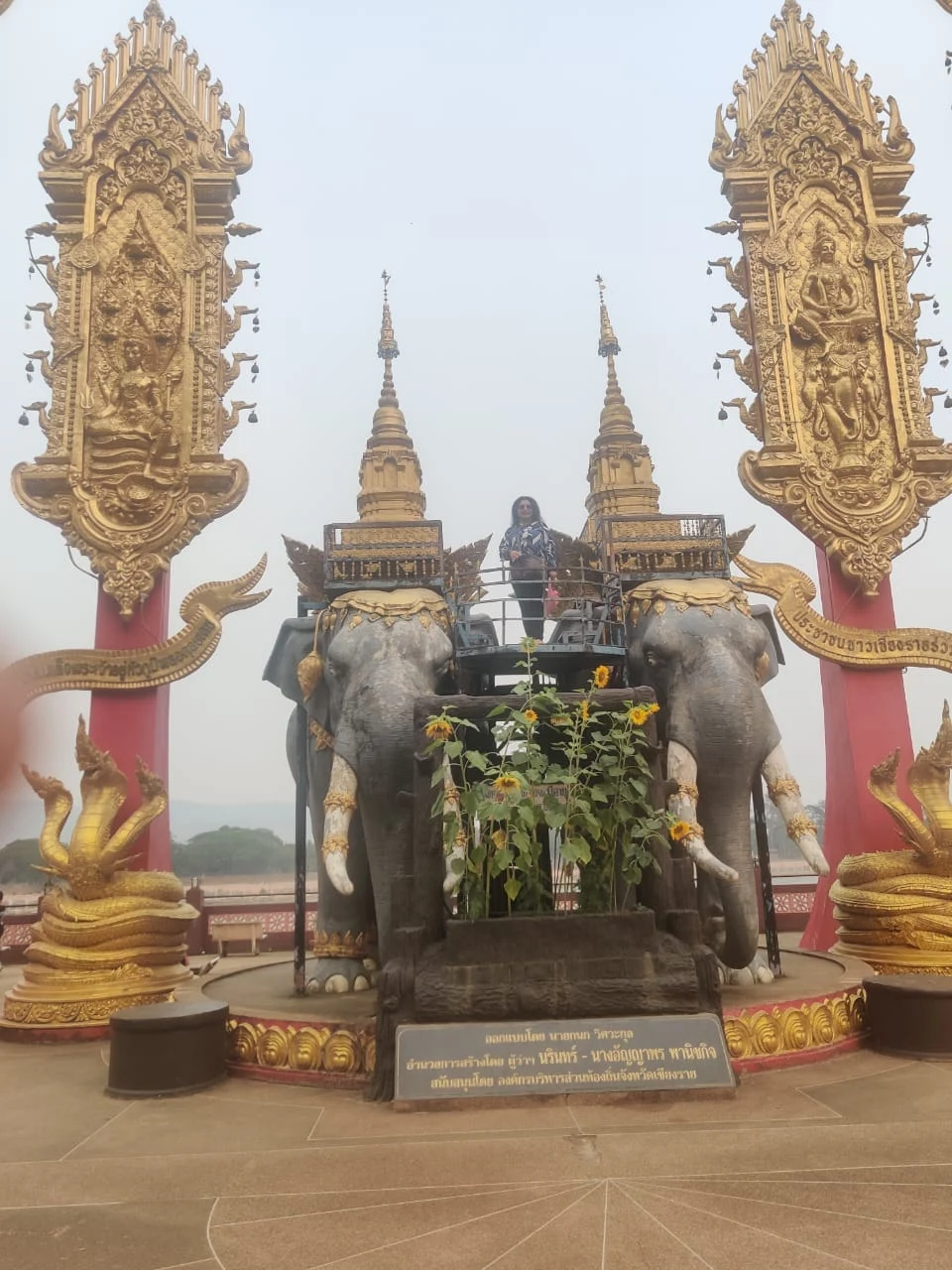
Sacred Border Guardians
Royal White Elephants
Auspicious symbols of peace, sovereignty, and Buddhist morality at the crossroads of Asia
LIVING BUDDHISM: THE SOUL OF THAILAND
Tak Bat Dawn Almsgiving, Loy Krathong & Everyday Dhamma
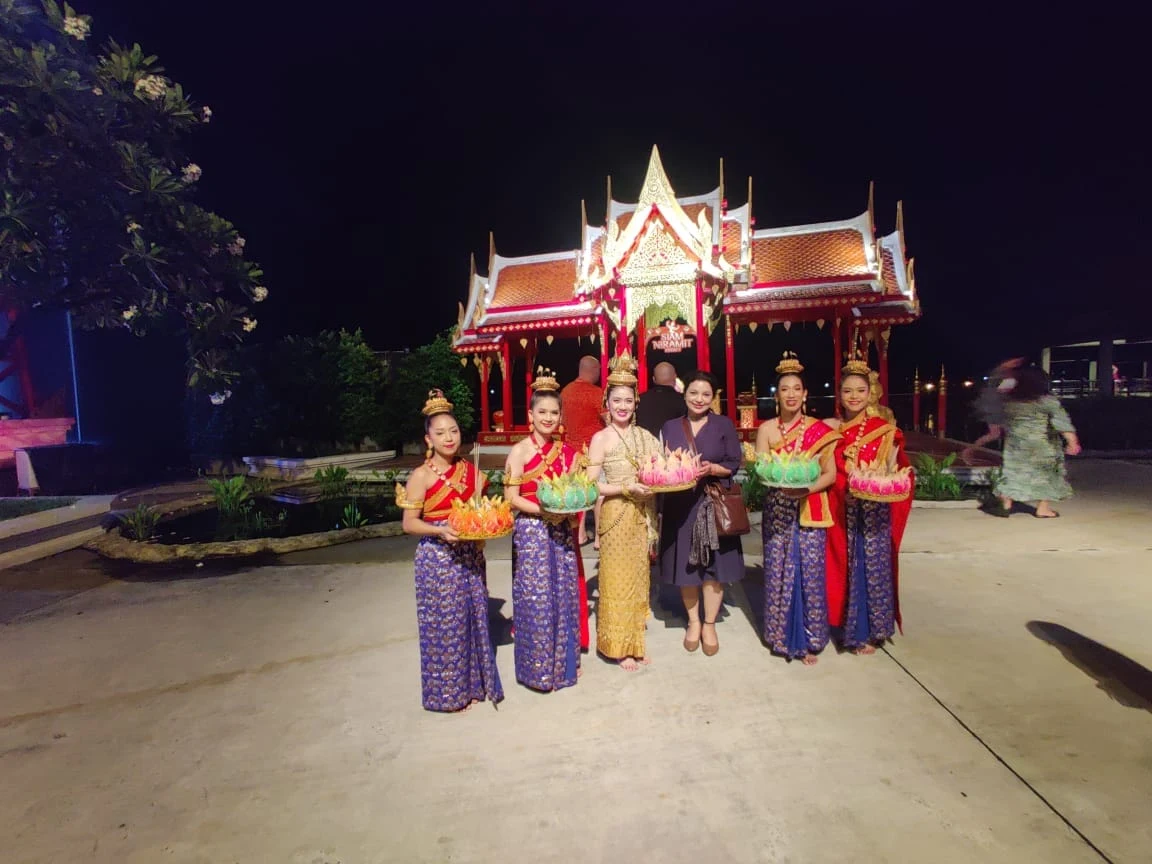
Festival of Floating Lights
Loy Krathong Cultural Harmony
Releasing lotus lanterns to venerate the Buddha and goddess Ganga on the full moon
In Thailand, Buddhism is not merely an ancient relic preserved in museum galleries; it is the living breath of ninety-five percent of the population. From the moment the morning sun peeks through the palms, saffron-robed monks walk silently barefoot through towns and villages for Tak Bat (morning almsgiving), offering citizens the sacred opportunity to practice generosity (dana).
This spiritual devotion reaches its most poetic heights during seasonal festivals rooted in Indian culture. In November, during the full moon of the twelfth lunar month, Thais celebrate Loy Krathong. Floating baskets (krathongs) woven from banana leaves and decorated with lotus blossoms, candles, and incense are set adrift on rivers and lakes.
The festival pays homage to the Buddha's sacred footprint stamped on the sandy banks of the Narmada River in India, while asking forgiveness from Phra Mae Khongkha (the goddess Ganga) for polluting water during the year. In this way, ancient Indian sacred geography continues to sanctify the waters of Thailand.
“Buddhism in Thailand is not confined to monastery walls—it is lived daily in the morning alms, the gentle greeting of the wai, and the floating lanterns of Loy Krathong.”
Generosity, Compassion & Merit
Through daily acts of merit-making (Tham Bun), Thai Buddhists maintain a direct, continuous spiritual connection to the teachings first spoken by the Buddha in Sarnath 2,500 years ago.
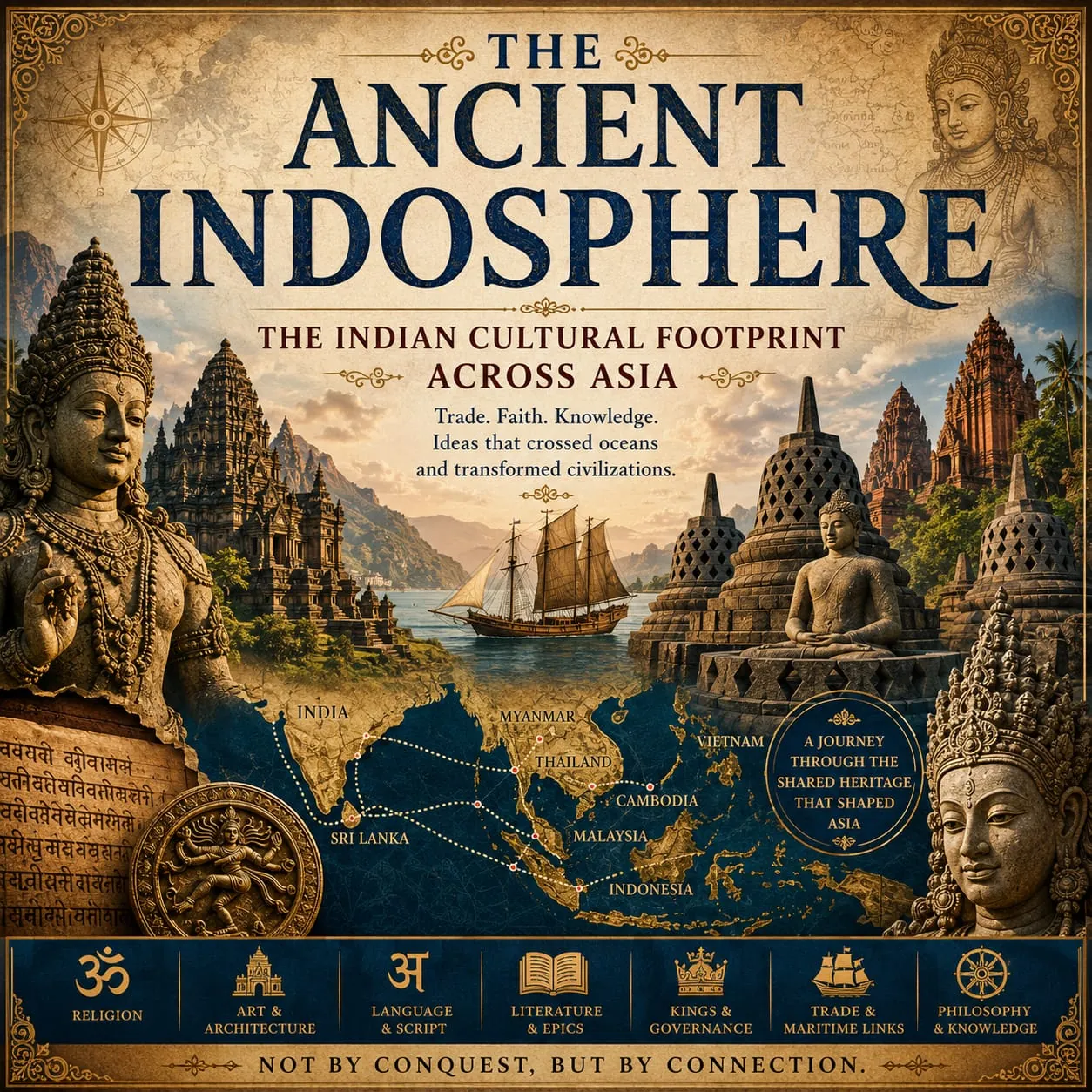
TRAVELLING THROUGH THE TIMELESS LEGACY OF INDIAN CIVILIZATION ACROSS ASIA AND BEYOND
“Not by conquest, but by connection.”
Across ancient temples, sacred stupas, and living cultural landscapes, the timeless traditions born in India continue to illuminate Asia with philosophy, art, and civilizational communion carried not by sword, but through dialogue and spiritual devotion.
CONTINUE THE THAILAND JOURNEY
Journey Through the Sacred Monuments of Thailand