
BORNEO: THROUGH THE LANDS OF THE ANCIENT HEADHUNTERS
Exploring Sarawak and Sabah in Malaysian Borneo
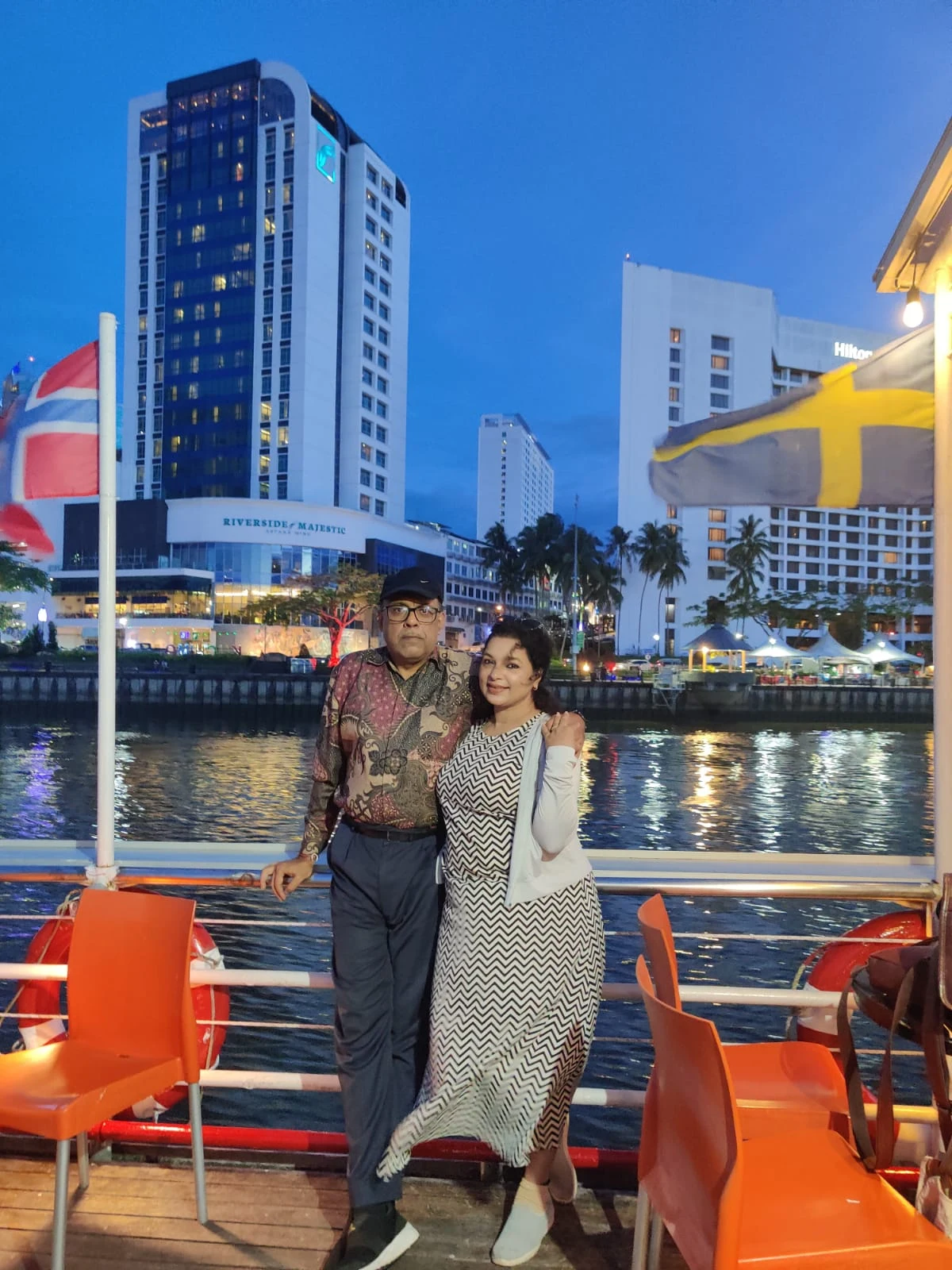
Sarawak River Cruise at Sunset: Navigating the historic waterways of Kuching where centuries of maritime trade and colonial history meet
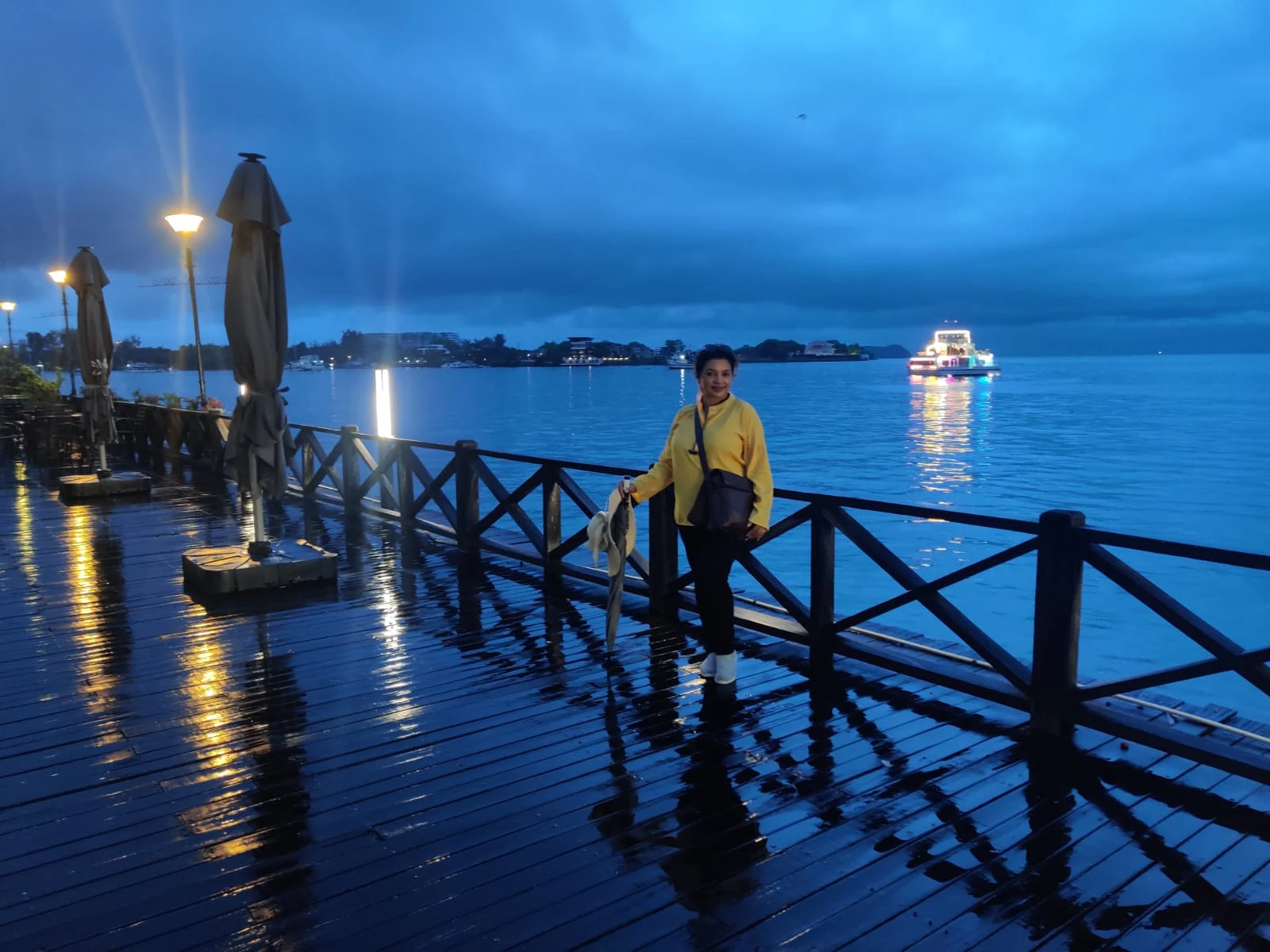
Borneo Coastal Waterfront: Standing along the tranquil waters of Malaysian Borneo where ancient sea corridors carried early voyagers
Kota Kinabalu: Traces of a Forgotten Indian Connection
A long, three-hour flight from Penang brought us to Kota Kinabalu, the gateway to Malaysian Borneo. Although it may not feature on the usual tourist trail for Indian travellers, we were drawn here by a different curiosity: the largely overlooked historical connections between India and this distant corner of Southeast Asia.
Today, Indian influence is not always immediately visible, yet traces remain in the names, communities, religious traditions, and cultural memories scattered across Sabah.
As we explored Kota Kinabalu, we found ourselves looking beyond the modern cityscape, searching for these quieter echoes of India that have survived across generations.
Borneo offered us a different perspective on India’s cultural connections with Southeast Asia. Unlike the prominent Hindu temples of Cambodia or the Indian-inspired royal traditions of Thailand, the historical connections here are more subtle, scattered across ancient inscriptions, maritime trade routes, migrant communities, and cultural encounters.
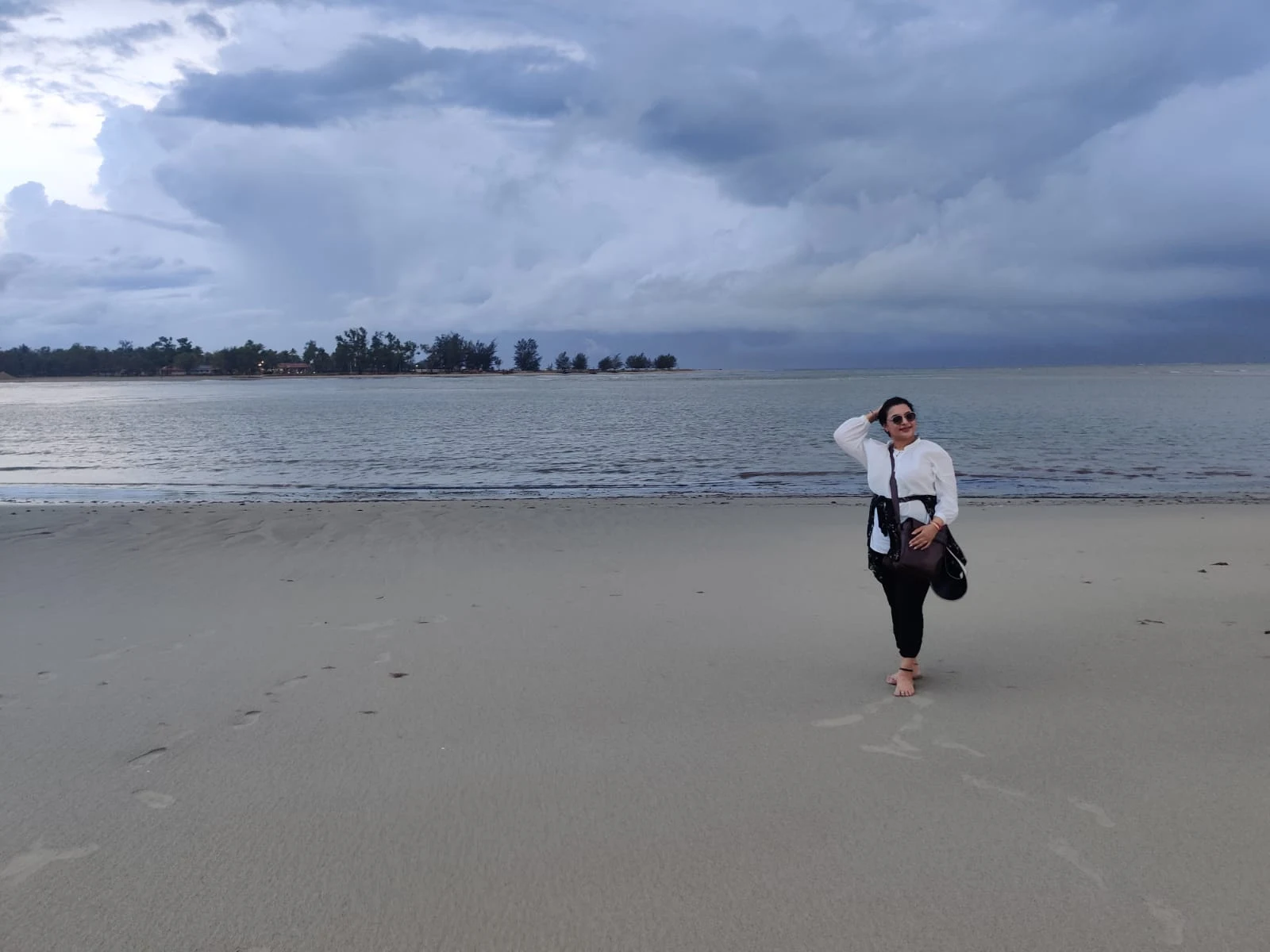
Sabah Coastline, Kota Kinabalu: Gazing across the South China Sea where ancient Indian maritime routes once navigated toward Borneo
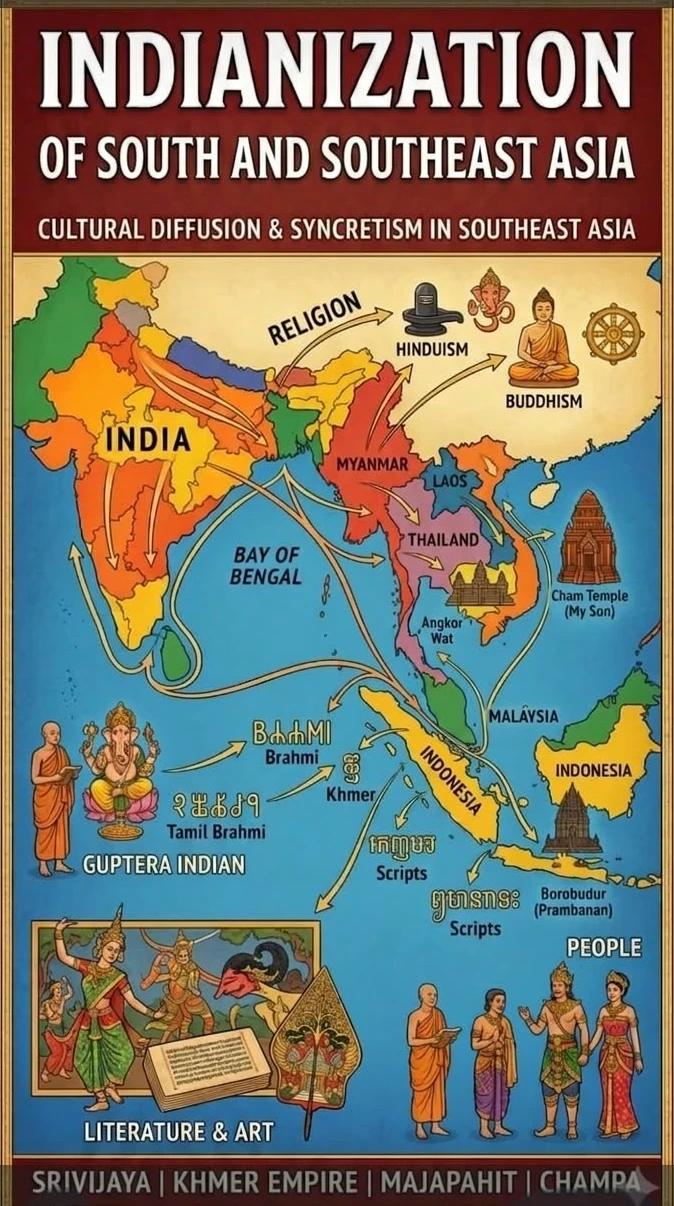
Historical Diffusion: Maritime trade routes crossing the Bay of Bengal into the Malay Peninsula and the Bornean archipelago
The historical connections between India and Borneo stretch back more than a thousand years, to the era of powerful Hindu-Buddhist maritime kingdoms in Southeast Asia. Ancient trading networks linked Indian ports with coastal settlements across the region, carrying merchants, religious specialists, artistic traditions, and cultural ideas between distant shores.
One of the strongest archaeological indications of early Indian cultural influence in Borneo comes from the ancient kingdom of Kutai in eastern Borneo, now part of Indonesia. Sanskrit inscriptions written in Pallava-derived script, dating to approximately the 4th century CE, have been discovered in the Kutai region. These inscriptions refer to royal patronage, religious donations, and Brahmanical traditions, providing evidence of early Hindu cultural and political influences in the area.
The inscriptions are particularly significant because they demonstrate that Indian religious ideas and Sanskrit literary traditions had travelled deep into the Indonesian archipelago more than 1,600 years ago. However, these discoveries belong to Indonesian Borneo rather than Malaysian Sabah or Sarawak. They provide a broader regional context for understanding the historical connections between India and the island as a whole.
For us, this was a fascinating reminder that Borneo, often associated primarily with rainforests and wildlife, also forms part of Southeast Asia’s much older history of maritime exchange and cultural interaction.
“Sanskrit inscriptions written in 4th-century CE Pallava script prove that Indian religious ideas, Brahmanical rituals, and literary traditions had travelled deep into Borneo over 1,600 years ago.”
Echoes of the Headhunters & Two Hills, One Ancient Rhythm
While exploring Borneo, we were fascinated to learn about the island’s indigenous communities, some of which historically practised headhunting as part of particular warfare, ritual, and ancestral traditions.
Borneo is home to numerous Indigenous peoples, including different Dayak communities in Sarawak and Kalimantan, as well as the Kadazan-Dusun, Murut, and other communities in Sabah. Their languages, customs, beliefs, and histories are remarkably diverse.
What intrigued us even more were the similarities we noticed between certain Bornean cultural traditions and those associated with historical headhunting communities in Northeast India, including some Naga, Kuki, and other Indigenous groups. Traditional dances, elaborate beadwork, woven textiles, warrior symbolism, ancestral beliefs, and close relationships with the natural environment offered intriguing points of comparison.
There is, however, no established evidence of a direct historical connection between these Indian and Bornean communities based on these similarities alone. The parallels may reflect comparable ways of life, regional adaptations, and broader patterns of human cultural development rather than a shared recent origin. Nevertheless, the similarities made me wonder whether the Bay of Bengal was less a barrier and more a bridge, connecting communities through maritime exchange or long-forgotten migrations.
“The similarities made me wonder whether the Bay of Bengal was less a barrier and more a bridge, connecting communities through maritime exchange or long-forgotten migrations.”
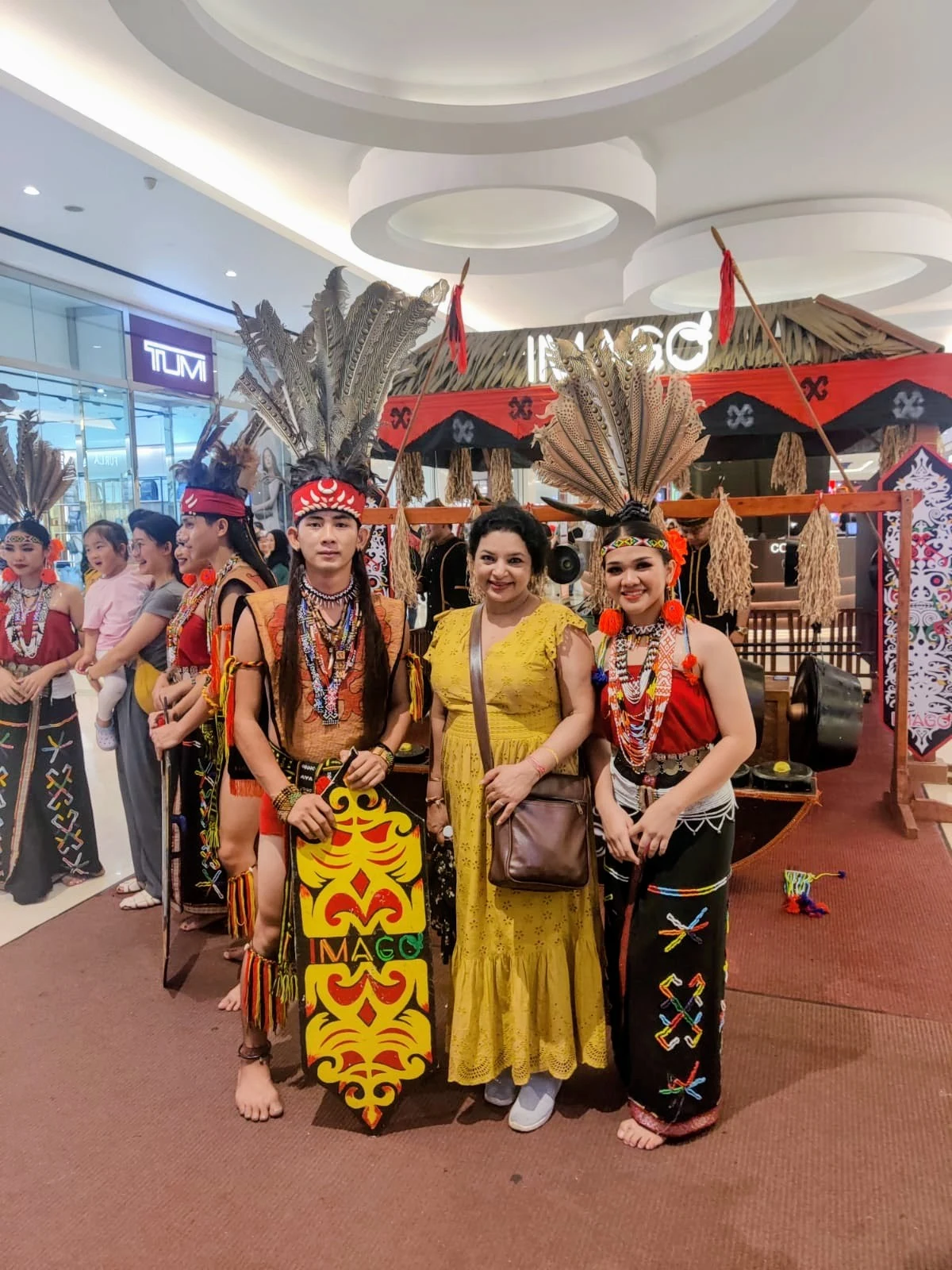
Murut Cultural Heritage: Meeting indigenous performers in Kota Kinabalu wearing feather headdresses, woven beads, and warrior dress
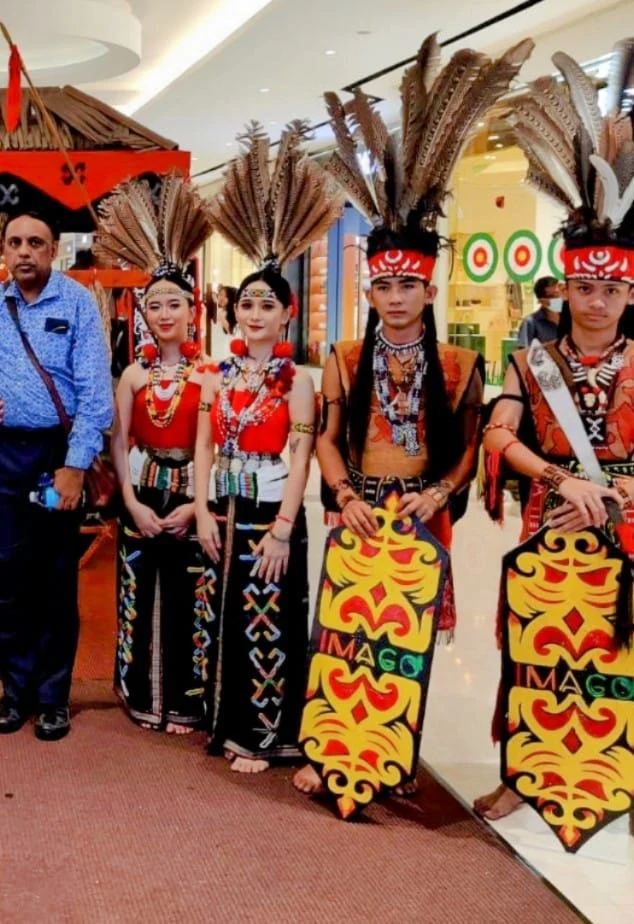
Warrior Guardians: Posing with indigenous dancers holding intricately painted Borneo wooden shields
Two Hills, One Ancient Rhythm: Borneo & Northeast India
Borneo: Murut Magunatip (Sabah)
India: Mizo Cheraw (Mizoram)
Dancers leaping between rhythmic clapping bamboo poles
Borneo: Dayak & Murut Hornbill Feathers
India: Naga Feathered Headdresses
Ancestral status symbols honoring courage and warrior lineage
Borneo: Pua Kumbu Ikat & Beadwork
India: Naga & Kuki Tribal Woven Shawls
Complex sacred geometric motifs passed down across generations
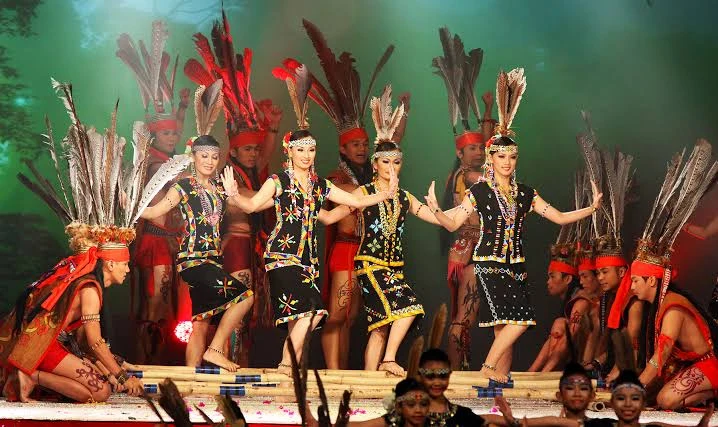
Magunatip Stage Performance: Traditional warrior choreography celebrating courage, agility, and ancestral rituals
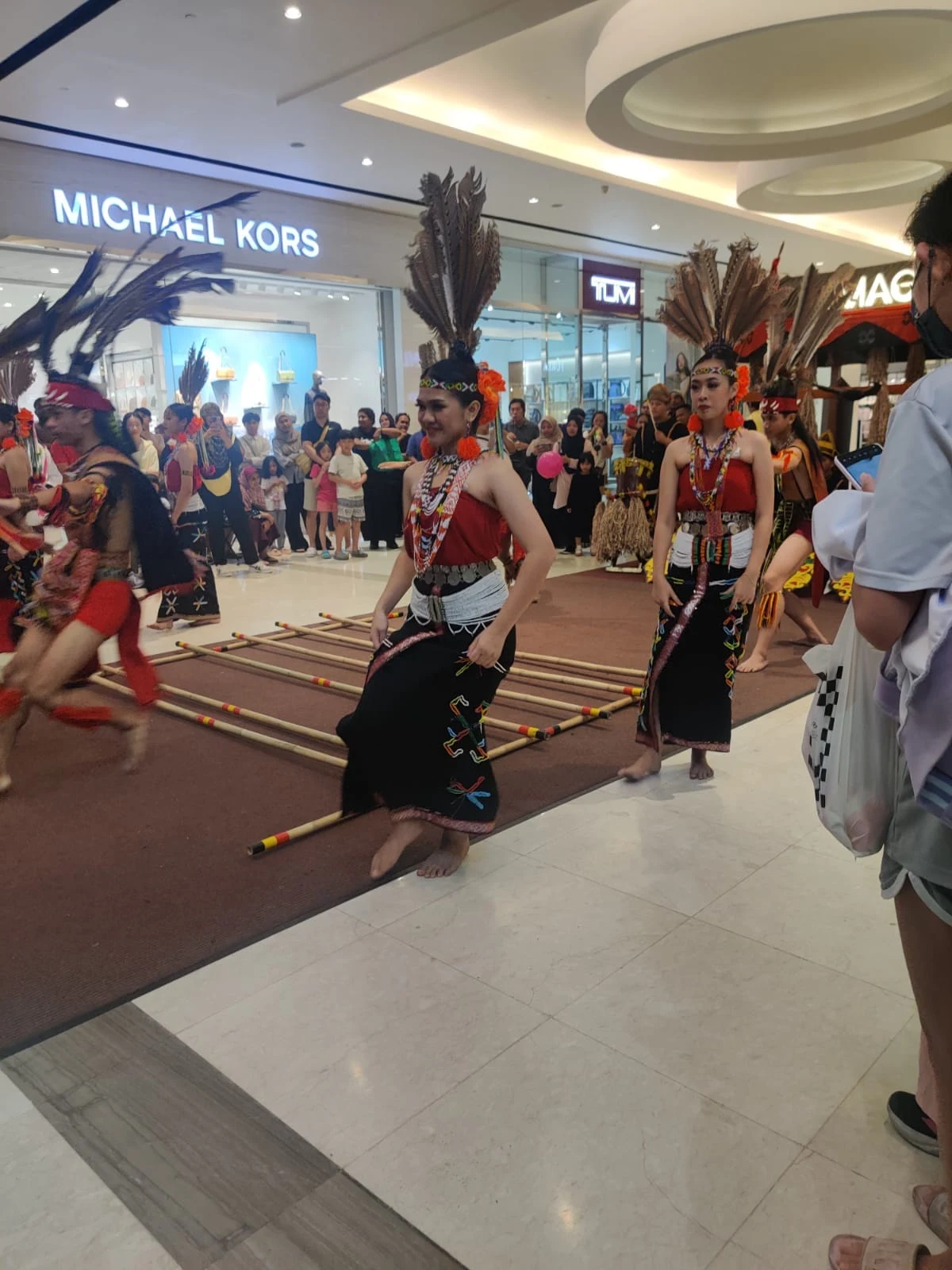
Rhythm of the Bamboo Poles: The electrifying Magunatip dance in motion, echoing the Cheraw bamboo dance of Mizoram
The Clapping Bamboo Poles of Borneo & Mizoram
During our exploration of Kota Kinabalu, we had the opportunity to witness a performance of the traditional Magunatip dance at the Imago Mall, an experience that immediately brought this cultural dialogue alive.
Performed primarily by the Murut community of Sabah, the dance features performers stepping rhythmically between long bamboo poles clapped together with increasing speed. The performers moved with extraordinary precision, agility, and grace, navigating the narrow spaces between the clattering poles while dressed in elaborate traditional attire decorated with shells, beads, and woven fabrics.
Historically, the Magunatip was performed during significant community occasions, including celebrations following successful headhunting journeys, healing ceremonies, and harvest festivals. Watching the performance, I was immediately struck by its uncanny resemblance to Cheraw, the traditional bamboo dance of Mizoram in Northeast India. The rhythmic pattern, the role of bamboo clappers, and the sheer skill required by dancers leaping between the poles felt astonishingly familiar. It was a fascinating moment of cross-cultural resonance, a living reminder of how traditional expressions can bridge vast geographical distances.
Kuching: The City of Cats and an Unlikely Indian Connection
From Kota Kinabalu, another flight took us southwest across Borneo to Kuching, the capital of Sarawak. Spread gracefully along the banks of the Sarawak River, Kuching is a city where colonial history, Indigenous traditions, and multicultural communities coexist in relative harmony.
The name Kuching is widely believed to derive from the Malay word kucing, meaning cat. Across the city, cat statues, feline murals, and even a Cat Museum celebrate this association, making the domestic feline an unofficial emblem of Sarawak’s capital.
However, another intriguing linguistic theory suggests a different origin, one that points back to India. Some historians and linguists propose that the name may have been influenced by Indian traders who visited the region centuries ago. According to this theory, the name may derive from Cochin (Kochi), the historic port city in Kerala along India’s southwestern coast, which had extensive trade connections throughout the Indian Ocean network.
Indian merchants may have introduced cats to the settlement as companions and pest-controllers aboard trading vessels, or they may have associated the trading post with their own familiar port city. While historians continue to debate the true etymology, the possibility of a linguistic link between Kuching and Cochin adds an intriguing dimension to the city’s identity, suggesting that Indian maritime interactions may have left their mark even on the map of Borneo.
“While popular lore associates Kuching with the Malay word for cat (kucing), linguistic historians note that South Indian seafarers from Cochin (Kochi) in Kerala had frequented these river waters for centuries, leaving potential phonetic imprints on the port’s name.”
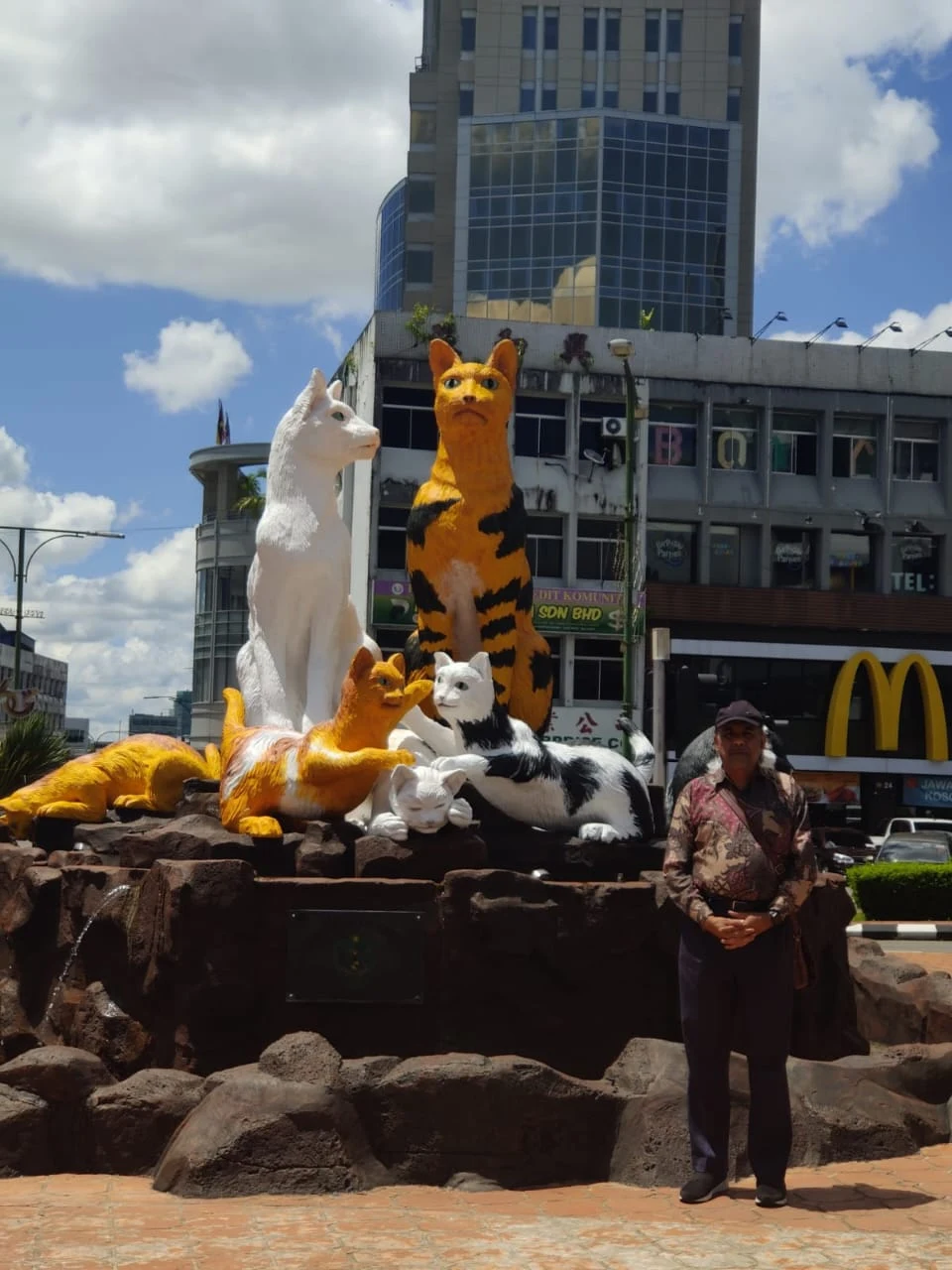
The Iconic Cat of Kuching: Posing before the famous feline monument in Sarawak, where local lore intertwines Malay 'kucing' with Kerala's historic port of Cochin
A 19th-Century South Indian Link: Masjid India and India Street
While the ancient past hints at maritime links, Kuching also preserves a much more tangible, documented history of Indian migration and enterprise dating from the 19th century.
During the era of the White Rajahs—the English Brooke family who ruled Sarawak from 1841 to 1946—merchants and workers from the Indian subcontinent began arriving in Kuching. Among them were Indian Muslim traders from Tamil Nadu and other regions of southern India, who established commercial networks and formed a vibrant diaspora community.
Their legacy remains visible today in two central landmarks of Kuching’s historic core: Masjid India and India Street.
Masjid India (Bandar Kuching), also known as the Indian Mosque, was established in the mid-19th century by early Indian Muslim settlers. The original wooden structure was built around 1837 or the mid-1850s, making it one of the oldest places of Islamic worship in Kuching. It was later rebuilt in brick and mortar in 1876, standing as a testament to the permanence and faith of the Indian community in Sarawak.
Just steps away lies India Street (Jalan India), officially named during the Brooke administration in 1928. Historically lined with Indian-owned textile shops, spice merchants, and general trading stores, the street served as the commercial beating heart of the Indian community. Today transformed into a pedestrian mall, India Street retains its historic shopfronts, where aromas of spices and textiles continue to evoke a time when Indian traders played an essential role in Sarawak’s economy.
First Indian Mosque
Early Tamil Muslim merchants erect Kuching's first wooden place of Islamic worship on the riverbank.
Permanent Brick Sanctum
Rebuilt in durable brick and mortar as Masjid India (Bandar Kuching), standing strong for 150 years.
Jalan India Gazetted
Officially designated as India Street by the Brooke administration, cementing its commercial status.
Pedestrian Mall & Spices
Transformed into a lively open-air pedestrian heritage mall with textiles, spices, and historic shophouses.
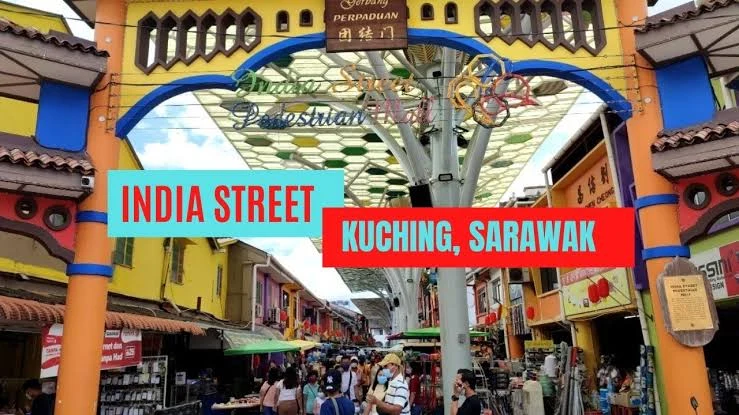
Gerbang Perpaduan Jalan India: The iconic gateway to India Street Pedestrian Mall, gazetted in 1928 as the center of Kuching's Tamil and South Indian commerce
Kuching’s Quiet Charm: River Cruises and Orangutan Encounters
Floating Sanctuaries & Illuminated Riverbanks
Kuching’s charm lies in its leisurely pace and the ease with which nature and history intertwine. One of our most memorable experiences was a sunset cruise along the Sarawak River. As the boat glided gently through the water, the city’s skyline unfolded before us: the historic Astana, Fort Margherita perched on the hillside, traditional Malay kampungs on stilts, and modern architectural landmarks such as the striking Sarawak State Legislative Assembly building.
As dusk fell, the river lit up with warm reflections, while the modern floating mosque, Masjid Terapung Kuching, seemed to hover serenely above the water’s surface, casting golden light across the ripples.
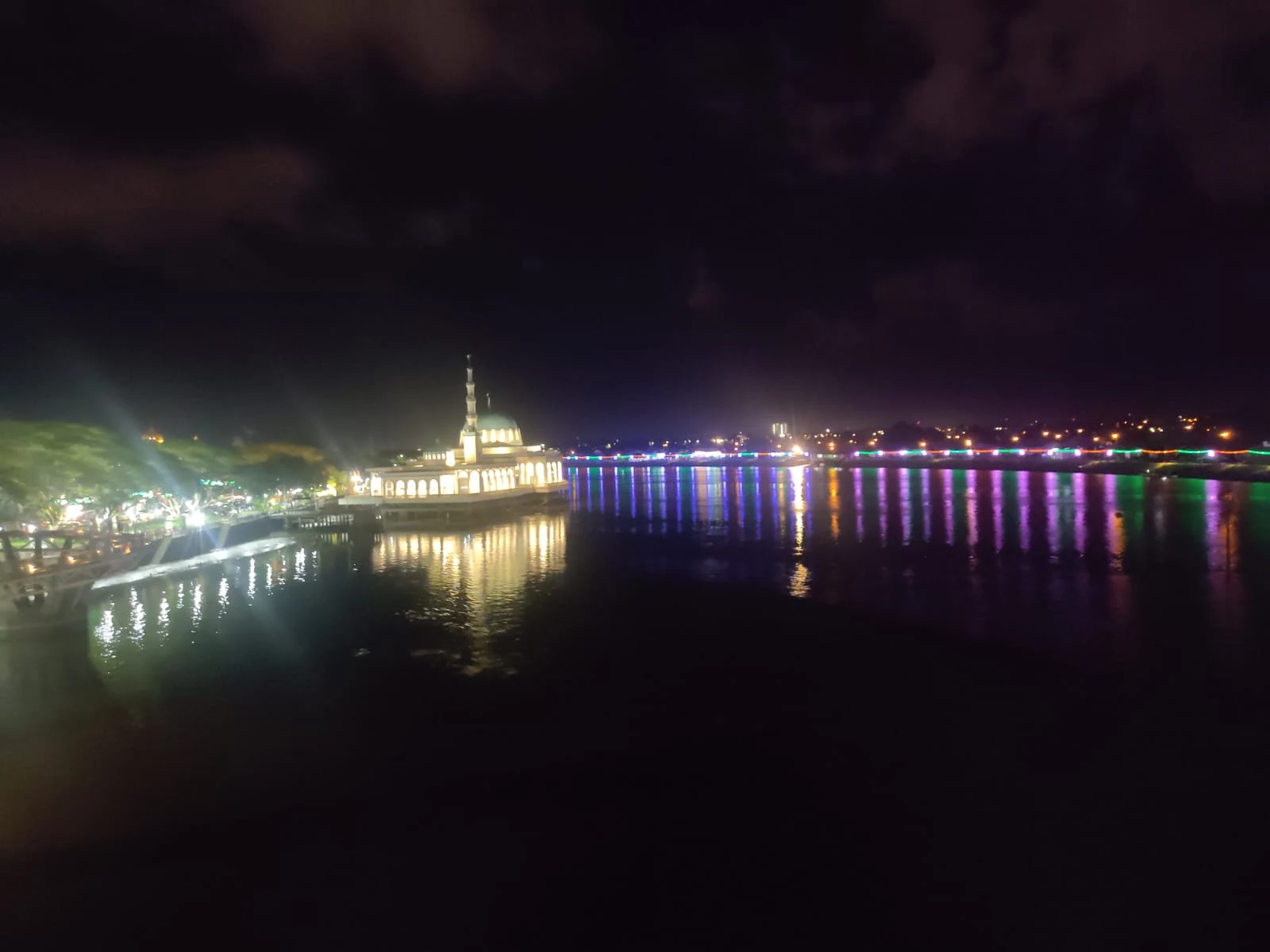
Masjid Terapung at Night: The floating mosque illuminating the tranquil Sarawak River along Kuching's historic waterfront
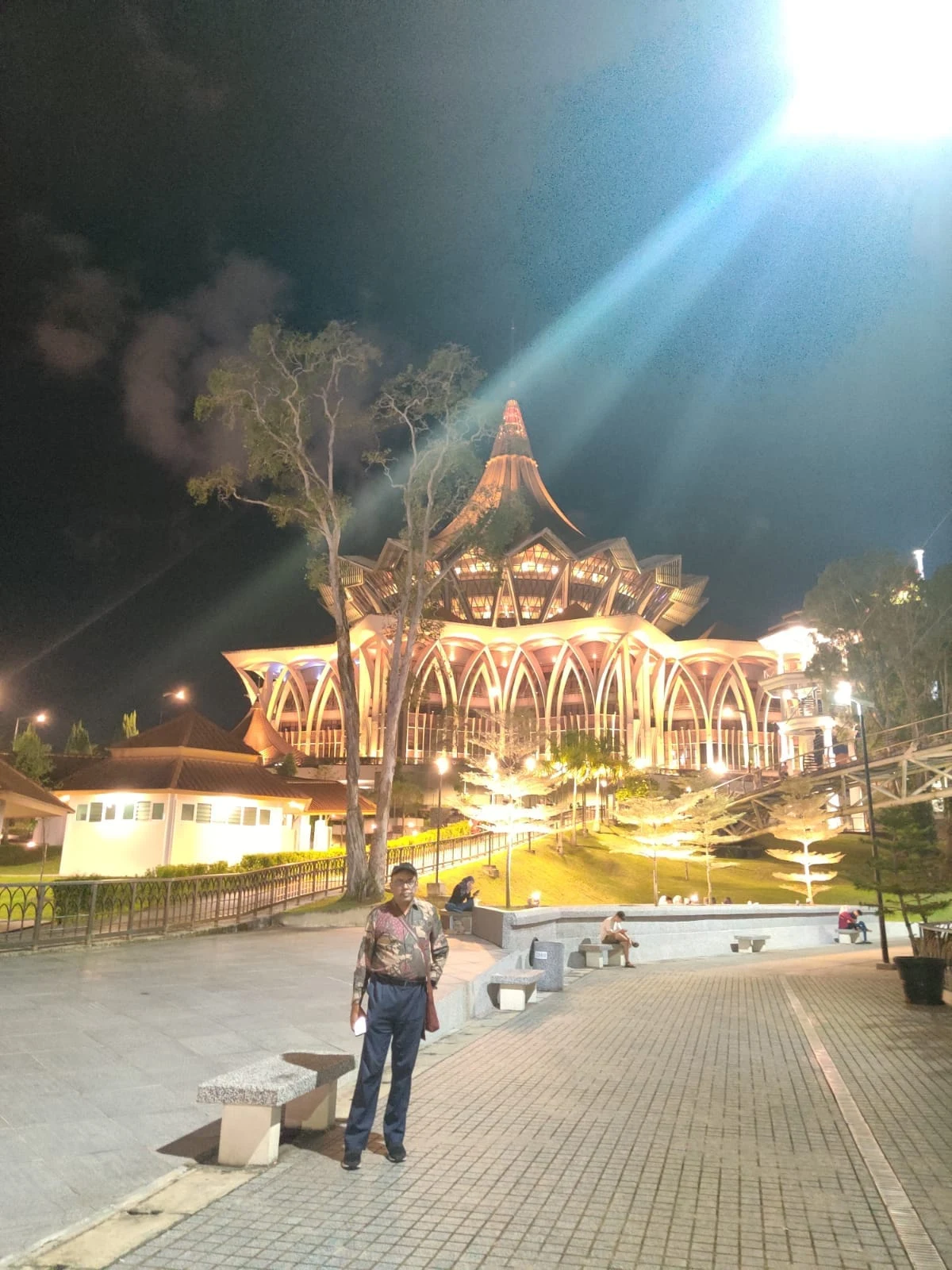
Kuching Waterfront Esplanade: The illuminated architectural grandeur of the Sarawak State Legislative Assembly building glowing across the river
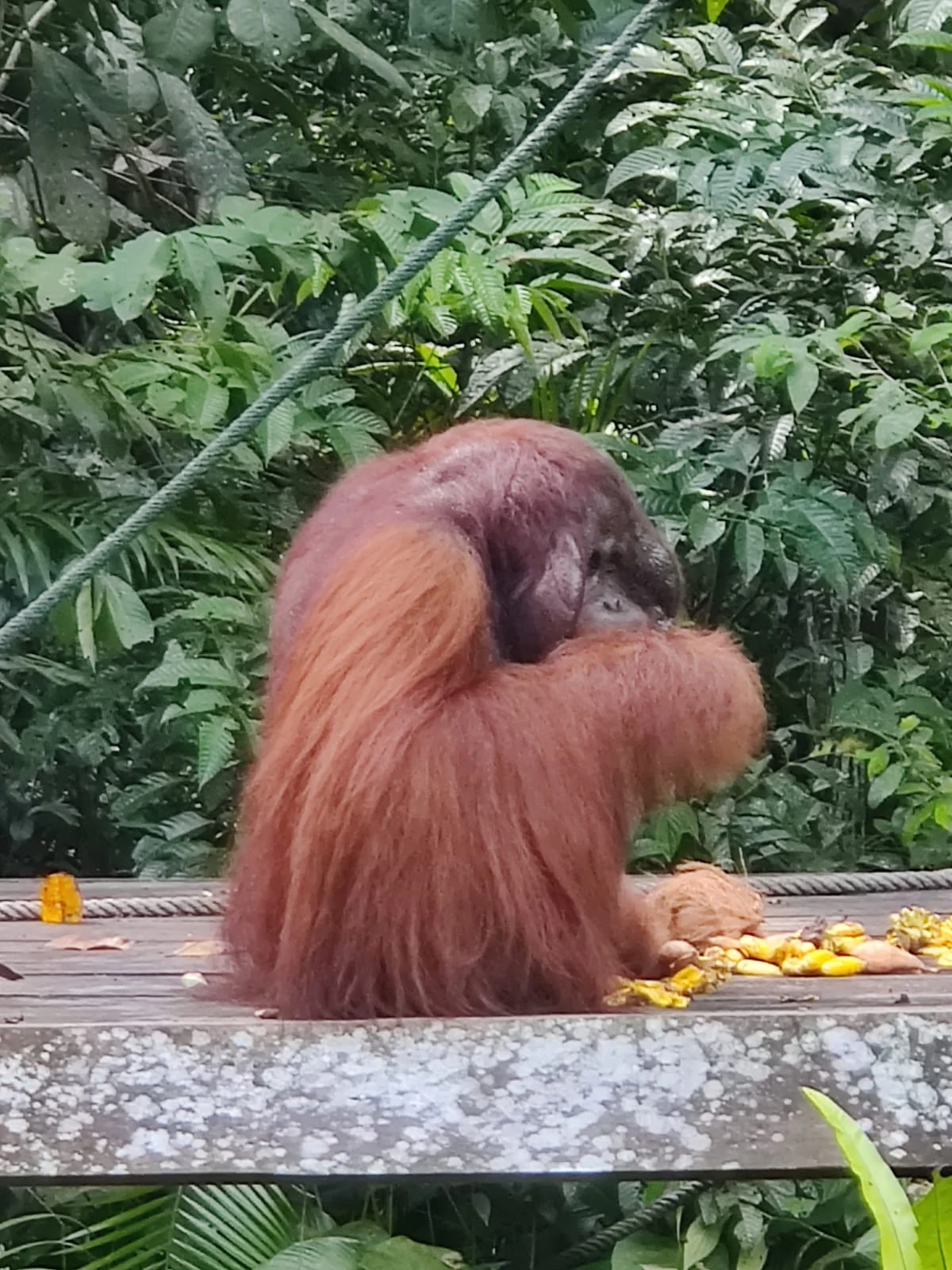
Canopy Guardian: A semi-wild Bornean Orangutan feeding high in the rainforest sanctuary at Semenggoh Wildlife Centre
Gentle Canopy Primates of the Ancient Rainforest
Beyond the city, Borneo’s legendary natural heritage called to us. We journeyed to the Semenggoh Wildlife Centre, located just outside Kuching. Established as a sanctuary for rescued and orphaned Bornean orangutans, Semenggoh is renowned for its successful rehabilitation programme.
Standing quietly on the viewing platform surrounded by dense dipterocarp rainforest, we watched in awe as semi-wild orangutans emerged from the canopy to feed on fruits provided by rangers. Seeing these gentle, intelligent primates moving effortlessly among the treetops was an unforgettable reminder of Borneo’s rich ecological wonder.
“Standing quietly in the dense dipterocarp forest watching semi-wild Bornean orangutans move effortlessly through the treetops was an unforgettable reminder of the primordial ecological wonder of this ancient island.”
Culinary Roots: The Subtle Footprint of Indian Flavours
Echoes of Indian Tawa Pulao in Bornean Woks
Travel is never complete without exploring the flavours of a region, and in Borneo, the culinary landscape offered subtle reminders of shared Indian heritage.
While Malaysian cuisine is renowned for its diverse influences, certain dishes resonated with an unexpected familiarity. A classic example was Nasi Goreng Kampung, a beloved Malaysian village-style fried rice. Seasoned with shallots, garlic, dried anchovies (ikan bilis), chili paste, and leafy greens, and served with a fried egg, the dish brought to mind the comforting warmth of Indian tawa pulao and spiced rice preparations.
“Tossed with fragrant shallots, garlic, crispy dried anchovies (ikan bilis), chili paste, leafy greens, and crowned with a runny fried egg—a plate that brings the familiar warmth of Indian homestyle spiced rice.”
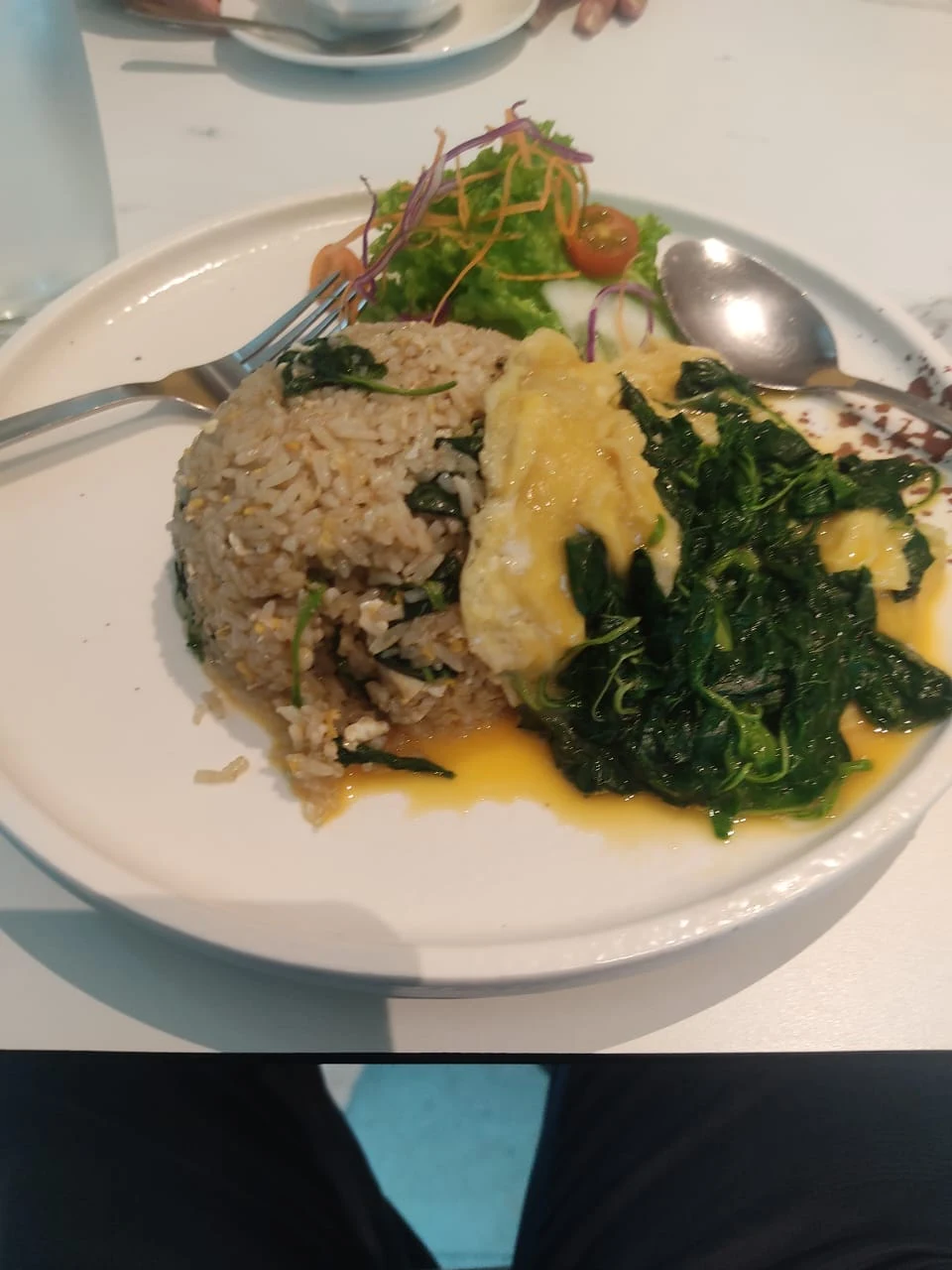
Nasi Goreng Kampung: Village-style aromatic fried rice tossed with greens and fried egg, evoking the comfort of Indian tawa rice
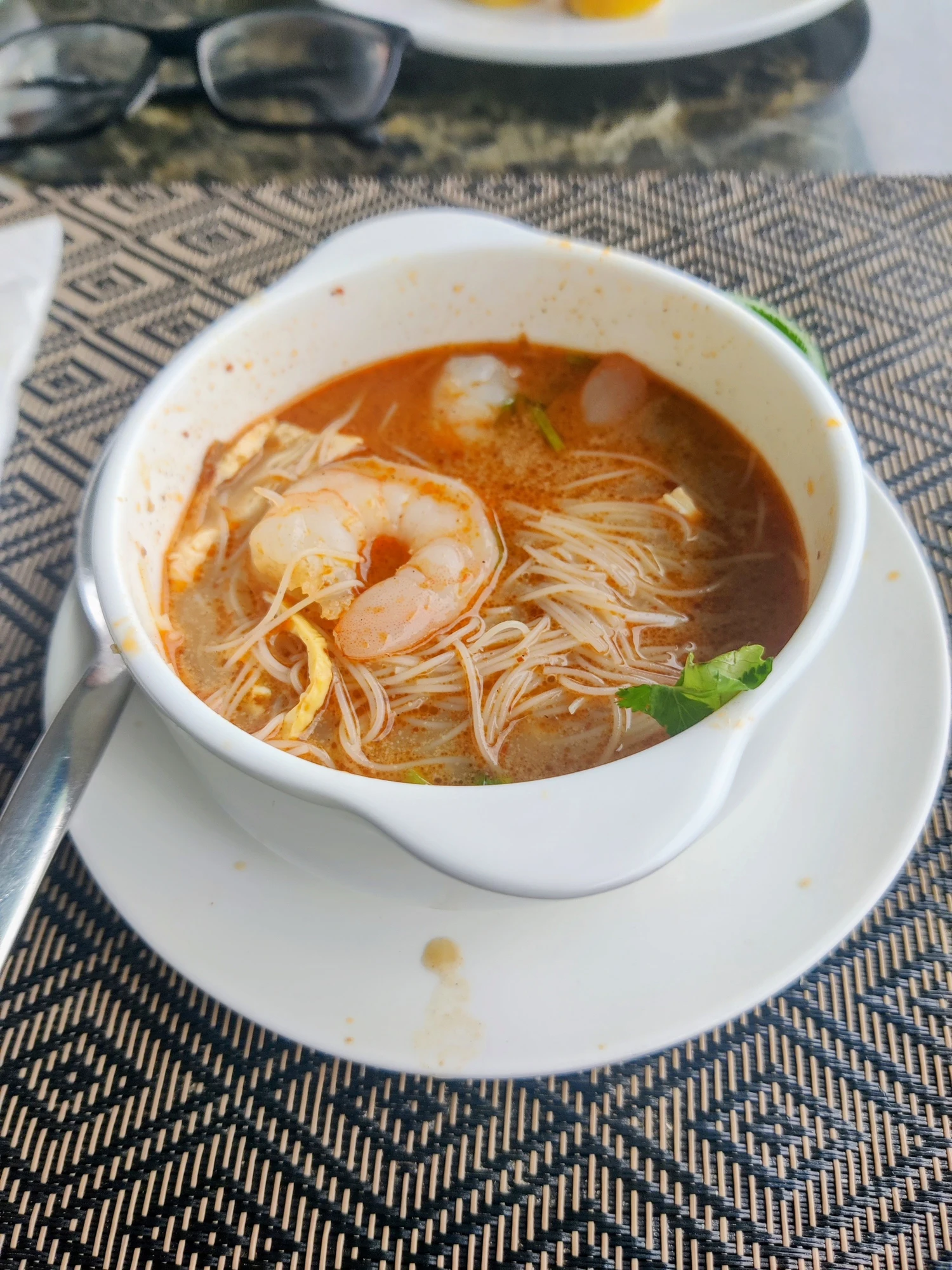
Sarawak Laksa: Anthony Bourdain's celebrated 'Breakfast of the Gods' — a harmonious blend of Indian spices, coconut broth, prawns, and vermicelli
Where Indian Coriander Meets Bornean Soul
The crowning culinary discovery, however, was Sarawak Laksa. Unlike the coconut-heavy curry laksa of Kuala Lumpur or the sour, tamarind-infused asam laksa of Penang, Sarawak Laksa occupies a league of its own. The late celebrity chef Anthony Bourdain famously anointed it the 'Breakfast of the Gods', and a single spoonful reveals why.
Its complex, aromatic broth is built from a paste incorporating lemongrass, galangal, dried chilies, shallots, garlic, coriander, cumin, and tamarind, gently enriched with coconut milk and chicken-prawn stock. Served with rice vermicelli, shredded chicken, succulent fresh prawns, strips of omelette, fresh coriander, and a squeeze of calamansi lime, Sarawak Laksa represents an exquisite crossroads of Indian spice traditions, Chinese noodle craft, and Southeast Asian soul.
“Breakfast of the Gods: a complex, soulful soup where Indian coriander and cumin intertwine seamlessly with Southeast Asian lemongrass, coconut milk, and succulent prawns.”
A Volcanic Delay and an Unexpected Kindness
Stranded by Mount Ruang’s Volcanic Ash
Our journey through Borneo concluded with an unexpected twist. As we prepared to depart from Kota Kinabalu, news arrived that multiple flights across the region had been grounded due to volcanic ash clouds drifting from the eruption of Mount Ruang in North Sulawesi, Indonesia.
Thousands of passengers were stranded, uncertainty hung thick in the air, and logistical chaos unfolded at the airport as airlines scrambled to manage cancellations and rebookings.
Warmth Across Distant Shores
In the midst of this stressful situation, we experienced a memorable act of human warmth. The airport manager of our airline's local operations happened to be an Indian expatriate. Seeing our concern, he personally stepped forward to assist us. With remarkable calmness, professionalism, and warmth, he helped us navigate the rescheduling, arranged comfortable hotel accommodations, and ensured meals were provided for stranded passengers.
Standing in a crowded terminal thousands of miles from home, that spontaneous gesture of care and solidarity was deeply touching. It was a comforting reminder that the connections between India and Southeast Asia are not merely preserved in ancient stone carvings, historical records, or spice routes—they live on through genuine human kindness, shared understanding, and the warmth of individuals meeting across distant shores.
“Civilizational bonds are not merely carved into ancient stone—they live on through spontaneous kindness and human empathy.”
Echoes Across Distant Shores: Borneo’s Quiet Dialogue with India
Our journey through Malaysian Borneo offered a subtle, yet deeply resonant chapter in tracing the Indianization of Southeast Asia.
Unlike the monumental temple complexes of Angkor Wat or the towering golden Murugan of Batu Caves, Borneo reveals its Indian connection through quiet whispers—ancient 4th-century Sanskrit yupa inscriptions in Kutai, the rhythmic symmetry between Murut bamboo dances and Mizoram's Cheraw, the enduring 19th-century spice trade along Kuching's India Street, and the aromatic coriander and cumin infusing Sarawak Laksa.
Borneo reminds us that cultural exchange is not always about grand architectural monuments. Sometimes, it lives in the rhythms of indigenous drums, the names given to coastal cities, the spices tossed into street pans, and the spontaneous kindness of a fellow human being meeting you under a stormy sky.
As we watched the evening lights reflect across the Sarawak River, we realized that the Bay of Bengal was never an insurmountable expanse. For thousands of years, it has been a sacred bridge—carrying ideas, faith, songs, and people across distant shores.
Practical Travel Guide
Essential field notes for wildlife lovers, cultural explorers, and travellers
Kota Kinabalu as Your Primary Hub
Kota Kinabalu International Airport (BKI) serves as Sabah's main international gateway with frequent connections to Kuala Lumpur, Penang, and Singapore. Ideal for accessing Mount Kinabalu and coastal excursions.
Kuching for Living Heritage & History
Dedicate at least 3 to 4 days to Kuching (Sarawak) to explore the historic waterfront, colonial forts, Borneo Cultures Museum, and vibrant heritage streets on foot.
Semenggoh Orangutan Feeding Times
Feeding sessions take place strictly twice daily at 9:00 AM and 3:00 PM. Arrive 30 minutes early. Sightings depend on seasonal rainforest fruit abundance, so patience is key.
Walk India Street & Masjid India on Foot
Jalan India is a fully pedestrianized open-air mall. Stroll through the heritage textile shophouses, spice stalls, and turn into the alleyway leading to the historic 1876 Masjid India.
Sarawak River Sunset Cruise Timing
Book a 90-minute sunset boat cruise departing Kuching Waterfront around 5:00–5:30 PM. You'll witness Fort Margherita, the Astana, and the golden reflections on the floating mosque at dusk.
Must-Try Sarawak Laksa & Nasi Goreng
Taste authentic Sarawak Laksa at famous local kopitiams like Choon Hui Cafe or Golden Arch, and order village-style Nasi Goreng Kampung seasoned with pungent local aromatics.
Respect Indigenous Traditions & Dances
When watching Murut and Dayak traditional dances like the Magunatip, show appreciation and ask for permission before posing with performers in their sacred regalia.
Borneo Equatorial Rainforest Weather
Borneo sits directly on the equator. Sudden tropical downpours are common year-round; carry a compact umbrella, lightweight breathable cotton clothing, and sturdy footwear.
Discover Cultural Parallels in Museums
Visit the Sabah State Museum in KK and the world-class Borneo Cultures Museum in Kuching to study the fascinating parallels between Bornean and Northeast Indian tribal textiles.
Inter-State Passport Checks for Sabah & Sarawak
Sabah and Sarawak maintain independent immigration controls under Malaysian law. Always carry your original physical passport, even on domestic flights between KK and Kuching.
Travel Insurance for Regional Volcanic Events
As our Mount Ruang experience proved, regional volcanic activity can disrupt island flights unexpectedly. Always travel with comprehensive insurance covering cancellations and lodging.
Ringgit Cash & Mobile E-Wallets
Carry Malaysian Ringgit (MYR) cash for small hawker stalls, market spice vendors, and boat crossings. Credit cards and Touch 'n Go / GrabPay e-wallets are widely accepted elsewhere.
Embrace the Gentle Borneo Cadence
Unlike the frenetic pace of larger metropolitan hubs, Borneo moves with a serene, contemplative ease. Take time to linger along the waterfront, converse with locals, and absorb the jungle air.
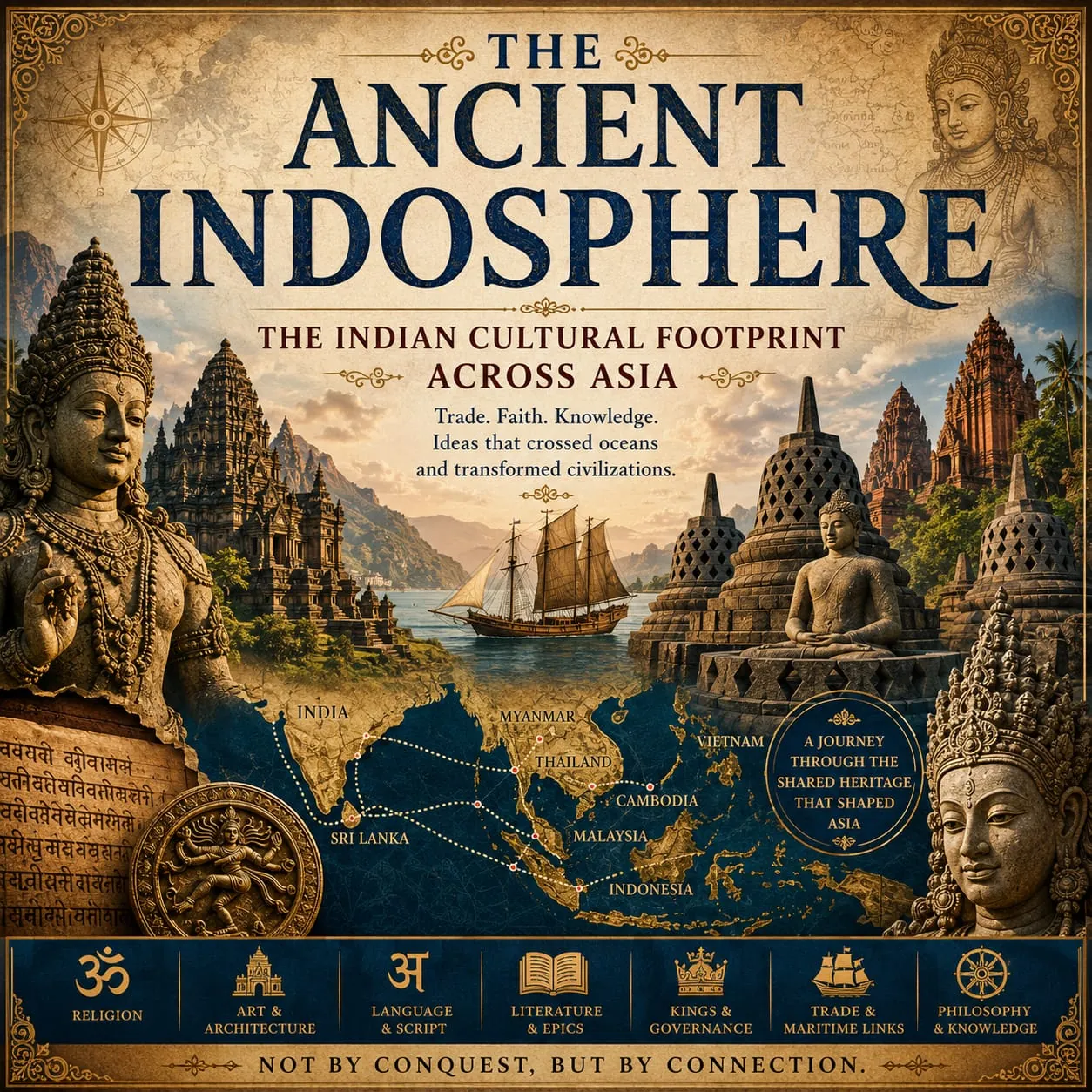
TRAVELLING THROUGH THE TIMELESS LEGACY OF INDIAN CIVILIZATION ACROSS ASIA AND BEYOND
“Not by conquest, but by connection.”
Across ancient temples, sacred stupas, and living cultural landscapes, the timeless traditions born in India continue to illuminate Asia with philosophy, art, and civilizational communion carried not by sword, but through dialogue and spiritual devotion.
CONTINUE THE MALAYSIA JOURNEY
Journey Through the Sacred Monuments of Malaysia