
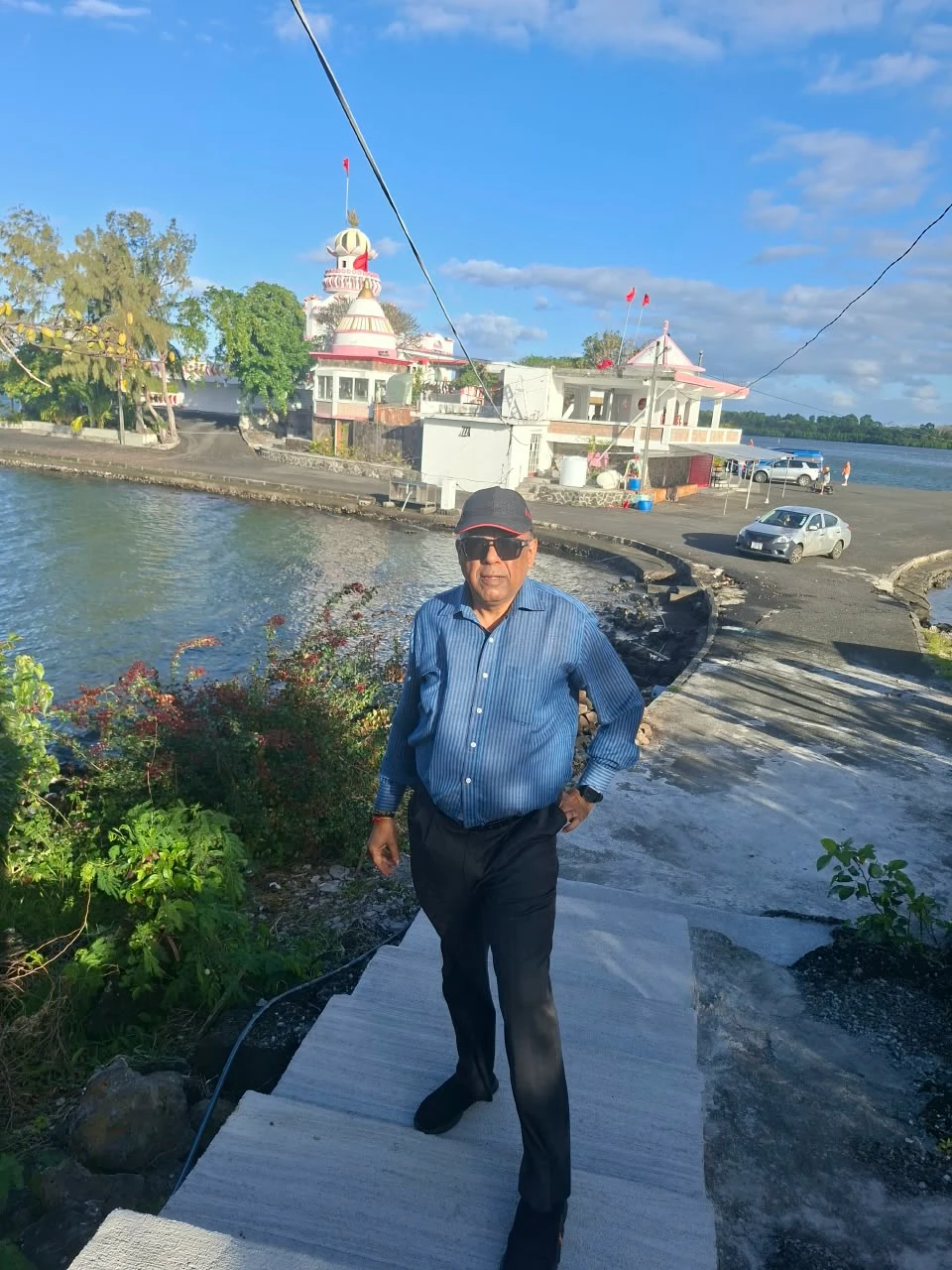
Mauritius — A Landscape of Faith.The Hindu Temples of Mauritius.
Hindu Temples of Mauritius — Faith Across the Indian Ocean
Mauritius is dotted with Hindu temples that reflect the island's diverse Indian heritage, with both North Indian and South Indian Dravidian traditions represented. From the sacred Ganga Talao and Maheswarnath Mandir to Tamil kovils such as Kaylasson, Tamil Surya Oudaya Sangam and Siva Subramaniar, these temples preserve traditions brought by generations of Indian migrants and indentured labourers. During our journey, visiting these temples became more than sightseeing for us—we experienced pooja, met local devotees, witnessed religious functions and discovered how deeply Indian faith remains woven into Mauritian life. The temples also revealed different regional traditions: Tamil kovils carry distinctive Dravidian architecture and Murugan, Amman and Shiva worship, while other temples reflect North Indian traditions.
Sagar Shiv Mandir — Sacred causeway across the lagoon at Poste de Flacq
Murugan at Cap Malheureux — A Symbol of Tamil Heritage
We reached the Arulmigu Siva Soopramaniar Kovil at Cap Malheureux in the evening, when the temple looked particularly beautiful in the soft fading light. The kovil was founded in 1970 and inaugurated in 1985, later undergoing major reconstruction with the involvement of traditional craftsmen from Tamil Nadu. The most striking feature today is the magnificent 17-metre-tall statue of Lord Murugan, inaugurated in December 2024 and regarded as the tallest Murugan statue in the Indian Ocean region. We entered the temple, offered our prayers and participated in the pooja. Standing before the towering Murugan, surrounded by the colourful Dravidian architecture, we felt a deep connection with the Tamil heritage that has travelled from India and flourished in Mauritius.
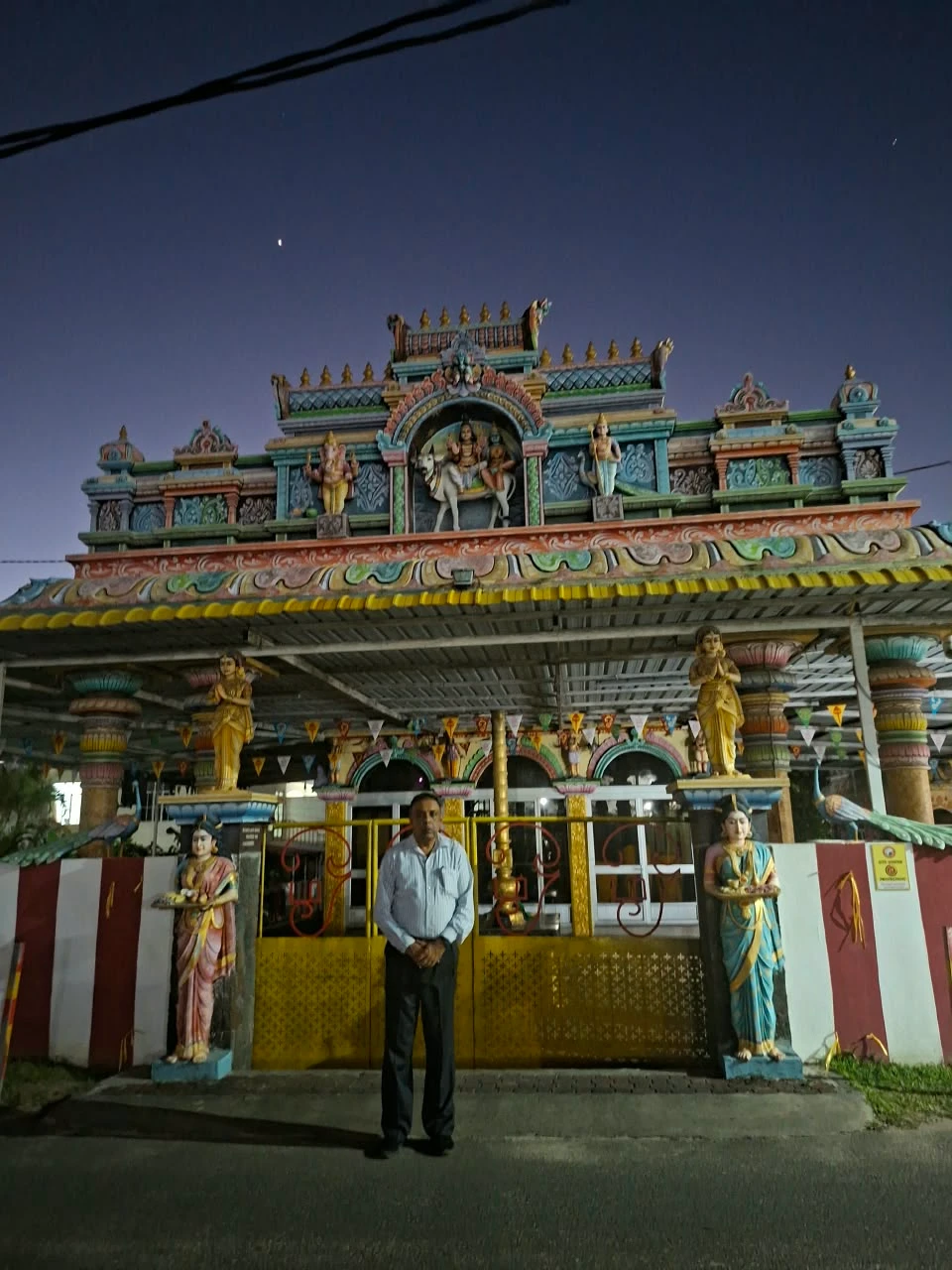
Arulmigu Siva Soopramaniar Kovil — Dravidian gopuram framed by palms
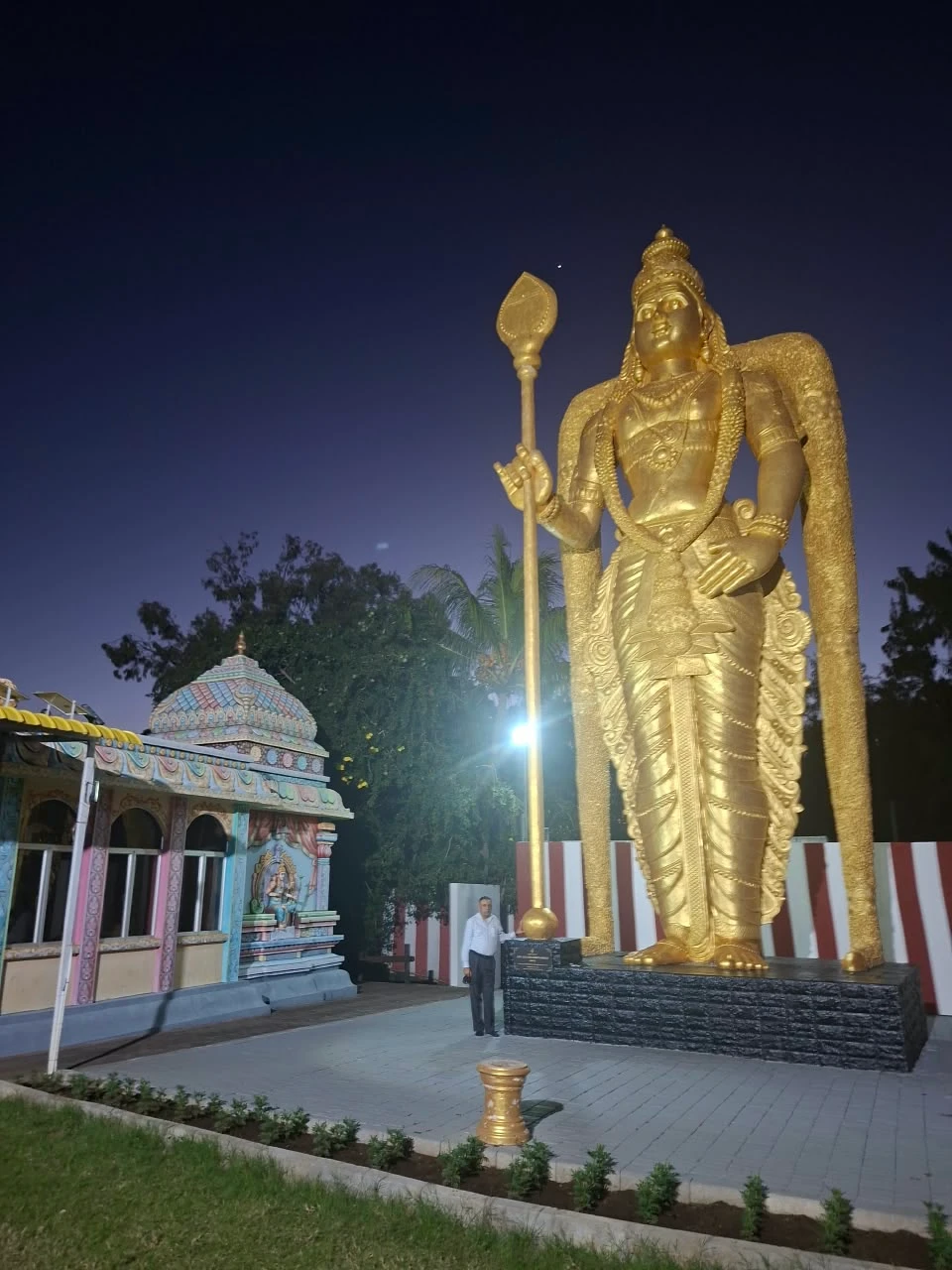
Lord Murugan — 17-metre statue at Cap Malheureux
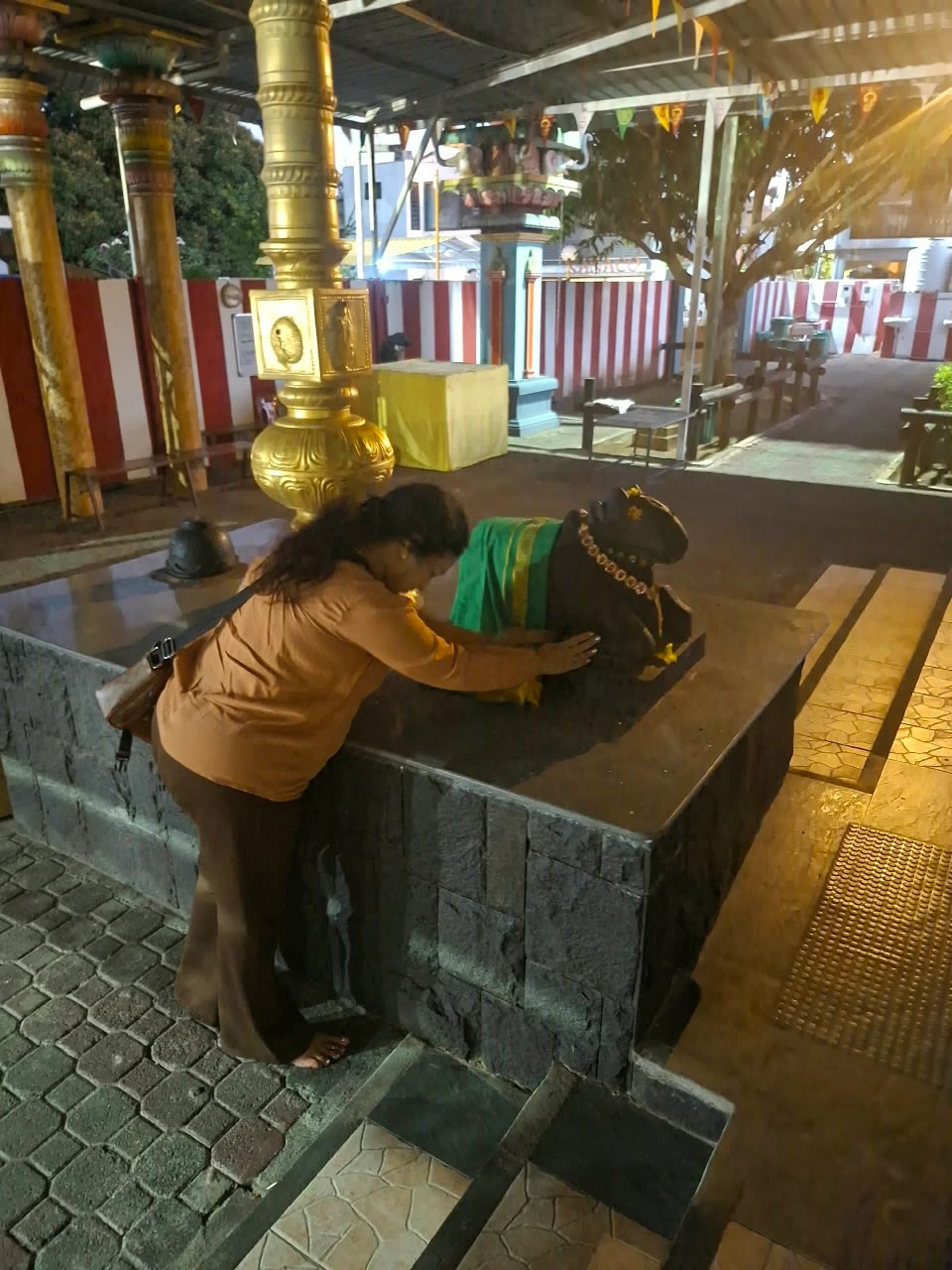
Sacred Nandi and dwajasthambam in the temple courtyard
Tamil Surya Oudaya Sangam — A Tamil Heritage Kept Alive
During our visit to the Tamil Surya Oudaya Sangam Temple in Grand Baie, a colourful Tamil Hindu temple along the coastal road, we were unexpectedly invited to participate in a religious function taking place inside. The temple is regarded as one of the older Tamil temples in Mauritius and reflects the island's enduring Tamil religious and cultural traditions. What made the visit particularly memorable was meeting so many Mauritian Tamils and being welcomed into their gathering as guests. During the pooja, a senior member of the community told us something that stayed with us: he was the only person present who could still speak Tamil fluently; the others, though proud of their Tamil heritage, spoke Creole, French or English. Standing among them, participating in their prayer and sharing that brief moment of community, we were reminded that generations away from India may gradually lose the language, but the faith, traditions and cultural memory of their ancestors continue to live on.
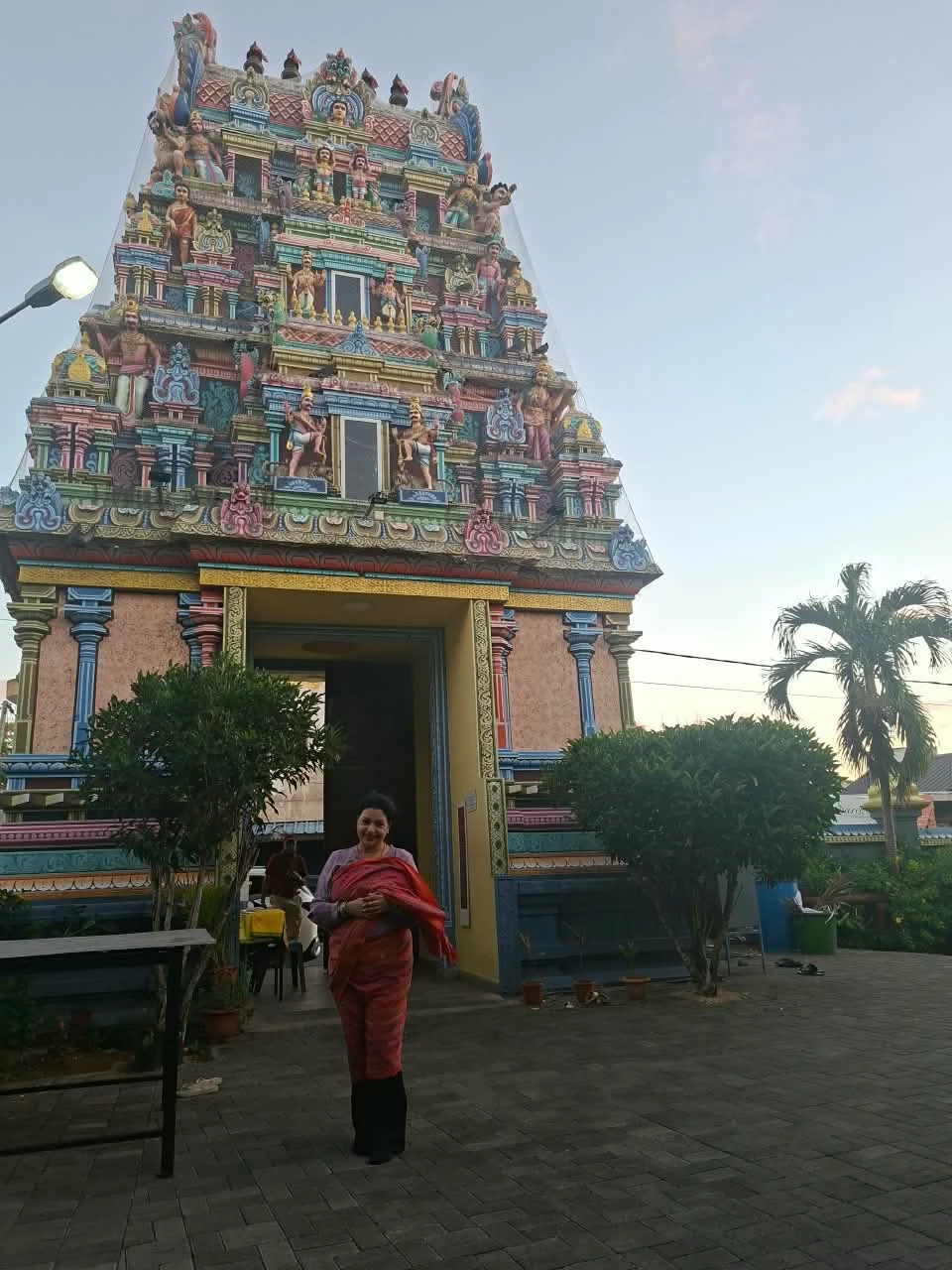
Intricately sculpted Raja Gopuram along the Grand Baie coastal road
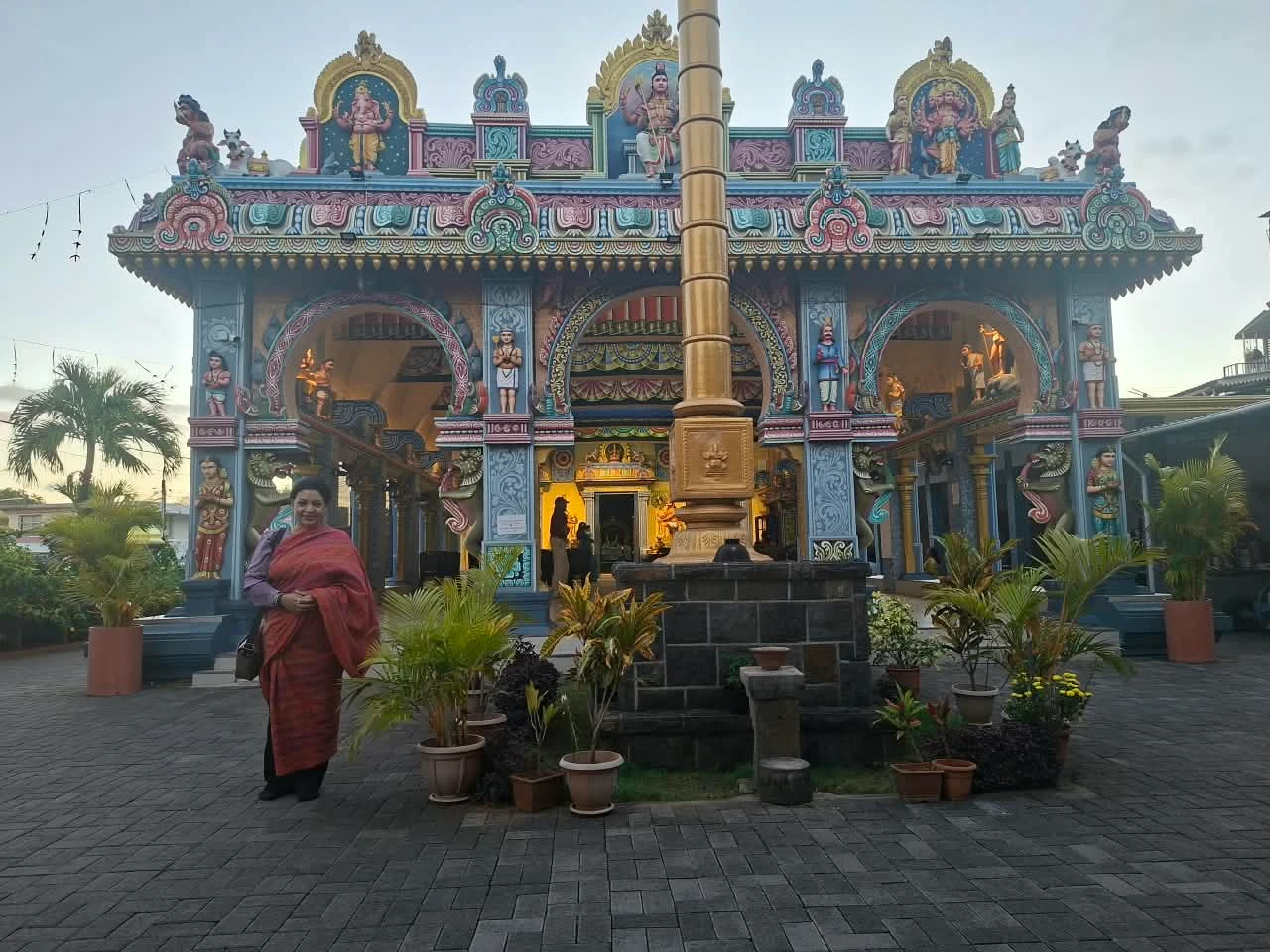
Tamil Surya Oudaya Sangam — Illuminated mandapam and golden dwajasthambam
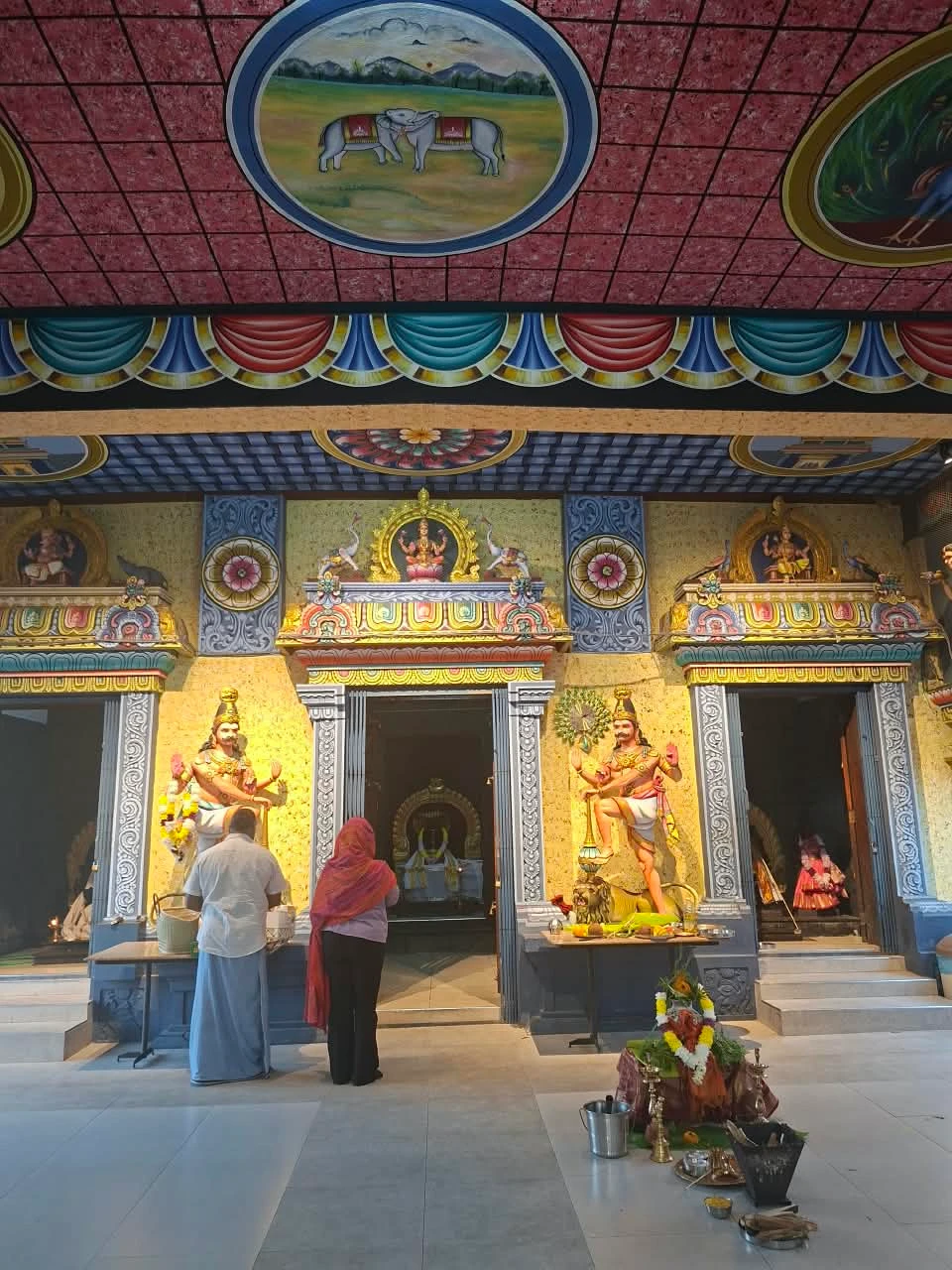
Inner sanctum pooja with guardian dvarapalas
Spiritual Park, Pointe des Lascars — A Place of Peace and Meditation
Our visit to the Pointe des Lascars Hindu Spiritual Park was one of the most peaceful experiences of our Mauritius journey. Created in 1986, the park was conceived as a place for prayer and meditation, at a remarkably beautiful spot where the Rivière du Rempart meets the sea. The park is associated with Gurudeva Sivaya Subramuniyaswami and the Saiva Siddhanta tradition, and its principal shrine is dedicated to Lord Ganesha. As we wandered through the beautifully landscaped grounds, visiting the different shrines and quiet corners, the sound of the river and sea created a deeply tranquil atmosphere. We spent some time in meditation and prayer, and also performed our puja before Lord Ganesha. Sitting there amidst nature, with the river flowing towards the ocean, we felt that this was much more than a temple—it was a sanctuary where faith, nature and inner peace came together beautifully.
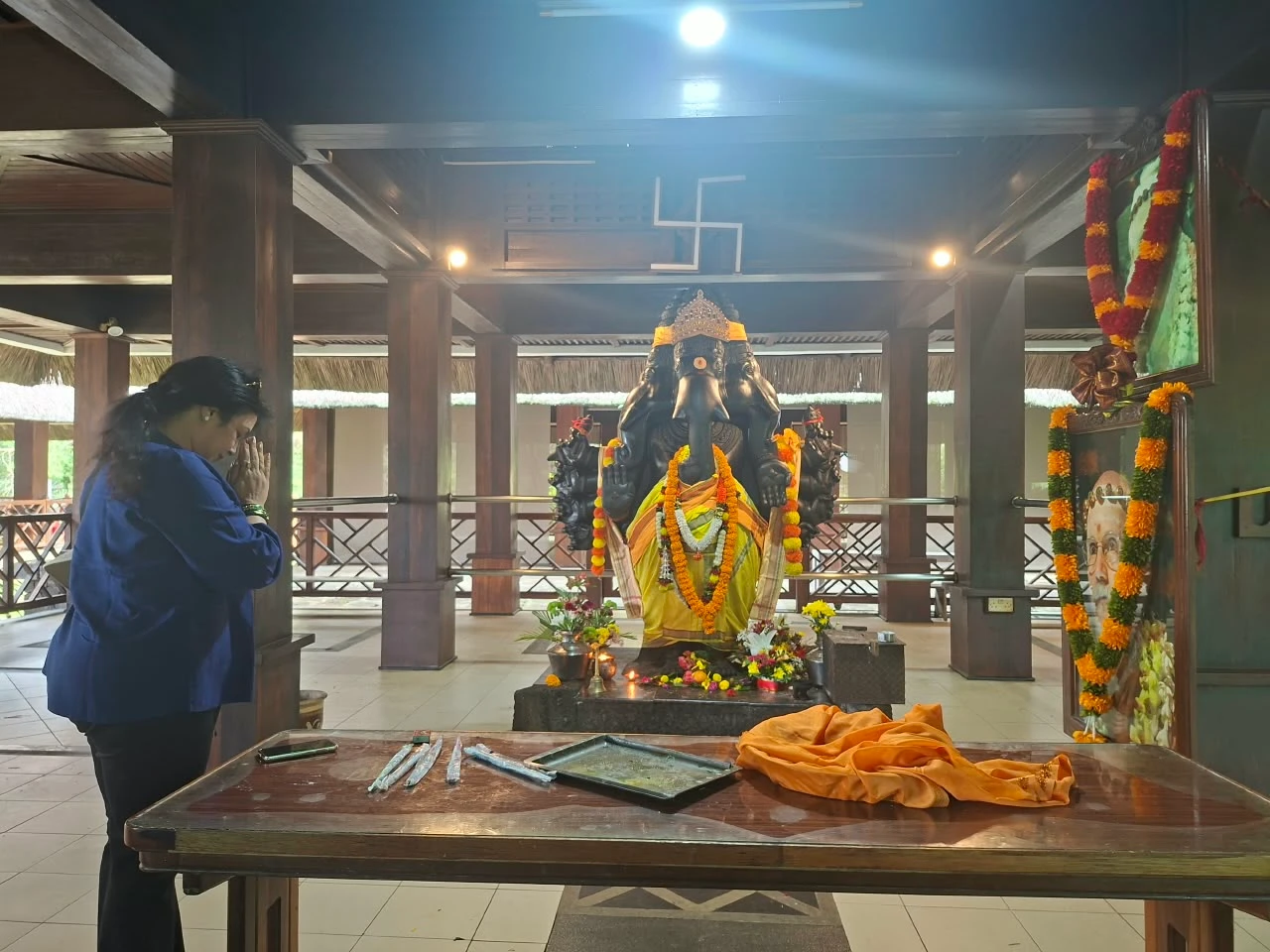
Panchamukha Ganesha — Principal shrine dedicated to Lord Ganesha
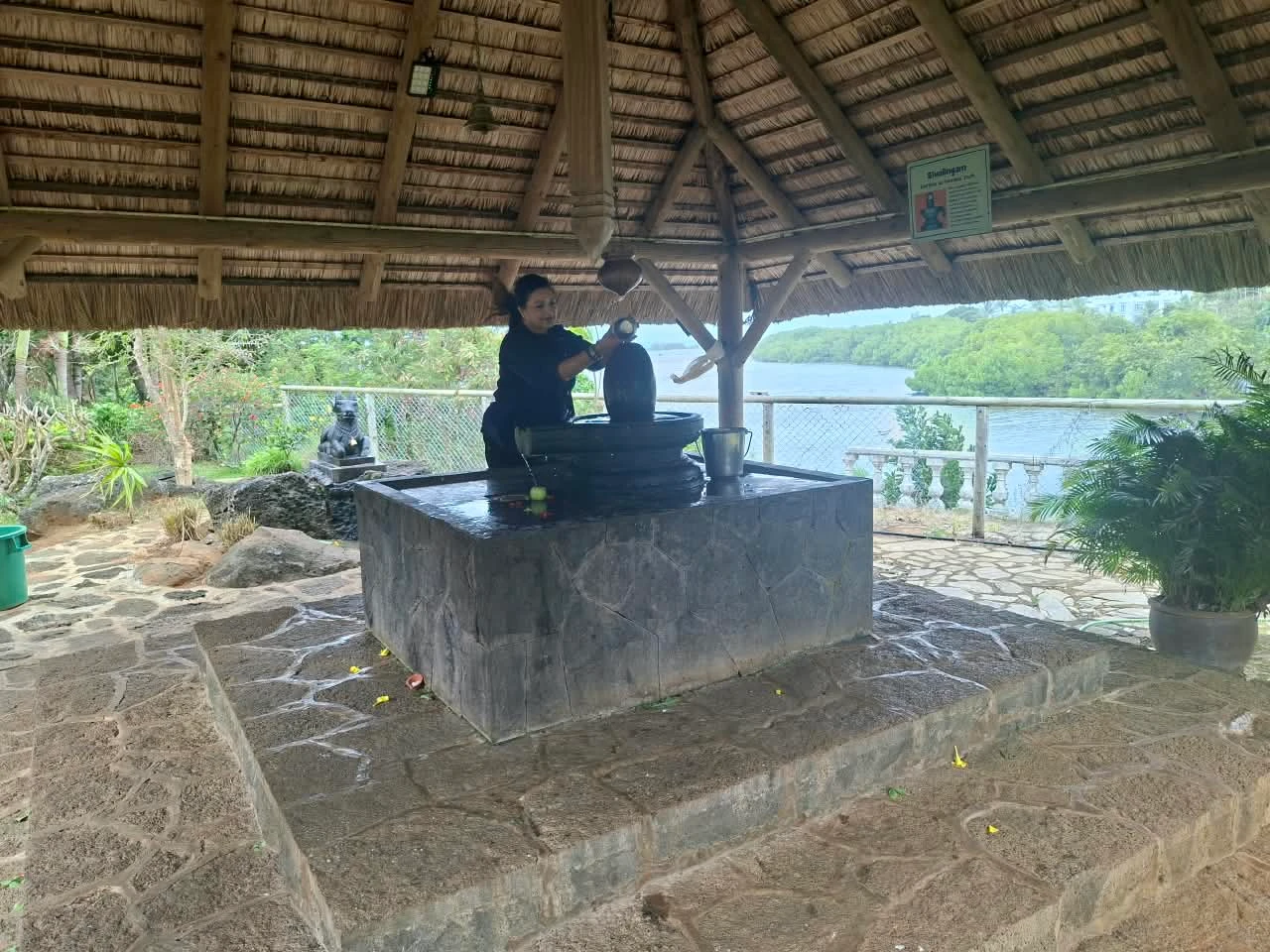
Shiva Lingam beside the tranquil waters of Rivière du Rempart
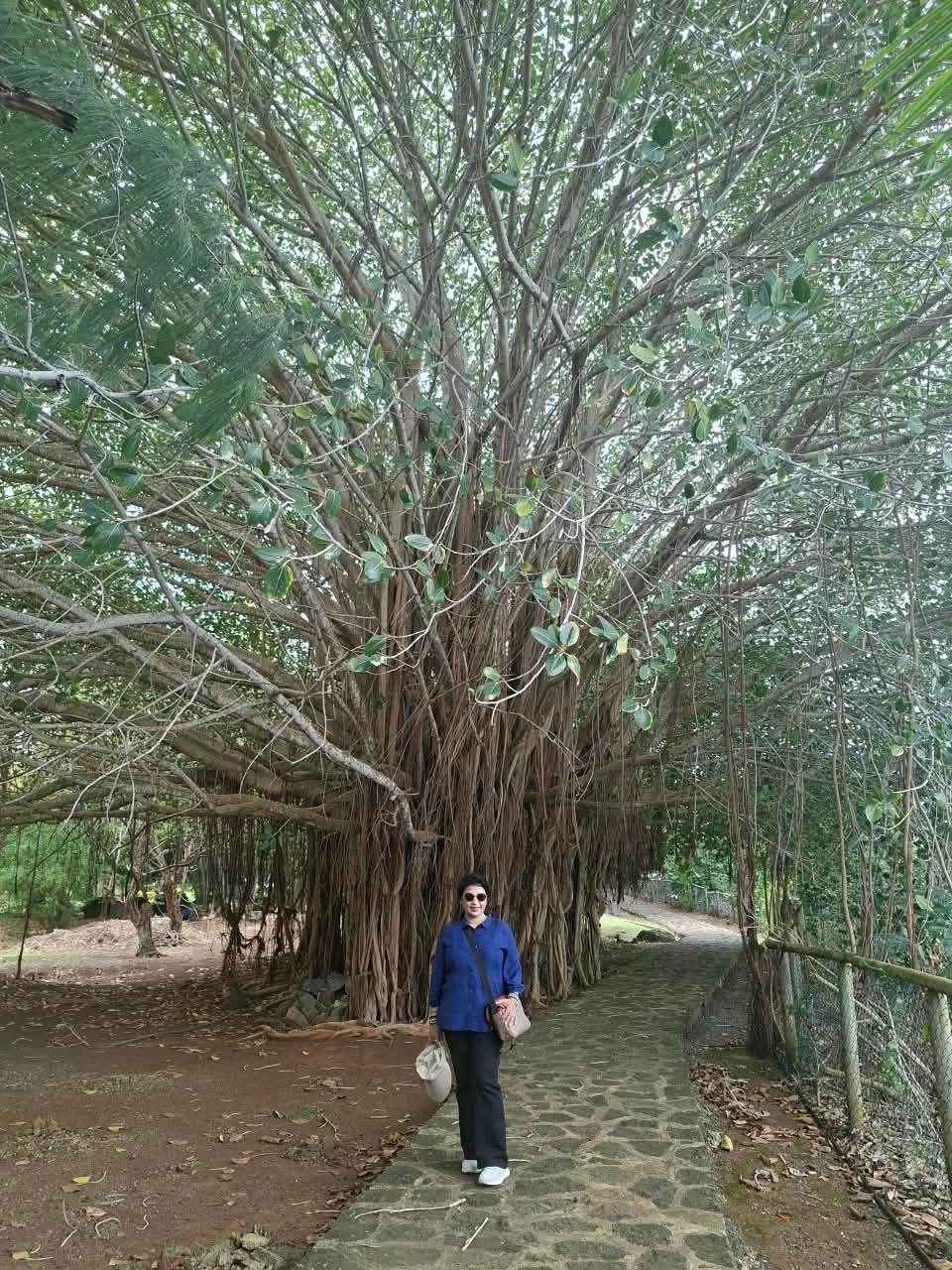
Gigantic sacred banyan tree providing serene shade at Spiritual Park
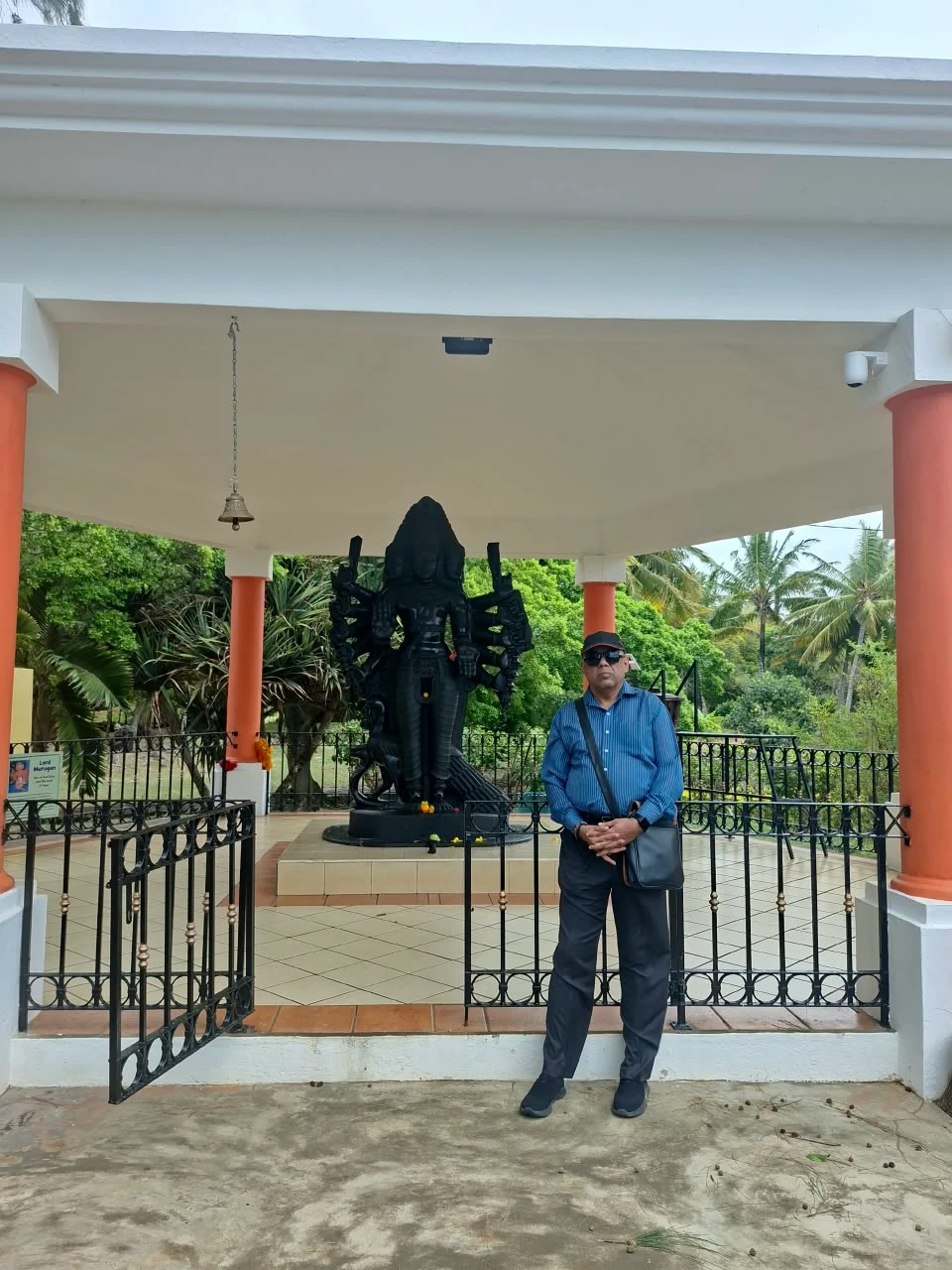
Lord Murugan shrine carved from dark granite at Pointe des Lascars
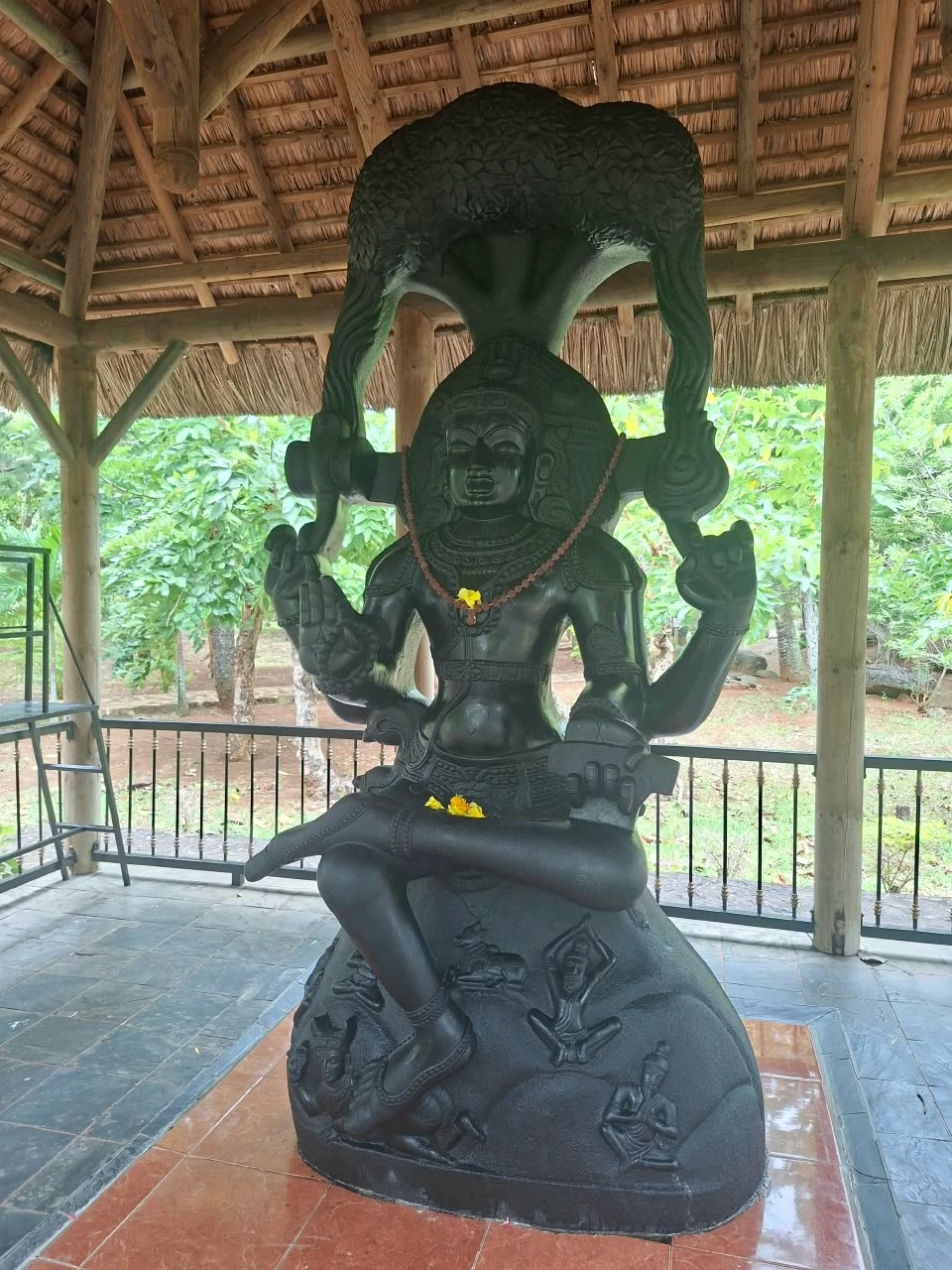
Lord Dakshinamurthy — Sacred guru shrine nestled in peaceful nature
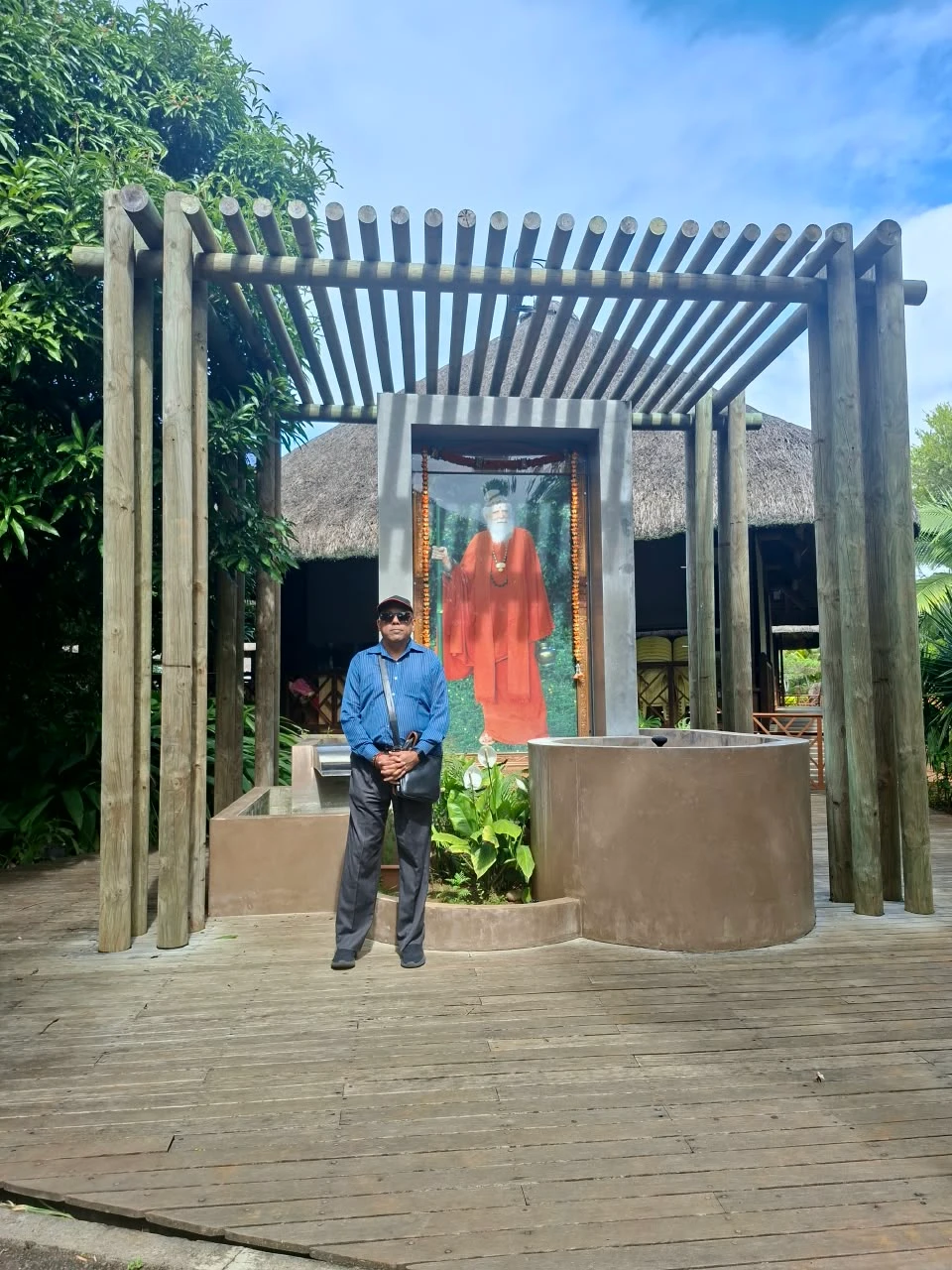
Memorial honoring Gurudeva Sivaya Subramuniyaswami
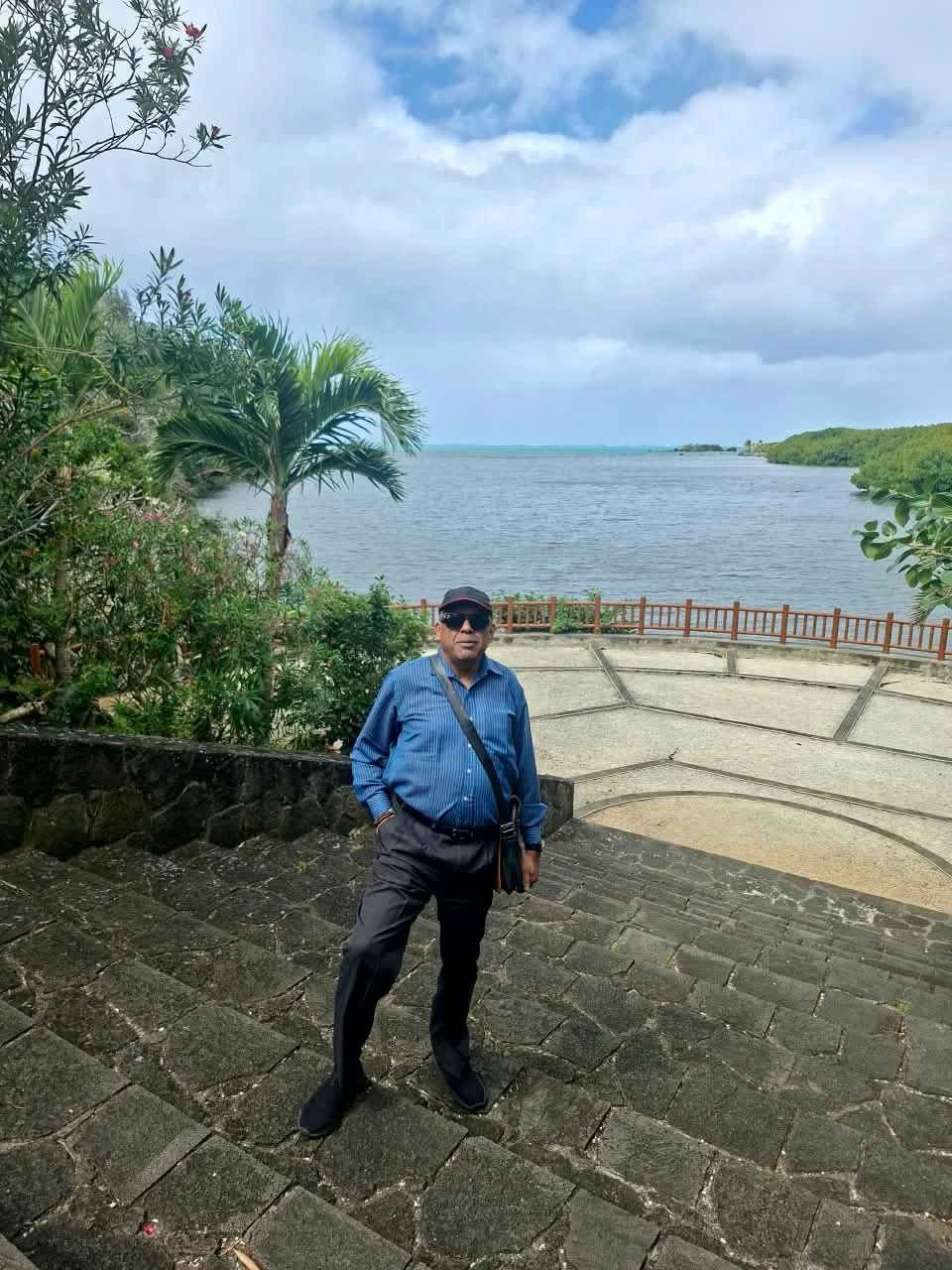
Stone amphitheatre at the confluence of the river and the sea
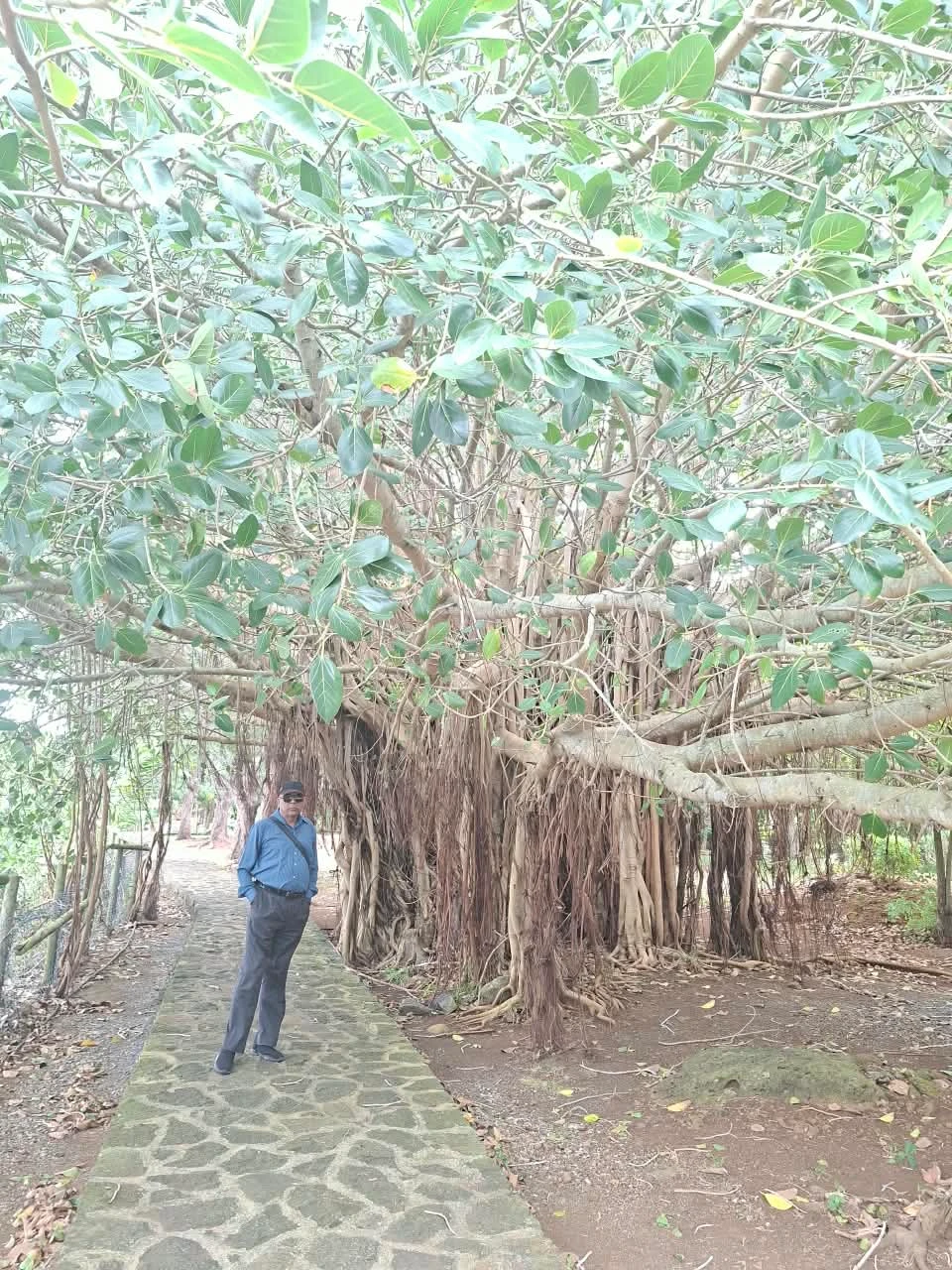
Winding pathway beneath the canopy of the sacred banyan grove
Sagar Shiv Mandir — Shiva by the Sea
Our visit to Sagar Shiv Mandir at Poste de Flacq was a memorable experience, with the temple set dramatically on the seafront amid the calm waters of the lagoon. The magnificent shrine dedicated to Lord Shiva, with its towering statue rising above the landscape, created a striking sight against the Indian Ocean. We spent some peaceful moments here, taking in the beautiful surroundings and the spiritual atmosphere. The combination of Shiva, sea and sky made this one of the most distinctive Hindu temples we visited in Mauritius.
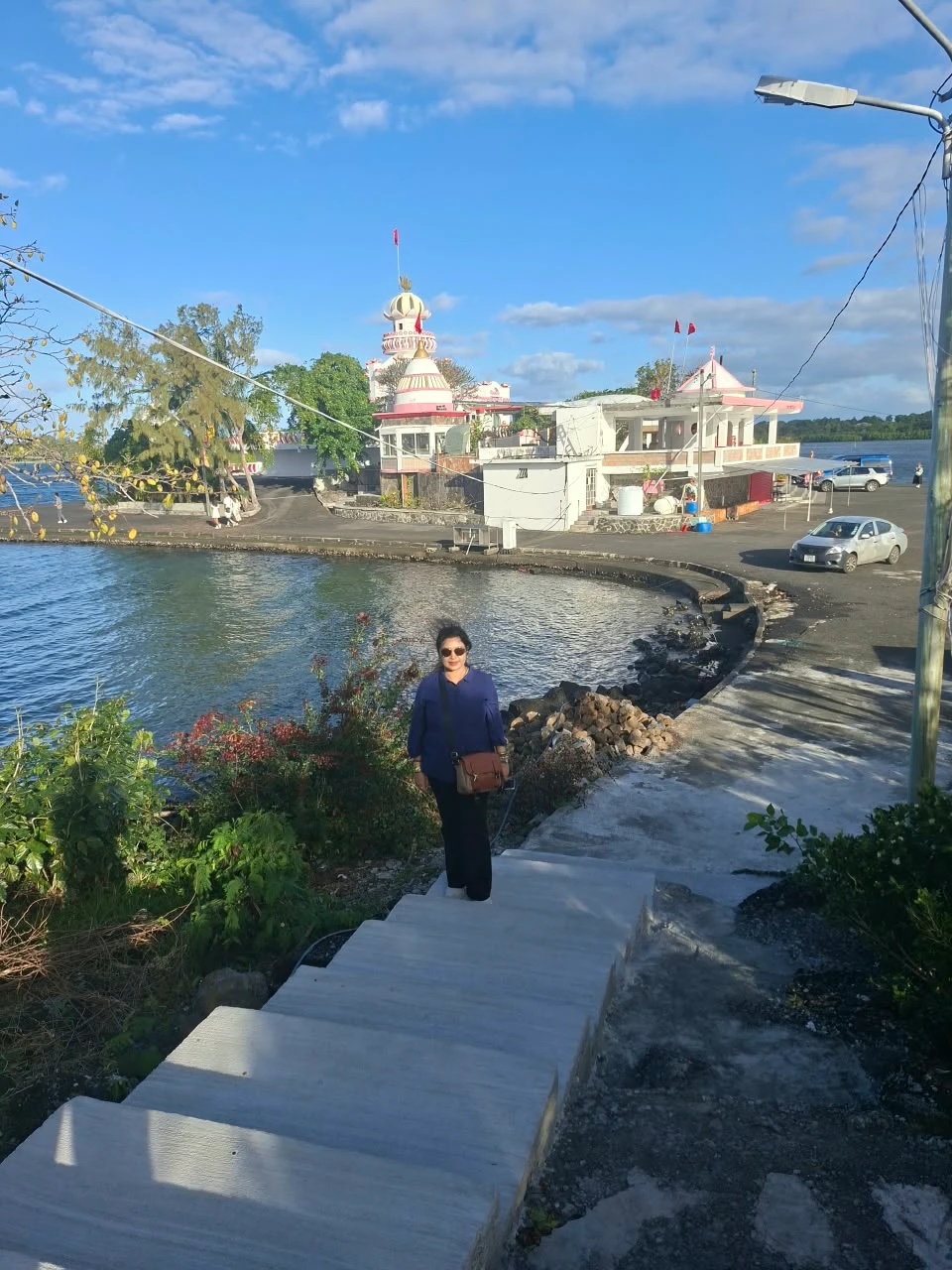
Causeway leading across the lagoon to Sagar Shiv Mandir
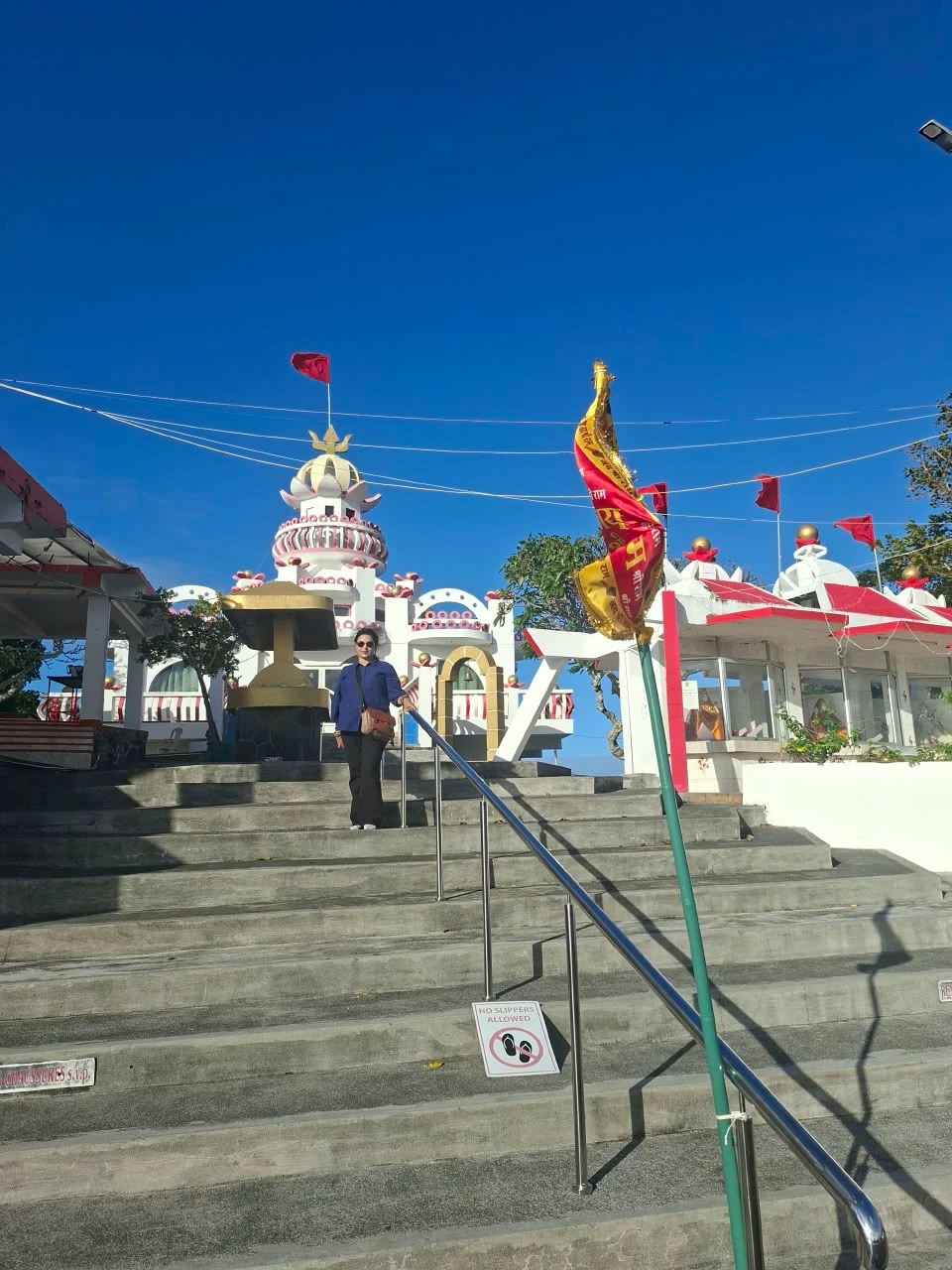
Grand temple steps leading to the oceanfront mandir
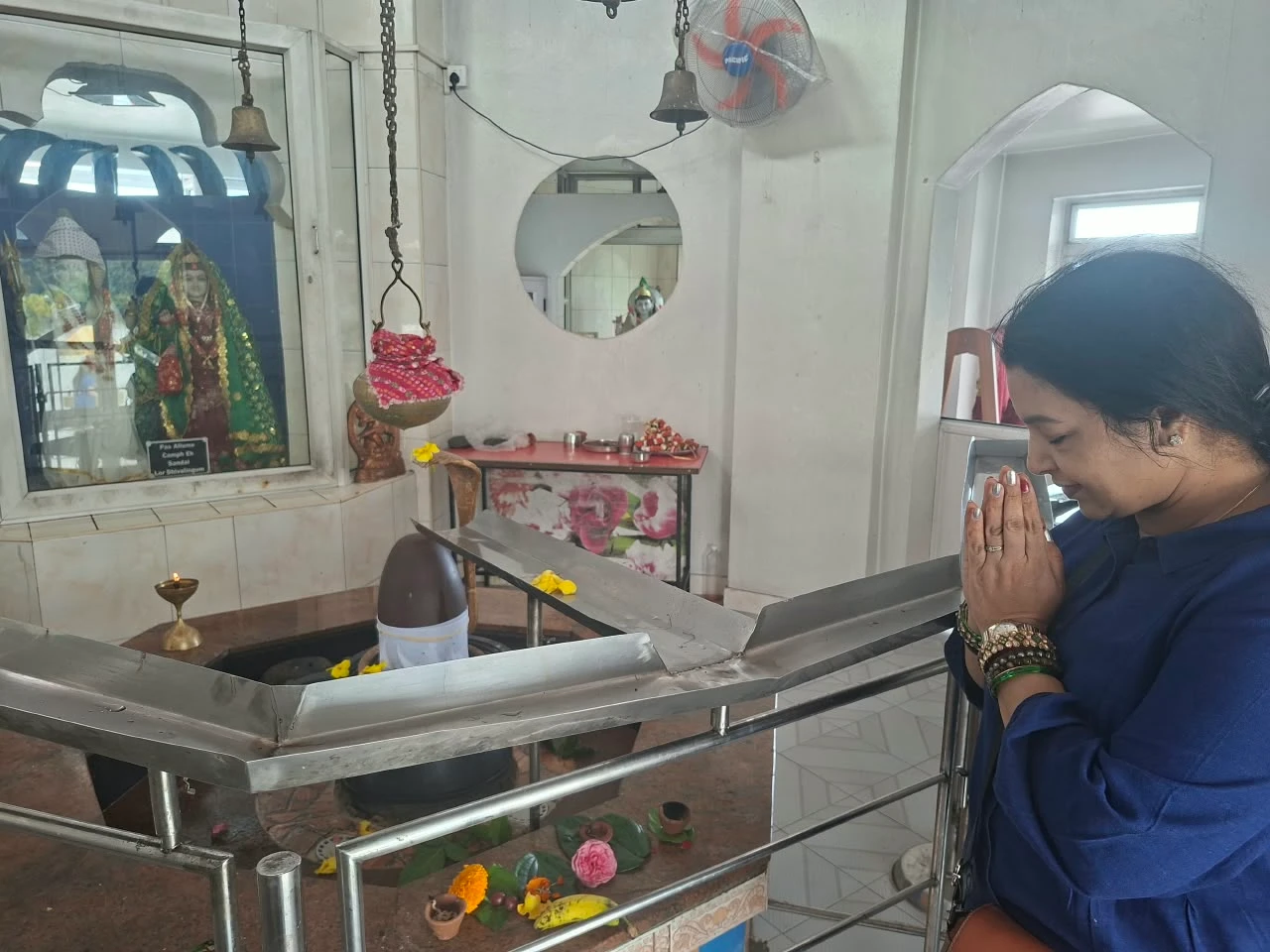
Devotees offering prayers before the sacred Shiva Lingam
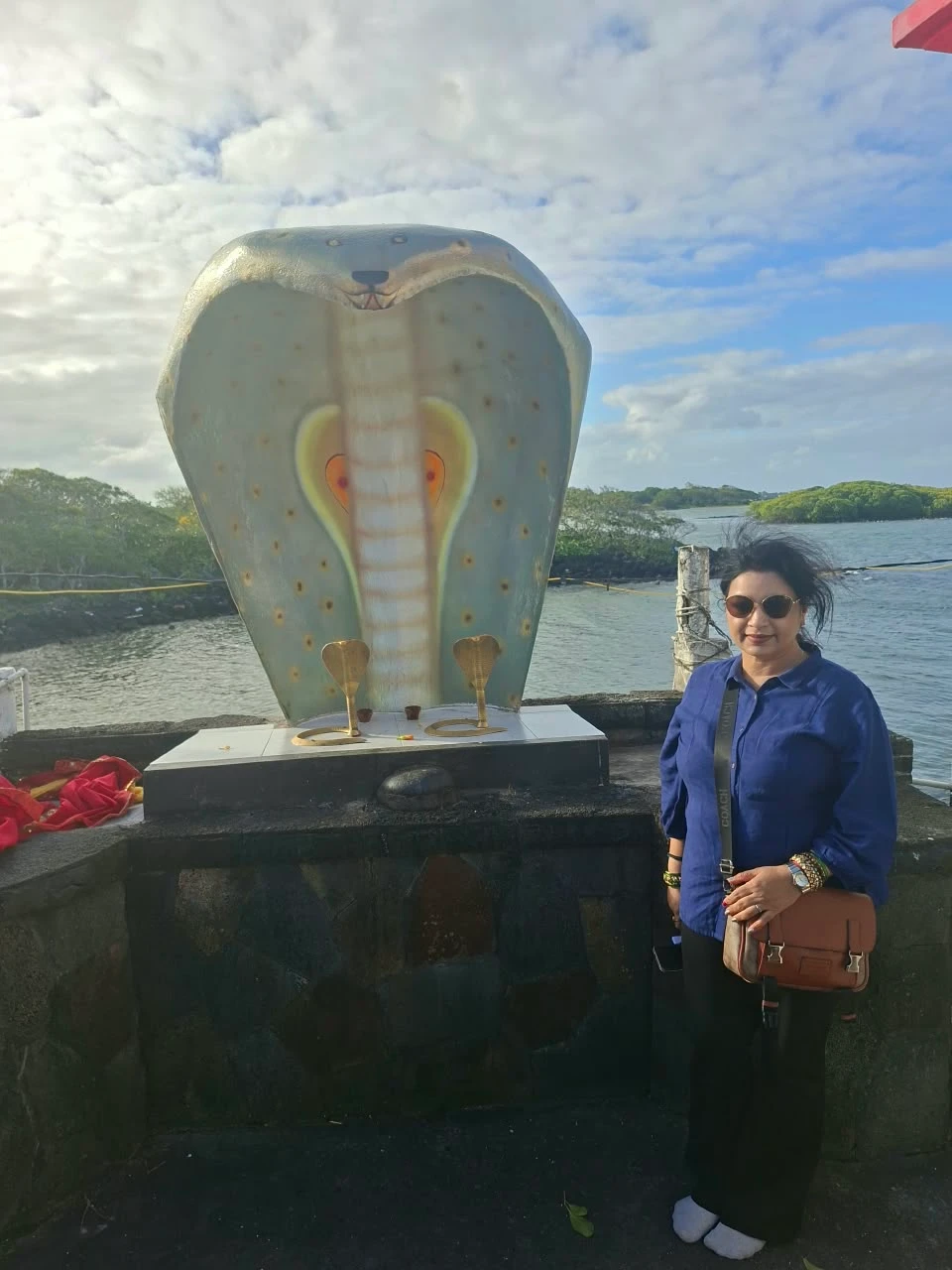
Sheshanaga cobra shrine overlooking the calm ocean waters
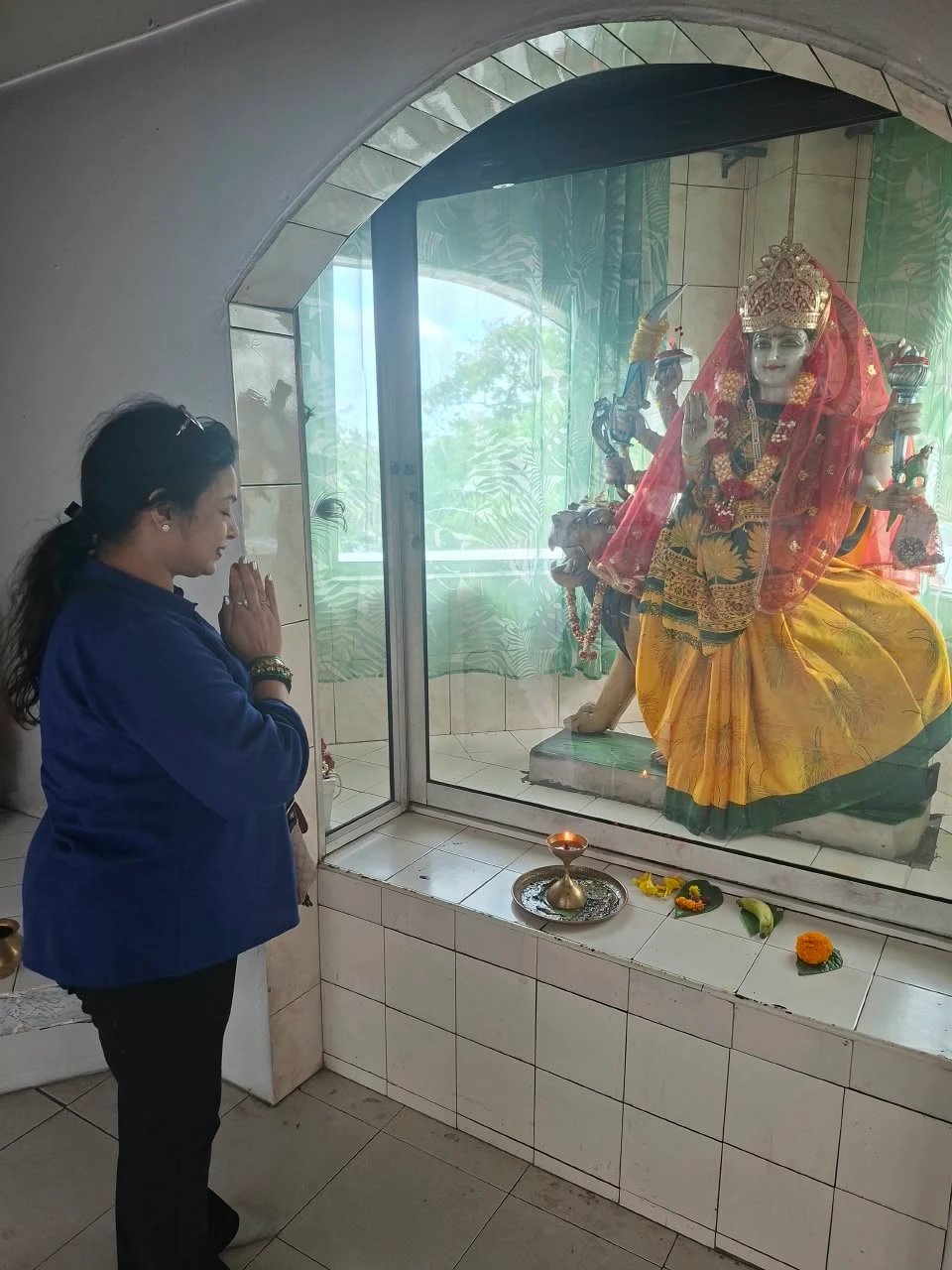
Sherawali Mata shrine adorned with devotional offerings
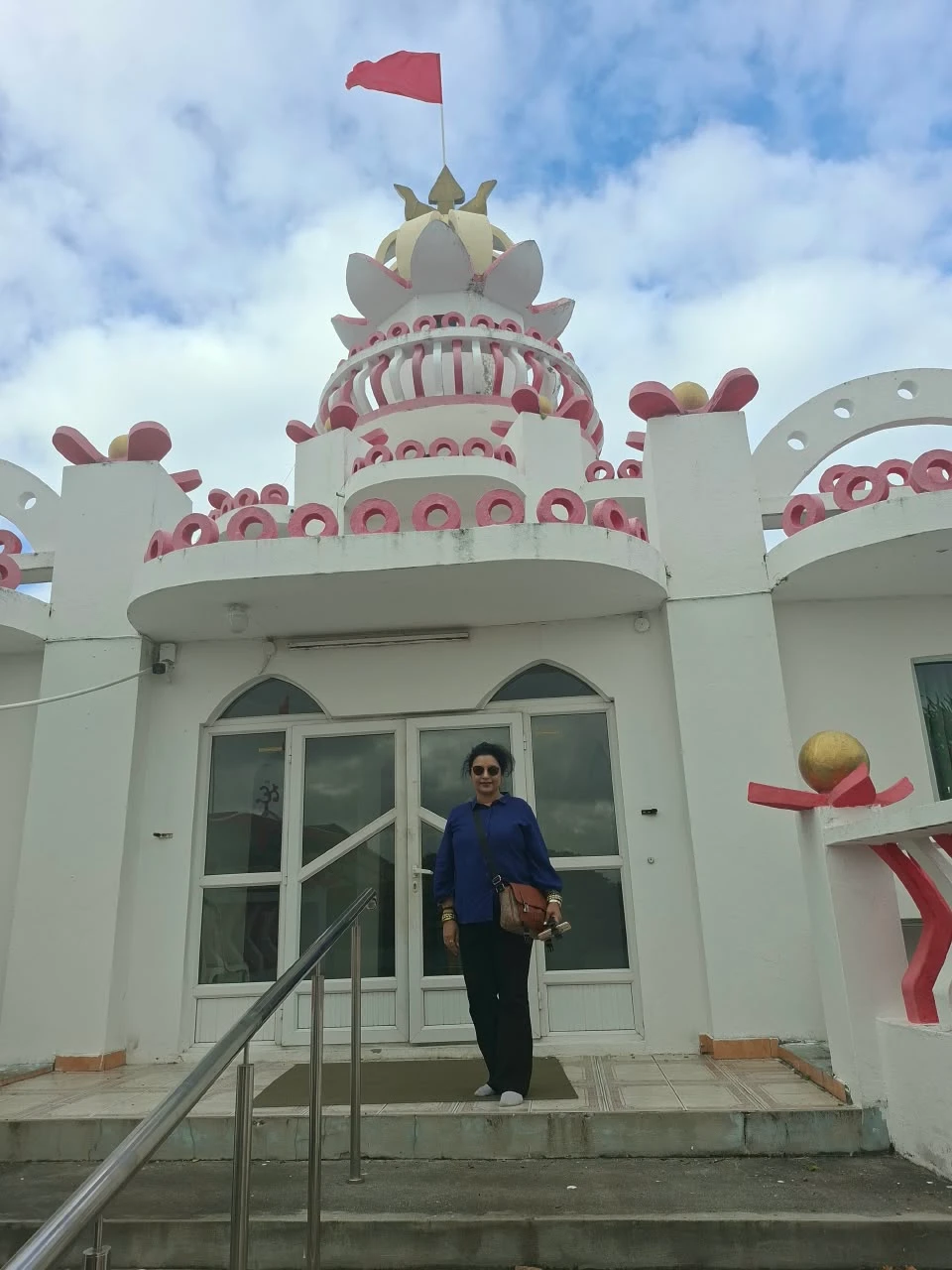
Distinctive lotus dome and ornate temple gateway
Maa Kali Pooja — Faith Amid the Sugarcane Fields
During our stay in Mauritius, we had the opportunity to attend a Maa Kali Pooja (Bahariya Pooja) in a rural part of the island. The setting was strikingly different from the better-known temples and tourist attractions—we found ourselves surrounded by vast stretches of sugarcane plantations, with the quiet countryside forming a natural backdrop to the celebrations. The function was exceptionally well organised, with devotees coming together for prayers, rituals and Mahaprasad. Sitting amidst the rural landscape and witnessing the community preserve its Hindu traditions so far from India gave us a special glimpse into the living cultural heritage of the island.
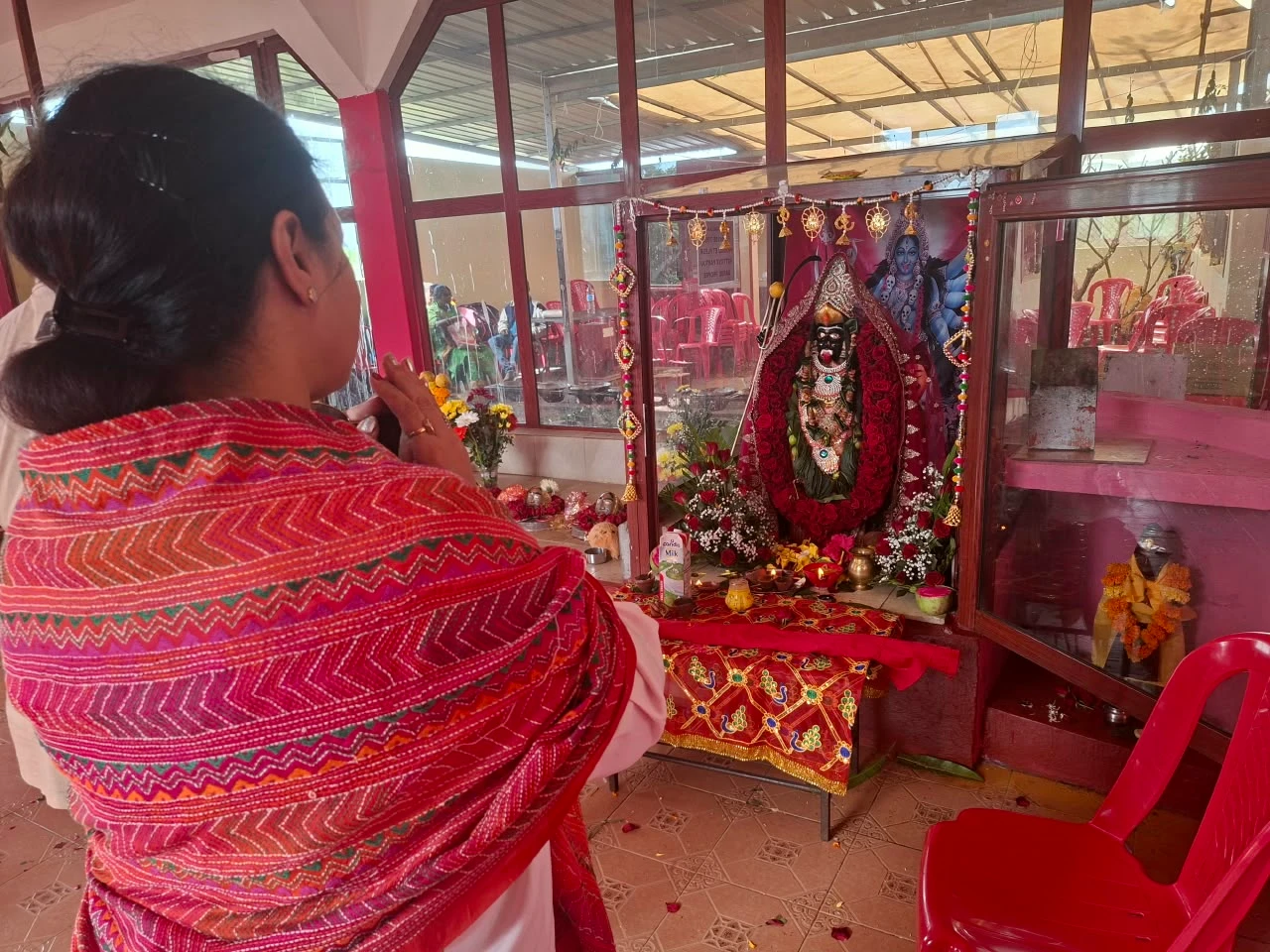
Maa Kali adorned with fresh garlands during the Bahariya Pooja
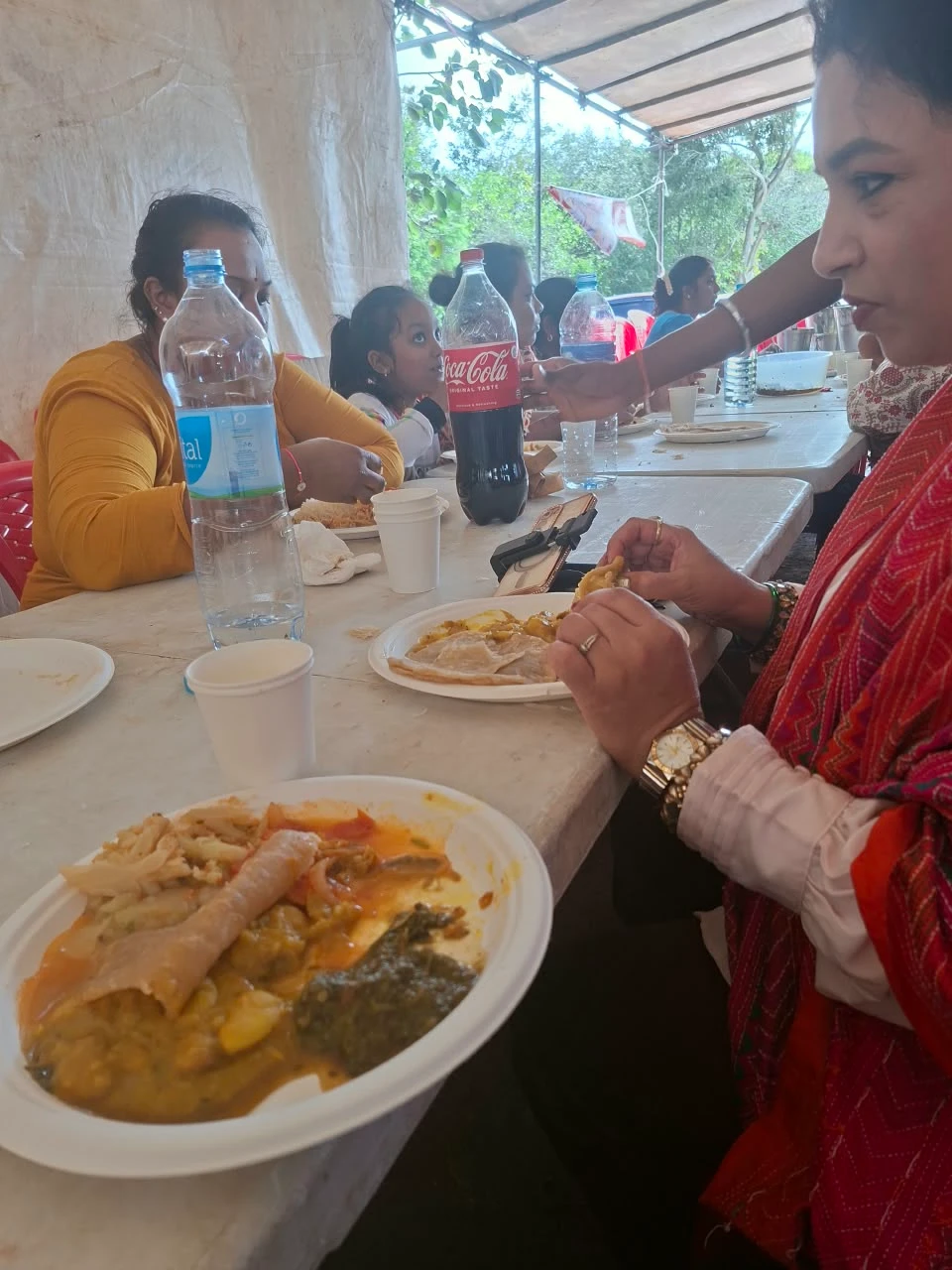
Sharing community Mahaprasad in the Mauritian countryside
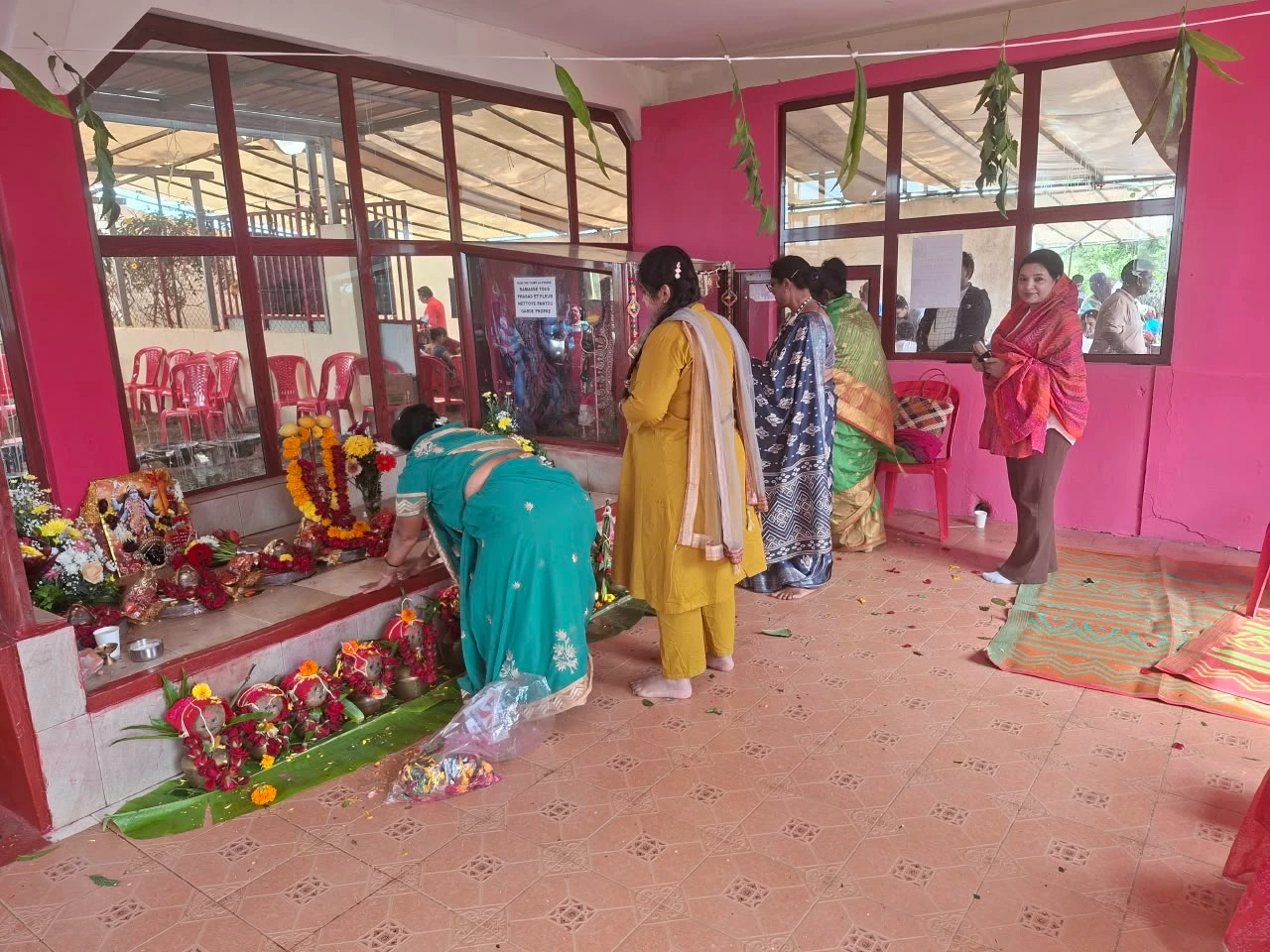
Community members preparing traditional offerings amidst sugarcane fields
Hindu Mandir on the Mahébourg Waterfront
The small Hindu Mandir on the Mahébourg waterfront is one of the quiet religious landmarks of this historic coastal town. Its simple red-and-white architecture, the Om symbol above the shrine and the deity protected behind glass give it the character of a modest community temple rather than a large ceremonial complex.
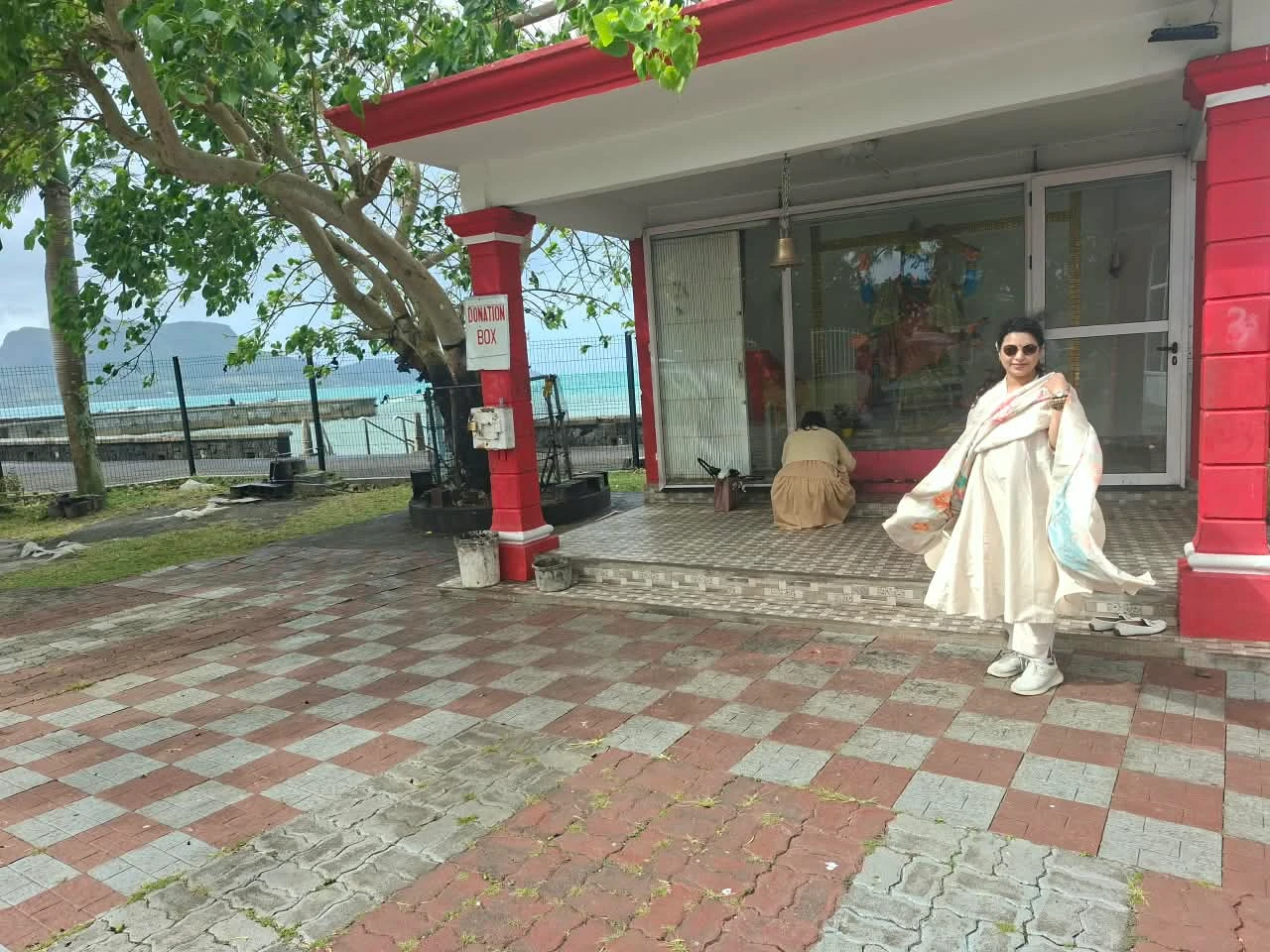
Temple courtyard opening directly onto the Mahébourg bay
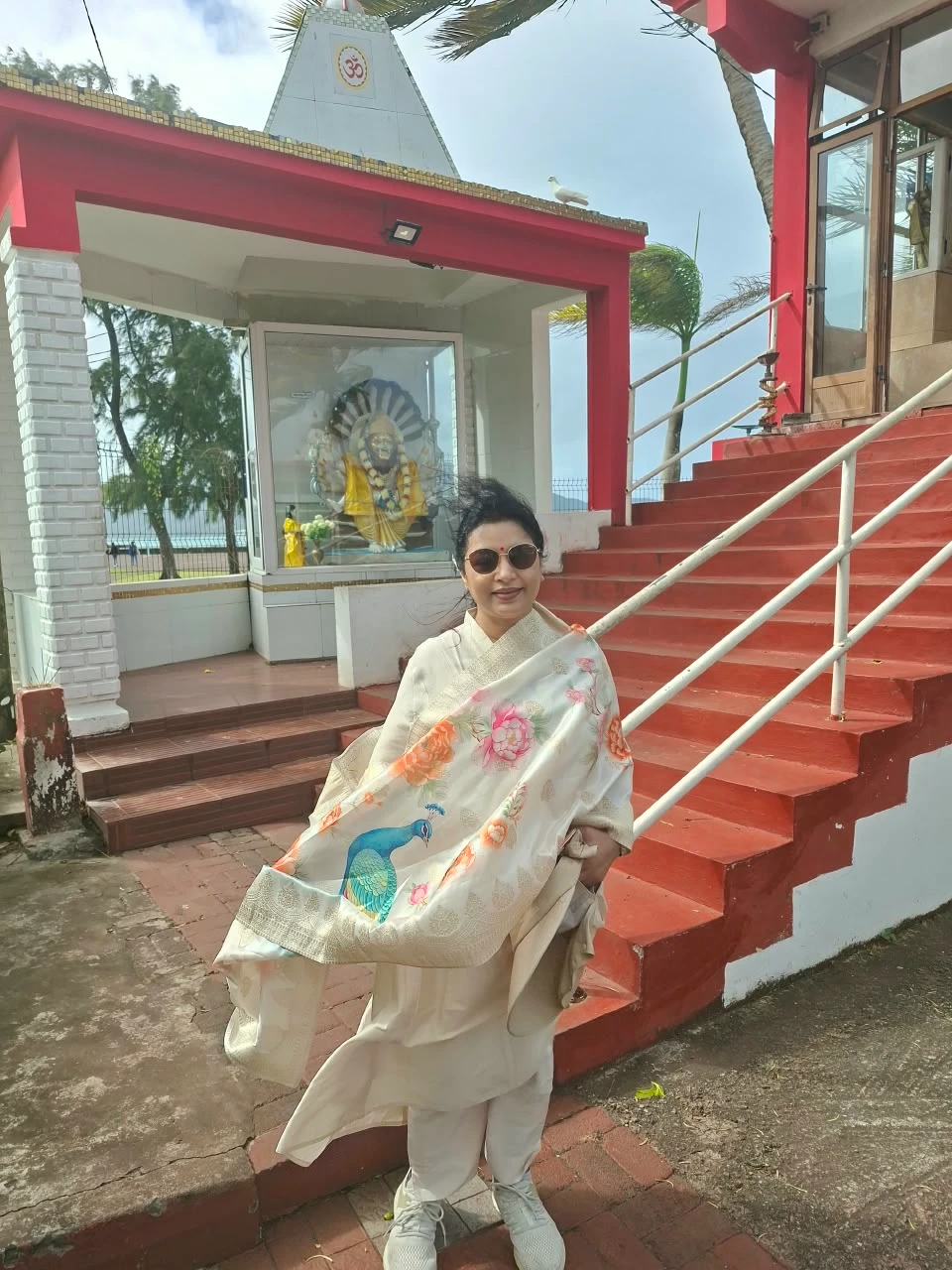
Red-and-white Hindu Mandir on the Mahébourg waterfront
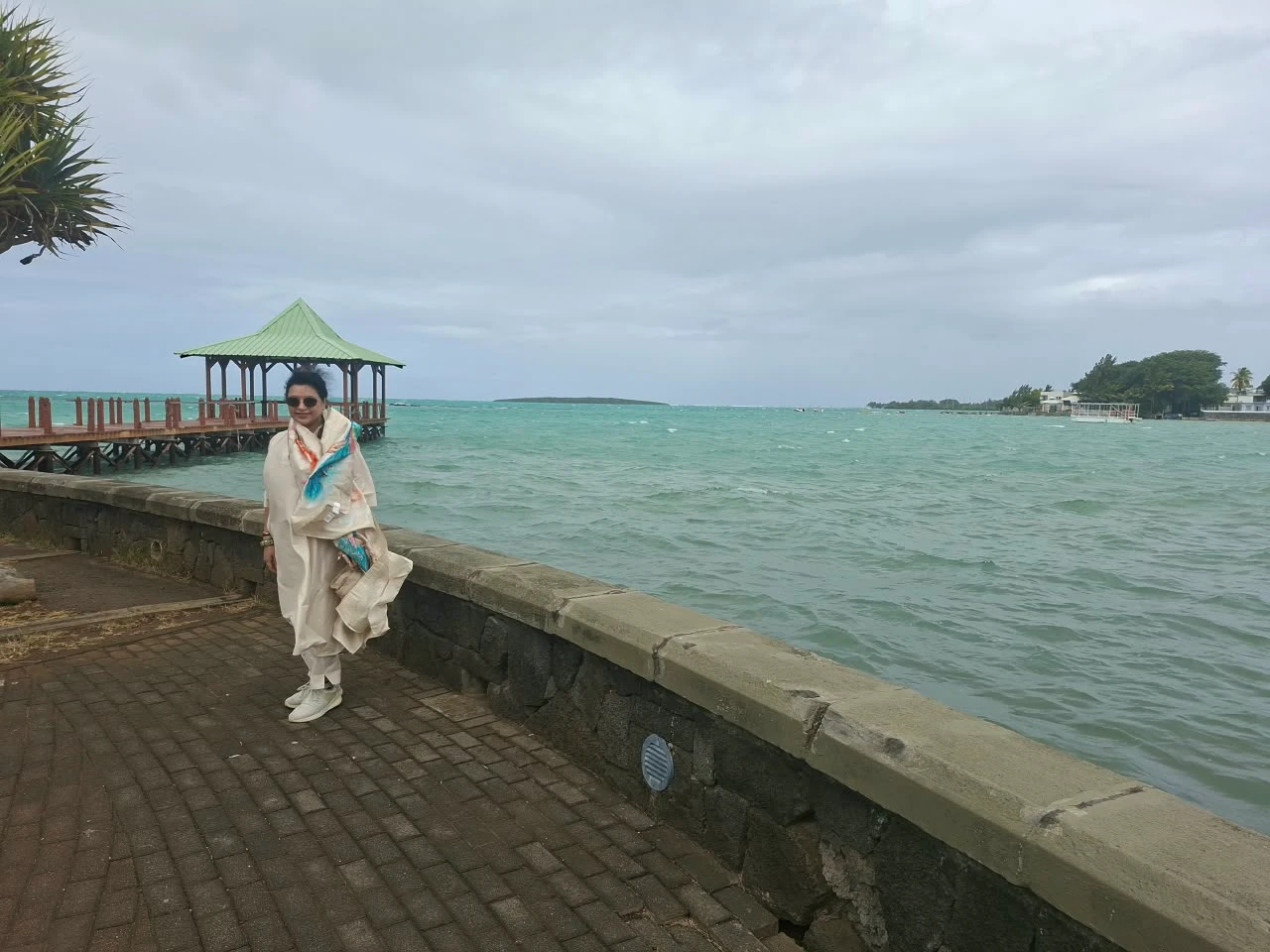
Waterfront promenade along the historic coast of Mahébourg
Practical Tips for Visiting Temples in Mauritius
To fully experience the sacred sites of Mauritius without feeling rushed, thoughtful planning is essential.
Logistics & Bases
Establish Two Bases
Split your stay to cover the island comfortably. We stayed in Grand Baie (North) to explore coastal Kovils like Cap Malheureux and Grand Baie, and Flic en Flac (West/South) for easy access to Sagar Shiv Mandir, rural shrines, and southern temples.
Getting Around
Rent a car for full flexibility to linger at serene spots like Pointe des Lascars, or hire a local driver for a stress-free experience navigating country roads and rural sugarcane fields.
Temple Etiquette
Dress modestly (cover shoulders and knees in light cottons).
Remove shoes before entering sacred grounds.
Maintain silence during prayers and rituals.
Ask permission before taking photographs.
Do not touch idols or sacred objects unless invited.
Accept prasad graciously with your right hand.
Remember: These are living places of community faith, not just tourist sights.
TRAVELLING THROUGH THE TIMELESS LEGACY OF INDIAN CIVILIZATION ACROSS ASIA AND BEYOND
Back to Mauritius Gateway→CONTINUE THE MAURITIUS JOURNEY
Journey Through the Sacred Monuments of Mauritius
Practical Insights & Heritage Context
What are practical tips for visiting temples in Mauritius?
Establish Two Bases: Split your stay to cover the island comfortably. We stayed in Grand Baie (North) to explore coastal Kovils like Cap Malheureux and Grand Baie, and Flic en Flac (West/South) for easy access to Sagar Shiv Mandir, rural shrines, and southern temples. Getting Around: Rent a car for full flexibility to linger at serene spots like Pointe des Lascars, or hire a local driver for a stress-free experience navigating country roads and rural sugarcane fields. Dress modestly (cover shoulders and knees in light cottons). Remove shoes before entering sacred grounds. Maintain silence during prayers and rituals. Ask permission before taking photographs. Do not touch idols or sacred objects unless invited. Accept prasad graciously with your right hand. Remember: These are living places of community faith, not just tourist sights.