
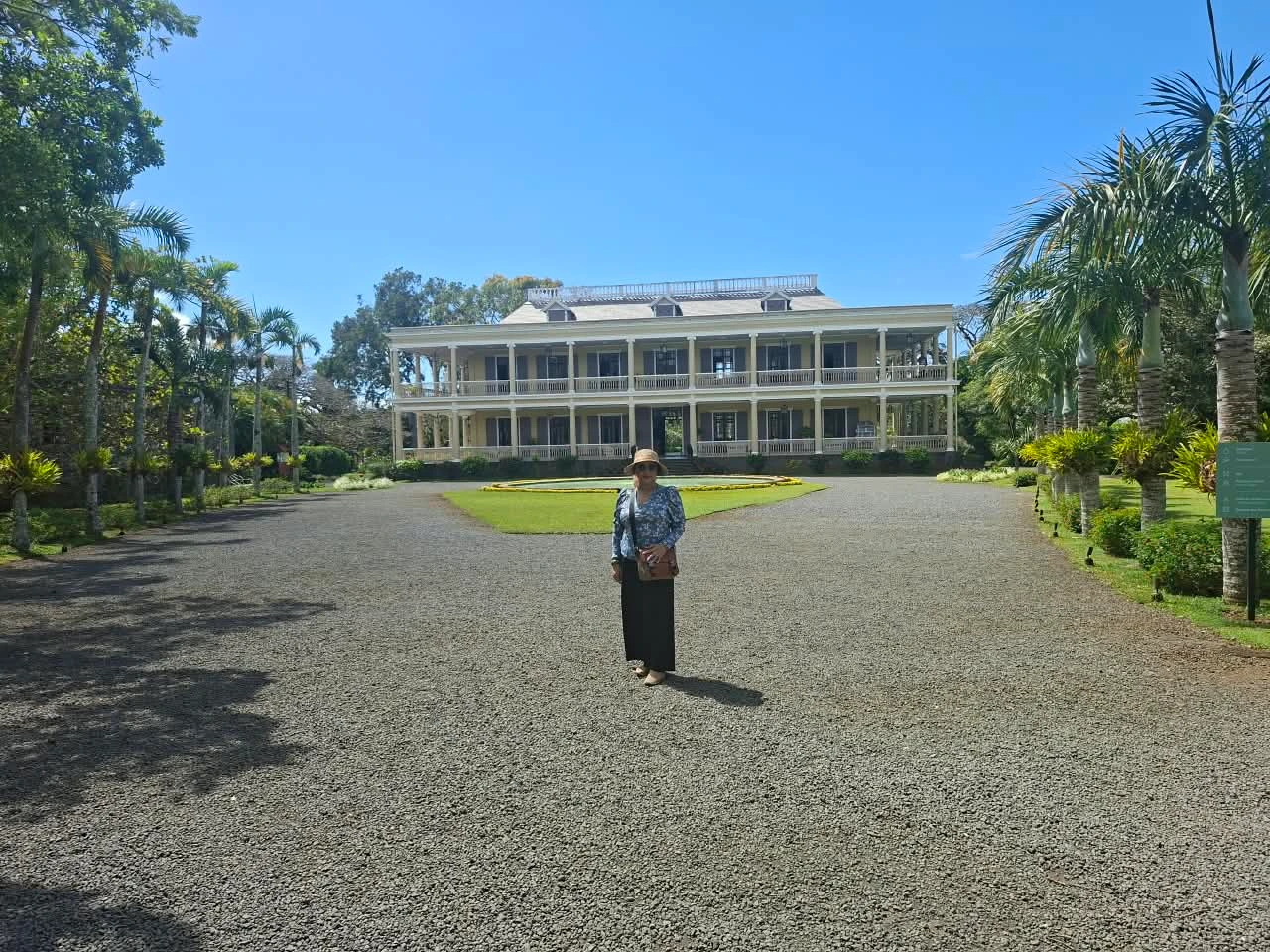
Mauritius — Château, sugarcaneand the Indian indentured labourers.
Château de Labourdonnais — Two Worlds of the Sugar Economy
We took a day trip from Grand Baie to Château de Labourdonnais, a historic 19th-century colonial mansion in Mapou, to understand the contrasting worlds behind Mauritius’s sugar economy—the European plantation owners who controlled the estate and sugar production, and the Indian indentured labourers whose hard work sustained the industry. Seeing the château helped us connect the grandeur of the plantation era with the very different lives of the workers who made it possible.
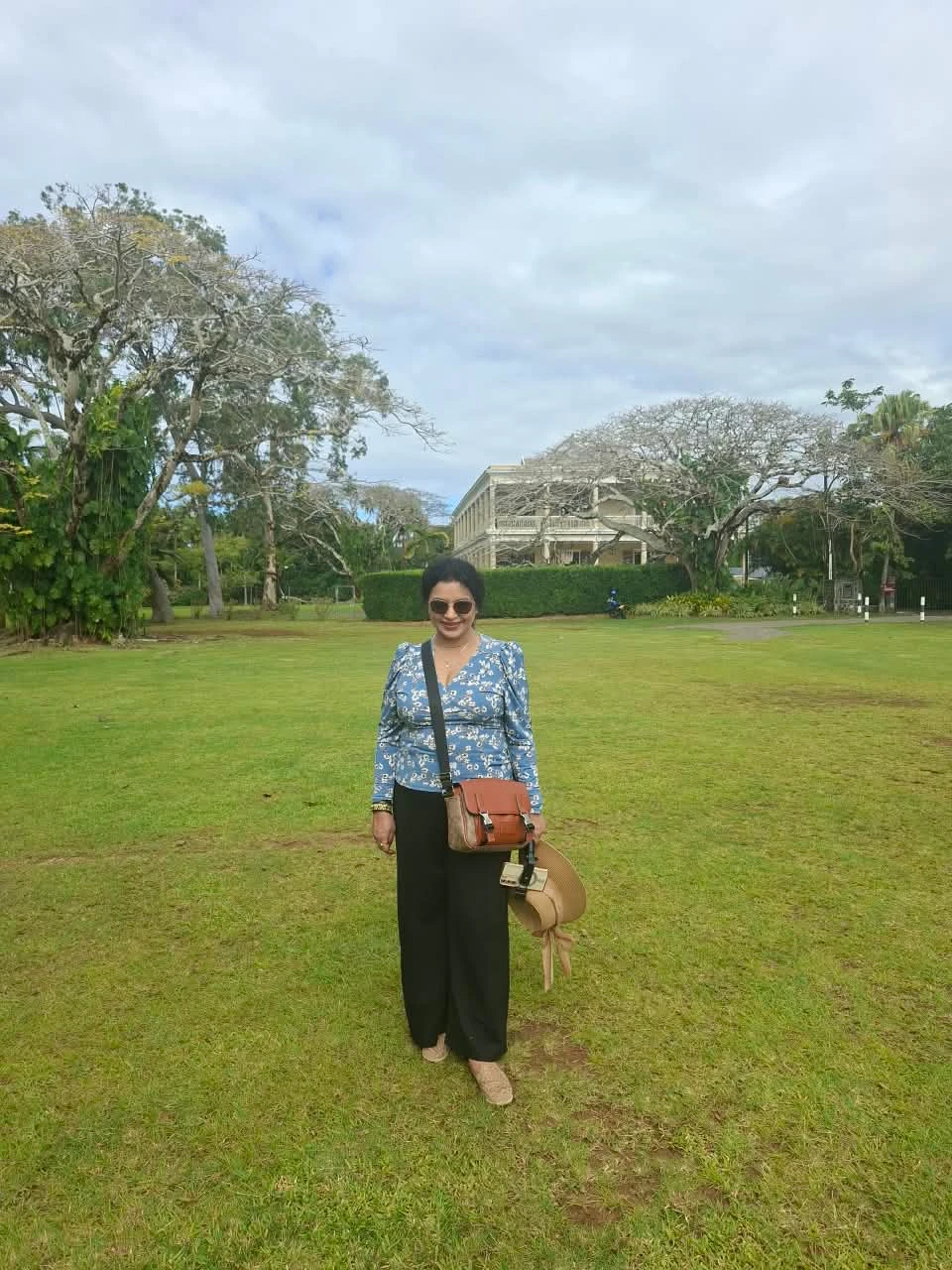
Expansive estate grounds and century-old parkland of Château de Labourdonnais
Entering a World of Colonial Grandeur
As we entered Château de Labourdonnais, the elegance of the 19th-century mansion immediately caught our attention. The graceful architecture, beautifully furnished rooms, gardens and carefully maintained grounds conveyed the lifestyle of the European plantation elite. It was difficult not to admire the beauty and sophistication of the estate, yet the grandeur also made me wonder about the very different lives of the people who worked beyond its walls.
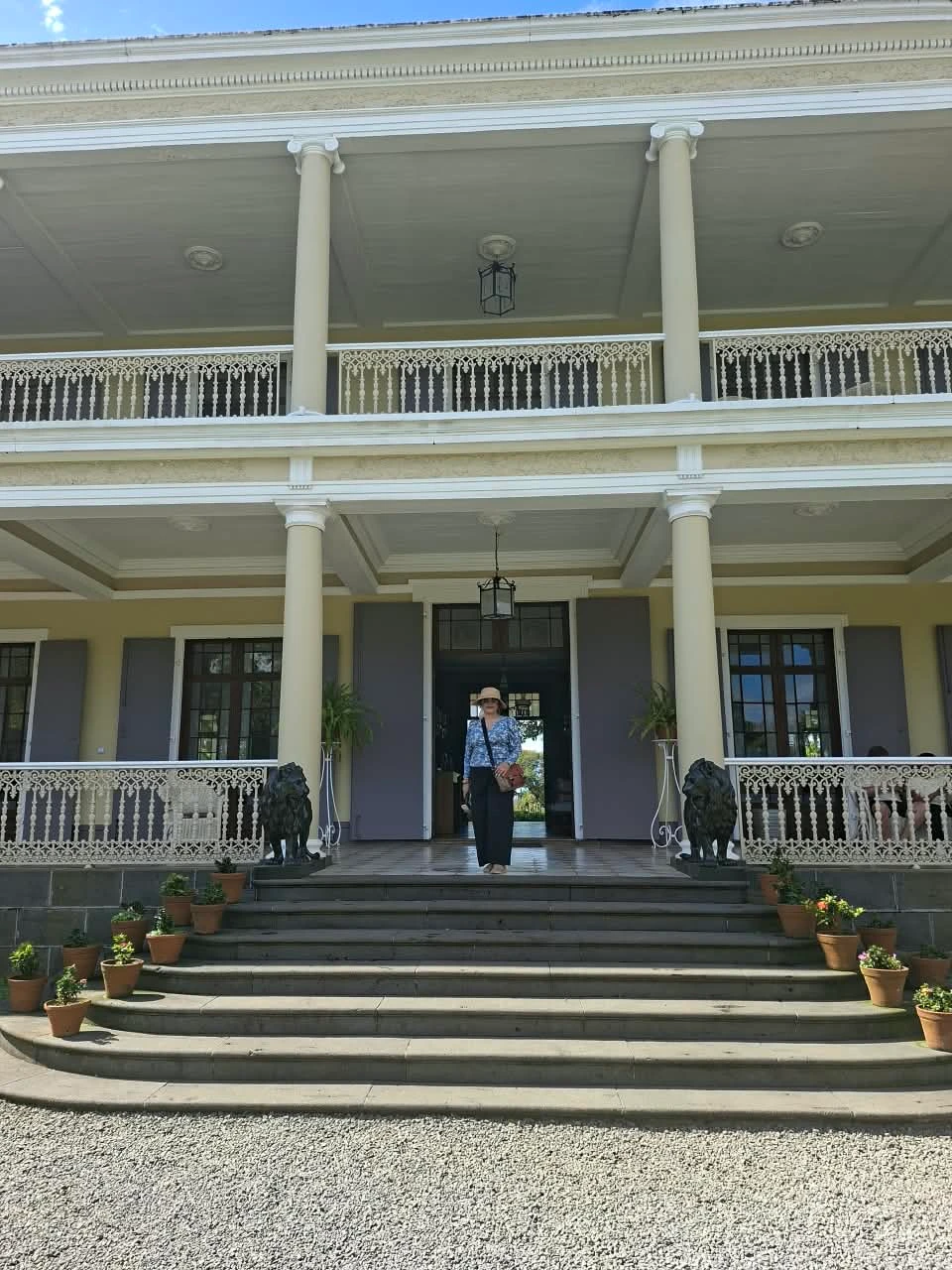
Symmetrical stone staircase and classical colonnade entrance
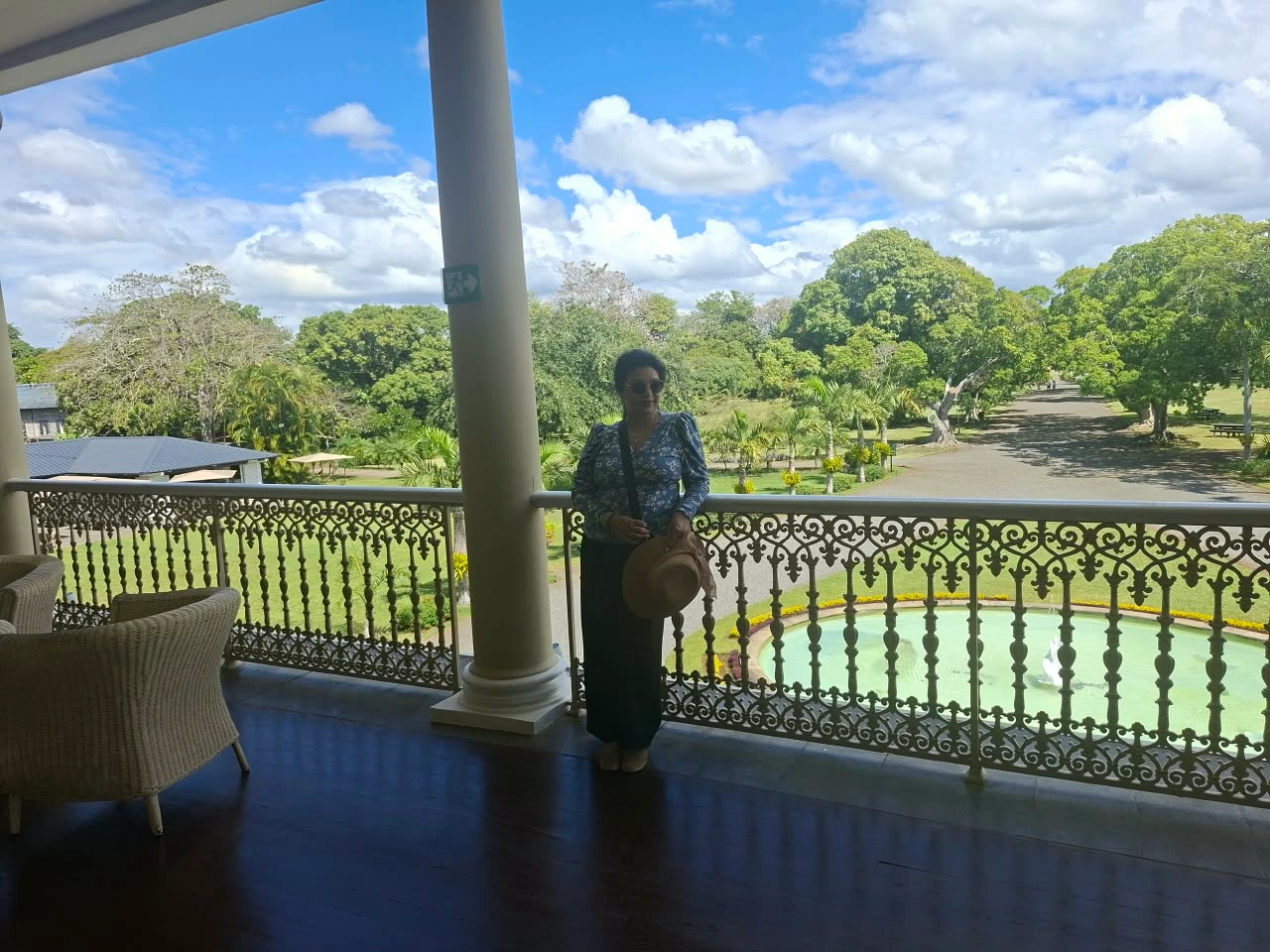
Upper veranda overlooking the ornamental courtyard and avenue
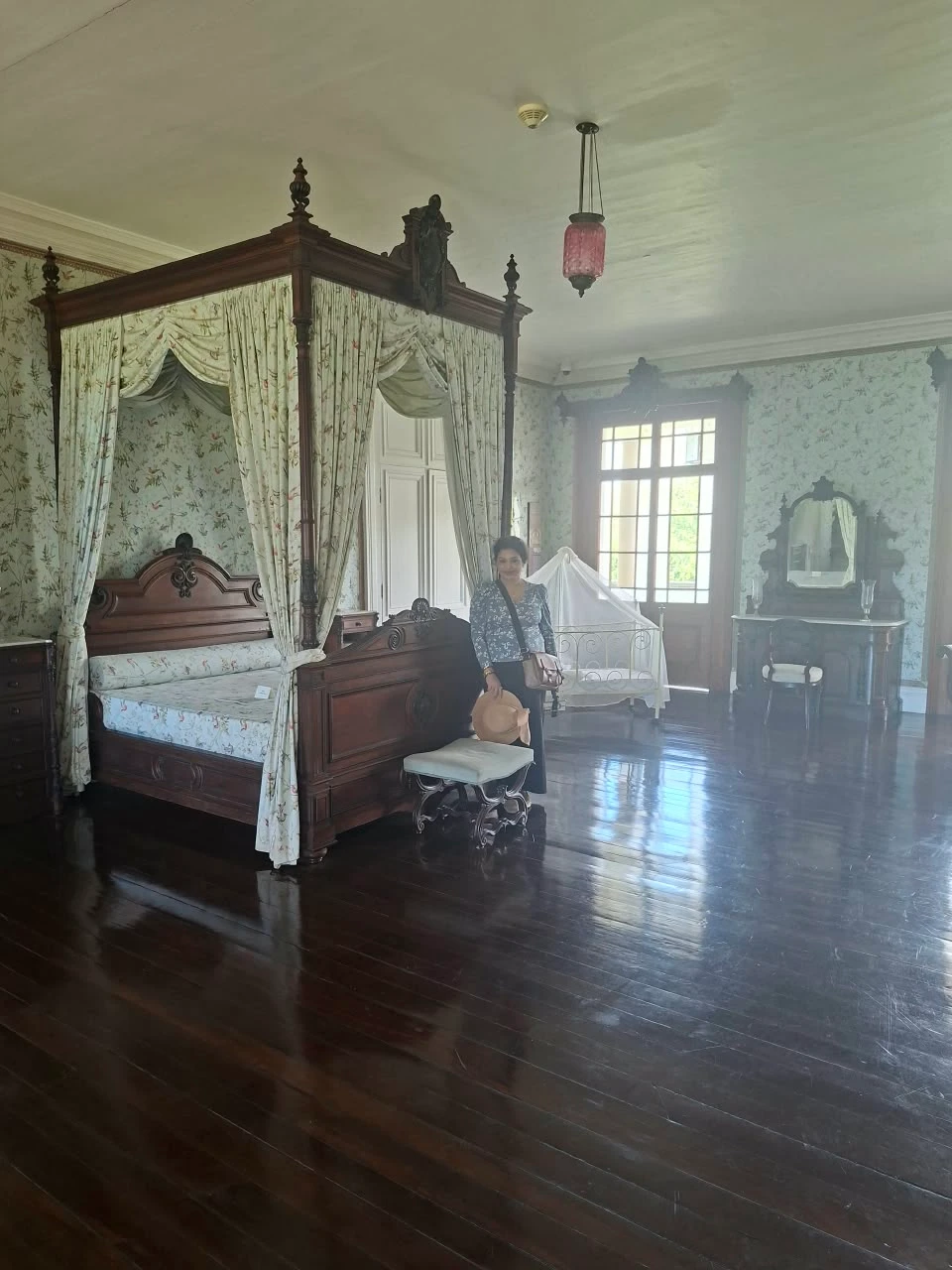
Master bedroom suite reflecting the colonial lifestyle of the plantation owners
The Layout of Château de Labourdonnais
Château de Labourdonnais is a graceful 19th-century plantation mansion set within an expansive estate. The elegant main house, with its spacious verandas and symmetrical colonial design, opens into a series of period rooms—reception areas, living rooms, dining room and private quarters—furnished to reflect the lifestyle of the plantation family. Walking through these rooms, we could sense the refinement and European character of the household.
Beyond the château, the landscaped gardens, avenues, orchards and surrounding sugarcane estate extend the experience into the tropical outdoors. The contrast was striking: the château represented the comfort and opulence of the plantation owners, while the fields beyond represented the demanding agricultural world that sustained the estate. For us, the layout itself seemed to tell the story of two very different worlds connected by Mauritius's sugar economy.
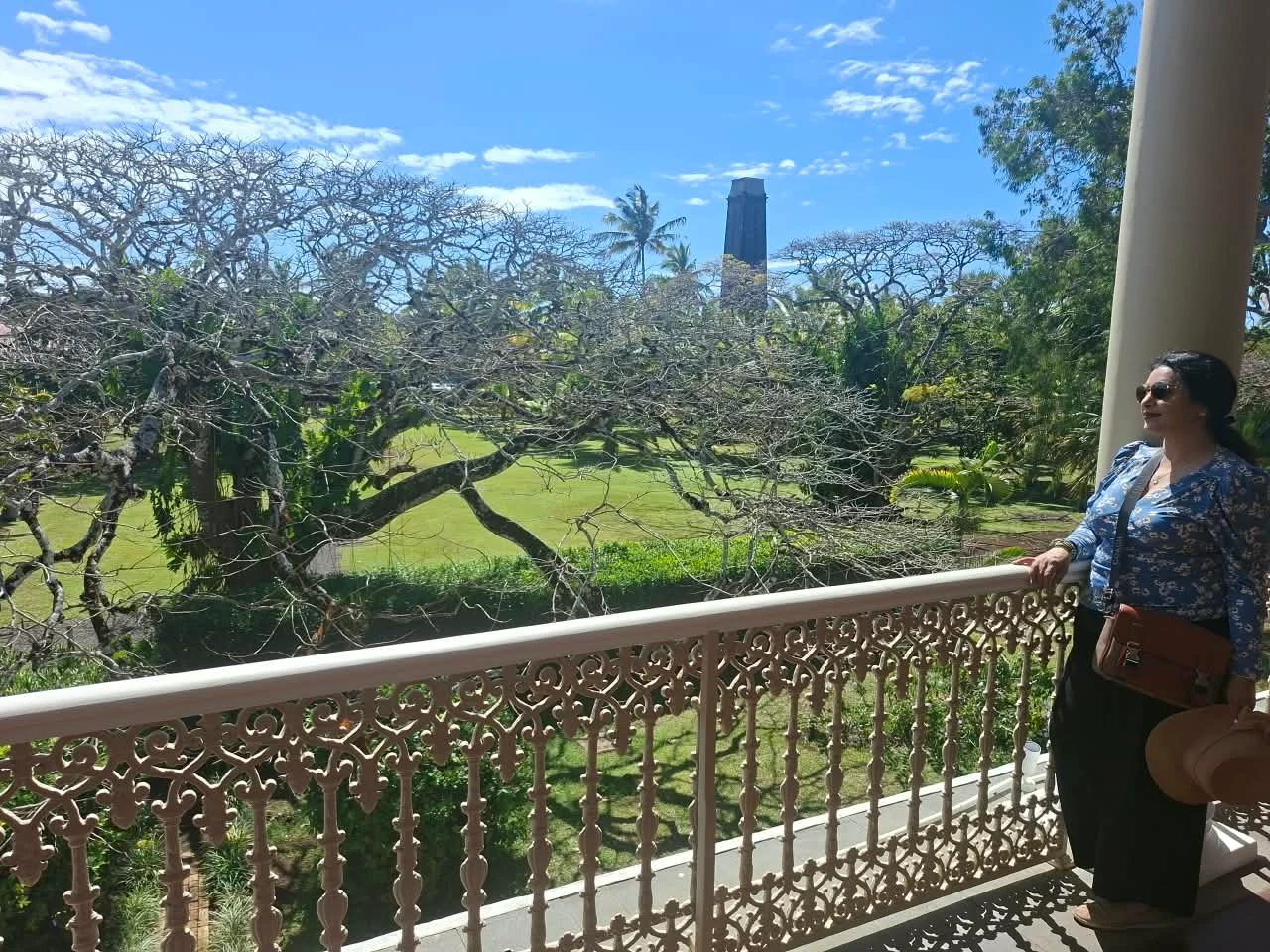
View from the veranda towards the historic sugar mill chimney and gardens
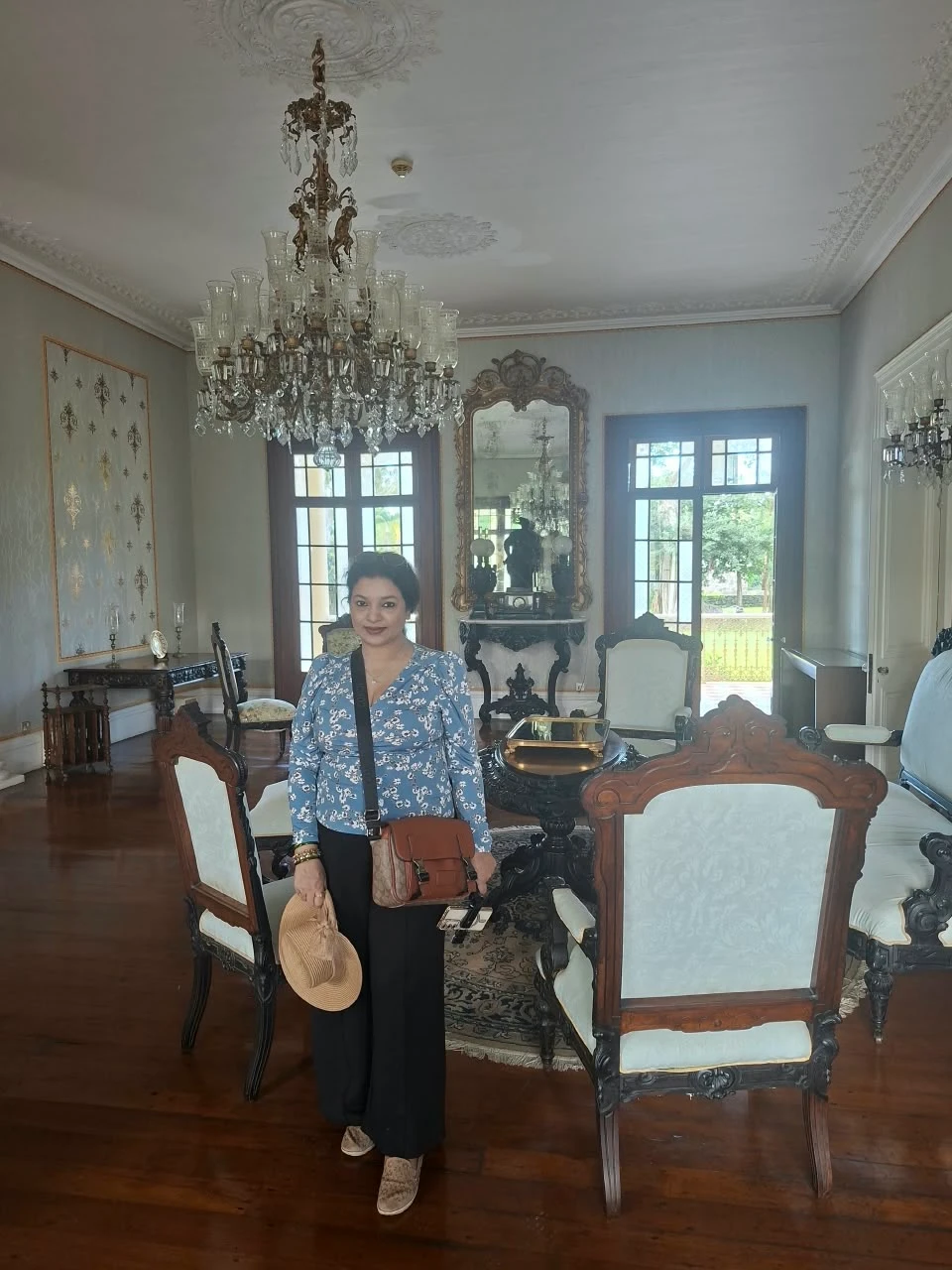
Colonial grand salon appointed with period furnishings and crystal chandelier
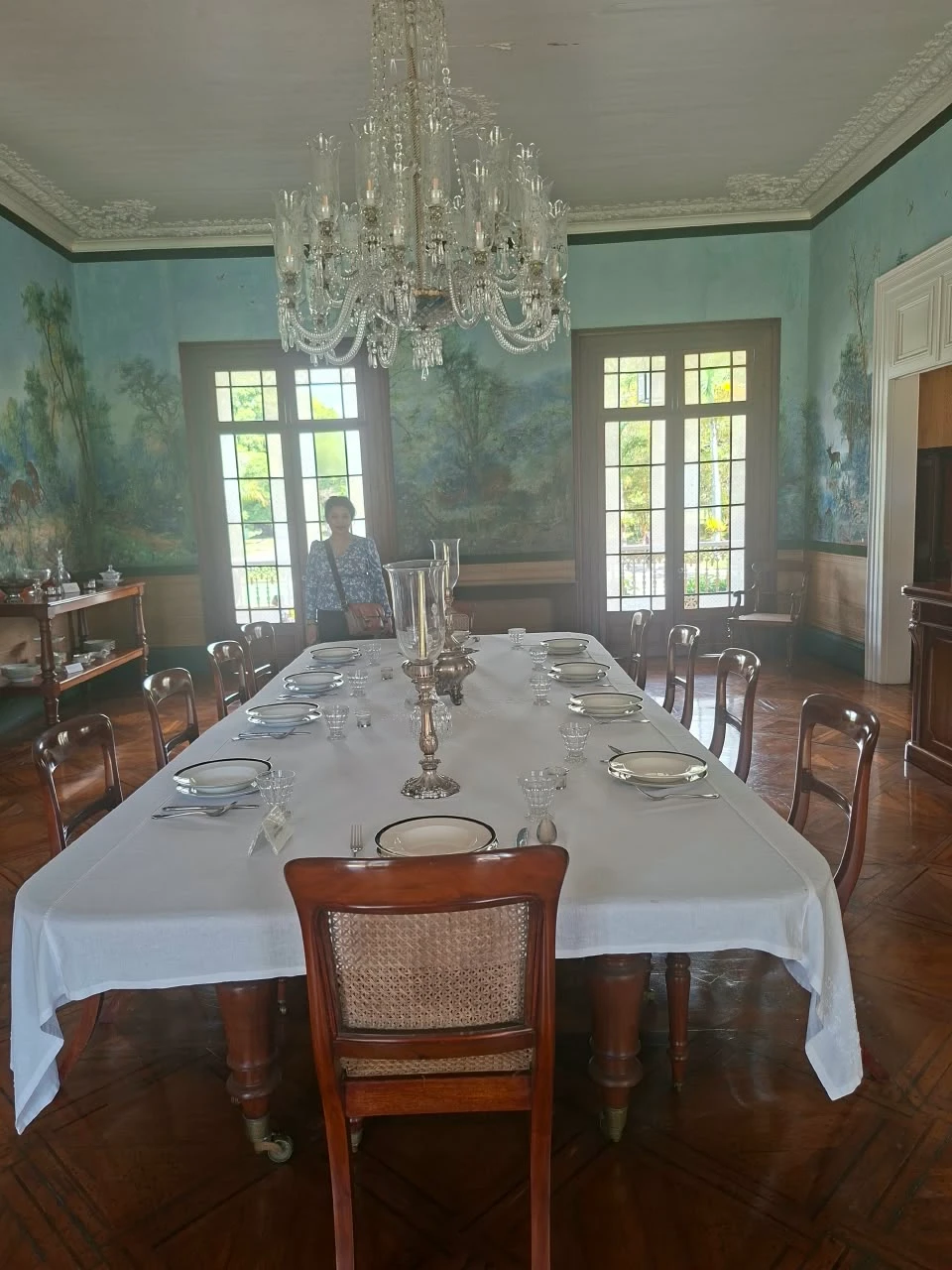
Formal dining room showcasing 19th-century European domestic refinement
The Indian Labourers Behind the Sugar
As we explored the château, my thoughts repeatedly went back to the Indian indentured labourers who arrived in Mauritius after the abolition of slavery. They came from India with little more than their belongings, skills and memories of home, and many spent their working lives in the sugar plantations. Their contribution is an essential part of Mauritius's history, even though their story is far less visible in the elegant rooms of the plantation estates.
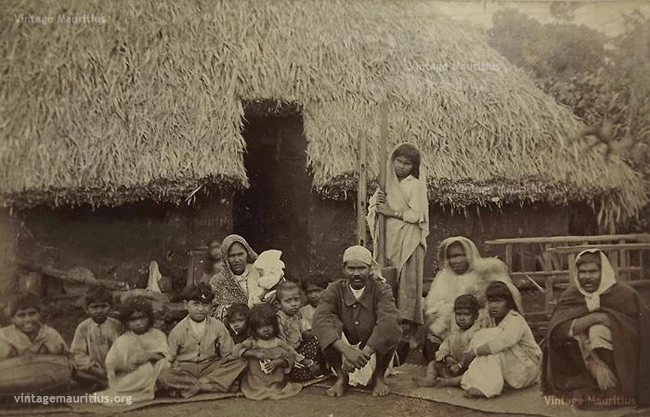
Archival photograph: Indian indentured family outside their modest plantation dwelling
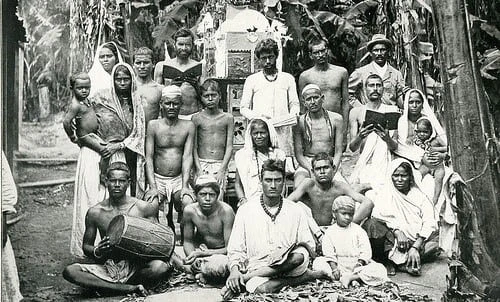
Archival photograph: Preserving faith, songs, and community traditions across the ocean
Life of the Indentured Labourer — From Sugarcane Fields to Sugar Mills
For Indian indentured labourers who came to Mauritius, life largely revolved around the sugar estates, but their work was not limited to cutting cane. Many worked in the fields, where they cleared land, removed rocks, planted cane, weeded, harvested and loaded the crop for transport to the mills. Others worked at the sugar factories, where they helped process the cane; some were employed in skilled or semi-skilled roles such as mechanics, turners, boilers, drivers and messengers. During the harvest and crushing season, the pace became particularly intense because freshly cut cane had to reach the mill quickly. The work was physically demanding, hours could be long, and workers lived under strict plantation discipline. Yet within their modest settlements, they gradually created a new life—cooking familiar food, worshipping their gods, celebrating festivals and preserving traditions brought from India. The fields, transport systems and sugar mills together formed the world of indentured labour, while the communities they built within the estates became the foundation of a lasting Indian presence in Mauritius.
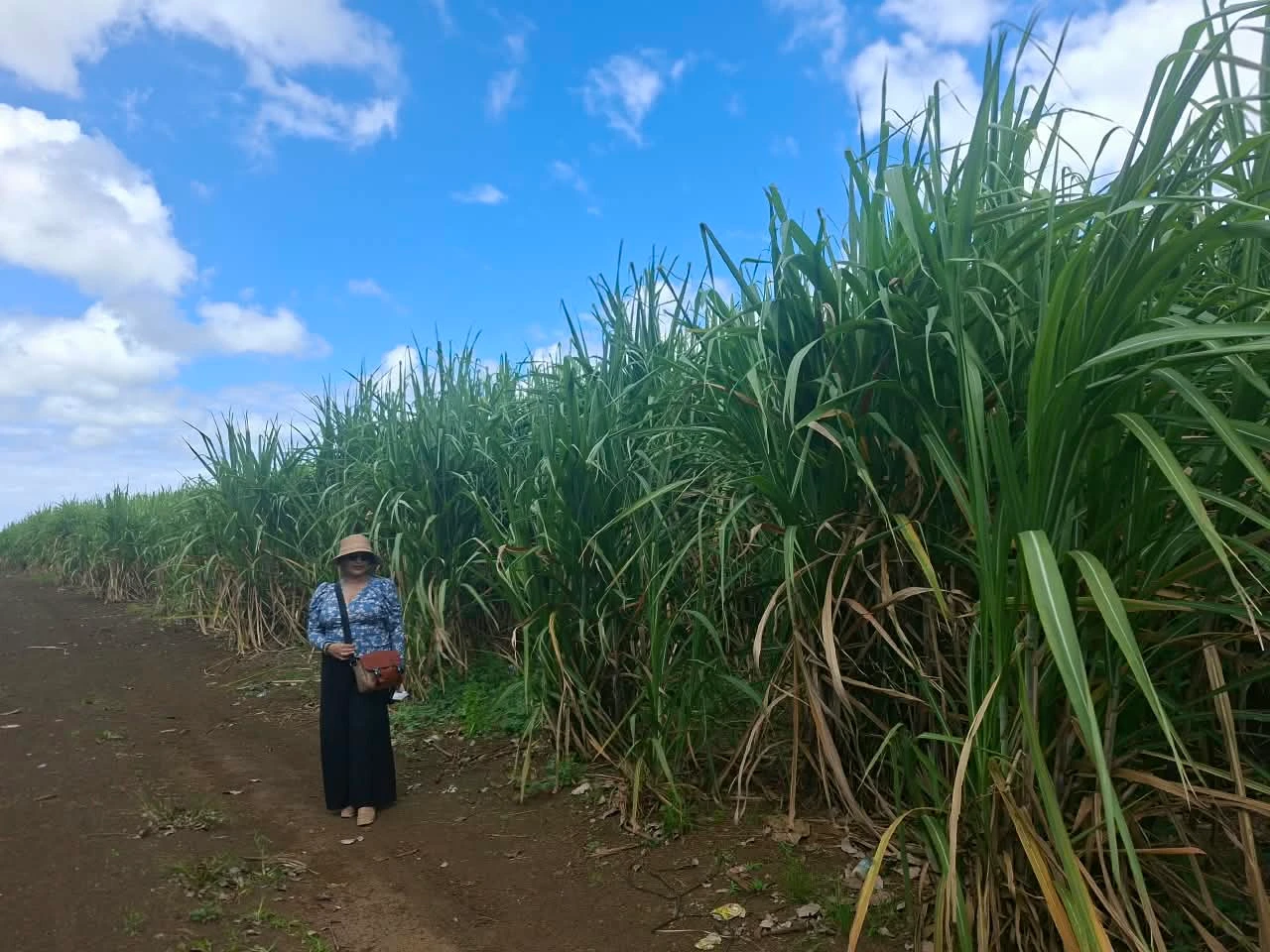
Vast sugarcane fields stretching across the Mauritian countryside
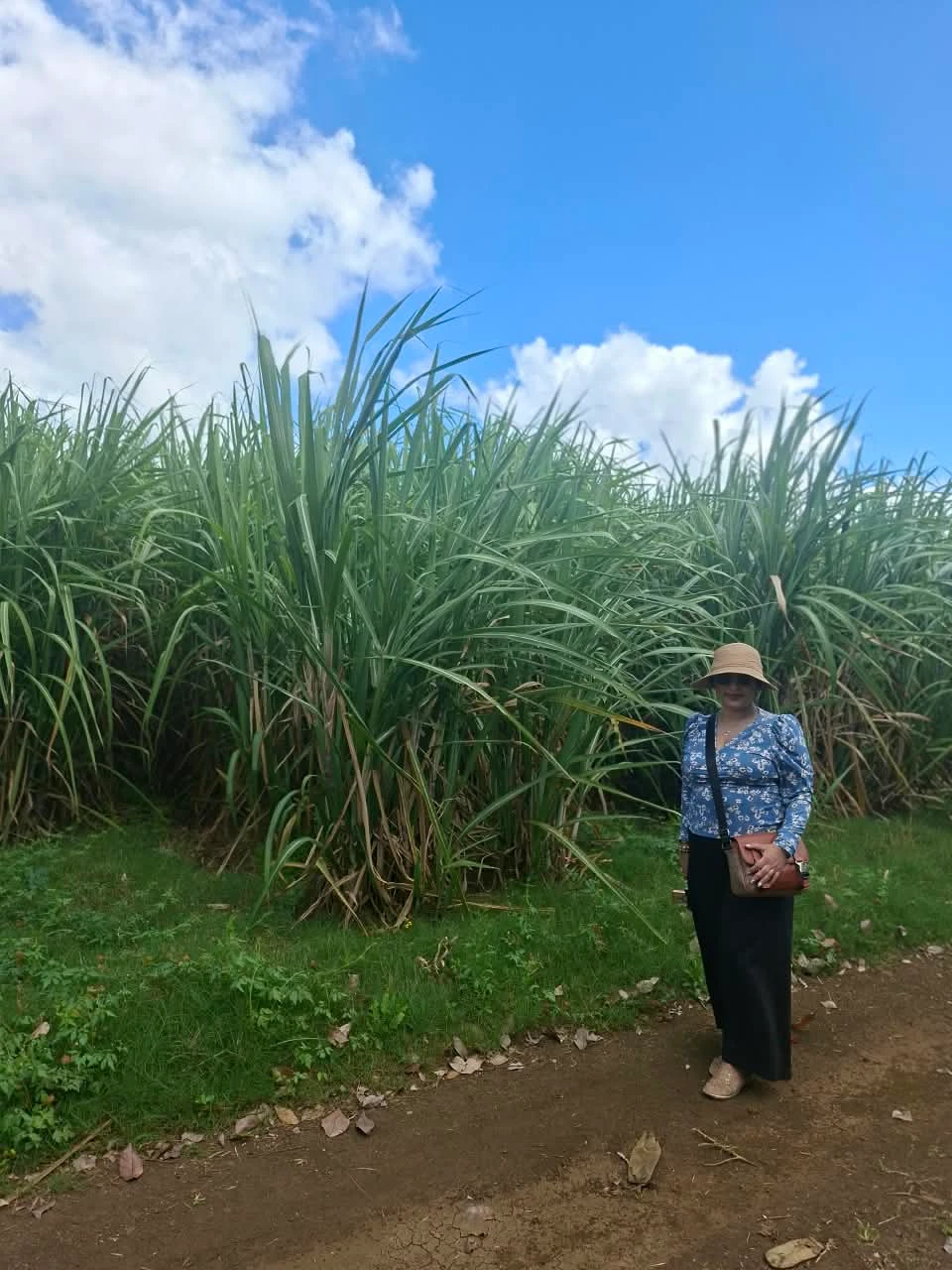
Standing beside the tall sugarcane crops that defined the island's history
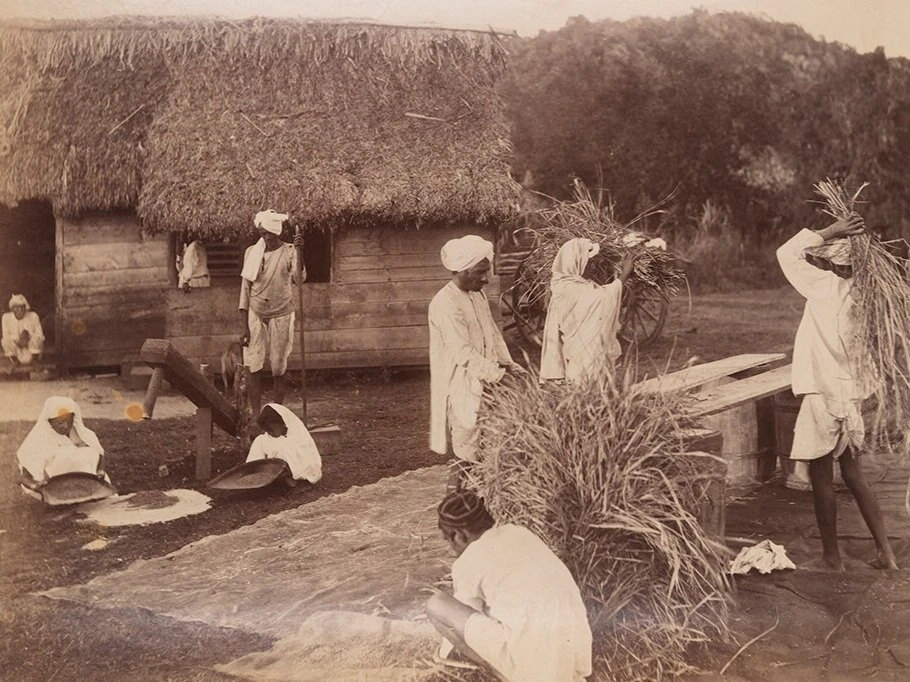
Archival photograph: Agricultural labourers harvesting cane in the fields
From Cane Juice to Sugar: The Open-Pan Method
During the early years of Mauritius’s sugar industry, cane juice was extracted in the mills and then boiled in a series of large open pans to evaporate the water and concentrate the syrup. As the syrup thickened, sugar crystals began to form, after which the mixture was drained to separate the crystals from the molasses. It was a laborious, heat-intensive process requiring constant attention and considerable manual work. Later, vacuum pans and centrifuges made sugar production faster and more efficient, transforming the industry and increasing the scale of Mauritius’s sugar production.
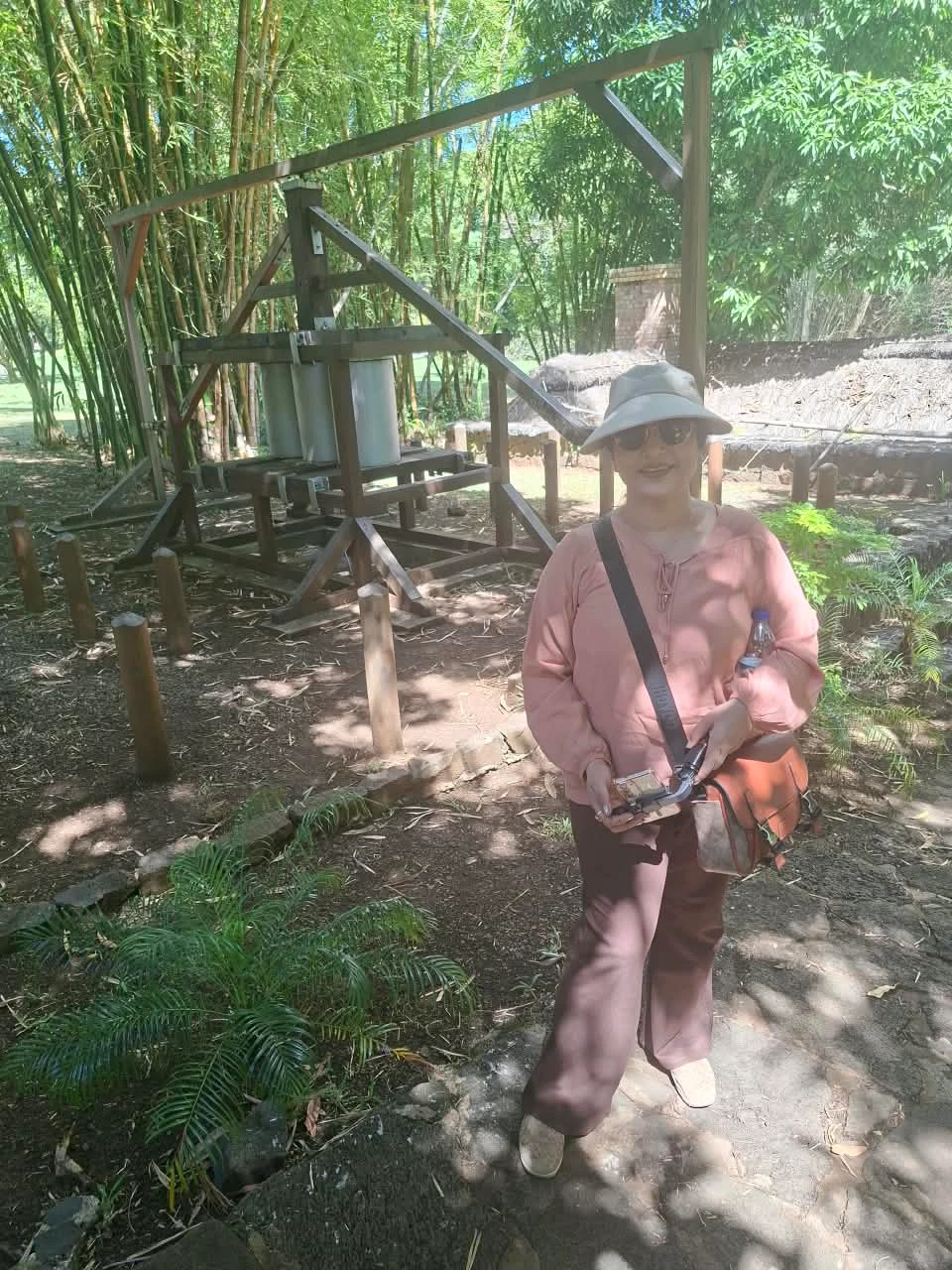
Early wooden crushing mill used to extract cane juice
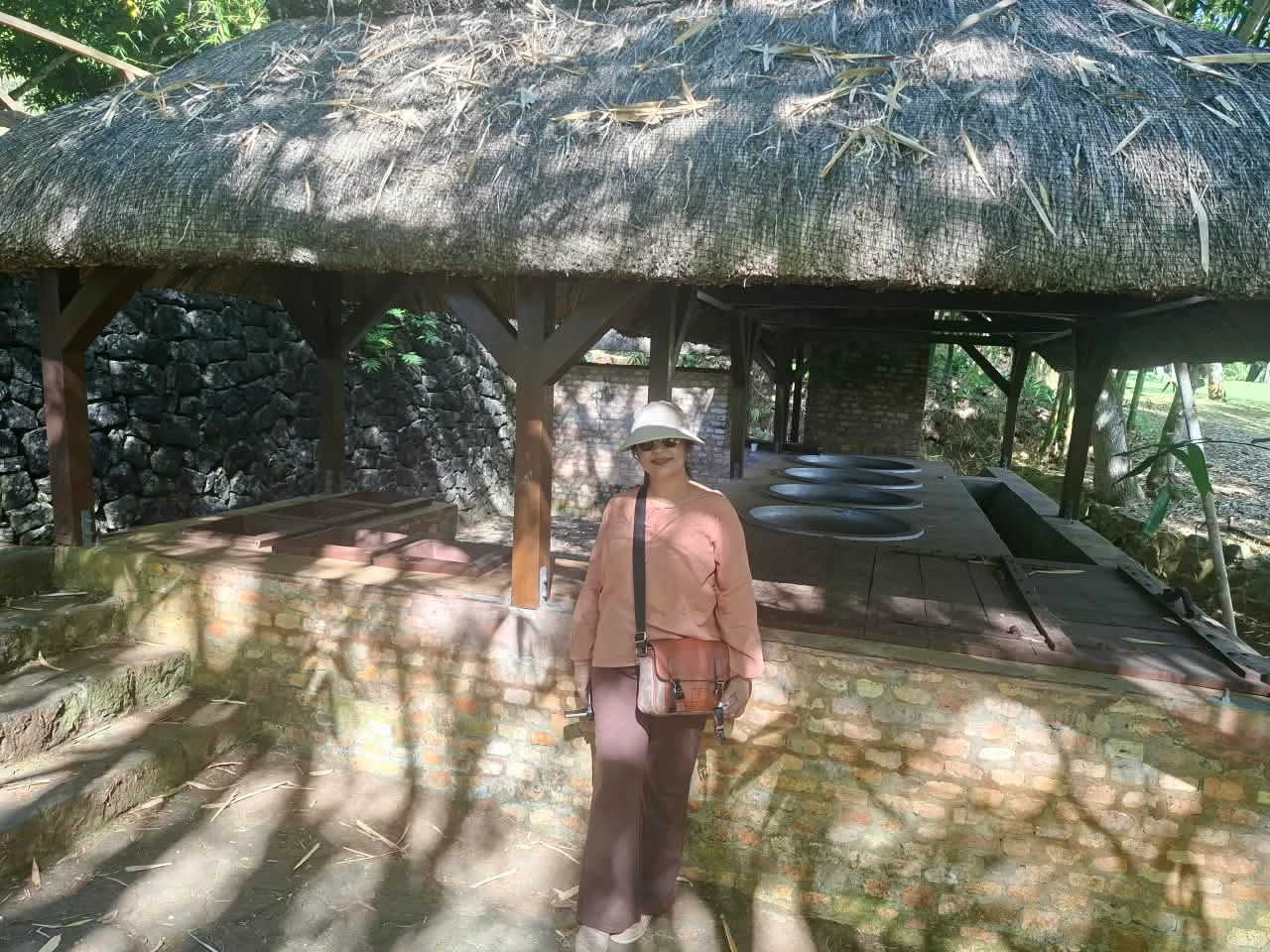
Open-pan boiling battery used during the early years of sugar manufacture
The Chimney and the Steam-Powered Sugar Mill
As sugar production expanded in Mauritius, the open-pan system was gradually replaced by more efficient steam-powered technology. Tall brick chimneys became a familiar feature of sugar estates, carrying away smoke and hot gases from the boilers that generated steam to power the machinery. Cane was crushed mechanically, the juice was heated and clarified, and improved evaporating and crystallising equipment produced sugar on a much larger scale. Standing among the remains of the old machinery and chimney, it is easy to imagine the heat, smoke, noise and relentless activity of a working sugar estate—and the Indian labour force that kept this expanding industry running.
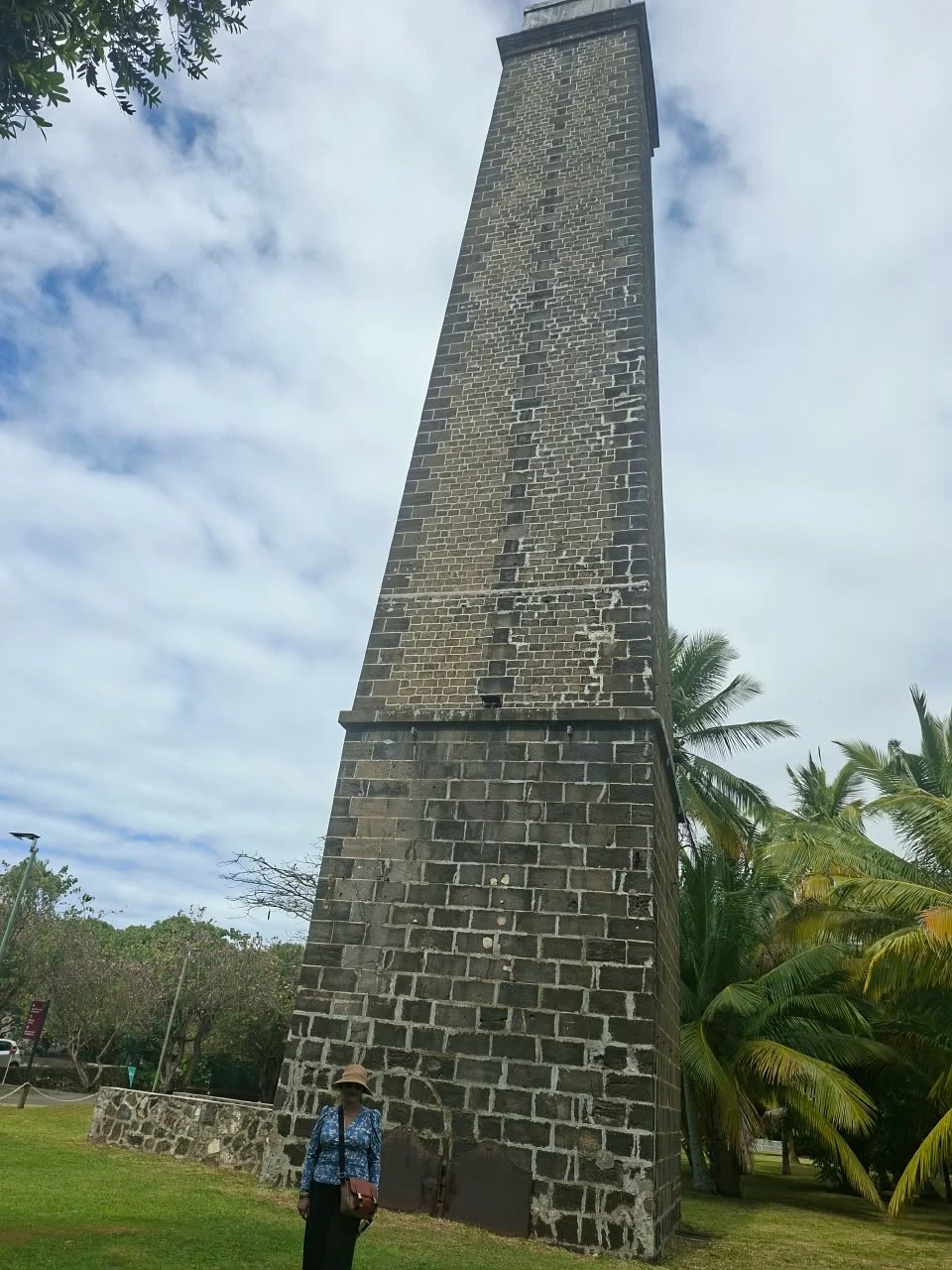
Towering brick and basalt chimney of the steam-powered sugar mill
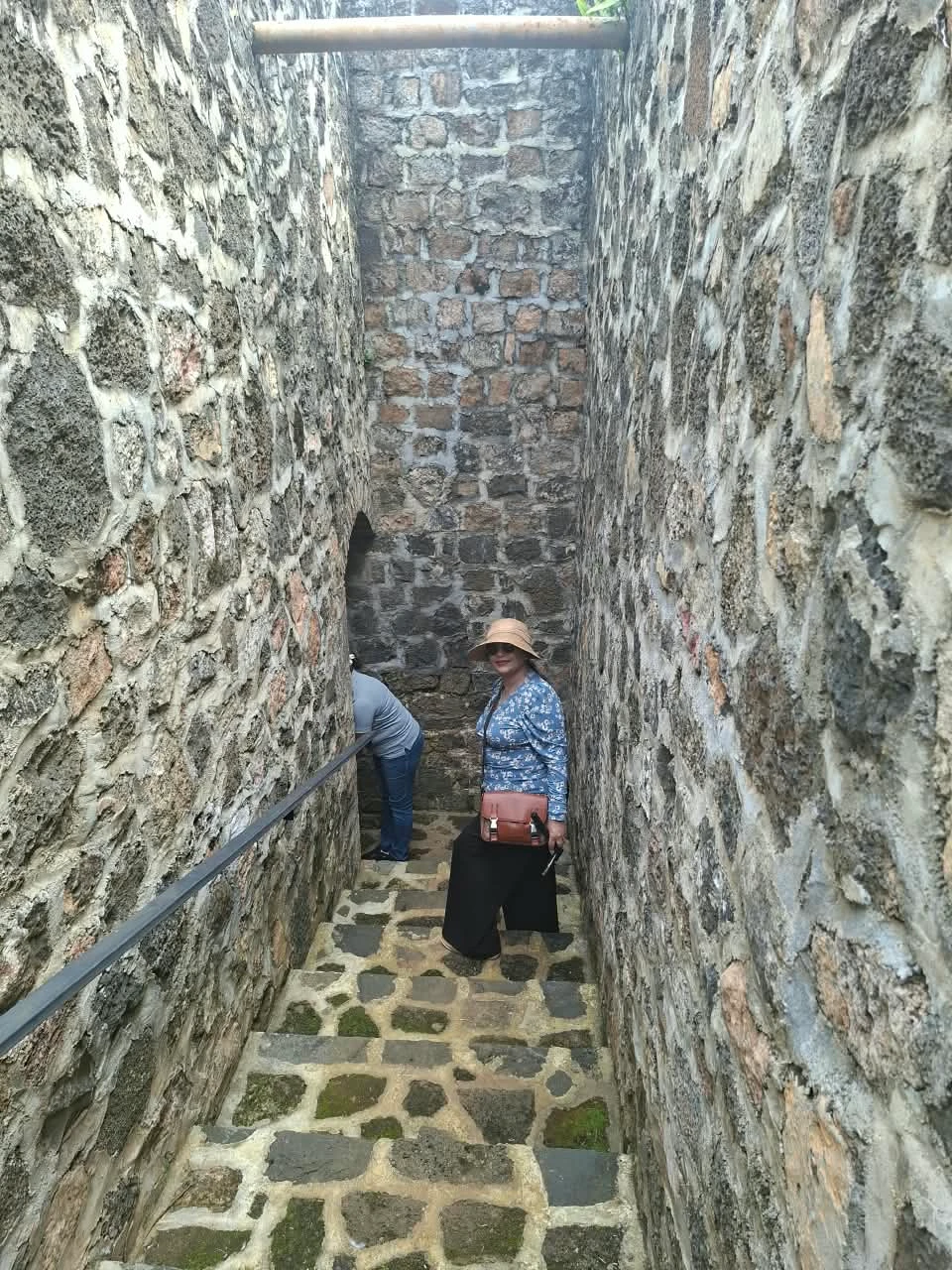
Stone staircase flanked by volcanic basalt walls at the historic mill site
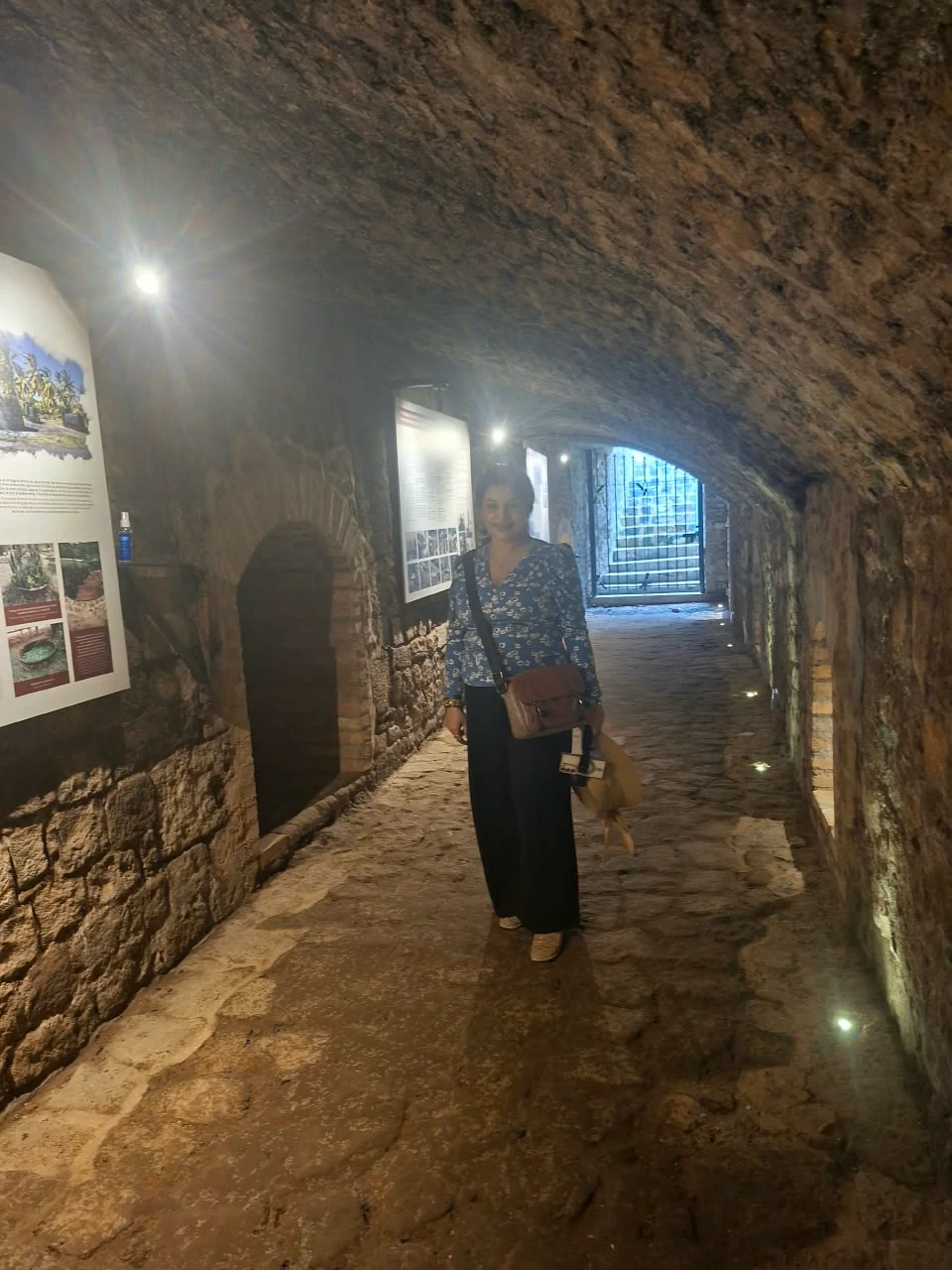
Vaulted stone gallery presenting artifacts and history of the estate
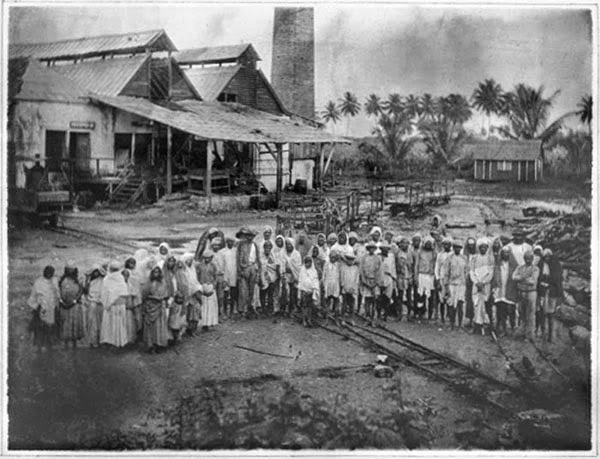
Archival photograph: Working steam mill, chimney, and the workforce that powered it
Through the Sugarcane Fields — A Tribute to Resilience
“In the afternoon, we tasted local rum-based cocktails, made from sugarcane molasses, sitting quietly in the château’s courtyard beside a majestic banyan tree—a silent witness to the stories of yesteryear. With every sip, we found ourselves imagining the hardships endured by Indian indentured labourers who arrived with little more than their belongings and worked long hours on the vast sugar estates under European plantation owners. We then drove through the endless sugarcane fields. The landscape was beautiful, yet beneath its green expanse lay a story of sweat, separation, struggle and sacrifice. Mauritius, we realised, was built not by sugar alone, but by the resilience of generations who endured hardship and created a new home far from the land they had left behind. That drive became, for us, a quiet tribute to their suffering, perseverance and enduring contribution to the soul of Mauritius.”
TRAVELLING THROUGH THE TIMELESS LEGACY OF INDIAN CIVILIZATION ACROSS ASIA AND BEYOND
Back to Mauritius Gateway→CONTINUE THE MAURITIUS JOURNEY
Journey Through the Sacred Monuments of Mauritius