
Maheshwarnath Temple —A Sacred Legacy of Indian Mauritius
Maheshwarnath Temple — A Sacred Legacy of Indian Mauritius
Maheshwarnath Temple, in Triolet, is one of the oldest and most revered Hindu temples in Mauritius and has become an enduring symbol of the island’s Indian heritage. Its origins lie in the 19th century, when Indian immigrants settled in Mauritius as indentured labourers and began rebuilding their religious and cultural life far from their homeland. Dedicated primarily to Lord Shiva, the temple grew from a place of worship into an important centre of Hindu community life. Today, Maheshwarnath stands as a living reminder of how Indian traditions, brought by generations of migrants, became an integral part of Mauritius’s cultural landscape.
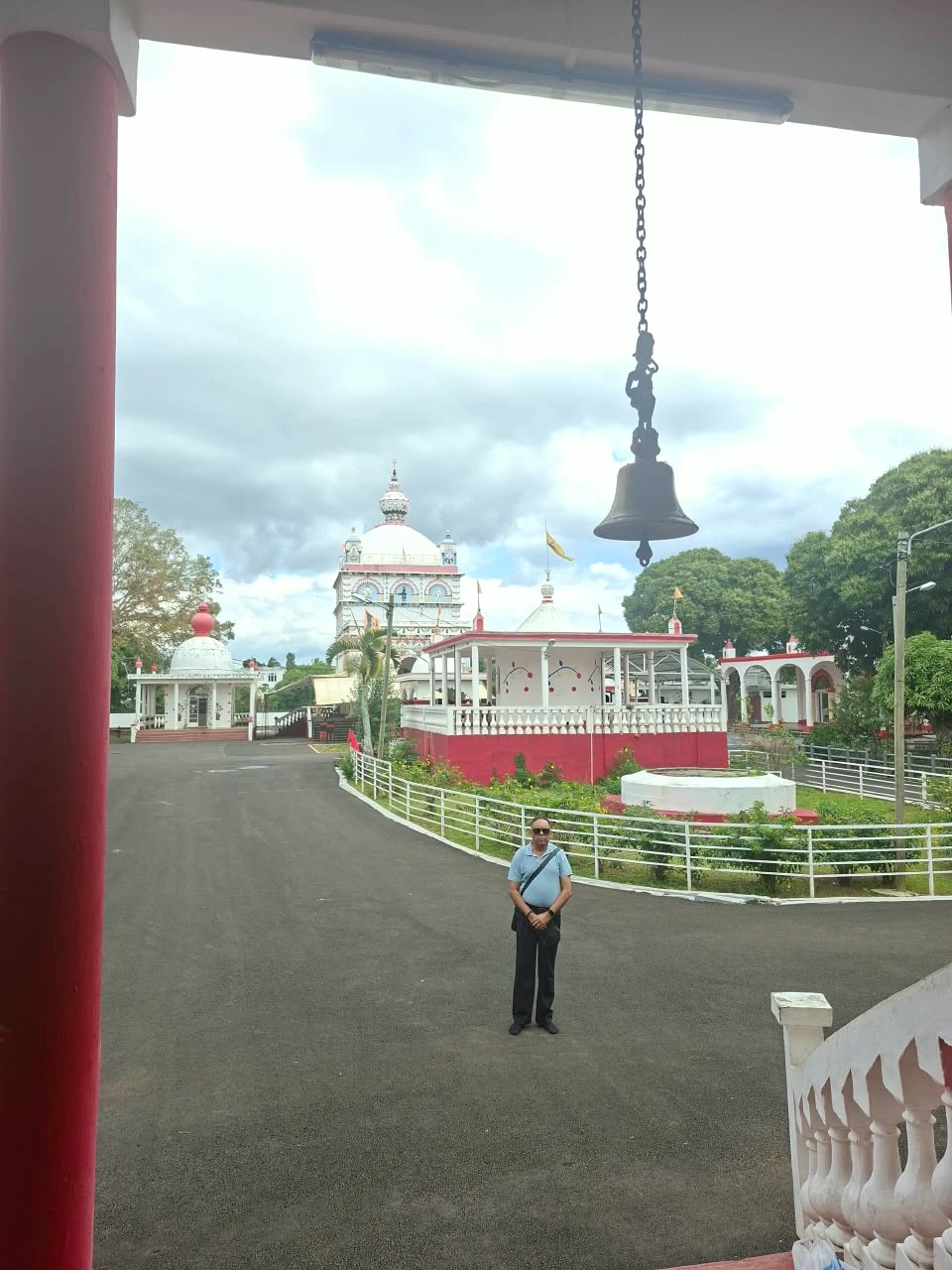
Maheshwarnath Temple — Sacred entrance colonnade and bronze bell in Triolet
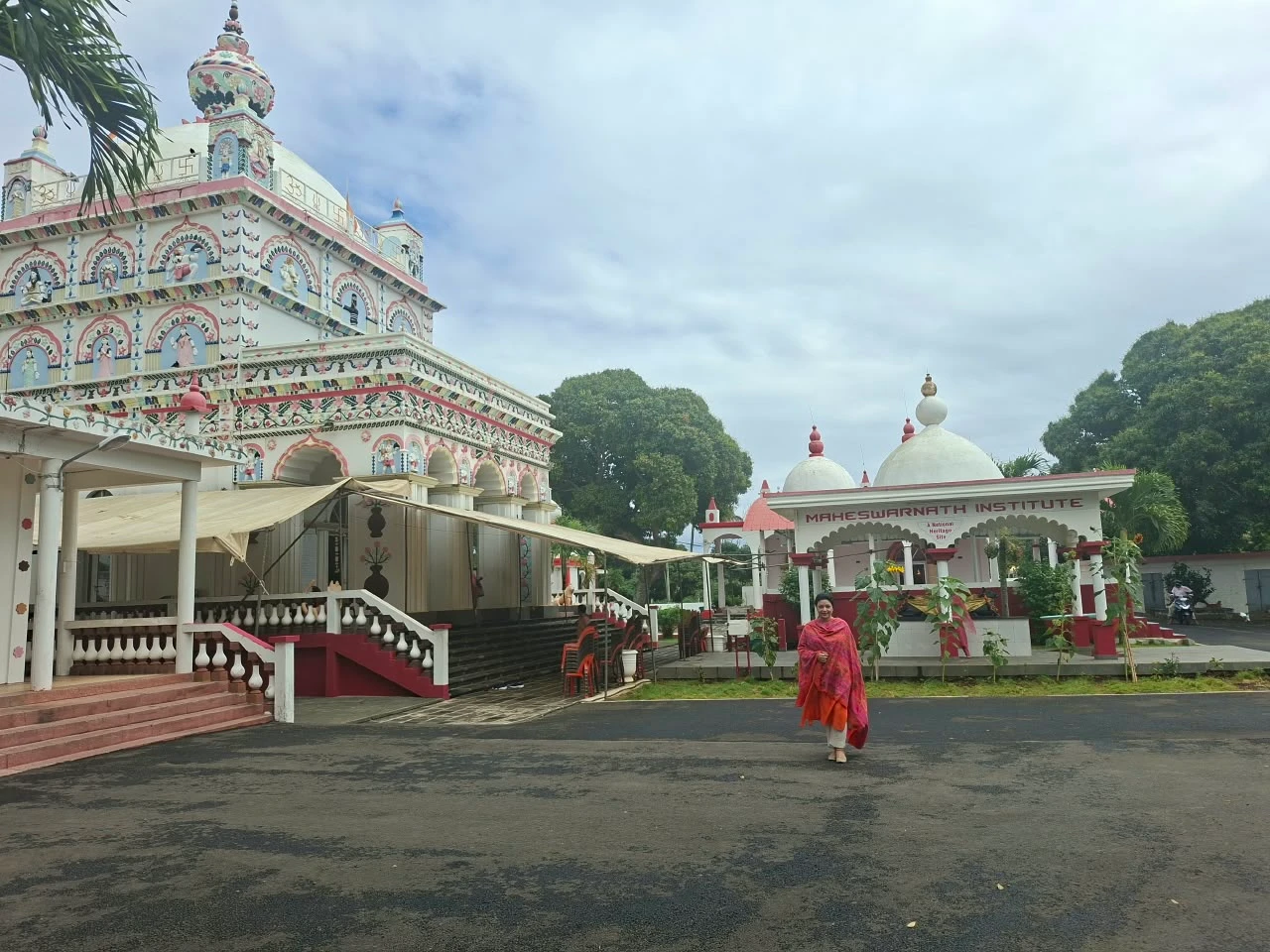
The grand multi-tiered shikhara of Maheshwarnath Mandir rising above the courtyard
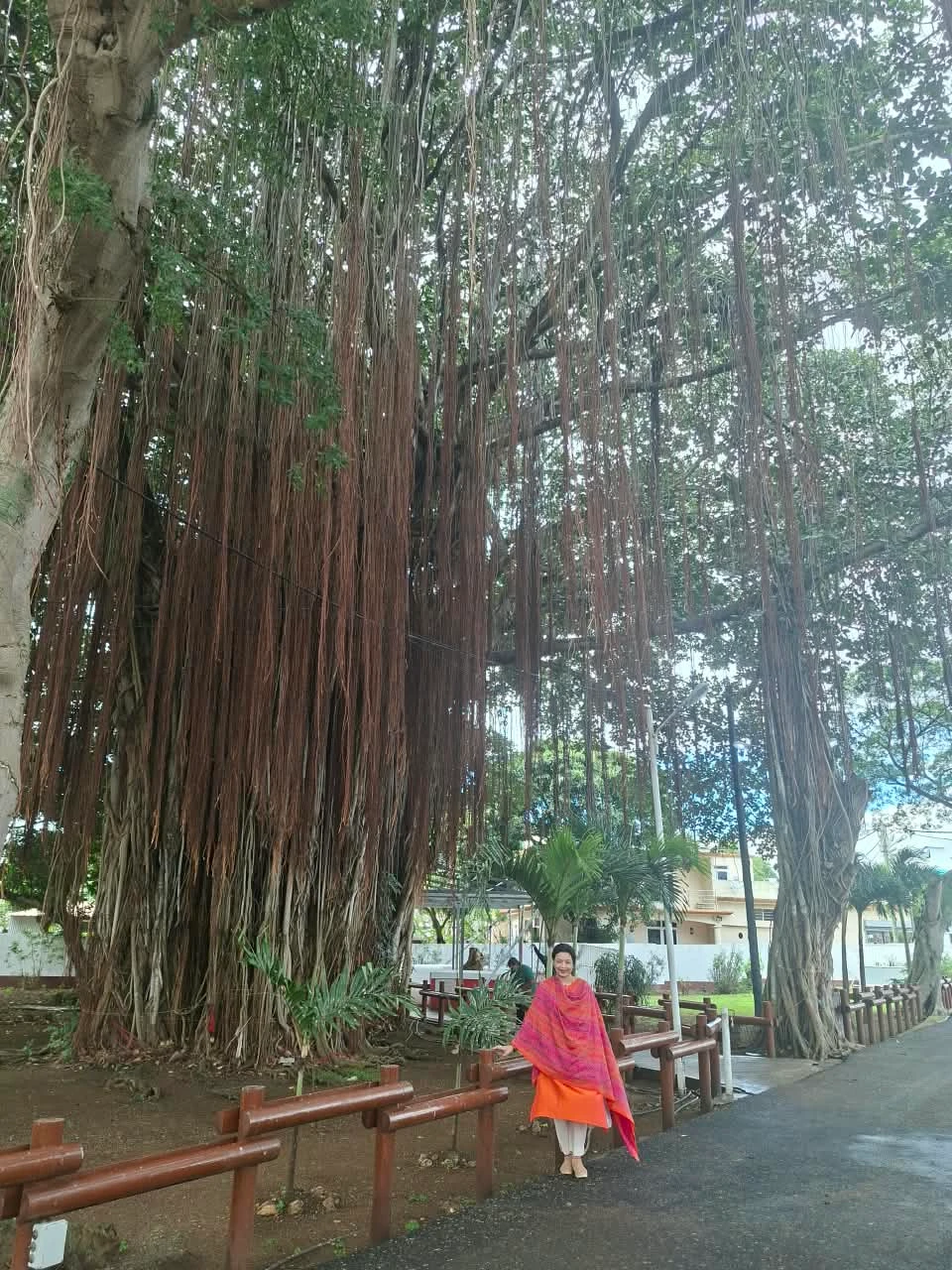
Colossal sacred banyan tree sheltering the temple courtyard
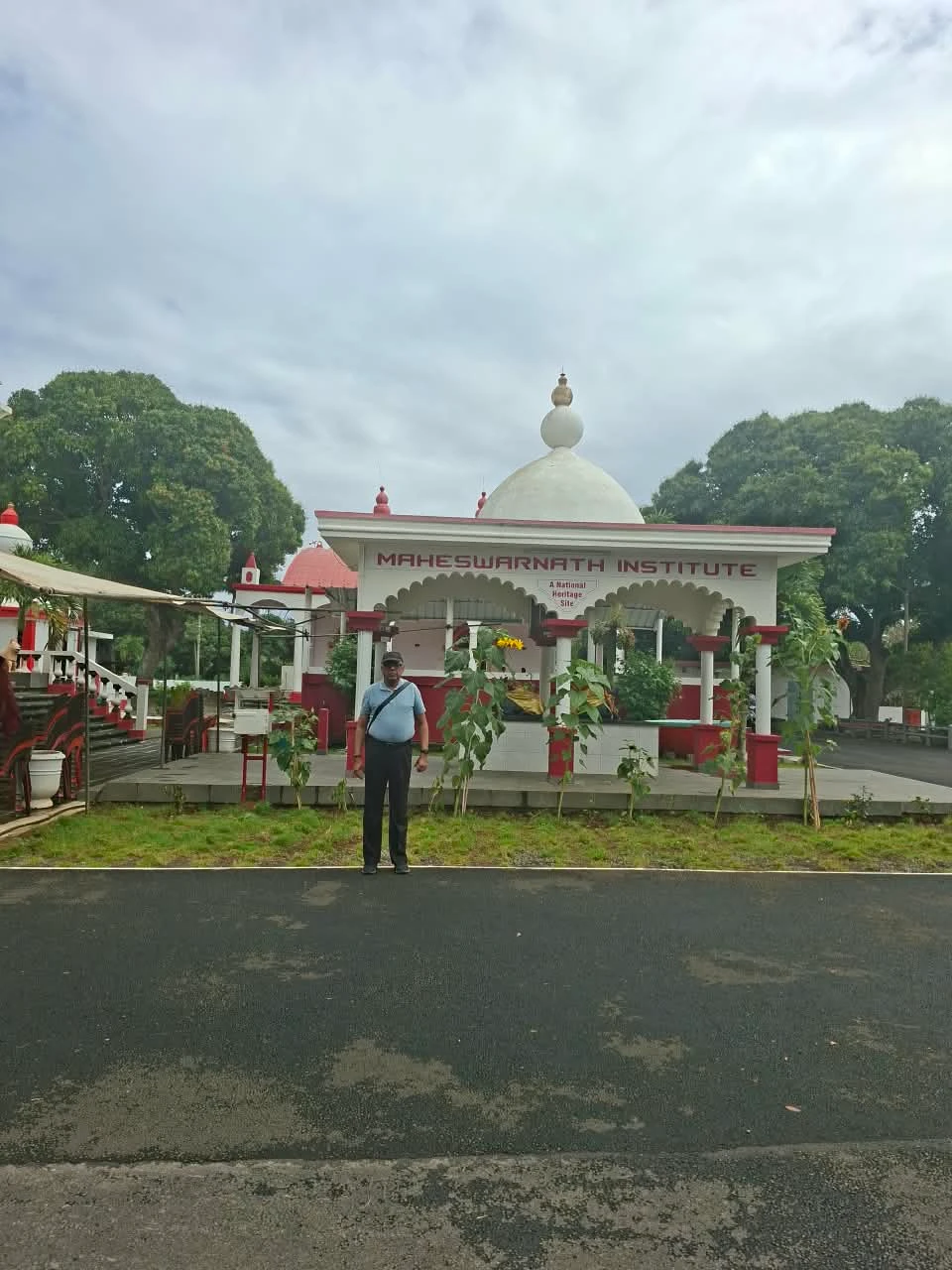
Maheswarnath Institute heritage pavilion with traditional scalloped arches
The Layout of Maheshwarnath Temple
The Maheshwarnath Temple complex is centred around its main shrine dedicated to Lord Shiva, with a series of smaller shrines and sacred spaces arranged around it. The colourful temple structures, decorated with traditional Hindu motifs and images of deities, create a distinctly Indian sacred atmosphere within the Mauritian landscape. The complex also includes open courtyards and pathways that allow devotees to move between the different shrines, while the prominent shikhara of the main temple provides a striking focal point. Together, the buildings, shrines and open spaces form a compact but vibrant centre of worship and community life.
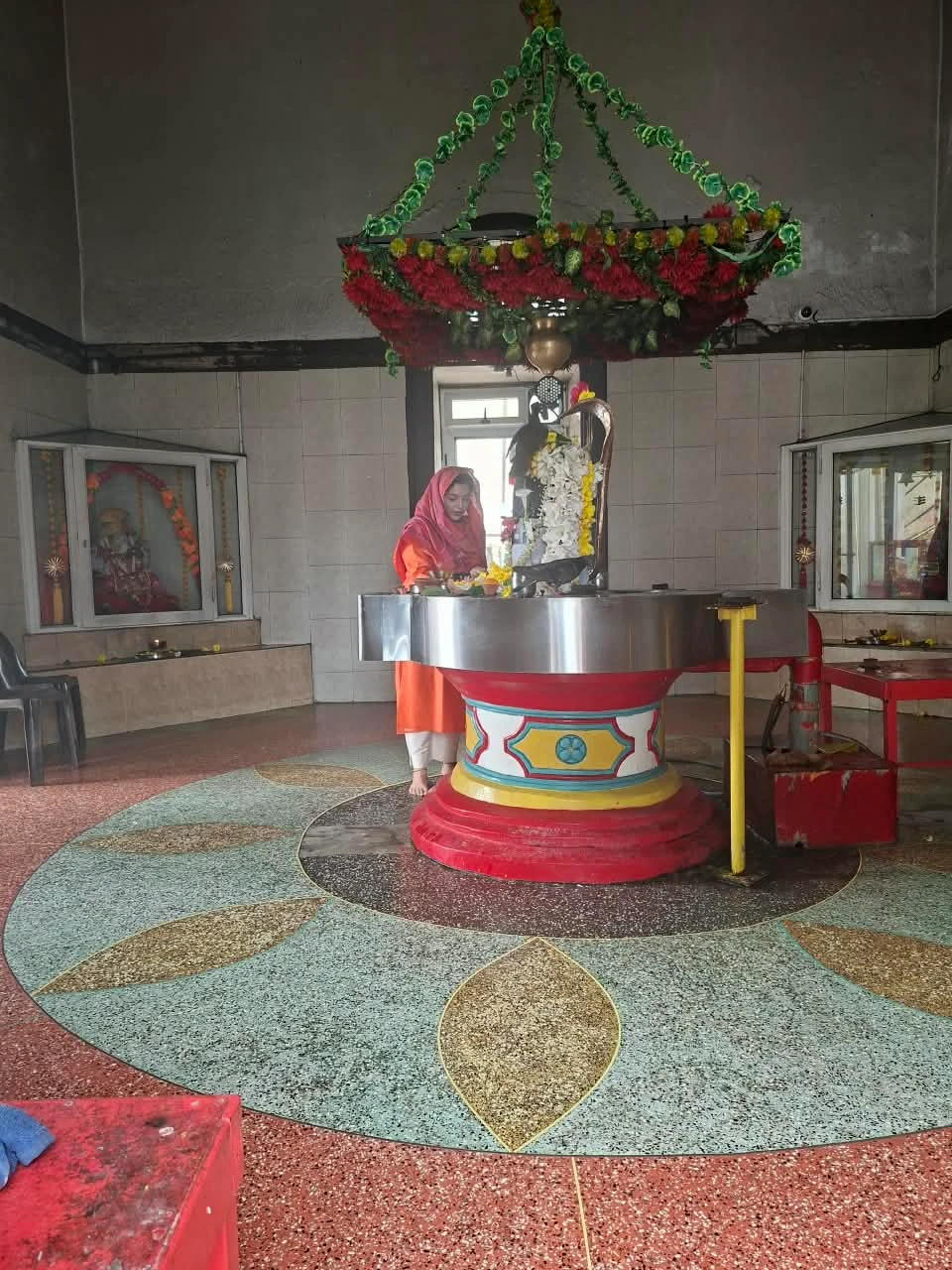
Sacred Shiva Lingam adorned with fresh marigold garlands and offerings
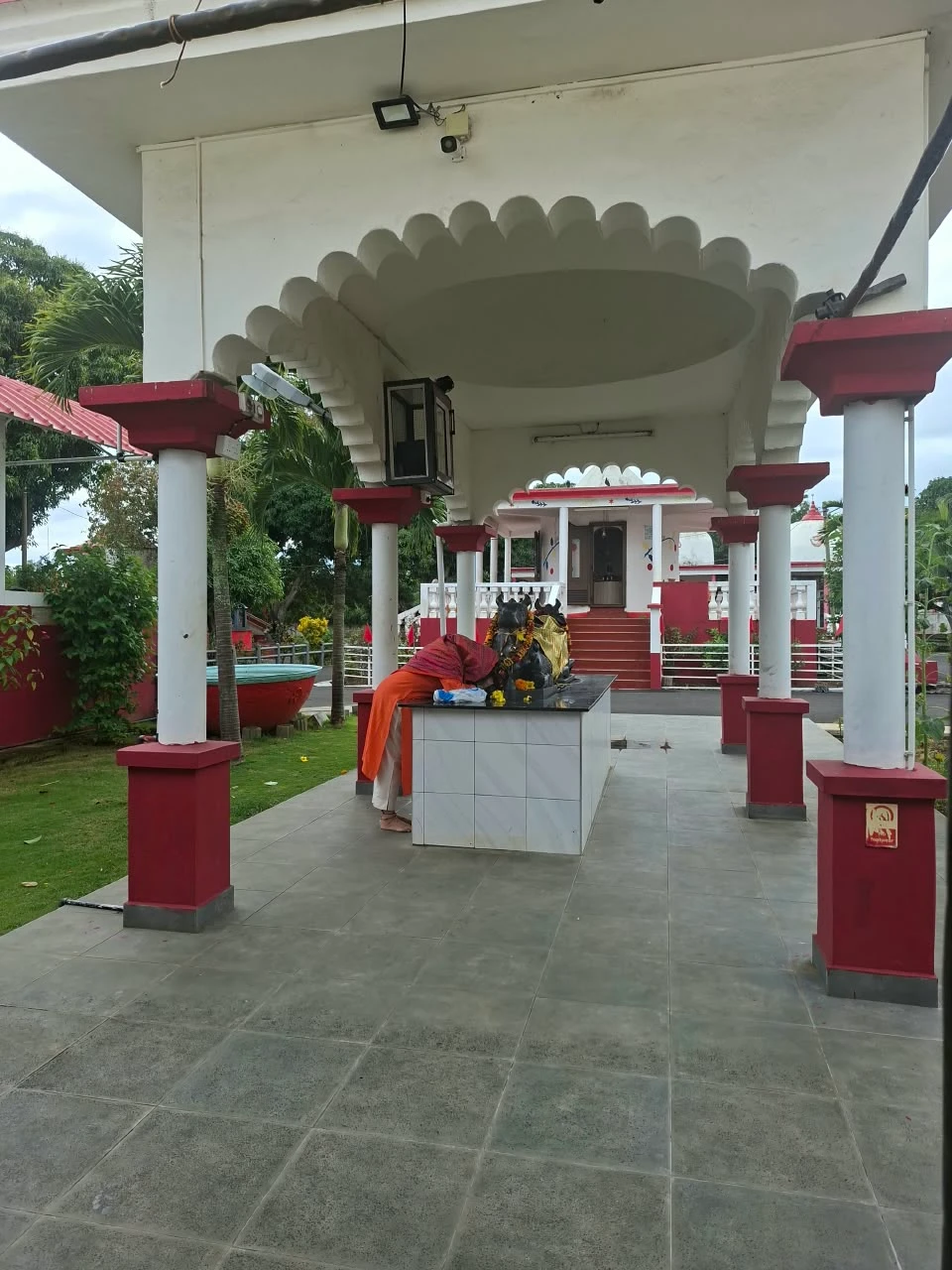
Nandi mandapa pavilion facing the sanctum of Lord Shiva
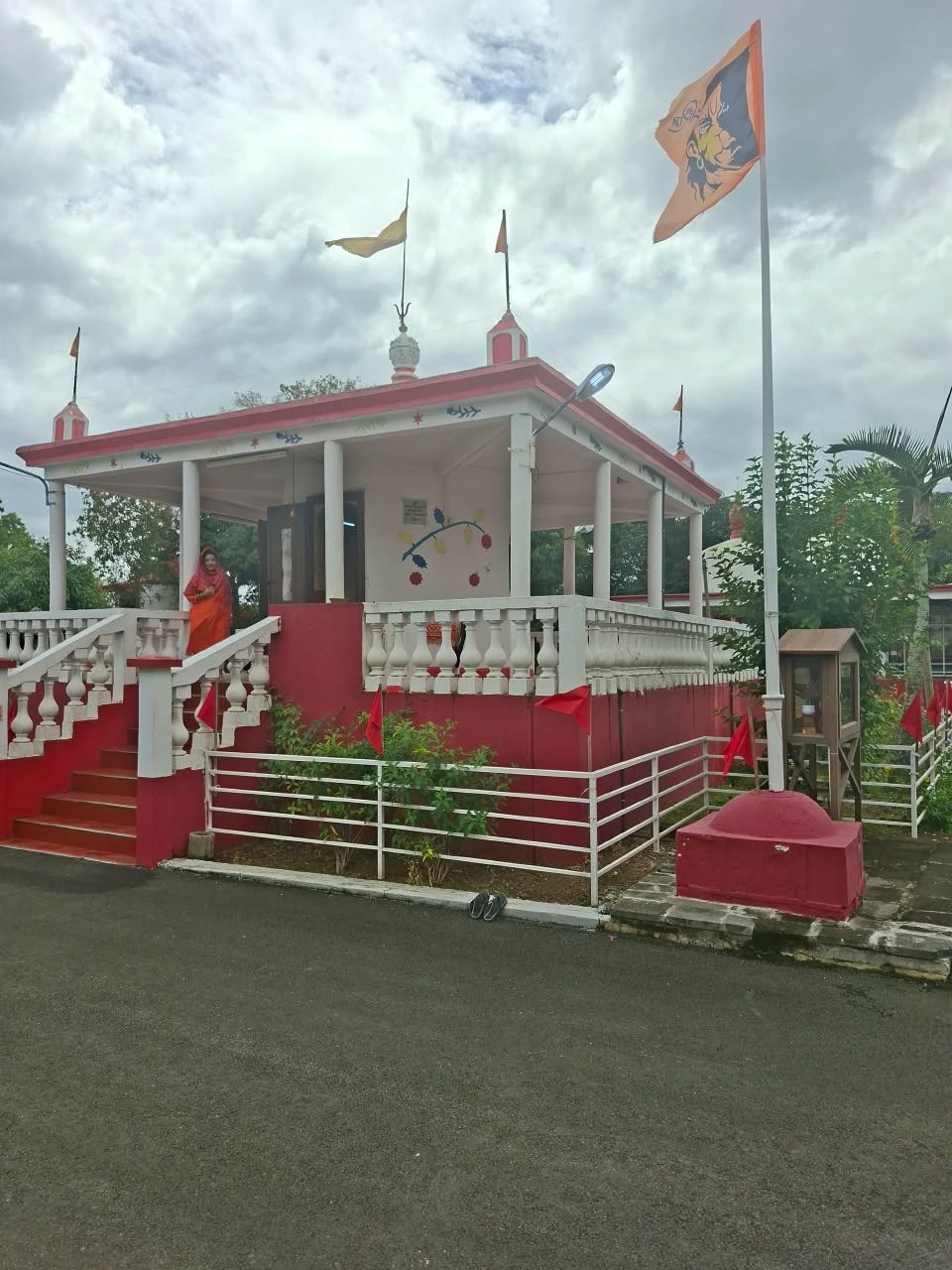
Elevated shrine bearing the sacred saffron Hanuman dhwaja flag
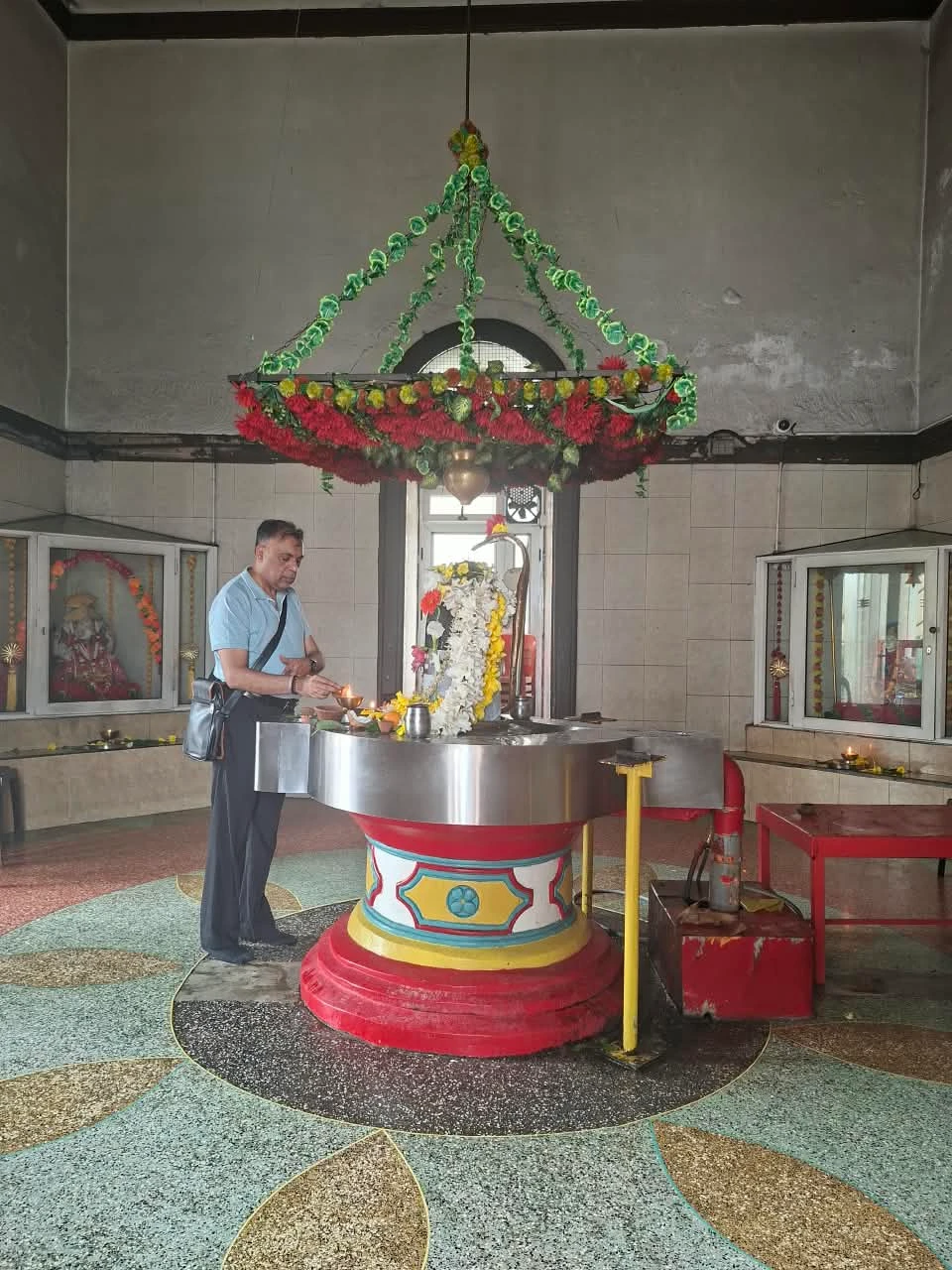
Inner sanctum during the sacred Shiva Lingam abhishekam and aarti
Stories of the Sacred Shrines
The Maheshwarnath Temple complex carries several traditional stories associated with its shrines. The discovery of the Shiva lingam is linked to the temple’s early sacred history, when local devotees are believed to have found a naturally sacred site that became associated with Lord Shiva. The shrine of Ganesha reflects the familiar Hindu tradition of invoking him first before beginning an auspicious undertaking. The shrine of Hanuman recalls the devotion and strength associated with the great devotee of Lord Rama, while the Durga shrine represents the protective and powerful feminine aspect of the divine. Together, these shrines bring different strands of Hindu mythology into one sacred space, showing how Indian religious traditions were preserved and carried across the Indian Ocean to Mauritius.
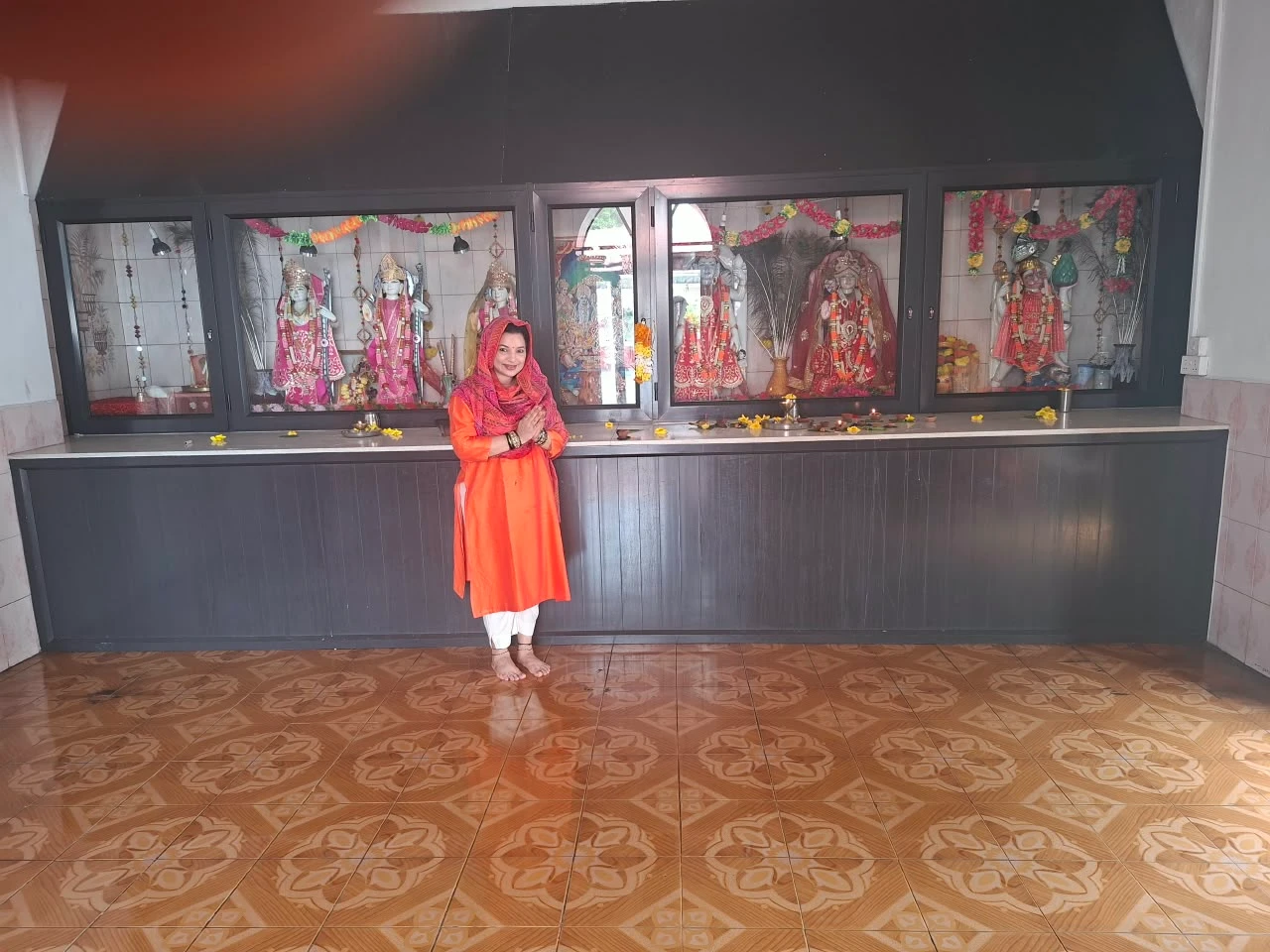
Devotional shrine gallery bringing together diverse strands of Hindu tradition
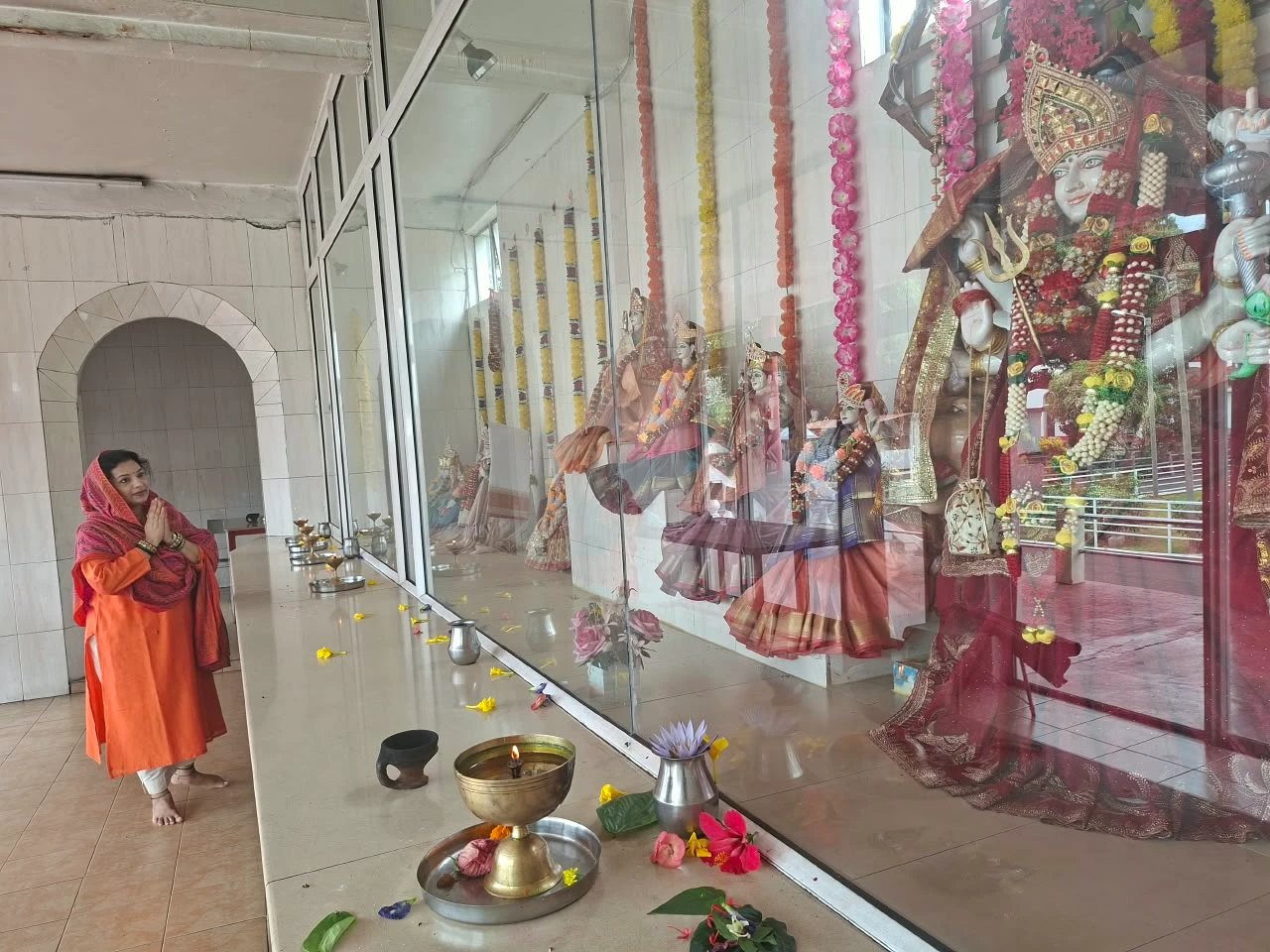
Goddess Durga shrine illuminated by sacred lamps and offerings
Importance of Maheshwarnath Temple in Mauritius
Maheshwarnath Temple holds a special place in the religious and cultural life of Mauritius. For the descendants of Indian indentured labourers, it represents the preservation of faith, traditions and cultural memory far from their ancestral homeland. The temple became a centre where Hindu festivals, rituals and community traditions could continue across generations. Its importance today goes beyond religion: it is part of Mauritius’s multicultural heritage and a visible reminder of the profound contribution of the Indian community to the island’s history and identity.
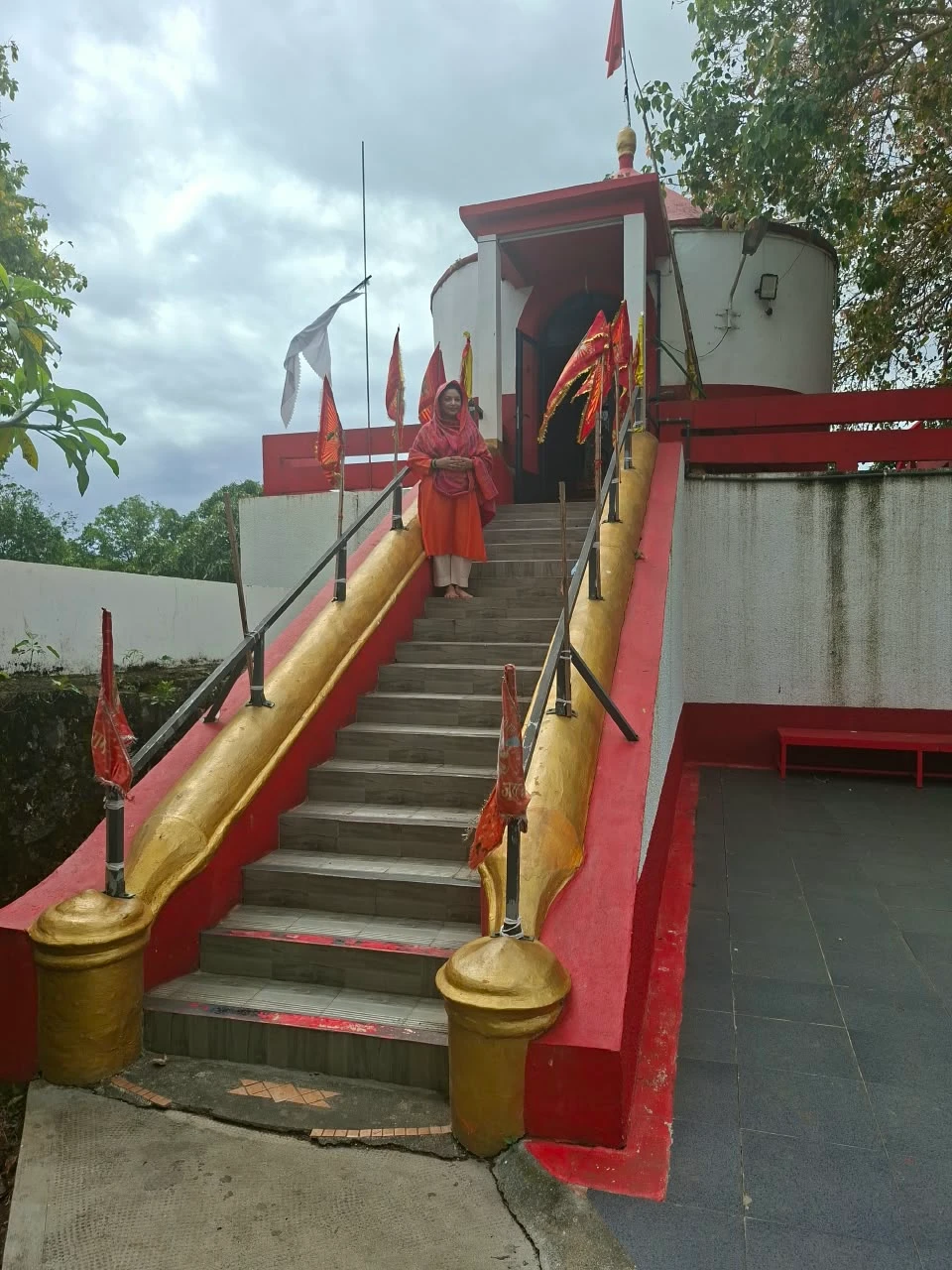
Red and gold staircase leading to the upper temple shrines
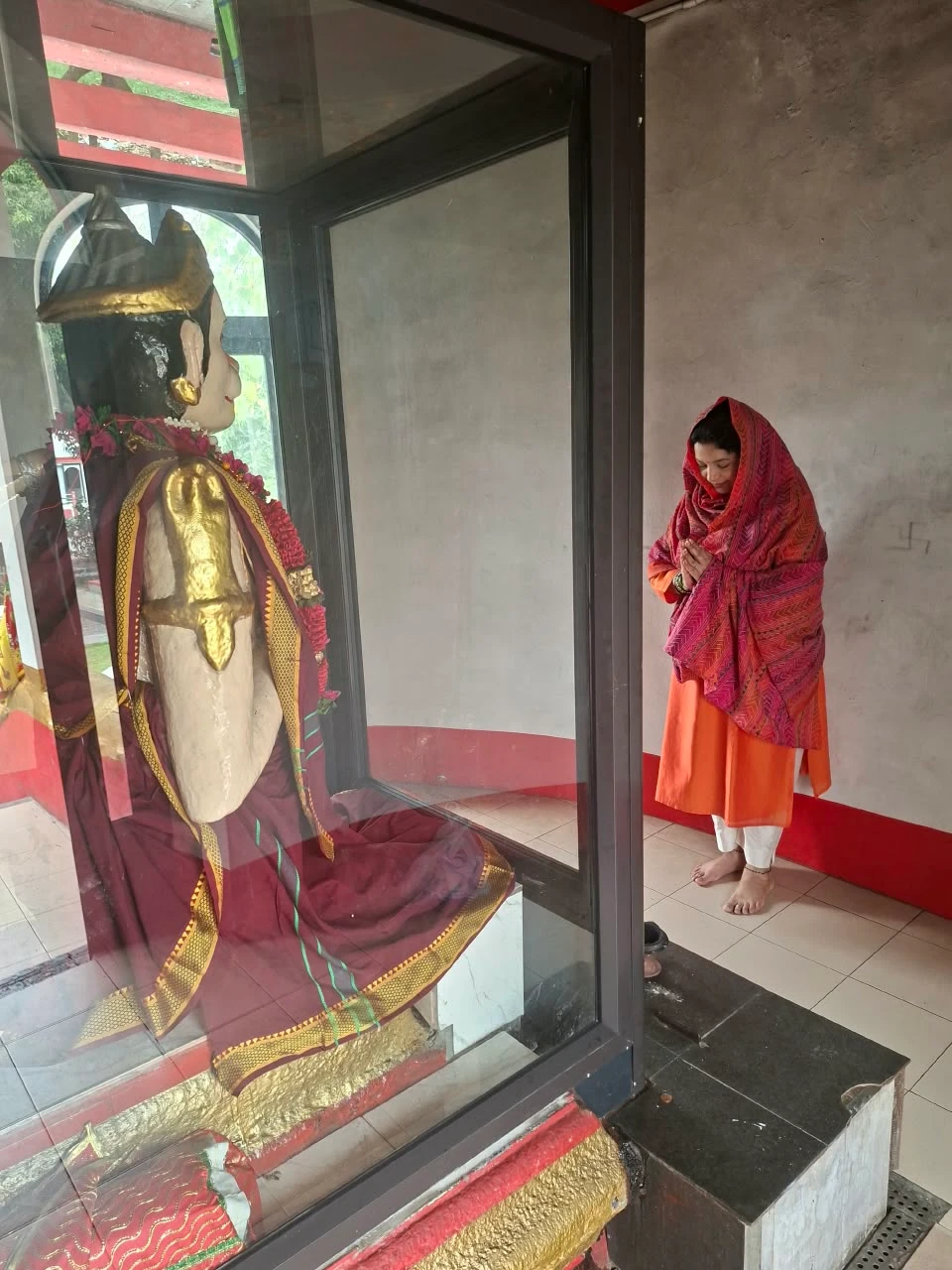
Lord Hanuman shrine evoking strength, devotion, and steadfast faith
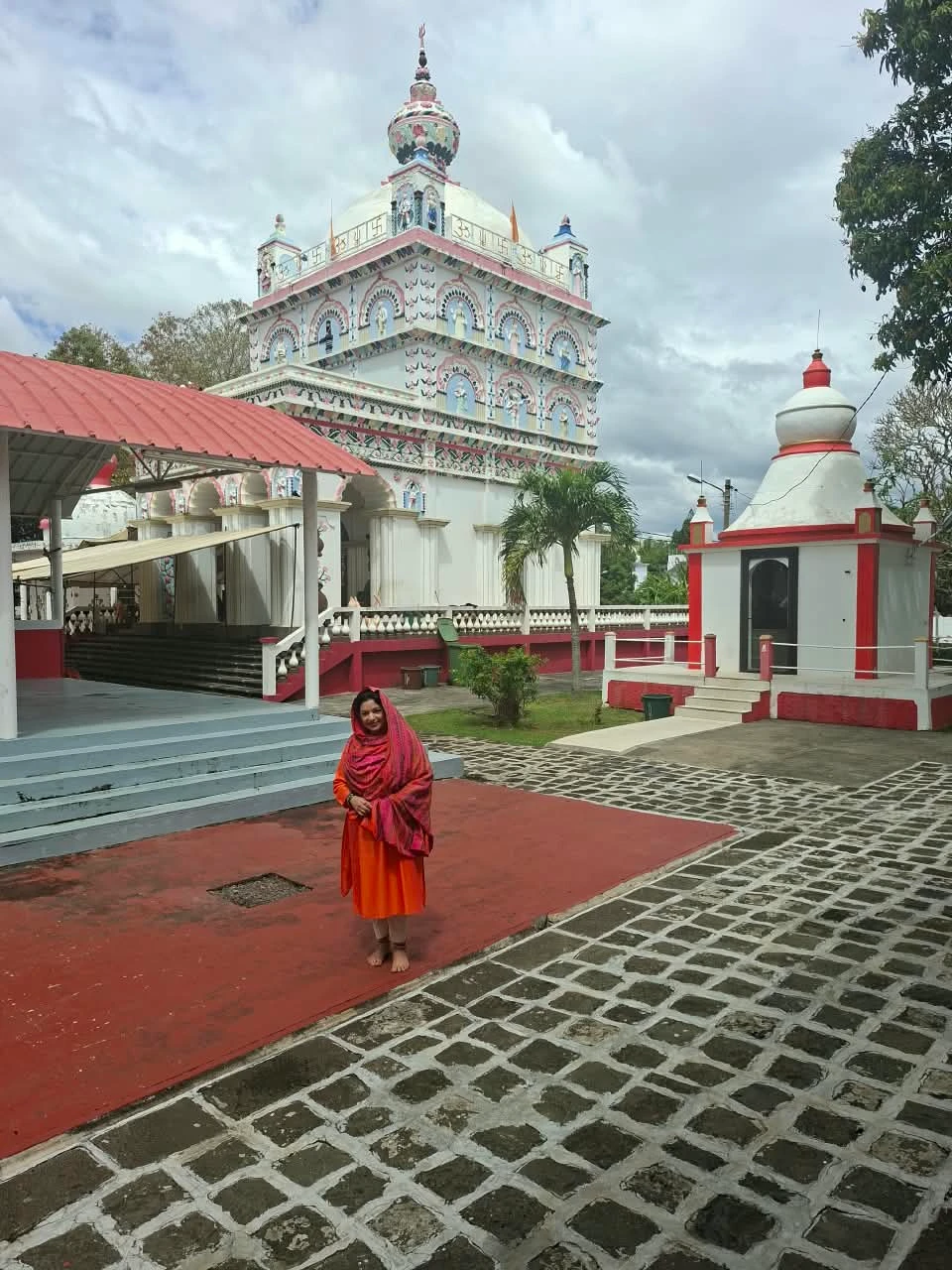
Cobblestone courtyard connecting shrines across the temple complex
Somnath Mandir, Shiv Sagar and open air shrine near Maheshwarnath Temple.
Pointe aux Piments has Somnath Mandir, Shiv Sagar Dham and several smaller Hindu shrines within the same coastal locality—showing how Hindu religious life became woven into the everyday landscape of the island.
Somnath mandir in Grande-Pointe-aux-Piments.
Somnath Mandir stands quietly in the Grande-Pointe-aux-Piments area, another reminder of the deep roots of Hindu worship in northern Mauritius. Dedicated to Lord Shiva, the temple is part of the local religious life of the community. During Maha Shivaratri, it becomes particularly significant, with devotees and local groups gathering here before making their way towards the great celebrations at Ganga Talao.
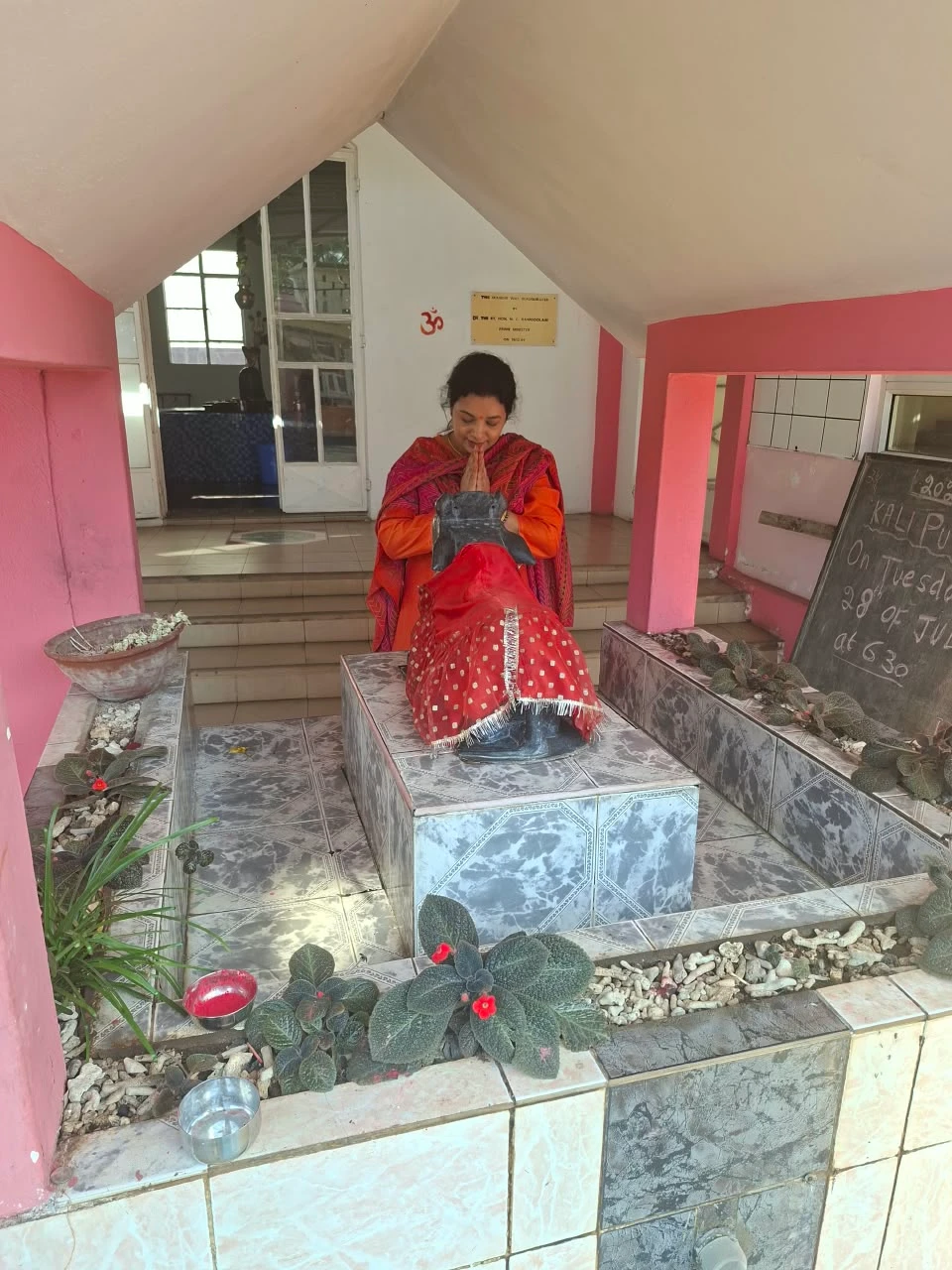
Somnath Mandir entrance with sacred Nandi in Grande-Pointe-aux-Piments
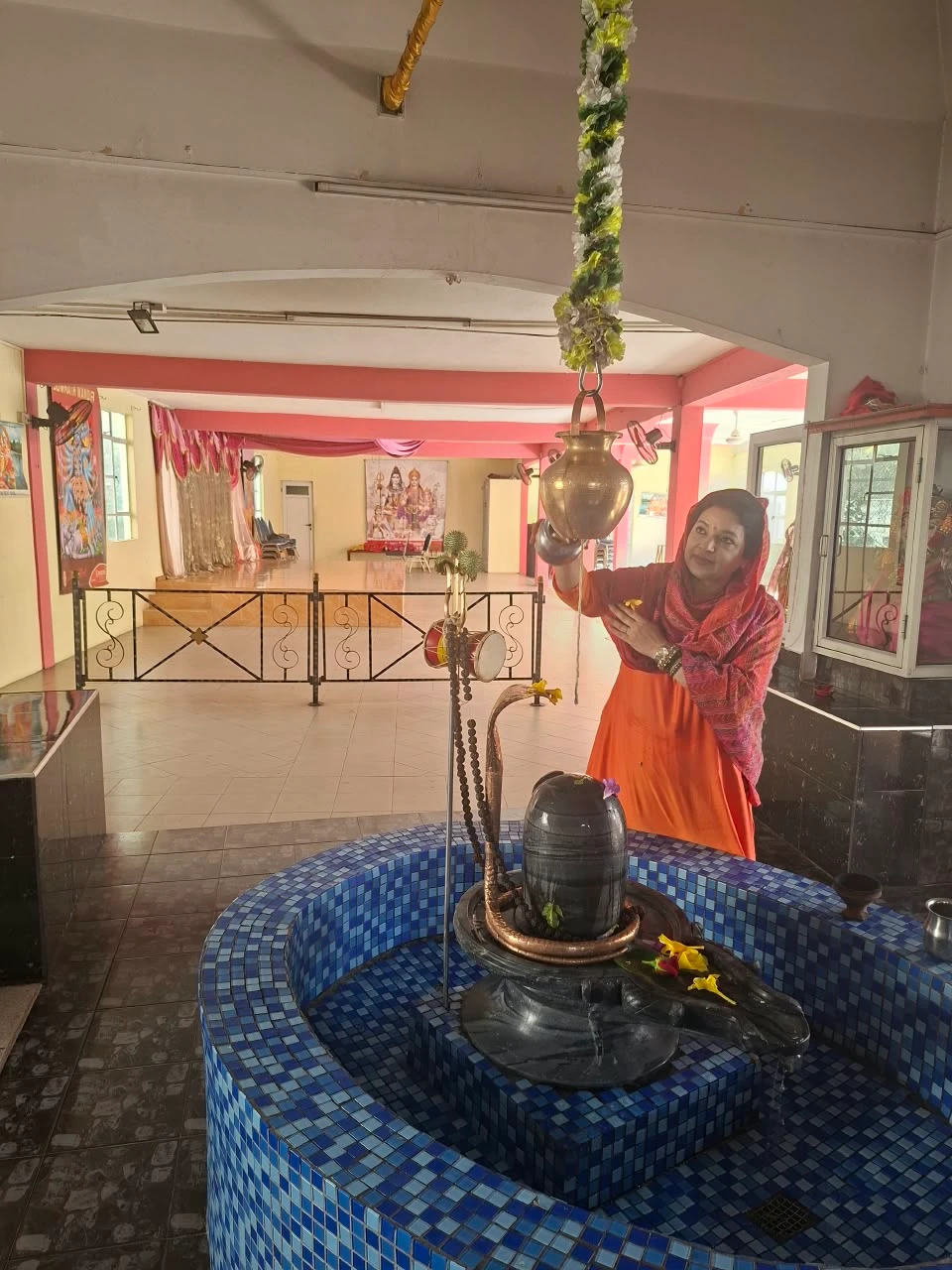
Inner sanctum Shiva Lingam at Somnath Mandir
Shiv Sagar Dham — Shiva by the Ocean.
At Pointe aux Piments, we came across the simple and peaceful Shiv Sagar Dham, a small Shiva temple standing close to the beach. There was nothing grand or imposing about it; its charm came from its intimate scale and its beautiful setting beside the Indian Ocean. The sound of the waves, the open sky and the presence of the Shiva shrine created a sense of tranquillity that felt quite different from the larger temples of Mauritius. It was a small place, but one that beautifully reflected the way Hindu worship has become part of the island's landscape.
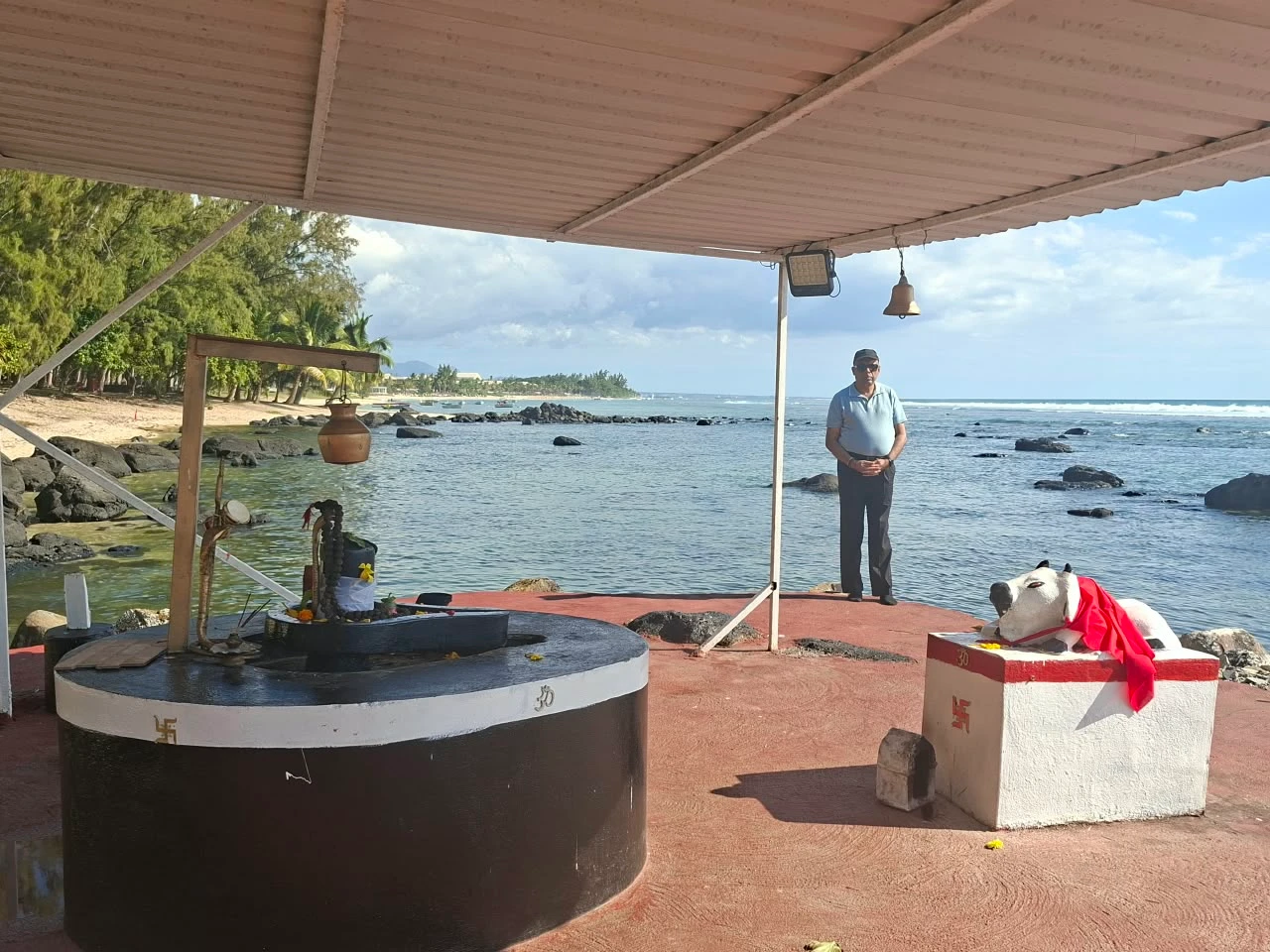
Shiv Sagar Dham — Peaceful oceanfront shrine beside the Indian Ocean
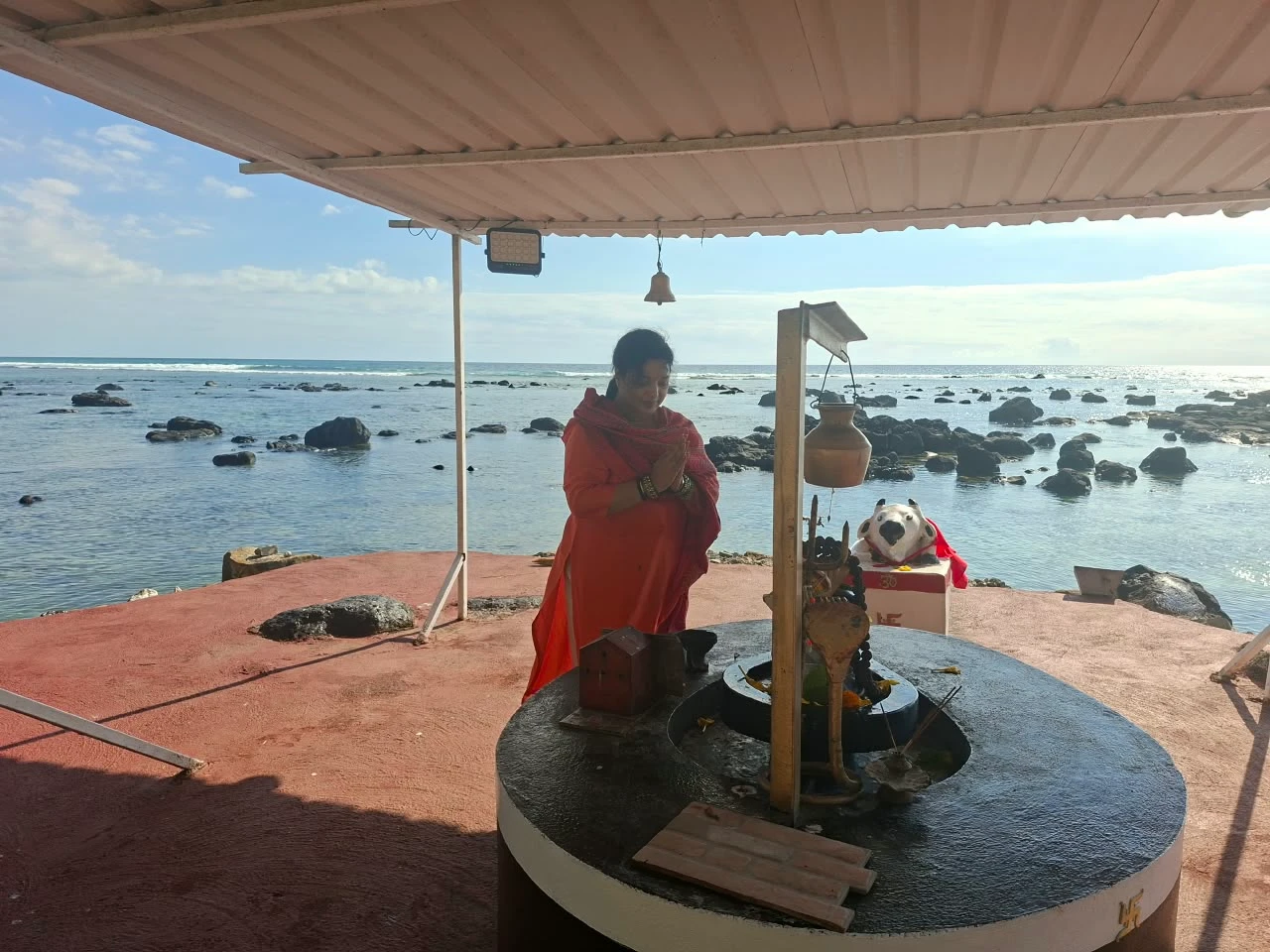
Devotional offerings before Lord Shiva with the sound of the ocean waves
A Shrine by the Sea
As we were leaving Somnath Mandir, we noticed another small shrine just about 100 metres away, close to the beach. It had no nameboard or elaborate entrance—just an open-air place of worship, quietly standing beside the road. We stopped the car and walked over. There was something deeply appealing about its simplicity. With the sea nearby and the shrine open to the sky, it felt less like a formal temple and more like a place where devotion had naturally found its home. We halted for a few moments, offered our prayers and then continued our journey, carrying with us the memory of this unnamed little shrine by the sea.
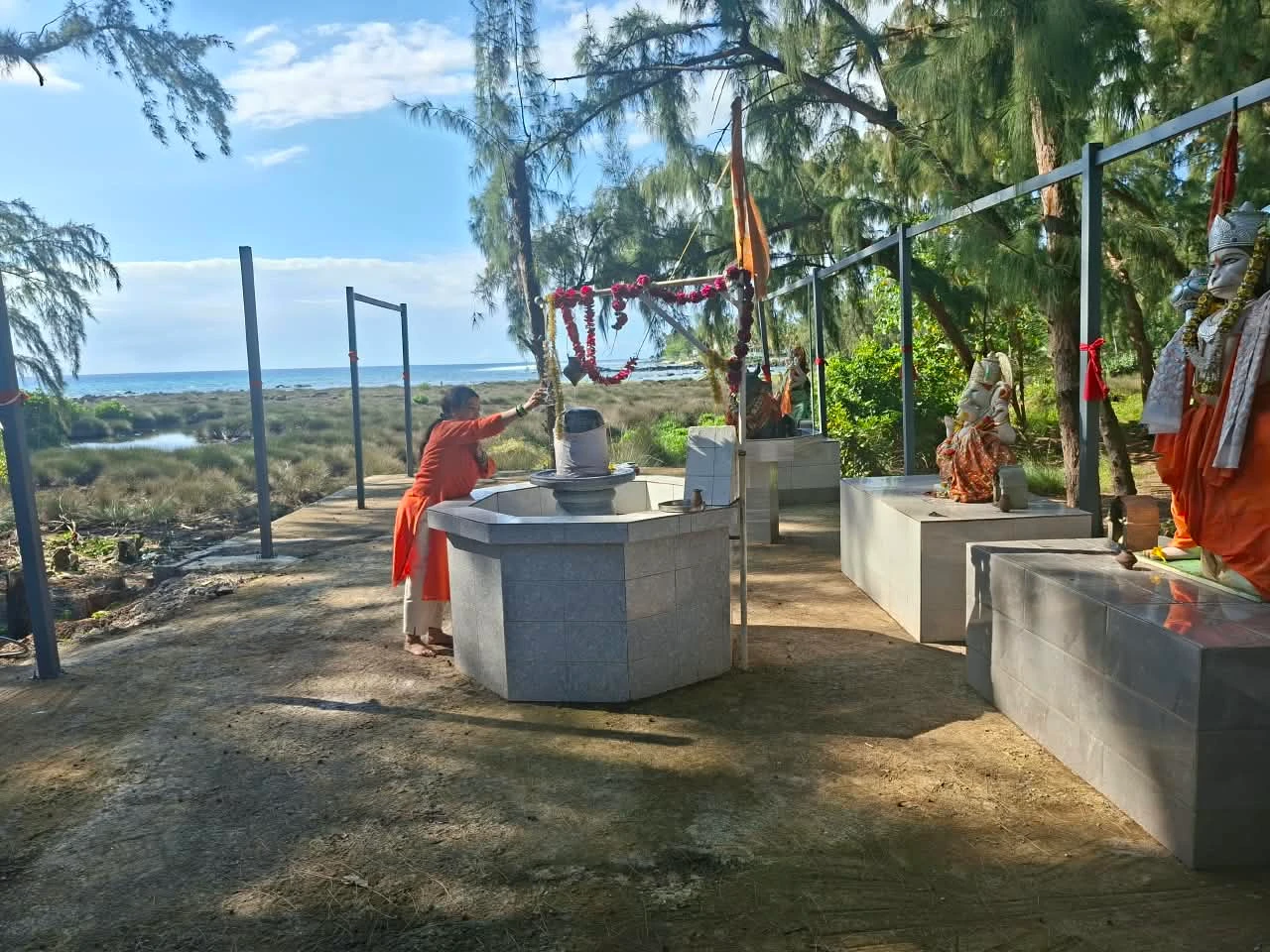
Open-air seaside shrine under the open sky near Pointe aux Piments
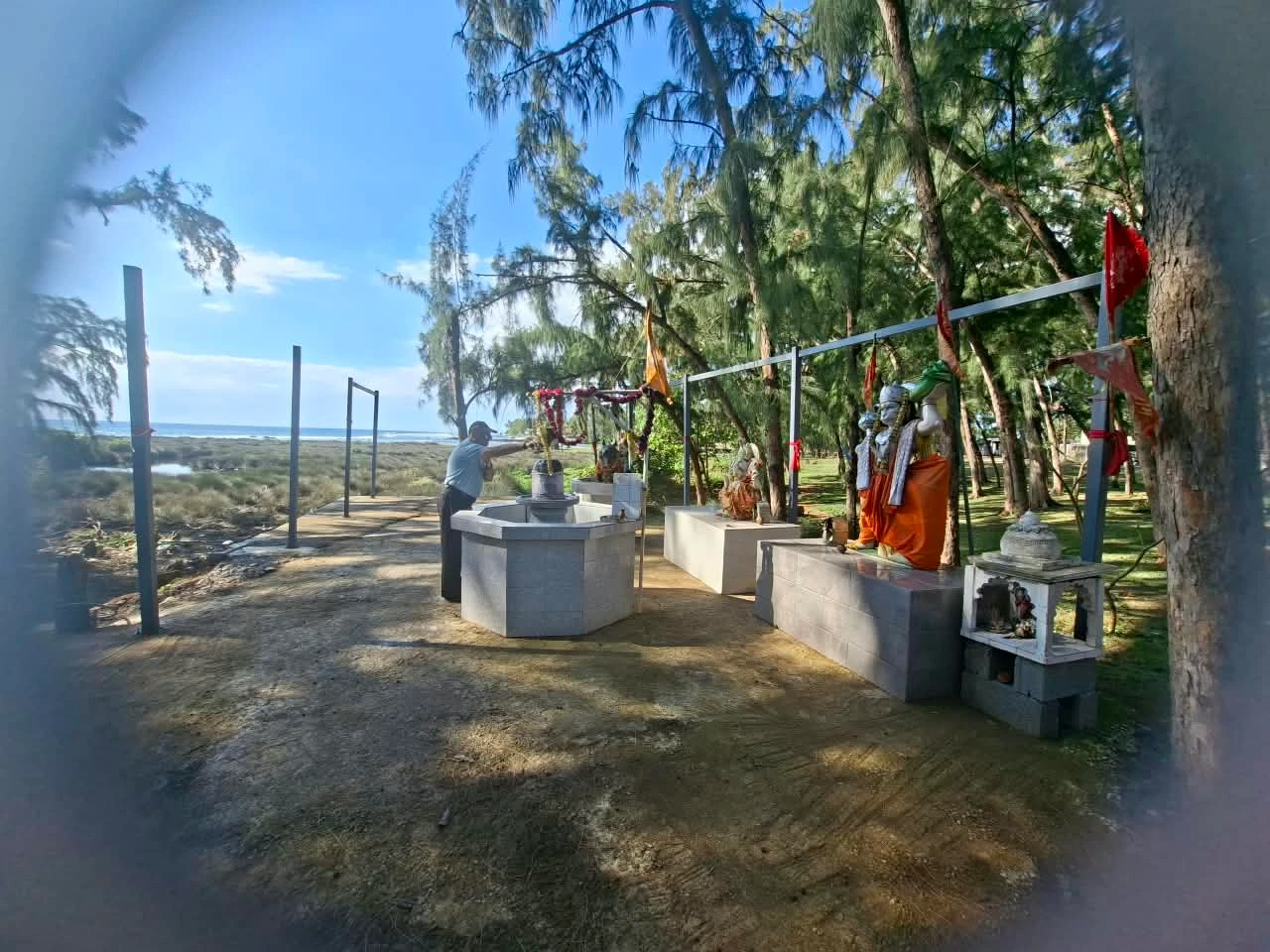
Coastal pine grove setting beside the unnamed seaside shrine
Triolet — A Hindu Heartland of Northern Mauritius
“Our visit to Maheshwarnath Temple also gave us a glimpse of Triolet itself—a place where Hindu faith is not confined to one magnificent temple but is woven into the everyday landscape. With numerous temples, shrines and Hindu traditions visible across the area, Triolet felt to us like a genuine Hindu heartland of northern Mauritius. Leaving Maheshwarnath, we carried with us a sense that the temple was not merely a place of worship, but an important part of a living cultural heritage that continues to connect Mauritius with its Indian roots.”
TRAVELLING THROUGH THE TIMELESS LEGACY OF INDIAN CIVILIZATION ACROSS ASIA AND BEYOND
Back to Mauritius Gateway→CONTINUE THE MAURITIUS JOURNEY
Journey Through the Sacred Monuments of Mauritius