
Mauritius Indian food —Roti to Dholl puri
From the Sugarcane Fields to the Mauritian Table — How Indian Food Evolved in Mauritius
Indian food in Mauritius is more than a collection of familiar dishes—it is a story of migration, memory and adaptation. The Indian indentured labourers who arrived to work in the sugarcane fields brought with them their spices, cooking traditions and the flavours of home. Over generations, these foods evolved as they encountered Creole, African, French and Chinese influences, gradually becoming part of Mauritius’s shared culinary identity. From dholl puri and farata to curries, biryani, chutneys and pickles, what began as the food of Indian migrants has transformed into an important part of the Mauritian table.
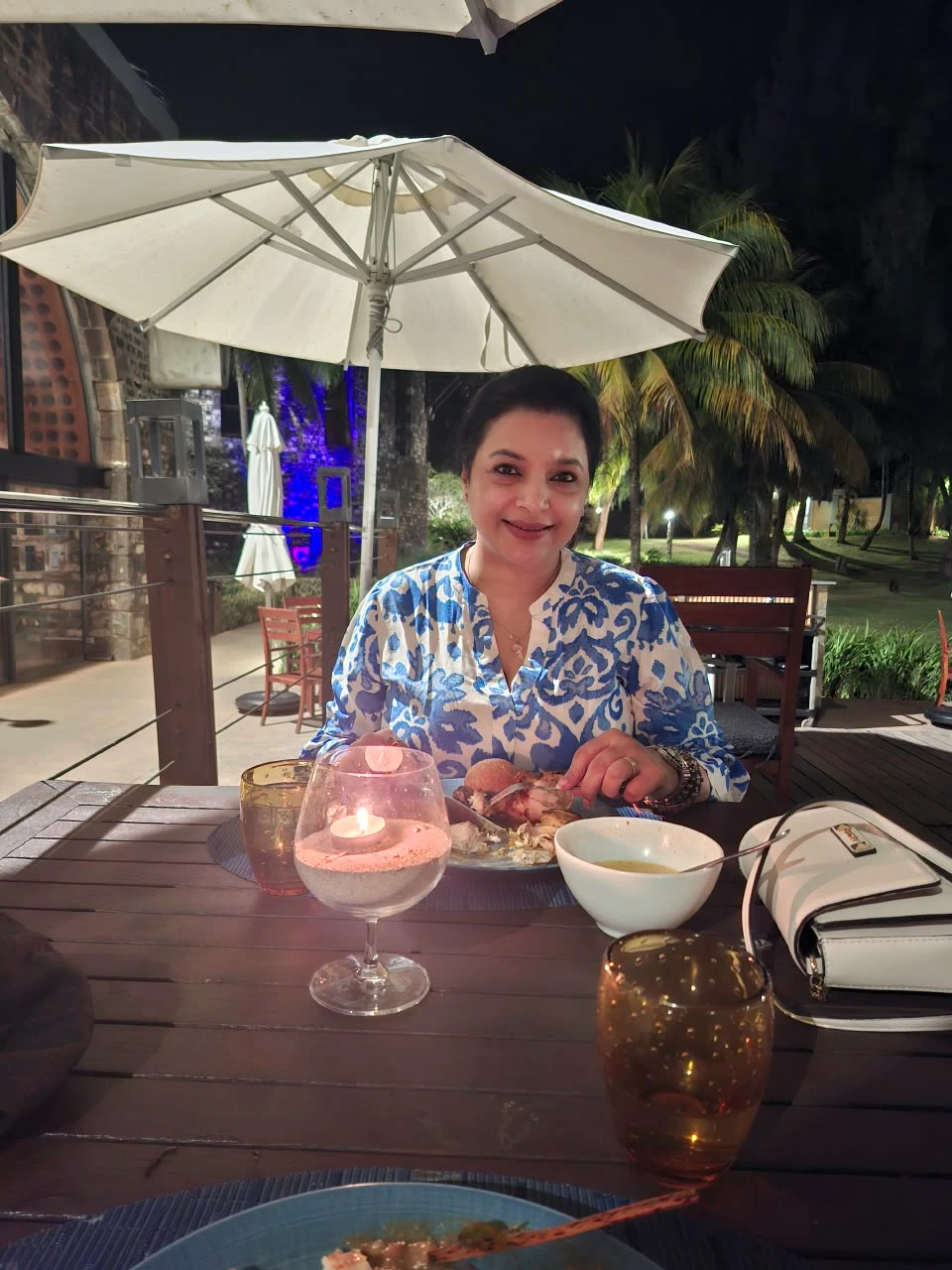
Al fresco candlelit dining amidst tropical breezes in Mauritius
When Indian Chicken Curry Met French-Creole Sauce
During our time in Mauritius, we noticed how Indian food had taken on a distinctly Mauritian character. One dish that caught my attention was the chicken curry, where the familiar Indian spices were combined with a smoother, richer sauce influenced by the island’s French-Creole culinary heritage. It still tasted unmistakably Indian, but the texture and balance were different—less fiery, more rounded and subtly sophisticated. For me, it was a delicious reminder that Indian cuisine in Mauritius had not simply been preserved by generations of immigrants; it had evolved, adapted and become part of the island’s own culinary identity.
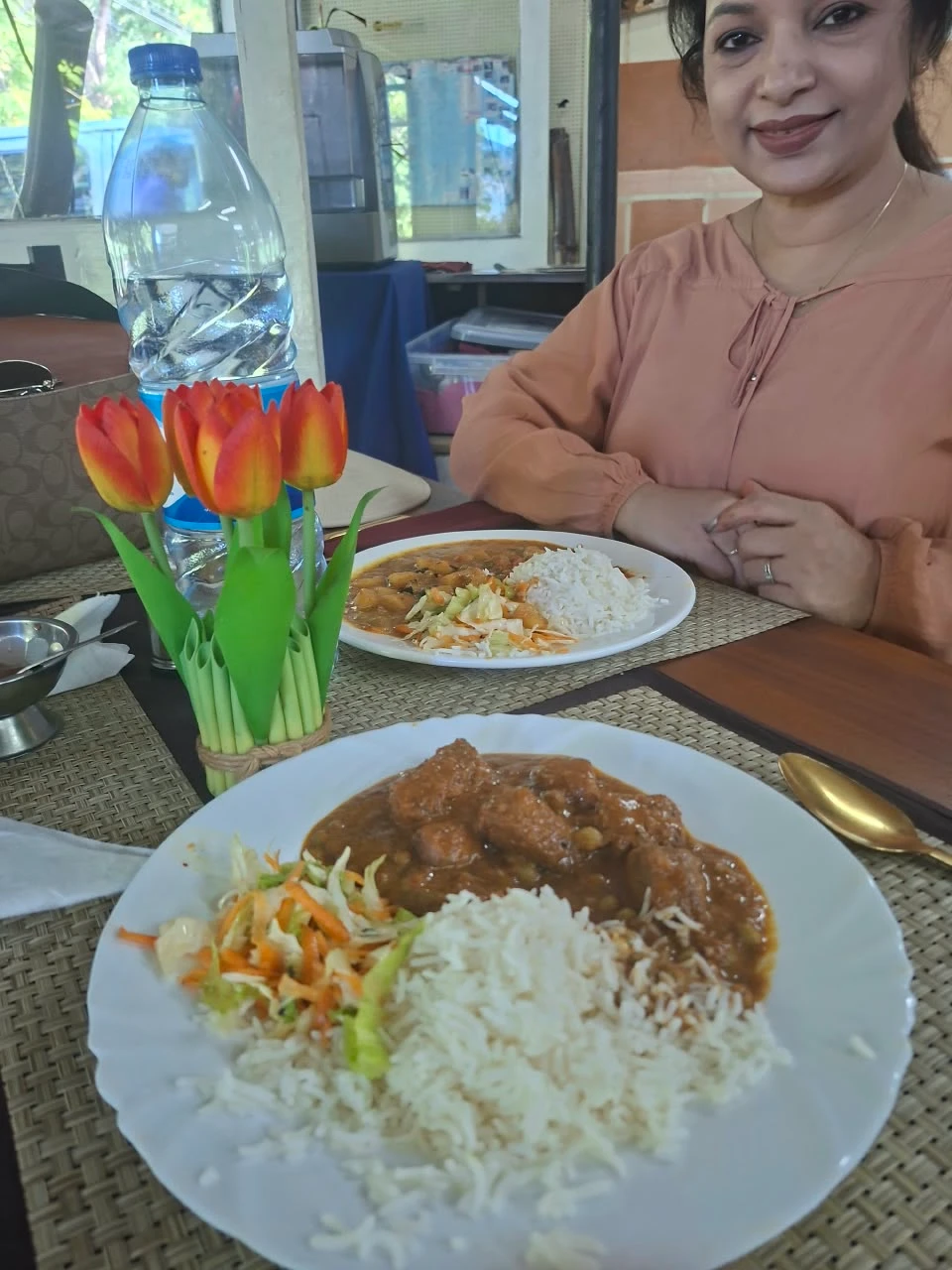
Mauritian chicken curry combining Indian spices with a velvety French-Creole sauce
The Journey from Roti to Dholl puri
During our time in Mauritius, we were struck by how the familiar Indian roti had evolved into something uniquely Mauritian—the dholl puri. Made from flour and filled with seasoned split peas, it carried the comforting memory of Indian kitchens while reflecting generations of adaptation on the island. Eating it with bean curry, chutney and pickles, we could almost taste the journey of the Indian indentured labourers who brought their food traditions across the ocean. For us, dholl puri was not just street food; it was a piece of India that had travelled far, adapted to a new home, and become Mauritian.
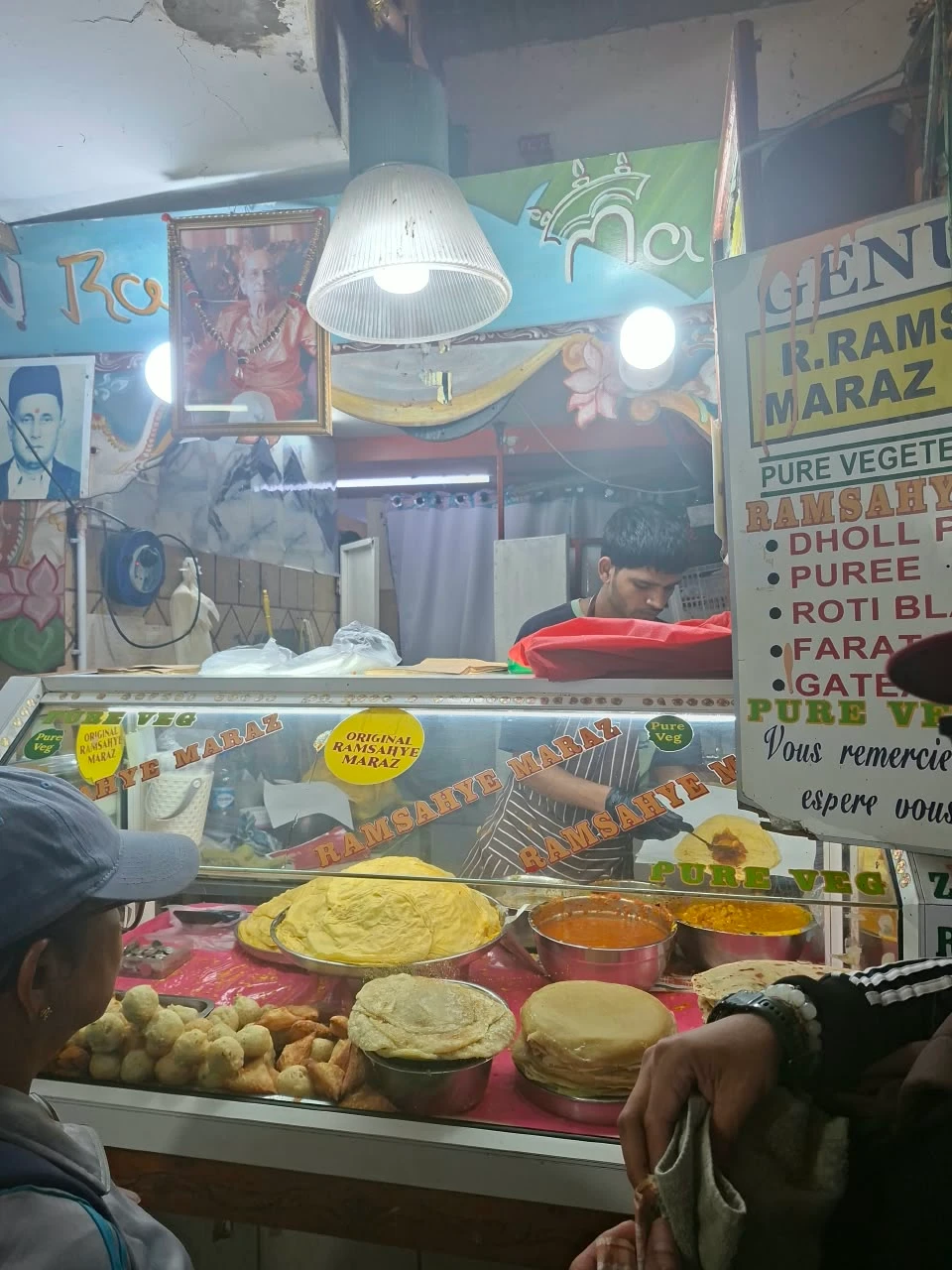
Ramsahye Maraz — The iconic dholl puri counter in Port Louis
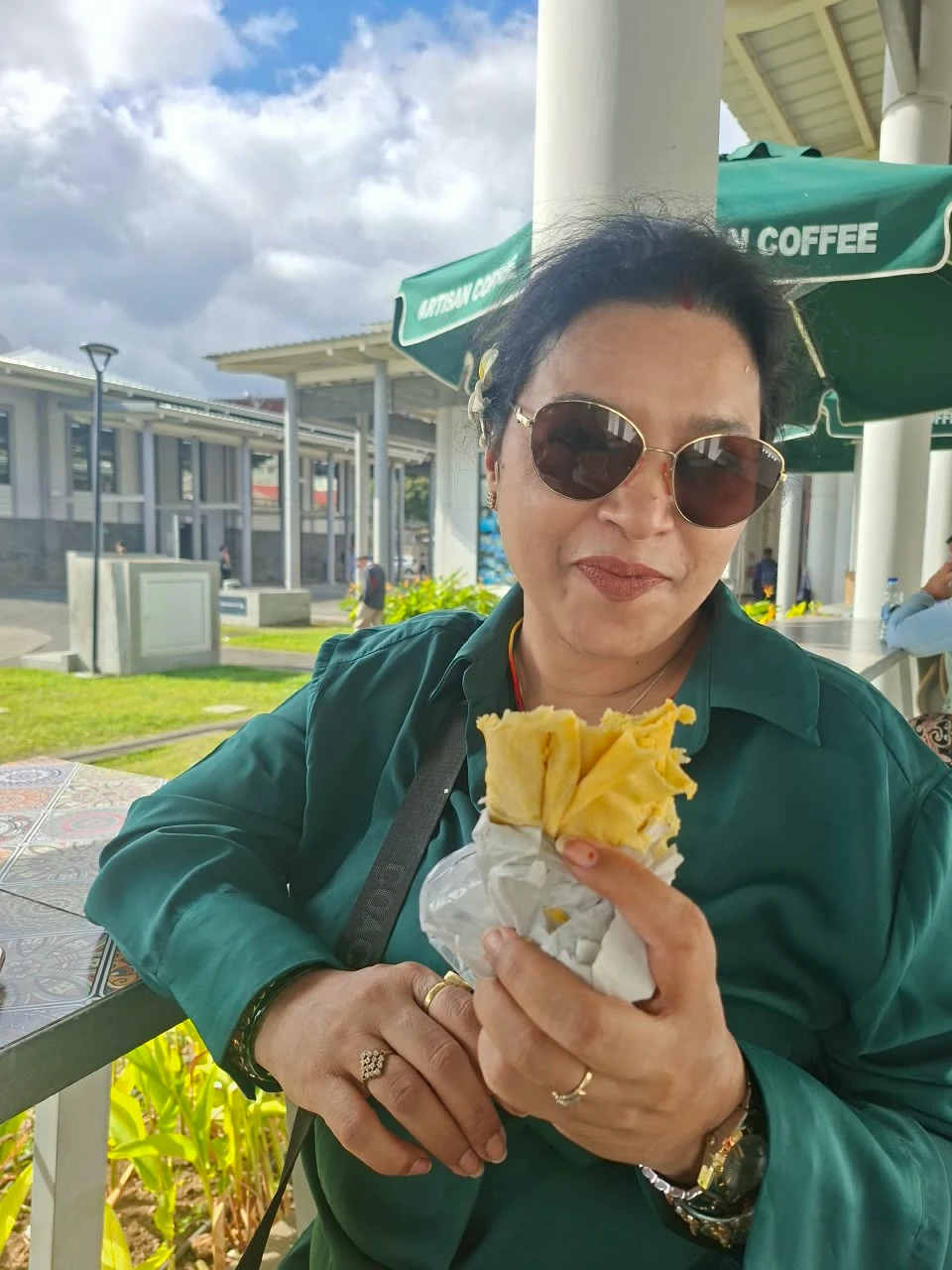
Warm dholl puri filled with seasoned yellow split peas, bean curry, and chutney
Indian spicy lentils, grilled fish with French velvety creamy sauce - Continents on a single plate
We honestly didn't expect a single plate of food to sum up the whole vibe of Mauritius, but this fusion dish absolutely nailed it. We were served a perfectly grilled piece of white fish stacked on top of a bed of Indian lentils that were packed with cozy, warming spices. The real game-changer, though, was the puddle of rich, French velvety cream sauce underneath it all, which completely mellowed out the spice and tied everything together. It turns out that pairing rustic, soulful Indian comfort food with fancy French culinary technique is the ultimate flavor combo we would really enjoy.
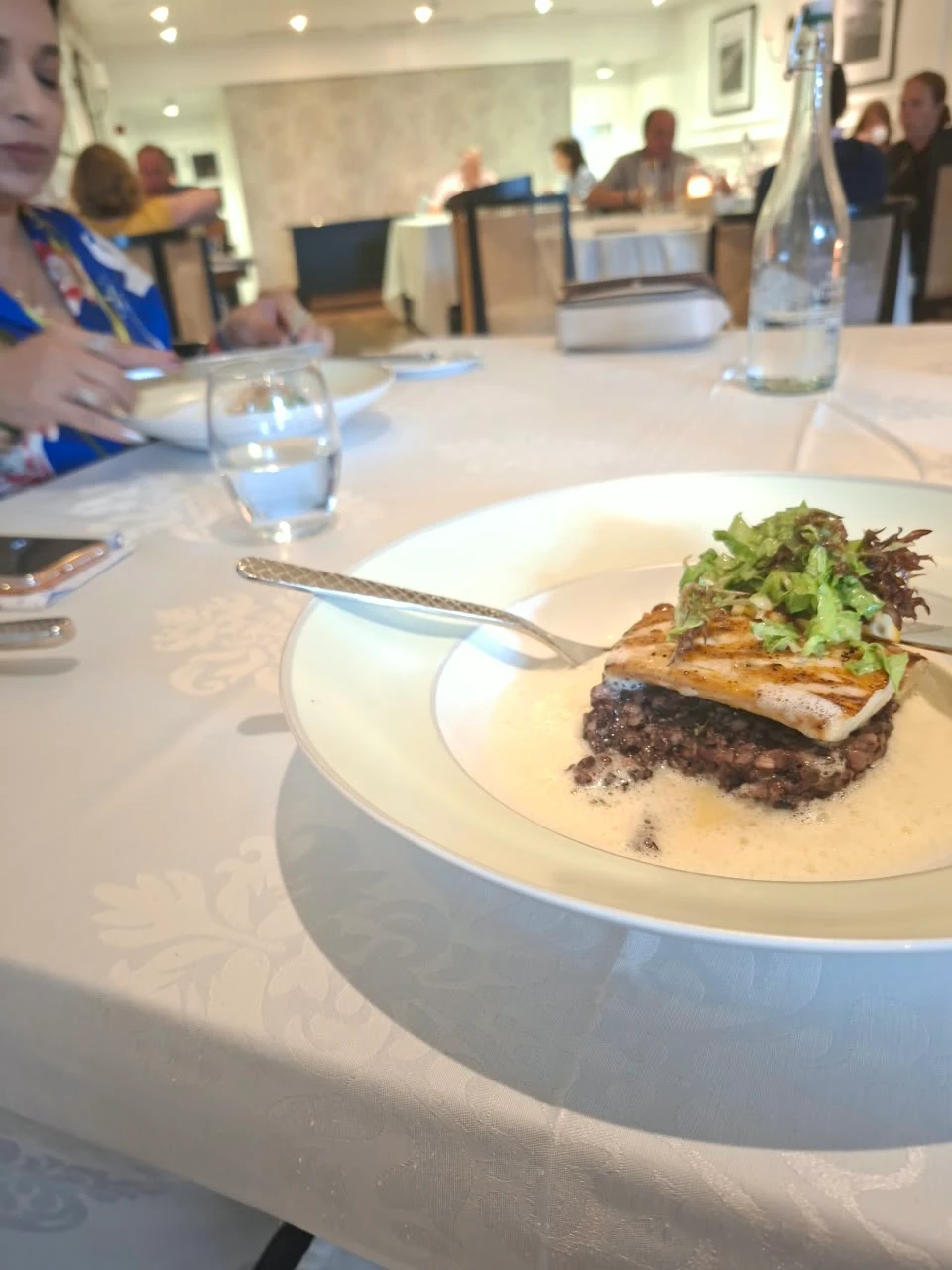
Grilled white fish stacked on cozy Indian lentils with velvety French cream sauce
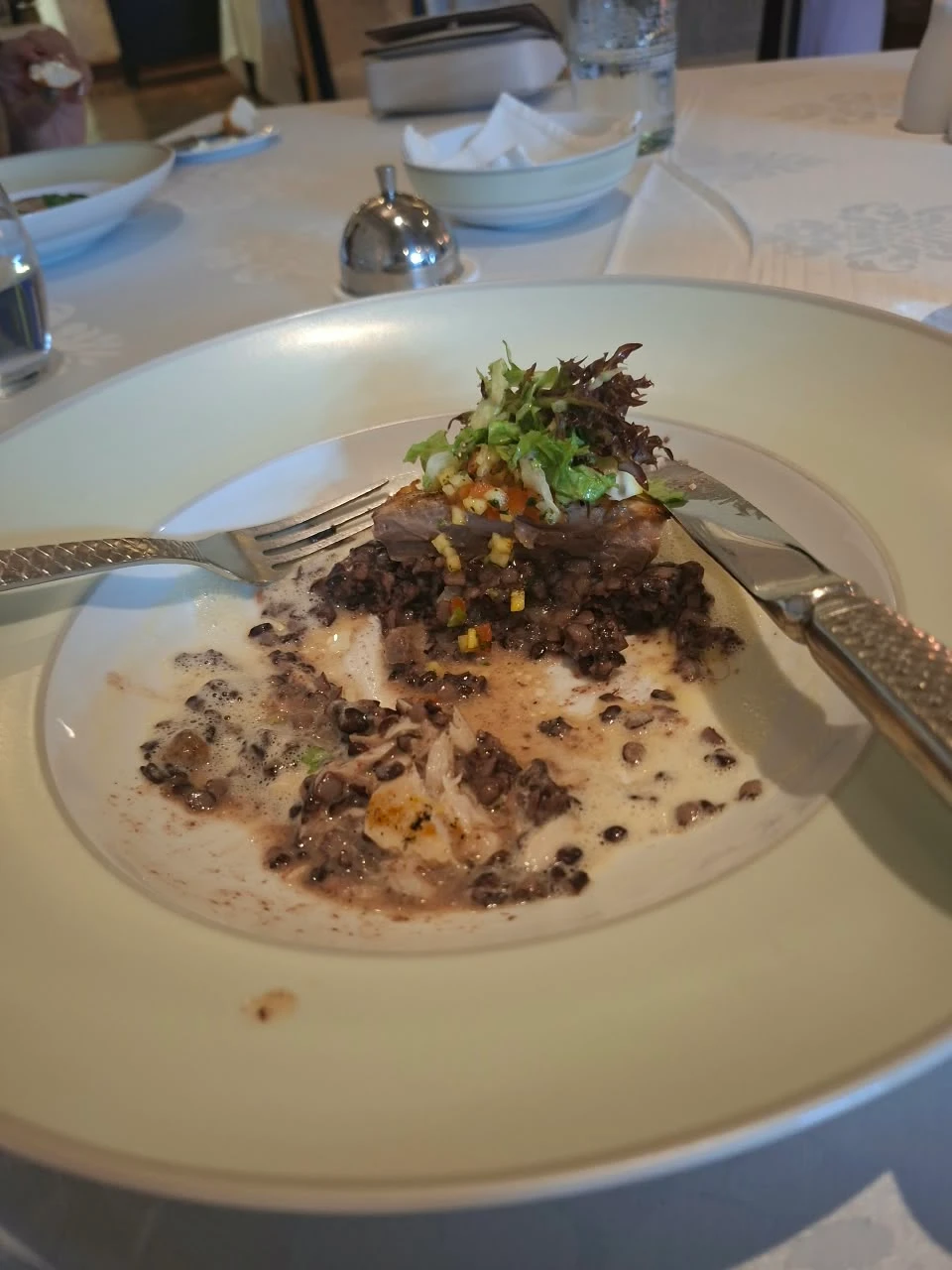
Continents on a single plate — pairing rustic Indian comfort with French culinary technique
A Melting Pot of Resilience: The History of Mauritian Cari Poisson et Bringel
When an island landlady of Indian origin prepares *Cari Poisson et Bringel* as a surprise, she serves a dish deeply anchored in 19th-century history. Following the abolition of slavery, over half a million indentured laborers from India arrived in Mauritius to work the sugar cane plantations, bringing with them a rich heritage of spice blending. A possible evolution of this dish is as follows. Facing meager rations, they cultivated backyard gardens to grow brinjals (eggplants) and caught local fresh fish to supplement their meals, using the spongy texture of the eggplant to stretch a small amount of seafood into a hearty dish. Over generations, this necessity evolved into a definitive Indian-Creole fusion masterpiece; while its foundation relies on Indian spices like cumin and turmeric, the gravy is uniquely lightened by the local Creole addition of abundant fresh tomatoes, thyme, and garlic, turning a meal of survival into a celebrated Mauritian family tradition.
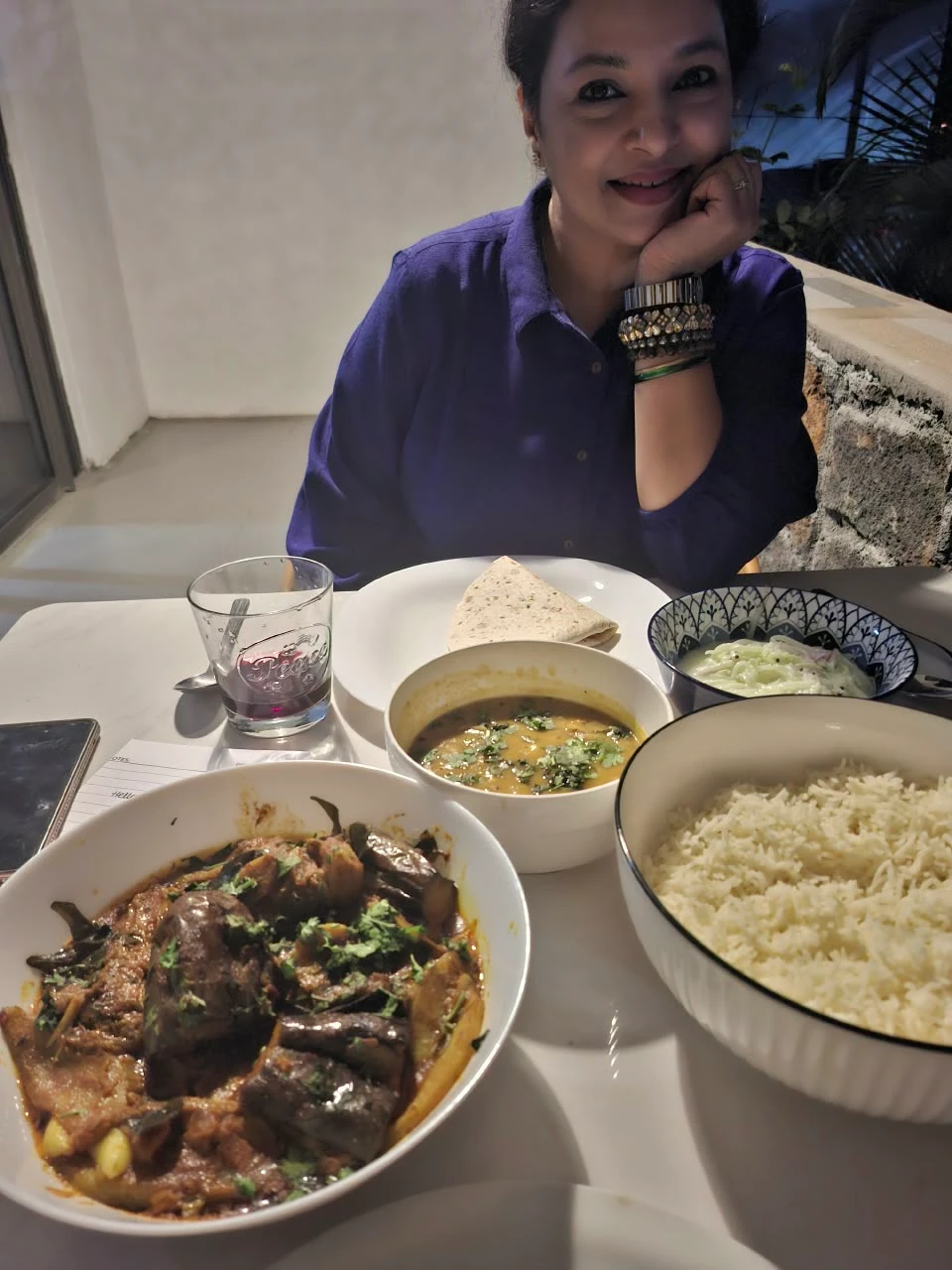
Homecooked Cari Poisson et Bringel dinner prepared by our island landlady
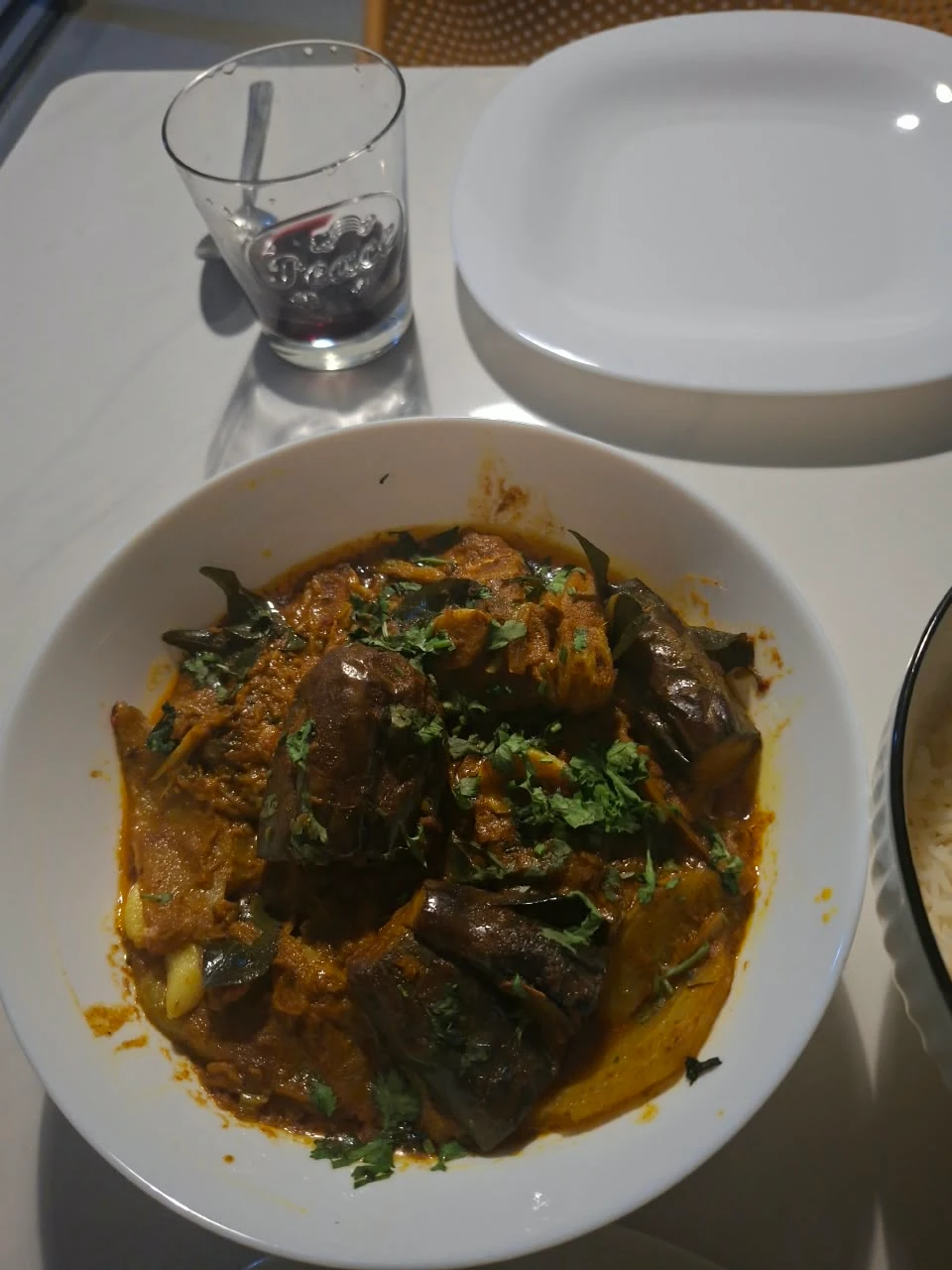
Cari Poisson et Bringel — Fresh ocean fish and eggplant in fragrant Creole-spiced gravy
When Indian Spices Found a Mauritian Soul
Near Le Caudan Waterfront in Port Louis, we sat down to enjoy a traditional Indian thali. The spices were all there—fragrant, vibrant and very much alive—but remarkably light and balanced, reflecting the influence of the island’s French-Creole and African culinary traditions. We thoroughly enjoyed this experience, not simply for the food itself, but for what it represented: Indian cuisine travelling across the Indian Ocean, adapting to a new land and eventually evolving into something distinctly Mauritian. For us, this was the most delicious way to understand how Indian food, influenced by African, French and Creole flavours, became part of the culinary identity of Mauritius.
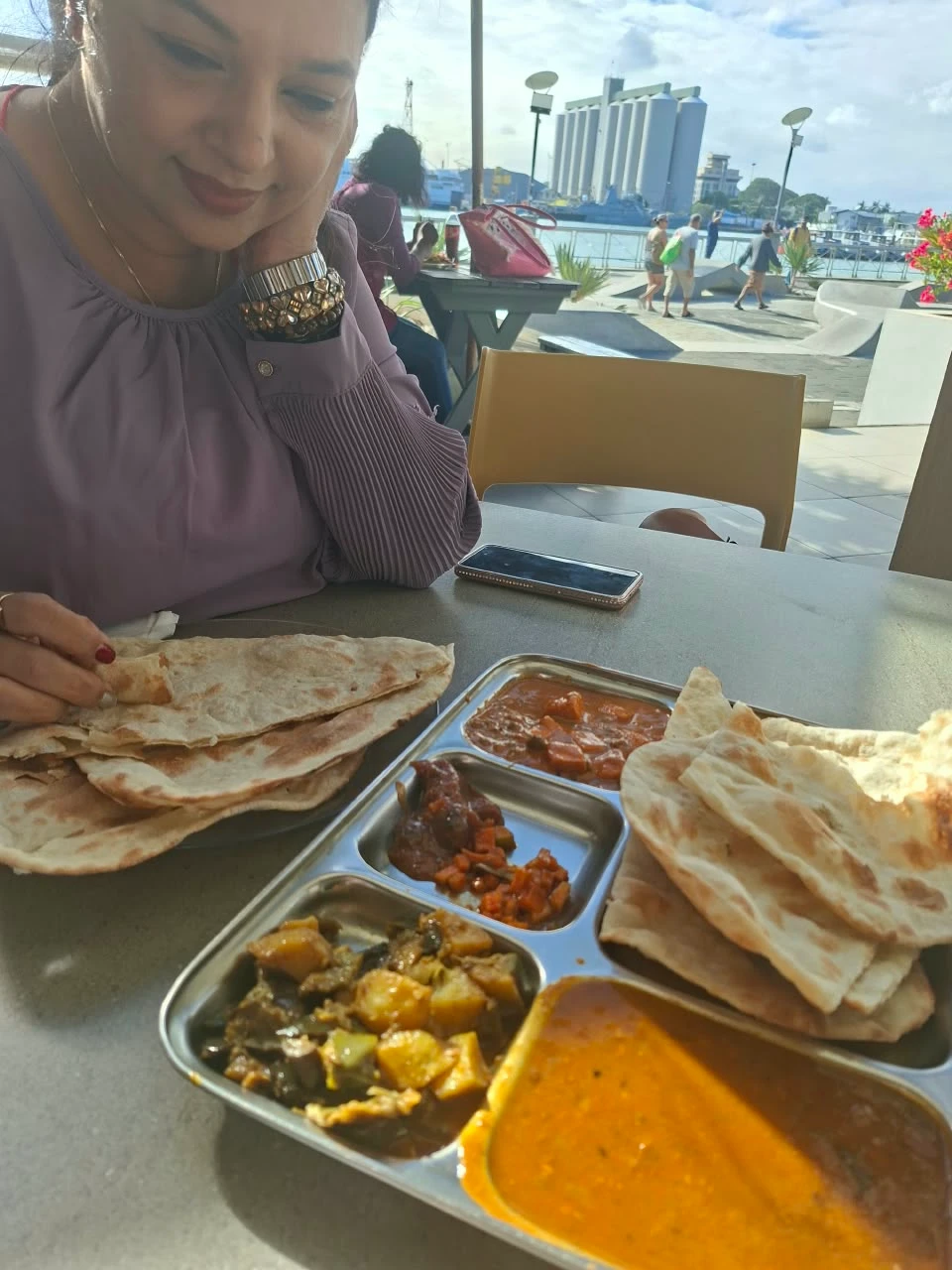
Traditional Indian thali near Le Caudan Waterfront in Port Louis
When Falooda Became Alouda at Port Louis Mauritius
Walking through the streets of Port Louis, we discovered another delightful example of how Indian food traditions evolved in Mauritius—alouda, the island’s answer to the Indian falooda. Brought through the Indian community, the familiar combination of milk, basil seeds and sweet syrup was adapted to local tastes and became a beloved Mauritian drink, often enjoyed at the bustling Central Market and around the city. As we stopped for a glass, it felt like more than a refreshing drink on a warm day; it was another small chapter in the journey of Indian flavours—from India, across the Indian Ocean, and into the everyday life of Mauritius.
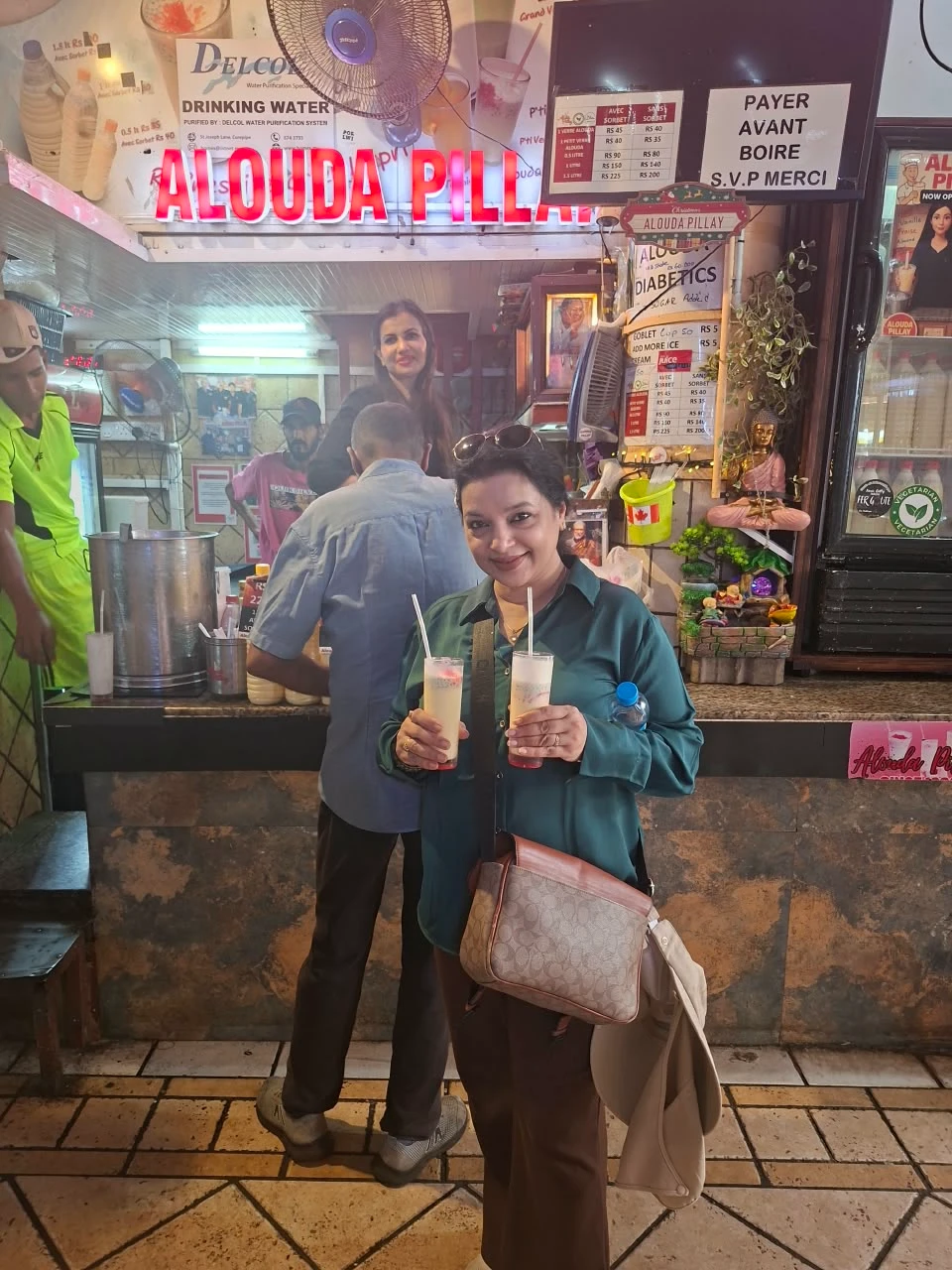
Alouda Pillay — The beloved Mauritian drink evolved from Indian falooda
A Sweet Fusion: How the Mauritian Gulab Jamun Found Its Creole Soul
The Mauritian Gulab Jamun beautifully showcases how traditional Indian sweets transformed through the island's unique Creole culture. While the classic version is heavily soaked in syrup, the Mauritian adaptation evolved under French culinary influences to become a neat, "dry" finger food—conceptually echoing how French pâtisseries privilege structured, dry-to-the-touch pastries like local gâteaux. When we first bit into one on a warm afternoon in Port Louis, we expected the familiar, syrupy sponge of the Indian original. Instead, we were treated to a dense, wonderfully crumbly, cake-like texture with a golden, slightly crisp shell, perfectly designed to be eaten on the go with a tissue while wandering through the vibrant island markets.

Mauritian Gulab Jamun — A neat, dry Creole sweet with crisp golden shell
A Little India in the Heart of Port Louis - Central Market
Walking through the Central Market of Port Louis, we were immediately reminded of an Indian bazaar. The colourful displays of vegetables and fruits, sacks of spices, fresh herbs, pulses and familiar Indian ingredients created a wonderfully familiar atmosphere. The sounds, aromas and lively bargaining felt remarkably close to the markets back home. Yet, alongside the Indian influence, there was something distinctly Mauritian—the Creole, African, Chinese and French touches that make Port Louis unique. For us, the market was another fascinating reminder of how Indian traditions travelled across the ocean and became woven into the everyday life of Mauritius.
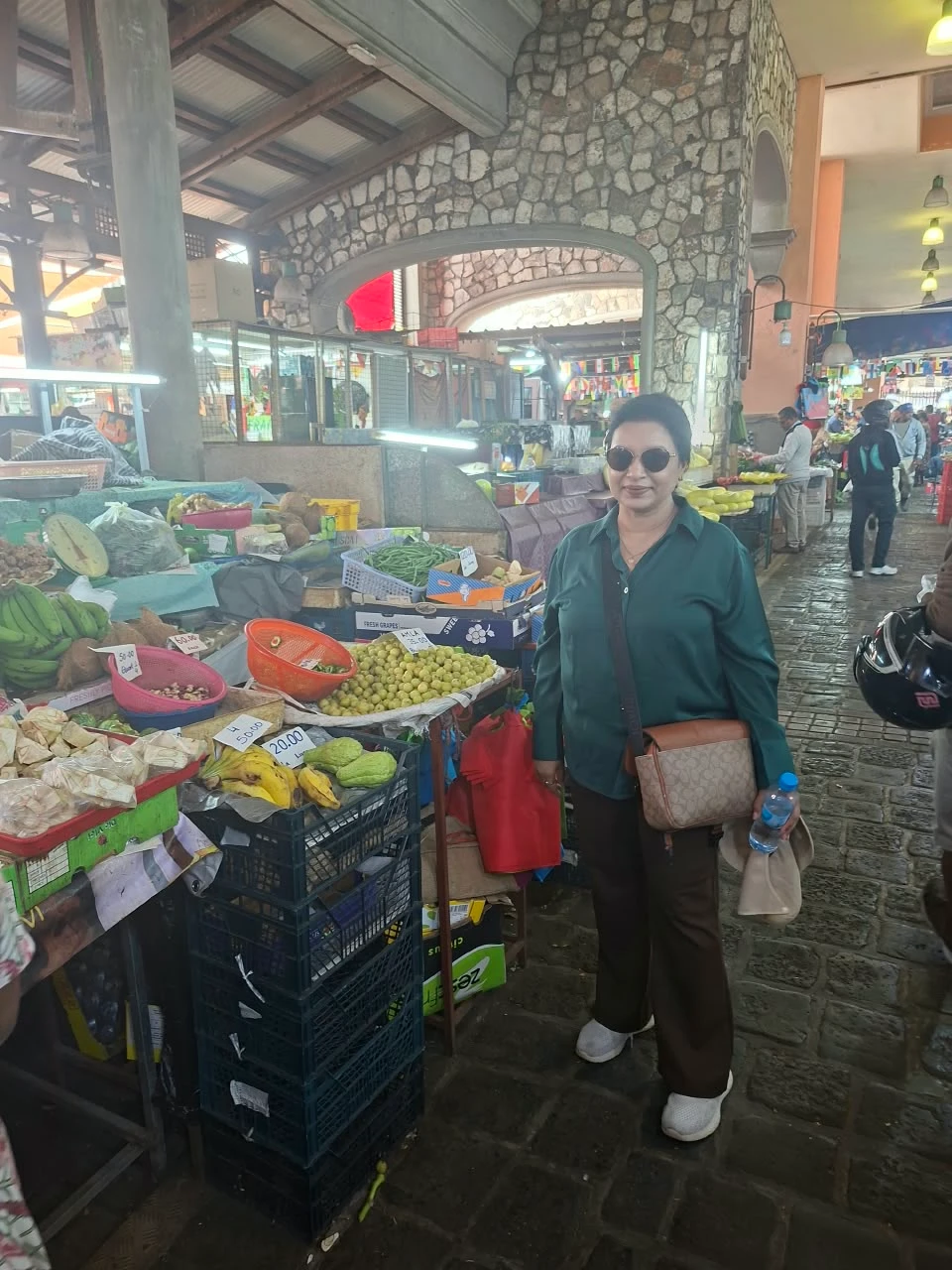
Vibrant produce, spices, and pulses at the Central Market of Port Louis
TRAVELLING THROUGH THE TIMELESS LEGACY OF INDIAN CIVILIZATION ACROSS ASIA AND BEYOND
Back to Mauritius Gateway→CONTINUE THE MAURITIUS JOURNEY
Journey Through the Sacred Monuments of Mauritius