
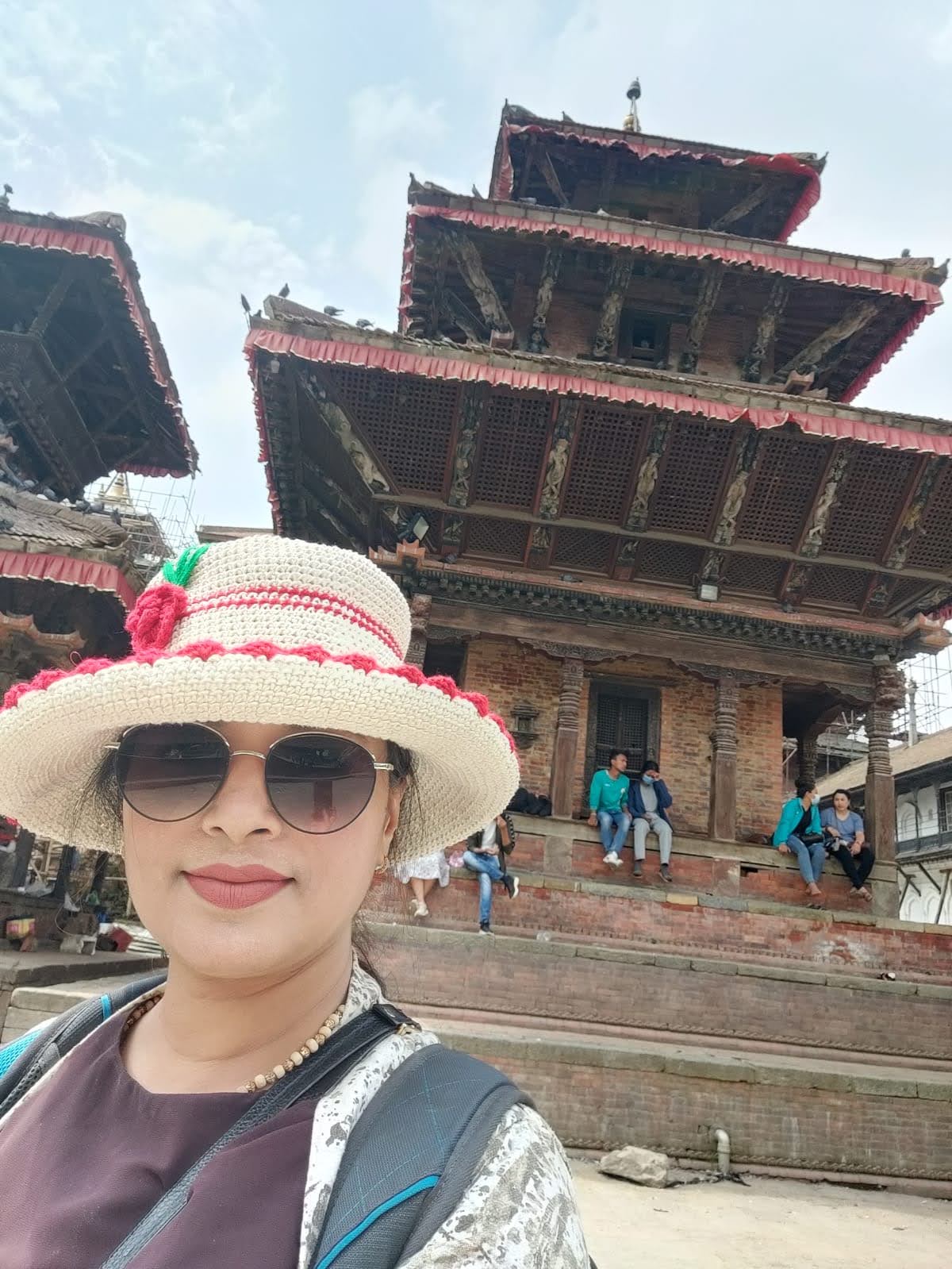
KATHMANDU DURBAR SQUARE — THE ROYAL HEART OF NEPAL’S HERITAGE.
A UNESCO World Heritage Site
Once the royal palace complex of the Malla and Shah kings of Nepal, the square is filled with magnificent temples, courtyards, shrines, and intricately carved wooden buildings that reflect centuries of Nepalese art, craftsmanship, and royal history.
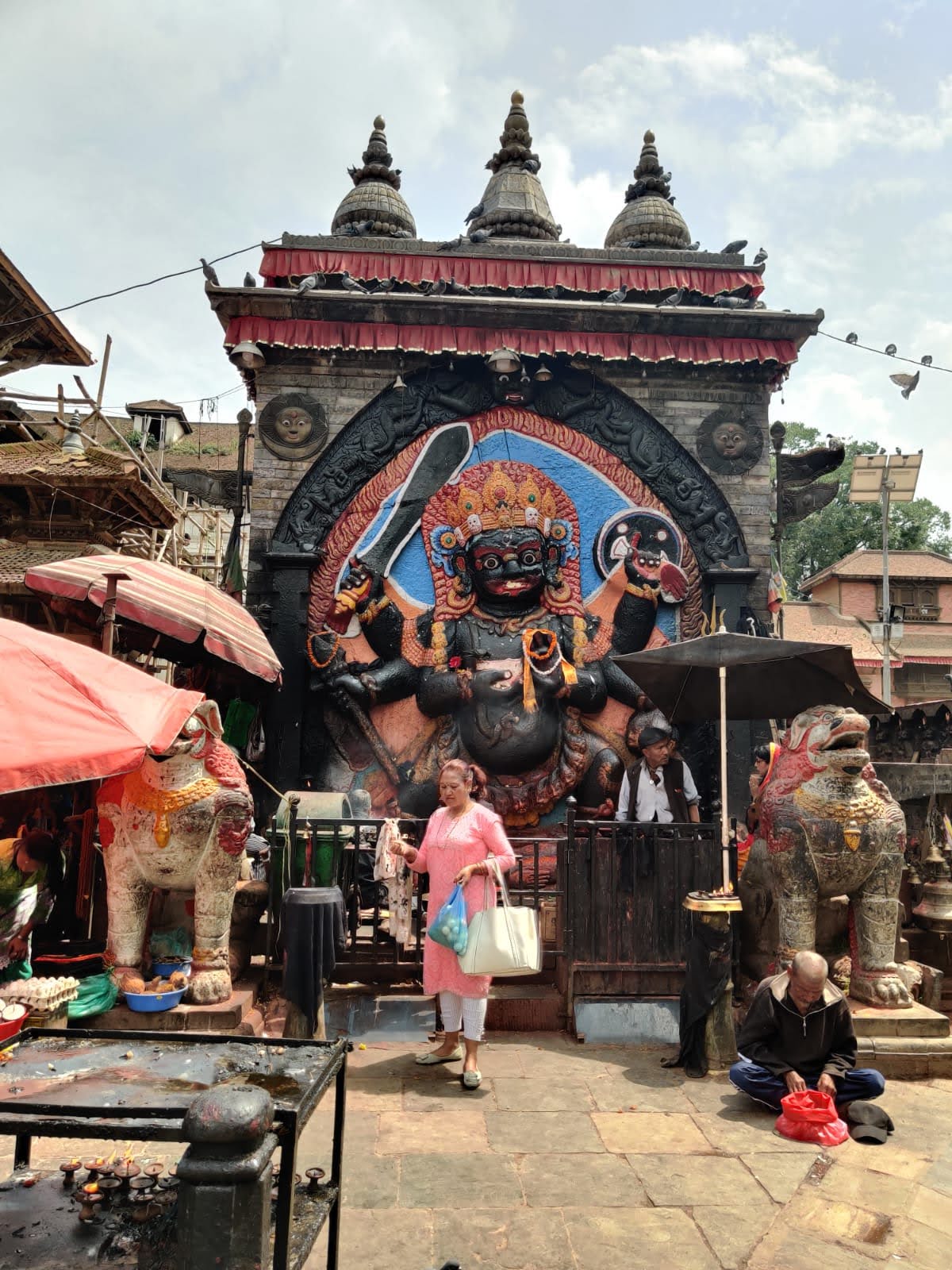
Sacred Landmark
The revered six-armed stone relief of Kala Bhairav, an active center of worship in the square
Kathmandu Durbar Square - A UNESCO World Heritage Site
Centuries of Art, Devotion & Royal Splendor
The historic Kathmandu Durbar Square stands at the cultural and spiritual heart of Kathmandu and represents one of the finest examples of traditional Newar architecture in the Kathmandu Valley. Once the royal palace complex of the Malla and Shah kings of Nepal, the square is filled with magnificent temples, courtyards, shrines, and intricately carved wooden buildings that reflect centuries of Nepalese art, craftsmanship, and royal history. Recognized as a UNESCO World Heritage Site, Kathmandu Durbar Square remains one of the country’s most important historical landmarks.
Among its many attractions are the Hanuman Dhoka Palace, the Taleju Temple, Kumari Ghar — home of the Living Goddess Kumari — and numerous beautifully carved pagoda-style temples dedicated to Hindu deities. The square is constantly alive with pilgrims, local devotees, tourists, traditional ceremonies, and vibrant street activity, creating a unique blend of spirituality and daily life. Every corner of the complex reveals exquisite wood carvings, stone sculptures, and sacred symbols that showcase the extraordinary artistic traditions of the Newar civilization.
Museum of Sacred Architecture
Over 50 historic temples, royal courtyards, and sanctuaries reflecting the pinnacle of medieval Himalayan wood and stone artistry.
Nautalle Durbar: Nine-Storey Palace
The historic Nautalle Durbar, meaning the “Nine-Storey Palace,” is one of the most striking structures within the royal complex of Kathmandu Durbar Square. Built during the Malla period and later expanded by the Shah rulers, the palace served important royal and ceremonial functions. Its towering multi-storeyed design, intricately carved wooden windows, and traditional Nepalese architecture reflect the grandeur and craftsmanship of medieval Kathmandu. Despite damage from earthquakes over the centuries, Nautalle Durbar continues to stand as a powerful symbol of Nepal’s royal history and architectural heritage.
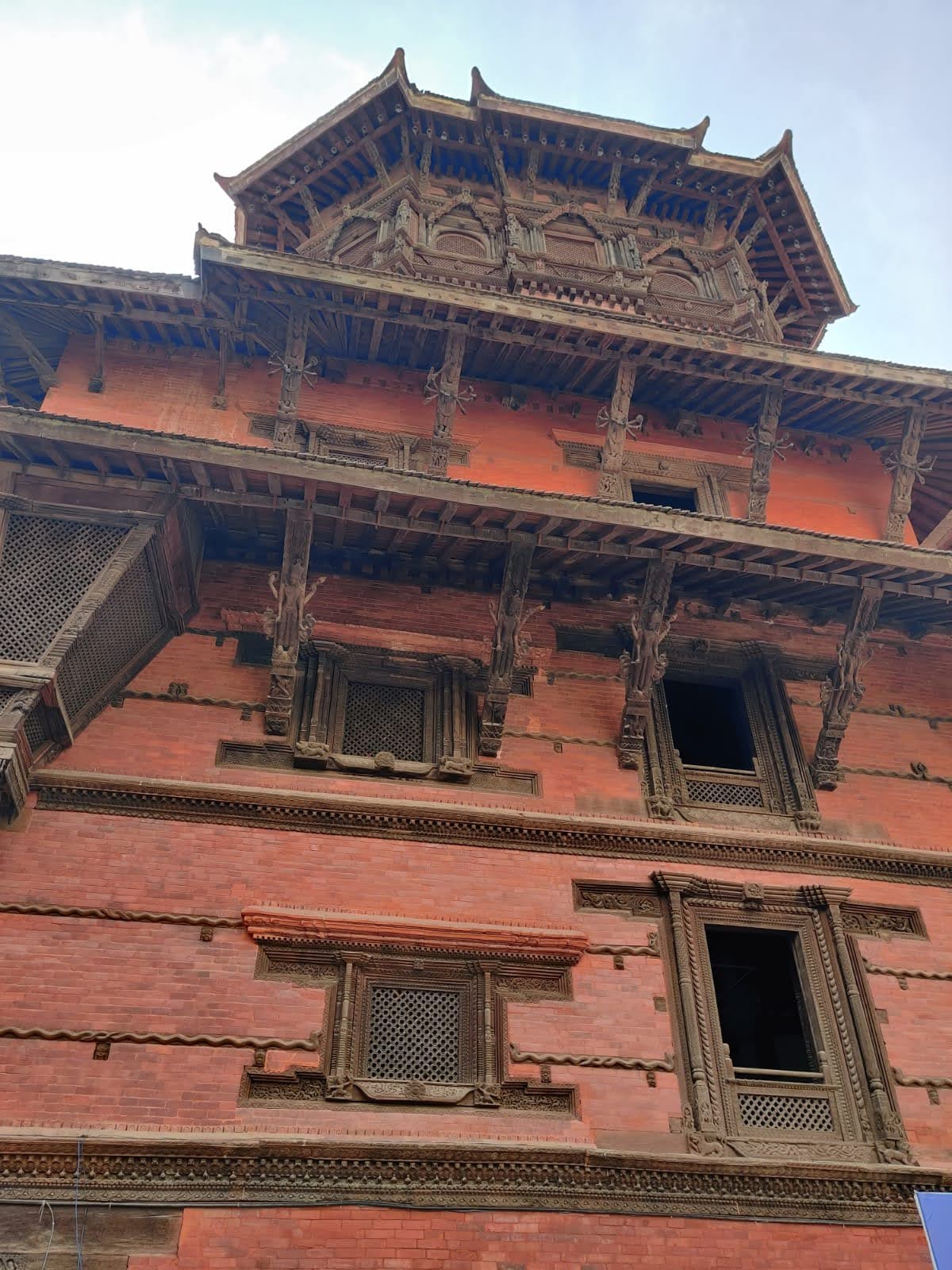
Palace Facade
Towering multi-tiered red-brick design with ornate Newari Jhyal windows
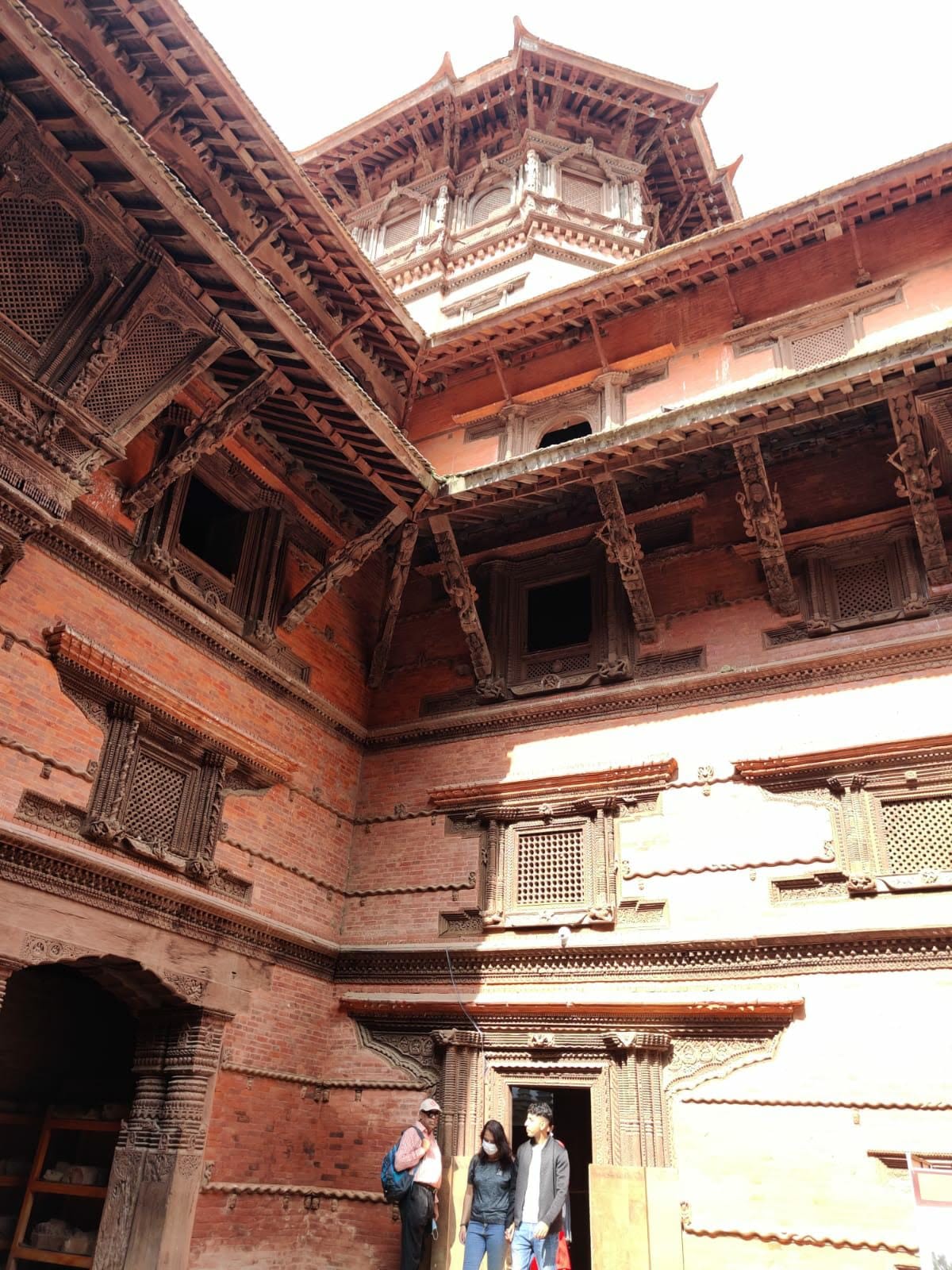
Royal Courtyard
Courtyard galleries showcasing medieval woodwork and multi-story royal towers
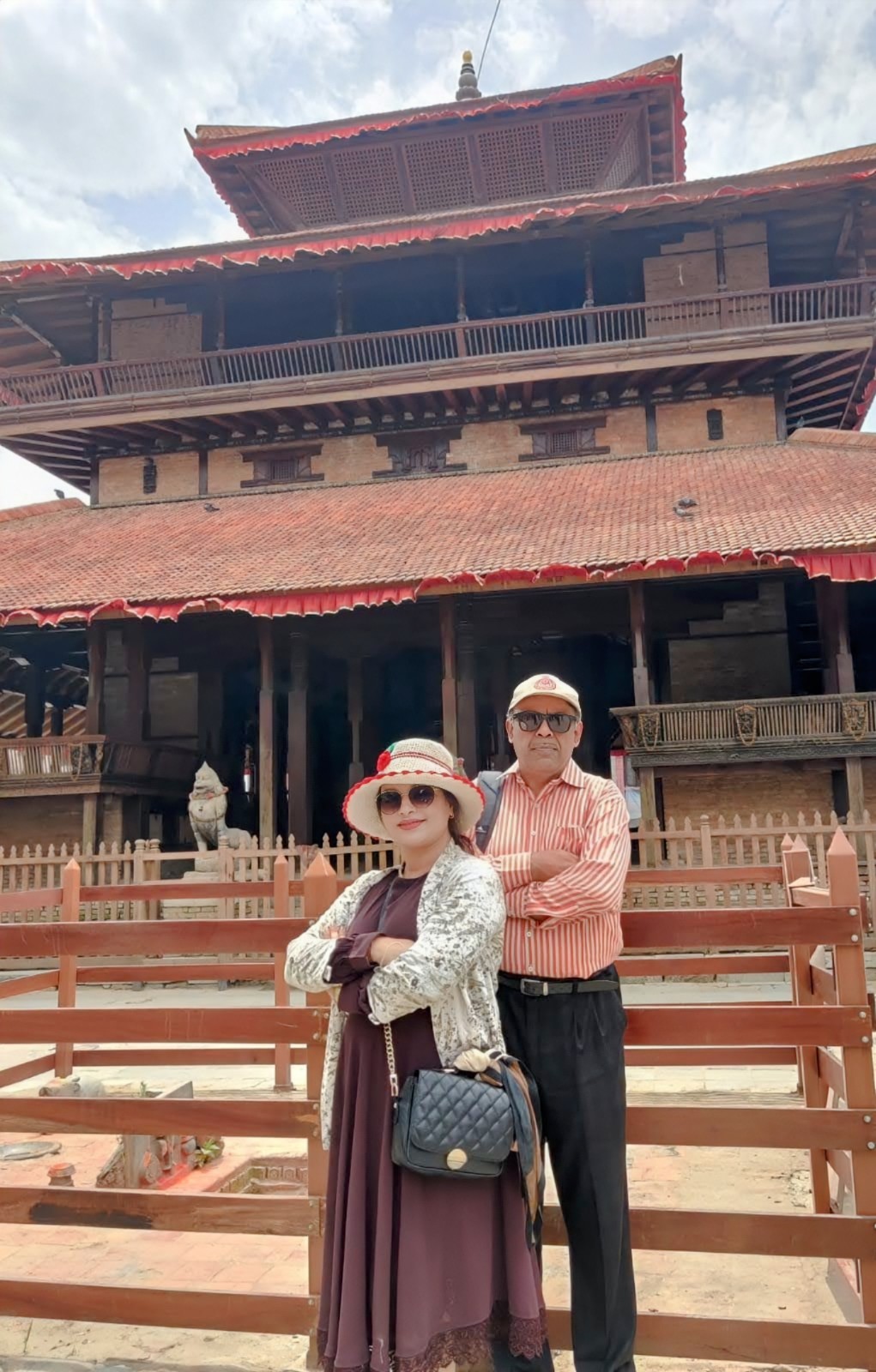
Kasthamandap
The legendary wooden pavilion rebuilt with original Newari methods and reopened in 2022
Kasthamandap Temple: Dedicated to Lord Shiva
The Ancient Three-Story Wooden Pavilion Built from a Single Sal Tree
Kasthamandap is an ancient three-story wooden temple located in Kathmandu Durbar Square, Nepal, and is the historic structure from which the city of Kathmandu derives its name [Kathmandu Durbar Square]. According to local legend, the entire traditional public pavilion was constructed using timber from a single, massive Sal tree [Kathmandu Durbar Square].
While historically associated with medieval rulers, archaeological excavations trace its foundation back to the Lichhavi era around the 7th century. Although completely destroyed during the devastating April 2015 earthquake, the monument was meticulously rebuilt using original Newari architectural methods and officially reopened in 2022.
The Pavilion of Single Wood
The architectural namesake of Kathmandu, standing as a testament to Himalayan resilience and unbroken master carpentry.
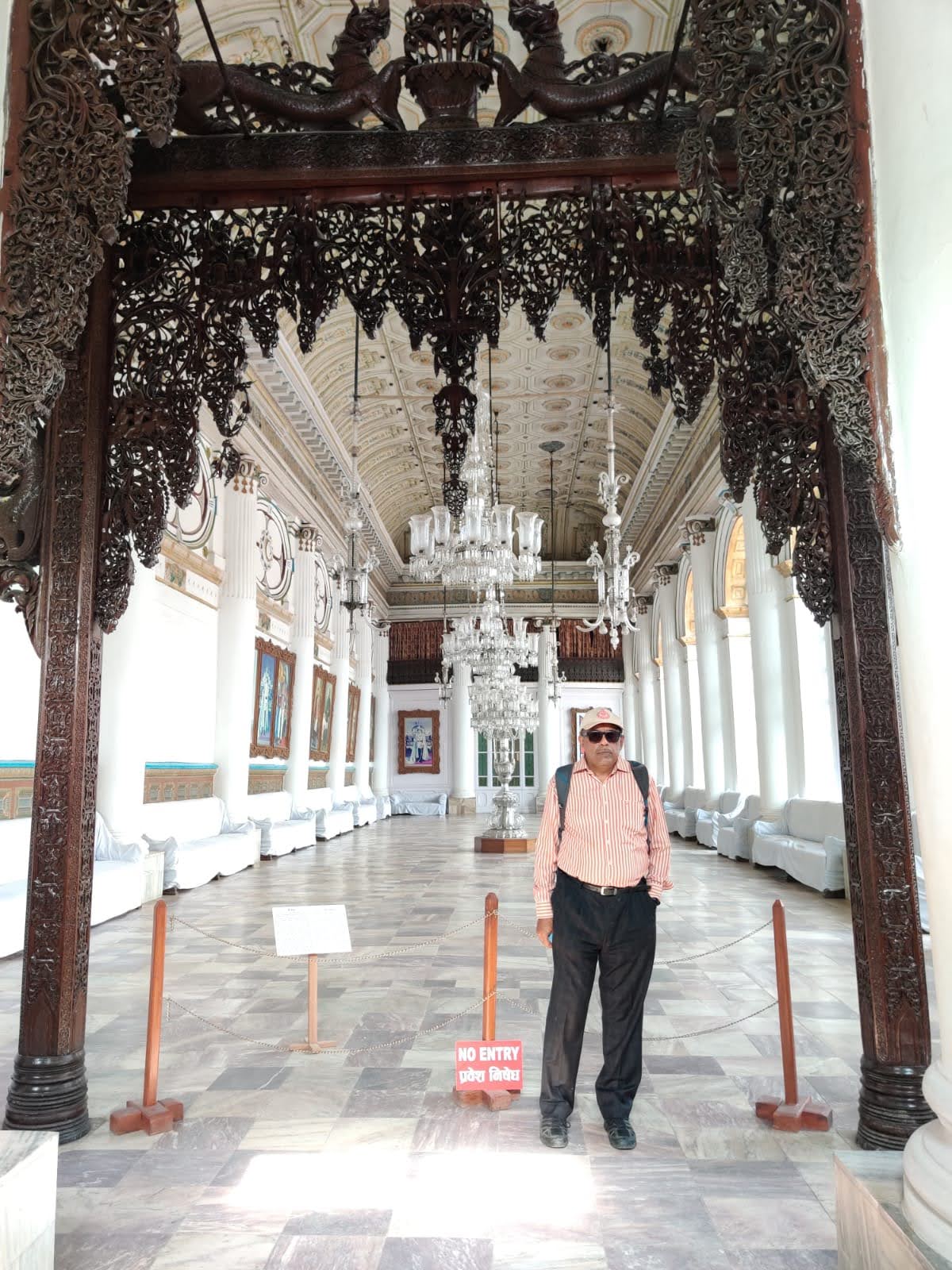
Grand Interior
The royal reception hall framed by an intricately carved Newari wooden arch and European chandeliers
Kathmandu Durbar Square - Baithak: A Royal Audience Hall
Where European Neoclassical Elegance Meets Sacred Newari Artistry
The grand Gaddi Baithak, a historic royal audience hall located within Kathmandu Durbar Square, Nepal. Built in 1908 during the Rana era, the neoclassical chamber blends European elegance—marked by soaring white Corinthian columns and massive crystal chandeliers—with traditional Newari artistry, visible in the intricately carved dark wooden archway in the foreground.
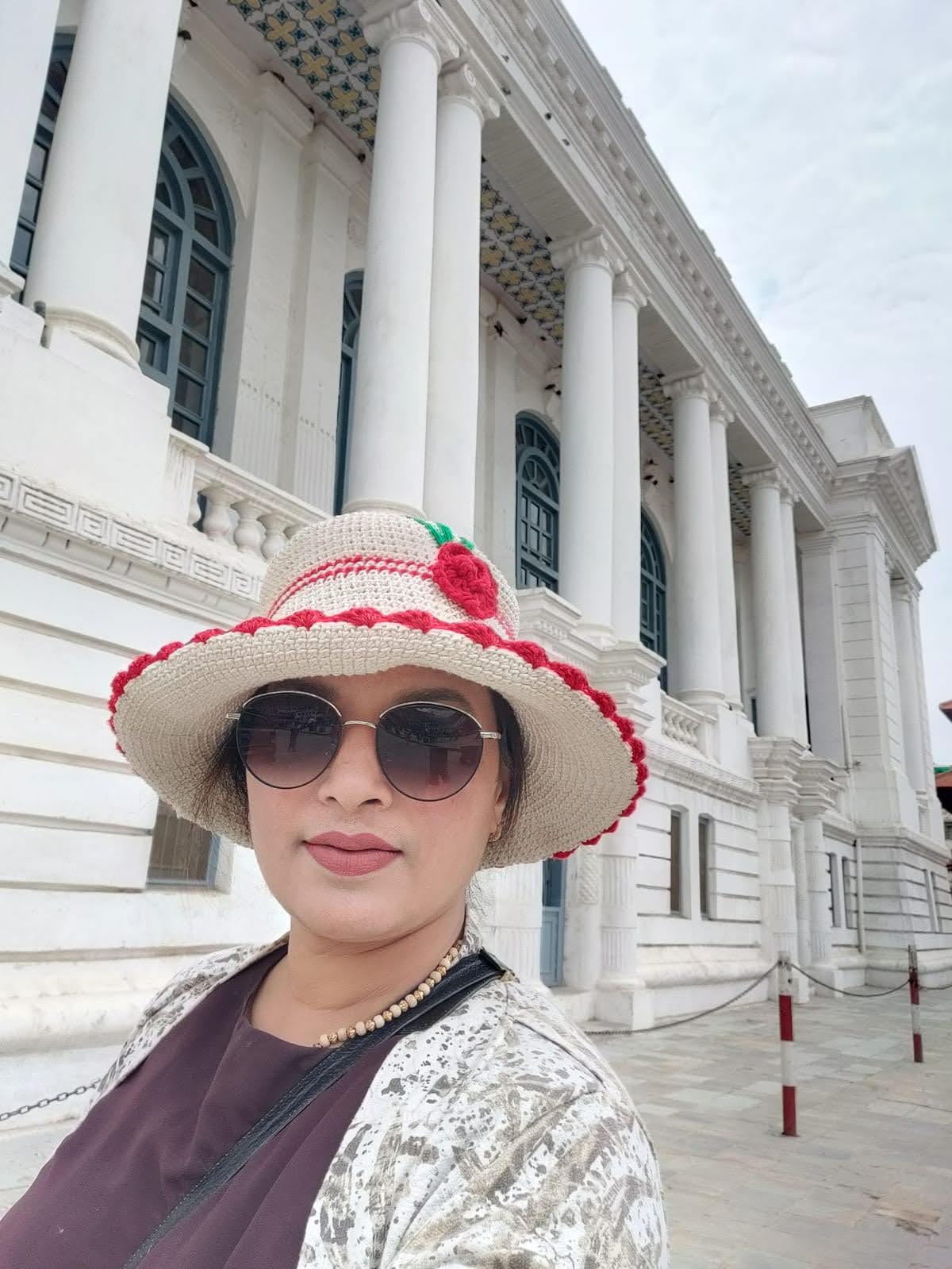
Built in 1908
White Corinthian colonnade facing the traditional red-brick square, representing a unique 20th-century architectural dialogue.
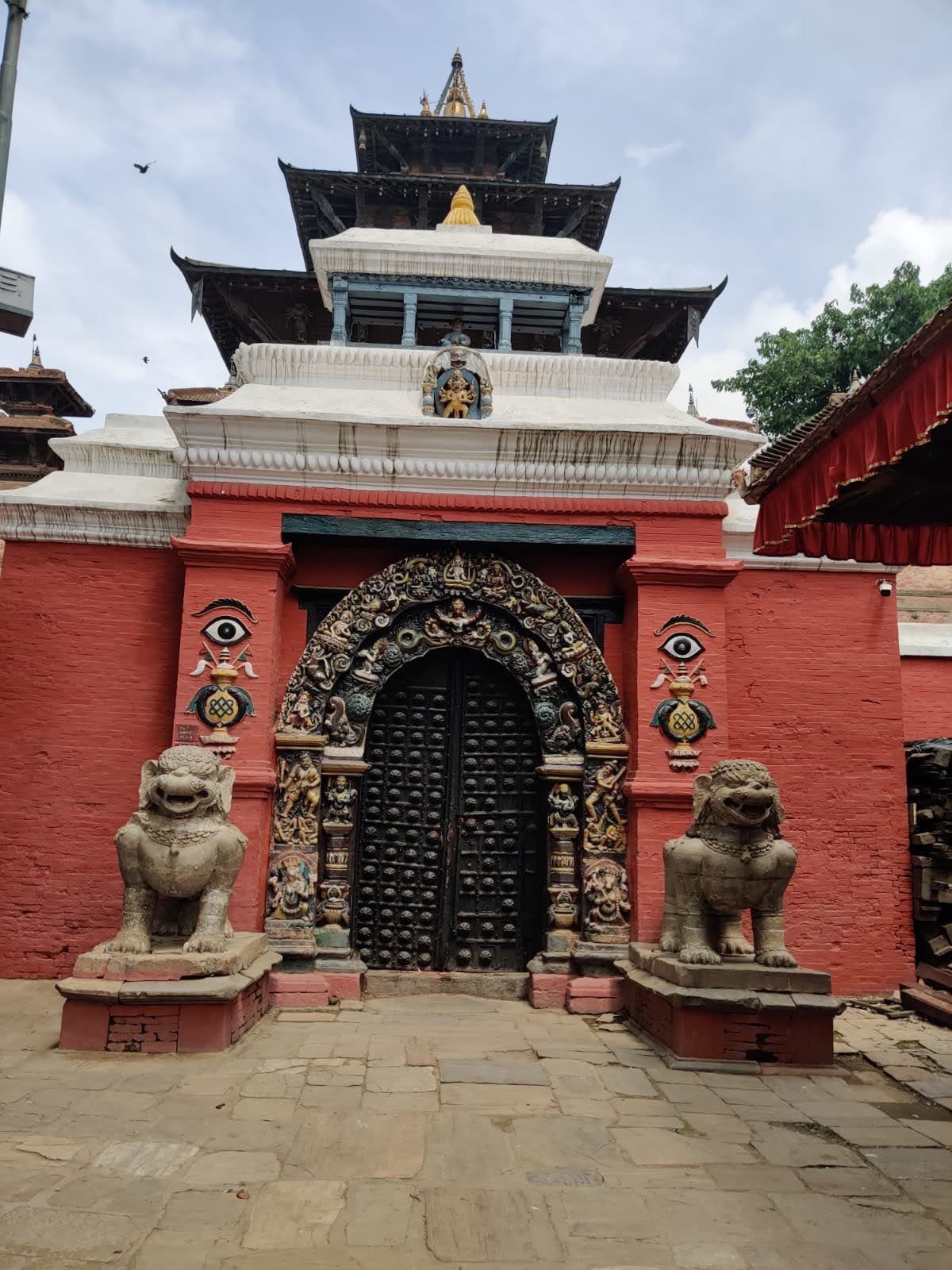
Hanuman Dhoka
The royal gateway guarded by stone lions and adorned with gilded polychrome torana
Kathmandu Durbar, Also Known as Basantapur Durbar and Hanuman Dhoka
The Museum of Temples: Over 50 Sacred Structures
Kathmandu Durbar Square, also known as Basantapur Durbar and Hanuman Dhoka, is an old durbar square in Kathmandu's city center. In the heart of old Kathmandu city, Basantapur never fails to impress first time visitors with its intricate wood carvings and rich history.
Hanuman Dhoka was built during the Licchavi period (4th to 8th centuries AD), and King Pratap Malla extended the property significantly in the 17th century. With the highest concentration of old structures, the square is home to several palaces, courtyards, and temples. It is also known as "the Museum of Temples" because there are over 50 temples in the square.
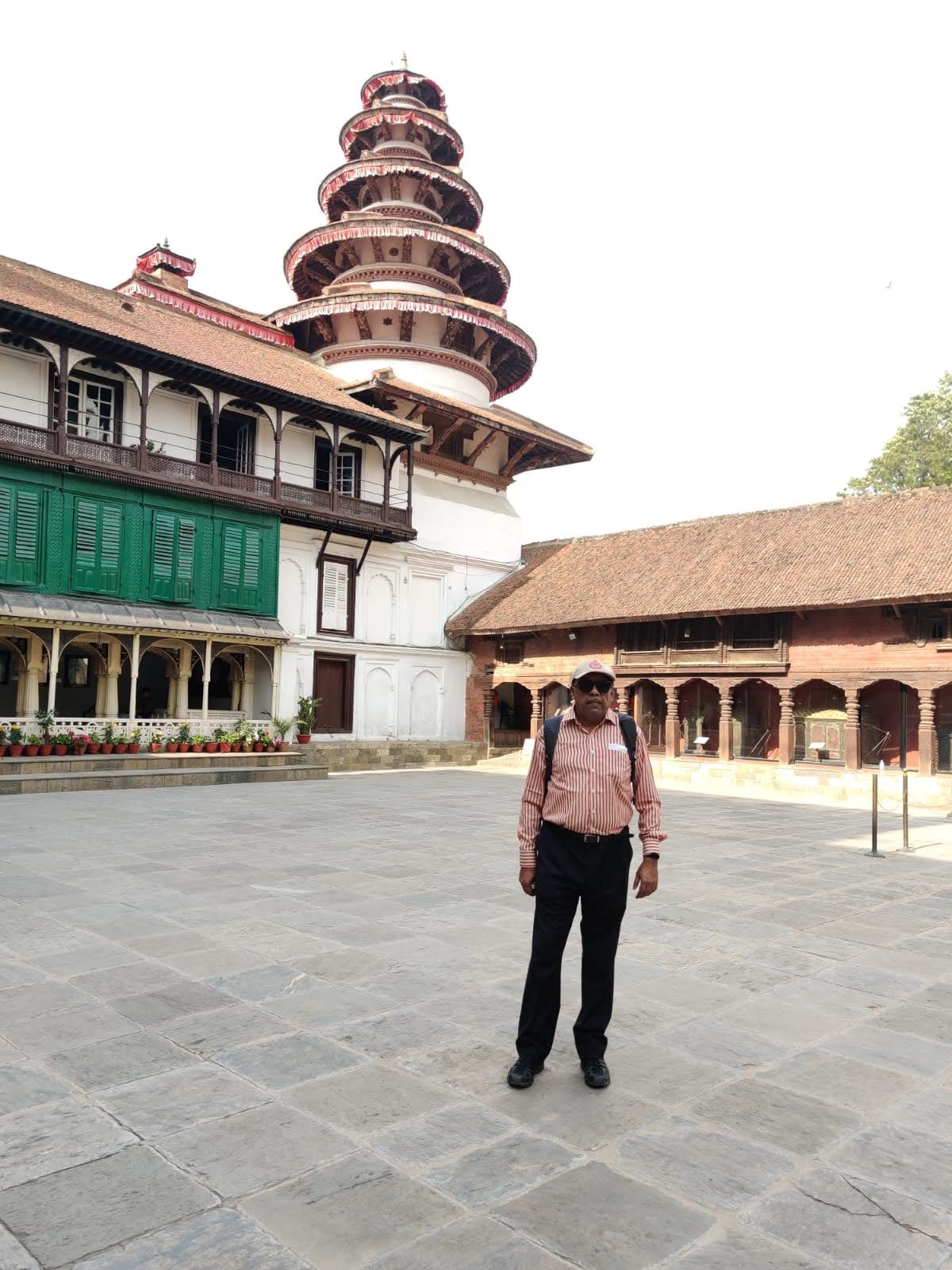
Royal Coronation Courtyard
The historic open-air courtyard where Malla and Shah monarchs were crowned, centered around sacred tiered shrines.
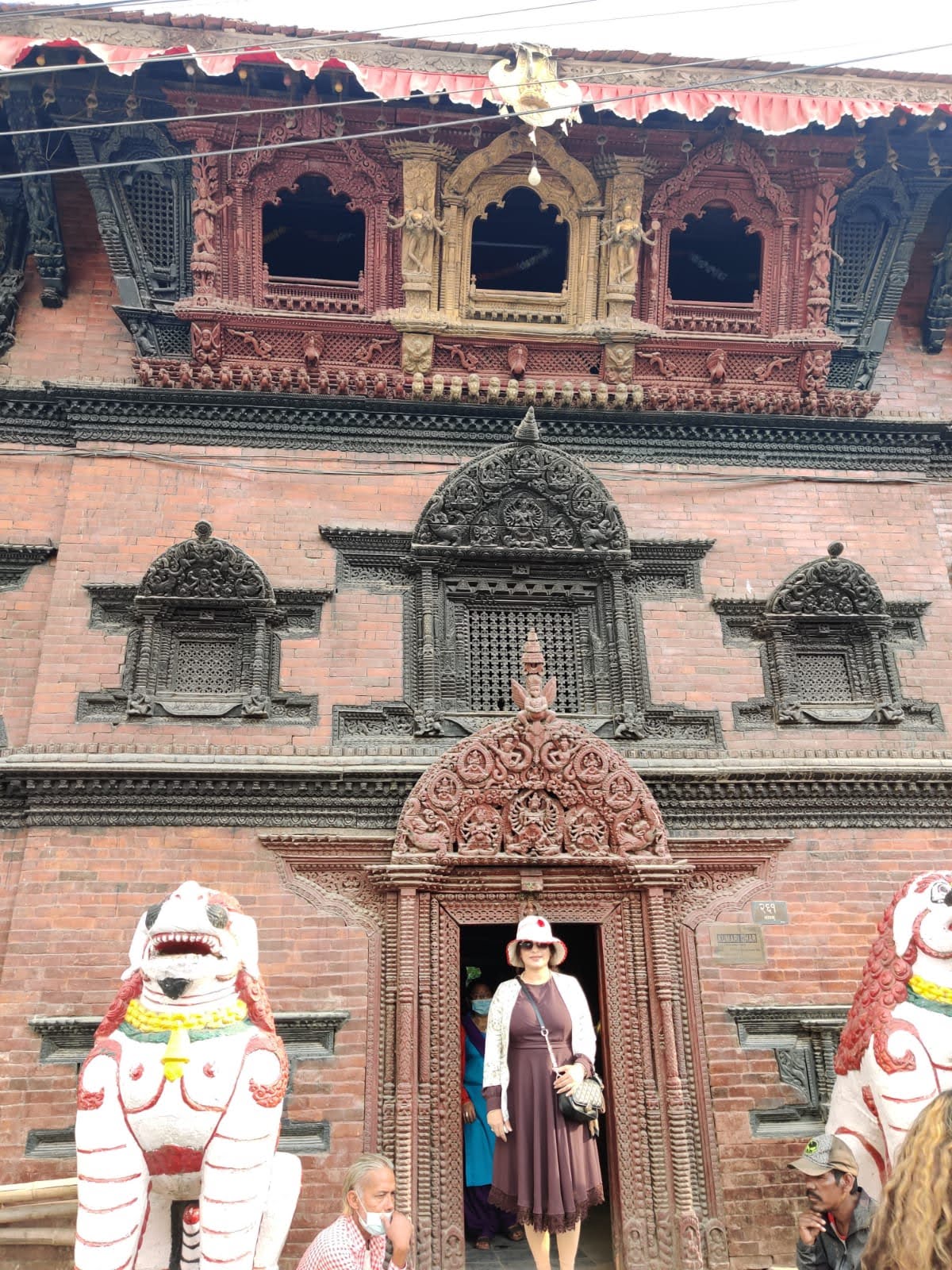
Kumari Ghar
The sacred courtyard palace residence of the Living Goddess with famous carved peacock windows
Kathmandu Durbar Square - Kumari: Living Goddess
Kumari Ghar: Residence of the Earthly Embodiment of Goddess Taleju
The sacred Kumari Ghar is the residence of Nepal’s revered Living Goddess, known as the Kumari — a young girl worshipped as the earthly embodiment of the Hindu goddess Taleju. Located within the historic Kathmandu Durbar Square, this beautifully carved Newar-style palace is one of Kathmandu’s most fascinating cultural and spiritual landmarks.
The Kumari appears occasionally at the palace window to bless devotees and visitors, while during major festivals such as Indra Jatra, she is carried through the city in a grand ceremonial procession.
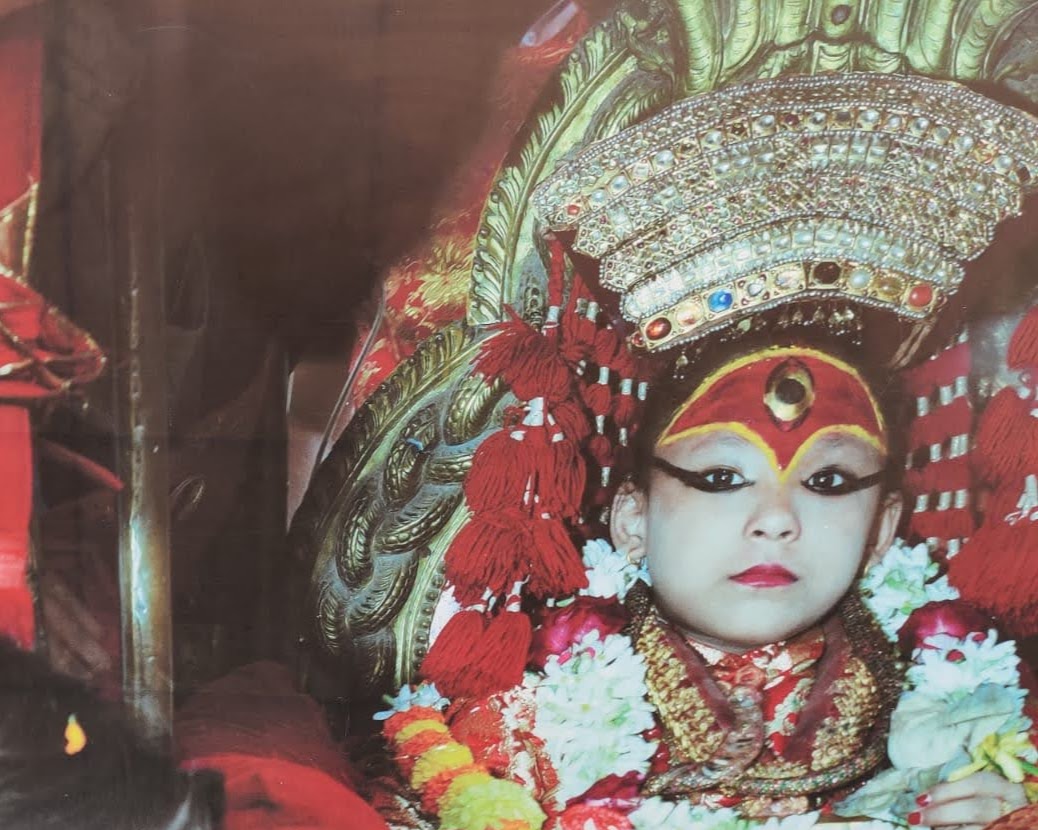
The Living Goddess
Worshipped as Goddess Taleju, wearing sacred ornaments, third eye Agni Chakshu, and ceremonial robes.
Tips for Visiting Kathmandu Durbar Square
Essential guidance for exploring the historic palaces, courtyards, and living temples of Kathmandu.
Visit Early Morning
Visit early morning to avoid crowds.
Keep Your Ticket
Buy the entry ticket and keep it for re-entry.
Comfortable Footwear
Wear comfortable shoes—the square is best explored on foot.
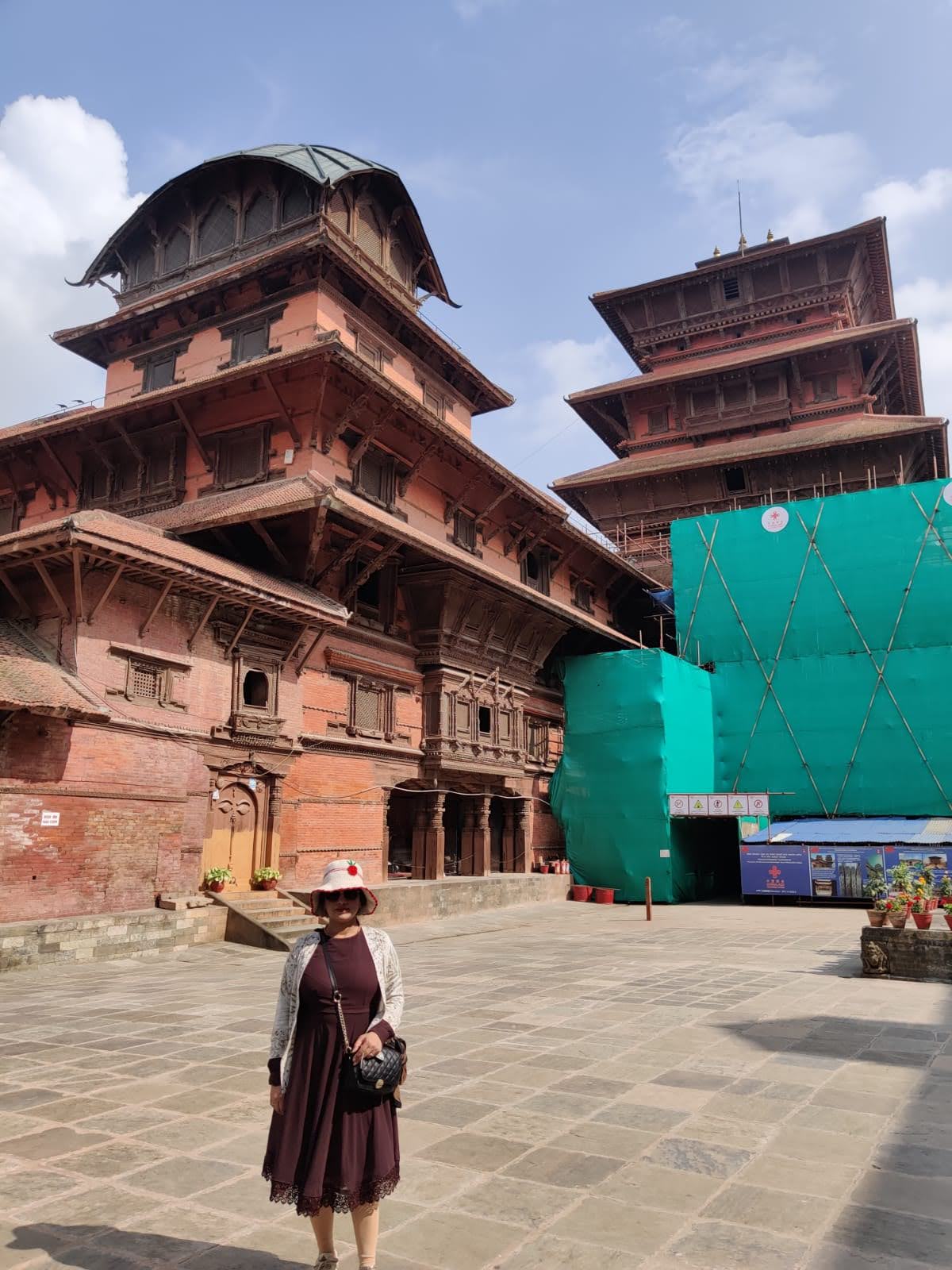
Hire a Local Guide
Hire a local guide to appreciate the rich history.
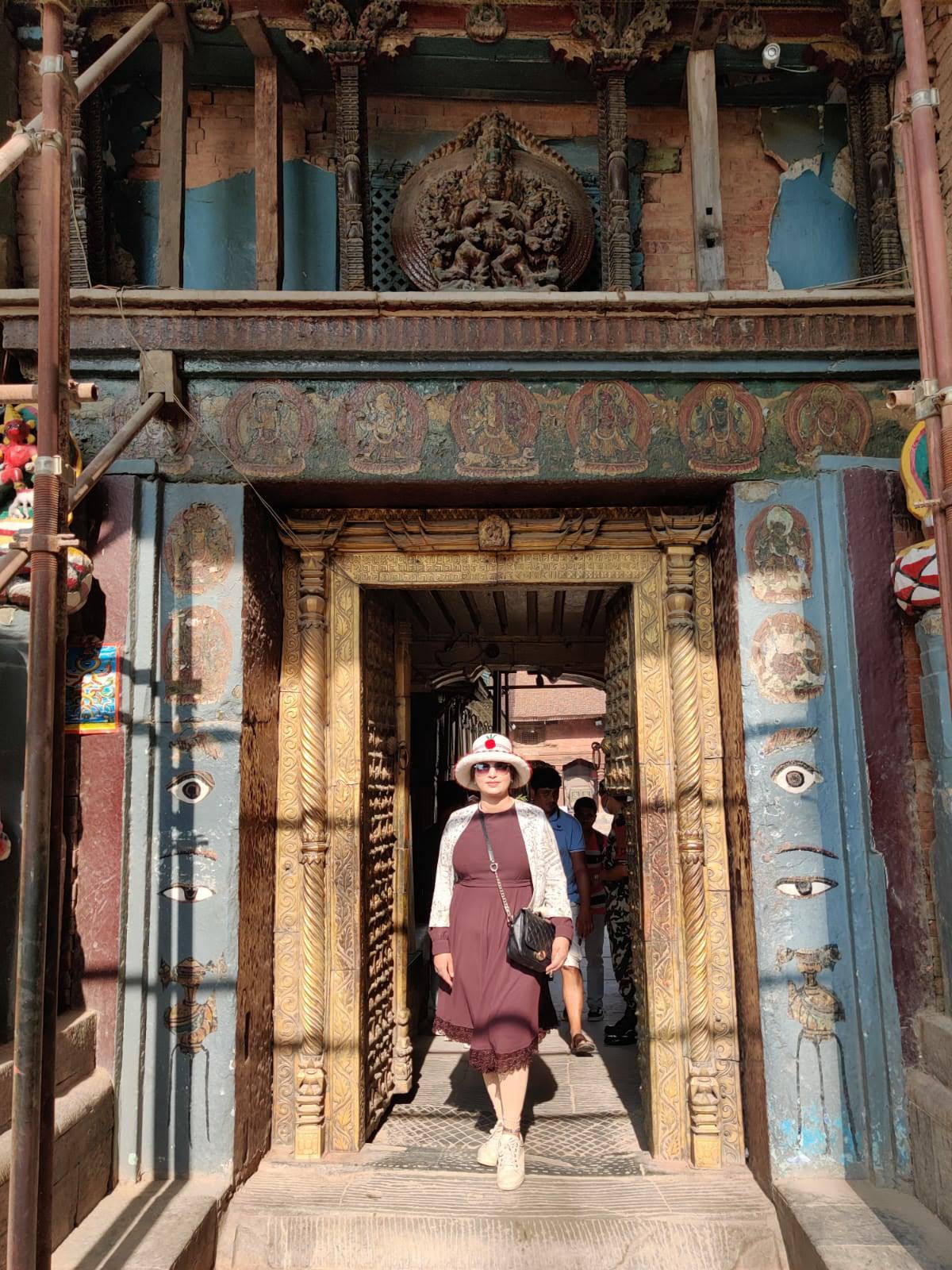
Respect Living Heritage
Respect temples and living heritage sites.
Allow 2–3 Hours
Allow 2–3 hours to explore the palace complex and surrounding streets.
Hanuman Dhoka Palace
Explore ancient coronation courtyards, stone carvings, and museum exhibits tracing the Licchavi, Malla, and Shah dynasties.
Kumari Ghar Blessings
Quietly visit the sacred courtyard of Kumari Ghar to admire exquisite wood carvings and experience Nepal's living tradition.
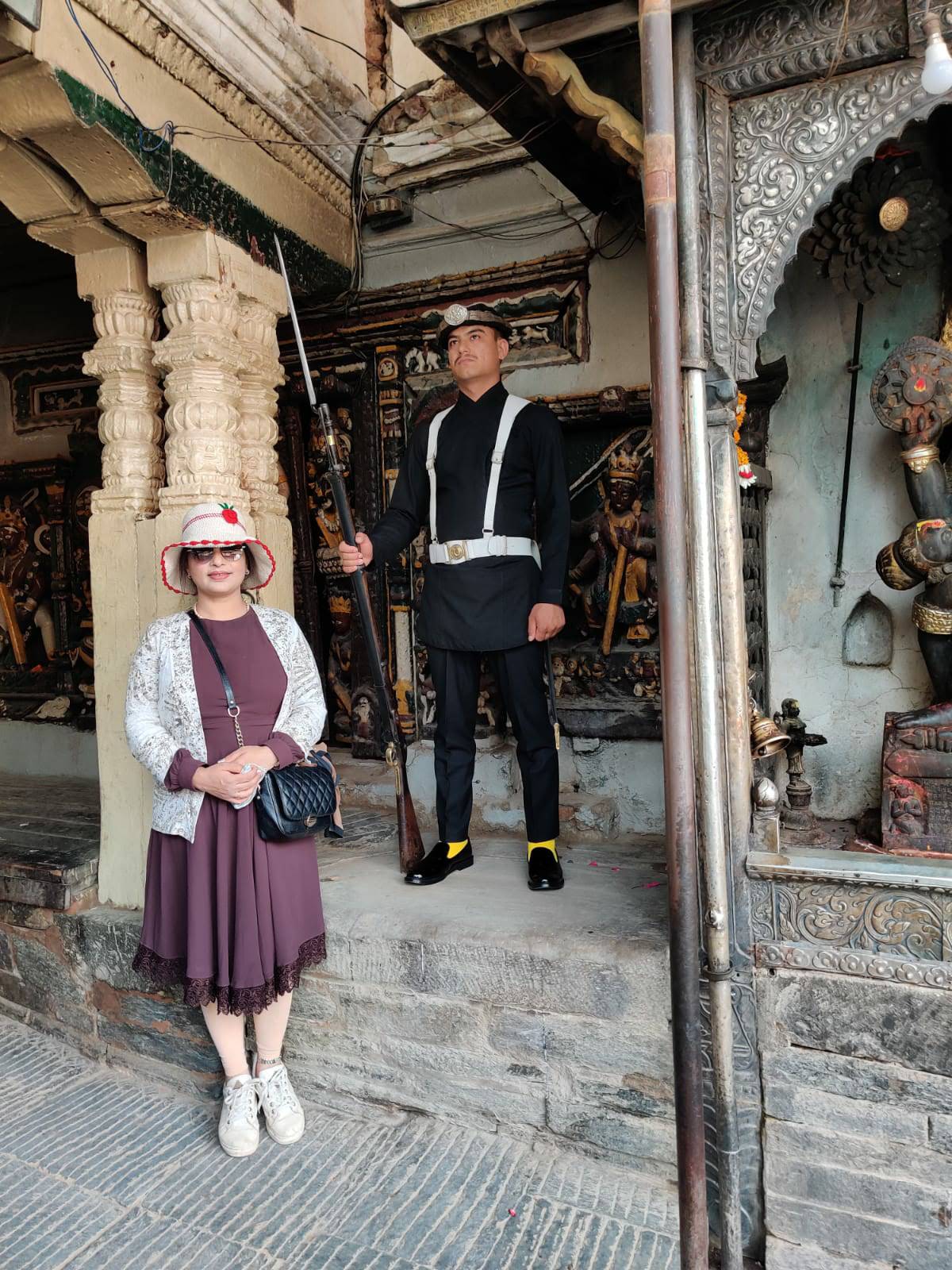
Royal Lineage
Guardians of Hanuman Dhoka Palace carrying forward centuries of Himalayan royal tradition
India and Nepal: One Soul Across Two Nations
The Royal Rajput Refuge: How Flight from Delhi Shaped Nepal's Royalty
History often reveals unexpected journeys. As I explored Nepal's royal legacy, I discovered that the ancestors of King Prithvi Narayan Shah, the visionary who unified modern Nepal in the 18th century, are traditionally believed to have descended from Rajput rulers of Chittorgarh in Rajasthan.
Fleeing the upheavals that followed the expansion of Turkic and later Mughal power across northern India, these warrior clans sought refuge in the Himalayan foothills. They carried with them Rajput traditions of kingship, warfare, and governance, leaving a lasting imprint on Nepal's monarchy.
Standing in Nepal, I was reminded that the Himalayas were not just a barrier—they also became a sanctuary where history, culture, and royal lineages found a new home.
The Himalayan Sanctuary
How medieval warrior migrations linked Rajasthan's royal codes with the unification of Nepal under King Prithvi Narayan Shah.
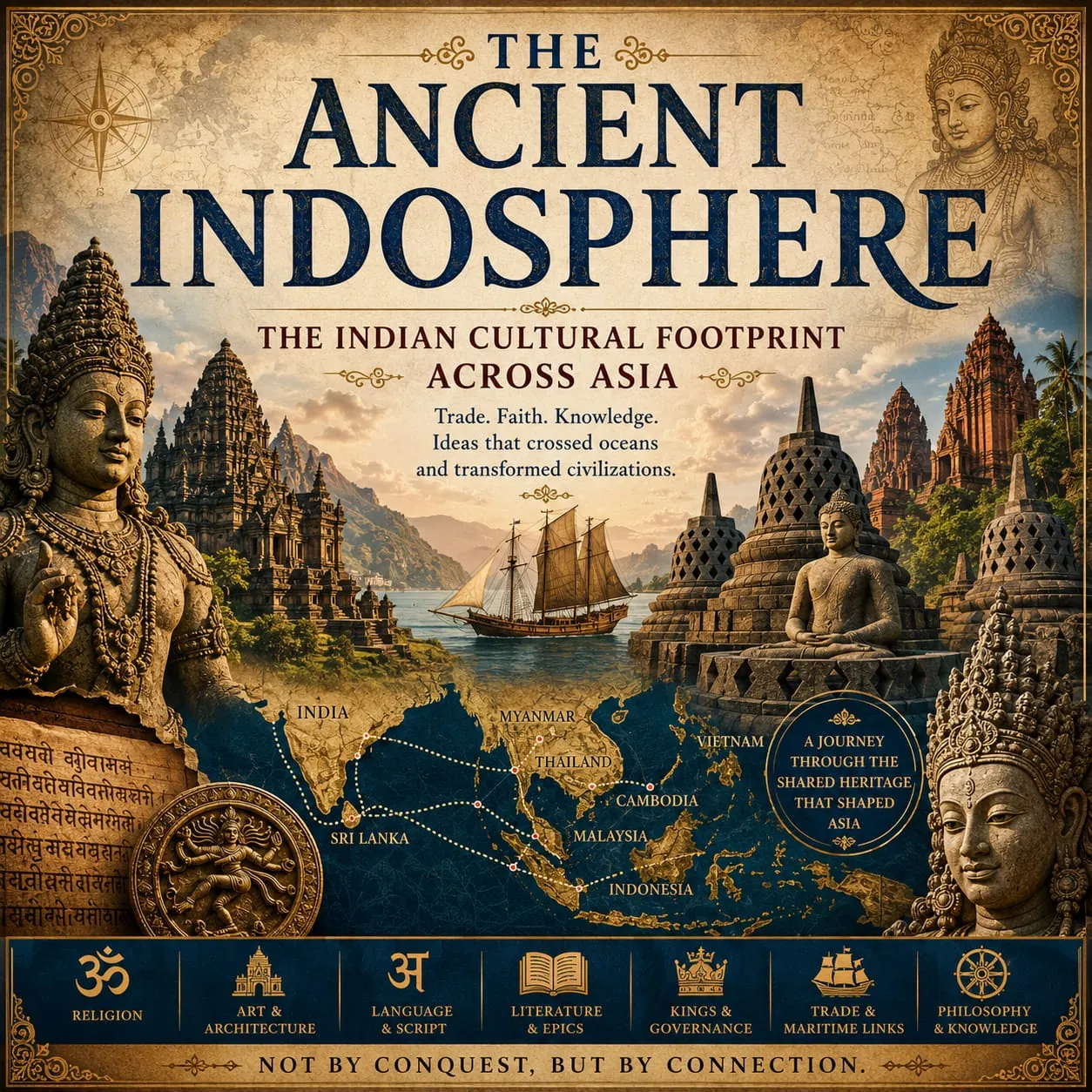
TRAVELLING THROUGH THE TIMELESS LEGACY OF INDIAN CIVILIZATION ACROSS ASIA AND BEYOND
“Not by conquest, but by connection.”
At Kathmandu Durbar Square, royal palaces, sacred pagoda shrines, and living traditions like the Kumari reflect centuries of cultural, artistic, and philosophical communion bridging the heartlands of India and the crown of the Himalayas.