
RAMAYANA TRAIL, SRI LANKA
In the Footsteps of Lord Rama and Hanuman
“The Ramayana is more than an ancient epic. For millions of people, it is a living story of devotion, courage, sacrifice, and the eternal triumph of righteousness. Its characters and traditions have travelled across generations, inspiring temples, pilgrimage sites, artistic traditions, and cultural memories throughout South and Southeast Asia.”
Sri Lanka occupies a particularly fascinating place in the Ramayana tradition. Across the island, several locations are associated through local beliefs and devotional traditions with the story of Lord Rama, Sita Mata, Ravana, and Hanuman ji. From mist-covered mountains and sacred temples to coastal hills and caves, these landscapes invite visitors to explore the epic through a combination of faith, folklore, natural beauty, and cultural heritage.
Our journey through Sri Lanka took us from the scenic tea country around Nuwara Eliya to the coastal landscapes near Galle. Along the way, we encountered places connected with the Ramayana, experienced the warmth of local traditions, and discovered how deeply these ancient stories continue to resonate across the Indian Ocean.
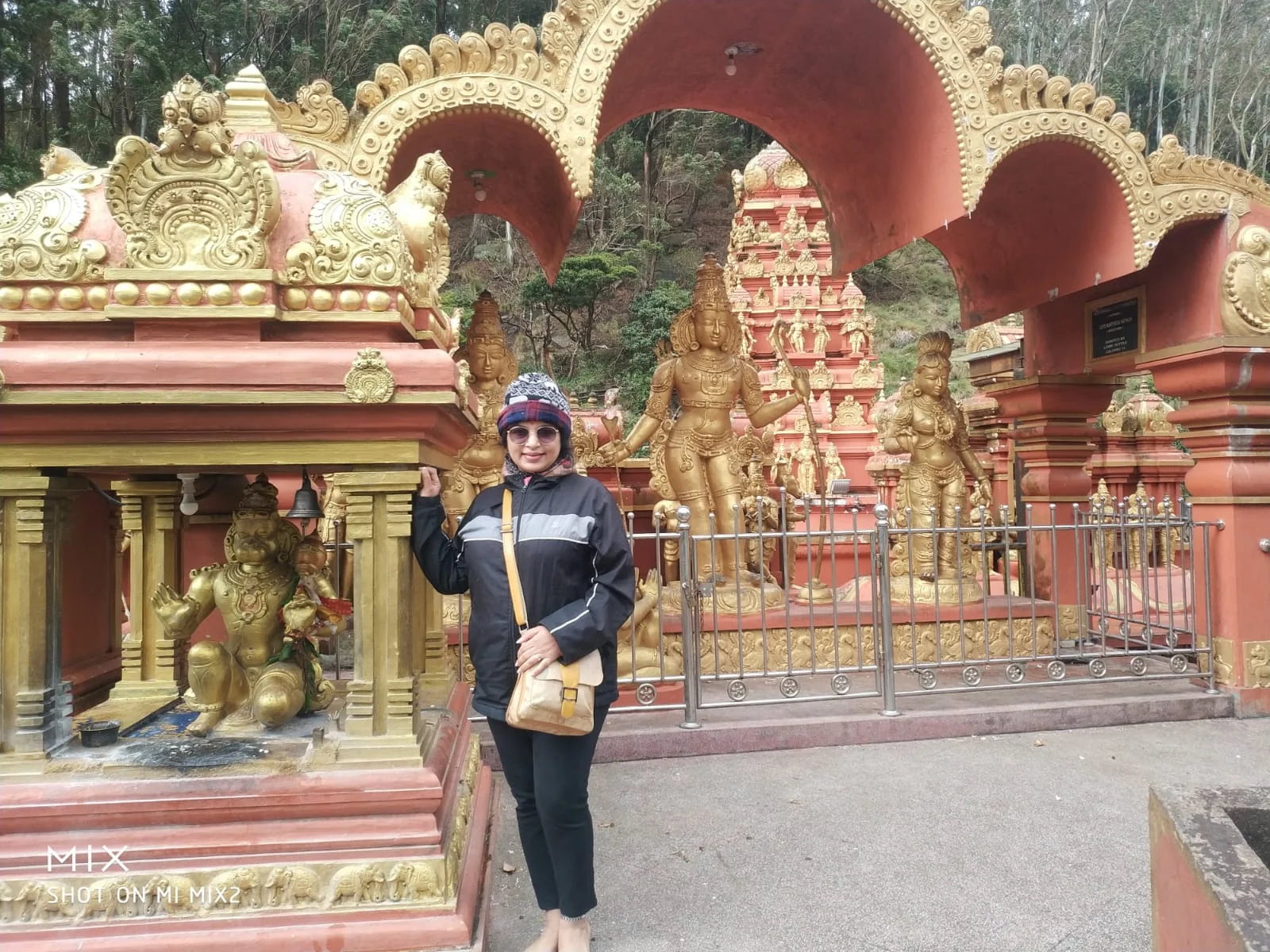
Where the Ramayana Comes Alive
The sacred shrine amid the misty hills traditionally associated with Sita Mata's captivity in Ashok Vatika
Colombo to Nuwara Eliya: A Picturesque Train Journey Through Sri Lanka’s Tea Country
Rolling Green Valleys, Cloud-Draped Peaks, and the Human Heritage of Ceylon Tea
The train journey from Colombo towards Sri Lanka’s central highlands is one of the country’s most picturesque travel experiences. As the train gradually climbs away from the warmer lowlands, the landscape transforms into rolling green hills, expansive tea plantations, mist-covered mountains, cascading waterfalls, and charming railway stations that preserve the atmosphere of an earlier era.
The changing scenery makes the journey memorable in itself. Through the train windows, we watched the landscape unfold in layers of green, with tea bushes covering the hillsides and clouds drifting across distant mountain peaks.
Beyond its natural beauty, Sri Lanka’s tea country also tells a complex story of colonial history and migration. During British colonial rule, large numbers of workers were brought from southern India, particularly Tamil Nadu, to work on the expanding plantations. Their descendants, known as Sri Lankan Up-Country Tamils or Indian Tamils, have played a central role in the development of the tea industry.
Today, Tamil communities continue to maintain their distinctive cultural traditions, religious practices, and languages throughout the highlands. Their history forms an important part of Sri Lanka’s social and cultural identity.
As we travelled through these magnificent landscapes, we were reminded that the connections between India and Sri Lanka extend beyond ancient epics and religious traditions. They are also woven into the lives, journeys, and histories of the people who have shaped the island over generations.
The Indian Tamil Legacy of the Highlands
Brought across the Palk Strait over a century ago, the Up-Country Tamil community established Hindu kovils, vibrant festivals, and deep cultural roots throughout the mountain estates, creating a permanent living bridge between southern India and Sri Lanka's tea country.
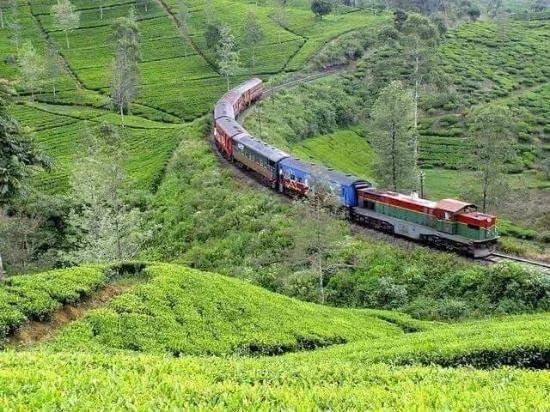
Through Emerald Hills
The mountain train snaking through terraced tea bushes in Sri Lanka's central highlands
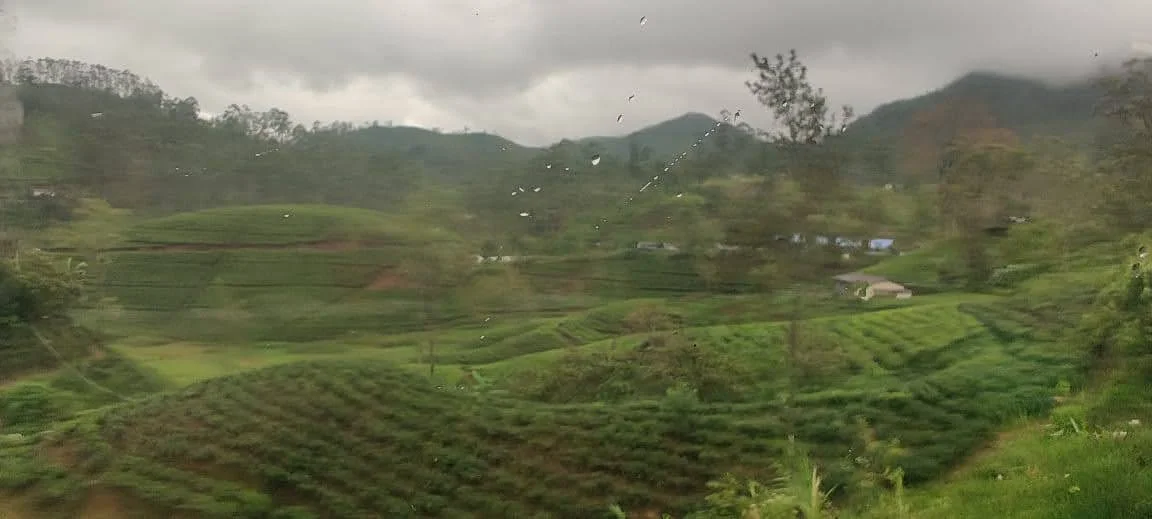
Raindrops on the Highland Window
Watching layers of green tea gardens and drifting clouds unfold from the train carriage
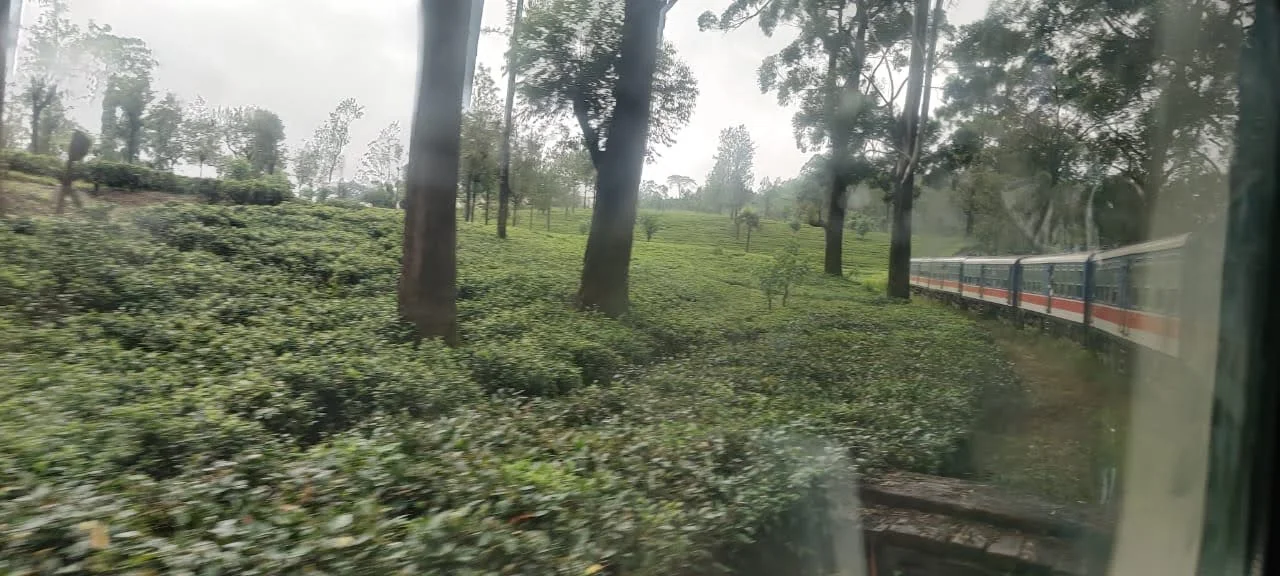
Contouring the Tea Estates
Climbing past eucalyptus trees and manicured estates towards Nuwara Eliya
Seetha Amman Temple, Nuwara Eliya: Where the Ramayana Comes Alive Amid Misty Hills
A Sacred Stream, Mountain Mists, and the Living Memory of Sita Mata’s Captivity
“We sat quietly beside the nearby stream for a long time. In that peaceful setting, it felt as though the Ramayana was unfolding before our eyes. We found ourselves imagining Sita Mata’s resilience during her captivity, Lord Rama’s determination to find her, and Hanuman ji’s extraordinary devotion in carrying out his mission.”
Visiting the Seetha Amman Temple near Nuwara Eliya was one of the most emotional moments of our journey through Sri Lanka.
Deeply associated with the Ramayana, the temple is traditionally believed to stand at a place where Sita Mata was held captive by Ravana after her abduction from India. The surrounding landscape, with its misty hills, flowing stream, and lush greenery, creates an atmosphere that feels remarkably peaceful and contemplative.
For devotees, the temple is much more than a religious monument. It is a place where the story of Sita Mata’s courage, Lord Rama’s anguish, and Hanuman ji’s unwavering devotion becomes deeply personal.
As we approached the sacred site, we were drawn to its intimate atmosphere and the powerful emotions associated with its traditions. The temple’s setting beside the stream added to the sense of tranquillity, while the surrounding rocks and greenery created a natural sanctuary for prayer and reflection.
We also encountered the footprints that devotees associate with Hanuman ji, adding another layer of spiritual significance to our visit.
We sat quietly beside the nearby stream for a long time. In that peaceful setting, it felt as though the Ramayana was unfolding before our eyes. We found ourselves imagining Sita Mata’s resilience during her captivity, Lord Rama’s determination to find her, and Hanuman ji’s extraordinary devotion in carrying out his mission.
It was not merely a visit to a temple. It was an intensely spiritual and deeply moving experience, one that brought an ancient story closer to our hearts.
The temple’s identification with the events of the Ramayana belongs to religious tradition and local belief. Its significance for pilgrims, however, is unmistakable.
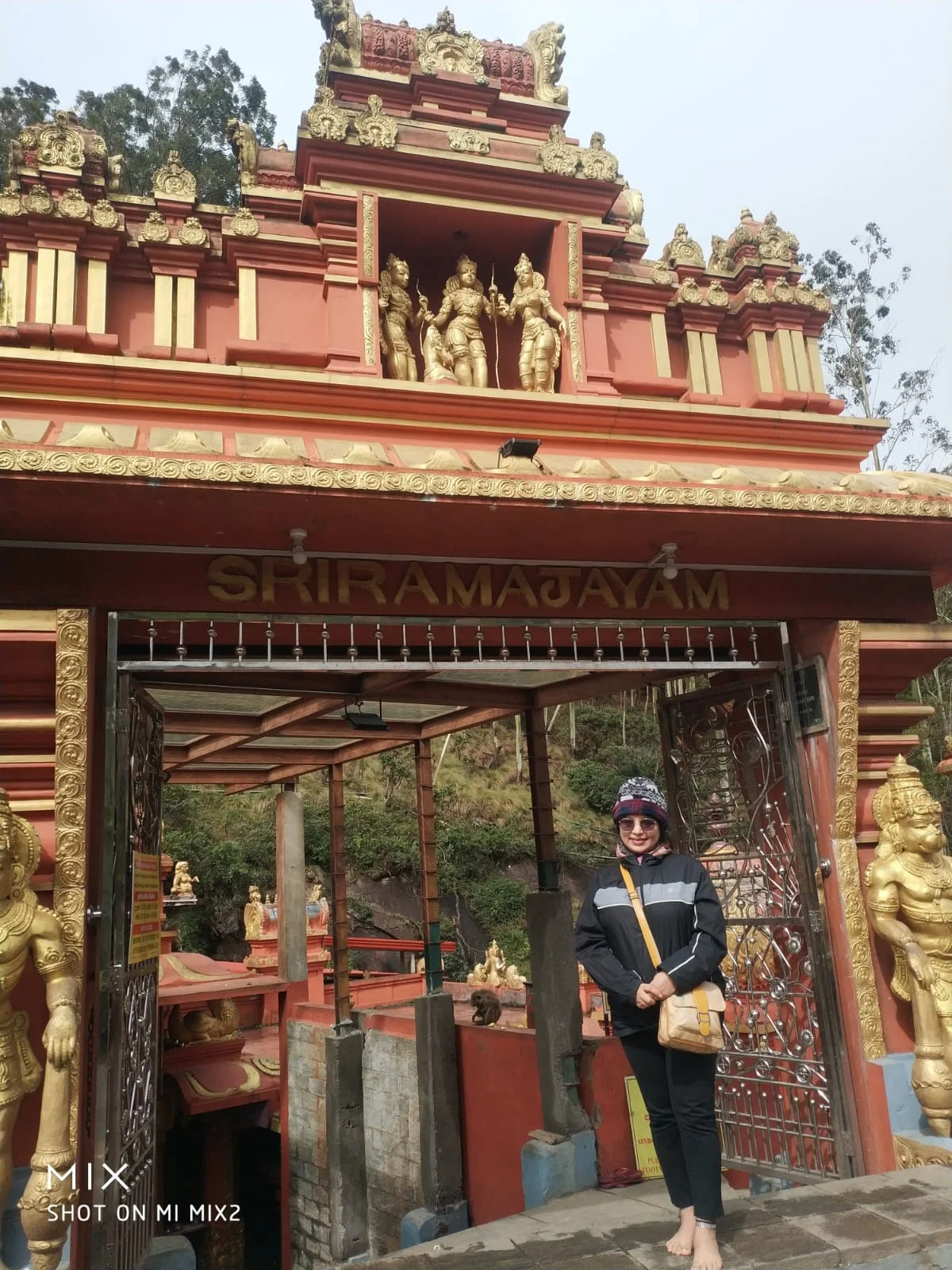
Sri Ramajayam Gateway
The vibrant entrance arch honoring the victory of Lord Rama against the backdrop of pine-clad hills
The Golden Deities of the Epic
Sculptures depicting the central figures of the Ramayana standing within the temple sanctuary
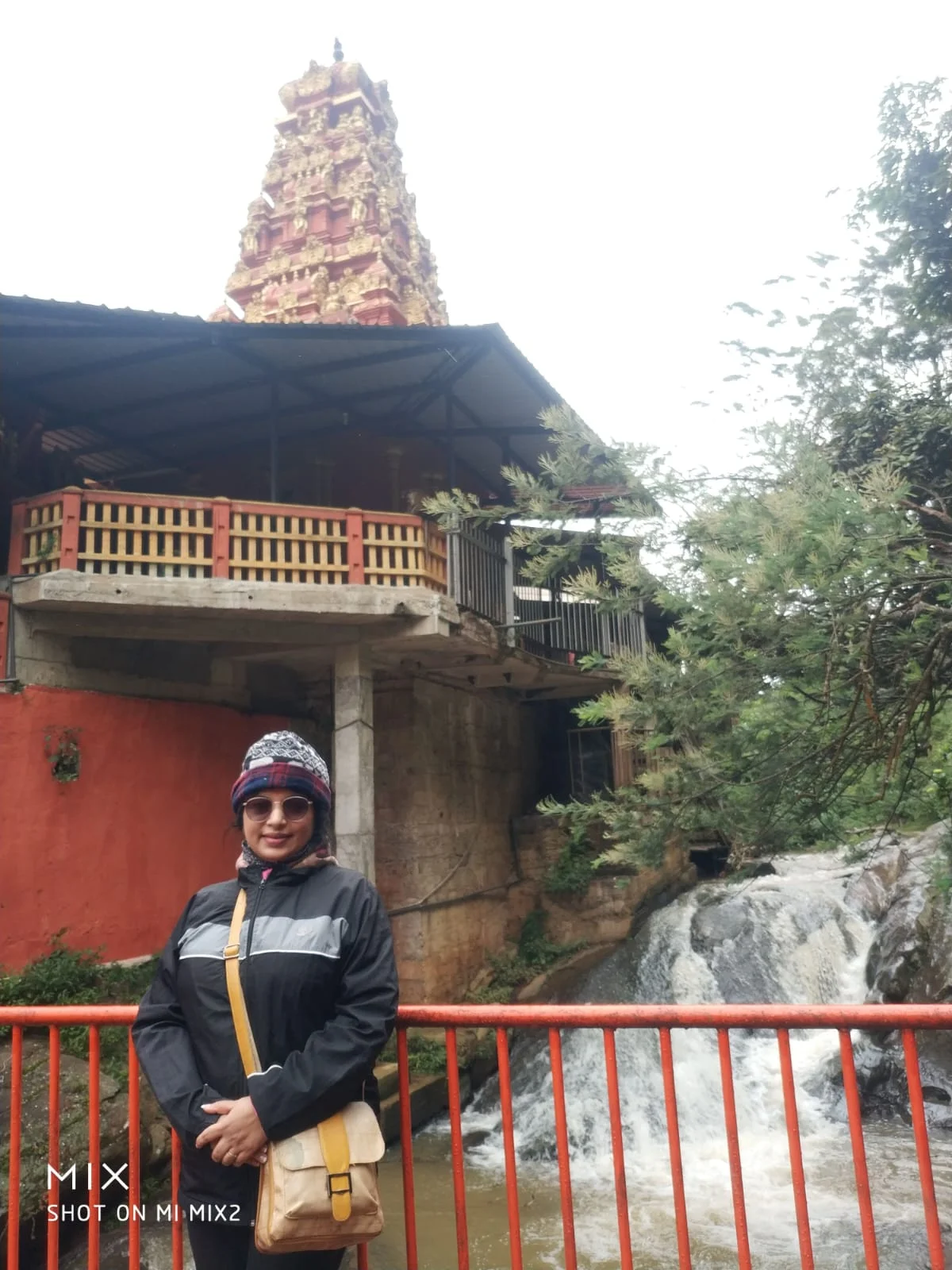
Waters of Sita's Solace
The cold mountain stream cascading past the temple where devotees gather for quiet contemplation
Nuwara Eliya: Colonial Charm and Lakeside Serenity in Sri Lanka’s Little England
Flowerbeds of Victoria Park, Cool Evening Breezes, and the Quiet Waters of Gregory Lake
Beyond its religious associations, Nuwara Eliya captivated us with its cool climate, colourful gardens, colonial-era architecture, and peaceful lakeside scenery.
During our stay, we spent relaxing hours exploring Victoria Park and Gregory Lake, two attractions that reveal a different side of the hill town.
Victoria Park, with its carefully maintained flowerbeds, green lawns, and quiet walking paths, offered a refreshing escape. The gardens evoked the atmosphere of an old colonial hill station, where the cool highland climate and landscaped surroundings create a distinctive character.
Gregory Lake provided another memorable experience. Surrounded by rolling hills, its calm waters and scenic walking areas offered a wonderfully relaxing setting. Sitting beside the lake in the cool evening breeze, watching families, tourists, and local residents enjoying the surroundings, became one of the most soothing moments of our journey.
After visiting sacred sites associated with the Ramayana, the quiet beauty of Nuwara Eliya offered a welcome opportunity to slow down and appreciate the natural landscape.
The town’s charm lies in this contrast: spiritual traditions, colonial history, tea-growing landscapes, and everyday local life all exist within the same beautiful highland setting.
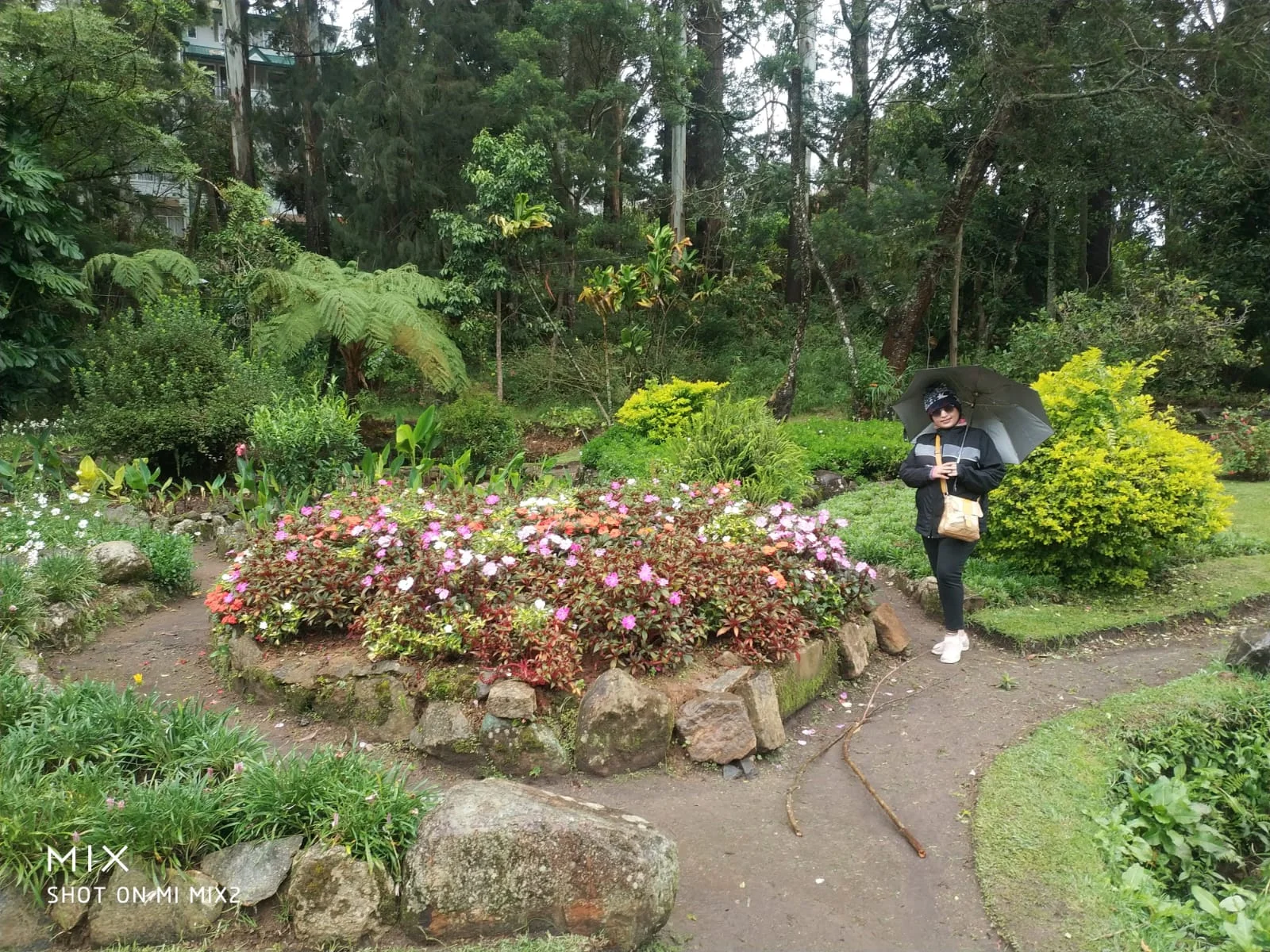
Among the Highland Blossoms
Carefully tended stone flowerbeds bursting with pink and white impatiens beneath the highland trees
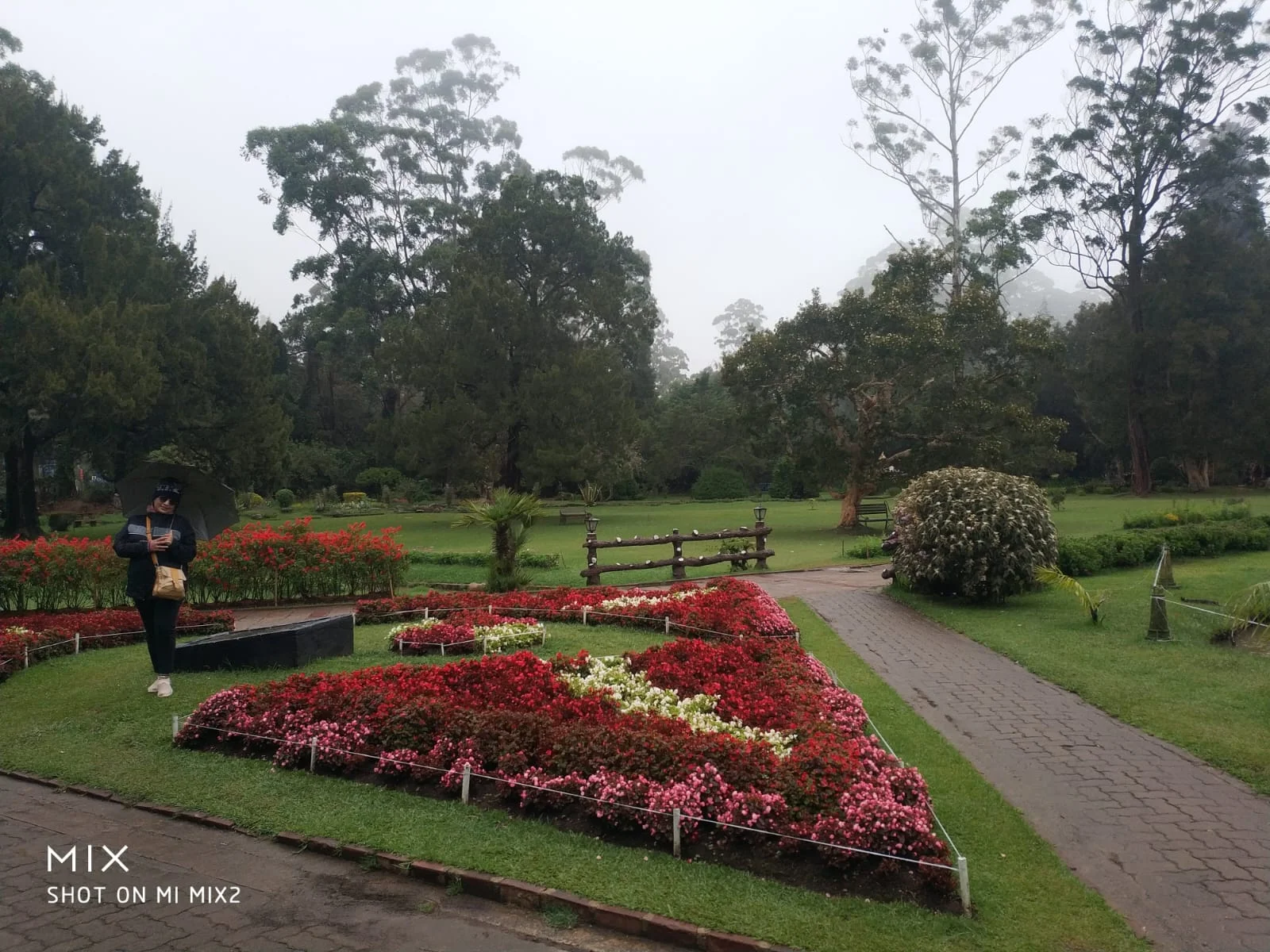
Misty Lawns of Victoria Park
Soft morning mist settling over the Victorian landscaped gardens in the heart of Nuwara Eliya
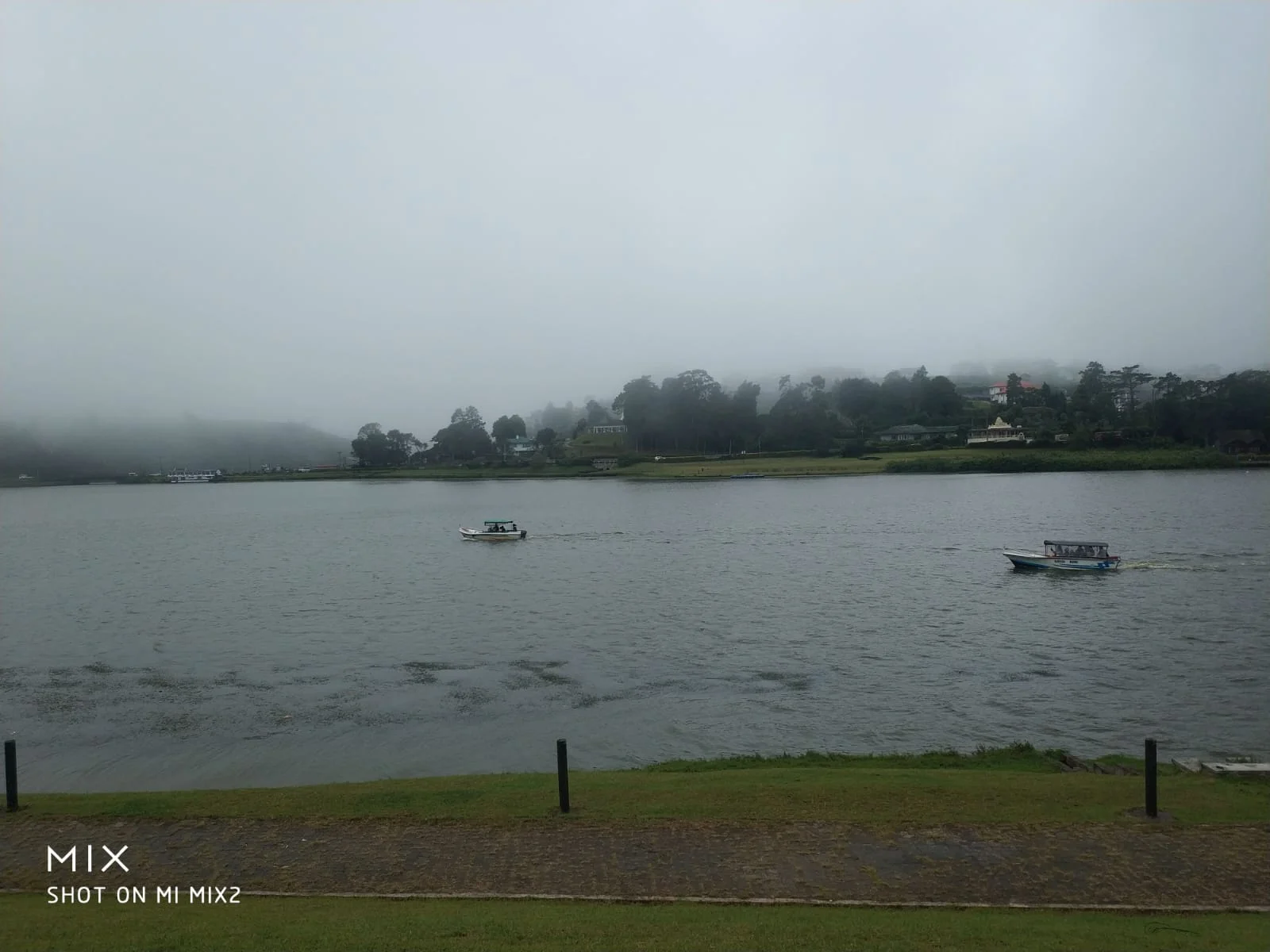
Gregory Lake at Dusk
Quiet waters and cool highland breezes enveloped in evening mountain fog
Rumassala, Galle: The Legend of Hanuman and the Mountain of Medicinal Herbs
Where the Life-Saving Sanjeevani Fallen Fragments Meet the Indian Ocean
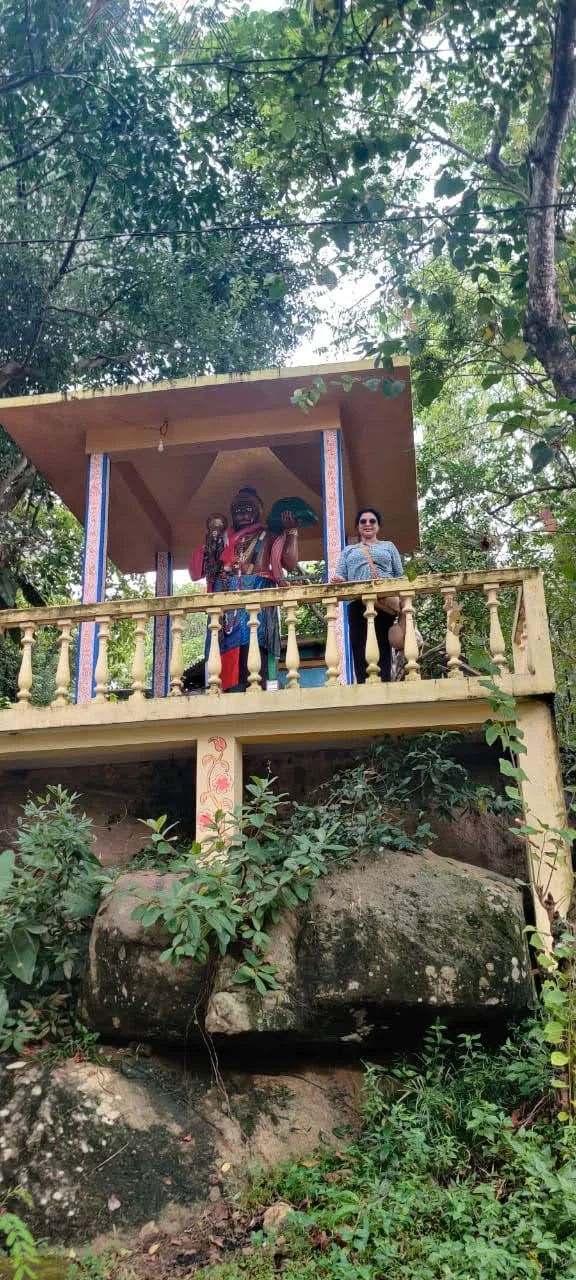
Overlooking Rumassala Hill
Standing upon the shrine pavilion nestled within the rare tropical biodiversity of Rumassala
Our journey along Sri Lanka’s southern coast brought us to Rumassala, a scenic hill near Galle that is associated with one of the most memorable legends from the Ramayana.
According to popular local belief, when Hanuman ji travelled to bring the life-saving Sanjeevani herb for Lakshmana, he carried a mountain containing the medicinal plants needed to save him. In some versions of the tradition, fragments of the mountain fell at different locations along the journey. Rumassala is believed by some to be one such place.
This legend has given the hill a special place in Sri Lanka’s Ramayana-related traditions. Its unusual vegetation and rich natural environment are sometimes linked in local storytelling to the medicinal plants associated with Hanuman’s journey.
Surrounded by lush greenery and overlooking the Indian Ocean, Rumassala felt like a world apart from the busy coastal settlements nearby. The hill’s winding paths, tropical vegetation, and panoramic views created an atmosphere of mystery and tranquillity.
Standing amid the greenery, we could understand the appeal of the ancient legend. The landscape itself seemed to invite the imagination, making it easy to picture the extraordinary journey described in the Ramayana.
Although the connection between Rumassala and the Sanjeevani mountain is a traditional belief rather than an established historical or botanical fact, it remains an evocative example of how sacred stories become connected with real landscapes.
For us, Rumassala offered a beautiful meeting point between nature, mythology, and devotion.
The Sanjeevani Herbal Legacy
Rumassala hill possesses a distinct microclimate and unique flora not found in adjacent coastal lowlands, giving rise to centuries-old beliefs that its rare medicinal shrubs grew from the Himalayas brought by Hanuman.
Galle, Sri Lanka: A Cave Associated with Sita Mata’s Captivity
Sacred Geography, Folklore, and the Quiet Echoes of Sita’s Fortitude
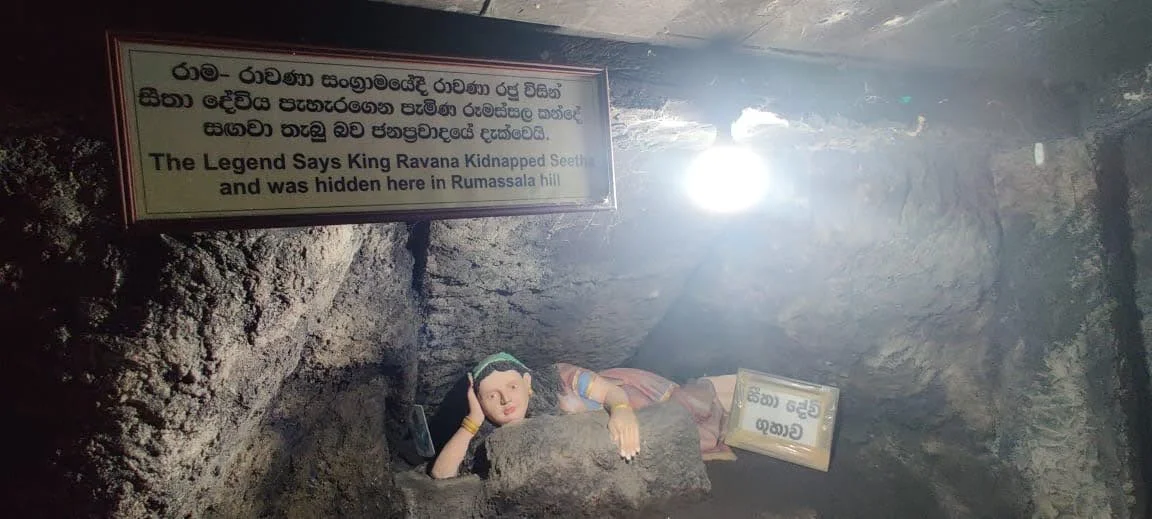
The Cavern of Sita Mata
The natural rock cave at Rumassala commemorated by local pilgrims as a place where Sita was hidden by Ravana
During our visit to the region, we also explored a nearby Hanuman temple and a cave that, according to local belief, is associated with the place where Sita Mata was initially held after her abduction by Ravana.
The cave and its surroundings offered a quiet setting for reflection. Away from the busier tourist areas, the natural landscape created an atmosphere in which the stories of the Ramayana felt especially vivid.
As we sat quietly in the peaceful surroundings, we found ourselves imagining the great events described in the epic. The story of Sita Mata’s captivity, her courage in adversity, and her unwavering faith has inspired generations of devotees. Visiting places associated with these episodes offered us a more personal way to engage with the narrative.
The experience also highlighted how sacred geography develops through the interaction of storytelling, local traditions, pilgrimage, and the natural environment. Across Sri Lanka, different sites have become associated with episodes from the Ramayana, creating a wider landscape of devotional significance.
These associations should be understood as local traditions rather than conclusive proof of the exact historical locations described in the epic. Nevertheless, their cultural importance and emotional resonance remain central to the experience of the Ramayana Trail.
For us, the visit was another reminder that travel can become deeply meaningful when a place connects us with stories that have shaped our cultural and spiritual imagination.
Practical Field Guides for the Ramayana Trail
Essential advice gathered firsthand for exploring Nuwara Eliya and Rumassala, Galle
Tips for Visiting Nuwara Eliya, Sri Lanka
Carry warm clothing
Nuwara Eliya has a cooler climate than much of Sri Lanka. Evenings can be particularly chilly, so bring a light jacket or warm layer.
Visit Victoria Park
Allow time to explore its flowerbeds, lawns, and peaceful walking paths, especially if you enjoy gardens and photography.
Relax beside Gregory Lake
The lake is ideal for scenic views, a leisurely walk, and a relaxing evening surrounded by the hills.
Allow one to two days
A day or two gives you time to explore the town, enjoy the landscapes, and visit nearby attractions without rushing.
Be prepared for rain and mist
Weather conditions can change quickly in the highlands. Carry a light raincoat or umbrella.
Plan your road journey carefully
The mountain roads are winding, and travel times can be longer than expected. Allow extra time when travelling between attractions.
Explore the tea country
Consider visiting a tea factory or plantation to learn about Ceylon tea, its production, and the history of Sri Lanka’s plantation communities.
Visit Seetha Amman Temple respectfully
Allow time to explore the temple and its surroundings. Dress modestly, respect worshippers, and follow any photography restrictions or local guidance.
Sri Lanka: Following the Sacred Footsteps of the Ramayana
Where Mythology, Faith, and Cultural Memory Resonate Across Distant Shores
Our journey through Sri Lanka became much more than a tour of beautiful landscapes and historic sites. It was an exploration of the enduring relationship between mythology, faith, and cultural memory.
From the scenic train journey through the tea plantations to the emotional experience of visiting Seetha Amman Temple, each destination offered a different perspective on the Ramayana’s continuing influence. The footprints associated with Hanuman ji, the legends surrounding Rumassala, and the cave connected with Sita Mata’s captivity all revealed how deeply the epic remains woven into local devotional traditions.
At the same time, the beauty of Nuwara Eliya and the coastal landscapes near Galle reminded us that these sacred journeys unfold within a remarkable natural setting. Mist-covered hills, flowing streams, lush forests, and views across the Indian Ocean became part of the experience, blending the physical landscape with the world of the imagination.
The Ramayana has travelled across generations and geographical boundaries, inspiring different communities to preserve and reinterpret its stories. Sri Lanka’s Ramayana-related traditions provide a fascinating example of this enduring cultural connection between India and the island.
For us, the journey was both a pilgrimage through places associated with a beloved epic and a personal exploration of the stories that connect our shared cultural heritage.
As we left these landscapes behind, we carried with us more than photographs and memories. We carried the feeling of having encountered an ancient story in a new and deeply personal way.
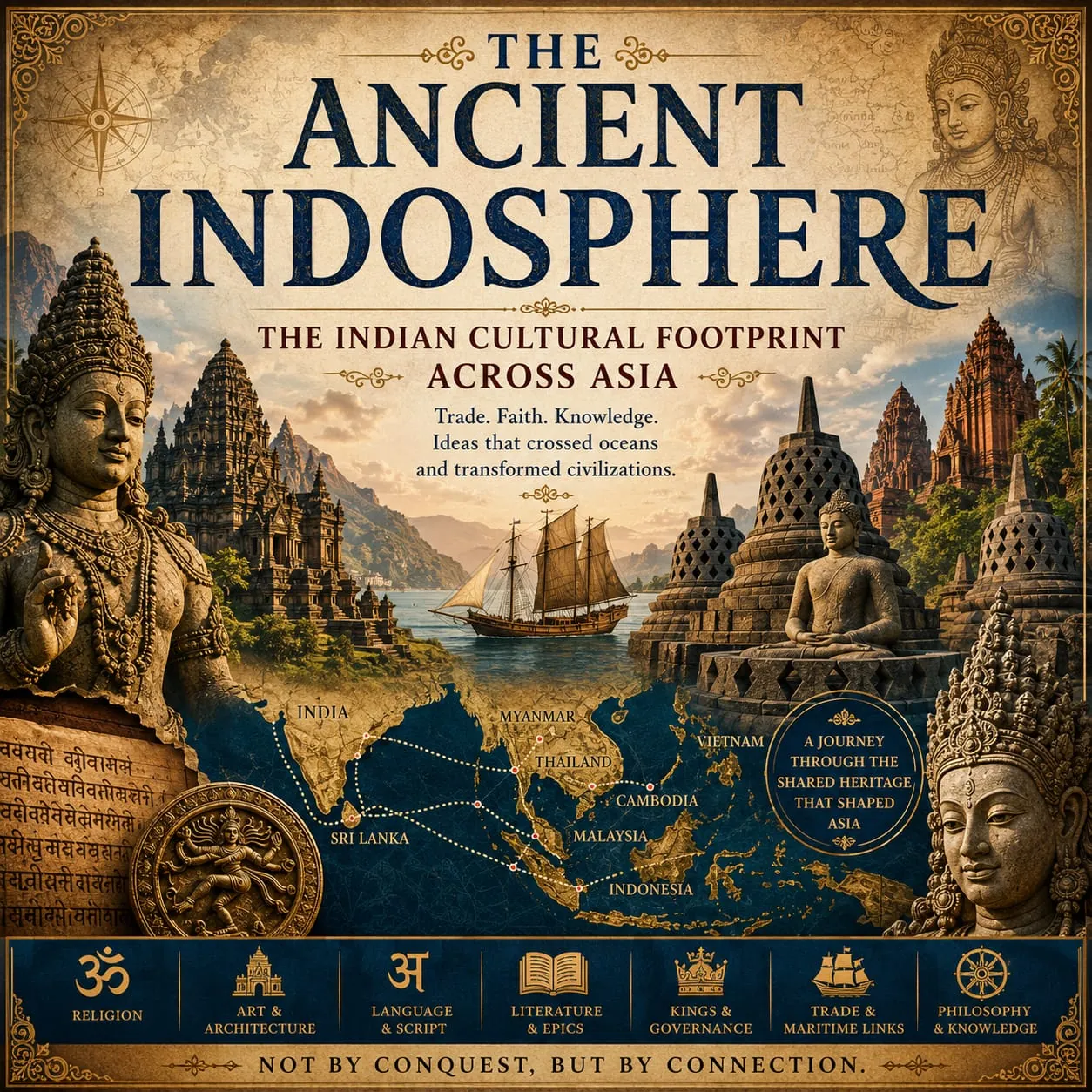
TRAVELLING THROUGH THE TIMELESS LEGACY OF INDIAN CIVILIZATION ACROSS ASIA AND BEYOND
“Not by conquest, but by connection.”
Across ancient temples, sacred stupas, and living cultural landscapes, the timeless traditions born in India continue to illuminate Asia with philosophy, art, and civilizational communion carried not by sword, but through dialogue and spiritual devotion.
CONTINUE THE SRI LANKA JOURNEY
Journey Through the Sacred Monuments of Sri Lanka