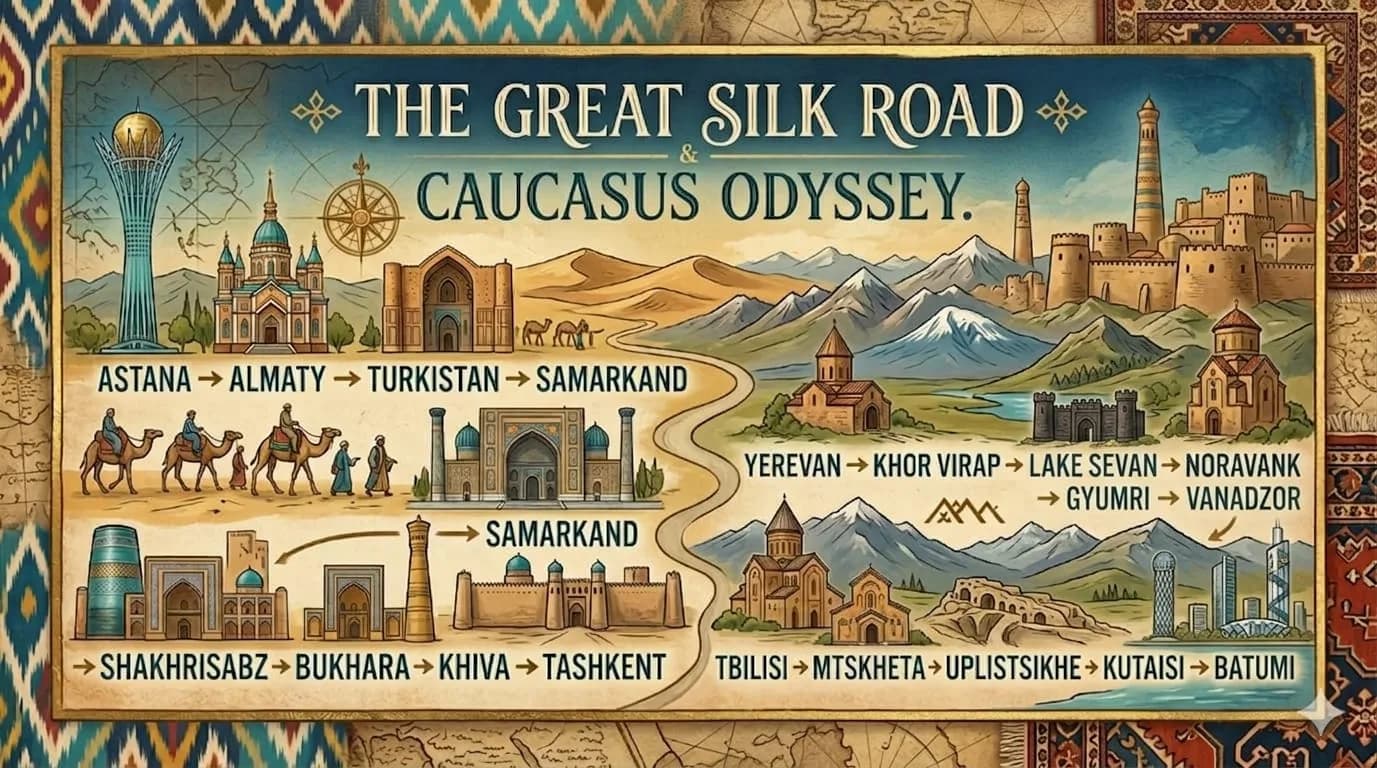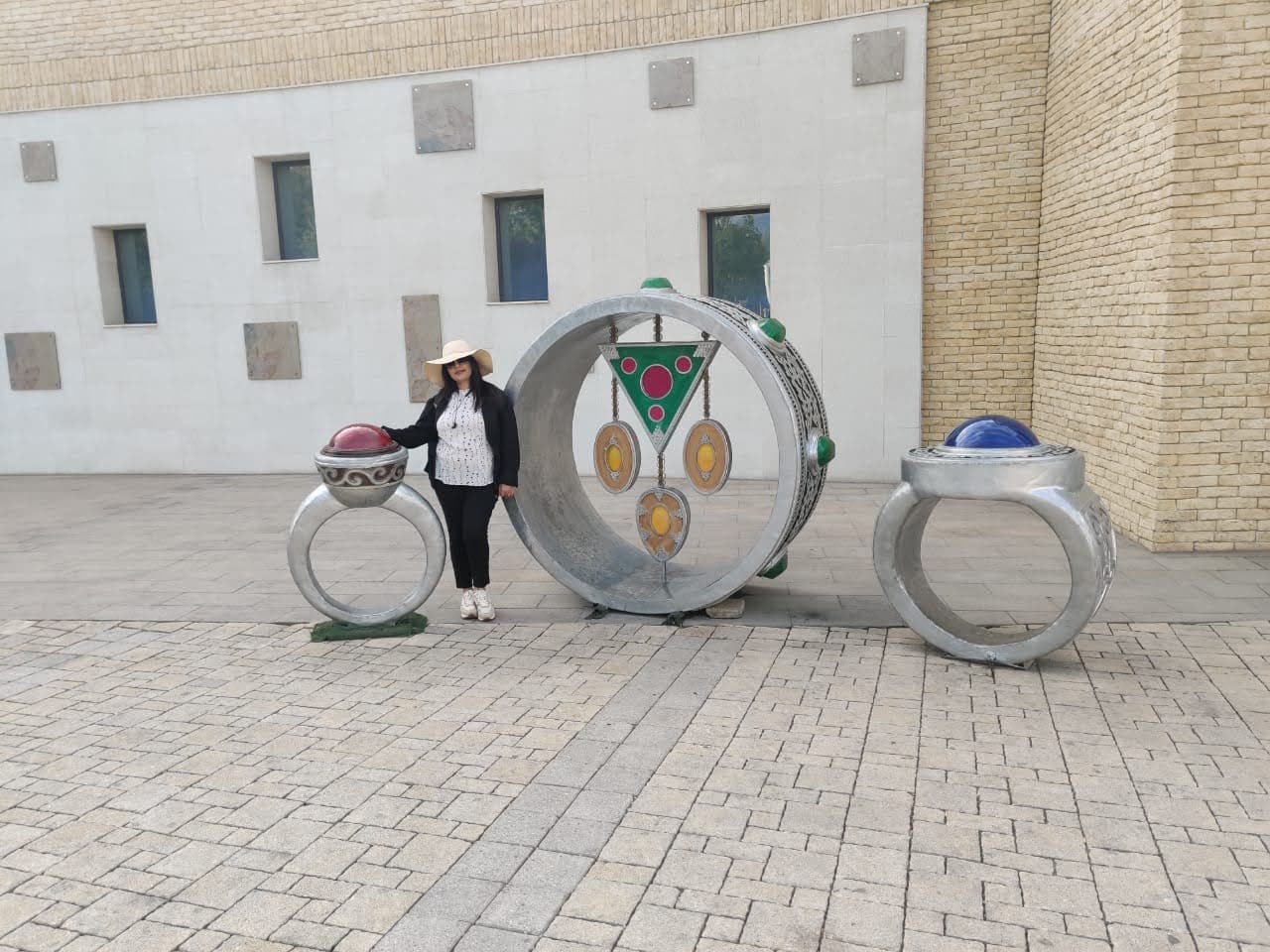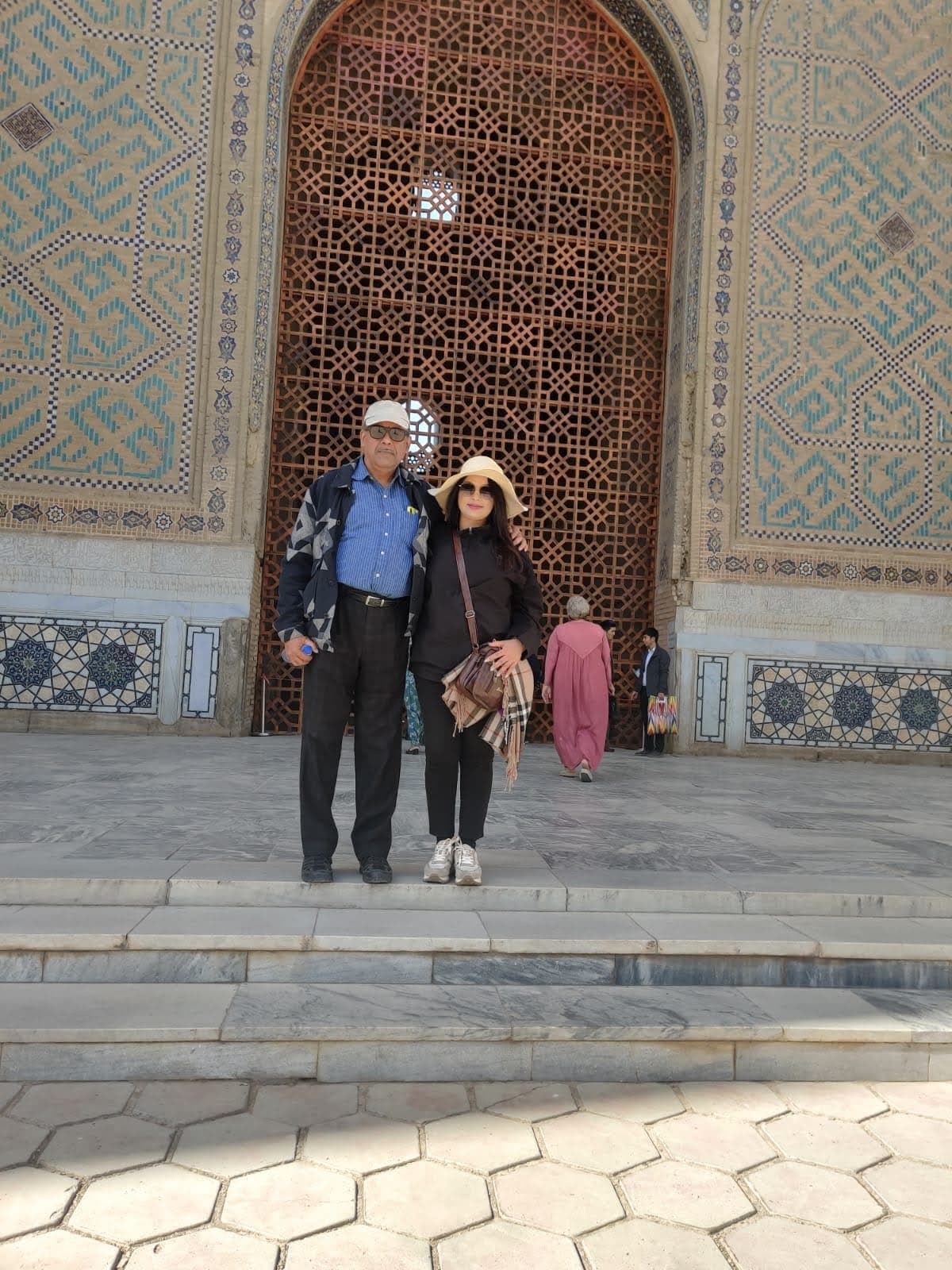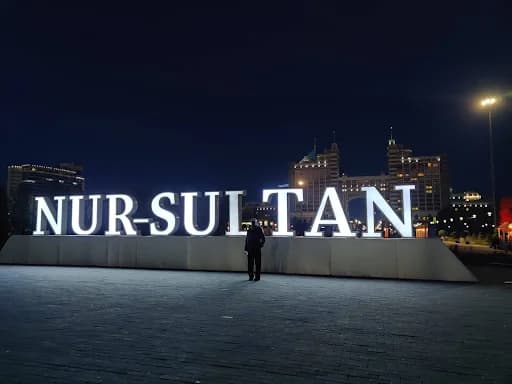
Our Silk Route journey began in Astana (formerly known as Nur-Sultan)—a modern city that forms part of the New Silk Route, connecting Asia and Europe once again. A seven-hour flight from Delhi brought us straight to the vast, open landscapes of Kazakhstan. Immediately, we were struck by the country's immense open spaces, its low population density, and the remarkably warm, friendly people who welcomed us. Astana itself felt thoroughly futuristic and unlike any city we had ever seen before. It is a place filled with striking architecture, wide boulevards, and a palpable atmosphere of ambition rising straight out of the Central Asian steppes. Known as the northernmost capital city in the world, it offered a fascinating starting point for our journey along the ancient trade routes that once connected civilizations across continents.
Astana itself felt thoroughly futuristic, an urban island adrift in a sea of wind-swept grass.
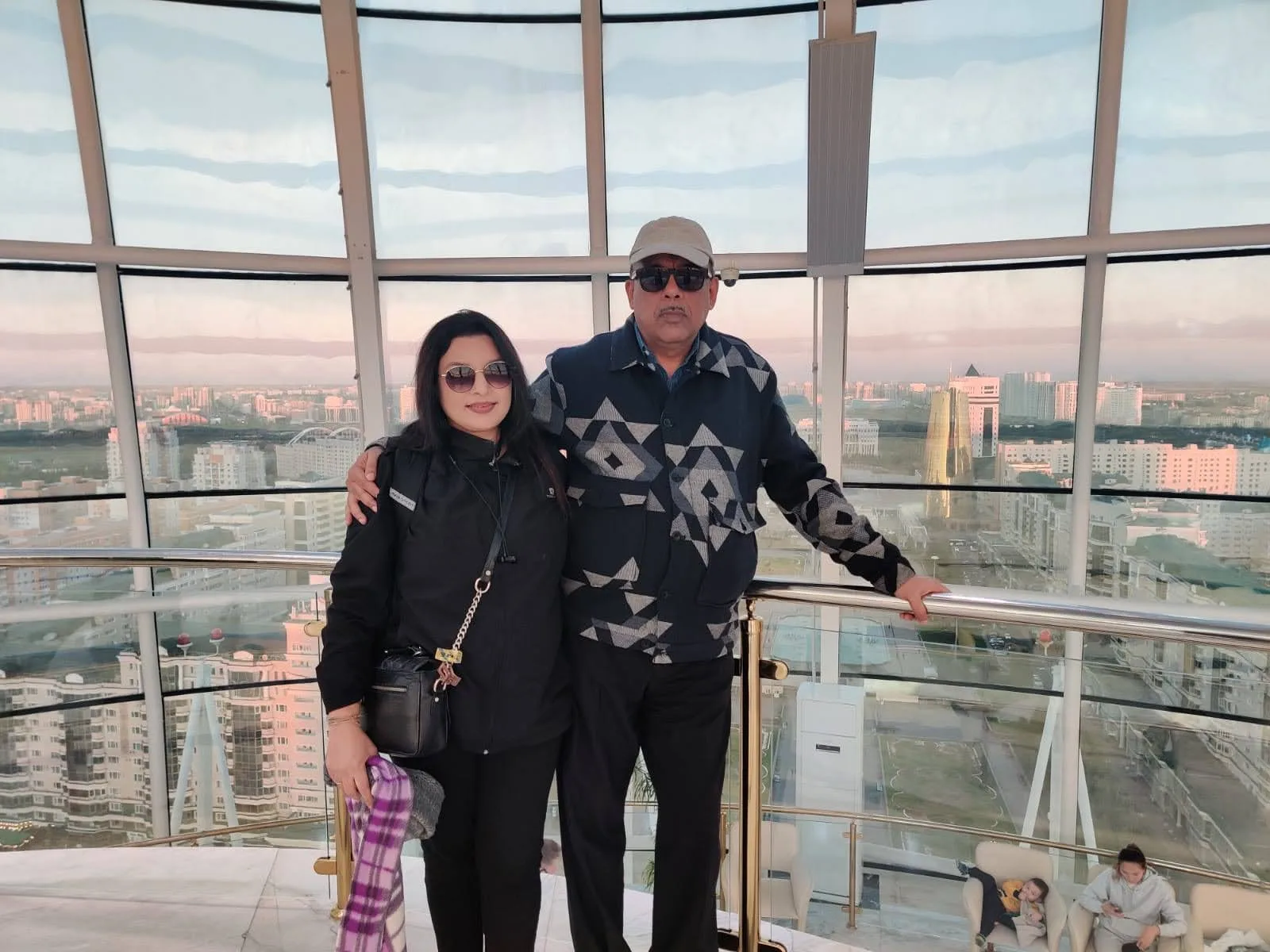
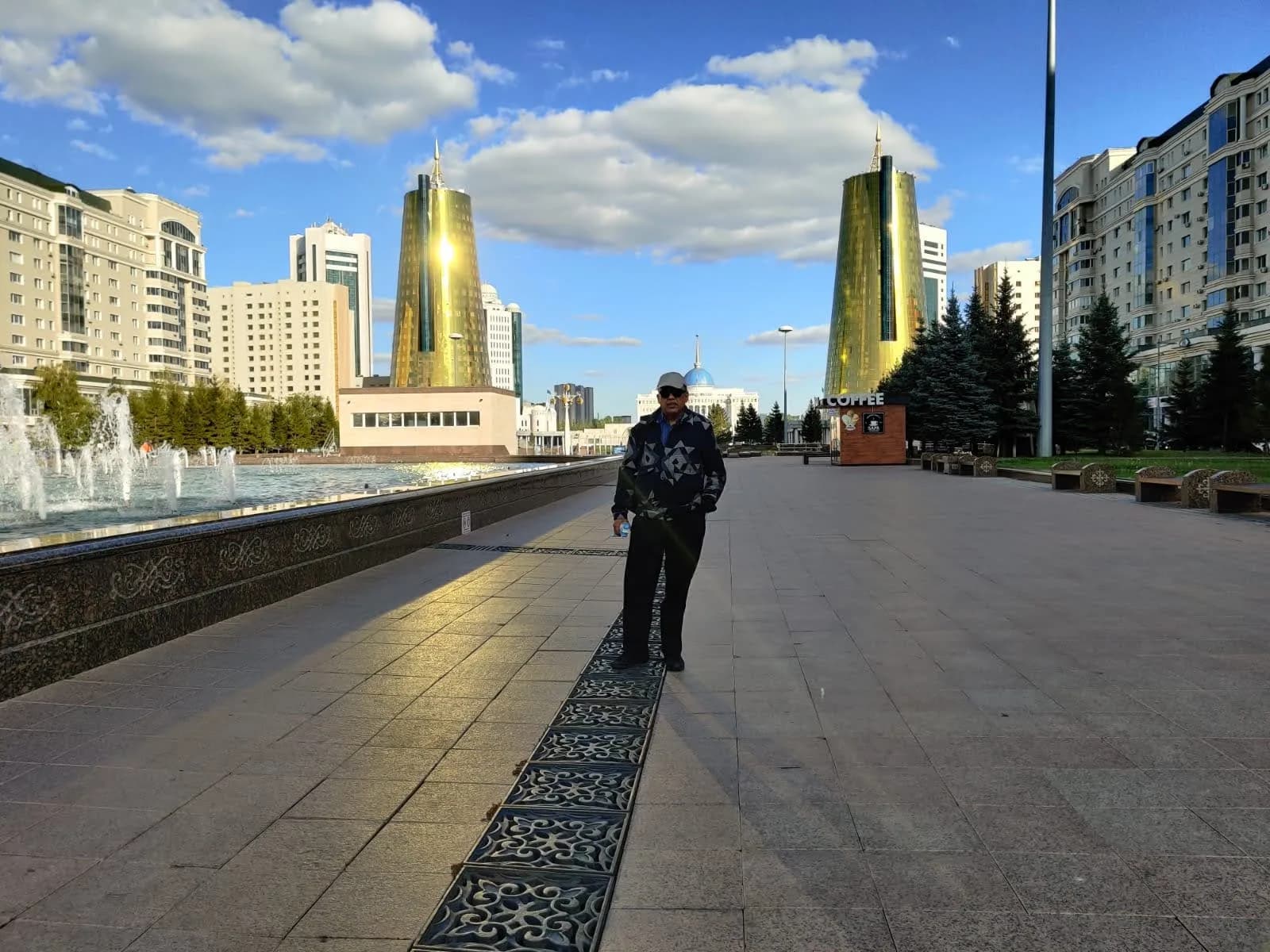
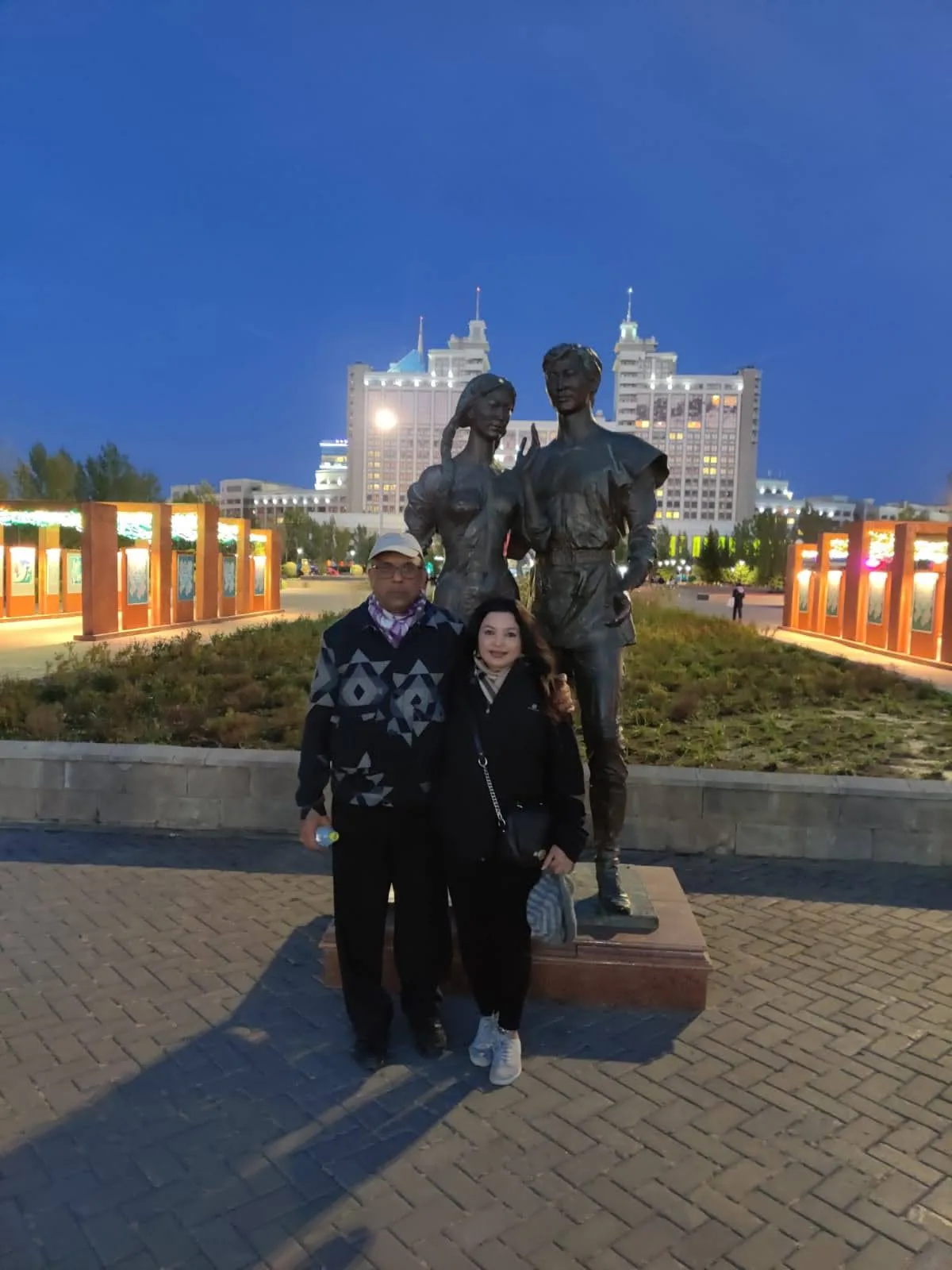
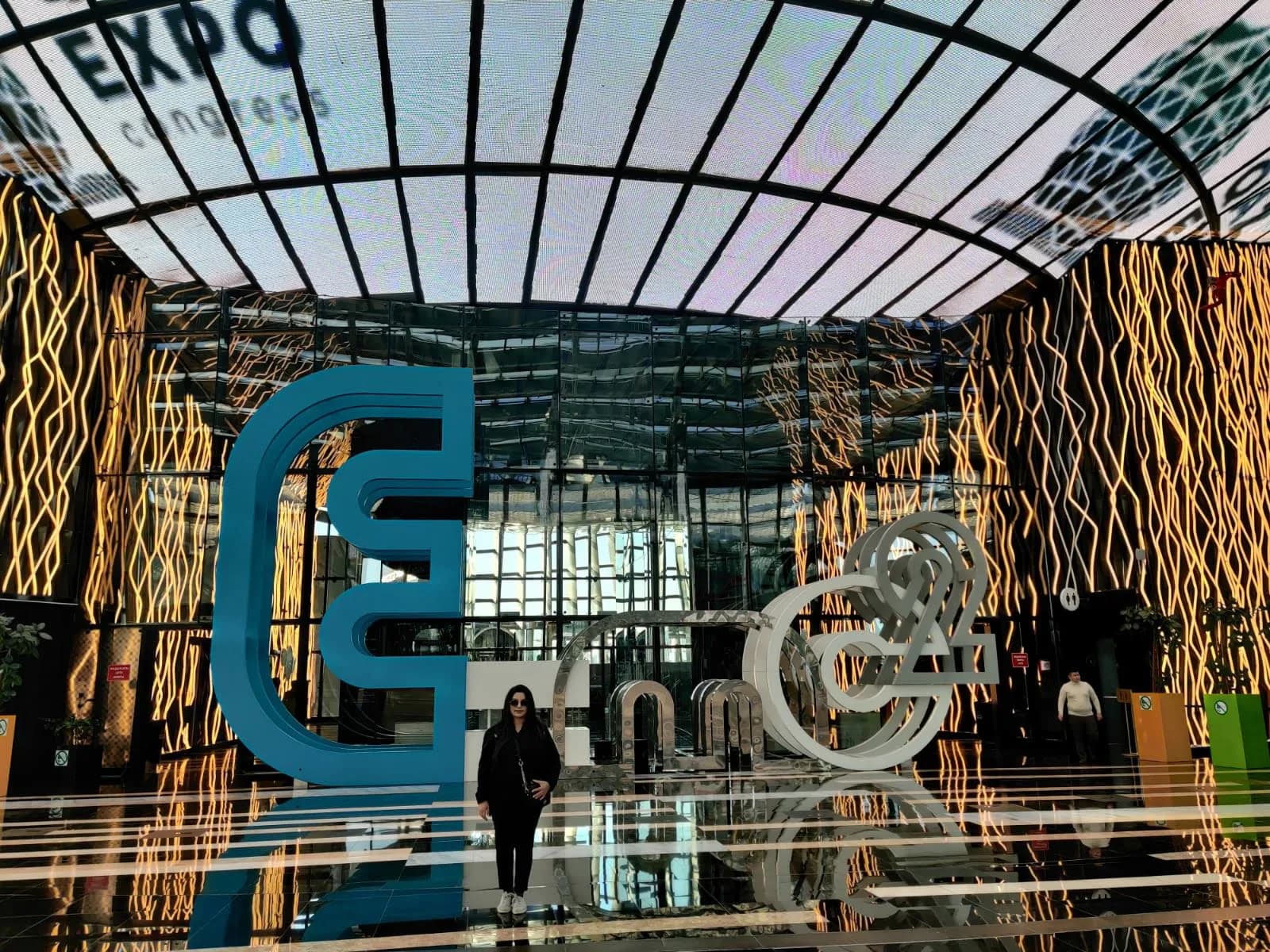
The Nur Alem Pavilion and Expo 2017: A Futuristic Showcase
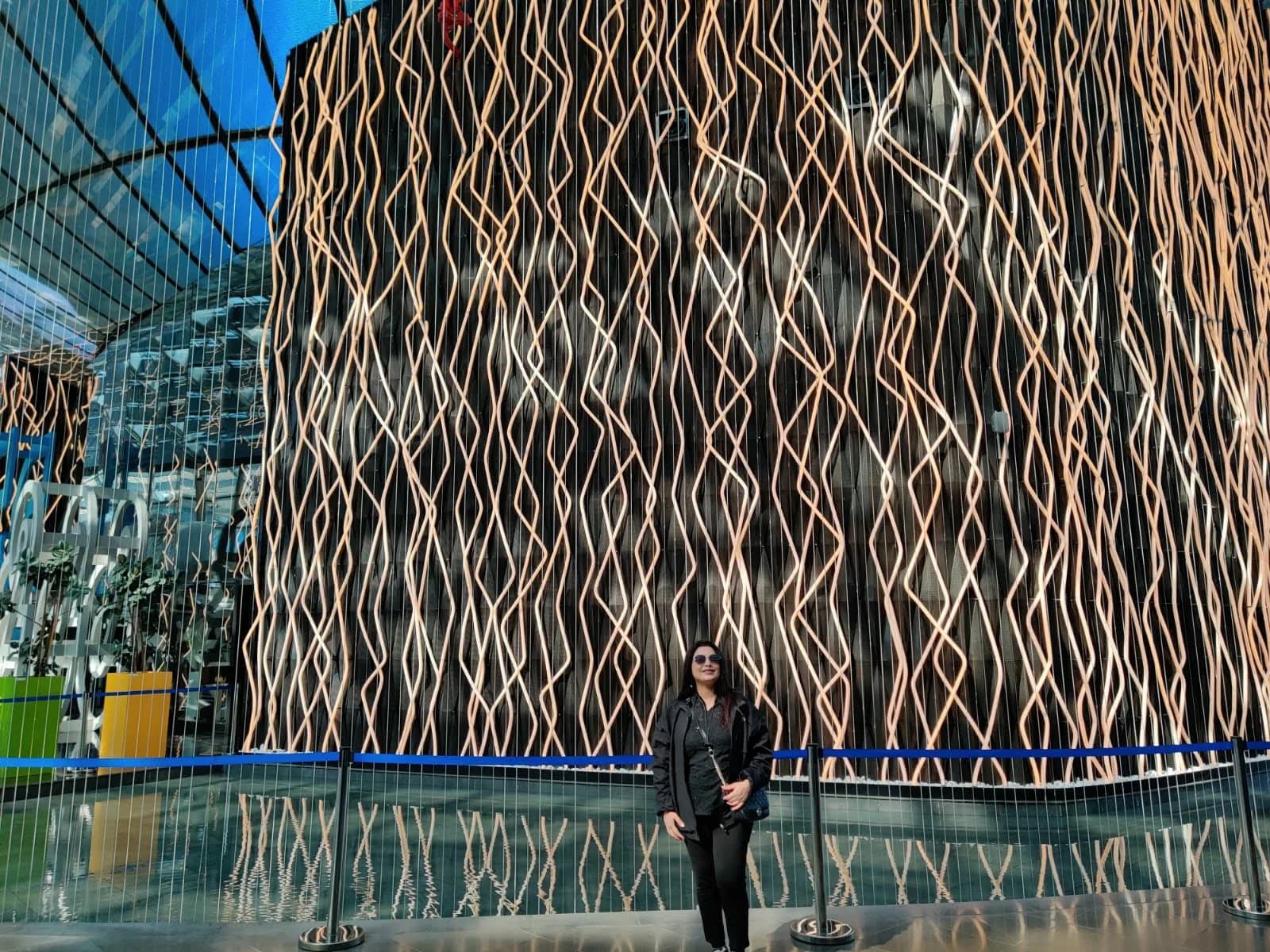
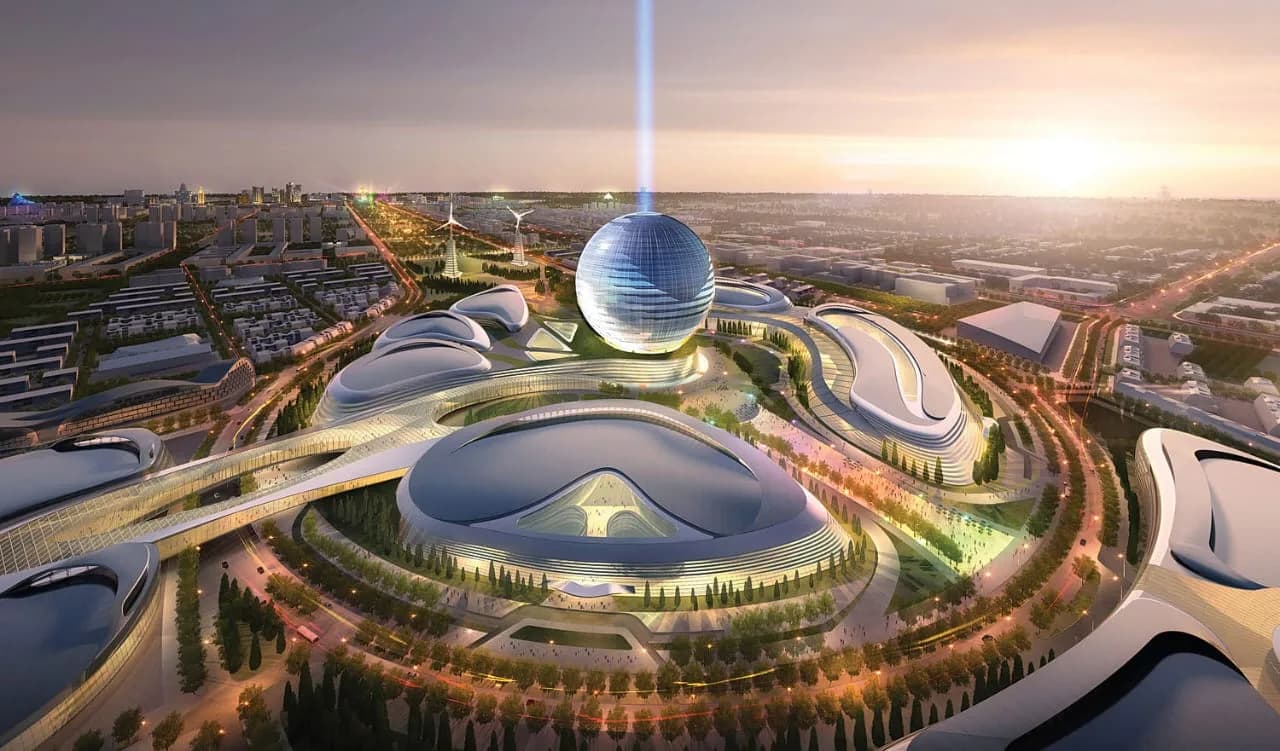
One of the most fascinating experiences in Astana was visiting the remarkable Expo 2017 complex, which transformed the city into a global showcase of futuristic architecture and modern urban design. The skyline, filled with shimmering towers and innovative glass structures rising from the vast Kazakh grasslands, felt incredibly unique. The giant spherical Nur Alem Pavilion was especially impressive. Looking at its glass façade, you can truly feel how it symbolizes Kazakhstan’s burning ambition to revive its place on the modern Silk Route—connecting Europe and Asia through technology, sustainable energy, and global commerce.
Sacred Spaces: The Grand Mosques and Spiritual Serenity
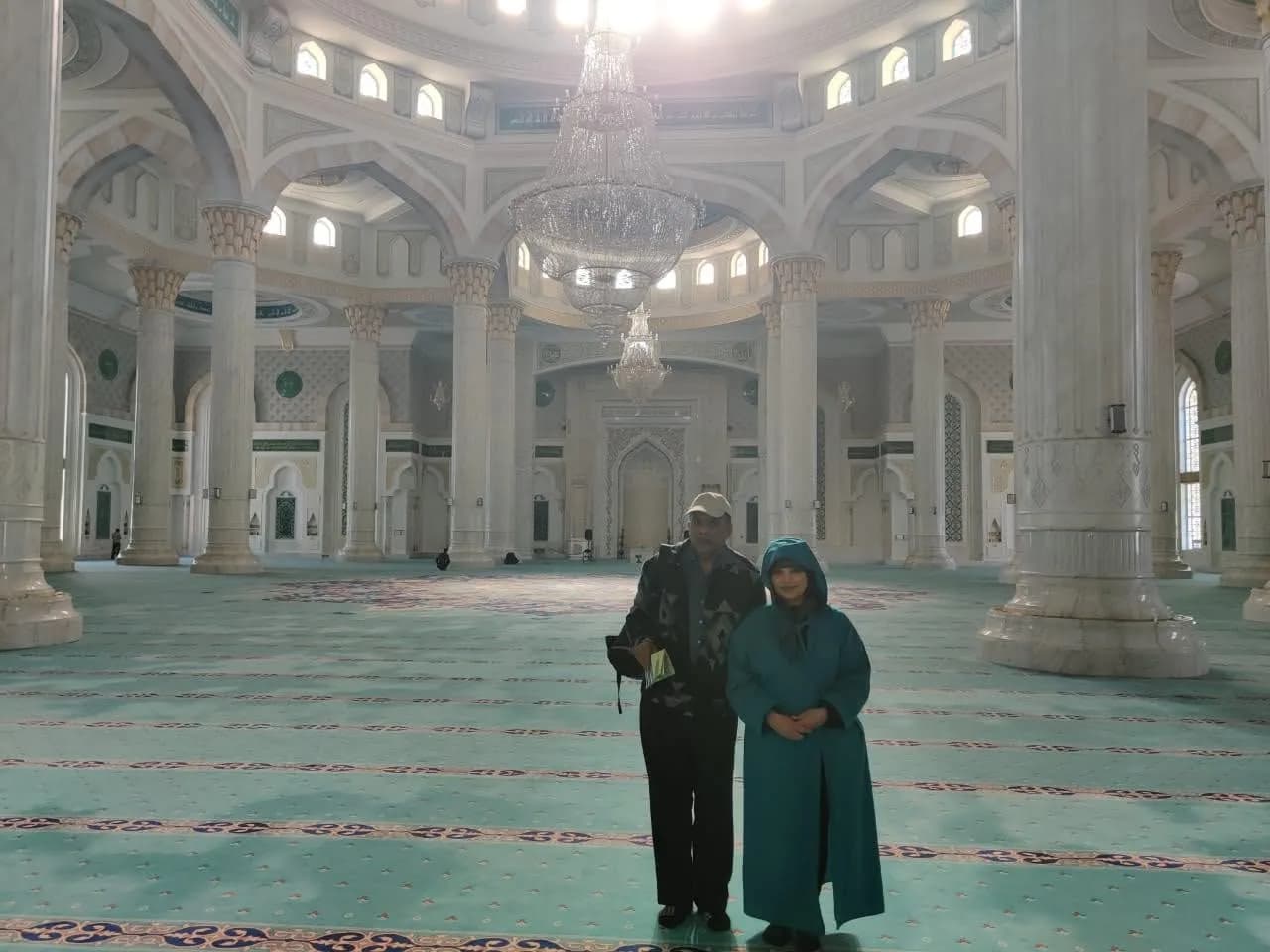
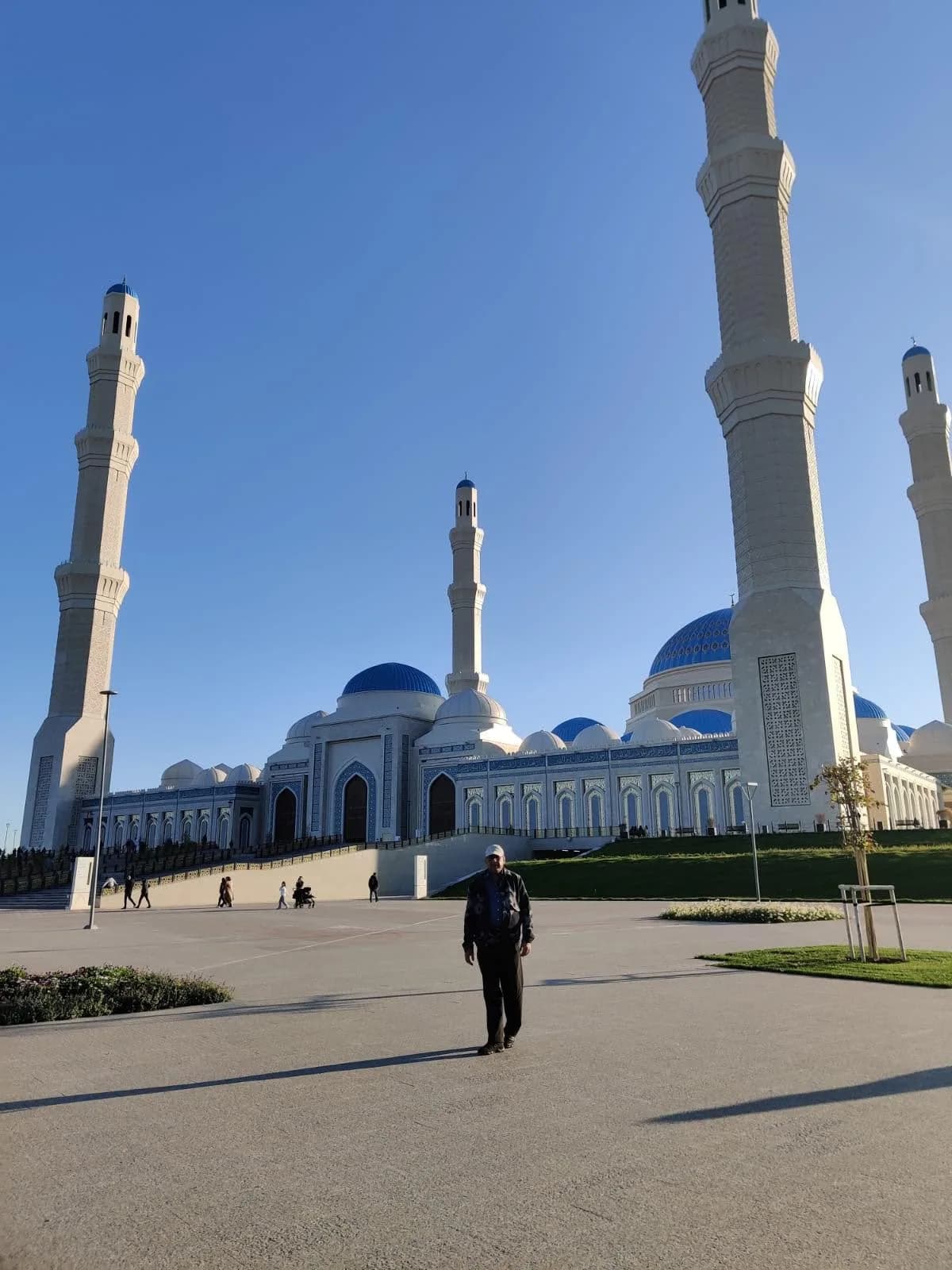
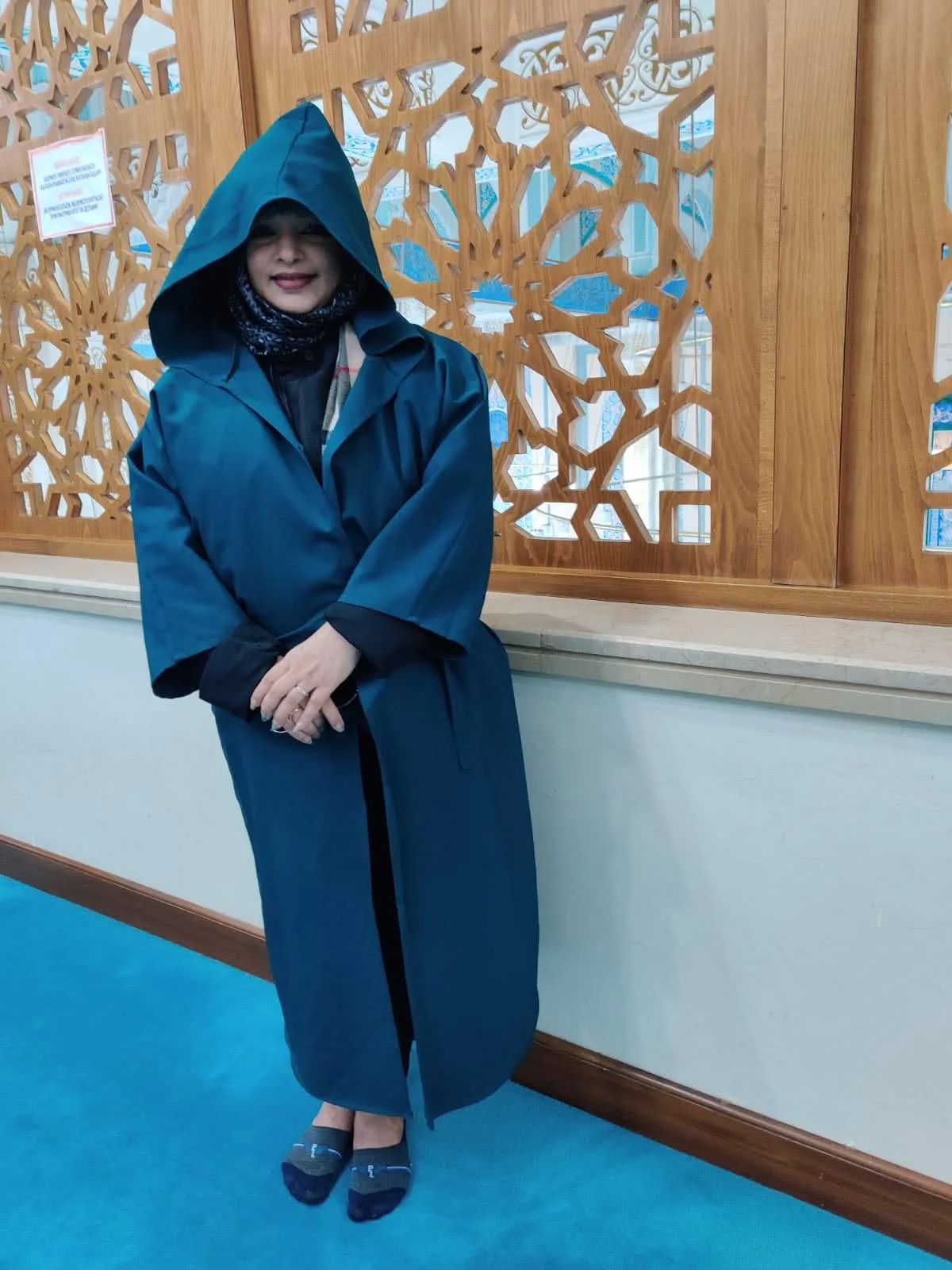
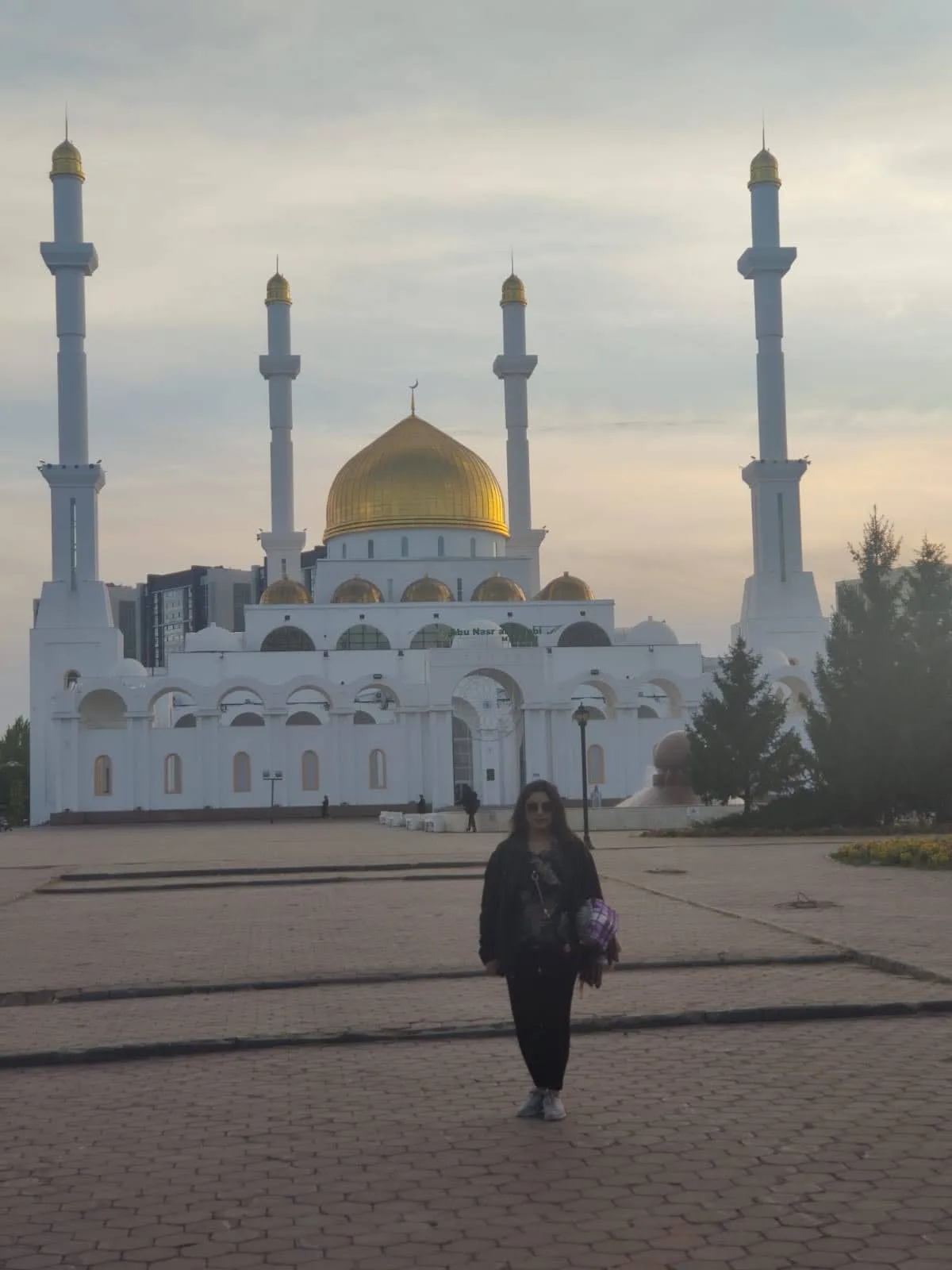
During our time exploring the capital, we visited both the magnificent Astana Grand Mosque and the beautiful Nur-Astana Mosque. Both left a deep, lasting impression on us. The sheer scale of the Grand Mosque—with its soaring minarets, massive domes, and intricate Islamic calligraphy—was truly breathtaking. In contrast, the Nur-Astana Mosque carried a quieter, more understated elegance and serenity. Beyond the monumental architecture, what touched us most was the calm atmosphere inside and the gentle, respectful attitude of the people we met. In the middle of Astana’s hyper-modern skyline, these mosques felt like peaceful spiritual sanctuaries where tradition, faith, and modern Kazakhstan beautifully come together.
Blending Nomadic Heritage with Modern Ambition
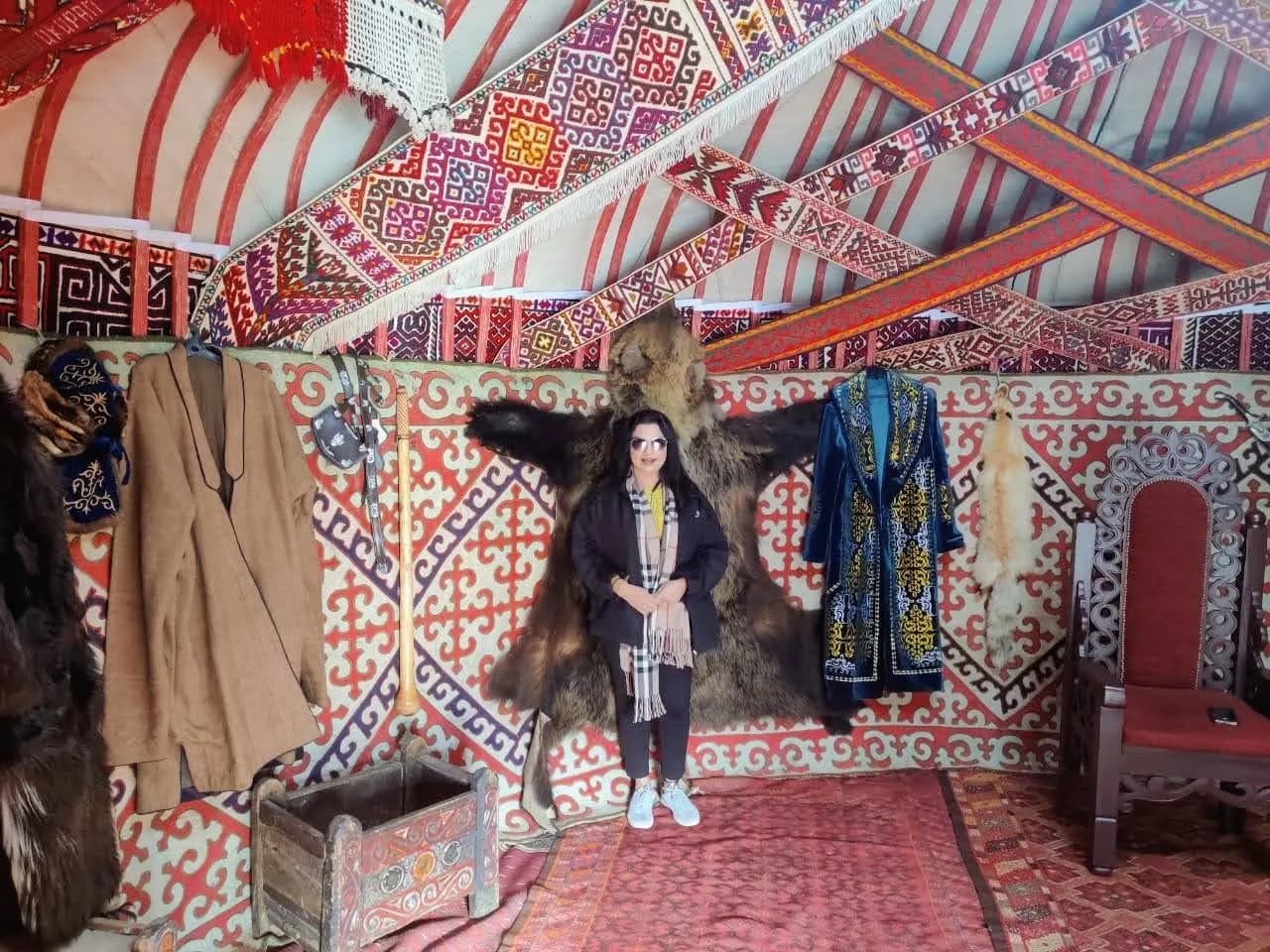
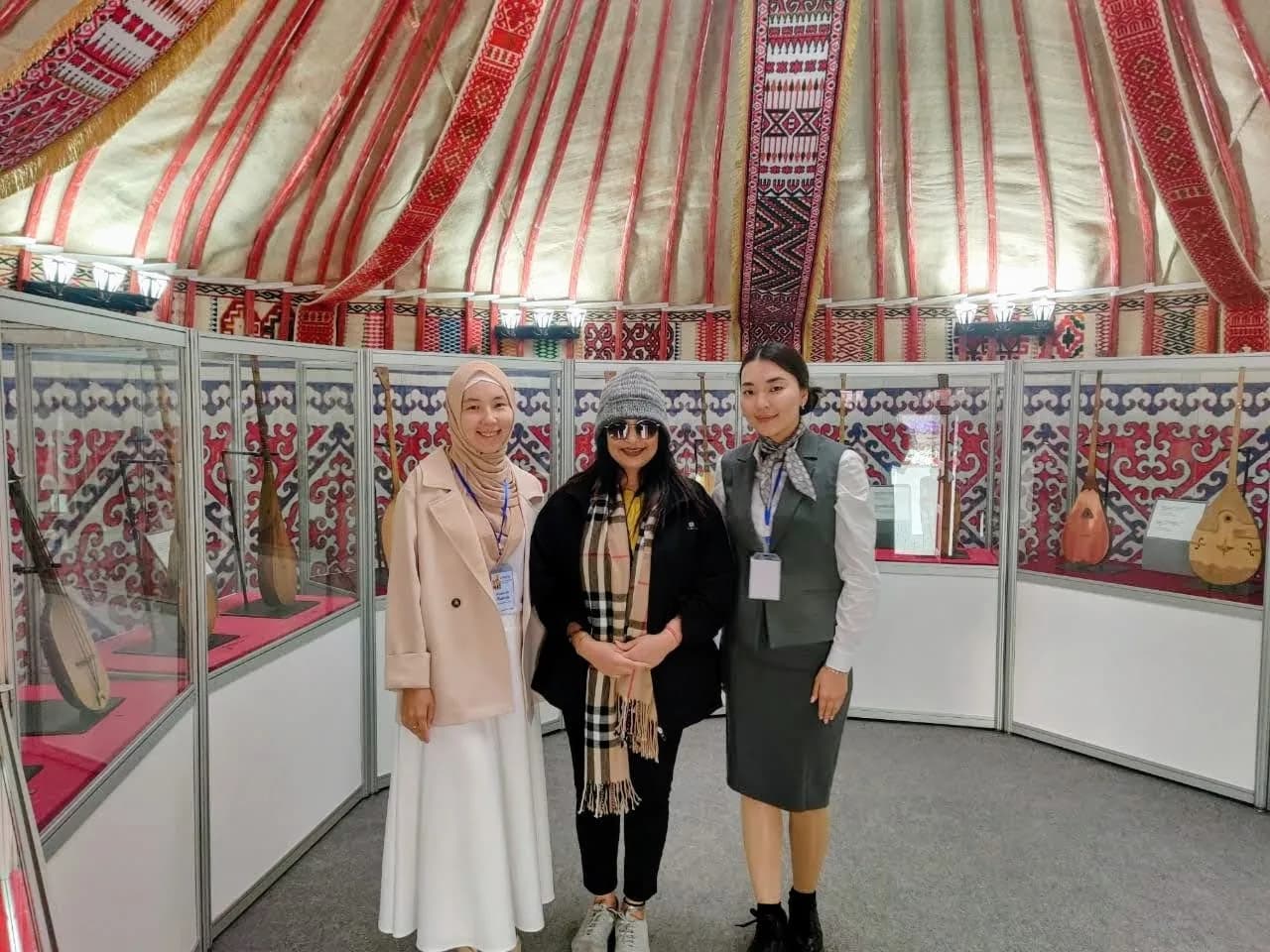
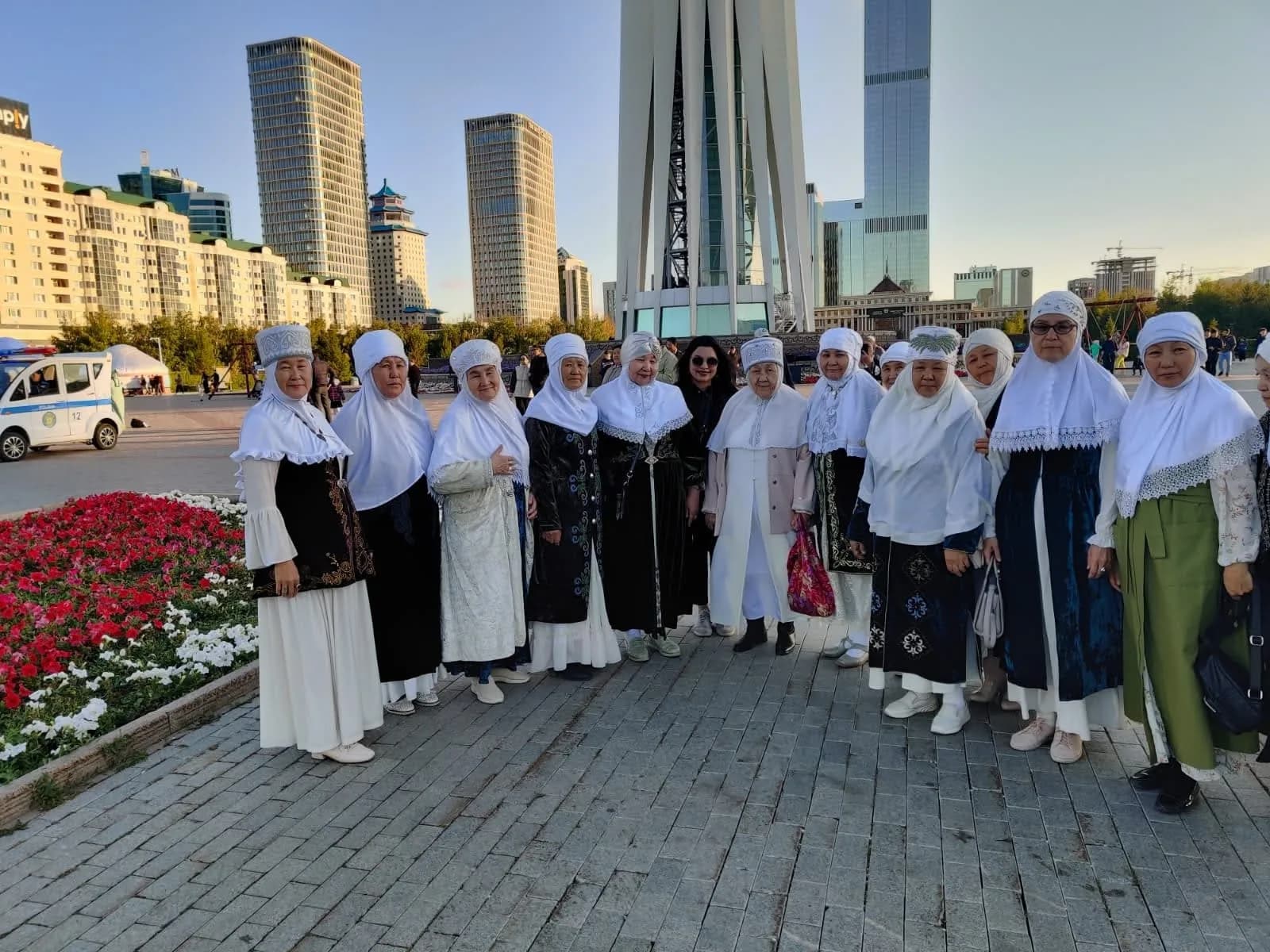
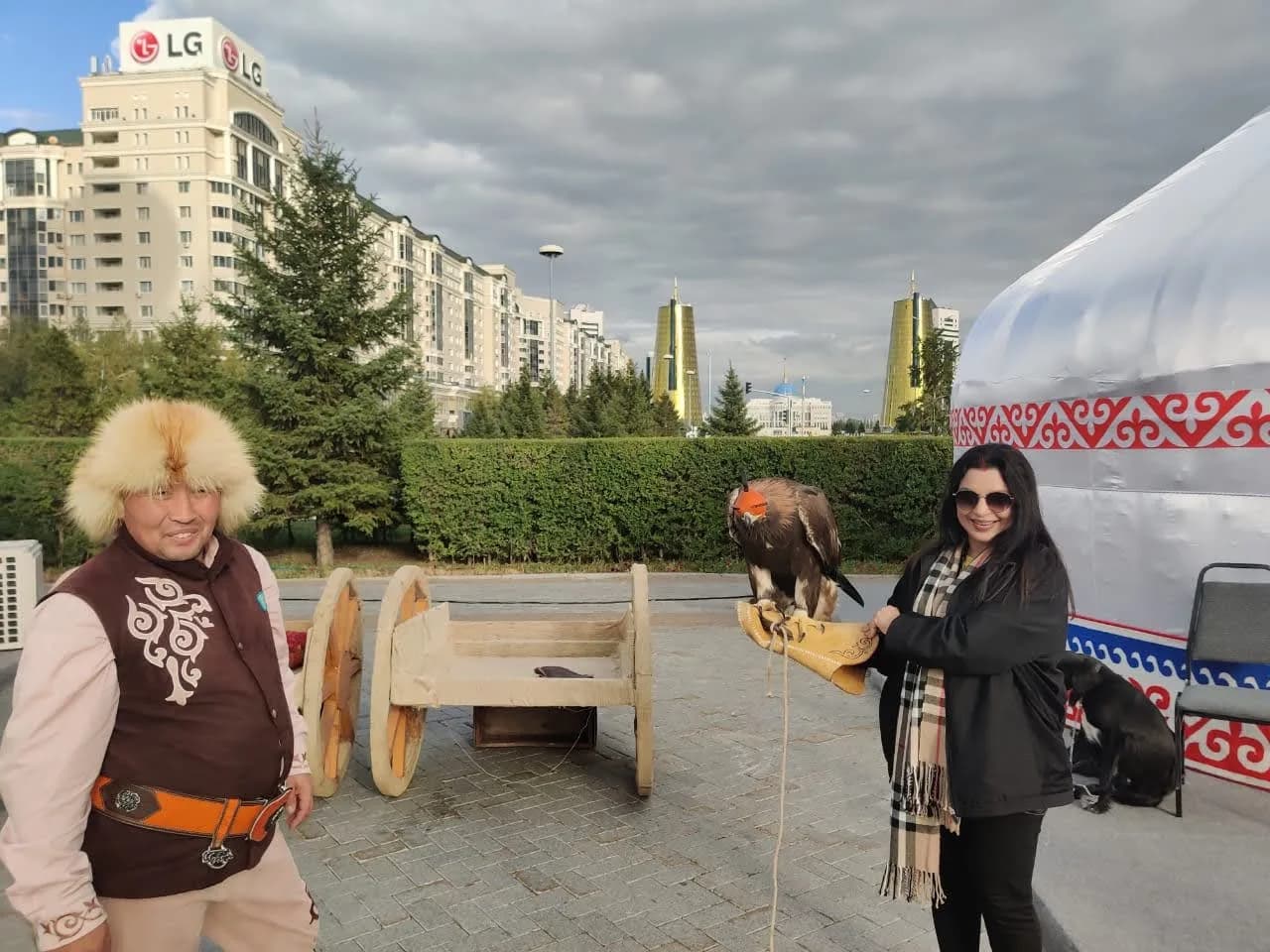
Travelling through Kazakhstan, you can strongly feel the spirit of a culture shaped by centuries of nomadic life, vast open steppes, and rich folklore passed down through generations. Stories of legendary horsemen, wandering tribes, eagle hunters, and ancient traditions are still deeply woven into modern everyday life and the national identity.
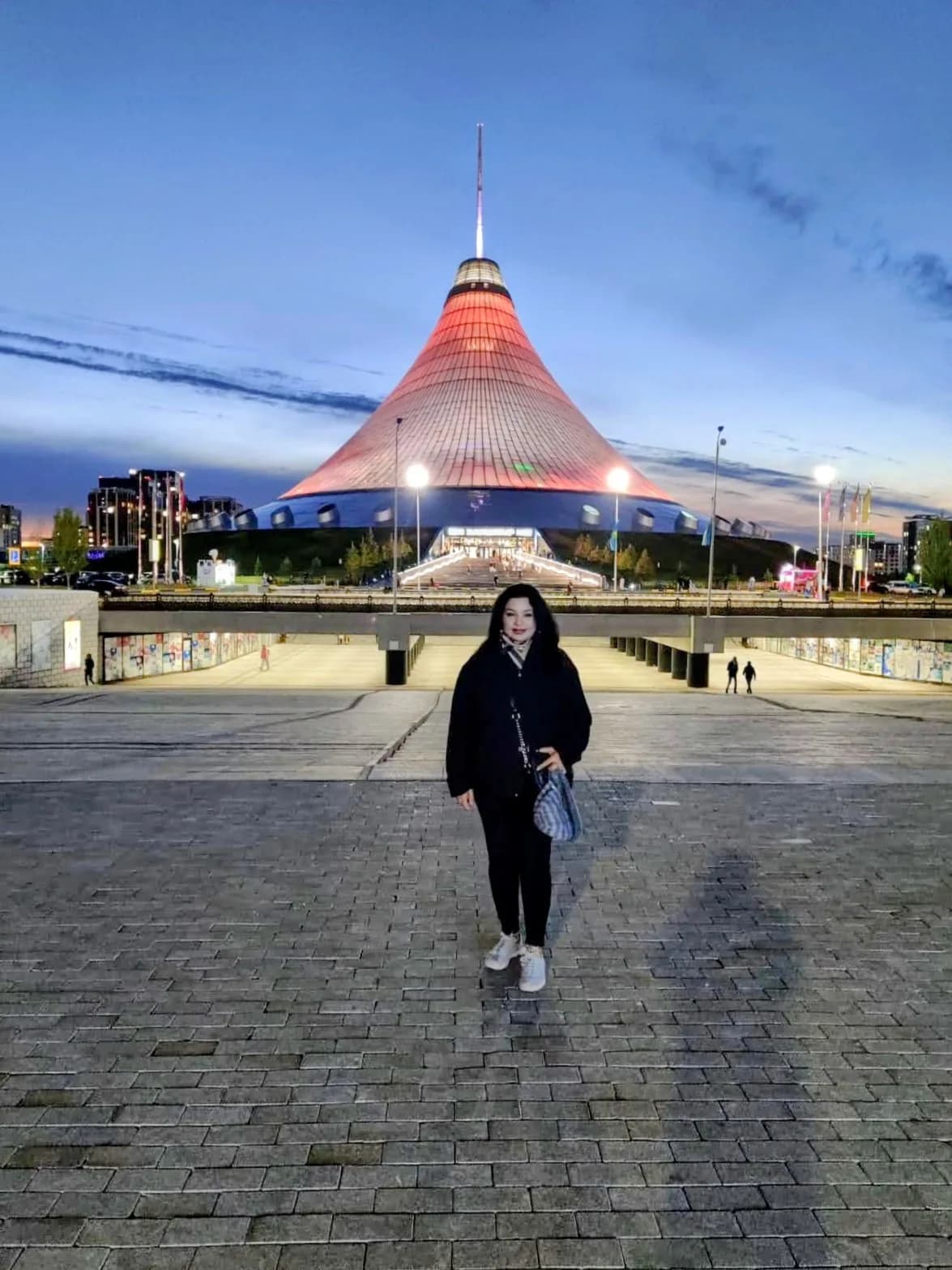
Even amidst the country’s modern cities, there remains a powerful connection to its nomadic past. A striking example of this is the giant, tent-shaped Khan Shatyr Entertainment Center. This massive shopping and entertainment complex was intentionally inspired by the traditional nomadic tent (yurt). It perfectly illustrates how Kazakhstan creatively blends its ancient heritage with forward-looking ambition, giving the country a character that feels both timeless and unique.
The Assumption Russian Orthodox Cathedral
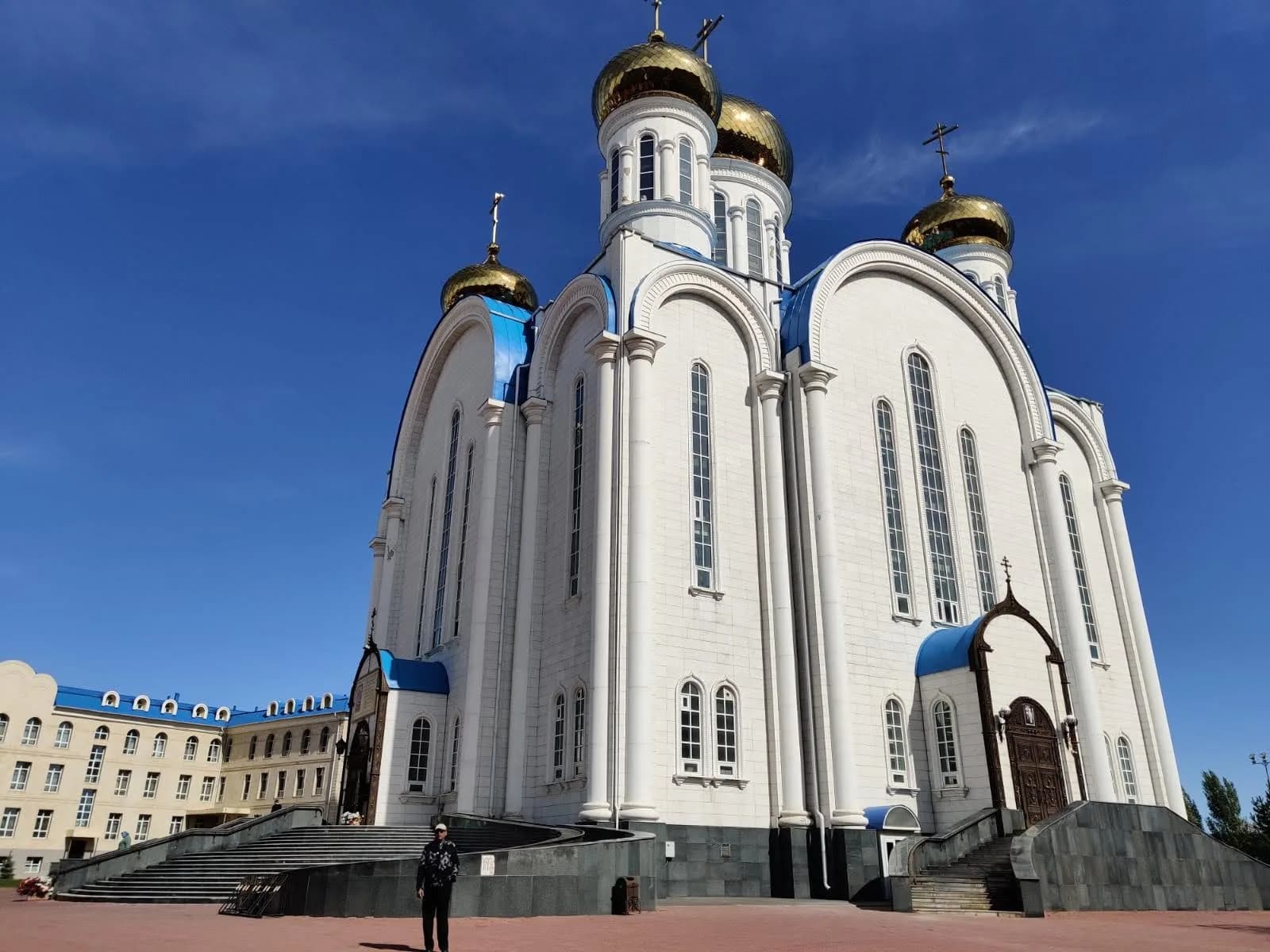
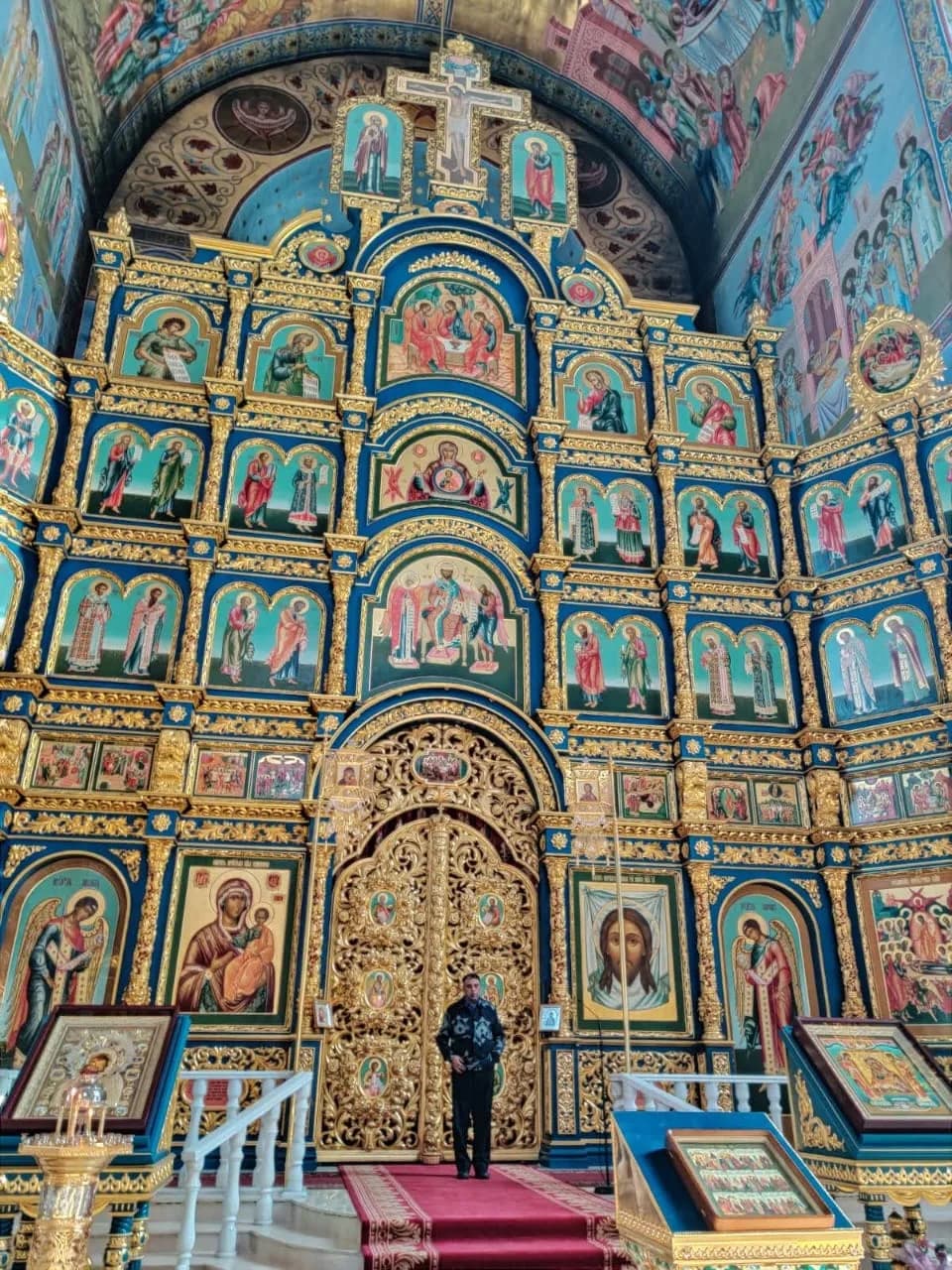
We also made sure to visit the beautiful Assumption Russian Orthodox Cathedral in Astana, which holds the distinction of being the largest Russian Orthodox church in Central Asia. With its brilliant white walls, shining golden domes, and grand traditional architecture, the cathedral stands out beautifully against the glass-and-steel skyline of the city. Inside, the atmosphere felt incredibly peaceful and deeply spiritual. Magnificent gold-leaf frescoes and intricate artwork covered every inch of the vast prayer hall. Even for visitors unfamiliar with Eastern Orthodox traditions, the sheer beauty, silence, and profound sense of devotion inside made the visit truly memorable.
Guardians of the Sun: The Legend of Bayterek
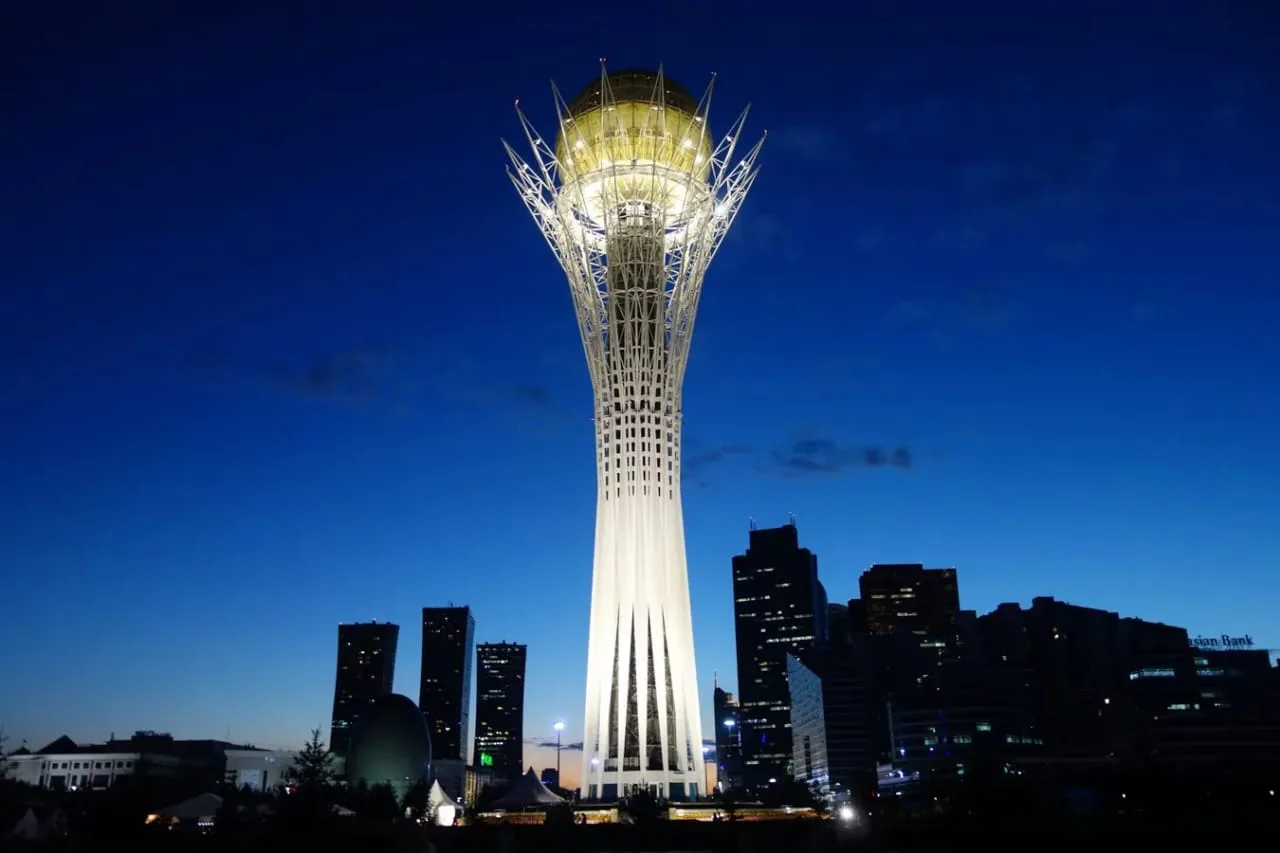
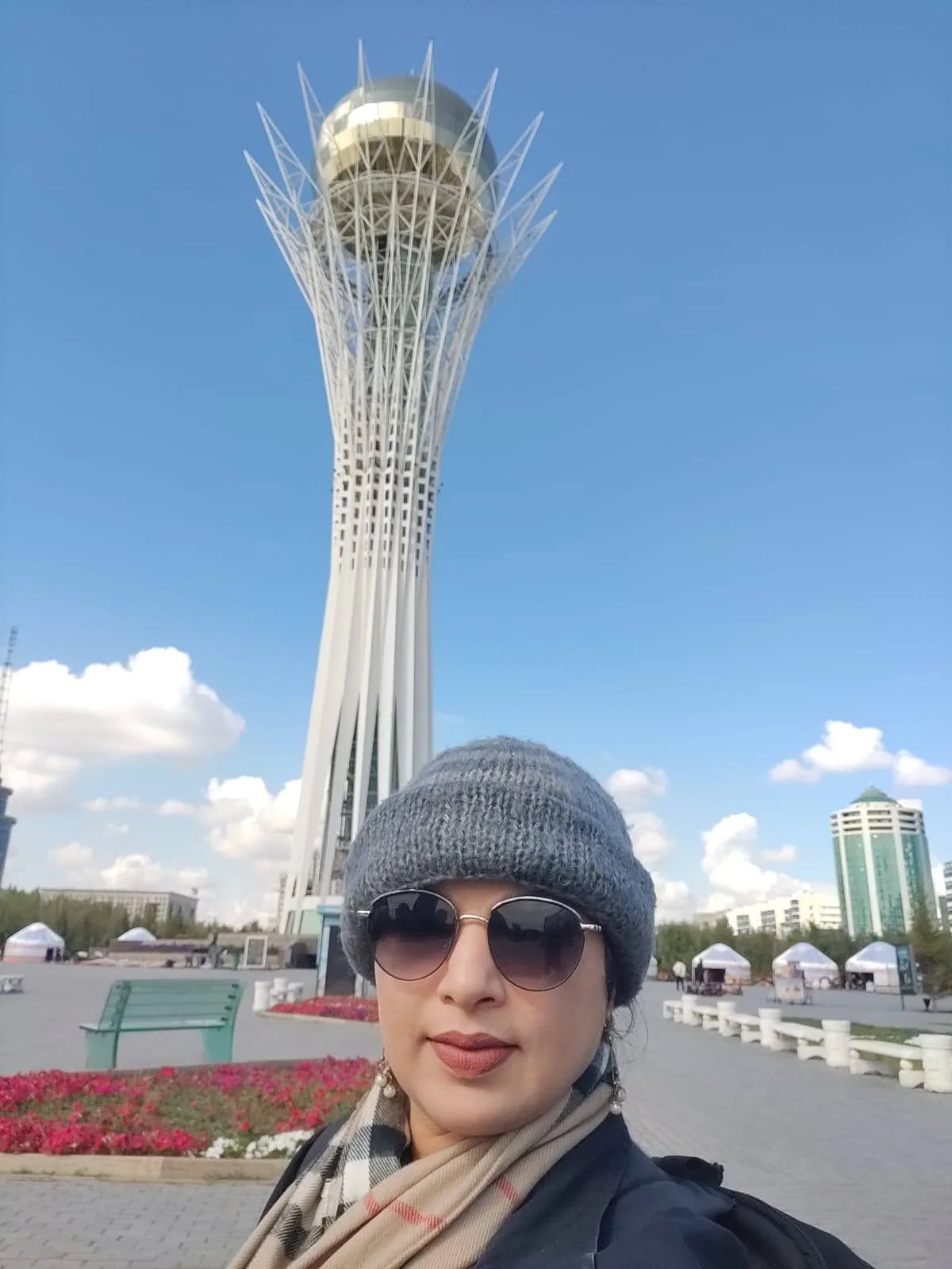
One of the most beautiful legends we encountered in Kazakhstan was the story of the Bayterek, or the "Tree of Life," which offers a profound glimpse into the rich tapestry of nomadic imagination. According to this ancient folklore, the mystical bird of happiness, Samruk, perches atop the tree to lay a golden egg—a radiant symbol of the sun, life, and eternal hope—while the wicked dragon Aydakhar lies in wait among the roots, forever seeking to destroy it. This enduring myth, which captures the eternal struggle between light and shadow, remains a vital thread in the fabric of modern Kazakh identity, serving as a powerful reminder of the depth and resilience of the culture that calls the vast steppe home.
An 18-Hour Journey Into the Steppe:
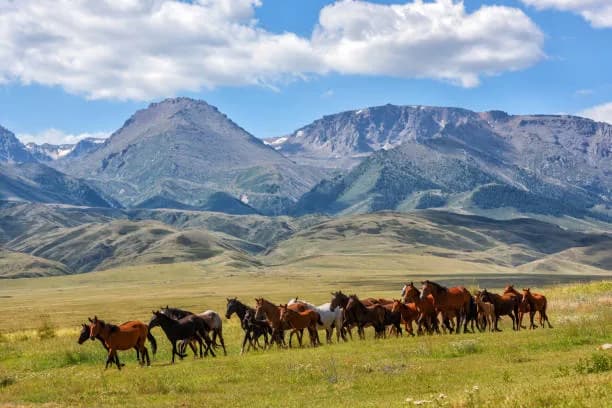
Boarding the Soviet-Era Train to Almaty From Astana, it was time to move south. We boarded an old Russian-era train for the long, 18-hour journey to Almaty, and it turned out to be one of the most scenic and memorable parts of our entire Silk Route adventure. The train was surprisingly comfortable. As I sat by the window watching the endless, mesmerizing Kazakh steppe roll past, I occasionally caught sight of wild horses running freely across the grasslands—a beautiful, living reminder of the country’s nomadic spirit. Horses are still deeply connected to Kazakh culture and cuisine today. But seeing them race across those open, unfenced plains instantly transported our minds back to the ancient Silk Route, where these magnificent animals once carried traders, ideas, and riches across Central Asia for centuries.
Logistics for the Modern Explorer
Yandex Go: Essential for navigating Astana. Reliable, inexpensive, and overcomes language barriers seamlessly.
Respect in sacred spaces is paramount. Modest dress is required. A firm handshake and direct eye contact are standard greetings.
Book trains well in advance. Opt for the faster 'Talgo' trains for comfort, though older Soviet-era carriages offer more character.